
Ramona the Brave by Beverly Cleary, 1975.
Six-year-old Ramona Quimby thinks of herself as brave. Now that she’s going into the first grade, she’s no longer just a little kid. She even stood up to some boys on the playground who were making fun of her older sister, Beatrice, for being called “Beezus.”
However, Ramona soon discovers that not every sees her the way she sees herself. Beezus is embarrassed at the way her little sister told off those boys and is sure that they’re now going to make a much bigger deal of the incident at school because of it. Beezus says that she’s sick of her silly nickname, which rhymes with “Jesus” and just wants to be called “Beatrice.” Ramona agrees with her, both because she feels bad that she accidentally embarrassed her sister and because it’s her fault that Beezus got her nickname. When she was smaller, Ramona couldn’t pronounce the name “Beatrice” very well and ended up saying “Beezus” instead, and the mispronunciation stuck. Ramona is trying hard to be a big kid now, and she doesn’t like to remember that she used to not even be able to say her own sister’s name. Ramona agrees to call her sister Beatrice in public and to only use the Beezus nickname at home.
Ramona wants to be taken seriously, and she hates it when her mother is amused by some of the silly things she does. (I know the feeling, and so do many other people!) The last thing she wants is to just be a silly little kid that people laugh at, and nobody seems to understand how she feels. She especially hates it when her sister keeps calling her a pest.
Fortunately, their mother understands that part of the problem is that the girls are getting bigger, and they’re starting to feel cramped sharing a room with each other. Mr. and Mrs. Quimby have decided to add an extra room onto the house so the girls won’t have to share anymore, and Mrs. Quimby is going to take a part-time job to help pay for it. Before the girls can start arguing about who gets the new room, Mrs. Quimby tells them that it’s already decided that they will take turns, trading off rooms every six months and that Ramona will have the first turn in the new room.
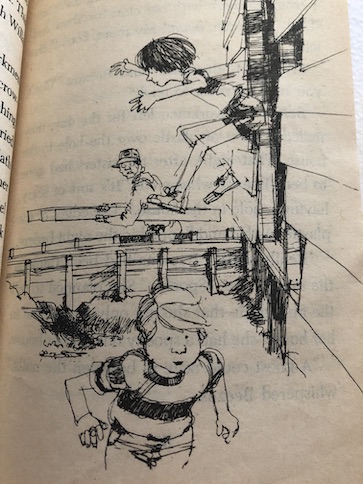
Watching the workmen make a hole in the wall of their house and build the new room is fascinating, although Ramona doesn’t have the patience for planning, methodical work, and learning how different tools are supposed to be used, like her friend Howie. Ramona prefers playing their made-up game of Brick Factory, where she and Howie smash old, broken bricks with rocks. Ramona takes the opportunity to put her special initial, a Q with cat ears and whiskers, into the wet concrete for the floor of the room, and she can’t resist the opportunity to jump through the new hole in the wall of their house. The workmen cover the hole with a sheet of plastic when they go home for the day, but the girls think it’s kind of spooky having a hole in the wall of their house. They imagine that something horrible could sneak in through the hole, like a ghost, maybe one that looks like a gorilla. Ramona can’t wait to tell the other kids all about it when she starts first grade!
Unfortunately, the new school year doesn’t start out the way Ramona hopes. Instead of everyone being excited about her news and how she watched the workmen chop a hole in the side of her house, everyone laughs because the teacher had just made a joke about her being Ramona Kitty Cat because she drew the cat ears and whiskers onto the Q on her name tag the way she always does. Ramona hates being laughed at and made to feel like a fool. Worse still, her friend Howie doesn’t defend her because Ramona said that they “chopped” a hole instead of “prying” it open with crowbars. Because of Ramona’s technical inaccuracy, Howie makes her sound like she was lying about the whole thing!

Then, when the kids make paper bag owls for Parents’ Night, Susan copies Ramona’s design, and the teacher, Mrs. Griggs, praises Susan to the whole class for coming up with the idea of having the eyes looking to the side. She doesn’t even notice Ramona’s owl. Ramona, afraid that everyone else will think that she’s the copycat because of Mrs. Grigg’s public praise of Susan’s owl, just like they all thought she was a liar and laughed at her before because of what Mrs. Griggs and Howie said on the first day of school, crumples her owl up and throws it away before anyone can see it. But, that doesn’t help relieve Ramona’s feelings at the injustice of the situation. She’s owl-less because of Susan stealing her idea. In a fit of temper, she crumples up Susan’s owl, too, and runs away when Susan tells on her even though Mrs. Griggs repeatedly says that she doesn’t like tattletales. (Honestly, I’ve never understood why adults tell kids that. It just encourages kids to behave badly and label others as “tattletale” when they complain, even when the complaint is just. It just gives bullies more power to act with impunity. I also think kids should be encouraged to talk about things, especially some of the more difficult things to talk about, and the whole “I don’t want to hear from tattletales” shuts down conversations before they even start. I’ve guessed that it has something to do with not wanting to take the time to deal with a lot of petty complaints, but at least hear someone out before you decide what they’re going to tell you and how important it is!) Even when Ramona explains the situation to her mother, she can tell that her mother doesn’t fully understand how she feels, and she is forced to apologize to Susan. Mrs. Griggs makes it all the more embarrassing by forcing Ramona to apologize in front of the whole class. Ramona knows that Mrs. Griggs doesn’t understand her and is sure that Mrs. Griggs hates her.
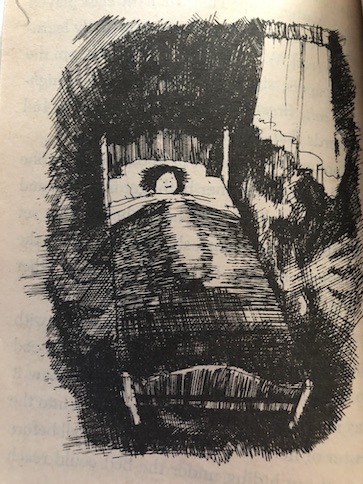
Ramona’s new room isn’t much of a comfort, either. She finds it a bit spooky, and when she’s alone in it, her imagination runs wild, like it did the night that she and her sister were imagining what kind of ghost could get in through the hole in the wall. Ramona certainly doesn’t feel very brave and grown-up about having a room to herself, but she refuses to admit it because she doesn’t want anyone to think that she’s a baby for being scared.
Things come to a head when Mrs. Griggs sends home a progress report that says that Ramona needs to use more self-control and keep her eyes on her own work. Ramona knows that it’s totally unfair because she’s been very self-controlled since the owl incident, in spite of Mrs. Griggs’s inconsiderate lack of understanding, and the only reason why she sometimes looks at the paper of the boy next to her is that he’s been seriously struggling with his work, and she’s been trying to help him. When Ramona is so fed up that she tells her family that she needs to say a bad word and the worst word she can think of to say is “guts”, everyone laughs at her, and Ramona bursts into tears, unable to take it anymore.
Tears and anger serve a purpose, though. Sometimes, an outburst is the only way to make someone understand, and understanding is what Ramona most needs. The family has an honest discussion about Ramona’s feelings, and Beezus tells her that she understands what it’s like to be little and laughed at for doing or saying something silly, reminding her mother about the times when she laughed about things she did, back when Ramona was too little to remember it. Beezus says that her mother’s laughter hurt her feelings when she was Ramona’s age, too, and Mrs. Quimby apologizes. Beezus also says that she never liked Mrs. Griggs very much when she was her teacher, either. Ramona asks if she could switch to the other first grade class at school, but her mother is reluctant to arrange it because her schoolwork has improved and because some of Mrs. Griggs’s criticism was correct and that Ramona does need to improve on her self-control. Mrs. Quimby also says that she wants Ramona to learn to understand and work with different types of people. Mrs. Griggs might not be her kind of person, and she might not always understand Ramona, but Ramona isn’t always easy to understand.
Personally, I didn’t think that last comment was a very good way to put it. One of the great things about the Ramona books is that Ramona’s feelings are easy to understand and identify with. Beezus certainly understood what Ramona meant about what it’s like to be laughed at for just being a kid. It’s something many of us experienced when we were kids, and we identify with how Ramona feels about it. (Didn’t Ramona’s mother ever go through this herself, or does she just not think about it? I kind of wondered when she didn’t seem to understand what her daughters were talking about at first.) I think it would have been better to put more of the emphasis on the idea that different types of people need to learn to respect each other and get along even when they don’t fully understand each other. Other people aren’t always easy to understand, but that’s not because Ramona herself is difficult to understand. Ramona’s feelings aren’t any less understandable than Mrs. Griggs’s, it’s more that not all people have the same capacity for understanding others because they don’t have as much empathy as others or the imagination to consider circumstances they haven’t personally been in themselves or are too focused on their own priorities and don’t have the time or patience for understanding. Adults often don’t consider things from a child’s point of view because their adult priorities in their busy adult lives take precedence, they discount the validity of what children think and feel because children are less experienced in life and sometimes express themselves clumsily, and they don’t slow down and take a step back or a second look or listen when they should. But, they could show a little more consideration for the child’s feelings even they don’t fully understand them. My own first grade experience wasn’t any better than Ramona’s, and I had my own “Mrs. Griggs.” Adults forget that kids can feel and experience things beyond their ability to fully explain them to others. One of the difficulties of being young, at least for me, was not having the vocabulary necessary to make myself understood or ask all the questions that I wanted to ask, and I often had to deal with adults who were short on patience. I can see that Ramona also struggles with finding the right words to express what she’s feeling or what’s really happening, like when she used the word “chopped” instead of “pried” to describe how the workmen opened a hole in the side of her house. I think that learning words and new ways to communicate with different people is an important part of the story.
Fortunately, Ramona’s father is right that the bad things will blow over, and Ramona’s situation improves. Some of the other kids in class become sympathetic to Ramona because they recognize that Mrs. Griggs shouldn’t have made her apology to Susan an embarrassing public apology. Ramona, although frequently bored in class, learns to read better, and she enjoys reading, finding that she can read more interesting stories when she knows more difficult words. She also meets her older sister’s teacher, and he calls her Ramona Q instead of Ramona Kitty Cat, like Mrs. Griggs did, making Ramona realize that there’s life beyond first grade and that better, more sympathetic teachers are waiting for her. She also becomes less afraid of her new room.
A scary encounter with a dog on the way to school that causes Ramona to lose one of her shoes also brings some unexpected sympathy and understanding from Mrs. Griggs. Ramona comes to understand that Mrs. Griggs is trying to be helpful when she offers her one of the old boots from the lost and found to replace the shoe she lost, that Mrs. Griggs simply doesn’t understand Ramona’s feelings about those old boots (they’re old, dirty, and kind of yucky), and that she isn’t likely to understand because she has her own priorities. Instead of getting mad at Mrs. Griggs for her lack of understanding, this realization causes Ramona to come up with her own creative solution to the problem. Ramona gains a better image of herself because of her creative problem solving and her bravery in a difficult situation. Mrs. Griggs also begins to show signs of understanding that Ramona is a creative person who needs a little room to demonstrate her creativity.
The book is available to borrow and read for free online through Internet Archive (multiple copies).


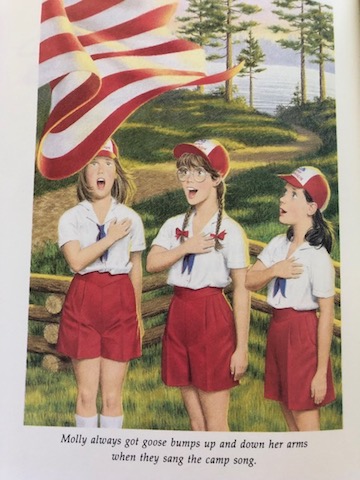 Molly and her friends, Linda and Susan, are attending Camp Gowonagin over the summer. They love summer camp because there are so many fun things to do, like nature hikes, archery, arts and crafts, and campfire sing alongs. The only thing Molly doesn’t like is swimming underwater, although she’s embarrassed to admit it. Susan has trouble with canoeing because she doesn’t know how to keep her canoe moving straight. Other than that, all three girls have fun at camp and as their time at camp is coming to an end, they think about how much they’ll miss it.
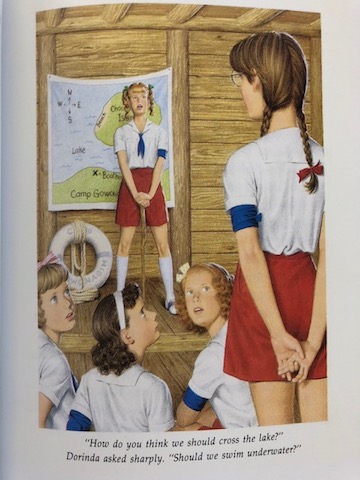 Molly and Susan end up on the Blue Team, while Linda is assigned to the Red Team. Molly and Susan aren’t really looking forward to the Color War because their team captain will be Dorinda, a bossy, competitive girl who likes to act like she’s the general of an army and this camp game is a real war. Molly is uneasy about what Dorinda will order them to do, afraid that it might involve the thing she dreads most, swimming underwater. The only comfort Molly takes is what her father told her before he went away to war, that being scared is okay because it gives a person a chance to be brave.
 Of course, Dorinda’s plan doesn’t work out as she thought. The Red Team’s scout spots them right away and takes most of the Blue Team prisoner. Only Molly and Susan are left free because Susan accidentally overturned their canoe on the way to the island. After they manage to get back into their canoe and bail it out, they try to approach the beach, but Linda spots them and signals to the rest of the Red Team. Molly and Susan have no choice but to return to camp to avoid capture.
 Molly and Susan (and the rest of the Blue Team, once they’re free) manage to snatch victory from the jaws of defeat, but they worry that perhaps their friendship with Linda is ruined because of the trick they play on her. Fortunately, Linda decides to take it in the spirit of the game and shows sympathy for the girls when it turns out that their victory plan ends with the entire Blue Team getting poison ivy.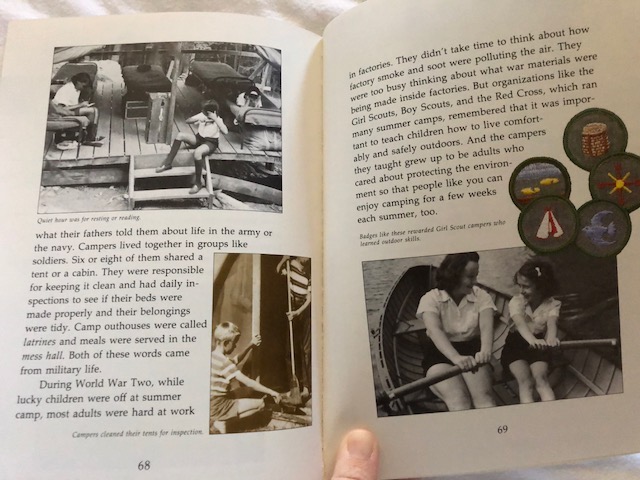


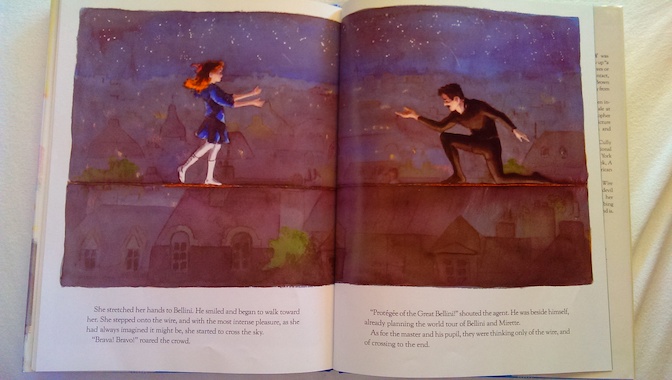
 The Dragon Charmer by Douglas Hill, 1997.
 Then, one day, a rare crimson dragon comes to the farm and lays an egg. It is extremely uncommon to see a dragon’s nest or a baby dragon, and Dan is excited about trying to charm the baby after the egg hatches. However, Dan’s assistant is greedy and decides to steal the egg and sell it. Elynne overheard him talk about his plans before the egg was stolen, but because she wasn’t sure of what she heard, she didn’t tell anyone. Elynne feels guilty about not preventing the theft of the egg, and in spite of her fear, she is determined to get it back. In the process, she not only conquers her fear but learns about a talent that she never realized she had.
 Jestress's Forgotten Books and Stories