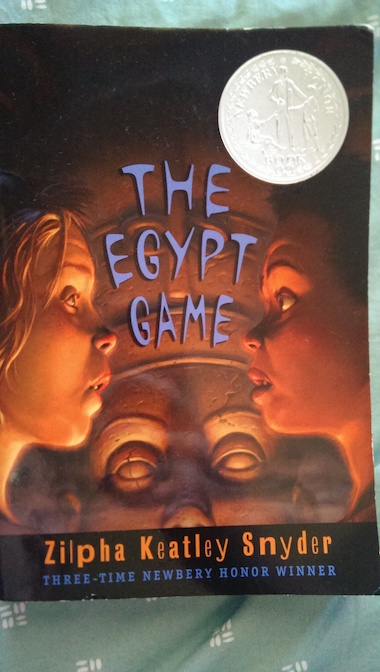
The Egypt Game by Zilpha Keatley Snyder, 1967.
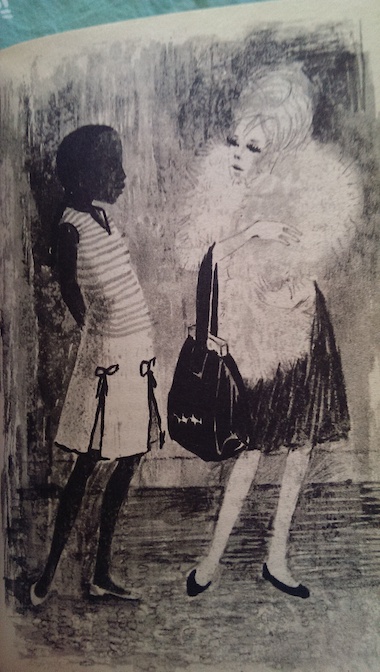 April Hall has come to live with her grandmother (the mother of her deceased father) because her actress mother is touring with a band as a singer. April’s mother isn’t a big star, although April likes to brag about her and their Hollywood life. Really, her mother is mostly a vocalist who occasionally gets parts as an extra, hoping for that big break. April is sure that when her mother gets back from her tour, she will send for her, and they will live together in Hollywood again. Although, from the way her grandmother behaves, it seems as though April may have to prepare herself for living with her for the long term. April resents her grandmother’s apparent belief that her mother has dumped her because she is unwilling or unable to take care of her.
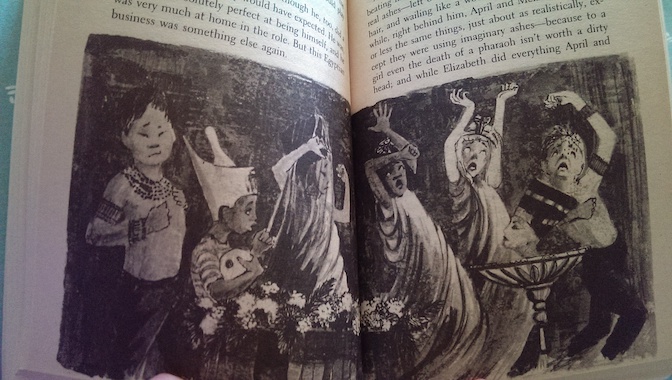
April is homesick and misses her mother. To hide her feelings, she tries to act grown-up and ultra-sophisticated, which makes most people regard her as a little weird. In spite of that, she makes friends with a girl named Melanie, who lives in a nearby apartment and sees through April’s act to her insecurity and creative side. April has never had many friends (partly because of her mother’s chaotic lifestyle), but Melanie appreciates April’s imagination. The two girls realize that they both like playing games of pretend and they both have a fascination with Ancient Egypt. They go to the library and read everything they can find about Egypt, and it sparks the best game from pretend they’ve ever played. Along with a few other friends, they start pretending to be Ancient Egyptians, building their own Egyptian “temple” and holding rituals in the old junk yard behind a nearby antique shop.
On Halloween night, the adults try to keep the children together in groups for safety, but the “Egyptians” sneak off alone to conduct one of their “rituals.” It’s a dangerous thing to do because a child has been murdered in their area. A young girl who was apparently abducted was later found dead, and people are frightened that other children could be in danger. Fortunately, the only thing that happens on Halloween is that the Egyptians recruit a couple of new members when some boys from school find out what they’re doing.
However, the game starts taking on a life of its own when it seems that some other, unknown person has also joined in. As part of their game, the children make up a new ritual and write messages to their “oracle,” asking questions that they want answered. To their surprise, someone starts writing replies. Whoever is playing oracle and answering their questions, it doesn’t seem to be a child.
 The children are uneasy about this unexpected game player because frightening things are happening in their neighborhood. The kids wonder if the mysterious messages could be from the crazed killer who murdered the young girl. People have been looking suspiciously at the loner who owns the antique store, an older man who everyone calls the Professor. However, the kids have become too enmeshed in the Egypt game to give it up in spite of their fears.
When April slips out one night to retrieve a text book she left in “Egypt,” she comes frighteningly close to being the killer’s next victim.
This is a Newbery Honor Book. It is currently available online through Internet Archive (multiple copies). There is a sequel called The Gypsy Game.
My Reaction
Although there are mysteries in the story (who killed the girl and who the unknown player of the Egypt game is), the development of the characters, especially April, is really at the heart of the story. All through the story, what April wants most is for her mother to come for her and take her home again. April fears that her mother doesn’t love her or want her, and at first, that keeps her from even trying to love the grandmother who took her in and really wants her. However, she finds comfort when she realizes that she is creating a new life with her grandmother and friends, who really care about her. Her mother does write to her later about coming to stay for a brief visit with her and her new husband (her acting manager, who she married on short notice without even telling April or inviting her to come to their wedding), but by then, April has started to feel at home in her new home and wants to share Christmas with the people who have been sharing in her life and adventures more than her mother has. She never even tells her mother about her brush with death.

The characters in the book are diverse, representing different racial backgrounds, ages, and family situations. Melanie and her younger brother are African American. Melanie understands more about human nature and how the world works than April does, partly because her mother talks to her about people and explains things. Melanie realizes from the way that April behaves and how she doesn’t understand certain things, like the fact that there disturbed, dangerous people in the world, that her mother never really talked to her much or explained things when they were living together. Melanie helps to ground April’s more flighty, insecure personality. She joins in her imagination games eagerly, but she also helps to bring April more into sync with reality and other people.
The first new player they add to the game, Elizabeth, is Asian and lives with her widowed mother and other siblings. Like April, she is a little lonely and looking for new friends in her new home. Each of the kids, like April, have their own inner lives and personalities. The Egypt game binds them together and provides them with friendship and insights into their lives.
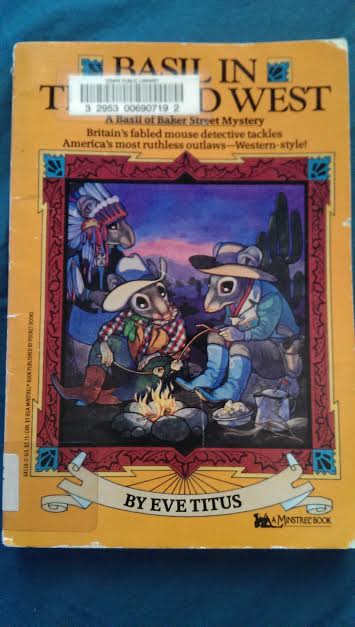 Basil in the Wild West by Eve Titus, 1990.
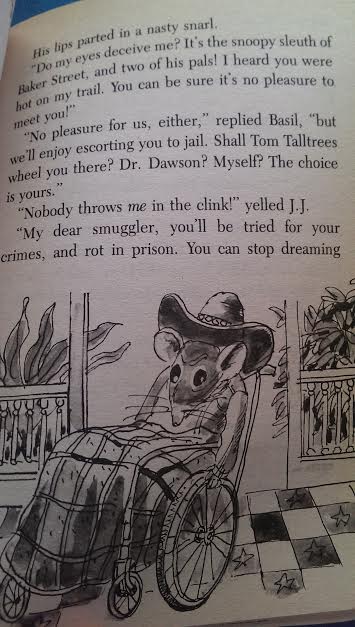 Although J.J. escapes, Basil and Dr. Dawson decide that the smuggling ring has been defeated and it’s alright to continue their sight-seeing. However, their adventures are not over!
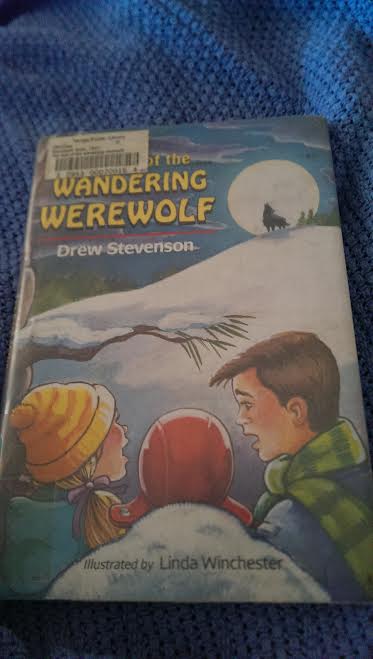 The Case of the Wandering Werewolf by Drew Stevenson, 1987.
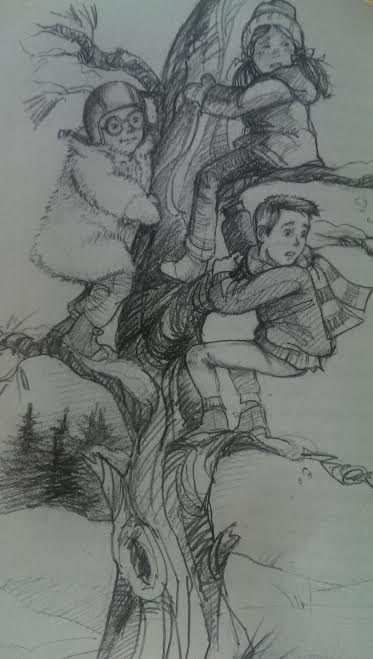 The monster hunt becomes more complicated when Bucky Bovine, a bully at their school, seems determined to stop them from going to Lost Woods to look for the monster. Does Bucky know something about the beast, or could he even be the monster himself?
 The Case of the Horrible Swamp Monster by Drew Stevenson, 1984.
 The course of their investigation takes a strange turn when friendly Mr. Walton, who works as a janitor at the same bank where Huntley and Verna’s mothers work, is arrested for stealing money. The kids refuse to believe that he’s guilty and soon learn that there is a connection between the thefts and the mysterious monster and possibly the strange fisherman who has also been lurking around the swamp.

 Peppermints in the Parlor by Barbara Brooks Wallace, 1980.
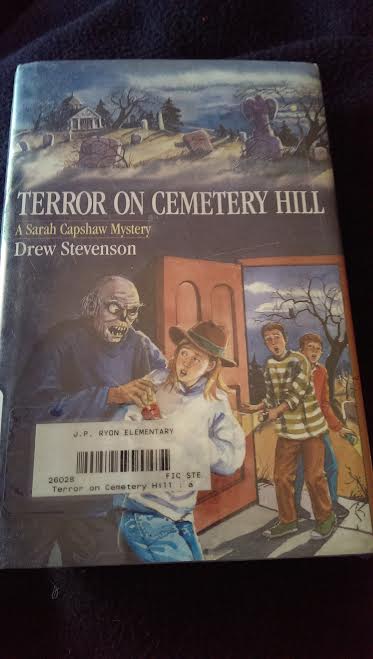 Terror on Cemetery Hill by Drew Stevenson, 1996.
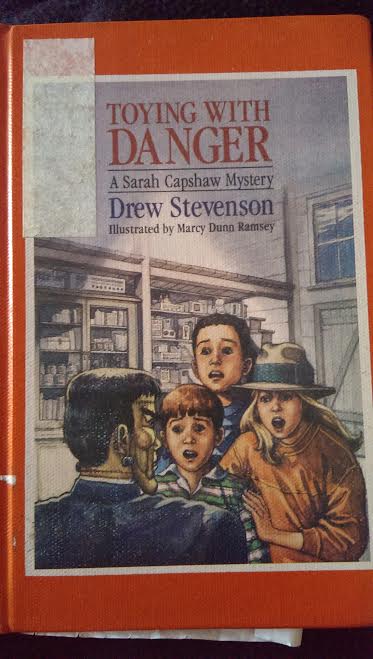 Toying With Danger by Drew Stevenson, 1993.
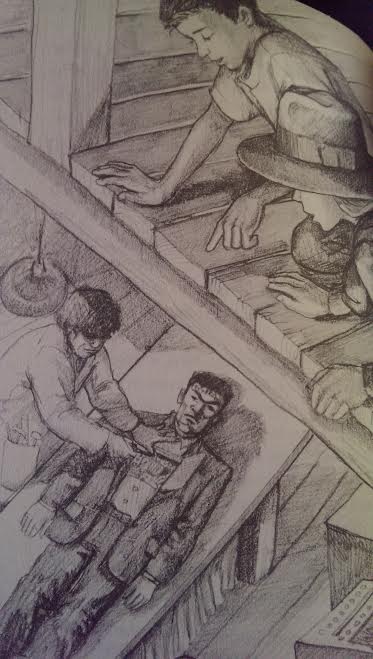 It seems that Sarah is right that someone is trying to spy on Dr. Becker. The kids learn more about the money involved in buying and selling toy designs when they visit the Too Wonderful toy company for a tour with Sarah’s grandfather. Making toys is serious business, and companies guard their designs very carefully. The Too Wonderful toy company wants to purchase some of Dr. Becker’s designs, but one of the members of the company says some strange things about Dr. Becker. Can the kids trust him? Can they trust the strange Dr. Becker? Can Sarah catch the spy before it’s too late?
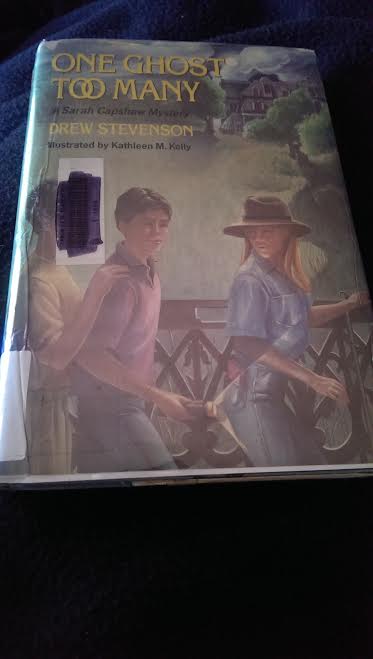 One Ghost Too Many by Drew Stevenson, 1991.
 Sarah persuades Clark and his friend “Frog” Fenniman to join her investigation of the house, but besides the resident ghost, they will also have to deal with a local group interested in psychic phenomena and a mysterious stranger who is paying the local bully to spy on the house.
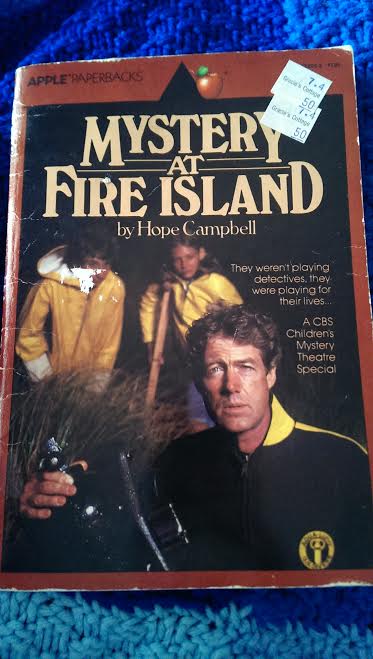 The Mystery at Fire Island by Hope Campbell, 1978.
 Jestress's Forgotten Books and Stories