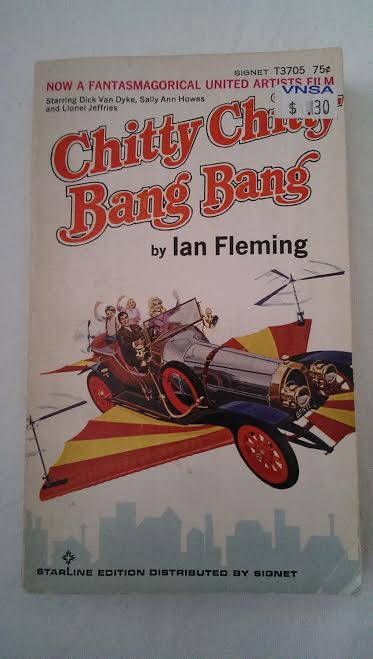
Mystery Aboard the Ocean Princess

MysteryOceanPrincessMystery Aboard the Ocean Princess by Robin Gottlieb, 1967.

Jill Washburn is about to make her first trip to Europe on the same ship as a priceless painting!  Her Uncle Chow and Aunt Rose have invited her to accompany them on the cruise ship to Europe over the summer because her cousin Connie isn’t enthusiastic about the trip, and they thought that the girls would be good company for each other.  Lately, Connie has been trying to act ultra-sophisticated, declaring anything and everything that she doesn’t think is cool to be simply “tedious” (Connie loves big words, and “tedious” is her pet word).

Jill is fascinated by the presence of the famous painting on the ship, a painting of a young Spanish prince by Goya, “Don Manuel Osorio de Zuñiga.”  Jill loves art, and her ambition in life is to be an art teacher, like her father.  She has also read about recent art thefts in the newspaper and wonders whether Don Manuel is at risk during its journey.  She can’t help but seek out the room where the painting is kept and talk to one of the guards about security.  The guard just tells her that he appreciates her concern but that everything is under control.  But later, Jill finds the guard meeting secretly with a mysterious man by the lifeboats.

MysteryOceanPrincessPicCould the two men be plotting to steal the painting?  Jill persuades Connie to help her investigate and spy on the them, but things aren’t what they seem.

A mysterious gift left in Uncle Chow and Aunt Rose’s cabin frames Jill’s aunt and uncle for art theft.  Although Connie thinks their snooping has caused enough problems already, Jill thinks that the only way to clear their names is for her and Connie to find the real thieves.  With the ship’s costume ball coming up, Jill comes up with a daring scheme to get the thieves’ attention and hopefully get them to reveal themselves.  One thing is for sure: Connie was wrong about this trip being “tedious.”

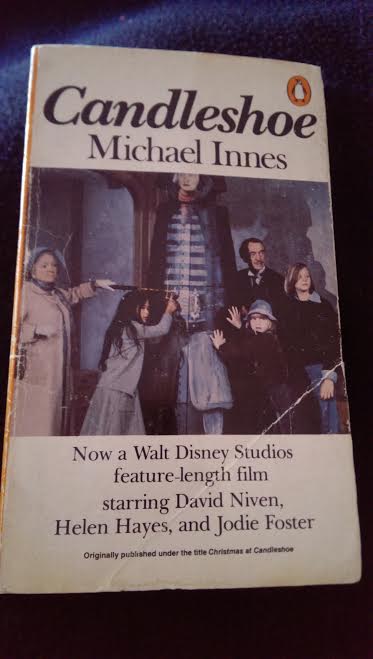
Candleshoe

candleshoeCandleshoe by Michael Innes, 1953.

I own the movie version of the book, which was originally named Christmas at Candleshoe (although it’s not about the holiday).  It contains the text of the original story, but the picture on the front cover is from the movie.

The Disney movie is very different from the original book.  For one thing, the hero of the story is a boy (Jay), not a girl (Casey/Margaret), and unlike the movie version, the child’s identity is established for certain by the end of the book. The book has a happy ending, and so does the movie, but part of the movie’s point was that the idea of family isn’t dependent on blood relations alone, so it isn’t important whether Casey is really Margaret or not (although there are strong hints that she is).

The book is a bit hard to follow at first because it jumps back and forth between different places and different sets of characters, although it all takes place during the course of a single day and night.  Actually, I’m not sure this can really be called a children’s book, but I included it here because of the movie tie-in.  Because of the difficulty level of the book, I’d really recommend it for older children or adults.  Personally, I have to admit that I liked the movie better.

The story takes place in the mid-twentieth century, after WWII. There are two manor houses involved, Benison Court and Candleshoe. Benison Court, the newer of the two, is owned by the Spendloves, and Candleshoe, the older one, is owned by the elderly Miss Candleshoe. The two families are related, and neither one of them has as much money as they used to. The Spendloves take in some extra money by offering tours of Benison Court and showing people paintings and antiques owned by the family for generations. To raise some additional money, they decide to sell a couple of the paintings by Titian. To their surprise, the expert they call in to evaluate the paintings tells them that the paintings are forgeries.  Archdeacon, who cares for the antiques and library at Benison, reminds the Spendloves that during the war, the paintings were sent to Candleshoe for safekeeping.

Meanwhile, a couple of American tourists, the wealthy Mrs. Feather and her son Grant, having seen Benison, stop by Candleshoe. Mrs. Feather is fascinated by the old place, in spite of its state of disrepair, and Miss Candleshoe invites them to have dinner there and spend the night. Mrs. Feather has an interest in purchasing Candleshoe for herself and fixing it up.  Miss Candleshoe and her longtime friend, the retired chaplain, Armigel, know that there is not enough money for them to fix up Candleshoe, and they like the idea of traveling, so they are willing to consider selling the manor house. This plan does not sit well with Jay, the orphaned son of Miss Candleshoe’s housekeeper, Mrs. Ray.

After Mrs. Ray died, Miss Candleshoe cared for Jay, and now, with Miss Candleshoe and Armigel showing signs of senility, Jay has been handling much of the practical running of Candleshoe. On this particular evening, Jay is worried about more than the possible sale of the property. He has been noticing strange people paying unusual attention to the house. He suspects, correctly, that they intend to break into the house that night, and he has assembled a small army of local children, armed with antique weapons, to defend the place. Grant, befriending Jay, admires the boy’s practical turn of mind but worries that they are not up to the task of handling the siege that is coming to this isolated country house. As the danger presses closer, the Spendloves, Archdeacon, and the art expert are heading toward Candleshoe in search of the missing paintings.

The answer to all of these problems may lie in the strangest feature of the house: the Christmas box, a stone monument in the gallery made by Gerard Christmas and dedicated to the memory of an ancestor of the Candleshoes, who may have been a pirate. According to the lore of Candleshoe, the box will open at a time when Candleshoe is in crisis and will save the day.

The book is available online through Internet Archive.

But, is Casey Really Margaret?!

I think so. I want to say, “yes, she is,” but “I think so” is about as definite as I can be because the movie changed the story from the original book.

Whether or not Casey is actually Margaret, the lost heir to Candleshoe, is the burning question everyone is left with after watching the Disney movie Candleshoe. The movie deliberately left Casey’s true identity unresolved at the end, probably because they wanted to have the people at Candleshoe decide to accept her into their family on her own merits, not just because they had to because she’s the heir to the place. In the beginning, the audience is told that missing heir of Candleshoe, Margaret, was kidnapped as a young child by her own father, apparently in some kind of marital/custody dispute, and that she disappeared after his death in a car accident and has not been located although attempts to find her were made in the ten years that have passed since her disappearance. Casey is a teenage girl who was apparently an abandoned child with an unknown past and no memory of her early life who bears an odd resemblance to Margaret, including a couple of distinctive scars that are like ones Margaret was known to have. She is recruited as by con artist to play the part of Margaret, returning to Candleshoe as the lost heiress in order to gain access to the house and find a hidden treasure. Although Casey initially came to Candleshoe under false pretenses as part of a con with the promise of a share of the Candleshoe treasure and a red Ferrari as her payment, she eventually becomes fond of the people there and decides that she can’t let them be cheated by the real villain. Casey proves herself to be part of the Candleshoe family through her loyalty to them, and in the end, they would accept her whether she really was Margaret or not. It’s a nice sentiment, but viewers still have the urge to ask who Casey really is.

Casey is legitimately an orphan or abandoned child, found at about the right time and the right age and in the right place to really be Margaret. She has no memory at all of her early childhood, her parents, or where she came from, and she also bears some telltale scars that match ones that young Margaret was known to have. That’s what we’re told about Casey. Casey’s history is never explained in detail in the movie (we never find out under what circumstances she was found and entered into the Los Angeles foster care system), but from what we do know, her history meshes well enough with Margaret’s known past that it would seem plausible for her to actually be Margaret. Is she really Margaret, and Harry Bundage, the con man, just persuaded her that she was only pretending in order to use her for his own ends? Or, is the real Margaret still out there somewhere? If Casey actually is Margaret, did she lose her memory in the car crash that killed her father, or did he abandon her somewhere before his death, even though he had kidnapped her from her mother and took her to a completely different country?

When Harry Bundage is briefing Casey about Margaret’s background, he poses the theory that Margaret was in the car when her father crashed it and that she may have wandered off in a state of shock after the accident. That explanation might be partly for the benefit of the viewers, helping to explain how Casey could be Marget and not remember it. A young child suffering from shock might be unable to tell anyone who she was or what had happened to her. An accident may even have left some bruising that might have obscured the telltale scars that could have identified her, but again, the matter is never fully settled, and we just don’t know enough of Casey’s background to make a full connection. There are enough pieces to make it possible, maybe even probable, but nothing that definitively settles the matter.

In the final scene of the movie, Casey asks Margaret’s grandmother what will happen if Margaret is ever really found and comes home, and the grandmother says cryptically that maybe she already has. It’s a brief hint that the grandmother thinks Casey might really be her kidnapped granddaughter, even though she accepts that Casey was lying to her earlier about things she said she remembered and knows that Casey herself thought that she was just an imposter. Casey does have those telltale scars, and it does seem like quite a coincidence that two random girls of the same age and similar circumstances would have identical sets of scars. However, the movie stops short of declaring that Casey really was Margaret all along, and the unanswered questions still rankle viewers. So, some of us turned to the original book to get more detail, but it turns out that it doesn’t completely help.

As I said, the original book was different from the movie. Not only was the child hero in the book a boy instead of a girl, he wasn’t kidnapped and taken to America the way that Margaret was. In the book, Jay definitely knows who his mother was, and it’s the question of who his father was that establishes his identity as the heir to Candleshoe. It turns out that Jay’s father was the nephew of the lady of Candleshoe, making her his great-aunt rather than his grandmother. Her nephew had been a ne’er-do-well, and although his family didn’t know it, he had married an American woman before his death. He died not too long after the marriage, but by that point, he had fathered Jay. Jay’s mother knew about her husband’s family, but she wasn’t sure yet whether or not she wanted to tell them about Jay. She took the job as housekeeper so she could observe the family and decide whether or not to reveal their relationship. Unfortunately, she died in an accident before she made up her mind. By the end of the book, Jay’s identity is established, and he is definitely proven and recognized to be the heir to Candleshoe, and because of that, I believe that Casey really is the missing Margaret. At least, that’s as close to confirmation as we’re likely to get. If the child in the book was the rightful heir to Candleshoe, it would make sense if the child in the movie was, too, even if it’s not really the same child.

Of course, that’s not full proof, and it doesn’t answer the questions about Margaret’s kidnapping or her father’s accident or how Casey was found and placed in foster care in California without anyone else connecting her with the missing Margaret when Margaret’s disappearance was reported to the authorities and newspapers. I have a theory that Harry Bundage was right that Margaret was in the car during the accident and that she did wander away from the scene of the accident in shock and possibly suffering injuries that covered up her identifying scars, but that’s still just a theory. There’s nothing in the movie or book that I could use to prove it. We don’t even know exactly why Margaret’s father in the movie kidnapped her in the first place or why Margaret’s mother died not long after she disappeared. (A convenient accident or illness for story purposes so there’s one less person to try to identify Casey/Margaret, or did she kill herself out of despair at the loss of her husband and daughter? The movie doesn’t say, so those are just guesses, too.) There’s a lot of backstory missing, and the book doesn’t clarify these points because of the differences between the book and movie. I guess it’s not really important to the story in the movie, but inquiring minds still want to know.

Chitty Chitty Bang Bang

ChittyChitty Chitty Bang Bang by Ian Fleming, 1964.
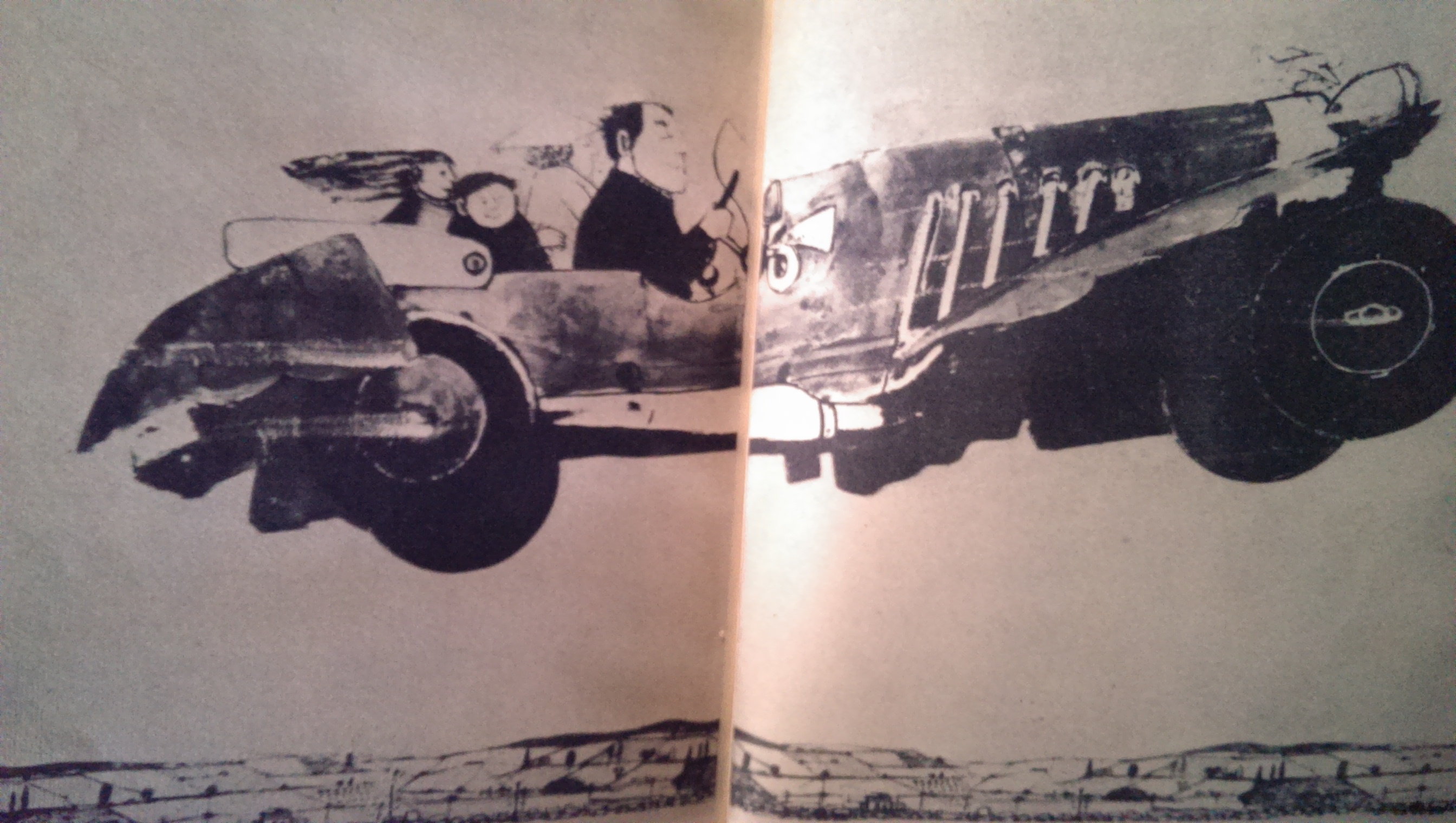
Not everyone is aware that the creator of James Bond wrote a children’s book, although the movie Chitty Chitty Bang Bang is a children’s classic.  However, the movie differs greatly from the original book, which doesn’t have anything to do with a toy-obsessed baron who has forbidden children in his kingdom, and there is no Truly Scrumptious (sorry).

Commander Caractacus Pott, retired, is an explorer and inventor who lives in a little house in the countryside with his wife Mimsie and their children, a set of eight-year-old twins named Jeremy and Jemima.  Some of the locals call Commander Pott, “Crackpott” because of his strange inventions, which never earn him very much money until one of this inventions pays off when he sells the candy whistles he creates to Lord Skrumshus’s candy company.

With the money he earns, Pott decides to buy something that his family has wanted for a while: their own car.  But, they don’t want just any boring car like everyone else.  They want something special.  They find it when they spot a former racing car that’s due for the scrap heap.  No one wants it because it would take a lot of time and money to fix.  The Pott family falls in love with it immediately, and Jemima thinks it might even be magical because the license plate says “GEN 11”, which looks like “genii” (or “genie”).  The garage man is relieved to find a buyer who appreciates the car’s history and potential and says that she’s sure to reward them for saving her from being scrap.

After Pott spends a great deal of time fixing up the car (which they name “Chitty-Chitty-Bang-Bang” because of the sounds it makes) and adding some additional inventions of his own, he begins to suspect that both Jemima and the garage man are right: the car is magical and does want to repay them for saving her life.  He starts to notice changes that the car makes to herself overnight, adding extra buttons and features that he knows he didn’t put there.  He’s not sure what they’re for until the family gets stuck in traffic the first time they decide to take the car out for a picnic. Messages on the car’s dashboard light up, telling Pott to pull some of the car’s mysterious levers.  When he does, the car sprouts wings and flies over the other cars in front of them, over towns and beaches, and even over the English Channel!

ChittyPic2

Chitty-Chitty-Bang-Bang takes the Pott family to a sandbar so they can have a private beach all to themselves.  But, that’s only the beginning of their adventure!  Chitty-Chitty-Bang-Bang can also turn into a hovercraft, and the family decides to take it on a special holiday to France.  When they reach the coast of France, they find a cave and start to explore it.  Someone has set up various devices inside to scare people away, but that only makes the Pott family more curious and determined to find out why.

It turns out that the cave is a hideout for a band of smugglers, and when the Pott family destroys it, they want revenge!

ChittyPic1

At the end of the book, there is a recipe for “Monsieur Bon-Bon’s Secret ‘Fooj'” (they mean ‘fudge’, Monsieur Bon-Bon is a character in the story).

Having known the movie version since I was a kid, I really prefer the movie to the book.  With a magical car at their disposal, the more fairy-tale story about the castle and tyrannical, toy-obsessed baron seems more fitting than the story about smugglers.  But, that being said, the book is still a lot of fun.

The book is available to borrow and read for free online through Internet Archive.

Basil of Baker Street

BasilBakerStreetBasil of Baker Street by Eve Titus, 1958.

Some people may recognize the title character from Disney’s The Great Mouse Detective.  This is the original book that the Disney movie was based on, although the movie was very different from the original book.

The part that is the same is that Basil is a mouse who lives in the house of Sherlock Holmes at 221 B Baker Street. He and some other mice have built a little town they call Holmestead in the cellar.  Although Sherlock Holmes is unaware of Basil’s presence, Basil studies his methods and copies them, becoming “the Sherlock Holmes of the Mouse World.”  Like Sherlock Holmes, Basil also has a narrator for his stories, his best friend and fellow mouse Dr. Dawson, and they solve cases for their fellow mice in trouble.

BasilBakerStreetPicIn this book, Basil’s skills are put to the test when he is hired by his mouse neighbors to find their two missing daughters, a pair of twins named Angela and Agatha.  The twins have been kidnapped, and soon, a note arrives, saying that all the mice in Baker Street have only 48 hours to evacuate their home if they ever want to see the twins again.  A gang called The Terrible Three want to use Holmestead as their headquarters.  With only two days to solve the case, Basil and Dr. Dawson set out to find the gang and rescue the twins so that they can keep their wonderful home!
Basil of Baker Street is actually the first book in a series about Basil’s cases, and I think it’s really the best book in the series.  It is currently available online through Internet Archive.

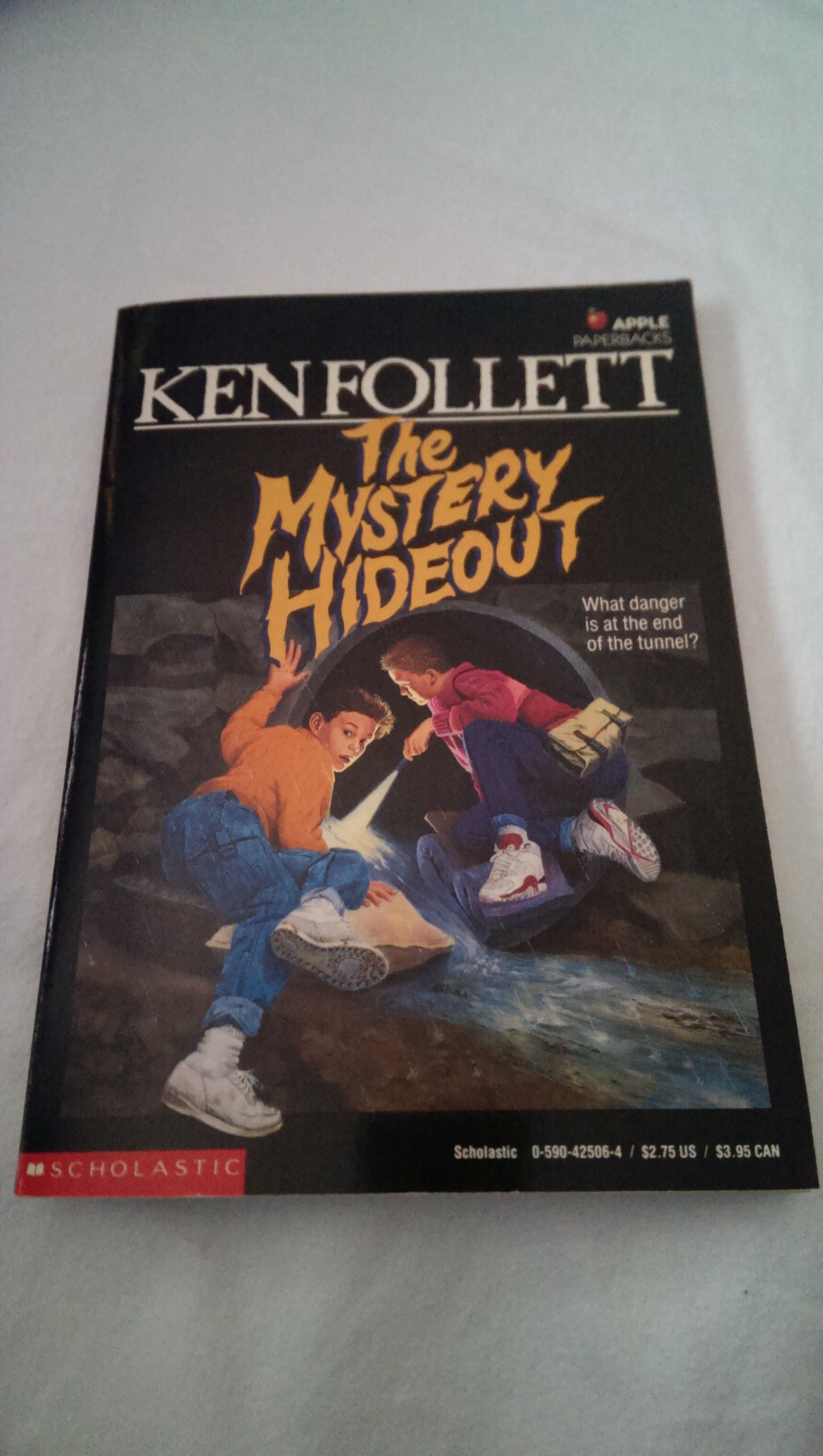
The Mystery Hideout

MysteryHideoutThe Mystery Hideout by Ken Follett, 1976.
The first time Mick Williams meets Randall Izard (called “Izzie”) is when the news dealer Mick works for asks him to train the new boy on his paper route, and Mick learns that Izzie will also be going to his school. Mick doesn’t like Izzie much at first. The new boy speaks with a posh accent and is riding an expensive bike that he says was a present from his father, who makes television ads for a living. Mick doesn’t have a father, and he stole the bike that he rides for his paper route.

Mick guesses that Izzie’s family used to have more money but have fallen on hard times, which is why Izzie needs the paper route.  Mick is worried about his own future.  Someone is building a new hotel on the street where he lives by knocking down the old film studios, and his mother says that they’re going to demolish all the old apartment buildings around it.  That means that they’ll have to find a apartment, which isn’t easy because they don’t have much money, and not everyone wants to rent to a lone woman with a child.

Mick kind of envies the criminal gangs that he reads about in the paper, like the Disguise Gang.  They stage daring raids on banks while wearing clever disguises so that no one knows that they really look like.  They fool everyone and get away with tons of money.  Mick wishes that he was that clever!  If he was, his mother would never have to worry about money again.

MysteryHideoutPicBut, Izzie turns out to be a good friend for Mick.  They both love to play soccer, and Izzie tells Mick that his father used to work in the old studio buildings that they’re tearing down to build the new hotel. In fact, Izzie even knows a secret way in, so the boys sneak in to explore a little.  They’re goofing off with some of the props when they make the startling discovery that the prop guns are loaded with real bullets! Then, the boys have to make a run for it because there are other people sneaking around the old studios. What is going on there?
This book actually takes place in London. I don’t think they actually say the name of the city in the story, but they do mention the Thames, the money is all in pounds, and there are children playing cricket.  But, it’s the kind of story that could take place anywhere.  Mick and Izzie are realistic characters.  Both of them are worried about their families’ hard times.  Mick in particular wants to be the man of the house and to help his mother in her struggles to provide for them.  His inner debate about which side of the law he should be on is also feels real, and it’s satisfying what he chooses when he realizes what criminals are really like and the danger they pose to people he cares about.

The Adventures of the Red Tape Gang

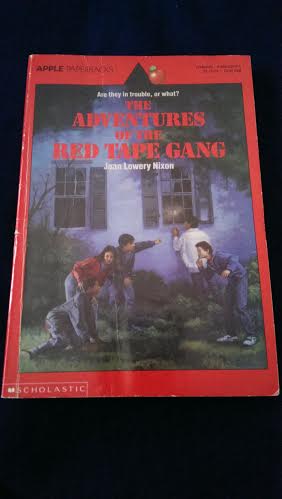
RedTapeGangThe Adventures of the Red Tape Gang by Joan Lowery Nixon, 1974.
Hardcover editions of this book are called The Mysterious Red Tape Gang.

Mike’s father loves to read the newspaper every morning and rant about the stories that make him angry.  It annoys him how little gets accomplished because there’s so much “red tape” involved.  Take the case of their neighbor, Mr. Hartwell.  He has a large bush that’s dangerously close to the corner of their street and has caused several accidents. The city wants him to cut it, but he refuses to do so out of meanness and stubbornness.  Now, the city has to go through all kinds of red tape to make it happen.

His father’s rants give Mike an idea.  Why not put the new clubhouse he and his friends are working on to good use and form a club to right the wrongs of their neighborhood and make all of that red tape unnecessary?  Besides, cutting the Hartwells’ bush in the middle of the night would be a great joke on Mr. Hartwell’s nosy daughter, Linda Jean, who’s always hanging around, getting in the way of Mike and his friends.

Mike’s friends love the idea of being secret neighborhood heroes, but of course, it turns out to be harder than they expected.  After trimming the Hartwells’ bush as best they can, they decide that instead of just cutting the bush, it would be better to move it to a completely different spot so there will be no need to cut it again when it grows out.  But, Mr. Hartwell almost catches them in their midnight landscaping, and when Linda Jean finds Mike’s shears, they’re forced to let her into their club.

Their next project, boarding up the doors and windows of an abandoned house so that curious children won’t wander in and get hurt, also comes with complications.  It seems that the house wasn’t quite as abandoned as everyone thought.  Still, the Red Tape Gang accomplishes something even greater than just keeping kids out of the house and successfully keeps their identities secret.  But while they’re congratulating themselves on the wonderful job they’ve been doing, they discover that their neighborhood contains far more serious problems than they originally thought. Their activities are also starting to come to the attention of the wrong people.  And, for one member of the group, these problems hit dangerously close to home.

This was one of my favorite books when I was a kid.  The descriptions of the kids’ midnight excursions are hilarious and make you want to cheer them on!

This book is currently available online through Internet Archive.

Our Teacher Is Missing

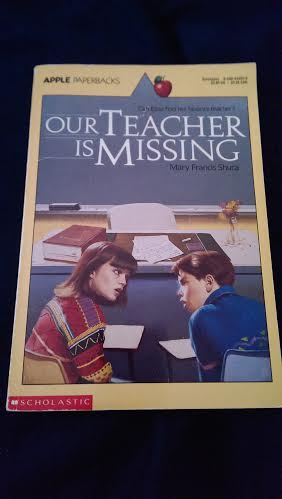
TeacherMissingOur Teacher Is Missing by Mary Frances Shura, 1992.

Eliza is a quiet girl, and she likes to be that way.  Too many of her teachers try to make her be more “outgoing” or “lively.”  Mostly, Eliza wishes that they would just leave her alone.  That’s why she likes her new teacher, Miss Dixon.  Miss Dixon is quiet and soft-spoken, like Eliza.  Ben, the class bully, calls Miss Dixon “Mouse,” but in spite of that, Miss Dixon has no trouble controlling her class.

Then, one day, Miss Dixon doesn’t show up to class.  The kids wait around for her, goofing off, but Eliza is really worried.  She knows that it’s not like Miss Dixon to simply not show up.  Soon, other kids also start becoming concerned, and other faculty members realize that Miss Dixon is missing.  The principal arranges for a substitute teacher while they are looking for Miss Dixon, and the children continue wondering what could have happened to her. The students consider every possibility behind their teacher’s disappearance, from secret mafia connections and entry into the Witness Protection Program to alien abduction.

But, for Eliza, all these wild speculations, stupid jokes about their “Mouse” teacher being eaten by a cat, and the adults’ constant reassurances that they’re sure that there is a reasonable explanation and that no one should be “unduly concerned” are just not enough.  Whatever happened to Miss Dixon, Eliza is sure that she would have come to school or at least called if she could.  Eliza thinks that something terrible must have happened and that Miss Dixon needs help fast.  If the adults won’t do anything about Miss Dixon’s disappearance, then she will!

This book is currently available to borrow and read for free online through Internet Archive.

My Reaction and Spoilers:

I love this book because I identified with the main character from the time I first read it as a child. One of the themes of this book is about people’s perceptions of different personality types. Eliza’s teachers and even her parents underestimate her because of her quiet nature.  Eliza is an introvert, and she is under constant pressure from most adults to be more of an extrovert.  Eliza resents their attempts to reshape her into a more outgoing, forceful person, not recognizing that her real strengths are her intelligence, perceptiveness, and quiet determination to do the right thing.  Being a loud person isn’t the same as being a competent person, although some people have that perception.  However, the people around her come to understand her better in the end.  Eliza also finds some unexpected sympathy from friends who understand her impatience with the shallow immaturity of other kids and who also are content to not be completely understood by other people as long as they have the freedom to quietly be themselves.

Eliza succeeds in this mystery where the adults fail because she is perceptive and has insights into her teacher’s personality that other lack.  Although Eliza’s friends Robin, Stephen, and Chris are worried about getting into trouble by playing detective, when they see how determined Eliza is, they agree to help.  Soon, they realize that Eliza is right to be worried.  Miss Dixon intended to be home over the weekend, but something happened to keep her from coming home.  The more the children talk about what they really know about their teacher, the more they begin to put the clues together.  Finally, they realize where Miss Dixon was right before she vanished, but the situation is serious.  Miss Dixon is being held captive because she accidentally stumbled upon criminal activity.  When one of their classmates is also in danger, Eliza shows everyone that even a quiet person can have the bravery and determination to do what needs to be done.

The Ghost that Came Alive

GhostCameAlive The Ghost that Came Alive by Vic Crume, 1975.

Jenny Blair is a gloomy gus who often gets premonitions of impending doom, much to the annoyance of her siblings.  They poke fun at her pessimism, but some of those premonitions start to come true when her youngest brother falls ill on a family vacation to the beach and needs to be taken to the hospital.

Jenny and her twin brother, Chris, accompany their older teenage brother and sister as they start the long drive home while their parents tend to their younger brother at the hospital. On the way home, the kids accidentally become stranded during a storm and seek out help from a large old house that they had mistaken for a hotel. With a fallen tree blocking the road, the inhabitants of the house reluctantly agree to take them in until they can continue their trip home, but all of the kids can tell that there is something sinister about their hosts.  Miss Cliff makes it obvious that she resents the children’s presence, and Dr. Cliff is a peculiar kind of scientist working on . . .  something . . . in the basement.

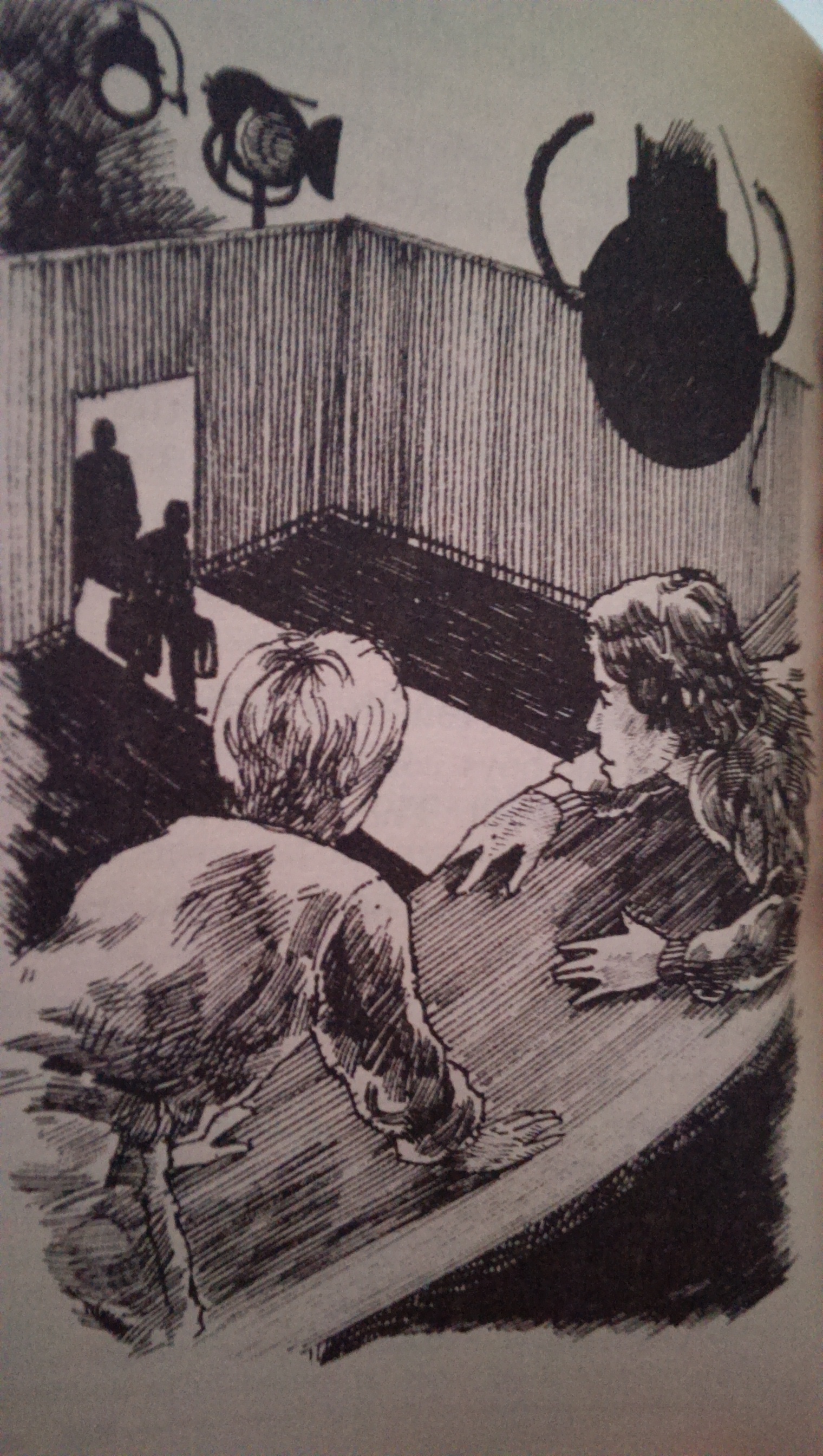
GhostCameAlivePicThey tell the kids that the house is supposed to be haunted and people can often hear the ghost of Andrea Cliff calling out in the night.  The kids soon hear this spooky voice themselves, calling for help.  Trapped in the house with the ghost and unfriendly people, the Blairs decide that they have to figure out what’s really going on, but the danger is worse than they know, and Jenny’s premonition of doom is getting stronger all the time . .

The book is available to borrow and read for free online through Internet Archive, but the version there does not have pictures.

My Reaction:

This creepy little book has been a favorite of mine for years!

Young people trapped in a spooky old house with a ghost story during a storm is a common trope of spooky stories, but this one is a particular favorite because of the way it’s done. I like the implication that Dr. Cliff might be some kind of mad scientist. Mad scientists appear in other books in children’s literature, but it’s an element that provides a nice twist on the ghost story and allows readers to wonder whether Dr. Cliff or the ghost might be the bigger threat.

The ghost story and the mysterious voice the kids hear is also well done, and they confront the problem very practically. For those who like the Scooby-Doo style of mystery, where the “ghosts” turn out to be people, and there’s an explanation for everything . . . you’ll love this story.  Not all copies of the book have pictures, but my book contains a few black and white illustrations.  The one I used in my review is the scene where the kids hear the ghost’s voice for the first time.

There is one final twist at the end of the story that readers might see coming if they pay close attention to the story. There’s even a clue to this twist that is shown in pictures if you have a copy with pictures, but I’m not going to spoil it here.

The Case of the Haunted Health Club

HauntedHealthClubThe Case of the Haunted Health Club by Carol Farley, 1991.

This is the third and last book in the Flee Jay and Clarice Mysteries.

The story begins with Flee Jay talking about how she fell in love with mystery stories when she was younger after she found a mystery for adults that had accidentally been shelved in the children’s section of the library.  Although the book was about a murder where the body was hidden inside a snow man and was really too scary for a girl her age, she was captivated by it, wondering what was going to happen next.  It was a shame that the librarian caught her reading it, so she never got to find out how it ended.  But, it does inspire her to find part of the solution to this mystery, a part that stumps even Clarice.

The mystery that confronts Flee Jay and Clarice this time concerns a fortune teller and her nephew.  The fortune teller used to live in their town, and the girls’ parents even went to her to have their fortunes told when they were teenagers.  Now, she’s returned along with her nephew in order to revive the health club that her late husband owned when they were living in this town.  When the girls go by the health club to take a look at it, they find the fortune teller unconscious on the floor.  She says that there must have been something in the tea she was drinking and that “the spirits” have been trying to convince her not to get involved with the health club.

HauntedHealthClubPicFlee Jay thinks this is spooky, but Clarice doesn’t believe in spirits.  In order to investigate further, the two girls accept part time jobs helping the fortune teller and her nephew to clean up the building so they can move in new exercise equipment.  “The spirits” continue sending warnings in the form of red dye in the Jacuzzi and threatening messages.  Clever Clarice uses logic to point out how most of these things were accomplished but is surprised when Flee Jay reveals something that she overlooked.
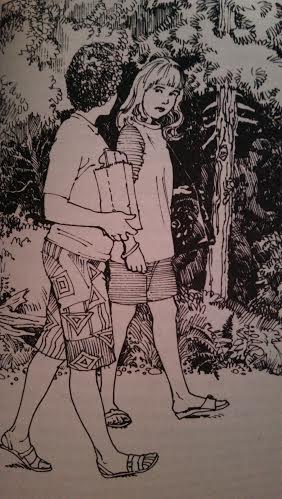
Although I like the first two books in the series better, the ending of this one makes it worth reading.  Clarice may be the genius who usually reveals the solution to the mystery, but Flee Jay is a girl detective after all!

This book is currently available online through Internet Archive.

The Case of the Lost Lookalike

LostLookalike

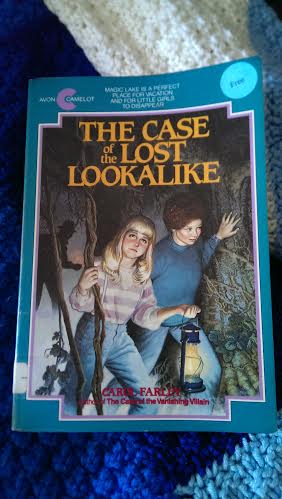
The Case of the Lost Lookalike by Carol Farley, 1988.

“I want to swoop in and spout out the answers to baffling mysteries while everyone around me blinks in befuddlement.  I want to reveal the amazing solutions to puzzles while everyone gasps in admiration.  Except the criminal, of course, who gasps for other reasons.”
— Flee Jay Saylor

This is the second book in the the Flee Jay and Clarice Mysteries.

In The Case of the Lost Lookalike, Flee Jay and Clarice are spending the summer at a lake with their aunt, and someone there says that Clarice is the very image of a little girl named Caroline who was apparently kidnapped 40 years ago.  Little Caroline disappeared from her own bedroom one night after her mother died under rather suspicious circumstances.  Most people assume that Caroline is dead, too.  The girl’s father is now a strange recluse who lives on an island in the middle of the lake.

LostLookalikePic

But, as the girls puzzle over this old mystery, other mysterious things begin to happen.  A woman produces pictures of the missing girl which look nothing like Clarice.  Then, her shop is broken into, and the pictures of Caroline disappear.

When someone persuades their aunt to let the girls visit the old recluse on the island, the man’s reaction is surprising, and they come to realize that Caroline’s disappearance might not be the real issue at all.  Clarice takes some frightening risks to get to the bottom of the mystery!

My Reaction

In a way, this story is two mysteries in one because Clarice figures out what really happened to Caroline when she disappeared years ago at the same time that the girls unravel the mystery that is affecting people who live in the small town by the lake now.  The mystery of what happened to Caroline would not have resurfaced at this particular time if someone else hadn’t brought up the issue as a distraction from something else.

What I like best about this series is the sense of humor and the way that Flee Jay says things as she narrates the story: “I mean, new cottages and magic lakes are terrific and all that, but nothing can ever take the place of a peanut-butter, brown sugar, and banana sandwich.”