Coffin on a Case

CoffinCaseCoffin on a Case by Eve Bunting, 1992.

Twelve-year-old Henry Coffin’s father is a private investigator, and Henry hopes to be one himself someday.  He’s learned a lot by watching his father in action.  One day, a sixteen-year-old girl, Lily, comes to the office and asks for help in finding her missing mother.  Lily found her mother’s car in their driveway with groceries still in it, and her mother is nowhere to be found.  She doesn’t want to go to the police because she once called the police about her mother being missing only to discover that there was a mix-up and that her mother had tried to leave her a note that she hadn’t seen.  Lily has double-checked this time to make sure that there was definitely no note from her mother and none of her mother’s friends have heard from her, but she worries that the police would think that she’s being paranoid, so she decided to consult a private investigator instead.

Henry’s father is concerned about the disappearance of Lily’s mother, but he’s unable to take the case because he has to go out of town.  He tries to refer Lily to another investigator or a friend of his who is with the police, but Lily just storms out of the office.  Henry wishes that he could take the case for his father.  His own mother abandoned him and his father when Henry was just a baby, so disappearing mothers are of great concern to him.  Later, when Lily gets in touch with him, Henry agrees to help her without telling either his father or Mrs. Sypes, the housekeeper who has looked after him since his mother left.

At first, there doesn’t seem to be much to go on.  Lily’s mother makes wooden storks that she sells as lawn decorations to people who have recently had a baby.  She was going to sell a couple before going to pick up the groceries, but Lily says that there is an extra one missing.  Somewhere between the grocery store and home, Lily’s mother made an unexpected stop . . . and there are signs that someone other than Lily’s mother drove the car to Lily’s house.  But, who was it, and what happened to Lily’s mother?

The answers to these puzzles put Henry on the trail of some dangerous thieves who would do just about anything to cover up their crime.

The book is available to borrow and read for free online through Internet Archive (multiple copies).

My Reaction

Henry shows excellent deductive reasoning as he analyzes the clues and reconstructs Lily’s mother’s trail to learn what happened to her. Both Henry and his father are inspired by the fictional character, Sam Spade, and Henry makes frequent references to him in the story, thinking what Sam Spade would say or do in certain situations.

Throughout the book, Henry also considers his own mother’s disappearance years ago.  Her abandonment of her family was her own choice, not an abduction, which makes her situation different from what happened to Lily’s mother.  Henry has no real memory of his mother, which pains him somewhat.  He sometimes dreams that she’ll return home one day for a happy ending, like in the movies, but he also realizes that’s really just a daydream.  When Lily’s mother is finally rescued, Henry and Lily continue being friends, and Henry also considers whether a relationship would be possible between his father and Lily’s mother.  It’s a nice idea, but Henry also thinks that isn’t likely, and he’s okay with that.
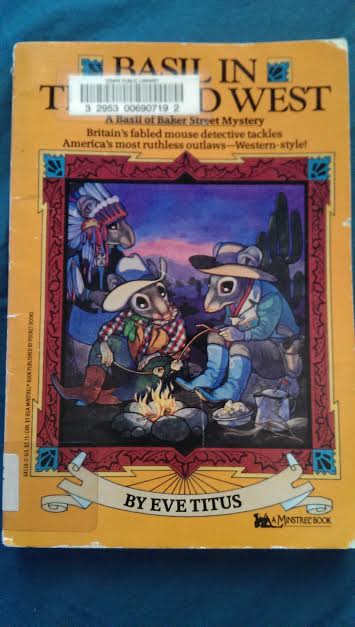
Basil in the Wild West

BasilWestBasil in the Wild West by Eve Titus, 1990.
This book picks up right after the previous book in the Basil of Baker Street Series, Basil in Mexico.

After leaving Mexico, Basil and his best friend Dr. Dawson journey north into the western territories of the United States.  There, some friends of their ask them to investigate a smuggling operation.  Mice have been illegally bringing Mexican antiquities across the border.

Basil realizes that the smugglers have been smuggling the antiquities in the open, pretending that they are ordinary replicas, the kind that tourists often buy.  Because the border guards aren’t experts in antiquities, they haven’t been able to tell the difference between harmless souvenir replicas and the real thing.

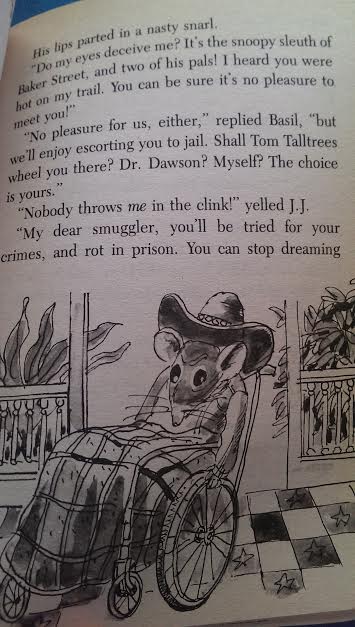
When they catch one of these smugglers, they learn that the mastermind behind the scheme is a mouse called J.J. in a town called Moriarty in New Mexico (the name of the town irritates Basil).  They go to the town with the help of some friendly horses and confront J.J..  At first, they think it won’t be too difficult because, although J.J.’s house is well-guarded, he is confined to a wheel chair because of an accident.  However, the wheel chair is an act, and J.J. is no ordinary mouse.

BasilWestPic2Although J.J. escapes, Basil and Dr. Dawson decide that the smuggling ring has been defeated and it’s alright to continue their sight-seeing.  However, their adventures are not over!

Basil and Dawson want to see the Grand Canyon, but it turns out that the hotel where they are staying is being terrorized by a weird, glowing Thing.  Nobody knows what it is, but guests think it could be some kind of ghost or monster, and many of them are too afraid to stay.  The owners of the hotel ask Basil to discover what the Thing is and stop whoever may be behind it before their hotel is ruined!

This book is really two stories in one, and neither has any direct bearing on the other.  In that way, it’s kind of disjointed.

The book is currently available online through Internet Archive.

Secret of the Tiger’s Eye

tigerseyeSecret of the Tiger’s Eye by Phyllis A. Whitney, 1961.
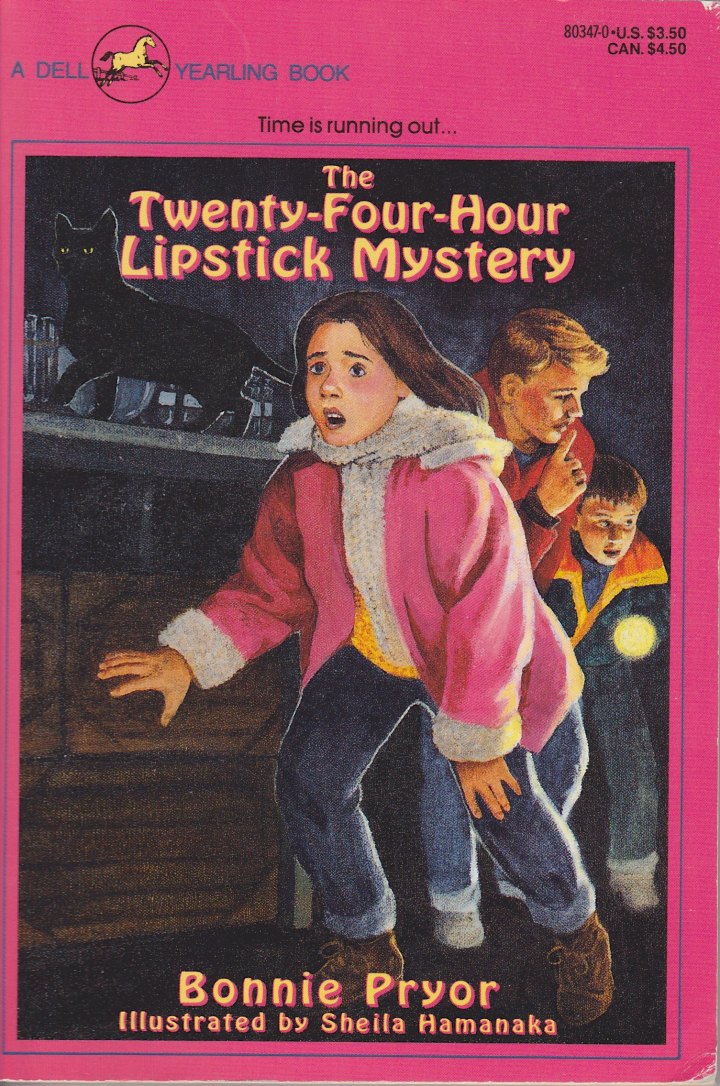
Benita Dustin’s father is a writer, just like she hopes to be one day. When her father announces that they will live for a year in South Africa with his Aunt Persis so that he can do research, it sounds like a grand adventure. The trouble is that her father’s editor has given permission for her son, Joel, to accompany them because she thinks the experience would be good for him, too. Benita’s little brother, Lanny, gets along well with Joel, but Benita and Joel fight and tease each other almost constantly. Benita gets annoyed with Joel’s obsession with facts and information, and Joel thinks that Benita’s stories and flights of fancy are silly.

Aunt Persis’s house is wonderful with a beautiful tower room where Benita is allowed to stay. There is even a fantastic story about the ghost of a tiger that Aunt Persis’s husband shot years ago in India haunting the grounds of the house and the little cave in the garden. Although Joel scoffs at the idea of a tiger ghost, Benita is captivated by the story, especially when strange things begin to happen around the house. Benita learns about the tragic death of Aunt Persis’s adopted son, Malcolm, and the strange theft of the emerald diadem that Aunt Persis received from the rajah that her husband saved from the tiger years ago. However, she will need Joel’s help to make sense of the situation, a difficult prospect at the best of times but almost impossible to ask for after Joel plays a cruel joke on Benita and tries to get Lanny to help gang up on her.  Then, Benita’s father tells her something that changes everything, and all the time, someone with sinister intentions is watching and waiting . . .

The book is available to borrow and read for free online through Internet Archive.

My Reaction

Besides the mystery, there is also a subplot about the nature of hate and prejudice. In South Africa, at the time the story was written, apartheid was still in force. Benita makes friends with a girl of mixed race called Charis, and they talk about racial issues in South Africa and the U.S. during the 1960s. Although Benita wouldn’t think of being prejudiced against anyone on the basis of race, she finds it harder to understand people with different personalities, like Joel.  Although the story focuses on Benita and the lessons she learns, I personally found Joel and his mistakes harder to accept.  Both Joel and Benita need to learn to be more understanding of each other, but in a way, I think Joel is worse because of his deliberately cruel pranks and because he already knows a couple of things that Benita doesn’t which should have influenced his behavior. Joel is deliberately trying to pick fights, and the book never really explains what he expected to accomplish by that.  Everyone needs a motivation, and Joel never really explains his, so he comes off seeming like he’s just there to be a mean character for no real reason.

I also wish that the parents in the story had more frank and straight-forward discussions with the kids.  As a professional writer and a professional editor, they should have been able to settle the kids’ arguments about imagination vs. facts or at least put the situation into perspective by explaining what they do in their jobs.  After all, Benita’s father is going to South Africa specifically to do research.  In other words, even fiction writers need to have a nonfiction background and real facts to use as a basis for their fictional stories.  Realistic backgrounds give stories the grounding they need in order to feel real to readers.  (Although that does depend somewhat on the type of story.  Fantasy stories don’t need to be based on real life, although they do have to have a consistent logic within the story so readers feel like they can understand the world in which the stories take place and the rules by which the magic in the story works.  If the story is meant to be surreal, the internal logic can be more loose.)  Editors, like Joel’s mother, fact check stories as well as ensuring that they are compelling for readers, helping to make decisions about where fictional stories need to be factually correct and where the author can depart from the facts for the sake of the story.  I think that Benita and Joel really should have had a better grasp of their parents’ professions and the balance between fact and imagination in fiction.  Of course, if they did, there would be less conflict in the story.

Fortunately, Benita and Joel work out their differences while confronting the mysterious situation and become friends when they learn to allow each other to be themselves and to appreciate each other’s good points.

The Twenty-Four Hour Lipstick Mystery

24hrlipstickmysThe Twenty-Four-Hour Lipstick Mystery by Bonnie Pryor, 1989.
Cassie Adams, who is eleven years old, has never been happy with her looks, and now that her friends are starting to shave their legs and get interested in boys, she feels plainer than ever. One day, she sees an ad for Mrs. DuPrey’s School of Beauty and Charm and thinks that it might help her improve her appearance and develop confidence. The only problem is that she doesn’t have the money for it, and her parents won’t give her any. She decides that she needs to look for odd jobs in the neighborhood to help raise the money that she needs.

By coincidence, old Mr. Murdock’s granddaughter has recently moved into the old family house, which is huge and reputed to be haunted. In spite of the creepiness of the old place, Cassie finds a job there, helping Miss Murdock with cleaning and unpacking. Miss Murdock’s father made his money in cosmetics, and Miss Murdock employs a secretary named Victoria Presser, who used to be a model. Cassie admires Vicky for her beauty and elegance and looks forward to picking up some beauty tips from her. She also makes friends with Jason, a new boy in town, who also works for Miss Murdock, helping the gardener fix up the grounds. However, it isn’t long before Cassie, Jason, and Cassie’s younger brother, Danny, begin noticing that there is something odd about the old Murdock house.

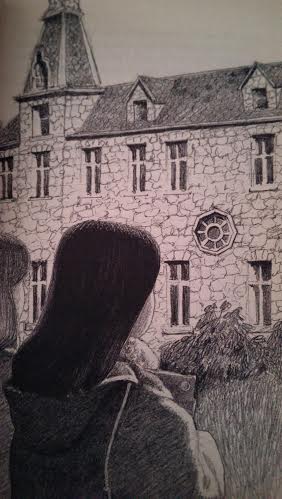
lipstickmysterypicDanny is the first to notice that there is an octagonal window in the wall of the house, but none of the rooms has a window in that shape. Sometimes, lights can be seen through this window at night. Also, Cassie finds what looks like lab equipment among Miss Murdock’s boxes. Is Miss Murdock involved in something illegal? Does it have something to do with the burglaries that have been occurring around town? Why is the grumpy old gardener sneaking around? Just what is in that hidden room?

The book is currently available online through Internet Archive.

My Reaction

This is a good mystery for tween and early teen girls, who can identify with Cassie’s worries about being beautiful and popular. The moral of the story is that appearances are deceiving, and in the end, Cassie reconsiders what beauty really is and develops more confidence by appreciating the good qualities she already has and developing new interests.  While some of the other girls try to show how grown-up they are by looking grown-up, Cassie really grows up by taking responsibility for her life and the direction she wants it to go, making decisions about what she wants and who her real friends are.

Peppermints in the Parlor

peppermintsparlorPeppermints in the Parlor by Barbara Brooks Wallace, 1980.

Newly orphaned Emily Luccock journeys to the home of her Aunt and Uncle Twice in San Francisco. She has not seen her aunt and uncle in years, but they are the only family she has now, and she hopes that she will soon feel at home in their lovely mansion, Sugar Hill Hall.

Upon arriving in San Francisco, however, she is met by her Aunt Twice, who seems to be a pale shadow of the woman she once was. Sugar Hill Hall is now owned by the sinister Mrs. Meeching, and Aunt Twice is forced to work as a cook and housekeeper. Aunt Twice seems very frightened of something, but she refuses to say exactly what she fears, and Uncle Twice is nowhere to be found.

Aunt Twice tells Emily that her wealthy parents lost all their money before they died, and she is now poor, too. Emily is quickly put to work as a housemaid alongside Tilly, another orphan girl. Her only real friend is Kipper, a fishmonger’s son who is paid to do chores around the mansion sometimes. The house is being run as a home for elderly people, but the elderly people are treated badly, fed rotten food, and punished severely for even so much as taking a single peppermint from the bowl in the parlor. Emily tries to do little things to make the old people happier, but all the time, she is right at the center of all the sinister events surrounding Sugar Hill Hall.

The book is available online through Internet Archive.

Just Tell Me When We’re Dead!

JustTellMeJust Tell Me When We’re Dead! by Eth Clifford, 1983.
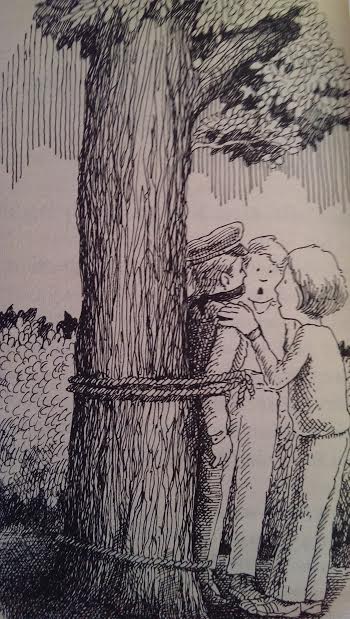
This is another book in the Mary Rose and Jo-Beth series.

Mary Rose and Jo-Beth are visiting their Grandma Post with their father while their grandmother is getting ready to go into the hospital for an operation. Their cousin Jeffrey, an orphan who lives with their grandmother, is supposed to come and stay with them until their grandmother is better, but he doesn’t want to go.

Jeff has never really gotten over the hurt from when his parents died. They used to travel a lot, but they would never take him along because he was too young. Then, one day, they were killed on one of their trips, which is why Jeff now lives with his grandmother. Now that his grandmother is going to the hospital, Jeff is afraid that she will die, too, and unable to face that, he runs away to be on his own.

JustTellMePic2The first place he goes is to an island in the middle of the lake near his house. The island has campgrounds and an amusement park, which is now closed for the season. Mary Rose and Jo-Beth, realizing where Jeff has gone, follow him there. But, the children are not alone on the island. When Jeff is captured by two criminals who are looking for loot that they stashed on the island years before, he has to keep his wits about him to find a way to summon help. Meanwhile, Mary Rose and Jo-Beth have no idea what they’ve just walked into.

At the end of the adventure, Mary Rose, Jo-Beth, and their father help Jeff to make peace with the loss of his parents and to understand that, even though unexpected and scary things can happen in life, his parents never meant to leave him. They loved him, and his grandmother and other relatives also share his sense of loss.

The book is available to borrow and read for free online through Internet Archive.