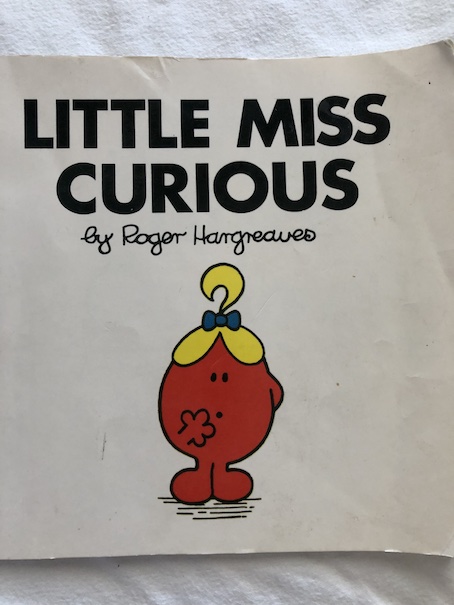
Little Miss Curious by Roger Hargreaves, 1990.
Little Miss Curious is a very curious person. She is curious about everything.

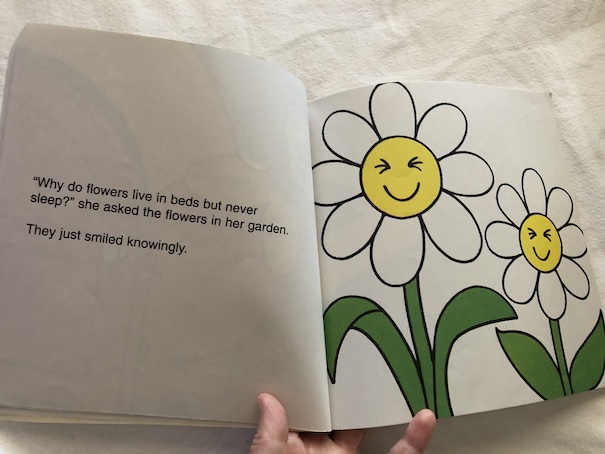
She wonders about all kinds of things and constantly asks questions. Most of the questions she has are silly nonsense, but Little Miss Curious can’t stop wondering things like why flowers are in beds but don’t sleep or why sandwiches don’t contain sand.
She finds out that sandwiches do have sand when Mr. Nonsense makes them, but this is the only question she gets answered in the book.

Little Miss Curious has so many questions that she decides to go to the library in town and find books that can answer all of her questions. It’s a sensible thing to do, but because books in this series are mainly nonsense, her library visit doesn’t go as planned.
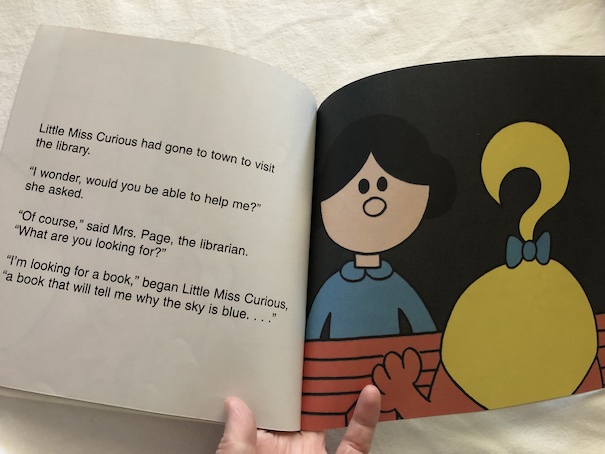
Little Miss Curious takes so much time peppering the librarian with all of her questions that the other patrons get annoyed, and Little Miss Curious gets thrown out of the library.

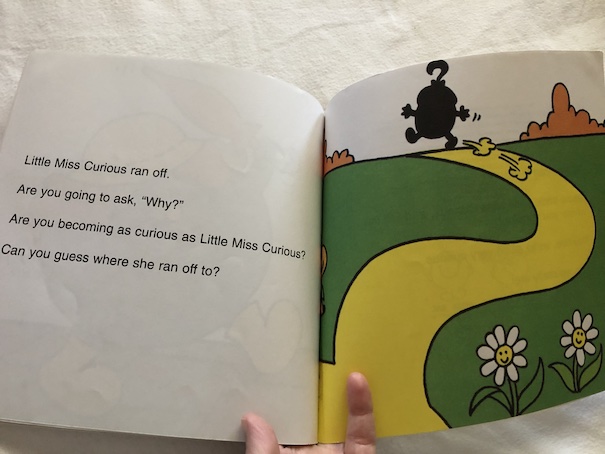
Little Miss Curious can’t understand why that happened or why people are giving her strange looks. The book ends with her running off down the road, and it invites curious readers to wonder why and where she’s going.
This book is part of the Little Miss series. It’s available to borrow and read for free online through Internet Archive (multiple copies).
My Reaction
Sometimes, books in this series emphasize morals by showing positive traits and negative ones, but even more often, the traits of the characters are played for humor, and that’s the case with this book. No morals are taught, and no lessons are learned. Miss Curious faces some consequences for wasting people’s time with ridiculous questions, but she doesn’t seem to understand the way people react to her. There is no change to her character, and the story has an open end, where readers are invited to be curious about where Little Miss Curious is going and what she’s going to do next.
Although Little Miss Curious’s curiosity goes overboard, curiosity is inevitable, and the reader can be as curious as anyone. In a nonsense book, that’s about as close to a moral as I can draw. Mainly, the book is for fun and humor. Readers can chuckle at the silly things Little Miss Curious ponders and indulge in a little curiosity of their own.
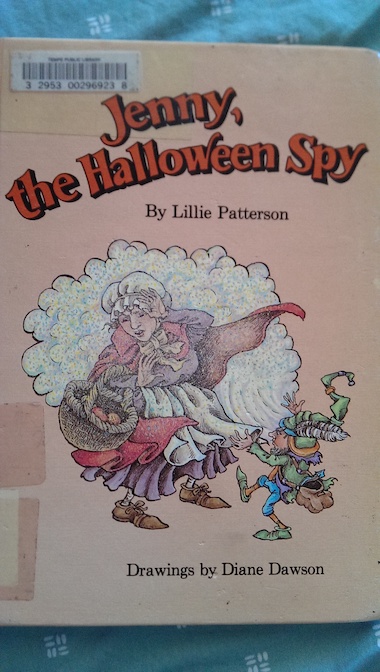
 One Halloween, Jenny goes to visit Nancy, a woman who local people say is a witch. Jenny is curious about magic and, knowing that there are magical creatures abroad on Halloween, she wonders if she might see something unusual at Nancy’s house.
 This is a kind of cautionary story about the dangers of curiosity. Jenny’s curiosity invites the attention of dangerous creatures and leads her into a frightening situation, something that she never wants to repeat. For the most part, I think that curiosity is a trait that should be encouraged, but Jenny did deliberately seek out a person with a dangerous reputation and pry into the things she was doing, even trying some herself because she wanted to know more about it, so she could be considered to have gone looking for trouble.

 Jestress's Forgotten Books and Stories