Eleanor and Edward Hall are orphans who live with their Aunt Lily and Uncle Frederick in their family’s big but somewhat shabby old house in Concord, Massachusetts. The family has lived there for generations, and they are intellectuals with a particular interest in the literary history of Concord. Uncle Freddy is obsessed with Ralph Waldo Emerson and Henry Thoreau, although he doesn’t share Eleanor’s love of Louisa May Alcott. When a couple of the town leaders threaten to take the family’s house because of unpaid back taxes and to destroy it because they think it’s an eyesore, the children come to learn that their house holds more secrets and history than anyone knows.
As Eleanor and Edward look at the house from the outside, they suddenly realize that there’s an window at the top of the house that’s shaped like a key and made of colored glass. They’ve never seen that window from the inside of the house, so there must be a secret room! The children search the attic and find a trap door that they never realized was there before. When they look into the hidden room, they find a pair of children’s beds and toys.
The children ask Aunt Lily about the room, and she sadly admits that she hadn’t wanted to tell them about it. Then, she begins to explain more about the family’s history and the aunt and uncle the children never knew. Aunt Lily is their father’s sister, and Uncle Freddy is their brother, but there were once two more children in the family, called Ned and Nora. Eleanor and Edward were named after them, but Ned and Nora mysteriously disappeared years ago. Aunt Lily still believes and hopes that, somehow, they will return someday, so she has always kept their room ready for them.
When she shows the children pictures of Ned and Nora in the family’s album, they also see a picture of a young man in a turban and ask about him. Aunt Lily says that the man is Prince Krishna, son of the Maharajah of Mandracore. Their Uncle Freddy has written books about Emerson and Thoreau and was once considered an expert on the Transcendentalists. People who were interested in Transcendentalism, like Prince Krishna, used to come and study with him. Aunt Lily wasn’t really interested in Transcendentalism, but she explains, “I think he said that the Transcendentalists believed that men’s minds were very wonderful, and that they could know all kinds of important things without being taught about them through their eyes and ears –because they were part of something called an Over-Soul.” Eddy approves of this concept because it sounds like it’s about learning without school, and he approves of anything that involves no school.
Everyone was fond of Prince Krishna while he lived and studied with the family, and Aunt Lily said that he used to make up fun games for Ned and Nora, like treasure hunts with real jewels as prizes because the prince was very rich. The children get the sense that Aunt Lily was in love with Prince Krishna, but he also vanished shortly after Ned and Nora did. When they discovered that Ned and Nora were missing from their beds one morning, Prince Krishna dashed around, looking for them, but suddenly, he was also gone, and no one knew where or how.
Eleanor and Eddy return to Ned and Nora’s room upstairs to have another look at it, and they find a mysterious poem called “Transcendentalist Treasure.” From the handwriting, which matches a note that Prince Krishna wrote to Ned and Nora with a present he gave them, Eleanor and Eddy realize that Prince Krishna also wrote the poem. Since the poem seems to be some kind of treasure hunt, the children think that it was probably part of the treasure hunts that Prince Krishna used to make for Ned and Nora. They try to figure out what the clues in the poem mean and what it might lead to, hoping that it might be the jewels that Aunt Lily told them about and which haven’t been seen in the house since Ned, Nora, and Prince Krishna vanished. If they could find those jewels, they could pay the back taxes and save their house!
However, they don’t really begin to grasp the full importance of the poem until they ask Aunt Lily if they can spend the night in Ned and Nora’s room. During the night, they have a bizarre dream, in which they’re climbing an elm tree with Ned and Nora and find a harp, which is something that was mentioned in the poem. A dangerous wind blows them out of the tree, and they wake up. They could have believed that it was only a dream except that they realize that they both dreamed the same thing, Eleanor has bruises and a scratch on her leg that she got from falling out of the dream tree, and Eddy has located the harp in Ned and Nora’s bedroom.
They show the harp to Aunt Lily, and she says that Prince Krishna had given it to Ned and Nora years ago, hanging it in a tree so that they would hear the wind blowing across it. The poem and the dreams that Eleanor and Eddy have seem to be hinting at the treasure hunts that Prince Krishna had with Ned and Nora. Eleanor and Eddy begin to think that solving the riddles in the poem may not only lead them to the jewels but to the truth about what happened to Ned, Nora, and Prince Krishna.
The book is available to borrow and read for free online through Internet Archive.
My Reaction and Some Spoilers
The book introduces the concept of Transcendentalism. I remember my English and history teachers discussing the Transcendentalists when I was in high school, but for some reason, they didn’t appeal to me back then, even though I went through a kind of phase where I was interested in metaphysical topics. I think my teachers put a lot of emphasize on their interest in nature, and I wasn’t an outdoorsy person. The background information in this story revived old memories of my high school classes and actually clarified a couple of points for me. The kids visit real places in Concord, Massachusetts, including the house where Louisa May Alcott once lived, and the book is full of discussions of literary figures and their lives and quotations from their works.
The children’s surrealist dreams connect to real objects in their lives and in the history of the family and their house. The dreams follow the poem that Prince Krishna left behind, and in each of their dreams, they see Ned and Nora up ahead of them, so the Eleanor and Edward realize that they’re following their path. The poem and the dream reference pieces of Transcendental literature and thought, and the children’s uncle explains the references throughout the story.
Many of the dreams also show the children’s personal and mental growth. In one dream, the children examine different images of their future selves, seeing how different choices they make can lead their lives in different directions, and they make up their minds which version of themselves they want to aim to be. In another dream, the children are trapped in a nautilus shell, and they discover that they have to think their way out of it. The thoughts they have help them work their way through each chamber of the nautilus, but they have to use thoughts with increasing depth and complexity to make progress. At first, remembering nursery rhymes is enough to help them move forward, but as they go further, they have to concentrate on more complex poems and higher-level moral and philosophical thoughts.
Although the dreams the children have are very surreal, and readers have no idea where they might be leading, the children do find Prince Krishna and their missing aunt and uncle. When the three of them return, Prince Krishna does explain where they were the entire time they were missing. He doesn’t offer a detailed explanation because they were trapped in a sort of magical/metaphysical prison, but he does explain who trapped them and why. There is a villain in the story, but it takes a while to grasp who and what the villain is because readers don’t really see it/him in his true form and don’t understand who he is and what his motives are until Prince Krishna explains. Eleanor and Eddy end up understanding more than Aunt Lily and Uncle Freddy do in the end, but finding Ned and Nora, Prince Krishna, and Prince Krishna’s treasure changes everyone’s lives for the better. Throughout the book, Uncle Freddy is mentally unbalanced, eccentric at the best of times and outright crazy at others. Local people want to see him committed to an asylum, but his mind was unbalanced by Ned and Nora’s disappearance. Once they’re back, he regains his senses.
The author wanted to write realistic children as her protagonists to appeal to real children. Eleanor and Eddy have their own insecurities and dreams which play into their characters all through the book and appear in the visions of the futures and choices they have to make in their dreams.
A Watcher in the Woods by Florence Engel Randall, 1976.
The Carstairs family is moving from Ohio to a small town in Massachusetts because Professor Carstairs will be taking a new job as head of the English department at the local college. Fifteen-year-old Jan knows that she will find the move harder than her parents or her younger sister. Her father will be busy with his work, and her mother will make friends with the wives of other faculty at the college. Jan knows that her little sister, Ellie, is still very young and in elementary school, and she won’t find changing schools as difficult as she will. Jan isn’t looking forward to trying to fit in at the local high school.
The family’s first difficulty in moving is finding a house in this new town that they like. Because it’s a small town, their options are limited, and it seems like there’s something wrong with each of the houses they see. Then, their realtor suggests that they view the old Aylwood place outside of town. Living there would mean a longer distance to drive to the college and the girls’ schools, but it’s a nice, big house with some land attached to it. The land includes woods and a pond. Elderly Mrs. Aylwood can’t afford to maintain the place anymore, but she has been reluctant to sell the house. She is very attached to it and she wants to make sure that, if she sells, that she will sell it to the right kind of people, who will take care of the land and woods.
From the first time that Jan and her family visit the house, it gives Jan a strange feeling. She has the oddest feeling that someone (or something) is watching them from the woods, and it frightens her. However, when she tries to explain her uneasy feelings to her mother, her mother thinks that it’s her imagination. Jan can’t deny that the house and wood give her the feeling of a fairy tale and that Mrs. Aylwood reminds her of a fairy tale witch.
For some reason, Mrs. Aylwood becomes more welcoming to the Carstairs family after she sees Jan, and she begins asking Jan some rather odd questions about herself. Mrs. Aylwood admits that Jan reminds her of her own daughter, Karen, who she lost 50 years ago when she was only 15 years old. Jan begins to understand that Mrs. Aylwood’s attachment to the house is because it’s a link to her daughter’s memory, but she soon begins to realize that there’s more to it than that. Mrs. Aylwood asks Jan what kind of person she is and makes a cryptic comment about how Jan is a human but there are other things besides humans.
Jan’s uneasy feeling of being watched continues, and mirrors in the house are inexplicably broken in an x-shaped pattern. When she befriends a neighbor, Mark, and talks to him and his mother about the house, she learns that Karen did not die but that she disappeared 50 years ago. She apparently went out for a walk to the pond in the woods one summer morning and simply vanished with no explanation. Searches for her never lead anywhere. Most of the local people believe that Karen ran away from home, although it would have been out of character for her to do that. Jan begins to wonder if the watcher she senses in the woods could be Karen, somehow hiding out or having returned after all these years, although Mark says that doesn’t make sense. Then, remembering Mrs. Aylwood’s comment about things that aren’t human, Jan wonders if the watcher could be Karen’s ghost. What if she died all those years ago, and her spirit haunts the woods?
It seems like someone or something is communicating with Ellie. Ellie seems to hear something speaking or humming when Jan can’t. Something even suggests to Ellie that she name her new puppy Nerak, which Jan realizes is “Karen” spelled backwards. Is Karen trying to communicate with them, or is it something else?
The book is available to borrow and read for free online through Internet Archive. This book has been made into movie versions twice, but the Disney movie from 1980 is more faithful to the original story. I’ll explain why below, but it involves spoilers.
My Reaction and Spoilers
When talking about my opinion of this book, I really need to include some spoilers. This is a very unusual book because it isn’t obvious until about halfway through what kind of story it really is. From the beginning, it’s set up like a ghost story, with Karen’s mysterious disappearance, the sense of something watching the house and family from the woods, and something trying to communicate through Ellie. It’s very suspenseful and mysterious, but this is not actually a ghost story. It’s really science fiction.
Karen isn’t dead, but she has been trapped in an alternate dimension since she disappeared 50 years ago. A being from that other dimension has also been trapped in our world since then. This other being is the mysterious watcher in the woods. Jan correctly senses that this other being is also female and a child, although beings of its kind live extraordinarily long lives because time works differently in their dimension. What has been 50 years for everyone else has only seemed like a day to her. She wants to return home, but she has had to wait for conditions to be right. She also wants to help Karen, and she has been struggling to communicate with Mrs. Aylwood and Jan and her sister so she can tell them what they need to do.
In the Disney movie, there are a couple of major changes from the original book. The first is that the location is changed from the US to England, although Jan and her family are Americans. It also features a kind of initiation ritual that Jan was undergoing just as her switch with the creature from the other dimension happened, adding an element that seems supernatural, although it is still science fiction. At the very end of the Disney movie, Jan brings Karen back from the other dimension, but in the book (Spoiler!) Mrs. Aylwood goes to join Karen in the other dimension instead.
In the book, Jan’s mother worries about what life would be like for Karen if she returns, aged 50 years in what must have seemed like only a day, having lost most of her life, or what it would be like if she has not changed at all but her mother has aged 50 years, and the world has been through so many major changes since she left. It isn’t clear whether or not Karen has aged in the other dimension, but Jan’s mother’s point is that the world she came from has definitely changed. Karen can’t go back to her old life, and there is some sadness about that and about what Mrs. Aylwood has been going through since Karen disappeared. However, Mrs. Aylwood decides to join Karen in this other world, where she’s been. We don’t really know what Karen’s condition is in the other dimension because we don’t see her. She may have aged very fast there, although I think they imply that she has not aged at all because time works differently in the other dimension. Since time works differently there, it seems like they either won’t age further there or will do so much more slowly than they would on Earth.
Between the two movie versions, the Disney movie version of this book from 1980 is more faithful to the original story because it maintains the concept that this is a science fiction story and that the watcher in the woods is a being from another dimension. The movie version from 2017 turns the story into a ghost story with no science fiction elements. In the ghost story version, Karen is also still alive and hasn’t aged after being gone for many years, but the watcher in the woods is a ghost who is holding her captive. It’s a spookier version, but I think the logic of the original book, with its science fiction theme, makes more sense.
The premise of the ghost story didn’t make as much sense to me because the ghost’s motives seem confused. First, the ghost takes Karen captive because she was staging a stunt for some friends where she appeared to be mocking the way he died. Then, he seemed to want to keep a girl for company, which is weird because it doesn’t seem like he interacts with Karen while he has her. He tries to make a bargain where he would be willing to release Karen in exchange for Ellie, but in the end, it turns out that human company isn’t really what he wants. (Spoiler!) He wants a ritual for his death that he was deprived from having when he was killed. The story just seemed to be all over the place with the ghost’s motives and desires. Is he out to punish Karen for her disrespect, lonely without human company, or just trying to get attention from the living to fulfill his final wishes? Even he doesn’t seem clear about that, which is why I prefer the sci-fi version.
I also thought that the premise of the sci-fi story was more original, and I enjoyed the twist of a story that seems like a ghost story but really isn’t. If any sufficiently advanced technology might look like magic to someone who had never seen it before, as Arthur C. Clarke said, it makes sense that any being who was sufficiently different from the human experience might appear to be some kind of supernatural creature to human beings who didn’t know what they were perceiving.
The Disney version from 1980 actually has multiple endings because the first endings they filmed didn’t quite work and didn’t get a good reaction from audiences. If you’re curious about what the three endings are like, Jess Lambert explains them in her YouTube review of the movie.
The Magic Nation Thing by Zilpha Keatley Snyder, 2005.
Abigail O’Malley’s life was turned upside down when her parents divorced when she was in kindergarten. They sold the family home, and her father went to live in Los Angeles and pursue his law career while her mother opened a detective agency. Abby isn’t fond of her mother’s detective agency and has no such ambitions herself. In fact, she would be satisfied if she just has a nice, normal family someday. She misses the nice house where her family used to live and doesn’t like the shabby Victorian house where she and her mother now live and use as the office of the detective agency. Abby envies her friend, Paige Borden, whose family has plenty of money and who life a much more “normal” life. Abby’s mother, Dorcas, isn’t too enamored of the Bordens, thinking that the family is boring. She wishes that Abby would become interested in joining her detective agency someday because the truth is that Abby isn’t quite normal herself, although she doesn’t like to think about it much.
Abby’s mother, Dorcas, says that Abby has an ability to notice information that other people miss, but that’s not quite it. Dorcas says that people in her family have had a “gift” for doing unusual things, like reading people’s minds or finding missing objects. Dorcas is convinced that Abby has inherited this “gift.” However, Abby denies having any such “gift.” As far as she’s concerned, she just occasionally gets hunches about things, and once or twice, they’ve turned out to be right. Abby resents the idea of a special gift partly because she thinks that her mother’s crazy desire to be a detective has something to do with her belief that she also has this special gift, and Abby doesn’t think she does. Abby doesn’t like to think about any of her relatives having been that strange. She just wants a normal family, like Paige’s.
However, Abby’s gift is re-awoken when her mother accepts a case involving a missing girl, who is believed to have been kidnapped by her own father because her parents are divorced. When Abby holds a locket belonging to the little girl, she begins to have visions, not unlike visions that she’s had at other times in the past. Mrs. Watson, who owned the day care that Abby used to attend said these vision episodes were just her imagination, which Abby used to think of as her “Magic Nation.” Abby has spent years trying to ignore it, but this is one of those times when it’s impossible to ignore. Abby has a vision of the little girl at Disneyland with her father. At first, Abby doesn’t want to admit the existence of this vision, but thinking about how worried the girl’s mother is, Abby casually suggests to her mother that, if the girl was taken in a custody dispute, her father might have decided to take her somewhere fun, like Disneyland, to try to win the girl’s favor so she’d want to stay with him. Her mother follows up on the hint, and with the help of the police, the girl is found and reunited with her mother.
That’s the end of the kidnapping case, but it’s only the beginning of Abby’s acknowledgement of her “gift.” Dorcas’s success in the kidnapping case brings more business to her detective agency. As Dorcas gets busier, Abby feels neglected, but Paige’s mother offers to look after her after school to help out, helping Dorcas to feel better about Abby’s friendship with the Bordens. Abby enjoys spending more time with Paige after school, and the girls even start getting along better with Paige’s annoying younger brothers, Sky and Woody. The youngest boy, Sky, particularly comes to like Abby when Abby intervenes after he makes the family’s intimidating cook angry by spilling juice in the kitchen. Abby sensed the boy’s fear and went to the kitchen to find out what happened. Although Abby still wonders how much of her “hunches” are really due to some kind of “gift” because they don’t work all the time, she increasingly realizes that what she still thinks of as her “Magic Nation thing” is not something that she can simply ignore.
Paige is fascinated by Abby’s mother’s work, and she particularly idolizes her pretty assistant, nicknamed Tree. When Abby tells her that her mother and Tree are investigating a case of arson, Paige talks her into coming with her on a little stakeout of their own, which messes up Tree’s actual stakeout and Dorcas’s plans. Dorcas is angry with the girls, and Abby finds herself using her “Magic Nation thing” to try to learn something about the arsonist and make up for ruining the stakeout. Abby does discover who the arsonist is, although she still doubts the reality of her “hunches.” When she shares that information with Tree, Tree also becomes aware of what Abby can do. Tree has known that Abby sometimes gets “hunches” about things, and although Abby still isn’t sure what to think about them, Tree says she’s noticed that Abby’s hunches pay off more than her mother’s do. Then, after the arsonist is caught and Paige goes overboard in her idolizing of Tree for catching the arsonist, Abby lets it slip that she was the one who figured out who the arsonist was.
Abby had been trying to keep this weird and questionable “gift” a secret, but once she tells Paige that she was the one who found the arsonist, she has to explain how she did it. To Abby’s surprise, Paige believes her about the “Magic Nation thing” and thinks it’s really cool. She’s noticed before that there are times when Abby seems to know things that other people don’t or learns things more quickly that most, and Paige thinks that’s a product of her “Magic Nation.” Paige is so enthusiastic about Abby’s “gift” that she thinks the two of them should start their own detective agency, and she starts trying to find cases for them to solve. Paige’s efforts to find an exciting mystery for Abby to solve don’t lead to much, and Abby finds herself doubting her “gift” and its usefulness again.
Then, Abby goes on a ski trip with Paige and her family, and young Sky disappears. Abby realizes that, whether or not her “gift” is real or reliable, she has to try again for Sky’s sake.
The book is available to borrow and read for free online through Internet Archive (multiple copies).
My Reaction
I like Zilpha Keatley Snyder books. She’s also the author of The Headless Cupid. This story is well-written and fun to read, and I enjoyed seeing how Abby comes to understand and accept her “gift” and make it work for her. I particularly liked the way that Abby comes to understand her “gift” and accept its limitations. There are points when Paige is disappointed or angry that Abby can’t use it to come up with all of the answers that she wants on demand, but Abby can’t make the “gift” do what her friend wants, and she makes it clear that Paige is going to have to accept that. Sometimes, Abby isn’t even interested in trying to use her gift in the way Paige wants, just like she isn’t really interested in using her gift to follow her mother’s profession. Abby comes to realize that an important part of learning to live with her gift is making it clear that this “Magic Nation thing” belongs to her – it’s her gift, to use or not use, as well as she can, in whatever way she sees fit. It’s her right to create her own boundaries, even refusing to talk about her “gift” when she doesn’t want to. The “Magic Nation thing” can’t be forced, and Abby herself won’t be pushed or bullied, either. This personal development is actually a bigger part of the plot than any of the mysteries that Abby solves or attempts to solve.
We don’t know what will happen with Abby and her “gift” after the story ends. There are hints that Abby might be willing to use her powers again, if the situation is important enough and she’s still able to do it. It seems that her mother no longer gets the visions that she used to get when she was Abby’s age, which is why her “hunches” don’t work out as well as Abby’s do now. Dorcas isn’t going to be able to rely on her “powers” to make her a great detective, but Abby comes to appreciate that her mother still enjoys her work and is pretty good at it, not because she’s relying on psychic powers, but because she works hard and is attentive to details. It’s possible that Abby’s powers will also fade as she grows up, but even if they do, it will be okay because Abby can also have a fulfilling life doing the things she loves and is good at. Dorcas is still more enamored of the idea of their shared “gift” than Abby is, but the reality is that neither of them really needs to rely on it. It might be there in the future, if they need it, but it’s not their only strength.
There are some contemporary cultural references in this story that help set the time of the story. Paige is a Harry Potter fan, Abby says that she has some Lemony Snicket books, and they refer to Jennifer Lopez, the Olsen Twins, Leonardo di Caprio, and Britney Spears.
The Bodies in the Bessledorf Hotel by Phyllis Reynolds Naylor, 1986.
Officer Feeney is the first person who suggests that, someday, there might be a dead body at the Bessledorf Hotel. The hotel is coincidentally located next to the local funeral parlor, which is why the subject of dead bodies comes up, and Officer Feeney has a way of suggesting frightening things that scare Bernie Magruder, son of the hotel’s manager. Officer Feeney’s reasoning is that most people die in bed, so it only makes sense that some of them would be hotel beds. The hotel has 30 rooms, and with people coming and going, it’s surely just a matter of time before a guest dies there. It’s a morbid thought, although Bernie reasons that Officer Feeney is overestimating the number of people who pass through the hotel because it isn’t always full and some of the guests are long-term residents.
Still, Bernie gets a shock after he returns to the hotel, and the cleaning lady, Hildegarde bursts in on him and his parents, hysterical about finding a body in a bathtub of Room 107 with all his clothes on. Bernie’s father tells his wife to call Officer Feeney to write a report of the death and considers whether they can remove the body secretly, perhaps in a laundry cart, to avoid bad publicity for the hotel. Unfortunately, some of their guests already heard Hildegarde screaming about a dead body, so word is out. They want to know if it’s a case of murder or suicide and how it’s being investigated, and one of the long-term guests, who is a poet, has already written a short poem for the occasion.
However, by the time they all get to the room where Hildegarde saw the body, it’s gone. There is nothing in the bathtub, not even water. Officer Feeney shows up and demands to know what’s going on, and Hildegarde insists that she really saw something. The Magruders believe her, but they have no explanation for where the body could have gone. The guests speculate about body-snatchers and ghosts.
All they know about the man who occupied that room is that he gave his name as Phillip A. Gusset, he checked in the evening before, and he said that he would be leaving the next morning. Officer Feeney asks them if there was anything odd about him, like if he seemed nervous or unwell. Nobody remembers anything like that. They remember that he had a mustache and a hat with a red feather and just a single bag with him. He did kind of make Bernie’s parents uneasy, and he seemed to have a strange scent about him, although they find it difficult to describe what it actually smelled like. Officer Feeney says that, without a body or any evidence that something has happened, there doesn’t seem like anything to investigate. Bernie’s father is relieved that there won’t be any report of a murder or death occurring at the hotel because, otherwise, the owner might fire him. Bernie remembers that the man’s slippers were still in the room and goes to get them in case they’re evidence. When he gets there, he discovers that the slippers have mysteriously disappeared.
Bernie’s friends, Weasel and Georgene, think that people will probably never want to rent that hotel room ever again, and Bernie’s father renumbers the rooms so there will be no Room 107. Weasel convinces Bernie and Georgene to help him search the area for the body, thinking that whoever took it would most likely want to dispose of it quickly. They search down by the river, but they only find a bag of garbage that Bernie’s younger brother, Lester, left there to trick them.
Even though there’s no evidence that anything happened and the police aren’t investigating the situation, the incident of the disappearing guest appears in a newspaper in Indianapolis, where the hotel owner, Mr. Fairchild, lives. Mr. Fairchild calls the hotel to demand to know what’s going on. Mr. Fairchild says that he want the hotel to put on live entertainment in the evening on weekends to draw attention away from the incident and bring people in. However, he expects Bernie’s father to hire the entertainment out of his own money since Mr. Fairchild thinks this situation is his fault, and most entertainment is out of the Magruders’ price range. Fortunately, Bernie’s father has joined a barbershop quartet, so his group can do their singing at the hotel.
The singing goes well, but a strange woman with orange hair checks into the hotel and keeps making comments about dead bodies there. Then, one of the waiters finds this woman dead in her room, Room 321. Just like the first body, this body also vanishes. By this time, Bernie’s father suspects that the woman faked her “death” just to scare the waiter and ran away as soon as he was gone. As Bernie’s parents investigate the room, they notice an odd smell that reminds them of the first guest who disappeared. The smell really unnerves his father, but strangely, not his mother. It’s a faint smell that’s difficult to identify, but it conjures different images for both of them. Bernie’s father says it reminds him of sweaty clothes, cigars, and pastrami, while his mother says it makes her think of flowers and a porch swing in the evening.
The Magruders aren’t sure why someone wants to fake deaths at the hotel, but this latest faker didn’t pay for either her room or dinner, and somehow, the newspaper has heard about it and reported it again. Mr. Fairchild is angry, and Bernie knows that they need to figure out who the prankster is before they do it again!
The book is part of the Bessledorf mystery series, also known as the Bernie Magruder series. It is available to borrow and read for free online through Internet Archive (multiple copies).
My Reaction
Attempts to investigate the mystery alternate with the Magruders’ attempts at cheap hotel entertainment. The barbershop quartet works until one of the members gets laryngitis. Some of the guests start a food fight when the entertainment is bad. Then, Joseph gets some of his friends from the veterinary college who play instruments to come. Personally, I like the part where Lester suggests that they hold a haunted house at the hotel and take people on tours of the rooms where “dead” bodies have been found. They reject that idea, but there are hotels and bed-and-breakfasts that give haunted tours, and people come to investigate ghosts. That actually can be a successful gimmick. I once intentionally stayed in a supposedly haunted hospital that had been turned into a hotel in an old western mining town. A possible murder once occurred there, but I enjoyed the visit.
When a new guest shows up at the hotel with that same, strange scent, Bernie knows that it’s their culprit, back again in another disguise. Now that he knows who to watch, he starts planning how they’re going to trap the person.
I had a couple of ideas in beginning about who was doing all of this and why, but there are some surprising twists in the story. Bernie’s first attempt to catch the villain is weirdly thwarted by the discovery of a dead body that is actually a real, dead person. It’s not a guest; it’s a body stolen from the funeral parlor next door. The bad guy decided to change his tactics.
One of the clues to the person’s identity is that mysterious smell and the way it has an opposite effect on Bernie’s parents. It irritates Bernie’s father but makes his mother feel strangely nostalgic. The truth is that they’re both remembering the same thing or the same person, but although they can’t remember right away exactly what they’re remembering, they have very different feelings about it.
Surprisingly, although Mr. Fairchild threatens to replace Mr. Magruder with another manager, he actually shows up at the hotel himself and discovers that he likes playing detective and figuring out what’s going on. He’s also impressed with the way Mr. Magruder stayed to finish managing things even after he told him that he was planning to hire someone to replace him, and that secures the family’s position.
When the story begins, in 1912, the four Linnet children are in a bad situation. With their father on his way to serve in the army in India with a stop in Egypt, they have been left behind to stay with their grandmother, who is not an indulgent, “grandmotherly” sort of grandmother. First, she’s planning to give away the children’s dog because she doesn’t like dogs. Then, she’s planning to send the two eldest children, Robert and Nan (short for Anna), to boarding school, while keeping the younger children, Betsy and Timothy, to be tutored at home. Worse, she locks the children up by themselves, sometimes in the dark, leaving them to scream.
Admittedly, the reason why they were locked up was because their grandmother had arranged a tea party to show them off to her friends, and the children, not liking parties, had barricaded themselves in a hen house, fighting off the gardener and their grandmother’s companion with rhubarb stalks until they were finally caught. They were locked away from the party guests until they were ready to apologize, which none of them want to do. (Bad strategy on the part of the adults. Some things are their own punishment. Rather than locking the children up, which is cruel, they should have let the children suffer the consequences of their own bad choice. Don’t get them out of the hen house; insist that they stay out there, not being allowed any of the goodies at the party or even being allowed back into the house until they first clean themselves up in the yard. The kids aren’t very good at planning, and I’m sure they don’t have food stores in the hen house. Everyone gets hungry eventually, and it should be clear to the children that it’s their personal choice how long they want to stay that way. But, the grandmother also shouldn’t give away the children’s dog without their consent, so it’s hard to feel too sympathetic here.) Realistically, it is acknowledged that their grandmother could be quite kind with children who were gentle, quiet, and well-behaved, but also realistically, this is not the case with her grandchildren. Frankly, the children are wild and have no inclination to compromise with their grandmother. With all of these things combined, it is clear that life with their grandmother is going to be impossible, and Robert decides that there’s only one thing to do: escape.
Robert manages to break out of the room where he’s been locked up, and he frees his siblings and their dog, Absolom. The four children set off with their dog, intending to walk to the mountains (just some mountains, somewhere to the west – nowhere specific and no real plan involved) and make their living there because Robert imagines that would be a good idea. As they pass an inn, they spot a pony and cart tied up outside, and they decide to appropriate them for some transportation. Besides, Robert has always wanted a pony. Nan is concerned that they’re stealing, but Robert says that they’re just “borrowing.”
The Linnet children have much more in common with their Uncle Ambrose than with their grandmother or other relatives. Uncle Ambrose is similarly unsociable and impatient. Uncle Ambrose was once a teacher, but now that he’s retired, he has no desire to spend time with children again. He also doesn’t like dogs. But, it turns out that the pony they “borrowed” belongs to him and takes them to his house. When Uncle Ambrose realizes who the children are, he takes them into his house and keeps them over night, although he doesn’t introduce himself to them immediately. The children feel much more at home with Uncle Ambrose, even when they don’t know who he is, because his house is a bit shabby and untidy, and he has a pet owl and a cat with kittens. Also, in spite of his gruff manner and assertion that he’s not happy about having children around, Nan has the sense that he actually likes them. The children decide that they’re going to try to behave themselves in this house because they like being there and want to stay.
In the morning, Uncle Ambrose goes to town to get the groceries that his peg-legged gardener, Ezra, neglected to get the other day when the children stole the pony and cart in town. When he returns, he also has the children’s luggage with him. Uncle Ambrose went to see his mother about the children, and when he suggested that he could keep them at his house, the children’s grandmother eagerly took him up on the offer. The children are all intensely relieved that they won’t be sent back to their strict grandmother and her overly-tidy house and can stay with their eccentric uncle, the peg-legged gardener who comes home singing in the middle of the night when he gets drunk, and the wonderfully untidy garden outside, where they can play.
Uncle Ambrose confesses to the children that he has actually missed his students since he retired from teaching. He isn’t particularly fond of children by themselves, but he is fond of teaching them. As a condition of the children staying with him, Uncle Ambrose insists that they allow him to educate them. The children agree to this because one of their reasons for running away was so they would not be split up when Robert and Nan were sent to boarding school. The children just want to stay together with their dog. Uncle Ambrose agrees to this, saying that he doesn’t approve of sending young girls to boarding school at all, although he insists that girls be properly educated as well as boys. He says that he wouldn’t even consider sending Robert to boarding school until he’s had a better grounding because he’s not satisfied with the reports he’s had of Robert’s academic abilities. The children aren’t thrilled at the idea of studying, but they agree to it because staying together and studying with Uncle Ambrose sounds better than being split up or the other alternative, being sent to stay with their Uncle Edgar in Birmingham. Also, Uncle Ambrose is willing to give the children some time each day to themselves, to play or do what they want. He won’t even insist that they show up for meals, but if they miss them, they’ll just have to go hungry. (See? I told you it was a better strategy than fighting to get them out of the hen house.) As much as the kids don’t like the idea of studying, they love the idea of having some freedom. Freedom means that adventures could happen.
Now, the story at this point could have been a complete story by itself – a group of wild, undisciplined kids are left with their strict grandmother, and after a battle of wills between the children and the grandmother and some overly-harsh punishment, the children run away, finding a gruff but kindly bachelor uncle who rediscovers the pleasure of having children around and also happens to have once been a teacher and can tutor the children while their father is away, managing to inspire the children to behave a little better and learn to make some better decisions by granting them a little freedom to make some of their own choices instead of being too controlling. That’s all very nice as a single story. However, in this case, all of that is just the background for the story to come. We’re still in just the first part of the book.
Segue to the Magic
After it’s settled that the children will stay with Uncle Ambrose, they decided to go into town for their first free excursion. They stop at the little store in town to buy some sweets and a picture postcard to send to their grandmother because Nan has been thinking over their time with her and has realized that they were badly behaved and feels guilty about it. The store is managed by Emma Cobley, an old woman in an old-fashioned dress and cap and a red shawl who owns a black cat named Frederick. Emma is a little creepy and she warns the children to stay away from Lion Tor because it’s a dangerous place. (A “tor” is “a high, craggy hill.”)
When the children return to the house, Ezra insists upon introducing them to the bees. The children think that this is a very odd thing to do, but Ezra says that it’s important, and he asks the bees to look after the children. Timothy asks if it’s possible for bees to look out for people, and Ezra says that they once saved his life when he fell into an old tin mine and showed the vicar (the children’s uncle, after he retired from teaching – they’re all living at the vicarage now) where to find him. When Ezra hears that they’ve been to Emma Cobley’s shop, he tells them not to go there anymore. The most Uncle Ambrose buys there is stamps, but neither of them ever buys anything else from her, and Ezra is reluctant to tell the children why. There is something a bit creepy about Emma and some suspicious things in her shop, like the overly-appealing candy and the one postcard that she refuses to allow the children to buy or even look at for long.
As the children start having lessons with Uncle Ambrose, Robert asks him if he will be giving them pocket money. Uncle Ambrose says that he doesn’t give pocket money, but there are opportunities for earning some. He gives them a list of chores that they can do and what he’s willing to pay for doing them. He also points out to Robert that, as the oldest boy, he can’t expect to wriggle out of the tougher chores or leave them to the girls, but if he’s willing to tackle the tougher chores, he will pay him well for it. Uncle Ambrose has somewhat chivalrous sensibilities about what girls can handle, and he also reminds the boys that there are consequences for misbehavior, lying, or stealing. He says that he would never use corporal punishment on a girl, but he has caned boys before and could do the same to his nephews if they give him reason. He tells the children that, from this point on, they cannot interrupt their lesson time with any subjects that aren’t related to the lesson. (He never does hit any of the children and does make reasonable exceptions to this rule later in the story.) It isn’t just the threat of punishment that keeps the children in line, though. It turns out that Uncle Ambrose is an excellent story-teller, and when he starts describing other countries or historical events, the children are captivated. In many ways, Uncle Ambrose makes learning fun because he really loves his subjects and knows how to share what’s fascinating about them with other people. There are parts of the learning that seem like drudgery, but they are balanced out by the parts that are truly fascinating.
The children also gradually begin learning more about the other people who live nearby. There is a black man (called a “Negro” in the story) called Moses Glory Glory Alleluja. (That’s apparently his real name in the story and not just a nickname, to which I say, “God help us all!”) When the children first see him, they’re startled and afraid of him because he’s carrying a curved knife and looks like “a coal-black giant.” They stop and stare at him because they’re afraid, and Ezra tells them not to hurt the poor man’s feelings because he’s a gentle man. As he gets closer to the children, they realize that he’s not as fearsome as they had first thought from a distance. He’s actually very pleasant, and the knife he’s carrying is just a scythe for clearing plants.
Moses works for Lady Alicia (a sort of man-of-all work – cook, gardener, butler, etc.), and Lady Alicia also has a monkey called Abednego. When the kids go with Ezra to pick up a couple of extra beds that Uncle Ambrose is borrowing from Lady Alicia for the children, Abednego takes Betsy’s doll, and she has to chase after him to get it back. In the process, Betsy meets Lady Alicia, an elderly lady in very worn fancy clothes and wearing jewelry. The two of them introduce themselves to each other and explain a little about who they are. Lady Alicia once lived there with her husband and son, but she says that her son, Francis, was “lost” years ago on Lion Tor at the age of eight. She doesn’t explain at this point how that happened or even if her son died or simply disappeared. Her husband also disappeared a few years later overseas because he was a traveler and explorer. She doesn’t seem to expect to see either of them again. This is really where the main plot of the book is introduced.
The Magic
So, now we know that there’s a creepy old lady who owns a shop that isn’t quite what it seems to be and a mysterious and sad old lady whose husband and son have disappeared, and it’s all connected to Lion Tor. The children’s first encounter with Lion Tor happens when Betsy’s siblings realize that she’s missing at Lady Alicia’s house. Not knowing that she’s with Lady Alicia, they assume that she’s wandered off into the woods to pick flowers and go searching for her. Nan finds her way to Lion Tor, where she discovers a cave that is filled with paintings. She knows they weren’t done by cave people ages ago because people in the drawings are wearing modern hats. The artist turns out to be a bearded man in ragged clothes who seems unable to speak.
Nan learns that this man is called Daft Davie, but Nan doesn’t think that’s fair because he seems intelligent and artistically talented, even though he isn’t able to speak. Ezra explains to her that Davie used to work for a blacksmith in another village nearby but some boys kept teasing him and tormenting him because he couldn’t speak, so he eventually went to live by himself at Lion Tor.
The boys eventually find Betsy with Lady Alicia. To their surprise, Lady Alicia seems to be enjoying Betsy’s company, even though she doesn’t normally like visitors. She invites the children to return again with Nan, making an odd comment about how the Linnet family seems “inevitable” but might do her some good.
Uncle Ambrose allows Nan to use the parlor of his house as her private room, where she can do her sewing and darning or just have time to herself. He says that he hasn’t done much with the parlor himself, other than putting furniture in it, because the parlor is usually for the lady of the house, and he’s unmarried. Now that Nan is there, she counts as the lady of the house as the oldest girl, and Uncle Ambrose can tell that she’s a reflective kind of person who can use some quiet time to herself, away from the other children. Nan is appreciative, and she’s also surprised when Uncle Ambrose tells her that the previous lady of the house was Lady Alicia. Before her marriage to the local lord, she was the daughter of the previous vicar, and he found some of her old books in a hidden cabinet in the room.
Uncle Ambrose removed the books from the hidden cabinet and put them on the bookshelf in the room, but out of curiosity, Nan investigates the hidden cabinet and finds that it still contains a notebook. However, the notebook belonged to a young Emma Cobley, not Lady Alicia. The notebook contains what looks like evil witchcraft spells. Nan is alarmed, although later, she’s confused because she sees Emma Cobley at church. She isn’t sure what to think because she can’t imagine that a real, evil witch would go to church. Nan considers that perhaps Emma used to practice witchcraft in her youth but repented later and changed her ways. However, if that’s true, why does Ezra disapprove of her, and how can they explain Emma’s creepy black cat? When Nan studies the spells in the book, seeing spells that can prevent a person from speaking, cause a person to lose his memory, and cause a person to forget affection for another, Emma’s true character and some of the mysterious events of the past begin coming a little more clear.
When Nan talks to Ezra later, he says that Emma Cobley’s father was a black-hearted warlock who taught her evil spells. Ezra says that his own mother practiced white magic and that his family is descended from ancient peoples who were called fairies or gods. Nan had thought that there was something gnome-like in his appearance and isn’t surprised that he’s a bit magical. Ezra further describes the day that Lady Alicia’s son disappeared at Lion Tor. They’d been on a picnic with the boy’s nurse, and the nurse and the boy had been playing hide-and-seek. A mist came up, and they were unable to find the boy. They feared that he might have drowned in the marsh because his cap was nearby, but they were never able to establish that. Some other people thought he might have been kidnapped by gypsies, but there was no evidence of that, either.
In the cemetery of the churchyard, there is a memorial to Lady Alicia’s husband, Hugo Francis Valerian, and his son who was named after him, but the husband’s death date is unknown. The children argue about what that really means. Robert says that the Valerians are dead, but they’re just not buried at the site of the memorial because they were lost and nobody knows exactly when they died and where the bodies are. However, Betsy has the feeling that they’re not dead, and Nan agrees that disappearing isn’t the same as dying. But, is that really true? Are the Valerians alive or dead, and if they are alive, where are they?
Pieces of the past continue falling into place. Betsy and Nan accidentally find old love letters that Emma Cobley wrote to the elder Hugo Valerian … love letters that also contain angry threats when the love wasn’t returned. Pictures that Davie painted on the walls of his cave resemble ones from Lady Alicia’s tapestry. Uncle Ambrose doesn’t believe in the power of witches and thinks that what Ezra has been saying about magic and spells is just superstition, but Ezra knows a few things that Uncle Ambrose doesn’t. He’s the one who knows how to undo Emma Cobley’s wicked spells.
The book is available to borrow and read for free online through Internet Archive. Sometimes, this book also appears under the title The Runaways.
My Reaction and Spoilers
A Few Concerns
I didn’t like the parts with the harsh punishments or threats of it for the children. Locking children up or caning them would be considered child abuse by modern standards, although my feelings about that are somewhat offset because they kids are pretty wild and the book makes it clear that they are badly behaved in the beginning and provoked the punishment they received. I’m willing to let it go partly because nobody actually gets caned and because of the fairy-tale atmosphere of the story. In fairy tales, there is often a cruel relative, and in this case, it’s more like an overly-provoked one at her wit’s end. In either case, the children’s situation with their grandmother in the beginning establishes the reason why they go to live with their eccentric uncle and have magical adventures.
Some people might not care for the different standards for boys and girls in the story. It’s old-fashioned, out of date even for the time when the book was first published, but the setting is also old-fashioned, so I think it’s meant to establish the time and place. It’s common in older children’s books and stories that imitate them for boys to be given more freedom than girls but also for boys to be subjected to harsher, more physical punishments when they get out of line. Uncle Ambrose seems to have similar feelings in that direction, although he does give the boys and girls the same lessons because he feels that girls’ minds also need to be educated, and he allows all of the children to have equal free time and ability to play and explore the area together.
As another reviewer of this book observed, it seems a little strange that the children would be so frightened of Moses when they first meet him because they used to live in India, and you would think that they would be accustomed to the idea that there are people of different races in the world. This can’t be the first time that they’ve seen people who look different, although I suppose they could be a little intimidated by him being especially tall and carrying a scythe. That might be something that would be a little startling to see very suddenly until you look again and realize it’s just a really tall guy with a farm implement because we’re living in the countryside now. I liked the warning from Ezra to the children to behave themselves and not hurt Moses’s feelings. I thought it was good to emphasize that other people’s feelings are important, and that comment helped to humanize Moses because, even if he looks a little strange or intimidating at first, he’s still a human being with feelings.
However, there is another part of the story not too long after that, when they’re looking for Betsy and Robert, who has a habit of play-acting, pretends like he’s a Roman emperor giving a command to a “coal-black Nubian standard-bearer”, saying, “Slave, lead on.” There seems to be some self-awareness in the story that this wasn’t a good thing for Robert to say to Moses (who is a servant, not a slave, although Ezra later says that there is a rumor that Lady Alicia’s husband may have bought him in a slave market overseas when he was young), and Timothy is concerned that Robert might have offended him. The story says that Moses isn’t the kind of person who takes offense or holds grudges, and he seems to understand that Robert is play-acting, but I felt like this somewhat undermined the message of considering other people’s feelings by suggesting that the best way to be is not to have any particular feelings to consider. That’s not something anybody can count on in real life or insist that others provide for them. Real human beings are not like stuffed teddy bears, who can take endless abuse or respond to any comment with a constant smile and still be lovable and want to snuggle afterward, like none of it matters. Real humans have both feelings and limits, and this is one instance where I felt like someone should have thrown a little cold water on Robert’s play-acting. The whole story has an air of unreality about it, which is part of the charm, but I think even fantasy stories should be real about human behavior.
The Fantasy
The fantasy in the story is really very light, compared to most fantasy books. Although it becomes well-established by the end of the book that Emma Cobley is definitely a witch who cast evil spells which caused Lady Alicia to lose both her son and her husband, the spells and their undoing were done in such a way that Uncle Ambrose never seems to realize that it was all magic. Basically, the children and Ezra find the little figures with pins in them that Emma made, and Ezra recites a magical rhyme that allows them to remove the pins, thus breaking the spells. Then, they burn the figures and Emma’s old spell book, destroying her magic forever. After that, Lady Alicia’s son and husband both come back, Emma actually becomes a much nicer person, and everybody lives happily ever after.
The pace of the story is fairly slow, which is actually part of its atmospheric charm. For a book dealing with an evil witch, black magic spells, and unhappy people, it’s really pretty relaxing. I think part of that effect is because of its gradual pace and also because there are never very serious consequences for anybody in the story. It’s sad that Lady Alicia, her husband, and her son were all parted from each other for a period of years, but when the spells are broken, they are pretty quickly very happy again. Emma Cobley does try to prevent the children from learning her secrets and breaking the spells, but really, nothing bad happens to the children at all. There is one semi-frightening part where the boys and their dog are up a tree with Emma and her friends below it, but then Uncle Ambrose comes and takes the children home, and everything is fine. Emma tries to cast spells on the children at once point, but the children don’t even notice until they find the figures of themselves later. Ezra tells them that the witch’s spells were ineffective against them because he made his own figures of the children first and put them in the church, so they are protected. Emma herself faces no consequences in the end, either. They don’t have to destroy the witch to destroy her magic, and once her magic is gone, she is so changed and everyone is so happy that there’s no retribution, only forgiveness.
On the one hand, the lack of consequences in the story for things the children do make the story feel like the stakes are low. There is a sense of sadness around characters in the story, but is no particular sense of urgency. They are not racing the clock to break the spells, and the villains are pretty ineffectual at putting up obstacles to their success. On the other hand, it seems like most of the story focuses on atmosphere over action. This little village is an enchanting place to be. It’s charming, and the lack of consequences for the children, whether it’s for being racially insensitive or facing down a witch or even just staying out late, make the story feel like a very safe kind of adventure. Uncle Ambrose, Ezra, and their bees won’t let anything serious befall the children, and the worst punishment they have for misbehavior is being sent to bed with gruel (a kind of thin porridge) instead of a proper supper. Uncle Ambrose told them that if they missed meals, it would be their fault, and they’d have to go without. However, he never lets children go to bed hungry, and he even allows them sugar on their gruel. Again, very low stakes, but charmingly so. This story is not stressful, which is good, but it’s not for people looking for excitement.
I was a little impatient with the children for not making the connection between the spells in the book and Daft Davie even after seeing the figurines, including the one with the pin in its tongue. This spell is supposed to prevent people from talking, and who else do they know who can’t talk? There aren’t that many people in the area, and there’s only one person in the story whose main characteristic is an inability to speak. Even as they’re breaking the spells, they don’t know who they’re breaking them for, like they can’t even guess, and Nan is surprised when Davie can suddenly talk afterward. I think this is one of those stories that wants to make readers feel clever for figuring it out before the characters, but that can also feel a little frustrating. If there’s one thing I would change about this story (other than the racial bits), I would want the children to realize the truth about the spells faster and break them more deliberately.
I don’t really mind that Uncle Ambrose never believes in the magic. The book leaves the situation a little open for the characters, and possibly even the readers, to believe that there are other explanations for what happens. Maybe “Davie” lost his memory and ability to speak through an illness. The children in the story know that’s not it, but it’s not important for anybody else to know. Although, perhaps Uncle Ambrose knows more about magic than he lets on because, for reasons that are never explained, his pony never grows old, and his pet owl seems immortal. But, maybe that’s for the readers to decide.
#106 The Vanishing Passenger by Gertrude Chandler Warner, 2006.
The Alden children have been working on a project at their public library to invite the author of one of their favorite book series to visit as a guest speaker. However, when they go to meet his train, the author isn’t there. He’s completely disappeared!
The Aldens know that he got on the train because they spoke to him on the phone earlier. When they interview some of the passengers, they discover that the train trip was somewhat chaotic. The train passed through a harsh storm. A small dog disappeared, and his heart-broken family is searching for him as well. The evidence seems to point to the author jumping off the train, but why would he do that? Where is he now, and why hasn’t he tried to get in touch with them?
Carefully, the Aldens have to work backward through the train journey, piecing together the author’s movements to put together the whole story.
The book is available to borrow and read for free online through Internet Archive.
My Reaction
I really appreciated the premise of this story. A mysterious disappearance makes a more unusual kind of mystery than the more typical crimes that appear in mystery stories, like theft. This is a story of a trip in which quite a lot of things went wrong. The kids do manage to track down their missing author with some surprising help from the author’s rival, who is also apparently his friend, showing the children that not all competition has to be unfriendly.
Kiley Mulligan Culver lives in a fairly small town, Meander, in the southern United States. Although not much usually happens in their small down, about a year before the story begins, a little girl named Leedie Ann Alcott was kidnapped. The crime literally hit Kiley very close to home because she and her father (Kiley’s mother died when she was a baby) live on the Alcott family’s estate. The Alcott mansion was once a plantation, and Kiley and her dad, who is an author, live in the old house that once belonged to the plantation’s overseer, so they know the Alcott family well. Mr. and Mrs. Alcott are divorced, and Mr. Alcott lives in another state. Mrs. Alcott owned a children’s clothing shop in town, Kiley would sometimes babysit or play with Leedie Ann, who was younger than she was. In some ways, Leedie Ann was kind of like a little sister to Kiley. At the time she disappeared, Leedie Ann was four years old, and Kiley was about nine. Mrs. Alcott never received a ransom note for Leedie Ann, but everyone is sure that her disappearance was a kidnapping, not just a child wandering off.
A year later, when the story begins, Leedie Ann has still not been found, and no one knows what happened to her. After Leedie Ann disappeared, her mother closed her clothing shop, and a strange gypsy woman named Pesha came to stay with her. Pesha is mysterious and secretive, and no one knows why Mrs. Alcott has her staying with her, although they seem to be holding seances.
Then, one evening, Kiley looks up at the Alcott mansion and sees Leedie Ann Alcott standing in the window of her old room! But, before she can do anything, another, shadowy figure closes the drapes on the window. By the time that Kiley can tell her father what she’s seen, Leedie Ann is gone. Her father goes to the Alcott house to ask Mrs. Alcott if everything is all right and if she needs anything, and everything seems to be normal (or what passes for normal at that time). Kiley’s father thinks that Kiley imagined the whole thing, but Kiley knows that she didn’t, and she is sure that she wasn’t mistaken and that it was really Leedie Ann.
Kiley tells her friend, Sarah, about what she saw and persuades her to help find out whether Leedie Ann is really in the Alcott house or not. Sarah is nervous about it, but she agrees to go along with Kiley’s plan to go to the Alcott house and ask to use the bathroom, pretending that she has been waiting for Kiley to meet her at her house but that she just can’t wait anymore. While Sarah is supposedly using the bathroom, she’s supposed to check Leedie Ann’s room upstairs. Kiley can’t do this herself because she wouldn’t have the same excuse that Sarah would and because Mrs. Alcott would know that Kiley knows where the downstairs bathroom is and that she would have no reason to go poking around upstairs.
When Sarah follows through on Kiley’s plan and checks Leedie Ann’s room, she tells Kiley that she did see Leedie Ann there! However, Pesha saw her spying and made her leave the house. Kiley and Sarah think that perhaps Pesha has both Mrs. Alcott and Leedie Ann under a spell and is holding them prisoner in their house. But, what can the girls do to help them?
Kiley comes up with a daring plan to trick Pesha into revealing what she knows about Leedie Ann Alcott by writing an anonymous letter to her as if she already knew that Pesha was involved in her disappearance, but the plan backfires. The police reopen the inquiry into Leedie Ann’s disappearance (don’t ask me why they didn’t notice that the letter appeared to be written by a child), but Kiley accidentally implicates an innocent person. Adults in town are nervous, and Sarah’s mother doesn’t want Kiley to see her anymore. Just as Kiley thinks things can’t get any worse, Pesha asks for her help, offering a charm to help restore Kiley’s friendship with Sarah in return. Pesha claims that her only purpose is to use her psychic abilities to help Mrs. Alcott find Leedie Ann and that what Kiley believed was Leedie Ann in the window was actually a mannequin left from Mrs. Alcott’s clothing store that Leedie Ann had always begged to have as a life-size doll for herself. Is Pesha really as innocent as she claims to be? Can Kiley trust her? What about Mrs. Alcott? Above all, where is Leedie Ann Alcott?
Although Kiley may have made a big mistake, the reopening of the kidnapping case does bring to light the real secret behind Leedie Ann’s disappearance.
The book is available to borrow and read for free online through Internet Archive.
Themes and My Reaction
One of the side plots in the story is about how differences between people can lead to mistrust because people sometimes get a false impression. Kiley knows that her friends’ mothers don’t really approve of her because she is being raised by her father alone. Some of her friends’ mothers, especially Sarah’s because she’s overprotective, think that Kiley is a wild child because she doesn’t have a mother to look after her, and they worry that Kiley will be a bad influence on their daughters. Kiley does sometimes get into trouble because she’s a little daring and a little impulsive, but those are more personal character traits rather than the result of growing up without a mother, and some of her escapades are undertaken in the name of helping someone, like trying to find Leedie Ann. Her friends’ mothers don’t understand Kiley’s intentions, though, and they never ask enough questions to find out what is really going on. It seems oddly cold behavior from mothers to me. Where I grew up, other people’s mothers would have taken more of an interest in a motherless child, purposely checking up on her and wanting to have her hanging around where they could keep an eye on what she was doing. If they push her away, then she’s even less monitored than she was before.
However, Kiley realizes that everyone’s suspicions about Pesha, including her own, were also based largely on the fact that Pesha is different from everyone else. For awhile, Kiley helps Pesha to hide from the police because Pesha fears their inquiries. The two of them get to know each other better. Pesha is actually a Holocaust survivor. Pesha has the tattoos on her body that the Nazis used to put on prisoners in their concentration camps (I’ve see those tattoos in real life, and I recognized them from the book’s description before Kiley understood what they were) and she tells Kiley about a place in Germany where her family was and terrible things happened. Besides Jewish people, gypsies were also targets of the Nazis during the Holocaust and were sent to concentration camps along with them. Pesha fears the police because she fears being locked up again, something that Mrs. Alcott tells to the police to explain Pesha’s sudden disappearance. Knowing this helps Kiley to become more sympathetic to Pesha and more determined to help straighten out the mess that she helped to cause, eventually discovering the real whereabouts of Leedie Ann in the process.
Something that bothered me about the adults in the story, pretty much all of them, is their lack of interest in asking questions and taking charge. Even after Kiley’s father realizes that she was helping Pesha to hide from the police, he doesn’t ask enough questions about why she was doing it. He simply reports Pesha to the authorities and orders Kiley to stay out of it, just like he simply told her to stop imagining Leedie Ann Alcott and making up stories back when Kiley first saw the girl in the window. Kiley’s father didn’t want to ask the awkward questions to verify what Kiley saw, so it was easier to assume that she didn’t see anything. Part of that is a plot device, so that Kiley has a reason to dig for the truth herself, but it also figures into the way other adults, like Sarah’s mother, treat Kiley and how they approach the whole inquiry into Leedie’s disappearance. Instead of checking on what motherless Kiley is doing and helping her father to supervise her, they want to just shrug her off as a problem they don’t want to deal with, figuring that someone else will handle it because they don’t want to get involved. Then, when Sarah’s mother finds out about Sarah helping Kiley to write the letter that reopened the investigation, she refuses to tell the police the truth about it, allowing the investigation against Pesha to go forward even when she knew it was groundless, just because she didn’t want to get involved. Disbelieving adults/adults not wanting to get involved is a trope of children’s mysteries because the adults’ non-involvement provides a reason for the children to investigate, but I still find it annoying and irresponsible.
Pesha’s innocence is finally established when Kiley finds the courage to admit what she did in front of everyone at Pesha’s court hearing. Kiley comes to realize that a quality that she and her father both have is honesty. Her father didn’t try to hide it when he discovered that Kiley was harboring a fugitive the way Sarah’s mother tried to hide the truth to avoid becoming involved and to hide her child’s involvement, and that’s something to be proud of. The aftermath of her confession also gives Kiley the opportunity to spot the tell-tale clue of Leedie Ann’s current whereabouts, and Leedie Ann is safely returned to her mother.
The Yellow House Mystery by Gertrude Chandler Warner, 1953, 1981.
This story in the Boxcar Children series picks up the following spring after the previous book. The children’s cousin, Joe, is arranging for the excavation of the cave where the children found their Native American artifacts. They’ve decided to use dynamite to blast open the roof of the cave to make excavation easier (I’m not sure if this is really the best way to get at artifacts that were sheltered safely for years in their cacve and were easily being dug up by children in their current situation, but okay), and although he had told the children that they couldn’t be there for the blasting, he’s changed his mind. He’s even going to let seven-year-old Benny be the one to push down the handle that will set off the blast. (Because this is one of the early books in the series, the children are aging from the first book in the series – Henry is sixteen years old, Jessie is now fourteen, and Violet is twelve.)
One of the people who will be working on the excavation is Alice, an old school friend of Joe’s. Everyone can tell that Joe is in love with her, and soon, he proposes to her. They get married and decide to spend their honeymoon camping out in the barn on the island, just like the children did the previous summer.
However,
the children have started to wonder what the story is about the old yellow
house on the island. For some reason, it
makes their grandfather sad, and he doesn’t like to talk about it. Eventually, their grandfather tells them that
their housekeeper, Mrs. McGregor, used to live in that house with her husband,
Bill. Bill used to take care of Mr.
Alden’s father’s race horses. He was a
nice man, but weak-willed. His brother,
Sam, and his brother’s disreputable friends were often able to persuade Bill to
do things that would get him into trouble, and Bill was never able to stand up
to them. One day, he vanished
mysteriously from that house, and neither his wife nor the Aldens have any idea
what happened to him. There are only two
clues about the reason for Bill’s disappearance. One is money that Bill was supposed to give
to Mr. Alden’s father for the sale of two horses that he managed on his behalf. Mr. Alden assumes that Bill’s brother did
something with the money and that Bill probably left because he was afraid to
face Mr. Alden without the it. Sam died
soon after Bill disappeared, so they were unable to ask him about what he knew. The other odd thing that happened before Bill
disappeared was that Mrs. McGregor heard strange sounds in the night. When she went to investigate, her husband was
apparently just reading a newspaper, and he claimed that the noise was nothing
unusual. But, what was Bill really
doing?
The kids want to investigate Bill McGregor’s mysterious disappearance, and their grandfather and Joe and Alice enter the house with them to have a look for more clues. In a hiding place behind one of the fireplace bricks, they find a letter from Sam to Bill about the money from the horse sale. Sam promised Bill that he would be able to pay him back more than the money he owed and tells Bill to meet him at a house in Maine near Bear Trail. The kids persuade their grandfather to let them to go Maine with Joe and Alice over the summer to try to find the house on Bear Trail so they can find out what happened to Bill. The trip will involve camping, hiking, and canoeing, but they’re up to the challenge!
Joe is familiar with Bear Trail because he used to work as a trail guide when he was in his teens. They are also joined by another trail guide, Mr. Hill, and have adventures that include a storm and a real bear. However, the real answers to the mystery lie at the Old Village at the end of the trail.
The book is available to borrow and read for free online through Internet Archive. There are multiple copies of the book. In order to check out a book through Internet Archive, you need to sign up for an account. The account is free, and you read the books in your browser.
My Reaction
In a
number of ways, this book is more adventure than mystery. It doesn’t take long for the kids to realize discover
Bill McGregor’s new identity. However,
what happened to the money is more of a puzzle.
Even Bill has been unable to find where his brother hid it years ago. Benny discovers it by accident while watching
a toad.
One thing that had made me uncomfortable was how long Bill had stayed away from his wife. When the kids confront him about his real identity, it turns out that Sam’s disreputable friends had lied to him, telling him that his wife had died shortly after he disappeared. He is overjoyed to discover that she is still alive, and she is glad to see him when he finally returns home.
Mystery Back of the Mountain by Mary C. Jane, 1960.
Anne and Stevie Ward are thrilled when they discover that their father has inherited a house in the country from a distant relative who has recently died. Neither of the children had met their father’s “Uncle” James (really a distant cousin of their great-grandfather), and even their father hadn’t seen him for years. Probably, the only reason Uncle James left him the old farm where he used to live was because he had no children of his own and the two of them shared the same name.
The children think that a country house would be a great place to spend the summer, and even their mother thinks that perhaps they should keep the house as a vacation home, but their father has some reservations about it. For starters, the old farm house, located outside of a small town in Maine, is kind of shabby and has no running water or electricity. It’s so isolated that people named the area Back of the Mountain. Then, there’s Uncle James’s reputation. Uncle James was the black sheep of the family, having apparently made his money in some unethical business dealings and then became involved in some kind of inappropriate romance that ended tragically. The children’s father isn’t completely sure of the details because he only heard whispered rumors about Uncle James when he was young, but he knows that the people of his town weren’t very fond of him, and he suspects that they might feel the same way about his relatives. He thinks that it might be better just to sell the house and forget about it. Nevertheless, he agrees with his wife that the family should go there and take a look at the house and decide what they’re going to do with it.
When they get to Maine, they meet Uncle James’s lawyer, Mr. Palmer, to collect the key to the house. Mr. Palmer tells them that the house has a few items in it that could be considered valuable antiques, including a portrait of the woman that Uncle James had wanted to marry, Drusilla Randall. The children’s father asks Mr. Palmer more about Drusilla Randall, and he says that all he knows is that she had an argument with Uncle James and then disappeared. He thinks that she just left town, although he says that there are rumors that Uncle James may have murdered her. Mr. Palmer thinks that the rumors are ridiculous and doesn’t take them seriously, but Stevie and Anne are disturbed at the idea that their relative may have been a murderer, or that people thought he was. Mr. Palmer also mentions that Drusilla’s sister, Marion, has decided to return to her family’s old house for the summer as well, so she’ll be living close to their farm.
The house is certainly an isolated place, and their closest neighbors, the Hodges have an old grudge against Uncle James. The unethical business deal that Uncle James did years ago involved buying some of the Hodges’s family’s best land. Bert Hodges, who was young at the time, says that the deal ruined his father’s life, and it’s making his miserable, too, because he really needs that land to make his farm profitable. Anne hears this from Bert’s young niece, Oleva, an orphan who has come to live with her aunt and uncle. Although Uncle Bert is strict with her and somewhat bitter about the past and the family’s circumstances, Oleva likes her aunt and uncle and wishes they would adopt her, giving her the stable home she’s longed for since her parents died and she began being traded around among her relatives. However, Bert doesn’t have much faith in other people, and even though he likes his young niece, is afraid to commit to adopting her.
Anne feels badly that Uncle James’s land deal seems to have ruined people’s lives. Oleva also tells her something disturbing about Drusilla, the girl that Uncle James loved. They were supposed to be married when Drusilla turned twenty, but she disappeared before that happened, and most people think that she drowned in the natural pool on Uncle James’s property. It’s deeper than it appears at first, and some things belonging to her were found nearby, so everyone thinks that she probably drowned and that her body is still somewhere at the bottom of the pool. Whether her death was an accident, suicide, or murder is still unknown.
Mysterious things are happening around Uncle James’s property. The portrait of Drusilla that Mr. Palmer said would be in the house is missing. The family hears eerie howls in the night. Oleva is sneaking around, doing something that she says her uncle would disapprove of, but which she insists that she can’t stop. Then, Anne finds a poem engraved on a stone in an old graveyard, apparently written by Uncle James in Drusilla’s memory that points to the secret of their quarrel and her death. The things that Uncle James did in his life still cast their shadow, and the only person who can tell them the full story of what really happened all those years ago and set things right . . . is Drusilla.
Uncle James’s problem, as the children eventually learn, was the nature of his ambitions. He wanted to be a big man more than a good one. It wasn’t that he was completely awful. Drusilla herself (once the children learn where she really is and who she is) tells them that he could be charming, and she knows he never really meant to do anything wrong. The problem was that he wanted to be important and admired by others to the point where “getting ahead” of others was all that really mattered to him. There was a point when he could have used what he had to help his neighbors when they were in trouble, but instead, he used their troubling situation to his own advantage to take what they had for himself. When he discovered something valuable on the land he’d acquired from Hodges family, something that would have saved them from their problems if they had known about it before the sale of the land, he could have turned it over to them to help make things right, but he refused to do it, which was the basis of his quarrel with Drusilla. As far as Uncle James was concerned, he was entitled to what he found because he had bought the land legally, but Drusilla argued against keeping it on moral grounds, out of compassion for the Hodges. In the end, Uncle James was admired by no one because of his selfishness, and Drusilla realized that wasn’t a quality that she wanted in the man she was going to marry. Uncle James’s attempts to make people admire him for being wealthy and important ended up costing him friendships, relationships with relatives, and ultimately, the woman he wanted to marry. Like others, Uncle James believed that Drusilla was dead, that she had drowned herself over their quarrel.
Uncle James’s drive to make people like him causes Anne to reconsider something that was bothering her as well. She isn’t as good at making friends as her brother because her brother is more outgoing and good at sports. The other kids always want Stevie to play for their team. Anne often wishes that she could be more athletic, “to come in first,” so that other kids will like her better and want her to play with them more, instead of picking her last for every game. However, she comes to realize that being “first” in things isn’t what really wins friends in the end. Caring about others and being there for them when they need you wins real friends. As Anne explores the old graveyard, she thinks about how just being alive and enjoying life is a great feeling by itself, whether you’re “first” or not, and sometimes, good things come to those who take their time instead of just rushing to be “first.”


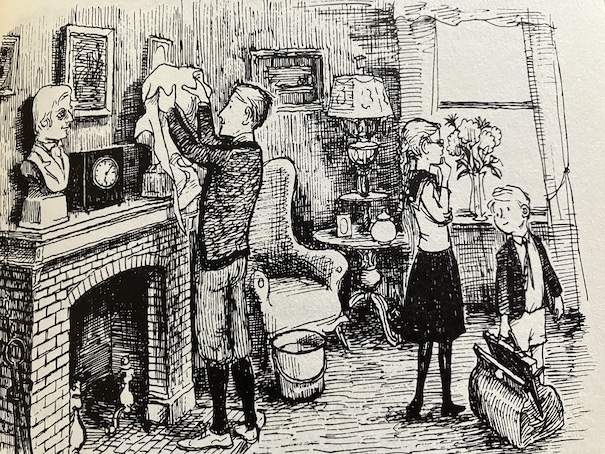

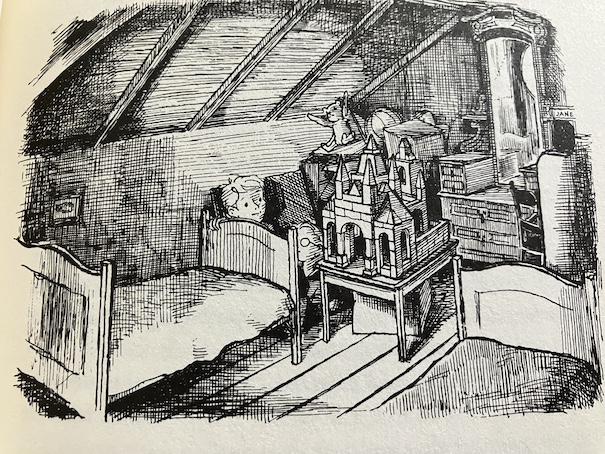
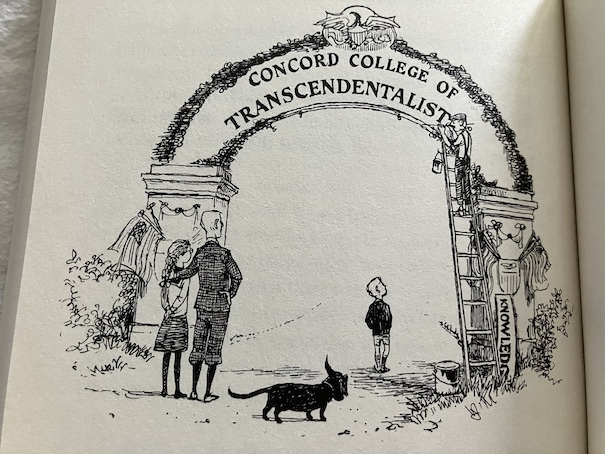
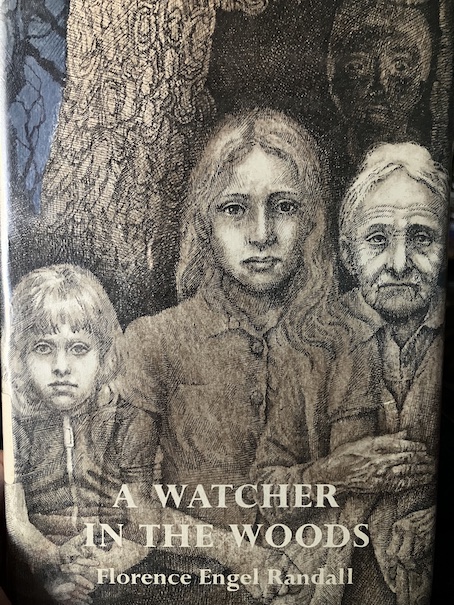


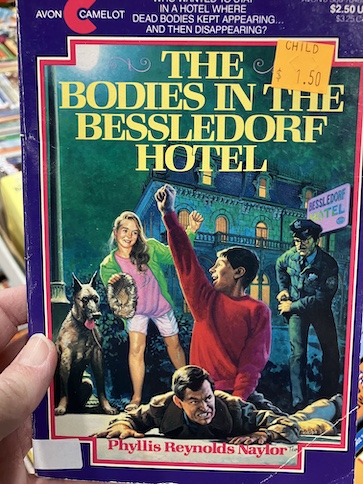

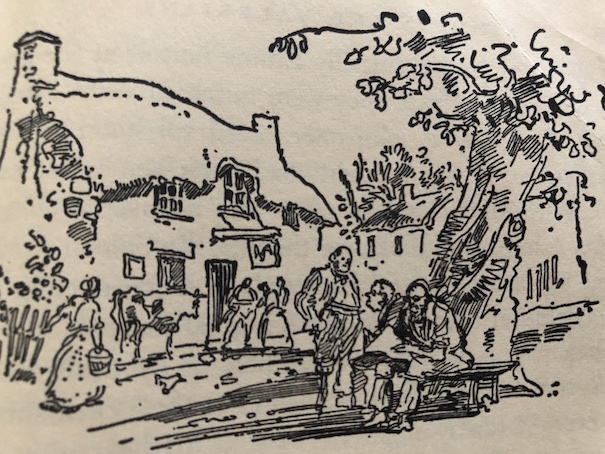
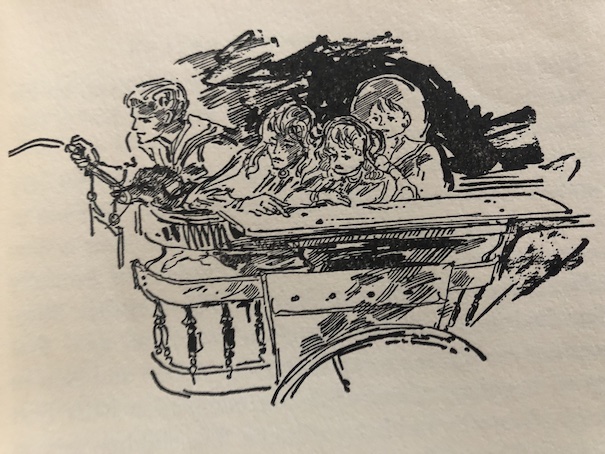

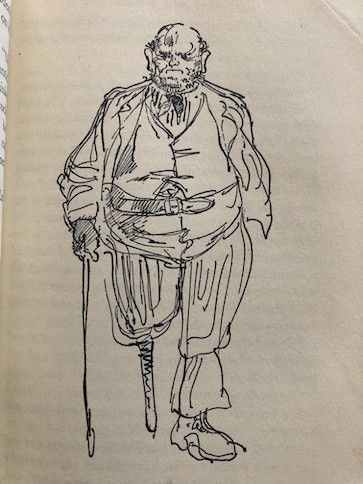
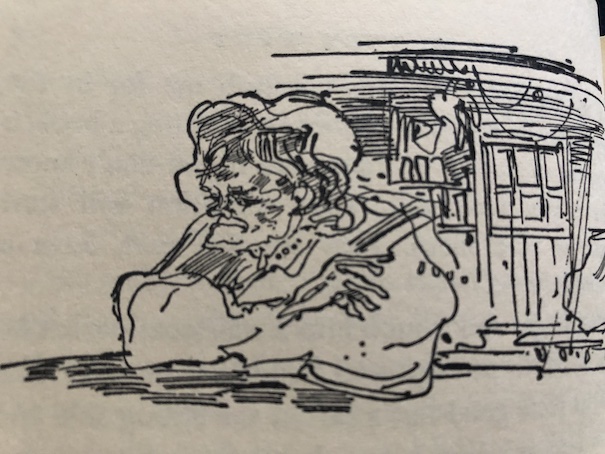


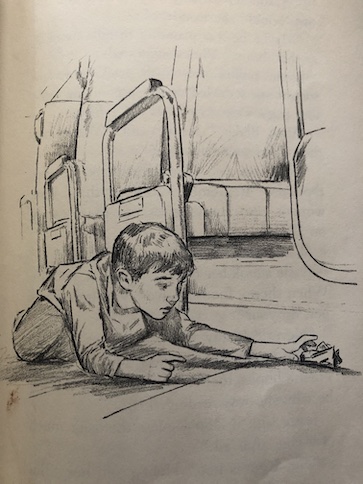
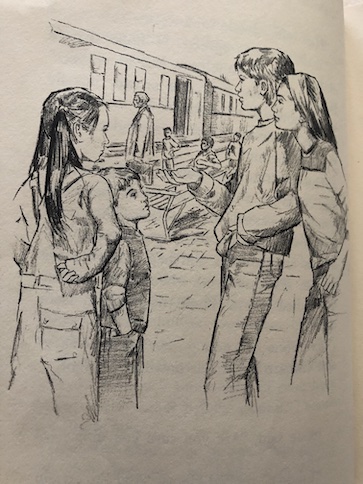


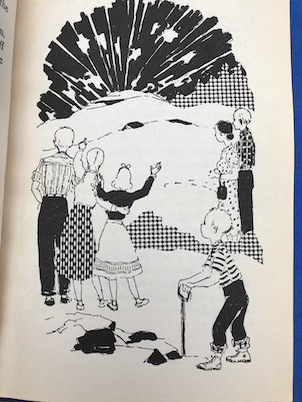

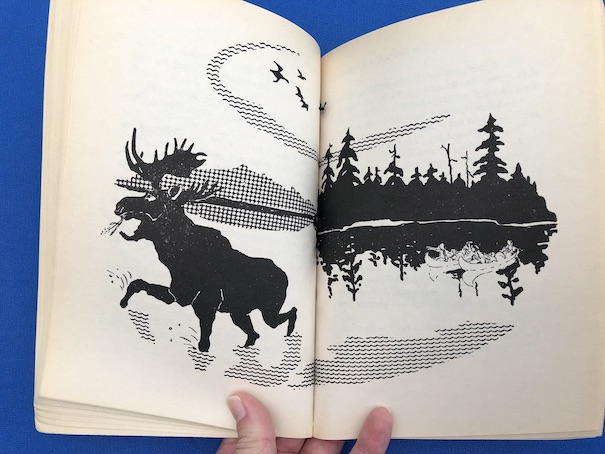
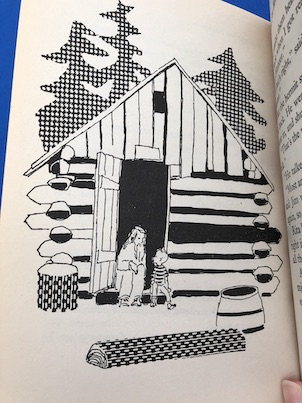
 Mystery Back of the Mountain by Mary C. Jane, 1960.
 When they get to Maine, they meet Uncle James’s lawyer, Mr. Palmer, to collect the key to the house. Mr. Palmer tells them that the house has a few items in it that could be considered valuable antiques, including a portrait of the woman that Uncle James had wanted to marry, Drusilla Randall. The children’s father asks Mr. Palmer more about Drusilla Randall, and he says that all he knows is that she had an argument with Uncle James and then disappeared. He thinks that she just left town, although he says that there are rumors that Uncle James may have murdered her. Mr. Palmer thinks that the rumors are ridiculous and doesn’t take them seriously, but Stevie and Anne are disturbed at the idea that their relative may have been a murderer, or that people thought he was. Mr. Palmer also mentions that Drusilla’s sister, Marion, has decided to return to her family’s old house for the summer as well, so she’ll be living close to their farm.
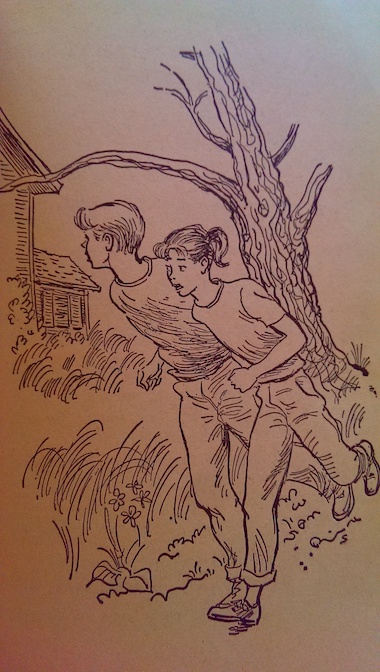 The house is certainly an isolated place, and their closest neighbors, the Hodges have an old grudge against Uncle James. The unethical business deal that Uncle James did years ago involved buying some of the Hodges’s family’s best land. Bert Hodges, who was young at the time, says that the deal ruined his father’s life, and it’s making his miserable, too, because he really needs that land to make his farm profitable. Anne hears this from Bert’s young niece, Oleva, an orphan who has come to live with her aunt and uncle. Although Uncle Bert is strict with her and somewhat bitter about the past and the family’s circumstances, Oleva likes her aunt and uncle and wishes they would adopt her, giving her the stable home she’s longed for since her parents died and she began being traded around among her relatives. However, Bert doesn’t have much faith in other people, and even though he likes his young niece, is afraid to commit to adopting her.
 Anne feels badly that Uncle James’s land deal seems to have ruined people’s lives. Oleva also tells her something disturbing about Drusilla, the girl that Uncle James loved. They were supposed to be married when Drusilla turned twenty, but she disappeared before that happened, and most people think that she drowned in the natural pool on Uncle James’s property. It’s deeper than it appears at first, and some things belonging to her were found nearby, so everyone thinks that she probably drowned and that her body is still somewhere at the bottom of the pool. Whether her death was an accident, suicide, or murder is still unknown.
 Jestress's Forgotten Books and Stories