
How Tia Lola Came to Visit Stay by Julia Alvarez, 2001.
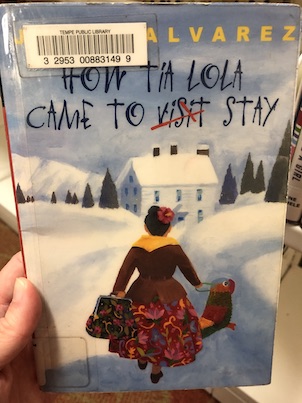
After Miguel Guzman’s parents get divorced, Miguel’s mother moves from New York to a small town in Vermont with Miguel and his sister, Juanita, and invites her favorite aunt from the Dominican Republic, Tia Lola, to come stay with them and help raise the children. Miguel’s mother has gotten a job as a counselor at a small college in the area, and because of the hours she works, she asks her aunt to come and be with the kids. Miguel isn’t enthusiastic about the arrival of this aunt, who has to be called “tia”, the Spanish word for “aunt”, instead of “aunt” because she doesn’t speak English. Miguel and Juanita know some Spanish, but they’re more accustomed to English because they’ve always lived in the US.
The move from New York to Vermont isn’t easy because Miguel misses his father and New York City, and there are no other Latino families in this small town in Vermont, making Miguel feel like he doesn’t fit in. Some of the kids in Vermont don’t even know that Miguel is Latino, mistaking him for being from some other ethnic group or asking him uncomfortable questions about the way he looks and why his skin is darker than everyone else’s. He misses his old friends in New York and still doesn’t understand why his parents couldn’t just stay married instead of turning their lives upside down with this divorce.
When Tia Lola arrives, Miguel can’t think of anything else to say to her in Spanish except “Te quiero mucho” (“I love you a lot”), which is something his parents say to him. He’s a little embarrassed that he can’t think of anything else and that his sister is more bold with her Spanish, but Tia Lola appreciates the message and says that she loves both Miguel and Juanita, too. Miguel isn’t sure at first how long Tia Lola will be staying with them, but he’s astonished at the amount of luggage she’s brought. She says that she didn’t know what she would need in Vermont, so she brought a little of everything. Among her belongings are potions because Tia Lola practices santeria, particularly related to healing. Miguel’s mother explains that Tia Lola is something like a doctor, but with magic. Juanita thinks that sounds exciting, and she can’t wait to tell other kids about her magical aunt when school starts again after the winter break, but Miguel hopes nobody else finds out about Tia Lola.
Miguel thinks that people will think Tia Lola is crazy for thinking that she can do magic and for her other odd habits. The beauty mark on her face tends to change positions because she keeps forgetting where she put it last time. She refuses to even learn English, saying that Spanish is easier, and if Americans are so clever, how come they haven’t realized that? Miguel dreads what the kids at school will say about Tia Lola because they already tease him about other things. They call him “Goose man” because of his last name and quack at him. (Yes, I know geese honk and ducks quack, but the kids apparently don’t.) Miguel knows that the kids are just trying to have fun, but all the teasing makes him feel really uncomfortable, like he’s always going to be an outsider. Tia Lola is a colorful but eccentric character. A couple of boys from the Little League team at school mistake her for a ghost when they drop by the house because she’s dressed oddly and is carrying a brazier for doing one of her spells to rid the house of evil spirits. Apparently, there were already some local rumors about the house being haunted before they moved in, and Miguel lets the other boys believe that they really saw a ghost for awhile because he can’t think how to explain what Tia Lola was actually doing. At first, Miguel hopes that Tia Lola’s visit will just be temporary so no one will find out who Tia Lola really is and tease him about her. However, he gradually becomes fond of her and comes to reconsider himself whether or not Tia Lola’s “magic” really works.
As the family settles into their new home and the children get used to Tia Lola, they have to sort out some problems and learn how to live with each other. When Tia Lola realizes that Miguel seems embarrassed by her, her feelings are hurt, but Miguel finds a way to let her know that he’s glad she came. Miguel loves the stories that Tia Lola tells them about their relatives and legends of the Dominican Republic, like la ciguapa, a story that Miguel puts to his own use. (I love books with references to folklore and legends!) When she finds out that Miguel wants to try out for Little League, she makes special foods for him to help him get stronger. When Miguel turns ten years old, Tia Lola helps to throw a surprise party for Miguel with the boys from Little League. Miguel is relieved when the boys accept Tia Lola and laugh about how they thought she was a ghost.
Tia Lola sometimes gets homesick for the Dominican Republic, but she begins making friends in Vermont, starting with a local restaurant owner who joins her for Spanish lessons and dancing lessons. Tia Lola points out that people can have fun together even when they don’t speak the same language. However, the kids begin giving her English lessons, and she starts to learn some phrases. Her first attempts to speak English in public don’t go well because, while the kids taught her to speak phrases, they didn’t make the meanings of the phrases clear. Tia Lola starts saying the wrong things at the wrong time until they find a way to help her understand what she’s really saying and when to say it.
Through it all, Miguel keeps wishing that, somehow, his parents could magically get back together. In spite of Tia Lola’s “magic”, Miguel’s life and his parents’ marriage don’t return to the way they were before. Everyone’s life changes. Miguel comes to realize that there can be good changes as well as bad, and some of the changes that seemed really bad at first turn out to be better than he thought. Tia Lola is one of the greatest good surprises of them all, and Miguel finds himself hoping that, rather than just staying for a short visit, Tia Lola will stay with them forever.
This book is the first of a series of stories about Tia Lola, and it is available to borrow and read for free online through Internet Archive (multiple copies).
My Reaction and Spoilers
There is an interesting element to this story that I didn’t fully appreciate until the second time around. The first time I read this book, I read it in Spanish, the only other language I know with any fluency besides English. When you read the book in English, there are English translations for the Spanish words and phrases that the children use with their aunt. I didn’t need English translations for these phrases because they were pretty simple, but they’re useful for anyone who doesn’t know Spanish or is just a beginner. (By the way, please excuse the fact that I haven’t placed the proper accent marks in the Spanish words. I know where they’re supposed to go, like the ‘i’ in “tia”, but I’ve been having trouble typing them on this keyboard. I can fix that when I figure out what the problem is.)
Because I grew up in the Southwestern US, I took Spanish classes all through school. It’s the most popular foreign language class in Arizona schools because there are people who commonly speak it around here. It’s a very useful skill to have. My speech has always been weaker than my reading ability because of the way classes are taught, and my speech practice has been irregular. I often read children’s books in Spanish to keep my vocabulary sharp, but when I try to speak, I’m often slow. In some ways, I understand how both Miguel and Tia Lola feel, trying to communicate when you’re still learning and you have an imperfect understanding of another language. One of the things I liked about this story is that it shows how it’s okay to start with an imperfect knowledge. In my experience, if you know some of another language, the other person will try to help you and meet you halfway. Even if you don’t say everything exactly right or you’re slow and clumsy, you can still find a way to get your point across, and the more you practice, the more you improve.
Miguel and Tia Lola go through that same process, starting out with communicating imperfectly and learning to meet each other halfway, not just with language but with learning to live together as family. Miguel’s mother says, “The easiest language to learn but the hardest to speak is mutual understanding.” Tia Lola seems to have a kind of magic about her, not the fairy tale kind, but the kind that comes from having a unique way of looking at things and from understanding people. She doesn’t magically have all of the answers, she makes embarrassing mistakes sometimes, and she can’t fix Miguel’s parents’ marriage, but she makes life better for the family by being there and caring.
When Miguel’s father finds out that Tia Lola is staying with them, he likes the idea because Tia Lola will help the children improve their Spanish, something that he also wants. Miguel confides his initial worries about Tia Lola and what the other kids will say about her to his father over the phone. Miguel’s father tells him that, if he is proud of himself and proud of his family, he shouldn’t care what other people think. It’s easier said than done with the other kids at school teasing Miguel all the time. Miguel’s father says that he’ll understand evenutally and also that accepting other people for who they are helps them become the best versions of themselves they can be. Miguel thinks about what his father has told him before about the harmful effects of stereotypes because people make unfair assumptions about other and the things other people have assumed about him because of his background. One kid at school told him that he was bound to make the Little League because his family is from the Dominican Republic, like his baseball hero Sammy Sosa, and that baseball must be in his blood, but Miguel knows that’s just a stereotype. Miguel’s father tells him that his skills at baseball are his own, not due to being from the Dominican Republic, and if he makes the team, it will be because his skills are good and he worked to develop them. It makes Miguel think about some of the things he’s been assuming unfairly about Tia Lola and what she’s like, and he begins looking at her in a different way.
The book ends at Christmas, one year after Miguel’s parents separated, they moved to Vermont, and Tia Lola came to stay with them. Miguel and his mother and sister accompany Tia Lola on a visit to the Dominican Republic, where he meets his other relatives and sees what Tia Lola’s original home is like. There, he makes it clear to her that he wants her to come stay with his family in Vermont permanently, and she decides that she wants to keep living with them, too.


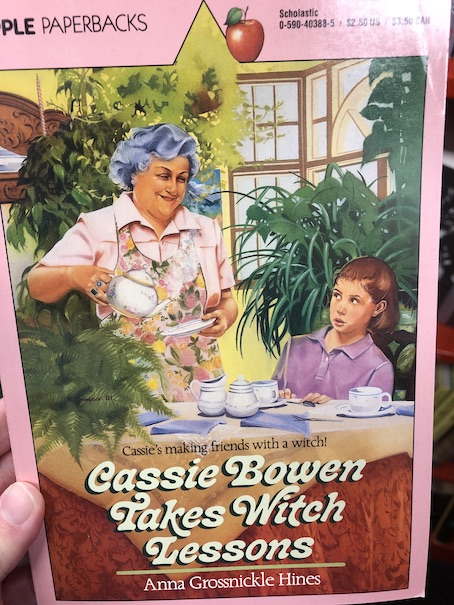
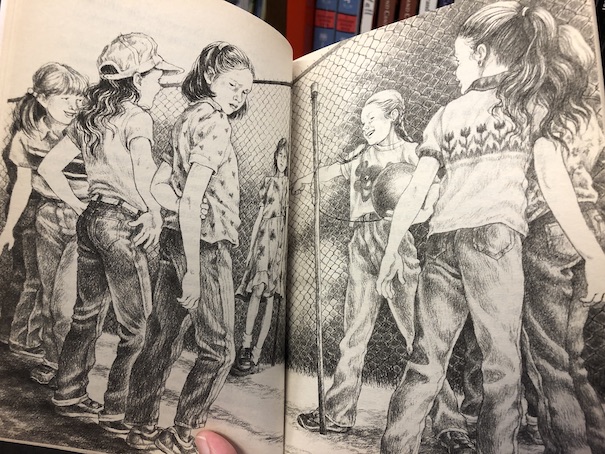


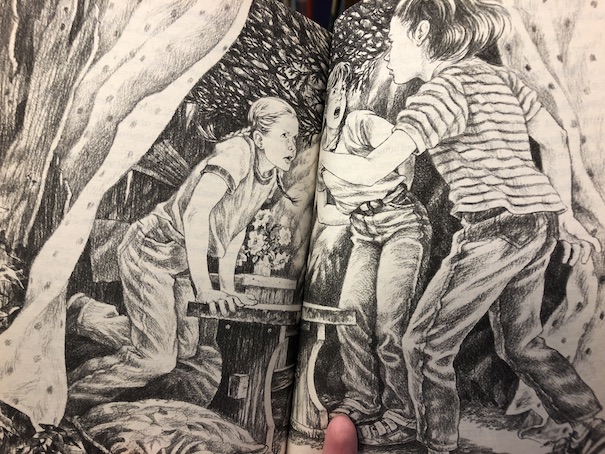


 The Headless Cupid by Zilpha Keatley Snyder, 1971.
 With their family suddenly much larger, David’s father bought a new house for them to live in. Actually, it’s a very old house just outside of a small town. People call it the Westerly house after the former owners. Not long after the family moves in, they find out that people used to say that the Westerly house was haunted. Mr. and Mrs. Westerly used to travel around the world with their two daughters because Mr. Westerly worked for the government, but after they settled down to a quieter life in this small town in the late 1800s, strange things started happening in their house. Rocks would fly around the house, seemingly thrown by invisible hands, and someone (or something) cut the head off the carved cupid on the fancy staircase banister. The head was never found. These incidents were reported in the local paper, and people believed that the Westerly family was haunted by a
 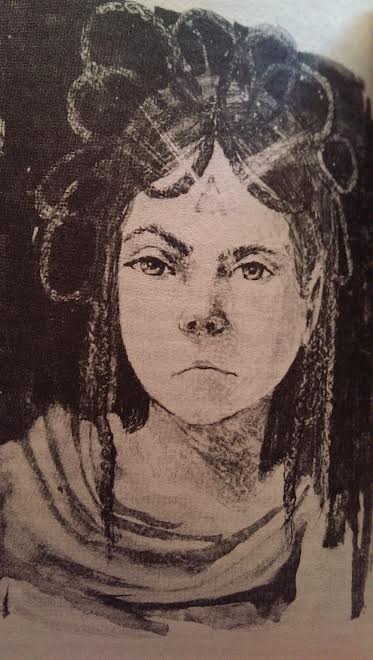 Amanda is fascinated by stories of the poltergeist. A friend of hers where she used to live (one her mother didn’t approve of) was teaching her about the occult and how to do magic spells. When David tells Amanda that he thought that his mother was psychic, Amanda is surprised, and she offers to teach David and the other kids about magic over the summer. David eagerly accepts the offer because he finds the subject fascinating and because it’s the only thing that Amanda really seems interested in. The other kids are also fascinated at the idea, even the littlest ones, which takes Amanda by surprise. She had expected them to be scared.
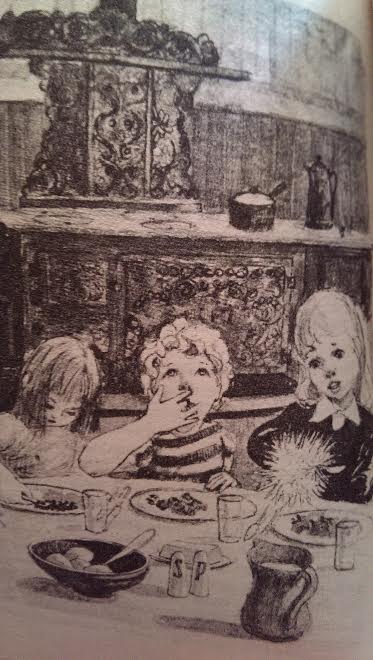 Just as with the Westerly family years ago, rocks are thrown around the house or found just laying around. Things are broken in the middle of the night. Have Amanda’s rituals somehow awoken the poltergeist once more? David has his doubts, suspecting that it’s part of Amanda’s playacting, but she is accounted for when some of these strange things happen. The younger kids are still more fascinated than frightened by these strange happenings, but their stepmother finds them particularly unnerving.
 There are some elements of the happenings, particularly the reappearance of the cupid’s head, that are never fully explained, although David ends up knowing more than Amanda by the end. Some aspects of the situation are hinted at. There may be a real supernatural event at the end of the story. Blair appears to have inherited psychic abilities from his mother, and there is a distinct possibility that the Westerly sisters who once lived in the house were just as unhappy with their parents for the changes in their lives as Amanda was with her mother. Although the “poltergeist” as it first appears doesn’t exist, it may be that the “poltergeist” of the past remembers what it was like to be young and unhappy and that she wanted to make amends for past wrongs and to help another troubled young girl to make peace with her life and family. But, if you don’t like that explanation, there is a more conventional, non-supernatural explanation that David considers, which equally possible. Personally, I think it’s a combination of the two, but it’s not completely clear. I think the author left it open-ended like that to make readers wonder and to preserve the air of mystery after the other mysteries have been cleared up.
 Sixteen-year-old Aaron Maguire thinks of himself as a typical teenager, even though his family is far from typical. His mother is a buyer for a fashion boutique, and his father does special effects for monster movies in Hollywood. They’re also officially “separated” and preparing for a divorce, even though they’re still living in the same house. So far, they’ve just kind of divided the house in two in order to have their own space. Aaron goes back and forth between the two halves of the same house as his parents share him. It’s a little weird (and, to Aaron, also a little depressing), but there’s weirder to come.
 However, when Aaron meets the divine Penelope for pizza and she asks to borrow a mirror to check her hair, Aaron lets her borrow Anaxagoras’s mirror. He instantly regrets it because the mirror suddenly changes in Penelope’s hands. Now, it has a tortoiseshell frame and is shaped like a heart. Penelope, who has low self-esteem in spite of her prettiness, is suddenly really happy when she looks in the mirror and refuses to give it back, insisting that she wants to borrow it for a few days. Because Aaron is in love with Penelope, he finally agrees to let her keep it for awhile.
 Lisa and Lottie by Erich Kastner, 1969.
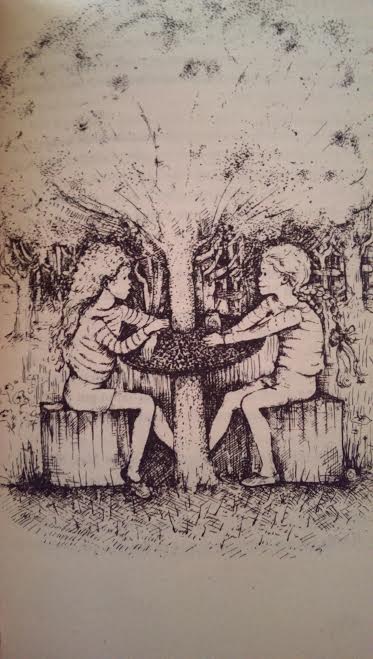 Through the rest of the summer, the girls discuss their lives and parents in great detail and continue speculating about the reasons for their parents’ separation and why they were never told about each other’s existence. They are somewhat angry at their parents for not telling them the truth, but they each also want to know more about the parent that they have never really known and perhaps to learn the truth behind their parents’ separation. They begin hatching a plot to switch places so that Lottie can go to Vienna to meet their father and Lisa can go to Munich to be with their mother. They get little notebooks and fill them with as many details of their lives as they can think of so that each girl can seem to behave like the other, although they know it won’t be easy because they’ve lived very different lives. They don’t like the same foods, and Lottie knows how to cook, but Lisa doesn’t.
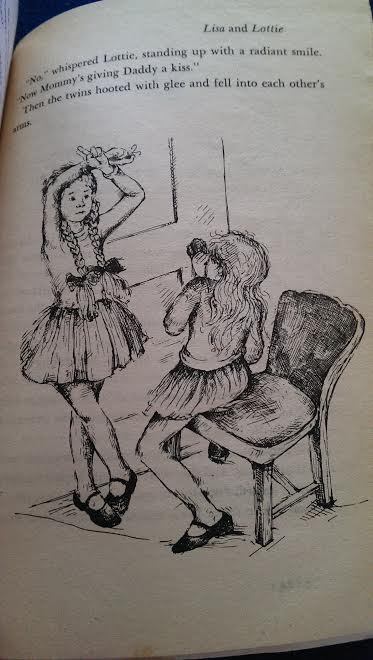 Lisa is overjoyed to finally meet her mother in Munich. But, her mother has to work very hard as a photographic editor for a newspaper, and they don’t have much money. Lisa isn’t as good at cooking or taking care of household chores as Lottie is, so she finds it difficult to help, although she learns quickly.
 The book is much less of a comedy than either of the two Disney movies, although there are some funny parts, like when Lottie (as Lisa) takes over the household accounts to stop Rosa’s stealing and ends up turning her into a much better housekeeper with her practicality. Surprisingly, Rosa actually starts respecting her more and even liking her better because of it.
 Susan’s Magic by Nan Hayden Agle, 1973.
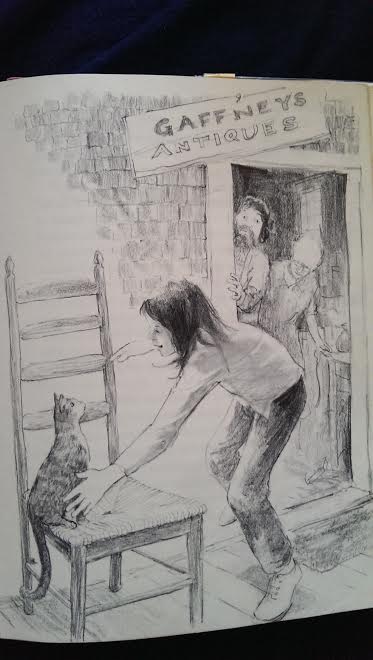 One of the things at the sale which especially captures Susan’s attention is a small stuffed toy elephant. The elephant is very worn, and Susan feels sorry for him, wanting to take him home and take care of him. However, her money is gone, and she still has no present for her mother. Then Mrs. Gaffney spots her looking sad and offers to lend her the 25 cents she would need to buy the elephant. Although Susan has reservations about accepting such a loan, she does anyway, telling Mrs. Gaffney that she’ll pay her back.
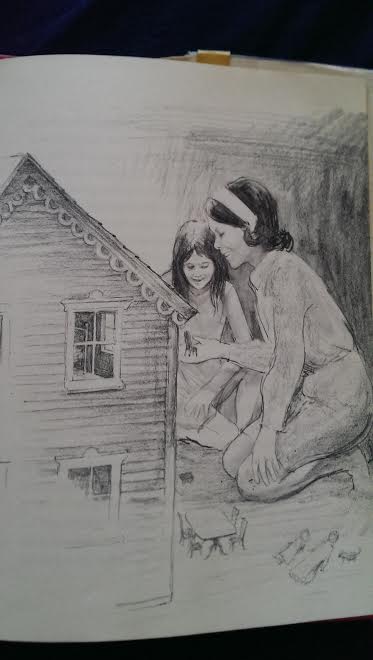 In spite of the talk about magic and witches, this is not a fantasy story at all. Susan’s concept of magic has more to do with a way of living, dealing with change, and solving life’s problems. For the first part of the book, Susan’s “magic” focuses on getting what she wants for herself and getting things to work out the way she wants them to. But, as the book goes on, Susan matures in the way she deals with the complications in her life.
 Jestress's Forgotten Books and Stories