The Mystery of the Disappearing Cat

Five Find-Outers

The Mystery of the Disappearing Cat by Enid Blyton, 1944, 1966.

Bets is happy that her brother, Pip, is coming home from boarding school, and he’s bringing his friends to visit. Now that the children are reunited, Bets and the others hope that they will find another mystery to solve! The others ask Bets if anything interesting has happened since they were home last, and she says not very much, although someone has moved into the empty house next door. The new neighbor is Lady Candling, who keeps Siamese cats.

The boy who helps the gardener, Luke, is nice and allows the children to visit and see the cats. Lady Candling says that the Siamese cats are valuable prize-winning cats. She keeps them in a large cage most of the time for safety, but Miss Harmer, the housekeeper, takes one out to show the children. Unfortunately, one boy, Fatty, owns a Scottie dog named Buster, and Buster comes into the garden looking for him. Buster frightens the cat and chases her! The cat claws Buster after he chases her into the bushes, and they manage to get Buster under control, but they have trouble finding the cat. Miss Harmer is upset that her cat is lost, and Bets goes to search for the cat.

While Bets is looking for the cat, the gardener, Mr. Tupping comes to find out what the fuss is about. Mr. Tupping is a violent and short-tempered man. (They also emphasize that he has a hooked nose, which I think is probably a stereotype. Enid Blyton’s books often contain derogatory racial stereotypes, although later printings have been revised to remove them.) Mr. Tupping hates children and animals, and he grabs Buster and locks him up, threatening to beat him later. The children try to help Buster, but he chases them out of the garden. Bets is left behind, but she locates the missing cat, and Luke helps to free Buster and get Bets out of the garden without Mr. Tupping seeing her. However, Mr. Tupping threatens Luke with dire consequences if he ever lets the children into the garden again.
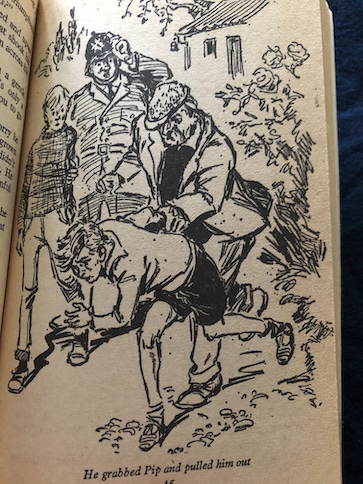
This is just the beginning of their troubles with Mr. Tupping. When Mr. Tupping finds out that Bets has visited Luke again, he storms into Bets’s own little garden, rips her strawberry plants out of the ground, burns them, and yells at her. Bets is afraid to report him to the adults because she’s afraid that Luke will get in more trouble with Mr. Tupping. Luke is a poor orphan who lives with his stepfather, and he desperately needs the job, which is the only reason why he continues to work with the nasty Mr. Tupping. Mr. Tupping is also friends with the local policeman, and the children know that the local policeman resents them for solving a mystery before he did, so they’re sure that he will side with Mr. Tupping, no matter what they say about him.

Then, Lady Candling’s prize cat, Dark Queen, disappears, and Luke is blamed for stealing her! The children are sure that Luke is being framed for the cat-napping, but the evidence is against him. Pip and Bets’s own mother saw the cat in its cage when she went to tea with Lady Candling, and Luke was working in a garden bed nearby. Even Luke says that no one else went near the cage between then and the time when the cat disappeared. When a wooden whistle Luke made is found in the cats’ cage, the children are sure that it was planted to frame Luke, but how can they prove it? Then, the cat reappears, and later disappears again! What is going on?

The book is available to borrow and read for free online through Internet Archive (multiple copies).

My Reaction and Spoilers

I found this story frustrating because all of the adults in the story are so oblivious to Mr. Tupping’s violence and aggression. He is actively abusive to the children and animals, but nobody seems to notice or even inquire about signs of trouble. Bets’s mother never seems to notice that all of her daughter’s strawberry plants have suddenly disappeared from her garden and never asks her daughter what happened. Mr. Tupping is able to just march onto the family’s property and abuse an 8-year-old girl with complete impunity, and her mother never notices a thing. (Of course, if I were the girl in question, I would have done what I used to do when I was picked on as a kid – take a deep breath, throw back my head, and scream continuously until help arrives. I figured out at a young age that if you scream from your diaphragm, you can get extra volume and keep the scream going for longer without straining your throat, and it’s difficult for the adults to ignore. You can’t scream like that at every inconvenience or people will start to ignore it, but it’s definitely an attention-getter if you use it when it really counts! Just let Mr. Tupping explain his presence and actions when the adults come to find out why their daughter is screaming like she’s being murdered!)

Mr. Tupping is a very obvious villain. He’s also the first person on the scene each time the cat disappears, the one who strategically assigns Luke to work near the cats’ cages just before the prize cat disappears each time, and the keeper of the key to the cats’ cages when Miss Harmer is away, which she is each time the prize cat disappears. Yet, even though he has means (the key), motive (he hates the kids and animals and wants to get rid of Luke), and opportunity (always the first person in the cats’ cages whenever the cat disappears and the one person who controls where Luke is working), all of the adults immediately look at Luke as the thief, never even questioning Mr. Tupping. An adult would be more likely than a kid to know where to sell a prize-winning cat (heck, as a an adult, I wouldn’t even know where to deal in black market animals), but nope, all of the adults first think a kid did it, like kids have those kinds of criminal connections to the prize cat black market. It drove me completely crazy!

It’s worse because Mr. Tupping is friends with the local policeman and gets favoritism because of it. When the kids consult their friend who is a police inspector, he finds out that Mr. Tupping has a police record for being involved in a dog-napping case (surprise, surprise), which establishes his criminal history and connections to people who deal in stolen animals. I was disgusted that the local policeman never looked into his background himself, but I felt a little better when the inspector reprimands him for making friends with a criminal and overlooking evidence that implicated him and trying to prevent the children from bringing evidence and concerns to light. The local policeman is embarrassed, but at that point, I felt like he deserved to be.

The villain was obvious, but what saved this mystery was that he actually used a clever trick to confuse the time when he actually took the cat. I knew from the beginning who the cat thief was, so the real mystery for me was how he got the cat out of its cage without people seeing him. It turns out that Mr. Tupping takes the cat earlier in the day than everyone thought the cat was stolen. The Siamese cats look very much alike, but the one that was stolen had a marking that was different from the others. With a bit of paint, Mr. Tupping makes a different cat look like the missing one for most of the afternoon, quickly using a bit of turpentine to remove the paint at a strategic moment to make it seem like the cat disappeared at a time when Luke was near the cats’ cages.

Five Go Off in a Caravan

The Famous Five

Five Go Off in a Caravan by Enid Blyton, 1946.

The children (Julian, Dick, Ann, George) and their dog, Timmy, are all looking forward to the summer holidays.  They’re not sure what they want to do, but they think that it would be more fun to go somewhere without the adults instead of going home, but they can’t think of anywhere they can go without adults.  They doze off in the sun while talking about it, but Timmy wakes them when a circus procession passes by.

The children are fascinated by the circus and call to a boy traveling with them, Nobby, asking him where they’re going to be performing.  Nobby says that the circus is on a break, and they’re going to be spending some time at a lake that allows them to camp there with their animals.

As the children watch the caravans of the circus going by, they think that it would be great if they could hire a caravan (horse-drawn travel trailer) and travel in it themselves.  They have a horse, Dobby, who could pull one.  The children ask their mother if they can hire a caravan, and she says that she’ll have to talk to their father about it.  It turns out that their father needs to go up north for part of the summer and wants their mother to come with them, so he thinks that it’s alright if the children want to take a caravan and camp out while they’re away.  The parents decide that the children will need to hire two caravans and borrow an extra horse because they don’t think one caravan will be enough for the four children and their dog, and they insist that the children sent them a message every day to tell them where they are and how they’re doing.

As the children discuss their plans in more detail, they decide that it will be fun to go to the lake where the circus is and get to know Nobby better.  Nobby lives with his uncle, who is the chief clown of the circus, and the children didn’t like what they saw of him before because he didn’t seem jolly at all, but they think it would be fun to be friends with Nobby and get another look at the circus animals. 

The children are eager to get started, but their parents make them pack and plan properly.  When the caravans arrive, the girls choose the red one, and the boys get the green one.  The girls take the new horse, Trotter, and the boys take Dobby for their caravan.  The adults give the children a map of places where they’re allowed to camp.  On their way to the lake, the children camp on farms that allow caravans.

When the children arrive at the lake, Nobby is glad to see them, and he introduces them to his chimpanzee, Pongo, and his terriers, Barker and Growler.  Nobby is friendly, but his Uncle Dan (called Tiger Dan) and Lou the acrobat are rough and unfriendly and don’t want the kids around.  When the children camp near the circus that night, Tiger Dan and Lou try to run them out of the campgrounds, but the children send their dog after them.  The campgrounds are public property, and there isn’t any reason why the children can’t be there.  The children think that Tiger Dan and Lou stumbled on their campsite by accident when they were trying to have some kind of secret meeting.

The next day, the children decide to go camp in the hills, as they had already planned because they know it will be cooler in the hills.  Lou takes an interest in where the children are going, but they don’t want to tell him much because they don’t want Lou and Tiger Dan coming after them to harass them again.  They find a nice place to camp up in the hills on some land belonging to a pleasant farmer and his wife, who also provide the children with food.

However, it isn’t long before Tiger Dan and Lou locate the children’s campsite and try to talk them out of camping at that spot also.  Nobby doesn’t know why Tiger Dan and Lou are up in the hills anyway.  The circus people have been buying some of their food from the farmer, but Nobby says that it’s always the women who go to the farm to buy things, not the men.  It seems like Tiger Dan and Lou are up to something suspicious, but the children don’t know what.

Then, suddenly, the men seem to change their views of the children, encouraging Nobby to be friends with them and to bring the children to visit the circus camp.  The children are suspicious and leave Timmy to guard their caravans while they visit the circus camp, just in case the men try to mess with their camp while they’re gone.  When they return to their own camp, the children discover that the men have tried to poison Timmy with tainted meat!  Fortunately, Timmy didn’t eat the meat, but unfortunately, one of Nobby’s dogs eats some and is violently ill.  The children aren’t sure whether the little dog will survive or not, and they don’t know why the bad men want to get rid of them so badly that they would try to kill their dog.  Whatever’s going on is serious, and they need to get to the bottom of it!

The book is available to borrow and read for free online through Internet Archive (multiple copies).

My Reaction

Traveling without parental supervision is the stuff of vintage children’s books and the dreams of children from every era! The kids in the Famous Five series have far more independence that modern children have, and in fact, the authorities might be concerned about children their age traveling without their parents. Actually, I would think that few adults even at the time of the writing of this book would even consider letting their children travel alone like that. That’s part of the appeal of this type of story, children being able to do things that real children never do.

I didn’t like the part about the dog being poisoned because I always hate it when bad things happen to animals in stories, but don’t worry! Nobby’s dog is fine in the end!

Mystery at Kittiwake Bay

Mystery at Kittiwake Bay by Joyce A. Stengel, 2001.

Cassie Hartt has only recently moved to Kittiwake Bay, Maine with her mother and brother following her parents’ divorce. Her mother is a nurse, and she has found a job at the local hospital, which is actually 30 miles away from the little town where they were able to find a house. Because of her mother’s long commute, Cassie will need to look after her 7-year-old brother, Danny. Soon after arriving, she meets a nice boy named Marc Nolan, who is a little older than she is and loves boats, and a girl name Liz Painter, who likes photography and walks her cat on a leash. Liz is the one who introduces Cassie and Danny to the Beachcombers Club, which is a group for kids Danny’s age who like to go swimming and camping and the kids who hang out at the Sand Shack coffee shop. Marc is one of the Sand Shack kids, and so is a boy named Ryan Jerrick, who is Liz’s crush. Cassie is glad to be making friends and starting to get settled into her new home, but soon, there are complications.

One evening, on her way home from the grocery store with her dog, Sam (short for Samson), Cassie sees some mysterious figures sneaking around in the dark. She doesn’t know who they are, but the way they’re sneaking around worries her. She later learns that there have been robberies in the area.

Cassie develops a fascination for the large house that she saw on a cliff near the ocean, and Marc and Ryan tell her that’s a senior citizens’ residence called Waterview Manor. Both of them work there part time. Liz says that the house wasn’t always a senior citizens’ residence and that there are a lot of weird stories about the place. It was built by a rich man before the Civil War, but it became property of the town in the 1950s. One of the stories about the place is that it was once part of the Underground Railroad helping escaped slaves. The boys say that a woman named Mrs. Wentworth says that her grandfather was one of the people helping escaped slaves. There’s also a story about Captain Kidd hiding his treasure somewhere around the old house, although Ryan doesn’t believe any of these stories. He thinks Mrs. Wentworth just tells tall tales. Cassie thinks that she might like to volunteer at the house, like the boys did before they started working there as employees. If her little brother joins the Beachcombers Club, she’ll have some free time for volunteer work.

When Cassie goes to Waterview Manor to sign up, she witnesses an argument between Ryan and Mrs. Wentworth, who is confined to a wheelchair. Ryan was being disrespectful because Mrs. Wentworth was telling one of her stories about the history of the town that Ryan thinks is outlandish, and Mrs. Wentworth was telling him off. Ryan doesn’t actually like working at Waterview, but he has to keep his job because he needs the money. Cassie thinks he’s arrogant. Ryan has no patience for the fetching and carrying he has to do for the older people, and he thinks that Mrs. Wentworth’s mind is going. Cassie thinks that Mrs. Wentworth sounds like she still has her faculties and is sympathetic when Mrs. Wentworth laments about not being able to do things she used to do because her hands and feet won’t obey her anymore. Mrs. Wentworth is physically feeble these days, but she knows what she’s talking about when it comes to local history.

After she signs up to volunteer, Cassie can’t resist a peek into the forbidden East Wing of the house, and she meets Marc there. They both admit that they’re curious about the stories of treasure in the house. Unlike Ryan, Marc believes Mrs. Wentworth’s stories, and Cassie can’t wait to hear more!

Mrs. Wentworth used to be a history teacher, and she does know more about local history than Ryan gives her credit. She tells Cassie how her grandfather used to be a conductor on the Underground Railroad and how his friend, Mr. Palmer, who was the original owner of Waterview Manor, was a stationmaster, which meant that he hosted and hid the escaping slaves that Mrs. Wentworth’s grandfather conducted to him. Mrs. Wentworth’s grandfather told her about a secret room where they used to hide people and a secret tunnel that would take them to the landing site for the boat that would smuggle the runaways to Canada. When Cassie asks her about the story about Captain Kidd hiding his treasure somewhere in the area, Mrs. Wentworth said that her grandfather always believed he did, although Captain Kidd was much older than both her grandfather and the Manor. She explains a little about the life story of Captain Kidd and how it seems that most of his treasure was never found.

However, they soon have a more modern mystery on their hands. Whoever has been stealing things in the area recently seems to have started taking things from Waterview Manor. First, an expensive chess set belonging to one of residents disappears. Then, some jewelry and a coin collection disappear. Then, someone steals Mrs. Wentworth’s beloved lavaliere necklace, a special present from her late husband. For someone to both know about the residents’ valuables and to have access to them, the thief must be somebody working at the Manor! Who, could it be? Is it grumpy Ryan, who needs money? Is it John, another employee, who often acts a little strange? Could it even be helpful Marc, who seems nice but is often lurking around areas where both he and Cassie aren’t supposed to be? Or is it someone else Cassie wouldn’t even think to suspect?

The mysteries of the past start mingling with the mysteries of the present. Cassie sees signal lights from the tower of the old house that remind her of of the signals Mrs. Wentworth said the Underground Railroad used. Is someone now using them for a different purpose?

The book is available to borrow and read for free online through Internet Archive.

My Reaction

The Underground Railroad is a popular subject in US children’s books. There is something compelling about people sneaking around on clandestine missions and hiding in secret rooms and secrets passages, and since these things were used in the real life Underground Railroad, they make convenient devices for US children’s books with some historical flavor. The former Underground Railroad secret passage in Waterview Manor does play a role in this story. Someone is using it for a new purpose, just like they’re using signals from the tower.

The purpose of the Underground Railroad secret tunnel in the story is also to show that Mrs. Wentworth knows what she’s taking about when she tells her stories about local history. Ryan tries to discount her stories because some of them sound a little far-fetched and dramatic and because he thinks scornfully of the old people he serves in his job. Ryan has a negative attitude and looks at the elderly as being senile and demanding. Cassie feels differently because she has more empathy and, perhaps, because her mother is a nurse, which may make her more aware of the human condition and more comfortable helping other people. She seems to understand what Mrs. Wentworth means when she talks about finding it frustrating that she can’t do things she used to do, and she says that she agrees with Mrs. Wentworth when she says that she likes keeping her hair long even though a nurse at the Manor says it would be easier to care for if she cut it shorter. The nurse is probably thinking that short hair would be easier on those who might have to help Mrs. Wentworth wash and brush it, but Cassie understands when Mrs. Wentworth explains why she likes her hair long. Cassie thinks the people who live at Waterview Manor are interesting, and she admits to her mother that she likes to pretend that they’re her grandparents. She is fascinated by Mrs. Wentworth’s stories, and because she and Marc believe what she says, they are able to get to the bottom of the mysteries surrounding the Manor.

I was pretty sure I knew who at least one of the thieves was, and I was also pretty sure I knew why. I was correct in my first guess, but there were enough red herrings along the way to give me some doubts, so there was plenty of suspense in the story. One of them wasn’t fully aware of what he was getting involved with at first, but he does bear responsibility for what he did even after he knew.

This book also deals with the subject of divorce and how it affects families and children. Books like this were once rare, but they have been very common staples of children’s literature since the late 20th century, reflecting changes in American society and a growing willingness to discuss difficult topics with children. Moving to a new state and starting over after the divorce wasn’t easy for Cassie, her mother, and her brother. Cassie quickly becomes interested in the history of her new town, and it doesn’t take her long to find some new friends and a volunteer activity to keep her occupied. However, other aspects of the changes in her life and family will take longer to get used to. Her mother has to work long hours with a long commute, so Cassie frequently has to be responsible for her younger brother when he’s not at activities of his own, and her mother often isn’t home for Cassie to discuss things with her.

There is also some tension between Cassie and her brother because the divorce has changed their relationship with each other. Because Cassie has become more of a caregiver to Danny because her mother has to work, she has to make arrangements for Danny before she can do anything on her own, which sometimes makes things awkward for her. Danny also becomes jealous because Cassie does have more ability to do things on her own than he does and because she makes friends and settles into their new town more easily than he does.

One part of this book that I hated was when Danny intentionally left Sam outside alone to spite Cassie, and Sam is poisoned by one of the villains and nearly dies. Cassie is very upset with Danny because of this incident, understandably so, but I didn’t like it that the other characters were pressuring her to be okay with Danny and forgive him too quickly. They do this because Danny is young, they think that he left the dog out by accident, and Danny feels really badly about almost getting the dog killed. Cassie knows, although Danny doesn’t initially admit it, that Danny left the dog outside on purpose. That purposefulness maliciousness is not a thing that I think should be too easily forgiven, especially not because someone just “feels bad.” Let’s insist on a little empathy here, Danny. Cassie feels bad because you almost got her dog killed. Sam really feels bad because he’s the one who almost died! Maybe your feelings shouldn’t be given first priority here, since you were the one who caused the harm. Sam is a dependent animal. Under no circumstances should animal abuse be excused, and leaving a dependent animal outside alone to be lost, hit by a car, or yes, harmed by some other malicious person is abusive. Danny should not be given a pass for malicious behavior or animal abuse just because he “feels bad.”

Giving people that type of excuse for malice and abuse just encourages more of it in real life because the person finds that there are no consequences for their actions and it gets them the forgiveness and attention they want, so they keep doing it. It’s a dangerous thing to allow. The story makes it clear that Danny was acting out on bad feelings that he already had about the divorce and feeling neglected by both his mother and Cassie, but I think it’s important to make it clear to him that, even if he’s “feeling bad”, that does not give him the right to hurt other people or animals. Nobody has the right to hurt others just because they’ve got mixed-up feelings. I hate it that the other characters don’t seem to feel that way.

The story ends happily when Danny tries to make it up to Cassie by investigating the situation and Cassie rescues him from the bad guys. They have a heart-to-heart talk that makes Cassie realize how important Danny is to her and that she has to make time for paying attention to him and supporting him more during this difficult time. Still, I feel very strongly that the story and the other characters should emphasize to Danny that causing hurt because you feel hurt is wrong and damaging to relationships. The way the other characters tried to make Cassie feel bad about the situation also really felt like gaslighting. She had a real and serious reason for being angry with her brother, and it just made me really angry when they acted like she was the bad one because Danny was “feeling bad” and she wanted him to be accountable for his actions. He knew what he was doing, and he should have known it was dangerous to Sam, even if he didn’t know that someone was going to deliberately try to kill the dog.

I know that Danny has some emotional issues that need to be addressed, but I’m saying that he also has some behavior issues that also need to be addressed. There are helpful ways to deal with emotions and destructive ways to deal with emotions. Danny is not too young to understand the consequences of his actions and to accept them. I don’t think that learning that it can take awhile to regain trust after betraying someone’s trust is also an unbearable lesson. In fact, I’d call it a life skill. If it helps him to develop more empathy and consider other people and the consequences of his actions before he lashes out, it is worth it.

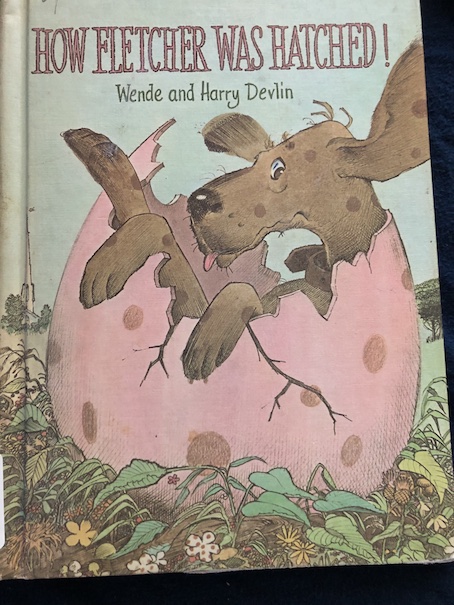
How Fletcher Was Hatched

How Fletcher Was Hatched! by Wende and Harry Devlin, 1969.

Fletcher the dog is sad and upset because it seems like his owner, Alexandra, is forgetting about him. She’s been playing with the new baby chicks, which she thinks are cute, and she’s been forgetting to pet her dog or even fill his water bowl!

Distressed, Fletcher goes to see his friends, Beaver and Otter, at the pond. Beaver and Otter don’t have human owners, so they don’t understand Fletcher’s feelings about Alexandra, but they try to think of ways to get her attention. They think it would help if Fletcher could make himself more like the chicks Alexandra has been obsessed with. Aince he can’t make himself small and yellow, they decide that he should hatch out of an egg, like the chicks do. Fletcher is skeptical about this plan, but Beaver and Otter think that hatching out of an egg will be like having a new beginning in his relationship with Alexandra.

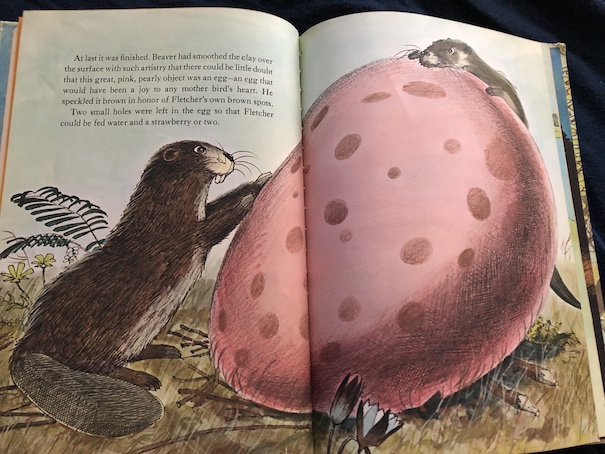
Beaver and Otter build an egg around Fletcher with reeds, grass, and clay from the river, leaving a little hole so they can give Fletcher water and food. When they’re done, it’s a very convincing but giant egg.

By the time they’re finished, it’s night. Fletcher is uncomfortable sleeping in the egg and wonders what Alexandra is doing. Meanwhile, Alexandra is having trouble sleeping because she’s worried about her lost dog.

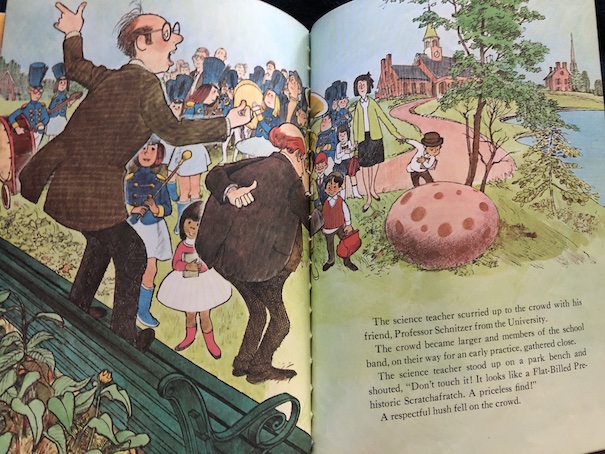
In the morning, Beaver and Otto roll the egg over to Alexandra’s school to make sure that she sees it. The first person who sees the egg, though, is the school’s custodian. He’s shocked at the sight of such a giant egg and starts yelling for the science teacher to come look at it.

Soon, the egg is surrounded by children and adults, marveling over what kind of it could be and where it came from. The science teacher brings a friend who is a university professor, and the two of them are convinced that the egg must belong to a rare creature, although they disagree about the type of creature it is.

Fletcher waits to hatch until he hears Alexandra. Alexandra’s friends are excited about the egg, but she’s just upset and only wants to go looking for her lost dog.

Fletcher decides it’s time to hatch, and he busts his way out of the egg. Alexandra is happy to see him, even though Fletcher’s attempt at peeping is a little weak. Everyone is confused, but Alexandra is just relieved that she has her dog back. Fletcher feels better, realizing that he is important to Alexandra, and she really cares about him, even though he’s not yellow and doesn’t peep.

The book is available to borrow and read for free online through Internet Archive.

My Reaction

I read this book as a kid, but I had forgotten much of the story. I remembered that Fletcher hatched out of an artificial egg and that he did it to get his owner’s attention, but I couldn’t remember why he needed attention. I can understand Alexandra being temporarily distracted by the little chicks on the farm, but forgetting to give her dog water is really bad for a pet owner. I felt like her parents should have noticed and said something. But, mostly, the situation is just set up for the purposes of this humorous hatching of a dog from a giant egg. Because the egg was created by animals, the humans in the story never find out how or why Fletcher got in the egg, which is actually the funniest part for me as an adult.

Clifford's Christmas

Clifford

Clifford’s Christmas by Norman Bridwell, 1984.

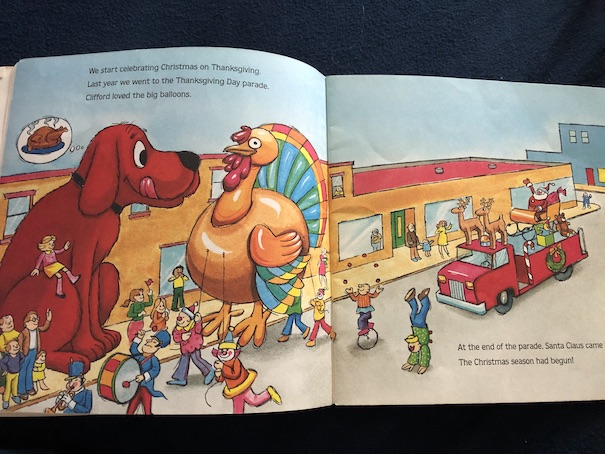
Christmas is coming, and Emily Elizabeth and Clifford are ready to celebrate! Emily Elizabeth talks about how the Christmas season begins with Thanksgiving. (That’s not how everyone regards it, but it is a common way to mark the season in the United States. The day after Thanksgiving, Black Friday, is considered the start of the Christmas shopping season, with people looking for bargains on Christmas presents.)

When it starts to snow, Emily Elizabeth, Clifford, and their friends have fun playing in the snow. They get a Christmas tree, prepare their stockings, and participate in other holiday activities leading up to Christmas. Clifford even gets a kiss under mistletoe!

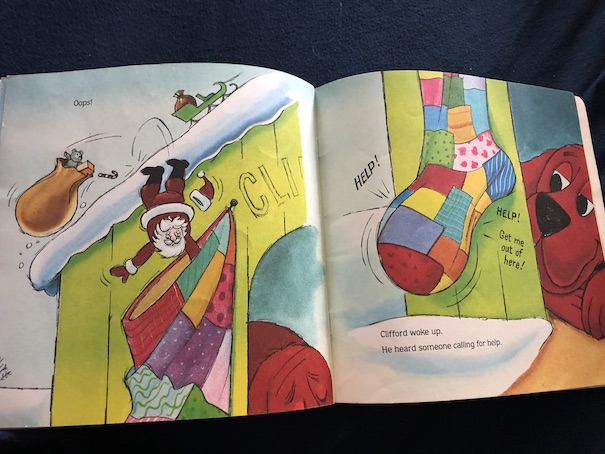
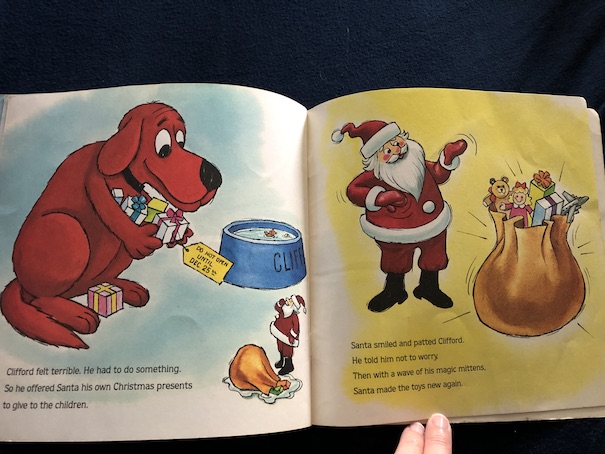
When Santa comes, he lands on the roof of Clifford’s dog house and accidentally falls into Clifford’s stocking, dropping his sack of toys. Clifford has to rescue him.

The toys fall into Clifford’s water bowl, but Santa fixes them with his magic. No harm done, and it’s a Merry Christmas after all!

This is just a cute Christmas story with a popular children’s books character. I loved the Clifford books when I was a kid, but I have to admit that they don’t look as good to be now as an adult. The entire plot of Clifford books revolves around Clifford’s enormous size, which is the very idea of the series. However, the plot of this is light, the problem is both caused and immediately solved by Clifford’s large size, and I think I’m just not interested in the usual trope of Famous Character Saves Christmas In Some Way anymore. I think that some Christmas stories with popular characters are still good, but for them to work, they usually have to have deeper, more clever, more interesting plots. This book isn’t bad, but I just didn’t think it was particularly great.

The book is available to borrow for free online through Internet Archive.

Clifford's Halloween

Clifford

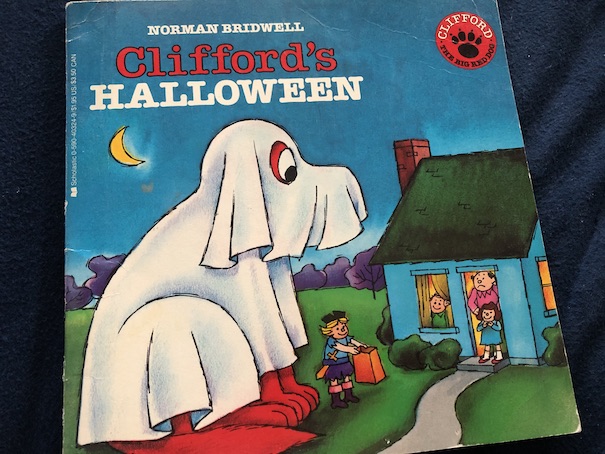
Clifford’s Halloween by Norman Bridwell, 1986.

Halloween is Emily Elizabeth’s favorite holiday! Emily Elizabeth talks about the various holidays that she and Clifford enjoy, but Halloween is the one they enjoy the most.

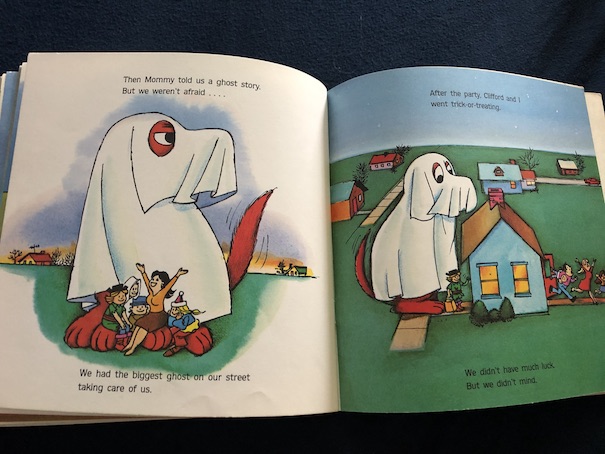
Last Halloween, she considered various costumes for Clifford, but Clifford decided that he wanted to be a ghost, covered with a giant sheet. (I love how they say that nobody could guess who the giant ghost is, like there could be someone else in the neighborhood that big.)

When you’ve got a giant dog, bobbing for apples doesn’t go the way you expect.

However, when you’ve got a giant dog, nothing else is very scary, either.

The book ends with Emily Elizabeth considering different costumes for Clifford for this Halloween, inviting the reader to think of other possible costumes.

I like the idea of letting kids consider which Halloween costumes they like the best from the ones that Emily Elizabeth considers. Kids like making choices, and trying to think of costumes that would work on a gigantic dog presents a creative challenge. When Emily considers dressing Clifford as a knight, they don’t consider where she’s going to get a suit of armor that size, but the books in this series don’t worry much about the logistics of caring for a dog the size of Clifford.

When I first read this book back in the 1980s (I was four years old when the book was new, although I can’t remember exactly how old I was when I first read it), I didn’t think too much about the Indian (Native American) costume with a pipe, although I wouldn’t think of suggesting that as a costume for anyone now. It’s partly because there’s something of a stigma against Native American costumes now. It’s not enough of a stigma to get people to stop wearing them and major costume retailers from selling them, but enough that some people raise eyebrows at them because of some of the connotations attached to them. If you read some of the reviews of Native American costumes on Amazon, like I did, it seems that more of them were purchased for school plays and projects or Thanksgiving plays than for Halloween. However, the part about this costume that particularly jumped out at me was the ceremonial pipe. Kids sometimes dressed as American Indians for Halloween when I was young, although the practice is discouraged now, but with all of the anti-smoking campaigns aimed at children when I was young, most of our parents wouldn’t have even considered giving us a peace pipe as part of a costume, even ignoring the social and cultural implications of that. I think that idea shows the age of the book’s creator. I grew up in the American Southwest, but I didn’t grow up on old western shows where peace pipes were a common feature. I didn’t see those shows until I was older, and by then, they looked pretty cheesy. I think that the book’s author was from the generation that was raised on those westerns and had nostalgic associations with them.

The book is available to borrow for free online through Internet Archive.

The Vanishing Passenger

The Boxcar Children

#106 The Vanishing Passenger by Gertrude Chandler Warner, 2006.

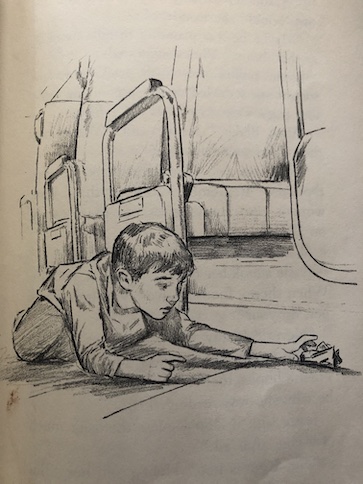
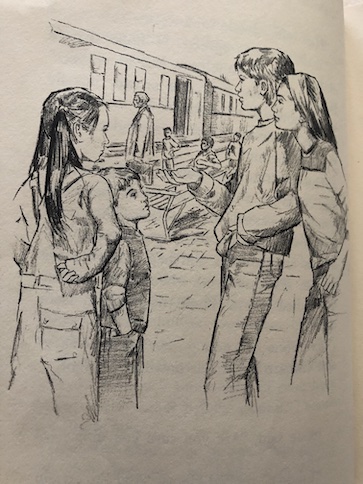
The Alden children have been working on a project at their public library to invite the author of one of their favorite book series to visit as a guest speaker.  However, when they go to meet his train, the author isn’t there.  He’s completely disappeared!

The Aldens know that he got on the train because they spoke to him on the phone earlier.  When they interview some of the passengers, they discover that the train trip was somewhat chaotic.  The train passed through a harsh storm.  A small dog disappeared, and his heart-broken family is searching for him as well.  The evidence seems to point to the author jumping off the train, but why would he do that?  Where is he now, and why hasn’t he tried to get in touch with them?

Carefully, the Aldens have to work backward through the train journey, piecing together the author’s movements to put together the whole story.

The book is available to borrow and read for free online through Internet Archive.

My Reaction

I really appreciated the premise of this story. A mysterious disappearance makes a more unusual kind of mystery than the more typical crimes that appear in mystery stories, like theft. This is a story of a trip in which quite a lot of things went wrong.  The kids do manage to track down their missing author with some surprising help from the author’s rival, who is also apparently his friend, showing the children that not all competition has to be unfriendly.

Day and Night

Day and Night by Roger Duvoisin, 1960.

Night is an owl who likes to go out hunting for food at night, and Day is a poodle who lives with family called the Pennyfeathers. Because Day is usually only out during the day and sleeps in the family’s house at night, they don’t usually meet. However, by chance, Day rescues Night from a fox.

Night is grateful, and the two of them become friends. However, because they are normally active at very different times, they can’t easily meet to talk to each other.

They sometimes leave each other little treats, like a bone with some meat or something from one of Night’s hunts.

They also begin meeting at the kitchen door at night to talk to each other.

However, Day’s barking and Night’s hooting is too loud, and they start keeping the Pennyfeathers awake at night. At first, they can’t figure out why Day keeps barking every night, but their son, Bobby, sneaks out one night and sees the way Day seems to be talking to the owl.

Bobby correctly realizes that Day and the owl are friends and that they’re just trying to talk to each other. To solve the problem, Bobby builds a dog house for Day so that Day can comfortably sleep outside and talk to his owl friend without disturbing everyone.

Day likes the new dog house, and Night meets him there every night so the two friends can talk whenever they want.

My Reaction

This is a cute picture book that I’ve liked since I was a kid. I like the way that Day and Night talk to each other and some of Day’s misconceptions about what his humans are thinking. When Mr. Pennyfeather yells at them to be quiet, Day tells Night that he thinks Mr. Pennyfeather is barking at the moon.

Some of the pictures are in black-and-white and some are in color. It seems to be common in older picture books to have a mixture of black-and-white and color images. I think it might partly have been done to save money on printing.

Spot Visits the Hospital

Spot

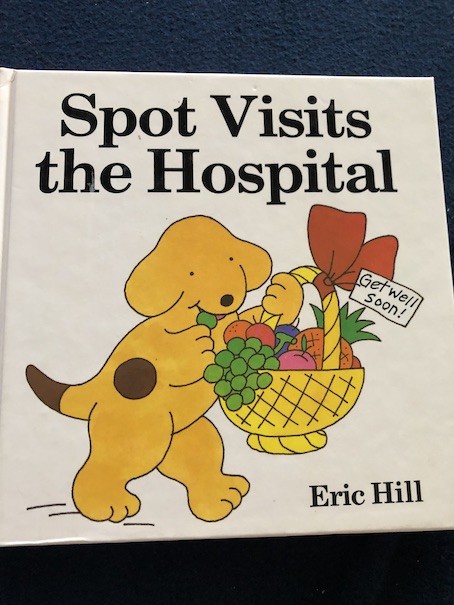
Spot Visits the Hospital by Eric Hill, 1987.

Spot’s friend Steve, who is a monkey, is in the hospital with a broken leg. Spot and some of their other friends decide to go visit him and take some presents to cheer him up.

Steve likes their presents, and Spot and his friends sign Steve’s cast. They play in the hospital’s playroom, where they have toys, games, and books for child patients.

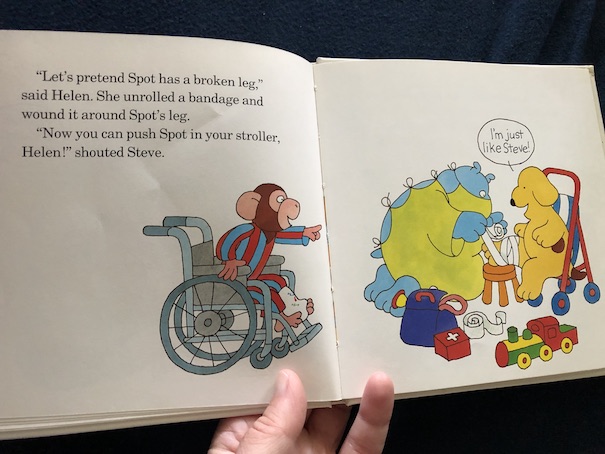
Spot’s friend Helen decide to play doctor, and she puts a bandage on Spot’s leg, as if his leg is broken, like Steve’s. They start pushing Spot around in a stroller, like it’s a wheelchair.

Their friend Tom hides, and they all go looking for him, finding him in an x-ray room. In real life, they would probably get in trouble for goofing off around the x-ray equipment, but in the book, nobody catches them doing it. I think the reason why the book has this episode in it is to have a reason to show readers the x-ray equipment and explain how the doctors used it to examine the break in Steve’s leg.

Spot is fascinated by what he sees in the hospital and tells his mother that he might like to be a doctor someday.

This story could encourage children who find the idea of studying medicine and helping people interesting, but it also makes a visit to the hospital seem less scary for children who may worry about what happens there and what all the big machinery, like the x-ray machines, are for.

The book is available to borrow and read for free online through Internet Archive.

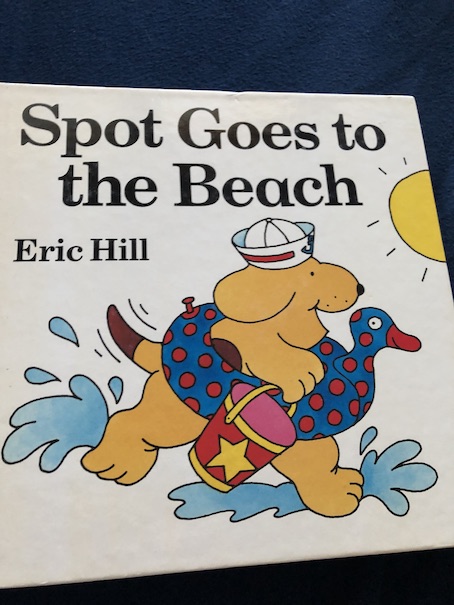
Spot Goes to the Beach

Spot

Spot Goes to the Beach by Eric Hill, 1985.

Spot’s parents take him to the beach to spend the day there. When they get to the beach, Spot wants to get a sailor hat from a stand selling beach equipment, and his father also buys him some beach toys.

Spot plays with a beach ball, builds sand castles, and buries his father in the sand.

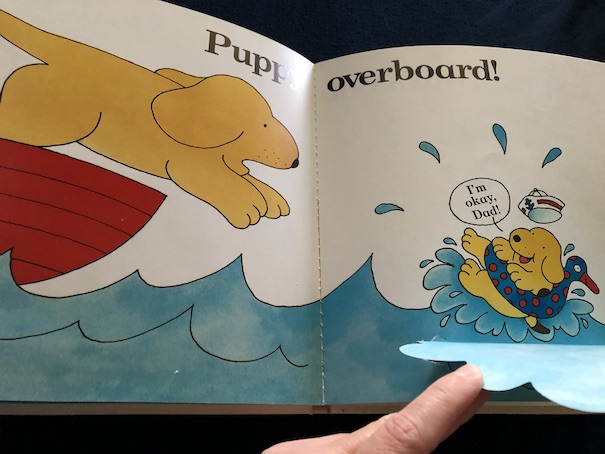
Spot and his father later go fishing, and Spot falls in the water, but Spot is fine because he’s wearing a pool float.

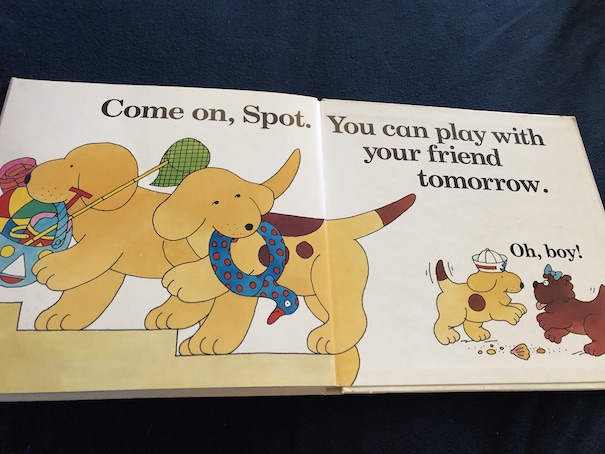
Before they leave the beach, Spot also makes a new friend, another puppy!

This is just a cute book for children about the fun things that they can do at the beach.

Like other Spot books, this book is a lift-the-flap picture book. The British version of the title is Spot Goes on Holiday. It’s available to borrow and read for free online through Internet Archive (multiple copies).