Lucky Dog Days

Pee Wee Scouts

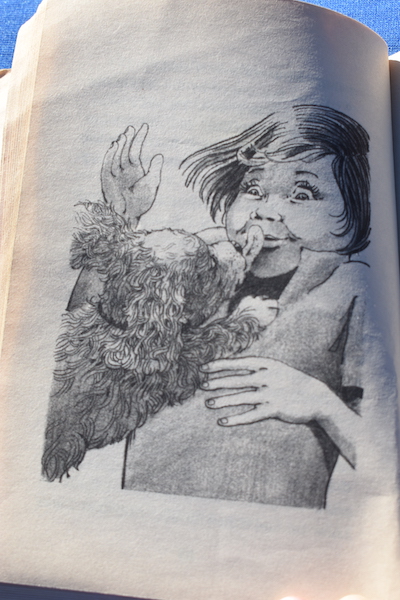
Mrs. Peters tells the scouts that it’s Help-a-Pet month. The kids start talking about the kinds of pets they have, and Mrs. Peters asks them if they would like to do something to help a pet. She suggests that they could walk dogs at an animal shelter or raise money for homeless pets.

Mrs. Peters takes the scouts to an animal shelter. The kids like seeing all the animals, although Tracy turns out to be allergic to them. The other kids walk the dogs around the shelter yard. This turns into chaos because Rachel decides to walk a dog that’s really too big for her to handle, a St. Bernard. (The adults should have stopped her, but they never do in this series when a kid is about to do something they shouldn’t. They take Rachel’s word for it that she can handle a St. Bernard because she has walked her uncle’s Great Dane. However, even dogs of the same size don’t have the same temperament, and I think a real shelter worker would know the individual animal’s temperament and not offer an oversized dog with a lot of energy to a six-year-old child.) When her dog starts running and dragging her, the other dogs get out of control, too. Fortunately, they’re all in a contained yard, so none of them gets away. The incident ends with Rachel crashing into a lily pond in the yard.

Mrs. Peters tells the children that they will have a rummage sale to raise money for the animals at the shelter. All of the scouts will donate things to sell and collect donations from others. Tracy tells Molly and Mary Beth that she will help them collect donations. Molly is annoyed that Tracy is coming with them because she thinks Tracy is bossy and that her sniffling is gross. However, it turns out to be a good thing that Tracy comes because she brings a wagon with her to collect donations, which the other girls hadn’t thought to do. Unfortunately, their wagon disappears when the girls try to visit one last house to ask for donations and leave it unattended.

It turns out that some of the other scouts, Roger, Sonny, and Tim, found their wagon and try to claim the donations as their own at the next scout meeting. The boys say it’s theirs because they just found it on the sidewalk, but the girls tell Mrs. Peters what happened. Mrs. Peters smooths things over, saying that it doesn’t matter because these items will be sold to help the animals. Molly doesn’t think it’s fair for the boys to get credit for the work the girls did gathering donations, though. (I think Mrs. Peters should also have had a word with the boys about not taking things if you don’t know who they belong to and don’t have permission to take them. The adults in this series never explain things enough.)

There is one particularly fancy necklace that looks like diamonds among the donations. Mrs. Peters says that, rather than putting a price on it, they will auction it off to the highest bidder. They also have some adoptable dogs at the sale to attract people who might adopt them. It was Molly’s idea to have adoptable dogs there to sell because a lady expressed interest in Mrs. Peters’s big, black dog, Tiny. To Molly’s surprise, the lady who eventually buys the fancy necklace and pays a thousand dollars for it is the woman who donated it. When they ask her about it, she explains that it is a real diamond necklace and that she donated it by a mistake. However, even though she paid a lot of money to get it back, it’s still only a fraction of its real value, and she’s happy to make a big donation to a worthy cause.

In the end, Mrs. Peters congratulates the scouts on how much money they raised and how many animals were adopted that day. There is just one puppy left from the animals who were at the sale. The kids are attached to the puppy and don’t want to send him back to the shelter, so Mrs. Peters decides to keep him as a mascot for the troop. They name him Lucky, and Mrs. Peters says that they can take turns keeping him at their houses. (Except for the kids with allergies, like Tracy.)

The name of the book comes partly because the month is August, and Mrs. Peters explains to the kids what the “dog days” of summer are, although she just describes what the weather is like rather than explain why they’re called “dog days.” The term comes from the period after the rising of the dog star Sirius, but then again, I suppose that could be difficult to explain to six-year-olds. Not all adults would necessarily know it, either. I had to look it up myself to get the explanation. Even so, the name is appropriate because the theme of the book is pets, and it is set during late summer.

I still think that the adults in the story could explain some things to the kids more. That’s often a part of books in this series, although that’s also where much of the excitement of the story comes from, things going wrong because the kids don’t entirely know what they’re doing. Any lessons learned are more implied than spelled out.

The kids also keep insulting each other, even though they’re also kind of friends in the stories. We don’t really know why Molly thinks Tracy is bossy because she doesn’t really explain that. It just seems to her that Tracy tends to tell other people what to do and get her way. Molly relents a little in this book, though, because it turns out that Tracy has some good ideas, and even when she thought Tracy screwed up because they lost the wagon, everything worked out for the best.

Sammy Keyes and the Runaway Elf

Sammy Keyes

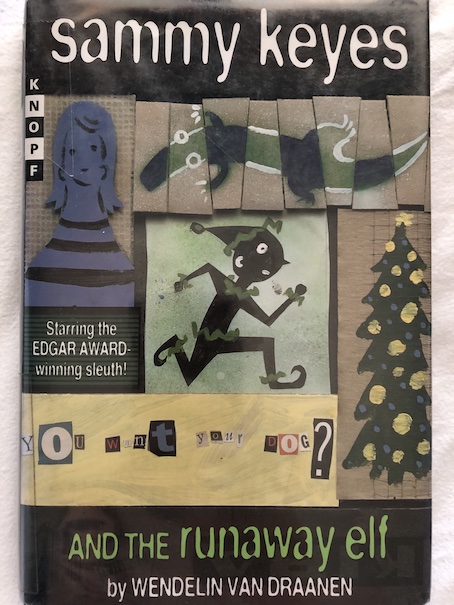
Sammy Keyes and the Runaway Elf by Wendelin Van Draanen, 1999.

Every year, Sammy’s town, Santa Martina, puts together a calendar with pictures of people’s pet dogs. People whose dogs are chosen for the calendar pictures get to ride in the town’s Christmas parade with their pets. Sammy is a cat-lover instead of a dog-lover, so she’s usually not too interested in the parade float with the dogs, but now, her friend Holly is living and working with the people who own the dog-grooming business and who prepare the float.

Sammy goes to the parade early to help Holly and the others to get the canine calendar float ready. She meets Mr. Petersen, the disagreeable man who assembles the dog calendar. Then, they learn that one of the dog owners has broken her leg and will need someone else to manage the dog, Marique, on the float. Marique is important because she’s trained to jump through a hoop, and they’re planning to have her jump through a Christmas wreath on the float. The dog owner’s daughter says she can’t be on the float with the dog because she promised her mother that she would make a video recording of the parade for her, so she has to be in the audience. Various other people also refuse to handle Marique because they have other jobs to do or other dogs to manage. Eventually, Sammy gets recruited to ride on the float and handle Marique.

At first, it goes pretty well, and Marique is a big hit with her jumping-through-the-wreath act. Then, some people show up dressed like the Three Wise Men and carrying cats, for some reason. Marique jumps off the float and runs off into the crowd. Before Sammy can do anything more than shout a warning to the others on the float to hold on to their dogs, both the cats and the other dogs start going wild and running in all directions. Everyone jumps off the canine calendar float and begins chasing after their dog. Sammy searches for Marique through the chaos.

Sammy doesn’t find Marique, but she does meet an unhappy little girl named Elyssa, who is dressed as an elf. Officer Borsch finds both girls and escorts them back to Elyssa’s mother. Officer Borsch wants to take Sammy home (which is a problem because Sammy secretly lives with her grandmother at a retirement community that doesn’t allow children, and they’ve been trying hard to avoid anyone finding out), but Elyssa insists that she wants Sammy to stay with her. When Elyssa goes to buy Sammy a soda, her mother questions Sammy about what Elyssa said to her. Elyssa seems to have an odd obsession with the moon and a tendency to run off by herself (making her the “runaway elf” in the title), but her mother doesn’t want to explain it. Elyssa asks if Sammy can spend the night with her. Sammy says that she has to get home, but Elyssa’s mother says it’s okay if the girls want to see each other tomorrow. Elyssa’s mother encourages the friendship between Elyssa and Sammy because Elyssa seems to need someone to open up to, although Sammy isn’t quite sure why.

Sammy’s grandmother’s friend Hudson finds Sammy, and she explains what happened with the Canine Calendar float. The more Sammy thinks about it, the more she suspects that her school nemesis, Heather Acosta, was one of the people dressed as Wise Men and holding cats. She can’t prove it, but it’s the sort of nasty trick Heather would do. The problem is that Sammy has also realized that Marique jumped off the float right before the cats and dogs went crazy. Just before the chaos started, Sammy heard someone calling Marique’s name, and Marique took off in the direction of the voice. Who was calling to Marique, and where is the dog now?

Marique’s owner, Mrs. Landvogt, is blaming the groomer who was managing the float for the disaster and her dog’s disappearance, which Sammy knows isn’t fair. Then, Sammy’s best friend, Marissa, calls her and says that Mrs. Landvogt is a neighbor of hers and wants to see Sammy. When Sammy meets Mrs. Landvogt, she is angry and in no mood for excuses. Mrs. Landvogt has received a ransom note for her dog, proving that someone took the dog on purpose. Rather than expecting apologies from Sammy for losing her dog, she insists that Sammy find Marique and get her back. At first, Sammy says that she doesn’t think she can do that, but Mrs. Landvogt says that she knows all about Sammy, and more importantly, she knows where Sammy really lives. If Sammy doesn’t find Marique, Mrs. Landvogt threatens to report Sammy and her grandmother for violating the terms of the retirement community. Sammy has no choice but to undertake the investigation. She also needs to find out where Mrs. Landvogt gets the information she uses to pressure people. Sammy isn’t her only victim … and therein may lie the solution to the mystery.

The book is available to borrow and read for free online through Internet Archive (multiple copies).

My Reaction

In this book, Sammy feels a little awkward about Elyssa wanting to be friends with her because Elyssa’s a few years younger than she is. When kids are young, a few years’ difference in age makes a big difference in terms of knowledge, behavior, and interests, and she has trouble seeing what she and Elyssa would have in common and do together. When she talks to Hudson about it, he doesn’t think that age is such a big issue. He’s in his 70s, about the age of Sammy’s grandmother, and a few years’ age difference doesn’t make much of a difference to adults. Sammy is uncomfortable, thinking about how Hudson is decades older than she is. She likes spending time with him, but she worries that maybe she looks like a baby to him and that he just tolerates her in the way she tolerates Elyssa as first. As an adult who’s spent time babysitting and playing with younger cousins, I know it’s not really like that, not to people with depth to their relationships and personalities. People of different ages and backgrounds can still bond with each other over common interests and enjoying talking to each other and spending time together. People who are young at heart and enjoy nostalgia can also have fun sharing in kids’ activities. Playing kids’ games with kids won’t make you a kid again, but it can be fun to feel like one for a few hours at a time, now and then. There’s also something to be said for getting in touch with earlier versions of yourself that have never completely left you and being reminded of the things that you loved when you were young, another theme that enters into the story when Sammy considers some of the unhappy adults around her and what’s made them that way. During the course of the story, Sammy and Elyssa become real friends, and Sammy does help her to come to terms with what’s really bothering her.

During her investigation and through her budding friendship with Elyssa, Sammy begins to learn the secrets of some of the unhappy people in her community. The truth is that everyone has suffered some form of hardship or loss in their lives, and as I mentioned last year when I was talking about experiencing Christmas in a Pandemic, feelings like this can come out stronger around Christmas. Christmas is both the last major holiday before the New Year and a time that people romanticize as being perfect and magical. The problem is that life itself isn’t perfect and magical, and people can feel angry and depressed when the reality of their situations doesn’t match their vision of how their life and Christmas should be, especially if they’re really dealing with a serious situation or long-term unresolved feelings, as many people in this story are.

There is real grief and loss in the story. Elyssa is still struggling to come to terms with the death of her father the year before. He was a police officer who was killed in a situation that went horribly wrong. Elyssa was not at her father’s funeral because a psychologist said that she might find it traumatic at her age. Instead, her mother simply told her that her father went to heaven. However, Elyssa understands more than her mother thinks she does. She knows where her father is buried, and when she runs off by herself, she often goes there to stare at his grave and try to understand how he can be underground and in heaven at the same time. Elyssa’s worries and confusion come out when Sammy’s nosy neighbor, Mrs. Graybill, the one who suspects the truth about Sammy’s life with her grandmother and has often tried to expose it in the past, becomes injured. Mrs. Graybill’s health deteriorates, and she becomes a patient in the nursing home where Elyssa’s mother works. Sammy becomes her only visitor there and learns the truth about her unhappy past and how the resentments she’s borne throughout her life have harmed her and left her with many regrets. Sammy is actually at Mrs. Graybill’s side when she dies, and the two make peace with each other before the end. Witnessing the death of a former nemesis and coming to terms with her real humanity is an emotional roller coaster for Sammy, but facing her own inner turmoil helps her to see how to help Elyssa face hers.

Not everything in the story has a perfect resolution. Sammy does figure out where Marique the dog is, and the dog is safe, but she can’t bring back Elyssa’s dad or Mrs. Graybill, and there are some people who are going to have to learn some lessons of their own about how to resolve their feelings and face up to their own hardships and bad decisions. The brighter spots in the story are what Sammy learns from her experiences and with helping other people face their problems. People really do have to face up to their situations, even when they’re unpleasant, and deal with their emotions in healthy ways. The people in the story who are the most unhappy are those who have tried to hide from their feelings or deal with them through spite and long-term resentment. Sammy comes to understand the importance of forgiveness and focusing on positives instead of negatives when it comes to dealing with one of her own long-term problems: her own mother.

Before the beginning of the series, Sammy’s mother, Lana, left Sammy with her grandmother while she was pursuing an acting career. Even though Sammy had missed her mother when she first left, she has come to realize that she resents her mother for abandoning her to the precarious, secretive life she lives with her grandmother and for putting her second to her acting ambitions. She feels like being a mother wasn’t important to Lana and that her mother only thinks of her as an afterthought when Sammy was depending on her so much. I would say that there is definite truth that Lana has neglected Sammy and her welfare and that Sammy has justification for being angry with her. In this book, Lana is excited about getting her biggest part yet, and Sammy is mortified to find out that this amazing role is in a commercial for anti-gas medicine. Lana sees the commercial as a possible stepping stone to something better, but Sammy thinks it’s embarrassing and a terrible result for the sacrifices that Sammy herself has had to make in her life for the sake of Lana’s “career.” However, seeing what long-term anger and resentment has done to other people in the story causes Sammy to consider that she should also learn to cultivate some forgiveness in her life for Lana so she won’t go down the unhappy paths that other people have. To get past the parts that she has genuine reason to feel angry about Sammy remembers the good times that she and her mother shared before, the times when Lana was nice to her and motherly, and the reasons why she missed her mother in the first place.

I can see why a little forgiveness can be healing, but I don’t see it as a perfect solution, especially not to problems like Sammy’s. Sammy and her grandmother are genuinely living a precarious life which Lana doesn’t seem to understand or appreciate. Even though Sammy finds a way to stop the blackmail in this story, her danger isn’t over, and she lives with it every single day. If Sammy is caught living with her grandmother, her grandmother could actually lose her home, and Sammy might be sent into foster care because social services might decide that neither her mother nor grandmother can or is willing to provide for her. I think it’s important to understand that Sammy isn’t just harboring a petty resentment against her mother; she’s dealing with a serious situation. Hiding in her grandmother’s little senior apartment with only extremely minimal belonging isn’t a fun adventure for her, it’s actually a serious situation with lasting consequences to her well-being. While her desire to temper her resentment toward her mother with some forgiveness and positive memories can help her get a healthier emotional balance, as a responsible adult, I think that Lana’s failure to address the reality of this situation and her role in it is going to remain an unhealthy problem in the lives of her nearest and dearest. If this were real life instead of a fictional story, I think it’s likely Sammy would be showing even more emotional trauma and would probably be in foster care already. It wouldn’t matter then if Lana wanted forgiveness or for people to look only at her good points when she had fun with her little girl because I don’t think judges award custody on that basis, not to someone with a long-term history of neglect because she wanted the freedom to “follow her dreams.”

This book isn’t a particularly happy story for Christmas. It turned out to be darker even than I thought it would be when I started, and Sammy Keyes mysteries tend to be a bit gritty. I would say that it’s more thought-provoking. I would not give this book to a child currently suffering from trauma because, when someone is actively suffering, dealing with characters’ suffering can feel like pulling double duty or rubbing salt in the wound. However, for those in the mood for a deeper understanding of dealing with life’s difficulties, especially at a time of year when everyone expects happiness and joy, it isn’t bad.

Parts of the story are genuinely touching. Sammy is understanding and gentle with Elyssa and changes her life for the better. There are even a couple of bonding moments between her and Officer Borsch. Officer Borsch was a friend of Elyssa’s father, and when Sammy asks him about what happened, Officer Borsch candidly admits that he was there when he was killed and still has nightmares about it. Sammy understands nightmares because she had them when her mother left her. Later, the two of them help each other. Sammy uses some of Hudson’s advice for a little psychological warfare on Heather that gets her to admit the cat prank in front of Officer Borsch. Officer Borsch promises to put some healthy fear into Heather that will help keep her in line in the future. The resolution of the prank also saves Officer Borsch some embarrassment at the office because he was on duty when it happened and took some flak for it, and Sammy also learns something about Borsch’s nemesis on the force from Mrs. Landvogt that will allow Borsch to resolve a serious problem that both he and Elyssa’s father had tried to solve.

The Puppy Who Wanted a Boy

The Puppy Who Wanted a Boy by Jane Thayer, illustrated by Lisa McCue, 1958, 1985.

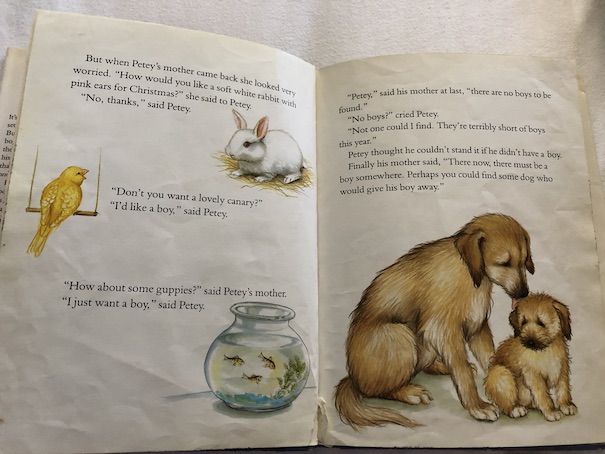
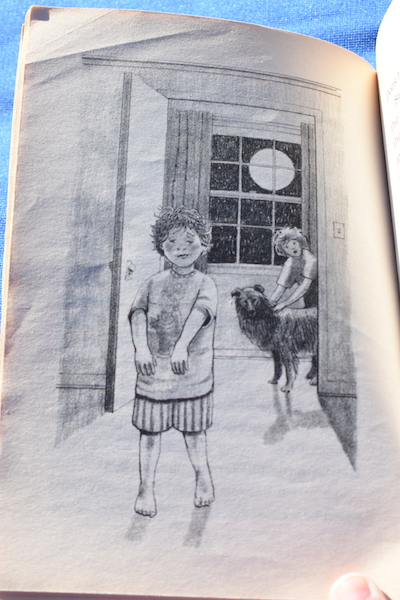
A puppy named Petey tells his mother that he wants a boy for Christmas. His mother says that he might get one if he’s good, and when Petey is a good puppy, his mother tries to find one for him.

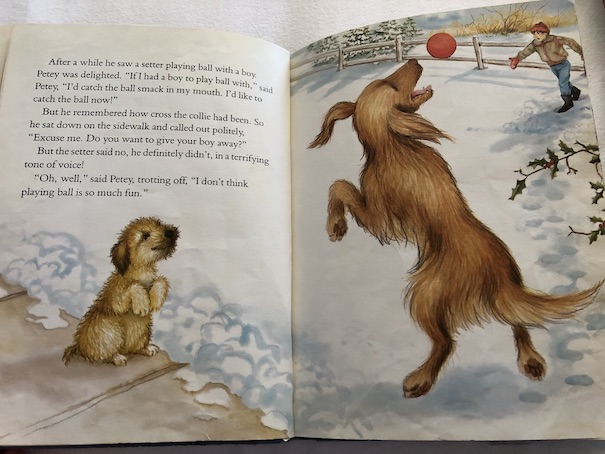
Unfortunately, Petey’s mother just can’t seem to find a boy for Petey anywhere. She suggests trying to see if any other dog is willing to part with his boy. However, no other dog wants to give up his boy.

Eventually Petey comes to an orphanage with a sign that says Home for Boys. Petey decides that if the boys have no parents, maybe they could also use a dog. It’s Christmas Eve, and most of the boys are inside are singing Christmas carols, except for one boy, sitting by himself outside.

Petey jumps into the lonely boy’s lap, and the boy loves him right away. When a lady comes to check on the boy, the boy asks if he can bring the puppy in, and she says yes.

All of the boys in the home love Petey and want to keep him. The lady says that Petey can stay if his mother lets him, and Petey knows that she will. Instead of getting just one boy for Christmas, Petey found fifty!

The story was first published in 1958, but my edition is from 1985 and has different illustrations. In the older book, the puppy looked like a beagle.

The book is available to borrow and read online through Internet Archive (multiple copies).

Spot Goes to the Beach

Spot

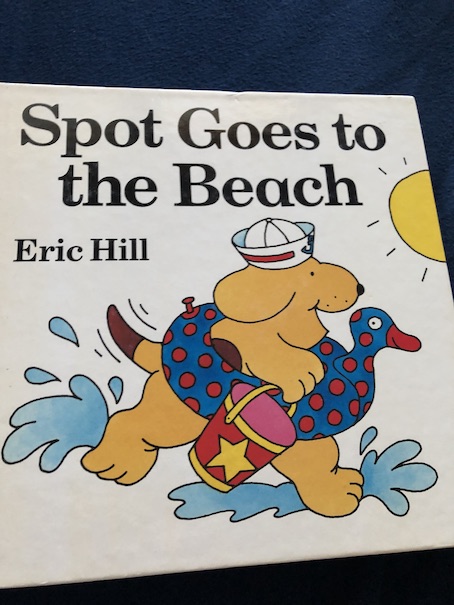
Spot Goes to the Beach by Eric Hill, 1985.

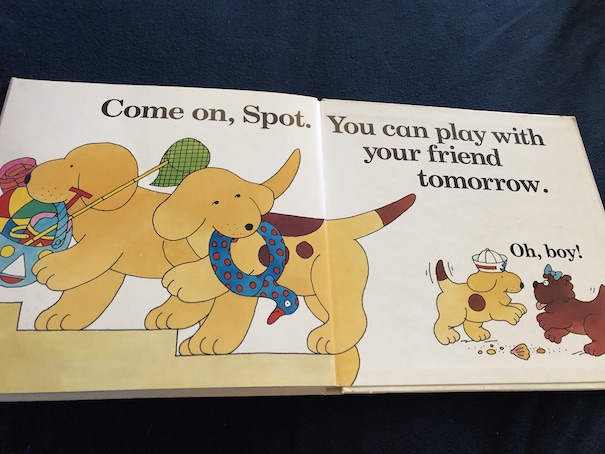
Spot’s parents take him to the beach to spend the day there. When they get to the beach, Spot wants to get a sailor hat from a stand selling beach equipment, and his father also buys him some beach toys.

Spot plays with a beach ball, builds sand castles, and buries his father in the sand.

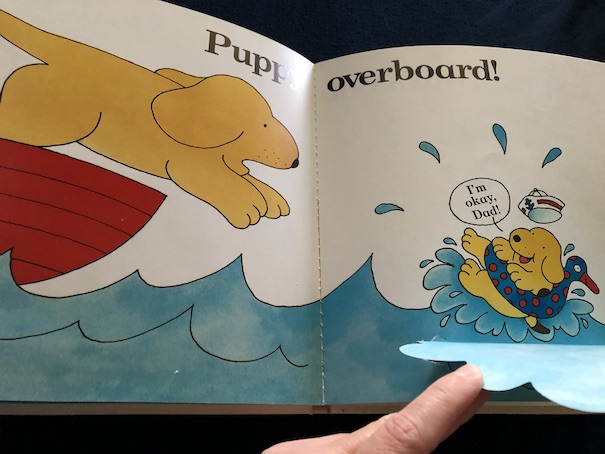
Spot and his father later go fishing, and Spot falls in the water, but Spot is fine because he’s wearing a pool float.

Before they leave the beach, Spot also makes a new friend, another puppy!

This is just a cute book for children about the fun things that they can do at the beach.

Like other Spot books, this book is a lift-the-flap picture book. The British version of the title is Spot Goes on Holiday. It’s available to borrow and read for free online through Internet Archive (multiple copies).

Where’s Spot

Spot

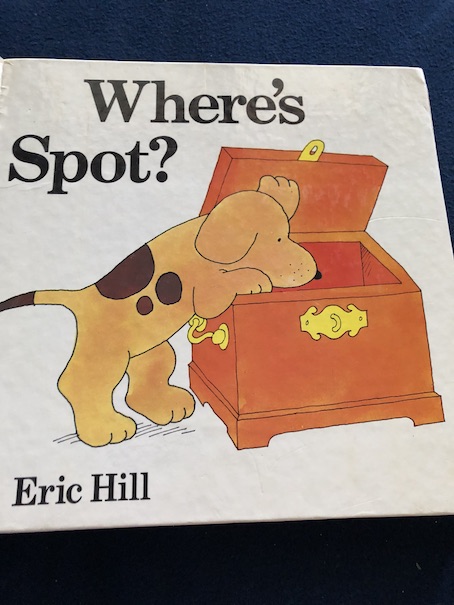
Where’s Spot? by Eric Hill, 1980.

This is the first modern lift-the-flap book for children, inspired by the author’s young son, who was playing with some sheets of papers on which he had drawn some concepts for an advertisement. There was an earlier style of lift-the-flap book from the 18th century, but this first book in the Spot the Dog series led to the popularization of modern lift-the-flap books for children.

Spot’s mother, Sally, notices that her puppy hasn’t eaten his dinner. She doesn’t know where he is, so she goes looking for him.

Sally searches for Spot all around their house, looking behind a door, in a closet, inside a clock and piano, under the stairs, and under the bed. In each place, she finds different animals (no explanation, there are just a lot of animals in this house).

Finally, the turtle hiding under the rug suggests that Sally check the basket, which is where she finally finds Spot.

The story is very simple, and the lift-the-flap concept is what really makes it work. The interactive element is fun, as if the readers are participating in a game of hide-and-seek with the characters. Kids enjoy being surprised by the different kinds of animals hiding all over the house. I loved it when I was a kid!

The book is available to borrow and read for free online through Internet Archive (multiple copies), but to be honest, it’s not really a good book to read online because the lift-the-flap effect doesn’t carry over.

Clifford's Family

Clifford

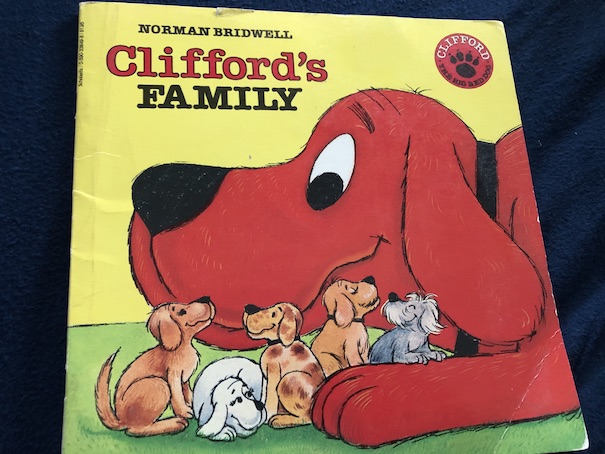
Clifford’s Family by Norman Bridwell, 1984.

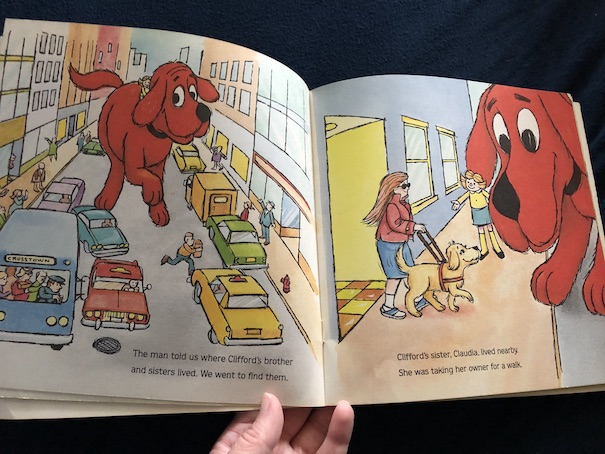
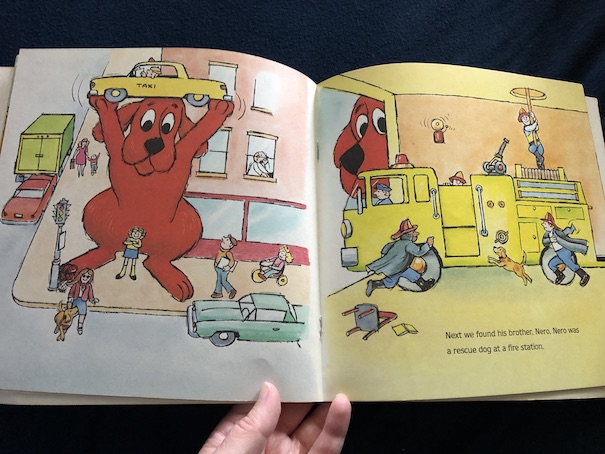
Emily Elizabeth and her enormous dog, Clifford, were both born in a big city, although they live in a smaller town now. They decide to go back to the city and visit Clifford’s mother, who is still there.

Clifford’s brothers and sisters all live with different people now, so they decide to visit them, too. Clifford’s sister, Claudia, has become a seeing-eye dog.

His brother, Nero, is now a fire rescue dog.

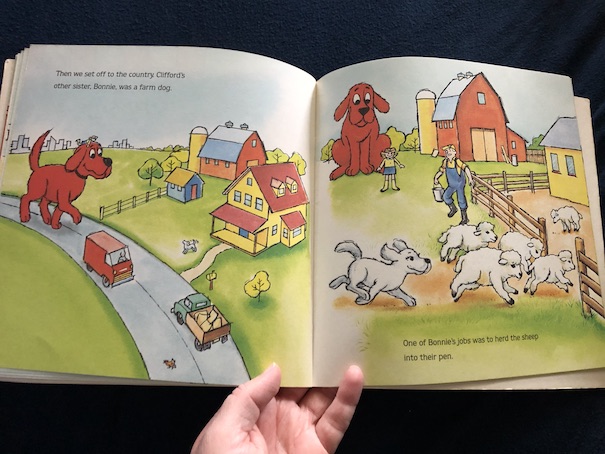
Clifford’s other sister, Bonnie, lives on a farm and herds sheep.

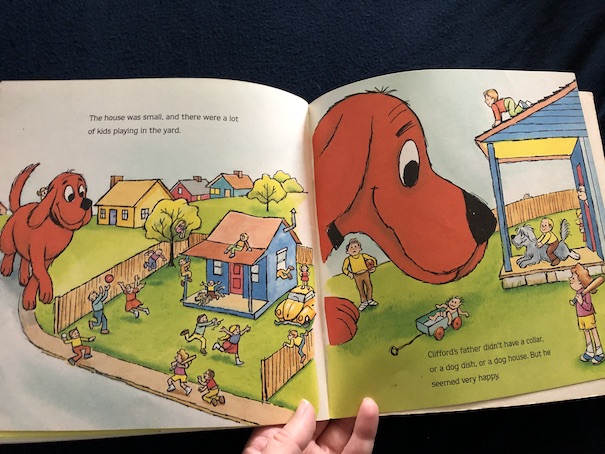
Clifford’s father doesn’t live with his mother. He lives in a house in another town with a lot of children, and he loves playing with them.

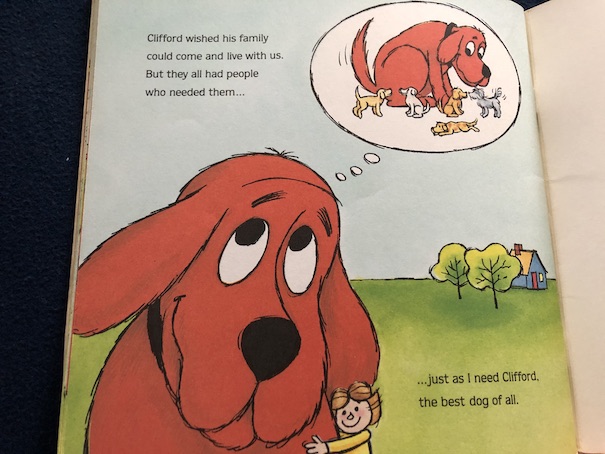
Clifford wishes that his family could live together, but he understands that every member of his family has other people who also need them.

I thought that this book did a good job of pointing out some of the jobs that dogs do, like seeing-eye dog, rescue dog, and herding dog. Clifford and his parents are all companions animals, like most pet dogs, but his siblings all have specific jobs to do for their owners.

The book is available to borrow for free online through Internet Archive.
Clifford's Tricks

Clifford

Clifford’s Tricks by Norman Bridwell, 1969.

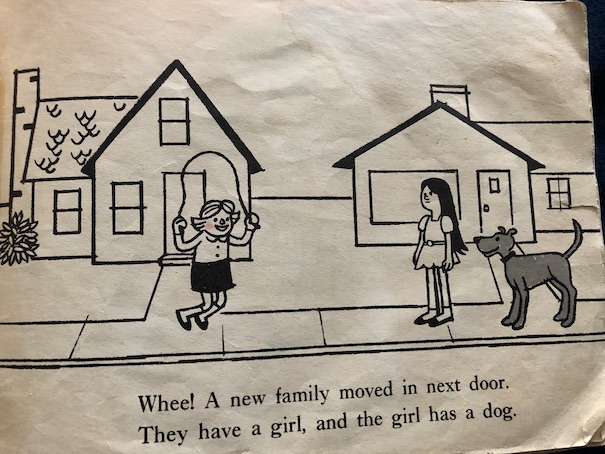
A new girl moves next door to Emily Elizabeth. The new girl, Martha, also has a dog, although her dog, Bruno, is a normal-sized dog, unlike Emily Elizabeth’s dog, Clifford.

Martha is competitive and brags that her dog is probably smarter than Clifford. Martha and Emily Elizabeth compare the tricks that their dogs can do, although Clifford’s tricks are different from those of normal dogs. His tricks tend to go wrong or cause problems because of his large size. For example, Bruno can retrieve a newspaper for Martha, but when Clifford tries to do the same thing, he comes back with the whole news stand.
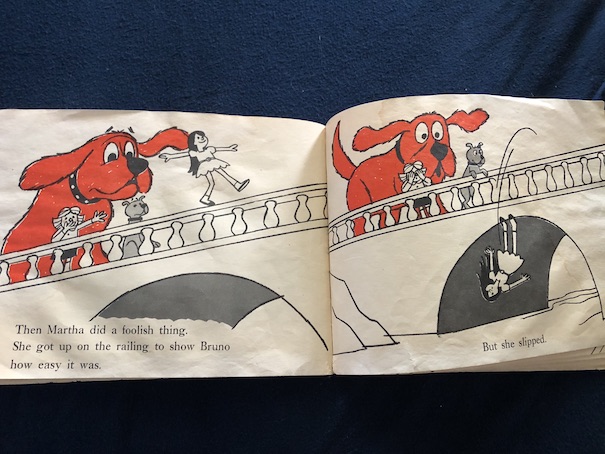
Martha tries to show off Bruno’s bravery by getting him to walk the railing of a bridge, but Bruno doesn’t want to do it because it’s too dangerous. When Martha tries to show Bruno how easy it is, she falls off the bridge into the river. Bruno jumps in to save her and also gets into trouble.

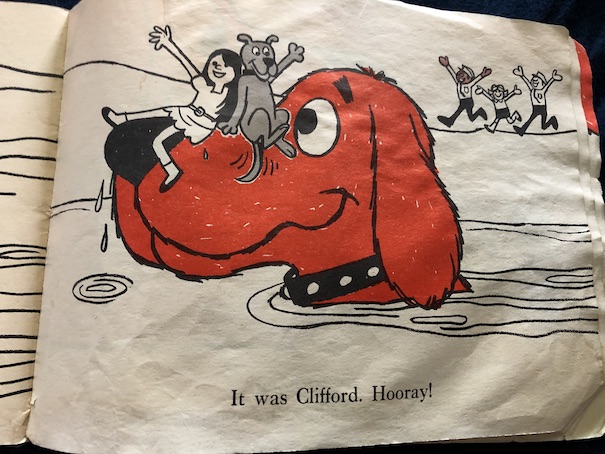
Fortunately, Clifford is big enough to save them both.

Martha is grateful that Clifford saved her and her dog, but each girl still loves her own dog the best.

The book is available to borrow for free online through Internet Archive. The edition that I have is the older edition of the book with pictures that are mostly black-and-white, except for Clifford, who is red. However, there is also a newer edition with full color pictures.

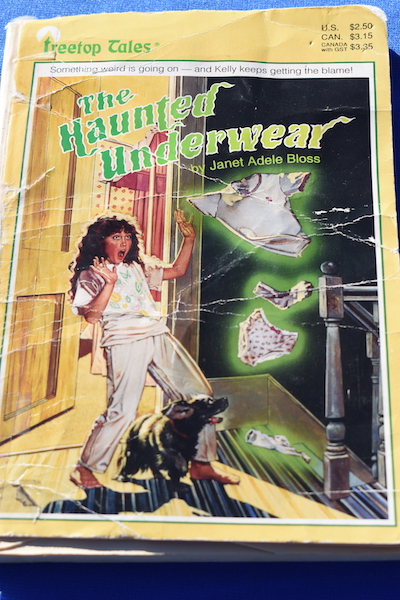
The Haunted Underwear

The Haunted Underwear by Janet Adele Bloss, 1992.

Things have been rough for ten-year-old Kelly Towser since her parents decided to adopt a four-year-old boy named Stevie.  For the first part of her life, Kelly was an only child, and now she misses that peaceful period of her life.  Now, her parents don’t have as much time to spend with her.  Everyone showers little Stevie with attention and presents.  Although she doesn’t say so, Kelly worries that maybe her parents adopted Stevie because they were disappointed in her or secretly really wanted a boy instead.

To make things worse, Stevie’s little-kid antics get on Kelly’s nerves.  Stevie keeps making messes, throwing his toys all over the place.  Kelly’s parents tell her that she used to make a lot of messes when she was little, too.  Kelly doesn’t remember doing it, but her parents say that she used to like to throw her clothes all over the place, even hiding her underwear in random locations in the house.  They used to joke about her “haunted underwear,” mysteriously showing up in strange places.

Because Kelly complains that Stevie is getting all kinds of presents, and she isn’t, her parents agree to give her a special present to celebrate her getting a new brother.  After thinking about it a little, Kelly decides that she wants a new puppy.  The family already has a dog named Star, but Kelly thinks that the new puppy could be a friend for Star while she’s at school.

At the pound, Kelly selects a cute brown puppy.  One of the workers tells her that the puppy was found abandoned at the side of the road, dirty and hungry.  Stevie is excited about the new puppy and wants to play with him, but Kelly is determined to keep the puppy for herself, something that she doesn’t have to share with Stevie.  When Stevie insists that the dog’s name is Boscoe because he used to have a dog named Boscoe, Kelly insists that the dog’s name is Jingle.  Stevie gets upset that she isn’t sharing the dog, but Kelly doesn’t think that Stevie would be careful with the puppy because he has already pulled Star’s tail.

As older readers might guess, Kelly soon finds herself in a similar position with Jingle as her parents are with Stevie.  Star gets jealous of the new puppy in the same way that Kelly is jealous of Stevie, feeling like she’s been replaced in her own house.

Kelly does try to get her parents’ attention with some silly stunts, but when her clothes and underwear mysteriously start appearing around the house, she has no explanation.  Her parents punish her, thinking that this is just another attention-getting stunt, but Kelly knows it’s not her.  She starts thinking that the real culprit is Stevie, trying to steal her parents’ attention and affection more than he already has.  However, there is another explanation for the mysterious underwear ghost, and as Kelly investigates, trying to catch Stevie with her underwear, she learns a number of important things.

I figured out pretty early who was responsible for the underwear around the house, although it helped that I’ve had experience with dogs. Star, feeling neglected because of the new puppy, was trying to get Kelly’s attention in the same way that Kelly was trying to get her parents’ attention. Stevie does look guilty for a while because Kelly discovers that he is a sleepwalker and has been having nightmares.  However, when she gets up in the night to catch Stevie sleepwalking with her underwear, she finds Star taking it instead.  Understanding Star’s feelings help Kelly to better understand her own feelings, and she resolves to spend more time with Star so she’ll feel less neglected. When her parents discover the truth, they apologize to Kelly and reassure her that they didn’t adopt Stevie as a replacement for her and that they don’t love her any less.

Kelly’s mother also talks to Kelly about what she knows about Stevie’s history.  Although they don’t know the names of Stevie’s birth parents, Kelly’s parents know that Stevie’s mother wasn’t married and had no money and gave up him for adoption in the hopes that he would be raised in a more stable home.  Stevie has not seen her since he was two years old, two years ago.  Stevie is troubled by nightmares because his young life has been very chaotic, and he has been moved from foster home to foster home, with people always giving him up.  He deeply fears that his new family will also give him up and is terrified when they seem like they’re going to go somewhere, afraid of that they’ll never come back.  That is what his nightmares are really about.  Kelly comes to realize that his situation is very much like Jingle’s, that the fact that someone gave him up doesn’t mean that he’s bad and that all he needs is time, attention, and love to grow out of his problems.

Even though things work out okay, this is one of those books where I found myself getting impatient with the parents.  I think that some of Kelly’s bad feelings might have been resolved much sooner or avoided altogether if Kelly’s parents had spoken more honestly with her in the beginning, preparing her to be patient with Stevie and to understand when he has problems.  Apparently, they did tell her at least some of what they knew about Stevie’s past in the beginning, but they don’t seem to have spoken to her much about how that might influence his behavior and how he will need a lot of time and reassurance to get over his fears. 

When I used to volunteer at an animal shelter, we used to tell people who were adopting dogs that they would have to expect that their new dog would destroy something that they owned, especially if it was an energetic young puppy. When you bring a new dog into your house, it doesn’t know the area, it doesn’t know you very well, and it doesn’t know the rules that go with you and your house. It’s almost certain that, soon after arriving, it will relieve itself in the wrong place or pick the wrong thing to use as a chew toy. Something is likely to get ruined or some mess will be made. The best you can do is to take some preemptive measures, like securing valuables, closing the doors to rooms with things that the dog shouldn’t get into, and taking the dog to the place where it should relieve itself immediately on arriving at the new home. These steps can help head off problems, but at the same time, something is still likely to go wrong because the dog needs time to learn what you find acceptable and unacceptable and will probably do something wrong while learning. We didn’t tell the new owners this to scare them off from adopting but to help manage their expectations so that they wouldn’t panic and try to return the new pet at the first sign of trouble. I think that Kelly needed a similar warning about her new brother to help manage her expectations.

Early in the story, Kelly says that when her parents first started talking about adoption, she thought that it would be great because she’s always wanted a little brother that she could teach to do fun things like roller-skating or flying a kite.  Her attitude toward her new brother only soured when he seemed to be taking all of her parents’ attention and crying all the time and making messes.  She thinks at one point that it’s hard to love someone who seems determined to get you in trouble, which is what she thought Stevie was doing with the underwear.  My thought is that, if Kelly’s parents had explained more to her that Stevie might misbehave or be nervous in his new home and would need time to be taught how to live in their family, perhaps Kelly wouldn’t have been so upset and the parents would have been less quick to blame Kelly for the underwear issues. Knowing that there might be some problems that would be temporary would have been reassuring to Kelly that there were better things ahead for her and her new brother.

Also, even though the parents seemed to understand that Kelly was seeking their attention, they didn’t really do anything positive about it at first, just punishing her for leaving the underwear around.  If they had told her, straight out, in plain English, that even though they’ve been very busy with Stevie that doesn’t mean that their feelings for her have changed and that she doesn’t need to pull stunts to get their attention because they would be spending some quality time with her soon, it might have helped to head off Kelly’s bad feelings.  The closest they get to that at first is when they tell her that she’s old enough to know that there are better ways to get their attention than silly stunts.  They don’t mention what the better ways are, and they don’t follow it up with much of an attempt to give her a little attention. What annoyed me most was that Kelly’s mother waited for Kelly to approach her to talk, but in her place, I think I would have taken the initiative, especially after Kelly’s stunts included some potentially dangerous bike stunts. I’m a great believer in direct communication. I tell people if there’s something I want them to know, and if I want to know what they’re thinking, I ask. Over the years, I’ve discovered that if you leave people guessing what you’re thinking or what you want, you discover that most people aren’t good at guessing.  I won’t say that Kelly’s parents are the most clueless ones I’ve seen in children’s books because they made more of an attempt to tell Kelly things and talk to her than some other parents in books do. All the same, it always gets to me when problems in books could be avoided with just an extra conversation or two.  There were a couple of times in the book when I wished that I could step into the scene, call “Time!”, and make the characters just stop and really talk to each other and take a real look at the situation.

The book is available to borrow for free online through Internet Archive.

The Boxcar Children

The Boxcar Children

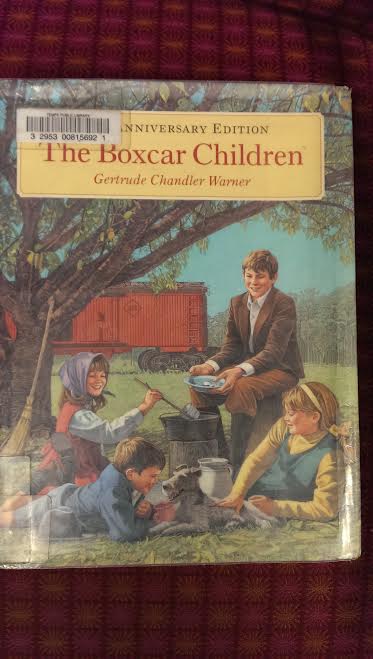
BoxcarChildren#1 The Boxcar Children by Gertrude Chandler Warner, 1924, 1942.

“One warm night, four children stood in front of a bakery.  No one knew them.  No one knew where they had come from.”

These are the words that begin not only this story but a series that has been loved by generations and continued well beyond the death of the original author.

The four Alden children are on the run following the deaths of their parents.  Their nearest remaining relative is a grandfather they have never met, and although he should have custody of the children now, none of the children want to go live with him.  All that they know about him is that he is apparently a mean old man who opposed their parents’ marriage.  Henry, the eldest at fourteen, and Jessie, who is twelve, have taken charge of the two younger children, ten-year-old Violet and seven-year-old Benny.  They have a little money, and they’re now traveling on foot in search of a new home.

The first place they stop is a bakery in a nearby town where no one knows who they are.  They don’t have much money, but they know they are going to need supplies for their journey.  The stingy baker and his wife agree to give the children some food and a place to sleep for the night in exchange for some help in their shop.  The children are willing to work and accept the offer.  However, Henry and Jessie overhear the couple talking about them.  They like having the children to help in the shop, but Benny is too young to be of much help.  They are considering taking Benny to an orphanage and keeping the others.  Not wanting to be separated, Henry and Jessie wake Violet and pick up Benny, moving on.  Now, they have a second set of people they’re avoiding, besides their grandfather.

Seeking a place where they can stay while not being noticed by people around them, the children eventually find an old, abandoned boxcar on a disused piece of train track on the edge of some woods.  They take shelter there from the rain and decide that they can turn it into their new home.  There are blackberries growing nearby that they can eat and a stream where they can keep milk cold.  Henry finds odd jobs in a nearby town to earn more money, and the others discover an old dump where they retrieve some old, cracked dishes and other useful items.

It seems like an idyllic life at first.  The children are free of adult control, although they do have to work to create a household for themselves and find food.  They adopt a stray dog they call Watch (he’s their new watchdog), and Henry makes friends who appreciate what a hard worker he is.  However, some of these new friends start to wonder about Henry, where he comes from, and where his parents are.

The children soon realize that someone is spying on them.  Is it someone from the town?  Could the baker and his wife still be looking for them?  Or is it someone sent by their grandfather?  When Violet is suddenly taken ill, the others realize that they need help and someone to trust.

Getting help for Violet does mean that the children’s secret is revealed to everyone, although they learn some important things in the process.  They discover who was spying on them and why and also discover that their grandfather is a nicer person than they thought and truly cares for them.

Although this series is very popular, most people don’t know that the story they read as children was actually a shortened version of the original story that was written in 1924.

The newer, popular version of the book is available online through Internet Archive.  The older version is now public domain and available online through Project Gutenberg.

Comparisons to the Older Version and My Reaction

Along with shortening and simplifying the story from original the 1924 version, the newer version from 1942 changed some of the characters’ names (the children had the same first names, but their family name was originally Cordyce, not Alden) and removed some parts that might be objectionable for young children.

Although the original story doesn’t completely clear up some questions that were left unresolved in the current version, like what the children’s parents were like, precisely how they died, and why they quarreled with the children’s grandfather in the first place, it did supply a few more details in the first chapter.  The original story begins when the children move to a new town with their father.  No one knew exactly where they came from, and the children pointedly refuse to say.  However, they do tell their neighbor, a baker, that their mother is already dead.  Their father is drunk, and the baker thinks that he looks like he’s in such bad condition that he isn’t likely to last much longer.  That turns out to be true when he dies (apparently from alcohol-related causes) soon after.  When they question the children about whether or not they have other relatives, young Benny blurts out that they have a grandfather before the others silence him.  The adults press the children for answers, and they reluctantly admit that there is a grandfather, but they say that he did not like their mother and would treat them cruelly if they were sent to him (or so, apparently, their parents had led them to believe).  The only one of the children who has even seen the grandfather is Jessie (actually called Jess in this version of the story), and it was only from a distance because her father happened to see him passing by and pointed him out.  Later, the children hear the baker and his wife talking, saying that they have no choice but to try to find the grandfather, and the children decide to run away to avoid going to live with him.  The questions of how their mother died and why the grandfather didn’t like her in the first place are never answered.

James Cordyce (the children’s grandfather in the original book, their grandmother is also apparently dead) is a wealthy man who owns steel mills, and he is impressed by the children’s ingenuity and resourcefulness at managing their own affairs while living on their own.  He tells Henry that he wants him to take over the steel mills one day, and the book says that Henry does so when he grows up and does a wonderful job of managing them.  Mr. Cordyce tells the other children that he wants them all to go to college, and then they can do whatever they like when they grow up, which the book says also happens.

Although the books never actually say so, my theory is that Mr. Cordyce/Alden was a hard-headed businessman, particularly when he was younger, driven to succeed and not emotionally demonstrative, and that this attitude caused a rift between him and his son, who may not have shared his father’s business skills and interests.  The grandfather may have wanted his son to follow in his footsteps when the son had other ambitions.  The son may have seen his father as a cold and ruthless businessman and conveyed that impression to his own children after marrying a woman his father disapproved of (Because her family was poor? Because they were unambitious?  Because she had some objectionable personal habit?  There’s no telling), but because he may not have told the children the whole reason why he thought that the grandfather was cruel, the children imagined that he was worse than he really was.

We don’t know what the children’s father did for a living after his feud with his father or exactly where they lived (perhaps in Greenfield or close by so that Jessie was able to catch sight of her grandfather one day).  Why the father took to drinking is also never explained, but I think it may be implied that he did so out of grief for his dead wife.  I think that Henry and Jessie probably had to manage the household for their parents following their mother’s death (and maybe before that if she suffered from ill health), which is part of the reason why the children are so self-sufficient and seem more tied to each other than to any adult.  In any case, the original book says that Mr. Cordyce is interested when the doctor who befriends the children says that Henry and Jessie have business management skills, so I think it sounds like he was thrilled to find out that he might have more in common with his grandchildren than he did with his son and hopeful that Henry would make a better successor in the family business.  But, that’s just the way I read it.

One other point that the original book covered was Watch’s origins.  The later version just has Watch as a stray who the children adopt, but the original story explained that he had just been purchased from a kennel by a wealthy woman when he was lost.  The kennel owner tries to reclaim the dog (kennel name Rough No. 3) on behalf of the woman, but the grandfather offers to buy the dog for much more than the original price.  The kennel owner says that it’s up to the woman who bought him, and they invite the woman to the house.  After hearing how attached the children have become to Watch, the woman allows them to keep him.

Janie’s Private Eyes

JaniesPrivateEyes

Janie’s Private Eyes by Zilpha Keatley Snyder, 1989.

This is part of the Stanley Family mysteries series.

Janie Stanley has decided to open her own detective agency, The J.V. Stanley Agency, Incorporated, Private Eyes, with the help of her younger siblings and some other friends.  Eight-year-old Janie has had many different aspirations in her young life, from being a Shakespearean actress to being a vampire, so her older brother, David, doesn’t take her detective games too seriously at first.

However, at Mr. and Mrs. Stanley’s New Year’s Eve party, Janie’s “investigations” come to everyone’s attention when she borrows David’s tape recorder to make audio recordings of guests talking and plays them on the stereo that has been hooked up to speakers to play music for the party.  Gossipy Mrs. Dorfman recognizes her own voice, saying uncomplimentary things about her hosts and the other guests, and leaves in a huff of embarrassment.  When Janie’s father confronts her over the incident, Janie says that she was trying to find evidence on a murderer.  When her father and David question her further, she says that old Mr. Rupert, the deceased father of the Mr. Rupert who owns the local grocery store in Steven’s Corners, was murdered.

When old Mr. Rupert died around Thanksgiving, all the kids in the area were sad.  He was always nice to kids when they were in the grocery store and would sometimes give them candy for free.  They called him Grandpa Rupert.  But, Grandpa Rupert’s death was a heart attack, natural causes.  When David asks Janie what makes her think it was murder, she says that she suspects his son and his wife because they inherited the grocery store.  David says that he doesn’t think that Al Rupert would have killed his father.  Janie also says that she heard that there was no autopsy after the death, and she thinks that’s suspicious.  David says that it was well-known that Grandpa Rupert had heart trouble, so a heart attack wasn’t unexpected.  Janie also says that Huy, the younger brother of her friend, Thuy Tran, saw the mailman talking to Grandpa Rupert just before he died, but David doesn’t see why that’s so suspicious.  Eventually, David and her father talk Janie out of her murder investigation idea, but it turns out that the “murder” wasn’t the only investigation that Janie has undertaken.

Dogs in the area have been disappearing, and the Tran family has come under suspicion.  The Trans haven’t been living in the United States for very long.  Originally, they came from Vietnam.  The reason why people are looking at them suspiciously is because dogs started disappearing around the time the Trans moved to the area, and there are rumors that Vietnamese people eat dogs. (Hint: No, the Trans aren’t eating dogs. That’s an old stereotype/rumor that’s been used against various immigrant groups, and no dogs are eaten in this story.)  Janie knows that the Tran family isn’t guilty of dognapping, but proving it is another matter.  After the trouble at the New Year’s Eve party, she asks David and Amanda to help her investigate.  At first, they don’t want to, but David does have to do a journalism project for school with a partner, Pete Garvey.  Pete Garvey is the school bully who also has a crush on Amanda (which is established in a previous book in the series), but he likes the idea of interviewing people about their missing dogs.

However, even though David, Amanda, and Pete Garvey begin talking to people about the missing dogs, Janie and the other members of her detective agency are still on the case!  David has great misgiving about Janie’s involvement.  Then, suddenly, Pete doesn’t want to work on the project anymore and starts behaving suspiciously.  What does he know that no one else does?

The book is available online through Internet Archive.