
The Christmas Doll by Elvira Woodruff, 2000.
Young Lucy and Glory Wolcott are orphans in London during the Victorian era, 1848. Their parents died during a disease epidemic, and the penniless girls now live in a work house for orphans. They’ve been living there for 5 years, doing sewing for their support, although they are kept in terrible conditions there, with bad food. Then, another girl who lives in the work house dies of an illness, and people worry about the disease infecting others, as it did during the epidemic. Soon, other girls in the work house get sick. Lucy worries about her little sister, who is only 6 years old and already too thin from the bad food, will get sick and die, too. People begin saying that it may be safer living on the streets than being cooped up with the sickness.
The only comfort that Lucy and Glory have in their lives is each other and the story that Lucy tells Glory of her memories of Christmas with their parents. Glory was too young when their parents died to remember their parents or what life was like when their parents were alive, when they had someone to take care of them and actually had proper food. Glory loves the story that Lucy tells about the doll named Morning Glory that their mother gave her for Christmas but which was left behind when the girls were sent to the alms house and then to the work house when their parents died. Glory dreams that, someday, they’ll find that doll again. Lucy tells Glory that, when she finds her doll again, she’ll recognize her.
As more children at the work house die, Lucy increasingly fears that her sister will get sick and die. She thinks about running away from the work house with her sister, but she’s afraid of what they would do on their own. They don’t receive much food or care in the work house, and they’re subject to beatings and abuse, but what would they do on the streets, and how would they survive?
When Glory develops a cough, Lucy is sent to the sick ward at the work house, and Lucy is terrified that she will never come back. Both Lucy and Glory know that none of the girls who are sent to the sick ward with this cough have come back. Terrified, Lucy thinks that the only way to save Glory is to rescue her from the sick ward and get her out of the work house.
The two girls successfully run away, but once they’re on the streets, they have nowhere to go and don’t know what to do. They have nowhere to stay, and they have to sleep in the cold. Without food or money, Lucy trades a small pair of scissors that she brought from the work house for a couple of crumpets from a muffin seller, although a boy later tells her that the scissors were worth much more than that and that the seller took advantage of her. Lucy worries that they have no way to survive on their own because they don’t know what to do and have nothing else that they can sell or trade.
A kind washerwoman suggests to the girls that they go down to the river to join the mudlarks, who spend their days hunting for things to scavenge and sell in the mud at the river’s edge. Sometimes, she say, they find truly amazing things. With nothing else to do, the girls try it. The mud is smelly and disgusting, and at first, all they find are some old bones and bent nails. They’re about to give up when they find something that is truly amazing – a doll!
The doll is worn out, but its head is still good, and immediately, Glory declares that this is Morning Glory, the lost doll that has come back to them, just like the stories that Lucy has told her. With a heavy heart, Lucy realizes that they’re not going to be able to keep the doll. They have nothing else they can sell for money, and if they don’t sell the doll, they will have nothing to buy food and shelter.
At the suggestion of a rag and bone dealer, who is kind enough to let little Glory sleep by her fire for a time, Lucy takes the doll to a dollmaker. She hates having to do it and knows that it will break little Glory’s heart, but they are starving, and their lives are at stake. The doll is in such bad condition that only the head is worth something, and the dollmaker is prepared to offer Lucy a penny for it. That’s not much, but it’s more than Lucy was expecting. Then, something happens that changes everything for the better for Lucy and Glory.
The dollmaker notices the little morning glory flower embroidered on the apron Lucy is wearing. It’s actually Glory’s apron, and Lucy embroidered the flower for her because Glory was named after the morning glory flowers, just like her doll. The dollmaker asks Lucy who did the embroidery, and Lucy timidly admits that she did. At first, she worries that she shouldn’t confess that because she used thread from the work house to do it, and she would surely be punished for stealing if anybody knew. However, the dollmaker is impressed with Lucy’s sewing skills.
Then, before Lucy can leave the shop, the dollmaker gets word that Mary, the girl who sews the hearts on the dolls has been taken seriously ill and isn’t expected to survive. The disease that afflicted the girls in the work house is everywhere. The dollmaker worries because this particular doll shop is known for the signature hearts that are sewn onto their dolls, and the tradition is that only a girl can sew them, not an adult. Losing the girl who sews the hearts isn’t just sad but also serious for the doll shop because it’s only two weeks to Christmas, and they have a lot of orders to fill. If they can’t find another girl who can sew or break the tradition of the doll hearts, they won’t be able to complete their orders and will lose their shop’s reputation. Of course, it doesn’t take the the dollmaker long to realize that the solution to the problem is literally standing right in front of them.
Lucy is stunned when the dollmaker, Miss Thimbleby offers her the job of sewing the hearts on the dolls. It would only be through Christmas, but it would be regular work, something Lucy definitely needs. However, Lucy worries about what she will do with Glory. There doesn’t seem to be a place for her in the shop. Miss Thimbleby will let Lucy stay overnight in the shop to tend the fire, but Lucy isn’t supposed to let anyone else in after the shop is closed. Could she persuade Miss Thimbleby to let Glory in with her, or could Lucy find a place for Glory to be?
When Lucy returns to the rag and bone shop to talk to Glory, she discovers that the husband of the kind lady is much less charitable and has turned Glory out into the streets. In a panic, Lucy searches for her, losing their only penny out of her pocket. Eventually, she finds Glory with the boy who had told her that she was cheated over the matter of the scissors, Nick. Glory has told him about their escape from the work house, and Lucy sadly confesses her sale of the doll to Glory. Fortunately, Nick sees how Lucy’s new job at the doll shop can help them all.
Since the job requires Lucy to spend every night in the doll shop, tending the fire and keeping warm, Nick points out that Lucy can sneak him and Glory in after hours. In return for being allowed to sleep in the warm doll shop with the girls, Nick says that he will look after Glory during the day and that she can help him to make a little money that will help support them all. Nick is also a homeless orphan, and he get money catching rats and doing acrobatics on the streets. Glory doesn’t like the idea of the rats much, but Nick has her passing the hat while he performs on the streets. Her pitiful cough will help them get more charity.
It’s not an ideal situation, but Lucy agrees that this is the best way to manage things. Lucy continues to worry about her little sister, running around in the cold with Nick during the day, although they do have a warm place to sleep now. At night, Lucy lets Glory hold the doll Morning Glory, although she reminds Glory that the doll now belongs to the shop.
While working at the shop, Lucy notices that Miss Thimbleby also has a favorite doll, one that is never for sale. She calls this doll Charlotte and talks to it when she thinks nobody can hear here. The other women who work in the doll shop explain to Lucy that Charlotte, the real Charlotte, was Miss Thimbleby’s little sister. The sisters were orphans, like Lucy and Glory. Charlotte was much younger than Miss Thimbleby, and Miss Thimbleby raised her. Charlotte was the original hearts girl of the shop, the one who always sewed the signature hearts on the dolls and started the tradition. Sadly, Charlotte died young of an illness. The doll Charlotte was the very last one that the girl Charlotte gave a heart to before she died, and that’s why Miss Thimbleby refuses to sell it and sometimes talks to it, like she’s talking to her sister.
As Christmas approaches and Glory’s illness becomes worse, Lucy increasingly fears for her life. Glory’s illness is particularly bad on Christmas Eve. Miss Thimbleby has promised Lucy that, as part of the tradition of the hearts girl, Lucy may choose any unsold doll in the shop for herself on Christmas Eve. Lucy has her sights set on Morning Glory so she can return her to Glory, but a series of unexpected events and a generous, good-hearted decision from Glory lead to marvelous changes for the girls.
The book is available to borrow and read for free online through Internet Archive (multiple copies).
My Reaction and Some Spoilers
This story, set in a Dickensian London in the mid-19th century is touching and sometimes a bit tear-jerky, but it’s full of old-fashioned Christmas spirit! The book doesn’t minimize the risks to the children’s lives. The lives of poor people in this period were harsh, and children were vulnerable to being orphaned or even dying young of disease. The story even talks about children being taken advantage of by unscrupulous and uncaring adults, whether it’s being cheated out in a trade for food or the talk of children on the streets being kidnapped and forced into servitude as chimney sweeps. Parentless children on the streets wouldn’t know which adults to trust, and those realities are shown in the story. The children’s worries and hardships make the happy ending of the story touching.
Some readers might guess at the likely, most happy ending for the girls because there is one adult in the story who would have sympathy for a pair of orphaned sisters. The eventual fate of Morning Glory and whether her loss or gain would help Glory hangs in the balance for most of the story. The role Morning Glory plays in the ending of the story is important, and it’s Glory’s decision about Morning Glory that helps determine the girls’ fate and also touches two other lives. Don’t worry about the doll, though. The story works out well for the doll, being with someone who truly needs and appreciates her. The lives of all three children are changed for the better in the end, too.










 The girls ask Miss Wade about the doll, and she says that she knows the one they mean, but she no longer has it. Her mother’s uncle was the captain of a ship and used to bring her presents from around the world. The doll, called Lady Vanderbilt, was very fancy, and Miss Wade describers her costume to the girls. However, she says that the doll disappeared after she rented her house out to a family one summer while she was traveling. She never found out what happened to the doll, but she assumed that the children of the family probably found her and either took her or broke her. Miss Wade said that she didn’t think that the doll was worth making a fuss about, so she never asked the family about it. The girls note that Miss Wade doesn’t seem to know anything about a precious jewel in the doll, but they decide not to say anything about it since Miss Wade doesn’t have the doll anymore.
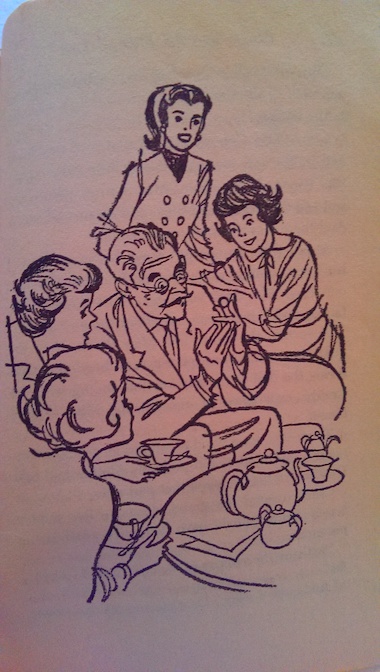 The girls tell Miss Wade and their mothers about the doll, but when they try to ask the people in charge of the auction where the doll came from and who bought her, they learn that the woman who was in charge of organizing the toys has already left on vacation. The only clue that the girls have is that the woman who bought the doll left the auction in a red Jaguar.


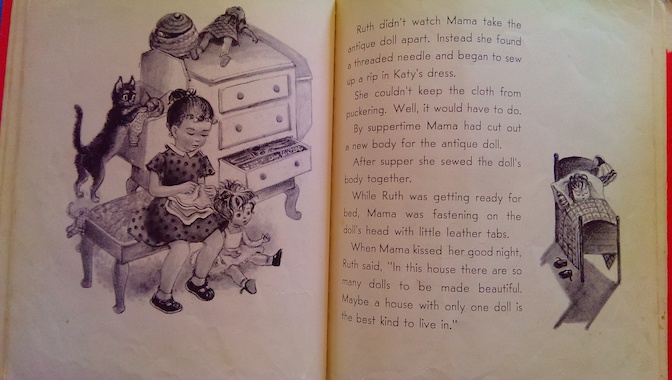
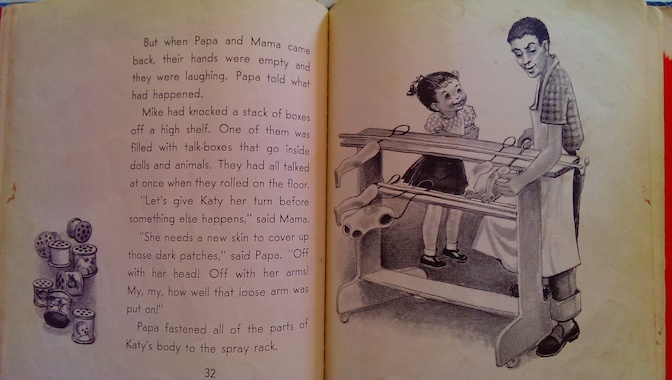


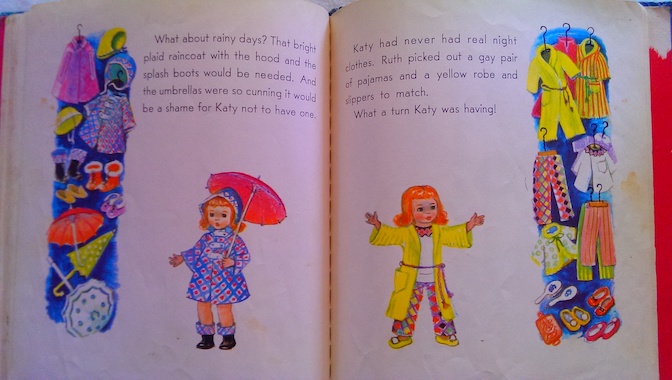
 The peddler did some odd jobs for the Preble family on their farm that winter, while the weather was too bad for him to travel. They named the doll
  Then, Phoebe’s father, who is the captain of a whaling ship, convinces his family to join him on a voyage. Life aboard ship turns out to be both exciting and perilous. One day, the ship catches fire, and the Preble family and all the crew abandon it. Hitty, once again, is unfortunately left behind. Although Hitty sees Phoebe gesture back at the ship and knows that Phoebe wants to return for her, it is too late for that.
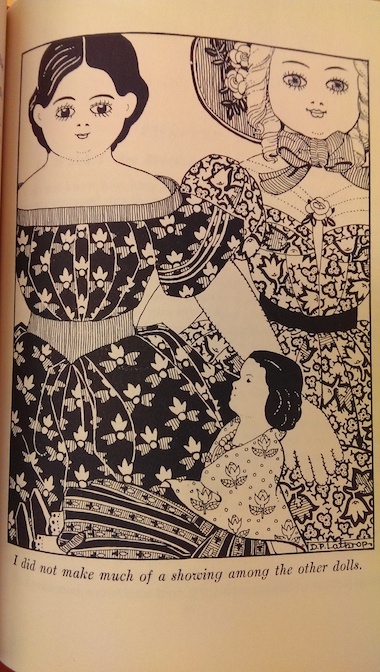 Then, Thankful gets sick, and her parents decide that it might be time to send her home to the United States to stay with her grandparents. Thankful takes Hitty with her when she goes home to Philadelphia. Because Thankful’s early life was spent entirely in India, she has been unaccustomed to spending time with American girls her age, and she doesn’t know how to behave around the American children she meets when she first arrives in Philadelphia. When the some of these (still 19th century) American girls first meet Thankful and Hitty, they think that Thankful is strange and make fun of her for her unusual habits and the way she dresses, telling her that her doll is ugly, too. Hitty has to admit that she isn’t as fancy as the other girls’ dolls. Thankful is so embarrassed by what the other girls say that she decides to hide Hitty in a sofa. After that, the sofa is taken up to an attic for storage, so Hitty remains hidden for a number of years.
 During her time in the attic, Hitty resents Thankful for abandoning her, in spite of all the charitable talk of her missionary parents. However, when Thankful is grown, Hitty is finally found by one of Thankful’s younger cousins, Clarissa Pryce, who really appreciates her. She doesn’t know how Hitty came to be in the attic, but thanks to the name still embroidered on Hitty’s petticoat, knows what to call her. Clarissa is a quiet, conscientious girl in a family of Quakers. She dresses Hitty as a Quaker girl, and Hitty lives with her for many happy years, learning to write as Clarissa goes through her schooling.
 While living with these ladies, Hitty learns that Miss Annette’s fiancé died young, fighting for the Confederacy in the Civil War, and she still feels bitterly toward the North because of it. From her time with Clarissa, Hitty knows that many people in the North could say the same about the South, but of course, she can’t actually say so out loud. The ladies make new clothes for Hitty, dressing her as a bride, with her clothes made from an heirloom handkerchief, and put her on display at the Cotton Exposition (aka the
 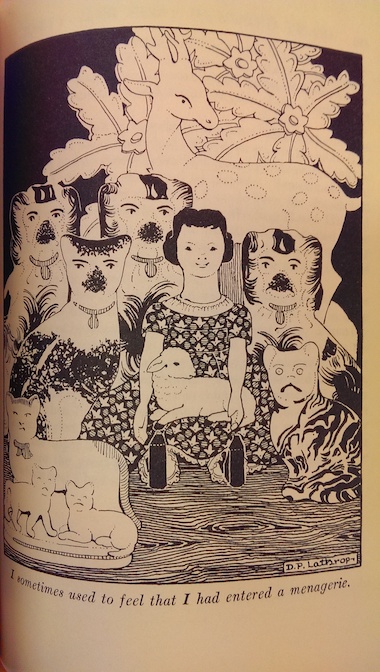 It is at this point that Hitty learns something astonishing: not only is she now about a hundred years old, but she has actually managed to make it back to her home state of Maine. To her further astonishment, she even returns to the Preble house where she originally lived, which is now the summer home of an elderly woman. Hitty knows that it’s far too late for her to have any hope of seeing Phoebe Preble again, and she never learns what exactly happened to Phoebe in her later life (which I thought was kind of a shame, bu it fits with the story of a doll, drifting from one owner to the next, unable to control her destiny or ask any questions of the people around her). The elderly lady collects antiques, and Hitty becomes a part of her collection, although the lady has no idea that this is Hitty’s original home.
 Susan – from England, with rosy cheeks


 Jestress's Forgotten Books and Stories