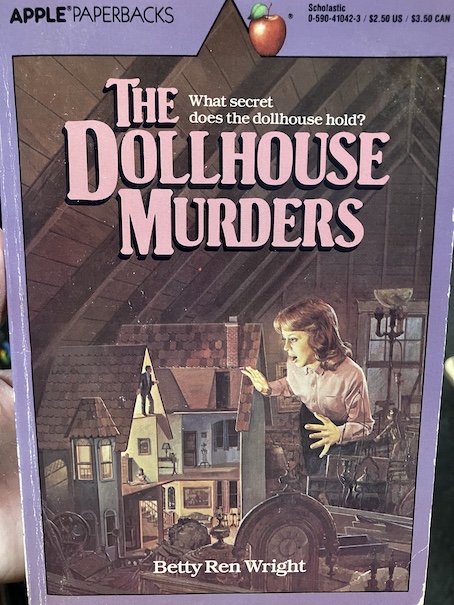
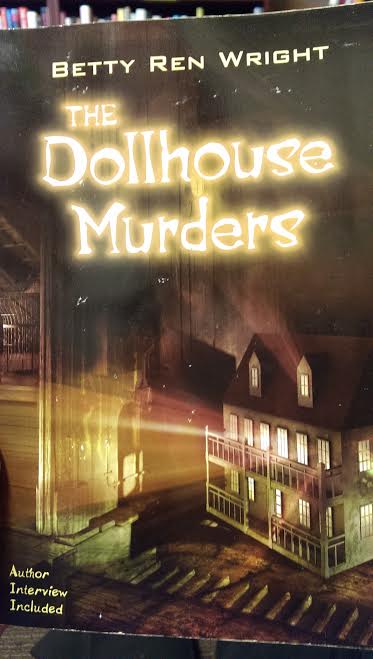
The Dollhouse Murders by Betty Ren Wright, 1983.
Amy is upset because she constantly has to look after her sister Louann, who has developmental problems. Louann is only a year younger than Amy, but her condition makes her think and act like a small child all the time. Amy loves Louann, but having her around all the time makes it difficult for her do things on her own and to make friends. It’s frustrating because the girls’ mother doesn’t seem to understand the pressure Amy feels.
One day, she has an argument with her mother about it and runs away to her aunt’s house. Aunt Clare normally lives in Chicago, but she has returned to her home town to sort out the things in her grandparents’ old house. Sympathizing with Amy, Aunt Clare offers Amy the chance to stay with her for a couple of weeks, without Louann.
Aunt Clare and her brother, Amy’s father, used to live with their grandparents when they were young, and Aunt Clare says that she has unhappy memories of that time. While helping her aunt go through some of the old things in the house, Amy discovers that there is a dollhouse in the attic made to look exactly like the grandparents’ house and dolls which look like the grandparents, Clare, and her brother. Amy thinks the dollhouse is wonderful, but Aunt Clare seems to find it disturbing.
When Aunt Clare refuses to talk about her deceased grandparents, Amy looks at some old newspapers at the library to learn more about them. To her shock, she learns that they were murdered in the house and that the killer was never found. Soon, strange things begin happening with the dollhouse. The dolls move around on their own, mysterious lights appear, and crying noises can be heard. The dolls seem to be acting out the events of the night of the murder. After all this time, the dolls seem to be trying to tell them something, if they have the courage to listen.
The book is currently available online through Internet Archive (multiple copies). There was a movie version of this book made in 1992 (Sometimes called Secrets in the Attic), but it’s difficult to find copies of it now. Sometimes, the movie or clips of it appear on YouTube. Apart from that, it’s very difficult to see it.
My Reaction and Spoilers
I remember liking this book when I was a kid, although I was often a timid kid who was easily scared by scary stories. I think it was the mystery angle, solving the old murder, that intrigued me the most, although I also enjoyed the characters in the story. I felt impatient with both Amy and her mother at times, but I liked the way the family eventually worked through their problems and came to understand each other better.
Aside from revealing the murderer’s true identity, the dolls settle other troubling matters in Amy’s family. For years, Aunt Clare has blamed herself for the way she behaved around the time her grandparents were killed. She was afraid that something she did might have even led to their deaths. But, none of it was really her fault, and her grandparents want her to know that she needn’t blame herself anymore. In some ways, I felt a little cheated by the answer to the murder mystery because the murderer is a person we never see and who has been dead for years, so there was no way readers could have known it was him, and he is never brought to justice. However, learning the identity of the murderer is important because it gives Aunt Clare some closure. When Aunt Clare realizes the truth, she feels like a great weight has been lifted from her. She begins coming to terms with her past and appears to be headed for a better future.
Amy also comes to terms with her sister’s condition and values her even more highly when Louann’s lack of fear of the dollhouse gives Amy the courage to see the dolls’ final message. Louann might have been less scared by the dolls than Amy was because Amy understands more of the situation behind the haunting, but the dolls aren’t actually malicious, and there’s no need for the girls to be afraid. Louann is a tender-hearted girl who loves the dolls and dollhouse immediately, and Amy finds that Louann’s willingness to see what the dolls have to show them gives her comfort and courage. Because Aunt Clare understand the feeling of guilt, she helps Amy to see that some of the ways that her mother behaves regarding Louann, babying her a little too much and trying to make Amy more responsible for her, also come from a feeling of guilt. There was nothing Amy’s mother could have done that would have changed Louann’s condition, but Amy’s mother feels guilty anyway. Her guilt is a problem because she’s been holding Louann back from experiences that would help her develop more and give Amy a little more freedom from having to look after Louann so much. In the end, Amy’s family does make changes to help Louann become a little more independent and to allow Amy a little more independence of her own.








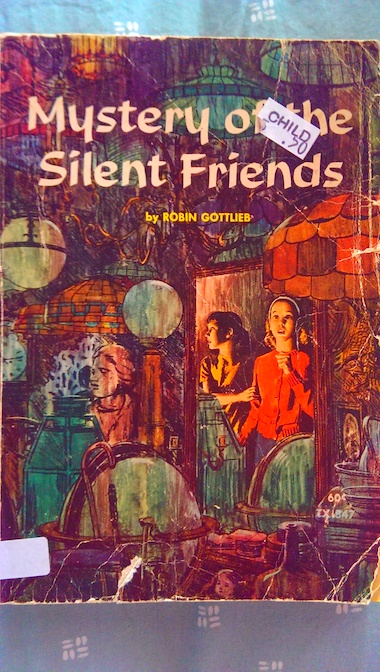 Mystery of the Silent Friends by Robin Gottlieb, 1964.
 For a time, it seems like there’s no risk of the automatons being sold because no one seems particularly interested in buying them. Then, suddenly, two different men come to the shop and ask to buy the dolls. Weirdly, each of them tells the same story to Nina’s father: that their name is George Ballantine the Third, that their family once owned the automatons, that the dolls are actually part of a set of three, that they own the third doll (a girl doll that plays the spinet), and that they want to purchase the other two in order to reunite the set. Nina’s father is bewildered by these two men with identical stories and identical names and refuses to sell the automatons because of his daughter’s attachment to them and because he doesn’t know which of the two men to believe and doesn’t trust either of them.
 At first, they all expect that Red Ballantine won’t be able to show them the third doll and will give up trying to buy the other two, but to their astonishment, he takes them to the same apartment where Brown Ballantine said that he lived and shows them the exact same doll they saw before. Instead of clearing things up, the identities of the two men seem to get all the more confusing. However, Muffin notices something strange about the tune that the doll plays on the spinet that gives them a clue as to why the three dolls are so important. Later, someone breaks into the antique store and uncovers a hidden secret about Henri as well.
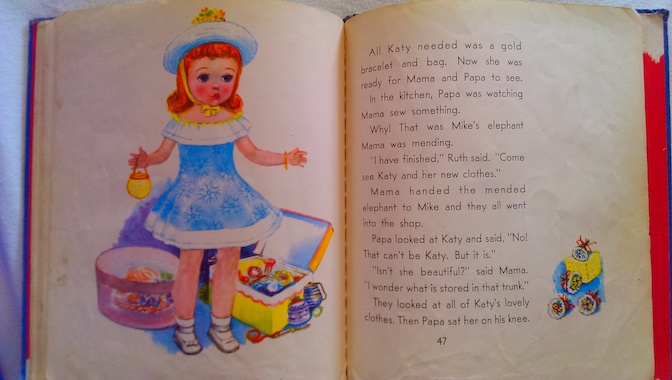
 Susan – from England, with rosy cheeks


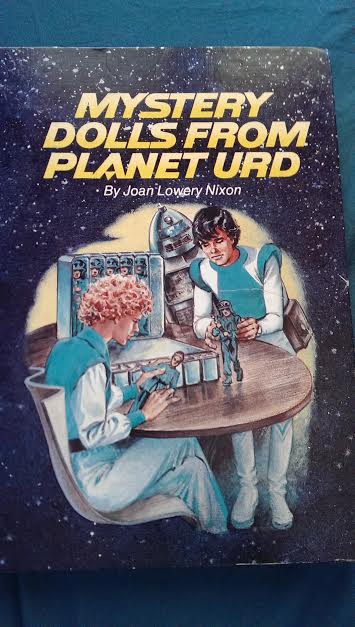 Mystery Dolls from Planet Urd by Joan Lowery Nixon, 1981.
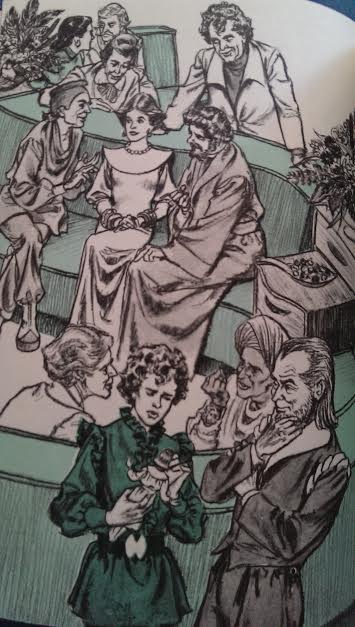 Sure enough, the dolls from Urd soon arrive, but they make Kleep even more nervous than the doll from Earth. They seem a little too life-like, and one night, Kleep wakes up, certain that she heard them whispering to each other!

 Abigail by Portia Howe Sperry and Lois Donaldson, 1938.

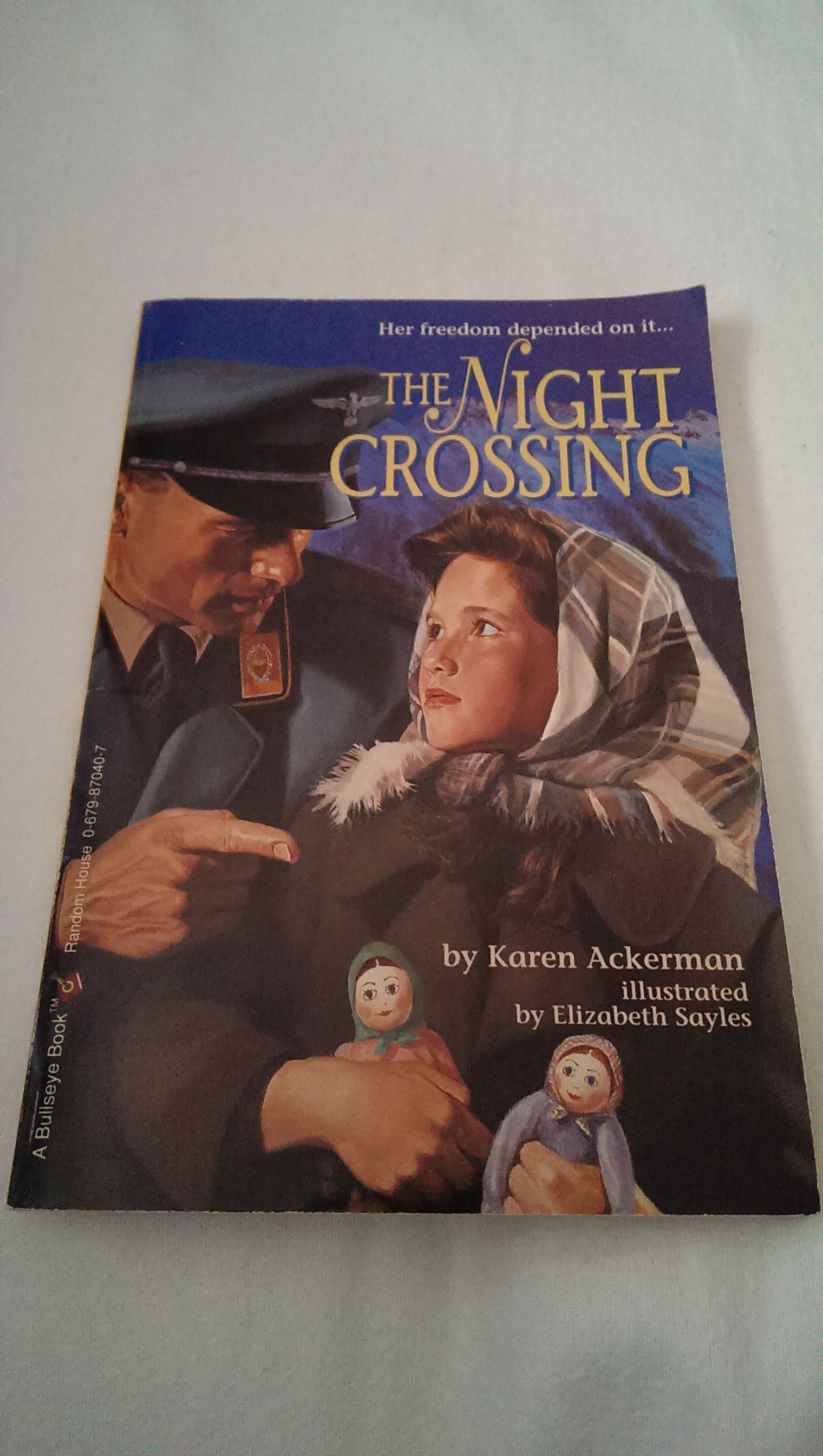 The Night Crossing by Karen Ackerman, 1994.
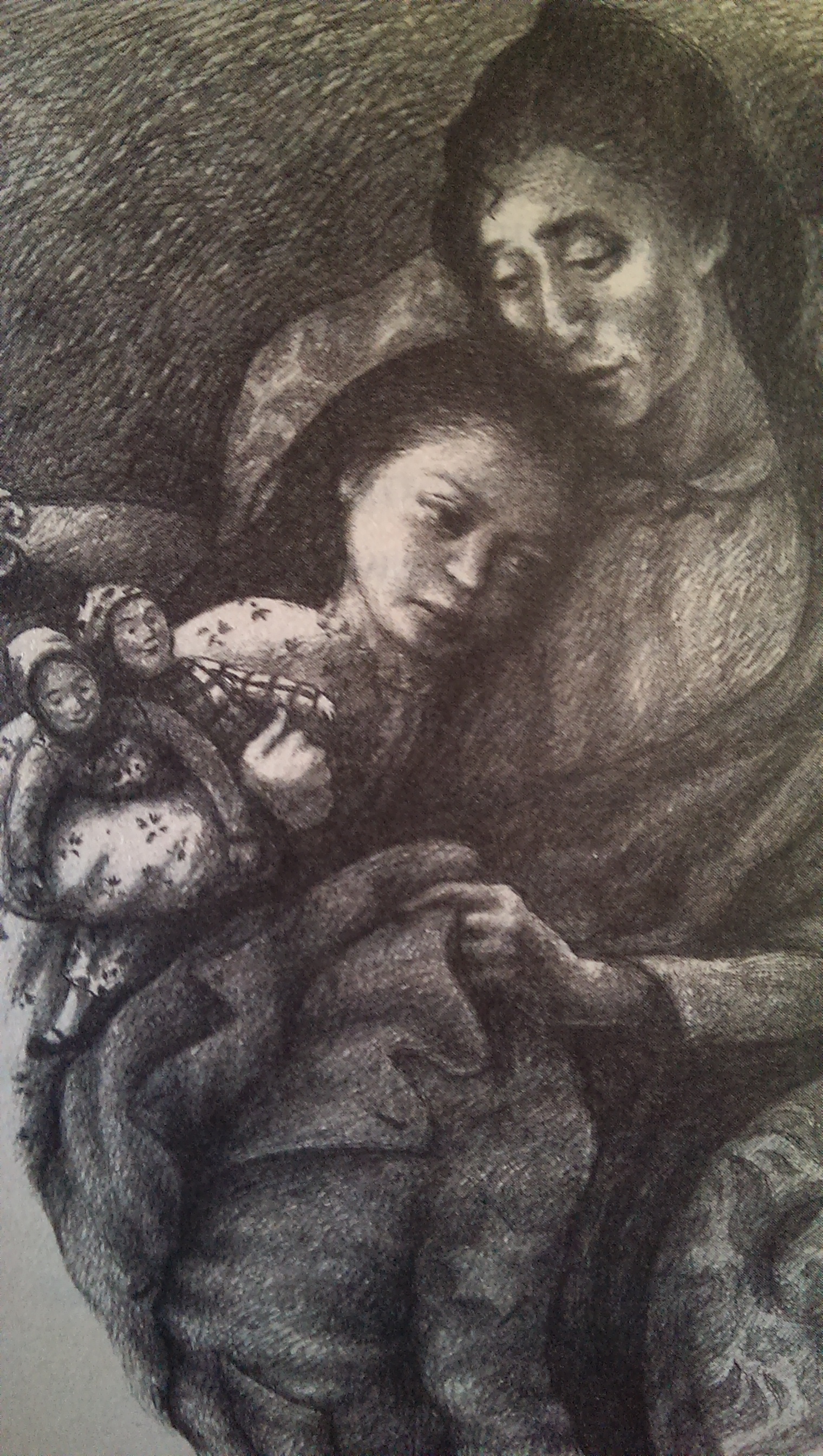 This is a pretty short chapter book. Although the subject matter is serious, and parts might be frightening to young children (the part where Clara and Marta are chased and perhaps some of the parts where the family is hiding), there are only vague references to more dark subjects like concentration camps (people who already know what they are and what happened there would understand, but children who haven’t heard about them wouldn’t get the full picture from the brief mentions). The book would be a good, short introduction to the topic of the Holocaust by putting it in terms of the way it changed the lives of ordinary people who had to flee from it. Actually, it wouldn’t be a bad way to start a discussion of the Syrian refugees in Europe by putting it into the context of ordinary people fleeing the violence of war.
 Jestress's Forgotten Books and Stories