Aria Volume 4

Aria Volume 4 by Kozue Amano, 2004, English Translation 2008.

This is the fourth volume of the second part of a fascinating manga series that combines sci-fi, fantasy, and slice of life. The series takes place about 300 years in the future, when Mars has been terraformed and renamed Aqua (because of all the water on its surface). The human colonies on Aqua are designed to resemble old-fashioned cities on Earth (called Manhome here). The people of Aqua prefer a much slower pace of life than people on Manhome, and aspects of life on Aqua more closely resemble Earth’s past.

The series is divided into two parts. The first two books are the Aqua volumes and introduce Akari Mizunashi, the main character, a young girl who came to Aqua to learn to become a gondolier in the city of Neo Venezia (which resembles Venice). Female gondoliers, called Undines, give tours of the city, giving Akari plenty of time to admire the beauty of her new home and meet interesting people. The two Aqua books are the prequel to the main series, Aria. Aqua covers Akari’s arrival on the planet, her introduction to life on Aqua, and the beginning of her training. The main Aria series show Akari’s continuing training, her progression to becoming a full Undine, her evolving relationships with her friends, and as always, her delight in learning more about her new home and admiring its beauty.

The series has received some criticism for being slow and lacking danger and adventure, but that is not really the point of the series. The main purpose is to show people how to appreciate the small pleasures of life. The sci-fi and fantasy elements (the spaceships, advanced environmental controls, intelligent Martian cats, and even the occasional appearances of the legendary Cait Sith) are mainly background to the stories about the magic of friendship and simple pleasures. Each volume contains a few short stories about Akari and her friends and the little adventures they have on a daily basis and the life lessons they learn. It’s a great series for relaxing when you’re stressed out.

The stories included in this volume are:

Neverland

Alicia and Akira arrange a special, surprise trip to the beach for the trainees, a happy day that reminds Akari of Neverland. It starts out with an invitation for each of the trainees that supposedly comes from Peter Pan, inviting them to Neverland, but it turns out to be a fun day at a beach that President Aria found.

Akira wanted the day to be a day of training, but Alicia convinced her that a day of rest and relaxation would benefit the trainees more. The girls put on their swimsuits and enjoy a day of swimming.
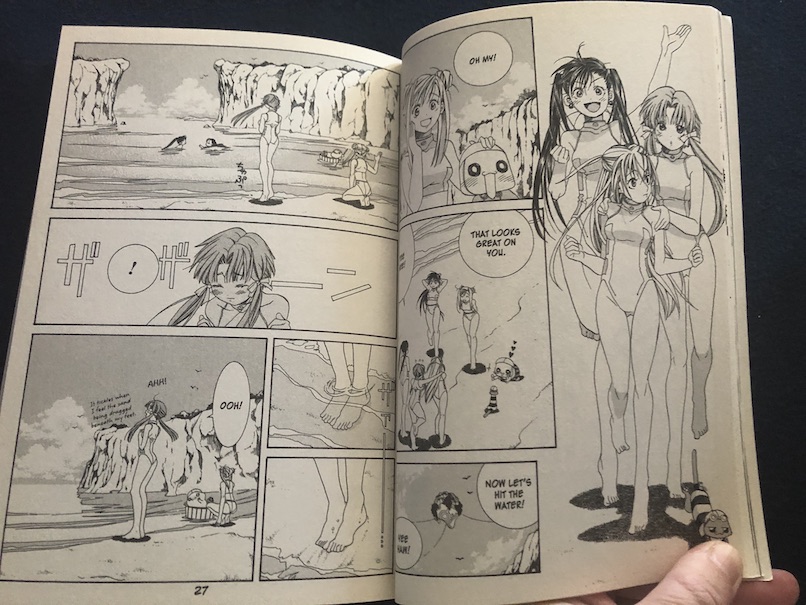
Akari thinks that the beach and their day there really is like Neverland, and Alicia realizes that it is because of the way that Akari looks at things. Akari’s strength is the ability to enjoy the simple pleasures in life for what they are, finding the magic in daily life.

This story emphasizes the theme of the series, which is that the most important thing is to choose to be happy.

Traveling Water

Summer on Aqua is very hot, and Akari experiences her first mirages. People on Aqua sometimes call them “traveling water” because they can look like water that you can never reach. (I grew up in Arizona, and I grew up seeing that. On a straight road, the heat waves will look like distant water, waving and reflecting the scenery, but they appear to dry up or move further away as you go toward them.)
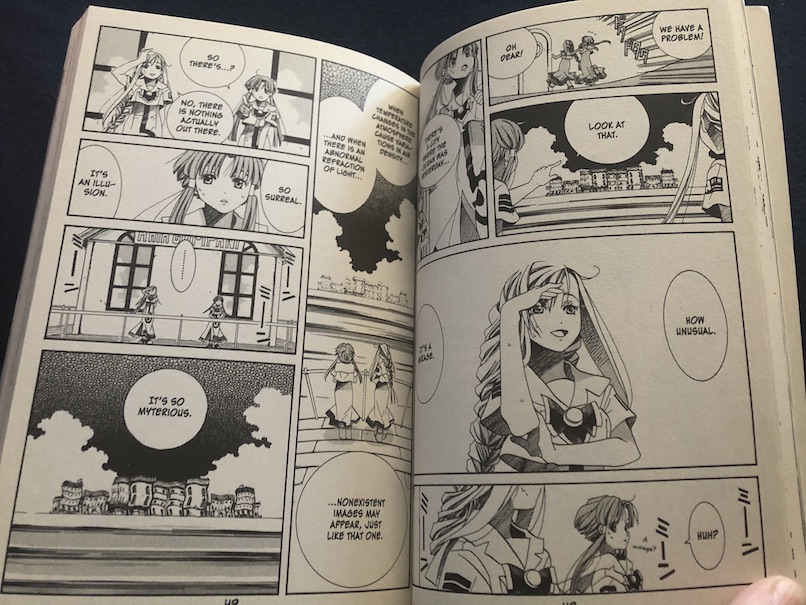
On a very hot day, Akari sets out to buy a night light chime and, oddly, seems to find herself all alone, except for President Aria. She follows President Aria, hoping that he will lead her to a place where she can cool off.

Akari finds herself at a mysterious cafe, which is nice and cool. The server gives her and President Aria ice cold milk, and Akari feels better, but the cafe is no ordinary cafe.
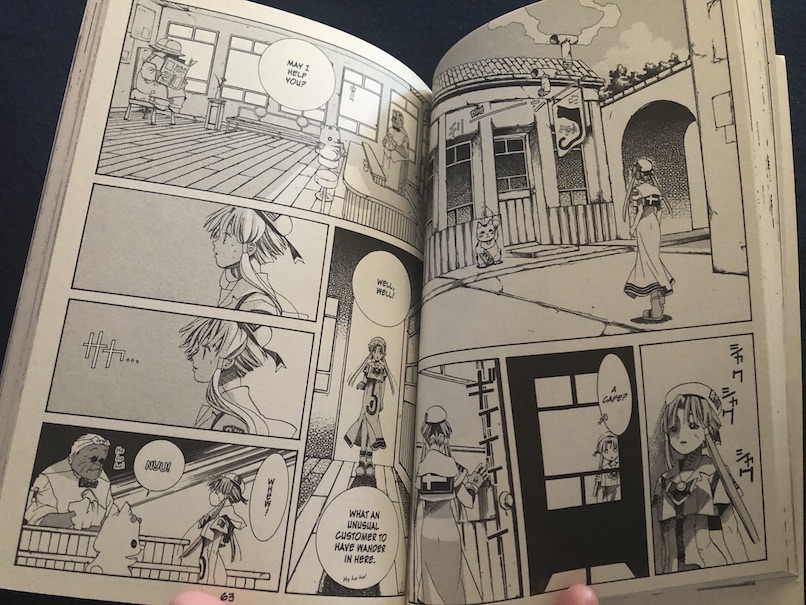
It turns out that the cafe is a secret hangout for cats and their king, Cait Sith. Humans do not ordinarily find their way there. They give Akari a special night light chime and urge her to go on her way …

Unless it was all just another mirage.

I love this story for its “was it all a dream” theme and for the cat-shaped chime that helps confirm that it all really happened. I also like the idea/warning that the server offers to Akari, that maybe it’s a good thing not to completely catch up to a mirage. Akari is sometimes a special guest of the magical characters that inhabit their world, going to places and seeing things that others don’t, but she can’t stay among them because her life is in the human world, and she has to let the fantasy elements slip away to return to her ordinary life that is a little less ordinary for the experiences she’s had.

Flying Fish in the Sky

Akari notices that some of the professions on Aqua relate to the four elements: water, fire, earth, and air. The Undines represent water because they spend their time rowing their gondolas, the Salamanders represent fire because they control the heat levels in the atmosphere to control the weather, and the Gnomes represent earth because they work underground to control gravity. The fourth element-based profession is Sylph, which represents air. They are flying deliverymen.
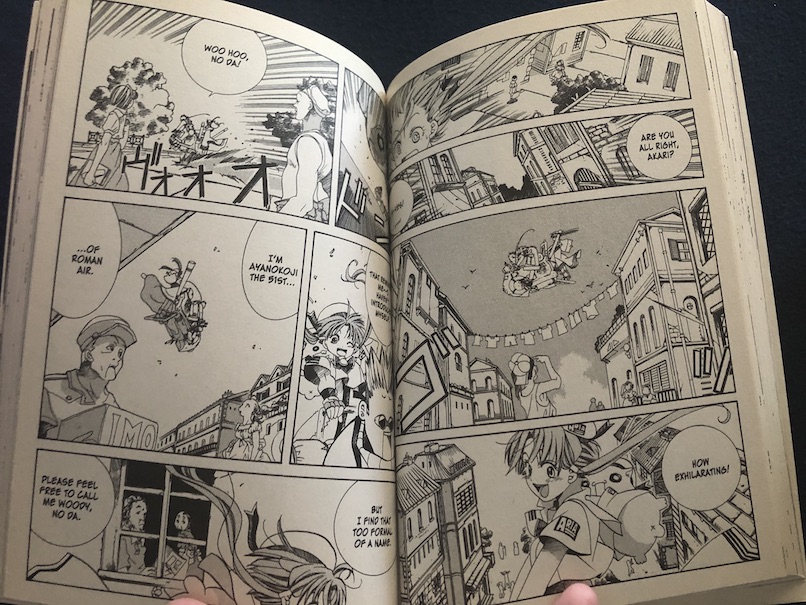
Akari helps a sylph called Woody, a flying deliveryman with a poor sense of direction, after he falls off his flying bike and loses the map he depends on in order to make his deliveries. It’s kind of a scary ride, but it’s also exciting, and Akari gets a bird’s-eye view of her city.
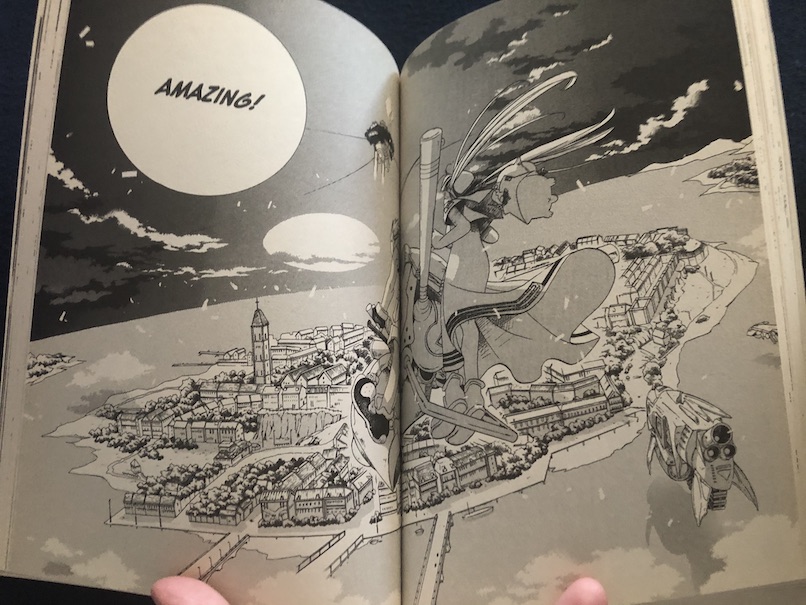
Woody also appears in later stories.

The Legendary Major Fairy

The trainees go to meet the founder of Aria Company, who is considered the Legendary Major Fairy, the grandmother of the younger Undines. She now lives in the countryside, and as the girls help her with some chores and enjoy other activities, Aika keeps looking for hidden tests of their skills or lessons slipped into the activities.

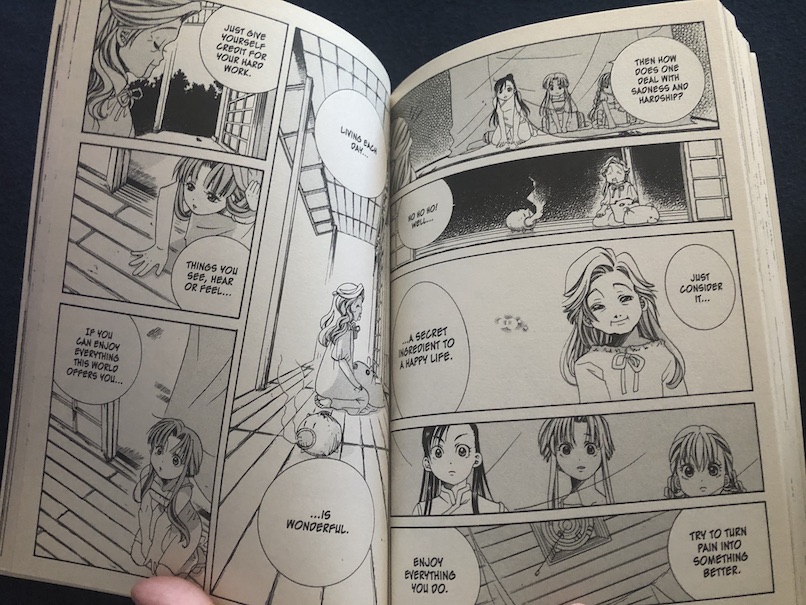
When hidden tests and lessons don’t seem to be in these activities, and the activities just are what they appear to be, Aika gets impatient and worries that maybe the older woman thinks that they’re hopeless and not worth teaching. She asks the Legendary Fairy, who asks them to call her “Grandma”, directly for some advice about being a great Undine, and what she tells them is both simple and yet something that is easy for people to forget.

Grandma’s advice is another repetition of the themes of the entire Aria series, but it’s worth repeating. She tells the girls to enjoy themselves in everything they do (the activities she gave them earlier were for them to enjoy, nothing more), remember that the world and life itself is full of things to enjoy, give yourself credit for your hard work, and when you encounter pain and sadness, try to turn it into something better.
The Redentore

The Undines celebrate Rendentore, a special festival of thanksgiving, with a party on a boat for all of their friends, organized by the trainees. In keeping with the tradition, the trainees invite special guests and use the opportunity to improve their hostess and entertaining skills, designing invitations and planning the meal and entertainment.
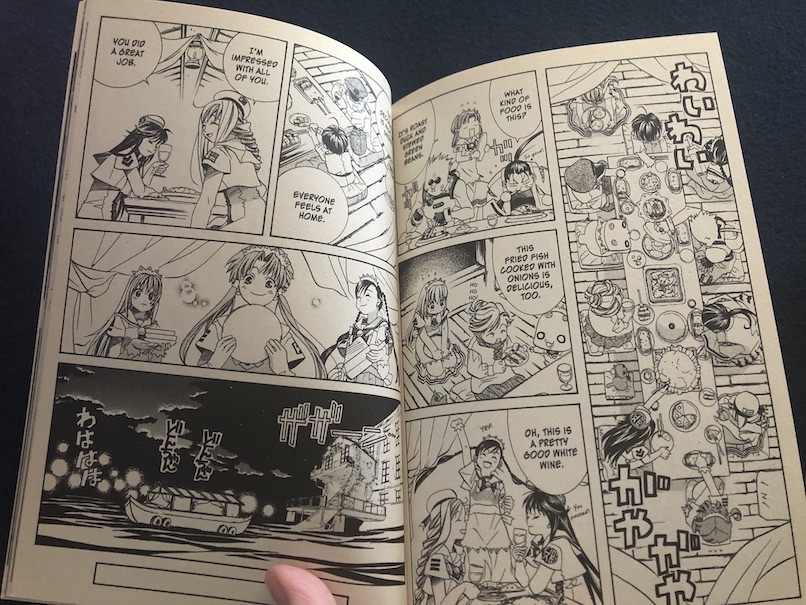
The party is a success, and one of the best parts is that the girls have brought together a group of people who otherwise would not have spent time together, except they are tied together by their roles in the lives of the girls.

The Hundred Penny Box

The Hundred Penny Box by Sharon Bell Mathis, 1975.

Michael’s great-great-aunt, Aunt Dew (short for Dewbet), has moved in with him and his parents because she is one hundred years old and no longer able to live on her own.  It has been a big adjustment for the entire family, but even though Michael has had to give up space in his room for her, he is glad that she has come to live with them because the old woman fascinates him.  She is (apparently) extremely absent-minded, often calling Michael by his father’s name, John, although some of that seems to be deliberate because she wishes that Michael’s parents had named him after his father.  Other times, she seems to forget that she’s no longer living in her old house or just starts singing an old spiritual song, forgetting what she was talking about before.

John is extremely fond of his elderly aunt because she raised him after his parents died in a boating accident, and she loves him like a son.  Aunt Dew’s own sons are long grown and gone.  However, Michael’s mother, Ruth, finds Aunt Dew’s presence in the house difficult.  Ruth thinks that Aunt Dew doesn’t appreciate some of the nice things that she does for her, and she thinks that Aunt Dew doesn’t like her.  It’s not completely true, but Aunt Dew does seem more comfortable around Michael after spending many years of her life raising boys, and Aunt Dew admits to Michael that she finds it difficult to talk to Ruth because they don’t know each other like she and John do. Aunt Dew and Ruth also have a conflict over some of Aunt Dew’s old possessions.

Aunt Dew is upset that Ruth got rid of some of her old things after she moved in with them.  Michael thought it was a mean thing to do, and Aunt Dew misses these objects.  When Michael argues with his mother about these objects, Ruth explains to him that she’s not trying to be mean.  Ruth compares Aunt Dew to a child, like Michael, saying that she “Thinks she needs a whole lot of stuff she really doesn’t.”  Ruth sees it as just clearing out things that are old and worn out and no good in order to make room for newer, nicer things, comparing it to when Michael got old enough to realize that he didn’t need his old teddy bear that was falling apart and was willing to get rid of it along with some other things in order to make room for Aunt Dew to move in.  Ruth sees clearing out old things as a way to move forward in life and thinks that it’s important to help Aunt Dew adjust to her new life with the family.  However, a lot of Aunt Dew’s long life and past are tied in with some of these objects, and as a one-hundred-year-old woman, Aunt Dew has more past behind her than future life to make room for.  Michael helps her to hide some of them in her closet to keep them from being thrown out, but he’s particularly concerned about her hundred penny box.

When Aunt Dew’s husband was alive, he started a penny collection for her with one penny to represent every year that Aunt Dew has been alive.  After his death, Aunt Dew continued to collect pennies, putting another penny into the box every year to represent her age.  Michael loves the pennies in the box because, when he counts them with Aunt Dew, she will stop him at certain years and tell him stories about things that happened during those years, telling him a lot of family stories.  Michael’s mother isn’t interested in taking the pennies, but she thinks that the old box they’re in is too worn out and should be replaced with something else.  However, Aunt Dew sees that box as being like herself: old and worn and holding all of the years of her life.  To throw it out would be almost like throwing out Aunt Dew herself.  Michael’s mother doesn’t see it that way, but Michael sees the connection.  To try to save the box, Michael hides it from his mother.

The conflict about Aunt Dew’s things isn’t really resolved by the end of the story because Michael’s mother still doesn’t understand how Aunt Dew feels, and we don’t know if she will come to understand or if the box will remain hidden or not.  I found parts of the story frustrating because Ruth doesn’t seem to want to listen to either Aunt Dew or Michael, discounting them as the kid and the old lady.  Even though Ruth is frustrated with Aunt Dew, I think that part of it is her fault for not really listening or trying to understand how she feels. This may be part of the reason why Aunt Dew feels like she can’t really talk to Ruth. To be fair, Ruth doesn’t mean to be mean, but at the same time, she kind of is because she’s too stuck on what she thinks is best and that idea that she knows better than a young boy and an old woman to consider that her ideas might not be what’s best for her family and family relationships and that she needs to give a little. My guess is that she’ll understand how Aunt Dew feels when she’s also an old woman, with more past than future ahead, but with a little imagination and empathy, I think she could see that decades sooner.  I remember reading this book when I was a kid and liking it for the concept of the hundred penny box and the old woman’s stories, but I find the lack of resolution a little frustrating now.  It’s one of those books that makes me want to sit the characters down and explain a few things to them, but I can’t.

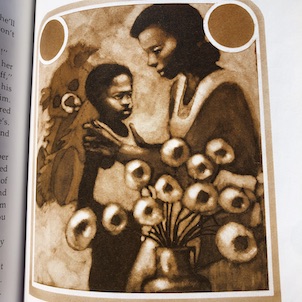
Besides the concept of the penny box, I’m also fascinated by the name Dewbet, which I’ve never heard anywhere else besides this story.  The pictures in the book are also unusual, and there’s a note in the back of the book that explains a little about the art style.  The pictures, which are in sepia tones, are painted with water colors, and the light areas were made with water and bleach.

This is a Newbery Honor Book, and it is currently available online through Internet Archive.

There is also a short film version that is available to buy or rent from Vimeo. Teachers Pay Teachers has lesson plans for this book. If you would like to see a reading and discussion with the author of the book, there is a copy on YouTube.

The Secrets of the Pirate Inn

The Secrets of the Pirate Inn by Wylly Folk St. John, 1968.

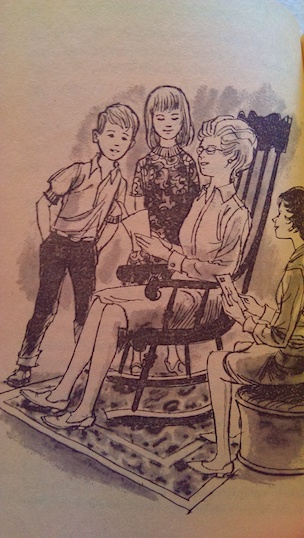
One day, Jack, Amy, and Sally’s mother receives some surprising mail for her deceased father.  The children never met their grandfather, who died before they were born, but the letters concern their grandfather’s Uncle Will.  Uncle Will is an 88-year-old man, and one of the letters is from Miss Dibble from the Welfare Department in Port Oglethorpe, Georgia, the seaside town where Uncle Will is living.  Miss Dibble is concerned that Uncle Will is no longer in his right mind and not capable of taking care of himself, and she is hoping that his family will persuade him to go live in a retirement home. 

The children’s mother says that Uncle Will was an adventurer and a wild character even in his younger years, always playing games and doing eccentric things, so the situation may not be as bad as Miss Dibble thinks it is.  The mother has never met Uncle Will, either, because her grandmother disapproved of him and discouraged him from hanging around the rest of the family years ago.  She knows that her father always thought of him as being a fun uncle and that he used to own some land in North Georgia, where he found a priceless diamond.

The second letter comes from Uncle Will himself.  It contains a strange rhyme and a letter to his deceased nephew, saying that he sold his land and that the money from that sale and his diamond will go to him upon his death.  Uncle Will says that Miss Dibble is pressuring him to turn over his money to the state and to go live in the old folks’ home.  He’s been resisting her efforts, but he admits that he has gotten absent-minded and has forgotten where he hid his money and diamond.  He knows that the rhyme he wrote down is a clue that he made to remind himself of the hiding place, but now he’s confused, and he’s hoping that his nephew can help him figure it out because it’s based on a game they used to play years ago.  Because it’s been so long since he last spoke to the family, he has no idea that his nephew has died.  Uncle Will also says that he is currently living in an old pirate’s inn near Port Oglethorpe that has its own secret passage where pirates used to shanghai sailors.

The children think that Uncle Will and his pirate’s inn sound exciting, and they’d like to go meet him.  Their mother says that she’ll have to talk to their father about it, but she thinks that it might be a good idea for them to go and check up on Uncle Will and talk to Miss Dibble.  She makes up her mind when Miss Dibble sends an urgent telegram in which she says that Uncle Will is under the delusion that someone is now hiding in his house and trying to kill him for his money. The mother and the children decide to go see Uncle Will, although the father of the family can’t go because he has a business trip.

Of course, Uncle Will isn’t delusional, and there is someone after his hidden money. The old inn where Uncle Will lives is called The Bucket of Blood. When the children and their mother arrive, Uncle Will pretends to be an old pirate parrot, calling out “Pieces of eight! Pieces of eight!” (Yes, he’s definitely an eccentric, and it’s a little more understandable why Miss Dibble thinks he might not have all of his faculties.) They introduce themselves to Uncle Will, and Uncle Will is sorry to hear that his nephew is dead, but he is pleased to meet his nephew’s daughter and her children. The children tell him that they want to help him to solve the rhyme and find his money.

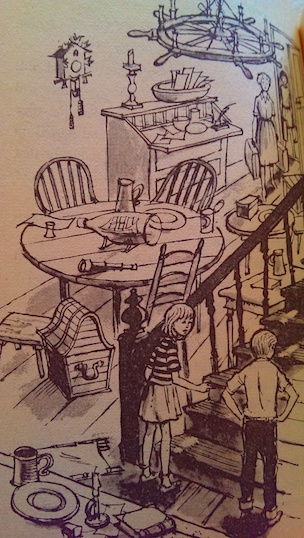
The inn is full of fascinating things, although it’s lacking in modern conveniences. The mother asks Uncle Will if they can stay there, saying that they’ve brought sleeping bags with them. Uncle Will tells them that they can use the bedrooms upstairs but warns them that he’s worried that someone might be hiding somewhere upstairs (as Miss Dibble had said earlier). Uncle Will rarely goes upstairs these days because he finds it difficult to climb up there. However, the children realize that Uncle Will is not deluded when they notice footprints in the dust on the stairs, meaning that someone has been there recently. However, the footprints seem to be only going up, not down. When the search upstairs, they don’t find anyone. Where the footprints left by a ghost? Was someone really hiding in the inn, and if so, how did they leave?

There is a live action made-for-tv Disney movie based on this book. You can see the entire movie online at Internet Archive. The movie is different from the book in a number of ways. In the movie, there are three children, but it’s two boys and a girl (a brother and sister and the brother’s friend) instead of two girls and a boy (all siblings), and none of them are related to the old Irish sea captain living in the old inn. (Note: The child characters in the movie, Scott, Tippy, and Catfish, also appeared in another made-for-tv Disney movie called The Strange Monster of Strawberry Cove, which was also based on a book for children, The Mad Scientists’ Club, but that book was written by a different author, and none of those children actually appeared in either this book or that one.) The old captain in the movie has recently inherited the inn from his brother. The location was moved to Louisiana instead of Georgia, and the treasure they’re looking for was hidden by the pirate Jean Lafitte. There are rhyming clues to the treasure’s location, but they’re not the same as the rhymes in the book. The money and the diamond are also hidden in separate locations in the book. In fact, although the bulk of the money is in one place, some of it is hidden in other places.

In the book, there are also extra characters, a man named Miles who is staying with Uncle Will while he’s working on writing a book and a young runaway nicknamed Hop who is afraid that he will be sent to another foster home like the one he ran away from if Miss Dibble catches him. At first, I suspected one of these characters of being the villain of the story, trying to steal Uncle Will’s money. However, the real villain is someone we don’t really know until the end, although he has connections to other people in the story. This is different from the movie, where the villain is a suspect we meet and see often before his guilt is established. Because of this, I think that the movie was playing more fair with the readers about the mystery.

Near the beginning of this book, the characters reference The Joyous Season by Patrick Dennis (also the author of Auntie Mame), which was published only a few years before this book was. Sally thought that the book was hilarious, but Jack thought that it was boring because the boy in the story, who was his age, “didn’t have a thing to do every day but listen to grownups talking.” I think this is meant to be a sign that the children’s parents are pretty modern and progressive, letting their children read a book about divorce and mixed-up family life in the 1960s. At one point, the mother tells Jack not to use euphemistic swear words like “Cripes!” just because characters in books to it. It gets on the mother’s nerves because she thinks that “They sound even worse than the words they’re being used to avoid.” She actually tells Jack, “When you’re old enough to swear by any words you like, I hope you’ll manage without euphemisms.” I mentioned in my page of 1960s children’s books that the 1960s were a turning point both in society and children’s literature, and this is an example of people’s changing attitudes. Sally, the oldest of the children, is allowed to wear lipstick, and Amy, who is twelve, is also allowed to wear it, although she thinks of it as being too much trouble to bother most of the time. (I can relate. I still sometimes throw out old make-up that I just plain forgot that I had because I’m too busy and preoccupied most of the time to think about it.)

Who’s Afraid of Haggerty House?

HaggertyHouse

Who’s Afraid of Haggerty House? By Linda Gondosch, 1987.

Kelly McCoy is eager to begin selling greeting cards for the Bismarck Greeting Card company because she wants to earn extra money for Christmas shopping.  Her best friends, Jennifer and Adelaide are selling cards, too, and Kelly is looking forward to teaming up with them.  However, she soon finds out that Jennifer and Adelaide have already finished their selling.  While Kelly was visiting her grandparents for a couple of days, the other girls hurried right out and started selling their cards.  They were worried about other kids beating them to the neighborhood houses.  By the time Kelly is ready to begin, the others are done and tired of going door-to-door, and many of the houses in the area have already bought all the Christmas cards they want.

Angry and hurt, Kelly has a fight with the other girls, and they mention that one house they didn’t visit was Haggerty House, which is supposed to be haunted.  Although the house spooks Kelly, she decides to go there and try to sell her cards.  When her brother, Ben, followers her and hits her with snowballs, further angering her, she dares him to come to Haggerty House, too.  Ben might be annoying company, but he’s still company.

Usually, the only time that kids in the neighborhood go to Haggerty House is on Halloween, and old Mr. and Mrs. Haggerty give good treats for the kids who are daring enough to visit, usually candied apples and nickels.  When Kelly and Ben approach the house to sell Christmas cards, Mrs. Haggerty invites them in for hot chocolate.  Mrs. Haggerty buys one of Kelly’s cards, and Kelly and Ben learn that Mrs. Haggerty is very lonely.  Her husband is ill and in the hospital.  She invites the garbage men in for hot chocolate, too, but is disappointed that they can’t stay very long because they have to finish their rounds.

Kelly and Ben can’t stay very long, either, much to Mrs. Haggerty’s disappointment.  However, Kelly later accepts an invitation from Mrs. Haggerty to visit again.  Mrs. Haggerty shows her some Christmas cards that people have given her previous years and tells her about her son, Tyler, who is a filmmaker in Los Angeles.  Tyler doesn’t visit very often because his work keeps him busy.  Mrs. Haggerty plays the piano, and she’s writing a song for Tyler for Christmas.  Mrs. Haggerty enjoys Kelly’s visit and wishes she could stay even longer.

Mrs. Haggerty becomes closer to Kelly’s family.  Ben helps Kelly to take Mrs. Haggerty’s picture and record the song she’s writing for Tyler so she can send it to him for Christmas.  Mrs. Haggerty also comes with the McCoys when they go shopping for a Christmas tree, and she comes to see Kelly as the Ghost of Christmas Past in her school’s A Christmas Carol play.

Then, while the kids are helping Mrs. Haggerty decorate at her house, an eccentric woman from the neighborhood, Malvina Krebs, comes to the house to ask if Mrs. Haggerty would like to participate in one of the seances that she holds regularly with friends.  Actually, they are hoping that she will let them hold a séance at her house because her house has such wonderful atmosphere and “vibrations.”  Mrs. Haggerty agrees because she’s never seen a séance before, and the séance group will be additional company.  Kelly asks if she could come because she’s curious to see what a séance looks like as well, and the ladies agree.

The séance is a very strange experience, although Kelly later discovers that some of what happened was a prank by her brother and his friend.  It occurs to Kelly that what she likes about visiting Mrs. Haggerty is that, unlike her friends right now, Mrs. Haggerty is always glad to see her and the interesting things that they do take her mind off of her fight with her friends.  However, she has come to miss talking to people who really understand her.  She can imagine what Jennifer would say about the séance and how she would find it interesting and how she would understand how Kelly felt about it.  Kelly’s earlier anger at her friends wasn’t really about how they made money with their cards and left no customers for her so much as they were having a good time without her and how they no longer seem interested in spending time with her.  She confides a little in Mrs. Haggerty how she feels about her friends, and she says that friends don’t always act like friends should.  Mrs. Haggerty herself doesn’t have as many friends as she used to because many of them have passed away.

Kelly does make up with Jennifer and Adelaide, inviting them to a Christmas party at Mrs. Haggerty’s.  There, she learns that some of their stand-offishness and secretiveness was because they’ve been planning a special Christmas present for Kelly.  The Christmas party is fun with a lot of old-fashioned games, but the best part is when Tyler finally comes home for Christmas!

The book is available to borrow and read for free online through Internet Archive.

My Reaction

Friendship is a large part of the theme of this story.  Kelly comes to understand Mrs. Haggerty’s loneliness partly through her quarrels with her friends.  At this point in their lives, each of them needs the other because they don’t really have anyone else.  Kelly’s time with Mrs. Haggerty gives her a new perspective on her relationship with her friends, and she also comes to understand some of the difficulties that Mrs. Haggerty faces because she is elderly.  Mrs. Haggerty’s song for her son is what makes him realize that he needs to spend more time with his aging parents, and Kelly and her friends decide that they will continue to visit with Mrs. Haggerty regularly.

Cranberry Easter

CranberryEaster

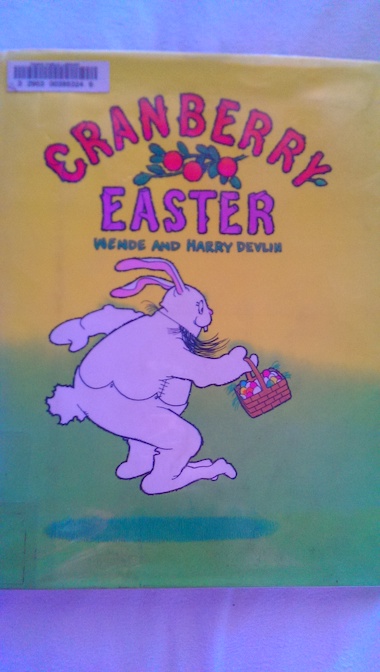
Cranberry Easter by Wende and Harry Devlin, 1990.

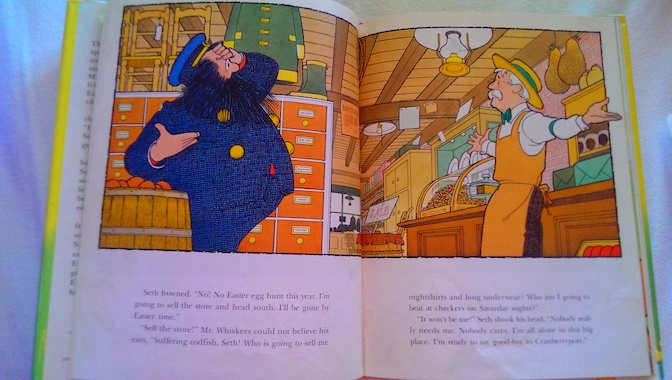
Mr. Whiskers is eager to talk to Seth, the owner of the General Store, about this year’s Easter egg hunt.  Seth hosts one every year, and Mr. Whiskers is full of plans.  However, Seth tells him that he’s thinking of closing the store and moving.  He’s been lonely in Cranberryport since his wife died, and he’s thinking that he might want to retire and move to a warmer climate.

CranberryEasterSethMoving

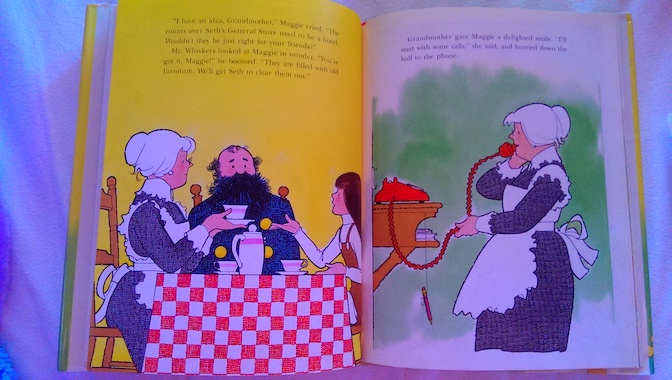
When Mr. Whiskers tells Maggie’s Grandmother what Seth said, she says that he’s not the only one thinking of moving.  A couple of her friends say that they can’t handle living alone on their farms in the winter anymore, and because they haven’t been able to find rooms to rent in town, they are thinking of moving to a warmer climate, too.

CranberryEasterMaggieSuggestion

Then, Maggie comes up with a possible solution. She reminds them that the building that the General Store occupies was once a hotel.  There are rooms above the store that Seth hasn’t been using.  If he cleaned up those old rooms, he could rent them out to Grandmother’s friends.  Seth is reluctant at first because the rooms need a lot of work to clean up, but with a little urging and help from his friends, they soon manage to turn the old hotel rooms into nice-looking apartments.

CranberryEasterRenovations

Grandmother’s friends love the apartments because, with rooms right over the store, they won’t even have to go out for groceries when the weather is bad.  The arrangement works well for Seth, too.  When members of the community help to clean up the old rooms, it reminds him that he has friends in town, and with some of them living right above his shop, there will be no need for him to feel lonely anymore.

CranberryEasterApartments

Of course, when Seth decides to stay in town and hold the Easter egg hunt after all, Mr. Whiskers has to follow through on his promise to dress up as the Easter Bunny.

CranberryEasterBunny

Like other books in the series, this book includes a recipe in the back, for Cranberry Cobbler.

CranberryEasterCobblerRecipe

General Butterfingers

GeneralButterfingersGeneral Butterfingers by John Reynolds Gardiner, 1986.

Years ago, the Spitzers, an elite rescue force in the armed services, saved the life of General Britt.  To thank them, he invited the surviving members of the team to live with him in his house, taking care of them until his own death, along with his housekeeper Mrs. Wilson and her son Walter.  Walter is a bit of a klutz, so the old men kid him about being a “Butterfingers.”  But, Walter likes the old men and admires them.

After the General’s death, the General’s nephew, Ralph, claims his estate as his only living relative.  Unlike his uncle, Ralph is mean and selfish and sees the old men as nothing but leeches, using his uncle’s house and money.  He fires Mrs. Wilson and tells the old men that they only have a few days to get out of the house.  The old men have no other place to go except for the Veterans’ Hospital, and no one likes it there.  The men who are currently in the hospital keep hoping that the Spitzers will somehow figure out a way to rescue them.

GeneralButterfingersChessMrs. Wilson and Walter talk to a lawyer, but he says that, since the General apparently didn’t leave a will, the estate has to go to his nearest relative, which is Ralph.  As far as he’s concerned, there’s nothing they can do about, even though the General made a verbal promise to the men that they could stay in his house for the rest of their lives.

Walter tries to talk to Ralph and appeal to his better nature, but that doesn’t work, either.  Ralph has always been a selfish person, disliked even by his own family, and now, he’s bitter about it.  He sees Walter’s attempts at kindness just as a ploy to get the house and money and sends him away.

The more he thinks about it, the more Walter’s convinced that the General must have left a will somewhere.  When he and the men try to visit the General’s safe deposit box at the bank, they discover that someone using the General’s name visited the box on the day that the General died.  Walter realizes that it must have been Ralph.  He is convinced that Ralph knew that the General had left a will, but he stole it so that he could claim the General’s estate himself.  The question is, how are he and the men going to prove it?

GeneralButterfingersHospitalIn some ways, you could feel sorry for Ralph, who is a very unhappy person.  Because of his meanness and selfishness, his father spent years giving him pretty much anything that he wanted on the condition that he not come around to see him.  Ralph is hurt at his family’s avoidance and disdain for him, which is why Walter, at one point, invites him to come for dinner and be their friend.  However, Ralph’s motives are always selfish, and that causes him to suspect that the same is true of everyone, so he refuses their kindness.  It gives the impression that he’s probably done the same for many others over the years, for the same reasons.

Ralph wanted everyone’s approval, especially his family’s, but because of his self-centered nature, he never had any idea of how to go about earning it.  He didn’t know what would matter to others and earn their respect because he was only ever concerned with what mattered to him and what he wanted.  At one point, he angrily tells Walter that his uncle was impossible to impress.   He once tried proving to him that could fight, thinking that would impress an old soldier.  When he further elaborates that his “fight” involved beating up a girl solely to impress his uncle, it leaves little question of why his uncle was unimpressed.  So, Ralph was never able to relate to other people and what mattered to them, which is the root of his problems, but still entirely his own fault.

Ralph has stolen his uncle’s will as a last act of revenge, getting the better of his uncle and acquiring all of his uncle’s things because his uncle would never give him his respect.  In the end, however, his uncle did outsmart him.  Because he didn’t trust his nephew, he left a second will, which is discovered when Walter and the Spitzers stage a last battle against Ralph for their house.  But, the General left them more than just the house.  It turns out that Ralph, who says that he doesn’t believe in charity, has been living on his uncle’s charity for years.  The General’s final legacy allows the Spitzers not only to save themselves but all the other veterans in the hospital as well.

Susan’s Magic

SusansMagicSusan’s Magic by Nan Hayden Agle, 1973.

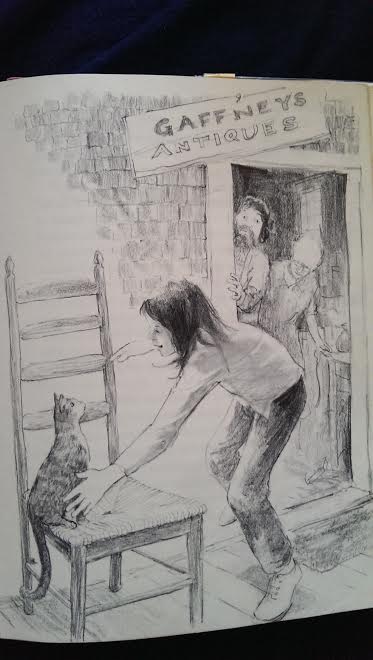
Susan Prescott believes in magic, although her mother tries to tell her that it’s all imagination.  Susan gets feelings about things and sometimes seems to have the ability to make things work the way she wants them to.  That’s part of the reason why she can believe that old Mrs. Gaffney is really a witch.  People say that Mrs. Gaffney used to be a fortune teller but had to stop when one of her predictions became frightening true and people got scared of her.  Now, Mrs. Gaffney runs an antique shop, living in a small apartment above it.  But, whether Mrs. Gaffney is really a witch or not, Susan’s life soon becomes entangled with hers through a series of unforeseen events.

Susan lives with her mother, who is a practical, down-to-earth woman, and her older brother Mike, who likes to play football.  Her parents are divorced, and her father lives in another state, only visiting occasionally, often at unpredictable times.  Susan’s father is known for not being very dependable, and he apparently left the family to be with another woman, although the story doesn’t provide many details.  Susan misses her father and is hurt by his absence, lack of dependability, and that he is more interested in being with someone else, somewhere else, instead of with her, her mother, and her brother.

The story begins when Susan sets out one day to buy a present for her mother’s birthday, and another girl she knows from school tells her to have a look at the flea market being held that day at a church.  Susan doesn’t have much money, and even most of the used items at the flea market are beyond her small savings.  Then, she foolishly spends what little money she has on cupcakes and lemonade.  Susan is angry with herself for her  foolishness, but her mistake leads her to greater adventures.

SusansMagicPic1One of the things at the sale which especially captures Susan’s attention is a small stuffed toy elephant.  The elephant is very worn, and Susan feels sorry for him, wanting to take him home and take care of him.  However, her money is gone, and she still has no present for her mother.  Then Mrs. Gaffney spots her looking sad and offers to lend her the 25 cents she would need to buy the elephant.  Although Susan has reservations about accepting such a loan, she does anyway, telling Mrs. Gaffney that she’ll pay her back.
Susan brings the elephant, which she names Trunko, home, and when her mother thinks that Susan meant to give it to her for her birthday, she doesn’t correct her although she has become very attached to him herself.  Her mother, sensing Susan’s attachment to the toy, says that they can share it and that Susan can sleep with it.  Susan thinks this is a good arrangement until someone calls the house to say that the toy elephant was donated by mistake and that the original owner is sad and wants it back.

At first, Susan can’t bear the thought of giving up Trunko. But when she learns that the real owner is Hugo, a member of her brother’s football team, that he has had the toy ever since he was small, and that he really misses it, she realizes that she has to let him have it back.  To thank Susan for giving him back Trunko (originally named Stanley), Hugo gives Susan a stray cat that had been living under his porch.  Susan loves the cat immediately and names her Sereena.

However, Susan’s mother says that they can’t keep the cat because the hill nearby is a bird sanctuary.  Susan tries to persuade her mother otherwise, but she says that they’ll just have to find another home for Sereena.  Susan tries to get an older girl from school to look after the cat for awhile while she tries to persuade her mother to let her keep her, but the other girl refuses.  Then, unexpectedly, the cat runs into Mrs. Gaffney’s shop as Susan is walking past it.

In Mrs. Gaffney’s shop, Susan accidentally breaks a teapot, increasing her debt to Mrs. Gaffney.  However, Mrs. Gaffney turns out to be a cat lover and agrees to look after Sereena for Susan.  This is the beginning of a new relationship between Susan and Mrs. Gaffney as Susan offers to work for her in order to pay off her debt.  Mrs. Gaffney could use some help in her shop because sales haven’t been good, and she’s worried about losing it.

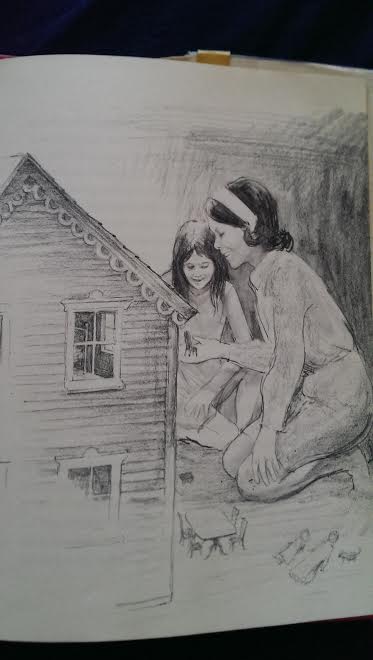
Sereena herself turns out to be good for Mrs. Gaffney’s shop, attracting customers’ attention to the items for sale.  Susan feels jealous about how much Sereena likes Mrs. Gaffney and her shop, as if Sereena has abandoned her like her father and Trunko have.  But, when a beautiful dollhouse in Mrs. Gaffney’s shop catches her eye and it turns out to be even more valuable than Mrs. Gaffney believed it was at first, Susan has to decide whether she is willing to give it up to help Mrs. Gaffney earn enough money to fix up her shop or if she will hold Mrs. Gaffney to her earlier promise to sell it to her for much less.

SusansMagicPic2In spite of the talk about magic and witches, this is not a fantasy story at all.  Susan’s concept of magic has more to do with a way of living, dealing with change, and solving life’s problems.  For the first part of the book, Susan’s “magic” focuses on getting what she wants for herself and getting things to work out the way she wants them to.  But, as the book goes on, Susan matures in the way she deals with the complications in her life.

Toward the end of the book, Susan thinks about reality and fantasy: “The magic part of living was how you fit yourself around real things, she guessed.  A magician was extra good at fitting. That’s why being one was important.”  What Susan really wants and the kind of person she wants to be change.  She comes to realize that, while she can’t get and keep everything she wants in life in the sense that it’s always with her all the time, caring about people and things is also a kind of ownership.  Giving up the toy elephant and sharing the cat with Mrs. Gaffney do not mean losing them completely because she still cares about them and the people connected with them.

Susan also realizes that, even if she doesn’t get exactly what she wants in the beginning, as long as things work out for the people she cares about, she can still be happy.  Although she has to make sacrifices at times for the people she cares about, she earns the love and respect of the people who mean the most to her.  Susan says, “Anyway, magicians don’t lose. They win. Dad, Trunko, and Sereena are mine still in a way.”  She will always be close to her mother and brother, even without her father’s presence, and Hugo, Mrs. Gaffney, and Sereena are all her friends.  Susan is a winner not because she gets what she wants for herself but because she knows how to make things work out in the best possible way for everyone she cares about, and that’s a kind of magic.

The book is currently available online through Internet Archive.

In some ways, this story reminds me a little of the Miyazki movie Whisper of the Heart, which also features a young girl who likes making up stories and who is led to an antique store by a friendly cat and meets an older person who helps her to learn about the person she wants to be and the kind of life she wants to live.  The two stories are not the same, though, and Whisper of the Heart was based on Japanese manga, not this book.  In some ways, however, both this book and Whisper of the Heart are the kind of stories that take on a new life when you read them as an adult because, at that point, you understand some of the feelings behind them better.

Peppermints in the Parlor

peppermintsparlorPeppermints in the Parlor by Barbara Brooks Wallace, 1980.
Newly orphaned Emily Luccock journeys to the home of her Aunt and Uncle Twice in San Francisco. She has not seen her aunt and uncle in years, but they are the only family she has now, and she hopes that she will soon feel at home in their lovely mansion, Sugar Hill Hall.

Upon arriving in San Francisco, however, she is met by her Aunt Twice, who seems to be a pale shadow of the woman she once was. Sugar Hill Hall is now owned by the sinister Mrs. Meeching, and Aunt Twice is forced to work as a cook and housekeeper. Aunt Twice seems very frightened of something, but she refuses to say exactly what she fears, and Uncle Twice is nowhere to be found.

Aunt Twice tells Emily that her wealthy parents lost all their money before they died, and she is now poor, too. Emily is quickly put to work as a housemaid alongside Tilly, another orphan girl. Her only real friend is Kipper, a fishmonger’s son who is paid to do chores around the mansion sometimes. The house is being run as a home for elderly people, but the elderly people are treated badly, fed rotten food, and punished severely for even so much as taking a single peppermint from the bowl in the parlor. Emily tries to do little things to make the old people happier, but all the time, she is right at the center of all the sinister events surrounding Sugar Hill Hall.

The book is available online through Internet Archive.

Help! I’m a Prisoner in the Library!

Help! I’m a Prisoner in the Library! by Eth Clifford, 1979.

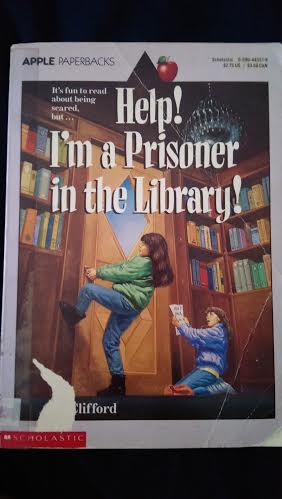
Harry Onetree is taking his two daughters, Mary Rose and Jo-Beth, to stay with their aunt on a snowy evening because their mother is about to have a baby and will soon be in the hospital. But, Harry has a habit of being careless and doing things at the last minute. In spite of practical Mary Rose’s warning that they’re running low on gas, Harry doesn’t stop to get any until they finally run out, and he has to hike through the snow back to the last gas station they passed.

Before their father gets back, Jo-Beth, the younger sister, declares that she has to go to the bathroom. Long-suffering Mary Rose finds one for her in a nearby library just before closing time. But, it’s not an ordinary library. It’s actually an old mansion which has been converted into a branch library for children. It has some fantastic displays, including an old wooden wagon called a “kid hack” which was once used to carry children to school, like a school bus. Unfortunately, the girls get distracted by this strange library.  The girls forget about the library closing, and the librarian, not knowing that they’re there, locks them in for the night.

Meanwhile, the blizzard outside is getting worse, and their father has returned to the car and realized that they’re missing. The girls try to call the police, but they refuse to listen, thinking it’s a prank. Melodramatic Jo-Beth thinks that they’re doomed to starve to death in the library, trapped by the blizzard. Then, the girls hear a mysterious “thump” from upstairs. It turns out that they’re not alone in the library . . .

This is the first book in the Mary Rose and Jo-Beth Mysteries.  It is available to borrow and read for free online through Internet Archive.

My Reaction

The Mary Rose and Jo-Beth books are fun with the way Jo-Beth delights in imagining doom and gloom while Mary Rose tries to work out a practical solution to their problems. The books in this series are also frequently about something other than the immediate mystery that the girls face. In this case, the girls learn about the history of the old house, how it became a branch library, and how old buildings, even though they are beautiful and have a history to them, may face destruction if people don’t care enough about them or find a way to put them to some useful purpose.