Emma

Emma has had a full life, and she has many grandchildren and great-grandchildren. However, she is often lonely when they aren’t visiting her. Most of the time, it’s just her and her pet cat, Pumpkinseed. It’s not a bad life because Emma loves the many simple things in her quiet life, but she unexpectedly discovers a new interest in life when she turns 72.

Her family comes to visit for her birthday, and one of the presents they give her is a painting of the small village where she was born. Although her family doesn’t entirely understand her attachment to her memories of her home village, they know that she is very fond of remembering it. 

However, the painting bothers Emma because it doesn’t look the way she remembers she remembers her village. The village has probably changed since she was last there, but the way the artist has painted it isn’t the way she remembers it. Emma realizes that she wants to capture those memories. Because no one else can paint her village the way it looks in her memories, Emma decides that she will do it herself. She buys an easel and paints and makes her own painting of her village. 
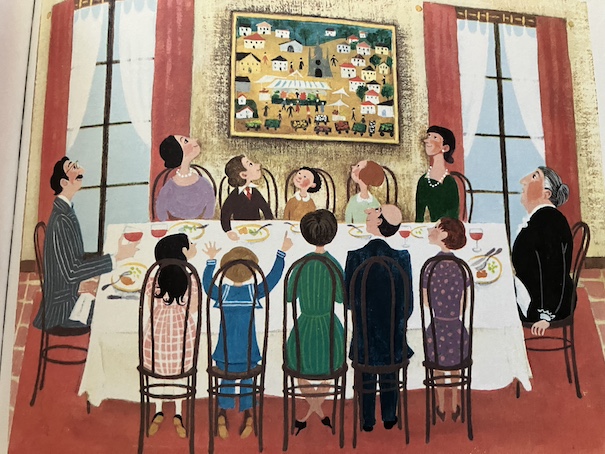
It makes Emma happy when she hangs her painting up in place of the painting that her family gave her because it looks like her memories. However, she doesn’t want her family to think that she didn’t appreciate their gift, so she is careful to replace her painting with the one they gave her whenever her family comes to visit. Everything changes one day when she forgets to makes the switch before her family visits her.

Everyone notices that the painting on the wall is different from the one they gave her, and they ask her where it came from. Emma is embarrassed and admits that she painted it. At first, she wants to put it away, but her family tells her not to do that because it’s a wonderful painting, and they encourage her to paint more.

Emma admits that she already has painted more, and she brings out her other paintings for everyone to see. From then on, she paints more paintings of her village and all of the little things around her that she loves to notice, and she openly displays them. Aside from her family’s visits, she also starts receiving other visitors who come to see her paintings. There are still times when she is alone, but she is no longer lonely when she is alone because she has her art to keep her busy and her memories of all the places and things she loves hanging on her walls.

The book is available to borrow and read for free online through Internet Archive.

I’ve been trying to figure out what this book is for years! I vaguely remember my mother telling me about this book when I was little. I can’t remember if she read it to me or just told me that she had seen the book somewhere, but the vague concept of the story about a grandmother who started painting because her relatives gave her a painting of her home town that didn’t look the say she remembered it stayed with me.

What I didn’t know or didn’t remember was that the grandmotherly painter in the story is based on a real person. In the back of the book, the American author explains that she met Emma Stern when she was living in Paris. Emma Stern was German, and she was born in 1878 and died in 1970. She is known for painting countryside scenes and village life. I’m not sure exactly where the village or small town where she was born was, although this website, which shows a selection of her paintings, has labeled most of them as being St. Wendel.

The story is inspirational because it’s an example of someone who found a new interest in life and a new talent when they were elderly. There are other examples in life of people who were “late bloomers” and found new careers or achieved something amazing in life at a time when many other people are just retired or taking it easy. It’s never too late to do something you really love!
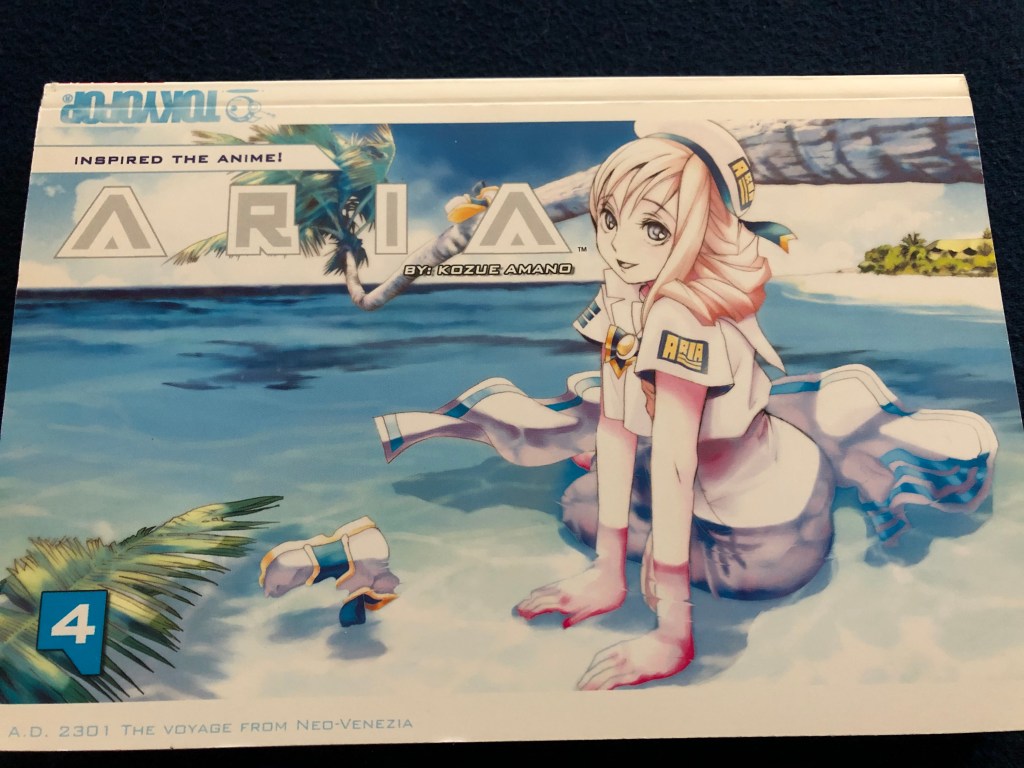
Aria Volume 4

Aria Volume 4 by Kozue Amano, 2004, English Translation 2008.

This is the fourth volume of the second part of a fascinating manga series that combines sci-fi, fantasy, and slice of life. The series takes place about 300 years in the future, when Mars has been terraformed and renamed Aqua (because of all the water on its surface). The human colonies on Aqua are designed to resemble old-fashioned cities on Earth (called Manhome here). The people of Aqua prefer a much slower pace of life than people on Manhome, and aspects of life on Aqua more closely resemble Earth’s past.

The series is divided into two parts. The first two books are the Aqua volumes and introduce Akari Mizunashi, the main character, a young girl who came to Aqua to learn to become a gondolier in the city of Neo Venezia (which resembles Venice). Female gondoliers, called Undines, give tours of the city, giving Akari plenty of time to admire the beauty of her new home and meet interesting people. The two Aqua books are the prequel to the main series, Aria. Aqua covers Akari’s arrival on the planet, her introduction to life on Aqua, and the beginning of her training. The main Aria series show Akari’s continuing training, her progression to becoming a full Undine, her evolving relationships with her friends, and as always, her delight in learning more about her new home and admiring its beauty.

The series has received some criticism for being slow and lacking danger and adventure, but that is not really the point of the series. The main purpose is to show people how to appreciate the small pleasures of life. The sci-fi and fantasy elements (the spaceships, advanced environmental controls, intelligent Martian cats, and even the occasional appearances of the legendary Cait Sith) are mainly background to the stories about the magic of friendship and simple pleasures. Each volume contains a few short stories about Akari and her friends and the little adventures they have on a daily basis and the life lessons they learn. It’s a great series for relaxing when you’re stressed out.

The stories included in this volume are:

Neverland

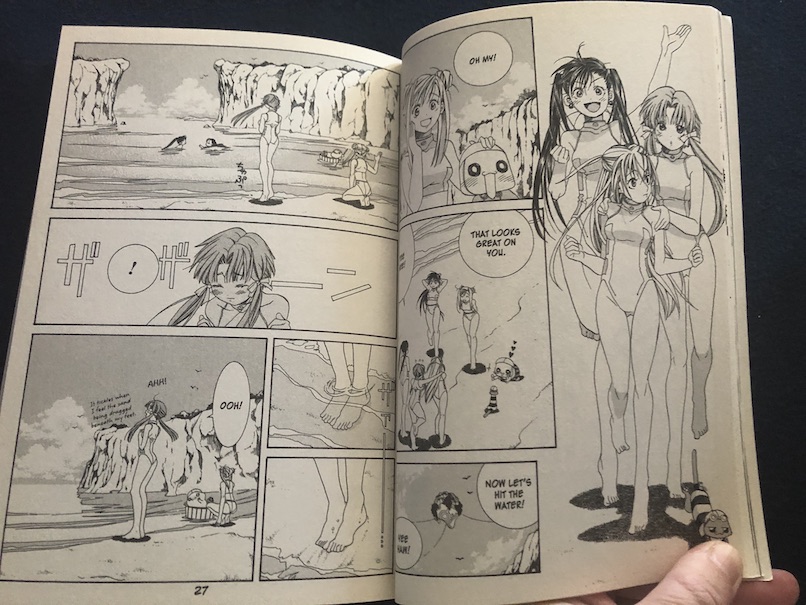
Alicia and Akira arrange a special, surprise trip to the beach for the trainees, a happy day that reminds Akari of Neverland. It starts out with an invitation for each of the trainees that supposedly comes from Peter Pan, inviting them to Neverland, but it turns out to be a fun day at a beach that President Aria found.

Akira wanted the day to be a day of training, but Alicia convinced her that a day of rest and relaxation would benefit the trainees more. The girls put on their swimsuits and enjoy a day of swimming.

Akari thinks that the beach and their day there really is like Neverland, and Alicia realizes that it is because of the way that Akari looks at things. Akari’s strength is the ability to enjoy the simple pleasures in life for what they are, finding the magic in daily life.

This story emphasizes the theme of the series, which is that the most important thing is to choose to be happy.

Traveling Water

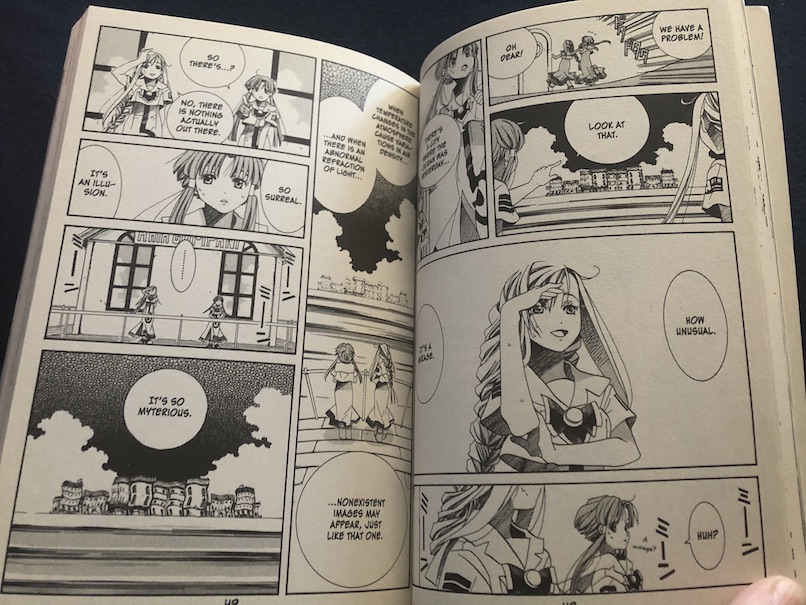
Summer on Aqua is very hot, and Akari experiences her first mirages. People on Aqua sometimes call them “traveling water” because they can look like water that you can never reach. (I grew up in Arizona, and I grew up seeing that. On a straight road, the heat waves will look like distant water, waving and reflecting the scenery, but they appear to dry up or move further away as you go toward them.)

On a very hot day, Akari sets out to buy a night light chime and, oddly, seems to find herself all alone, except for President Aria. She follows President Aria, hoping that he will lead her to a place where she can cool off.

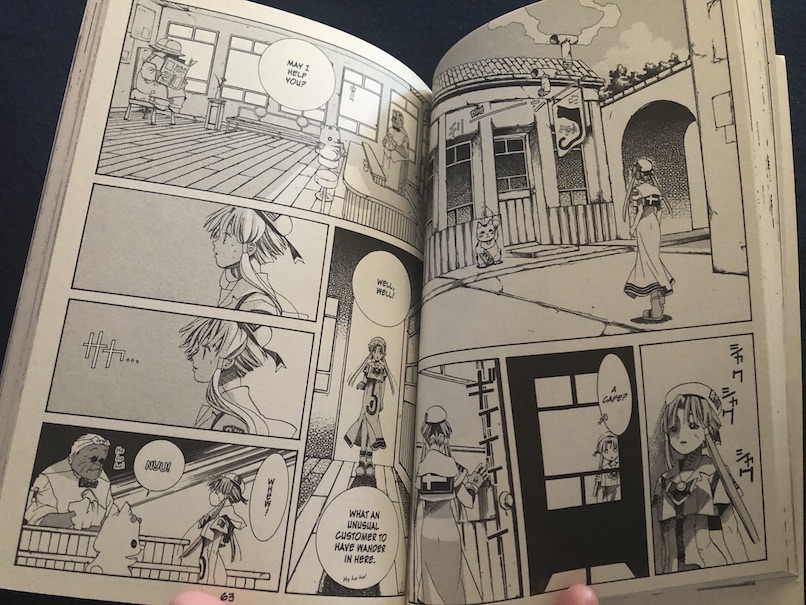
Akari finds herself at a mysterious cafe, which is nice and cool. The server gives her and President Aria ice cold milk, and Akari feels better, but the cafe is no ordinary cafe.

It turns out that the cafe is a secret hangout for cats and their king, Cait Sith. Humans do not ordinarily find their way there. They give Akari a special night light chime and urge her to go on her way …

Unless it was all just another mirage.

I love this story for its “was it all a dream” theme and for the cat-shaped chime that helps confirm that it all really happened. I also like the idea/warning that the server offers to Akari, that maybe it’s a good thing not to completely catch up to a mirage. Akari is sometimes a special guest of the magical characters that inhabit their world, going to places and seeing things that others don’t, but she can’t stay among them because her life is in the human world, and she has to let the fantasy elements slip away to return to her ordinary life that is a little less ordinary for the experiences she’s had.

Flying Fish in the Sky

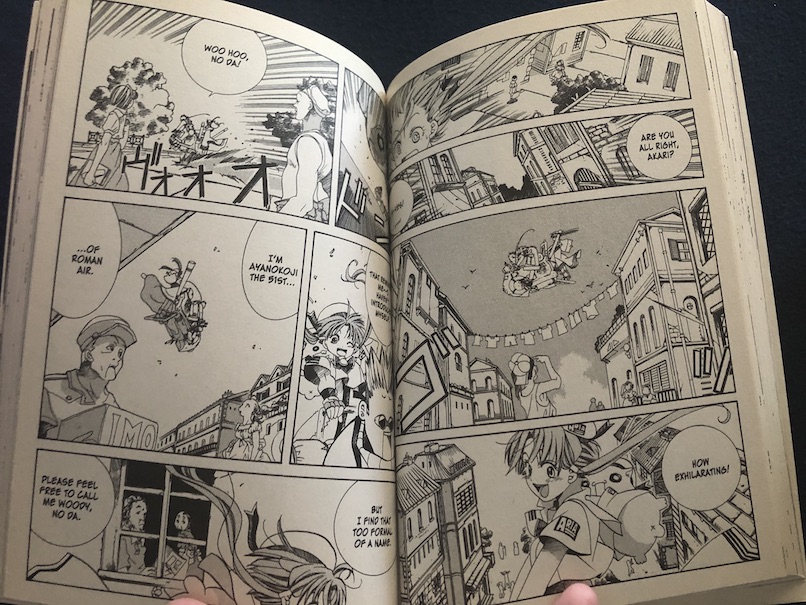
Akari notices that some of the professions on Aqua relate to the four elements: water, fire, earth, and air. The Undines represent water because they spend their time rowing their gondolas, the Salamanders represent fire because they control the heat levels in the atmosphere to control the weather, and the Gnomes represent earth because they work underground to control gravity. The fourth element-based profession is Sylph, which represents air. They are flying deliverymen.

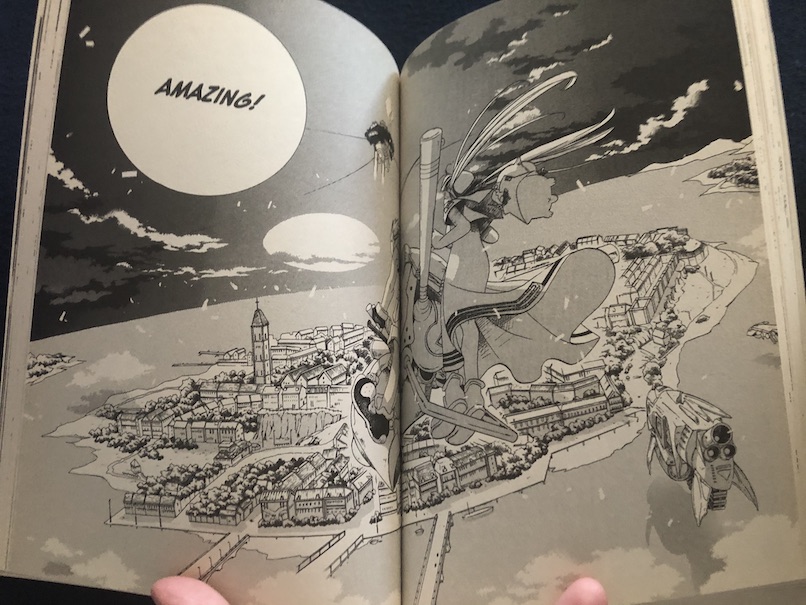
Akari helps a sylph called Woody, a flying deliveryman with a poor sense of direction, after he falls off his flying bike and loses the map he depends on in order to make his deliveries. It’s kind of a scary ride, but it’s also exciting, and Akari gets a bird’s-eye view of her city.

Woody also appears in later stories.

The Legendary Major Fairy

The trainees go to meet the founder of Aria Company, who is considered the Legendary Major Fairy, the grandmother of the younger Undines. She now lives in the countryside, and as the girls help her with some chores and enjoy other activities, Aika keeps looking for hidden tests of their skills or lessons slipped into the activities.

When hidden tests and lessons don’t seem to be in these activities, and the activities just are what they appear to be, Aika gets impatient and worries that maybe the older woman thinks that they’re hopeless and not worth teaching. She asks the Legendary Fairy, who asks them to call her “Grandma”, directly for some advice about being a great Undine, and what she tells them is both simple and yet something that is easy for people to forget.

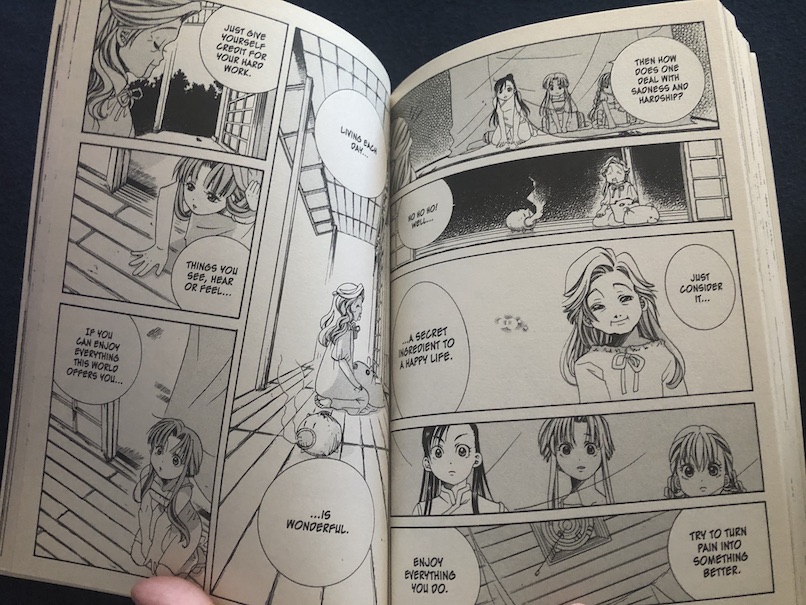
Grandma’s advice is another repetition of the themes of the entire Aria series, but it’s worth repeating. She tells the girls to enjoy themselves in everything they do (the activities she gave them earlier were for them to enjoy, nothing more), remember that the world and life itself is full of things to enjoy, give yourself credit for your hard work, and when you encounter pain and sadness, try to turn it into something better.

The Redentore

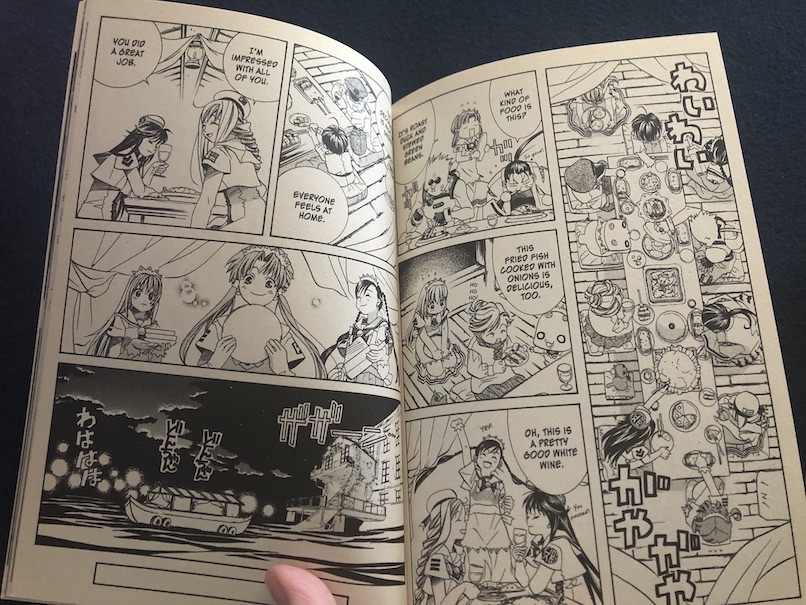
The Undines celebrate Rendentore, a special festival of thanksgiving, with a party on a boat for all of their friends, organized by the trainees. In keeping with the tradition, the trainees invite special guests and use the opportunity to improve their hostess and entertaining skills, designing invitations and planning the meal and entertainment.

The party is a success, and one of the best parts is that the girls have brought together a group of people who otherwise would not have spent time together, except they are tied together by their roles in the lives of the girls.