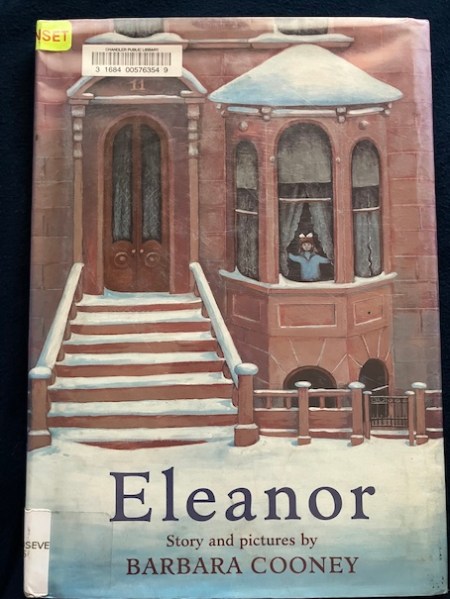
Eleanor story and pictures by Barbara Coooney, 1996.
This picture book tells the story of Eleanor Roosevelt’s early life. Eleanor Roosevelt (full name Anna Eleanor Roosevelt) was the niece of Theodore Roosevelt (called Uncle Ted in the book), and later, in life, the wife of Franklin Delano Roosevelt (a distant cousin) and First Lady of the United States. This book is about her childhood, so it doesn’t explain about her husband or marriage until the Afterword at the end.
Eleanor’s home life wasn’t particularly happy. She was a disappointment to her mother in a number of ways. Her mother had hoped for a boy, and she didn’t think Eleanor was a pretty baby. Her mother often called her “Granny” as a nickname because she was such a serious child and seemed rather old-fashioned looking, and she reminded her mother of an old woman. When Eleanor’s younger brothers were born, Eleanor often felt left out when her mother spent time with them.
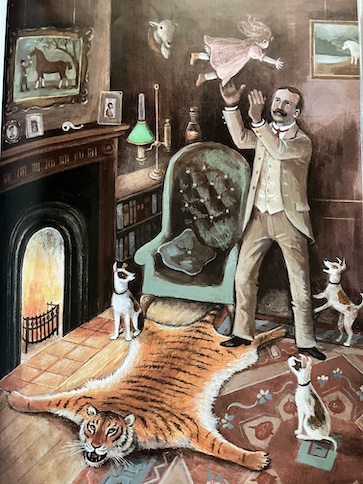
Eleanor’s father loved her and enjoyed playing with her and spending time with her, but she didn’t get to see him often as she was growing up. Her father, Theodore Roosevelt’s brother, Elliot Roosevelt, was a traveler and socialite and later became estranged from his family. Still, although he wasn’t a particularly reliable person and wasn’t present much, Eleanor was very attached to him and sometimes felt like he was the only one who really loved her.
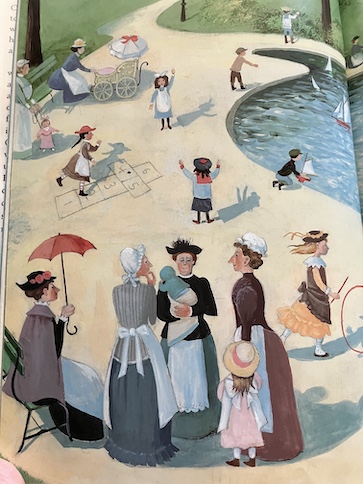
Much of Eleanor’s early life was spent with her nanny, who spoke to her in French, so she mastered the language at an early age. Eleanor was very shy, so she didn’t spend much time with other children. She did spend some time with relatives, too. Sometimes, she helped them with charitable projects, giving her a sense of caring for the less fortunate.
When Eleanor was eight years old, her mother died of diphtheria, and she and her little brothers went to live with her grandmother and the aunts and uncles who also lived with her. Her father had been living apart from the family at this time, but he returned after his wife’s death. After that, he would visit Eleanor sometimes and take her for outings. However, he was sometimes neglectful. The book explains that he died in a fall when Eleanor was nine years old.
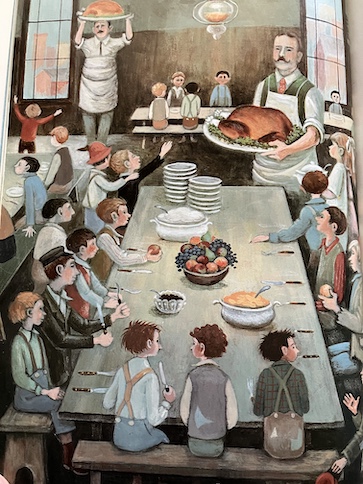
Life with her grandmother was difficult for Eleanor because her grandmother made her wear old-fashioned clothes, she had a strict governess, and her aunts and uncles seldom paid attention to her because they were busy with their own work and projects. Other children didn’t think much of Eleanor because she was shy and wore old clothes. Sometimes, her cousin Corinny would join her for dinner, but Corinny never liked it because the house was so grim and silent.
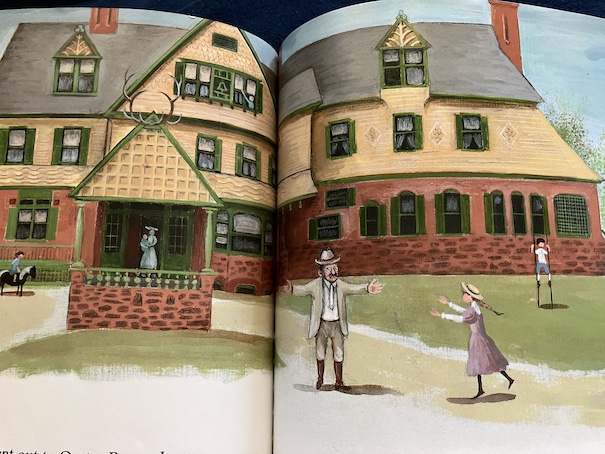
Eleanor was happier when they would go to her grandmother’s summer house, Oak Terrace. At the summer house, she could play games, daydream, read, and catch tadpoles with her little brother Brudie. Sometimes, she would go out in the rowboat with one of her aunts. There were also times when she visited her Uncle Ted and his family. Sometimes, she would play with her cousin Alice Roosevelt because they were the same age, but Alice teased her dreadfully, and Eleanor often found her a little intimidating. Her relatives encouraged her to be brave and to do things that she found scary, but she often found it difficult to keep up with them and some of their daring stunts.
Eleanor was often considered the “ugly duckling” of the family, but things changed for her when her grandmother decided to send her to boarding school in England. She attended a school called Allenswood, and the headmistress, Mademoiselle Souvestre, became a mentor to her.
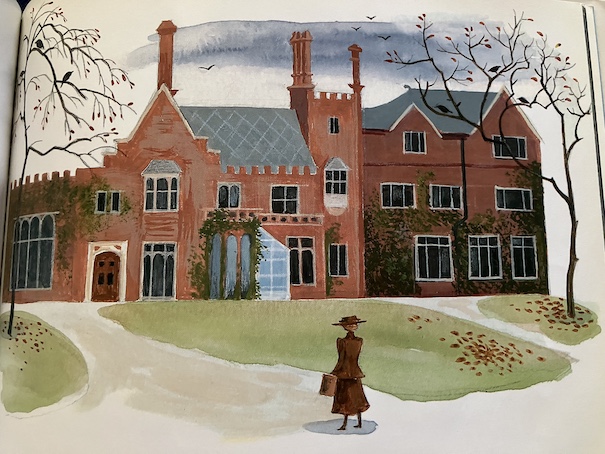
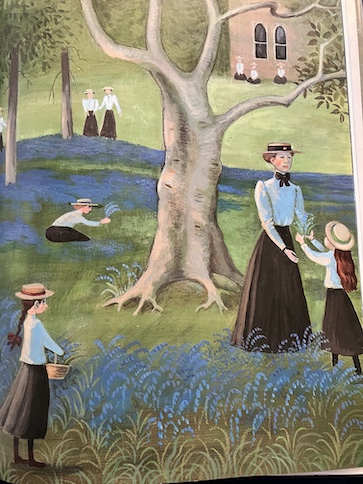
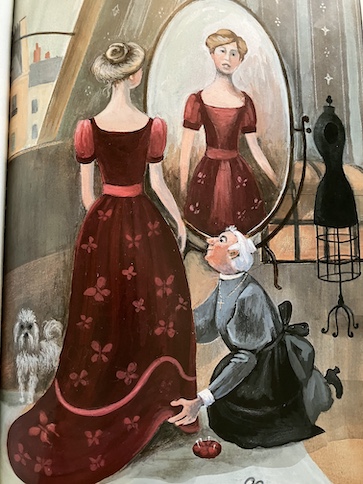
Thanks to the lessons in French from her former nanny, Eleanor excelled at boarding school. Because the school had a rule that the girls should only speak French at dinner, Eleanor was the only girl at first who felt comfortable talking, a rare change for her. Eleanor made friends with the other girls at school and was happy there. Mademoiselle Souvestre encouraged Eleanor’s sense of independence, opened her eyes to the world around her, took her along on trips to Europe, and advised her to get clothes made in Paris, ridding her of the clothes her grandmother made her wear. By the time she returned home from boarding school, Eleanor was happier and more confident than she had been before, and she credited Mademoiselle Souvestre for her influence.
The book is available to borrow and read for free online through Internet Archive.
My Reaction
I enjoyed this book for its focus on Eleanor Roosevelt’s childhood. Many books about famous people focus on what they did when the became famous, but I enjoyed seeing her as a shy, awkward child, when it didn’t seem obvious that she would one day be famous. By seeing how she grew up, I feel like I’ve come to understand more about her.
Eleanor Roosevelt came from a wealthy family, but her early life wasn’t very happy. She was deeply affected by her mother’s sense of disappointment in her for not being prettier and by her parents’ troubles and their separation from each other. She was orphaned at a young age, and one of her younger brothers also died not long after their mother. She often felt like she didn’t fit in with her family, and they didn’t seem to understand or appreciate her.
The book explains a little about her father’s estrangement from the family, but it doesn’t go into all the details or some of the dark reasons why. The truth was that he was an alcoholic. His alcoholism was the beginning of his strained family relationships, but then, he had an affair with a servant girl who worked for his wife and fathered a child by her. When that happened, Theodore Roosevelt had him forcibly removed from his family’s home and did his best to keep him away from his children as much as possible, even after his wife’s death. When the book says that Eleanor’s father died in a fall, that was a soft way of explaining it. The truth is that he committed suicide because he was drinking even more heavily after his wife and one of his sons died, and he was depressed about the rest of the family keeping him away from his remaining children.
I thought it was interesting that Eleanor really blossomed at boarding school. She had always been a shy girl, but she was very studious and spoke French, skills which suited boarding school life well. Boarding school encouraged her to spend more time around other girls her age and took her away from her family’s influence, giving her the opportunity to find herself and bond with other people. In particular, the headmistress of the school became her mentor and encouraged her to look at the world in new ways and to become the best version of herself.
 Jestress's Forgotten Books and Stories