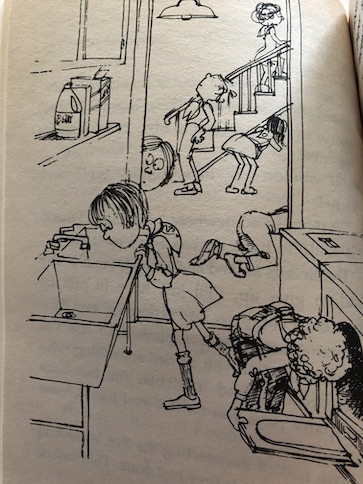
Marianne Dreams

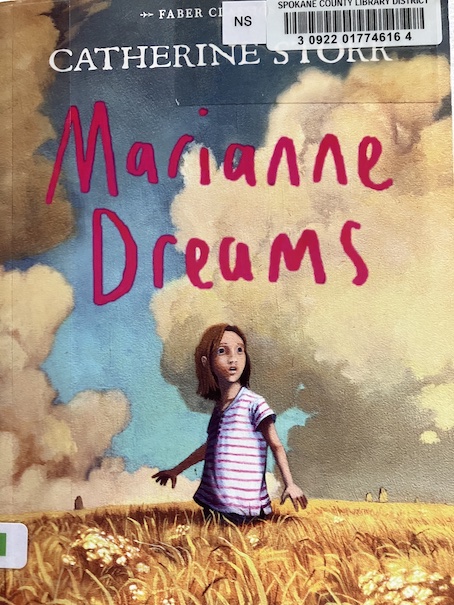
Marianne has been looking forward to her birthday because her parents have promised her that when she is ten years old, she will be old enough to have riding lessons. She and her family live in town, so she doesn’t have easy access to horses, like children in the country do. Her special birthday present is going to have her first lesson at the local riding stable. Her birthday is wonderful, and the riding lesson goes very well, even if some of the more spectacular things that she had imagined before didn’t happen. Marianne would be perfectly happy except, at the end of the lesson, she is more tired than usual and feels achy. By lunchtime, she is feeling definitely ill, and she has a fever.

Marianne’s birthday illness quickly turns into the worst illness she’s ever had. Because of her illness, Marianne has to be confined to her bed for weeks, and she loses track of time. About three weeks after her illness began, she begins to feel a little more like herself and has more awareness of time and what’s happening around her. When she was at her worst, it was hard for her to be interested in anything or focus on anything, but now, she can think clearly enough to be bored and look for something to entertain herself. Marianne’s mother allows her to look through her grandmother’s old workbox, which mostly contains old needlework tools and an array of buttons, ribbons, beads, and other odds and ends that are interesting to look through and sort.

Among the things in the workbox, Marianne finds an old pencil. She immediately likes the look of the stubby old pencil and has the sense that it would be fun to use for drawing, so she picks up her drawing book and begins to draw a picture of a house with a fence around it and some flowers. Marianne’s drawing isn’t particularly great, not as good as what she pictured in her mind’s eye when she started it, but it is the start of something very special.

Although she is starting to feel better, Marianne’s doctor tells her that she is going to miss the whole rest of this term at school. He prescribes strict bed rest for her for the next six weeks. The doctor doesn’t actually say what’s wrong with Marianne, but he tells her that if she doesn’t rest, she could harm herself in a way that would last for the whole rest of her life. Even though she’s bored and says she’d rather be harmed or permanently ill than have to spend more weeks in bed, her doctor is firm with her that this is the way things are. He’ll see that she follows his instructions and recovers whether she likes it or not. Her condition is not contagious, so she can have visitors, but she must remain in bed and rest.

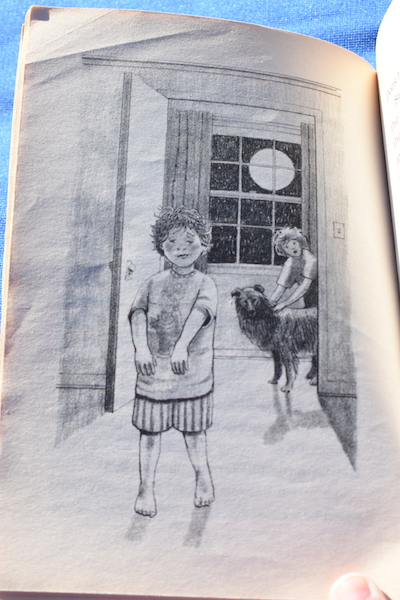
Marianne is sure that these weeks of bed rest are going to be horrible and boring, but soon, something strange begins to happen. She starts having dreams about the house that she drew with that special pencil. When she finds herself in the country with the house, the house is a little misshapen, and it unnerves her. The house is located on an empty, windy prairie, and Marianne can’t even get into the house because she didn’t draw a door handle on the door or put anyone inside the house who could let her inside.

Marianne realizes that she could easily remedy these things by adding more to her drawing, so when she wakes up, she adds a knocker and handle to the door. She also draws a boy looking out one of the windows of the house. The boy seems a little sad when she draws him, but she isn’t sure how to fix his expression, so she just leaves it. Although Marianne isn’t sure whether she’ll ever dream of the house again, she does. In her next dream, the door has the knocker and handle, just like she drew, and there is a sad-looking boy at one of the windows of the house. Marianne waves to the boy and asks him to let her into the house, but he can’t. The boy is upstairs in the house, and there aren’t any stairs down to the ground floor. Marianne asks the boy how he got up there without any stairs, but he says he doesn’t know. Marianne insists that she needs to get into the house, and the boy says that he needs to get out. Marianne gets angry at the boy and the situation, which seems impossible. However, this is not the end of the dreams, and the boy isn’t just a figment of her imagination.
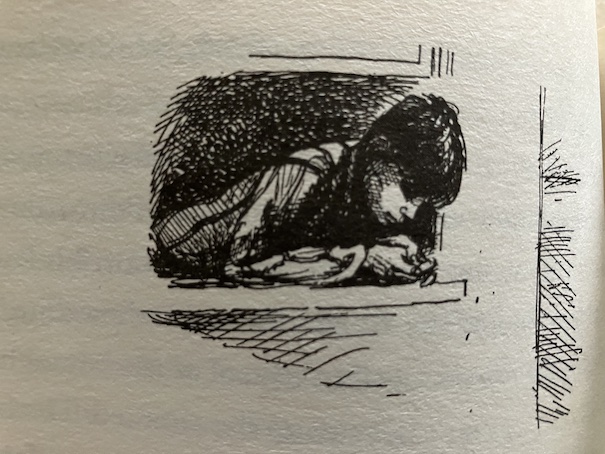
Marianne’s mother hires a temporary governess to tutor Marianne at home so she doesn’t fall too far behind in school. Marianne doesn’t like the idea of the governess at first, but Miss Chesterfield turns out to be friendly, and her visits and lessons add variety to Marianne’s days. When Marianne asks Miss Chesterfield about her career as a governess, she learns that, unlike governesses in books, Miss Chesterfield doesn’t live with her clients. Instead, she tutors different children in their homes, visiting each for a couple hours at a time. All of the children she tutors are children who are behind in their studies or who are studying special subjects that aren’t covered at their school or whose circumstances prevent them for going to school for a time, like Marianne. One of the other children being tutored by Miss Chesterfield is a boy named Mark, who has been left partially paralyzed from a severe illness and can’t walk. Marianne asks Miss Chesterfield if Mark will be able to walk again someday, and she says that it’s likely he will if he takes care of himself in the next couple of months and does what his doctor says.

However, as with Marianne, obeying the doctor’s orders isn’t easy for Mark. While Marianne wishes that she could just be up and about instead of resting like she should, Mark is just the opposite. He loves being at home with his books, and he has trouble pushing himself to start getting up and moving again, which is what his condition really requires. Mark needs to do physical therapy to strengthen his body and retrain his muscles, but it’s difficult and painful. Marianne is sympathetic to Mark because she knows what it’s like to be ordered to do something she doesn’t want to do even though it’s for her own good. She wishes that the two of them could switch places for a time so he could do at least some of her bed resting for her, and she could have the chance to get up and move around. Miss Chesterfield says that she thinks the two of them are better off being themselves and doing what each of them needs to do.
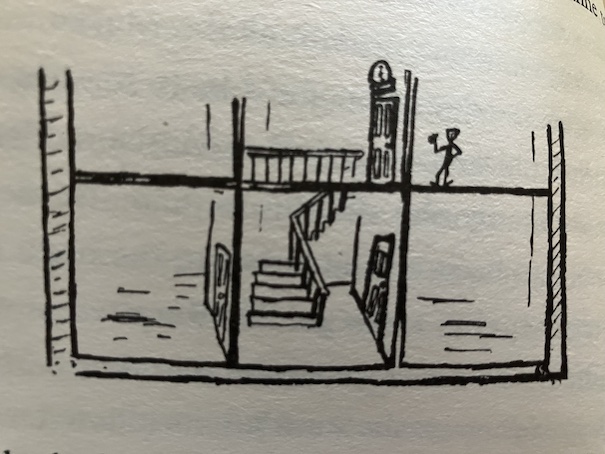
Marianne continues to feel the urge to draw in her spare time. She discovers that she’s unable to erase anything that she’s drawn, but she can continue to add to the picture. She adds more to the background so the house won’t seem to be in such an empty void, and on the opposite page in her drawing book, she draws the interior of the house, adding the stairs that the boy said were missing. This time, when Marianne dreams of the house, she finds herself in the interior, which is mostly empty because she hasn’t drawn furniture yet. She explores the house and finds the boy sitting on a window seat, looking outside, like he did before. The boy has noticed that the world outside the house has changed since Marianne drew hills and a tree. The two of them talk about their situation, trying to understand how they came to be in the house, and Marianne tells the boy that, now that there are stairs, he can go outside. The boy tells her that he still can’t because he can’t walk. He explains to Marianne about how he’s been ill for a long time, and he has special exercises he’s supposed to do to help his muscles, but it still isn’t definite whether he’ll be able to walk again or not. That’s when Marianne realizes that she’s talking to Mark, the same Mark that Miss Chesterfield told her about.

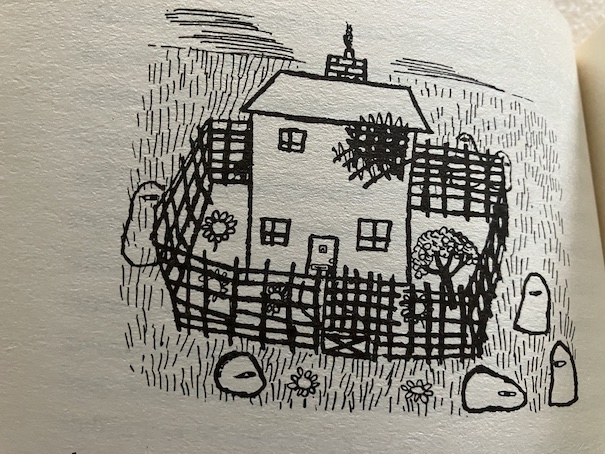
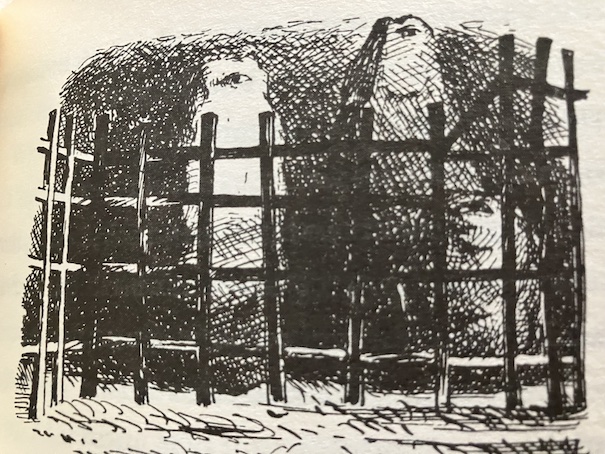
The two children could be dream companions for each other, but Marianne becomes more temperamental the longer she’s cooped up. One day, in a fit of anger because Mark made Miss Chesterfield late to see her and ruined her special surprise present for Miss Chesterfield’s birthday, Marianne turns the house in her drawing into a prison and the rocks outside into monsters that watch the house. Marianne thinks it would be a fitting punishment for Mark to be a prisoner in their dream house, but the problem with that is that Marianne still goes to the house when she’s asleep, too. Whenever she’s there, she’s also in a scary prison, surrounded by rock monsters.
It takes Marianne an embarrassingly long time to realize that everything she adds to her drawing changes the environment of the dreams that both she and Mark share, and even when she realizes that’s the case, Mark has a difficult time accepting it. It seems like, when the kids are in the dream world, they have some trouble remembering the waking world and making connections between the two, although Marianne has more memory of her waking life than Mark does, probably because Mark is more seriously ill. While Marianne has control of the special pencil and more ability to alter the world of their dreams, she can’t change everything, and the two children will have to work together to overcome their obstacles and escape the house. The house is useful for them during their recovery, but they quickly realize that it’s also a dangerous place, and they can’t stay there forever. Although Marianne didn’t draw a way for the rocks with the eyes to move, they are moving, and they’re getting closer all the time.
The book is available to borrow and read for free online through Internet Archive (multiple copies). In 1988, the story was made into a movie called Paperhouse. Paperhouse is a much darker version of the original story, though. There was a much earlier television mini-series from 1972 based on the book called Escape Into Night, which was much more faithful to the original story, although in that version, Marianne had a broken leg from a riding accident instead of being ill. All six episodes of Escape Into Night are currently on YouTube. I don’t know of any other way to watch it if you live in the US. There are dvds available on Amazon, but they’re region coded. For sci-fi fans, I swear that the rock monsters in Escape Into Night also sound like Daleks from the original Doctor Who. The book was originally published in Britain, and the movie versions are also British. There is also a sequel to this book called Marianne and Mark, where the two children from this book meet as teenagers in real life instead of in the dream world.

My Reaction and Spoilers

To begin with, I’d like to explain that, while the concept of a drawing coming to life somewhat reminds me of Harold and the Purple Crayon, this is definitely a more serious book with greater depth. The children in the story are dealing with some serious and frightening problems, both in the real world and the dream world.

I love the way that the pictures in the book alternate between Marianne’s drawings and the children’s “real” experiences. First, we get to see what Marianne draws, and then, we get to see how her drawing comes to life in the children’s dreams. Marianne’s drawings are child-like, with crooked houses, misplaced windows, and stick figures. The dream drawings are as misshapen as Marianne’s drawings, but at the same time, they are more three-dimensional, as the children perceive them when they’re inside them in their dreams.

The book never explains exactly why Marianne is sick or what might happen to her if she doesn’t rest, although I have a couple of ideas. There are illnesses which can leave people severely weakened for long periods of time, and they have to rest or suffer lasting organ damage. When my aunt was young, she was extremely ill with valley fever. That’s probably not the illness Marianne has because valley fever comes from a fungus found in the soil in certain parts of the Americas, but I don’t think it’s found where Marianne lives in Britain. I mention it because I think that it’s similar in severity to Marianne’s illness. Most people who get valley fever don’t have it severely. In fact, most long-term residents of the area where I live have had it at some point in their lives, and it’s often mistaken for a mild flu. However, once in a while, someone has a much more serious case, like my aunt did. My aunt had to spend weeks at home, resting, and a tutor came to the house to help her with her schoolwork until she recovered enough to return to school. Even then, she had certain restrictions. Valley fever is hard on the lungs, so she couldn’t over-exert herself. For a period after she returned to school, she still tired quickly from ordinary activities, she could not take physical education classes, and she even had to use the elevator at her school (which was reserved only for those who needed it) instead of taking the stairs to classes like most of the other students. If my aunt had pushed herself too hard before she had fully built back her strength and stamina, she might have damaged her lungs permanently. I think that the doctor in this book is warning Marianne that her condition is similar, that she might cause herself some form of lasting organ damage if she doesn’t rest and let herself fully recover.

In Marianne’s case, I suspect that Marianne’s illness could potentially damage her heart because her doctor is concerned that she not get angry or over-excited, but that’s just a guess. Illnesses like that are relatively uncommon, but they do happen in real life. Depending on the condition she has, it’s possible that Marianne’s extended bed rest might also be shortened by more modern treatments, if this story happened during the 21st century. It’s difficult to say without knowing what her ailment is, but I think it’s worth pointing out that this story was written during the 1950s, which is also coincidentally the time period when my aunt had her illness in her youth.

In the movie version of the story, Paperhouse, they say that Marianne had glandular fever, but since the book never specifies, some readers have speculated that she might have had rheumatic fever, since the symptoms fit the description of her illness. I tend to think rheumatic fever is more likely because it can potentially cause a risk to the heart, and that seems to be the concern in the book, the reason why Marianne has to rest and be careful to avoid long-term damage to herself until she is fully healed. In Paperhouse, Mark is described as having muscular dystrophy, but the book actually says that Mark has polio. The first polio vaccine was developed by Jonas Salk in the early 1950s, although it took a few years for it to come into widespread use, so it’s plausible that Mark could have caught the disease before he had a chance to be vaccinated.

My parents were both in elementary school during the 1950s, and they remember getting their polio vaccinations and the boosters that they gave to kids in an edible form on sugar cubes. Other people who were young around that time period may have similar memories. Although I never saw a child or young person with polio when I was a kid, probably because all the kids I knew were vaccinated, my parents say that it was a real menace when they were young, and the serious consequences of the disease were a real fear. While my mother was still young, her aunt contracted polio as an adult. Her aunt survived having polio, but there were lasting effects. Even people who recover their strength after having polio while young or relatively young can have it come back on them when they’re older as post-polio syndrome. My mother remembers her aunt before she became ill, but by the time I met my great-aunt, she was an elderly lady in a wheelchair because of the condition. That’s part of the reason why my family believes in the benefit of vaccines in general. We’ve noticed definite improvements between generations because of them.

The characters in the story experience some personal growth from their ordeals. I liked it that, in the beginning of the story, Marianne considers some of the old-fashioned stories she’s read where girls suffer from severe illnesses or ailments that keep them in bed for long period of time. It is a common trope of 19th century and early 20th century books that characters’ lives and personalities are changed by illness because dealing with the illness and the restrictions imposed on them because of it teaches them patience and understanding. (See What Katy Did in the Carr Family series from the late 19th century for an example.) Marianne wonders if she’ll experience the same type of transformation or if she’ll still be the same Marianne she always was after her ordeal is over. Both Marianne and Mark have things they need to learn in order to overcome their respective problems. Miss Chesterfield’s belief that it’s best for them both to learn to manage their problems rather than envying each other is the correct one.

Marianne has to learn about emotional control. During her period of forced rest, Marianne’s temper gets worse because she’s frustrated with her situation, and her doctor warns her that she’s going to have to learn to keep calm because fits of temper are as bad for her health as physical over-exertion. Marianne needs to learn to relax, to not try to push herself or situations to move faster than they need to go, and to keep her temper even when she’s frustrated. When she realizes that the things she draws on paper with the special pencil have real consequences for Mark, who is also struggling through his illness, Marianne also becomes more compassionate and considerate, trying to find creative ways to help Mark through her drawings. It takes some trial and error, but Marianne does become a more thoughtful person. When it’s finally time for Marianne to get out of bed and start to strengthen herself again, she experiences some of what Mark has been struggling with, and it increases her understanding of his situation.

Meanwhile, Mark has to learn to push himself a little harder and to persevere even in the face of hardship. Miss Chesterfield has noticed that, while Mark will work and study hard at things he likes or things that are easy for him, he has a tendency to give up too soon or only make half-hearted efforts at things that are difficult or don’t come naturally to him. While his body is getting the the medical attention it needs, his spirit needs some stirring so he can find the inner strength to keep going with his efforts to restore and improve his physical health. He explains to Marianne how he feels, being physically weak and dealing with the uncertainty of whether or not the exercises he’s been given to do are even going to make a real difference or not. Because his condition is serious, even things that his doctor says are likely to help aren’t completely guaranteed to help. These feelings of uncertainty are a heavy burden for Mark to bear and another obstacle that he has to overcome. He finds it hard to continue making an effort when he knows that it might not make a difference in the long run. He needs to remind himself that, while trying his best may not be enough to help him walk again, doing nothing at all guarantees that he will lose that ability. A chance at improvement is better than no chance at all. Marianne provides support and encouragement for Mark, and seeing the results they experience from their efforts in the dream world encourages the children to do what they need to do in the waking world.

Although the book has fantasy themes, I thought that the descriptions of the children’s struggles in the real world and Marianne’s feelings about her illness were very realistic. Mark and Marianne have to use some different tactics when battling their illnesses because they have different problems. I think the book makes a good point that what’s necessary for one person’s situation isn’t always the same for another’s. Some people need to push themselves a little harder and tackle problems head-on while others need to develop a little more creativity and patience to work around their problems. In the end, Marianne and Mark do both. The children are an inspiration to each other, helping each other every step of the way.

Christmas in a Pandemic

Once in awhile, I feel like circumstances require me to make some comment about current events. Christmas this year is weird. There’s no denying that. This year has been dominated by the Coronavirus Pandemic, an event unforeseen at this time last year. In fact, the very first book post I made when this year began focused on the Influenza Pandemic of 1918, and I didn’t do it on purpose. I just happened to be reading Charlotte Sometimes around Christmas last year because it was a book many people said was good, and I’d been meaning to get around to reading it. I didn’t know on New Year’s Day 2020 that it was going to turn out to be weirdly appropriate.

So, everyone’s lives this year have been affected by the current pandemic. Many people aren’t going to spending Christmas like they did last year. Not everyone can travel to visit relatives, and some people, sadly, will be missing people who were with them last year. It’s okay to be sad about it. Circumstances aren’t good, and it’s okay to have feelings about it. It’s okay to be sad or angry and get those feelings out. Christmas tends to bring out strong feelings even in ordinary years because it’s the last major holiday before the New Year. It’s an event that not only marks a major Christian event, but also kind of caps off the year. It’s a time when people take a pause, and when people pause, they also tend to think. They think about what’s happened during the last year, where they are in their lives, where they expected to be, and what they expect or hope for during the next year. When I was in high school, a teacher warned us that it’s normal for some people to get depressed around this time of year, even though it’s usually considered a happy time. There are different reasons for that. Sometimes, it’s partly the weather, if you live in a place that gets dark and snowy around this time of year, but quite often, it’s about personal expectations. We all have expectations about our lives and how we think events are going to go, and it’s disappointing and sometimes frightening when things don’t go according to plan. Some people feel like they’ve failed when things in life don’t work out the way they wanted them to, and that’s depressing. They feel like they should have been able to control things better in the year leading up to Christmas and have the expectation that Christmas should be this perfect day where everything goes smoothly and everybody is perfectly happy. But, that’s not really how life goes, and not everything in life can be helped. Everyone encounters circumstances beyond their control that occasionally derail their plans, and that’s okay because it’s human, and that’s something that’s at the heart of the Christmas story, too.

For those who believe in the Christmas story, Jesus was born in a stable because there was no room at the inn for his parents to sleep in. There was literally nowhere else to go for them but the street, and the stable was a step up from that because it at least had some straw to lie on instead of the hard ground. It looks cute in nativity scenes with all the animals around, but anybody who’s been in a real stable or barn knows that they are smelly. Stables are for animals to live in, and animals poop. That’s one of the reasons why barns and stables have straw on the floor, to make it easier to clean up the animal poop and pee as well as providing animal bedding. In nativity scenes, Mary typically looks unusually clean in white and blue robes for someone who just gave birth while lying in a pile of straw. In real life, straw probably would have gotten all over her clothes and into her hair. This wasn’t a hygienic maternity ward with clean white sheets and soft pillows. It was a glorious event, but far from “perfect”, and even calling it “ideal” would be stretching it a little. It was what it needed to be for the people involved and the circumstances they were in. This is a story about people making something wonderful happen because they were doing the best they could with what they had in difficult circumstances. In a way, that’s part of what’s compelling about this story. If it had been a normal birth where everything went as one would expect, with no complications or unusual circumstances, it wouldn’t be special, would it? Everything about this story centers on the fact that this birth was unusual, not anything anybody would have expected. It was all surprising, from a prophetic star overhead to angels telling shepherds about the birth to wise men showing up with gifts to a homicidal king who starts looking for the baby, forcing the family to flee, to who this baby turned out to be. Nothing about this situation was normal. If it had been, we probably wouldn’t have a major holiday to celebrate it, and it wouldn’t be a story worth telling.

By the way, that’s my grandmother’s old Nativity set in the picture, and if you look at it closely, it’s also far from perfect. That picture isn’t the greatest, but also the figures are a mixture of pieces from different sets that my grandmother probably bought on sale or at a garage sale because she did things like that. You can kind of tell that it’s not just one set from the different styles of the figures and the bases that don’t match each other. Some are stamped “Made in Japan” and some are labeled “Made in West Germany.” Yep, West Germany. Some of the figures are broken. The guy in the back on the left is missing a hand, and some of the animals have to lean on something to keep from falling over. The angels aren’t in the picture, but they’re on top of the box that contains the scene, and one of them is missing a wing. We still use this set every year because we’ve had it for years and are attached to the pieces, even the broken ones. It’s possible to love something that isn’t perfect.

There are all kinds of expectations, and the type that really makes Christmas special is the expectation not that things will be perfect but that we will be pleasantly surprised by what happens. Pleasant surprises come when circumstances aren’t perfect, but good things still happen, and we have something to celebrate anyway. This is true even in the middle of a pandemic. So, forget what this year and this holiday were “supposed” to be! A lot of things have happened this year that nobody wanted (no matter what the conspiracy theorists say). It’s been hard for everyone, but there is some comfort in realizing that, no matter what you’ve been through this year, there are people around the entire world who have been going through the same thing with you every step of the way. You’re far from alone, and during this last week of the weirdest year of our lives, there are still some things to be glad about and some time to arrange a few last-minute treats for yourself and some nice surprises for other people.

Remember the Little Things

Life is in the details, and even in the midst of every insane thing that’s happened this year, there are still some little things that have gone right. Did you learn something new this year? Revive an old hobby during quarantine? Reconnected with an old friend online? Take care of some things you’ve been meaning to do but just never got around to doing until you just couldn’t get out to doing anything else? If you did, celebrate it! If you didn’t, you’ve still got about a week to do whatever it is you want to do before the year ends and then celebrate it!

Since my family started quarantining, I’ve gotten used to Zoom (which I’d been meaning to learn how to use and this year, I really had to). I managed to complete an internship remotely, and I’ve finished my final class to get the degrees I wanted. My dog has finally let my brother pet her because he’s been around more, and she’s finally started to trust him more. These are things that make a difference to me, and if you think about it, there may be things that you did that have changed your life for the better while you were worrying about larger events. Even just managing your life through a major pandemic is an accomplishment by itself. Think about the positive things you’ve done, big and small. Maybe write them down so you can see them and remind yourself of the good you’ve done.

I can’t say that I accomplished everything I wanted to do this year … or, even half of it. But, that happens every year. I just roll over all my uncompleted projects to the next one and add some more as the year goes on. It’s routine. It doesn’t matter how long I live, I’m the kind of person who thinks of more to do than I’m ever going to find time to do, and I’m used to that. As the year comes to a close, take a little time to appreciate the things you have done instead of brooding about what you didn’t or couldn’t. There is satisfaction in knowing that you’ve done things and taken care of what you needed to do. If, like me, your to do list is never-ending, then take a moment to appreciate being an ideas person with a constant supply of interesting projects and that you’ll never lack for direction in your life.

Celebrate an Old Tradition or Start a New One

Traditions can be a source of comfort, even if you’re not sharing them with the people you normally would. Traditions connect people with the past and the people who have shared those traditions before. They also remind us that there have been other Christmases before, and there will be more to come. This is just one year out of many. Whatever your situation is/was this year, it will probably be different by this time next year. Take comfort in that, and take some time do the things that you’ve enjoyed doing on Christmases before.

Watch some of the movies that you’ve liked on Christmases past, or if you’re just not feeling it this year, try something different. A simple Google search will show you just how many Christmas-themed movies there are to choose from. You don’t even have to watch something Christmas-specific, if you don’t feel like it. If it would make you happier to watch Star Wars tomorrow, do that instead. (I’d rather watch that than It’s a Wonderful Life any Christmas. Even though it has a happy ending, I find it wrenching to go through to get there.)

Most of my blog is about books, specifically nostalgic ones. Revisit some childhood favorites, or check out some of the ones I’ve reviewed! Most of the ones I’ve reviewed are also available online through Internet Archive, so if you don’t have them, you can get them with a couple of mouse clicks. (Internet Archive requires you to sign up to borrow books online and read them in your browser, but it doesn’t cost any money, and you might also find some old favorites there that I don’t know about yet.) Read them with your kids or just by yourself to relive the nostalgia!

Favorite books from Christmases past (plus more on my list of Christmas books):

Merry Christmas from Eddie (1986)

The adventures of a group of neighborhood children, leading up to Christmas. This are just calm, slice-of-life adventures that make nice bedtime reading, like the one about Eddie’s cookie mix-up and the time he played Santa for his family and how a toy horse became a zebra in the school’s toy drive.  One of the Betsy and Eddie books by Haywood.

The Best Christmas Pageant Ever

The Herdmans, the worst kids in town, unexpectedly show up at Sunday school (mostly to raid the snacks) and become interested in the Christmas pageant.  What will happen when the Herdmans decide that they want the starring roles?  Part of The Herdmans Series. This humorous book brings up what I mentioned earlier about the situation in the First Christmas not being perfect, and there’s also a movie version.

Merry Christmas, Amelia Bedelia

Amelia helps Mr. and Mrs. Rogers get ready for Christmas while they go to pick up Aunt Myra, who will be spending the holiday with them. As in all of her books, Amelia goes through her to do list taking absolutely everything literally, from “trimming the tree” by clipping its branches to “stuffing the stockings” with the same kind of stuffing that she would use to stuff a turkey.  Part of the Amelia Bedelia Series.

The Biggest, Most Beautiful Christmas Tree (1985)

The chipmunk children are disappointed because Santa has trouble finding their house among the other trees in the forest, so the animals decide to turn their home into a big, decorated Christmas tree.  A Little Golden Book.

The Nutcracker (1816, 1987)

A young girl receives a magical nutcracker for Christmas and learns how to break the spell that has changed him from a human prince. By E.T.A. Hoffmann, retold by Anthea Bell.

The Polar Express (1985)

A boy rides a magical train on Christmas Eve and goes to the North Pole to meet Santa and receive the first gift of Christmas.

Starlight in Tourrone

Children in a small village in France revive an old Christmas tradition that brings life back to their town.

Christmas Around the World

This book explains Christmas customs in various countries around the world. I’ve read it and reread it around Christmas since I was a kid! If you like this book, I also recommend the Anglophenia YouTube video about Christmas in Britain.

Some other books that I haven’t reviewed yet on my blog are:

The Night Before Christmas

A picture book of the famous poem with beautiful pictures and some historical information about the poem in the back.

A Little House Christmas: Holiday Stories from the Little House Books

This is a collection of the Christmas scenes from different books in the Little House on the Prairie series. There are some good Christmas stories in those books, where people often had trouble getting together, and the family had their own, homemade fun and enjoyed simple pleasures.

Christmas Cookbook

Christmas recipes from around the world!

Many people feel nostalgic about special foods and treats around Christmas. Even if you can’t get together and eat with as many people this year, you can still enjoy old favorites, and baking special Christmas cookies and making candy and other treats can be a good activity and something you can enjoy with children.

Of course, a classic Christmas activity is making a gingerbread house. Or, if you’re like me, using the shortcut of making one out of graham crackers or pop tarts. (Remember, it doesn’t have to be perfect, it just has to be fun. It’s always a little messy, and you’ll notice mine has old Valentine candy on it because it’s more fun to read candy hearts than eat them.) If you don’t have proper piping bags for the icing, you can always do what I do and put the icing in a sandwich bag or freezer bag and snip off one corner.

If none of these activities sound like your traditional activities, or if you don’t feel like doing what you ordinarily would do, consider starting a new tradition! Make a new kind of craft or try a new recipe you’ve never tried before. All traditions were new once, and if you like it, it might just catch on.

Be Good to Yourself

Whatever you decide to do this year, do things that make you happy. Christmas is a day to celebrate, to enjoy what you have and give yourself a special treat. Ask yourself what would make you the happiest and make it a point to do things that you enjoy. Read a favorite book (whether it’s about Christmas or not), eat your favorite snacks, have a bubble bath, make a pillow fort with the kids (or, heck, just make one for yourself – who’s gonna know?), run around in the park, drink hot chocolate, play games, whatever you like. Give yourself permission to relax for one day.

Even if you’re spending Christmas alone this year, there are still things you can do to be happy. Take advantage of the freedom of being alone to watch movies, listen to music, or eat foods you like but nobody else really does. Call people and wish them Merry Christmas. If you haven’t sent everyone a card yet, this is a good time to do that.

Surprise Someone

Hopefully, you’ve done all of your Christmas shopping, but there’s still time to surprise someone with something special. If it’s not a gift, it can be just something nice that you do for someone. Call or write to someone you haven’t talked to in awhile and let them know you’re thinking of them. Call into a local radio station and request a song you can dedicate to someone else. Arrange to do yard work for someone to help them even if you can’t have close personal contact with them. Seeing that you can do little things to help people and make them smile may make you smile, too.

If you want a sense of accomplishment, do something to help someone else or make plans to do it for the New Year. There are many groups to donate to, from pet shelters to organizations that help foster children. Do a little research and find out what’s happening in your community and look for a cause you’d like to support. You could donate money to help the homeless or make toys out of no-sew fleece for the local pet shelter. If you’re feeling lonely, there are even some organizations (like this one) that will match you up with a pen pal, like a home-bound senior, who could also use some companionship and emotional support. To find these groups, Google “write to the elderly” and add in your location to find a senior pen pal near you. Consider ways to connect with your community and the people in it, even if you can’t exactly gather yet. Nothing lasts forever, and by the time the pandemic eases, you may have made some new friends by connecting with a good cause.

Merry Christmas!

Who Ran My Underwear Up the Flagpole

School Daze

It’s still just a few weeks into the first new school year at Plumstead Middle School, and Eddie still feels a little out of place. He still feels like he’s a grade school kid at heart and doesn’t fit in with the big kids at middle school. The most grown-up impulse that he has is to frequently stare and smile at Sunny Wyler, and she doesn’t even like him to do that.

Then, something horribly embarrassing happens. Mr. Hollis, the social studies teacher is so late that the entire class gives up on him arriving and decides to go to the locker rooms to change early for gym. Mr. Hollis storms into the boys’ locker room a minute later and barks orders at the boys to return to his class immediately. Eddie, scared to death of his angry teacher, follows this order to the letter – forgetting that he isn’t wearing any pants and is just sitting there in his underwear. Eddie is the only person who doesn’t get any punishment from Mr. Hollis, who is sympathetic to his plight, but that’s not enough to make up for everyone seeing Eddie in his underwear.

Eddie’s underwear has cartoon characters on it, which is just another thing that makes him feel like a baby in middle school. He enlists the help of his best friend, Pickles, to help him burn his old cartoon character underwear, planning to buy some new ones with money he was saving to buy comic books. Then, Pickles suggests to him that he do something else to see how grown-up he is: try out for the school’s football team.

Unbeknownst to the boys, Salem and Sunny are both trying out for the school’s cheerleading squad. Salem isn’t at all the cheerleading type, but that’s the very reason why she wants to join the cheerleading squad. She wants to be an author, and she’s trying to understand different types of people so she can create more realistic characters. Therefore, she sometimes does things that would otherwise be out of character for her just for the experience or to get inside the head of different types of people. However, Salem realizes that she isn’t a very good cheerleader, so she invites Sunny over to consult her on what to do.

In spite of her grumpy, prickly personality, Sunny is actually a very good cheerleader, but she can’t help Salem to improve enough to make the squad. The girls do see Eddie at the football try-outs, though. Eddie’s uniform is really too big for him, his helmet gets turned around, and he ends up with a nosebleed. The coach complains about everything that’s going on with the team and how little time he has to train them and says that what he needs is a manager, so Salem volunteers for the position. Salem is very good at organizing things. With Pickles as part of the school’s small marching band, the entire group of friends is now involved in the school’s football games.

The four kids still have lunch with the school principal once a week, having developed a friendship with him during their rocky first days of school. They tell the principal about their football involvement, and Sunny brings up the subject of Eddie’s Superman underwear that everyone in the class saw him wearing. Eddie denies having any Superman underwear (which is now true), and Pickles backs him up, saying that one pair was just an old pair that he had to wear that day because the others were in the wash. The principal tries to hint to Sunny that she should stop teasing Eddie, but she takes it too far, and Eddie ends up smashing a Devil Dog snack cake (link repaired Nov. 2023) into Sunny’s face. The principal is actually impressed that timid Eddie had to the nerve to do it, and oddly, Sunny doesn’t even seem upset afterward.

Thus begins Eddie’s first steps at learning to be more grown-up. However, it’s not going to be easy for him. His current reputation is going to be hard to live down. The other guys on the football team are all bigger than he is, and he’s been bullied by the big kids since school started. At one practice meet, his pants fall down because his uniform is too loose, and a big kid hoists him in the air to show everyone that he’s not wearing Superman underwear.

But, what Pickles had told Eddie when they were burning Eddie’s old underwear was correct: Eddie might be a kid, but so are all the other sixth graders at their school. Eddie isn’t the only boy on the football team who is new and small. He’s not the only one who is sometimes timid and awkward, either. As team manager, Salem soon begins helping the new football players tie the drawstrings of their pants more tightly because other players are worried about losing their pants like Eddie did. She also begins soothing their various injuries, fears, and ruffled feelings. Around their coach, the boys have to act tough and not cry, even when they’re scared or hurt, but since their team manager is an understanding girl, the boys can sometimes let down their guard and be more human with her. Salem gets a lot of insight into the emotions of football players, and in return, she helps the young players to understand and manage their emotions, too. Eddie resists most of Salem’s help because he’s trying to prove that he’s tough and grown-up, but without her support, many of the other boys would have quit the team.

As the season progresses, Eddie gets the chance to a football hero, the very first player to score a touchdown at their brand-new school, and Sunny realizes that she’d rather be a mascot than a cheerleader because she’s too grouchy to be a cheerleader and nobody tells a Fighting Hamster to keep smiling. However, even Eddie’s football victory doesn’t end the teasing, and somebody runs a pair of Superman underpants up the flagpole to mock him. In a desperate attempt to cheer him up, Salem promises to arrange the thing she knows that Eddie wants the most – a chance to kiss Sunny. Will it work?

The book is available to borrow and read for free online through Internet Archive.

The kids do some growing-up in this book, but not unreasonably so for eleven-year-olds. The party where Salem tries to arrange for Sunny and Eddie to kiss is suitably awkward. As the kids talk about the idea of kissing, they tease each other. I didn’t like the part where Salem called Sunny a baby for not wanting to kiss Eddie. It’s not that I don’t think that’s realistic for some eleven-year-olds, but I believe more in the modern idea of giving consent and respecting someone’s “no” when it comes to anything romantic. That didn’t occur to me when I first read this book as a kid, but that’s what real maturity does for you. The word “sex” does appear in the story when Salem challenges Sunny’s maturity, saying that she probably still giggles when someone says that word, to which Sunny quickly replies, “Don’t you?”

“‘No,’ said Salem, ‘as a matter of fact, I don’t. What’s there to giggle about? It’s nature. It’s as natural as trees and cows. Do you giggle when somebody says trees or cows?’
‘If the tree tries to kiss the cow,’ said Sunny, ‘sure, absolutely.'”

As part of their maturity talk, Salem points out that women do mature faster than men, and that’s why some young women marry older men. Well, that’s one explanation for that, although, as an adult, I can think of at least two more.

To her credit, Sunny thinks of a way to deliver a kiss to Eddie without exactly kissing him. She does it in a joking way as part of a game of Truth or Dare.

As a side plot, the kids were also trying to decide whether or not they want to go to the Halloween Dance at school. On Halloween, they all meet in their costumes, and Eddie is over his Superman underwear embarrassment enough to wear a Superman costume. At first, the kids think that maybe they’ll go to the dance, but on the way, they can’t resist stopping to trick-or-treat and end up changing their minds. They’re not really ready to be completely grown-up yet, any more than they’re interested in romance in any serious sense. What’s more, they’re all fine with that.

This is the book where Pickles makes himself a new skateboard out of an old surfboard that’s big enough to carry not only him but all of his friends, too. He calls it the Picklebus.

Will It Be Okay?

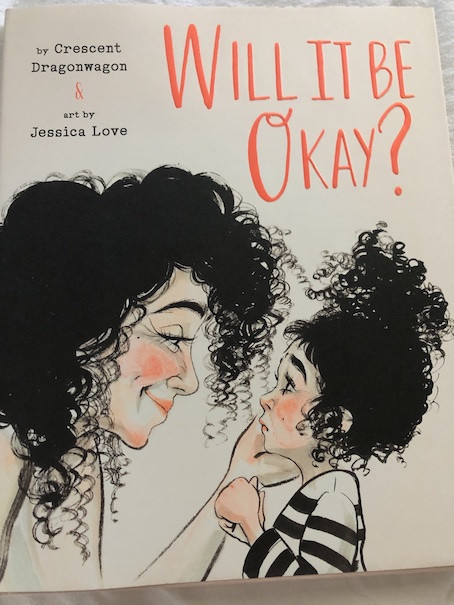
Will It Be Okay? by Crescent Dragonwagon, 1977, 2022.

I like to tie my book reviews into current events when I can, and I first wrote this review around the beginning of the coronavirus pandemic. It just seemed like the right time for this one. It’s a picture book, and, when I first wrote the review, my local libraries were closed because of the pandemic, so I couldn’t go find a copy to get pictures. However, the book is available to read online through Internet Archive, which is where I first encountered it.

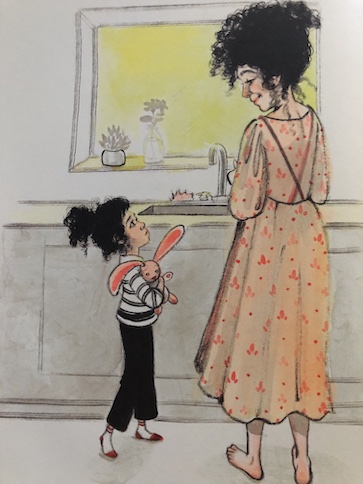
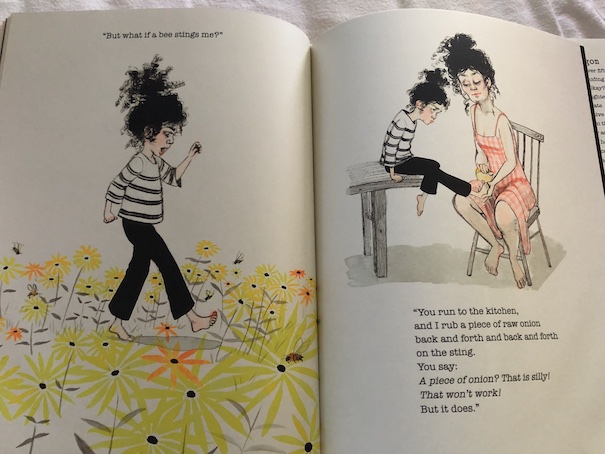
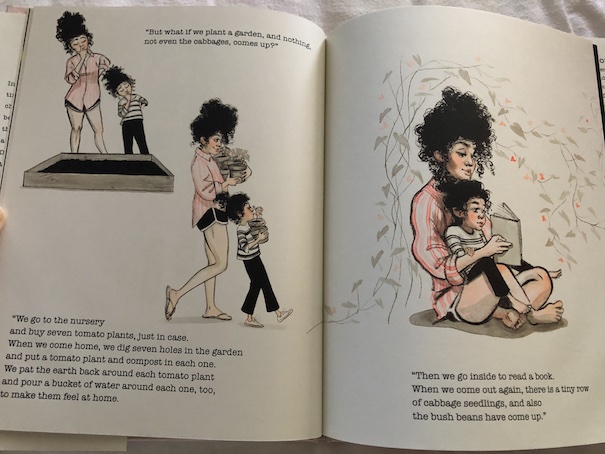
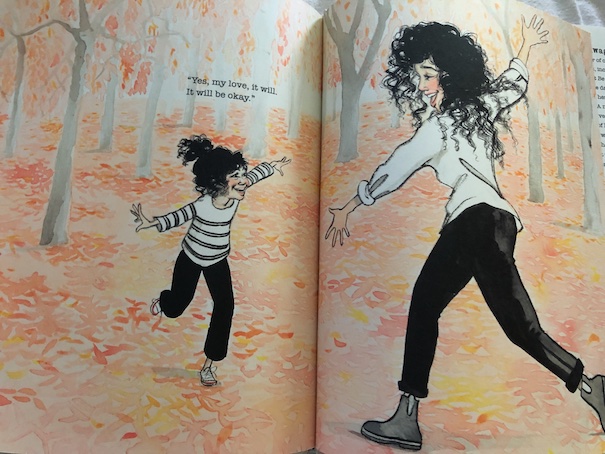
The version on Internet Archive is the older printing of the book, with its original pictures. Since then, the book has been reprinted with a set of new pictures. The pictures that appear here are from the new version. The older version of the book showed a blonde girl with a blonde mother, and the new version has a mother and daughter with black hair. Between the two, I prefer the newer illustrations, but readers can decide for themselves. I was surprised, but some of the text of the story was also changed between the versions of the book.

A young girl keep asking her mother about various types of problems that she might encounter, everything from storms to bee stings to forgetting her lines in the school play, and asking her what she would do if each of these things happen.

The mother gives her calm, reassuring answers. Some of them are based on common sense, like if their cabbages don’t come up, they’ll go get some tomato plants and plant tomatoes, and then their cabbages will likely come up anyway.

All of the answers have a poetic quality and answer the girl’s emotions, not taking all of the situations exactly literally, but capturing the feeling that the girl would need to have to get through life’s fears and uncertainties. When the girl asks what if no one likes her dancing, her mother describes how she can dance alone until she meets a new friend, who will dance with her and then come to her house to draw pictures and drink cocoa. I take this to mean what if people don’t like the girl instead of just her dancing, and her mother’s response to mean that she just needs to keep living her life, and she will meet people who will like her.

The last question that the girl poses to her mother is “But what if you die?” This is probably the fear that the girl has more than any of the other fears that she’s mentioned, but the mother still has a calm reply.

The mother tells her daughter that if she dies, her love will stay with her and she’ll have so much that she’ll have to give love away to other people. Her daughter will make new friends and dance with them and she’ll even come to love things like bees and thunderstorms and the other things that have frightened her. The girl will love other people in her life, and they’ll love her, too. Everything will be okay.

My Reaction

Life has many uncertainties, and bad things can happen, but there are other things that can make life better so that, in the end, we will be okay, in spite of the bad and scary things that come along. It’s not easy to believe that in the middle of scary situations, when you don’t know how it’s all going to work out, but I appreciate the sentiment. It’s always possible for things to improve. Bad things might happen, but we can handle them. It’s important to believe that we can handle situations and approach them with confidence.

The hardest, scariest thing to accept is when people die. Death is permanent. When someone has died or is facing death, it’s hard to believe that it could ever be okay because you can’t undo death. The mother in the story doesn’t try to deny that she could die at some point, but what she says is that her daughter will go on with her life and that she will always have her love. It’s what she leaves behind and what her daughter will continue to do after she is gone that will make things okay. The mother doesn’t want her daughter to focus on the sad and scary parts but to look forward with hope and confidence. As long as we can continue to move forward and love one another, things will be okay.

The last picture in the original version of the book is of the mother and daughter in the bathtub together, but they’re largely concealed by bubbles in the bath. Personally, I prefer the newer version of the book, which has the mother and daughter dancing in the leaves together under the trees.

Some of the situations in the book were changed between the old version and the new version of the book. In the old version of the book, the girl worries about what to do if she meets a big dog or if snakes come in the middle of the night, and neither of those were included in the new version of the book. Some answers in the old book are as improbable as the problems that the girl poses, like suggesting that the girl play a flute to charm snakes if snakes come. Both versions of the book have the scene where the girl worries that someone might hate her and her mother says that a frog will tell her that she’s lovable.

Rosy Noses, Freezing Toes

Pee Wee Scouts

#13 Rosy Noses, Freezing Toes by Judy Delton, 1990.

At one of the scout meetings, Mrs. Peters, the troop leader, says that her antique vase is missing. It’s a family heirloom, and Mrs. Peters wants to ask the scouts if they know anything about its disappearance or if they have any idea of what could have happened to it. None of them knows, but they’re fascinated by the mystery. After they search the house and can’t find it, Mrs. Peters says that she’ll just have to report its disappearance to the insurance company. Mrs. Peters is willing to let the matter go at that, but the scouts keep wondering what happened to the vase and if one of them could have taken it.

Mrs. Peters tells the scouts that the next badge they will earn will be their music badge. To earn the badge, the children will have to sing or play an instrument or tell the group about the life of a composer. Some of the children already play instruments and know what they’re going to do, but others aren’t sure. Since it’s December, Mrs. Peters suggests that some of them could sing popular Christmas songs or a Hanukkah song.

Sonny Betz declares that he doesn’t want to participate because he can’t play an instrument and over the next few days, he seems upset and nasty with people. Molly asks him what the matter is, and Sonny tells her that his mother is forcing him to take violin lessons. Mrs. Betz has always wanted Sonny to learn to play the violin, and his new violin teacher has assured her that Sonny will be able to learn the first line of Jingle Bells in time for the scouts’ music show, even though it’s coming up fast. Sonny isn’t happy about it, and to make him feel better, Molly tells him that he’s lucky because nobody else will be playing the violin and it will make him different. Unfortunately, the other kids tease him and call him “Maestro,” so he starts feeling bad.

Molly doesn’t like the way the others keep teasing Sonny, and when Tracy says that Sonny is a baby, Molly tells her that it’s not his fault because his mother is the one who makes him take violin lessons and keep the training wheels on his bike even though he’s in the second grade and all the other things that people tease him about. Mrs. Betz doesn’t realize how much Sonny hates some of the things that she makes him do and how much the other kids tease Sonny about these things. Molly overhears her mother saying that Sonny will “be a handful by the time he gets to high school,” probably because she’s imagining that Sonny will rebel against all things his mother has been making him do once he’s a teenager. Actually, it’s not going to take that long.

Mrs. Peters uses the insurance money from her vase to buy a piano. The scouts’ music show goes okay at first, although none of the kids are spectacular at music. Molly, Mary Beth, and Lisa paint their noses red and sing Rudolph the Red-Nosed Reindeer. Kevin whistles. Roger plays White Christmas on the drums with no other accompaniment, confusing everyone about what song he’s actually playing. Poor Sonny has to go last, when everyone is starting to get tired of the entertainment, but he doesn’t play well. The other scouts cover their ears, and the screeching of the violin makes the dog bark and Mrs. Peters’s baby cry. Sonny is so upset that he runs away from the show and has a fit.

The next day, Molly learns that Sonny has run away from home completely, leaving behind a note that he’s heading to Alaska. Everyone is searching for Sonny and getting worried about him being outside alone in the snow. However, Molly soon discovers that Sonny hasn’t gone as far as everyone fears and he’s certainly not on his way to Alaska. She discovers Sonny hiding in her family’s bathtub. Sonny explains to her that he didn’t have the money to go to Alaska, but he couldn’t bring himself to go home, and he picked Molly’s house to hide in because Molly is the only one who didn’t tease at him. Molly promises not to turn him in, but she says that he won’t be able to stay in her bathtub forever. His mother has called the police to report his disappearance, and Molly’s parents are bound to find him eventually. Sonny swears that he can’t go home because he hates playing the violin so much. What can Molly do to help him change his mind?

I didn’t like the way the other scouts were so mean to Sonny in the book. Sonny does do childish things, like being mean to the younger kids on the playground when he’s upset and throwing fits when things go wrong. However, Molly tries to be understanding with Sonny, even when he’s being fussy and whining, and she recognizes that Sonny is in a difficult position. His mother has certain expectations of him, and Sonny doesn’t think that anything will change her mind. The way things work out, though, makes it seem like Sonny never really explained to his mother how upset he was about the violin lessons and maybe not even how upset he’s been about some other things. Part of Sonny’s difficulty and the reason why he seems babyish to the other kids is that he seems to have trouble managing and articulating his emotions, including standing up for himself and what he really wants. Some of the other scouts help Molly to convince Sonny that running away isn’t the solution, and Molly calls Mrs. Betz to tell her that Sonny is okay but won’t come home until she promises that he can stop playing the violin. Sonny declares that he wants to see that in writing, and his mother gladly writes him a note that says that he doesn’t have to play the violin again.

So, what about the antique vase mystery from the beginning of the story? Before the end of the book, they do locate the missing vase (not really stolen, more misplaced and forgotten), but Molly accidentally breaks it. Mrs. Peters says that it’s okay because, with the vase broken, she doesn’t have to give the money back to the insurance company, and she gets to keep her new piano. She’s been wanting a piano, and the truth is that she never really liked the vase, even though it was a family heirloom. Yay? Merry Christmas!

The book is available to borrow for free online through Internet Archive.

The Haunted Underwear

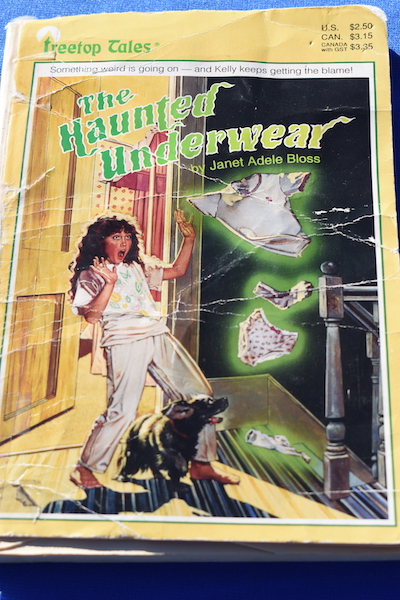
The Haunted Underwear by Janet Adele Bloss, 1992.

Things have been rough for ten-year-old Kelly Towser since her parents decided to adopt a four-year-old boy named Stevie.  For the first part of her life, Kelly was an only child, and now she misses that peaceful period of her life.  Now, her parents don’t have as much time to spend with her.  Everyone showers little Stevie with attention and presents.  Although she doesn’t say so, Kelly worries that maybe her parents adopted Stevie because they were disappointed in her or secretly really wanted a boy instead.

To make things worse, Stevie’s little-kid antics get on Kelly’s nerves.  Stevie keeps making messes, throwing his toys all over the place.  Kelly’s parents tell her that she used to make a lot of messes when she was little, too.  Kelly doesn’t remember doing it, but her parents say that she used to like to throw her clothes all over the place, even hiding her underwear in random locations in the house.  They used to joke about her “haunted underwear,” mysteriously showing up in strange places.

Because Kelly complains that Stevie is getting all kinds of presents, and she isn’t, her parents agree to give her a special present to celebrate her getting a new brother.  After thinking about it a little, Kelly decides that she wants a new puppy.  The family already has a dog named Star, but Kelly thinks that the new puppy could be a friend for Star while she’s at school.

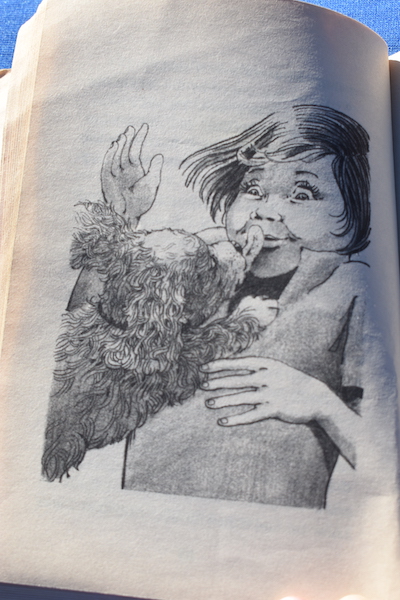
At the pound, Kelly selects a cute brown puppy.  One of the workers tells her that the puppy was found abandoned at the side of the road, dirty and hungry.  Stevie is excited about the new puppy and wants to play with him, but Kelly is determined to keep the puppy for herself, something that she doesn’t have to share with Stevie.  When Stevie insists that the dog’s name is Boscoe because he used to have a dog named Boscoe, Kelly insists that the dog’s name is Jingle.  Stevie gets upset that she isn’t sharing the dog, but Kelly doesn’t think that Stevie would be careful with the puppy because he has already pulled Star’s tail.

As older readers might guess, Kelly soon finds herself in a similar position with Jingle as her parents are with Stevie.  Star gets jealous of the new puppy in the same way that Kelly is jealous of Stevie, feeling like she’s been replaced in her own house.

Kelly does try to get her parents’ attention with some silly stunts, but when her clothes and underwear mysteriously start appearing around the house, she has no explanation.  Her parents punish her, thinking that this is just another attention-getting stunt, but Kelly knows it’s not her.  She starts thinking that the real culprit is Stevie, trying to steal her parents’ attention and affection more than he already has.  However, there is another explanation for the mysterious underwear ghost, and as Kelly investigates, trying to catch Stevie with her underwear, she learns a number of important things.

I figured out pretty early who was responsible for the underwear around the house, although it helped that I’ve had experience with dogs. Star, feeling neglected because of the new puppy, was trying to get Kelly’s attention in the same way that Kelly was trying to get her parents’ attention. Stevie does look guilty for a while because Kelly discovers that he is a sleepwalker and has been having nightmares.  However, when she gets up in the night to catch Stevie sleepwalking with her underwear, she finds Star taking it instead.  Understanding Star’s feelings help Kelly to better understand her own feelings, and she resolves to spend more time with Star so she’ll feel less neglected. When her parents discover the truth, they apologize to Kelly and reassure her that they didn’t adopt Stevie as a replacement for her and that they don’t love her any less.

Kelly’s mother also talks to Kelly about what she knows about Stevie’s history.  Although they don’t know the names of Stevie’s birth parents, Kelly’s parents know that Stevie’s mother wasn’t married and had no money and gave up him for adoption in the hopes that he would be raised in a more stable home.  Stevie has not seen her since he was two years old, two years ago.  Stevie is troubled by nightmares because his young life has been very chaotic, and he has been moved from foster home to foster home, with people always giving him up.  He deeply fears that his new family will also give him up and is terrified when they seem like they’re going to go somewhere, afraid of that they’ll never come back.  That is what his nightmares are really about.  Kelly comes to realize that his situation is very much like Jingle’s, that the fact that someone gave him up doesn’t mean that he’s bad and that all he needs is time, attention, and love to grow out of his problems.

Even though things work out okay, this is one of those books where I found myself getting impatient with the parents.  I think that some of Kelly’s bad feelings might have been resolved much sooner or avoided altogether if Kelly’s parents had spoken more honestly with her in the beginning, preparing her to be patient with Stevie and to understand when he has problems.  Apparently, they did tell her at least some of what they knew about Stevie’s past in the beginning, but they don’t seem to have spoken to her much about how that might influence his behavior and how he will need a lot of time and reassurance to get over his fears. 

When I used to volunteer at an animal shelter, we used to tell people who were adopting dogs that they would have to expect that their new dog would destroy something that they owned, especially if it was an energetic young puppy. When you bring a new dog into your house, it doesn’t know the area, it doesn’t know you very well, and it doesn’t know the rules that go with you and your house. It’s almost certain that, soon after arriving, it will relieve itself in the wrong place or pick the wrong thing to use as a chew toy. Something is likely to get ruined or some mess will be made. The best you can do is to take some preemptive measures, like securing valuables, closing the doors to rooms with things that the dog shouldn’t get into, and taking the dog to the place where it should relieve itself immediately on arriving at the new home. These steps can help head off problems, but at the same time, something is still likely to go wrong because the dog needs time to learn what you find acceptable and unacceptable and will probably do something wrong while learning. We didn’t tell the new owners this to scare them off from adopting but to help manage their expectations so that they wouldn’t panic and try to return the new pet at the first sign of trouble. I think that Kelly needed a similar warning about her new brother to help manage her expectations.

Early in the story, Kelly says that when her parents first started talking about adoption, she thought that it would be great because she’s always wanted a little brother that she could teach to do fun things like roller-skating or flying a kite.  Her attitude toward her new brother only soured when he seemed to be taking all of her parents’ attention and crying all the time and making messes.  She thinks at one point that it’s hard to love someone who seems determined to get you in trouble, which is what she thought Stevie was doing with the underwear.  My thought is that, if Kelly’s parents had explained more to her that Stevie might misbehave or be nervous in his new home and would need time to be taught how to live in their family, perhaps Kelly wouldn’t have been so upset and the parents would have been less quick to blame Kelly for the underwear issues. Knowing that there might be some problems that would be temporary would have been reassuring to Kelly that there were better things ahead for her and her new brother.

Also, even though the parents seemed to understand that Kelly was seeking their attention, they didn’t really do anything positive about it at first, just punishing her for leaving the underwear around.  If they had told her, straight out, in plain English, that even though they’ve been very busy with Stevie that doesn’t mean that their feelings for her have changed and that she doesn’t need to pull stunts to get their attention because they would be spending some quality time with her soon, it might have helped to head off Kelly’s bad feelings.  The closest they get to that at first is when they tell her that she’s old enough to know that there are better ways to get their attention than silly stunts.  They don’t mention what the better ways are, and they don’t follow it up with much of an attempt to give her a little attention. What annoyed me most was that Kelly’s mother waited for Kelly to approach her to talk, but in her place, I think I would have taken the initiative, especially after Kelly’s stunts included some potentially dangerous bike stunts. I’m a great believer in direct communication. I tell people if there’s something I want them to know, and if I want to know what they’re thinking, I ask. Over the years, I’ve discovered that if you leave people guessing what you’re thinking or what you want, you discover that most people aren’t good at guessing.  I won’t say that Kelly’s parents are the most clueless ones I’ve seen in children’s books because they made more of an attempt to tell Kelly things and talk to her than some other parents in books do. All the same, it always gets to me when problems in books could be avoided with just an extra conversation or two.  There were a couple of times in the book when I wished that I could step into the scene, call “Time!”, and make the characters just stop and really talk to each other and take a real look at the situation.

The book is available to borrow for free online through Internet Archive.

Lilly’s Purple Plastic Purse

Lilly’s Purple Plastic Purse by Kevin Henkes, 1996.

Lilly loves going to school, and she especially loves her teacher, Mr. Slinger. Everyone in class thinks that he’s great, and he inspires a lot of them, including Lilly, to want to be teachers themselves.

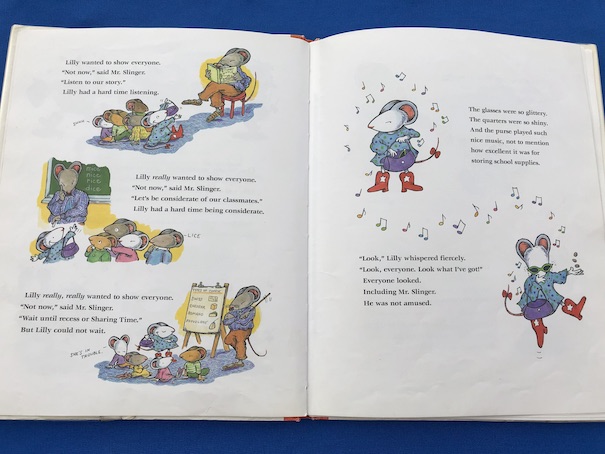
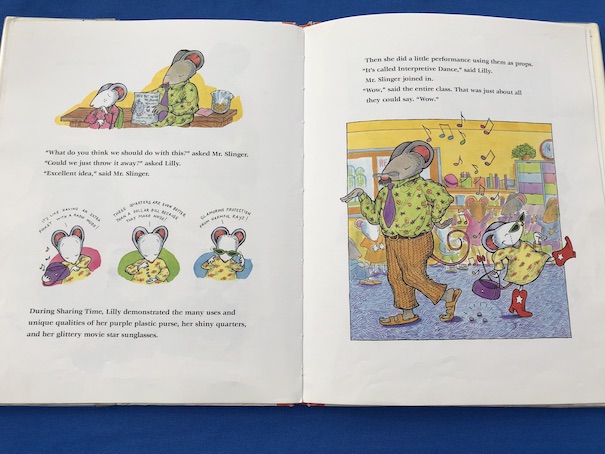
One day, after a special shopping trip with her grandmother, Lilly gains a some special new treasures: movie star sunglasses, some quarters, and a purple plastic purse that plays a tune when she opens it. Eager to show off her new things to her friends, Lilly brings them to school. However, she just can’t wait until recess or Sharing Time to show everyone. She keeps trying to draw attention to these things while the teacher is talking and opening the purse so it keeps playing its tune.

Finally, after repeated warnings, Mr. Slinger is forced to confiscate Lilly’s purse with its other treasures. Lilly is hurt and feels betrayed by her favorite teacher. Sad and angry at having her treasures taken from her, she draws a mean picture of her teacher as a purse thief, leaving the picture where she knows he will find it.

However, Mr. Slinger isn’t as mean as Lilly thinks that he is when he takes her purse. After he gives the purse back to her, she discovers a nice note from him inside, telling her that tomorrow will be a better day, and there’s even a little bag of snacks. Now, Lilly feels guilty about her mean picture. It’s too late to get it back, and she worries that her teacher will never forgive her.

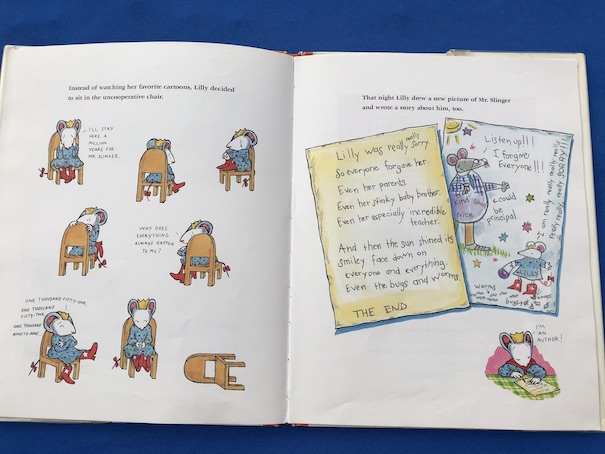
The story is really good at showing how Lilly’s emotions change through the course of the day and how her sadness and anger grow more urgent the more she thinks and worries about them. It’s a good story to use when talking about feelings with young children (through the course of the story, Lilly is happy, excited, sad, betrayed, angry, guilty, worried, and embarrassed – some of these are stated explicitly and some are more implied) and how to deal with emotions. Adults can talk to children how one kind of emotion can lead to another (like how Lilly’s sadness turns to anger at her teacher for making her feel sad by confiscating her purse) and how some ways of dealing with emotions are better than others. It is both creative and appropriate that Lilly used her drawing ability to both insult her teacher and, later, apologize to him.

Fortunately, both Lilly’s parents and her teacher are very understanding. Her parents reassure her that her teacher will forgive her. Lilly draws a new, nicer picture of her teacher to go with her apology to him, and her parents give her some snacks to give to him as well. He does forgive her, and she finally gets to show everyone her amazing purple plastic purse at Sharing Time (being careful not to disturb anyone with them at other times.

The book is currently available online through Internet Archive. It is part of Mouse Books series.

Just Tell Me When We’re Dead!

JustTellMeJust Tell Me When We’re Dead! by Eth Clifford, 1983.

This is another book in the Mary Rose and Jo-Beth series.

Mary Rose and Jo-Beth are visiting their Grandma Post with their father while their grandmother is getting ready to go into the hospital for an operation. Their cousin Jeffrey, an orphan who lives with their grandmother, is supposed to come and stay with them until their grandmother is better, but he doesn’t want to go.

Jeff has never really gotten over the hurt from when his parents died. They used to travel a lot, but they would never take him along because he was too young. Then, one day, they were killed on one of their trips, which is why Jeff now lives with his grandmother. Now that his grandmother is going to the hospital, Jeff is afraid that she will die, too, and unable to face that, he runs away to be on his own.

JustTellMePic2The first place he goes is to an island in the middle of the lake near his house. The island has campgrounds and an amusement park, which is now closed for the season. Mary Rose and Jo-Beth, realizing where Jeff has gone, follow him there. But, the children are not alone on the island. When Jeff is captured by two criminals who are looking for loot that they stashed on the island years before, he has to keep his wits about him to find a way to summon help. Meanwhile, Mary Rose and Jo-Beth have no idea what they’ve just walked into.

At the end of the adventure, Mary Rose, Jo-Beth, and their father help Jeff to make peace with the loss of his parents and to understand that, even though unexpected and scary things can happen in life, his parents never meant to leave him. They loved him, and his grandmother and other relatives also share his sense of loss.

The book is available to borrow and read for free online through Internet Archive.