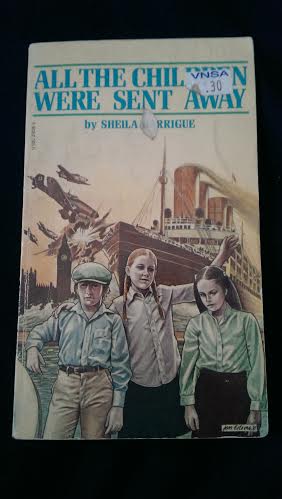
All the Children Were Sent Away by Sheila Garrigue, 1976.
It’s 1940, and Sara Warren’s parents are sending her to stay with her uncle in Canada until the war is over. With the increasing bombings of England, her parents have decided that it’s just too dangerous for Sara to stay, and her uncle has written, asking them to send her. Many other British families are sending their children away to escape the bombings, and Sara travels to Canada on a ship with other British child evacuees. All of them are worried about the families they’ve left behind and what it’s going to be like, living in another country. They also worry about whether or not they’re ever coming back.
Sara’s escort for the trip is Lady Drume. She is a bossy, over-bearing woman with very definite ideas about how children should be raised. She doesn’t like Sara to talk to the sailors on the ship because they can be “impertinent,” and she doesn’t want her to play with the other children because they’re “guttersnipes!” She even refuses to attend the lifeboat meeting or let Sara go without her! To Sara’s mind, Lady Drume is as bad as any Nazi.
Sarah still manages to make friends with some Cockney children, Ernie and Maggie, seeing them whenever she can get away from Lady Drume, and an old sailor called Sparky makes sure that she understands safety on board the ship and attends the lifeboat drills.
But, when Lady Drume forces Sara to cut her hair after she’s been waiting so long for it to grow out, Sara decides that’s the last straw! With the help of her friends, Sara hides from Lady Drume on the ship. In the process, she learns something about Lady Drume which changes some things for the better, although it takes an outbreak of measles for Lady Drume to really understand and appreciate Sara.
This book is available to borrow and read for free online through Internet Archive.
My Reaction
Part of trouble with Lady Drume and her behavior is that she’s actually very afraid. She doesn’t like to talk about lifeboats or life jackets because the war and the possibility of sinking frighten her. She deals with problems by being brusque and trying to ignore frightening things, charging on ahead with whatever seems like a practical course of action to her. It’s not even just the war but the changing world around her that frightens Lady Drume, a woman who’s used to knowing who’s who and what’s what and getting things done the way she likes them. But, the rigors of their journey and their mutual vulnerability when they’re sick help lower Lady Drume’s barriers. Lady Drume isn’t a bad person, and in the end, she arranges a special surprise for Sara to make her exile from England more bearable.
The end of the story is a brief section explaining Sara’s return to England, having been away for a few years, and her feelings at seeing how England and her parents have changed during that time.
There is a sequel to this book that shows what happened during Sara’s time in Canada called The Eternal Spring of Mr. Ito. It focuses on suspicion of Japanese people following the bombing of Pearl Harbor. There were Japanese internment camps in Canada as well as the United States during World War II.
Sheila Garrigue’s books about child evacuees from England were partly based on her own experiences as a child evacuee during World War II, as explained in her obituary after her death in 2001.
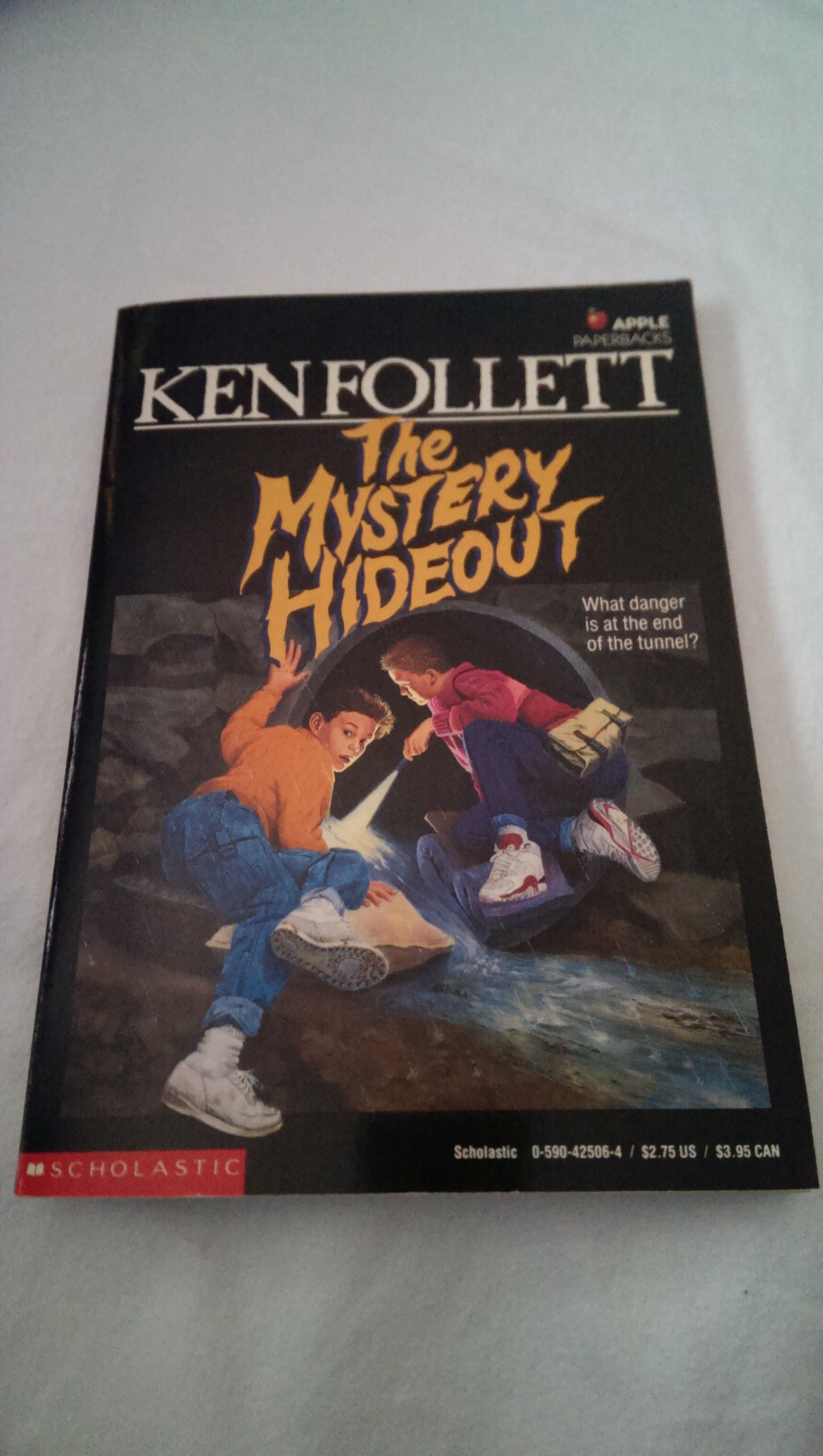 The Mystery Hideout by Ken Follett, 1976.
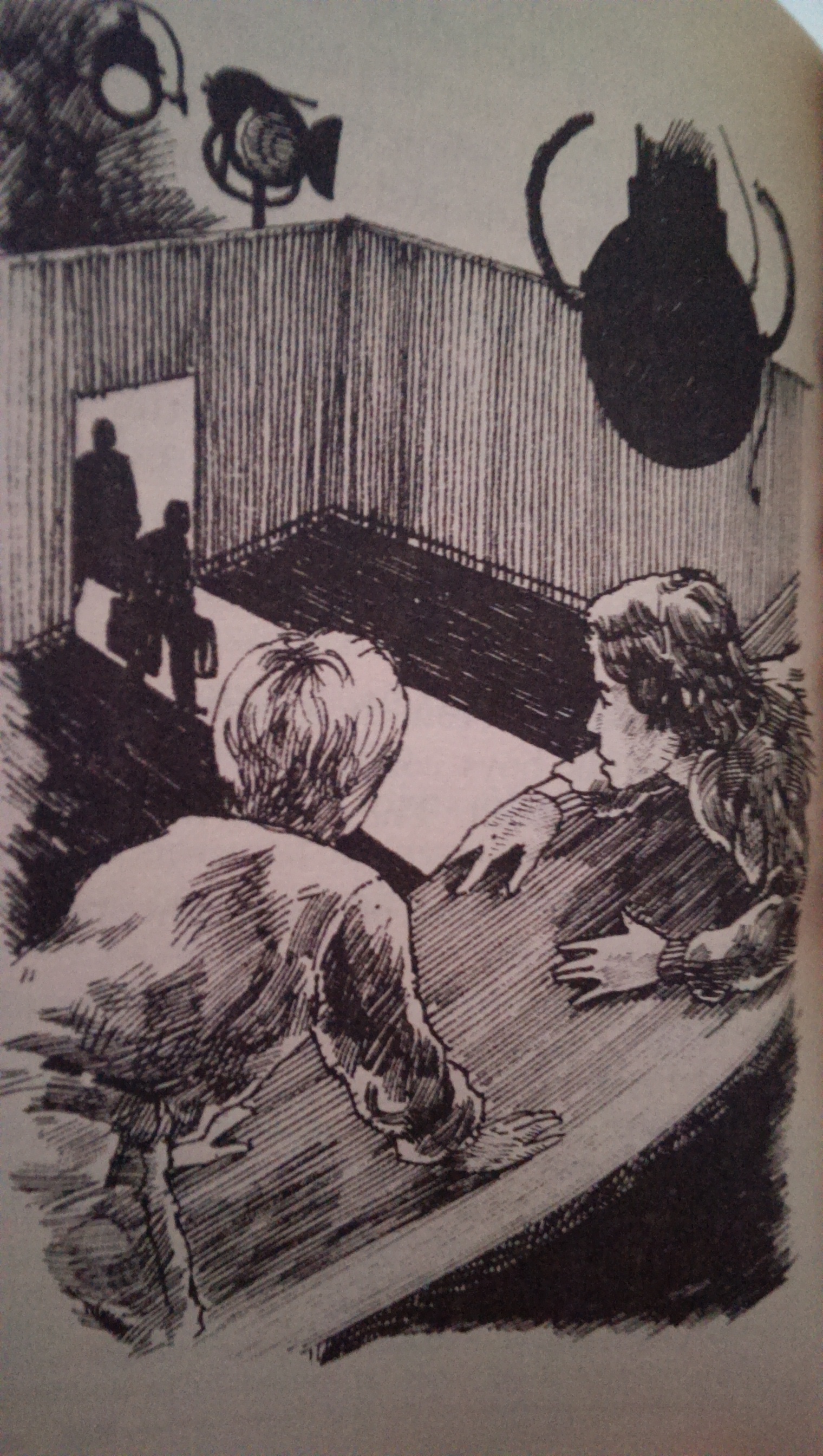 But, Izzie turns out to be a good friend for Mick. They both love to play soccer, and Izzie tells Mick that his father used to work in the old studio buildings that they’re tearing down to build the new hotel. In fact, Izzie even knows a secret way in, so the boys sneak in to explore a little. They’re goofing off with some of the props when they make the startling discovery that the prop guns are loaded with real bullets! Then, the boys have to make a run for it because there are other people sneaking around the old studios. What is going on there?
 Jestress's Forgotten Books and Stories