The Talking Eggs

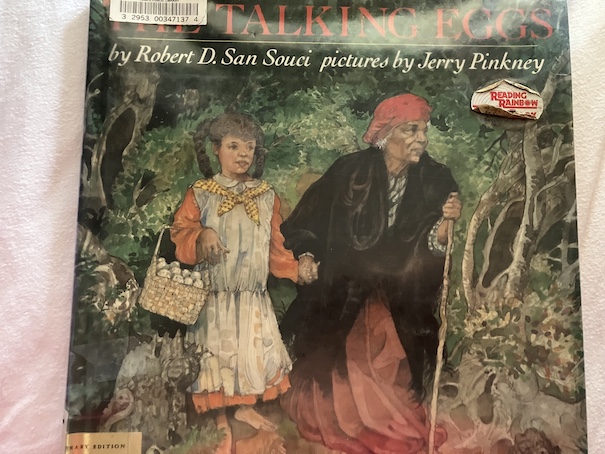
There was a poor widow who lived on a small farm with her two daughters, Rose and Blanche. Rose was the widow’s favorite daughter because she was so much like her mother. They were both mean and bad-tempered, and they had grand dreams of becoming rich someday, although neither of them had the slightest idea how to accomplish that. Blanche, on the other hand, was a sweet girl, and her mother made her do all the work while she and Rose just sat on the porch, talking about all of their grand dreams.

One day, when Blanche goes to fetch water from the well, an old woman approaches her and begs her for a drink. Blanche gives her some water, and the old woman thanks her, telling her that she will be blessed for her kindness.

However, when Blanche gets home, her mother and sister yell at her for taking so long. They hit her, and Blanche runs away into the woods. Then, she meets the old woman again. She explains to the old woman what happened, and the old woman invites her to come to her house. However, she cautions Blanche not to laugh at what she sees there. Blanche promises that she won’t laugh.

The old woman is no ordinary woman, and everything at her house is strange. Some of these strange things are amusing, some are amazing, and some are just plain weird and a little alarming. The animals are all strange, with chickens of different colors and cows with curly horns. Then, inside the house, the old woman removes her head and puts it in her lap to brush her hair. Then, the woman produces a fancy stew from just one old bone. After supper, they go outside and watch rabbits in fancy clothing dance.

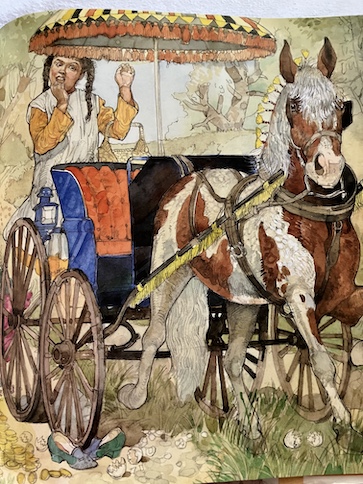
In the morning, the old woman tells Blanche to go out and gather some eggs before she goes home. Blanche is allowed to take any that tell her to take them and to leave ones that say not to take them. Blanche does as she is told, although the ones that tell her to take them are the plain-looking eggs, and the others are covered in jewels. The old woman tells Blanche to throw the eggs over her shoulder, one at a time, and when she does so, the eggs break and wonderful things burst out of them – fancy clothes, coins and jewels, and even a horse and carriage.

By the time Blanche gets home, she has many beautiful clothes, money, and luxurious things. Blanche’s mother pretends to be nice to her when she returns, but it’s only so Blanche will tell her where she got all the rich things. That night, when Blanche is asleep, her mother talks to Rose, telling her that she should also befriend the old woman and get the same rich rewards as Blanche. Then, they will steal all of Blanche’s things and head to the city to live the rich life that they’ve always dreamed of.

Of course, lazy and bad-tempered Rose isn’t as kind or hard-working as her sister. She ignores the old woman’s instructions and does everything she shouldn’t do. When she tries to force the old woman to give her riches, the old woman’s magic gives her and her mother their just desserts.

This book is a Reading Rainbow Book. It is available to borrow and read for free online through Internet Archive.
There is a note at the beginning of the book that this story comes from a Creole folktale that appeared in a 19th century collection of folktales from Louisiana by Alcee Fortier. It resembles folktales from Europe was probably adapted from fairy tales brought to Louisiana by French immigrants. It reminds me of the Mother Holle story, where a kind, well-behaved, hard-working girl is rewarded for following Mother Holle’s instructions, while her spoiled sister is punished for laziness and disobedience.

The old woman in this story is a similar figure to Mother Holle, with strange powers and magical objects, but there is no explanation of who she might be. The fact that she can remove her head just to brush her hair shows that she’s supernatural, but we don’t know if she’s supposed to be a witch or some other supernatural creature.

Personally, I don’t think I would laugh at any of the things in the old woman’s house. I think the strange animals sound more amazing than comical. I think I’d really be impressed by the different-colored chickens and the cows with the weird horns. I have to admit, though, that if someone takes off their head, my first reaction would probably be to run for it.

After the Sun Sets

This was my favorite book of fairy tales when I was a kid! I gave away my copy years ago and regretted it, but I was thrilled to find another copy later at an antique/vintage mall.

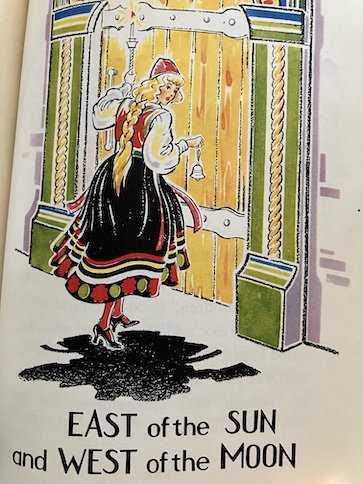
The collection includes some popular fairy tales that you can find in other fairy tale collections, like Cinderella, Brier Rose (the Sleeping Beauty story), and Hansel and Gretel. It also has some stories that are less commonly known these days, like Aiken-Drum, the Brownie and Prince Hal and the Giant. When I was young, my favorite stories in the book, the ones I read over and over, were Snow-White and Rose-Red, The Princess on the Glass Hill, and East of the Sun and West of the Moon.

One of the things that makes this collection unique is that it includes a section of poems at the back of the book. I love the one called Cinderella’s Song, and it was one of the reasons why I missed this collection so badly. I don’t think I’ve seen that poem in any other book.

The illustrations in the book are beautiful! I loved them as a child, and I still find them enchanting as an adult. Some are in black-and-white, but some are in full color.

I didn’t realize it when I was a kid, but this book is actually the third book in a series, The Wonder-Story Books, and it was a unit in The Row, Peterson Basic Reading Program. I have the 1962 edition, but the book is actually older than that. Its copyright was renewed multiple times.

The book is available to borrow and read for free online through Internet Archive. There is also an earlier edition of this book available through Internet Archive, and it doesn’t have the section of poetry included, so the poetry might only appear in the 1962 edition.

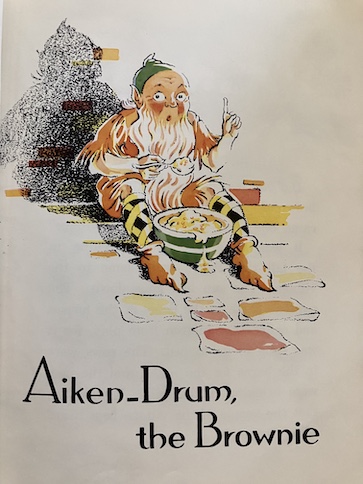
Aiken-Drum, the Brownie

Aiken Drum is a Brownie, a magical little man who likes to do chores for other people for little reward. Reward a Brownie too much, and he will leave.

Pat and the Fairies

Pat joins the fairies in a dance, and they loan him a pair of shoes when his wear out. When he later comes to return the shoes, he gets a wonderful reward. A greedy shoemaker tries to join the fairies in their dance and borrow a pair of shoes to get the same reward, but the fairies punish him when he tries to cheat them.

Change About

A husband grumbles about how little his wife accomplishes in the course of a day while she minds the house and their child and he works out in the fields. The husband and wife decide to switch places for a day to prove which of them works harder, and the husband has a surprise about what really happens at home while he’s away.

Cinderella

A girl who is abused by her stepmother and stepsisters receives magical gifts from her fairy godmother so she is able to attend the prince’s ball.

Snow-White and Rose-Red

A widow and her two daughters let a gentle talking bear spend the winter with them so he won’t freeze, but this bear is under a spell.

Snip, The Tailor

A tailor sets out to make his fortune. He uses his wits to defeat a pair of giants and win a castle and half the kingdom from the king.

Brier Rose

This is the Sleeping Beauty story. A young princess is cursed by a bad fairy. When she hurts her hand on a spindle, she and everyone in her castle falls asleep for a hundred years.

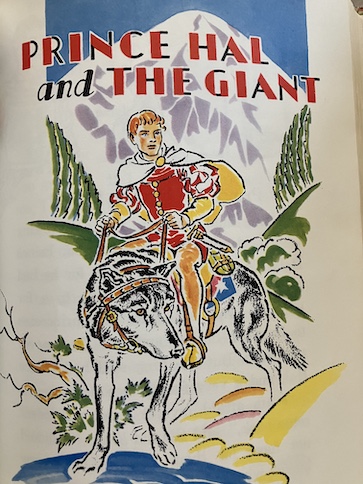
Prince Hal and the Giant

Prince Hal is the youngest of a king’s seven sons. The other six have left home to find brides and have never returned home. No one knows what happened to them. Prince Hal sets out to find what happened to his brothers. He finds out that they and their brides have been turned into stone statues in the house of a giant. Prince Hal must find a way to save them and the princess who has become the giant’s latest captive.

Hansel and Gretel

A pair of children are abandoned in the woods, and they find a strange house made of gingerbread. They are almost eaten by the witch who lives in the house.

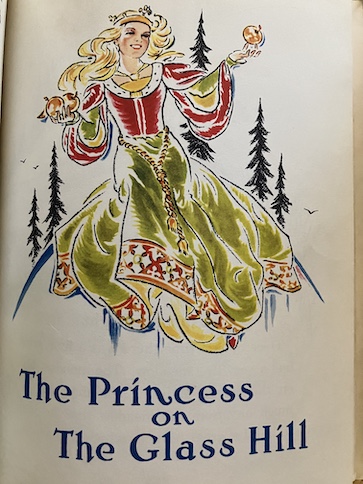
The Princess on the Glass Hill

Every year on Midsummer Night, the hay disappears from a farmer’s field. Each of his sons tries to find out why, but each of them is frightened by the strange things that happen, until the youngest son faces the phenomenon and discovers a strange horse with a coat of mail that fits him perfectly. The same thing happens twice more so that the youngest son acquires three fine horses and three sets of mail. He keeps them secret at first, but later, he uses them to perform an amazing feat and ride to the top of a glass hill to win the hand of a princess.

East of the Sun and West of the Moon

A white bear comes to a family with many children and says that he will make them rich if the eldest daughter, Freda, will come with him. At first, she doesn’t want to go, but when she does, he takes her to a magical castle. Unfortunately, she disobeys the bear’s instructions while she’s there. He is under a witch’s spell, and Freda must find a way to undo the damage she’s caused and break his spell, following him to the witch’s castle by riding the winds, east of the sun and west of the moon.

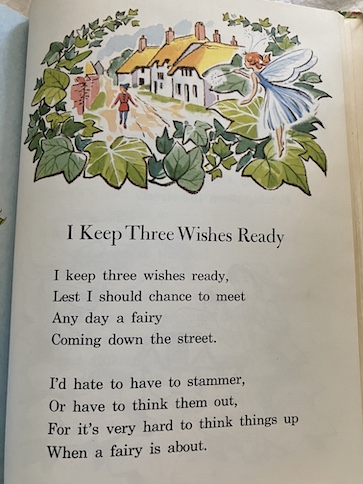
I Keep Three Wishes Ready by Annette Wynne – It’s good to know what you want to wish for, just in case you get the chance.

At the Zoo by A. A. Milne – There are many fascinating things to see in a zoo!

Some One by Walter de la Mare – Someone knocked at the door. Who?

Little Nut Tree by Mother Goose – A traditional rhyme about a magical tree. One of my favorites!

The Duel by Eugene Field – The gingham dog and the calico cat have a fight.

Queen Mab by Thomas Hood – About the fairy queen and how she gives pleasant dreams to children.

Cinderella’s Song by Elizabeth Madox Roberts – Cinderella confides her secret to her cat.

Trees by Harry Behn – Trees are wonderful things!

The Story of the Baby Squirrel by Dorothy Aldis – A child finds a baby squirrel and raises it. When it grows up, it runs away, but they think he’s probably still living with the other squirrels nearby. They sometimes see a squirrel who seems to be saying hello to them.

The Hens by Elizabeth Madox Roberts – It sounds like the hens are talking, but what are they saying?

Roads by Rachel Field – Roads might lead anywhere and to all sorts of wonderful things!

Washington by Nancy Byrd Turner – About George Washington. This one seems like an odd inclusion to me, adding a poem about a historical figure to a collection that has more fairy tale themes.

The Egyptian Cinderella

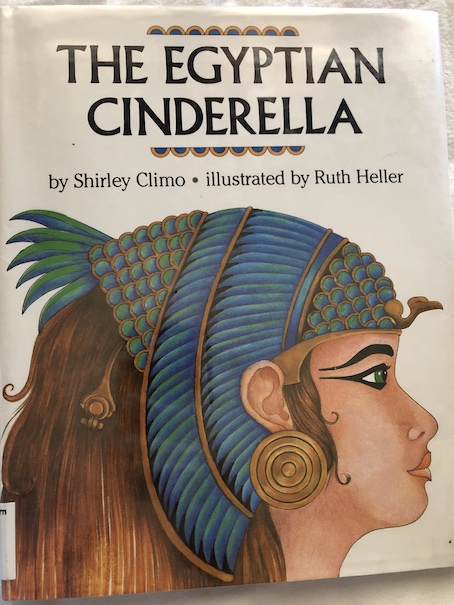
The Egyptian Cinderella by Shirley Climo, illustrated by Ruth Heller, 1989.

Rhodopis is a slave girl in Egypt. When she was young, she was abducted from her home in Greece by pirates, who sold her into slavery. Her blonde hair and green eyes make her look very different from the Egyptian servants, and none of them like her.

Most of Rhodopis’s friends are animals, and in the little free time she has, she likes to dance. The elderly man who owns her sees her dancing and has a special pair of rose-red gold shoes made for her so she can wear them while she dances. However, the Egyptian servants are all jealous of her for getting this special gift.

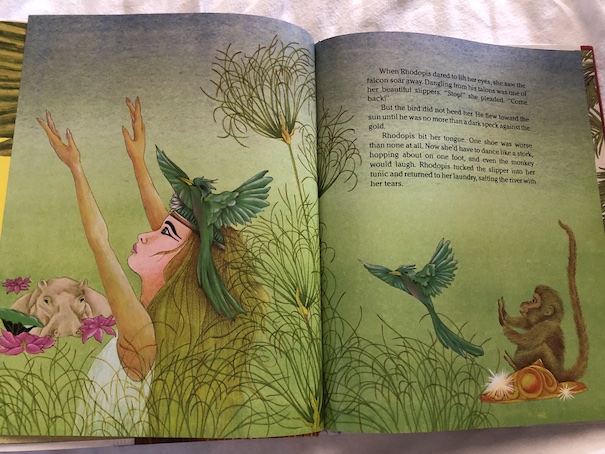
One day, the servants all leave her behind when they go to a special court held by the Pharaoh. While they are gone, a falcon snatches one of Rhodopis’s slippers and flies away. The falcon flies to the court and drops the slipper in the Pharaoh’s lap. The Pharaoh takes this as a sign from Horus that the girl who owns that shoe is destined to be his wife and immediately begins searching for her.

When he finds Rhodopis, the servant girls protest that she is not Egyptian and is only a slave, but the Pharaoh compares her green eyes to the color of the Nile, her light hair to papyrus, and her pink skin to a lotus flower. In his eyes, there could not be any other girl who could represent Egypt, and her slave status doesn’t matter.

The book is available to borrow and read for free online through Internet Archive (multiple copies).

My Reaction

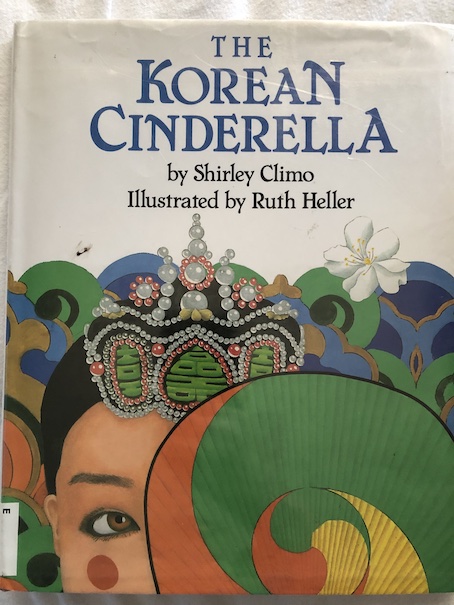
I remember loving this book when I was a kid! I always liked fairy tales and folktales, and I think this was one that was introduced to me by our school librarian, probably around the time it first came out in 1989. For a long time, I was unaware that the same author also wrote other books based on variations of the Cinderella story: The Korean Cinderella, The Persian Cinderella, and The Irish Cinderlad. One of the fascinating things about the story of Cinderella is that variations of the story about a girl (usually, it’s a girl, although there are some variations with a boy) who is abused by her stepmother and stepsisters but who triumphs in the end when she marries a king or a prince, who identifies her as the girl he loves by a lost shoe, have appeared in cultures around the world. The classic one that most of us know is the French version by Perrault, but there are other versions of the story that are older.

There is an author’s note in the back of the book that explains that this Egyptian version of the Cinderella story is one of the oldest known Cinderella stories. The Roman historian Strabo recorded the story in the first century BC. The story is legend, but according to the author, Rhodopis was a real slave girl who married the Pharaoh Amasis in the sixth century BC (although accounts of her vary, and it can be difficult to separate history from legend).

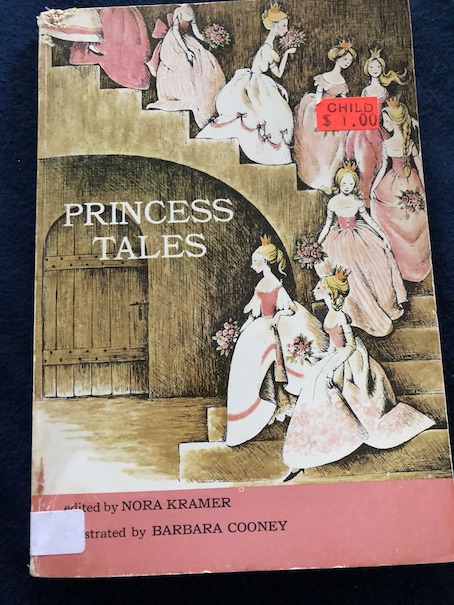
Princess Tales

Princess Tales edited by Nora Kramer, illustrated by Barbara Cooney, 1971.

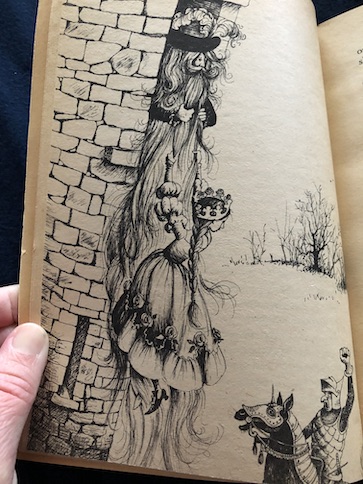
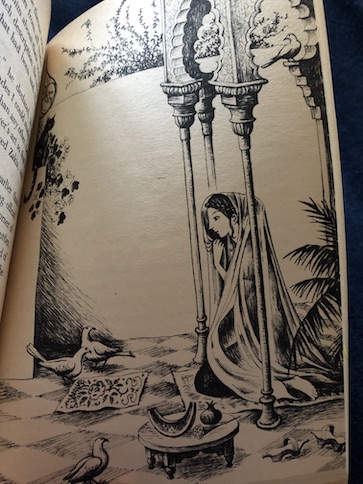
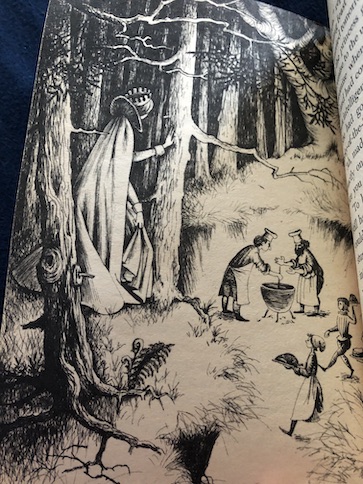
This is a collection of princess stories by various authors, including retellings of some classic fairy tales, some or all of which were printed in other locations before being included in this collection.  Although I have encountered some of these stories before this collection, I liked the illustrations in this book because I like Barbara Cooney’s work.

Stories in the Book:

The Practical Princess by Jay Williams (1969) – I know this story from the story collection that is named after it, but it did appear in other printings before either of these.  Princess Bedelia was given the gift of common sense as a baby, and she uses her practicality to rid her kingdom of a dragon and save herself from marriage to an evil sorcerer.

The Twelve Dancing Princesses by Virginia Haviland (1959) – A retelling of the classic fairy tale.  A French kingdom with twelve beautiful princesses is mystified by how the princesses’ shoes are always worn through every morning even though the door to their room is locked every night when they go to bed.  What are the princesses doing every night that ruins their shoes, and how are they doing it?  Michel, a young cowherd who has recently taken a gardening job at the castle and who has fallen in love with the youngest of the twelve princesses, discovers the answer.  When her sisters want to enchant Michel, as they have others who have discovered their secret to keep them from telling, Princess Lina needs to decide if she loves Michel as much as he loves her.

The Princess and the Vagabone by Ruth Sawyer (1942) – A beautiful but bad-tempered Irish princess learns a lesson in kindness when her father gets fed up with the way she treats her suitors.  All of her life, the princess has dealt out criticism and insults to everyone, when she sees a suitor with whom she can find no fault, she doesn’t know what to do (never having practiced kindness or spoken nicely to anyone) and gets angry, hitting him and crying as she runs from the room.  Her father, disgusted with her impossible behavior, tells her that he’s had enough, and since she has rejected all the royal suitors, he will force her to marry the next vagabone (vagabond) who comes begging at the castle.  As the wife of a vagabond, the princess learns to face hardships she has never experienced before, sees for the first time how much kindness from another person can really mean, and notes positive points about others for the first time, enjoying the ragged vagabone’s song.  But, there is still one more surprise when the vagabone turns out to be the perfect suitor the princess thought that she had rejected.

Melisande by E. Nesbit – A king and queen want to avoid the usual messes and curses that often result from holding a christening party for a new princess and forgetting to invite one of the fairies, so they decide that, for their daughter Melisande, they will simply hold an informal christening with no party.  However, all of the fairies get mad about this and come to give curses to the princess.  Fortunately, the king points out logically that, according to tradition, only one forgotten fairy can offer a bad curse to a princess after being left out of a christening party.  Fairies are held to certain rules and can vanish for breaking them, so since the first fairy already cursed the princess with baldness, the others simply agree to count themselves are party guests and leave.  Princess Melisande spends her childhood being bald, but the king offers her a fairy wish that he had been saving for something special so that she can wish for hair.  However, Melisande foolishly wishes for her hair to grow exceedingly fast and even faster when cut.  It’s far too much hair for her, even though people try to help her find uses for it, like weaving it into clothes and stuffing pillows with it.  As usual in these cases, the king offers Melisande’s hand in marriage to the prince who can help her to solve her problem.  At first, Prince Florizel thinks he’s found the solution when, instead of cutting the princess’s hair from her, he cuts her from her hair.  However, that has the unintended side effect of making the princess grow suddenly tall!  What will Prince Florizel do to get the princess and her hair to balance?  (At one point, this story references Alice in Wonderland.)

The Handkerchief by Robert Gilstrap and Irene Estabrook (1958) – At first, Zakia is not happy when her father, the Grand Vizier of Morocco accepts the sultan’s offer to marry her on her behalf. She doesn’t think that it’s fair for him to order her to marry anyone, and she doesn’t love the sultan. In response, she imposes a requirement on the marriage, that the sultan must learn a trade in case he loses his throne and has to earn a living. To the vizier’s surprise, the sultan thinks that sounds like a clever request, and the sultan learns the art of weaving. He enjoys it, and he makes a beautiful handkerchief for Zakia as a wedding present. Zakia appreciates the gift and marries him. The sultan’s ability as a weaver later saves him when he is in a desperate situation.

The Blackbird’s Song by Barbara Leonie Picard (1964) – An artist paints an unflattering picture of the king and is thrown into prison. However, the princess’s pet blackbird sings to him of the princess’s beauty and kindness, and he is able to paint a marvelous portrait of her without having seen her himself. When the princess falls in love with the artist, her blackbird and its friends help them to make their escape from her father.

Ricky-of-the-Tuft by Polly Curren (1963) – A prince is born ugly, and his mother is worried, but a fairy gives him the gift of wit and intelligence, with the ability to give that gift to someone he loves. In another kingdom, a queen has two daughters. The eldest is beautiful and the youngest is plain. However, a fairy says that the plain girl will be bright and intelligent, and people who talk to her will forget what she looks like. The beautiful girl is less fortunate because she is not intelligent. People will enjoy looking at her, but they will quickly tire of her because she does not speak intelligently and has nothing to say. To compensate the beautiful girl, the fairy says that she will be able to make the person she loves beautiful as well. When the ugly prince, Rick-of-the-Tuft, meets the beautiful princess and falls in love with her, the two of them are able to use their gifts to help each other. The story is based on a Perrault fairy tale.

The Son of the Baker of Barra by Sorche Nic Leodhas (1968) – The baker’s son, Ian Beg, is a nice boy, and sometimes a little too nice. When his father sends him to take a cake to the princess, he is stopped by old women who ask him for a taste of the cake, and he cannot refuse them. However, it turns out to be a fortunate thing. The old women are actually fairy folk, and not only do they handsomely compensate him for the cake that they eat, but they also help him when the princess falls in love with him and the king tries to get rid of him by sending him off to find a castle of his own. The king doesn’t expect that Ian Beg will be able to find a castle and supply the kind of lifestyle that a princess needs, but he doesn’t know that Ian Beg has help.

Talking to Dragons

Talking to Dragons by Patricia C. Wrede, 1985.

This is both the fourth book in the Enchanted Forest Chronicles and the first book in the series that was written.  The author wrote this story before the others and then wrote the other three to explain how the characters got to this point.  The first three books in the series focus on Princess Cimorene and her adventures, but this book focuses on her son, Prince Daystar.

Partly because this series is kind of backwards, with the last book being the first written, I’m going to start with a spoiler.  When the book begins, Daystar is unaware that he is a prince and that his father is the king of the Enchanted Forest.  He grew up in an ordinary cottage on the edge of the forest, so he is accustomed to the presence of all kinds of fantasy creatures and fairy tale characters.  He thinks of himself and his mother as ordinary poor folk.  However, his mother has taught him not only reading and writing but other skills that are more unusual for peasants, like music, fighting, and even a little magic.

When Daystar is 16 years old, a wizard named Antorell comes to their house.  Daystar’s mother, Cimorene, seemed to know him, and he knows her.  Antorell demands “the sword” and the boy, and Cimorene casts a spell to melt him.  (“’No! Not again!’ he screamed.”  If you’ve read the other books, you already know why.  But, again, this book was written first.)

The next day, Cimorene gives Daystar a sword that he’s never seen before but which seems to draw him to it, and she starts giving him instructions.  The instructions are vague, but Cimorene insists that Daystar is to go into the Enchanted Forest and not to come back until he can explain why he had to go in there in the first place.  Also, he is not allowed to draw the sword from its scabbard unless he really needs to use it.  Cimorene says that she can’t explain more because it might “ruin everything.”  Not knowing what else to do, Daystar starts into the Enchanted Forest.  When he glances back, Cimorene and the cottage have suddenly disappeared.  Daystar has no idea why, but he has no choice but to keep going.

In the forest, Daystar meets a talking lizard called Suz, who claims to know everything about the Enchanted Forest and what goes on there (a tall claim, considering everything that goes on there).  When Daystar asked him if he knows anything about the mysterious, magical sword that his mother gave him, Suz tells him that it’s the Sword of the Sleeping King and that everyone has been looking for it.  Daystar knows nothing about it, which surprises Suz.  To Daystar’s surprise, both the sword and Daystar’s lack of knowledge agitate Suz, who says that he must get Kazul, who will know what to do.  Before he then runs off, leaving Daystar wondering who Kazul is, Suz tells him that he’s going to have to learn about the sword by himself because there are certain rules associated with magic, but that he should follow the sword to find out.

The next person Daystar meets is a red-haired girl who is stuck in a hedge.  She is surprised by how easily Daystar can get into the magical hedge, and at first, she thinks that he is a wizard.  She is relieved when she finds out that he’s not.  The girl, Shiara, tells Daystar that wizards have been chasing her because she burned the Head Wizard’s staff.  Most people could never accomplish that because wizards’ staffs are extremely powerful and have protective spells on them, but Shiara is a fire-witch.

As the two of them talk, Daystar learns that, while fire-witches are extremely rare and powerful come by their powers naturally, Shiara’s abilities are more unpredictable than most.  She has trouble casting spells on purpose, but when she gets mad, she can do some extremely powerful ones without really trying.  Fire-witches tend to have tempers, and Shiara is no exception.  Because of that, she doesn’t have many friends.  Most people are afraid to be around her because they never know when she’ll lose her temper and accidentally set things on fire.  Even worse, for Shiara, is knowing that most fire-witches are able to do very impressive spells and are almost invulnerable, but yet, she can’t even burn her way through a hedge when she tries it.  The wizards are very interested in her because most fire-witches are immune to their spells.  When they learned that she was a fire-witch who couldn’t cast her own spells, they tried to kidnap her in order to study her magic, which she how she ended up setting the Head Wizard’s staff on fire.

Daystar and Shiara finally get out of the magical hedge when Daystar suggests that Shiara try being polite to it instead of losing her temper.  Creatures and objects in the Enchanted Forest tend to respond well to politeness.  When they’re out of the hedge, a wizard shows up and tries to kidnap Shiara again, but Daystar defends her with his sword.  However, Daystar’s hand is injured when he tries to pick up the pieces of the wizard’s staff, and it explodes.

Daystar and Shiara seek help from Morwen, a witch who lives nearby.  It is from Morwen that Daystar begins to get a sense of what his sword is capable of doing.  He also meets up with Suz again, who tells him that he should go to the castle and that Kazul will meet him there.  Daystar still doesn’t know what he’s walking into, but missions in the Enchanted Forest can’t be ignored, and he has a mission to complete that everyone has been waiting for since before he was born.

By the end of the story, Daystar has learned what he needs to do to rescue his father, and Cimorene and Mendanbar are reunited.  Shiara ends up getting what she wants, partially, because she gains the ability to use her powers, but is forced to be polite in order to do so, which really irritates her.  She becomes Kazul’s new princess, where she will learn both the personal skills and magical skills she needs to control both herself and her ability.  Cimorene believes that Shiara will end up marrying Daystar eventually and becoming the next queen of the Enchanted Forest.  However, the series ends here, and the future is left to the imagination.  Morwen also decides to marry Telemain, a character from the previous books.

Like other books in this series, this book contains a lot of humor and parodies on popular fairy tales and fairy-tale creatures. Personally, I like the first two books in the series the best, but this one is also fun. There is a mild touch of romance to it, which is also nice.

The book is currently available online through Internet Archive.

There is one more story after this series, a short story in the collection Book of Enchantments that features Daystar and both of his parents but does not have Shiara.

Calling on Dragons

Calling on Dragons by Patricia C. Wrede, 1993.

This is the third book in the Enchanted Forest Chronicles. Cimorene is now married to Mendanbar and expecting their first child.

Morwen, a witch living in the Enchanted Forest, realizes that something strange is going on when she encounters a rabbit that is more than six feet tall. The rabbit, called Killer, has no idea how he managed to grow so big. It just happened suddenly that morning while he was eating some clover. Morwen goes to investigate the clover patch in the hopes of finding what might be responsible for the change. She discovers a wizard’s staff nearby, which is never a good sign.

She contacts King Mendanbar, Queen Cimorene, and her friend Telemain, a magical theoretician. Part of what they discover is that one of the wizards has shrunk himself in size. Mendanbar also discovers that someone has stolen the sword that he uses to control the threads of magic in the Enchanted Forest. The sword helps to maintain the protective spell around the Enchanted Forest that keeps wizards out. If the wizards have it, they may be able to enter the forest and soak up its magic. Mendanbar wants to go with the others to get it back, but Telemain points out that he can’t because he’s the other main focus of the protective spell; if he leaves the forest, it will be completely vulnerable. Even worse, they don’t have much time to retrieve the sword because whenever it’s outside of the Enchanted Forest, it leaks magic. Although Mendanbar doesn’t want to let Cimorene go on the mission to retrieve the sword while she’s pregnant, he has to let her go with the others. Before the book is over, Killer, who accompanies them on their mission, changes from a giant rabbit in to a flying blue donkey.

Among the fairy tale parodies that the characters encounter on their journey are a farmer named MacDonald (E-I-E-I-O) and a sorceress named Rachel who lives in a tower that can only be entered via a chair which Rachel lowers to bring people up (“Rachel! Rachel, send down the chair”). They keep in touch with Mendanbar in the castle using a magic mirror (“Mirror, mirror on the wall, I would like to make a call.”), until, for some reason, they are unable to reach him.

They are able to retrieve the magic sword, but the wizards capture Mendanbar and seal him inside his castle, trapped in a transportation spell to keep him safe yet contained. They don’t want to kill him because the Enchanted Forest would be plunged into chaos by his death, and they can’t keep him prisoner in a normal way because his friends would rescue him. Cimorene and the others know that the sword has the power to break through the shield spell on the castle, but the problem is that only a member of the royal family can wield it to do so. The sword allows Cimorene to carry it because she is Mendanbar’s wife, but only a blood relative can use the sword to break the spell . . . which mean that they have to wait for Cimorene’s baby to be born and become old enough to do it.

Although I like this series and think it’s a lot of fun, I’m not really fond of the last two books because of Mendanbar’s years of imprisonment. He’s okay when they finally get to him, but I still don’t like it. The ending of this book leaves things hanging until the fourth book.

This book is currently available online through Internet Archive.


The Practical Princess

PracticalPrincess

The Practical Princess and Other Liberating Fairy Tales By Jay Williams, 1978.

PracticalPrincessSilverWhistleThe modern fairy tales in this book (these are not traditional stories or folktales, although they are written in the style of old fairy tales) feature brave and clever girls. These are not just damsels in distress who need to be rescued, but girls who play heroic parts in their own stories. However, I don’t want you to think that the stories get too preachy about girl power. Some of the men in the stories may seem less than heroic at, but each of them is clever in their own way, and they are sometimes the main characters in the stories as well. The stories don’t lecture you about how “girls are just as good as guys and maybe even better“ or try to make the girls look smarter by making everyone else look dumb or things like that (in spite of the name, “Stupid Marco”, Marco really isn’t all that bad). They’re just fun stories in a fairy tale style with interesting heroines. The best part is that the stories also have a sense of humor.

There is only one full-color illustration in the book. The other pictures are done as silhouettes.

The book is available to borrow and read for free online through Internet Archive.

The stories in the book:

The Practical Princess

When Princess Bedelia is born, she goes through the typical fairy tale ritual of having fairies give her gifts. One of them gives her common sense. When she grows up, she uses it to devise a clever plan to free her kingdom from a fearsome dragon. Unfortunately, she attracts the attention of the evil Lord Garp, who tries to force Bedelia to marry him. When Lord Garp tries to cheat at the tasks she sets for him to prove his worthiness and she catches him doing it, he imprisons her in a tower, and she must use her wits and the help of his other captive to escape.

PracticalPrincessMarcoStupid Marco

People think that Prince Marco isn’t terribly bright because, instead of applying himself seriously to his studies as his brothers do, he has a habit of spending his time daydreaming and writing poetry, and he can never remember how to tell left from right. However, he has three major accomplishments: he is an extremely likeable person, he can whistle very loudly, and he can cure even the worst case of hiccups. In his kingdom, it’s a tradition for princes to win their future brides by going out and rescuing a princess from something (how do all these princesses get into that much trouble anyway?). To make this task easier for Marco, his father tells him about a princess he can rescue and gives him a set of simple instructions to follow. Of course, Marco loses his way and the instructions. He meets a nice young woman named Sylvia who offers to help him, but still, nothing goes as planned. However, there’s more than one princess in the world and more than one type of rescuing, so things turn out well in the end.

The Silver Whistle

When Prudence comes of age, she sets out in the world to seek her fortune. Before she leaves home, her mother, the Wise Woman of the West, gives her a magical silver whistle. If she blows it once, birds will come to her. If she blows it twice, insects will come. If she blows it three times, animals will talk to her. However, she cannot blow it four times because it will break. Prudence finds employment with an old witch who has a plan to make herself beautiful so that the prince of her kingdom will want to marry her. Although Prudence has doubts about her plan, she uses her magical whistle to help her, but only to a point. Besides, people have different ideas about what beauty is.

Forgetful Fred

Fred works as kind of an odd job man for a very wealthy man named Bumberdumble Pott. However, he tends to be somewhat absent-minded because his real love in life is music, and he’s often thinking about that when he should be focusing on what he’s doing. Bumberdumble Pott continues to employ him because he’s pleasant, kind, and likable. In spite of his wealth, there is something that Bumberdumble Pott wants that he can’t buy: the Bitter Fruit of Satisfaction. It’s a rare fruit found a long way away, across mountains and deserts and is guarded by a dragon-like create, the Fire Drake. Bumberdumble Pott knows that he’s too old to undertake the quest for the fruit, so he asks among his servants if someone else will go on his behalf. The only person willing to try is Fred, and Bumberdumble Pott promises him half his gold if he succeeds. It’s a long journey, and Fred has a map to keep him focused on his task. In the end, it’s no fault of his when he isn’t able to bring the fruit to his employer for his reward, but Fred attains his own kind of satisfaction when he is able to live the kind of life he likes with the nice girl who tried to help him and is able to play his music as often as he wants.

PracticalPrincessPetronellaPetronella

For generations, the royal family of Skyclear Mountain has always had three princes, who are always given the names Michael, George, and Peter. When the princes come of age, they all go on a quest. The two eldest princes go out and seek their fortunes elsewhere, never returning to their kingdom, but the youngest always comes back with a bride to continue the royal line. When the current king and queen have a daughter instead of a son for their third child, they’re not sure what to do. They name her Petronella instead of Peter, but what’s the point of sending her out to seek a bride when she’s older?  As a princess, she should wait for a prince to seek her as a bride. However, when the time comes, Petronella insists that she wants to continue the tradition by going out to seek her fortune and find a prince for herself. Even though it seems oddly backwards from how things are supposed to go, her family agrees. When she and her brothers come to a road that divides three ways, they ask the old man sitting nearby where the roads go. He answers their questions, but Petronella asks him the correct one to release him from the spell that had kept him there. In return, he tells her that if she’s looking for a prince, she should try the house of Albion the enchanter, and he gives her advice about completing tasks that he will set for her and the rewards she should ask for, which will allow her to escape from the enchanter when she decides to flee with the prince. Petronella follows his advice, but the situation isn’t quite what Petronella thinks it is.  Like Petronella’s own situation, circumstances at the enchanter’s house are . . . oddly backwards. In the end, she ends up saving an enchanter from a prince.

Philbert the Fearful

Most knights can’t wait to charge into battle or undertake a dangerous quest, but Sir Philbert is different. He prefers to stay home, read good books, and look after his health. However, his doctor recommends that he undertake a quest because he needs the fresh air and exercise. Whether he really wants to or not, Philbert finds himself going on a quest with three other knights to save the emperor’s daughter from the fearsome enchanter, Brasilgore. The journey is dangerous, and two of the knights are killed, but Sir Philbert does return with the emperor’s daughter. When the other surviving knight complains that Philbert used more trickery than true bravery to defeat his enemies, the emperor explains the value of prudence. Philbert uses his wits to take care of himself and the princess, and there are benefits to staying alive rather than losing your life in a foolhardy stunt.