Eleanor story and pictures by Barbara Coooney, 1996.
This picture book tells the story of Eleanor Roosevelt’s early life. Eleanor Roosevelt (full name Anna Eleanor Roosevelt) was the niece of Theodore Roosevelt (called Uncle Ted in the book), and later, in life, the wife of Franklin Delano Roosevelt (a distant cousin) and First Lady of the United States. This book is about her childhood, so it doesn’t explain about her husband or marriage until the Afterword at the end.
Eleanor’s home life wasn’t particularly happy. She was a disappointment to her mother in a number of ways. Her mother had hoped for a boy, and she didn’t think Eleanor was a pretty baby. Her mother often called her “Granny” as a nickname because she was such a serious child and seemed rather old-fashioned looking, and she reminded her mother of an old woman. When Eleanor’s younger brothers were born, Eleanor often felt left out when her mother spent time with them.
Eleanor’s father loved her and enjoyed playing with her and spending time with her, but she didn’t get to see him often as she was growing up. Her father, Theodore Roosevelt’s brother, Elliot Roosevelt, was a traveler and socialite and later became estranged from his family. Still, although he wasn’t a particularly reliable person and wasn’t present much, Eleanor was very attached to him and sometimes felt like he was the only one who really loved her.
Much of Eleanor’s early life was spent with her nanny, who spoke to her in French, so she mastered the language at an early age. Eleanor was very shy, so she didn’t spend much time with other children. She did spend some time with relatives, too. Sometimes, she helped them with charitable projects, giving her a sense of caring for the less fortunate.
When Eleanor was eight years old, her mother died of diphtheria, and she and her little brothers went to live with her grandmother and the aunts and uncles who also lived with her. Her father had been living apart from the family at this time, but he returned after his wife’s death. After that, he would visit Eleanor sometimes and take her for outings. However, he was sometimes neglectful. The book explains that he died in a fall when Eleanor was nine years old.
Life with her grandmother was difficult for Eleanor because her grandmother made her wear old-fashioned clothes, she had a strict governess, and her aunts and uncles seldom paid attention to her because they were busy with their own work and projects. Other children didn’t think much of Eleanor because she was shy and wore old clothes. Sometimes, her cousin Corinny would join her for dinner, but Corinny never liked it because the house was so grim and silent.
Eleanor was happier when they would go to her grandmother’s summer house, Oak Terrace. At the summer house, she could play games, daydream, read, and catch tadpoles with her little brother Brudie. Sometimes, she would go out in the rowboat with one of her aunts. There were also times when she visited her Uncle Ted and his family. Sometimes, she would play with her cousin Alice Roosevelt because they were the same age, but Alice teased her dreadfully, and Eleanor often found her a little intimidating. Her relatives encouraged her to be brave and to do things that she found scary, but she often found it difficult to keep up with them and some of their daring stunts.
Eleanor was often considered the “ugly duckling” of the family, but things changed for her when her grandmother decided to send her to boarding school in England. She attended a school called Allenswood, and the headmistress, Mademoiselle Souvestre, became a mentor to her.
Thanks to the lessons in French from her former nanny, Eleanor excelled at boarding school. Because the school had a rule that the girls should only speak French at dinner, Eleanor was the only girl at first who felt comfortable talking, a rare change for her. Eleanor made friends with the other girls at school and was happy there. Mademoiselle Souvestre encouraged Eleanor’s sense of independence, opened her eyes to the world around her, took her along on trips to Europe, and advised her to get clothes made in Paris, ridding her of the clothes her grandmother made her wear. By the time she returned home from boarding school, Eleanor was happier and more confident than she had been before, and she credited Mademoiselle Souvestre for her influence.
The book is available to borrow and read for free online through Internet Archive.
My Reaction
I enjoyed this book for its focus on Eleanor Roosevelt’s childhood. Many books about famous people focus on what they did when the became famous, but I enjoyed seeing her as a shy, awkward child, when it didn’t seem obvious that she would one day be famous. By seeing how she grew up, I feel like I’ve come to understand more about her.
Eleanor Roosevelt came from a wealthy family, but her early life wasn’t very happy. She was deeply affected by her mother’s sense of disappointment in her for not being prettier and by her parents’ troubles and their separation from each other. She was orphaned at a young age, and one of her younger brothers also died not long after their mother. She often felt like she didn’t fit in with her family, and they didn’t seem to understand or appreciate her.
The book explains a little about her father’s estrangement from the family, but it doesn’t go into all the details or some of the dark reasons why. The truth was that he was an alcoholic. His alcoholism was the beginning of his strained family relationships, but then, he had an affair with a servant girl who worked for his wife and fathered a child by her. When that happened, Theodore Roosevelt had him forcibly removed from his family’s home and did his best to keep him away from his children as much as possible, even after his wife’s death. When the book says that Eleanor’s father died in a fall, that was a soft way of explaining it. The truth is that he committed suicide because he was drinking even more heavily after his wife and one of his sons died, and he was depressed about the rest of the family keeping him away from his remaining children.
I thought it was interesting that Eleanor really blossomed at boarding school. She had always been a shy girl, but she was very studious and spoke French, skills which suited boarding school life well. Boarding school encouraged her to spend more time around other girls her age and took her away from her family’s influence, giving her the opportunity to find herself and bond with other people. In particular, the headmistress of the school became her mentor and encouraged her to look at the world in new ways and to become the best version of herself.
Bronwen and Dylan are two young children who live in Liverpool. They moved there from Wales with their mother after their father died in a mining accident. The family is poor, and their mother works out of her home as a laundress. When she has some free time, she tells the children exciting stories about dragons and ghosts.
The family living next to them, the O’Rileys, are also poor, but the children’s mother discourages the children from being too friendly with them. The children don’t fully understand why, but it has something to do with the fact that the O’Rileys go to a different church. Bronwen’s mother tells her that the O’Rileys are not their kind of people and that she doesn’t want her to go near their church.
As Christmas approaches, “times are hard”, and the children’s mother doesn’t have much money. She saves what she can to give the children a bit of a treat, but she can’t spare much. Although their mother doesn’t like leaving her young children home alone, on Christmas Eve, the children are tired, and she needs to do a little more shopping. She tells the children to be good, play nicely, and not open the door for anyone and that she will be back soon.
Things are fine at first, but then, the children begin hearing a strange sound. They can’t figure out what it is, but it seems to be coming from their mother’s wash house. Based on their mother’s stories, they think maybe it’s a ghost! In a panic, Bronwen and Dylan run out of their house and straight into Mrs. O’Riley. Fortunately, Mrs. O’Riley knows what the sound is, and as a mother herself, knows what to do.
The book is available to borrow and read for free through Internet Archive.
My Reaction
Although this story never explains what year it takes place, it appears to be set during the Great Depression. (Although the Great Depression started in the United States, and this story is set in England, economies all over the world are and have been connected to each other. When one country’s economy experiences something catastrophic, it affects everyone else. The Great Depression was a worldwide event.) The setting is partly in the way people are dressed but also in their circumstances. The way the mother does the laundry is an old-fashioned, labor-intensive process. More tellingly, not only is the children’s widowed mother poor and struggling to get by as a laundress, but the O’Rileys are struggling, too. The children in the story know that Mr. O’Riley and his grown sons often work at the docks, and when there’s no work for them there, they hang out on the street with other men looking for work, and they don’t always find it. This is a time when everyone is poor and suffering. In the back of the book, the author explains that the story was based on her own memories of growing up in Liverpool in the 1930s.
The book doesn’t explicitly identify what the O’Rileys’ religion is because the story mainly focuses on young Bronwen and her perspective. The Irish name is a clue, but Bronwen also says that she once looked inside the church that the O’Rileys attend, out of curiosity, and she saw stained glass, candles, and statues, far more decoration than she normally sees in the comparatively plain church she attends with her mother. These are features of Catholic churches that aren’t always found in Protestant churches, at least not to the same degree, especially in more strict Protestant churches. The religious symbols in the O’Rileys’ house also confirm that this is a Catholic family. The issue between Bronwen’s mother and the O’Rileys is the conflict between Catholics and Protestants, and Bronwen’s mother fearing that the O’Rileys and their different ways might have a negative effect on her children.
In real life, in the modern world, I wouldn’t recommend small children going into a neighbor’s house without their mother’s knowledge and approval, but in the story, it works out for the best. When Bronwen and Dylan’s mother finds out how Mrs. O’Riley helped look after the children when they were alone and scared, she realizes that she can trust the O’Rileys. Mrs. O’Riley even offers to look after the children sometimes when their mother needs to go somewhere, and the children’s mother is grateful. It’s difficult for her, being on her own and not living near other relatives, who could help look after the children. She needs someone to rely on for help sometimes, and the key to finding someone is being open to getting help from people around her, regardless of their religion.
I thought was also telling that the neighbors’ last name is O’Riley. That’s an Irish name. Bronwen and Dylan’s family moved to Liverpool, England from Wales, but it seems like the O’Rileys have probably moved there from Ireland. We don’t know the history of the O’Riley family and how long they’ve lived in Liverpool, but it seems likely that both of these families are from somewhere else, living in an area that probably has a lot of immigrants who are struggling to get established and look for new opportunities in a new place during economically rough times. Aside from the religious differences, their positions are probably pretty similar.
I enjoyed the old-fashioned charm of the pictures in the story. The family lives in a small, old-fashioned house, and they are obviously poor, but at the same time, it’s charming and cozy.
This story takes place during World War II and focuses on a child evacuee from London. The title of the book comes from a quote from Winston Churchill:
“Victory at all costs, victory in spite of all terror … for without victory there is no survival.”
Winston Churchill, May 13, 1940
It’s September 1939, and Liz Hawtin is an orphan living with her aunt, uncle, and cousins in London. Her mother died when she was a baby, and her father was killed when he was hit by a car a few years earlier. Liz’s overbearing aunt is making her life miserable and has been since she moved in with her relatives. It takes Liz some time to realize why her aunt doesn’t like her, but it has to do with social class, political philosophy, one-upmanship, and her aunt’s sense of fairness and entitlement – what sort of people are “deserving” and what sort of people aren’t.
The main problem is that Liz’s father was into socialism before he died. In fact, he used to give public talks about it, and Liz would watch them as a child, although she admits in hindsight that she doesn’t entirely agree with everything her father believed. One value that she and her father definitely shared was the belief that education is important. Liz’s entire family is working class, including her father, and none of them have ever had more than just very basic education. Her father was a very bright man, but like other members of their family, he had to leave school early and get a job because their family was poor. However, he urged Liz to study and get the best education she could because he realized that higher education is the way to move up in the world and get better jobs and a better position in life.
Liz’s current situation when the book begins is irritating to her aunt because Liz has both the academic potential to attend a better school than the ones her own children have attended and because Liz’s father had the foresight to take out an insurance policy on his life that has provided Liz with enough money to attend this better school and to buy good school clothes and the extra equipment and books that this better school requires. Every time Liz has needed something for school, her aunt gripes about how much it costs and what a waste of time and money it is. Liz gets her aunt’s permanent wrath by telling her straight out that the insurance money belongs to her and not her aunt and that it was meant for her education. This enrages her aunt because she had labeled her father as the foolish, idealistic socialist who was undeserving, so the idea that, because of him, Liz has both academic aptitude and the money to support her education seems supremely unfair to her. On some level, she probably realizes that Liz’s more advanced education will probably help her to be more prosperous than the rest of the family, and she hates it and is jealous. She takes every opportunity to criticize Liz and to tell her that her time spent reading and studying is wasteful. She encourages her children who, like other members of their family, all have to leave school early to get menial jobs, to give Liz a hard time. The only members of the household who like Liz are her gentle cousin Rose and her uncle, but it’s difficult for them to stand up for Liz and help her because the aunt bullies both of them as well.
At the beginning of the story, Liz is fifteen years old, and she is faced with a difficult decision. She is getting close to graduating from her grammar school. She badly wants to finish, but she knows that the insurance money is running out. Soon, she will be faced with the difficult decision of whether to leave the school without graduating and get a job, which is bound to be the menial work that her cousins are doing. Her aunt has always resented her and is eager to get rid of her, so she wants Liz to get work and start supporting herself as quickly as possible.
When World War II breaks out, Liz’s life is changed forever, and Liz realizes that, ironically, the changes are going to be for her benefit. Because Liz is still a student, she will be part of the government’s program to evacuate children from London to protect them from bombings. None of her cousins will be evacuated, even though they’re not much different in age from Liz, because they are no longer students, but Liz will be sent to the countryside with the rest of the students at her school. The government will also provide money for her support and education during the period of the evacuation, so Liz realizes that she will be able to finish her education after all. Rose and Liz’s uncle are sad at her leaving, but her aunt makes it clear that she is pleased that Liz will be leaving very soon and that she doesn’t want Liz to come back after the evacuation period is over. Once Liz is finished with her education and no longer part of the government program, Liz will be on her own in the world. It’s both a little scary but also liberating for Liz. She doesn’t know where she will be staying during the evacuation, but at this time in her life, it’s really better for her to leave her aunt’s house, finish her education, and establish an independent life.
Before she leaves, she says goodbye to her grandmother in London. She worries what will happen to her grandmother, her uncle, and Rose when she’s gone. Her grandmother isn’t worried for her own sake because she’s lived through war before, and nothing ever seems to happen to her. Besides, she knows where the shelters are for safety, and she’s sure that she can take care of herself. Liz knows that, once she is gone, her aunt won’t be able to pick on her all the time, and things are bound to get worse for her uncle and Rose, but there’s nothing she can do about that.
When she arrives at school, she and the other students are told that they are being sent to a small village called Chiddingford in Oxfordshire. It’s such a small town that it doesn’t even appear on the map in their school atlas. There, they will be staying in the homes of people living in the village. The headmistress reminds them all that this will not be an easy experience for them. Many children are being evacuated along with them, and all of them will experience homesickness and difficulties adjusting to the place where they will stay. She urges all of them to be kind to each other and considerate of their hosts in Chiddingford. The girls in Liz’s form (grade) are also going to be paired up with girls in the lowest form because these younger girls are new to the school and don’t even really know each other yet. The headmistress thinks that the experience will be easier on them if they have an older girl as a buddy, like an older sister. Liz pairs up with a shy girl named Veronica, who is wearing a school uniform that is way too big for her. Her parents were trying to save money by buying her a uniform that she could grow into. It makes Veronica a laughingstock among the other students, but Liz sympathizes with her, knowing what it’s like to worry about money and to feel different from everyone else.
The students are excited by their trip into the countryside. The village of Chiddingford is already expecting them, although they had originally been told that they would be hosting a boys’ school instead of a girls’ school. Lady Brereton’s daughter-in-law asked her to pick out a boy from the arriving students who would be a good companion for her sons. However, since there are no boys on offer after all, and she knows little about girls, having only a son and three grandsons, Lady Brereton decides that she’ll pick out a girl from the evacuees in the same way she would pick out a dog, which is something she does understand. She chooses Liz because Liz has an alert expression and stands with her head up and a look of spirit and resilience.
Liz finds the move to the countryside disorienting, although she likes the peacefulness of it. Her reception at the Brereton house is disappointing because Mrs. Brereton had her heart set on getting a boy. She has three sons and is single-mindedly devoted to them. A girl simply wouldn’t do as a companion for her boys. In fact, she thinks that having a teenage girl in their house might well lead her teenage sons astray. However, people are commanded by the government to take in evacuees, and Mrs. Brereton can’t just give Liz back or trade her for someone else just because she’d rather have a boy. It’s awkward for both of them because Liz knows that Mrs. Brereton really doesn’t want her and that she tried to get rid of her.
Mr. Brereton is an historian, and he once worked at a college near Liz’s old neighborhood. He describes the history of the area and the type of housing there to his sons. The Breretons are a genteel, highly-educated family. They’re also the sort of intellectuals Liz’s father used to disparage, the ones who came to the college in their area and observed their lower-class living like scientists watching an ant colony and would leave, thinking that they understood their lives, when they had only ever seen them from the outside.
The youngest of the Brereton boys, Miles, makes fun of Liz when he finds out that her school doesn’t teach Latin because he says that she’ll never be able to go on to university. It stings because Liz is more educated than the rest of her family and is proud of it. She angrily retorts that she doesn’t want to go on studying forever because she wants to do something that will help win the war. Unknowingly, she’s prodding a sore point in the Brereton family because the eldest boy, Simon, wants to enlist, but his family would rather that he continue his education at Cambridge and become a doctor. Simon does want to be a doctor, but he also feels called to aid the war effort. He feels torn because his family is telling him that he should let others take care of the war while he goes to school and learns something that will make a difference later, but he feels guilty for staying out of it. His grandfather, Sir Rollo, who was a brigadier general, says that 19-year-old Simon is a man now and must make up his own mind about what he wants and what he’s going to do. Liz wishes that she hadn’t said anything about helping the war effort because she didn’t know that it was a sore point for this family, and she certainly wouldn’t want to influence Simon to do something that was dangerous or wrong for him. He seems too gentle and intellectual to really be a soldier.
When her teacher, Miss Garnett, comes to check on her, and see how she’s doing in the Brereton house, Liz says that she doesn’t think she fits in with this family. Miss Garnett advises her to give it time. Liz realizes that the Breretons are a tempestuous family, and it’s not really her fault for setting them off. They get set off by other things and people, too. Liz’s family back in London wasn’t the nicest, and they had their fights and spurts of meanness, but Liz feels like the Breretons are more unpredictable. She doesn’t know their history, quarrels, and sore spots, so she has no way of knowing what will set them off next.
Liz feels a little better after talking to the other girls from her school, comparing their host families. As she describes the Breretons to her friends, their absurdities jump out at her, making the whole situation seem more humorous instead of tragic. Mrs. Brereton doesn’t want her, which is hurtful, but she’s stuck with her anyway, which is funny. Young Miles keeps teasing her about not knowing Latin by shouting random Latin words at her, which don’t even make sense when translated. Miles is learning Latin vocabulary and can conjugate verbs, but he doesn’t really speak it as a language. Mr. Brereton, the professor, reads in the bathroom, which is the girls say is pretty normal, but what he reads are heavy historical texts, and he keeps a notebook and pencil in there, too, so he can take notes. The other girls laugh at the silly habits of the Breretons and tell Liz about their own host family. Three of them are sharing a room over a local shop, and the family that keeps the shop are certainly not intellectual. They have no books at all in their house, and they seem to be slow thinkers, who have only “one thought about every two hours.” Liz, whose source of pride back in London was being more educated than the rest of her family and most of the people in her working-class neighborhood, realizes that the Breretons’ higher intellectualism has been making her feel inadequate, like just a silly school girl. However, she and her friends are really more in the middle, doing better than some people, if not as well as others, and that’s not a bad way to be. Their learning isn’t over yet, either.
There are also some consolations to life with the Breretons. The live in an old, converted mill, and Liz has her own room next to the wheel house. Mrs. Brereton thinks of it as a rough room, very simply furnished and really more suited to a boy than a girl, but Liz likes it and is grateful that she doesn’t have to share a room with anyone else. When she doesn’t want to talk to the Breretons, she can go to her room to be alone and read, burying herself in Pride and Prejudice and other books she enjoys. When Miss Garnett sees Liz’s room, she also thinks it seems fun, and the water sounds from the millstream and waterwheel remind her of being on a ship.
There is one other member of the family that Liz hasn’t met yet, the Breretons’ middle son, Ben. Ben is 17 years old, and from the way his family talks about him in his absence, he’s something of a disappointment to his parents. Although he is two years older than Liz, they are about the same level at school, which is hard for his rigorously intellectual family to accept. He also has a tendency to get into various scrapes. None of them are truly shocking, mostly ridiculous teenage escapades. Liz knows that she’s seen much worse in her old neighborhood in London, but Ben’s family disparages his foolish and embarrassing behavior.
The reason why he isn’t there when Liz first arrives is that he’s taking a bicycle tour of Wales. His family starts to worry about him because he doesn’t return when he was supposed to. Then, they get a call that explains his latest escapade. In a wave of patriotism because of the starting war, he tried to enlist in the RAF, even though he was underage. At the recruiting office, he tried to avoid telling the recruiters much about himself, so they wouldn’t know that he was really too young, but he forgot that he wrote his name and address on the outside of his kit bag. The recruiters contact his parents and send him home. It’s the sort of well-meaning but thoughtless mistake that Ben often makes. His parents again disparage his thoughtlessness, and Miles makes fun of him, but Simon angrily tells them all off. He says that he understands Ben’s feelings of wanting to make a difference. Even if what he tried to do was clumsy and not well-thought-out, it was still noble. The grandfather of the family says that he and their grandmother certainly won’t make fun of him when he returns home. Liz gets the feeling like Ben might be more her kind of person than the other Breretons.
Liz and Ben get along well with each other when they meet. Liz learns that the room where she is staying used to be Ben’s art studio. Liz feels badly that she’s taken his space, but he tells her that it can’t be helped. He tells her that he wants to be an artist, although his parents disapprove. His mother doesn’t think that it’s possible to make a living off of art, and his father doesn’t think his paintings are any good. Because his father is an historian and an intellectual, he thinks of art in terms of fine art. He had another professor he knows, an art expert, take a look at Ben’s work, and he didn’t think much of it, so Mr. Brereton concluded that his son had no art potential. Ben’s family whitewashed over all the artwork he did on the walls of his studio before Liz arrived. Liz thinks this is terribly unfair because there are many different styles and tastes in art. Just because Ben’s father and one art critic didn’t like Ben’s art doesn’t mean that he doesn’t have talent. Ben is still determined to be an artist in spite of what his parents say. He and his brother Simon are very close and understand each other because neither of them quite fit their parents’ expectations and have different priorities from their parents. Liz understands how both of them feel because her family also never understood her or supported what was important to her. She comes to view both Ben and Simon as brothers and enjoys spending time with them. Ben takes her out on the river in the family’s punt, and during the winter, he teaches her how to ice skate.
The book continues through the next year and a half, through the developments of the war and the lives and education of Liz and the Brereton boys. Although Mrs. Brereton didn’t initially want Liz, the Breretons become fond of her as she shares in their lives, and they come to understand one another. Each of them finds a way to make a difference in the middle of war, and through the hardships they face together and their shared lives, they become a family. When Liz gets a letter from her grandmother that lets her know that Rose is “in trouble” in London, she and Ben make a daring trip into the bombed city to rescue her cousin. The book ends at the beginning of 1941, just after the New Year, with the war still going on, but by that time, each of the young people in the story has found a direction in life and hope for the future.
The book is available to borrow and read for free online through Internet Archive (multiple copies). Because of the themes and some of the language in the story, I would recommend this book for teens and young adults. There are descriptions of bombings, war deaths, a teenage pregnancy (Rose, not Liz), and some mild swearing in several places. The violent parts aren’t as graphic as some descriptions I’ve seen in other books, but there is definite violence and death, so it’s not really a book for young children.
My Reaction and Spoilers
The Atmosphere
This story could fit well with both the Cottagecore aesethic and Light Academia. In the countryside, Liz is living in an unusual, atmospheric house, a converted mill, and the descriptions of her room sound enchanting! In some ways, the beginning of the book reminds me a little of Anne of Green Gables: an unwanted orphan who is taken in by a countryside family that originally wanted a boy, and a girl who loves books and is determined to pursue an education and make something of herself. Liz is a true book lover, and the story mentions the books that she reads and loves, like Pride and Prejudice by Jane Austen, Jamaica Inn by Daphne du Maurier, and Beau Geste by P. C. Wren. Liz doesn’t just read because she is required to read for her classes but because she really enjoys books. She also comes to understand things from books she reads, like the war around her and the feelings of some of the Breretons from reading Shakespeare’s Henry V. The insights that people gain from reading are part of the reason why literature is regarded as one of the disciplines of the humanities, the areas of study that provide insight into human nature and human potential. Liz combines the insight and knowledge she gains from reading and what she perceives around her to better understand the world and other people. In some ways, she fits a little better with the intellectual Brereton family than she thinks she will at first.
Later in the book, after Liz has seen more of the war directly, she wonders if there’s really a point to continuing her education or if she should just try to get a job in a factory and do her part. Studying things like poetry and Shakespeare in class just feel pointless and irrelevant in the face of the larger, life-and-death events happening around her. She could relate to the themes in Henry V, but Romeo and Juliet begins sounding pretty silly to her. Her teacher persuades her to continue her education, telling her that the more educated she is, the better she will be as a worker and an asset to her country. At first, Liz doesn’t see how, and her teacher explains that she is learning mathematics, which are used for the construction and calibration of weapons. She is also learning biology, which would be useful if she becomes a nurse or has to care for someone who is wounded. As for things like poetry and literature, anything she studies will teach her humility and give her mental maturity and greater understanding of other people – the goals of the humanities. We don’t know about all of her long-term career goals by the end of the book, but along the way, Liz continues her education, takes on part-time jobs, and finds ways to help the war effort and the people she loves.
Evacuees, Social Class, and Socialism
The experiences of the evacuees in the story are very realistic. It’s important to note that child evacuations went in waves throughout the war, and Liz and her friends are part of the very first wave of Operation Pied Piper. When the war started, people expected that bombings would start almost immediately, which was why they tried to hurry as many children out of London as fast as they could. However, the book covers the real events and attitudes of the early war years, including the fact that the bombings didn’t begin as quickly as expected. When the bombings didn’t start right away, people started to think that the fear of bombings was an overreaction, and many families brought their children back to London from the countryside. Some called this phase of the war the “Phoney War” because people on the home front didn’t feel like there was a war really happening yet, and even on the front lines, there was relative quiet because the large scale operations hadn’t started yet. Liz feels more alone in Chiddingford when some of her friends from school return to London and leave her behind in the country. Liz knows that there’s no point in going back to London herself because her aunt won’t want her, and remaining with the evacuation program will allow her to finish her education. Of course, readers know that the Blitz is coming before the characters in the book do, and the people who returned to London will probably end up regretting it.
In real life, some of the children who returned to London prematurely were killed in the coming bombings, and others were sent away again in the next wave of evacuations. In the case of the kids in the story, Liz’s friends Annette and Naomi return to London, thinking that the risks of bombings were overrated. After the bombings start in the Battle of Britain, Liz’s grandmother writes to Liz and says that Naomi has been sent away again, this time to Wales, which was a destination for many evacuees. We never hear what happens to Annette.
The book did a good job of showing how evacuees and their host families experienced some awkwardness with each other because of their different lifestyles and social classes. Not only is Liz not from an intellectual family like the Breretons, but she also comes to realize that she lacks some of the table manners and social graces of people of their class. The book also explains how Liz and her friends speak differently from the Breretons. Liz and her friends are described as being “bilingual in two kinds of English.” When they’re with family and friends, they speak cockney English, but at school, they speak a more “posh” version of English. However, even their more “posh” English isn’t as high class as the way the Breretons speak because they are a family of people who have been to boarding schools and have higher levels of education. You can hear what a cockney accent sounds like, how it works, and the social significance it has from these videos:
1976: COCKNEY accents from the BCC Archive (about 11 min.) – The people talking would have been alive during WWII, some of them probably around Liz’s age at the time. Some of them talk about the differences between the way they talk and how younger generations speak.
The Story of COCKNEY the (London) Accent and its People (about 35 min.) – Explains more about the social history and cultural identity of Cockney people. This includes some of the historical information that Mr. Brereton, history professor, could recite, although Liz knows that doesn’t mean that he fully understands the realities of day-to-day life in the East End. Toward the end of the video, at about 27 min., there is a clip from a 1930s film as an example of how the accent used to sound because accents change over time.
The Breretons are using “received pronunciation” (RP), which is called “received” because people in England don’t tend to speak that way until they are taught to do it in the higher-class schools. It comes directly from having an education, particularly a higher education, so people who speak that way are immediately announcing their social class and education level with the way they speak. You can hear it and get an explanation of how it works from these videos:
Make Do and Mend (about 3 min.) – A 1940s educational film about making and mending clothes, to save on material for the war effort. Received pronunciation (RP) is also sometimes called “BBC pronunciation” because this is the accent that radio announcers would use. The announcers in this short film, one male and one female, are using 1940s RP.
1967: John REITH explains the “BBC ACCENT” (about 10 min.) – From the BBC Archive, about why the BBC particularly wanted its announcers to speak RP. John Reith was the Director-General of the BBC, beginning in the 1920s and ending in the late 1930s. During WWII, he became Minister of Information, and from there, moved to various other governmental roles. This interview was his very last appearance on television. It took place when he become Lord High Commissioner to the General Assembly of the Church of Scotland. The interviewer asks him about the reason why, during his BBC years, he wanted his broadcasters to speak with an RP accent. Basically, the logic behind RP was to put more emphasis on education and ability to communicate clearly rather than the speaker’s regional origin. Particularly in radio, where listeners only have the voice to rely on and no visuals to clarify anything, it was important to have an accent that would be as clear as possible to the general population, where there would be no confusing regional pronunciations and slang. In the video, John Reith specifically says that they didn’t want there to be any accents that would seem comical or irritating to the listeners by seeming overeducated, undereducated, or too regional. They also debate the social implications of this and the effect of television, which was relatively new technology to them in the 1960s. Both of the men in the video are speaking a kind of RP, although they’re not completely the same as each other. John Reith admits that his speech still has regional influences because he’s from Scotland.
The RP English Accent (about 9 min.) – About who speaks RP, how it sounds, and the social implications. It also mentions how there are people, like the presenter, who speak a kind of RP but still with regional influence, which is similar to the way Liz and her friends are learning to speak in their school. It also discusses how WWII changed the way this accent was perceived and who would speak it because of social changes.
RP (Received pronunciation) vs POSH ENGLISH (about 23 min.) – Explains the origins and evolution of RP and the differences between standard received pronunciation (RP) and the more high-class or “posh” version that the upper classes would speak and how regional accents influence even RP. It also explains that, although this accent was known for being used by radio broadcasters, during WWII, radio broadcasters started using more regional accents to make it clear that they were authentic British people because Germans broadcasting propaganda were speaking English with an RP accent. This is one of the factors influencing changes in professional and social views about different types of British accents.
Why does all of this stuff about accents matter? It comes back to social class and education, both of which influence people’s prospects in life. A person’s accent, particularly during the mid-20th century and earlier times, reveals their background and the type of level of education they have. (Less so in the 21st century, after the influences of mass media – tv and the Internet – which enable people to hear more accents than they encounter in person in daily life, changes to the education system, and changing cultural attitudes.) Schools of the time knew that and would make sure that their students could speak in a way that would make them sound as educated at possible. A person who sounded as educated as they said they were would sound more skilled and competent to potential employers, enabling them to get “white collar” jobs, involving more clerical or specialized skills rather than manual labor, and rise up in the middle class. People who only had the the minimal level of education, like Liz’s relatives, wouldn’t have this influence on their speech, and that could be a barrier to finding better jobs, keeping them at a lower, working class level.
Liz and her friends have been learning some RP in school, which is why they can speak more “posh” than the general cockney spoken around them in daily life, but the Breretons speak a higher level of RP because of their boarding school backgrounds and college educations, so even Liz’s more educated version of English isn’t up to their level of RP. Liz and her friends are learning to speak at a middle class level because they’re being prepared for possible white collar jobs and middle-class living. The students’ cockney families speak like the working classes because that’s what they are, and they’re less likely to move up in the world because listeners can tell that they don’t speak in an educated way. The Breretons speak like academics because that’s what they are, that’s what they’ve trained to be, they’ve had higher-class education, and they’re relatively upper-class or upper-middle class. Although the girls’ families think that the girls are learning to speak “posh”, and they are when compared to their relatives, the Breretons can still hear their background in their speech and know they’re not from the same class. This ability to almost diagnose someone’s background and education from a person’s accent influences the way people in the story and society of the time would think of each other right from their first meeting. Because they can tell some significant factors of a person’s background immediately, there was a tendency to jump to conclusions about a persons’ life, habits, and capabilities. Part of this story is about how they assumed too much before getting to know the details of other people’s lives and personalities, and that’s a factor that influenced social attitudes before and after the war. As the videos that I’ve referenced explain, the modern, 21st century versions of the dialects and accents in this story wouldn’t be quite the same as the ones the characters would have spoken in the 1930s/1940s because language evolves over time, but the videos will give you a sense of how the characters hear each other.
When Liz tells Lady Brereton that her father was a Communist, Lady Brereton is intrigued and fascinated but not overly shocked or disparaging. Liz is happy that Lady Brereton appreciates that he was a good and loving father and that Liz badly misses him even if his political views were unorthodox. Today, Britain is more of a democratic socialist nation than the United States, and the social programs of WWII, like the child evacuations, are part of the reason. Britain was a country that was very focused on social class, and before the war, the social classes seldom mixed. However, the war was a nationwide effort. People of all social classes were expected to do their part and work together, and programs like the child evacuations brought people of different social classes together in ways they had never been before. The result was that people of different social classes learned more about the ways other people lived, and because the evacuation system saved many lives and led to improvements in living conditions for some children from poor areas of the city, people in Britain became more interested in social programs to help the poor and create a more stable society. This isn’t the only reason for such social programs, but it was a contributing factor.
In the book, when Liz looks back on her father’s political views, she realizes that she shares some feelings with him but wouldn’t agree on everything he used to say, and that’s because of her own experiences. The social programs of the war helped her to continue her education and find a more stable life than the one she had with her aunt, but she also knows that she can’t rely on that type of support for everything and starts to look for ways that she can earn money herself and live an independent life. Her experience with and approach to social programs seems like a broader, more blended view. She has had experience with different social classes and different systems and can see the benefits and downsides of different ways of living.
For more information about the conditions and experiences of child evacuees, I recommend the following videos:
This series of interviews with former child evacuees is much longer than the other one, about 40 minutes long. Part of this one brings up the subject of racial minority children who were evacuated. Children of different racial backgrounds or ones who looked like they might be could be discriminated against by people who were reluctant to host them because of the way they looked, but there were also some nice families who were willing to host them.
An hour-long documentary about evacuees’ experiences, good and bad, with interviews with individual evacuees as older adults. It includes the experiences of evacuees who were sent overseas and not just to the countryside. It also covers the effects that the experience had on their education and how they found it difficult to relate to certain types of lessons, like poetry lessons, because the themes were so far from their wartime lives. It also explains what happened to them after the war was over and the long-term effects that their experiences had on t hem.
Explains what conditions were like for those who remained in London during the war and what the evacuees were escaping. Timeline Documentary. About 50 minutes.
For other children’s books about WWII and child evacuees, I have a list of WWII books with additional resources. For books about child evacuees, I especially recommend Carrie’s War (1973) and All The Children Were Sent Away (1976).
Education and Children
A detail that I particularly liked about this book was the explanation of the the 1940s British school system at the beginning of the book. I’ve seen other explanations of the British school system online (like this one from Anglophenia on YouTube), but the explanation in this book does help because the main character’s education and future prospects are a major part of the story.
The attitudes about class and education surprisingly still resonate today. The type of education a child receives is often determined by the economic level of their parents and the type of life that the adults expect that the child will lead. All of the parents in the story have their own notions about what the young people should be doing with their lives, but the young people know that the world is changing, especially because of the onset of war. The things they want to do and the things they will have to do no longer match their elders’ expectations.
Liz knows that getting a good education is vital to her future, where she will have to make a living by herself, even though her aunt tries to shame her for being grand about her education and tries to make her feel like she should just go out and get a job like her kids did. The Breretons are just the opposite, seeing higher education as the only path to a secure future, while their sons realize that there are more immediate problems shaping their world and posing real threats to all of their lives. Each of the young people come to realize that there are decisions that they each need to make for themselves to take charge of their lives and handle what life has given them, even if the adults don’t understand.
Overall levels of education in society have risen in the decades since World War II. Technically, where I live, children are only legally required to attend school through 8th grade, but in actual practice, almost everyone gets at least a high school education because even the lowest levels of jobs in our society expect a high school level of education or an employee who is working toward one. There is very little that anyone can do with only an 8th grade education in the 21st century, and almost everything that provides a living wage requires either a college degree or some kind of vocational training beyond high school. There are almost no jobs that will take a person with a minimal level of education and no prior experience.
In 1940s England, there were more opportunities for people with little education to get jobs, which is how Liz’s cousins get jobs even though they leave school at about age 14, but even then, there aren’t many opportunities for jobs that pay well and little opportunity for advancement. Rose later has problems when she gets pregnant as an unmarried teenager, and her cruel mother throws her out of the house, into the bombed streets of London with no way to make her living. Liz and the Breretons help her, but they worry about her future prospects. She has little education and has worked in a shoe store, but she doesn’t know much else and has no other experience. Without an education or other means of support, there isn’t much else she can do. She doesn’t even have very many domestic skills and can’t sew or knit. The end of the book implies that Rose will learn to manage because she decides that she is determined to keep her baby and find a way to support them both, learning whatever she has to learn along the way, and Liz’s teacher, Miss Garnett, will also help her.
Liz loves her cousin enough to take some risks to reach her during the bombings of London and bring her to Chiddingford, but she comes to realize that she has underrated her cousin for being less educated and a bit foolish in her life choices. On the one hand, she is irritated with Rose for her foolish love affair with a man who doesn’t really seem to care about her and marries someone else instead. She and Ben face some real dangers going to London to find her and get her out of the terrible situation she’s in, so a foolish choice on her part does create some risks and hardships for others. However, she finds out that Rose understands some things about life and human relationships that Liz is just now beginning to understand. The reason why she had that love affair was that she felt emotionally neglected by her hard-hearted mother and desperately lonely after Liz left for the countryside. Her choice of lover turned out to be a bad decision, but she was so starved for companionship and affection that she was vulnerable. Part of the reason why Rose is now determined to keep her baby and not place it out for adoption is because she saw the awful way her mother treated Liz as an orphaned child and how badly Liz was starved for affection. Rose’s mother was cruel to her as well, but much more cruel to Liz because Liz wasn’t her own child. Rose wants her own child to know what it is to be genuinely loved and wanted, in spite of the hardships and stigma of being a single, unmarried parent in the 1940s. Liz is touched that Rose truly understands that important emotional need just to feel loved and wanted by someone, something Rose’s mother never seemed to understand or care about. Rose might turn out to be a better parent than her own mother.
The feeling of not being wanted and only reluctantly accepted was one that real-life evacuees experienced, and I thought that was well-represented in the book. When Liz first meets Mrs. Brereton, she reminds her of her aunt. She puts her own children first and is so absorbed with what she thinks are in her family’s best interests that she sees Liz as an inconvenience and possible threat instead of the vulnerable girl she really is. However, where Liz’s aunt never warmed up to her after they lived together for years, Mrs. Brereton does become fond of Liz and starts to think of her as part of the family. With her elder sons going off to war, she admits that it’s a comfort to her to have Liz there. Liz shares in the family’s ups and downs through the war and really becomes one of them. Her attitude contrasts with Liz’s aunt, who is self-absorbed and ready to abandon any of the children in the family, including her own, when they become too much of an inconvenience to her. Mrs. Brereton is different. There are times when she is disappointed or worried by decisions her sons make, but they’re still her sons. Once she starts thinking of Liz as one of the family, she extends the same loyal affection to her. She worries about Liz when she disappears for a time instead of being relieved that she’s gone, and she even takes in her cousin when Liz brings her from London.
It’s hard to say how much of the differences because Liz’s aunt and Mrs. Brereton are due to their relative social positions and how much are because they have different personalities. I’m inclined to think that it’s a combination of both. I can see that Liz’s aunt may feel more precarious in life because she’s a poor, working class woman and feels less able to provide for an extra person or someone in a situation that might require some sacrifices, like her orphaned niece or pregnant daughter. However, Liz’s gran, who is part of the same social class, thinks that Rose’s mother has behaved horribly, both for mistreating Liz for years and for sending her pregnant and penniless young daughter out into the streets while the city is being actively bombed, so it seems that not everyone in that social group would have the same reactions to these situations, and some might be willing to make more sacrifices to help someone in desperate circumstances.
There are themes all through the story about the human need for affection and relationships with other people. Partly, the ability to build relationships with others is recognizing the need for them and being open to building relationships. Mrs. Brereton isn’t really open to building a relationship with Liz at first, and Liz and the Breretons don’t really understand one another, but relationships are also built through shared experiences. Not all of the experiences that the characters in the story share are positive ones, but facing difficult situations together can also be a bonding experience. Mrs. Brereton bonds with Liz and Rose because, even though it’s difficult for her at first, she comes to recognize how Liz supports her family in difficult circumstances, and she’s willing and able to help them through difficult circumstances in return, as a family. Liz’s aunt loses her relationship with both girls because she never develops that appreciation for them or willingness to share in their lives and troubles.
War
The war is always around the characters, and the story is shaped by it. I thought the author did a good job of representing the early events of WWII and how characters would have reacted to them as they actually happened. Each of the young people in particular wants to actively participate in the events that are shaping their world, even though Mr. and Mrs. Brereton would prefer to keep their sons out of it.
The grandfather of the Brereton family understands how the young people feel, having once been a soldier himself. Ben and his grandfather are very much alike, noble-minded and eager to participate. Liz joins Ben and Sir Rollo when they take Sir Rollo’s boat to participate in the Dunkirk Evacuation as one of the “Little Ships.” They know that British soldiers need help returning to England, and they hope to rescue Simon, who has joined the army, and others like him. They end up leaving Liz behind at Ramsgate because they decide that it would be too dangerous to take her the rest of the way with them. Sir Rollo is in bad health and probably shouldn’t be undertaking such a long-shot mission, but family love and his desire to once again be in the thick of things, making a difference, override any thoughts for safety. In the end, he helps save many people, and because of his prior experience in war, he is able to teach Ben how to avoid the floating mines and sandbars in their way.
However, he doesn’t survive the mission himself. He is killed by enemy fire, but Lady Brereton reveals that he knew he was ill and dying anyway. One of the pen-and-ink pictures in the book is actually of Sir Rollo after he got shot, and I was a little surprised that the book would show a blood-stained dead body in that way. It’s not overly graphic, even in the illustration, and because it’s a black-and-white drawing, it’s a less alarming than seeing someone with a red blood stain. Still, I think sensitive readers should be aware that it’s there. The book doesn’t sugarcoat the nature of war at all.
Lady Brereton knew her husband very well and loved his noble qualities. Although he didn’t tell her ahead of time what he and Ben were planning to do, she suspected that he was going to attempt something of that sort. He was a veteran of the First World War, and he wanted his last act to be something heroic, to feel like he made a difference again before he died. Ben is injured during the mission, but he and his grandfather still manage to save many soldiers. It’s Ben’s first view of war directly, and although it was a terrifying experience, it doesn’t change his mind about wanting to join the RAF. His parents finally agree to let him enlist after he finishes his school exams that summer.
At the time the book ends, none of the young people are killed in the war. We don’t know what’s going to happen to all of them by the time the war is over because the story ends in early 1941, but their experiences have made them all realize what’s important to them and given them the determination to do their part in the war effort. The overall situation by the time the book ends is that Britain is feeling like it’s largely fighting the war alone because France has fallen to Germany and is now occupied, and while Britain is getting some supplies from the US, the US would not fully enter the war until the attack of Pearl Harbor in December 1941. For a more detailed explanation of the war situation in Britain in 1940, I recommend the Timeline documentary 1940: When Britain Stood Alone In WW2 on YouTube. Understanding the general course of events in context adds depth to the story.
Toward the end of the book, there seems to be a romance developing between Liz and Ben. Personally, I like to imagine that Liz and Ben might marry after the war. I’d like to imagine, too, that Rose might end up marrying Simon and have a comfortable life as a doctor’s wife after the war. That’s left to the imagination, though.
The Witch’s Spoon by Mary Cunningham, illustrated by Marilyn Miller, 1975.
Tom and Lauren are spending a week with their grandmother at her beach cottage during the summer. They have visited the cottage many times before, and they love revisiting all their favorite places, the bunk beds on the cottage’s sleeping porch, like the tree where they always see baby owls (which they call the owl tree), and the place where they once found some lost coins (which they call the money spot). They know the cottage well, inside and out. This summer, though, there are a few things that are different.
The first thing that the kids notice that is different is that their Grandma has added a new item to her curio cabinet: a big silver spoon with a long handle. They ask their grandmother about the spoon, and she explains that it’s a witch’s spoon. She recently inherited it from the children’s Great-Aunt Hannah (that would be their grandmother’s sister), who used to live in Massachusetts. The spoon is a family heirloom from the time of the witchcraft trials in Salem (“when witches were thought to be as much of a problem to people as air pollution is now” – this is from the mid-1970s). Their grandmother says that there are good witches and bad witches, and good witches would use spoons like this one to stir love potions. Tom doesn’t believe in witches, but Lauren is fascinated by the spoon and the idea of love potions. She is sure that she senses magic from the spoon.
The next thing that will make the children’s visit here different from previous years is that their grandmother has decided that they’re old enough to have a June Day. June Days are a family tradition, and it’s not just because it’s June. During a June Day, the usual household rules are suspended for one day, and the children are allowed to go wherever they want and do anything they want, all on their own. Grandma says that she will prepare meals at the usual times, but for that day, it’s up to the children whether or not they show up for them, so they don’t need to interrupt their adventures. If the children aren’t there to eat their meals, Grandma will share the food with their nextdoor neighbor, Mr. Bunby. There are only a few safety rules that the children have to follow: they are expected to by careful when attempting any activity that might have an element of danger, and they have to leave their grandmother a note about the general area where they are going, like the beach or the nearby woods, so if they’re not back by dark, she’ll know where to look for them. The June Day ends when it gets dark, and the children must be home by then.
The grandmother understands that there is a certain element of risk in letting the children go off by themselves, and she reminds them that “every box has its pill.” That means that, while their children can choose what they’re going to do, they have to face the consequences of their choices, no matter what they might be, good or bad. “If you open the box and find a bitter pill, you have to swallow it.” Getting to make their own rules and decisions for a day doesn’t get them out of taking the consequences of whatever they do. If they get hurt or get into serious trouble, not only will they suffer the hurt or trouble they cause, but their parents may not let them come back next summer, so they need to keep that in mind when making their choices. Freedom still comes with responsibility, and that’s what the children need to be old enough to understand before they can have a June Day. Tom says that they understand, and that they won’t do anything too wild. Their grandmother tells them that they can have their June Day in two days, so they will have time to look forward to the treat and plan for it.
Tom and Lauren have different interests, so each of them decides to make up their own plans for a private adventure. Tom already knows what he wants to do for his June Day. There is a cave near the beach where the children usually aren’t allowed to go, but there are rumors that there is a giant cavern inside where pirates have hidden their treasure. Getting inside the cave will be difficult and involves an element of risk, but he is determined to spend his June Day hunting for pirate treasure. He doesn’t want to persuade Lauren to join him because he thinks she’ll be too scared to do it.
Meanwhile, Lauren thinks how she’s always wanted to hold a baby owl in her hands. She loves animals, and she decides that she’ll try to hold a baby owl on her June Day. She decides she won’t tell Tom about it, because he would probably think that was a silly thing to do. Lauren thinks that she even might try to make a baby owl a pet, just for the rest of the week.
There is one other thing that is different about this year, though. Their grandmother informs them that their cousin, Elizabeth, will be joining them at the cottage this year. Elizabeth’s father is the brother of Tom and Lauren’s father. Years ago, he moved to Italy and married a woman there, and they had only one daughter, Elizabeth. Unfortunately, Elizabeth’s parents died in a car accident, and Elizabeth has been living with her three aunts in Rome. She has never been the United States before and has never met either her grandmother or cousins, so the children’s grandmother has decided to invite her to visit this year.
Tom and Lauren aren’t thrilled at the idea of meeting their Italian cousin. It’s partly jealousy at sharing their grandmother with a girl they don’t really know. Elizabeth was named after their grandmother, and Lauren worries that Grandma will like her better because of that. Tom complains that she’ll probably be fat and smell like garlic because people in Italy eat a lot of spaghetti. It’s a mean thing to say, and even Lauren thinks it sounds ridiculous, but the children’s negative attitudes are also because they realize that Elizabeth’s presence will complicate their secret plans for their June Day. In order to have their secret adventures by themselves, they will also have to avoid their cousin trying to tag along.
In spite of their negativity and thoughts about playing pranks on Elizabeth so she won’t want to stay, Lauren realizes that she is also curious about this cousin and seeing what she’s like. When Elizabeth arrives the next day, she is a slim girl with dark hair, who doesn’t smell like garlic at all. Elizabeth speaks fluent English as well as Italian because she goes to an international school in Rome, so the children are able to talk to each other easily. Lauren feels jealous about the attention that their grandmother showers on Elizabeth, but Elizabeth is nice to Lauren. Elizabeth likes to knit, and she says that she would like to make a sweater for Lauren. Lauren asks her if she’ll have enough time because she’s only visiting for a week, and Elizabeth says that if it’s not finished by the time she has to leave, she will mail it to her. Lauren begins to feel a little sorry that she thought bad things about Elizabeth, but she also still feels jealous because of all the things Elizabeth knows how to do. Elizabeth can play the flute and wears pretty clothes as well as knitting and speaking multiple languages. Then, their grandmother announces that Elizabeth will be allowed to choose one item from her curio cabinet to take back to Italy with her. Tom and Lauren aren’t even allowed to open the curio cabinet without permission!
Their grandmother tells Tom and Lauren that they will each have a chance to choose something from the cabinet when they’re older. The only reason why Elizabeth is choosing now is that she lives far away and can’t come very often. Tom and Lauren each have favorite items in it that they tell Elizabeth to definitely not take before they get a chance to choose, and Lauren suggests that Elizabeth take the witch’s spoon. The witch’s spoon hasn’t been in the cabinet long enough for Tom or Lauren to have developed an attachment to it. Elizabeth is intrigued by the story that witches used it for making love potions, and their grandmother says that, in times of trouble, you can look into the bowl of the spoon and see answers. Elizabeth says that it’s an Italian tradition that a good witch gives children presents on January 6th (see The Legend of Old Benfana). She tries to see her deceased father in the spoon and is disappointed when she can’t. Their grandmother says that it might not be magical anymore or maybe people only saw in the spoon what they wanted to see.
Tom and Lauren continue making their secret plans for their June Day, each kind of wondering what the other is planning to do. When the day arrives, they each get up early and put their plans into action before anybody can ask them what they’re going to do. Of course, their plans don’t turn out the way they thought. Lauren’s attempt to hold a baby owl and maybe make one a pet don’t take into account how the mother owl would feel about that. In the cave, Tom accidentally falls and drops his flashlight, so he’s trapped and unable to find his way out. Neither one of them was specific enough in their notes for anybody to find them quickly when they get into trouble. Fortunately, Elizabeth turns out to be not only a tag-along but a helpful partner in their adventures. Through their various adventures and disasters on this special June Day, the three children come to feel like they really are cousins. At the end of the story, the grandmother makes a special tea blend, and Elizabeth stirs it with the witch’s spoon, turning it into a love potion, but for family love.
I bought my copy of this book through Amazon. I haven’t found a way to read it online.
My Reaction and Spoilers
The book doesn’t say exactly where the story takes place, but I think it’s supposed to be the California coast because that’s where the author lived. The descriptions of the pine forest near the cottage and beach fit the California coast, and the same author wrote another book called The Rescue that takes place at a cabin in California.
The story has some nice cottagecore vibes, with the children having fun and adventures in nature. There are times that they reminisce about past summers at the cottage as well as enjoying the current summer. They once kept a lost, wild baby ferret as a pet temporarily one summer before releasing it back into the woods, and they always have to look for baby owls in the owl tree when they arrive at the cottage. They spend time at the beach, swimming, wading, sunning themselves, and looking for seashells. Lauren has a favorite type of seashell, called angel’s toenails. When Tom explores the cave, he likes seeing the stalactites, and he sees bats and a type of blind fish in the stream of the cave.
Few children these days have the same level of freedom that these children have at their grandmother’s seaside cottage, although for somewhat obvious reasons. Their grandmother speaks to them honestly and sincerely about the nature of risk-taking and accepting the consequences of their actions, but adults will realize that there are obvious problems with each of their plans for June Day. Even as a kid, I would not have tried to pick up a baby owl or keep one as a pet. Wild animals do not want to be made into pets, and they don’t want their babies to be picked up and held by humans. Owls are cute, but they are also birds prey with sharp beaks and talons and will fight back if they feel like someone is intruding on their personal space. Even my child self would have thought of that long before Lauren tries her June Day experiment. Of course, that’s mostly because my elders impressed on me that nobody should mess with wild animals. The reason why we know that certain things are bad ideas is that people actually tried them and found out from personal experience. Maybe some people have to try things themselves before they understand or believe why they’re bad ideas. I have to admit that I once tried to pick up a dead cactus pad when I was about four years old because I had the idea that dead things couldn’t hurt me, so I figured out that it wouldn’t hurt to touch dead cactus. That’s the Arizona version of this type of experimenting with interacting with the natural world, and I was very, very wrong. One benefit of this kind of hands-on experimenting is that the lessons you learn stay with you forever, but as the grandmother of this story says, you have to accept the results of your experiments, whether it’s a clawed head or a handful of cactus spines.
Tom is the one who takes the greatest risk in this story. When he first considers using the June Day to explore the cave, he knows that they’re not usually allowed to go there. The question that immediately came to my mind was why, and the obvious answer is that the adults know that the cave is too dangerous. Tom considers the difficulties of getting into the cave but not the dangers he can encounter inside. Just because the rules have been suspended for the day doesn’t mean that the dangers have also been suspended for the day, which was what their grandmother was trying to get the children to understand. It’s not unlike learning that cactus spines are just as sharp when the cactus is dead as when it was alive. Fortunately, Lauren and Elizabeth manage to rescue Tom without anyone getting hurt.
The adventures that Tom and Lauren end up sharing with Elizabeth help them bond as cousins. They also learn that, while Lauren has some unique skills and lives a very different kind of life in Rome that is exciting in its own way, she isn’t perfect and neither is her life. Elizabeth is an orphan who still misses her parents. The skills that she has are ones that she’s learned from her aunts, who each have their own standards for what Elizabeth should learn and do. Elizabeth’s aunts love her and care for her, but she isn’t always allowed to do what she wants. This summer represents an unusual amount of freedom for her, too.
I think Tom and Lauren might have taken Elizabeth’s sudden arrival better if their grandmother had prepared them for it instead of springing it on them without warning or discussion of how it would affect their summer plans. The grandmother might have also prevented some hard feelings by talking to all of the children about the gift for Elizabeth from the curio cabinet. I understand why Tom and Lauren wanted to prevent Elizabeth from suddenly taking things that they were attached to. If she had, it would have caused some hard feelings among the cousin. If I were the grandmother in this situation, I think I would have sat all three children down and told them that I wanted to give each of them a special gift from the cabinet. Tom and Lauren would have to leave their gifts in the cabinet for the present, partly because the heirloom Tom values most is a pearl-handled gun, and I think he’s too young to have that unsupervised. However, it would be understood that each of the children would own a special heirloom, and they could discuss their choices among themselves so there wouldn’t be hard feelings or the impression that one child was given more choice than the others.
There aren’t really occult themes in the story. The witch’s spoon only does one thing that appears like magic at one point, and there is a logical explanation for that. The love potion tea really just caps off the children’s day of adventure, when they bond over helping each other. The children know that the spoon probably really isn’t magic. The real magic in their imaginations and the time they spend together as family.
Twelve-year-old Laura Hoffman feels out of place in her family. Her other three siblings are over-achievers. They all have particular talents and interests and earn awards for them or just have the ability to impress people. Laura gets good grades in school, but apart from that, she doesn’t seem to have any unique talents or interests. She doesn’t think there’s anything about her that would earn an award or impress anybody. Laura feels depressingly average next to the other members of her family.
It isn’t that her family is pressuring her to achieve anything in particular or to be like them or do what they’re doing. It’s just that Laura wishes that she had something more interesting and distinctive about herself. Other people who know Laura’s siblings keep comparing her to other members of her family. When she joins the drama club at school, one of her teachers seems a little disappointed that she’s not quite as good at acting as her older sister is. Laura’s friend, Beth, tells her that she’s good, but Laura feels like she’s never good enough, never as distinctive as she should be.
By contrast, Beth’s family is much more conventional. She only has one younger sibling, not three siblings, like Laura. Her mother is a lawyer, and their house is always neat and stylish. Laura’s house is noisy and chaotic, and she describes their household clutter as looking like a rummage sale. Laura thinks of herself as being a more ordinary, conventional person, and it occurs to her that she feels more at home in a conventional house. When Beth comes to visit Laura’s house, Laura worries at first that Beth will think her family is too weird. However, Beth is charmed by their eccentricity. In fact, Laura feels a little hurt at how interesting Beth finds the rest of her family. Laura worries that she’ll always be boring and ordinary compared to everyone else. However, Laura has a special talent that even she doesn’t realize that she has.
While Beth is having dinner with Laura and her family, Laura’s mind wanders from the chaotic conversation at the dinner table. She suddenly finds herself having a vision of her scientist father in his laboratory. She sees him meeting a man in a white shirt and then acting excited, like he’s just had an important discovery. The vision feels strange to Laura different from a daydream. When it’s over, she hears her father saying that he has a lot on his mind, and Laura absent-mindedly tell him that he’ll figure it all out tomorrow, after the man with the white shirt comes. Suddenly, everyone stops eating and stares at her, wondering what she meant, but even Laura herself isn’t sure. She’s aware that she knew her father was working on some difficult problem because he was juggling hard-boiled eggs earlier (something her eccentric father does whenever he needs to think), but she’s never had visions like that before and doesn’t know who the man in the white shirt is or what her vision really means. She just thinks it’s nice that everyone seemed to notice her.
There must be something to Laura’s visions because her father later tells her that he figured out his problem just like she said she would. Beth is intrigued by Laura’s apparent ability to predict things and tries to help her have another vision. Laura sees Beth on a stage with flowers at her feet and takes that to mean that she’ll be the star of the drama club play. However, Laura isn’t sure that her visions are always true because, when Beth tries out for the lead, she only gets the second best part in the play.
Another odd thing about Laura’s ability is that the girls realize that it doesn’t work well in a quiet environment, like Beth’s house. Laura gets visions when she’s surrounded by noisy chaos and starts to feel like she’s either outside of the situation or wants to be outside of it.
At first, Laura likes feeling special and noticed because of this unusual ability she seems to have, but it soon starts to worry her. She’s not sure that she can always trust her visions to be right or her ability to interpret them. She also begins to realize that it’s not so much that people are starting to notice her as a person but to pay attention to her ability, which is different. It starts to make her feel even more out of it than before.
Then, Laura has a terrifying vision where her younger brother, Dennis, is missing and her mother is frantic with worry. Is that vision real? Is something really going to happen to Dennis, or is there another explanation? The vision wasn’t clear on what would happen to Dennis, and if it is a real vision, can Laura do anything to protect her little brother?
The book is available to borrow and read for free online through Internet Archive.
My Reaction and Spoilers
This story starts off like many other kids’ books I’ve read, where a character feels out of place in their family or wishes that they had some talent that would make them stand out from their siblings. Then, it takes a turn for the mysterious when Laura begins to have visions that make it seem like she can predict the future. At first, Laura enjoys the feeling of being special and noticed, but then, her visions start to frighten her.
Another girl at school, Jamie, hears her talking about it with Beth, and she tells Laura that she’s fascinated by people with psychic abilities. She’s read about it before, and she points out to Laura that not being right all the time or not knowing what a vision means at first doesn’t mean that she isn’t gifted. When she explains to Laura how alarming visions can have perfectly innocent explanations because visions can be metaphorical, Laura feels better.
Jamie persuades Laura to give psychic readings to classmates for money, but the idea of turning her newfound ability into a business doesn’t feel right to her. Sometimes, she sees things that she doesn’t like, things that frighten her. It’s bad enough to predict that a classmate will fail a class, but another vision suggests that a classmate will die. He doesn’t die, but he does get into a car accident, and that’s bad enough. Laura realizes that it’s horrible to see that bad things will happen without having a way to do anything about it. Also, instead of being pleased and proud of her, her family finds the whole business unnerving and all of the kids who come to see her for psychic readings too chaotic, even for them.
There are also the disturbing visions that Laura keeps seeing about Dennis. She takes her friends and her old sister, Jill, into her confidence. Jill says that she will keep a close eye on Dennis to make sure nothing happens to him. Dennis does disappear during the story, and people worry about him, but nothing bad happens to him. Nobody in this story dies, and Laura uses her visions to figure out where Dennis is.
Toward the end of the book Laura talks to her parents about whether or not they’re proud of her because of her psychic abilities. They have a family talk about what it means to be proud of someone. The parents say that they’re not proud of their children for being talented because they don’t see themselves as being directly responsible for their talents. They love all of their children simply because they’re their children, and they’re good people, who do what they think is right and care about others. As far as talents and accomplishments go, the parents see their role as parents as making resources available to their children so they can develop whatever talents they have to the fullest, whether that means letting them have music lessons or encouraging them to try out for the school play. Whatever talents the children have are simply what they were born with, and their achievements are signs that they’re making use of what they have. The children accomplish what they work for themselves, and they’re doing it because they love doing it, not because the parents require it. What makes the parents proud of their children is when they find out what they’re good at and what they love doing. It doesn’t matter to them what their children’s talents are or how their talents compare to each other’s; they just want all of their children to find fulfillment in what they do.
In fact, her mother says that she thinks part of Laura’s trouble is that she’s good at too many things. She’s always gotten good grades in every class, so none of her subjects seems to stand out. If she only got mediocre grades in most subjects and good grades in just one, she would feel like she had a particular talent for that one subject. When she gets equally good grades for everything, nothing stands out to her as her special talent. Rather than being “boring” and “ordinary”, as Laura thinks of herself, she’s actually well-rounded and multi-talented.
Her parents have always been confident that Laura would find her own interests and talents in life. She just feels unaccomplished next to her siblings because, except for Dennis, her siblings are older than she is and have had more time to figure out what their interests are and build up accomplishments. Laura is also a good, caring person, who has been using her talent to help other people to the best of her ability. She looked into everyone else’s future but her own. Her parents say that having a lovable and loving daughter means more to them than any number of impressive accomplishments would be. Whatever anyone else in the world thinks about Laura and her abilities, her family loves her for who she is, not her abilities.
I like the parents’ attitudes, and it seems that the rest of Laura’s family feels the same way, especially her older sister, Jill. I enjoyed how supportive Jill was about both Laura’s psychic abilities and about her acting. When Laura tells Jill that she’s thinking about quitting the drama club because her teacher seems disappointed that her acting isn’t as good as Jill’s, Jill persuades her not to quit. Jill tells Laura that she would understand if she wanted to quit the drama club because she discovered that she really didn’t like drama after all, but she doesn’t want her to quit because she thinks she isn’t good enough. Jill says that Laura is good but that she just needs a little more coaching. She wants her sister to see that she is more talented and capable than she thinks and to make the best use she can of her talents, all of them.
There were a few instances of mild swearing in the book and one semi-dirty joke. When Laura thinks that she’s hopeless at acting because her teacher is disappointed that she’s not like her sister and says that she’s going to give up the drama club, Jill insists that Laura read the role for her so she can see what her performance is really like. Laura doesn’t really want to, but Jill insists that she stand up and read it properly because “You can’t act lying down.” Laura quips that “You can if you’re in an x-rated movie”, and Jill wryly tells her that she’s too young for that. The joke only works if the reader knows what an x-rated movie is, so it would probably go right over the heads of anyone too young to understand it.
One part of this book that I thought was amusing was when Laura explains about her mother’s writing career. When her mother was younger, she played bit parts in movies, and now, she writes gothic romance novels and westerns. Laura doesn’t like the westerns, but she’s read a couple of the gothic romances, and she has noticed that her mother’s gothic romances are very formulaic – “heroines who go to live in crumbling old castles where dark family secrets are buried and everyone acts strangely and the heroine finds herself in Terrible Danger.” That is a concise and accurate description of that entire genre of books. Her mother says that’s part of the challenge of writing gothic romance – writing the same story over and over in different ways so readers can hardly recognize that it’s the same story at all.
The reason why that’s funny to me is that, years ago, my brother and I were sorting through some old books, and we found our mother’s old collection of gothic romance books. I was immediately struck that all the covers on the books looked alike. They weren’t completely identical, but they all had young women in dresses running away from crumbling old manor houses or castles while looking scared. Sometimes, the heroine had a blue dress and sometimes a red one. (More often than not, the dress was blue, but sometimes, there would be a girl in red, pink, or white. Other colors were rare.) There were a few where it looked like it was even the same girl or the same castle viewed from a different angle. I thought it was so funny, I picked up a couple more with very similar covers from a thrift store and made a couple of digital collages with them that I turned into backgrounds for my computer screen. The same story, told over and over in different ways. You can’t judge a book by its cover, but these covers do explain a genre. I’m not saying it’s not a fun genre, only that I find it funny. Whoever did the covers for these books was undertaking the same sort of challenge that writers like Laura’s mother did in writing them.
The Shimmering Ghost of Riversend by Norma Lehr, 1991.
Kathy Wicklow is going to visit her Aunt Sharon at their old family home over the summer. The old family home, Wicklow Manor, is in Riversend, California, which is in an area where gold was found years ago. Kathy isn’t happy about the trip. She has to leave her dog behind because her aunt owns a cat. She doesn’t even really know her aunt very well. Aunt Sharon is her father’s sister, and her mother has said that she’s weird (which was not a good thing for her to say, both because it’s insulting and because that’s not something to make her daughter glad about spending time with her). Kathy blames her mother for going back to work. Because her mother is working and won’t be home with her, Kathy has to leave her home, her friends, and her dog for a month!
Although Kathy loves to draw, she doesn’t think that she’ll want to do that in a place she is sure she’s going to hate. She also thinks maybe her parents don’t trust her at home because of the weird dreams she’s been having. Kathy has dreams about things that later happen, although she doesn’t know why.
Her father has nostalgic memories of the old family home where he and Sharon grew up. Sharon has only recently returned there after living on the East Coast. Kathy’s father says that Sharon is looking forward to seeing Kathy again and getting to know her because she hasn’t seen Kathy since she was a baby.
Right from the first, Wicklow Manor gives Kathy the creeps. There’s even a small graveyard nearby where Kathy’s father says their ancestors are buried because people used to be buried close to their homes. When she can actually see the house, Kathy is also shocked to realize that she has drawn that house before! She thought that she had invented the house she drew from her imagination, but somehow, she had a vision of the real house. Her father thinks that she must have seen a picture of it somewhere or maybe was inspired by his descriptions of the place. However, Kathy has also done a drawing of Aunt Sharon’s pet cat, without knowing what it looked like before. When they meet Aunt Sharon, she mentions that she’s glad Kathy is there because the house has been lonely, especially at night. Kathy’s dad starts to ask her if something is still happening, but Aunt Sharon quickly denies it before he can finish the thought. Kathy can tell there’s some kind of secret between them.
Aunt Sharon has turned the family’s manor into an inn, and she’s expecting guests soon. It also turns out that part of the reason why Kathy’s mother says that Sharon is weird is that she’s into health food, and Sharon is aware that Kathy’s mother thinks that she’s a weird health nut. Kathy’s father volunteers her to help in the kitchen, although Kathy is a little worried that she won’t like the health food, although the lemonade that she makes with maple syrup instead of sugar is pretty good.
Still, Aunt Sharon gives Kathy a beautiful room with a balcony. Kathy also meets a boy named Todd who lives nearby with his great-grandfather, who is called Upstream Mike. Todd and his great-grandfather pan for gold in the nearby river, and Mike also takes his burro called Nugget into town so tourists can pay for rides on him and pictures with him. Todd is just a little older than Kathy, and he tells Kathy that he likes to write down stories that his grandfather tells him, especially scary stories about the old Wicklow Manor. Kathy asks if there are ghosts there, and Todd tells her to ask his great-grandfather about it. Kathy asks her aunt about ghosts, and Aunt Sharon tells her that Mike has told scary stories about the place for years that were apparently passed down in his family. Mike’s family lived in the area when the first Wicklows arrived.
Aunt Sharon shows Kathy some of the things in the house that belonged to their ancestors, including a portrait of a pretty young woman, who Aunt Sharon says was Jenny Wicklow, who died young by drowning in the river and was buried in the old family graveyard. One of their ancestors, James Wicklow, made his fortune as a banker during the Gold Rush days, and Jenny was his daughter. There is one room in the house where Kathy isn’t allowed to go, which is the old room in the tower. Aunt Sharon says that the staircase is broken, and she can’t have it fixed yet.
On her first night at the manor, Kathy sees a woman in a cloak with a lantern. When she asks Mike about it, he says that it’s a ghost or spirit of some kind that usually appears to young ladies at the manor, possibly a banshee or similar spirit that is a harbinger of death. Kathy worries about that, and Mike tells her the story about Jenny Wicklow. Jenny was one of three children of James Wicklow. She also had a sister named Lora and a brother named Daniel, and Kathy is a descendant of Daniel. After their parents died, Daniel went to work in the city and left the running of the manor and family farm to his sisters. The two young women hired a handsome young drifter to help them, but he started flirting with both of the sisters. The sisters seemed to develop a rivalry for him and argued with each other about it. Rumor had it that Lora was the one who pushed Jenny into the river so she could have not only her own inheritance but her sister’s as well and get the man they both wanted. After Jenny was dead, it seemed like all of their gold disappeared, and so did Lora. People assumed that Lora ran off with her lover and took the money. Mike thinks that the ghost is dangerous, and that Sharon is the one who’s in danger!
Kathy soon begins to learn that Mike is both right and wrong about the ghost. The ghost is Lora, but she’s not trying to hurt Sharon or anyone else. Something tragic happened at Wicklow Manor years ago, and Lora is trying to tell someone about it, if she can find anyone brave enough to listen … and to discovered what actually happened to Lora herself.
The book is available to borrow and read for free online through Internet Archive.
My Reaction and Spoilers
For a good part of the story, I wasn’t sure exactly what Lora’s ghost was attempting to accomplish, keeping me in suspense. I did have the sense that Lora wasn’t the one who had murdered Jenny and that she had probably been murdered herself, which was why nobody saw her after Jenny’s body was found.
Mike is correct that Lora is the ghost, but she was not Jenny’s murderer. Like Kathy, Lora was psychic. She has been trying to communicate with different girls in the family over the years to clear her name, but the other girls have all been frightened of her. Sharon claims not to believe Kathy at first about how Lora is trying to communicate with her, but she later admits that it was because she was frightened. She also saw Lora when she was young, and that’s part of the reason why she was afraid to return to the old family home for so long. She was afraid to admit that the house was really haunted and that she was afraid of the ghost. It was a long time before she could even tell her own mother and brother about seeing Lora because she was afraid of being different from everyone else in the family. Sharon is also psychic, and like Kathy was initially, she was afraid of her gift.
Kathy and Todd use the messages that Lora communicates through Kathy’s drawings and Lora’s old diary to learn the truth. Jenny was murdered by the man she loved. Lora didn’t actually love him at all. She saw that he was a violent person and tried to warn Jenny about him, but Jenny wouldn’t listen because she thought Lora wanted him for herself. Lora saw the murder that was going to happen in a dream, and she wanted to stop it by using her own inheritance to pay the man to leave her sister alone. However, Lora was unable to save her sister. After he killed Jenny, the man came after Lora and murdered her, too. Then, he stole both of their inheritances. He hid Lora’s body, which was why everyone thought she must have run away with him.
After Lora’s ghost leads Kathy to where her body is buried in the cellar and she is given a proper burial in the family graveyard, the haunting ends. However, Kathy learns to appreciate her psychic gift because of this experience. She finds it reassuring that she shares her abilities with other people in her family. When she reads in Lora’s diary that Lora thought of her own psychic abilities as a gift, Kathy also comes to think of being psychic as a gift rather than a weird defect or something to fear.
The mystery in the story was good, and I also liked the information about panning for gold that Mike gives to Kathy when he gives her a gold panning lesson. There is also a tie-in with real children’s literature because Kathy mentions that she is reading Down a Dark Hall by Lois Duncan. I’ve reviewed Down a Dark Hall on my site, and it is about girls with psychic abilities at a haunted boarding school who channel the spirits of famous people to complete their unfinished works. The channeling and spiritual possession in that book are dangerous and harmful to the girls doing it, but in this book, Kathy becomes reconciled to her psychic abilities and Lora’s gentle spirit, who needs her help.
The story begins with an adult Carrie reflecting on her youth during World War II, taking her children to see the place where she stayed as a child evacuee and remembering an incident that has haunted her for the last 30 years. Adult Carrie is a widow who was married to an archaeologist who died only a few months before the story begins. In some ways, Carrie says that her husband was very much like a boy she used to know during the war, Albert Sandwich. The family trip and Carrie’s memories take them back to a small mining town in Wales and an old house called Druid’s Bottom, now a ruin, that used to house a mysterious skull … and what Carrie regards as the worst mistake of her life. Although adult Carrie knows that, logically, what happened couldn’t have really been her fault, there are some things in life that are difficult to prove or disprove, and she’s always blamed herself for what happened.
When Carrie Willow was eleven years old, she and her younger brother, Nick, were evacuated from London along with other children to avoid the bombings. All of the children were told to report to their schools with a packed lunch and a change of clothes, and none of them had any idea where they would be taken after that, only that their parents wouldn’t be going with them. Their mother tried to frame it all as a great adventure that they would enjoy, but the children were understandably worried. They had to wear labels on their clothes with their names on them, and they had to carry gas masks, which is never a reassuring thing to be told you might need. (Young Carrie thinks to herself that her mother is such an optimist that, if they found themselves in Hell, she’d look on the bright side and say, “Well, at least we’ll be warm.”)
The children’s teacher takes them aboard a train, and they head off into the countryside, ending up at a coal-mining town in Wales that doesn’t look like much. That’s where Carrie meets Albert, another boy who rode with them on the train. Albert is tall and serious and wears glasses. His first concern is that the town isn’t big enough to support a proper library. Carrie is mostly concerned about keeping her brother with her and making sure that someone will be willing to take them both together. (Hosts for WWII evacuees were told how many children they were expected to take in, but they were given the opportunity to choose which ones they would host from among the children available. Sometimes, siblings were split up if they couldn’t find accommodations that could house them together.)
Carrie and Nick are eventually chosen by Miss Evans, a woman who lives with her brother. Originally, Miss Evans had been hoping for two girls so they can share the one spare room that she and her brother have, but Carrie persuades her that she and Nick sometimes share a room at home because he has bad dreams. Miss Evans is a shy and nervous woman, and her brother, Samuel Evans, is ultra-strict and fussy. Everything in their house is super neat, and they have special rules to keep it that way. Carrie and Nick aren’t even accustomed to picking up after themselves because their family has a maid who does all the cleaning. The house has a bathroom with running hot and cold water, but if they have to go to the bathroom in the middle of the day, Mr. Evans wants them to use the outdoor one in the yard to avoid messing up the new carpet on the stairs with too much “traipsing” up and down. Even Miss Evans uses the outdoor bathroom, although Samuel Evans never does because he thinks it’s unseemly because of his position in the community as a store owner and town Councillor. So, for starters, Mr. Evans makes strict rules for others to follow that he doesn’t follow himself.
Carrie can tell right from the first that Samuel Evans is a bully who pushes people around, especially his sister. He’s much older than his sister and helped to raise her after their parents died. Really, Miss Evans was raised with Mr. Evans’s son, Frederick, who is now in the army, being more like her brother than her nephew. Now that Mr. Evans’s wife is dead, there’s no one else in the household but the two of them. When Miss Evans and Frederick were young, Mr. Evans used fear, intimidation, and harsh physical punishment to keep them in line. However, Mr. Evans can’t really bully the children because Carrie is careful not to show that she finds him intimidating, and Nick just isn’t intimidated because he refuses to be impressed by anybody with false teeth. Still, Carrie realizes that they should try to keep out of his way and not make him angry.
Samuel Evans is also very strict about religion. One day, when Nick eats some biscuits in his shop, Mr. Evans declares that he’s been stealing and that he’s going to get the strap for it. Carrie is horrified because their parents don’t use physical punishment, and Nick is terrified. Miss Evans is too afraid to intervene, so Carrie steps in and defends Nick, just saying that he didn’t understand that it was stealing to eat the biscuits. Mr. Evans says that’s not a good excuse, but Nick says that if he whips him, he’ll go to school and tell the teacher that Mr. Evans beat him for taking food because he was hungry. Mr. Evans realizes that, while other adults might not fault him for punishing a thief, they would if it looked like he was starving and neglecting his charges as well as beating them. Instead of giving Nick a beating, he prays out loud for Nick to turn from his “evil ways.” It’s difficult for Carrie to listen to because she realizes that Nick hasn’t been starved, wasn’t really hungry, and should have known better than to take the biscuits, and now, he’s made an enemy of Mr. Evans. They don’t have much choice other than staying in the Evans house because they can’t go back to their parents yet, and there just aren’t any other places in town for them to stay. The kids become fond of Miss Evans, who they start calling “Auntie Lou”, but they always have to be wary of Mr. Evans.
When their mother comes to visit, Mr. Evans acts extra nice to the children and tries to be charming to their mother. The children’s mother has some misgivings about how the children are being treated, but the children don’t complain about some of the harder aspects of living with Mr. Evans because they don’t want their mother to worry. She’s been working as an ambulance driver in Glasgow because her husband’s ship makes port there, and she can see him sometimes. She needs to know that her children are safely settled somewhere to continue her work, and the children have also grown attached to Auntie Lou and don’t want her to get into trouble, even if they don’t like Mr. Evans.
Shortly before Christmas, Auntie Lou explains to the children that she and Mr. Evans have an older sister named Dilys, and she’s giving them a goose for Christmas dinner. The reason why the children haven’t met Dilys before is that Auntie Lou and Mr. Evans don’t really get along with her and hardly ever see her. Mr. Evans in particular resents Dilys because, years ago, she married into the Gotobed family. The Gotobeds owned the mine nearby where their father was killed in an accident. Mr. Evans always blamed the Gotobeds for their father’s death because they didn’t have adequate safety measures, and he felt like Dilys was turning her back on the family by marrying Mr. Gotobed’s son. Now, Dilys is a widow, and she’s not in very good health, which is another reason why she doesn’t get out much. She lives in the old house known as Druid’s Bottom, at the bottom of Druid’s Grove, where the yew trees grow. A woman named Hepzibah Green looks after her and the farm where they raise poultry. Local people are rather superstitious about Druid’s Grove, but Carrie thinks it sounds wonderfully spooky and exciting. Auntie Lou and Mr. Evans send Carrie and Nick to Druid’s Bottom to pick up their Christmas goose from Hepzibah Green because Auntie Lou gets sick and can’t go herself.
On the way to Druid’s Bottom, Carrie and Nick are scared because they think they hear something chasing them, making odd sounds. It turns out that it’s only Mister Johnny, a cousin of Mr. Gotobed, Dilys’s deceased husband. Mister Johnny has developmental disabilities and can’t talk very well or understandably to most people, which is why he lives with Dilys in Druid’s Bottom and is cared for by Hepzibah. Hepzibah has been Johnny’s nurse since he was a baby, and she now cares for the elderly and ill Dilys as well.
Albert Sandwich has been staying at Druid’s Bottom, also in Hepzibah’s care, since Carrie and Nick last saw him. Albert tells them that Hepzibah is a kind of witch who knows some kind of healing magic. Albert hasn’t been to school with the other children because he was very sick after they last saw him, and Albert thinks that he only survived because Hepzibah gave him herbal medicines. Albert loves Druid’s Bottom because of Hepzibah and also because the old house has an impressive library. In the library, Albert also shows Carrie a strange curiosity – an old skull. The story surrounding this skull is that it’s the skull of an African slave boy who was brought to this house years ago. (Albert explains to Carrie that he doesn’t believe that because he’s examined the skull. He explains that the number of teeth suggest that the skull was from an adult, not a boy, and the size and shape suggest that it’s the skull of a woman. Albert suspects that some local person actually found the skull at the site of an Iron Age settlement nearby.) According to the legend of this skull (or what people say the legend is), the young slave boy died of a fever, and on his deathbed, told the Gotobed family that they must keep his skull in the house or the walls would fall. Hepzibah says that one of the Gotobeds’ ancestors tried removing the skull from the house once, and during the night, all the crockery in the kitchen broke and the mirrors in the house cracked for no apparent reason. When they brought the skull back into the house, they didn’t have any further problems. Albert is skeptical of this story, but it’s captivating for Carrie.
Carrie finally meets Dilys Gotobed one day when everyone else is busy and Hepzibah asks her to take tea up to Mrs. Gotobed. Dilys is a sad and weak old woman who doesn’t have much time left to live. She lives mostly in her memories, spending each day wearing the fancy ball gowns that her husband bought for her years ago one last time before she dies. All of her talk of death gives Carrie the creeps, but Dilys makes her promise to take a message to her brother after she dies. She insists that the message must be delivered only after her death because it’s sure to make Mr. Evans angry and Dilys isn’t up to dealing with his anger. The message is somewhat cryptic. Basically, Mrs. Gotobed wants Mr. Evans to know that she hasn’t forgotten him and she remembers that they’re still brother and sister, but she feels like she owes more to others than she does to family. Dilys has done something that is sure to make Mr. Evans angry, but she wants him to know that she did it only because she thought it was the right thing to do and not just to spite Mr. Evans. Carrie reluctantly agrees to deliver the message after Dilys is dead.
The meaning of the message becomes clear when Dilys finally does die. Dilys’s only relatives are Mr. Evans and Auntie Lou, but she wanted to provide for Hepzibah and Johnny because of their companionship over the years. At first, Carrie thinks that Mr. Evans will be reassured that his sister thought of him near the end, but Carrie hasn’t fully grasped Mr. Evans’s reactions. Mr. Evans flies into a rage at the suggestion that Hepzibah might inherit from Dilys instead of him. He storms over to Druid’s Bottom to search for a copy of Dilys’s will to establish who is going to inherit. Mr. Evans later says that he couldn’t find one, and even Dilys’s lawyer says that Dilys’s didn’t make a will or leave one with him. If that’s true, and there is no will, Dilys’s estate would go to her nearest relatives, which basically means Mr. Evans. But, is that the truth?
While Dilys may have meant to provide for Hepzibah and Johnny, she was so ill near the end of her life that she may have forgotten about making a will. Her mind wasn’t entirely there, so she may have thought that she’d already done it when she hadn’t. However, there is another explanation. What if Mr. Evans did find something in writing from Dilys about her last wishes for her estate? What if he stole or destroyed Dilys’s will or something she left behind? That’s what Albert believes. He’s ready to believe the worst about Mr. Evans because he is unquestionably a mean, bitter, and vindictive man, but Carrie still has trouble believing that Mr. Evans could do something so deliberately evil. Albert somewhat blames Carrie for delivering the message Mrs. Gotobed gave her for Mr. Evans, alerting him to the possibility that there might be another heir to the estate, depleted though that estate is. Carrie was only doing as Mrs. Gotobed asked as one of her final wishes, but Carrie does feel responsible, especially if Mr. Evans did what Albert suspects.
In the midst of Carrie’s guilt that Mrs. Gotobed’s wishes are not being honored and her anger at Mr. Evans for wanting the house all to himself and kicking out Hepzibah and Johnny, Carrie decides that there’s only one thing left to do in order to make sure that Mr. Evans never takes possession of the house. It’s a terrible, impulsive decision, and it’s only after she’s done it that Carrie realizes that she also may have misjudged the situation yet again. It’s also only when she returns to Druid’s Bottom as an adult that she comes to see the full truth of the situation and that what she’s done may not have been as bad as she thinks.
This book is very well-known, and it was made into a television mini series in 1974 (you can sometimes find clips or episodes on YouTube) and a movie in 2004. The book is available to borrow and read for free online through Internet Archive (multiple copies).
My Reaction and Spoilers
I saw the 2004 movie before I read the book. The movie follows the book very well, and after I looked up the television mini series, I decided that it also follows the book well. The section in the back of the book about the author explains that Nina Bawden was also a child evacuee from London during World War II, so the book was partly inspired by her experiences.
In real life, when children were evacuated from London to be safe from the bombings during World War II, they went through some of the same feelings of homesickness and unfamiliarity that the children in this story also go through. First, they’re worried about being far from home. They don’t even know where they’re going and who they’re going to be staying with when they get there. During the scene where they’re being selected by foster families, they worry about who will choose them and what will happen to them if no one wants them. It’s all very realistic, and people who were among the child evacuees of the time describe going through a similar process.
There’s also the adjustment that the children have to make living in a household with unfamiliar people and different rules and circumstances from what they’re used to in London. London at the time was a large cosmopolitan area, like it is today, but back in the 1940s, small towns and houses in the countryside had far fewer amenities than in modern times. Real life child evacuees were accustomed to indoor plumbing in London, but they didn’t always find that in the places where they had to stay during the evacuation. The characters in the story find a mixture where they’re staying. The fussy head of the Evans household has indoor plumbing, but he doesn’t allow everyone to use it during the day because he doesn’t want everyone constantly going up and down his wonderful carpet on the stairs, so they also have to use the outdoor privy.
Mr. Evans’s fussiness and anger issues are also, sadly, true to life. The real life evacuees came from a variety of backgrounds and were accustomed to different styles of home and family life, and what they encountered in their foster homes during evacuation could be wildly different from the life they had at home, both for better or for worse. Some foster families could be warm and welcoming to the child evacuees, but sadly, many were not, resenting the new obligations that had been thrust on them because of the war. (Households were told that they had to accept evacuees if they had room for them, and there was no option to refuse.) There were foster families who ended up keeping or adopting children they took in during the war because they were orphaned or abandoned by their parents by the time the war ended. Some children ended up drawing closer to their foster families than their birth families because they came from an unhappy home life in the beginning, and they found themselves liking the new life they found. Others had a very unhappy experience, feeling unwanted, unwelcome, or even abused by their temporary foster families. Unhappy children could try to reunite with their parents, transfer to a different household, or even just run away, and some did all of these things. (To hear about the experiences of real life evacuees in their own words, listen to this documentary or this interview series on YouTube.)
In the story, Carrie and Nick seem to come from a happy home life with close-knit family. Their family is not poor because they could afford a nice house with a maid, and their parents seem kind and understanding and do not use physical punishment of any kind with the children. The Evans household is a step down for them. The fact that Mr. Evans, as a shopkeeper, doesn’t seem to have as much money as their family did when they lived in London isn’t so much of a problem as Mr. Evans’s personal issues and bullying nature. Mr. Evans is a troubled person, twisted by anger and resentment, and rather than dealing with these issues himself, he takes them out on other people, even people who are not the source of his anger and resentment.
As the story unfolds, the children learn about Mr. Evans’s sad history with his older sister, Dilys. He and Dilys were once rather close, but their relationship unraveled when she married Mr. Gotobed, the son of the man who owned the mine where their father was killed in an accident. Not only did it seem like a betrayal, to marry into the family of the man Mr. Evans blamed for their father’s death, but Dilys also suddenly became a wealthy woman by marrying into a wealthy family, while the rest of her family was still poor working class. There were apparently even times when Dilys rubbed it in, making the situation worse. Mr. Evans had to work his way up from the son of a miner to becoming the local shopkeeper and a prominent member of the community, and even then, he’s still not as well-off as his sister, who simply married into money and has never had to work herself. Instead of just taking pride in his achievements, Mr. Evans can’t get over the injustice of his relative position with his sister, that she has it all easy, and he’s had to work and scrimp for everything he has. That’s why’s he’s ultra-protective of things he owns, like the biscuits in the shop or the new carpet on the stairs, and why he’s so controlling of the people in his life. In spite of his accomplishments, he feels “small” next to his sister who married wealth and always has more than he has. He’s constantly trying to assert his authority to avoid feeling “small”, but it never really works because he can’t change who his sister married, he’s never going to be rich, and he can’t internalize the idea that he can still be somebody worthwhile even if he’s not the guy who has the most money and power. He’s tied his sense of self-worth to what he has and the amount of control he has over everyone, so he can’t give up any part of it. He’s had all of these resentments for so many years that they’ve all been brewing inside him and explode out whenever any little thing in his tightly-controlled world goes wrong or he thinks he stands to lose something he regards as his. This life hasn’t been healthy for his younger sister, Auntie Lou, who has lived with Mr. Evans and his controlling nature and temper tantrums since she was young, and it’s not really healthy for Carrie and Nick, either.
Carrie becomes sympathetic to Mr. Evans, although Nick can’t understand why, because she sees the sadness and loneliness at the core of his bad behavior. Carrie is a very sympathetic/empathetic person, but one of the questions of this story is how far should someone go with sympathy/empathy when they’re dealing with a person who is causing harm to people around him. Mr. Evans is a toxic person. He is causing harm to others, and before the story is over, Auntie Lou runs away from the house to marry an American soldier she met, leaving her brother to live alone. By this point, the children know that they won’t be living with Mr. Evans much longer because their mother has sent for them to join her in Glasgow because she’s found a place for them to all live together. Carrie and Nick won’t be living with Mr. Evans or facing his temper problems, stinginess, or selfishness anymore. Carrie feels sorry for for Mr. Evans, an aging man who is now left alone. His only other living relative, his son, has already said that he isn’t planning to come back and run his father’s store after the war, although Mr. Evans doesn’t know it yet, so he’s going to be even more alone than he knows. Carrie sees the sadness of Mr. Evans’s situation and feels badly for him, even though at least part of this situation is his own making. However, Nick and Albert don’t like Carrie’s sympathy for Mr. Evans because her attempts to reach him emotionally put everyone else in a vulnerable position to Mr. Evans’s wrath because he’s never as sympathetic, understanding, or rational as Carrie expects him to be.
When the question arises of whether or not Mr. Evans could have stolen or destroyed Dilys’s will in order to get her house and get rid of Hepzibah and Johnny, Albert is prepared to believe that he did. He is a vindictive man, driven by his bitterness, and does not always behave rationally. Nick says he sometimes cheats his customers in petty ways, like giving them 97 saccharine tablets instead of the full 100 he owes them, but other times, he has Carrie give someone the correct change when she’s made a mistake. Sometimes, he extends extra credit or provides free groceries for people in need. Mr. Evans is definitely flawed, but he does still seem to have a system of ethics. Would he really commit a crime, like inheritance fraud?
For all of her sympathy for the sad Mr. Evans, Carrie doesn’t really understand him. For much of the story, she expects him to react to situations as she would and thinks that she can reach him through her own kindness and understanding. By the end of the story, she is partially successful, and she ends up getting to know him better than other characters do, but at the same time, she can’t control Mr. Evans, and it must be acknowledged that Mr. Evans doesn’t control himself. He has a long-standing habit of lashing out at other people that he doesn’t fully confront until he finds himself completely alone with no one else to lash out at but himself. As hard as Mr. Evans works at his professional life, his personal life is a mess because of the way he’s treated the people who should have been close to him, and Carrie can’t solve that for him. While Mr. Evans recognizes the kindness and sympathy that Carrie offers him and becomes fond of her for it, she’s still a child, and Mr. Evans is an adult who has control issues and temper tantrums and long-standing personal issues that have gone unaddressed for far too long. Perhaps Mr. Evans realizes that toward the end, partly through Carrie’s kindness, but it’s hard to say because he’s been wrapped up in feeling resentful and sorry for himself for so long.
Apparently, Mr. Evans wasn’t lying when he said that his sister didn’t leave a will. During a rare moment of candor, Mr. Evans reveals to Carrie that he was deeply hurt when Dilys didn’t even leave him a note or letter on her death. All he found in her jewelry box when she died was a single envelope with his name on it, and all it contained was an old photograph and a ring that he had bought for her as a present years before, when they were still close. Carrie thinks that it’s a hopeful sign, that Dilys remembered how much the present meant to both of them and how much it reminded them of better times, but Mr. Evans says that there wasn’t even a word of farewell with it. This candid moment reassures Carrie that Mr. Evans didn’t find a will and steal it, and more than just being greedy for the property, he is feeling hurt and abandoned by the final loss of his sister and the relationship they once had. What he really craved in the end, more than authority, control, money, or property, was a genuine connection with his sister that he realized he would never have again.
It’s sad, and much of it is still Mr. Evans’s fault, although Dilys also deserves some of the blame because there were times when she rubbed salt into Mr. Evans’s wounds by flaunting the difference in their wealth and social status. A death can make people rethink the relationships they had with other people, but those relationships were forged and maintained (or not) when the person was alive. Death can’t change the way people lived when they had the chance. Mr. Evans and Dilys both had chances to fix things between the two of them in the years leading up to the end, and they never took them. Not only that, but Mr. Evans’s bitter feelings and vindictiveness also poisoned the other relationships in his life. So, in the end, it seems that Mr. Evans isn’t evil, even though he can’t really be called “good”, either. Mr. Evans isn’t out to steal his sister’s estate. If he had found a will and an explanation from his sister, he probably would have honored it, even though it would have hurt to do so. What hurts him the most is not finding anything, only the ring, probably because Dilys wasn’t really in her right mind toward the end and couldn’t get her thoughts together well enough to leave anything in writing, which is why she asked Carrie to talk to her brother instead. There also isn’t as much money connected with the estate as there once was. Since Dilys’s husband died, Dilys hasn’t had any income, she hasn’t been able to keep the house up or retain a staff other than Hepzibah, and she has very little money left. She was living in prideful, genteel poverty while Mr. Evans was feeling resentful of what he thought she still had. In the end, Mr. Evans was the victim of his own pride and bad relationships.
The worst mistake that Carrie ever made in her life was trying to sabotage Mr. Evans’s attempt to take the house away from Hepzibah and Johnny by removing the skull from the house. Caught up in the stories about the skull and its supposed curse that would destroy the house if it was ever removed from the house, Carrie comes to believe that the stories are true and decides to use the legend of the skull to destroy the house and keep it out of Mr. Evans’s hands since he won’t let Hepzibah and Johnny live there. As Carrie and Nick leave Wales, they see that the house is on fire from the train, and Carrie comes to believe that the fire was her fault because of the skull. For years, she believes that Hepzibah, Johnny, and Albert were killed in the fire and blames herself for their deaths. But, again, Carrie still doesn’t understand the full situation.
So, does Carrie end up changing anything for Mr. Evans? I think she touched his heart a bit because she cared about him in ways few other people did (mostly because Mr. Evans himself didn’t have much caring for other people), but as far as Mr. Evans’s life and behavior goes, it’s hard to say whether she would have had any long term effect because (spoiler), she later learns that he died not too long after she and her brother left Wales to rejoin their mother in Scotland. He was under stress when Carrie last saw him, full of unresolved grief and anger at Dilys’s death and feeling abandoned by Lou because of her elopement. Then, while he was in the midst of taking control of what was left of his sister’s estate, Dilys’s house caught fire and burned, and then, Mr. Evans received word that his son was killed during the war. The shock of it all was too much for him, and he had a heart attack and died. Sad as that is, Mr. Evans’s death ends up changing things for the better for Hepzibah, Johnny, and Albert.
In spite of her sense of guilt, Carrie does grow up, get married, and have children. The return to Wales with her children when she’s an adult leads her to confront the past and her feelings about it, but it also reveals the truth (also a spoiler): Hepzibah, Johnny, and Albert are all still alive. The house was damaged by the fire but not completely destroyed. In fact, not only were Hepzibah and Johnny allowed to stay on the property after Mr. Evans died, but Albert has saved up enough money to buy the property and restore it. Albert has never married, and there are hints that he might marry the widowed Carrie and become her children’s new stepfather.
Mystery of the Inca Cave by Lilla M. Waltch, 1968.
Thirteen-year-old Richard Granville has been living in Peru for the last two years. His family moved from California to a mining town in the Andes because his father is a manager for a mining company. Richard enjoys living in Peru because he’s developed an interest in archaeology and the history of the Incan civilization. Richard feels like the mountains are a connection to the distant past, and he loves the historical feel of the place. His parents don’t understand how he feels and would rather see him work harder at his schoolwork instead of spending all of his time exploring the mountains. Richard’s father tells him that he won’t become an archaeologist if he doesn’t apply himself to his studies, and his mother worries that something could happen to him in the mountains. They think he should finish school first and then decide if he wants to go into archaeology or not, but Richard’s mind is already made up, and he doesn’t want to waste this golden opportunity to do what he loves most right now. Richard feels hurt that his parents don’t really listen to him, don’t share his interests, and don’t appreciate the finds he’s already made.
Richard loves to explore the area with his friend, Todd Reilly, and see if they can find pieces of Incan relics. They’ve found some interesting bits of pottery and broken tools, but one day, they make a particularly exciting discovery – an ancient stone road mostly covered with grass. Although Richard knows that there are many other remains of Incan roads, this one is particularly tantalizing because it seems more hidden than most. Richard is fascinated with how neatly the stones of the road fit together so precisely without mortar, and he wonders where the road leads.
The boys explore the old road further, but they discover that at least part of the road was buried in a landslide. Todd doubts that they’ll ever be able to find where the road leads, but Richard wants to keep trying. When they return to the spot to try again, Richard spots the remains of an ancient building! Richard is sure that the building was once a chasqui station (also called tambos), which was a place where Incan messengers could stop, rest, and trade off with other messengers, who would continue to carry messages along the route, like the members of the Pony Express used to trade off with each other. Richard knows that stations like that were placed about 2.5 miles apart along roads, so there might be other stations located along this route.
The boys go a little further and find a stairway leading up the side of a cliff to a cave. On the stairs, Richard finds a small doll. The doll is puzzling because Richard isn’t sure if it’s an Incan relic that somehow managed to survive or if it’s a more modern doll made by the South American Indians in the area. He has trouble believing that any more modern person could have been at this spot recently because it’s pretty isolated and rough territory. It looks like other landslides could happen. He can’t tell his parents about his discovery because they probably wouldn’t let him return to the area to explore it further if they knew how dangerous it was, and he can’t bring himself to abandon the most exciting discovery he’s ever made.
On a trip to the marketplace, Richard and Todd spot a mine foreman, Jeb Harbison, yelling at a boy in Quechua. He stops as soon as he sees the other boys watching, and they wonder what that was about. Then, the boys spot a merchant selling dolls that are similar to the one they found at the ruins. They ask the merchant where the dolls came from and who made them, and he gives them the name of the doll maker, a woman named Deza. Todd thinks that the most likely explanation for the doll they found is that some young girl living in the area got a doll from the same doll maker, and she lost it while playing around the cave. However, Richard doesn’t think that’s likely because the cave is such an out-of-the-way place, not somewhere a young child could easily reach alone.
On another visit to the area of their discovery, the boys find a mine shaft that doesn’t belong to the company their fathers work for, even though it’s on land that they know the company owns. There are signs that someone is actively mining there, but who?
The boys also discover that the activity at the cave is connected to the mine when they see some men there, breaking up rocks and stuffing them inside of little dolls, like the one they found earlier. It seems like the miners are smuggling gold or other minerals in the dolls, but when the boys talk to Richard’s dad about what they’ve seen, the situation points to a possibly larger conspiracy.
The book is available to borrow and read for free online through Internet Archive. The book was originally titled Cave of the Incas.
My Reaction
The first thing that I liked about this book was the pieces of information about the ancient Incas. Our knowledge of ancient civilizations has increased since the 1960s, but the information in this book is still good. I liked the book’s descriptions of Inca building techniques, how they used closely-fitted stones instead of mortar, and how their system of messengers was organized. There are also points where the characters notice parallels between the way the ancient Incas lived and the way their descendants live, such as their system of cooperative farming.
However, this story is also about human relationships as well as adventure, mystery, and ancient civilizations. Through most of the book, Richard is troubled about his relationship with his parents, especially his father. His parents are frustrated with him because he is absorbed by his interest in archaeology and exploring the countryside and isn’t applying himself to his schoolwork. At the same time, Richard hates it that his parents don’t understand what interests him and only seem to want him to focus on what they want. They’re having a clash of priorities.
When I was a kid, I hated homework with a vengeance. That might be a surprising revelation about an adult who willingly does what are essentially book reports on a regular basis as a hobby. Reading is fun. Research produces interesting information. I like knowing things and writing to other people about them. Basically, I was always good at the skills necessary for homework, so that wasn’t the problem. The problem is that there were many other things I wanted to do, and homework got in the way. I didn’t always get to read about what I wanted to read about in school because someone else was always choosing the school material for me, and I frequently hated their choices. Even the arts and crafts weren’t always the ones I wanted to learn, and I was usually told what to make instead of getting to make what I wanted. Because I was a good student, I ended up in the honors classes, so I always had more homework to do than everyone else. I was proud that I was a good student, but at the same time, I also hated it because I found it stifling. I’ve always been interested in many different subjects and handicrafts, but all through my childhood, I felt like I could never just take up all the different projects I wanted to do because I had to do my never-ending supply of homework first. Everything I wanted to do always had to wait. Even after I graduated, it was difficult for me to shake off the feeling that I had to wait on things I wanted to do , which was also kind of irritating.
I could sympathize with Richard’s attitude toward his own studies. He knows what he really wants to do, and he finds it infuriating that his parents want him to put it off and finish his homework and his education first. There is something to be said for making the most of finding himself in the very place he wants to be with direct access to what he knows he wants to study seriously. The move to Peru was an enriching experience for Richard that gave him a direction and life ambition, and I think he would regret it forever if he didn’t use this opportunity to explore it as much as possible. At the same time, though, my adult self knows that there is truth to what Richard’s parents say about his explorations in the mountains. The mountains are dangerous, like Richard’s mother says, and even Richard knows it. Also, Richard’s father is correct that if Richard seriously wants to be a professional archaeologist, he’s going to have to finish his education.
Nobody in modern times becomes a serious, professional archaeologist without a college degree, and even archaeologists need to study things beyond their specialist field. Archaeology isn’t just wandering around, digging, and seeing what you find. You have to recognize what you find, study its context, understand its significance, and know how to treat it to preserve it. You can’t study past lives and interpret artifacts without having real life and world knowledge. Archaeology is also where science and history intersect. Archaeologists need to know mathematics, geology, and how humans are affected by climate (which can and does change over time, for various reasons) and access to resources. There are legal and ethical principles to archaeology that Richard will also have to understand. Archaeologists can also benefit from learning drawing and photography to record and interpret finds and perfecting their writing skills to present their findings to the world. Richard has made a good start in his field of interest, but to get serious about it, he will need more education and greater depth and breadth of knowledge.
As annoying and stifling as homework feels, the skills it imparts are necessary for doing many more interesting things. Getting through the studying phase can be a pain, but sometimes, you really have to lay a solid foundation before you can build something solid on it. I still think that my past school assignments could have been more interesting and less stressful if I’d had more flexibility about them and more time for personal projects in between. However, I have realized over the years that, once you’ve really learned something, you will use it, even if you only use it indirectly as part of something else. I don’t regret learning the things I learned because, as hard as it was along the way, I have used things I learned in more interesting ways later in life. I’ve also realized that, if I had spent less time and emotions complaining about how stifling my homework situations were, I also could have used the time I spent lamenting about homework and procrastinating about it to accomplish some of the other things that I complained that I never had enough time to do. Not all of them, but more than I did when I was too busy being upset and resentful about homework. That’s also a lesson that Richard learns in the story.
At one point, Richard talks to Todd about his relationship with his own father, and Todd says that they get along pretty well. Richard realizes that Todd and his father don’t fight over his studies because Todd is an easy-going type who doesn’t mind doing his homework much and takes care of things without making anybody nag him to do it. Todd just accepts that there are some things that just need to be done, so he doesn’t waste time complaining or procrastinating about them. That’s harder for Richard because he feels the strong pull of what he really wants to do.
Todd admits that he and his parents don’t always get along perfectly because he doesn’t always do what he’s supposed to do. There are times when he leaves messes or physically fights with his brother or talks back to his mother, and his parents get angry or irritated about it. When Richard asks Todd what he does in those instances, Todd says that, eventually, after the initial argument, he typically apologizes or cleans up his mess or does whatever he needs to do to fix the situation. Todd’s reasoning is that, while people aren’t perfect and don’t always do what they should, “when you’re wrong, you’re wrong.” He accepts that, sometimes, he screws up and needs to do something to fix it without getting too overwrought about having been in the wrong. He sees it as just a normal part of life. When it happens, he can correct himself and move past it.
In the case of Richard and his father, each of them has to admit to being a little wrong and accept that the other is partly right. Both of them have to do some work to fix their relationship. Richard has to admit to his father that he does need to continue his education and apply himself to getting his work done. In return, his father needs to try harder to understand Richard’s interest in archaeology and allow him some time and opportunities to make the most of his time in Peru, getting the firsthand knowledge and experience he needs for the future he really wants and that won’t come from the standard classes he’s taking.
Through their adventures in the course of the story, Richard and his father come to a better understanding of each other and have an honest conversation about how to manage the conflicts in their relationship. Richard’s father admits that he needs to stop looking at his son as being just a younger version of himself and to see Richard for the independent person he is, with his own interests and goals in life. Meanwhile, Richard connects somewhat to his father’s interests through their investigation of the illegal mining operation he and Todd discovered.
This mystery story is a little unusual for children’s books, where kids often investigate mysteries on their own, having adventures without the adults, because Richard’s father joins the boys in their investigations and he stands up for them and what they’ve discovered when their discovery is challenged. The shared adventure becomes a bonding experience for Richard and his dad. At the end of the story, Richard’s father helps Richard connect with a museum curator, who helps the whole family to see the true value and significance of Richard’s archaeological finds. The curator also emphasizes to Richard that, while he has the potential to excel in his chosen field, he’s going to have to study and move on to higher education to get where he wants to go. Richard agrees, now having a greater understanding of its importance and satisfied that his parents understand the direction he’s chosen for his life.
Mystery at Kittiwake Bay by Joyce A. Stengel, 2001.
Cassie Hartt has only recently moved to Kittiwake Bay, Maine with her mother and brother following her parents’ divorce. Her mother is a nurse, and she has found a job at the local hospital, which is actually 30 miles away from the little town where they were able to find a house. Because of her mother’s long commute, Cassie will need to look after her 7-year-old brother, Danny. Soon after arriving, she meets a nice boy named Marc Nolan, who is a little older than she is and loves boats, and a girl name Liz Painter, who likes photography and walks her cat on a leash. Liz is the one who introduces Cassie and Danny to the Beachcombers Club, which is a group for kids Danny’s age who like to go swimming and camping and the kids who hang out at the Sand Shack coffee shop. Marc is one of the Sand Shack kids, and so is a boy named Ryan Jerrick, who is Liz’s crush. Cassie is glad to be making friends and starting to get settled into her new home, but soon, there are complications.
One evening, on her way home from the grocery store with her dog, Sam (short for Samson), Cassie sees some mysterious figures sneaking around in the dark. She doesn’t know who they are, but the way they’re sneaking around worries her. She later learns that there have been robberies in the area.
Cassie develops a fascination for the large house that she saw on a cliff near the ocean, and Marc and Ryan tell her that’s a senior citizens’ residence called Waterview Manor. Both of them work there part time. Liz says that the house wasn’t always a senior citizens’ residence and that there are a lot of weird stories about the place. It was built by a rich man before the Civil War, but it became property of the town in the 1950s. One of the stories about the place is that it was once part of the Underground Railroad helping escaped slaves. The boys say that a woman named Mrs. Wentworth says that her grandfather was one of the people helping escaped slaves. There’s also a story about Captain Kidd hiding his treasure somewhere around the old house, although Ryan doesn’t believe any of these stories. He thinks Mrs. Wentworth just tells tall tales. Cassie thinks that she might like to volunteer at the house, like the boys did before they started working there as employees. If her little brother joins the Beachcombers Club, she’ll have some free time for volunteer work.
When Cassie goes to Waterview Manor to sign up, she witnesses an argument between Ryan and Mrs. Wentworth, who is confined to a wheelchair. Ryan was being disrespectful because Mrs. Wentworth was telling one of her stories about the history of the town that Ryan thinks is outlandish, and Mrs. Wentworth was telling him off. Ryan doesn’t actually like working at Waterview, but he has to keep his job because he needs the money. Cassie thinks he’s arrogant. Ryan has no patience for the fetching and carrying he has to do for the older people, and he thinks that Mrs. Wentworth’s mind is going. Cassie thinks that Mrs. Wentworth sounds like she still has her faculties and is sympathetic when Mrs. Wentworth laments about not being able to do things she used to do because her hands and feet won’t obey her anymore. Mrs. Wentworth is physically feeble these days, but she knows what she’s talking about when it comes to local history.
After she signs up to volunteer, Cassie can’t resist a peek into the forbidden East Wing of the house, and she meets Marc there. They both admit that they’re curious about the stories of treasure in the house. Unlike Ryan, Marc believes Mrs. Wentworth’s stories, and Cassie can’t wait to hear more!
Mrs. Wentworth used to be a history teacher, and she does know more about local history than Ryan gives her credit. She tells Cassie how her grandfather used to be a conductor on the Underground Railroad and how his friend, Mr. Palmer, who was the original owner of Waterview Manor, was a stationmaster, which meant that he hosted and hid the escaping slaves that Mrs. Wentworth’s grandfather conducted to him. Mrs. Wentworth’s grandfather told her about a secret room where they used to hide people and a secret tunnel that would take them to the landing site for the boat that would smuggle the runaways to Canada. When Cassie asks her about the story about Captain Kidd hiding his treasure somewhere in the area, Mrs. Wentworth said that her grandfather always believed he did, although Captain Kidd was much older than both her grandfather and the Manor. She explains a little about the life story of Captain Kidd and how it seems that most of his treasure was never found.
However, they soon have a more modern mystery on their hands. Whoever has been stealing things in the area recently seems to have started taking things from Waterview Manor. First, an expensive chess set belonging to one of residents disappears. Then, some jewelry and a coin collection disappear. Then, someone steals Mrs. Wentworth’s beloved lavaliere necklace, a special present from her late husband. For someone to both know about the residents’ valuables and to have access to them, the thief must be somebody working at the Manor! Who, could it be? Is it grumpy Ryan, who needs money? Is it John, another employee, who often acts a little strange? Could it even be helpful Marc, who seems nice but is often lurking around areas where both he and Cassie aren’t supposed to be? Or is it someone else Cassie wouldn’t even think to suspect?
The mysteries of the past start mingling with the mysteries of the present. Cassie sees signal lights from the tower of the old house that remind her of of the signals Mrs. Wentworth said the Underground Railroad used. Is someone now using them for a different purpose?
The book is available to borrow and read for free online through Internet Archive.
My Reaction
The Underground Railroad is a popular subject in US children’s books. There is something compelling about people sneaking around on clandestine missions and hiding in secret rooms and secrets passages, and since these things were used in the real life Underground Railroad, they make convenient devices for US children’s books with some historical flavor. The former Underground Railroad secret passage in Waterview Manor does play a role in this story. Someone is using it for a new purpose, just like they’re using signals from the tower.
The purpose of the Underground Railroad secret tunnel in the story is also to show that Mrs. Wentworth knows what she’s taking about when she tells her stories about local history. Ryan tries to discount her stories because some of them sound a little far-fetched and dramatic and because he thinks scornfully of the old people he serves in his job. Ryan has a negative attitude and looks at the elderly as being senile and demanding. Cassie feels differently because she has more empathy and, perhaps, because her mother is a nurse, which may make her more aware of the human condition and more comfortable helping other people. She seems to understand what Mrs. Wentworth means when she talks about finding it frustrating that she can’t do things she used to do, and she says that she agrees with Mrs. Wentworth when she says that she likes keeping her hair long even though a nurse at the Manor says it would be easier to care for if she cut it shorter. The nurse is probably thinking that short hair would be easier on those who might have to help Mrs. Wentworth wash and brush it, but Cassie understands when Mrs. Wentworth explains why she likes her hair long. Cassie thinks the people who live at Waterview Manor are interesting, and she admits to her mother that she likes to pretend that they’re her grandparents. She is fascinated by Mrs. Wentworth’s stories, and because she and Marc believe what she says, they are able to get to the bottom of the mysteries surrounding the Manor.
I was pretty sure I knew who at least one of the thieves was, and I was also pretty sure I knew why. I was correct in my first guess, but there were enough red herrings along the way to give me some doubts, so there was plenty of suspense in the story. One of them wasn’t fully aware of what he was getting involved with at first, but he does bear responsibility for what he did even after he knew.
This book also deals with the subject of divorce and how it affects families and children. Books like this were once rare, but they have been very common staples of children’s literature since the late 20th century, reflecting changes in American society and a growing willingness to discuss difficult topics with children. Moving to a new state and starting over after the divorce wasn’t easy for Cassie, her mother, and her brother. Cassie quickly becomes interested in the history of her new town, and it doesn’t take her long to find some new friends and a volunteer activity to keep her occupied. However, other aspects of the changes in her life and family will take longer to get used to. Her mother has to work long hours with a long commute, so Cassie frequently has to be responsible for her younger brother when he’s not at activities of his own, and her mother often isn’t home for Cassie to discuss things with her.
There is also some tension between Cassie and her brother because the divorce has changed their relationship with each other. Because Cassie has become more of a caregiver to Danny because her mother has to work, she has to make arrangements for Danny before she can do anything on her own, which sometimes makes things awkward for her. Danny also becomes jealous because Cassie does have more ability to do things on her own than he does and because she makes friends and settles into their new town more easily than he does.
One part of this book that I hated was when Danny intentionally left Sam outside alone to spite Cassie, and Sam is poisoned by one of the villains and nearly dies. Cassie is very upset with Danny because of this incident, understandably so, but I didn’t like it that the other characters were pressuring her to be okay with Danny and forgive him too quickly. They do this because Danny is young, they think that he left the dog out by accident, and Danny feels really badly about almost getting the dog killed. Cassie knows, although Danny doesn’t initially admit it, that Danny left the dog outside on purpose. That purposefulness maliciousness is not a thing that I think should be too easily forgiven, especially not because someone just “feels bad.” Let’s insist on a little empathy here, Danny. Cassie feels bad because you almost got her dog killed. Sam really feels bad because he’s the one who almost died! Maybe your feelings shouldn’t be given first priority here, since you were the one who caused the harm. Sam is a dependent animal. Under no circumstances should animal abuse be excused, and leaving a dependent animal outside alone to be lost, hit by a car, or yes, harmed by some other malicious person is abusive. Danny should not be given a pass for malicious behavior or animal abuse just because he “feels bad.”
Giving people that type of excuse for malice and abuse just encourages more of it in real life because the person finds that there are no consequences for their actions and it gets them the forgiveness and attention they want, so they keep doing it. It’s a dangerous thing to allow. The story makes it clear that Danny was acting out on bad feelings that he already had about the divorce and feeling neglected by both his mother and Cassie, but I think it’s important to make it clear to him that, even if he’s “feeling bad”, that does not give him the right to hurt other people or animals. Nobody has the right to hurt others just because they’ve got mixed-up feelings. I hate it that the other characters don’t seem to feel that way.
The story ends happily when Danny tries to make it up to Cassie by investigating the situation and Cassie rescues him from the bad guys. They have a heart-to-heart talk that makes Cassie realize how important Danny is to her and that she has to make time for paying attention to him and supporting him more during this difficult time. Still, I feel very strongly that the story and the other characters should emphasize to Danny that causing hurt because you feel hurt is wrong and damaging to relationships. The way the other characters tried to make Cassie feel bad about the situation also really felt like gaslighting. She had a real and serious reason for being angry with her brother, and it just made me really angry when they acted like she was the bad one because Danny was “feeling bad” and she wanted him to be accountable for his actions. He knew what he was doing, and he should have known it was dangerous to Sam, even if he didn’t know that someone was going to deliberately try to kill the dog.
I know that Danny has some emotional issues that need to be addressed, but I’m saying that he also has some behavior issues that also need to be addressed. There are helpful ways to deal with emotions and destructive ways to deal with emotions. Danny is not too young to understand the consequences of his actions and to accept them. I don’t think that learning that it can take awhile to regain trust after betraying someone’s trust is also an unbearable lesson. In fact, I’d call it a life skill. If it helps him to develop more empathy and consider other people and the consequences of his actions before he lashes out, it is worth it.
Halloween doesn’t start out well for Susannah’s best friend, Lucy. Her father accidentally threw out her costume, thinking that it was trash because it was mostly made out of tin foil. (She was planning to be the Death Queen character from a comic book.) As she desperately tries to put together a last-minute costume for Susannah’s Halloween party, her father tries to buy her a costume at the discount store. Unfortunately, all the discount store left was a Little Bo Peep costume. Lucy thinks that she’s going to be mortified, showing up in something so childish when she told everyone her costume would be really cool. When another girl from school, Carla, comes by and teases her about her costume, Lucy gets the idea to make it a kind of double costume, painting her face an evil green so she can rip off her sweet Little Bo Peep mask and be the sinister Death Queen underneath.
Carla says that the secret identity costume idea is pretty good, but before she can go to the party, she has to buy a costume of her own. She had to wait for her stepfather’s pay day because her parents bought a new dress for her older sister, Nadine, for a high school dance earlier. As Carla explains about her delay in getting her costume, she mentions her sister’s social worker coming to dinner. Susannah asks why Nadine has a social worker, and Carla says that her sister got into trouble with drugs a couple of years before, but she’s not really supposed to talk about it. Lucy and Susannah want to do some trick-or-treating before the party, and Carla asks if they’ll wait for her to get her costume first. The other girls aren’t willing to wait, but they say that they’ll get some extra candy for her when they start out, and they’ll meet her at her family’s apartment at the Eucalyptus Arms apartment house. In her recounting of that Halloween night, Lucy says right out that it was at the Eucalyptus Arms that someone gave them poisoned candy.
When they reach the Eucalyptus Arms, Carla isn’t home yet, but they meet up with Knieval Jones (Lucy’s nemesis and Susannah’s occasional helper from the previous book), who is dressed like a vampire, and get some stale granola bars from Carla’s sister, Nadine. A nice lady name Mrs. Sweet gives them homemade cupcakes, and Mr. O’Hare, who is a vegetarian and thinks that sugar is poisonous, gives them organic treats from the natural food store. However, the strangest experience they have is in Mr. Mordecai’s apartment. Mr. Mordecai is a strange man with whitish eyes. He insists that they come in and pay their respects to the deceased “Jeremiah.” There is a coffin in the room with a wreath on it. The kids are spooked, but Susannah notices something odd about the wreath, which gives her an idea of who/what “Jeremiah” is. Mr. Mordecai gives them popcorn balls, and they leave.
They meet up with Carla, and Susannah’s grandfather, Judge Higgins, drives all four children to the party. However, Knievel and Lucy get into a fight over their treat bags, spilling both of them into the gutter and ruining their candy. Lucy is mad at Knievel, but then Knievel suddenly gets sick. At first, Lucy thinks that he’s just eaten too much because he’s been sampling his treats and stealing some of hers. Knievel misses the party because he’s sick, but it turns out to be much worse than that. The next day, the police come to the school to tell them that Knievel was poisoned and to interview the children about everything that happened the night before.
Because Lucy and Knievel spilled and ruined their bags of candy, it’s hard to say exactly what Knievel ate before he got sick, and Lucy never ate any of it. Carla had the same treats as the others, and she is also ill and being examined by a doctor, just in case she was also poisoned. Susannah turns her treat bag over the police for analysis. She never touched her candy because she had more than enough to eat at the Halloween party.
By process of elimination, they determine that the poisoned treats had to come from one of the apartments at the Eucalyptus Arms, and that it must have been in something homemade or unwrapped, not wrapped, commercially-made candy. Lucy says that they really know better than to eat unwrapped treats from a stranger, but Susannah points out that Knievel was hungry and ate treats almost as fast as he got them, regardless of whether they were wrapped or not. There are only a handful of suspects who could have handed out the poison in homemade or unwrapped treats, but which of them did it and why?
The title of the book is based on the fact that the apartment house is painted an ugly shade of green and all of the questionable treats the kids received were colored green.
The book is available to borrow and read for free online through Internet Archive (multiple copies).
My Reaction
One of the best things about this book for me is that it was originally published in the year I was born, and it’s a Halloween story, and I happened to be born only a few days before Halloween. Even if I hadn’t already read and liked the first book in this series, that would have endeared me to this book right away. I originally read the first book in the Susannah Higgins series as a child in elementary school, but I think that’s the only book in the series that I read at the time. It might have been that the library didn’t have the full series and the first book was the only one I could find or that book was one of the many that I found at a used book sale and the others weren’t there. It’s been so long that I can’t remember. I just remembered one scene from the first book for years, and it took me a long time to figure out what I was remembering.
Because I was very young during the early 1980s, it was a long time before I understood that this was a period when people were especially worried about the possibility of poison and razor blades in Halloween candy. Like other kids of the 1980s and 1990s, I had to watch those Halloween safety videos that warn you to be careful and to inspect candy for signs of tampering before eating it. (Specifically, I saw this video, which I found one day on YouTube. I watched this 1970s film on reel-to-reel when I was in elementary school because they hadn’t yet installed TVs and VCRs in the classrooms yet and they had a library of old films that I’m pretty sure they bought when they originally built the school in the 1970s. The sound quality wasn’t any better when I saw it for the first time, but it still cracks me up that the ultimate solution to the girl’s unsafe Halloween costume turns out to be gradually changing it to be a different costume.) In 1974, a father murdered his own son for the insurance money, hoping that some random sadist would be blamed for the crime because there were already urban legends about such things. Even though it wasn’t long before the truth of the father’s crime came out, this incident added to the urban legends, seeming to confirm the stories of Halloween poisonings. Because of this, my early Halloweens were very different from the ones my parents had in the 1950s. I was allowed to go trick-or-treating, but I never received any homemade treats, like the popcorn balls and candy apples my parents sometimes got. By the time I was trick-or-treating, only fully-wrapped, commercially made candy was considered safe and acceptable.
At first, I thought that the solution to this mystery would be that Nadine had made marijuana granola bars because we were told right away that she was involved with drugs in the past. There have been real-life cases of children accidentally getting into drugs owned by family members, including cases that have become part of the Halloween urban legends. However, that’s not the case in this story. Susannah’s Aunt Louise, who is a nurse at the children’s hospital, tells Susannah that marijuana was one of the first things they ruled out when they were testing to see what had poisoned the children. The children were vomiting and hallucinating, so Aunt Louise says that it appears to be an overdose of some kind of medicine.
Aunt Louise wasn’t mentioned in the previous book in the series, but she comes to stay with Susannah because her grandparents have to go out of town. Again, Susannah’s parents are simply not mentioned in the story. It’s never clarified whether Susannah is an orphan or living with her grandparents for another reason, although I think it’s implied that she’s an orphan by the parents’ absence and the lack of any mention of why.
Carla is a new character who didn’t appear in the previous book, but again, children in these books do not live in conventional two-parent households. Nadine is actually Carla’s stepsister, and the two of them haven’t known each other very long and are having problems adjusting to their parents’ remarriage and living together. Books with divorced parents or blended families were becoming increasingly common in children’s literature during the 1980s and 1990s, and they were a regular staple of books that I read when I was young. It was pretty common for there to be at least one character with divorced parents in the books I read, but this series stands out to me because it seems like every kid in it so far is either from a divorced family or lives with relatives other than their parents, for some reason. A mixture of different family situations is to be expected, but an overwhelming number of kids in almost the same situation just seems a little odd.
The author does a good job of making everyone at the apartment house look equally suspicious. A number of people at the apartment house have secrets, and some of them are truly dangerous. One of the characters in the story, a man Nadine and Carla call “Uncle Bob” because he’s a friend of Nadine’s father, seems to be showing inappropriate attention to the girls. Carla is afraid to be alone with him, hinting that things that he does when she’s alone with him make her uneasy or even frightened. Uncle Bob isn’t the poisoner, but he does seem to have inappropriate sexual interest in the girls. There isn’t anything explicit described in the story, but the way that the characters refer to Uncle Bob and the dirty magazine that Lucy says she found in his trash can along with a bunch of empty liquor bottles imply what Uncle Bob is like when other adults aren’t watching. Carla says that she’s tried to tell her parents about it before, but nobody believed her because Uncle Bob has been such a good old friend of her stepfather, and he can’t picture him doing anything wrong. When she finally confides the problem to Nadine, Nadine confirms that she’s had the same experience with him and that her father didn’t believe her either, but she’s going to make sure that he listens this time. Susannah also says that they are going to tell the police about it and her Aunt Louise, and while Uncle Bob may not have actually done anything that would cause him to be arrested, he’s going to get some severe warnings and maybe some professional help.
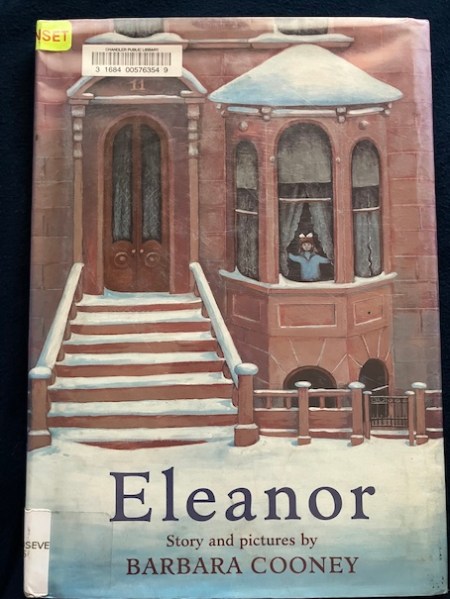
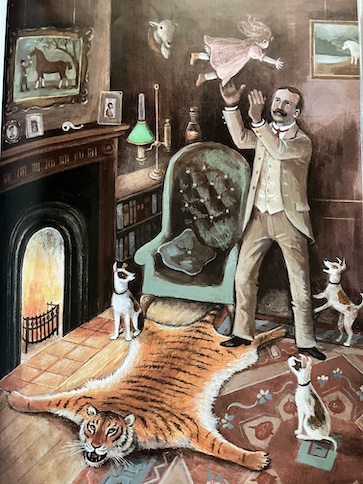
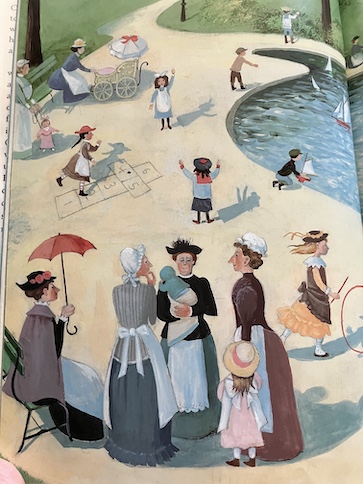
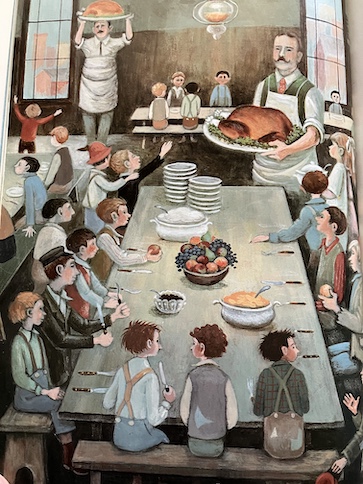
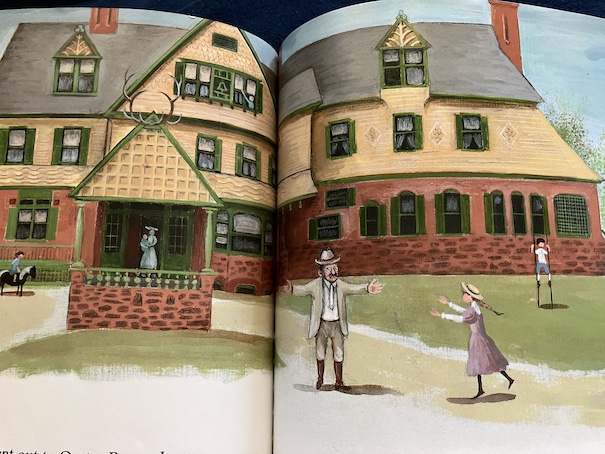
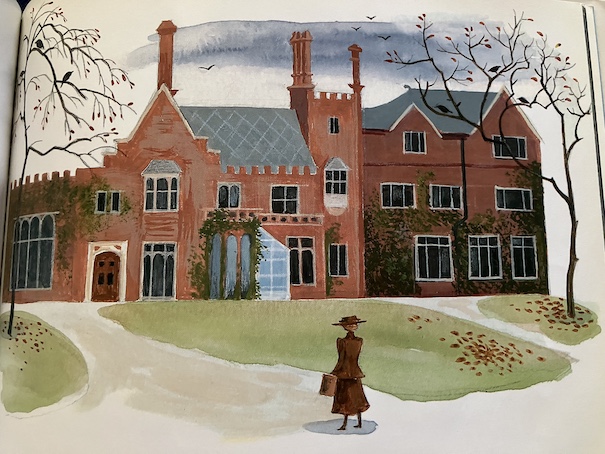
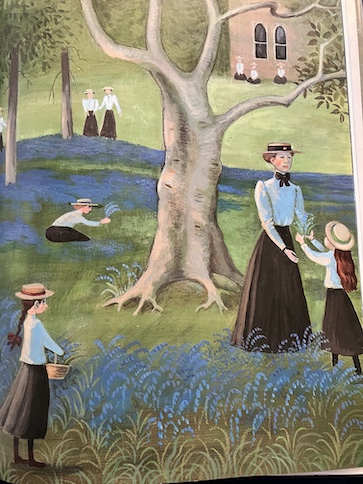
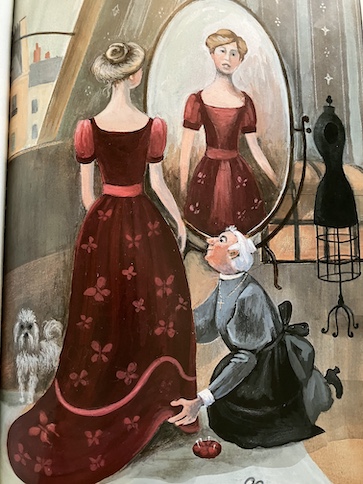
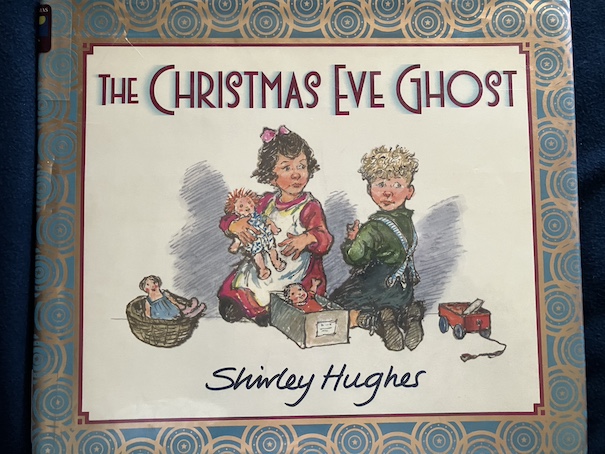


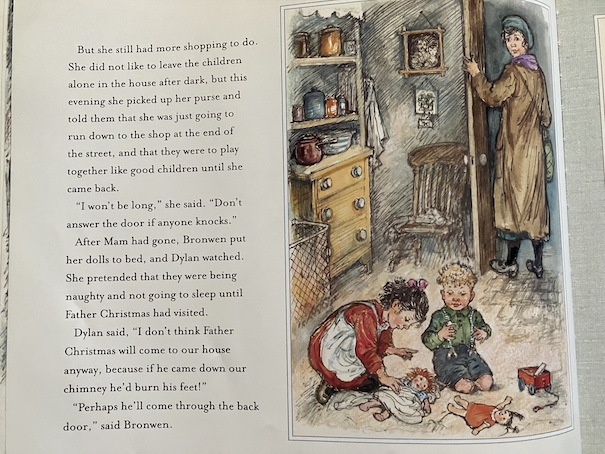
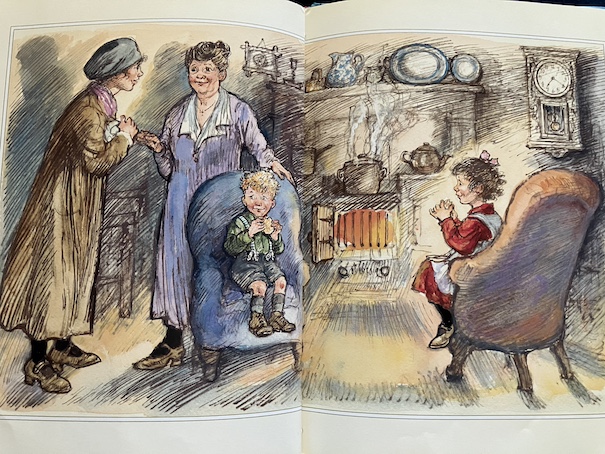
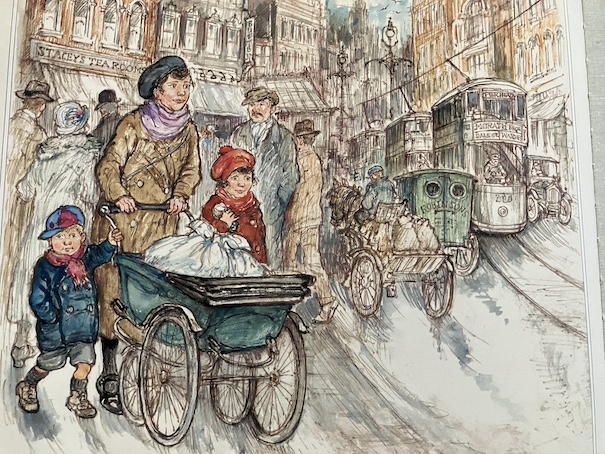
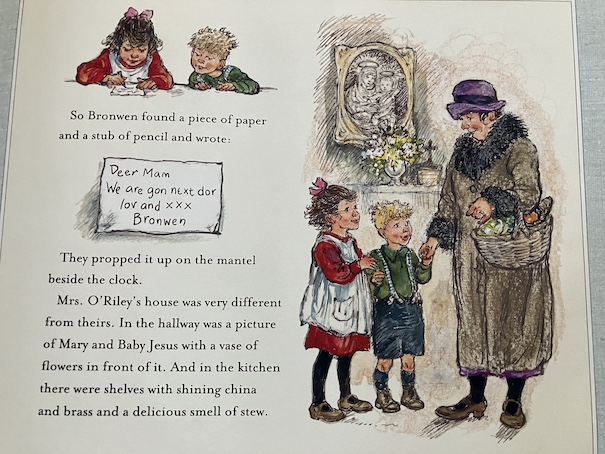


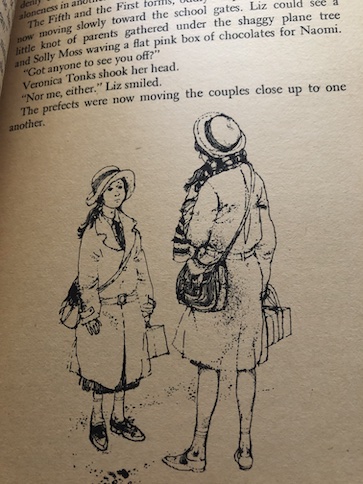
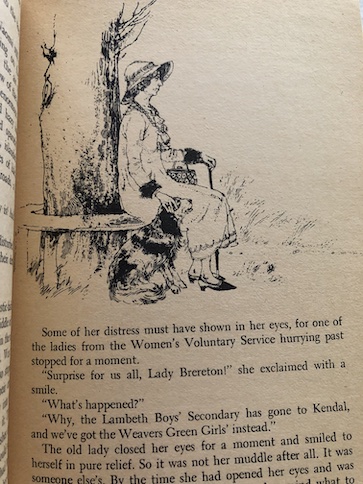


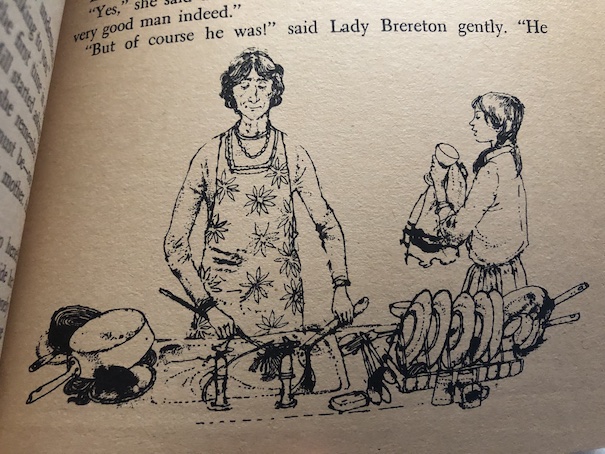
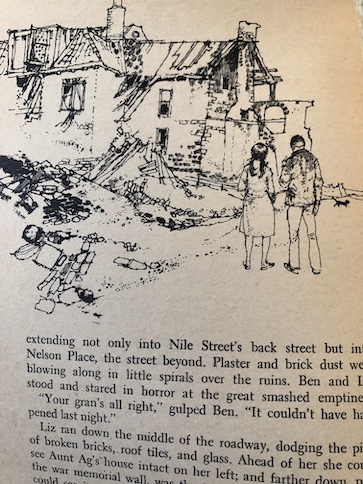


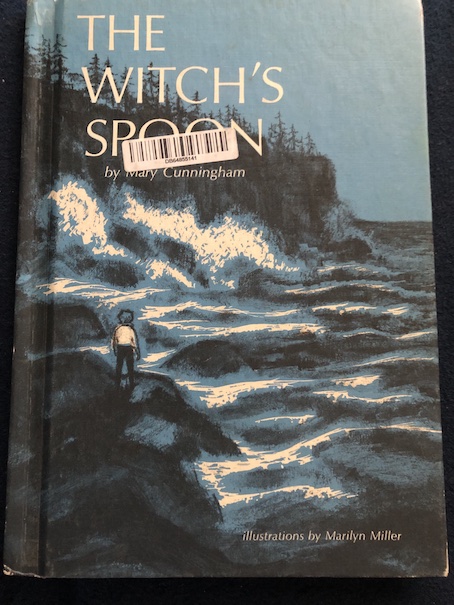


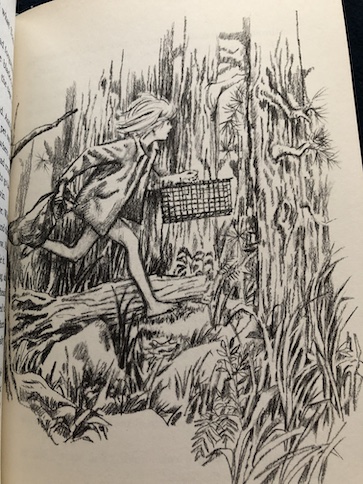


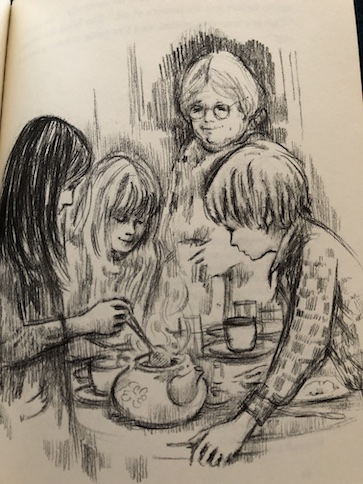
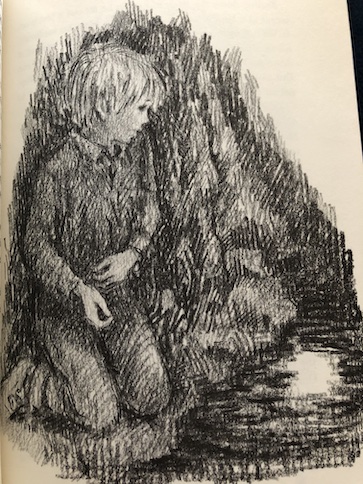
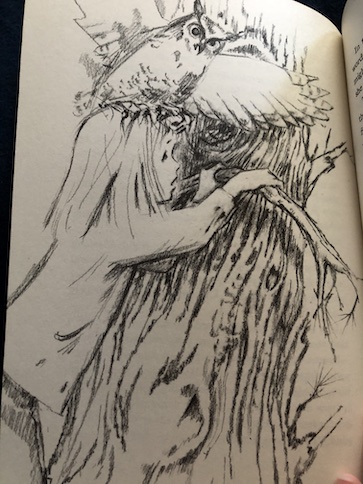




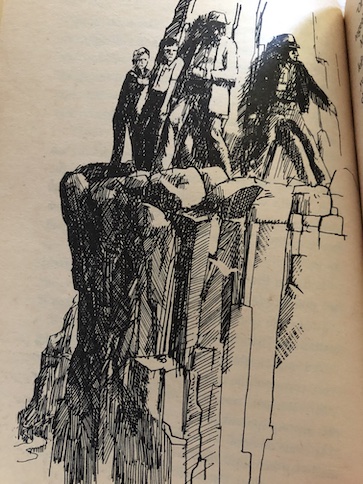


 Jestress's Forgotten Books and Stories