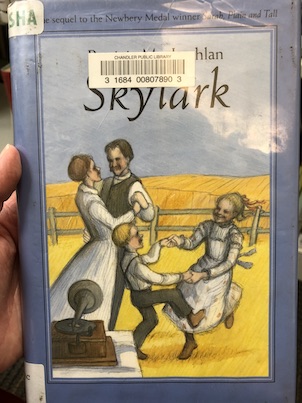
The second book in the Sarah, Plain and Tall Series picks up about two years after the first book, shortly after Sarah marries Jacob, the father of Anna and Caleb. That summer is very dry, and people worry about when it will rain next. If there is no rain, their farms will be in danger. Some people have been known to simply abandon their farms and move on during especially long dry spells. Jacob says that their family won’t leave, no matter what, because “Our names are written in this land,” meaning that they have a commitment to it because they were born there and make their lives from the land. However, Sarah was born in Maine, and Caleb worries that, if the dry spell goes on too long, Sarah will want to return to Maine.
The
year goes on, and Sarah settles in to life on the farm. Her cat, Seal, has kittens. Sarah reflects on the baby animals and seems
thoughtful about babies. However, people
are becoming ever more concerned that the water in the wells is lower than
usual. As people keep hoping for rain,
Sarah gets a letter from Maine, saying how lovely and green everything there
is. The land around the farm is dry and
brown, and the family has had to ration their water carefully, their supplies
running increasingly low.
Eventually,
a family from the area has to pack up and leave because their well is dry. Sarah is upset, trying to think of some way
around the problem, but there is nothing to be done. Everyone’s supplies are running low, and they’re
already doing everything that can be done.
Sarah hates feeling helpless against the problem. When Sarah’s best friend, Maggie, talks about
leaving with her family, Sarah says that she hates the land because it takes so
much and gives nothing back. Maggie
tells her that she’s like a lark that hasn’t come to land yet and that, if she
is hoping to survive in this land and make a home there with Jacob, she will have
to write her name in the land, just as he has.
Although
the characters become increasingly distressed, in a way, I like the story for
that. Sarah is a strong, capable woman,
but even she doesn’t have all the answers to every problem. It’s upsetting for her to realize that, but
it’s very human. After the family’s barn
catches fire and burns down, Jacob persuades Sarah to take the children and visit
her family in Maine. While they are
gone, he will take care of the animals and try to keep the farm going, waiting
for rain.
In
Maine, Sarah and the children stay with Sarah’s aunts. Aunt Mattie, Aunt Harriet, and Aunt Lou, who
have never married, are called “The Unclaimed Treasures.” They shower the children with affection. Still, the children miss their father and
worry about what is happening on the farm.
Sometimes, the children have bad dreams in which their father is unable
to find them.
In the
end, the rain comes on the prairie, and Jacob comes to Maine to collect his
family. Then, the family learns that
Sarah is expecting a baby. Anna worries
a little because her mother died giving birth to Caleb, but Jacob and Sarah
reassure her that everything will be fine.
When they return home, Sarah writes her name in the dirt, signaling her
commitment to her new life on the prairie.
There is a movie based on the book that follows the story very well. In fact, some of the dialog is almost word-for-word from the original. The book is available to borrow and read for free online through Internet Archive (multiple copies – including one in Spanish).
Sarah, Plain and Tall by Patricia MacLachlan, 1985.
This is a popular book to read in schools in the United States, the first in a series. It’s a Newbery Award winner, and it shows aspects of farm life during the early 20th century and the concept of mail-order brides, a practice from American frontier days where men living in the West or Midwest, where there were not many available women in the population, would write to agencies or advertise for a bride from the East. The process for arranging these marriages could vary, but it typically started with written correspondence before the man and woman would meet in person. In this book, the man looking for a bride, Jacob Witting, is a widower with two children who has a farm on the Great Plains. The story is narrated by his older child, Anna. The book isn’t very long, and it’s a pretty quick read, but it’s filled with colorful imagery and emotion.
Anna has had to help take care of her little brother, Caleb, since he was born. Their mother died shortly after giving birth to him, and Caleb frequently asks Anna questions about what their mother was like. Anna’s memories of their mother are fading because she was still very young when she died, but she really misses her.
Then, Jacob
tells the children that he has advertised for a bride from the East, the way a
neighbor of theirs did. The children
like their neighbor’s new wife and wouldn’t mind having a mother like her. The father has received a reply to his
advertisement from a woman in Maine, Sarah Wheaton. Sarah has never been married, and now that
her brother is getting married, she feels the need for a change in her life. She loves living by the sea in Maine, but she
is willing to move to start a new life.
She says that she would like to know more about Jacob and his children.
Jacob
and the children write letters to Sarah, getting to know her better. They come to like each other, but the
children worry about whether Sarah will change her mind about coming to see
them or whether she’ll like them or their farm when or if she comes. When Sarah tells them that she’s coming
during the spring, she says that they will know her because she will be wearing
a yellow bonnet and describes herself as being plain and tall (the title of the
book).
Sarah
will stay with the family for a time while they decide if they can be a family
together and if she will marry Jacob that summer. There are adjustments that they will all have
to make. Life on the prairie is very different
from what Sarah is used to, and the children still worry that she won’t want to
stay. Sarah brings seashells from Maine
to show them, and they teach her about the local wildflowers. One of my favorite scenes was where Sarah
cuts Caleb’s hair, and they put the hair clippings out for birds to use in
their nests. Caleb was particularly
concerned about whether Sarah would sing like their mother used to, and Sarah
does.
Through
it all, the children can tell that Sarah really misses the sea. Sarah does say that the land around the farm
kind of rolls, a little like the sea, and they play in a haystack, like it was
a dune by the sea. When they visit their
neighbors, Sarah talks with Maggie, the mail-order bride who came from Tennessee. Maggie understands Sarah feels, missing her
home in Maine, and it upsets Anna to hear them talk about missing their old
homes. However, Sarah says that things
were changing at home, and Maggie comments that, “There are always things to
miss, no matter where you are.” What the
women realize is that, although they miss their old homes, they have grown to
love the new people in their lives and would miss them if they tried to go back
to where they came from.
At one point, Sarah goes to town alone, and the children worry that she won’t come back, but she does. She just went to town to buy colored pencils in her favorite sea colors. Sarah does stay and marry Jacob, setting up the rest of the series.
There is a movie version of this book, which follows the story pretty well. The book wasn’t specific about the time period, although it seems to take place during the early 1900s. The movie and its sequels are set during the 1910s, which makes sense for the rest of the series. The book also didn’t say exactly where the farm was, but the movie clarifies that it’s in Kansas. The movie also emphasizes how much the whole family, particularly Jacob and Anna, misses the mother who died. In the movie, Jacob forbids the children to use any of his dead wife’s things and doesn’t want to talk about her. However, when Sarah realizes that trying to avoid his wife’s memory is hurting Anna, she brings out some of the dead wife’s belongs to use, helping the family to make peace with the past and prepare for the future.
In the movie, Jacob’s pain over his wife’s death is partly about guilt as well as grief. The book doesn’t really talk about why Anna’s mother died after childbirth, but in the movie, Jacob has a painful discussion with Sarah about how he blames himself for his wife’s death because the doctor had warned them that they shouldn’t have any more children after Anna. Apparently, Anna’s birth had been difficult and caused complications because his wife was so young, and the doctor had said that having another child would be dangerous. However, after a few years went by, they decided to try for a son to help run the farm, thinking that enough time had gone by for it to be safe. When his wife died giving birth to Caleb, Jacob felt terrible, thinking that he should have taken the doctor’s warning more seriously and not tried to have another child. Confessing all of this to Sarah helps Jacob to make his own peace with what happened. However, none of this discussion appears in the book.
In both the book and the movie, Jacob also has to adjust to Sarah’s different personality. Sarah is more stubborn and independent than his first wife, with her own way of doing things. Living with her is different from living the mother of his children. However, Jacob comes to love Sarah for the person that she is.
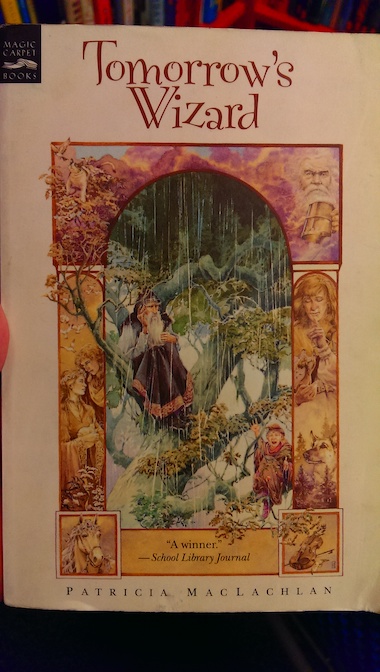
In a way, this story is a collection of shorter stories, but they are all tied together. In the beginning, Tomorrow’s Wizard (that’s actually his name, he’s also called Tomorrow) has just been given an apprentice wizard named Murdoch. Their job is to listen for important wishes to grant. Each of the shorter stories in the book involves a different wish and how Tomorrow and Murdoch grant it.
The First Important Wish – Rozelle is a pretty girl but wild and given to fits of temper. Her parents had her later in life and never disciplined her, so she has never had a reason to learn to control herself. However, her tantrums drive everyone else crazy. Rozelle’s father, acknowledging how difficult it is to deal with Rozelle, wishes that he could find a man who was willing to marry her. Tomorrow hears the wish and sends a variety of suitors to meet Rozelle, but she doesn’t like them, and none of them really like her, either. Then, another possibility occurs to the wizards: the villagers have been complaining that they are afraid of a nearby giant. Tomorrow knows that he giant is really harmless and gentle, just lonely. Could it be possible that Rozelle is the company that he needs?
Three-D – Miller Few and his wife, Mona, are nasty people, two of a kind. Because he’s the only miller in town, Miller Few (known to his neighbors as Three-D for Dreadful Dastardly Demon) freely cheats his customers. He and his wife have no friends because they’re so awful. Then, one day, Three-D saves Murdoch’s life. To reward the miller, Murdoch agrees to grant him a wish. The miller and his wife decide that they want a nice, sweet child who would do their work for them. The child Murdoch grants them is indeed sweet. A little too sweet. Not only does little Primrose look pretty and do the housework, but she helpfully reminds the miller about his debts and the other things her parents do wrong. The miller and his wife become more careful and agreeable and gain new friends because of Primrose, but they aren’t very happy. They aren’t really being themselves, and they’re tired of being on their best behavior all the time. But, perhaps there is one thing that can stop Primrose from being overly sweet: the miller’s old cat, Clifford.
The Comely Lady and the Clay Nose – Geneva is a very beautiful young woman and has many admirers, but she knows that they are more in love with the way she looks than with who she is. It worries her, and she wishes for someone who would love her for the person she is. To help solve her problem, Tomorrow makes an ugly clay nose for Geneva to wear, telling her that it will help her to find the person she is looking for. When she puts it on, her former admirers flee, and for awhile, Geneva is very lonely, but she perseveres and ends up finding the love that she is looking for.
The Perfect Fiddle – Bliss, the fiddle-maker, is ironically an unhappy man. The reason is that, no matter how good his fiddles are, he can never make one that’s completely perfect. After Bliss tries several crazy schemes to capture perfection in his fiddles, Tomorrow goes to visit Bliss’s wife, Maude. Like Tomorrow, Maude has seen the problem with Bliss’s approach to his fiddles and finally asks Bliss the question that makes him reconsider whether perfection should be his goal.
The Last Important Wish – Although Tomorrow is impatient with his apprentice, Murdoch, he does like having him live with him, and he has also grown attached to the horse that lives with them both. However, he has come to see that the life of a wizard isn’t the one that Murdoch is really suited for. More than anything, Murdoch wants the experience of being born and living among humans. The horse, too, wishes for a kind master and a family. Tomorrow sees that it’s time to grant both of their wishes, giving the horse and Murdoch (as a baby) to a kind farmer with a wife and other children.
The book is currently available online through Internet Archive.
Robin Goodfellow, nicknamed Puck (her parents were fond of Shakespeare), is a human girl from Earth in the future. When the story begins, she has been kicked out of boarding school on Earth and is traveling by space ship to join her parents, who are scientists who have been working on another planet. They left Robin with her grandmother on Earth, who enrolled her in an English boarding school in order to give her some discipline and some friends her own age, but she was expelled for failing her classes (not to mention throwing a fit and burning her books when she discovered that she had failed). Puck dreads what her parents will say when she arrives on the planet where they are now living because they had always hoped that Puck would also become a scientist and work with them, but this journey will change Puck’s life.
Before
the ship she will be traveling on leaves Earth, Robin witnesses a man attacking
someone else, possibly killing him.
Robin does not report the attack because she doesn’t know whether or not
the other person was killed, and she doesn’t think that anyone will believe her
anyway. She witnessed this attack while
sneaking around a place where she wasn’t supposed to be, and she is being sent
to her parents in disgrace after being expelled, so she doesn’t sound like a
very credible witness. However, the man
in the fight, Mizzer Cubuk (“Mizzer” is how they say “Mister” in the book),
turns out to be traveling on the same ship as Puck. All Puck can think of to do is to try to
avoid him on the ship and hope that he didn’t get a very good look at her after
she ran away from his fight.
To
Puck’s surprise, the captain of the ship she is traveling on, Captain Cat Biko,
asks her if she could make friends with an alien who is also traveling on the
ship. The alien is one of the Shoowa,
who were enslaved by another group of aliens called the Grakk. Now, he is free and finally traveling home to
Aurora, the same planet where Puck is going.
The captain feels sorry for him and thinks that he might appreciate a
friend and that he might find a human child less intimidating than an adult.
Later,
Puck and other passengers are woken out of their sleep by the sounds of wailing
and moaning. One of the women on board,
Leesa, says that she saw something that looked like a ghost that walked
straight through her. Other people, who didn’t see or hear it, assume that it
was nightmares or imagination, but Puck knows that it wasn’t. One of the crew members, Michael, tells Puck
that there have been rumors that the ship is haunted and that other people have
seen and heard strange things.
Strange things are happening on the ship, and some of the passengers seem to be hiding something. Who can Puck trust, and who isn’t who they seem to be?
The
alien who is traveling on board the ship understands Puck’s feeling of
failure. The alien, called Hush, says
that he carries shame because he lost something important, something that his
people were counting on him to take home to their planet. Puck and Hush discuss how people from Earth
had fought the Grakk and sought to learn about Grakk technology from Shoowa
slaves who were freed after the war.
Even the ship they are now traveling on was once a Grakk ship. The Earth people kept delaying sending the
slaves home because they wanted to pump them for more information and because
they were trying to decide if they could really trust them more than the Grakk. After negotiating with the Earth people about
returning home, the Earth people agreed, with some provisions. They arranged for some of the Shoowa to stay
on the Grakk home planet, still working with humans. Some of them would travel on ships with Earth
people, and some others could go home to their own planet. Hush is the first one to head home, and he
was entrusted carrying home an important symbol of his people that his family
had protected for generations: a statue that represents a child because
children are the future and a source of freedom, according to an ancient Shoowa
prophecy. Unfortunately, the statue was stolen from Hush before he could return
it to its rightful home. He reported the theft to the Earth security personnel
at the station, but they didn’t take him seriously. They thought that he probably
just lost it by accident.
The
haunting is real in this book. On a tour
of the ship, Puck learns that the ship’s navigator has also seen the ghost
aliens. One of the characteristics of a
ship’s navigator is the ability to see hyperspace, something that not everyone
has the ability to do, although even scientists in Puck’s future time don’t
seem to know why some people can do that and others can’t. Slowly, it becomes evident that people who
are able to see hyperspace are also able to see the ghosts.
On the journey to Aurora, Puck also learns that she is one of the rare people who are able to see hyperspace, giving her a possible future in navigating a space ship, something that she would really enjoy learning. When she arrives at Aurora and is greeted by her parents, who have missed her while they were apart, Puck also comes to realize that her parents will always love her, even in spite of failing her classes. Even Hush’s people tell him that, although they are happy to have the statue back, his safe arrival was always the most important thing, and they wanted him to come home, whether he successfully brought the statue or not. Both Hush and Puck come to realize that their families will always love and value them even with their imperfections and failings. With parents who love her and a new vision of the future ahead of her, Puck is ready to make a new life on Aurora.
The book is available to borrow and read for free online through Internet Archive.
Ten-year-old Ann Hamilton hasn’t been very happy since her family decided to move West. Her family lives in 18th century Pennsylvania, and moving West means homesteading in an area where there are few other families, none of which have girls Ann’s age. Her father and brothers love the adventure of starting over in a new place on the western frontier (what is considered the frontier for their era), but Ann is lonely, surrounded by boys, and missing their old home. When her father built their cabin, he purposely placed it so that the door faces to the west because he says that’s where their future lies. Ann’s brothers, Daniel and David, also make up a rule that no one can complain about the west (partly because Ann had already been doing a lot of complaining), saying that anyone who does so will get a bucket of water poured over their head, and they make a game out of trying to catch each other complaining about something. So, there is nothing Ann can do but suffer in silence and write in her diary, a present from her cousin Margaret when the family left Gettysburg.
There’s
a boy close to her age who lives nearby, Andy McPhale, but Ann doesn’t think
much of him. He makes jokes about her
being “eddicated” because she can read and write. Sometimes, he seems like he wants to play
with her, but she’s a girl, and he doesn’t want to play girl games.
Andy McPhale also worries about his mother. His father believes in hunting and trapping more than planting. Rather than grow some of their food, Andy’s father goes off for days at a time on hunting expeditions, leaving his family with very little while he’s gone. Ann’s family thinks that this is a sign of poor planning for the future and don’t think highly of Andy’s father for it.
Later, they
meet a young man named Arthur Scott who has just arrived in the area and is
looking for land to settle on. When Mr.
Scott first arrives, he meets Ann on the road. Ann has allowed the hearth fire to go out, and
she is on her way to her aunt and uncle’s house to borrow some from them
because she doesn’t know how to start a fire by herself. Understanding her problem, Mr. Scott gives
Ann a ride home on his horse and helps her to restart the fire, promising not
to tell her parents. They invite him to
stay for lunch, and he talks about his time at Valley Forge with Washington’s
soldiers when he was only 13 years old.
He was too young to fight, but he volunteered to drive an ammunition wagon. Ann thinks of George Washington as a hero,
and she finds it thrilling that Mr. Scott served with him.
Arthur Scott becomes a friend of the Hamilton family, and Andy McPhale seems jealous of him and the attention that Ann pays to him. Then, Andy tells her that his family has decided to go back to town for the winter. In the spring, they will return to the area and try farming, persuaded by their experiences working with the Hamiltons. To Ann’s surprise, Andy offers for Ann to come with them. She could visit Gettysburg and stay with her cousin Margaret again. Ann has been lonely, being the only girl in the area, and it’s a tempting offer. However, Ann feels like she must stay for her family’s sake and so she won’t feel like a deserter. When a storm destroys a good part of her family’s crop, she feels terrible and wonders if it’s all really worth it.
In the end, there is a great surprise coming for Ann: she gets to meet her hero, George Washington, when he comes to see some land that he has purchased nearby.
I first read this book when I was a kid in elementary school. As the cover of the book says, the author won the Laura Ingalls Wilder Medal, which honors authors and illustrators for children who have made long-term contributions to children’s literature. Laura Ingalls Wilder was the author of the semi-autobiographical Little House on the Prairie books, but because those books contain uncomfortable racial language and situations, her name were removed from the award in 2018. The award still exists, but it’s now called the Children’s Literature Legacy Award, which is more descriptive of its purpose.
I liked this book as a kid, although I had forgotten many of the details before I reread it as an adult, and I’m not sure if I fully understood the history behind the story when I was a kid. I think stories actually become more interesting when you know the background, so I’d like to discuss the history a little.
The story is based on the real life of Ann Hamilton, the great-great-grandmother of the author of this book, who did get to meet George Washington in 1784. The author is essentially retelling an old family story. The real Ann Hamilton married Arthur Scott when she grew up. The place where they lived, called Hamilton Hill in the story, is now called Ginger Hill. In fact, it seems that a member of the Hamilton family caused the name change, although that story isn’t really one for children.
One of the parts of the story that I always remembered from when I read it in school as a kid was the part where Ann talks about “mother’s fried wonders”, basically describing a fried donut. People in the 18th century did make various types of fried pastries, varying in style and name depending on where they lived. For an example of early American donuts, see this video by Townsends about 18th century doughnuts, where they make doughnuts and talk about the history and evolution of American “dough nuts” (they talk about the name and how it seems to come from the original shape – nut-shaped pieces of dough).
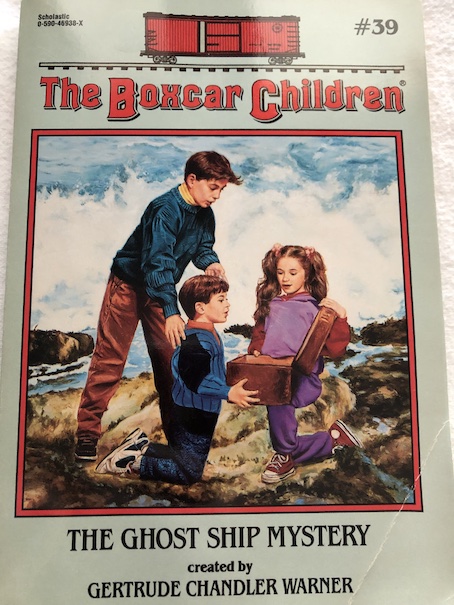
#39 The Ghost Ship Mystery by Gertrude Chandler Warner, 1994.
The Alden children are visiting the New England seaside town of Ragged Cove while traveling with their grandfather on a business trip. They enjoy visiting the sea, but on a stormy night at the inn where they are staying, they learn that the town has its own ghost story about a ship called the Flying Cloud that sank off the coast years ago. When storms are coming, people see strange lights that some people think might be the spirits of the people on the Flying Cloud.
As the Aldens soon learn, the events of the Flying Cloud are still affecting people who live in the town. When the ship was wrecked, the only member of the crew who made it to shore was a cabin boy, who died shortly afterward, mumbling about how one of the crew members had taken command of the ship away from the captain in an apparent mutiny. The descendant of the ship’s captain, a woman who manages the small local museum, is bitter toward the descendant of the man who apparently led the mutiny, who now gives whale watch tours.
The Aldens find it strange how events of the distant past can still mean so much to people who are still living, but they find themselves caught up in learning the real secrets of the Flying Cloud when they go on a whale watch tour and their guide, Captain Bob, also takes them scavenging for wreckage after the storm. They make an amazing discovery of a sailors’ post box, a metal box where sailors used to leave messages for each other or objects that they wanted to have delivered home before they would arrive themselves. This particular box has been untouched in a niche in a rock for years, and it has information about the Flying Cloud. At first, Captain Bob is reluctant to part with it, but the Aldens persuade him that it should go to the museum. Captain Bob says that they should take it there on his behalf because the woman who runs the museum won’t want to see him.
The woman who runs the museum is amazed at the find and is eager to explore the contents of the box. However, when the Aldens leave her alone with it for a short time, they notice that a leather book that was in the box suddenly disappears. The woman denies that it was ever there, making the Aldens suspicious. Then, they later hear that someone broke into the museum and stole the entire contents of the box. Who is really responsible for the break-in, and what really happened on the Flying Cloud all those years ago?
Part of the mystery concerns how people deal with history, especially history that concerns them in a very personal way, when new information is uncovered that changes the story. That the woman who runs the museum is responsible for the book that disappears is obvious because she denies its existence when the Aldens know that they left it with her. The book turns out to be the log book of the Flying Cloud with its final entry, left behind in the post box when the crew began to doubt if they’d make it safely home. The story about the woman’s ancestor, the brave captain who was apparently the victim of a mutiny, isn’t quite what she had always believed, what her family told her, and what she herself had reported in a book that she wrote about the incident. It was partly true, but the final log entry contains new information that puts the whole situation into a different light. The woman struggles not only with the changing story but how that story affected her own behavior, and she worries that what she wrote in her book was a lie. A friend of hers comforts her by saying that it wasn’t a lie, it was the truth as they all understood it for years, just not the complete story, as it turns out. Benny’s proposal that the woman write a new book with the new information makes her feel better.
(Spoiler: It’s not really a mutiny if the captain is incapacitated, and the captain had already died of a severe illness by the time that the ship was wrecked. The person who was blamed for the mutiny wasn’t really at fault.)
The story also explains a little about scrimshaw for an educational element. They describe various objects that sailors could make from scrimshaw. When I first heard of it, it was described as being decorative, but the book talks about useful things, like sewing needles and pie crimpers, that were made with scrimshaw.
Mystery of the Pirate’s Ghost by Elizabeth Honness, 1966.
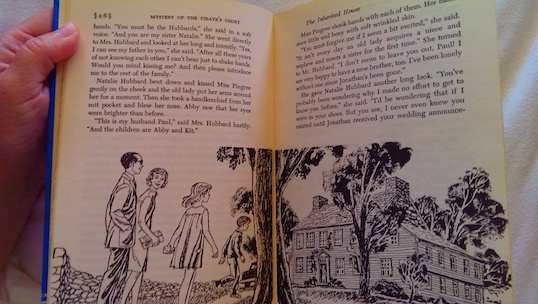
Abby
and Kit Hubbard’s mother has just received a letter telling her than her half
brother, Jonathan Pingree, has died and left her the old Pingree mansion. He has left over bequests to other family
members as well, and money to be held in trust for Abby and Kit. It’s exciting news, and the family may move
to live in the mansion they have inherited, although it partly depends on Mrs.
Hubbard’s other relatives.
Mrs. Hubbard, who was born Natalie Pingree, has never met her half-brother or half-sister. They were her father’s children, from his first marriage. She doesn’t know much about her father’s early life because he died when she was very young, and all that she knows about him is what her mother told her. Apparently, her father’s first marriage was not a happy one. He stayed in that marriage long enough for his first two children, Jonathan and Ann, to become teenagers. Then, he made sure that his first wife and children were settled comfortably enough in the family home and left them to move to Philadelphia to start a new life by himself. Sometime later, his first wife died and he married Natalie’s mother, who was much younger. After his death, Natalie and her mother moved in with her mother’s sister, Aunt Sophie. When Natalie got married, Aunt Sophie sent a wedding invitation to Johnathan and Ann, but they never came to the wedding or made any reply. Natalie assumed that they felt uncomfortable about their father’s remarriage and didn’t want to see her, which is why she’s so surprised about Jonathan leaving the family home to her. The only reason she can think of why he would do that is that neither he nor his sister ever married or had children of their own, so there was no one else to leave the house to. Both of them were more than 30 years older than Natalie, and Ann is now an elderly woman, still living in the house. Jonathan’s will has made provision for her as well, and the Hubbards go to see her at the Pingree mansion.
Mrs. Hubbard is pleasantly surprised that Ann is actually happy to see her. Ann Pingree explains that the reason why she and Jonathan never replied to the wedding invitation was that, until that invitation arrived, neither of them had known that their father had another child, and they felt awkward about it. However, Ann has been lonely since Jonathan’s death, being the last of the Pingrees, and she is glad to have Natalie and her husband and children with her and is eager to have them move into the mansion and live there. (Ann doesn’t live in the old mansion itself, but she does live nearby.)
Aunt Ann shows the family around the old mansion and explains more about its history and the history of the Pingree family. It turns out that the house, which has existed since Colonial times, although it has been burned, remodeled, and expanded over time. The house also has a number of secrets. Apparently, there used to be a tunnel running from the basement of the house to the beach that was used to bring in smuggled goods during the Colonial Era. There is also a hidden room behind a fireplace upstairs where the children of the family could hide during Indian attacks. (It doesn’t say how often that happened.) To the family’s surprise, Ann also tells them that the mansion is supposed to be haunted. The kids think it all sounds exciting, although Ann doesn’t explain much about the ghost the first time she mentions it. (Kit uses the phrase, “Honest Injun?” when asking Aunt Ann if she really means it when she says that the house is haunted. This isn’t a term that people use anymore because it isn’t considered appropriate.)
Mr. Hubbard is able to get his job transferred to a different branch of the company he works for, so the Hubbard family decides that they will move into the Pingree mansion. The kids like living by the beach, and their parents tell them that they can use the old ballroom of the house as a kind of rec room. Soon, they meet a couple of other children who live in cottages nearby, Chuck and Patty, and make friends with them. Chuck and Patty have already heard that the Pingree house is supposed to be haunted, although they’ve never seen anything really mysterious, just a light in the house once when they thought that the house was supposed to be empty.
The next time Aunt Ann comes to visit, the four children ask her to tell them about the ghost, and she tells them the story of the first Pingree to live at Pingree Point. This ancestor, also named Jonathan Pingree, built the original house in the late 1600s. He was a shipbuilder who owned several ships of his own, and he wanted to live near the sea. Later, he also became a privateer. When the kids call Jonathan a pirate, Aunt Anne agrees and explains that, unlike a pirate, Jonathan’s position as privateer was all perfectly legal because he had a Letter of Marque. (Yes, privateers operated within the law, but yes, they were also essentially pirates who raided other ships for their goods. In other words, they did the same things, but privateers did it with permission whereas ordinary pirates didn’t get permission. Historically, some privateers continued their pirating even after permission was revoked, so as Aunt Ann says, “the line between that and piracy was finely drawn.”) His son, Robert, was sailing on one of his father’s ships when it was taken by other pirates, and Robert was forced to join their crew. The family never saw Robert again and only found out what had happened from a fellow crew member who was set adrift and managed to make it back home. What happened to Robert is a mystery. His family didn’t know if he had really taken to the life of a pirate and couldn’t return home because he couldn’t face his family, if he had been killed in some fight, if he had been hung for piracy because he had gotten caught and couldn’t prove that he was forced into it. However, members of the family claimed that Robert’s spirit did return to the house and that he knocks at doors and windows, begging to be let back into his old home. Aunt Ann says that she’s never seen the ghost herself, but old houses can make all kinds of noises on windy nights, and that’s what she thinks the “ghost” is. As Chuck and Patty leave, they say, “we hope that old ghost doesn’t show up to frighten you.” Of course, we all know that it will because otherwise this book would have a different title.
One day, Kit is bored and starts playing around in the secret room, pretending that he’s hiding from American Indians. While Kit is in the secret room, he overhears the servants, John and his wife Essie, who have worked for the family for years, talking. Essie seems very upset and wants John not to do something that might risk their home and jobs, but John says that it’s too late and that they’re already “in it” and “can’t get out.” Kit tells Abby what he heard. That night, Abby hears banging and wailing during a storm and fears that it’s the ghost. Soon, other strange things happen, like a desk that mysteriously disappears and a cupboard that also mysteriously appears in its place. The children like John, and they don’t want to think badly of him, but he’s definitely doing something suspicious. One night, the children try to spy on him, and Abby once again hears the wailing and sees a mysterious, cloaked figure in the fog. Is it the ghost?
There are some interesting facets of this story that make it a little different from other children’s books of this type. For one thing, the children confide their concerns to their parents almost immediately, and the parents immediately believe them. In so many children’s mysteries, either the children decide to investigate mysterious events on their own before telling the parents or the parents disbelieve them, forcing the children to investigate on their own. It was kind of refreshing to see the family working together on this mystery. It actually makes the story seem more realistic to me because I can’t imagine that I would have been able to keep worries about mysterious things secret from my parents as a child, and they would have noticed if I was sneaking around, trying to investigate people, anyway. Abby and Kit do something dangerous by themselves before the story is over, but they also confide what they’ve done to their parents at the first opportunity and do not take the same foolish chance again.
The truth of John’s activities comes to light fairly quickly, although it takes a little longer for the family and the authorities to decide how to handle the situation. Investigating John brings to light some of the Pingree family secrets, and Abby and Kit soon discover the fate of Robert the pirate and the truth of his ghost. I’ll spoil the story a little and tell you that the ghost that Abby sees is apparently real, but it isn’t very scary. Once they learn the truth of what happened to Robert and see that his body gets a decent burial, the ghost appears to be at peace.
One thing that bothered me was the way that the characters talk about Native Americans in the book. It’s not the talk about Native American sometimes abducting children because I know that happened. It’s more how they picture that would happen. In the scene where Kit was hiding in the secret room, Kit imagines that the Indians were attracted to the house by the smell of his mother’s cooking and that he went into hiding while his mother fed them to avoid being abducted. As part of his scenario, he imagines that his mother would have wanted to “hold her nose against the Indian smell.” What? Where did that come from? There are all kinds of tropes about Native Americans in popular culture, from the “noble savage” image to that silly “Tonto talk” that actors did in old tv westerns, but since when are they supposed to smell bad? I’ve never seen characters in cheesy westerns hold their noses before, so what’s the deal? I tried Googling it to see if there’s a trope that I missed, but I couldn’t find anything about it. I’m very disappointed in you, Elizabeth Honness.
This book is currently available online through Internet Archive.
When I Was Young in the Mountains by Cynthia Rylant, illustrated by Diane Goode, 1982.
This nostalgic picture book is based on the author’s experiences living with her grandparents in West Viriginia when she was young. It paints a vivid picture of Appalachian life in the past. The story doesn’t give any particular years to describe when it takes place, but the author apparently lived with her grandparents during the 1960s, although from the pictures, it would be easy to believe that the story takes place in a much earlier time. Partly, the style of the clothes and stoves give that impression, but for me, it was really the cloth cover over the camera that made me think it was during the first half of the 20th century. You can still get these covers, but they’re not as common in modern times.
In the story, the author describes various aspects of Appalachian life, starting each section with “When I was young in the Mountains . . .” She remembers her grandfather coming home after working in a coal mine and how they would all have cornbread, fried okra, and pinto beans for supper.
For fun, the kids would go swimming in the swimming hole. They would also use the swimming hole for baptisms. They would also use the schoolhouse as their church.
She describes the general store where her family would go for groceries and how they would have to heat water on the stove for baths.
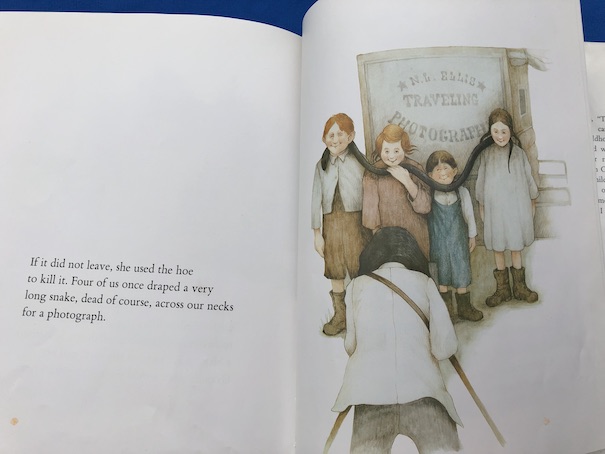
Sometimes, they had to deal with snakes, and once, when their grandmother killed a particularly big one with a hoe, they took a picture of the children with it.
Overall, the story is about enjoying the simple pleasures in life in a place you love, surrounded by people you care about.
This is a Caldecott Honor Book. It is currently available online through Internet Archive. Sometimes, you can also find people reading this book aloud on YouTube. I particularly like this reading because I think the reader has a good accent for reading this story, and she comments on her own experiences growing up in the country.
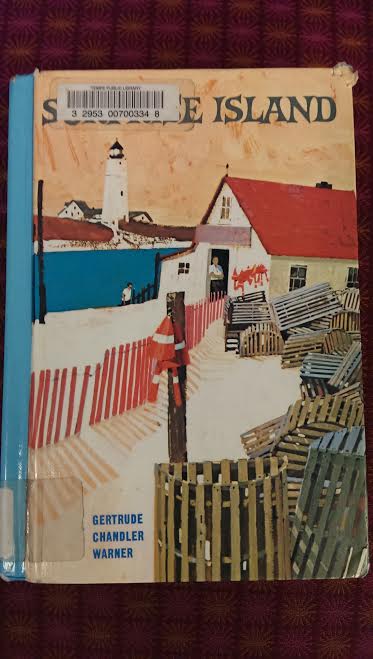
Surprise Island by Gertrude Chandler Warner, 1949.
Mr. Alden
has promised his grandchildren a special surprise for their summer vacation. He
tells them that, years ago, his father bought a small island because he kept horses
and wanted a quiet place for them. The
island has only one little yellow house, a barn, and a fisherman’s hut where
Captain Daniel lives. Captain Daniel
operates the motorboat that can take people to the island. Mr. Alden plans to take his grandchildren to
the island to look over the house, and if they like, they can spend the summer
there. The children think that it sounds
like fun.
When
they get to the island, the children decide that they want to stay in the barn
instead of the house. Captain Daniel
also tells them that he has a young man staying with him, a friend who hasn’t
been feeling well. The Aldens’ old
friend, Dr. Moore, has come to see the island with them, so he looks in on the
young man. It turns out that the young
man was in an accident and had lost his memory for a time, although he has been
gaining it back. He says that he used to
live with an uncle but that he didn’t want to go home again until he was sure
that he was completely well. He is going
by the name of “Joe”, which is short for his middle name, Joseph. Captain Daniel says that he’s known the young
man all his life, and Dr. Moore also seems to know him, but Joe doesn’t seem to
want to talk about himself to Mr. Alden.
The kids
enjoy setting up housekeeping in the barn.
It reminds them of when they used to live in an old boxcar. They use old boxes for furniture, dig for
clams, and eat vegetables from the garden that Joe and Captain Daniel have
tended for them. Their grandfather
allows the children to stay on the island in Captain Daniel’s charge, but they are
mostly allowed to take care of themselves.
Joe sometimes brings them supplies that they ask for from the mainland. (One of the themes of the Boxcar Children Series
is self-sufficiency. At one point,
Jessie comments about how much better things seem “when we have to work to get
it.”) For fun, they go swimming, and Joe
spends time with them, telling them about different types of seaweed. They are surprised at how knowledgeable Joe
is.
Henry gets the idea that they can set up a kind of museum of interesting things that they find on the island, like samples of different types of seaweed, shells, flowers, pictures of birds that they’ve seen, etc. The other children think that it sounds like fun, and they begin thinking about the different types of things that they can collect.While they’re searching for things to collect and add to their museum, the children find a cave and an old arrowhead and ax-head. They are authentic Indian (Native American) relics! When they show Joe what they’ve found, he gets very excited, especially when they tell him that they saw a pile of clam shells, too. Joe explains to the children how Native Americans used to use shells as money called wampum. He thinks that what they saw was wampum, which the people who used to live there might have made after drying the clams to eat later. Joe explains to the kids some of the process they would have used to turn the shells into wampum. He’s eager to go to the cave and look for more Native American artifacts with them, but he urges them not to say anything to anyone else about it because other treasure hunters will probably show up if they do. The children agree to keep their find a secret until their grandfather returns.
When
they return to the cave with Joe, they make an even more incredible find: a
human skeleton with an arrowhead inside.
It looks like they’ve found the bones of someone killed by an arrow!
The book is available to borrow and read for free online through Internet Archive.
My Reaction
As with
some other vintage children’s mystery series, the early books in the series
were more adventure than mystery. The
most mysterious part of this book concerns the real identity of the young man
they call “Joe.” The truth begins to
come out when a strange man who calls himself Browning comes to the island in
search of a young man who disappeared the year before while doing some
exploring for him. The young man he’s
looking for worked for a museum.
This is the book where Violet first learns to play the violin. This is a character trait that stays with her for the rest of the series.
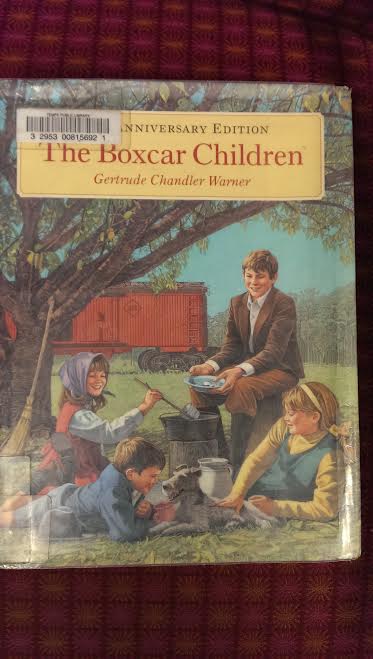
#1 The Boxcar Children by Gertrude Chandler Warner, 1924, 1942.
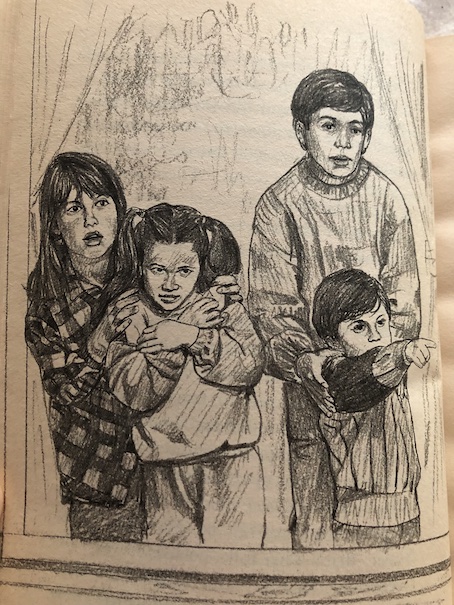
“One warm night, four children stood in front of a bakery. No one knew them. No one knew where they had come from.”
These are the words that begin not only this story but a series that has been loved by generations and continued well beyond the death of the original author.
The four Alden children are on the run following the deaths of their parents. Their nearest remaining relative is a grandfather they have never met, and although he should have custody of the children now, none of the children want to go live with him. All that they know about him is that he is apparently a mean old man who opposed their parents’ marriage. Henry, the eldest at fourteen, and Jessie, who is twelve, have taken charge of the two younger children, ten-year-old Violet and seven-year-old Benny. They have a little money, and they’re now traveling on foot in search of a new home.
The first place they stop is a bakery in a nearby town where no one knows who they are. They don’t have much money, but they know they are going to need supplies for their journey. The stingy baker and his wife agree to give the children some food and a place to sleep for the night in exchange for some help in their shop. The children are willing to work and accept the offer. However, Henry and Jessie overhear the couple talking about them. They like having the children to help in the shop, but Benny is too young to be of much help. They are considering taking Benny to an orphanage and keeping the others. Not wanting to be separated, Henry and Jessie wake Violet and pick up Benny, moving on. Now, they have a second set of people they’re avoiding, besides their grandfather.
Seeking a place where they can stay while not being noticed by people around them, the children eventually find an old, abandoned boxcar on a disused piece of train track on the edge of some woods. They take shelter there from the rain and decide that they can turn it into their new home. There are blackberries growing nearby that they can eat and a stream where they can keep milk cold. Henry finds odd jobs in a nearby town to earn more money, and the others discover an old dump where they retrieve some old, cracked dishes and other useful items.
It seems like an idyllic life at first. The children are free of adult control, although they do have to work to create a household for themselves and find food. They adopt a stray dog they call Watch (he’s their new watchdog), and Henry makes friends who appreciate what a hard worker he is. However, some of these new friends start to wonder about Henry, where he comes from, and where his parents are.
The children soon realize that someone is spying on them. Is it someone from the town? Could the baker and his wife still be looking for them? Or is it someone sent by their grandfather? When Violet is suddenly taken ill, the others realize that they need help and someone to trust.
Getting help for Violet does mean that the children’s secret is revealed to everyone, although they learn some important things in the process. They discover who was spying on them and why and also discover that their grandfather is a nicer person than they thought and truly cares for them.
Although this series is very popular, most people don’t know that the story they read as children was actually a shortened version of the original story that was written in 1924.
The newer, popular version of the book is available online through Internet Archive. The older version is now public domain and available online through Project Gutenberg.
Comparisons to the Older Version and My Reaction
Along with shortening and simplifying the story from original the 1924 version, the newer version from 1942 changed some of the characters’ names (the children had the same first names, but their family name was originally Cordyce, not Alden) and removed some parts that might be objectionable for young children.
Although the original story doesn’t completely clear up some questions that were left unresolved in the current version, like what the children’s parents were like, precisely how they died, and why they quarreled with the children’s grandfather in the first place, it did supply a few more details in the first chapter. The original story begins when the children move to a new town with their father. No one knew exactly where they came from, and the children pointedly refuse to say. However, they do tell their neighbor, a baker, that their mother is already dead. Their father is drunk, and the baker thinks that he looks like he’s in such bad condition that he isn’t likely to last much longer. That turns out to be true when he dies (apparently from alcohol-related causes) soon after. When they question the children about whether or not they have other relatives, young Benny blurts out that they have a grandfather before the others silence him. The adults press the children for answers, and they reluctantly admit that there is a grandfather, but they say that he did not like their mother and would treat them cruelly if they were sent to him (or so, apparently, their parents had led them to believe). The only one of the children who has even seen the grandfather is Jessie (actually called Jess in this version of the story), and it was only from a distance because her father happened to see him passing by and pointed him out. Later, the children hear the baker and his wife talking, saying that they have no choice but to try to find the grandfather, and the children decide to run away to avoid going to live with him. The questions of how their mother died and why the grandfather didn’t like her in the first place are never answered.
James Cordyce (the children’s grandfather in the original book, their grandmother is also apparently dead) is a wealthy man who owns steel mills, and he is impressed by the children’s ingenuity and resourcefulness at managing their own affairs while living on their own. He tells Henry that he wants him to take over the steel mills one day, and the book says that Henry does so when he grows up and does a wonderful job of managing them. Mr. Cordyce tells the other children that he wants them all to go to college, and then they can do whatever they like when they grow up, which the book says also happens.
Although the books never actually say so, my theory is that Mr. Cordyce/Alden was a hard-headed businessman, particularly when he was younger, driven to succeed and not emotionally demonstrative, and that this attitude caused a rift between him and his son, who may not have shared his father’s business skills and interests. The grandfather may have wanted his son to follow in his footsteps when the son had other ambitions. The son may have seen his father as a cold and ruthless businessman and conveyed that impression to his own children after marrying a woman his father disapproved of (Because her family was poor? Because they were unambitious? Because she had some objectionable personal habit? There’s no telling), but because he may not have told the children the whole reason why he thought that the grandfather was cruel, the children imagined that he was worse than he really was.
We don’t know what the children’s father did for a living after his feud with his father or exactly where they lived (perhaps in Greenfield or close by so that Jessie was able to catch sight of her grandfather one day). Why the father took to drinking is also never explained, but I think it may be implied that he did so out of grief for his dead wife. I think that Henry and Jessie probably had to manage the household for their parents following their mother’s death (and maybe before that if she suffered from ill health), which is part of the reason why the children are so self-sufficient and seem more tied to each other than to any adult. In any case, the original book says that Mr. Cordyce is interested when the doctor who befriends the children says that Henry and Jessie have business management skills, so I think it sounds like he was thrilled to find out that he might have more in common with his grandchildren than he did with his son and hopeful that Henry would make a better successor in the family business. But, that’s just the way I read it.
One other point that the original book covered was Watch’s origins. The later version just has Watch as a stray who the children adopt, but the original story explained that he had just been purchased from a kennel by a wealthy woman when he was lost. The kennel owner tries to reclaim the dog (kennel name Rough No. 3) on behalf of the woman, but the grandfather offers to buy the dog for much more than the original price. The kennel owner says that it’s up to the woman who bought him, and they invite the woman to the house. After hearing how attached the children have become to Watch, the woman allows them to keep him.


 Tomorrow’s Wizard by Patricia MacLachlan, 1982.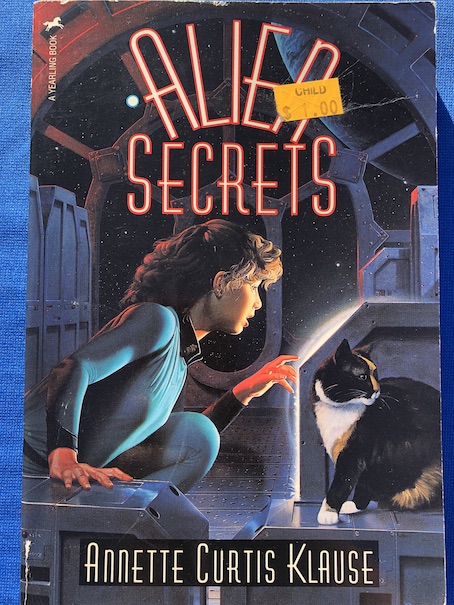







 #1 The Boxcar Children by Gertrude Chandler Warner, 1924, 1942.
 Jestress's Forgotten Books and Stories