Ramona Forever

Ramona is in third grade now, and there are new changes coming in her life. At the beginning of the book, she and her sister Beezus still go to Howie’s house every day after school so Howie’s grandmother can look after them because both of their parents work, although lately Beezus has been finding other places to go after school, like her friend’s house and the library. That’s how Ramona knows from Howie that his rich Uncle Hobart, who has a job in the oil industry, will be coming to visit soon from Saudi Arabia. Ramona mentions it one night at dinner when her Aunt Beatrice is visiting. Aunt Beatrice says that she remembers Hobart from when they were kids and went to the same school, but she hasn’t seen him in years.

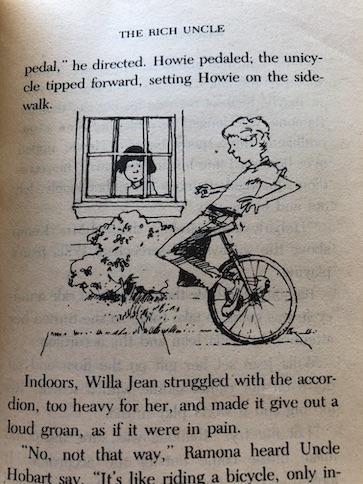
When Uncle Hobart comes, he brings a couple of small camel saddles for Howie and Willa Jean to play with. He also gives Howie a unicycle and Willa Jean a small accordion. When he meets Ramona, he embarrasses her by calling her Howie’s girlfriend and singing a verse from an old song about a woman named Ramona (links repaired Nov. 2023), and Ramona takes an instant dislike to him. She flat out tells him that she doesn’t like adults who tease (Neither do I, and I’m in my 40’s.), and he promises to reform, although Ramona thinks that he’s still joking around and isn’t satisfied.
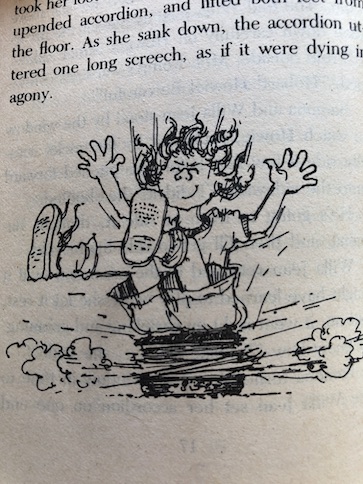
Uncle Hobart takes Howie outside to learn to ride the unicycle, and Willa Jean and Ramona try the accordion. When neither of them can figure out how to use it, little Willa Jean gets frustrated and sits on it, breaking it. Howie’s grandmother, Mrs. Kemp, gets angry at the girls, and Ramona thinks that the accordion was a dumb present to give to a little girl who wouldn’t be able to use it properly for years. Mrs. Kemp tries to shame Ramona to Uncle Hobart, blaming her for the incident. (As if Ramona was the babysitter instead of Mrs. Kemp, who incidentally, is being paid by Ramona’s parents to watch her as well as watching her own grandchildren. Ramona didn’t think of this, but I certainly did.) Ramona never really liked being watched by Mrs. Kemp, but the blaming and shaming makes her realize that Mrs. Kemp actually doesn’t like her and wants to make her feel bad, which is a disturbing feeling from someone who is supposed to be taking care of her. Ramona decides right then that Mrs. Kemp will never look after her again.

When the family talks about the situation at dinner that night, Beezus supports Ramona’s assertion that Mrs. Kemp doesn’t like them, saying that’s the reason why she’s been trying to find other places to go after school. Ramona’s mother asks her if she ever thought that maybe Mrs. Kemp would rather not be a babysitter at all, for either her grandchildren or Ramona, but women of her generation were only brought up to take care of their homes and children, and that’s all she knows how to do, whether she likes it or not.

Personally, I think this is true, but also irrelevant. Mrs. Kemp has a job to do, one that she’s being paid for, and if she’s taking the money, she also needs to take responsibility. Mrs. Kemp blames Ramona for not watching Willa Jean when that was her job, not Ramona’s, and Mrs. Kemp also has a responsibility to Ramona herself because that’s what she’s being paid for. Ramona is Mrs. Kemp’s babysitting charge. She’s a child, the child of paying customers who are specifically paying Mrs. Kemp for childcare. Ramona is not Mrs. Kemp’s personal servant or the babysitter for her granddaughter. Ramona is especially not Mrs. Kemp’s personal therapist or caregiver, who needs to help her manage her emotions or life decisions. Ramona is a child who is only with Mrs. Kemp for the purpose of being cared for by her, so let’s keep it straight who has a responsibility to whom in this situation. Besides not liking adults who tease like bratty children, I also don’t like adults who try to make kids be responsible for things that they should be responsible for themselves. Seeing Mrs. Kemp accepting money in exchange for irresponsibility and a bad attitude about her own general life choices that she takes out on her childcare charges is that much worse. Mrs. Quimby’s insights, while probably true, are also completely unhelpful to the situation. Mrs. Kemp is what she is, and what she is does not make her a good caregiver. Ramona and Beezus are correct to call her on it. Mrs. Quimby is concerned about hurting Mrs. Kemp’s feelings, but I think that should be the least of her concerns in this situation since Mrs. Kemp doesn’t seem to care about the children’s feelings and she’s in a position of trust over them. She is demonstrably not doing the very thing she is supposed to do, which care for the children she is paid to provide with childcare. You have one job, Mrs. Kemp, just one job! Mrs. Kemp is an adult, more than old enough to know better about how to behave and take responsibility for herself and the young children in her care, and she should choose to act like it or be prepared to face the consequences, not continue to get paid and thanked for work she’s not even willing to do, making her young charges miserable every single day. She’s taking advantage of the Quimbys’ desperation for child care, and that’s not right. I wished Mrs. Quimby would step up and support her daughters’ efforts to stand up for their well-being instead of enabling Mrs. Kemp’s bad behavior and making excuses for it, as if it were somehow Ramona’s fault that Mrs. Kemp doesn’t like being a babysitter and that eight-year-old Ramona actually has the power to solve Mrs. Kemp’s life problems. I can only suppose that the reason why Mrs. Quimby doesn’t is that she just doesn’t know where else to find someone willing to watch the girls after school.

Mr. Quimby asks Ramona what she thinks she should do about the situation, and Ramona hates being asked that because she wanted help from the grown-ups, not the responsibility of figuring out the problem with her adult caregiver by herself. Again, I really have to side with Ramona here. It’s not her job to be the adult in this situation, and the older I get, the less patience I have for irresponsible adults. I hated them when I was a kid Ramona’s age (and I ran into plenty of them, too), and I don’t feel any better about them 30 years later. If you want the authority of saying that you’re an adult, you have to take the responsibilities that come with that authority, taking the adult actions and making the adult decisions, not expecting the kids to do your job for you. That’s my attitude. I honestly don’t know what response Mr. Quimby was even looking for from Ramona, either. What can Ramona do if Mrs. Kemp is unhappy about her life choices and doesn’t treat her well because she doesn’t want to be her babysitter? Get some books on psychology from the library and turn into a therapist or career counselor at the age of eight to help Mrs. Kemp work through her emotional issues? Invent a magic potion that will age her to 58 so she can be Mrs. Kemp’s new best friend and they can go out for champagne brunches together instead of Mrs. Kemp babysitting her? What solution are you imagining here, Mr. Quimby? Ramona is an eight-year-old, and what what she thought she should do about this bad situation was talk to her parents, who hired Mrs. Kemp to take care of her in the first place, and get their help. How was she supposed to know that you didn’t want to help her, either? If I were one of the parents in this situation, I’d say that I understood the problem and that I’d think over some other after school possibilities for the girls, maybe look into some temporary care for the girls, possibly in the form of some kind of after school lessons in art or music or sports, paid for with the money that I would have given Mrs. Kemp for babysitting, especially since I already know that the Quimbys are already considering some coming changes for their family that will change their childcare situation. Of course, all of this is setting the stage for what happens next in the story.

Ramona asks if she can just stay home alone after school because some kids do, but her parents don’t like that idea. Beezus says that she could stay with Ramona because she’s in middle school and old enough to babysit. Ramona worries a little that Beezus will be bossy and that they’ll fight with no adults around, but Mr. and Mrs. Quimby agree to let the girls try it for a week while Uncle Hobart is visiting so Mrs. Kemp can spend more time with her son. If the arrangement works and the girls behave themselves, they can keep doing it after Uncle Hobart leaves.

Ramona asks Beezus why she’s so willing to look after her after school, and Beezus explains that things haven’t been to pleasant at her friends’ houses lately. Mary Jane needs to spend a lot of time practicing her piano lessons, and she got into a fight with Pamela because Pamela was acting like a snob and giving her a hard time about her dad’s work situation. Mr. Quimby has had a series of different jobs, and now, he is working only part time and going back to college to train to become an art teacher. Pamela has been bragging to Beezus that her father has a real job and that Mr. Quimby should “stop fooling around and really go to work.” (This is one of those snide kids’ comments that you can tell really came from Pamela’s parents and that she’s just repeating what they say to sound big. Pamela’s parents have probably been bad-mouthing the Quimbys behind their backs to talk themselves up because their employment has been more stable and some people need to look down on someone in order to feel good about themselves. I’ve seen that type before, too. By this point in the story, I had the feeling that the Quimbys seem to know a lot of people who are real jerks in one way or another, and I think it’s time that they made some new friends.) Beezus can’t take it anymore, so she’s stopped speaking to Pamela, which is about all you can do in a situation like that.

Beezus worries about their family’s future because she’s heard that schools are laying off teachers, and she fears that her father might not find a job when he’s done with his degree. She also think that their mother is probably pregnant because of the way that Aunt Bea keeps asking her how she’s feeling and a few months ago, she seemed to be suffering from morning sickness. If that’s true, she probably won’t be able to work much longer because she’ll have to take time off to have the baby and look after it. It make things difficult when the family is already concerned about money, although Beezus says that she wouldn’t mind helping to look after a baby because she likes babies. Ramona worries about the new baby and why their parents would want another child when they already have her and her sister, and she doesn’t like that the adults seem to be keeping important secrets.

The girls try to be extra good and responsible when they’re home alone together so they’ll be allowed to continue staying home alone, but they get into a fight one day when Howie comes over and offers to let Ramona ride his bike because he’s going to practice riding his unicycle. Beezus is afraid that Ramona will get hurt riding the bike and she’ll be considered responsible, but Ramona wants to go ahead and do it anyway because she’s been waiting for Howie to agree to loan her his bike. Ramona likes riding the bike, but she does fall off and scrape her elbow. Beezus refuses to help Ramona clean up afterward because Ramona insulted her before she went bike riding, and Ramona is angry with Beezus. In spite of that, the girls decide not to tell their parents about what happened because they don’t want to go back to Mrs. Kemp and their father specifically tells them not do anything to worry their mother, another sign that she’s probably expecting a baby.

Then, one day after school, the girls discover that their cat, Picky-picky has died, probably of old age. At first, they don’t know what to do, but remembering that they’re not supposed to upset their mother, they decide to bury the cat themselves. The girls are upset, but they manage to bury the cat, and they also make up with each other after their earlier fight. When their parents come home and find out about the cat, they feel badly that the girls had to handle the situation on their own. Mrs. Quimby says that, after they handled this difficult situation, she knows that they can be trusted on their own and that there’s no need for them to go back to Mrs. Kemp.

The girls’ mother finally admits that she’s going to have a baby, and the family begins talking about the new changes that they’ll have to make when the baby comes. The girls wonder who will have to share a room with the new baby, and they come up with ideas for names. Ramona worries about being a middle child now and not the youngest, but her mother reassures her that she still loves her. The Quimbys also consider that they may have to move in order for Mr. Quimby to find a teaching job, although Beezus and Ramona don’t like the idea of moving.

However, there are still more changes to come. Aunt Bea and Uncle Hobart announce that they are getting married! Ramona still doesn’t like Uncle Hobart and doesn’t really want him for an uncle, and after they’re married, they’re planning to move to Alaska because Uncle Hobart will be working in the oil industry there.

Changes aren’t always easy, but the girls enjoy taking part in their aunt’s wedding, and at the end of the book, their mother has the new baby, who turns out to be a girl. They call her Roberta, for a twist on her father’s name. Ramona begins to feel happy and comfortable with the changes in her life because she realizes that she’s growing up.

The book is available to borrow and read for free online through Internet Archive (multiple copies).

Ramona and Her Father

Ramona and Her Father by Beverly Cleary, 1975, 1977.

It’s September, and second-grader Ramona Quimby is already making out her Christmas list. However, Christmas this year might not be what Ramona expects. Her father comes home and explains that he’s been laid off from his job because a larger company bought the company he worked for and laid off the extra workers. Mrs. Quimby has a part time job, but it doesn’t pay much. Everyone in the Quimby family soon becomes worried about money.

Mrs. Quimby finds another job that’s full time, but Mr. Quimby still struggles to find work. Ramona doesn’t like to see her father so worried and stressed, and she tries to think of some way she could also earn money. When her father comments about how much money a boy on a television advertisement must have made, Ramona sets herself to memorizing various advertising phrases and repeating them, hoping to be discovered and hired to make an ad herself. Unfortunately, things that people say on ads don’t work in real-world settings, especially when you tell your teacher that her wrinkled stockings look like elephant skin.

The family has to eat food that they don’t particularly like in order to save money, and they start buying cheaper cat food for their cat. Picky-picky refuses to eat the cheap cat food, and before Halloween, he eats part of the girls’ jack o’lantern in desperation. Beezus, upset at the idea that their cat is apparently starving and desperate, angrily asks her father why they can’t afford Picky-picky’s usual cat food when they seem to have enough money for his cigarettes. (It’s a valid question. During my first semester of college, I totaled up a classmate’s expenses on cigarettes and realized that what she spent on them for a year was about the same as full-time student tuition at our community college, by early 2000s standards.) Her father tells her that’s none of her business, and Beezus retorts that it is her business. Cigarettes are harmful, and Mr. Quimby is spending money on them that the family desperately needs.

Ramona is worried because this is the first time that she’s heard that cigarettes are bad, although Beezus says that she learned it in school. Ramona tries to ask her father if what Beezus said is true, and he just says that he expects to be an old man someday, the kind that tells reporters on his hundredth birthday that he owes his longevity to cigarettes and whisky. This joke doesn’t reassure Ramona. Ramona decides that she’s going to get her father to stop smoking.

Ramona gets Beezus to help her make anti-smoking signs. At first, their father tries to ignore the signs, and then he starts getting annoyed with them. Ramona worries that she’s been mean to her father and upset him too much, but he later admits that she was right and that he’s going to try to quit smoking. Ramona takes him at his word and throws his cigarettes away, although he said that he would rather have cut down gradually. Still, his wife and daughters are happy about him quitting. For awhile, Mr. Quimby is edgy and irritable as he tries to get used to not smoking as well as still looking for a job.

As Christmas approaches, the girls’ Sunday school begins preparing to put on a Nativity play. Beezus gets cast as Mary, which pleases her because Henry Huggins is going to play Joseph. Ramona is so excited about the play that she wants a creative role for herself, and after the shepherds are cast, she says that she wants to be a sheep to go with the shepherds. The Sunday school teacher says that sounds like a good idea, but they’ve never had any sheep in the play before and don’t have a costume for her. Ramona says that her mother could make her one, and other children also say they want to be sheep.

However, as Beezus points out, now that their mother is working full time, she doesn’t really have time to sew a costume. Their mother also says that they can’t afford to buy new cloth for a costume, and the best she can do is an old white bathrobe that she might be able to alter into costume. Ramona’s father snaps at her that she’s been inconsiderate for expecting her to do something like this without asking first. Ramona feels badly and overhears her father calling her a spoiled brat. With his irritability, he’s been picking at her for various things, and one day, Ramona argues with him when she comes home from school and smells cigarette smoke.

Ramona’s father reassures her that he hasn’t purchased any new cigarettes. He just found an old one in a pocket that he forgot that he had and decided to smoke it to see if it would help him feel better. The two of them have a heart-to-heart talk about Ramona worrying about why they can’t be a happy family. Ramona’s father tells her that their family is happy. It’s just that no family is perfect and nobody’s life is perfect, and everyone goes through hard times now and then. The people in Ramona’s family still love each other and do their best for each other even when things are hard and they don’t always get along.

Things improve for the Quimbys as Christmas approaches. Mr. Quimby finally finds a new job. Ramona almost backs out of the Nativity play because her mother didn’t have time to make her a full costume, and she feels silly with what she’s wearing, but she changes her mind with the help of three older girls who were recruited to replace the Three Wise Men who backed out of the play.

One thing that kind of surprised me in the story was that Ramona’s parents seemed mildly scandalized when Ramona and Howie sang “99 Bottles of Beer on the Wall.” Beezus, who learned the song at summer camp and taught it to Ramona says that the neighbors will probably think they’re beer guzzlers after hearing Ramona and Howie sing it all up and down the street. It struck me as weird because I remember that everyone knew that song when I was a kid in the 1980s and 1990s, and nobody thought anything of it. I certainly never heard of anyone being scandalized by it. It’s just a silly counting song, and nobody really thought that any kid singing it had ever had beer. In fact, it was a common song for parents to get their kids to sing on long car trips because it takes a long time to finish, and during that time, the kids aren’t complaining or asking, “Are we there yet?”

The book is available to borrow and read for free online through Internet Archive (multiple copies).
Father’s Arcane Daughter

Father’s Arcane Daughter by E.L. Konigsburg, 1976.

Winston Carmichael lives a very sheltered life during the 1950s. His family is wealthy. They live in Pittsburgh, and he attends a good school, but much of his free time is also taken up trying to entertain his sister, Hilary, called Heidi. He particularly has to look after Heidi every week on Thursday, while his mother leaves to get her hair done. Heidi has some developmental disabilities and is hard of hearing, so Winston’s overprotective family is especially overprotective of her. Because of that and because of her frustrations with her own limitations, Heidi is spoiled and frequently acts out when she doesn’t get her way, making her a pain for Winston to help care for. Even servants have often quit over Heidi’s behavior. However, Heidi’s disabilities are only part of the reason why the children’s parents are overprotective. The other reason is the mysterious disappearance of Caroline, Winston and Heidi’s much-older half sister, from their father’s first marriage. Winston is aware that Caroline was kidnapped years before he was born and is now presumed dead, a traumatic incident in their family. Then, one day, a woman claiming to be Caroline comes to the house to see their father.

The story is actually told in the form of flashbacks as Winston recounts it to a woman, who is at first unnamed. Winston explains how he knew about Caroline’s disappearance and how he wanted to know more about this mysterious woman claiming to be Caroline, partly in the hopes of reducing the shadow that Caroline’s disappearance has cast on all of their lives. The children’s father tells them the story of how Caroline was kidnapped 17 years earlier on her way home from the exclusive college that she was attending in Philadelphia. The kidnappers demanded a large ransom in cash, and it took longer than they thought for Mr. Carmichael to assemble that amount of cash because rich people don’t have all of their money in cash and getting large amounts of cash attracts attention from the authorities. Then, the ransom drop went badly and turned into a shootout between the police and the kidnappers at the house where the kidnappers were hiding. At some point, the house caught fire (no one is quite sure what started the fire), and everyone inside the house was killed. At the time, they assumed that Caroline was one of the people who was killed in the fire, but Mr. Carmichael was never sure because the kidnappers had said something earlier about moving Caroline. He always hoped that maybe Caroline wasn’t in the house and somehow survived, but having heard nothing from her for years, it has seemed likely that she died. After Caroline’s presumed death, her despondent mother died of alcohol-related causes. Mr. Carmichael remarried, and he and his new wife had Winston and Heidi. Still, Mr. Carmichael always hoped that maybe Caroline was alive and he would find her one day.

Caroline’s sudden reappearance, although happy for her father, is strange, and Mrs. Carmichael is suspicious that this woman’s real purpose is to claim the inheritance that Caroline was supposed to inherit from her mother’s family. The deadline for claiming the inheritance is approaching, so the woman claiming to be Caroline could be an imposter who is just after the money. Winston studies his mother’s scrapbook, containing all the known details of Caroline’s life, and he comes to understand his father and his family a little better. Caroline becomes more of a real person in his mind, not just a shadowy figure from the past, but he’s still not sure if the woman claiming to be Caroline is the real Caroline.

“Caroline’s” story is that she was rescued from her kidnapping situation by one of the kidnappers, who apparently had a change of heart, but that she had a kind of identity crisis and a sudden realization that she didn’t know who she wanted to be or what she really wanted out of life. She changed her name to Martha Sedgewick, using information given to her about a dead woman by the kidnapper who released her, and went to Ethiopia. There, she taught English for a time and then worked as a nurse. She says that she found it a very liberating experience. Winston, who feels trapped in his stifling, sheltered life understands that feeling. Caroline said that she fell in love for a time but never married the man she loved because there was a war and he died.

Caroline says that when she finally returned to the United States, she found a job as a nurse at the nursing home where her Grandmother Adkins was living. Caroline says that, at first, she wanted to see her grandmother again and get her opinion about whether or not to reveal herself to the rest of the family. However, Grandmother Adkins was senile when she finally saw her, and Caroline merely acted at her caregiver. Mrs. Carmichael thinks this is suspicious and continually quizzes “Caroline” about old acquaintances, trying to catch her slipping up and revealing herself as an imposter. Surprisingly, “Caroline” never seems to slip, and Winston finds himself becoming fond of her. Caroline has had a wide experience of life and is very well read, and she is a very interesting person to talk to. Winston blossoms intellectually under her influence.

I particularly liked the part where Winston realizes that many of his relatives have given him books to read as presents that they have never read themselves. They like to give him books that have a reputation for being “good” books, and it seems like the proper thing to do and something that will enhance their own reputations, but they never actually read the books themselves and can’t talk about them. Caroline hasn’t read all the books that have been deemed “good”, the kind that people read in order to become educated or have a reputation for being educated. However, Winston can tell by talking to Caroline that she has done a great deal of general reading just because she has a curiosity and a desire to know things. She has become a much more knowledgeable person than the people who collect all the “right” sort of books just to have them and never even open them. Many people in the Carmichael family are largely about appearance, but Caroline has substance.

However, Caroline’s presence in the house makes things uncomfortable for the family, not only because of their doubts about her true identity, but because she challenges the life the family is living and the habits they take for granted. Even though some of those habits have been making life uncomfortable for them, the changes that Caroline subtly begins to make also make them uncomfortable by bringing them out of their shells and forcing them to confront things that they have been trying not to confront. For example, Heidi is never scolded for bad habits like snatching things from others’ plates at dinner because she is young and has disabilities. Caroline doesn’t make those allowances, freely telling the family that she doesn’t like it.

Eventually, Caroline’s father is satisfied that she is his daughter and grants her the Adkins’ inheritance, although at his wife’s insistence, there is a proviso that the fortune will revert to the Carmichaels if any evidence surfaces in the future that Caroline isn’t the real Caroline. Caroline accepts those terms, but a battle of of personalities and wills still continues between her and Mrs. Carmichael over the children. Caroline insists that Winston be allowed more freedom, pointing out that Mrs. Carmichael has been using him as an unpaid babysitter while she goes to get her hair done every week. Caroline recognizes that Winston is young and needs to have some freedom and fun, and Mrs. Carmichael is pained that Caroline has caught on to the fact that her hair appointments are also a convenient excuse to get some freedom for herself.

At Christmas, Winston feels sorry for Heidi, watching other people at the family’s Christmas party, but not being able to understand what is being said around her, and knowing that she can’t understand them. On impulse, he gives her the book of poetry that he had intended to give Caroline. To his surprise, she really likes it. He knows that she can read, but he never thought of her as having the mental capacity to understand anything really complex because of her babyish behavior and fits when she doesn’t get her way on something. However, Heidi really does understand the poems and is able to read them to Caroline and tell her what they mean. At first, Winston refuses to believe it, jealous of the attention and coddling that Heidi has always received and not wanting to share Caroline and the intellectual discussions they have with Heidi.

Heidi continues to listen to their discussions and follow them as best she can. Gradually, in their company, Winston notices that her behavior begins to normalize and more of her true intelligence shows, although she reverts to her old habits around their mother. Hilary/Heidi has always been underestimated by her family because of her disabilities as well as being overprotected. Under Caroline’s influence, she learns that she is capable of more than anyone, including herself, believed possible.

Unfortunately, Mrs. Carmichael still distrusts Caroline, and in her determination to protect Heidi from her influence, will not allow her to spend time with her anymore. Caroline tells Winston that she is tired of all the Carmichaels’ pretenses, the way they try to ignore the real issues with Heidi, and she gives him an envelope, which she says will provide Winston with all the evidence he needs to decide whether she’s the real Caroline or not. Winston has to decide which is more important to him, learning whether the Caroline he knows (or thinks he does) is a pretense or accepting the realities of his family’s problems and the help Caroline can offer in learning to deal with them.

There is also a movie version of the book called Caroline? I saw the movie before I read the book, but I’ll explain the difference between the two below because it involves some spoilers.

The book is available to borrow and read for free online through Internet Archive.

Themes, Spoilers, and My Opinions

The everyone in the story, even the children, speak in a very educated and deep-thinking way, which I found interesting. At first, I thought that the children, especially Winston, should speak a little more colloquially, but then, I decided that it’s really right for him to speak in a more erudite way because of the school he attends and because much of the story emphasizes that he has been very sheltered and largely cut off from forming the sort of childhood friendships that children his age have, so he would probably use much less slang than most kids his age.

During the story, Winston is in the habit of thinking of Heidi by insulting terms, like “troglodyte”, because she is strange and awkward and her weird habits and temperamental fits cause problems for him, like preventing him from bringing friends to the house. At a couple of points, he thinks of her as a “golliwog”, which is an insulting racial term, based on a style of old dolls that look like black-faced minstrels, and later, even Heidi describes herself that way. (The term was actually coined in an old children’s book, where one of these dolls comes to life with some other toys. The doll character was actually a nice character, but since the dolls are considered ugly, its meaning has become an insult.) Winston doesn’t mean that in the racial sense here. He’s trying to convey that Heidi has an awkward, abnormal appearance.

As Winston opens up to Caroline, he finally admits to her that he knows that Heidi is “damaged”, not “special.” In other words, he understands that Heidi has disabilities and that she has been deliberately spoiled by their mother who wants to protect her from having to deal with them. Their mother herself has trouble facing the realities of Heidi’s disabilities and is actually ashamed of her daughter for not being normal, so she tries to ignore them, covering them up with cuteness, pretty dresses, presents, and indulgence. Heidi’s babyish behavior early in the story is not because her mind is infantile, but because of the coddling and overprotection she has received and poor socialization, and also because her family is afraid to face the difficulties that lie ahead for her because of her condition and underrates her capacity to do what other children can do and learn what they learn. It’s true that Heidi has some physical disabilities from birth, and she needs a hearing aid to help her hear (she reads lips up until the point that Caroline insists on her getting a hearing aid) and braces to help correct the way she walks, but her mind is excellent. Through Caroline’s attempts to help her, Heidi herself comes to realize how limited her life has been and the potential she has to expand it if she gets the help she really needs to learn how, and she eventually stands up to insist on what she wants for herself, asking her brother to kidnap her and take her to Caroline to get the help she needs and wants. Caroline acknowledges to Heidi, without being ashamed of her or trying to hide the truth, that she is not “normal” and never will be completely normal, but tells her that if she’s willing to work at it, she can realize her true potential in life, and ultimately, that’s what Heidi wants.

The movie followed the themes of the book very well, showing the effect that Caroline has on the lives of the Carmichaels, helping Hilary/Heidi to realize her true potential, helping her parents to realize what she is capable of and what she needs to make the best use of her real talents, and helping Winston to find his own sense of independence. There are some differences. In the movie, for example, Caroline wasn’t kidnapped. Supposedly, she was killed in a plane crash, although her body was never positively identified, and there was some doubt in her family about whether or not she got on the plane. In the movie, Caroline gives a similar story about feeling the need to go out and find herself, but I think she says that she became a nurse in India, not Ethiopia. (It’s been a while since I’ve seen the movie.)

One thing I am grateful for is that both the book and the movie do give a definite answer to the question of whether “Caroline” is the real Caroline or not. I’m often frustrated with movies and stories that leave loose ends like that, like Disney’s Candleshoe, where they never completely establish whether Casey/Margaret is really Margaret.

When Hilary/Heidi decides that she wants the help of Caroline and a friend of hers, who is a doctor, she asks Winston not to open the envelope. Winston keeps it sealed for years, but Hilary (who long since dropped her childhood nickname) is the women he’s talking to when he’s telling the story from his perspective, and at the end, they decide to open the envelope together and find out the truth.

Do you want to know the truth about Caroline?

The Real Spoilers

So, is Caroline actually Caroline, the same Caroline who was kidnapped and evidently killed years before? No, actually she’s not. She really is Martha Sedgewick, the identity that she supposedly took when she said that she was going off to find herself in Ethiopia. However, she is not posing as Caroline for the sake of the inheritance; she’s doing it for the sake of the family and the children. Grandmother Adkins put her up to it.

Martha really was a nurse in the nursing home where Grandmother Adkins lived before her death. She had lived in Ethiopia with her parents, who had died, and so had the man she loved, as she had said before. She had returned to the United States, alone, lonely, and depressed, before getting a job at the nursing home. Grandmother Adkins noticed her striking resemblance to Caroline, and in her confused stated of mind, sometimes thought that she was Caroline. She talked to Martha about the family all the time, which is how she knew all the right details for playing the part of Caroline. Grandmother Adkins knew that if Caroline never returned to claim her inheritance from her mother, that money would pass to Mr. Carmichael, and by extension to his new wife, whom Grandmother Adkins detested. Toward the end of her life, Grandmother Adkins urges Martha to go claim the Adkins inheritance as Caroline – revealing that, in spite of her supposed senility, she has been deliberately coaching Martha to be Caroline for that purpose. Martha decides to go through with the pretense, not because it was Grandmother Adkins’ dying wish or because she really wanted the money, but because she saw Mr. Carmichael at the funeral and was touched by how sad and lonely he looked. Martha didn’t have a family, so she decided to give Mr. Carmichael his daughter back.

In the end, she actually developed romantic feelings for Mr. Carmichael, but she could never admit to them because of their established relationship as father and daughter. Mr. Carmichael might have felt the same way, but he also couldn’t admit to those feelings without destroying the pretense that Martha was his daughter and admitting that Caroline was really dead. Martha came to love the children, and since she realized that they would never be her stepchildren, she did her best to be their big sister.

Miss Trollope, Caroline’s old headmistress, figures out the truth, and “Caroline” openly discusses the situation with her, including her desire to return to college and learn to educate children with disabilities, like Hilary. The real Caroline’s grades were never good enough to attend a university, but Miss Trollope approves of what “Caroline” wants to do and the good she is doing for the Carmichael children, so she does nothing to reveal the pretense or hinder Caroline’s education. However, Miss Trollope later admitted the truth to Hilary when she pressed her for answers.

The reason why Hilary and Winston are discussing this situation and telling the story in the book is that “Caroline” has just died. Hilary is now a business executive, and Winston is a writer. Hilary is a decisive person as well as intelligent, and she decides to put the papers proving Martha/Caroline’s true identity in her coffin, under her head, to be buried with her. Winston says that Hilary is mysterious and arcane, providing the title of the book. Caroline’s life was hidden and arcane, but Hilary’s true depths are also hidden and arcane because of the person she is.

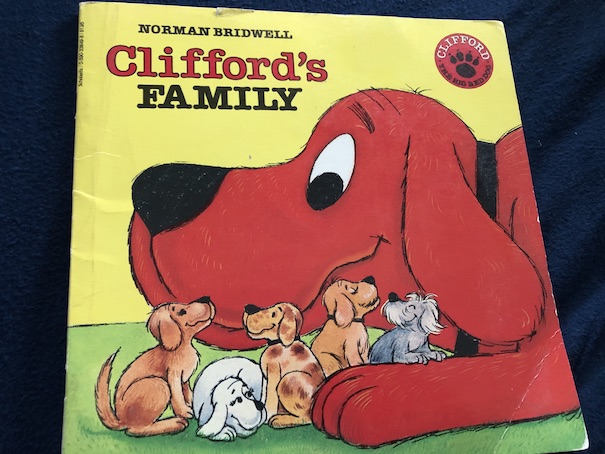
Clifford's Family

Clifford

Clifford’s Family by Norman Bridwell, 1984.

Emily Elizabeth and her enormous dog, Clifford, were both born in a big city, although they live in a smaller town now. They decide to go back to the city and visit Clifford’s mother, who is still there.

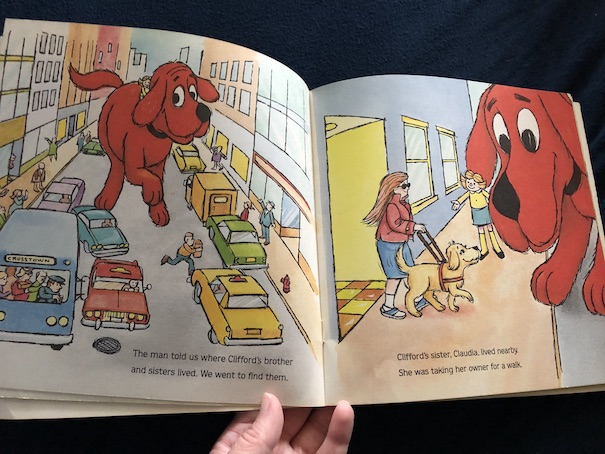
Clifford’s brothers and sisters all live with different people now, so they decide to visit them, too. Clifford’s sister, Claudia, has become a seeing-eye dog.

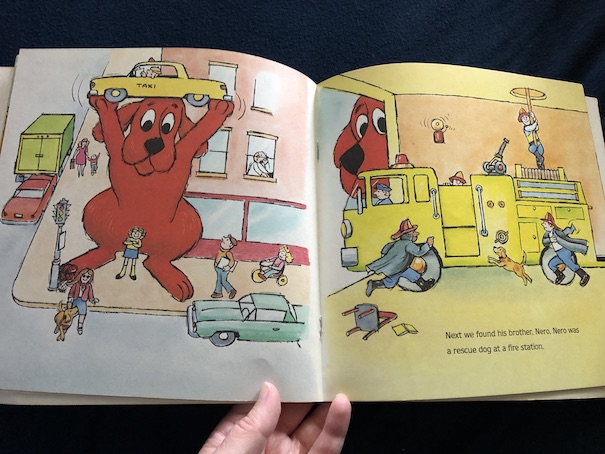
His brother, Nero, is now a fire rescue dog.

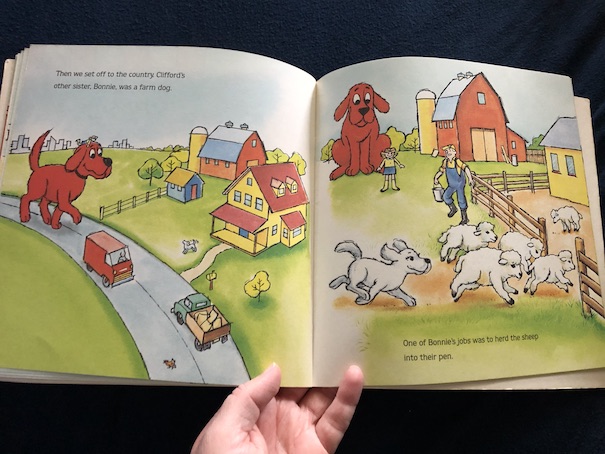
Clifford’s other sister, Bonnie, lives on a farm and herds sheep.

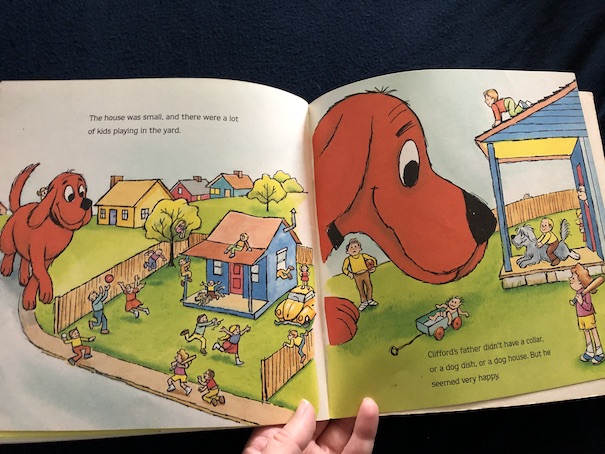
Clifford’s father doesn’t live with his mother. He lives in a house in another town with a lot of children, and he loves playing with them.

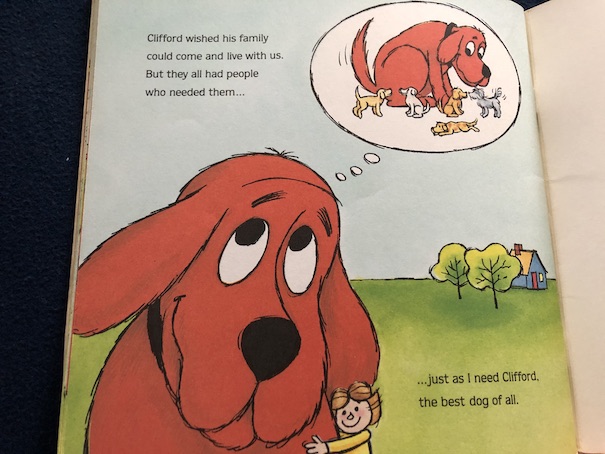
Clifford wishes that his family could live together, but he understands that every member of his family has other people who also need them.

I thought that this book did a good job of pointing out some of the jobs that dogs do, like seeing-eye dog, rescue dog, and herding dog. Clifford and his parents are all companions animals, like most pet dogs, but his siblings all have specific jobs to do for their owners.

The book is available to borrow for free online through Internet Archive.

Stellaluna

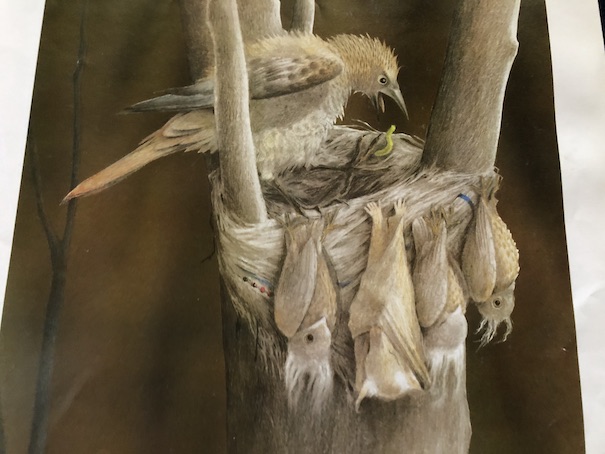
Stellaluna by Janell Cannon, 1993.

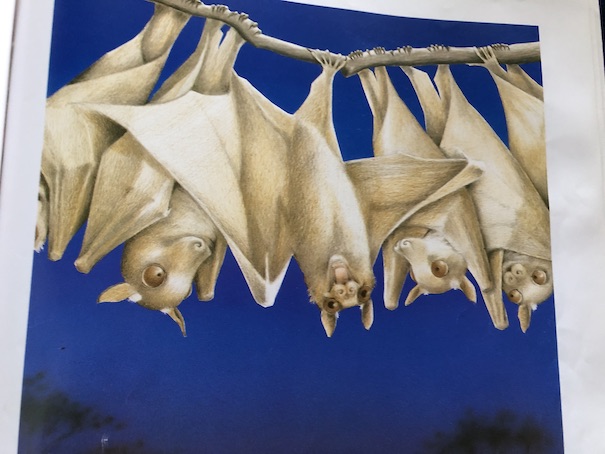
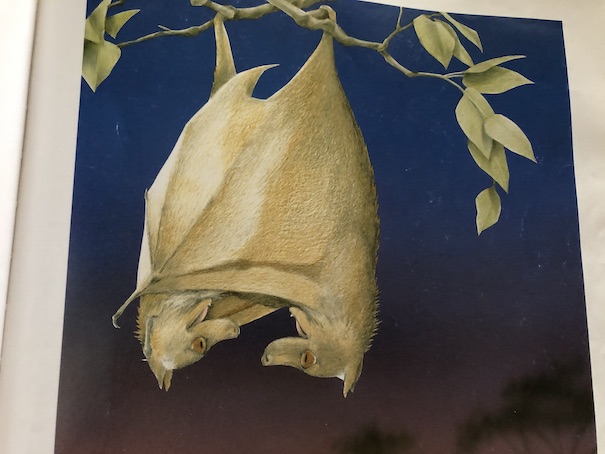
Stellaluna is a baby fruit bat. Every night, her mother carries her along while she goes looking for food.

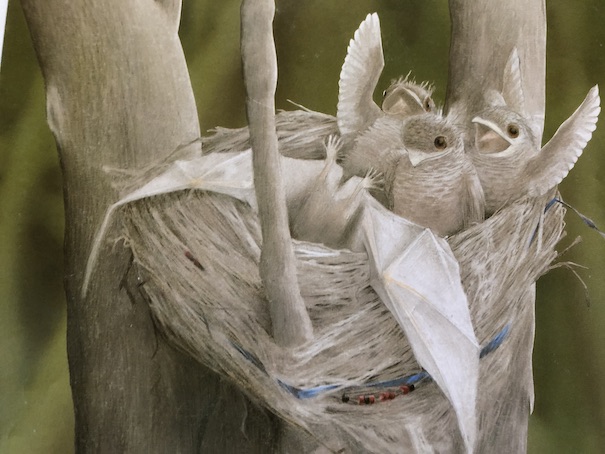
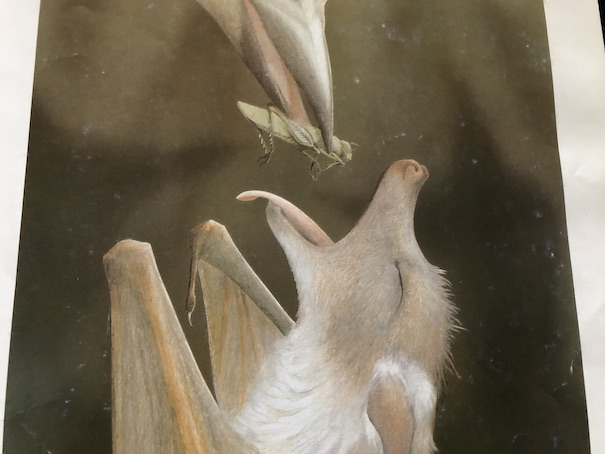
One night, they are attacked by an owl, and Stellaluna falls into the trees below. First, she is caught by some tree branches, and then, she falls into a bird’s nest. Stellaluna doesn’t really like the bugs that the mother bird brings her babies to eat, but she eats them anyway because she gets hungry.

Gradually, Stellaluna adopts the habits of the birds, staying awake during the day and sleeping at night. She tries to sleep upside down, hanging from the nest, but the mother bird stops her because the baby birds try to imitate her, and she’s afraid that they’re going to break their necks. The mother bird continues to care for Stellaluna, but insists that she obey the rules of their nest, which means that Stellaluna has to act like a bird.

Eventually, both Stellaluna and the little birds learn how to fly. However, Stellaluna has trouble landing on branches like the birds do. One day, she flies farther than the birds do and doesn’t return to the nest at night. She falls asleep in a tree, hanging by her thumbs because the mother bird told her not to hang by her feet, and she is found by another bat.

The other bat explains to Stellaluna that she is a bat, not a bird, and tells her that hanging by her feet is normal bat behavior. Soon, other bats come to look at Stellaluna, and Stellaluna’s mother recognizes her as her child.

Stellaluna is overjoyed to learn that her mother escaped from the owl, and her mother is glad to finally have her child back. Her mother begins teaching her what it means to be a bat, how to eat fruit instead of bugs, and how to see in the dark.

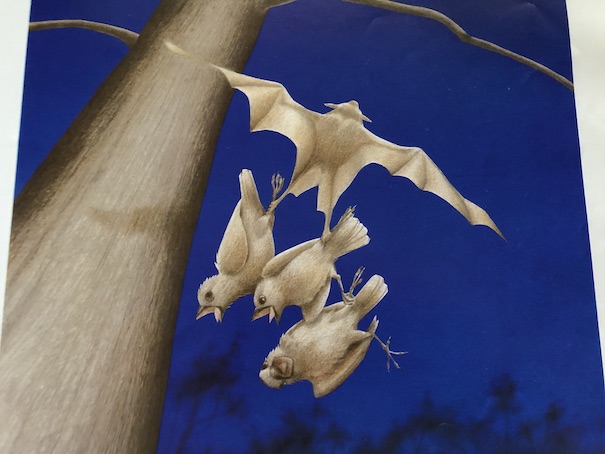
Stellaluna returns to the birds to introduce them to her bat family. The birds try to go on a night flight with Stellaluna, but they can’t because they can’t see at night like Stellaluna. Stellaluna helps them find a safe branch, and they talk about all the ways they are alike but yet very different. They decide that they will remain friends even though they have to live different types of lives.

This is a nice story about how people can love each other even though they are very different. The mother bird cares for Stellaluna like she is one of her children, even though Stellaluna is not a bird and has strange habits. Her insistence that Stellaluna act like a bird is because it is necessary for her to do so in order to live in the birds’ nest, and the birds are not able to live like bats and teach her how to be a bat. Eventually, Stellaluna has to return to the bats and live like the bat she is, but she still loves the birds who raised her and were like her brothers and sisters. It’s a little like human foster families. A foster family isn’t quite like a person’s birth family, and foster children have to adapt to new ways of doing things, but foster families can offer the affection of a birth family and help the children grow and reach the places where they really need to be in life.

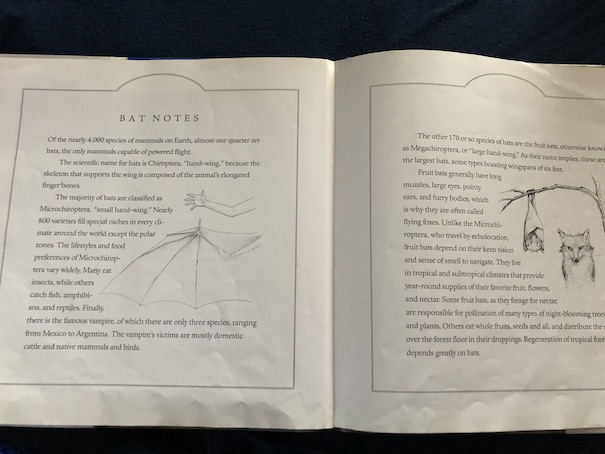
The book ends with a section of non-fiction information about bats.

The book is available to borrow for free online through Internet Archive (multiple copies). It is a Reading Rainbow book.

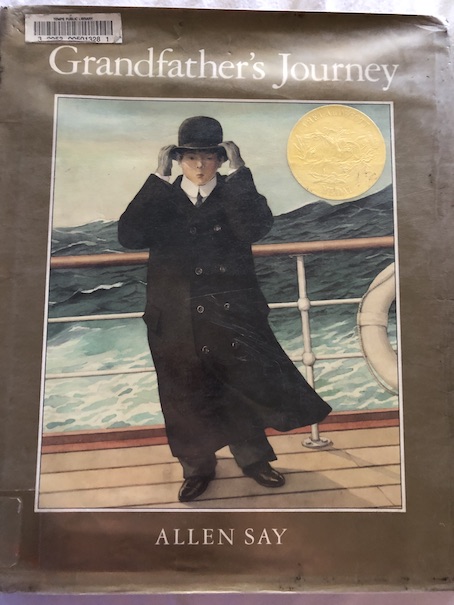
Grandfather’s Journey

Grandfather’s Journey by Allen Say, 1993.

A man describes how his grandfather traveled by ship from his home in Japan to the United States. The time period isn’t specified, but from the context of the story, the grandfather’s original journey would have taken place either at the end of the 19th century or at the beginning of the 20th century.

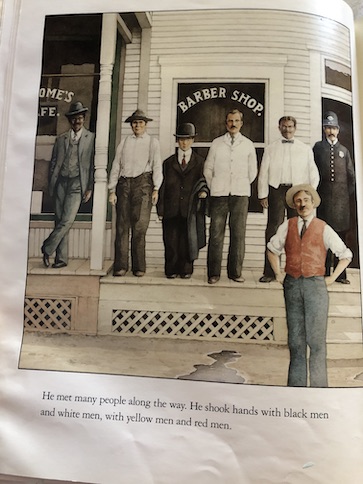
As a young man, the future grandfather travels all over the United States, seeing the sights and meeting all kinds of interesting people. It’s a bit of an adjustment for him, wearing Western style clothing and getting used to life in a new country, but he enjoys the adventure of it. He decides to settle in California, the part of the United States that he likes the best. He briefly returns to Japan to persuade his girlfriend to marry him and return to the United States with him.

The grandfather and his wife have a daughter in the United States, and they enjoy living there, but as the daughter grows older, the grandfather realizes that he misses Japan and wants to return home. He and his wife move back to Japan with their daughter.

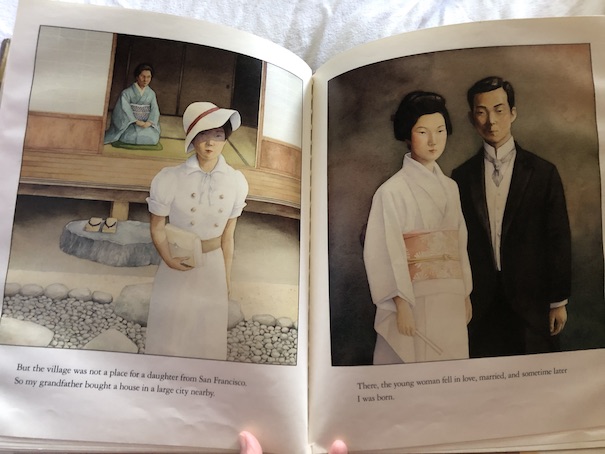
The daughter has to learn to adjust to life in Japan after having lived all of her life so far in America. The family moves to the city because life there is more what their daughter was accustomed to than life in the countryside, where they were originally from.

Later, the daughter grows up, gets married, and has a son, who is the author of the book. The grandson describes being young during World War II and the devastation in Japan during the war. (This is part of what dates the earlier part of the story.)

Toward the end of his life, the grandfather finds himself growing nostalgic about his time as a young man in the United States and wishes that he could return to California one more time. Unfortunately, the grandfather dies before making the trip. Instead, his grandson goes to the United States to see the places that his grandfather told him about.

Like his grandfather, the grandson stays in the United States for a time and has a daughter of his own. He comes to understand how his grandfather felt, missing Japan when he is in the United States and missing the United States when he is in Japan. The world is vast and full of fascinating places to explore, but there is always something to miss and feel nostalgic about, no matter where you are. The grandson continues to travel back and forth between the United States and Japan, enjoying both of them.

The book is a Caldecott Medal winner. It is available to borrow for free online through Internet Archive.

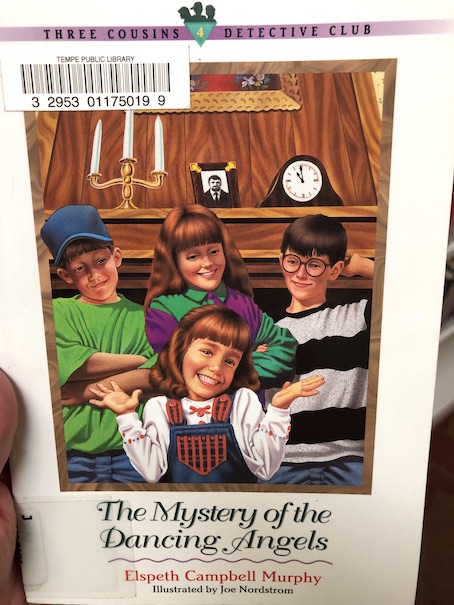
The Mystery of the Dancing Angels

Three Cousins Detective Club

#4 The Mystery of the Dancing Angels by Elspeth Campbell Murphy, 1995.

Sarah-Jane, Timothy, and Titus are visiting their grandparents over the summer when their grandmother’s cousin comes over to discuss some information she has found about their family’s genealogy. The kids’ great-great-great-grandfather was a woodcarver, and he did some work in a large house that is now being restored. There is a story that an expensive ruby necklace that belonged to the former owners of the house may be still hidden somewhere on the property.

The prospect of exploring the old house and maybe finding the missing necklace sounds exciting, but the kids also must spend their time looking after their distant cousin, Patience, who is only four years old and has a tendency of getting into trouble.

When little Patience disappears inside the house, the kids are worried, but she soon returns with the answer to a riddle that has been passed down in their family for generations. Dealing with little kids requires patience, but Patience herself notices details in the woodwork in the house that the adults and older children haven’t noticed.

The theme of the story is patience.

The book is available to borrow for free online through Internet Archive.

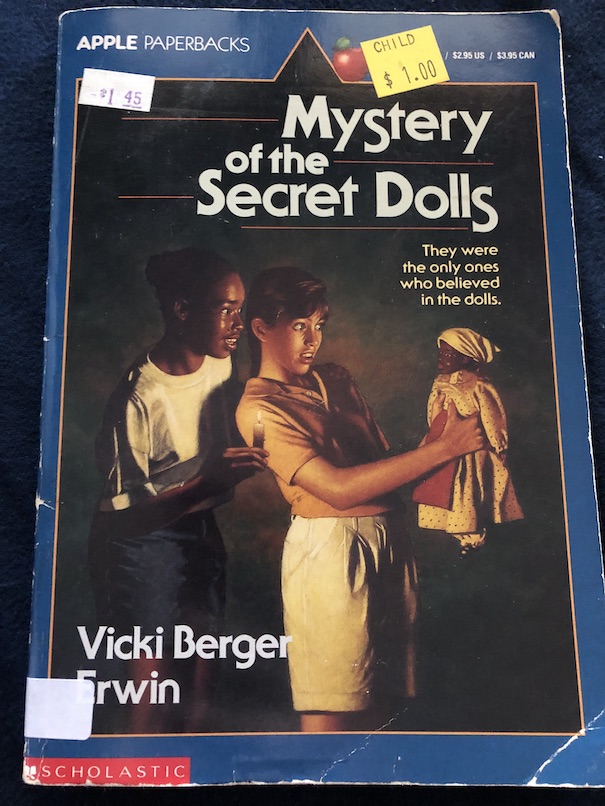
Mystery of the Secret Dolls

Mystery of the Secret Dolls Cover

Mystery of the Secret Dolls by Vicki Berger Erwin, 1993.

Bonnie Scott is visiting her great-aunts, Nell and Mollie, in Callaway County over the summer. Aunt Nell invited her to come and help set up her new doll museum, but Bonnie also wants to take advantage of the trip to work on a project about family history. Aunt Mollie has a restaurant, and Bonnie wants to talk to her about old family recipes that she uses and make a book about them. Unfortunately, when Bonnie arrives in her aunts’ town, she learns that Aunt Mollie has closed her restaurant and is helping Aunt Nell with her doll museum. From Bonnie’s awkward arrival, when no one comes to meet her at the bus stop and Marc, the grandson of the local doctor, Dr. Allen, has to help her find her way to her aunts’ house, she begins to see that things aren’t quite what she thought they were in her family and in her aunts’ town.

The reason why no one came to meet Bonnie is that Aunt Nell accidentally injured herself when she fell off a table she was standing on in order to change a light bulb. She broke her leg and had to go to the doctor. Now that Aunt Nell is in a wheelchair, she says that she will especially need Bonnie’s help, although Aunt Nell and Aunt Mollie also have a young black girl, Lynette Key, staying with them and helping out. Lynette is the daughter of an old family friend, and her family’s history is intertwined with Bonnie’s family. Through her aunts and Lynette, Bonnie comes to understand a little more about her family’s history with dolls and the relationship between Aunt Nell and Aunt Mollie.

Aunt Nell is the older of the two sisters, and she’s been bossing Aunt Mollie around for years, and she’s apparently the one who convinced Mollie to close her restaurant and help her with the doll museum project. The old family home belongs to both of them, although Mollie lived in another house while her husband was still alive. Now that both women are childless widows and Mollie has moved back into the family home, Nell has gone back to her old ways of bossing Mollie around. Bonnie is alarmed when Mollie reveals that there has been a break-in, vandalism, and a fire, apparently deliberate, at the museum, and she thinks that Nell should put off the opening, but Nell is trying to ignore the situation and charge ahead with the project, dragging Mollie and Bonnie with her. The aunts are going to have a security system installed at the museum.

Aunt Nell says their family, the Scotts, have made dolls for about 150 years. She shows Bonnie her doll collection, including the portrait dolls, startlingly realistic dolls made of every member of their family, including Bonnie’s ancestors, like her great-great-great-grandfather who fought for the Confederacy during the Civil War. Aunt Nell apparently strongly identifies with the South and Confederacy because she keeps trying to blame the troubles at the museum on “some Yankee.” Not in a specific sense and not necessarily with any particular person in mind (although there is one person who is also labeled as a Yankee who is a suspect for awhile), it’s more that she just generally associates Yankees with bad stuff, and she says that she hopes that Bonnie hasn’t turned into a Yankee from living in a big city like St. Louis. Although the dolls belong to both of the sisters, Aunt Nell really thinks of the dolls as being hers, and she’s determined to make Bonnie’s family history project about the dolls, whether Bonnie wants it to be or not. Aunt Nell says that Lynette’s grandmother used to work for her, making dolls, and she’s pleased that Lynette shares her interest in dolls, but Lynette privately tells Bonnie that the situation goes deeper than that.

As you might have guessed, Aunt Nell’s mental version of history, including the history of her own family, isn’t entirely accurate. Marc lends Bonnie a history book about the area written by his grandfather, but Lynette tells Bonnie not to let Aunt Nell see it because she and Dr. Allen have very different views about history, and Dr. Allen is a “Yankee.” Bonnie asks her what she means by that, and Lynette says that the Scotts have never gotten over being on the losing side of the Civil War. Dr. Allen, by contrast, believes that the Civil War turned out just fine with the South losing, which makes him a Yankee. It matters because Aunt Nell’s interpretation and attitude toward the past is affecting life in the present.

Although Aunt Nell is mentally on the side of the Confederacy, she doesn’t say anything in support of the idea of slavery and doesn’t seem to have bad feelings about Lynette being black. Nell is actually very fond of Lynette, treating her almost like a young niece, and I suspect that Nell probably mentally replaces the word “slave” with “servant” in her head, as some of the other characters in the book do until Lynette reminds them that there’s a difference and it matters. Nell’s attachment to her family’s grand history (which may not be quite what she makes it out to be) and her feeling that the doll-making business must pass to a blood relative keep her from fully seeing the potential that Lynette has to continue the doll-making traditions that their families both share, something that Lynette really wants to do.

Lynette says that women in her family have worked for the Scott women for generations, making dolls. They were originally slaves belonging to the Scott family, and they even shared the same last name because slaves were sometimes given the surnames of their masters. (In my home town, I’ve met black people with the surname White, which might seem a little odd and contradictory, but this is the probable reason why they have that last name.) Some slaves changed their last names after Emancipation, but not all. Lynette says that even after her ancestors were freed from slavery, one of her ancestors, Rosa, chose to keep the last name Scott because of her connection to the doll-making business.

Lynette points out a section in Dr. Allen’s history book about the Scott dolls having a connection to the Underground Railroad because some of them seemed to have been used as signals for escaping slaves. Margaret Scott, an ancestor of Bonnie’s, used to make black dolls, each with a distinctive little red heart sewn on the chest, and after she made one, a slave would mysteriously disappear. She eventually had to stop doing it because people in the area were getting suspicious of her and put pressure on her to stop. In fact, Lynette says Margaret’s own father, the Confederate colonel, tried forced her to stop, saying that he’d close down her doll-making business if she didn’t, but that Margaret and Rosa actually continued making the black dolls in secret, something that Aunt Nell doesn’t believe. The history book notes that the dolls are rare and valuable collectors’ items. Lynette says that Aunt Nell only has one of these black dolls, and she keeps it locked up for safe-keeping, denying that there even are others, but Lynette is sure that there are more, possibly hidden somewhere. Lynette wants to find these dolls, not only because they are valuable but because they can help prove her family’s connection to the Scott doll-making business. Lynette says that her ancestors never got the credit for the beautiful dolls they made because they were only ever slaves or employees of the Scotts, and the entire doll business was in the Scott family name.

Lynette wants to become a doll maker herself, but Aunt Nell really wants Bonnie to take over the family tradition, even though Bonnie has never really been interested in dolls and would prefer to talk cooking and recipes with Aunt Mollie. The realistic dolls portrait dolls actually kind of give Bonnie the creeps, but Lynette has a sentimental attachment to them because she’s been around them all her life, since her grandmother was a doll maker. Once Bonnie understands the history between her family and Lynette’s and Lynette’s doll-making ambitions, she sees why Lynette seemed a little cold to her at their first meeting, but she isn’t interested in learning the doll business or competing with Lynette to be Aunt Nell’s successor. Even though Aunt Nell is bossy and doesn’t understand Lynette’s deep desire to be a doll maker and continue the Scott doll-making business, Lynette kind of likes her and wants to show her that she is just as attached to the doll-making traditions as she is. Lynette and Bonnie make a deal that Lynette will help Bonnie get the recipes she wants from Aunt Mollie if Bonnie will talk to Aunt Nell about the black dolls and try to get more information about them.

Bonnie thinks that hunting for the long-lost dolls sounds exciting. It occurs to her that the valuable dolls might be the reason why someone broke into the doll museum. The aunts’ old house is spooky, right next to a graveyard, and on Bonnie’s first night there, someone leaves Margaret’s portrait doll (which looks a great deal like Bonnie) in Bonnie’s room with a note that says, “Don’t believe everything you hear.” What does the note mean? Who left the doll, and is it connected to the other strange things happening around the doll museum? Is someone trying to scare Bonnie? Are the missing black dolls still somewhere nearby, and can Bonnie and Lynette find them? What is the real truth about the dolls and what happened in Callaway years ago?

The book is available to borrow and read for free online through Internet Archive.

My Reaction and Spoilers

Although this story doesn’t quite deal with racism in the sense of people hating other people because of race, there is a lot in here about the nature of prejudice, on several levels. Aunt Nell has many preconceived notions about her family and how things in her family ought to be. She assumes from the beginning, when Bonnie contacts her aunts to talk about family history, that Bonnie will do her project about the dolls and the family’s doll-making history and that Bonnie will help her with her doll museum and eventually take over the dolls from her. Aunt Nell started out their relationship with a lot of assumptions, and her assumptions about Bonnie have blinded her to the possibility that Lynette could be the successor to the doll-making business and doll museum that she really wants because they share a common love of dolls and skill in making them. Lynette has already started learning the doll-making business, first from her grandmother and then from Nell, because she loves it, and she is willing to work at developing her skills. She has a similar vision to Nell about the doll business and museum, and the two of them get along well, in spite of Aunt Nell’s bossy personality. It’s only Aunt Nell’s narrow vision of family and sense that the doll-making business should pass to family that keep her from considering the possibility at first. Meanwhile, Bonnie and Mollie are both being forced to go along with Nell’s plans because of what Nell thinks they should do as family, while they both have very different interests and would like the freedom to pursue them. Aunt Nell also has been assuming many things about her sister Mollie for years.

Over 100 years earlier, Margaret Scott also belonged to a family that did not share her interests and her vision of the future. Although she used slave labor in building her doll-making business, she and Rosa found a way to use their craft to help escaping slaves. The Scott family took pride in the doll-making business for generations, but there were sides to Margaret and the dolls that they didn’t understand and appreciate. Before the end of the book, Aunt Nell comes to understand that their family has more variety than she had ever considered and that her goals might not be everyone’s goals.

The ending of the story makes sense and is realistic, but I’ll admit that there were a couple of points that I might have clarified or done differently if I had written the ending. Sometimes, when I’m not entirely satisfied by the ending of a book, I like to say what I would have changed about it, but it’s difficult to do that here without giving too much away. Part that I can say is that I wished that Nell and Mollie had thought of more creative ways to combine their separate interests, like how Bonnie’s final family history project ends up being a combination of both – a cookbook of family recipes, illustrated with pictures of the portrait dolls that represent the people who invented or enjoyed the different recipes. In fact, a cookbook of historical recipes with pictures of historical dolls sounds like a book that many people would actually be interested in buying if they published it professionally and even sold copies through the doll museum, and I found myself wishing that one of the characters would mention that before the end of the book.

The story ends with the impression that Lynette will keep working with Nell and the dolls because, while Bonnie says that she’ll come back and visit, she doesn’t have the interest in doll-making that Lynette does, but I also kind of wished that they would clarify more definitely that Lynette would be continuing the doll-making business. The girls are young yet, so maybe they didn’t feel the need to decide their futures definitely, and it’s enough just to show that’s how things are looking at the end of the book. I had half expected that it would turn out that Lynette and Bonnie are actually related because sometimes slave owners did have children with their slaves, and I suspected that one of the Scott family secrets might have been that Rosa was actually a blood relative and that was part of the reason why she was so close to Margaret and why she kept the Scott family name. The story doesn’t bring up that possibility, focusing on a different secret relationship instead, but I’m still keeping it in mind as a private theory. I like the idea because, if it was true, then it would strengthen Lynette’s ties to the doll-making business she loves, and I think that Nell would appreciate the idea of bringing her more fully into the business as a relative. But, perhaps it’s enough that they just both share the same interest in life

The Hundred Penny Box

The Hundred Penny Box by Sharon Bell Mathis, 1975.

Michael’s great-great-aunt, Aunt Dew (short for Dewbet), has moved in with him and his parents because she is one hundred years old and no longer able to live on her own.  It has been a big adjustment for the entire family, but even though Michael has had to give up space in his room for her, he is glad that she has come to live with them because the old woman fascinates him.  She is (apparently) extremely absent-minded, often calling Michael by his father’s name, John, although some of that seems to be deliberate because she wishes that Michael’s parents had named him after his father.  Other times, she seems to forget that she’s no longer living in her old house or just starts singing an old spiritual song, forgetting what she was talking about before.

John is extremely fond of his elderly aunt because she raised him after his parents died in a boating accident, and she loves him like a son.  Aunt Dew’s own sons are long grown and gone.  However, Michael’s mother, Ruth, finds Aunt Dew’s presence in the house difficult.  Ruth thinks that Aunt Dew doesn’t appreciate some of the nice things that she does for her, and she thinks that Aunt Dew doesn’t like her.  It’s not completely true, but Aunt Dew does seem more comfortable around Michael after spending many years of her life raising boys, and Aunt Dew admits to Michael that she finds it difficult to talk to Ruth because they don’t know each other like she and John do. Aunt Dew and Ruth also have a conflict over some of Aunt Dew’s old possessions.

Aunt Dew is upset that Ruth got rid of some of her old things after she moved in with them.  Michael thought it was a mean thing to do, and Aunt Dew misses these objects.  When Michael argues with his mother about these objects, Ruth explains to him that she’s not trying to be mean.  Ruth compares Aunt Dew to a child, like Michael, saying that she “Thinks she needs a whole lot of stuff she really doesn’t.”  Ruth sees it as just clearing out things that are old and worn out and no good in order to make room for newer, nicer things, comparing it to when Michael got old enough to realize that he didn’t need his old teddy bear that was falling apart and was willing to get rid of it along with some other things in order to make room for Aunt Dew to move in.  Ruth sees clearing out old things as a way to move forward in life and thinks that it’s important to help Aunt Dew adjust to her new life with the family.  However, a lot of Aunt Dew’s long life and past are tied in with some of these objects, and as a one-hundred-year-old woman, Aunt Dew has more past behind her than future life to make room for.  Michael helps her to hide some of them in her closet to keep them from being thrown out, but he’s particularly concerned about her hundred penny box.

When Aunt Dew’s husband was alive, he started a penny collection for her with one penny to represent every year that Aunt Dew has been alive.  After his death, Aunt Dew continued to collect pennies, putting another penny into the box every year to represent her age.  Michael loves the pennies in the box because, when he counts them with Aunt Dew, she will stop him at certain years and tell him stories about things that happened during those years, telling him a lot of family stories.  Michael’s mother isn’t interested in taking the pennies, but she thinks that the old box they’re in is too worn out and should be replaced with something else.  However, Aunt Dew sees that box as being like herself: old and worn and holding all of the years of her life.  To throw it out would be almost like throwing out Aunt Dew herself.  Michael’s mother doesn’t see it that way, but Michael sees the connection.  To try to save the box, Michael hides it from his mother.

The conflict about Aunt Dew’s things isn’t really resolved by the end of the story because Michael’s mother still doesn’t understand how Aunt Dew feels, and we don’t know if she will come to understand or if the box will remain hidden or not.  I found parts of the story frustrating because Ruth doesn’t seem to want to listen to either Aunt Dew or Michael, discounting them as the kid and the old lady.  Even though Ruth is frustrated with Aunt Dew, I think that part of it is her fault for not really listening or trying to understand how she feels. This may be part of the reason why Aunt Dew feels like she can’t really talk to Ruth. To be fair, Ruth doesn’t mean to be mean, but at the same time, she kind of is because she’s too stuck on what she thinks is best and that idea that she knows better than a young boy and an old woman to consider that her ideas might not be what’s best for her family and family relationships and that she needs to give a little. My guess is that she’ll understand how Aunt Dew feels when she’s also an old woman, with more past than future ahead, but with a little imagination and empathy, I think she could see that decades sooner.  I remember reading this book when I was a kid and liking it for the concept of the hundred penny box and the old woman’s stories, but I find the lack of resolution a little frustrating now.  It’s one of those books that makes me want to sit the characters down and explain a few things to them, but I can’t.

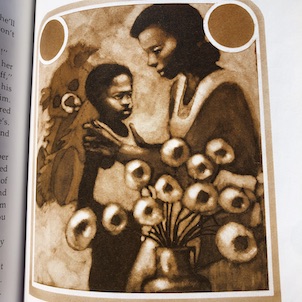
Besides the concept of the penny box, I’m also fascinated by the name Dewbet, which I’ve never heard anywhere else besides this story.  The pictures in the book are also unusual, and there’s a note in the back of the book that explains a little about the art style.  The pictures, which are in sepia tones, are painted with water colors, and the light areas were made with water and bleach.

This is a Newbery Honor Book, and it is currently available online through Internet Archive.

There is also a short film version that is available to buy or rent from Vimeo. Teachers Pay Teachers has lesson plans for this book. If you would like to see a reading and discussion with the author of the book, there is a copy on YouTube.

Nellie’s Promise

American Girls

Nellie’s Promise by Valerie Tripp, 2004.

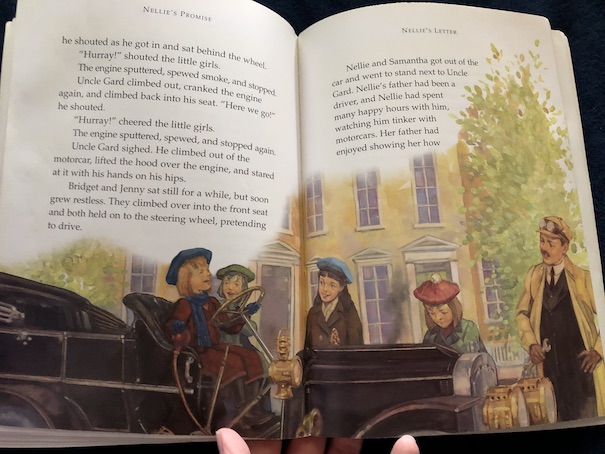
This book is a companion book to the Samantha, An American Girl series, focusing on Samantha’s best friend, Nellie. Personally, I don’t like the companion books to the main American Girls books as well as the original books, but this book does follow up on the events to the main series. At the end of Samantha’s series, Samantha’s aunt and uncle took in Nellie and her sisters, Bridget and Jenny, after their parents died. Nellie and her sisters were from a poor family and had to start working from a young age before their parents died. After their parents died, their disreputable uncle abandoned them, and they were sent to an orphanage before Samantha discovered where they were. Samantha’s aunt and uncle are wealthy, and the girls’ lives have improved considerably.

Nellie’s happiness is threatened by the sudden reappearance of her Uncle Mike. Uncle Mike sees Nellie walking down the street in her nice new clothes and wants to know what rich family the girls are living with. Nellie runs away from him, but he threatens to find out where she’s living and to take her and her sisters back, saying that it’s his right as her uncle. He says that he means to put the girls to work earning money for him. Nellie is afraid that he might be able to reclaim them from Uncle Gard and Aunt Cornelia because he is a blood relative.

At first, Nellie is afraid to tell anyone that she’s seen her uncle and that he threatened to take her and her sisters back. Before her parents died, her mother made her promise to look after her younger sisters, so Nellie makes up her mind that’s what she’s going to do.

Nellie worries about the future for her and her sisters. She feels like she doesn’t fit in with the wealthy girls at Samantha’s school, who have had very different lives from hers, and the lessons they learn are the type of lessons for fine young ladies who will marry rich men and spend most of their time raising families, overseeing a house with servants, and entertaining friends and their husbands’ business associates, not preparing for practical professions outside the home. Nellie thinks that it’s important that she have some kind of job skills because the future can be very uncertain, and she wants to know that she can provide for her sisters, no matter what happens.

Samantha senses that Nellie is unhappy, and she asks her if she likes living with Uncle Gard and Aunt Cornelia. Nellie tells her that she does, but she hesitates to explain what’s really worrying her. Instead, she lets Samantha think that she just wants to feel like she’s doing something useful for the family. Before her parents died, Nellie used to get sewing lessons at a settlement house (a place where immigrant families could go to learn English, new job skills, and other skills they would need in their new lives in the United States) run by Miss Brennan. Aunt Cornelia is involved with many good causes, and she wants to visit a settlement house and get an introduction to Miss Brennan. Because Nellie knows Miss Brennan, she can help arrange that. It’s in a rough part of town, but Nellie is more accustomed to navigating rough neighborhoods than Samantha or her aunt. It also occurs to Nellie that she could ask Miss Brennan what to do about Uncle Mike.

Miss Brennan is glad to see Nellie, and she lets her show Aunt Cornelia and Samantha around the settlement house. They have many different types of classes for children as well as adults. Nellie says that she likes the practical classes that she used to have there, and even the types of dances that they do seem more practical than the more purely artistic ones that they do at the school she now attends with Samantha. Aunt Cornelia is pleased with the classes that they offer for women, and because she is interested in women’s education, decides that she wants to help out at the settlement house. However, the visit to the settlement house leaves Samantha irritated for reasons that Nellie doesn’t fully understand.

As Nellie begins spending more time with Aunt Cornelia at the settlement house, Samantha begins spending more time with Bridget and Jenny, and Nellie becomes jealous of how Samantha seems more like their older sister than she is. However, the others still don’t know about Uncle Mike’s reappearance, and Nellie is still fearful of what he might do and what will happen to her and her sisters if Uncle Mike tries to take them away. She feels like her only option is to try to prepare herself for a better job than that of factory worker.

When Nellie finally gets the courage to tell Miss Brennan about her worries, Miss Brennan tells her that she needs to discuss the situation with Uncle Gard. Uncle Gard is a good man, but he’s also a lawyer, and he will know how to legally stop Uncle Mike from trying to take custody of the girls. However, Miss Brennan adds that, whatever else happens, Nellie will still need to make some decisions about her future and what she wants to do with her life and education. The more Nellie thinks about it, the more certain she is about what she wants to do. She wants to become a teacher, like Miss Brennan.

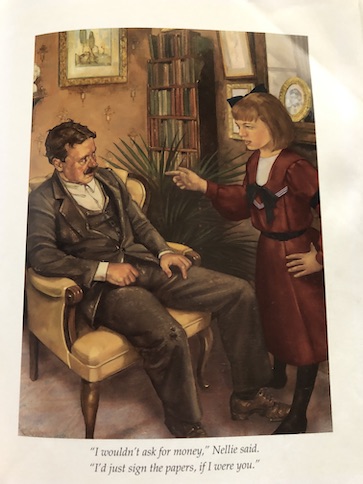
Nellie provokes more drama by applying to the boarding school in Boston where Miss Brennan said that she trained to be a teacher without talking to Aunt Cornelia, Uncle Gard, or Samantha about her decision or about her uncle. However, when the truth comes out about Uncle Mike, everyone understands that she was trying to hide and protect her sisters from him. It turns out that Uncle Gard has actually been looking for Uncle Mike because he already has the documents that he needs to legally adopt Nellie, Bridget, and Jenny, and he just needs Uncle Mike to legally release them into his custody. At first, Uncle Mike tries to extort money from Uncle Gard for the girls, but Nellie gets up the courage to tell him off, promising that if he doesn’t sign the papers and leave, she’ll tell everyone about how he stole all of their money and abandoned them to freeze the last time they were in his custody. The book ends happily, with Aunt Cornelia and Uncle Gard adopting the girls and understanding Nellie’s ambition to be a teacher. They enroll Nellie in a school in New York that teaches the skills she really wants so that she can continue living with them and not go to Boston. It also turns out that Samantha was mostly uncomfortable at the settlement house because she felt so sorry for the young children there and that spending time taking care of Bridget and Jenny was part of her way of trying to help Nellie by leaving her more free to do some of the things that she felt like she had to do. With everything out in the open, Nellie and her sisters are able to more fully become part of the family.

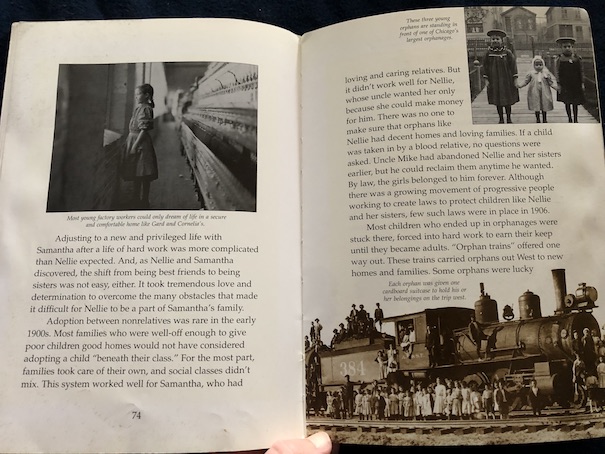
In the back of the book, there is a section with historical information about orphans and adoption in the early 1900s. There were not many laws and regulations governing care of orphans. Usually, orphans would be taken in by relatives, like Samantha was when her parents died. If a child didn’t have any relatives who were willing and able to take them, the child might be sent to an orphanage and possibly sent west on an orphan train as Nellie almost was at the end of the Samantha series. Families didn’t usually adopt children from different levels of society.

Settlement houses were important resources for poor immigrant families, and the education they received allowed immigrants to enter higher professions than servant or factory worker, which had been the primary source of income for many of them. It was common for settlement houses to help train young women to become teachers. There are still similar institutions and organizations in operation in 21st century America.

The book is available to borrow for free online through Internet Archive.

My Reaction and Further Historical Information

Part of the reason why I don’t like the companion books as much as the original American Girls series is that they tend to get more dramatic than the original books, and sometimes, I feel like the attitudes of the characters are less realistic for their time periods than they were in the original books. I think what made the original books more realistic was the restraint of the stories – they had their share of excitement and sometimes drama, but they never went overboard. The return of Nellie’s disreputable uncle struck me as both unlikely and unnecessary to Nellie’s and Samantha’s larger stories.

The historical details in this book are good. What they say about orphans of the time is basically true, although they note in the historical information section in the back of the book that Nellie’s experience of being adopted by a wealthier family was not typical of the time, and I think that’s part of what bothers me. Adoptions in general during the early 1900s were less formal than they are in modern times, and the idea of Uncle Gard hiring a private detective to find Uncle Mike and get him to sign legal documents doesn’t seem entirely realistic. I think it would have been more realistic to me the way that the last Samantha book ended, with Uncle Mike leaving and the assumption that none of the characters would see him again.

The reason why Nellie and her sisters were sent to the orphanage and why the orphanage was considering sending Nellie west on the orphan train was that no one expected that Uncle Mike would ever want to see the girls again. He’d already taken everything he could from them and left with them with no concern for what would happen to them. In the time that has passed since then, I would have expected that Uncle Mike would already have gotten into trouble that would keep him busy and out of their lives, maybe ended up in prison for being drunk and disorderly or hopping from job to job or begging for money as their little money ran out. Even if Uncle Mike had some thought of finding the girls, I don’t think it’s likely that he would have succeeded or even gotten close on his own because he is not that bright and he is not the kind of person who makes friends in places where he’s been before. I doubt that his former neighbor who took his nieces to the orphanage would have told him much if he had shown up again, looking for them. She knew that he was a drunk who abandoned the girls, and she made it clear that she didn’t like him. The people at the orphanage would have probably sent him away with no information because they would probably view the situation as closed since the girls are already placed out and Mike may not even have any proof of his identity and relationship to the girls. There is no such thing as a driver’s license during this period and many people did not even have birth certificates, so it’s possible that the people at the orphanage could simply choose to disbelieve this disreputable character and send him away. When I was watching a documentary about the orphan trains, former orphan train riders said that the orphanages that sent them west deliberately took notes from them that had their living parents’ addresses and otherwise cut off contact with living parents because they wanted the children to sever their ties to their difficult pasts and devote their attention to their new families, not maintain contact with the parents who were unable to care for them financially, so I wouldn’t expect that anyone at the orphanage in these books would go out of their way to reunite the orphaned girls with a rather shady uncle when they knew that the girls were already placed with a wealthy family and no longer their responsibility. Without help, which would be unlikely to be forthcoming, it doesn’t seem likely that Uncle Mike would be able to stumble on the girls by accident. As mentioned in Changes for Samantha, New York is a big city, people can be difficult to find if you don’t have a hint of where to look, and the wealthier part of the city where Nellie and her sisters live now is not a part of town where a guy like Uncle Mike would be likely to hang out. They could all easily live in New York City for years without meeting each other.

I feel like the situations in the story were a little contrived. By now, I would have thought that Nellie would know that Uncle Gard is a lawyer and would be the best person to ask about the laws. I don’t recall the earlier books saying what Uncle Gard did for a living, but Nellie lives with him now, and I would think that someone would have mentioned Uncle Gard’s profession by now. In the book, it oddly seems like as much of a surprise to Nellie as it is to the readers. I could believe that Nellie would go to the settlement house and do volunteer work there with Aunt Cornelia because it was already established in the previous books that Aunt Cornelia supports good causes, and although women of her level of society didn’t usually work for living, supporting good causes and charitable works would have been acceptable. Nellie’s level of knowledge seems a little odd, considering that she needed extra tutoring in basic subjects, like reading, in Samantha Learns a Lesson. In that book, Nellie never mentioned settlement house lessons, which she would have done if it hadn’t been a sudden decision to insert that this in book. Here, Nellie talks about classes that she had at the settlement house, where I would have expected to have more lessons to improve her reading, and it seems like she learned more there than she seemed to know before, even knowing a few words of foreign languages. In Samantha Learns a Lesson, one of Nellie’s skills was her ability to do math quickly handle money because she used to do the shopping for her mother, and in this book, she mentions that she helped to teach immigrants about American money, which she never mentioned before. These things are necessarily contradictory, but it all just seems a little off because they don’t quite fit into Nellie’s established character and history, and it implies that Nellie has had more education and training than she seemed to have before. It’s not necessarily impossible for a girl of Nellie’s time to know some of these things, but it’s the departure from what was already established about Nellie and her situation in life than kind of grates on me.

I think it could be reasonable for Nellie to develop the ambition to be a teacher. Even Samantha has previously some interest in that direction, having helped to tutor Nellie before. Not all women of this time went on to higher education, but those who did might attend a normal school, which is basically a college that focuses on training teachers. By contrast, the daughters of wealthy, high society families would be more likely attend a finishing school that emphasized social skills and entertaining more than academics. Both Samantha and Nellie are about twelve years old during this story and would be a little young for either of these options, but Samantha’s school seems to be more inclined toward preparing the girls for a finishing school. Given Aunt Cornelia’s interest in education and social causes and Uncle Gard’s support of it, I would expect that Samantha would be more likely to attend a women’s liberal arts college when she gets older, preparing her to marry a well-educated and culturally aware man as well as a wealthy one and probably engage in some form of social work and/or the arts in her spare time, but that’s just a guess. (I discussed some of this already in my review of Happy Birthday, Samantha. See also the book Daddy-Long-Legs for a description of what that might have been like for a girl of Samantha’s and Nellie’s time. The book was written a little later in than the time period of this book, but it’s set at about the right time for Samantha and Nellie to be old enough for college and includes characters of approximately their social backgrounds.) This book doesn’t really go into the subject, but if that’s the case, Samantha’s future might not be as different from Nellie’s as it first seems, and there might be a kind of middle path that both of them could choose. The Finch College in Manhattan, which was a fairly new preparatory school in Samantha’s and Nellie’s time, seems like it would have been a good option for both Samantha and Nellie, catering to upper-class girls while focusing on a more practical liberal arts education than the less academic finishing schools. Its founder, Jessica Finch, was a women’s rights activist and may have moved in similar circles to Aunt Cornelia. Her attempts to balance theoretical and practical knowledge sound like they would have appealed to the characters in the story. I’m not an expert on the Finch College, only having heard a little about it, but I think a school like that would present an intriguing possibility for the girls’ futures.