The Ordinary Princess

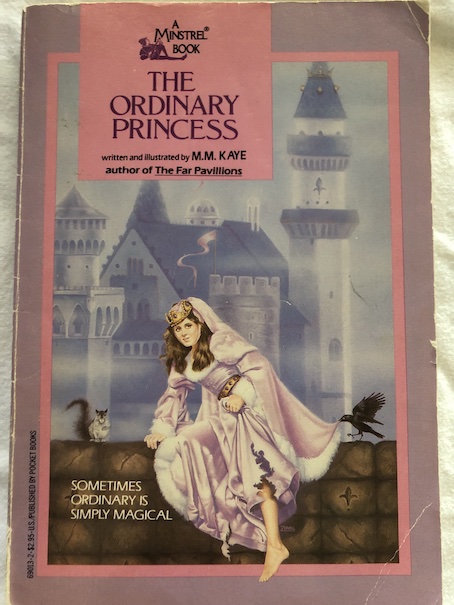
The Ordinary Princess by M.M. Kaye, 1986.

Lavender’s blue,
Rosemary’s green,
When you are king,
I shall be queen.

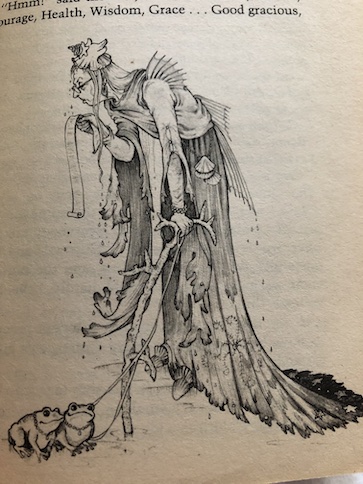
Everyone is excited when a seventh princess is born in the kingdom of Phantasmorania.  Everyone knows that seventh princesses are always the luckiest and the most beautiful.  Indeed, when Princess Amethyst Alexandra Augusta Araminta Adelaide Aurelia Anne is born, she is a beautiful baby who never cries and who has perfect blonde curls and blue eyes.  But, when one of her fairy godmothers, Old Crustacea, comes to the christening to give her blessing and sees all the perfect presents everyone has given her and little Princess Amethyst’s six perfect older sisters, she decides, “I am going to give you something that will probably bring you more happiness than all these fal-lals and fripperies put together.  You shall be Ordinary!”

Of course the king and queen are horrified, but there’s nothing to be done.  From that day on, Princess Amethyst becomes an ordinary baby who grows up to be an ordinary girl.  She cries when she’s hungry and tired.  Her golden hair darkens from golden blonde to a mouse brown and loses its curl.  She gets freckles!  Sometimes, she even makes spelling mistakes!

While everyone else is distressed at Princess Amethyst’s (now called Amy most of the time) lack of perfection, Amy realizes that Old Crustacea was right about it making her happier.  While her perfect sisters must behave themselves and keep their clothes clean, Princess Amy sneaks off to run and play.  She meets ordinary people, makes new friends, and has fun adventures.

But, eventually, all of her sisters grow up and get married.  When it’s Princess Amy’s turn, most of the princes aren’t interested because she’s not the beautiful, perfect seventh princess that she’s supposed to be.  Amy would be alright with that, but when her father and his advisors come up with an outlandish scheme to attract a prince that involves a dragon, Amy decides to put a stop to it by running away.

For a time, she lives a carefree life in the forest, but eventually, like all ordinary people do, she realizes that she’s going to need money to buy new clothes.  On the advice of Crustacea, she journeys to a neighboring kingdom and finds a job in the palace there as a kitchen maid. 

Actually, she finds more than that, finding her place in the world and someone who loves her for the ordinary princess that she is.

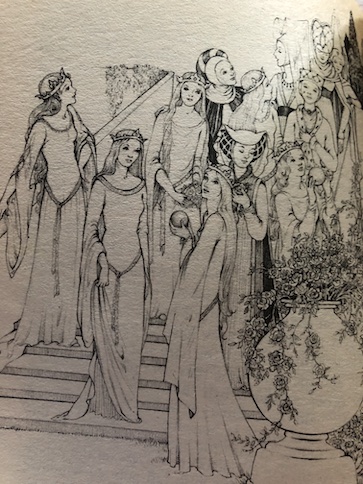
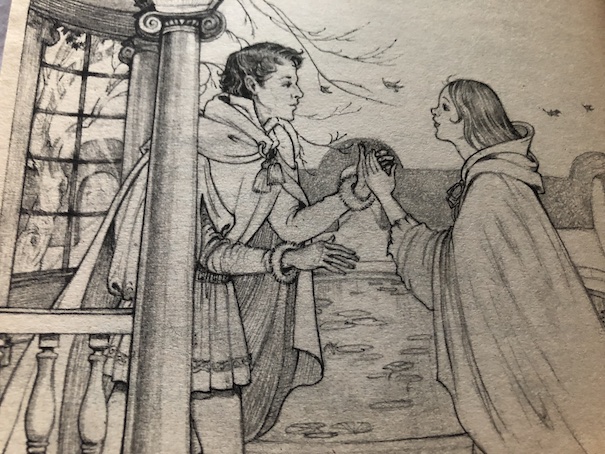
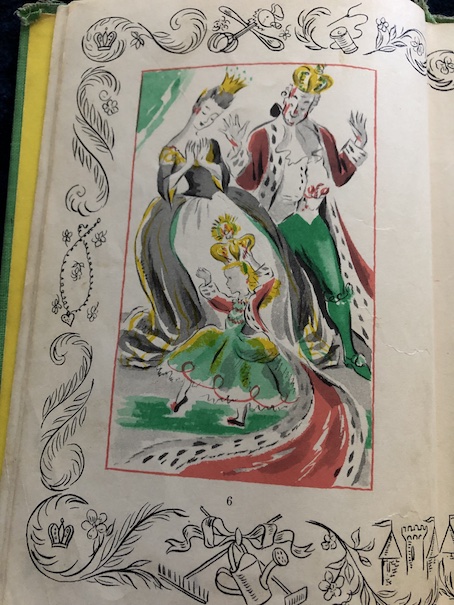
The book is divided into four parts, each of them titled after a verse from a version of the old folk song Lavender’s Blue (most versions say “lavender’s green” instead of “rosemary’s green”, although I do like saying “rosemary” better – this is the tune). The book also contains many small, black-and-white illustrations alongside the text.

It is available to borrow and read for free online through Internet Archive.

My Reaction

I think this is a beautiful book with a good message for girls. Being glamorous or trying to conform to someone else’s idea of perfection doesn’t bring as much happiness as knowing who you really are and finding someone who loves you and wants to live the same kind of life you do, imperfections and all. Not every “prince” out there is looking for the same type of “princess,” just the one that’s right for him. In the end, Amy finds a king who is just her kind of person.

The Dragon Charmer

DragonCharmerThe Dragon Charmer by Douglas Hill, 1997.

This is a great fantasy story about a girl who learns to face her fears and persevere in spite of them. It has a good moral and is encouraging to anyone who failed at something but wanted to try again.

Elynne Danneby is afraid of dragons, which is a shame because her family makes its living by dragon charming. Every year, the dragons stop by her family’s farm on their migratory path, and Elynne’s father puts on a show for people who come to see the dragons. By playing a special tune on his pipes, Dan Danneby can put the dragons into a trance and safely walk among them. Only certain people have the ability to charm dragons. Elynne possesses that talent, but she has been unable to use it since she made a mistake while trying to charm dragons when she was a small child. They tried to attack her, and her father had to save her from them. Ever since, the dragons have terrified Elynne, but she is still fascinated by them and desperately wants to conquer her fear in order to charm them like her father does.

DragonCharmerPicThen, one day, a rare crimson dragon comes to the farm and lays an egg. It is extremely uncommon to see a dragon’s nest or a baby dragon, and Dan is excited about trying to charm the baby after the egg hatches. However, Dan’s assistant is greedy and decides to steal the egg and sell it. Elynne overheard him talk about his plans before the egg was stolen, but because she wasn’t sure of what she heard, she didn’t tell anyone. Elynne feels guilty about not preventing the theft of the egg, and in spite of her fear, she is determined to get it back. In the process, she not only conquers her fear but learns about a talent that she never realized she had.
The book is full of black-and-white drawings in a sort of cross-hatch style.

The book is available to borrow and read for free online through Internet Archive.

The Secret of Roan Inish

The Secret of Roan Inish (aka The Secret of the Ron Mor Skerry) by Rosalie K. Fry, 1957, 1959 (first US edition), 1995 (movie tie-in).

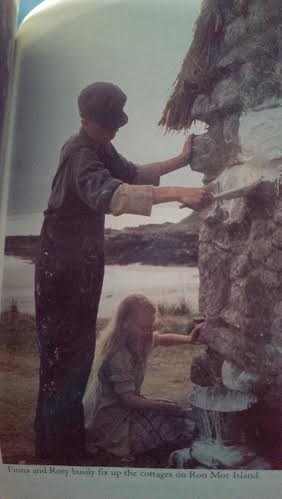
This is the book that the movie The Secret of Roan Inish is based on. The movie tie-in book contains the text of the original book, which was called Secret of the Ron Mor Skerry (Child of the Western Isles), and pictures from the movie (the original book had black-and-white drawings). The movie follows the plot of the original book fairly well, although the location was changed to Ireland and some of the names were altered to reflect the change in location. For example, the family name in the book was McConville, not Coneelly, and Fiona’s cousin was Rory in the book and Eamon in the movie. My book, like the original, takes place in Scotland, and notations under the pictures call the characters by their original names.

Ten-year-old Fiona has been living in a big city ever since her family left the island of Ron Mor about four years earlier to seek new jobs and new opportunities. However, Fiona’s health has been poor, and her doctor has advised her to return to the seaside for the healthier atmosphere. The book begins with her journey to stay with her grandparents who still live close to Ron Mor. Fiona’s homecoming is tinged with both sadness and hope, as she reflects on the mysterious disappearance of her baby brother the day that her family left the island.

Although her brother apparently floated out to sea in his cradle after being left unattended on the beach, Fiona has the feeling that he is still alive somewhere close to the island. She learns that her cousin Rory also believes the local rumors that the boy is still on Ron Mor in the company of the seals that populate the area around the island. Moreover, Rory and other family members share Fiona’s longing to return to their old home and their family’s traditional way of life as fishermen. Fiona’s determination to find her younger brother and bring him and the rest of their family home to the island is touching and emphasizes the importance of family ties.

There is also an element of fantasy because of the story that Fiona’s grandfather tells about the family’s heritage, which helps explain their special connection to the sea and seals around the island. He and other members of the family believe that one of their ancestors was a selkie, a magical person who could change into a seal.  The story is gentle and upbeat, which makes a nice change from a lot of modern children’s books.  I think that it’s just plain magic.

Something that the book clarifies, which is more vague in the movie, is that everyone in Fiona’s family, except for her little brother, has red hair.  All of the McConvilles always have red hair, except for those who are apparently closer to their Selkie ancestry, who have very dark hair.  They couldn’t clarify that point in the movie because the girl playing Fiona is blonde, and everyone else has different hair colors, but that’s why her brother is so markedly different in his appearance.

Physical copies of the original book are expensive collectors’ items, but there is good news: it’s now available on Kindle and through Internet Archive (where you can borrow an electronic copy for free), so if you’re nostalgic or just curious, it’s easier to read it now!

The Plain Princess

The Plain Princess by Phyllis McGinley, 1945.

I would dearly love to see this book in print again!  It’s a charming modern fairy tale about a young princess who learns what beauty and happiness really mean.

Esmeralda is the only child of the king and queen, and she has just about everything that a girl could want. The author paints a pretty picture of Esmeralda’s charmed life at the castle and all of the beautiful things she has.

However, Esmeralda has one serious problem: she is plain. In her kingdom, in order for a girl to be considered beautiful, her nose must turn down, her mouth must turn up, and her eyes must have a twinkle in them. Esmeralda’s appearance is exactly the opposite. It is a serious problem because her plainness causes people to lose respect for her, and the prince that she is betrothed to refuses to take much of an interest in her.

Although her parents consult the finest physicians and wizards available, none of them can provide any solutions for Esmeralda’s condition. It is only after the king places an advertisement in the newspaper that a widow, Dame Goodwit, with five daughters of her own comes to the castle and offers a solution. However, she insists that Esmeralda must come and live with her family for nine months. At first, Esmeralda is distressed at leaving her home and living in much simpler circumstances that she is accustomed to, but the reasons soon become as plain as the princess herself.

As Esmeralda interacts with and becomes friends with Dame Goodwit’s daughters, Annabelle, Christabelle, Dulcibelle, Floribelle, and Echo, she comes to see herself and her old life at the castle differently.  At Dame Goodwit’s, she is expected to take care of herself and her belongings by herself, for the first time in her life.  She is given chores to do and becomes responsible for herself in ways that she never was before.  She also comes to see that, even though Dame Goodwit’s daughters are not princesses, in many ways, they are more knowledgeable and accomplished than she is, able to do many things that Esmeralda has never even tried before.  Little by little, Esmeralda learns and tries new things, even coming to enjoy her time with the family and becoming especially fond of little Echo, the youngest girl.  Her new experiences change her, her behavior, her attitudes, and eventually, even the way she looks.

The book is available to borrow and read for free online through Internet Archive.

My Reaction

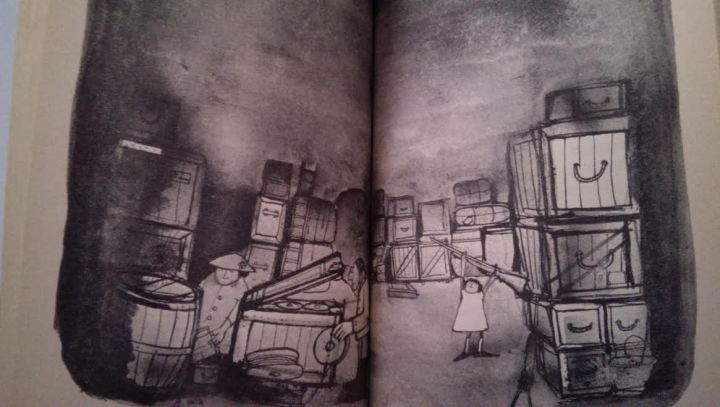
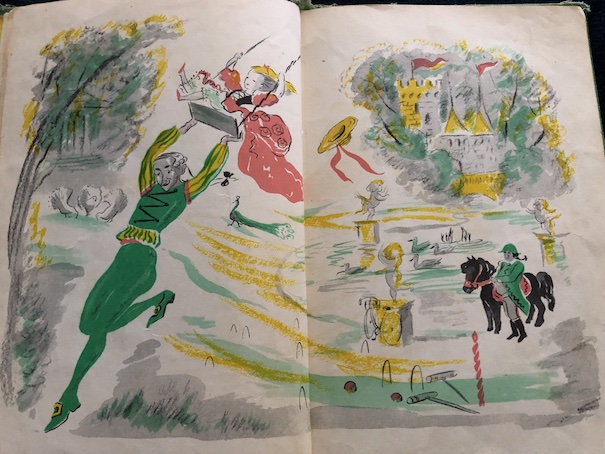
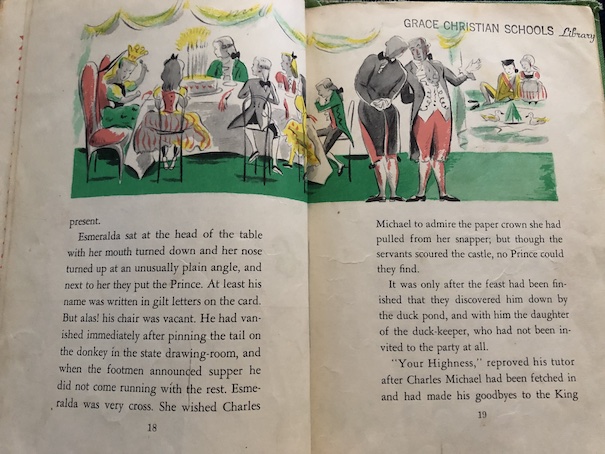
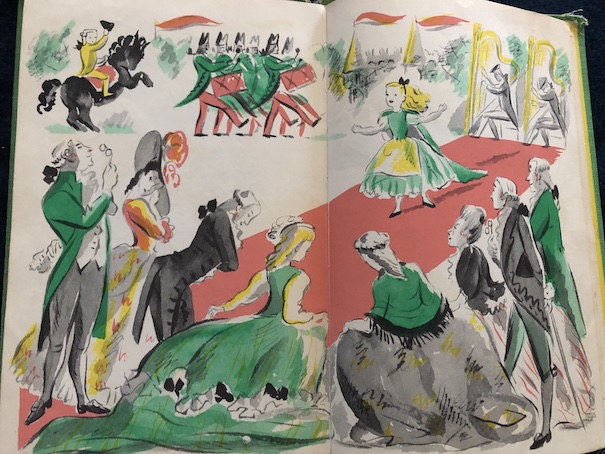
In spite of the fairy tale atmosphere, there isn’t really any magic in the story, as the widow herself points out. The real magic of the story is in the lessons that Esmeralda learns: that beauty and change come from within and that the way we see ourselves and those around us is important. For those who might be concerned at the emphasis on “beauty” and “plainness”, it soon becomes apparent that the outward signs of beauty really stand for positive character traits: humility, pride in one’s own talents and accomplishments, and unselfish caring for other people. The book also has some very pretty illustrations, some of which are wide scenes taking up two pages. It’s a beautiful book and a beautiful story for any young girl.

I don’t think that the book was ever made into a movie, but there are multiple versions that are stage plays (the link is to a video clip from a stage version of the story), including some that are musical.  I have seen a script for one of them that has added religious themes that weren’t in the original book, but the site has since been removed.  I’m sure that the script still exists, I’m just not sure where to find it now.  Some of the narrator’s and characters’ dialog was taken directly from the original book, but the religious parts were added.  As I recall, it implied that the princess’s personality changes came through the grace of God or developed as her religious side also developed, but I can’t remember now exactly how they said it.  I think it may have included some Biblical quotes related to the personality traits the princess acquires.  At one point, it was the only script that I could find available for free online.  There are other play versions that are available for purchase elsewhere, such as Dramatic Publishing and Steele Spring Stage Rights.