Can’t You Sleep, Little Bear?

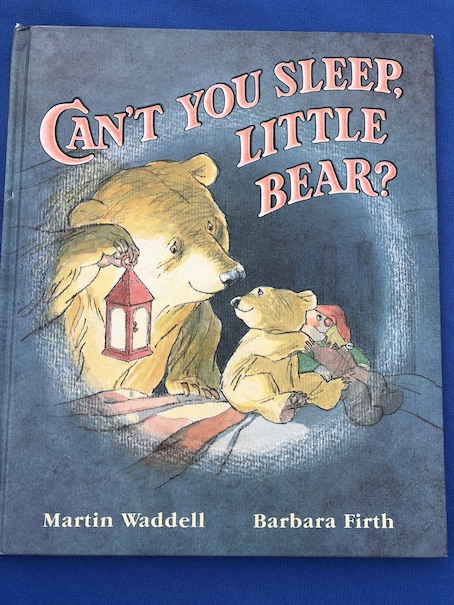
Can’t You Sleep, Little Bear? By Martin Waddell and Barbara Firth, 1988.

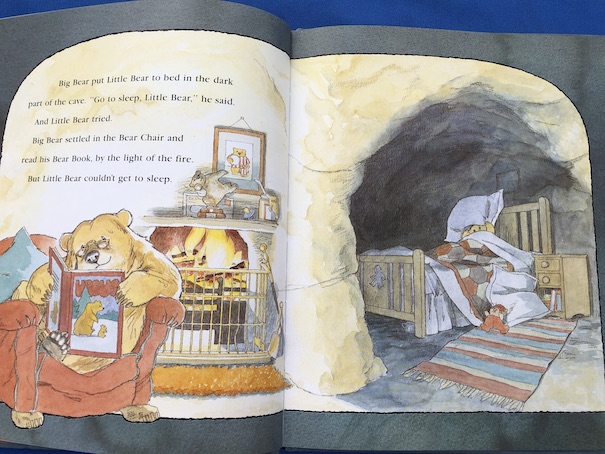
Big Bear and Little Bear live in their Bear Cave.  (Big Bear is apparently the father of Little Bear, but they don’t call him that.)  After Big Bear puts Little Bear to bed at night, Little Bear has trouble sleeping.  Little Bear says that he can’t sleep because he’s afraid of the dark.

Big Bear gives Little Bear a lantern, but that doesn’t work.  Little Bear says that the lantern isn’t big enough.  Big Bear tries to bring two larger lanterns, but neither of those helps, either.

Little Bear says that the dark beyond the cave bothers him.  To prove to Little Bear that the darkness outside isn’t scary, Big Bear takes him outside.

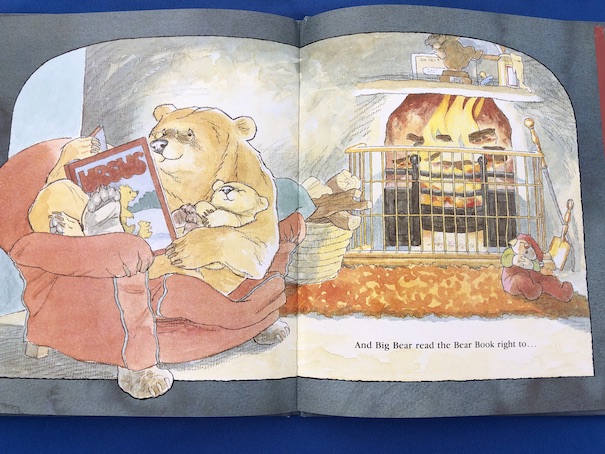
Outside, he shows Little Bear the moon and the stars, so he’ll know that it’s not completely dark.  Little Bear falls asleep in Big Bear’s arms.

This is one of those cute bedtime stories that can help to reassure young children at bedtime. Sometimes, it is a big, scary, dark world out there, but it’s not always as dark as it seems when you take a second look, especially if you’re with someone you can really trust. Because the bears appear to be father and son, it also makes a nice father/son story.

The book is currently available online through Internet Archive. There is also an animated version of this story. I haven’t seen it for sale (if anyone knows where to get it, let me know), but it sometimes appears on YouTube (link repaired July 18, 2024).

Cheaper By the Dozen

CheaperDozen

Cheaper By the Dozen by Frank B. Gilbreth, Jr. and Ernestine Gilbreth Carey, 1948.

These are the real reminiscences of children from the Gilbreth family about their unusual childhoods during the 1910s and 1920s.  There are a couple of movies based on this book, including the 2003 movie that features the dad who is a football coach, but that story is fictional and bears almost no resemblance to the actual lives of the real Gilbreth family.  The older 1950 movie with Myrna Loy as the mother is closer.  The only parts that they have in common are that there were a dozen children in the family, and they had some unusual systems for handling their chaotic household.

The father of the Gilbreth family, Frank Gilbreth, Sr., was a motion study and efficiency expert.  He was one of the early pioneers in the field, studying the ways that people do things, whether it was routine household chores or making things in factories and trying to find ways to help them perform their tasks more efficiently.  Saving time was a passion for him, and he often used his own children and household as guinea pigs for his projects.  His wife, Lillian Gilbreth, was also a psychologist and engineer and was his partner in his work, continuing it after his death.

Part of the reason Frank Gilbreth was so interested in efficiency was that, in his early life, he worked with his hands and built a reputation as an efficient worker.  Later, he also learned that he had a heart condition that might cause him to lead a shorter life.  He had wanted a large family, and he and his wife had agreed that they wanted an even dozen of children, six boys and six girls.  He got his wish, but he was concerned about helping his children to make it as far as they could through school and giving his large household a structure that would last even after he died.

The stories in this book are mostly funny stories as his children fondly remember the things their father taught them and the usual systems in their house that were designed to keep a dozen children in order.  The stories jump around a bit in time, and it isn’t always clear exactly which children were alive at certain points in the stories.  Whenever Jane, the youngest, is mentioned, the stories take place between 1922 and 1924, and there should be eleven living children in the family at most.  Although the Gilbreths did have a total of twelve children, as they had hoped, they were all single births (no twins or other multiples), spaced out over 17 years.  Also, although this book does not mention it (the sequel, Belles on Their Toes contains a brief footnote), one of the older girls in the family (Mary) died very young of diphtheria, before her youngest sister was born, so there was no point at which all twelve children were together.  Even so, the Gilbreths always referred to their children as their “dozen,” and the stories make it sound like all twelve were together.  (This article explains a little more about Mary’s death and its effect on her family and the reasons why the books explain little about it.)

The children’s birth order isn’t specified in the stories, but for reference, these are their birth and death dates (courtesy of Wikipedia):

Anne Moller Gilbreth Barney (1905-1987)

Mary Elizabeth Gilbreth (1906–1912)

Ernestine Moller Gilbreth Carey (1908-2006)

Martha Bunker Gilbreth Tallman (1909-1968)

Frank Bunker Gilbreth Jr. (1911-2001)

William Moller Gilbreth (1912-1990)

Lillian Gilbreth Johnson (1914-2001)

Frederick Moller Gilbreth (1916-2015)

Daniel Bunker Gilbreth (1917-2006)

John Moller Gilbreth (1919-2002)

Robert Moller Gilbreth (1920-2007)

Jane Moller Gilbreth Heppes (1922-2006)

Wikipedia also claims that there was a thirteenth baby, an unnamed stillborn daughter, but this child isn’t mentioned in the books, and I don’t know for sure if that’s true.  Most of the children lived to adulthood, married, and had children of their own.

Racial Language Warning: I usually make notes about racial language in the books I review.  There are a couple of things I’d like to point out, although I also have to point out that, since this book is non-fiction, the people writing it were quoting people from memory.  Just be prepared for a few things that people said back in the 1910s/1920s that wouldn’t be acceptable in modern speech.  They aren’t central factors in the stories, but they are there.  For example, one of the children’s grandmothers used to get dramatic when threatening the children with punishment and say that she would “scalp them like Red Indians.” (I’m not completely sure if she meant that the Indians would get scalped like that or do scalping like that, but I’m guessing that she probably wasn’t being particular.)  The mother of the family also frequently used the word “Eskimo” to describe bad language or “anything that was off-color, revolting, or evil-minded.”  Most of the time in the book, she says it kind of like the way some people say, “Pardon my French” when using bad language, and her definition of bad language was pretty mild.  I’ve never heard the word “Eskimo” used in that sense anywhere else, and it makes me cringe here.  There is some pay-off to the word when a couple of pet canaries whose full names the mother had declared were “Eskimo” escaped during a boat ride, and one of the kids tries to explain to the boat captain that he’s upset about “Peter” and “Maggie” being lost but he can’t say their last names because they’re “Eskimo,” making the captain think that a couple of Alaskan natives have mysteriously disappeared over the side of his boat.  It reminded me of something similar in Fudge-A-Mania, where Fudge accidentally made people think that his lost pet bird was his crazy uncle.  When sharing this book with children, like other older books, it might be a good idea to make it clear that they shouldn’t try to imitate some of the expressions the book uses because it might cause problems and misunderstandings.  There is also a Chinese cook in one chapter who speaks a kind of pidgin English that no one should imitate, either.

Overall, these are calm, funny stories about a somewhat eccentric family that can make nice bedtime reading.  The book is currently available online through Internet Archive.

Chapters

Each of the chapters in this book talks about a different topic or period in the family’s life:

CheaperDozenShavingWhistles and Shaving Bristles

Introduces the father of the family and his experiments in motion study.  Frank Gilbreth was highly self-confident and frequently took at least some of his children (and sometimes the whole family) with him on visits to factories where he was helping to increase their efficiency.  He gave the children notebooks and pencils and had them take notes about what they saw.

To keep the household orderly and make sure that each child got ready for school on time and did their chores and homework, the parents instituted a chart that each child had to initial after completing certain routine tasks such as brushing teeth or making beds, and there was a special whistle that their father would give to get all of the children to come quickly for a meeting.  The father would sometimes take moving pictures of the children doing chores, like washing dishes, so that he could study their motions and determine if there were wasted motions that could be eliminated so that the task could be completed more efficiently.  He also used himself as a guinea pig, always trying to do daily tasks, like buttoning his coat or shaving, more quickly and efficiently.

Pierce Arrow

The family moves from their home in Providence, Rhode Island, to Montclair, New Jersey.  This chapter explains the move and also the father’s love of practical jokes.  Before taking the family to their real new house, he takes them to one that’s really old and run-down so that the new one will look that much better when they get there.  When they get their large Pierce Arrow car, big enough to carry the whole family, the father tricks each of the kids into looking for the “birdie” in the engine and then honks the horn to scare them.  He thinks it’s funny until one of the kids does the same thing to him.

CheaperDozenCarOrphans in Uniform

This chapter explains that the mother of the family was a psychologist.  While the father instituted systems and dealt out discipline, the mother was often the one who made the systems work, resolving conflicts among the children and making sure that everyone was doing what they needed to do and that they had everything they needed.  Older children also helped by looking after a designated younger sibling.

Much of the chapter explains how things often happened on family outings.  They always took roll call because there were a couple of incidents when children had been left behind by accident on earlier trips.  As a large family, they also attracted a lot of attention.  Sometimes, their father would try to get discounts on things like ticket prices and toll booths by pretending that his children were the nationality of whoever seemed to be in charge, and he was pretty good at guessing that correctly.  All of the Gilbreths were either blonde or red-haired, so Mr. Gilbreth was known to gleefully pretend that they were Irish, when in fact, their heritage was Scottish.  He always thought jokes like that were funny, but finally his wife and children put a stop to his playacting the day that the family was mistaken for an orphanage on an outing.

Visiting Mrs. Murphy

The family enjoyed going on picnics together.  While they were eating, the father would often try to squeeze in an educational lesson, pointing out things like the way ants work together, how a nearby bridge would have been constructed, or what was going on at a nearby factory.  The children learned a lot from him, especially how to notice details in the world around them, but they noted that it was their mother who often put the lessons in perspective for them by pointing out the human side of each of these things, such as describing the fat queen ant in a colony with all of her slaves (their word, I’ve usually heard them referred to as “workers”, but you get the idea) waiting on her or the workmen on a construction project in their jeans, stopping for lunch.  Their father was also pleased by the mother’s descriptions, which complemented his lessons so well.  These stories help explain how the parents worked well together as a team.

The “visiting Mrs. Murphy” was a euphemism for going to the bathroom in the woods because the family didn’t really trust public restrooms.

Mister Chairman

This chapter explains a little about Frank Gilbreth’s youth and how he got his start.  His father died when he was young, and his mother encouraged her children to get the best education they could.  However, Frank Gilbreth decided to get a job instead of going to the Massachusetts Institute of Technology like his mother planned because he was concerned about the family finances and his sisters’ education.  He became a bricklayer and drove his supervisor crazy because he always had tips for working faster and more efficiently.  Eventually, the supervisor adopted some of his suggestions, and Frank discovered his passion for motion study.  He worked his way up in construction until he became a contractor, and he was also hired to study working methods in the factories he built.  He became a wealthy man and met his wife as she passed through Boston on her way to a trip in Europe.  Lillian was from a wealthy family in California, and she had a college degree in psychology.  Although many people didn’t take female scholars seriously in those days, Frank did, and the two of them became a team, both personally and professionally.  They were both interested in the psychology of management, and they applied many of the principles from the professional world to their household and vice versa.

To help organize household tasks and make family decisions, Frank created a Family Council with himself as the Chairman and his wife as the Assistant Chairman that was similar to an employer-employee board.  For the most part, it did help to keep order in the family, but once in a while, the Chairman was overruled, including the time when the children ended up persuading their parents that they should get a family dog.

Touch System

This chapter goes into more detail about how responsibilities and chores were assigned in the family.  It also describes how the father arranged to make best use of “unavoidable delay” in the bathroom by putting Victrolas with language lessons in the children’s bathrooms, so they could learn while bathing or brushing their teeth.  He also taught them how to take baths efficiently, so that they could be in and out of the bathroom as quickly as possible.  Mr. Gilbreth took every opportunity and free moment to improve his children’s minds, including teaching them ways to perform complex math problems at the dinner table.

While working as a consultant for the Remington typewriter company, Mr. Gilbreth developed a system for teaching touch typing, and he taught it to his children.
CheaperDozenSchoolSkipping Through School

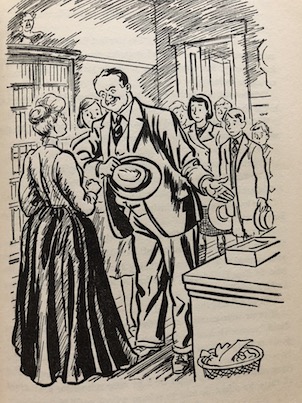
Not knowing how long he was going to live, Mr. Gilbreth was anxious to see as many of his children get through school as he could, and he had great confidence in their abilities, so he often pushed his children to skip grades in school, using persuasion and his bombastic personality to get their schools to agree.  The children’s mother, however, saw her children more as individuals who needed time to grow up emotionally and socially as well as intellectually and tempered her husband’s enthusiasm for skipping grades.

The parents also had their children attend church and Sunday School, although the father wasn’t very interested in organized religion.  Lillian volunteered for a number of church projects and committees.  Once, as a joke, a friend of hers who had eight children of her own, referred her to a birth control advocate who was looking for someone local to volunteer to promote the movement.  The friend thought that it was a great joke, and the family saw the humor and made the most of it when the advocate showed up at their house.

Kissing Kin

When the United States joined World War I, Mr. Gilbreth offered his services to the U.S. Army.  While he was working at Fort Sill, Mrs. Gilbreth took their children (they had seven at the time) to visit her relatives in California.  The Mollers were a wealthy family, and the children enjoyed being spoiled by their grandparents and their aunts and uncles after the arduous train journey there.

Chinese Cooking

At first, the children felt like they should be on their best behavior when visiting their grandparents and aunts and uncles.  However, the adults were a little worried about how subdued the children were, and constantly being on their best behavior grew more difficult for the children.  One day, when the adults made the children wear new outfits that they hated for a special party, the children finally rebelled and got them all wet by playing in the garden sprinklers.  From then on, everyone was much more relaxed and informal.

The grandparents had servants, and Billy became rather attached to their Chinese cook, Chew Wong (I’m not completely sure if “Chew” was his real name or a nickname), who was known for being somewhat temperamental.  The cook enjoyed Billy’s company also, although when Billy got troublesome, he sometimes picked him up, held him in front of the oven, and threatened to cook him.  It was an empty threat, but one day, Billy (five years old at the time) pushed the cook when he was standing in front of the oven, also joking that he was going to cook him, and the cook apparently got his hands burned.  (This incident alarmed me a bit.  It seems that the cook wasn’t badly hurt, but still, that’s the kind of problem that horseplay like that can cause, and it could have been really serious.  The cook is described as speaking a kind of heavily-accented pidgin English.)

On the way home, all of the children came down with whooping cough.  When they picked up Mr. Gilbreth, Mrs. Gilbreth told him that next time, he could take the kids to California, and she would go to war instead.

Motion Study Tonsils

The family didn’t get sick very often (and tried hard to ignore it when they did), but this chapter describes what happened when the children all came down with measles and when several of them needed to have their tonsils taken out at the same time.  Their father decided to turn the tonsil operations into a motion study experiment.

Nantucket

The family had a vacation home in Nantucket, Massachusetts that they called “The Shoe” (after the nursery rhyme about the old woman who lived in a shoe and had so many children that she didn’t know what to do).  Although the father promised the kids that there would be no lessons and studying over the summer, he still found ways to teach them things by turning the lessons into games, like when he painted Morse code messages all over The Shoe and offered prizes to the children who could solve them.

This chapter also explains about the Gilbreths’ concept of “therbligs.”  The word comes from “Gilbreth” spelled backward, and it refers to a single unit of thought or motion.  Every task a person does is composed of a certain number of therbligs.  Reducing the amount of time needed for each therblig makes a task more efficient.  They taught this concept to their children as well, putting symbols representing the different possible therbligs on the walls of The Shoe as well.

For a while, The Shoe became a point of interest on local tours.

The Rena

The Rena was a catboat that the family owned.  Their father liked to run it like he was a real ship’s captain.

CheaperDozenBabyBathHave You Seen the Latest Model?

The births of new children were a regular experience in the Gilbreth family through much of the children’s early lives.  This chapter explains how the parents approached the births.  They decided very early in their marriage that they wanted a large family, choosing the number twelve as their target on the day they were married.

Mr. Gilbreth had a lot of theories about babies which he started testing on their first child, Anne.  He refused to allow people to speak baby talk around the babies (although he caved in and did it sometimes himself) so they would learn to speak properly.  He hired a nurse who spoke German in the hopes that the baby would start learning a second language immediately, and the nurse’s horror, he once tried to see if babies have an innate ability to swim by trying Anne in the bathtub. (No, they don’t, and he was careful not to let Anne almost drown.)

Mrs. Gilbreth had her first seven children at home, finding the hospital too dull because they wouldn’t let her work on anything while she was there.  As time went on, the children in the family began to wonder more about where the babies came from, although they knew that it involved their mother spending the day in bed, the doctor coming, and sometimes hearing their mother yell (she was embarrassed that they’d noticed).  Their mother tried to explain babies to them in terms of bees and flowers, but she was too shy to give them any real, direct information about it, and their father didn’t want to discuss the subject with them at all.  This chapter also mentions that part of the family tradition was that the mother would read the book The Five Little Peppers to her children while she was recovering from a birth.  (I also reviewed this book.)

Flash Powder and Funerals

Mr. Gilbreth loved taking pictures of his children (using a frightening amount of flash powder whenever he was in charge of it) and also frequently used pictures and movies of his children as part of his projects or as promotional images.  One of the most bizarre promotions they did was when Mr. Gilbreth was hired by a company that made automatic pencils.  They took pictures and movies of the Gilbreth children burying a coffin full of regular old wooden pencils.  The kids had to bury the coffin and dig it up again multiple times while they took all the pictures and movies they wanted.  Then, when the filming was over, Mr. Gilbreth made them dig up the coffin again and use all the wooden pencils in it so that none of them would go to waste.

Sometimes, these pictures and promotions were embarrassing to the children when they were made public and classmates and teachers talked about them at school.  Some of the reporters who interviewed the family for human interest pieces made up bits of dialogue to make their stories more interesting and embarrassed the family.  (Ex. “I am far more proud of my dozen husky, red-blooded American children than I am of my two dozen honorary degrees …”)

Gilbreth and Company

This chapter explains what it was like for special visitors to come to the Gilbreth house.  Most people found it pretty strange, with so many young children and the strict household rules which the children would also try to enforce on visitors.  The chapter mentions that Mrs. Gilbreth never liked using physical punishments on the children, but Mr. Gilbreth used them regularly.  Mrs. Gilbreth kept trying to tell him that he shouldn’t spank the children on various body parts because of the harm it could do.  At one point, Mr. Gilbreth asks her, irritably, “Where did your father spank you?  Across the soles of the by jingoed feet like the heathen Chinese?”  (It was a thing, but not exclusively Chinese.)

In particular, this part of the book describes two special visitors to the Gilbreth house: the father’s older sister, the children’s Aunt Anne, who came to look after the children while the parents were out of town, and a female psychologist who was trying to analyze the children for a paper she was writing.  The children generally liked Aunt Anne, who also gave them music lessons, even though none of them had any talent for music.  However, they started playing pranks on her when she started getting too militant with them, replacing the routines that their father gave them with ones of her own.

The children were more offended by the visiting psychologist, who asked them deeply embarrassing questions (ex. “Does it hurt when your father spanks you?”) and who seemed to have an agenda to prove that, while the Gilbreth children were smart, they were socially or behaviorally abnormal for living in such a large family under unusual systems.  The children also played pranks on her, getting hold of the answers to the intelligence test that she was giving them so they could give her either abnormally correct answers or psychologically abnormal answers and purposely behaving abnormally in her presence, intentionally twitching and scratching themselves.  Eventually, the psychologist caught on to what they were doing and left in a huff.

Over the Hill

This chapter is about family entertainment.  The Gilbreths liked to go to the movies about once a week, often staying to see films twice.  (Films were silent at this point.)  The father loved the movies as much as the kids, if not more so.  The children also sometimes put on little shows or skits for their parents.  In particular, they liked to do imitations of their parents, many of which involved either taking the children places or being asked questions about what it was like to have so many children.  Mr. Gilbreth also liked to do a “Messrs. Jones and Bones” cross-talk routine like the ones from minstrel shows, where a pair of actors perform pun-based jokes, except that he would play both parts himself, putting on accents like the black-face minstrels.  (Ex. “And does you know Isabelle?” “Isabelle?” “Yeah, Isabelle necessary on a bicycle.”)  The jokes are corny puns, but it’s a little uncomfortable now that I’m old enough to know the origin of this act.  It went over my head as a kid.
CheaperDozenUnderwearFour Wheels, No Brakes

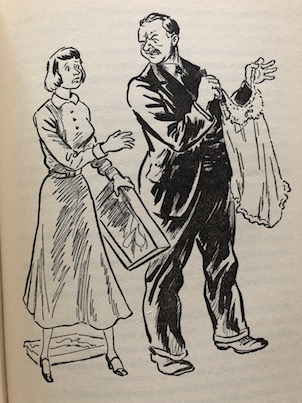
The oldest girls in the family were getting old enough to start dating in the early 1920s, around the time that flapper culture was beginning.  Their parents were fairly conservative in their habits, and the girls argued with them about being allowed to bob their hair and wear the latest fashions, like short dresses.  The parents finally broke down and allowed the girls to have their hair professionally bobbed after Anne gave herself a dreadful bob.  The father drew the line on make-up, however.

Motorcycle Mac

During the early 1920s, girls often referred to their boyfriends as “sheiks” in reference to the popular silent movie The Sheik.  The father of the family often chaperoned his daughters on dates or had one of their brothers do it, although he eased off after getting to know some of the young men better.  The younger siblings enjoyed teasing the older ones about their dates.  My favorite episode when I first read this as a kid was the time when one of Ernestine’s boyfriends climbed a tree outside of her window to spy on her, hoping to see her getting undressed, and the other siblings decided to teach him a lesson by pretending that they were going to set the tree on fire and roast him alive.  (They didn’t do it, they just threatened to.  It’s a dangerous prank, but effective.)

The Party Who Called You…

Mr. Gilbreth knew that he had a bad heart condition even before his last two children were born, and he made preparations that would help his wife to run the household efficiently after his death.  He died in his 50s while he was on his way to a series of conferences in Europe.  He had called his wife from the train station and was on the phone with her when he had his fatal heart attack.

The book ends with describing what his wife and children did after his death.  One of the things that I found most touching was the way that the children described the changes in their mother after her husband died.  They said that in their mother’s youth, she had been accustomed to other people making decisions for her, first her parents, then her husband, who guided their work and who had the idea of the large family in the first place.  In some ways, their mother had been a very nervous, anxious person, afraid of things like going out alone at night, lightning storms, and making speeches (although she did them anyway).  After her husband died, Lillian’s fears seemed to drop away because the thing that she had always feared the most, losing her husband, had happened, and she discovered that she and the children could still manage.  When Lillin’s mother suggested that she move the family out to California to be close to their relatives there, Lillian held a Family Council with the children to decide what they were going to do.  Lillian said that she planned to continue their father’s work, even going to Europe in her husband’s place to present his papers, and that would mean that the children would have to take on greater responsibilities in running the house and caring for the younger children.  The children agreed, and although money was tighter than it was before, they were able to carry on.
The House Without a Christmas Tree

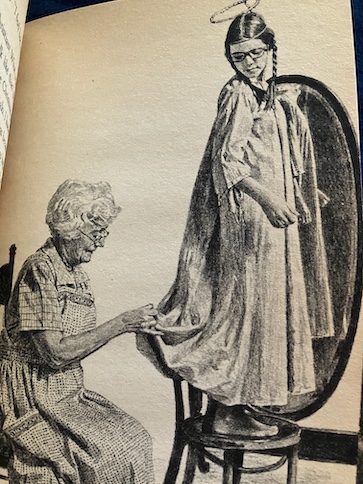
Addie Mills starts the story reminiscing about a special Christmas that she had when she was young and living in a small town in Nebraska with her father and grandmother in the year 1946. The story talks about the things that she did with her friends while they were getting ready for Christmas and buying presents for each other and such, but it mostly centers on how badly Addie wants a Christmas tree.

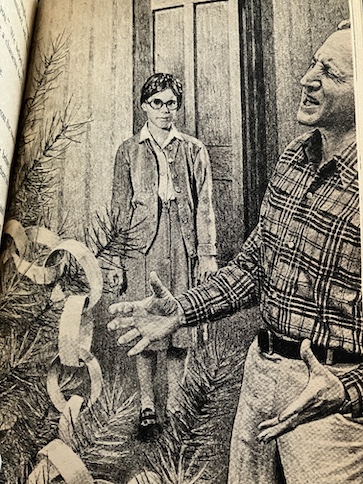
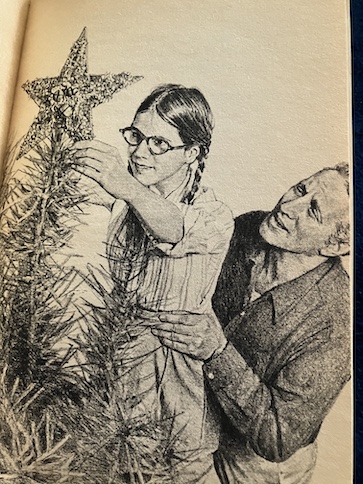
Addie is ten years old, and she can’t remember ever having a Christmas tree in the house. Apparently, the last time there was a tree in the house was when Addie’s mother was still alive, when Addie was a baby. Addie tries to talk to her father about it, but he just gets angry. Addie’s father doesn’t want a Christmas tree because it reminds him of Addie’s mother, and he still misses her.

Addie feels self-conscious because other families have Christmas trees, and she schemes to find a way to get one. When Addie wins a tree in a guessing contest at school, beating a girl from a needier family, Addie’s father gets angry and makes a scene, which makes Addie feel terrible. She gives the tree to the other family, and worries that her father doesn’t really love her. 

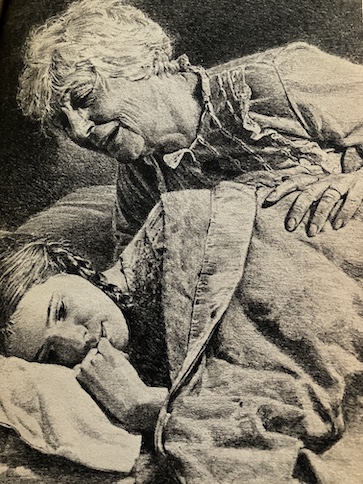
Seeing Addie’s desperation, Addie’s grandmother lectures Addie’s father, saying that his grief over his dead wife is keeping him from being happy and is making his daughter miserable too.  In the end, Addie’s father sees the importance of the tree to Addie and decides that it’s time the family had one again.

This book is a little unusual in that the movie version came first, and then the book was written.  Sometimes, you can find the movie or clips of it on YouTube.  The book is currently available online through Internet Archive.  There are also other books in the Addie Mills series.

Some people in real life also struggle with Christmas because Christmas can sometimes bring out sad memories or highlight losses. Christmas is often a time of reflection, the last major holiday before the end of the year and a very sentimental and idealized time, but life isn’t always idea. People who have suffered a loss or are unhappy with their lives in some way tend to reflect on what they don’t have, whatever or whoever is missing from their lives. This is how Christmas is for Addie’s father at the beginning of the story, and Addie’s grandmother is correct that either wallowing in sad memories or trying to hard to avoid them is holding Addie’s father and Addie herself back. It’s time for them to move on and build new memories with each other.

I like the story because the characters are very realistic. Addie and her father, like real people, often find it difficult to communicate and understand each other, but in the end, family love wins over the situation. Addie does get the tree she’s been longing for, and for the first time, her father talks to her about her mother. The Christmas tree and coming to terms with the memories of Addie’s deceased mother help the family to heal old wounds and establish better relationships with each other.

Changes for Molly

American Girls

MollyChanges

Changes for Molly by Valerie Tripp, 1988.

MollyChangesLetterMolly’s family has wonderful news!  Molly’s father is coming home from the war to take charge of a veterans’ hospital right in their home town!  Everyone in the McIntire is happy, but Molly has one worry: In her father’s letter, he talked about how much her brothers and sister have grown and changed since he’s been away, but not her.  Molly still feels like plain old Molly, and she thinks that her father will look at her like she’s still a dumb little kid.  What can she do to show her father that she’s grown in the last two years, like her siblings have?

One thing she can do is get the role of Miss Victory in her dance school’s performance.  She’s favored to get the party anyway because she dances it so well.  But, with her plain, old, straight braids, Molly thinks that she looks too plain and little-kid like to get the part.  What she wants more than anything is to have curls.  Miss Victory’s pretty crown would look great on a girl with a head full of curls.

MollyChangesPinCurlsHer friends try to help her by buying a box of hair permanent and offering to help her use it, but it soon becomes obvious that they really don’t know what they’re doing.  Fortunately, Molly’s older sister, Jill, catches them before their experiment goes too far and talks them out of it.  Molly’s older sister likes to trade hair tips with her friend, Dolores, and she’s more experienced with doing hair.  She says that if curls are important to Molly, she’ll help her to set her hair in pin curls until it looks the way she wants.

As Jill helps Molly with her hair, Molly talks to her about how grown up she is and how she still feels like such a kid who hasn’t changed much since their father went away.  Jill says that she doesn’t think that it’s true.  Jill is five years older than Molly, and she tells her that growing up is something that takes time.  A ten-year-old like Molly just isn’t going to be the same as a fifteen-year-old like Jill, and she shouldn’t try to be.  Jill says that the war and their father’s absence has made them all grow up a little faster than they would have otherwise.  They’ve had to become more mature, more accustomed to making little sacrifices and making do.  In a way, Jill envies Molly for having some of her childhood left to spend with their father when he comes home.  Jill has already left a lot of hers behind.  But, she says that even if Molly doesn’t look very different on the outside, she’s changed somewhat on the inside.  She’s developed a more mature outlook on the world.  She’s become more aware of some of realities of life and what’s important (at one point in the story, she and her friends talk about the people they know who have returned from the war permanently injured and some, like their teacher’s fiancé, who were killed and will never come back), and she’s starting thinking about other people more (Jill reminds Molly of how understanding and generous she became when Emily was staying with them).  Molly just wishes that she would look more mature on the outside, too.  More than anything, she hopes that her father will arrive home in time to see her as a beautiful Miss Victory!

Molly gets part of her wish in getting the role of Miss Victory, but it seems like everything is ruined when she comes down with a bad ear infection and won’t be able to be in the performance at all.  Her father’s arrival home is also delayed, so Molly is stuck at home alone while everyone else is at the performance.  But, just when Molly is feeling horrible and gloomy, what seems like a disappointment turns into something good when she is the first person to welcome her father home, a father who is glad to see her looking just the way he remembered her, braids and all!

In the back of the book, there is a section of historical information about the end of World War II and what happened when soldiers began returning home.

The book is currently available online through Internet Archive.

MollyChangesHistorical

The Courage of Sarah Noble

SarahNoble

The Courage of Sarah Noble by Alice Dalgliesh, 1954.

SarahNobleCookingIn 1707, a man living in Massachusetts named John Noble bought some land in Connecticut which had recently been purchased from a tribe of Indians (Native Americans) living nearby.  He planned to move his family there and start a new homestead, but with his children so young and the baby somewhat sickly, it was decided that he would travel to the new land ahead of his family and start building a new house there.  The only family member to accompany him was his eight-year-old daughter, Sarah, who came along to cook for him.  Before they leave home, Sarah’s mother tells her to “Keep up your courage,” something which Sarah repeats to herself from time to time.

SarahNobleFamilyOn the way to their new property, Sarah and her father have to camp out in the wilderness, although they do manage to stay one night with a family called Robinson.  The Robinson boys tease Sarah, saying that where she’s going, the Indians will probably chop off her head and eat her or do other horrible things.  Their sister tells Sarah not to worry because her brothers just like to tease.  Sarah’s father and Mistress Robinson also reassure her that the Indians in the area are friendly and that they sold their land knowing that new people would come there.
The Robinsons make Sarah uncomfortable.  Sarah later says to her father that there doesn’t seem to be love in the Robinson house. Her father agrees with the observation and says that the Robinsons should learn to watch their words and teach their children to do the same, adding “there are people in this world who do not help others along the way, Sarah, while there are those who do. In our home all will be treated with kindness-always, Sarah. The Indians, too, and they will not harm us.”  Although the Robinsons allowed the Nobles to stay the night in their house, they didn’t exactly make them feel welcome, and both of them realize that the things the boys were saying and their rough manner were clues to the Robinsons’ real attitudes and the kinds of things the parents talk about when no one else is around.

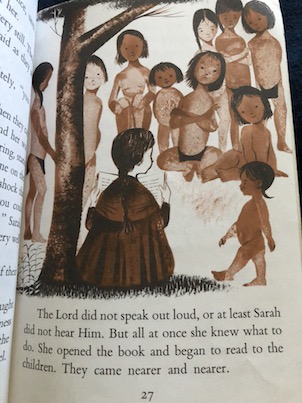
SarahNobleReadingWhen Sarah and her father reach the land that is to be their new home, they take refuge in a hollow place in a hillside, and John begins building their new house.  However, Sarah is still very nervous and lonely.  Then, while Sarah sits, reading the Bible, some curious Indian children from the nearby tribe come to see her.  She reads a Bible story aloud to them, and they listen, but she when she finishes the story, she can tell that they didn’t understand what she was saying.  Sarah can’t understand them, either, when they try to talk to her.  She gets impatient and snaps at them for not knowing English, and they run away from her.  Sarah is sorry about that because she realizes that she shouldn’t have been so irritable, and even if they couldn’t talk to each other, it was still nice to have people around.
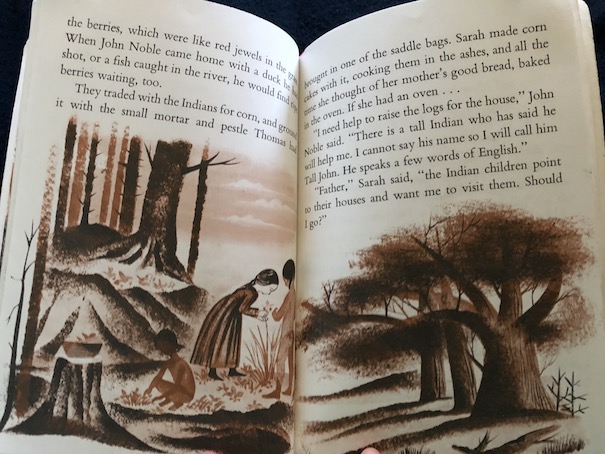
Fortunately, the Indian children come back to see her again, and they become friends.  She tries to teach them English, but they don’t make much progress at first.  Even without being able to talk to each other, though, they can still do things like picking berries together.

SarahNobleNativeAmericanChildren

Sarah’s father also becomes friends with an Indian he nicknames “Tall John” because he can’t figure out how to pronounce his real name.  John and Tall John trade with each other, and John allows Sarah to visit Tall John’s home to play with his children.

When John finishes building the house and it is time for him to go and fetch the rest of their family, he decides that it would be better for Sarah not to make the long journey again, so he leaves her in the care of Tall John and his family.

SarahNobleStaysBehind

At first, Sarah is a little worried about living with the Indians.  Being friends and visiting during the day is one thing, but what would it be like to actually live with them?  Although Sarah likes her Indian friends, it’s obvious that the stories that she’s heard all her life about “savage” Indians bother her, and she still has some prejudices and misconceptions to overcome.  There are also the worries that often accompany children who are staying with someone other than their parents: what if something bad happens, her father never comes back, and she never sees her family again?  Sarah worries that, even though the tribe that lives nearby is nice, there are other Indians who aren’t, and some of them might attack while her father is away.

Fortunately, things go well during Sarah’s time with the Indians.  She finds some of their habits strange, and she notices that Tall John’s children (nicknamed “Small John” and “Mary”) find some of her habits strange, like the clothes she wears and the way she prays at night.  Tall John’s family gives Sarah some deerskin clothing, like they wear, and some moccasins, which she finds surprisingly comfortable.  There is a scare about a possible attack, but that passes without incident, and Sarah ends up enjoying her time with her Indian friends, playing games and participating in chores with them.  Tall John and his wife treat Sarah like one of their own children.

When it’s time for her to rejoin her family, Sarah changes back to her old clothes, but they no longer seem as comfortable to her, and she decides to keep wearing the moccasins.  A little of her Indian friends has rubbed off on her, and she is a different person because of her experiences.  Sarah’s mother expresses some concern about her daughter having lived with “savages” (her word), but Sarah is quick to defend them, saying that they aren’t savages and that they’re friends.  Her father agrees that Tall John and his family are good people who took good care of Sarah.

This book is a Newbery Honor Book.  It is currently available online through Internet Archive (multiple copies).

My Reaction

Throughout the story, various characters have obvious prejudices about American Indians, and the language used isn’t what we would use today (ex. “Indians” instead of “Native Americans” and nobody says “squaw” anymore (or shouldn’t – white people used to think it simply meant “woman” but it has other connotations as well, better to just say “woman” when that’s what you mean)), but these are fitting with the time period when the story takes place.  The overall attitude of the story, especially Sarah’s evolving attitudes toward her new Native American friends, is good.  Sarah begins by being frightened because of all of the scary things people have told her about Indians, but once she begins spending time with them and living among them, she sees that the things she heard before weren’t true, and she values their friendship.  The parts where characters behave in prejudiced or condescending ways are uncomfortable, but you can’t have a story about improvement without someone behaving or thinking wrongly in the first place.  At least, that was my interpretation.  I understand that there are others who are more concerned.  At the end of the story, Sarah’s mother doesn’t seem convinced about the Indians, but I like to think that experience may change her as it did Sarah.  I think Sarah’s mother represents where Sarah came from but not where she ends up.  I think it’s important to explain to children the historical context of the story and put the emphasis on Sarah’s changing opinions.  Sarah’s experiences help her to see the truth about her new neighbors.

The author’s note in the beginning of the book explains that the story of Sarah Noble is based on the life of the real Sarah Noble, who did accompany her father to the family’s new homestead when the community of New Milford was forming in order to cook for him while he built the family’s new house.  The real Sarah did live with the nearby tribe of Native Americans for a time, although the author of the story had to invent some of the details of her stay.  It also says that the real Sarah maintained a friendship with the Indian the book refers to as “Tall John.”  The real Sarah become a school teacher as an adult, as the Sarah in the story said that she wanted.  She also married and had children.

The Traitor’s Gate

TraitorsGate

The Traitor’s Gate by Avi, 2007.

The story is set in London, in 1849. Fourteen-year-old John Huffam lives with his parents and sister and their servant, Brigit and attends a school taught by a former military man who acts like he is still in the army and teaches them little beyond discipline and what army life would be like.

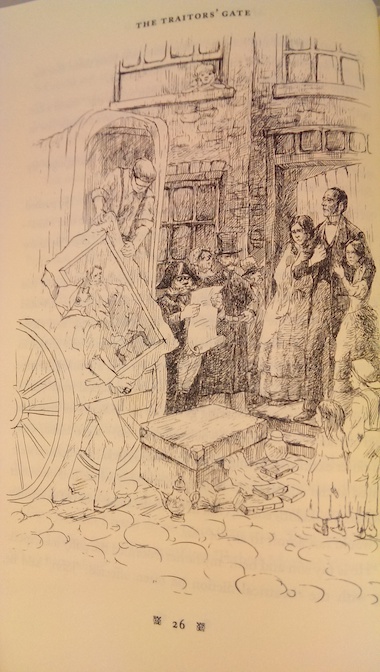
Then, one day, John is called home suddenly because of a family emergency. His family has fallen on hard times, and his father is in debt, so the family’s belongings are being confiscated. His father is summoned to appear in court, and if he cannot find the money to pay his debt, he will have to go to debtors’ prison. John’s father is shocked because he doesn’t actually owe any money to the man who is trying to call in the debt, Finnegan O’Doul.

TraitorsGateConfiscation

In spite of this, John and the rest of the Huffam family must spend the night in the bailiff’s sponging house, the Halfmoon Inn. There, John’s father again promises John that there is no debt between himself and Mr. O’Doul. He even says that he doesn’t really know O’Doul, although John doubts him. It seems like his father has had dealings of some kind with the man that he wants to keep secret.

John’s father, Wesley Huffam, was originally from a fairly well-off family, but all the family’s money ended up going to a great-aunt instead of to him (possibly because it became obvious to his relatives that he had little skill at handling money in the first place). John’s father is resentful toward the great-aunt, Euphemia Huffam, for inheriting when he thinks that, as a man, he should have been first in line for the family’s money. However, with this enormous (although possibly false) debt hanging over his head, he may be forced to appeal to Great-Aunt Euphemia for help. He persuades John to go and visit Great-Aunt Euphemia on his behalf, since he is not allowed to leave the sponging house for now and the past quarrels between him and his aunt would make it unlikely that his aunt would want to see him. John is beginning to realize that there are pieces of his father’s life and their family’s past that have been kept from him, and he doesn’t like the idea that his father has been deceiving him, but with their family in such a desperate situation, he agrees to visit Great-Aunt Euphemia.

TraitorsGateSary

The bailiff, John’s mother, and Brigid all agree that John is going to have to be instrumental in solving their family’s problems. Of all the people in his family, he is the most practical, in spite of his young age. His father is an impractical man, stuck in a vision of his family’s former glory (and his aunt’s current money, which he does not share in) that doesn’t fit their current circumstances. John’s mother thinks that her husband’s job as a clerk for the Naval Ordinance Office doesn’t provide enough money for the family to live on, even though he earns more than twice what typical London tradesmen of the time do. The real problem is that the family doesn’t live within its means (it is eventually revealed that Wesley Huffam has been withholding money from his family that he uses for gambling), and John’s father’s snobbish attitude because he thinks of his family as being more grand than the commoners around them alienates people who might otherwise be friends and help them. John knows that he’s young, and he’s not completely sure what he can do to help his family, but he knows that there is no other option but to try. In the process, he learns quite a lot about life, himself, the people in his family, and the wider issues in the world around him, including some political intrigue that hits uncomfortably close to home.

Great-Aunt Euphemia agrees to see John when he comes to her house, but their first meeting doesn’t go very well. Great-Aunt Euphemia is ill (or says she is), and she bluntly tells John that his father was always bad with money. She is not at all surprised that he is in debt and needs her help. John gets upset at the bad things that Euphemia tells him about his father, and she gets angry when John tells her the amount of the debt. At first, John is sure that she will refuse to help them completely, but Euphemia tells him not to assume anything but that he should come back the next day.  Her eventual contribution to helping John’s family in their troubles comes in the form of a job for John.

TraitorsGateRookery

As John moves around the city, he gets the feeling that he is being followed, and he is. One of the people following him turns out to be Inspector Copperfield (or so he calls himself) from Scotland Yard. When John confronts him, the inspector seems to have a pretty good idea of the difficulty that his family is in and what John himself has been doing. John asks him why he cares, and the inspector says that John’s father is suspected of a crime and that John had better learn more about what his father has been doing and share that information with him. John doesn’t believe that his father could be a criminal, but the accusation is worrying because he knows that his father is hiding something (his gambling addiction isn’t the only secret he has).

The other person following John is a young girl in ragged clothes. The girl, who calls herself Sary the Sneak, approaches John herself, freely admitting that she’s been following him. In spite of her young age, Sarah (or Sary, as she is frequently called) lives on her own and must support herself because her mother is dead and her father was transported to Australia. People don’t often notice a young girl on the street, so sometimes people will pay her to follow someone and provide information about them. The reason why she tells John about it is because she isn’t above playing both sides of the street; sometimes, she gets the people she’s been following to pay her to provide them with information about the people who hired her to spy on them. She considers it even-handed. However, John has no money to pay her for information and finds her spying distasteful, so he doesn’t want to take her up on the offer at first.

However, John does a little spying of his own when his father sneaks away from the Halfmoon Inn, which he is not supposed to do. He follows his father to a pub called the Red Lion, where he witnesses his father gambling with money that he had claimed not to have. More than that, he sees his father arguing with a man who turns out to be O’Doul, another gambler. To John’s surprise, his teacher also shows up and seems to know O’Doul. When John later confronts his father with what he saw at the Red Lion, all his father will say is that he is carrying a fortune around in his head. Later, John overhears the bailiff speaking with someone else, an Inspector Ratchet from Scotland, saying that it appears that Wesley Huffam may be a traitor involved with spies and that the Inspector Copperfield who spoke to John earlier was an imposter, probably also a spy.

Could it be true? Is John’s father really a traitor, selling naval secrets from his job? If so, who can John trust?  Conspirators seem to be around every corner, and John has the feeling that the people who are closest to him may be the biggest threats.

The book is currently available online through Internet Archive.

Katy Comes Next

KatyComesNext

Katy Comes Next by Laura Bannon, 1959.

Ruth is little girl whose parents own a doll hospital. She has always been proud and fascinated by how her parents can make old or damaged dolls beautiful again.

KatyComesNextDollShop

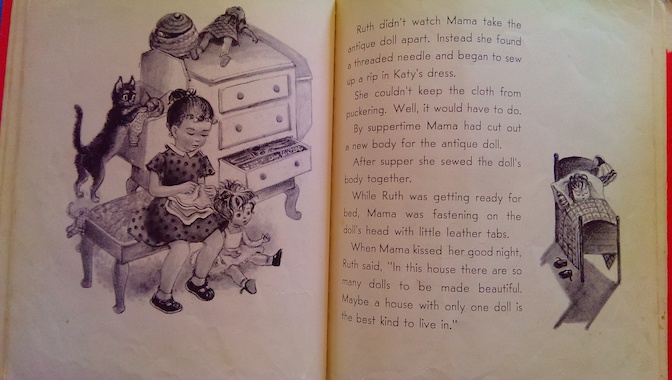
However, Ruth’s own beloved doll, Katy, is in need of repair herself. As her parents rush around repairing dolls for their customers, they keep assuring her that Katy’s turn will come next.

KatyComesNextRuthsFather

After being put off repeatedly, Ruth starts to think that poor Katy will never get the attention that she needs.

KatyComesNextRuthMending

When Ruth’s parents realize how discouraged she is, they decide to take a day off for Katy to come first.

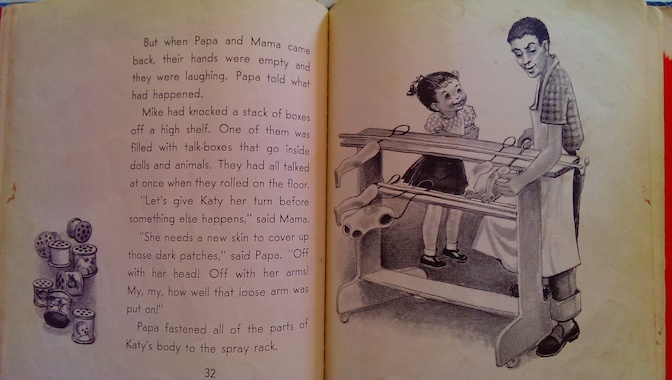
KatyComesNextFatherPaintSpray

This was one of absolute favorites when I was little!  The pictures alternate between black and white and color and show the process that Ruth’s parents go through to repair Katy, repaint her body and features, and give her new hair and eyes.

KatyComesNextWigs
KatyComesNextClothesTrunk

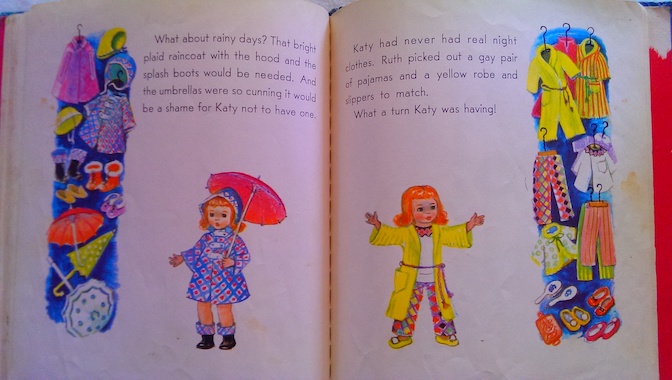
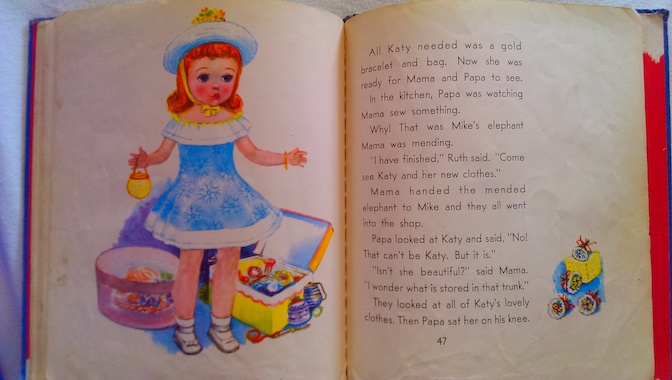
Ruth also gets to pick out an entirely new wardrobe for Katy. I was always fascinated with the description of how Ruth’s parents fixed the doll, and I enjoyed imagining the doll clothes that I would have selected from the ones they showed in the pictures.  Making the choices is half the fun!

KatyComesNextDresses
KatyComesNextPajamas

When Katy is finally finished, she looks beautiful, and Ruth is happy!  This is one of the many out of print children’s books that I wish would come back into print!

KatyComesNextPartyDress

Knight’s Castle

Knight's Castle

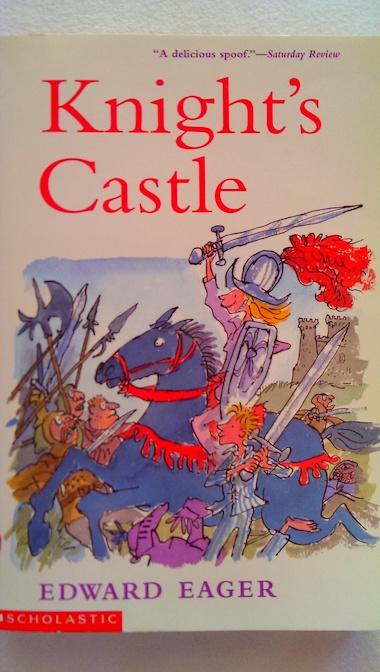
Knight’s Castle by Edward Eager, 1956.

Roger and Ann are the children of Martha from the previous two books in the series. Like their mother’s family when they were growing up, they live in Toledo, Ohio. Their Aunt Katharine (one of Martha’s older sisters) used to live close to them in the Midwest but now lives in Baltimore, Maryland. Roger and Ann don’t particularly get along with Aunt Katharine’s children, Eliza and Jack, because Eliza is bossy and Jack is only interested in photography. However, the four children end up spending the summer together when Roger and Ann’s father needs to have an operation at a hospital in Baltimore.

Like their mother and her siblings when they were young, Roger and Ann also like fantasy stories, which their father likes to read to them. Roger starts to believe in real magic when it seems like one of his toy soldiers comes to life at night. Roger collects toy soldiers, and he has over 200 of them, but this one is special because his father says that its been handed down in their family for generations. Roger calls it the Old One. It’s rather worn, so it isn’t obvious at first, but the Old One is actually a knight. Worried about his father’s illness, Roger takes the Old One to bed with him (which he thinks is more manly than taking a teddy bear to bed), and then feels it wriggling in his hand.

Knight's Castle Roger

Realizing that the Old One is magic and is coming to life when he holds him, Roger asks him if it’s part of his magic to grant wishes. If it is, then he wishes for his father to get well, and if possible, for him and his sister to have an adventure in Baltimore over the summer. The Old One doesn’t answer him immediately, but over time, he makes it clear to Roger that wishes have to be earned, and that will be the source of his summer adventure.

When the children arrive in Baltimore to stay with wealthy Aunt Katharine while their father is in the hospital, Aunt Katharine gives them presents. Ann gets a new dollhouse, and there is a toy castle for Roger. Since Aunt Katharine has also just taken all the children to the movies to see Ivanhoe, all of them become immediately interested in playing with the castle.

That night, Roger has a strange dream that he finds himself within the story of Ivanhoe, which is being acted out in his toy castle. The Old One is there as well, although he is mainly watching the action as Roger begins to take part in the story. When Roger comes face-to-face with the villain, he accidentally lets Ivanhoe’s plans slip to him. Things are looking pretty bleak when Roger suddenly realizes that the castle is still a toy and everyone around him is just a lead soldier. This revelation ends the magical adventure and brings him back to reality. However, Roger is disappointed that he ended the adventure so early when perhaps he could have done something really heroic.

Seeing the toy soldiers scattered around instead of poised for the battle they were planning the night before, Eliza and Ann think that Roger was just playing with the castle without them, but he explains to them what happened. The girls were just reading The Magic City by E. Nesbit, and they start building their own “magic city” out of random things from around the house, surrounding the toy castle. Roger is upset about the city because he says that it doesn’t fit in with the Ivanhoe story, and he’s sure that it will ruin everything, maybe from preventing the magic from working again at all. The Old One tells Roger that magic works by threes, so the next opportunity for magic will be in three days.

Knight's Castle Magic City

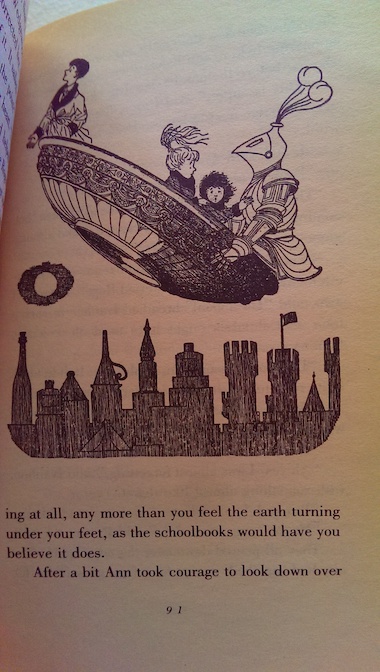
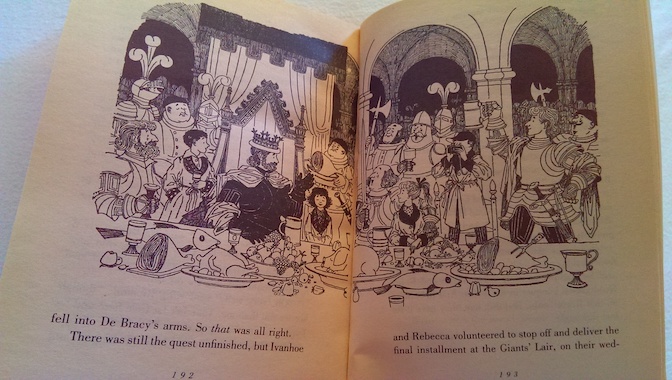
As it turns out, the city does end up becoming part of the story when the magic brings it all to life on the third night. Roger, Ann, and Eliza find themselves in the middle of the city, surrounded by knights attempting to drive modern cars. Ivanhoe has become a fan of science fiction books, via the public library in the city that the girls built. Although Ivanhoe has turned into something of a geek, the children persuade him to come on a mission to rescue the captive Rebecca, and they end up traveling in a flying saucer (made from a real saucer) to the Dolorous Tower, where the adventure ends as soon as Eliza remembers that the villain threatening them is still just a lead soldier.

Knight's Castle Flying Saucer

It was an even weirder adventure than Roger’s first one, but by now, the children are starting to understand the rules that go along with the magic. Jack, who says he doesn’t really believe in magic, accompanies the other children on the next adventure, as they try to prove to him that it’s real. They end up having to rescue some of the others from the “giant’s lair”, which turns out to be Ann’s new dollhouse. The dolls are angry that Ann has been neglecting them, only paying attention to the dollhouse when she and Eliza needed to borrow things for their magic city. They manage to escape again by remembering that the dolls are just dolls.

However, Roger is still worried about their father, who is about to undergo his operation. The Old One had told him that wishes needed to be earned, and he doesn’t think that they’ve managed to accomplish much in their adventures. Roger thinks that they need to do something really heroic so that his wish for his father to get better will come true. The Old One gives Roger a rhyme, hinting at what the children need to do on their next adventure, but Roger doesn’t understand what it means, and he doesn’t know if he can figure it out in time.

Actually, it is Ann who eventually realizes what the rhyme means and provides Roger with the “wisdom” that he needs to earn his wish. All throughout the story, Roger was criticizing his little sister for things she did wrong, saying that she was too little and only a girl. Because Roger thinks of her as being just his little sister, he overlooks what she has to contribute to the adventure. Roger’s acquired wisdom is to value the contributions of others and not underestimate their ability to contribute. Ann, being young and shy, frequently doubts herself, but she also learns confidence when she realizes that she has the answer to the riddle. Jack and Eliza learn lessons as well. Doubting Jack learns to believe in magic, and Eliza learns that she can’t always be the boss, that sometimes it is better to let someone else take the lead when they’re the right person for the job. (Although, she does say at the end of story, “If that wouldn’t be just like that magic’s impudence! Trying to teach me moral lessons!”)

Like other books in this series, there are a lot of references to popular pieces of children’s literature and jokes about things that happen in children’s stories.

The book is currently available online through Internet Archive.

Knight's Castle Feast

Guns in the Heather

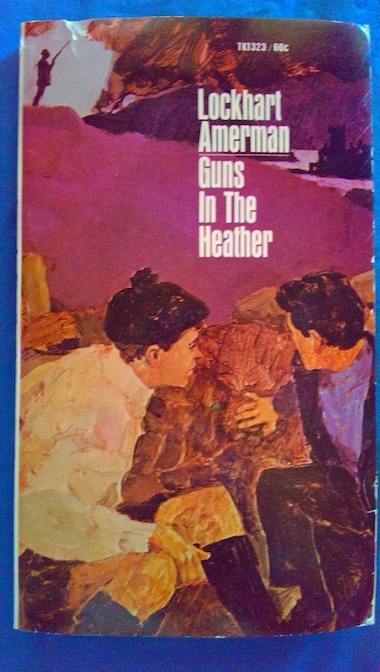
GunsHeatherGuns in the Heather by Lockhart Amerman, 1963.
This book was the basis for the Disney made-for-tv movie The Secret of Boyne Castle. However, the book and the movie are very different.  Although they have a similar premise, many details were changed in the movie version, the first of which is that the location of the story was moved from Scotland, as it was in the original book, to Ireland.

Jonathan Flower, sometimes called “Posy” by his friends, spends most of his time at various boarding schools.  His mother died when he was very young, and his father has a government job that takes him all over the world, so Jonathan has been in boarding schools in various countries, seeing his father whenever he can during school breaks.  For the most part, Jonathan doesn’t really mind it.  He and his father get along pretty well, and he knows that his father’s work is important.

Right now, he’s at a boarding school in Scotland.  He’s made a lot of friends there, spending holidays like Christmas and Easter at various friends’ homes.  He’s also developed an interest in rugby and cricket.  He anticipates that his father will meet him at the end of the school year so that they can go mountain climbing together over the summer break.  However, shortly before his father is expected to arrive, Jonathan receives a telegram from him, saying that he is to go to a certain place and meet a Mr. Finch.  Because the telegram contains certain words that this father uses when a situation is urgent, Jonathan goes to meet Mr. Finch and is kidnapped.

Mr. Finch, who also goes by the alias Dr. Fisher, holds Jonathan captive in a house, pretending that Jonathan is a patient who has volunteered for an experimental treatment.  Fortunately, Jonathan’s father, disguised as a milkman, soon rescues him.

While Jonathan’s father, who is actually a government agent, attends to some of his duties, Jonathan tries to go to the American embassy, only to be misled and almost recaptured. For a time, he is on his own, unsure of who to trust and how to reconnect with his father. When the two of them finally meet again, they both seek shelter with friends, but their enemies aren’t far behind, no matter where they go.  They end up staying with friends who own an old castle, but their enemies are planning a siege.

My Reaction

The style of the writing in this book doesn’t make for a particularly easy read.  It’s not overly difficult, but it starts off slow and is very dense, unlike many more modern books.  The scenes also change quickly throughout the book, and I had trouble keeping track of who some of the characters were.  Overall, I preferred the movie, even though it didn’t follow the book very closely.

In the Disney movie version, a strange man drives onto the grounds of an Irish boarding school, stumbles out of his car, and whispers an urgent message to a teenage American exchange student (played by a young Kurt Russell and renamed Richard Evans) that is meant for his older brother.  Then, the man dies from a bullet wound.  Another man, who is ostensibly from the American embassy in Dublin, abducts Richard after saying that he needs to go to the embassy to make a statement about the stranger’s death.  Richard is also accompanied by an Irish friend, Sean, when he is lured away from the school, and his friend helps him as they escape from the enemy spies holding them captive.  The two of them search for Richard’s older brother (who they have only just learned is a spy, whereas Jonathan was aware that his father worked for the government) to give him the dead man’s message.  In both the book and the movie, there is a final showdown with the bad guys at a castle, but in the movie, they go to the castle to retrieve a secret message that the dead man left there.  I don’t think that the movie is available on dvd, but I have seen it on YouTube and Internet Archive.

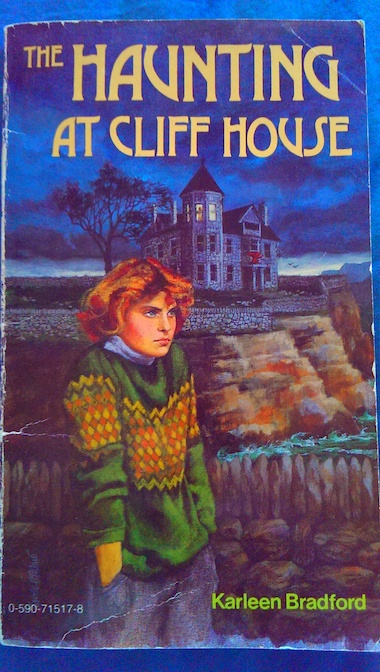
The Haunting at Cliff House

HauntingCliffHouseThe Haunting at Cliff House by Karleen Bradford, 1985.

This is a relatively short chapter book, but suspenseful, thoughtful, and well-written.

When her father inherits an old house in Wales from a distant relative, Alison, a young teenager, finds out that he plans for the two of them to spend the summer there.  Alison’s father is a university professor and is writing a book, and he thinks that the house in Wales sounds like a great place for him to get some writing done while he and Alison have a look at his new inheritance.  Alison isn’t enthusiastic about the trip, but she and her father are very close, especially because she lost her mother at a very young age.  Besides, the only place she could stay in Canada would be with her grandmother, and her grandmother didn’t seem enthusiastic about having her.

From the moment they arrive at the old house, called Pen-y-Craig or Cliff House by the locals, Alison has a bad feeling about it.  It stands on a lonely cliff by a small town.  The carved dragon over the door gives her the creeps, and there is something disturbing about a particular room in the house.  Sometimes, she can almost hear a voice calling out to her, and she has visions of another girl, about her age.  At first, she tries to tell herself that it’s all her imagination, but it soon becomes obvious that it’s not.

Some of the local people know that the house has an unhappy history, and Alison eventually learns that the great-aunt that her father inherited it from even refused to live there during her last years because it disturbed her too much.  A little more examination of the room that had disturbed her helps Alison discover the reason why.  After having a vision of a young girl hiding something behind a brick in the fireplace of one of the bedrooms, Alison searches the spot and finds a diary dating from 1810, written by a girl named Bronwen, who was the same age as Alison.  Like Alison, Bronwen was brought to the house by her widowed father and was unhappy about it, but those aren’t the only parallels between Bronwen’s life and Alison’s.

Alison becomes uncomfortable with her father’s new friendship with a Welsh neighbor, Meiriona.  Alison likes Meiriona’s younger brother, Gareth, but when it looks like her father’s friendship with Meiriona is turning into romance, Alison becomes jealous and fears changes in her close relationship with her father, a situation that mirrors Bronwen’s life when her father falls in love with her governess, Catrin.  Although Meiriona tries to be nice to Alison, Alison can’t bring herself to like her, and she argues with her father about it.

The only person who seems to understand her feelings at all is Gareth, and Alison confides her worries in him, both about Meiriona and about Bronwen, whose spirit keeps calling out to Alison to help her, although Alison doesn’t know how.  She struggles to read through the diary, whose pages are not all legible anymore because they’re damaged with age, to learn what happened to Bronwen and what Bronwen wants her to do now.  Gareth tries to reassure Alison that her father’s relationship with Meiriona will not be as bad as Alison thinks.  He thinks that the relationship would be good for both Alison’s father and Meiriona because they are both lonely, and he doesn’t think that Alison should worry about losing her father because he’s not worried about losing his sister, even if she goes to Canada to study and spend more time with Alison’s father.  At first, Alison isn’t comforted by these reassurances.  However, Gareth agrees that the matter of the ghost is serious, and he can feel her presence as well. Gareth warns Alison to be cautious about the ghost but to try to help if she can and to call out to him if she’s ever in danger.  Alison would really rather just go home to Canada, run away from her father and Meiriona, and forget the whole thing about Bronwen, but history seems to be repeating itself, and Bronwen’s voice calls out to her insistently for help that only Alison can give.

It’s a bit of a spoiler, telling you this, but although Alison at first thinks that the diary ends with Bronwen killing herself in despair, thinking that her father only loved Catrin and not her and that there was nothing left for her to live for, the truth is that Bronwen’s suicide attempt didn’t succeed and that she made another mistake that she wants Alison to help her to change.  Bronwen attempted to kill herself by going to a cave by the sea during a terrible storm, planning to allow herself to drown, but when the water started rising, she became too frightened and decided to leave by a secret entrance to the cave.  Not knowing that Bronwen was safe, Catrin attempted to save her and drowned in the cave herself.  As Bronwen was climbing to safety, she heard Catrin calling for her but was too frightened of the storm and angry at Catrin to go back for her.  Although Bronwen lived on after the incident, she could never get rid of her guilt at Catrin’s death, realizing that, even in the middle of her resentment toward Catrin, Catrin loved her more than she knew, even to the point of giving up her own life while attempting to save hers.

Now, the anniversary of Catrin’s death is approaching, and so is a storm very much like the one that killed her.  At the top of the cliff by the cave, Alison finds her time merging with Bronwen’s, and she will only have one chance to help Bronwen make the right decision the second time around.  Helping Bronwen to prevent the worst mistake of her life and to make a better choice also helps Alison to reconsider her own choices and future.  Just as Bronwen misjudged Catrin, Alison may have also misjudged Meiriona. Instead of losing her father or being forced to accept a poor substitute for her mother, Alison may be gaining a kind of sister who will love her more than she realizes.