Bronwen and Dylan are two young children who live in Liverpool. They moved there from Wales with their mother after their father died in a mining accident. The family is poor, and their mother works out of her home as a laundress. When she has some free time, she tells the children exciting stories about dragons and ghosts.
The family living next to them, the O’Rileys, are also poor, but the children’s mother discourages the children from being too friendly with them. The children don’t fully understand why, but it has something to do with the fact that the O’Rileys go to a different church. Bronwen’s mother tells her that the O’Rileys are not their kind of people and that she doesn’t want her to go near their church.
As Christmas approaches, “times are hard”, and the children’s mother doesn’t have much money. She saves what she can to give the children a bit of a treat, but she can’t spare much. Although their mother doesn’t like leaving her young children home alone, on Christmas Eve, the children are tired, and she needs to do a little more shopping. She tells the children to be good, play nicely, and not open the door for anyone and that she will be back soon.
Things are fine at first, but then, the children begin hearing a strange sound. They can’t figure out what it is, but it seems to be coming from their mother’s wash house. Based on their mother’s stories, they think maybe it’s a ghost! In a panic, Bronwen and Dylan run out of their house and straight into Mrs. O’Riley. Fortunately, Mrs. O’Riley knows what the sound is, and as a mother herself, knows what to do.
The book is available to borrow and read for free through Internet Archive.
My Reaction
Although this story never explains what year it takes place, it appears to be set during the Great Depression. (Although the Great Depression started in the United States, and this story is set in England, economies all over the world are and have been connected to each other. When one country’s economy experiences something catastrophic, it affects everyone else. The Great Depression was a worldwide event.) The setting is partly in the way people are dressed but also in their circumstances. The way the mother does the laundry is an old-fashioned, labor-intensive process. More tellingly, not only is the children’s widowed mother poor and struggling to get by as a laundress, but the O’Rileys are struggling, too. The children in the story know that Mr. O’Riley and his grown sons often work at the docks, and when there’s no work for them there, they hang out on the street with other men looking for work, and they don’t always find it. This is a time when everyone is poor and suffering. In the back of the book, the author explains that the story was based on her own memories of growing up in Liverpool in the 1930s.
The book doesn’t explicitly identify what the O’Rileys’ religion is because the story mainly focuses on young Bronwen and her perspective. The Irish name is a clue, but Bronwen also says that she once looked inside the church that the O’Rileys attend, out of curiosity, and she saw stained glass, candles, and statues, far more decoration than she normally sees in the comparatively plain church she attends with her mother. These are features of Catholic churches that aren’t always found in Protestant churches, at least not to the same degree, especially in more strict Protestant churches. The religious symbols in the O’Rileys’ house also confirm that this is a Catholic family. The issue between Bronwen’s mother and the O’Rileys is the conflict between Catholics and Protestants, and Bronwen’s mother fearing that the O’Rileys and their different ways might have a negative effect on her children.
In real life, in the modern world, I wouldn’t recommend small children going into a neighbor’s house without their mother’s knowledge and approval, but in the story, it works out for the best. When Bronwen and Dylan’s mother finds out how Mrs. O’Riley helped look after the children when they were alone and scared, she realizes that she can trust the O’Rileys. Mrs. O’Riley even offers to look after the children sometimes when their mother needs to go somewhere, and the children’s mother is grateful. It’s difficult for her, being on her own and not living near other relatives, who could help look after the children. She needs someone to rely on for help sometimes, and the key to finding someone is being open to getting help from people around her, regardless of their religion.
I thought was also telling that the neighbors’ last name is O’Riley. That’s an Irish name. Bronwen and Dylan’s family moved to Liverpool, England from Wales, but it seems like the O’Rileys have probably moved there from Ireland. We don’t know the history of the O’Riley family and how long they’ve lived in Liverpool, but it seems likely that both of these families are from somewhere else, living in an area that probably has a lot of immigrants who are struggling to get established and look for new opportunities in a new place during economically rough times. Aside from the religious differences, their positions are probably pretty similar.
I enjoyed the old-fashioned charm of the pictures in the story. The family lives in a small, old-fashioned house, and they are obviously poor, but at the same time, it’s charming and cozy.
It’s Halloween, and Arthur’s already getting spooked! His family is putting up Halloween decorations, and his sister, D.W., scares him with her costume when he wakes up on Halloween morning. Arthur is supposed to take D.W. trick-or-treating, although he doesn’t really want his little sister tagging along.
At school, Arthur has trouble recognizing everyone in their costumes. There are Halloween treats and games, though.
That evening, Arthur and D.W. go trick-or-treating with Arthur’s friends. Arthur’s friend, Buster, warns them not to go to a big, old house because a witch lives there, and the last person who went in on Halloween never came out again.
Arthur and D.W. lag behind the other trick-or-treaters, and when Arthur turns around, he sees D.W. going into the witch’s house! What choice does Arthur have but to go in after his sister to save her?
My Reaction
This book reminded me of the Berenstain Bears Halloween book The Berenstain Bears Trick or Treat. It’s another instance of an elderly woman who seems witch-like and scary, but the children enter her house on Halloween, discover that she’s really nice, and get some special treats. Entering a stranger’s house is never a good idea because, in real life, that could be very dangerous. I get the theme that appearances can be deceptive and things that seem scary aren’t so scary when you understand them, but I do quibble that this might not be the best way to demonstrate that to young children. All the same, I do have nostalgia for both the Berenstain Bears and the Arthur books.
I remember reading the Berenstain Bears Halloween book as a kid, but I don’t remember reading Arthur’s Halloween until I was an adult. Because of the similarity in the themes of the stories, I checked the copyright dates. They’re both from the 1980s, but Arthur’s Halloween is the older of the two books. I don’t know if the Berenstain Bears took inspiration from the Arthur story or if they were both inspired by something older or if the similar theme is just a coincidence.
One other odd thing about this story is that old Mrs. Tibble is human. Everyone in the Arthur books is some kind of animal, but not Mrs. Tibble. There is no explanation for this. In the cartoon version of Arthur, Mrs. Tibble is an animal, just like everyone else.
Garbage Juice for Breakfast by Patricia Reilly Giff, illustrated by Blanche Sims, 1989.
This book follows an earlier book in the series, The Case of the Cool-Itch Kid, while Dawn is staying at her summer camp, Camp Wild-In-The-Woods. Her friend from school, Jill Simon, is at camp with her, and they’ve made friends with another character from the earlier book, Lizzie Lee, who started out as a rival/antagonist for Dawn. Both Dawn and Lizzie like mysteries and being private detectives, and they’ve bonded over that. There is still an element of rivalry between them, but it’s a friendlier rivalry than when they first met each other.
When their camp counselor announces that she has set up a treasure hunt for the campers to solve, Dawn is excited. As the Polka Dot Private Eye, she’s sure that she’ll be the first to solve the mystery! However, Lizzie is the Cool Cat Detective. (Each of them take their names from the detective kits that each of them own.) Dawn knows that Lizzie will be tough competition.
Because the kids in their cabin are from different schools and some were friends with each other before they came to camp, the campers in the cabin have favorites between the two girl detectives. Jill thinks that Dawn is the best detective and will solve the treasure hunt before Lizzie will, while Lizzie’s friends think that she’s going to be the one to solve the mystery. They decide to turn the treasure hunt into a contest to show which of the girls is the best detective.
The first clue is in the form of a rhyme. It seems to have something to do with horses, and the girls are starting to learn horseback riding. There is also a hint about taking a particular trail. It’s tough for both Dawn and Lizzie to investigate the same mystery without getting in each other’s way, following one another or being suspicious that they’re following each other, or accidentally giving each other hints. Is the competition between them really a good idea, or is teamwork what they really need?
The book is available to borrow and read for free online through Internet Archive (multiple copies).
My Reaction and Some Spoilers
I remember reading this book when I was a kid, and I loved it because I always loved treasure hunt books! There are parts of the treasure hunt that readers can solve along with the characters in the story, although it’s not one of those stories that pauses to ask readers if they’ve solved parts before the characters have. It’s just that the information necessary to solve each part of the treasure hunt is given in the story and shown in the pictures, so readers have the opportunity to think what the next step should be along with the characters or before the characters announce what they’ve figured out. Some of the clues point to features of the camp itself, like the names of the trails around the camp, but the story does provide that information to the readers, so there’s nothing that the characters know that the readers don’t. Other clues use pop culture references, like Donald Duck, because their camp counselor is a Disney fan and has items with Disney characters on them.
Dawn and Lizzie do compete with each other to solve the treasure hunt, until they solve the final clue. All through the book, Dawn struggles with the horse lessons because she’s actually afraid of horses. When reaching the prize means going through an area with a lot bugs, Dawn suddenly feels sorry for Lizzie, who is following her but struggling because she’s afraid of bugs. Understanding what it’s like to struggle with something that scares her, she feels some empathy for Lizzie and realizes that she can’t use Lizzie’s fear to get ahead of her and reach the treasure first. She tells Lizzie that they can go together to reach the treasure, so they are able to share the glory. The experience helps the girls a little with their respective fears, and they share the final prize.
The name of this book comes from a kind of mixed fruit juice that the camp serves in the dining hall. None of the campers know exactly what’s in it, nobody really likes it, and the camp rumor is that it’s just strained out of the garbage. It doesn’t really have anything to do with the mystery in the story, but it’s there for background color, the kind of stories that kids tell about food at camps and schools that they don’t like.
Aside from the mystery, the story has some fun camp atmosphere for beginning chapter book readers: horses and barns, the camp dining hall, a picnic with books, and a cozy, rainy night in their cabin with cookies.
Understood Betsy by Dorothy Canfield Fisher, 1916.
Elizabeth Ann is an orphan who lives with her Great-Aunt Harriet and her first-cousin-once-removed Frances, who she calls Aunt Frances. Her relatives took her in when she was only a baby, after her parents died, and her life with them is the only one she has ever known. Her relatives love her, and Aunt Frances is particularly devoted to her. Ever since Elizabeth Ann came to live with them, she has devoted her entire attention to the little girl. She reads anything she can find about how to parent a child and makes it a point to know everything that’s going on in Elizabeth Ann’s life at school and sympathize with her over ever difficulty and misfortune she encounters. Elizabeth Ann certainly doesn’t lack for attention and affection, but Aunt Frances’s devotion and sympathy often go a little too far.
Aunt Frances is rather an anxious person, and she has unintentionally transferred many of her worries and anxieties to Elizabeth Ann, making her a rather timid and fearful little girl. She has also made it such a point to shield Elizabeth Ann with so much attention that Elizabeth Ann is never allowed to go anywhere or do anything by herself, making her feel like she can’t do things alone. Aunt Frances tries so hard to shield Elizabeth Ann from anything difficult or unpleasant that any difficulty she does encounter seems unbearable. While Aunt Frances’s intentions are good, and she tries hard to always understand and sympathize with Elizabeth Ann about everything, but there are some things about both Elizabeth Ann and herself that Aunt Frances doesn’t really understand. Then, when Elizabeth Ann is nine years old, something happens that changes her life forever.
When Great-Aunt Harriet gets sick, the doctor says that she must go to a warm climate and that Aunt Frances is going to have to take care of her. However, the doctor is adamant that Elizabeth Ann shouldn’t go with them because he doesn’t want to risk the girl catching Great-Aunt Harriet’s disease. Elizabeth Ann can’t imagine life without Aunt Frances, and Aunt Frances worries about where Elizabeth Ann will stay. Her relatives in Vermont, the Putneys, say that they are eager to have her. They would have taken her when she was a baby, but Great-Aunt Harriet and Aunt Frances never trusted the Putneys. They say that they are not sympathetic enough and that life on their farm would be too harsh for the delicate, sensitive little girl they have decided that Elizabeth Ann is. Instead, they decide that she should go live with some other cousins who live in the same city they do.
However, these relatives aren’t particularly eager to have her, and after Great-Aunt Harriet and Aunt Frances have already left town on their train, they discover that a member of their household has come down with scarlet fever (what strep throat can turn into if it isn’t treated with antibiotics) and that the household must be quarantined. There is a brief moment of panic when they realize that they can’t even bring the girl into their house. Then, they remember the Putneys. If Great-Aunt Harriet and Aunt Frances couldn’t bring themselves to send Elizabeth Ann to these other relatives, these cousins can. In fact, they must, and there’s no way Elizabeth Ann can argue, even though she is afraid of the Putneys because of all the negative things she’s heard her aunts say about them.
A relative who is traveling on business takes Elizabeth Ann partway by train and then makes sure that she gets on the right train to go to the Putney’s town in Vermont alone. Timid, fearful little Elizabeth Ann finds herself traveling completely alone for the first time to go to a place she’s never been and meet relatives she is sure she won’t like. Fortunately, many of Elizabeth Ann’s preconceived ideas are turned on their head from the first moment she steps off the train and is greeted by Great-Uncle Henry.
If it had been Aunt Frances greeting her, Aunt Frances would have immediately worried and fussed over her and asked her how she stood the ordeal of traveling. However, Uncle Henry acts like Elizabeth Ann hasn’t been through any ordeal at all. Instead, he just greets her cheerfully and helps her into his wagon. In fact, as they drive along, he unexpectedly gives the horses’ reins to Elizabeth Ann and lets her drive while he does some math. (We don’t know why he needs to do this; he just says he does.) He just tells her to pull on the left rein to make the horses turn left and the right rein to make them go right. Being handed this unexpected responsibility is terrifying for timid little Elizabeth Ann, and she has a moment of panic, worrying that she doesn’t always remember her left from her right. Then, Elizabeth Ann has an unexpected revelation: it doesn’t really matter if she doesn’t remember the names for the directions or which is which because she can just look and see where she wants the horses to go and pull the reins in that direction, no matter what that direction is called. After all, it’s not like horses really understand the words “left” and “right” anyway, just the direction of the pulling. This is an important revelation for Elizabeth Ann, who is usually accustomed to Aunt Frances doing everything for her, including her thinking. She has never really had to figure out things by herself before. When she voices this revelation to Uncle Henry, he simply agrees that she is correct, and Elizabeth Ann feels a rare sense of pride in her accomplishment.
When they reach the Putney Farm, Great-Aunt Abigail and Cousin Ann are glad to see her, but they don’t overly fuss, either. They call Elizabeth Ann “Betsy” and show her the hook where she can hang her cloak. Betsy is a little offended that they don’t help her take it off and hang it up for her the way Aunt Frances did. Their lack of fussing and expecting her to do things for herself makes her feel at first as if they don’t really care about her. Their farmhouse is also fairly small, it’s lit with kerosene lamps, and they do their own cooking instead of having a servant, like Great-Aunt Harriet and Aunt Frances did. These things make Betsy realize that the Putneys are poor, and she has a moment where she is overcome, thinking that she will be miserable in a poor, deprived household. Then, Aunt Abigail hands Betsy a kitten and tells her that, if she likes it, it can be her cat.
Betsy always wanted a kitten, but Aunt Frances would never let her have one because she was afraid that they would carry disease. Betsy forget her worries and misery while playing with the kitten, which she names Eleanor. She is also relieved that her relatives don’t fuss about her not liking certain foods. Aunt Frances always tried to make her eat her beans for nutrition, but the Putneys don’t care when she avoids them because she has a good appetite for everything else on the table. In fact, Betsy eats much more at the Putney farm than she ordinarily does because she is allowed to eat more of what she likes and nobody fusses over how much she’s eating or if she’s eating the right things. For her first night at the farm, Betsy has to sleep with Aunt Abigail because her room isn’t ready yet, but she ends up finding Aunt Abigail’s presence reassuring.
In the morning, her relatives decide to let her sleep in because she’s tired from traveling. When Betsy wakes up, she lies in bed for a while, waiting for someone to tell her to get up. When no one does, she get the idea, for the first time, that she can get up when she’s ready and doesn’t need for someone to tell her to do it. She also dresses herself and does her own hair for the first time. In a way, it’s a little thrilling because Betsy realizes that she can do her hair the way she wants it instead of the way Aunt Frances does it, and she copies a hairstyle she envied on one of her old classmates. However, it does bother her a little that her relatives don’t seem to care about whether or not she needs help and aren’t stepping forward to help her automatically. She does fine, but she’s accustomed to an adult hovering over her as a sign of caring.
Her relatives explain that they were letting her sleep as late as she wanted that day because they knew she would be tired. Cousin Ann gives her breakfast and lets her have as much milk as she wants because, unlike in the city, they produce their own milk from cows rather than buying it in quarts, so they don’t have strict limits on how much they can have in a day. Betsy is pleased by this, but she has another moment of panic when Cousin Ann tells her to wash her dishes after breakfast. Betsy has never washed her own dishes before and doesn’t know how. Seeing Betsy’s hesitation, Cousin Ann offers a view brief instructions, and Betsy accomplishes the task.
On her first day, she also sees Aunt Abigail making butter, something that Betsy has never seen before. She is accustomed to buying butter, not making it, and she didn’t even know before what butter is made from. Aunt Abigail is astonished that Betsy doesn’t know these things, but Uncle Henry points out that city life is different, and Betsy has probably seen things they haven’t, like how roads are paved. Betsy gets excited because roads being paved is a familiar sight to her, but she becomes embarrassed and confused when her aunt and uncle try to ask her questions about how the workmen do it. While she has seen roads being paved before, she took the sight for granted and never really noticed the details. Aunt Abigail suggests to her that she watch the butter making process closely and even take part in it so, if someone asks her later how it’s done, she can tell them all about it. Betsy accepts the lesson and even has fun making butter.
Then, her relatives surprise her by telling her that it’s time for her to go to school for afternoon lessons. They let her miss the morning lessons so she could rest, but now that she’s rested and had some time to look around the farm, she should go to the afternoon lessons. Worse still, they tell her that she should walk there by herself. Betsy panics again because Aunt Frances never let her walk to school by herself, but her relatives just give her a few directions to the school and a sugar cookie to take with her and send her out the door. Betsy could balk at this and say that she can’t do this and won’t, but their expectation that she can and will and her hesitancy to tell them differently make her walk down the road in the direction they say.
She almost misses the schoolhouse because it’s a much smaller building that she expected. Her school in the city was a multi-story building, but the local school is just a small, one-room schoolhouse. Fortunately, the teacher has been expecting her and looking out for her arrival, so she calls Betsy inside as she passes. Betsy is astonished at how few students there are, compared to her old school, and because there are so few, all the grades are just in that one schoolroom.
Even more confusingly, Betsy learns that this little school doesn’t do grades the way her old school did. Because there are so few students, and they’re all sharing the same room, it doesn’t matter too much what grade each student is studying in which subject. The teacher just moves them up and down as necessary to help them learn at their own, individual levels. At her age, Betsy knows that she should be in the third grade at school, but when the teacher has her read out loud with the other students at the third grade level, Betsy does much better than they do. She loves reading, and she reads all the time on her own, so she has progressed much faster in her reading skills than other children her age. Her teachers at her old school just never noticed because they were trying to keep track of so many students that they couldn’t pay that much attention to individual students’ progress. Her new teacher decides that she can read at a seventh grade level. Betsy is stunned and proud. The idea that she could move up multiple grade levels at once never occurred to her before as an option, but then, she worries that she can’t move up to seventh grade because she isn’t very good at math. She tries to explain this to the teacher, but the teacher isn’t concerned because she doesn’t make students study at one, consistent grade level for every subject. They can move ahead faster in some subjects than in others. When they’re struggling with one subject, she holds them back in that subject alone until they’ve mastered it. She does put Betsy back one grade level in math when she sees that Betsy is struggling, telling her that she can move up later when she’s had some time to review the material and improve.
It’s what Betsy really needs, but Betsy finds it disorienting that she isn’t part of one, consistent grade level at school. She says that she doesn’t know what that makes her, and the teacher replies that she is simply Elizabeth. Before, Betsy’s concept of school was that, every year, the students would simply move up one grade level, and that the goal of school was just for the students to move up through the levels appropriate to their age. Now, she is being introduced to the concept that the goal of education is for her to master the concepts being taught to her, regardless of the grade level, so that she will have the ability to do things like math, reading, and spelling. As long as she can learn to do these to a satisfactory level and keep improving, her specific grade doesn’t matter. In fact, when Betsy is upset later about failing an examination at school because she was nervous and made a lot of mistakes, Cousin Ann tells her that there’s no need to be nervous and that her grade on a single examination doesn’t matter because, regardless of how she did on that particular test, she knows that she actually does know the material and can use that knowledge in daily situations.
Betsy is also unexpectedly given the responsibility of looking out for a younger girl at the school, Molly. Because Molly is so good at reading, the teacher has Betsy listen to Molly read at the first grade level and asks her option of how Molly did and if she seems like she could manage the second grade level reading. Betsy has never had an adult ask her to supervise anyone younger before, and she unexpectedly discovers that she likes it and likes teaching someone younger. Later, Betsy is asked to hold Molly’s hand while they cross a log over a stream because the teacher wants older children to hold the hands of the younger ones and help them. Actually, holding Molly’s hand helps Betsy more than it helps Molly because Molly has walked on this log before and Betsy hasn’t, but being responsible for someone younger makes Betsy more bold. Although she would have been afraid to walk that log if she had to do it by herself, she can’t refuse when she has the responsibility of helping Molly. Later, she also helps to rescue Molly when Molly falls in a hole and needs help to get out. Betsy wanted to run for help at first, but when Molly begged her not to leave her alone, Betsy decides that she should do what Cousin Ann would do and figure out how she can use the things around her to solve the problem, spotting a branch that helps the younger girl climb out. Even though Betsy gets scared, when she has someone smaller than herself depending on her, she finds her courage.
Betsy has other adventures with Molly and her other new friends while living with the Putneys. When Molly’s mother becomes ill and has to go to the hospital, Molly is upset because she will have to move in with some cousins in the city who don’t really want her. Having been in this type of situation before herself, Betsy is immediately sympathetic, and she gets her relatives to agree to let Molly stay with them. Molly becomes like a little sister to Betsy, and they share in other adventures together. Along with some other girls from their school, they form a sewing circle to make some clothes for a poor boy at their school who lives with a stepfather who spends all of his money on alcohol. The book doesn’t shy away from describing how the boy is neglected, and the girls in the sewing circle are moved to tears when they go to the boy’s house to deliver the new clothes and see the circumstances he lives in. The Putneys also become concerned about the boy’s welfare, and they help arrange for him to be adopted by a man they know who has been talking about adopting a boy. Later, for Betsy’s birthday, Betsy and Molly go to the fair with some neighbors, but they are accidentally left behind when the people who were supposed to give them a ride home had to leave to tend to an emergency. Betsy is terrified, but with Molly to look after, Betsy manages to keep her head and think of a way to earn some money so they can buy train tickets home.
Betsy has been living with the Putneys for about a year when she gets a letter from Aunt Frances, who says that she will arrive soon to reclaim her. Aunt Frances thinks that Betsy must have been having a miserable time without her, but Betsy has actually come to think of the farm as home and loves it there. She doesn’t want to hurt Aunt Frances’s feelings or seem ungrateful for all the love and attention that Aunt Frances has lavished on her over the years. It seems like Betsy has to resign herself to returning to her old life in the city … unless Aunt Frances has also been making some changes to her own life since they were last together. When Betsy and Aunt Frances meet again, they truly come to understand each other, and they find a way for them all to live their best lives.
This book is now public domain and is available to read for free online through Project Gutenberg and Internet Archive (multiple copies, including audiobooks).
My Reaction
Educational Themes
I really enjoyed this book! I’d heard about it for years and never got around to reading it before. Dorothy Canfield Fisher was an early advocate of the Montessori method of education in the United States, and in particular, this book presents many of the principles of the Montessori method and how it can help children. The educational themes in the story are obvious when Betsy sees the differences between the one-room schoolhouse in the country and her old school in the city.
The benefits of the smaller class size are immediately obvious. Betsy loves reading but she always hated her reading class in school because each student took turns reading, so the most any particular student could read was one or two sentences, and even then, they might not get a turn if the class ran out of time before they got to all of the students. This description feels like an exaggeration of how reading classes might have gone at a bigger school, but there may be some truth in it. When I was at school, my classes typically had about 20 to 30 students in them, and when we took turns reading, we did more than that. It’s difficult to say for sure because I don’t think Betsy ever said exactly how many students were in her class, but I would think they would have to have at least twice as many as that to be as bad as she described. According to Going to School in 1876, some large city schools could have classes of 50 to 60 students during the late 1800s, so that is possible for a class in the early 1900s or 1910s as well. I do take the point that it’s easier for a teacher to keep track of the progress of individual students when the class size is smaller.
I also appreciated what the teacher said about allowing students to progress faster in subjects that are their strengths, even if they have to take extra time for problem areas in other subjects. When I reviewed The Beast in Ms. Rooney’s Room, there is a boy in that book who was held back a year in school because of his problems in reading, and he was embarrassed about not moving to the next grade with his classmates. If he could have moved forward in some subjects, it might not be so embarrassing for him to be held back in the one subject that gave him the most trouble. The problem is that he couldn’t do that because the classes at his elementary school are organized the way the ones at my old elementary school were – one single teacher at a particular grade level teaching all of the subjects for that grade level. Under that system, remaining at a particular grade level in one subject means remaining at that grade level, with that teacher for all subjects.
There is only one teacher at the one room schoolhouse in the story, so there’s no conflict about a student seeing one teacher for some subjects and another teacher for other subjects at a different grade level. All of the students are in just that one room with one teacher all the time, so the only difference when a student moves up or down in level for a subject is the book that the teacher gives them to study. That means that changes in grade level can be done informally for any or all subjects, whenever the teacher decides that a student is ready to move to the next level. The student just turns in their old book and gets a different one to study. If most grade levels were determined that easily for different subjects, I think there would be fewer parents who would be concerned about the prospect of holding a child back a grade temporarily to give them a better grounding for moving forward later, and students would experience less embarrassment about problem subjects if they could receive acknowledgement for better skills in other subjects. However, I can see that this system would be complicated in bigger public schools, and there would have to be a point when the student would have to master their series of subjects at a particular level to know when they could graduate from their school. I think that’s part of the purpose of the examinations Betsy describes in the book, but because the book only covers a single year, we don’t see what happens when a student is ready for graduation.
Emotional Management
In the beginning, Aunt Frances, in spite of all of her good intentions and research into psychology and raising children, unintentionally transfers her personal anxieties to Betsy without really giving her the tools that she needs to manage them, so they feel overwhelming to Betsy. The solution to this problem, as presented in the book, seems to be mostly being around people who do not express worries about things (if they’re nervous about anything, they mostly cover it up and don’t talk about it, except for one time, which I’m going to talk about) and who present manageable challenges to Betsy to show her that she can handle more than she thinks she can. I like the part about giving Betsy manageable challenges and some basic instructions for how to accomplish them when she doesn’t seem to quite know what to do. If they had just thrown challenges at her with no instruction at all, in a kind of sink-or-swim fashion, I think she would have been just overwhelmed and more panicky. However, I think there’s a point in the story that could use more clarification.
The differences between Betsy’s sets of relatives is initially presented, particularly by the aunts she’s been living with, as one of understanding and sympathy. Great-Aunt Harriet and Aunt Frances initially don’t like the Putneys because they don’t seem sympathetic enough, especially with people who are sensitive and nervous. Aunt Frances dedicates herself to sympathizing with Betsy about everything and talking to her about everything in her life, and the book presents this as a negative because their sympathetic conversations about the worries they have end up being a way of making each other more nervous. I think, in real life, there’s a happy medium between never talking about worries and wallowing in them.
The first problem with Aunt Frances’s attempts to sympathize with Betsy is that she makes assumptions that things that bother her will also bother Betsy, and this becomes the way that she accidentally transfers her anxieties to Betsy. Second, when Aunt Frances sympathizes with Betsy about worries or problems, she tends to dwell too much on the problem itself and how bad it feels, magnifying the issue and making Betsy feel worse. What I’m trying to say is that Aunt Frances’s attempts to sympathize would have worked much better if she had been willing to listen to Betsy’s concerns and sympathize a little about how certain things can make a person nervous but then move on to offering practical tips to deal with these feelings and different ways of looking at situations to take some of the anxiety out of them.
I didn’t like it when Cousin Ann seemed to shut Betsy down when she was talking about how tests at school make her nervous because I don’t like the idea of shutting people down when they’re talking about something important to them, but what made it better to me was that she did listen to Betsy for a bit before that and had already offered her a different way to look at tests that makes them seem more fun and less scary. When Cousin Ann cuts the conversation short seems to be the point when discussing and sympathizing is about to turn into brooding and dwelling on the negative. My only thought on that conversation is that it might have helped for Cousin Ann to point that out. Rather than asking if Betsy really wanted to keep talking about this, which makes it sound like disinterest in what Betsy’s saying, I think it might have been better to point out that, if she keeps dwelling on the parts of the experience that make her feel bad, she won’t let herself move forward, to see the parts of the experience that could be exciting opportunities and possible triumphs. Perhaps, it would be good to add that one poor test experience doesn’t mean that others will feel the same way or that she can’t do better the next time, especially if she spends her time in between tests focusing on how much she enjoys what she’s learning and how it can be fun to show others what she’s learned and what she enjoys about her lessons, putting herself in a better frame of mind for the next time someone asks her questions about what she’s learned. I just think that approach would help emphasize the lesson that Cousin Ann would really like to teach Betsy about reframing challenges in her mind and also help clarify that she’s not ending the conversation because she’s not sympathetic but because it’s better to give the positive thoughts time to take hold rather than dwell on the worries.
I think it’s also important for both Betsy and Aunt Frances to recognize that it’s okay to feel nervous but that it’s possible to handle situations even though they make them nervous. As someone who has had life-long issues with anxiety, I can also attest that one of the best approaches is learning not to be afraid of feeling afraid of something. That is, learning to recognize that being nervous isn’t a sign that a situation is unmanageable or that the feeling of anxiety itself is necessarily going to be overwhelming, something that Betsy learns through practical experience in the story. There are still times in the story where Betsy is afraid and has to handle difficult situations, but she learns that she can proceed and do what she needs to do even though she’s nervous and isn’t sure at first how things will work out. It isn’t explicitly spelled out in the story, but this is probably the most important lesson that Betsy was missing from her time living with Aunt Frances.
Betsy’s Family
There are no villains in this story. Although readers can see at the beginning that living with Great-Aunt Harriet and Aunt Frances has caused some emotional complications for Betsy because she has taken on their worries and anxieties, they do mean well and have made real efforts to understand Betsy and support her, as best they know how. Great-Aunt Harriet and Aunt Frances just have very different, more timid personalities than the Putneys and don’t find their style of communication reassuring or appealing. However, Betsy discovers, to her surprise, that she does come to appreciate the Putneys and that they are a good influence on her, helping her to come out of her shell, discover new abilities and interests, and develop some self-confidence.
At first, Betsy is a little offended that her Putney relatives don’t fuss over her like Aunt Frances did, and it makes her feel like they don’t care about her, but they do care. They are just more low-key in showing the ways that they care. They are a family that doesn’t like to fuss about anything. Personally, I thought that Cousin Ann should have let Betsy talk a little more when Betsy was distressed about doing badly on her exam, but I do see her point that Betsy’s talking about it seemed to be upsetting her more because she was dwelling on the problem rather than consoling herself and looking for solutions or new ways of thinking about the situation. Cousin Ann points out that exams aren’t always negative, and even when one doesn’t turn out so well, it’s not the end of the world, giving Betsy a new way of looking at the situation and defusing Betsy’s sense that every little setback is a tragedy.
The Putneys show how much they truly care when Betsy and Molly are accidentally left behind at the fair. When Betsy manages to get Molly home, she sees her relatives rattled and upset for the first time when they realized that the girls were lost, and they do some rare fussing over the girls, praising Betsy for her ingenuity in handling the situation. Although the Putneys normally make it a point to deal with things coolly and calmly, they do care about the girls and can get upset if they think there is a serious problem. They are not without feelings. They are also genuinely upset when they think Aunt Frances is going to take Betsy away, each finding their own way to show Betsy how much they care and how much they will miss her.
Spoilers
Fortunately, Betsy is allowed to stay with the Putneys in the end. When Aunt Frances comes to get her, she reveals that, in the year they’ve been apart, she has met a man and fallen in love. She is going to marry him, but marrying him means making some changes to her life, the greatest one being that they are not going to return to their old house. Great-Aunt Harriet has recovered from her earlier illness and has gone to live with another relative, and because her new husband has to travel constantly for business, Aunt Frances won’t be keeping a settled house at all. Aunt Frances, although usually timid, is actually looking forward to doing some traveling. She is still afraid of things like animals and would never be an outdoor/country kind of person, but travel to different cities sounds like her kind of excitement. However, she can see the difficulty of traveling with Betsy. Constantly moving would be difficult for her education, a complication that I was surprised that the characters didn’t spell out when they were talking to each other, given the educational themes of the story.
Betsy and Aunt Frances come to a new understanding of each other and the differences in the lives they want to live when they talk about what these changes would mean for their lives. Aunt Frances doesn’t want to simply abandon Betsy to the Putneys if she isn’t happy with them, but she can see that Betsy does like living there and would be happy to stay. Betsy hadn’t wanted to make Aunt Frances feel abandoned and unappreciated by telling her in the beginning that she wanted to stay with the Putneys, but when she learns that Aunt Frances will be happily married and enjoying the new experience of travel, she is able to tell Aunt Frances that she can see that having her come along would be inconvenient for her and that she would be happy to stay with the Putneys. Neither of them is offended or worried about living apart now because they can see that each of them will be happier with Betsy living with the Putneys. Aunt Frances is now free to get married and go where she wishes with her husband, assured that Betsy is doing fine and living in a stable home with people who care about her, even if it’s not quite living the lifestyle that she would like herself. Aunt Frances also promises to come visit sometimes, so it’s not a permanent goodbye.
#29 The Mystery of the Sinister Scarecrow by M. V. Carey, 1979.
Jupiter Jones is going on a buying trip with Hans and Conrad, the men who work for his uncle’s salvage yard, to see someone who had some things to sell to his uncle. Jupiter’s friends, Bob and Pete, go with them, but they’re all stranded when their truck blows a tire. They look around for a place where they can call the salvage yard to explain their situation and get help, and they see a large house with a cornfield nearby.
However as Jupiter approaches the house to ask to use the phone, he is suddenly tackled by a man with a jagged rock in his hand! Hans comes to his defense, and the man is surprised and sorry when he realizes that he’s just tackled a boy. It turns out that the man is nearsighted and has lost his glasses on the ground. He starts to explain that he thought that he was tackling a scarecrow, and then, he suddenly stops and says that he’s been having trouble with trespassers. Jupiter asks him what meant when he talked about the scarecrow, but the man dodges the question. Instead, he asks them why they’re there, and they explain about wanting to use the phone.
The man invites them into the house to use the phone. The man isn’t really a farmer. His name is Dr. Wooley, and he’s an entomologist who’s working on a book. He’s studying army ants, which are carnivorous. He shows them the colony he’s studying, but the sight of all those ants just encourages them to finish their call and leave fast.
However, Jupiter is still intrigued about why Dr. Wooley seemed to attack him because he thought he was a walking scarecrow. He persuades Bob and Pete to return to the area with him to investigate. When they stop in a cafe, a man there hears them talking about the scarecrow, and he says that he’s seen the walking scarecrow himself. He works in the area, doing security for a nearby museum. The boys ask him for details about his sighting of the walking scarecrow, and he says that he saw it near the Radford house, which is where the boys met Dr. Wooley.
When they go to the place where the man saw the scarecrow, they meet a woman named Leticia. Leticia asks them what they’re doing, and they explain about looking into a sighting of a walking scarecrow. Suddenly, Leticia gets very excited. She has seen the scarecrow herself, but no one will believe her. She asks the boys if they will come to the house and explain to Mrs. Chumley that she really did see a walking scarecrow.
Leticia Radford is a jet-setting heiress who lives in the mansion by the cornfield. Mrs. Chumley has been with her family a long time as a secretary and housekeeper, but she’s been confined to a wheelchair for years after being in a car accident. Leticia spends most of her time traveling in Europe, but she returns home periodically, usually after one of her disastrous romances. She has phobias of both insects and scarecrows. Actually, her fear of scarecrows is related to her fear of insects and other creepy-crawly things. Leticia explains that, when she was a child, a scarecrow fell on her when she visited a pumpkin patch one Halloween, and when it broke apart, it had spiders in it, so she always associates scarecrows with bugs. Until the boys explain that other people have seen the walking scarecrow, Mrs. Chumley had thought that Leticia had imagined it.
Leticia blames Dr. Wooley for the walking scarecrow because he made a scarecrow after he moved into the cottage on the estate property to do his research on the ants. Dr. Wooley makes her nervous because she associates him with both bugs and scarecrows. Leticia says that the scarecrow seems to be targeting her because it has shown up multiple times, seemingly looking for her, and once, it hid in her car and threw bugs on her.
While the boys are in Leticia’s mansion, explaining to the other people in the house that Leticia hasn’t imagined the scarecrow, Dr. Wooley shows up, angrily accusing the boys of faking their car trouble the day before just to get into his lab. Dr. Wooley says that someone dressed as a scarecrow entered his lab, hit him on the head, and stole a jar of some of the ants he’s been studying. It doesn’t take them long to figure out where the ants went because Leticia finds them in her bedroom, along with the jar from Dr. Wooley’s lab.
It’s obvious that someone is purposely trying to frighten Leticia by dressing as a scarecrow and tormenting her with bugs, the two things guaranteed to terrify her. The boys are surprised when Dr. Wooley is the one who hires them to find the person tormenting Leticia. Dr. Wooley says that he isn’t responsible for frightening Leticia, but he can see that it all looks bad for him because he was the one who made a scarecrow and the ants in Leticia’s room were his ants. He doesn’t want his professional reputation ruined, and he also feels sorry for Leticia. Leticia can’t figure out why anyone would target her because she’s never been a threat to anyone, but she may be more of a threat to someone than she knows.
My Reaction
The combination of a mystery involving scarecrows and insects and someone who is afraid of both scarecrows and insects is a little strange, but I thought the author did a good job of explaining how the two are related in this story. Leticia’s two fears are connected because she thinks of scarecrows as being homes for bugs.
One of my questions during the mystery was wondering whether someone is trying to convince Leticia that she is crazy (“gaslighting” her, like in the movie of the same name) or just trying to drive her away from the house. I had a couple of theories about what could be going on. Some of what I considered turned out to be right, but someone I suspected turned out to be completely innocent.
At first, I also wondered if there would be an unexpected romance between Leticia and Dr. Wooley because the story establishes that they are both single, and there are points when they hang out together when they don’t have to. However, the story doesn’t end with any clear romance. Leticia is still afraid of insects at the end, which would make romance with an entomologist awkward. She does allow Dr. Wooley to continue his work on her property, though. The boys also notice that Leticia seems to branching out and finding new interests at home rather than running off to Europe again, so that might represent some new developments in her character and a possible turning point in her life.
Two Wheels for Grover by Dan Elliott, illustrated by Joe Mathieu, 1984.
Grover is happy about going to visit his aunt, uncle, and cousins in the country, but the visit becomes a little awkward when his cousin Rosie wants him to go bike riding with her. Grover doesn’t know how to ride a bike.
He points out to Rosie that he doesn’t have a bike to ride, but she offers to lend him one. Not wanting to admit that he can’t ride a bike and being too afraid to learn how, Grover keeps making excuses about why he can’t ride a bike.
There are still plenty of other fun things to do with his cousins, but the problem of not being able to ride a bike still bothers Grover. Rosie keeps trying to find ways around Grover’s excuses, and Grover keeps trying to find new ones. Secretly, he wishes that he could ride a bike with Rosie, but he is too afraid that he can’t. Grover’s older cousin Frank points out to him that he loves playing in the tree house now, even though he used to be afraid to climb up to it.
Grover eventually confides in Frank his worries about riding a bike, and Frank understands. Big Bird once tried to teach Grover to ride a bike, but he couldn’t do it then, and he doubts whether he can learn. Frank says that the problem is that Big Bird’s bike was too big for Grover, but he could learn to ride a smaller bike, like Frank’s old one.
Although Grover is still nervous, he lets Frank teach him to ride, and soon, he discovers that he can ride a bike!
Grover learns to ride a bike just in time for Rosie to come and tell them that someone is giving away kittens. Now, Grover can ride over with Rosie to get a kitten for himself!
The book is available to borrow and read for free online through Internet Archive. It’s part of a series of picture books with the Sesame Street characters.
My Reaction:
This was a favorite book of mine when I was a kid, even though I found riding a bike much harder than Grover did. Some kids, like me, have more difficulty learning to balance than others, and it was often hard when other kids wanted me to come riding bikes with them when I couldn’t. Learning to ride a bike is one of those rites of passage that most people have during childhood, and it can be difficult for people who take longer to learn.
However, this book focuses on the rewards of perseverance. Just because Grover had trouble the first time he tried to learn to ride a bike doesn’t mean that he can’t do it. Frank understands that Grover is nervous about riding a bike, and it helps that he points out that there are other things that Grover has found difficult before that are now easy and fun for him, like climbing into the tree house. Learning new things can take time and multiple tries, but there are rewards for those who keep trying!
The Witch of Blackbird Pond by Elizabeth George Speare, 1958.
This is a book that is often used in American schools or recommended to students, but because of the complexity of the story and dark subject matter, I wouldn’t recommend it to young children. It’s more appropriate for middle school level children and older.
The year is 1687, and a sixteen-year-old girl named Kit (short for Katherine) Tyler is traveling by ship from Barbados to the Connecticut Colony. Kit was born in Barbados, where her grandfather owned a plantation, which he received in a grant from the king. However, Kit was orphaned at a very young age, and now, her grandfather has died, so Kit is on her way to live with her Aunt Rachel, her mother’s sister, who is married to a Puritan and is living in Connecticut.
In Barbados, Kit was part of a prominent, slave-owning family, but in Connecticut, she’s just another girl. The people in Connecticut are Puritans, which puts Kit on the opposite site of a political conflict. Her father’s side of her family in Barbados was on the side of the Cavaliers, who supported the king against the Puritans, or “Roundheads” in the English Civil War (1642-1651). Because her Aunt Rachel has married a Puritan, Kit’s Connecticut relatives are on the side of the Roundheads. When Kit first sets off on her journey, she has very little idea of the difference between the two and what it’s going to mean for her future life.
People in Connecticut do things differently, and from the very beginning, Kit strikes them as strange and unpredictable. She is impulsive, and even her grandfather used to warn her about thinking before she acts. Kit is accustomed to living in luxury, giving orders to slaves, and generally being allowed to do as she pleases. It comes as a shock to her that not only can she no longer do these things, but others may heap harsh judgement on her for behaving oddly, even when she does it in the name of a good cause.
Kit gets her first impressions of what life in Connecticut will be like when she talks to the ship captain’s son, Nat Eaton, and an aspiring clergyman named John Holbrook. John Holbrook is the son of a tanner who has had to work by day and study by night since he was young, and he struggles to complete his education because his family doesn’t have enough money to send him to college. Because Kit’s grandfather was wealthy, Kit has never really had to think much about money before. She never had to work or even do chores when she was young, and when she tries to talk to John Holbrook about the books that she’s read, he disapproves of her choice of reading material because he thinks that reading should be reserved for the serious study of religion.
Kit’s naivety and views of slavery are challenged when Nat Eaton talks her about the horrible conditions slaves endure when they are transported from Africa to the Americas and how many of them don’t survive the experience. Kit is accustomed to owning slaves and having them work for her, but just as she has never had to think about the cost of the fancy clothes and other luxuries that her grandfather gave her, she realizes that she’s never given a thought to where slaves come from and how. Kit learns that, while there are people in the North American colonies who own slaves, there are others who vehemently disapprove of the practice, including Nat Eaton. He says that if his family had dealt in slaves, they could have a lot more money, but they’re doing fine carrying more humane cargo and passengers.
Note: Racial issues are more of a side issue than the main part of the story, and this is the part of the story that addresses the issue the most. I can’t say that Kit ever comes to reverse her early view of slaves completely, but this is the beginning of a revelation to her, one of the first indications to her that the life she previously lived is actually the exception instead of the norm, and not everyone looks favorably on people who live the way she used to live. None of the main characters in the story are black.
Kit is dismayed that there seem to be few topics from her old life (politics, money, slaves, the luxuries she owned, the relative freedom she had, not having to work, having plenty of time to read whatever books she liked whether they were useful or instructive or religious or not, etc.) that don’t cause some awkwardness, discomfort, or disapproval from the people who live in the community she is about to join and who will now be playing significant roles in her life. People don’t seem eager to be friends with her, and they look at her suspiciously as a stranger.
As her ship nears its destination, a little girl on board loses her doll overboard and Kit jumps into the water to get it back, alarming everyone. Most of the other women and girls don’t know how to swim, and they think it’s strange when Kit says that her grandfather taught her how to swim when she was little. The sea around Connecticut is too cold for swimming, so they’re not used to the idea of recreational swimming. (This time period was part of the Little Ice Age, so the area was even colder then than it is today.) Some people also consider that one of the tests for witchcraft involves seeing if a woman could float in water, and they begin whispering that Kit might be a witch.
When Kit finally arrives at the town where her Aunt Rachel and Uncle Matthew Woods live, Wethersfield, she is disappointed to see that it’s much more rural than the community where she used to live. The streets are not paved. Kit is dressed in an overly-elegant way for the community and even for her own family. When she finally meets her aunt, she thinks that she must be a servant at first because she is dressed so plainly. Aunt Rachel is happy to see her, and Kit meets her cousins, Judith and Mercy. Judith is very pretty, and Mercy walks with crutches. Kit is surprised at the very simple way they live, and they are taken aback at her fine clothes and all of the possessions she brought with her in her trunks from Barbados.
Her relatives are stunned when they find out that Kit plans to stay with them. They had not even expected her to come for a visit, and they had not heard about her grandfather’s death. Uncle Matthew asks why she didn’t write to tell them that she was coming, and Kit admits that she was afraid to write to them because she didn’t want them to tell her not to come and she didn’t have any other choice but to come to them. After her grandfather’s death, the overseer of the plantation sold off the entire crop and kept the money for himself, and all of the other plantation owners in the area presented Kit with debts her grandfather had with them that needed to be repaid, so she was forced to sell off the slaves and almost everything else to pay them. (From Kit’s description about the sudden influx of supposed debts after her grandfather’s death, I wondered whether at least some of these supposed debts were fraudulent and if Kit was simply too young and naive to challenge them, being accustomed to her grandfather handling all of the family’s money and business arrangements, but I can’t really be sure. She doesn’t go into detail about what proof the creditors offered of the debts or if she simply took them at their word, and its only real importance is in helping to provide her with a reason for going to live with her relatives.) Aunt Rachel says that Kit did the right thing by repaying the debts and coming to them, but Uncle Matthew seems less sure. He disapproves of Kit’s grandfather for being a royalist and seems reluctant to take on a now impoverished relative accustomed to a luxurious life.
Kit tries to share some of her fancy clothes with her cousins when they admire them, and Judith and Mercy love the new clothes, but Uncle Matthew puts a stop to it. He disapproves of Kit’s clothes because they are just too fancy and he thinks they encourage vanity. Uncle Matthew is very direct with Kit, explaining to her that people in this family and in this community live a very different life from the one she is used to, and she is going to have to adjust to their ways if she wants to live with them. Adjusting to this new life, which is so different from everything she knew before, is a major struggle for Kit throughout the story.
Privately, Kit confides in Mercy that she had another reason for wanting to leave Barbados. There was a man there who was a friend of her grandfather’s. Her grandfather also owed money to him, but he would have forgiven the debt and paid the other debts if Kit had agreed to marry him. Other people in Barbados said that it was a smart match and that she should marry him, but he was fifty years old, and Kit couldn’t bring herself to marry someone so much older than herself. That’s why she wanted to leave Barbados in such a hurry and didn’t want to wait even long enough to write to her relatives. (The issue of the girls’ marriage options and what they mean for their family and future lives is a major focus of the story. It is taken for granted throughout the story that all of the girls will get married at some point and that their primary future occupation will be being someone’s wife. However, what being a wife means for them depends on who they marry, what their husband’s occupation and position in society are, and the type of lifestyle they can support.) Mercy says that Kit did the right thing by leaving Barbados and that her Uncle Matthew will get used to her being there if she can demonstrate that she can be useful (an important factor in the occupation of being a wife or daughter of a Puritan family).
Being useful is a problem for Kit, who is unaccustomed to doing work of any kind. She doesn’t know how to do even basic chores. People need to explain to her how to do everything, and even then, Kit is extremely clumsy and lacks the patience to follow their instructions properly. Judith loses her patience trying to teach her and isn’t happy to learn that they’re now going to have to share a bed. Kit appreciates Mercy for her understanding and her quiet strength. Even though some people disregard Mercy because of her disability, Kit knows that Mercy has valuable skills and that she can work as hard as anyone. Life with the Woods family is a monotonous series of chores that previously Kit would have thought of only as labor for slaves that she would never have to do.
Then, there are religious differences between her and her relatives. When Kit lived with her grandfather, they never attended regular church services, but Uncle Matthew’s Puritan household is strictly religious, so Kit is expected to go to church with the family. At the church services, she sees that other people in the community are wearing clothes that are about as fashionable as her own, so not everyone in the community is as strict in their dress as the Woods family is. However, Kit is bored by the services (which last all day), the other parishioners don’t seem very friendly, and it seems like word has spread that Kit is a charity case that her aunt and uncle have taken in. However, she does attract the attention of a young man named William Ashby, and Judith meets John Holbrook for the first time.
As Kit spends more time with her relatives, she discovers that Uncle Matthew is a local selectman but that he has political disagreements with some of the other men in town, and some of them think that he is less loyal to the king than he should be. Kit also becomes involved in the romantic interests of her cousins and confronted with some choices she needs to make about her own future. William Ashby is from a wealthy and socially prominent family, but Uncle Matthew dislikes the Ashby family for being Royalists. Kit learns that Judith was interested in William Ashby before she came, and she worries that Judith will be angry with her for attracting his attention, but Judith tells her not to worry about it because she is now in love with John Holbrook. Kit still feels uncomfortable at William’s sudden interest in her because she has only just come to live in the area, she knows very little about William, and the two of them don’t seem to have much to talk about during his visits with her. However, Aunt Rachel and her cousins encourage her to pursue the relationship because William Ashby’s family is prosperous and he can provide a good living for her. Kit is flattered by William’s attention because he admires her whether she is “useful” or not. With his family’s money and position, William Ashby could give Kit a life similar to the one she had before with her grandfather with nice clothes and relative freedom from routine household chores.
However, Kit’s views and ambitions in life begin to change when she starts helping her cousin Mercy to teach young children in the community’s dame school. Basically, a dame school was when a woman of the community would teach children basic lessons, such as reading and writing, informally in her own home for a fee. (For more information, see Going to School in 1776.) Mercy explains that after children learn to read in the dame school, they can go on to the more advanced lessons in the community’s formal grammar school. Kit always enjoyed reading and discovers that she likes working with the children. As a dame school teacher, Kit earns fees from the students and performs a useful service that she enjoys much more than weeding gardens, scrubbing floors, and other household chores. Kit was not raised to have a profession, but there is more than one kind of work in the world and even in this small community, and this particular kind of work suits her. It pleases Kit that the students appreciate her and enjoy her lessons and stories.
The girls’ romantic dreams and life decisions as they come of age and begin making lives for themselves in the community could make for an interesting historical novel by themselves, but there is more to this story. This is a witch trial story. Kit has already had people making witch comments about her because of her odd behavior, but through her work at the dame school, she demonstrates other odd habits that cause her to get on the wrong side of community members. When she gets the idea of having students act out the story of the Good Samaritan instead of simply listening to it, the situation gets out of hand. She is criticized for using the Bible for play-acting, and the dame school is temporarily closed. Then, Kit befriends Hannah Tupper, a somewhat eccentric widow who lives in an undesirable area near Blackbird Pond that often floods. Nobody understands why she wants to live out there, all alone with her cats, and people in the area say that she’s probably a witch. The truth is that she is known to be a Quaker, and the Puritan community doesn’t like to associate with her because of her religion. Kit likes Hannah because she is kind and understanding to her and calms her when she is upset, but her family doesn’t like her to associate with Hannah, saying that evil can seem innocent at first. Kit also realizes that, while William Ashby admires her, he is also scandalized by her behavior. Hannah, on the other hand, is supportive of Kit and helps her continue to secretly teach a young girl whose mother doesn’t want her to have reading lessons.
Kit’s friendship with Hannah gets her into trouble with community and even puts her life in danger. People in Wethersfield start to die from a disease that has struck the community, and Hannah is blamed. Kit risks her life to save her from an angry mob. Although she successfully gets Hannah to safety, Kit is also accused of witchcraft and put on trial.
I often find stories of people falsely accused frustrating, but this one has a good ending. There is a note in the back of the book that explains the historical background behind the story. Kit Tyler is a fictional character, but there are some real historical characters in the book, and the political situation involving the colony’s charter is real.
The book is a Newbery Award Winner. It’s available to borrow and read for free online through Internet Archive (multiple copies).
My Reaction
The time period of the story is a time of witchcraft suspicions, like those that sparked the infamous Salem Witch Trials in Massachusetts (1692-1693). Historically, suspicions of witchcraft and actual witch trials were more likely to occur in communities suffering from internal divisions and instability, especially when the community suffered some further calamity with no apparent explanation, such as a sudden epidemic of illness (possibly ergotism in Salem), heaping panic on top of existing community tension and anger. Then, the community would take out its feelings on someone who was generally disliked by a majority of community members, usually targeting someone who lacked resources to fight back against the allegations of witchcraft, like a poor woman or a widow. Basically, the community wanted someone who could serve as a convenient scapegoat (as described by the Salem Witch Museum) or whipping boy for the commu,nity’s roiling emotions and real problems that they either didn’t want to address or lacked the means to address. Even when it became obvious in hindsight that they had killed innocent people, most of those involved wouldn’t even suffer feeling guilty or bad about themselves for murder because there was always Satan and his trickery to blame for their own actions and decisions. No one could prove that they hadn’t been honestly deceived by the devil, so they would not be held responsible by their friends, who liked them personally and had been actively involved in the entire episode themselves. The community would already be accomplished at mental blame-shifting, so their minds would be relatively untroubled by personal responsibility. Knowing that they didn’t experience regret or remorse for their actions, that they felt right and good about their personal choices, doesn’t help the people they killed, the families of their victims, or people vicariously experiencing the injustice through history or historical novels. Miscarriages of justice are deeply frustrating, which is why I don’t normally like this type of story, although in the past, I’ve been fascinated by the historical background of this incidents, which is why I wrote a couple of papers on witchcraft trials, both American and European, in college, back when I majored in history. (Don’t make the mistake of saying anyone was burned at the stake for witchcraft in America. It’s not true, not even at Salem. The accused were hanged, and some were pressed to death with heavy rocks, but nobody was burned at the stake for witchcraft in the American colonies. That happened in Europe but not America, and it always annoys me when people get that wrong.)
In the book, the community in Wethersfield has all of the historical elements necessary for producing a witch hysteria. From the beginning, Kit notes the the political divisions in the community. Particularly, her uncle is at odds with other prominent community members about specific local issues and the amount of loyalty owed to the king, and there is also a conflict over the colony’s charter. Even though Kit would be the side of those favoring the king, more so than her uncle, the feelings that community members have about her uncle’s political position would give them a natural prejudice and suspicion toward what they would view as the strangest and most problematic member of her uncle’s family. Then, there is a sudden sickness that causes community members to die. The community also has an outcast who would make a convenient scapegoat, Hannah Tupper. When Kit first hears about her, her cousin Judith tells her that some people already think that she may be a witch. As both a widow and a Quaker outcast, she would have been unable to save herself from the townspeople without Kit’s help. When Kit provided that help, and the community lost their first choice of scapegoat, they picked Kit as their second choice, an acceptable substitute.
On the one hand, my own anger at the injustices of the past leads me to return the witch hunters’ judgement with some harsh judgement of my own. Some of the world’s most judgemental people are so unaware of any other emotions besides their own that they are shocked to discover that other people actually have minds and feelings and an equal ability to look back at them and assess what they see. I suppose that these people wouldn’t have guessed what future people would think when they looked back at them because their views of themselves wouldn’t match what independent observers, seeing their actions and the consequences across time, would see. Human beings often have internal fantasies about themselves where they are more brave, clever, attractive, and on the side of moral right than they actually are, and I think the witch hunters are a definite example of that. I don’t like people who wriggle out of personal responsibility, no matter why they do it, and if I’ve said it once, I’ve said it a thousand times, I only consider people as “good” as their own personal behavior and the way they affect other people around them. Nobody’s “good” simply because they say they are or like to think of themselves that way, especially if their real actions say otherwise. Actions speak louder than words. There are many things about the people in the community in this story (as well as in real historical communities) that don’t live up to my high personal standards. Offending me isn’t a criminal offense, and there aren’t many consequences for doing it, but it does provoke a lot of griping.
I think that there’s little point in having standards if you don’t actively live them, and although I think some of that sentiment would have been in the witch hunters’ thoughts, I further believe that everyone has an equal responsibility for both the standards they have and how they choose to demonstrate them. If people would give more thought to the “hows” of their actions and the consequences of what they do, I think there would be fewer problems in the world in general. I also think letting people get away with harmful behavior and not at least clearly criticizing it sets a terrible precedent that is likely to lead to further harm. In the book, once Kit’s name is cleared, she is inclined to forgive her accusers, although she is offered the opportunity to charge them with slander. I understand the reasons why Kit would decide not to pursue these charges, but at the same time, there is clearly one person in the story who was more responsible than the others for the charges brought against Kit and who has also been shown to be hostile toward her own innocent young daughter, and this person does not receive punishment for her actions in this story. I did feel better that the father of the child, realizing that his wife has been wrong about their daughter, falsely labeling her as a half-wit and keeping her from the education that she should have, stands up for the child and her continued education in the end, but I still kind of wanted to see the rest of the community give the mother more of a direct, official warning or censure to bring it home to her that there would be consequences for further misbehavior on her part because of the serious consequences, even possible death, that she almost imposed on others. Sometimes, I feel like this sort of conflict comes to an end too quickly and easily in stories with kind of an air of “We’re all good here now” without some of the underlying problems really being confronted or resolved. It happens sometimes like this in real life, but it’s not very satisfying, and just because some people say “We’re all good here now” doesn’t mean that everything is really fine and everybody involved is really fine. I’m never comfortable with pretending that things are okay that are clearly not. The mother of the child seems to have some mental issues of her own and some kind of emotional conflict over her own child that gives her a warped view of reality. That isn’t fully explained or resolved in the story, probably because the other characters don’t fully understand it, either.
Perceptions are important, but a person’s perceptions don’t stop reality from being, well, real. I know that, in real life, all or many of the supposed witch threats probably seemed real to the individual accusers in the middle of their personal panic, but the reality of the situation is that they did a great deal of harm to innocent people who were unable to stop them. In fact, they specifically targeted people they knew couldn’t stop them, which sounds pretty calculating. They did it because of their own personal problems and the demons that lived in their own minds, whether or not those mental demons had any supernatural help. It’s frustrating because you can’t communicate completely rationally with determinedly irrational people any more than you communicate can with dead people or fictional people and convince them to change their minds. There are times when there’s just nothing you can do when there is no way for the other person to receive new information or they’re just determined not to and no way to help someone who not only doesn’t want help but doesn’t think they need it and would be deeply offended and suspicious at the mere offer. On the other hand, the psychology of such incidents is kind of interesting.
Years ago, I attended a talk given by a team of professional ghost hunters where they said that people who call them to investigate hauntings in their homes tend to be people who are already troubled about something else in their life, such as money problems, marital problems, health problems (mental and/or physical), problems with their kids, or some combination of these. Then, when something happens that seems strange and inexplicable, they get startled by it because they’re already on edge. People who are more secure in their lives and are generally happy might brush off one or two odd things that happen as just rare oddities and forget about them, but people who are already upset about something else tend to seize on them. They become hyper-vigilant. They start noticing more and more odd things that they might otherwise have overlooked and draw connections between these things in their minds, actively looking for more. Soon, they have themselves convinced that they’ve got a full-blown haunting in their house, when at least some of what they’ve experienced is just the ghosts in their own minds. In one case, they said that a man was troubled by a mask he bought at a garage sale. He thought it was cursed because, soon after he got it, a bunch of bad things happened to him. (As I recall, his wife divorced him, he lost his job, and he had health problems.) The ghost hunters said, “To be fair, we don’t think that this mask was cursed when the man bought it. We think it became cursed because he bought it, and he continually blamed it for every bad thing that happened to him around that time, even though these things were probably going to happen anyway.” This is basically the same process that leads to witchcraft trials, except that in witchcraft trials, it happens on a larger scale. Witchcraft trials involve whole troubled communities instead of just a single troubled household.
This still happens in modern communities, but in places where people don’t believe in witches, it’s more likely to take the form of a kind of moral panic, where people get upset about a possible infiltration or excess of people seen as some kind of disruptive moral deviants, rather than a witch hysteria. In both cases, the community experiences extreme fear or paranoia about some perceived threat, but in moral panics, the perceived threat comes from some part of human society, like Communists during the Red Scare or some variety of criminal, not a supernatural force. Actually, I believe that we’ve been living in a state of moral panic in the US for at least the last few years, probably longer, on more than one front. I can’t help but notice that much of what’s been happening in modern times fits all the criteria and follows the typical stages of a moral panic, particularly the parts about the “hidden dangers of modern technology“, a belief in “a ‘hidden world’ of anonymous evil people“, and fear of an “evil stranger manipulating the innocent” (which, weirdly, is what I think is behind the willingness of some people to believe conspiracy theories in the first place as they accept stories that come from apparent “friends”, or at least people who look like people they might want to get a beer with or something – some people use them as their primary source of media, thus checking another box in the requirements for a moral panic and leading up to the final point). In my experience, the fear is particularly about evil people who want to “control” others and tell them what to do, the ultimate community boogeymen where I live. I’ve heard a lot about it for years from real people who habitually like to tell me what to do and how I should feel about things themselves.
This is kind of a digression from the story, but I put it here to illustrate that we might not have to question how people can get themselves into community hysteria over perceived threats, most of which prove to be not that threatening in the long term. Most people might not believe in witches anymore, but they’ve found plenty of creative substitutes for the same basic process over the years. A complete list would take too long to compile, but if you spend any amount of time on social media, you can come up with several “evil” or “deviant” groups or ideological concepts that people hate and fear in the space of a few minutes. Thanks to modern technology, you don’t have to wonder what’s going on in people’s heads. You can Google it. Many people will just tell you right up front what boogeymen are lurking in their minds, and they’ll gladly share that information with untold numbers of total strangers through Twitter, Facebook, and Quora, feeling validated and supported if faceless usernames agree and spread their stories, no matter why they do, and often raging against sinister forces trying to spy on them at the same time. It’s not rational, but it is recognizable. I put it to you that a few moments of honest self-reflection, considering not how you feel but what you’re actually going to do and what it’s going to mean in real terms, can be the stitch in time that saves nine. There are dangers to modern technology, but I don’t think they’re really that hidden. They’re the same dangers human society has caused itself in the past, just much faster, and they come mostly from the demons in the minds of the people involved. There is nothing online that wasn’t designed, written, promoted, spread around, and ultimately accepted by individual humans. It’s when people lose touch with the realities of the situation and the consequences that their actions have for real people around them in the real world that I really worry. It seems to me that blaming the Internet or the media for the things people have decided to do themselves has become the 21st century version of “The devil made me do it.”
Will It Be Okay? by Crescent Dragonwagon, 1977, 2022.
I like to tie my book reviews into current events when I can, and I first wrote this review around the beginning of the coronavirus pandemic. It just seemed like the right time for this one. It’s a picture book, and, when I first wrote the review, my local libraries were closed because of the pandemic, so I couldn’t go find a copy to get pictures. However, the book is available to read online through Internet Archive, which is where I first encountered it.
The version on Internet Archive is the older printing of the book, with its original pictures. Since then, the book has been reprinted with a set of new pictures. The pictures that appear here are from the new version. The older version of the book showed a blonde girl with a blonde mother, and the new version has a mother and daughter with black hair. Between the two, I prefer the newer illustrations, but readers can decide for themselves. I was surprised, but some of the text of the story was also changed between the versions of the book.
A young girl keep asking her mother about various types of problems that she might encounter, everything from storms to bee stings to forgetting her lines in the school play, and asking her what she would do if each of these things happen.
The mother gives her calm, reassuring answers. Some of them are based on common sense, like if their cabbages don’t come up, they’ll go get some tomato plants and plant tomatoes, and then their cabbages will likely come up anyway.
All of the answers have a poetic quality and answer the girl’s emotions, not taking all of the situations exactly literally, but capturing the feeling that the girl would need to have to get through life’s fears and uncertainties. When the girl asks what if no one likes her dancing, her mother describes how she can dance alone until she meets a new friend, who will dance with her and then come to her house to draw pictures and drink cocoa. I take this to mean what if people don’t like the girl instead of just her dancing, and her mother’s response to mean that she just needs to keep living her life, and she will meet people who will like her.
The last question that the girl poses to her mother is “But what if you die?” This is probably the fear that the girl has more than any of the other fears that she’s mentioned, but the mother still has a calm reply.
The mother tells her daughter that if she dies, her love will stay with her and she’ll have so much that she’ll have to give love away to other people. Her daughter will make new friends and dance with them and she’ll even come to love things like bees and thunderstorms and the other things that have frightened her. The girl will love other people in her life, and they’ll love her, too. Everything will be okay.
My Reaction
Life has many uncertainties, and bad things can happen, but there are other things that can make life better so that, in the end, we will be okay, in spite of the bad and scary things that come along. It’s not easy to believe that in the middle of scary situations, when you don’t know how it’s all going to work out, but I appreciate the sentiment. It’s always possible for things to improve. Bad things might happen, but we can handle them. It’s important to believe that we can handle situations and approach them with confidence.
The hardest, scariest thing to accept is when people die. Death is permanent. When someone has died or is facing death, it’s hard to believe that it could ever be okay because you can’t undo death. The mother in the story doesn’t try to deny that she could die at some point, but what she says is that her daughter will go on with her life and that she will always have her love. It’s what she leaves behind and what her daughter will continue to do after she is gone that will make things okay. The mother doesn’t want her daughter to focus on the sad and scary parts but to look forward with hope and confidence. As long as we can continue to move forward and love one another, things will be okay.
The last picture in the original version of the book is of the mother and daughter in the bathtub together, but they’re largely concealed by bubbles in the bath. Personally, I prefer the newer version of the book, which has the mother and daughter dancing in the leaves together under the trees.
Some of the situations in the book were changed between the old version and the new version of the book. In the old version of the book, the girl worries about what to do if she meets a big dog or if snakes come in the middle of the night, and neither of those were included in the new version of the book. Some answers in the old book are as improbable as the problems that the girl poses, like suggesting that the girl play a flute to charm snakes if snakes come. Both versions of the book have the scene where the girl worries that someone might hate her and her mother says that a frog will tell her that she’s lovable.
The Bear That Was Chicken by Ane Weber, Ron Krueger, Tony Salerno, 1986.
In her dream, Mary meets Threads the Bear. When she meets him, he’s trying to sleep under a tree. He’s sad and tells Mary that he thinks he’s a chicken and that all of his friends say so. (It’s not a nice thing for friends to say, and I wish the story had said so. There’s a song about it on the tape that accompanies the book with the words given in the book, but it bothers me because calling people “chicken” is something that I associate with people who are trying to goad people into doing things that they really shouldn’t do. I don’t think that it’s good to teach children to react to being called “chicken” or any other insulting names.)
Mary thinks that Threads’ imagination is getting the better of him and that’s why he’s so afraid of so many things. However, Threads tells Mary something that isn’t imaginary: there are some strange eggs in his cave that appeared there suddenly and mysteriously. That’s why he’s sleeping in the forest, because he doesn’t know where the eggs came from or what they are. Mary bravely offers to go with him to have a look at the eggs.
When they go to look at the eggs, Mary thinks that they look pretty harmless. They’re kind of cute and colored like Easter eggs. Threads is still worried about them and what they might hatch into. Mary says again that Threads is imagining the worst and volunteers to sit with Threads while he takes his nap and keep an eye on the eggs to see what happens.
The eggs do hatch, and it turns out that they contain tiny teddy bears, very much like Threads. When Threads sees the little bears, he loves them and thinks that they’re adorable. The little bears seem worried when Threads wants to take them outside to play, but Threads encourages them, telling them that there’s nothing to be afraid of.
Moral: Your Greatest Fears Are Often Those You Imagine.
The main message of the story is that it’s better to face your fears than imagine the worst. However, I found some of this story a little confusing as a kid, and some of the implications are a little alarming when you begin to analyze it. Where did those little bear eggs come from? Did Threads lay them himself in his sleep? Are those little bears his children? Did Threads lay eggs because he was a “chicken”? But, Threads is a boy bear! Then again, this is supposed to be a dream, so I guess it doesn’t really have to make sense.
I still don’t like that the story uses “chicken” as an insult and in a way that implies that people who are called “chicken” should try to prove that they’re not. This just seems like a recipe for disaster, encouraging children to accept dares.
The book is available to borrow and read for free online through Internet Archive. This book is currently available online through Internet Archive. It was made into an episode for the tv show version of this series with puppets.
Nate the Great and the Halloween Hunt by Marjorie Weinman Sharmat, 1989.
Nate the Great gets a Halloween case when Rosamond asks him to help her find one of her cats. Rosamond and Annie show up at Nate’s house, trick-or-treating. They’re both dressed as Little Red Riding Hood, and Annie’s dog, Fang, is the wolf/grandmother.
Rosamond has several cats, all named “Hex”: Big Hex, Plain Hex, Super Hex, etc. But, she’s worried because she can’t find Little Hex. Every Halloween, her other cats like to go to an old house in the neighborhood that is supposedly haunted in order to help haunt it, but Little Hex is afraid on Halloween and apparently hid somewhere. Nate thinks that Little Hex will probably come out as soon as Halloween is over, but Rosamond is so worried that he agrees to look for Little Hex anyway.
Nate interviews kids in the neighborhood to see if they’ve seen Little Hex, but they haven’t. Then, he and his dog, Sludge, go to the haunted house to look around. He sees Rosamond’s other cats, but not Little Hex. There’s a scary moment when he realizes that he’s locked in the house, but Sludge helps him to escape.
Little Hex isn’t as far away or lost as Rosamond thinks, and Nate realizes that both Sludge and Rosamond herself have given him the clues he needs to solve the mystery. Sludge demonstrates what an animal might do when it’s frightened, and Nate suddenly realizes why Rosamund’s treat basket was so much heavier than Annie’s even though they had been to the same houses.
The book is available to borrow and read for free online through Internet Archive.
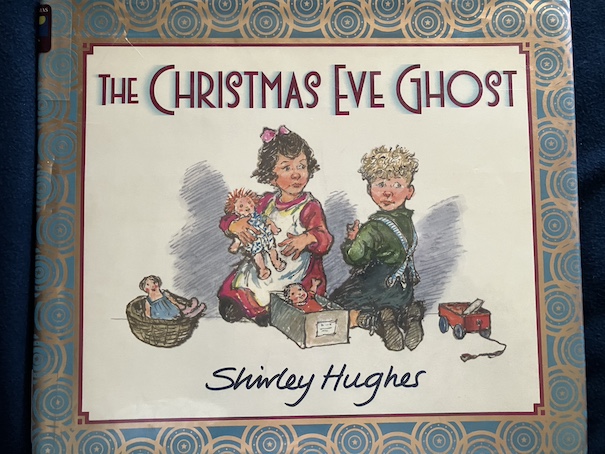


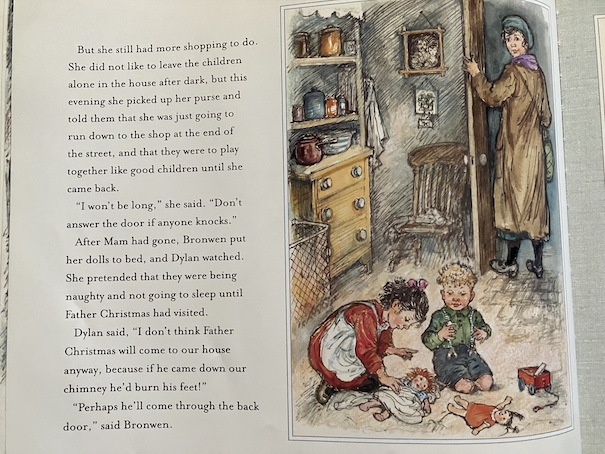
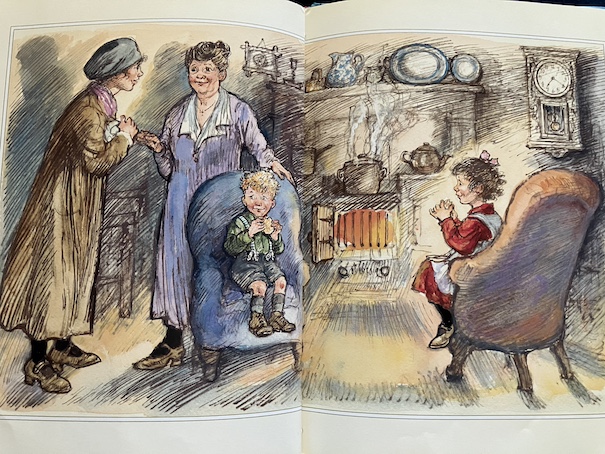
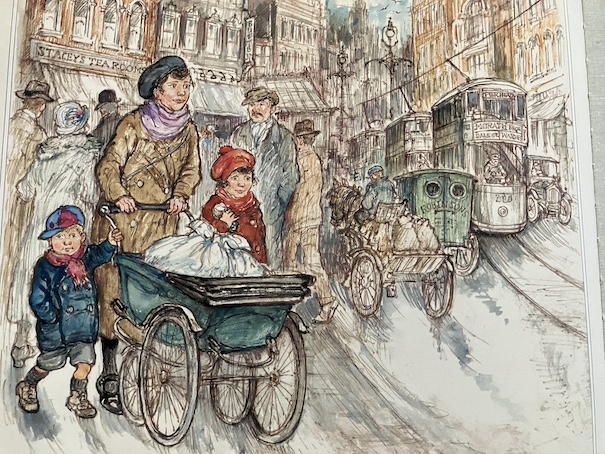
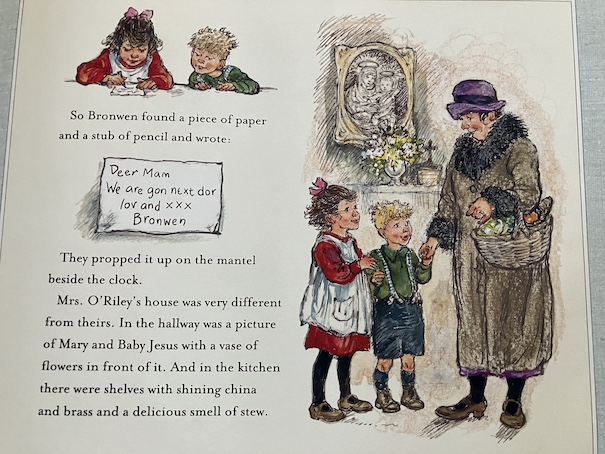


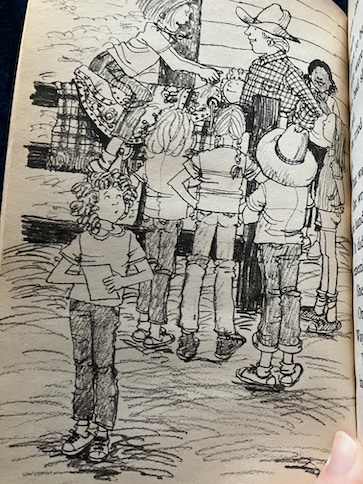
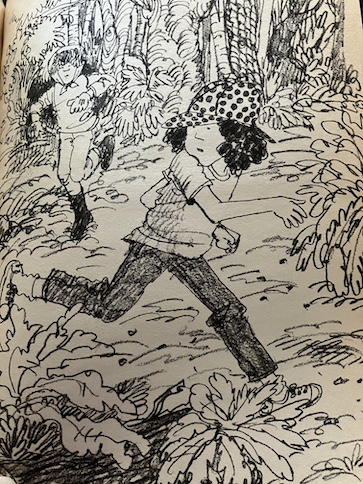


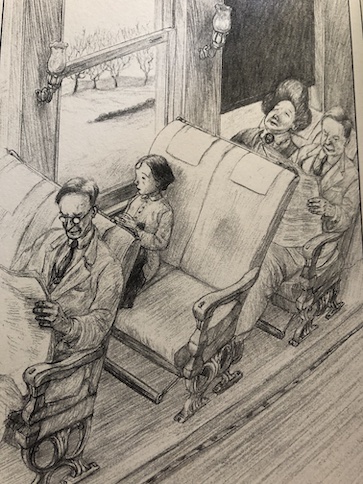
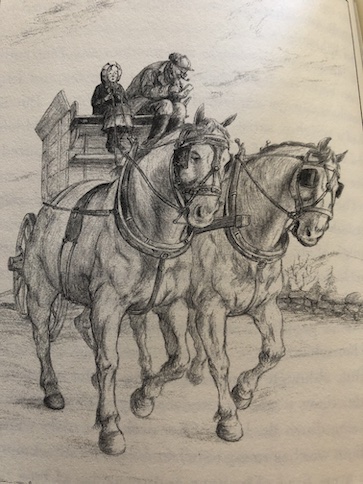

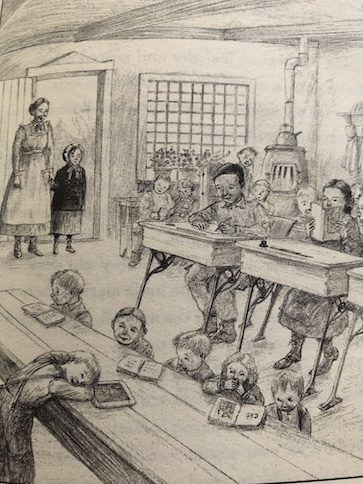

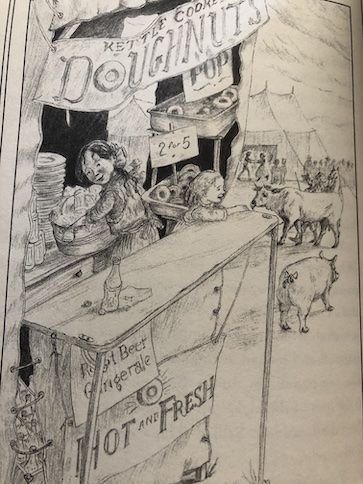
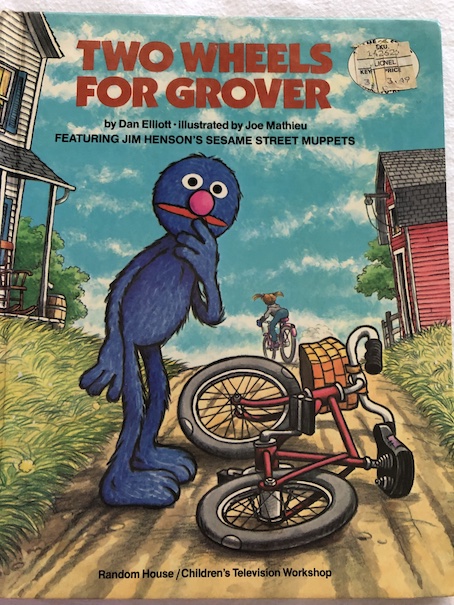
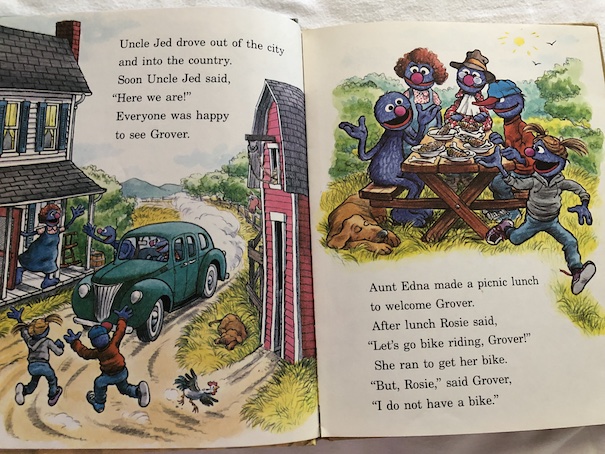
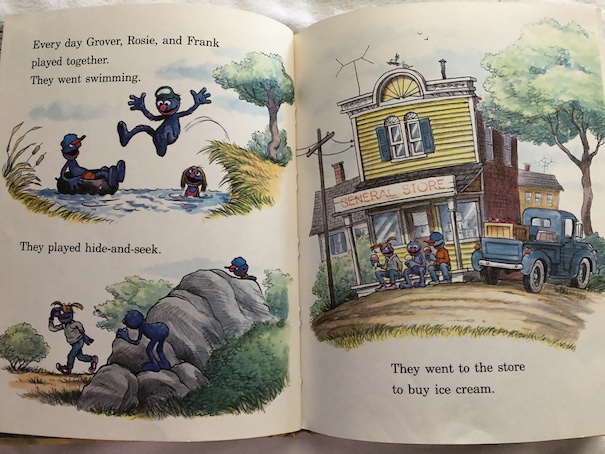
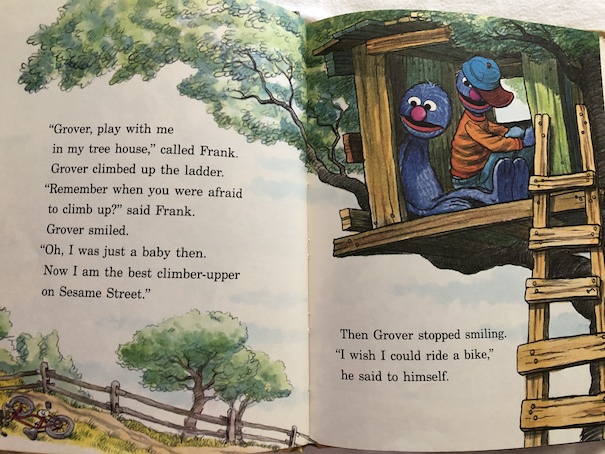


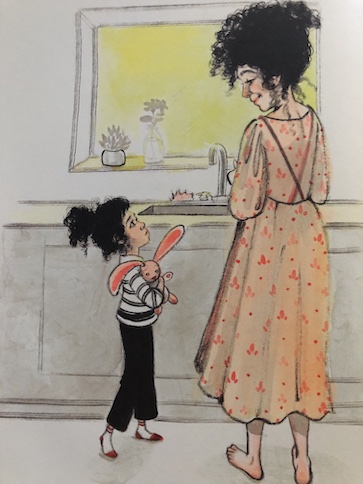
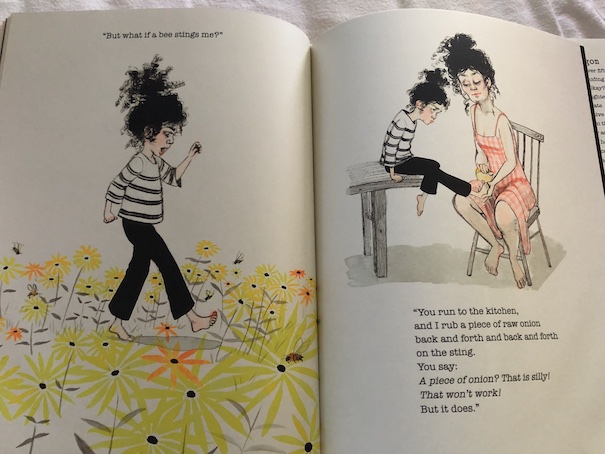
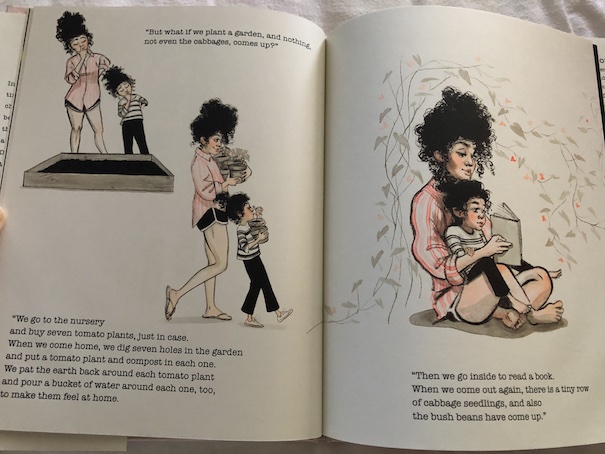


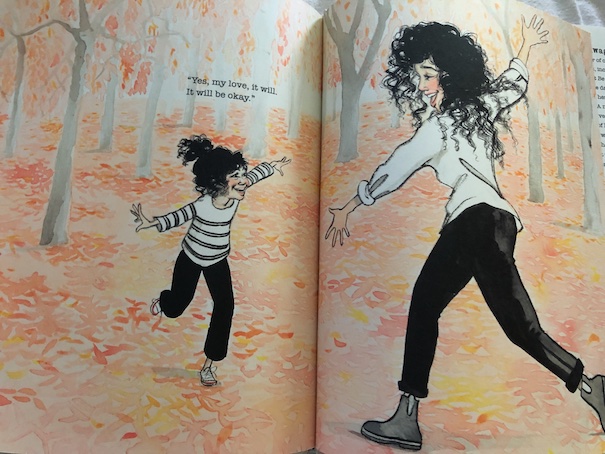



 Jestress's Forgotten Books and Stories