Mirette on the High Wire

Mirette

Mirette on the High Wire by Emily Arnold McCully, 1992.

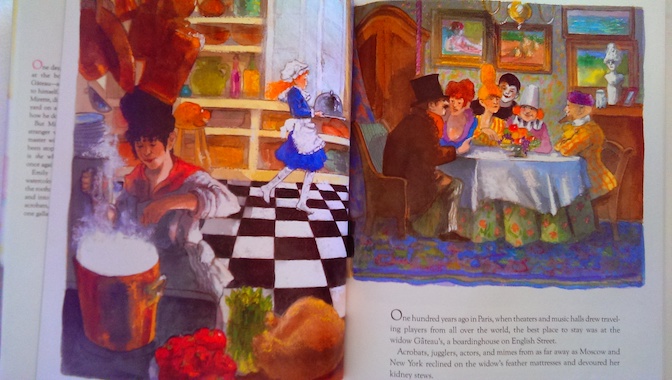
About 100 years ago (the book says, so it’s around the 1890s), a young girl named Mirette and her widowed mother run a boardinghouse in Paris. Most of the people who live there are actors and performers of various kinds.

MiretteBoardinghouse

One day, a strange, quiet man named Bellini comes to stay at the boardinghouse. Most of the time, Bellini prefers to keep to himself, but then Mirette catches him walking on the rope they are using for clothesline in the courtyard of the house. It turns out that Bellini is a tightrope walker. Mirette begs him to teach her how to do it, but he refuses.

MIretteRequest

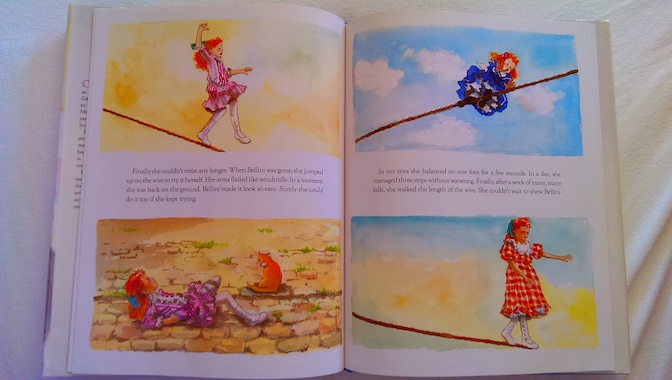
Not to be daunted, Mirette begins experimenting with tightrope walking herself. After repeated falls, Mirette eventually learns to balance on the rope. When she shows Bellini that she can walk the length of the rope, he is impressed with her perseverance and teaches her more things to develop her skills. However, he becomes very upset when she boasts that she will never fall again.

MirettePractice

Mirette learns that Bellini was a world-famous tightrope walker until a friend of his was killed in a fall, and he lost his nerve. She talks to Bellini about it, and he says that he doesn’t know how to get over being afraid. Seeing Mirette’s disappointment and worry, however, gives Bellini the courage to try once again.

MiretteBellini

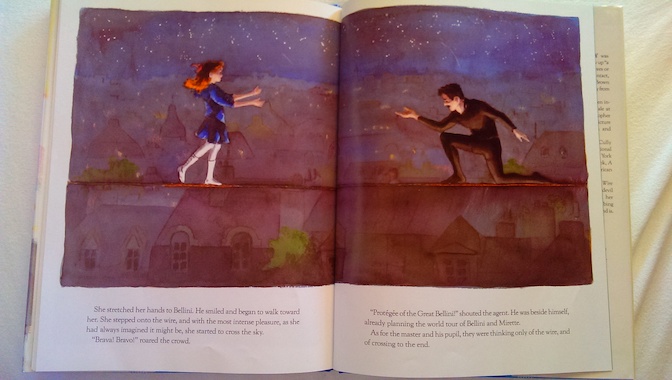
After talking with a performing agent staying at the boardinghouse, Bellini arranges a performance where he will walk a tightrope over a Paris street. When Mirette sees him hesitating at the beginning of the performance, she joins him on the wire, bolstering his courage and realizing her own dreams of becoming a real tightrope walker.

MiretteBelliniTightrope

There are other books in a series about Mirette and Bellini, where they perform tightrope acts and have adventures around the world, but I think that the first book is really the best.  The pictures are beautiful, done in an impressionistic style.

This book is a Caldecott Award winner.  It is currently available online through Internet Archive.
The Little Old Lady Who Was Not Afraid of Anything

OldLadyNotAfraid

The Little Old Lady Who Was Not Afraid of Anything by Linda Williams, 1986.

“Once upon a time, there was a little old lady who was not afraid of anything!”

This is a cute picture book based on word and sound repetition.

A brave lady ventures out into the woods one day, and as she makes her way home again when it gets dark, she begins to encounter some strange things.

OldLadyWoods

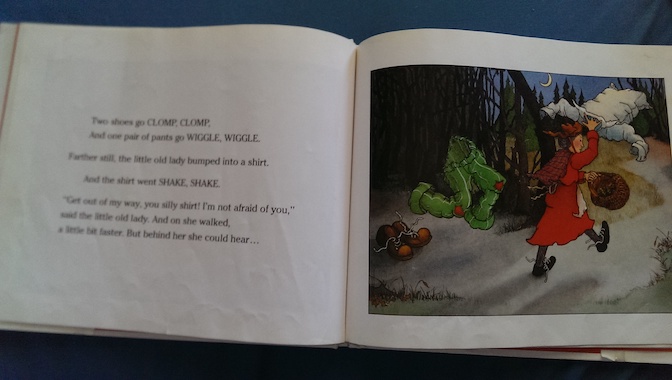
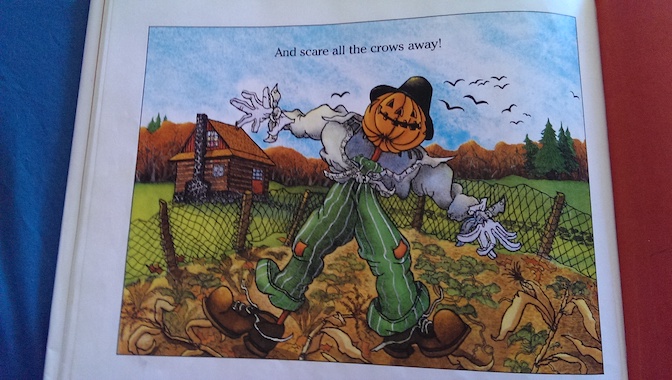
First, a pair of shoes with no one in them begin to follow her.  Then, she meets a part of pants with no one in them, and a shirt joins the parade of  clothes.  But, as weird as it is, nothing frightens the lady, not even the addition of a living jack o’lantern.

OldLadyClothes

OldLadyRun

When everything fails to frighten the woman (although she does look a little scared at one point), she has to help this strange collection of living clothes and pumpkin head to find a new purpose for themselves.

The book is currently available online through Internet Archive.

OldLadyScarecrow

A Plague of Sorcerers

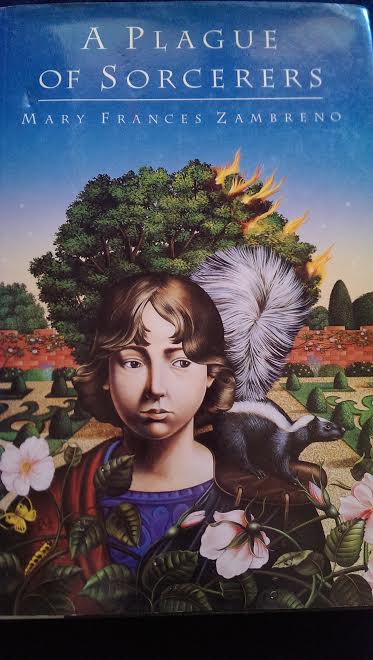
PlagueSorcerersA Plague of Sorcerers by Mary Frances Zambreno, 1991.

Jermyn Graves comes from a family of sorcerers, but although he seems to have the talent, it takes him unusually long to get his familiar. Familiars, animals with a special link to a wizard, assisting them in their magic, come to their masters when they are ready to begin learning magic, and without one, Jermyn cannot really be a wizard.

When Jermyn’s familiar finally appears, everyone is surprised to find that it is a skunk. Some people make fun of him for having such a strange familiar. No one is quite sure what the meaning of his familiar is, and the exact nature of Jermyn’s magical talent is still unknown. Still, his aunt apprentices him to a theoretician, a man who does not actually practice magic himself, but who studies the theory behind it. He can assist Jermyn until Jermyn’s true talents become known and he can study with a master who shares his specialty.

Jermyn likes his new master and the young orphan girl who lives with him. However, disaster soon strikes the city. Sorcerers are falling victim to a strange disease that sends them into a coma. Despite their best efforts, none of the remaining sorcerers can discover the source of the disease or its cure, and all the time, there are less and less sorcerers to continue the work. Time is running out, and Jermyn and his unusual familiar may be the only ones capable of finding the answer.

Jermyn does have a special talent which he comes to fully understand, and he uses it to save the other sorcerers and put an end to the mysterious plague.  Although the others had laughed at Jermyn’s skunk, he later comes to realize that she was the one keeping him from getting the plague himself because of some unusual qualities of her own.  The combination of mystery and fantasy is exciting, and there is a mysterious villain who may not even be aware of their villainy because of their own hidden sides.

This book is currently out of print, but there are used copies still available, and you can also buy an electronic copy from American Fantasy Press.

There is a note in the beginning of the book that says that the first two chapters are based on a short story written by the author earlier.  The book is currently available online through Internet Archive.  There is also a sequel to this book, Journeyman Wizard.
Angelo the Naughty One

AngeloNaughtyAngelo the Naughty One by Helen Garrett, pictures by Leo Politi, 1944.

The title is a little misleading.  Angelo isn’t so much naughty as he is afraid, although Angelo could be considered naughty because his fear causes him to misbehave.

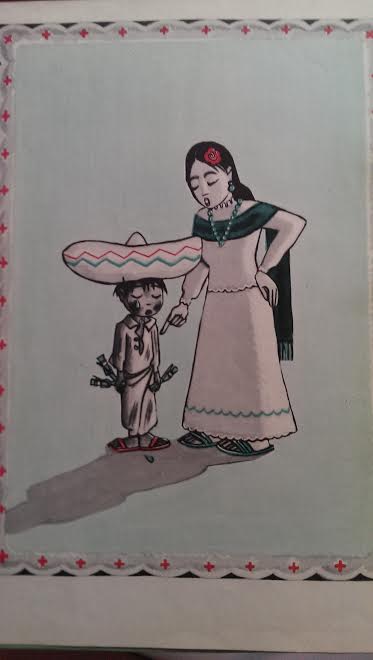
Angelo Silva hates to take baths because he is afraid of water.  Instead, he loves to play in the dirt with his toy soldiers.  He dreams of one day being a soldier himself, and he imagines that, as a tough soldier, no one would be able to tell him what to do, especially take a bath!  Angelo is in for a surprise.

When his family tries to make him take a bath so he will be clean for his older sister’s wedding, he runs away.

AngeloNaughtySearching

Eventually, he ends up at the fort outside of town, and he is caught by a group of soldiers, comrades of his sister’s fiance, who is also a soldier. Angelo is unable to admit his fear in front of these brave soldiers because he is ashamed that these brave men would think of him as a coward, although he cries and tries to fight his way out of it when they decide to give him a bath, declaring that they won’t know who he is until they get all the dirt off of him.  In the end, he is unable to resist their efforts to resist their efforts to clean him up.

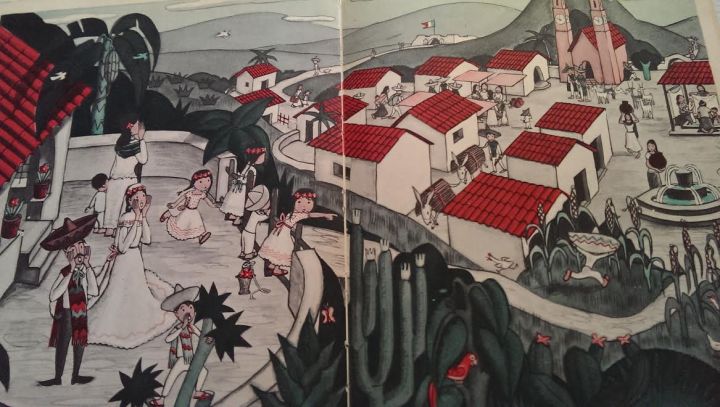
Once Angelo is clean, the soldier who is going to marry his sister recognizes him.  The soldiers borrow some nice boys’ clothes for Angelo to wear and help him dress up nicely for the wedding.  With Angelo looking much better, Angelo’s brother-in-law to be says that Angelo can ride with him to the wedding on his horse.

Before they leave the fort, the soldier says, “Brother soldiers, sitting behind me on my horse is Angelo Silva, the younger brother of my bride, Maria Rosa.  After the wedding he will be younger brother to a soldier and I am sure he will be proud and happy to take baths so he won’t disgrace the army.”  Like a true soldier, Angelo has been given an order!

AngeloNaughtyWedding

Besides getting the warning about not behaving disgracefully, Angelo realizes that he is now free to enjoy the wedding and all the good food, so getting cleaned up has some benefits.  He also likes the attention he receives from others as they marvel at his sudden transformation from a dirty little boy into a clean young man.

The story doesn’t state it directly, but it’s partly about self-confidence and growing up. Angelo admires the grown men who are brave soldiers and would like to be like them, but he can’t until he faces his fears and realizes that what he was afraid of was not as bad as he believed it was.  Soldiers must do brave things, following orders and fulfilling their duty even when they’re afraid, and so must Angelo.  Angelo’s new pride in his appearance and diligence in keeping himself clean is part of his new self-confidence.  He isn’t just proud of how he looks but of his new achievement in getting over his fear, and he likes it that others are proud of him, too.  In the end, his nickname is changed from Angelo the Naughty One to Angelo the Brave One, which is what his father calls him because he has conquered his fear.

This picture book belonged to my mother when she was young.  The pictures are all done in shades of only four colors: black, white, red, and green.  The colors reflect the colors of the Mexican flag.

The book is available to borrow and read for free online through Internet Archive.

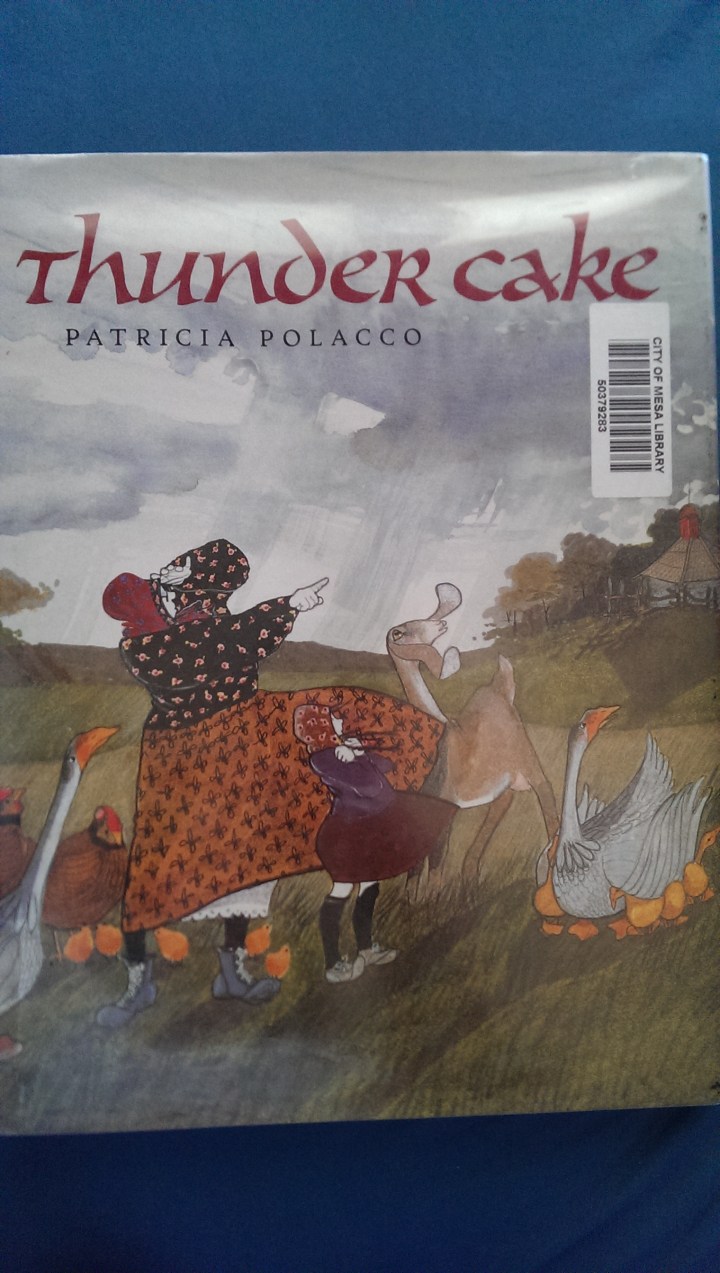
Thunder Cake

ThunderCake

Thunder Cake by Patricia Polacco, 1990.

A girl talks about how her grandmother, who she likes to call “Babushka” because she originally came from Russia, cured her of her fear of storms by teaching her to make a special kind of cake, Thunder Cake.

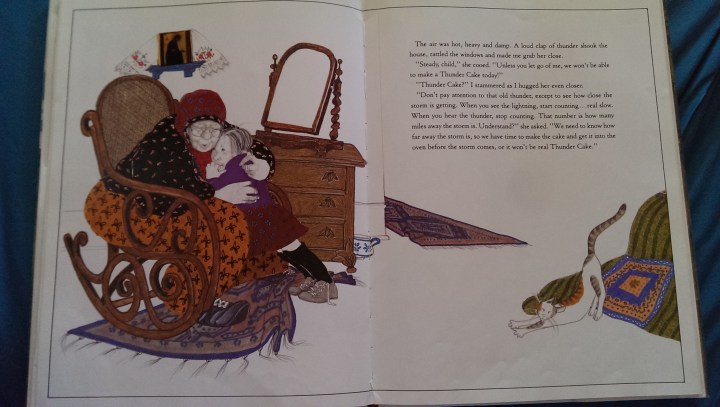
The girl is staying with her grandmother on her farm in Michigan during the summer, and the sound of thunder terrifies the girl so much that she just wants to hide under the bed.  However, her grandmother insists that the girl come out and help her gather the ingredients for her Thunder Cake.

ThunderCakeGrandma

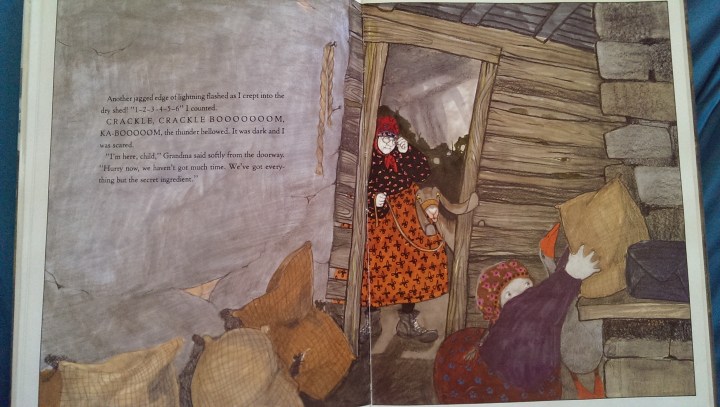
The grandmother explains to the girl how to tell how far away a storm is by counting the seconds between when she sees a flash of lightning and when she hears the sound of thunder.  She also says that they need to get the cake ready by the time the storm actually arrives, so they’d better hurry.

ThunderCakeIngredients

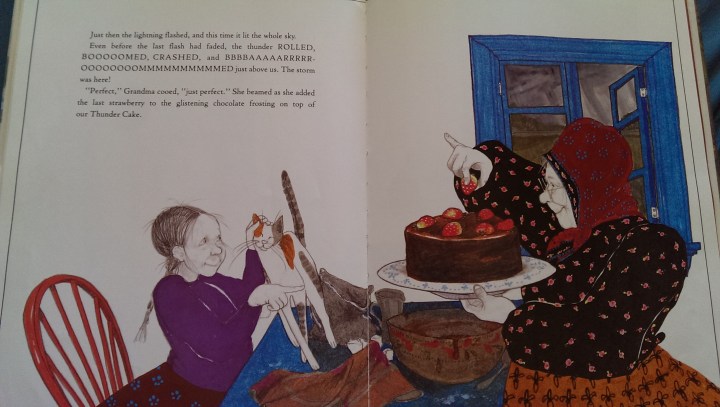
Keeping track of how close the storm is and getting all the ingredients together to make the cake helps to keep the girl busy, and by the time the storm actually arrives, she is no longer afraid.

ThunderCakeFinished

The pictures are an interesting combination of pencil drawings and bright colors.  The faces and hands of the girl and her grandmother are completely in pencil, but their clothes and everything around them are painted.

I didn’t include the recipe for Thunder Cake here because the book is still in print, and I have kind of a rule that I don’t include recipes from books that are still in print.  However, this recipe is one of the more well-known ones from children’s literature, and it’s pretty widely available on the Internet, some with pictures of the cakes people made from this recipe.  For example, this blog has a nice article about this book with helpful notes for those who want to try to make the cake.  This site also has the recipe along with some comments from others who tried it.  I was surprised the first time I read it that one of the ingredients in the chocolate cake was tomatoes, but the consensus seems to be that they are really necessary to make this cake properly.

The book is currently available online through Internet Archive.

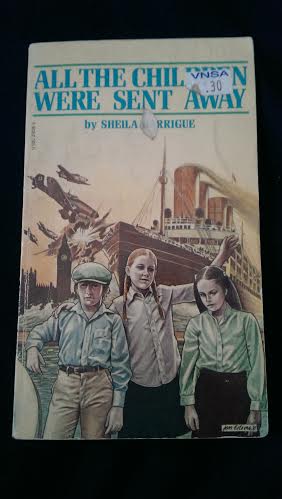
All The Children Were Sent Away

It’s 1940, and Sara Warren’s parents are sending her to stay with her uncle in Canada until the war is over.  With the increasing bombings of England, her parents have decided that it’s just too dangerous for Sara to stay, and her uncle has written, asking them to send her.  Many other British families are sending their children away to escape the bombings, and Sara travels to Canada on a ship with other British child evacuees.  All of them are worried about the families they’ve left behind and what it’s going to be like, living in another country.  They also worry about whether or not they’re ever coming back.

Sara’s escort for the trip is Lady Drume.  She is a bossy, over-bearing woman with very definite ideas about how children should be raised.  She doesn’t like Sara to talk to the sailors on the ship because they can be “impertinent,” and she doesn’t want her to play with the other children because they’re “guttersnipes!”  She even refuses to attend the lifeboat meeting or let Sara go without her!  To Sara’s mind, Lady Drume is as bad as any Nazi.

Sarah still manages to make friends with some Cockney children, Ernie and Maggie, seeing them whenever she can get away from Lady Drume, and an old sailor called Sparky makes sure that she understands safety on board the ship and attends the lifeboat drills.

But, when Lady Drume forces Sara to cut her hair after she’s been waiting so long for it to grow out, Sara decides that’s the last straw!  With the help of her friends, Sara hides from Lady Drume on the ship.  In the process, she learns something about Lady Drume which changes some things for the better, although it takes an outbreak of measles for Lady Drume to really understand and appreciate Sara.

This book is available to borrow and read for free online through Internet Archive.

Part of trouble with Lady Drume and her behavior is that she’s actually very afraid.  She doesn’t like to talk about lifeboats or life jackets because the war and the possibility of sinking frighten her.  She deals with problems by being brusque and trying to ignore frightening things, charging on ahead with whatever seems like a practical course of action to her.  It’s not even just the war but the changing world around her that frightens Lady Drume, a woman who’s used to knowing who’s who and what’s what and getting things done the way she likes them.  But, the rigors of their journey and their mutual vulnerability when they’re sick help lower Lady Drume’s barriers.  Lady Drume isn’t a bad person, and in the end, she arranges a special surprise for Sara to make her exile from England more bearable.

The end of the story is a brief section explaining Sara’s return to England, having been away for a few years, and her feelings at seeing how England and her parents have changed during that time.

There is a sequel to this book that shows what happened during Sara’s time in Canada called The Eternal Spring of Mr. Ito.  It focuses on suspicion of Japanese people following the bombing of Pearl Harbor.  There were Japanese internment camps in Canada as well as the United States during World War II.

Sheila Garrigue’s books about child evacuees from England were partly based on her own experiences as a child evacuee during World War II, as explained in her obituary after her death in 2001.