The Whispering Cloth

Mai and her family are Hmong refugees from Laos, living in the refugee camp of Ban Vinai in Thailand. Some of her relatives have gone to the United States, but Mai and her grandmother are still waiting in the refugee camp. Mai’s parents are dead, and Mai doesn’t really remember her family’s life in Laos. Almost as far back as she can remember, she’s always lived in the refugee camp. She only has vague memories of her parents’ deaths and how she and her grandmother fled to the refugee camp.

Mai’s grandmother teaches her how to do embroidery, and she begins helping her grandmother make pa’ndau, a kind of tapestry that tells a story. Together, she and her grandmother pa’ndau to sell to traders for money. They hope to use the money to get out of the refugee camp and join their relatives in the United States.

Their pa’ndau tapestries have beautiful floral borders and images that tell a story. Mai asks her grandmother if she can do one all by herself and if he grandmother will tell her a story she could use. Her grandmother says that she’ll be ready to do a pa’ndau of her own when she has a story of her own to tell.

As Mai thinks about how much she misses her parents, she realizes that she does have a story to tell in her own pa’ndau. She begins embroidering a pa’ndau that tells the story of her parents’ deaths and how her grandmother carried her away in a basket, fleeing as soldiers shot at them. She embroiders their arrival at the refugee camp, and the people and things she sees there.

When she asks her grandmother how much money they can get for her pa’ndau, she says that they cannot sell it because it isn’t finished yet. At first, Mai thinks that there isn’t anything more to tell because they’re still living in the camp, and she hasn’t experienced life beyond it. Then, she realizes that she can embroider the life she hopes to have when they finally join her cousins, based on the things they’ve told her in their letters.

The book is available to borrow and read for free online through Internet Archive.

The foreword to the story explains that the Hmong people of Laos were driven out by the Lao Communist government, and many of them were killed before they had a chance to leave. The government drove them out because they sided with the Americans fighting in Laos and Vietnam. Many people, like Mai’s family, found refuge in refugee camps like Ban Vinai, waiting until they could find another country willing to take them on a permanent basis. However, at the time this story was published in 1995, the Ban Vinai camp was set to close. The refugees there were set to be either transferred to different refugee camps or sent back to Laos, to face whatever the government there had in store for them. Understandably, many of them didn’t want to be sent back to the country they had escaped from. This article explains more about the generation of children who, like Mai, grew up in the refugee camp, disconnected from the lives their parents knew in Laos, and with ambitions to go to other places, like the United States, to start new lives.

Although this is a picture book, there are violent themes of war in the story, so I wouldn’t recommend it for very young children. The pictures in the book are beautiful, an unusual combination of paintings and actual embroidery. The artist who did the embroidery, bringing Mai’s tapestry to life, was also a refugee in camps in Thailand before coming to the United States in 1992.

I thought this was an interesting way to introduce readers to part of the history of the Hmong people and the fallout of the Vietnam War through a traditional Hmong artform/craft that tells stories in a unique way.

The Travels of Ching

A dollmaker in China makes a little doll named Ching. Ching is a high-quality, handmade doll, and the dollmaker sells him to a toy shop.

Ching sits in the window of the toy shop for a long time, waiting for someone who wants him. There is a little girl who sees him in the shop, and she wants him badly, but all the toys in the shop are expensive, and she can’t afford him.

One day, a wealthy tea merchant buys Ching, but he doesn’t want Ching himself. He plans to send Ching to someone else overseas. Ching begins a long journey by donkey, boat, and steamship to America. When he gets to America, he travels even further by train, eventually arriving at the apartment of a wealthy girl.

However, the wealthy girl doesn’t really want Ching. She already has many dolls, and she doesn’t find Ching interesting. She is careless with him, and one day, he falls off the balcony of the apartment and lies outside, forgotten.

One day, an old man finds Ching and brings him inside, but he doesn’t really want Ching, either. He gives Ching to his cook, but she doesn’t really want him, so she throws him in the trash, and Ching ends up in a junk yard.

Fortunately, Ching’s story doesn’t end there. A man who works for a Chinese laundry happens to pass the junk yard and spots Ching. Although Ching is dirty from his time outside, the Chinese man recognizes Ching’s quality and is pleased that the junk yard owner is selling him cheaply. The man buys Ching and cleans him up because he knows someone who will really appreciate him.

Thus, Ching is sent on another long journey … back to the person who always wanted him the most.

The book is available to borrow and read for free online through Internet Archive.

This is a vintage children’s book, and the illustrations of the Chinese people have the slits for eyes that are considered stereotypical now. However, there doesn’t seem to be any disrespect meant by the story. The basic theme of the story can be summed up by the saying, “One person’s trash is another person’s treasure.”

Ching travels a great distance from China to the United States, passing through the hands of various people along the way, and at times, he’s actually given or thrown away because the people who have him don’t really want him. There’s nothing wrong with Ching. He was always a high-quality doll, which is how he survived his time outside in the elements. It’s just that the people who have him don’t really appreciate him. Fortunately, there are people who recognize his quality, and there is one person who definitely wants him. It’s a happy ending when Ching finds his way back to her. All he really needed was for someone to want him, and in the end, he is happy to be with the person who does want him.

Eleanor

This picture book tells the story of Eleanor Roosevelt’s early life. Eleanor Roosevelt (full name Anna Eleanor Roosevelt) was the niece of Theodore Roosevelt (called Uncle Ted in the book), and later, in life, the wife of Franklin Delano Roosevelt (a distant cousin) and First Lady of the United States. This book is about her childhood, so it doesn’t explain about her husband or marriage until the Afterword at the end.

Eleanor’s home life wasn’t particularly happy. She was a disappointment to her mother in a number of ways. Her mother had hoped for a boy, and she didn’t think Eleanor was a pretty baby. Her mother often called her “Granny” as a nickname because she was such a serious child and seemed rather old-fashioned looking, and she reminded her mother of an old woman. When Eleanor’s younger brothers were born, Eleanor often felt left out when her mother spent time with them.

Eleanor’s father loved her and enjoyed playing with her and spending time with her, but she didn’t get to see him often as she was growing up. Her father, Theodore Roosevelt’s brother, Elliot Roosevelt, was a traveler and socialite and later became estranged from his family. Still, although he wasn’t a particularly reliable person and wasn’t present much, Eleanor was very attached to him and sometimes felt like he was the only one who really loved her.

Much of Eleanor’s early life was spent with her nanny, who spoke to her in French, so she mastered the language at an early age. Eleanor was very shy, so she didn’t spend much time with other children. She did spend some time with relatives, too. Sometimes, she helped them with charitable projects, giving her a sense of caring for the less fortunate.

When Eleanor was eight years old, her mother died of diphtheria, and she and her little brothers went to live with her grandmother and the aunts and uncles who also lived with her. Her father had been living apart from the family at this time, but he returned after his wife’s death. After that, he would visit Eleanor sometimes and take her for outings. However, he was sometimes neglectful. The book explains that he died in a fall when Eleanor was nine years old.

Life with her grandmother was difficult for Eleanor because her grandmother made her wear old-fashioned clothes, she had a strict governess, and her aunts and uncles seldom paid attention to her because they were busy with their own work and projects. Other children didn’t think much of Eleanor because she was shy and wore old clothes. Sometimes, her cousin Corinny would join her for dinner, but Corinny never liked it because the house was so grim and silent.

Eleanor was happier when they would go to her grandmother’s summer house, Oak Terrace. At the summer house, she could play games, daydream, read, and catch tadpoles with her little brother Brudie. Sometimes, she would go out in the rowboat with one of her aunts. There were also times when she visited her Uncle Ted and his family. Sometimes, she would play with her cousin Alice Roosevelt because they were the same age, but Alice teased her dreadfully, and Eleanor often found her a little intimidating. Her relatives encouraged her to be brave and to do things that she found scary, but she often found it difficult to keep up with them and some of their daring stunts.

Eleanor was often considered the “ugly duckling” of the family, but things changed for her when her grandmother decided to send her to boarding school in England. She attended a school called Allenswood, and the headmistress, Mademoiselle Souvestre, became a mentor to her.

Thanks to the lessons in French from her former nanny, Eleanor excelled at boarding school. Because the school had a rule that the girls should only speak French at dinner, Eleanor was the only girl at first who felt comfortable talking, a rare change for her. Eleanor made friends with the other girls at school and was happy there. Mademoiselle Souvestre encouraged Eleanor’s sense of independence, opened her eyes to the world around her, took her along on trips to Europe, and advised her to get clothes made in Paris, ridding her of the clothes her grandmother made her wear. By the time she returned home from boarding school, Eleanor was happier and more confident than she had been before, and she credited Mademoiselle Souvestre for her influence.

The book is available to borrow and read for free online through Internet Archive.

I enjoyed this book for its focus on Eleanor Roosevelt’s childhood. Many books about famous people focus on what they did when the became famous, but I enjoyed seeing her as a shy, awkward child, when it didn’t seem obvious that she would one day be famous. By seeing how she grew up, I feel like I’ve come to understand more about her.

Eleanor Roosevelt came from a wealthy family, but her early life wasn’t very happy. She was deeply affected by her mother’s sense of disappointment in her for not being prettier and by her parents’ troubles and their separation from each other. She was orphaned at a young age, and one of her younger brothers also died not long after their mother. She often felt like she didn’t fit in with her family, and they didn’t seem to understand or appreciate her.

The book explains a little about her father’s estrangement from the family, but it doesn’t go into all the details or some of the dark reasons why. The truth was that he was an alcoholic. His alcoholism was the beginning of his strained family relationships, but then, he had an affair with a servant girl who worked for his wife and fathered a child by her. When that happened, Theodore Roosevelt had him forcibly removed from his family’s home and did his best to keep him away from his children as much as possible, even after his wife’s death. When the book says that Eleanor’s father died in a fall, that was a soft way of explaining it. The truth is that he committed suicide because he was drinking even more heavily after his wife and one of his sons died, and he was depressed about the rest of the family keeping him away from his remaining children.

I thought it was interesting that Eleanor really blossomed at boarding school. She had always been a shy girl, but she was very studious and spoke French, skills which suited boarding school life well. Boarding school encouraged her to spend more time around other girls her age and took her away from her family’s influence, giving her the opportunity to find herself and bond with other people. In particular, the headmistress of the school became her mentor and encouraged her to look at the world in new ways and to become the best version of herself.

What To Do About Alice?

Theodore Roosevelt had done many things in his life, from herding cattle to hunting grizzly bears, but one thing he could never seem to do was manage his daughter, Alice. From early childhood, Alice was a lively girl, always having things she wanted to do and places to go. She called it, “eating up the world.”

Alice’s mother died when she was a baby, only two days after she was born. The loss was very difficult for her father, and people felt sorry for Alice. However, since Alice had no memories of her mother, she didn’t feel the loss so much, and she didn’t want people to pity her. Eventually, her father remarried, and Alice had half-siblings. Because of her father’s political career, the family traveled between New York and Washington, DC. Alice enjoyed this lifestyle and the experiences she had in different places where they lived.

For the most part, Alice’s childhood busy and full of fascinating experiences, but she did have problems as well. She went through a period where she had to wear braces on her legs because they weren’t growing properly. (The book doesn’t explain why she had this condition, partly because the exact cause is unknown. The common belief was that she might have had a mild form of polio, but that isn’t definite.) The braces worked, and eventually, she no longer had to wear them. Her father encouraged her to engage in physical activities and learn to ride a bicycle because he didn’t want her previous condition to make her overly cautious.

It turned out that there was little need to worry about that. Alice was a wild child! She would run off to explore the cities where she lived, and she once joined an all-boys club, sneaking them in disguised as girls! Concerned that Alice was getting too wild and becoming a bit of a “tomboy” (a girl who acts like a boy and likes things boys like – I don’t think this term is used as much anymore because the modern view is more that people shouldn’t allow themselves to confine their interests based on gender stereotypes).

Theodore Roosevelt considered sending Alice to boarding school to give her some discipline and teach her more ladylike habits, but the idea upset Alice so much that he eventually decided to let her continue her education at home. Alice used the books in her father’s library to study seriously. She read books by famous authors and studied subjects like Greek, geology, and astronomy, discussing them with her father.

When Alice was seventeen years old, Theodore Roosevelt was elected President of the United States. Alice and her half-siblings thrilled people with their wild behavior and exotic pets. (The book mentions Alice’s pet snake, Emily Spinach.) However, Alice also developed a serious interest in politics. She became a goodwill ambassador and took part in public projects, like the Buffalo Exposition. Her antics often became the subject of newspaper reports and society gossip. It earned her some criticism, but because she was such a personable young woman, she was also a social success. She gained the nickname of “Princess Alice.”

Eventually, Alice married a congressman named Nicholas Longworth. She continued to act as an advisor to her father and take part in diplomatic events. The entire time, she was known as an irrepressible personality!

I enjoyed the book for its fun look at a colorful character from American history, although it was on the cartoonish side. In multiple pictures, she is shown holding a giant spoon. It confused me a little at first, and then, I realized that it was a reference to her saying about “eating up the world.”

The Roosevelts were a colorful family in general. Teddy Roosevelt encouraged his children (and nieces and nephews, as explained in the book about Alice’s cousin, Eleanor) to be brave and daring, and Alice and her half-siblings were known for their wild stunts and the small zoo of bizarre animals that members of the family kept as pets. The book shows Alice and her half-siblings sliding down the stairs in the White House on serving trays, something that they did in real life, although it doesn’t explain in the text that’s what they were doing.

Alice was both a scandalous figure and an admired person in her time, and I thought the book did a good job showing that. She was an eccentric person who often trampled on social conventions, but she was also a highly social person and pleasant to be around, so she tended to shine in social and diplomatic situations.

Her life wasn’t always as happy and cheerful as the story shows. She had tensions with both her father and stepmother while she was growing up, and her marriage wasn’t especially happy. There were times when she opposed her husband politically, and she is also known to have had affairs with other men. Her daughter was probably the result of one of these affairs. Of course, these darker subjects aren’t exactly suitable for a children’s picture book. The book gives enough of an indication of tensions within her family by showing her father’s reactions to her various antics and the way she threw fits to convince her father not to send her to a traditional school. Overall, the book is a fun introduction to the life of a fascinating but complex person.

Ma Dear’s Aprons

Young David Earl’s mother, called Ma Dear, has a different apron for every day of the week, and David can always tell what day it is and what the task of the day is by which one his mother is wearing.

On Monday, she likes to wear her blue apron because that’s wash day, and she keeps clothespins in the pocket of that apron. After she’s done with the laundry, she has time to talk to David Earl, and she tells him about his father, who died as a soldier.

On Tuesday, she wears her yellow apron, when she does her ironing. On Wednesday, they deliver the finished laundry to their clients, and Ma Dear gives David Earl a treat from the hidden “treasure pocket” in her green apron.

On Thursday, Ma Dear wears her pink apron, and they pick vegetables and visit people who are sick or elderly at their homes. On Friday, Ma Dear cleans the house of another family, so she wears her brown apron. David Earl comes along, and she sings to him while she works. Saturday is for baking pies to sell, so she wears her flowered apron. She also gives David Earl a bath on Saturdays.

The best day of all, though, is Sunday. Ma Dear doesn’t work on Sunday, so she doesn’t wear an apron

The book starts with an author’s note, explaining that the characters in this story are based on her own family. “Ma Dear” was the nickname of her great-grandmother, Leanna, and Leanna was a single mother in Alabama during the early 1900s, who earned money by doing laundry, cooking, and cleaning for other people, like Ma Dear in the story. The story is about the family stories told to Patricia C. McKissack about her great-grandmother and how she made time for her children, even when she was tired from working hard. The aprons in the story are like one that Patricia McKissack inherited that used to belong to Leanna.

The author’s note, which I would have probably ignored when I was kid because I was too eager to get into the story, made this story better for me. I liked the explanation that this was a family story about a real person. The aprons are a device to help readers connect to memories of the real Ma Dear, similar to how the girls in Aunt Flossie’s Hats (And Crab Cakes Later) hear family stories and memories because they’re associated with the hats in their aunt’s collection. It’s a sweet way to share family memories.

I also like the soft, old-fashioned pictures that accompany the story. Their softness and sometimes slightly blurred quality help create the mood of memories.

More Than Anything Else

Young Booker lives with his family in a little cabin, and every morning, before the sun is up, he goes to work with his father and brother. They work at the saltworks, shoveling salt into barrels, and it’s hard, tiring work.

There is something on young Booker’s mind, though. More than anything else, he wants to learn how to read. One evening, he sees a black man reading aloud from a newspaper to a group of listeners, and he wishes that he could read like that himself. It inspires him that the man is black, like himself, showing that reading isn’t just something for white people.

Booker tells his mother how badly he wants to learn to read. His mother can’t read herself, but somehow, she manages to find a book for him to study. Booker tries to figure out how to read by studying the letters in the book, but he just can’t figure out it by himself.

Then, Booker thinks of someone who could help him: the man who was reading the newspaper. Before Booker can learn to read, he needs some help from someone who already knows.

The boy in the story is a young Booker T. Washington. The book doesn’t refer to him by his full name in the story because it’s told from his perspective and because, when he was young, he was never referred to by a surname and was only known as Booker. We only get his first name, but the book summary makes it clear that it is Booker T. Washington, the famous African American educator, who lived from 1856 to 1915 and was the first principal of the Tuskegee Normal School, which later became Tuskegee University. He was born into slavery, but he was freed as a child during the Civil War.

I’m not sure whether the description of how he learned to read from this story actually happened in real life. From what I’ve read, he learned to read at a school managed by the Freedmen’s Bureau. Another account that I read said that he wanted to learn to read after seeing white children going to school and that his mother got him a book that taught him basic reading and writing. I don’t know whether he was ever inspired by seeing a black man reading a newspaper, but I couldn’t find anything about it. Because I’ve read some differing accounts, I think that either Booker’s exact inspiration for learning to read is unknown or that there were multiple influences in his early education, with different people putting emphasis on different aspects.

I liked the story, although it doesn’t explain more about Booker T. Washington’s life. I think it would have been more educational if it explained to readers what he did when he grew up, showing how he became a teacher and influenced others’ lives and education. It’s a little disappointing that kids can read the story as it is without really understanding who Booker T. Washington was and what he did. A section of historical information in the back of the book would have helped add context to the story. The story in the book simply ends at the point where Booker learns to write his own name, but I think that showing how this simple accomplishment in basic reading and writing started him on a path to greater accomplishments.

Bamboo

Bamboo is a young farmer. He falls in love with a girl called Ming and marries her. His brother, Banyan, approves of the marriage, but Banyan’s wife, Jin, doesn’t like Ming. When Bamboo and Ming marry, Ming gives Bamboo some bamboo seedlings, and they plant a bamboo grove.

The two couples, Bamboo and his wife and Banyan and his wife, tend the farm together, although Jin complains frequently about the farm work. Then, Jin gives birth to a son, and Bamboo thinks that their growing family can use more land. He decides to go to the New World to earn more money to buy land.

Although the two brother have shared the farmland between them, Jin convinces Banyan to claim the best parts of the farm for them while Bamboo is gone. Her argument is that Bamboo will likely return rich, and Banyan needs to provide for his family. They leave very little for Ming to use to support herself in Bamboo’s absence.

However, the bamboo that Bamboo and Ming planted is magical, and it tills the soil for Ming. When Jin discovers that, she tries to steal the bamboo poles, but they hit her instead. In retaliation, she gets Banyan to throw the poles in the river. Ming cuts a new pole, and it helps her by carrying water. Angrily, Jin gets Banyan to destroy all the bamboo, but Ming’s field still grows rice, and the bamboo grows back.

Bamboo writes to Ming that he is returning with gold, but then, she gets word that his ship has sunk. Still holding onto hope that he will return, she keeps going to the dock to wait for him. The kind villagers bring her food while she waits, but Jin eats it. While Jin is eating, her young son falls in the water, and Ming jumps in to help him. She saves the boy, but she is swept away by the current.

However, Bamboo saves her, and Ming discovers that Bamboo and the others on his ship were rescued by the bamboo poles that Banyan threw in the river.

The book is available to borrow and read for free online through Internet Archive.

This story is written in the style of a folk tale or fairy tale, although I don’t think it is a folk tale. The book didn’t mention that it was based on a folk tale or a retelling of an old story. It does have some similarities to fairy tales, with the cruel, greedy, and jealous relative; the kind and patient woman who is mistreated; and magical objects that help the good woman with her problems.

The trip to the “New World” and finding gold sounds a little more modern than most folk tales and fairy tales, like something that might have happened in the 19th century, but the idea of the husband being away on a long journey sets up the situation for what happens to his wife while he’s away. Like in fairy tales, everything works out for the best in the end. The bamboo poles that Banyan threw in the river save his life when they reach him, and when Ming saves her young nephew’s life, Jin apologizes for the way she’s been treating her. The story’s familiar themes are comforting. Readers can be confident that there will be a happy ending, and I liked it that the very act of throwing the bamboo poles in the river, which was meant to be a punishing act, is what saves the day.

Mooncakes

A young girl is excited because tonight is special, and she will be allowed to stay up late and eat mooncakes with her parents for the Chinese Moon Festival. They decorate with paper lanterns, and they spend the evening looking at the night sky from their backyard.

Her parents, called Mama and Baba, tell her stories from Chinese legends. The book includes the stories they tell, like the story of Chang-E (who was a woman who escaped from her cruel husband with the elixir of life and now lives in the Jade Palace on the moon), the story of the woodcutter Wu-Gang (who chops wood forever on the moon in his quest for eternal life), and the story of the Jade Rabbit (who lives on the moon with three magicians and brings food to people who need it).

As they tell stories, the girl and her parents drink tea and eat mooncakes. The girl tries to look for the characters that they talk about on the moon until it’s time for bed.

There’s an Author’s Note in the back of the book that explains a little more about the Chinese Moon Festival. It’s a harvest festival that takes place in the eighth month of the lunar calendar. It also honors family, and even family members who can’t be together will remember that the rest of their family is looking at the same moon, no matter where they are.

I know that I’m presenting this story out of season because the Chinese Moon Festival is in autumn. Because it’s based on the lunar calendar, it sometimes happens in September and sometimes in October. I did my review at this time of year because it fit best with my blog’s schedule.

I enjoyed experiencing this lovely festival through the eyes of a young girl, having a gentle celebration with her parents. It’s an idyllic evening of cozy story-telling, and I really enjoyed the three folktales introduced in the book! I enjoy folk tales from different countries, and I liked these brief stories. I think this book would make a good beginning introduction to Chinese folklore for young children.
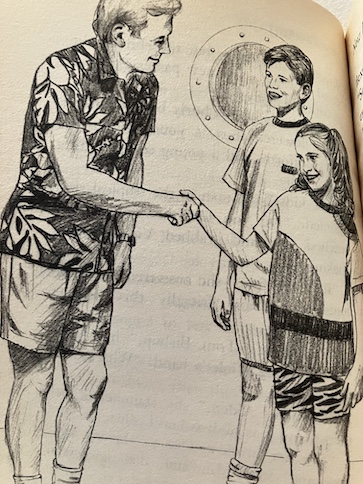
The focus of the story and the pictures in the book alternate between the stories the parents tell and the girl and her parents as they enjoy their evening together. I think this would make a great bedtime story.

The Korean Cinderella

In this Korean version of the classic Cinderella story, a couple who live in a little cottage have a daughter they call Pear Blossom. Pear Blossom is a lovely girl, and when her mother dies, her father thinks that he should remarry, so he will have a wife to help care for his daughter.

The village matchmaker matches him with a widow who also has a daughter, a girl called Peony. However, after the marriage, it becomes clear that Pear Blossom’s new “mother” doesn’t like her, and her new “sister” doesn’t either. Her stepmother and stepsister are jealous of her, so they nitpick everything she does and make her do all the chores. As Pear Blossom’s father’s health worsens, he is less able to interfere with their mistreatment of Pear Blossom, and the stepmother schemes to find a way to get rid of Pear Blossom entirely.

The stepmother keeps assigning Pear Blossom chores that she thinks will be impossible for her to complete, but various animals take pity on her and help her. A frog helps her to fill a jug that has a leak by plugging the leak, and some sparrows help her to hull a massive amount of rice.

One day, Pear Blossom’s stepmother and stepsister go to a festival in the village, leaving Pear Blossom at home. The stepmother says that she can only go to the festival if she weeds the rice paddies first. However, a huge black ox appears out of a whirlwind and takes care of the task for her!

On her way to the festival, Pear Blossom sees the handsome magistrate but accidentally loses one of her sandals as she gets embarrassed and runs away. The lost sandal helps the magistrate to find Pear Blossom at the festival, and he declares that he wants to marry her.

There is an Author’s Note in the back of the book about the background of this fairy tale, and the author notes that there are multiple Korean versions of this story. There’s also an Illustrator’s Note that discusses the style of the illustrations. It explains about how designs that appear in the illustrations are based on designs from Korean temples, and there is also information about the clothing the characters wear.

The book is available to borrow and read for free online through Internet Archive.

Shirley Climo has written multiple picture books about versions of the Cinderella story form around the world, and it’s fascinating to see how a story that so many of us recognize varies from country to country while still maintaining the same basic pattern. An aspect of this particular version of the story that Climo explains in her Author’s Note is that the animals that help Pear Blossom in the story are sent by a kind of “goblin” called a tokgabi or doggabi. The story itself says this, but in folklore, this kind of “goblin” can represent the benevolent spirit of someone who has died. In this story, the spirit might be Pear Blossom’s mother. This explanation makes sense to me because I remember reading something similar about the Chinese version of the Cinderella story. The story of Rhodopis, which Climo retold in The Egyptian Cinderella, may be the oldest form of the Cinderella story, and it doesn’t have that element of the girl’s deceased mother helping her through trials until she finds happiness, but it does put the concept of the Fairy Godmother from European version of the story in a different light.

This is another children’s picture book where I appreciated the notes from the author and illustrator because they add more depth to the story. When I was a kid, I never read notes like that because I was only interested in the story itself, but notes like this make the book more appealing for older readers.

The Princess and the Warrior

This story is a folktale about the origins of a pair of volcanoes near modern Mexico City.

The Aztec emperor had a beautiful daughter, Princess Izta, and there were many men who wanted to marry her. They gave her many wonderful gifts, but Princess Izta wasn’t impressed by any of them.

The man she loved was a warrior called Popoca. Unlike her other suitors, he really loved her for the person she was. The emperor disapproved of Princess Izta marrying a warrior who wasn’t from a wealthy, influential, or royal family, but he also knew that Popoca was brave and a good warrior. Their kingdom was at war with a neighboring kingdom, led by Jaguar Claw, so the emperor promised Popoca that, if he could defeat Jaguar Claw, he would allow him to marry Princss Izta.

There were hard battles against Jaguar Claw, but Jaguar Claw gradually realized that he would lose the war. As a final act of revenge before defeat, he sent a messenger to tell Princess Izta that Popoca was dead. Worse still, the messenger gave Princess Izta a potion that would supposedly help her with her shock but which put her into a deep sleep.

When Popoca finally returned victorious, he was shocked and grieved to find Princess Itza in a deep sleep, from which nobody seemed able to wake her. He sat by her side, waiting for her to wake up. The story is based around the two volcanoes, one which looks like a sleeping woman and is dormant, and the other which looks like it’s sitting upright and shows signs of activity.

There’s an author’s note in the back of the book about the origins of the legend and how this version of it differs from other versions and about the volcanoes that inspired the story, Iztaccihuatl and Popocatepetl. There’s also a glossary of Nahuatl words used in the story.

I hadn’t heard this story before, but I enjoy folktales from around the world! The art style is fascinating, incorporating aspects of traditional Aztec art, such as showing things in a very two-dimensional style and human beings in profile. Even though there is fighting depicted in the story, it isn’t too graphic for children

When I was a kid, I would never read author’s notes, but I appreciate them as an adult, especially in cases like this, where they provide more information about the background of legends. This picture book is meant for children, but it can also be fascinating for adults, especially with the addition of the background information.