Clark Lannigan meets Sarah Capshaw by accident when she comes to spend the summer with her grandparents in Wilsonburg. Sarah’s grandfather, Conrad Capshaw, is a lawyer, and he is handling the estate of Rodney Maplewood. Rodney Maplewood used to be a museum curator and had an impressive collection of antiques which he kept in his large house, Maplewood Manor.
Maplewood Manor is the oldest and the spookiest house in town. It was once owned by the eccentric Antonia Whitemarsh, who was a spiritualist and believed that her father’s spirit still inhabited the house. Now, people in town think that Rodney Maplewood’s ghost is also haunting the house because lights have been seen in the house at night. Conrad Chapshaw also says that, although nothing is missing, some objects in the house have been moved around.
Sarah persuades Clark and his friend “Frog” Fenniman to join her investigation of the house, but besides the resident ghost, they will also have to deal with a local group interested in psychic phenomena and a mysterious stranger who is paying the local bully to spy on the house.
This is the first book in the Sarah Capshaw Mysteries series. Sarah and her parents move to Wilsonburg, and she has other adventures with Clark and Frog, all narrated by Clark.
The book is currently available online through Internet Archive.
The Mystery on October Road by Alison Cragin Herzig and Jane Lawrence Mali, 1991.
A strange man has moved next door to Casey. He always wears a bandana tied across the lower part of his face, like a bandit. His pets are the strangest dogs Casey has ever seen, huge Irish Wolfhounds. He’s started fixing up his new house, but for some reason, he only likes to work at night.
One day Casey and her friend Cats (really, they’re both named Catherine, but they each have nicknames) go to take the man some bread that Casey’s mother baked, and they’re frightened away by one of the dogs. Casey goes back to get the bread they left behind, and the man tells her to go away and leave him alone.
Casey and her friends (Cats and Benny, a boy Cats likes) are curious about this strange man. They even wonder if he could be some kind of gangster, hiding out. At her friends’ urging, they sneak into his house one day to look around. When the man comes back unexpectedly, her friends get away in time, but Casey falls and hurts her ankle. The man finds her in his house, and she learns the truth about him.
The man isn’t a bad guy, and Casey even becomes a friend for him. The story ends on Halloween, when the man creates a special Halloween display for Casey of beautifully carved pumpkins. The part that always fascinated me was the way he carved them, by peeling the skin off the pumpkin and only leaving it in places where he wanted dark lines.
Part of the story is about how appearances can be deceptive. The stranger is actually a good person, but he is physically disfigured, which is why he doesn’t like people to see him. For part of the story, Cats isn’t really a very good friend for Casey, neglecting her feelings and the feelings of the mysterious stranger in order to impress Benny. But later, when she realizes that Casey was right about the stranger and that she was really hurt in their little escapade, she shows that she can be a better friend, too.
The book is currently available online through Internet Archive.
The kids take another field trip, this time to a state park. Native Americans used to live on that land, but most of the tribe died from disease many years ago. There are stories about spirits that live in the hills and the forest. Young boys from the tribe used to perform a ritual where they would dance with the Great Spirit in order to become men.
The third graders have been studying Native American history and customs to prepare for the field trip. Norma wrote a report about Native American names, which tended to describe some significant characteristic of the person. Their teacher tells the students that they should think of names for themselves which describe something significant about themselves. Most of the kids think it sounds like a fun idea, but Joey doesn’t. He’s just one kid in a family with a dozen other kids, and he’s never felt like there was anything particularly special about him. That’s why he makes up tall tales about himself that all the other kids find weird and annoying.
When they reach the state park, Dennis Ten Foot Bridge, who is the last of his tribe, tells the students about his tribe, teaches them wilderness skills, and leads them in group activities. One evening, Joey goes out to practice some rowing on the lake by himself, and he sees what looks like a large ghost at the top of a hill However, everyone knows that Joey lies about a lot of things, so at first, no one believes him. At least, no one except Adam.
Adam agrees to help Joey investigate the mysterious spirit. Eventually, all of the members of the ghosthunting group decide to go up on the hill together to see the ghost for themselves. There, Joey finds the courage to face the spirit directly, and everyone sees the truth. Together, Joey and his friends end up repeating the ancient coming-of-age ritual that the tribe that used to live there would perform.
The solution to the mystery is a little strange, but the book is great for the characters alone. This final book in the Third Grade Ghosthunters series is a coming-of-age story. The other books in the series addressed personal issues and personality quirks in the characters as side-plots, such worrying about not being as smart others, worries about making and keeping friends, and the trouble with teasing. This one focuses on Joey and his sense of identity. He’s always felt that there is nothing special about him compared to his brothers and sisters. In this story, he develops his own character more and gains new confidence. In the process, he ends up becoming more comfortable with his role as a kid in a family with many children as well as appreciating his own uniqueness. He also finds a name for himself that expresses his new sense of identity.
The same kids who were assigned to figure out the mysterious happenings at their school are now going on a field trip to a farm with their class. They’ll be spending a couple of days on the farm, sleeping over. Adam has been looking forward to the trip, and he brings his ghost hunting gear with him, just in case. He hasn’t lost his taste for ghost stories since their last adventure.
At first, things are pretty normal. Then, during the night, the boys hear howling and see apparitions of a ghostly wolf in their bunk house. Could the farm be haunted? Or is this some kind of mean joke? Perhaps it’s the work of the class bully, Jeff? The ghost hunting committee assembles again to solve the mystery.
They try to use scientific methods to study the haunting. They measure the placement of the furniture to see if anything moves while they’re out and sprinkle flour on the floor to get footprints. But, even though they watch carefully and don’t see anyone enter the bunk house, when they go inside, everything is a mess, and the flour doesn’t appear disturbed. Everyone else is about ready to admit that this one is a real ghost, but Adam has another theory.
The solution has an interesting twist to it. It’s a good mystery for kids beginning chapter books who like a little creepiness in their reading.
The book is currently available online through Internet Archive.
The Haunting of Grade Three by Grace Maccarone, 1984.
Elwood Elementary has become overcrowded, so the third-graders have been moved to an old mansion, Blackwell House, which has been empty for years. The house looks kind of spooky, and there are a lot of local ghost stories about it. Fortunately, Adam Johnson likes scary stories, so he thinks that it’s wonderful to go to school there.
Soon after the students move into the house, strange things begin happening. Objects fall off desks and shelves, and door slam for no reason. Some of the kids discover a grave marker on the property for a boy about their age who died during the Civil War. The kids start getting nervous, and so does their teacher, Mr. Jenkins. Then, Mr. Jenkins decides to give the kids group assignments. Each committee gets to go to a different place in town and learn about it. Adam’s committee is assigned to study Blackwell House and decide if it’s really haunted. The kids think their assignment is pretty strange, but Adam is excited. He wants to be a ghost hunter like on Ghostbusters!
Most of the group members are misfits in one way or another. Norma Hamburger is a shy girl, frequently teased about her last name. Debbie Clark is a talkative girl who’s really into science. Chuck Webber, Adam’s best friend, is the class clown, always telling stupid jokes (and one of the main people who teases Norma about her name). Danny Biddicker is strong and good at sports, but he worries that he’s not as smart as the others. Joey Baker feels overshadowed by his large family, so he tells tall tales to get attention. The other kids don’t understand and get annoyed with his lies. By working together, they not only learn the secret of Blackwell House, but they learn more about each other and become a real team and friends.
In the end, there is a reasonable explanation for the haunting of Blackwell House. The kids take a methodical approach to the mystery, gathering their facts and ruling out various possibilities along the way. Joey gets a chance to be a real hero, Danny proves to himself and everyone else that he’s smart and has good ideas, and Adam gets a new life ambition.
One other thing that I thought was interesting is that Adam, the main character in the story, is African American, but it’s never mentioned in the text of the story. You only know because it’s shown in the pictures. It’s just a little detail and not important to the story, but I thought it was interesting in a story that encourages kids to notice details. I also liked it that Adam isn’t defined by race or appearance as so many characters in kids’ books are. He stands by himself as an interesting character with his own ideas, courage, and leadership abilities.
Miranda is living with her grandmother in Oregon while her scientist parents are away studying algae in Antarctica. Her grandmother owns a bed and breakfast called The Jumping Frog, which has a Mark Twain theme. At first, all Miranda is concerned about is finding some friends and fitting in at her new school, but soon strange things start to happen at the bed and breakfast.
First, someone attacks their housekeeper, hitting her over the head with a bust of Mark Twain. Then, some letters that were written to an ancestor of Miranda’s by Mark Twain himself are stolen.
Although Miranda’s grandmother likes to think the best of everyone, Miranda is convinced that the villain is someone living in the bed and breakfast. With her new friends (the main characters from A Little Magic, another book by the same author) Miranda begins her investigation, determined to find the letters for her grandmother, although it may mean solving a double mystery. There is more that one person in the bed and breakfast with something to hide.
One of the fun things about this story is the riddles that Miranda and her grandmother like to tell each other. Even her friends enjoy riddles, and they help provide Miranda with the inspiration to solve the mystery.
This book is currently available online through Internet Archive.
All the Children Were Sent Away by Sheila Garrigue, 1976.
It’s 1940, and Sara Warren’s parents are sending her to stay with her uncle in Canada until the war is over. With the increasing bombings of England, her parents have decided that it’s just too dangerous for Sara to stay, and her uncle has written, asking them to send her. Many other British families are sending their children away to escape the bombings, and Sara travels to Canada on a ship with other British child evacuees. All of them are worried about the families they’ve left behind and what it’s going to be like, living in another country. They also worry about whether or not they’re ever coming back.
Sara’s escort for the trip is Lady Drume. She is a bossy, over-bearing woman with very definite ideas about how children should be raised. She doesn’t like Sara to talk to the sailors on the ship because they can be “impertinent,” and she doesn’t want her to play with the other children because they’re “guttersnipes!” She even refuses to attend the lifeboat meeting or let Sara go without her! To Sara’s mind, Lady Drume is as bad as any Nazi.
Sarah still manages to make friends with some Cockney children, Ernie and Maggie, seeing them whenever she can get away from Lady Drume, and an old sailor called Sparky makes sure that she understands safety on board the ship and attends the lifeboat drills.
But, when Lady Drume forces Sara to cut her hair after she’s been waiting so long for it to grow out, Sara decides that’s the last straw! With the help of her friends, Sara hides from Lady Drume on the ship. In the process, she learns something about Lady Drume which changes some things for the better, although it takes an outbreak of measles for Lady Drume to really understand and appreciate Sara.
This book is available to borrow and read for free online through Internet Archive.
My Reaction
Part of trouble with Lady Drume and her behavior is that she’s actually very afraid. She doesn’t like to talk about lifeboats or life jackets because the war and the possibility of sinking frighten her. She deals with problems by being brusque and trying to ignore frightening things, charging on ahead with whatever seems like a practical course of action to her. It’s not even just the war but the changing world around her that frightens Lady Drume, a woman who’s used to knowing who’s who and what’s what and getting things done the way she likes them. But, the rigors of their journey and their mutual vulnerability when they’re sick help lower Lady Drume’s barriers. Lady Drume isn’t a bad person, and in the end, she arranges a special surprise for Sara to make her exile from England more bearable.
The end of the story is a brief section explaining Sara’s return to England, having been away for a few years, and her feelings at seeing how England and her parents have changed during that time.
There is a sequel to this book that shows what happened during Sara’s time in Canada called The Eternal Spring of Mr. Ito. It focuses on suspicion of Japanese people following the bombing of Pearl Harbor. There were Japanese internment camps in Canada as well as the United States during World War II.
Sheila Garrigue’s books about child evacuees from England were partly based on her own experiences as a child evacuee during World War II, as explained in her obituary after her death in 2001.
The first time Mick Williams meets Randall Izard (called “Izzie”) is when the news dealer Mick works for asks him to train the new boy on his paper route, and Mick learns that Izzie will also be going to his school. Mick doesn’t like Izzie much at first. The new boy speaks with a posh accent and is riding an expensive bike that he says was a present from his father, who makes television ads for a living. Mick doesn’t have a father, and he stole the bike that he rides for his paper route.
Mick guesses that Izzie’s family used to have more money but have fallen on hard times, which is why Izzie needs the paper route. Mick is worried about his own future. Someone is building a new hotel on the street where he lives by knocking down the old film studios, and his mother says that they’re going to demolish all the old apartment buildings around it. That means that they’ll have to find a apartment, which isn’t easy because they don’t have much money, and not everyone wants to rent to a lone woman with a child.
Mick kind of envies the criminal gangs that he reads about in the paper, like the Disguise Gang. They stage daring raids on banks while wearing clever disguises so that no one knows that they really look like. They fool everyone and get away with tons of money. Mick wishes that he was that clever! If he was, his mother would never have to worry about money again.
But, Izzie turns out to be a good friend for Mick. They both love to play soccer, and Izzie tells Mick that his father used to work in the old studio buildings that they’re tearing down to build the new hotel. In fact, Izzie even knows a secret way in, so the boys sneak in to explore a little. They’re goofing off with some of the props when they make the startling discovery that the prop guns are loaded with real bullets! Then, the boys have to make a run for it because there are other people sneaking around the old studios. What is going on there?
This book actually takes place in London. I don’t think they actually say the name of the city in the story, but they do mention the Thames, the money is all in pounds, and there are children playing cricket. But, it’s the kind of story that could take place anywhere. Mick and Izzie are realistic characters. Both of them are worried about their families’ hard times. Mick in particular wants to be the man of the house and to help his mother in her struggles to provide for them. His inner debate about which side of the law he should be on is also feels real, and it’s satisfying what he chooses when he realizes what criminals are really like and the danger they pose to people he cares about.
Jennifer never remembers her dreams, so she doesn’t think that she’ll be able to complete the essay that her teacher assigned them to write: My Strangest Dream. While she’s worrying about not being able to finish her homework, she dozes off on the school bus on her way to school.
Suddenly, Jennifer finds herself in a beautiful carriage being driven through a dark forest. Jennifer is happy that she’s apparently going to have a dream that she can write about, so she decides to enjoy it as much as possible, trying on the beautiful gown, cloak, and jewelry that she finds in the carriage with her. Eventually, the carriage stops at a huge palace, and Jennifer comes to the realization that the carriage never had a driver.
She is greeted by Duke Rinaldo, the Lord High Chancellor of the kingdom of Eladeria. Jennifer is informed that she is Princess Miranda, the king’s adopted daughter. Actually, Jennifer is the seventh of the king’s “daughters.” There were six others before her . . . and their fates are unknown.
This is no ordinary dream. The king of Eladeria is ill, possibly bewitched. The king’s son is missing. There is treachery in the palace. People live in terror of the evil enchantress Swenhild and her harpies. Soon, they will demand a tribute: a golden-haired princess with blue eyes . . . like Jennifer, er, Princess Miranda!
The only one who seems to want to help Jennifer is her new friend, Samson the dwarf, who is the palace’s court jester. He introduces her to his friend, Prospero, who can do magic and understands more of what’s happening than most people. He tells her that her only hope is to find the Paladian Scroll and use its power. Can Jennifer and Samson find this mysterious scroll in time? It might still be possible to save the other princesses, but Jennifer worries about whether she’ll ever wake up in her own world again.
One of the things that I love about this book is how it brings in some lesser-used fantasy creatures, like the harpies, and characters, like the dwarf jester. The “was it a dream or wasn’t it” trope has been used a lot, but the adventure within the dream itself is fun, exciting, and very well-done.
I would dearly love to see this book in print again! It’s a charming modern fairy tale about a young princess who learns what beauty and happiness really mean.
Esmeralda is the only child of the king and queen, and she has just about everything that a girl could want. The author paints a pretty picture of Esmeralda’s charmed life at the castle and all of the beautiful things she has.
However, Esmeralda has one serious problem: she is plain. In her kingdom, in order for a girl to be considered beautiful, her nose must turn down, her mouth must turn up, and her eyes must have a twinkle in them. Esmeralda’s appearance is exactly the opposite. It is a serious problem because her plainness causes people to lose respect for her, and the prince that she is betrothed to refuses to take much of an interest in her.
Although her parents consult the finest physicians and wizards available, none of them can provide any solutions for Esmeralda’s condition. It is only after the king places an advertisement in the newspaper that a widow, Dame Goodwit, with five daughters of her own comes to the castle and offers a solution. However, she insists that Esmeralda must come and live with her family for nine months. At first, Esmeralda is distressed at leaving her home and living in much simpler circumstances that she is accustomed to, but the reasons soon become as plain as the princess herself.
As Esmeralda interacts with and becomes friends with Dame Goodwit’s daughters, Annabelle, Christabelle, Dulcibelle, Floribelle, and Echo, she comes to see herself and her old life at the castle differently. At Dame Goodwit’s, she is expected to take care of herself and her belongings by herself, for the first time in her life. She is given chores to do and becomes responsible for herself in ways that she never was before. She also comes to see that, even though Dame Goodwit’s daughters are not princesses, in many ways, they are more knowledgeable and accomplished than she is, able to do many things that Esmeralda has never even tried before. Little by little, Esmeralda learns and tries new things, even coming to enjoy her time with the family and becoming especially fond of little Echo, the youngest girl. Her new experiences change her, her behavior, her attitudes, and eventually, even the way she looks.
The book is available to borrow and read for free online through Internet Archive.
My Reaction
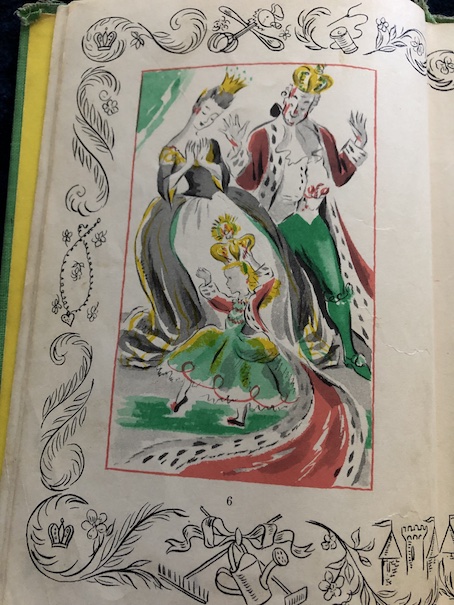
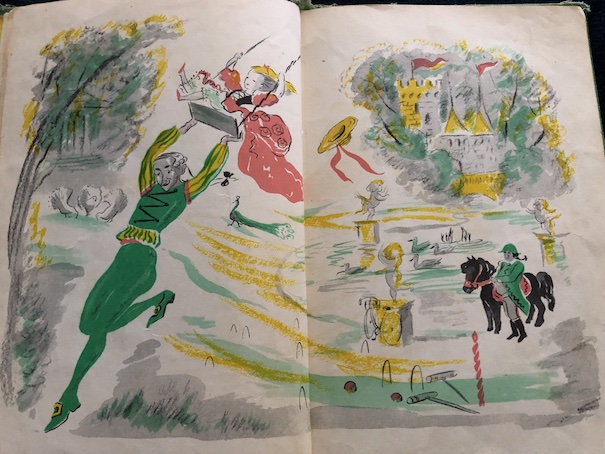
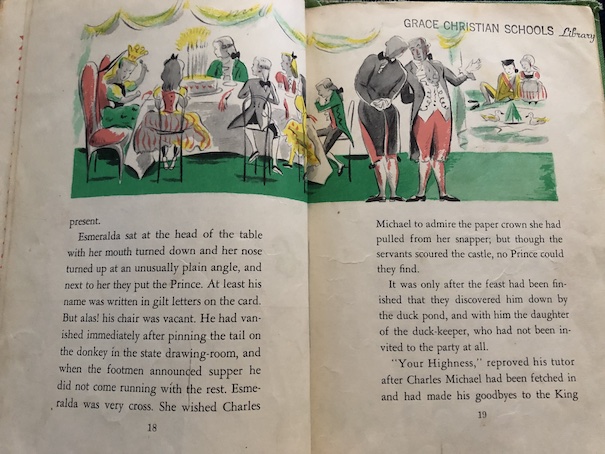
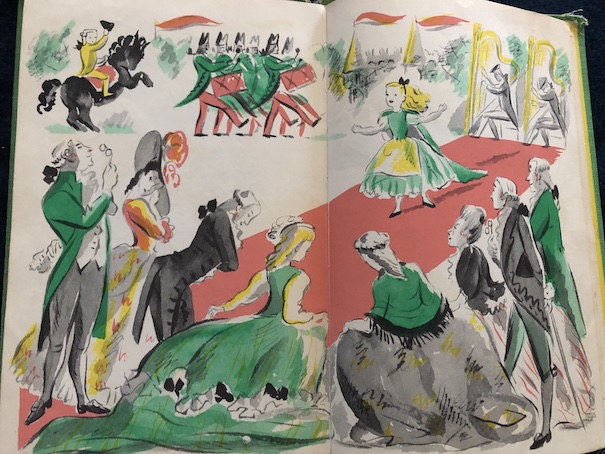
In spite of the fairy tale atmosphere, there isn’t really any magic in the story, as the widow herself points out. The real magic of the story is in the lessons that Esmeralda learns: that beauty and change come from within and that the way we see ourselves and those around us is important. For those who might be concerned at the emphasis on “beauty” and “plainness”, it soon becomes apparent that the outward signs of beauty really stand for positive character traits: humility, pride in one’s own talents and accomplishments, and unselfish caring for other people. The book also has some very pretty illustrations, some of which are wide scenes taking up two pages. It’s a beautiful book and a beautiful story for any young girl.
I don’t think that the book was ever made into a movie, but there are multiple versions that are stage plays (the link is to a video clip from a stage version of the story), including some that are musical. I have seen a script for one of them that has added religious themes that weren’t in the original book, but the site has since been removed. I’m sure that the script still exists, I’m just not sure where to find it now. Some of the narrator’s and characters’ dialog was taken directly from the original book, but the religious parts were added. As I recall, it implied that the princess’s personality changes came through the grace of God or developed as her religious side also developed, but I can’t remember now exactly how they said it. I think it may have included some Biblical quotes related to the personality traits the princess acquires. At one point, it was the only script that I could find available for free online. There are other play versions that are available for purchase elsewhere, such as Dramatic Publishing and Steele Spring Stage Rights.
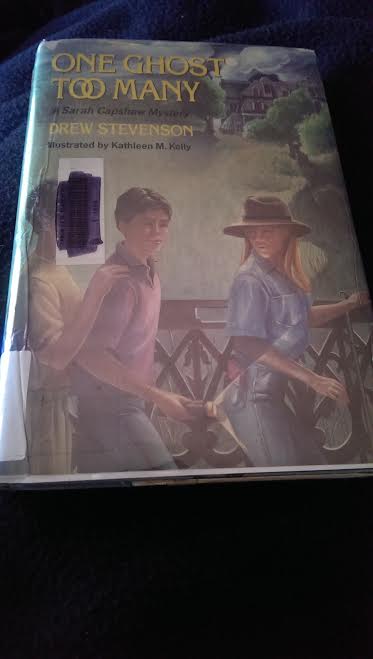 One Ghost Too Many by Drew Stevenson, 1991.
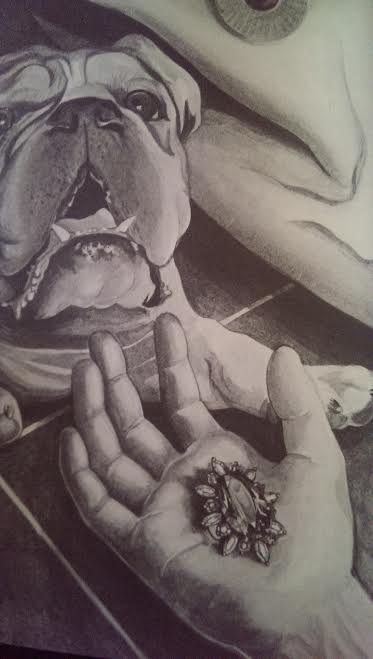 Sarah persuades Clark and his friend “Frog” Fenniman to join her investigation of the house, but besides the resident ghost, they will also have to deal with a local group interested in psychic phenomena and a mysterious stranger who is paying the local bully to spy on the house.
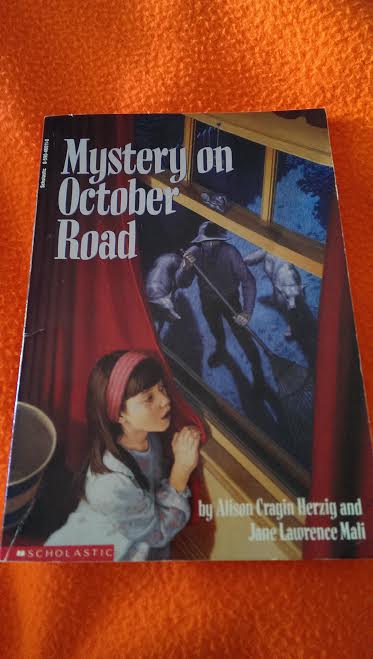 The Mystery on October Road by Alison Cragin Herzig and Jane Lawrence Mali, 1991.
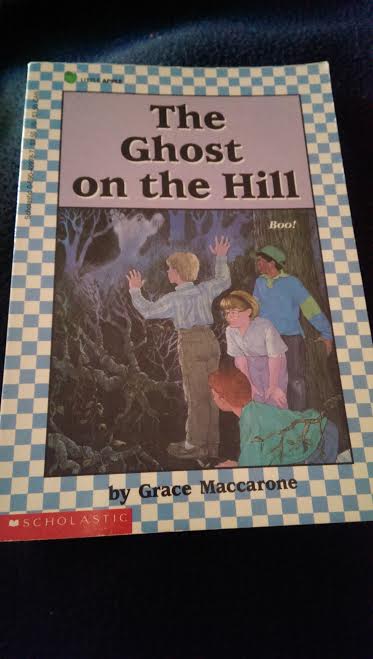 The Ghost on the Hill by Grace Maccarone, 1990.
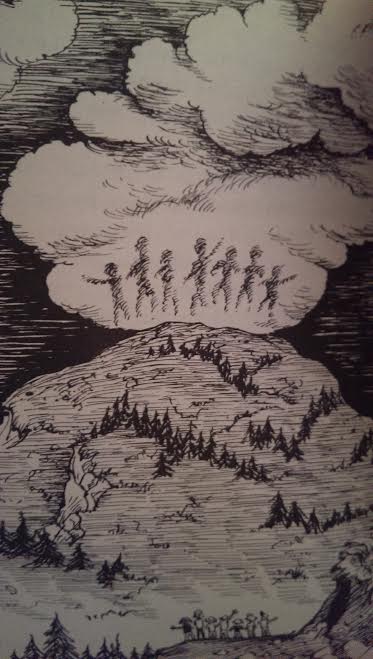 When they reach the state park, Dennis Ten Foot Bridge, who is the last of his tribe, tells the students about his tribe, teaches them wilderness skills, and leads them in group activities. One evening, Joey goes out to practice some rowing on the lake by himself, and he sees what looks like a large ghost at the top of a hill However, everyone knows that Joey lies about a lot of things, so at first, no one believes him. At least, no one except Adam.
 The Return of the Third-Grade Ghosthunters by Grace Maccarone, 1989.
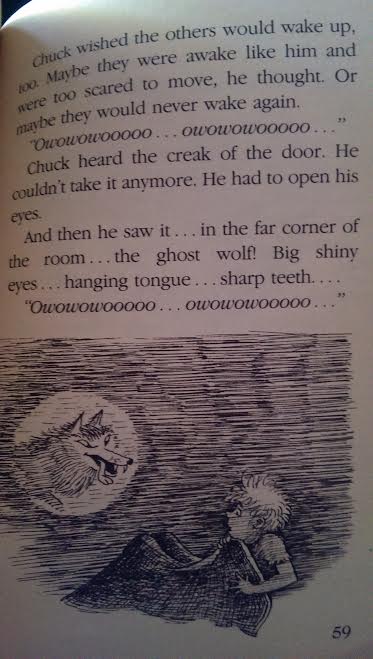 They try to use scientific methods to study the haunting. They measure the placement of the furniture to see if anything moves while they’re out and sprinkle flour on the floor to get footprints. But, even though they watch carefully and don’t see anyone enter the bunk house, when they go inside, everything is a mess, and the flour doesn’t appear disturbed. Everyone else is about ready to admit that this one is a real ghost, but Adam has another theory.
 The Haunting of Grade Three by Grace Maccarone, 1984.
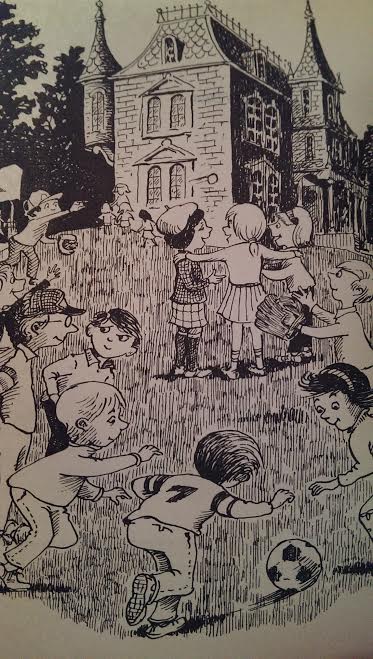 Most of the group members are misfits in one way or another. Norma Hamburger is a shy girl, frequently teased about her last name. Debbie Clark is a talkative girl who’s really into science. Chuck Webber, Adam’s best friend, is the class clown, always telling stupid jokes (and one of the main people who teases Norma about her name). Danny Biddicker is strong and good at sports, but he worries that he’s not as smart as the others. Joey Baker feels overshadowed by his large family, so he tells tall tales to get attention. The other kids don’t understand and get annoyed with his lies. By working together, they not only learn the secret of Blackwell House, but they learn more about each other and become a real team and friends.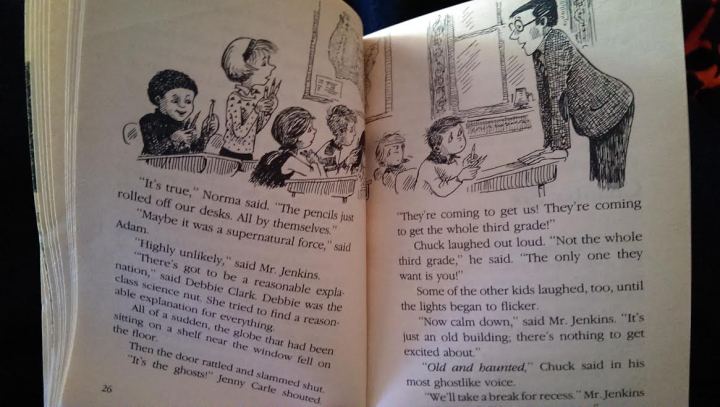
 Wrapped in a Riddle by Sharon E. Heisel, 1993.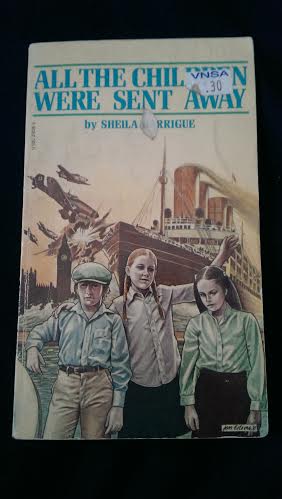
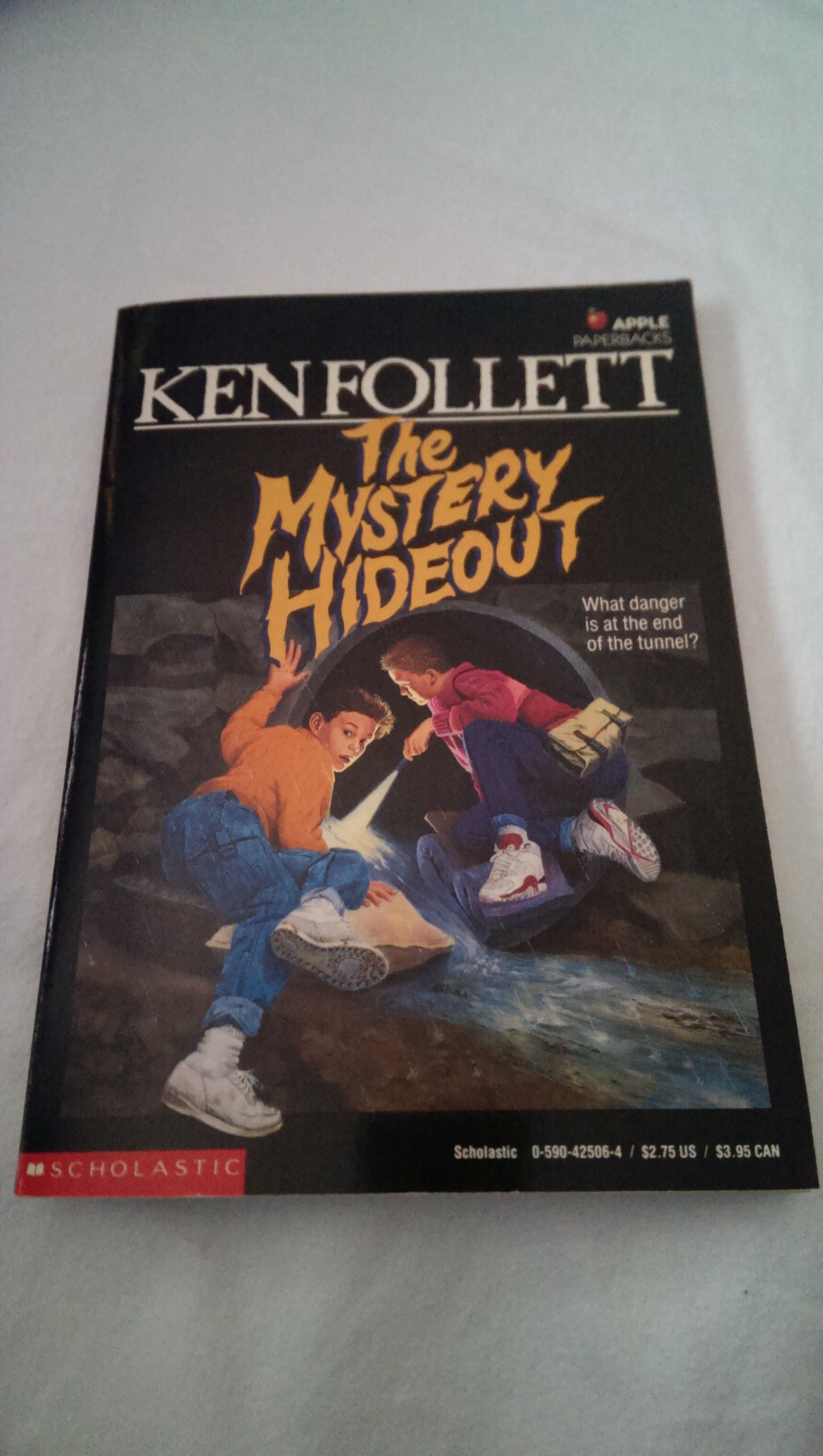 The Mystery Hideout by Ken Follett, 1976.
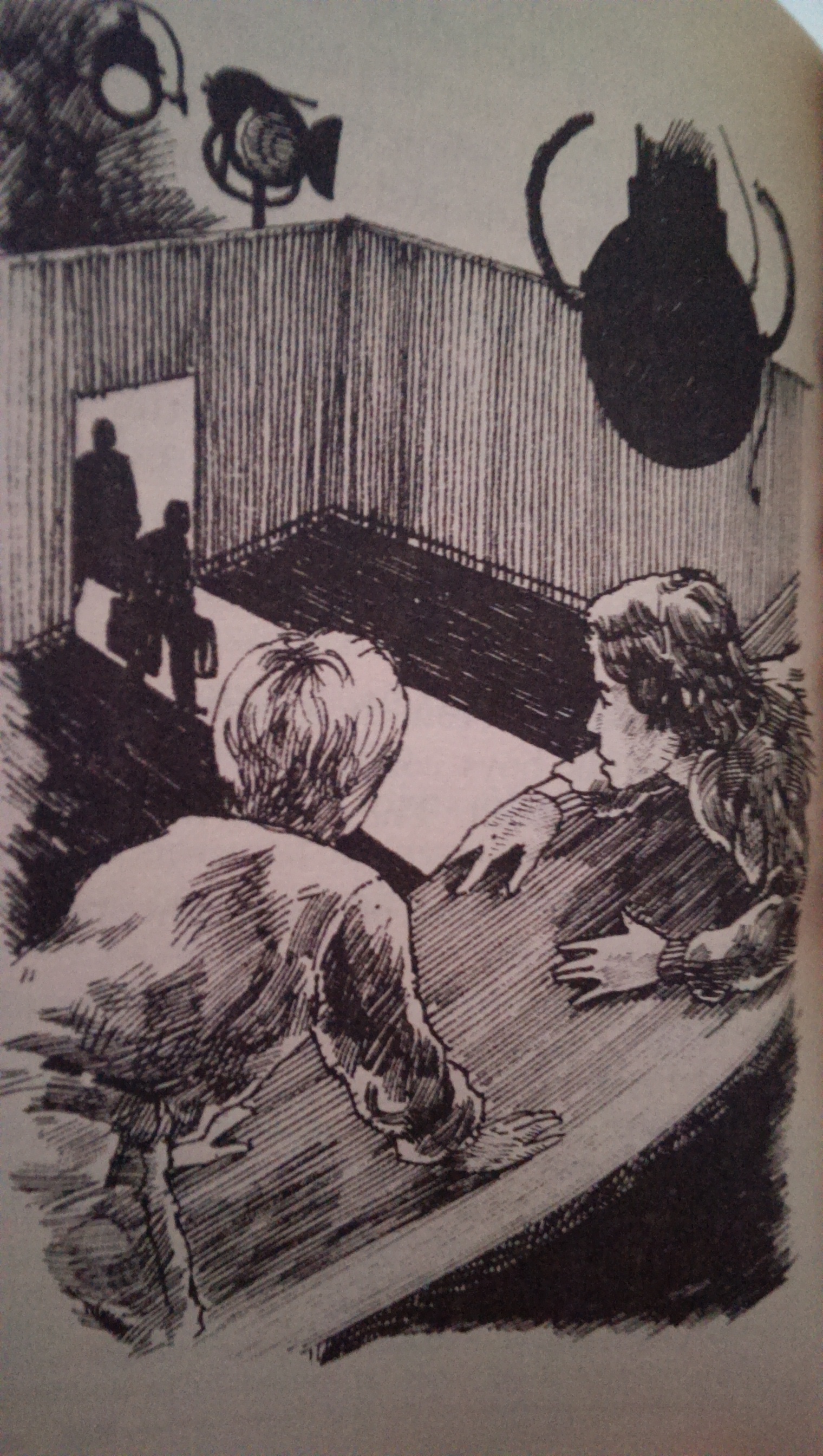 But, Izzie turns out to be a good friend for Mick. They both love to play soccer, and Izzie tells Mick that his father used to work in the old studio buildings that they’re tearing down to build the new hotel. In fact, Izzie even knows a secret way in, so the boys sneak in to explore a little. They’re goofing off with some of the props when they make the startling discovery that the prop guns are loaded with real bullets! Then, the boys have to make a run for it because there are other people sneaking around the old studios. What is going on there?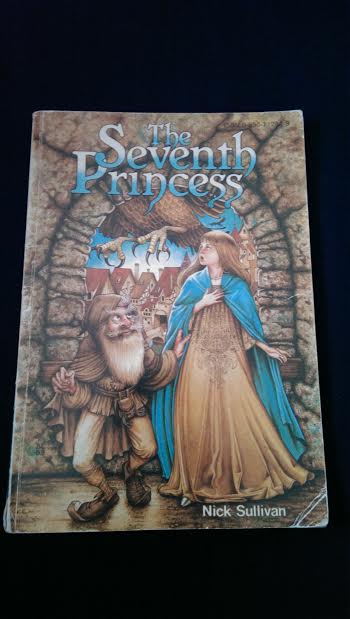


 Jestress's Forgotten Books and Stories