Magic or Not

MagicNot

Magic or Not? By Edward Eager, 1959.

Laura and her twin brother, James, are practical children who are fond of useful facts, but still have imaginations and appreciate fantasy stories. In this part of the Tales of Magic series, all of the previous books in the series are fictional books that the characters have read and enjoyed, and real magic may or may not exist, as the title suggests. All throughout their coming adventures, the children are never quite sure how much of what happens is magic and how much isn’t, but they’re bound for an amazing summer.

Laura and James’s family has recently bought a house in the country, and the story begins with the twins taking the train to their new town while their parents follow in the car with their luggage and their baby sister, Deborah. Laura and James haven’t seen the new house yet, but they know that it’s pretty old, and they speculate if it could be haunted or maybe even magical, like something from a fantasy story. James doesn’t think so.  He thinks that magic, if it existed, is a thing of the past. Then, a strange girl on the train tells them that magic does exist. She insists that her grandmother is a witch and makes a comment about how they should “drop a wish in the wishing well, and wait and see!”
MagicNotWishingWell

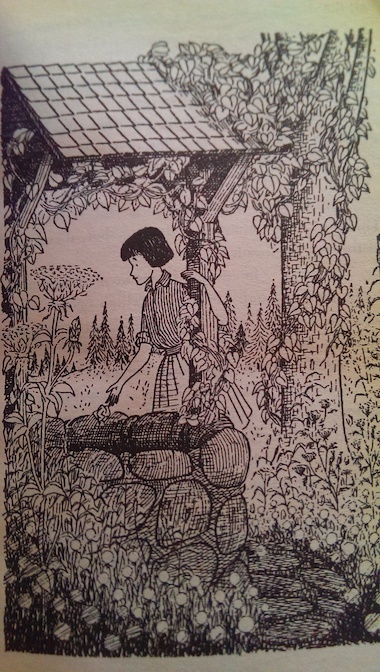
Laura and James don’t know what she means, but it turns out that there is an old well on the property of their new house. James ignores it, but Laura can’t resist giving the wishing thing a try. After struggling to come up with something appropriate to wish for, she finally writes a note that says, “I wish I had a kitten” and tosses it into the well. The next day, when they meet the boy next door, Kip (short for Christopher), they find a basket with two kittens in it sitting on the edge of the well. Kip figures that Lydia found the note that Laura wrote in the well bucket and decided to make her wish come true by leaving a couple of stray kittens for her.

It turns out that the girl from the train is Lydia Green. Kip says that she lives nearby with her grandmother. Lydia’s grandmother is an artist, and both of them are eccentrics. Lydia is kind of a wild child who likes to spend her time riding around on her black horse. She’s something of an outcast in the community, and she knows it. When the other children go to see her to ask about the kittens, Lydia seems prepared for them not to like her and for her not to like them, either. However, when she finds out that Laura’s names for the kittens were inspired by the book The Midnight Folk, she warms up to them because she also likes fantasy stories, and Laura offers to share the magic of the well with her.
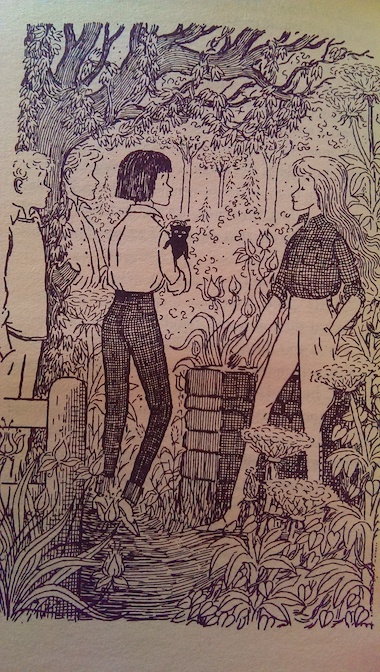
MagicNotLydia

James is more skeptical about Lydia and insists that she prove that there’s magic around, if her grandmother is really a witch. Lydia is reluctant at first, but then she shows the other children her grandmother’s garden. She insists that one of the plants in the messy garden (which does look like it might belong to a witch) can bring visions when it’s burned and maybe even a visitor from another world. (Sounds trippy.) The others want to see it work, so they decide to burn some. Nothing happens, and when James demands to know how long they have to wait, Lydia gives a vague answer that it might not be the right time or that maybe she just made the whole thing up. James believes the second explanation, but Laura is willing to give Lydia (and magic) more of a chance.

The two girls bond over their shared love of fantasy stories, and Laura invites Lydia to come to their house the next day. The boys admit to Laura that they kind of like Lydia, although she’d be easier to get along with if she didn’t have such a chip on her shoulder. Kip says that she’s always like that, and that’s why kids at school don’t get along with her either.  Even so, Lydia is an interesting person.

When Kip gets home, he finds more of the strange plant that Lydia burned growing around his house, and his mother tells him that it’s an ordinary wildflower. Still, the next day, something happens which makes it seem like Lydia’s notion that it “makes unseen things appear and seen things disappear” has come true – the old lawnmower that came with the house is now missing, and there’s a young tree on the property that wasn’t there before. Coincidence? Maybe, but Lydia had also said that it could “transform people so they’re unrecognizable overnight”, and suddenly little Deborah has a new, weird haircut. When Deborah happily announces that she’s been transformed by magic, James realizes that it’s a trick and that Kip arranged everything. Lydia is angry that Kip was playing a joke, but he says that it isn’t really a joke, that he just wanted to keep the game going. Lydia says that it isn’t really a game to her, although she finally admits that she left the kittens.

Laura turns on the boys and says that it’s obvious that Lydia only did those things because she wanted to make friends. Lydia tries to deny it at first, but then admits that it’s true, but that she is never able to make friends and that she doesn’t know how. Laura says that she is Lydia’s friend, and the boys are, too. James agrees, saying that he just likes “to get the facts straight,” but now that the facts are known, he hopes that they can all start over again. The children each apologize to one another for the awkwardness, and Laura says that she is a little disappointed that there isn’t any real magic.

MagicNotIsabella

This part could be a story all by itself, but, not so fast! Just as the children are making amends with each other, a strange woman comes up to them in a horse-drawn carriage, looking like a visitor from another world in strange, old-fashioned clothing. They ask her if she came because they wished for her, and she says it’s difficult to say, but wonders why they would think so. The children say that they were playing a game and wished for a visitor from another world. The woman says that, in a way, she is from another world. She says that when she lived in this same valley, when she was young, life was very different, so it’s like she has come from the past to the present. The woman, Isabella King, lives in a house by the old silver mine. She invites the children to come and visit her sometime to have some of her silver cake and see the old mine. After she leaves, the children debate whether Isabella was brought to them by magic, but James says that it doesn’t matter because it looks like they’re going to have an adventure, magical or not.

Isabella King really does like to live in the past, maintaining her house and the old, disused silver mine that her father left her in the way that she’s sure he would want them to be maintained. However, her house and mine are threatened when the bank announces that it will foreclose on the mortgage. The children badly want to help Miss King, so they decide to go see the banker, Hiram Bundy, about it and try to persuade him to give her some leniency. Before they go to see him, Laura decides to make another wish on the wishing well because, in spite of Lydia’s earlier confession, she thinks that the well still might be magic.

Hiram Bundy agrees to talk to the children partly because he enjoys Lydia’s grandmother’s paintings, but he tells them that money isn’t the only concern about Miss King. Her family has a reputation for getting “peculiar” as they get older, and people have voiced concerns to him that Miss King is no longer capable of handling her own affairs and that she might be better off living in a nursing home. The children angrily deny that Miss King is mentally incompetent, giving him some of the cake that Miss King had baked for them as proof that she is still capable of doing things. Miss King is an excellent baker, and Mr. Bundy admits that he is impressed. Lydia also finally speaks up about the way the people in town, including Mr. Bundy himself, look at her and other people who are eccentrics. Lydia’s grandmother is allowed to be eccentric because she’s a talented artist and people make allowances for her, but those same people look at Lydia as if she’s terrible just because she likes to spend time by herself, riding her horse around. Adults in town are always saying that she’s a disgrace and that “somebody ought to do something” about her just because she doesn’t like things that other people like and wants to live her own life, doing her own thing. It’s not that there’s really anything wrong with either Lydia or Miss King so much as some of the people in town simply don’t like them and the way they do things. Because they aren’t the town’s little darlings, they are unfairly characterized as being worse than they really are and ostracized. Mr. Bundy admits the hypocrisy, which he is also guilty of, and assures her that he will take responsibility and straighten things out with Miss King.

When the children later see Mr. Bundy having cake and talking with Miss King at her house, Laura remembers that part of her wish at the well had been that Miss King would have Mr. Bundy eating out of her hand, and once again, the wish seems to have come true, literally. Although it still isn’t positive proof that Mr. Bundy’s change of heart was due to the well’s magic, the children think it might have been.  They start considering that perhaps the well came through for them because they were doing a good deed, and perhaps they ought to try to do the same for others, thrilling in the apparent power they have to change people’s lives.
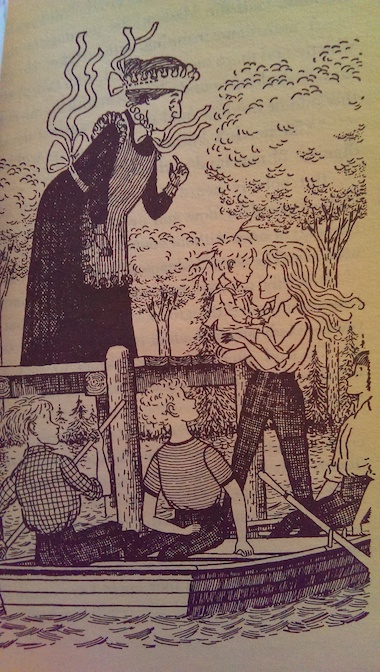
MagicNotLostHeir

Testing out their theory proves difficult at first because they have trouble finding another person with a problem for them to solve. At first, the only person who seems to want their help is the woman downtown who asks them to help with setting up for a local art show to encourage amateur artists. The art show is open to anyone in town, and the kids think that maybe they should enter it, too.  However, the only art supplies that they can afford are paper and crayons, and only Lydia manages to draw something that’s any good.  Lydia doesn’t particularly like her drawing, saying it’s just a doodle, but Laura stops her from throwing it away. Then, the clerk at the store asks them if the small boy in the store is their little brother. It appears that the little boy is lost, so they decide that their good deed for the day will be helping him to get home.

They do find the boy’s home, and he turns out to be the child of a wealthy family who wandered off while his nurse was talking to a friend in town and ignoring him. The nurse at first blames the children for kidnapping the boy when they come to return him. The boy’s father doesn’t believe that, but he does reprimand the children for taking all day to return him because they had wanted to find his house themselves with the help of the wishing well instead of the police and allowed themselves to be sidetracked with something else they had also wanted to do. In the end, the children question how much they really helped the “lost heir”, as they think of him, because he might have been found sooner without their interference. However, one good thing does come out of their adventures: Lydia wins a prize in the art contest because Laura entered her picture on her behalf.

Lydia (as Laura had expected) is at first angry that Laura entered her in the contest without her permission, but Laura explains to her that she’s realized something about Lydia: Lydia prefers to think that no one cares about her or will ever appreciate her because she fears their rejection too much to risk trying to do anything that might earn their approval. Laura points out that their interest in her art proves that people really do appreciate her. Lydia’s grandmother even apologizes for not realizing before that Lydia has artistic talent. Lydia is amazed because she never really thought of her doodles as being anything special before. Kids at school had always made fun of her “crazy pictures,” and her teacher had always insisted that she “paint from nature” instead of drawing what she really wanted to draw.
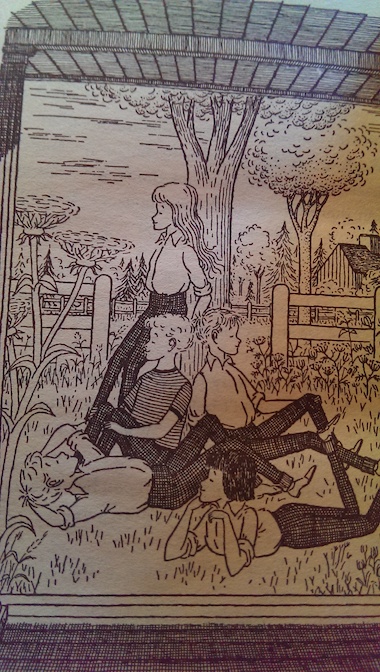
MagicNotFriends

But, the children aren’t done with the wishing well yet. Mrs. Witherspoon, the head of the local garden club and self-appointed arbiter of all that’s right and what everyone should think and do, has set herself against the new school that is planned for the area. She doesn’t like the idea of more traffic, more kids running around, and the possible risk to property values. However, many families with children live in the area, and they really want the school for their kids. Mrs. Witherspoon has set herself against them because she’s accustomed to people simply agreeing with what she wants (often just out of habit). She’s one of the big voices that enforces conformity in their town. She’s so awful that the kids consider making a voodoo doll of her, but then, it occurs to them that she might be much worse if she were actually in pain instead of just busy being one. They decide maybe she really needs people to be extra nice to her in order to make her more agreeable, but she refuses to accept any of their gestures of kindness because she thinks that they just want money from her, and she calls them juvenile delinquents. Can the power of the wishing well do anything to change her mind? Or, do they really need it?

A surprising friendship with Mrs. Witherspoon’s son, Gordy, leads the children on one last adventure that may (or may not) involve a ghost from the past and answer the question of whether or not the wishing well is really magic (unless there’s another explanation).

All through the book, there are other explanations besides magic for everything that happens. In fact, the wishing well may not do anything aside from acting as a source of inspiration for the children. Mr. Bundy might have been influenced by the children’s arguments even without the well, but the well is what influenced them to become friends with Isabella King and try to help her in the first place. Similarly, Lydia was always talented in art; it was just that no one recognized it until Laura was inspired to enter her drawing in the art show. The strangest episode takes place at the end of the book, when the children supposedly meet the ghost of the woman who may have made the well magic in the first place, but even then, the children realize that the “ghost” may have been the work of someone else, perhaps part of a conspiracy on the part of the people they’ve been helping all summer. However, it’s never established one way or the other, so it’s up to the readers’ imaginations to decide.

Much of the story is about fitting in and finding friends. In the beginning, Lydia was the main outcast in the community, but it turns out that many others, including Gordy, in spite of his mother’s social status, don’t quite fit in, either. In fact, it seems that perhaps more people in town would have liked Lydia more and encouraged her in her art if she had ever felt confident enough before to let people really get to know her. However, here I have to say that it was really the townspeople’s fault for driving her away in the first place. For a long time, Lydia had lost confidence in other people and in her ability to make friends because of the way people treated her. That was why Lydia sometimes purposely acted strange and didn’t try to get people to like her; she was already pretty firmly convinced that they didn’t and never would. It was just the message that everyone seemed to be sending her, and it kind of turned into a vicious cycle that was pushing Lydia further and further away from other people.  Lydia really needed intervention from a third party to end the cycle. When Laura accepts Lydia and convinces the others to accept her as well, it opens up new sides of Lydia’s character and new possibilities for her.

The drive that some people have to assert control over others, enforce conformity within a group, and maintain an “us vs. them” mentality with non-conformists is responsible for many social problems and behavioral issues. Mrs. Witherspoon is an example of this, although it turns out that even our heroes are somewhat guilty in the way that they view Mrs. Witherspoon’s son Gordy at first.

This book taught me a new vocabulary word, purse-proud, which is used to describe Mrs. Witherspoon and her friends. Basically, it means pride in having money, especially if the person lacks other sources of pride. Mrs. Witherspoon and her friends are all wealthier members of the community, which is why they feel that they’re entitled to dictate to others what they should do and how things should be. They think that because they have more, they know best. (I’ve seen this before, but now I have a new word to describe it.) Initially, Mrs. Witherspoon is unconcerned with how local children are educated because she’s wealthy enough to send her son to private schools.  Other people’s needs are of no concern and possibly a source of inconvenience for her. Gordy is the one who changes her mind when he realizes that he has a chance at making real friends with the neighborhood kids if he goes to public school, like they do, and convinces his mother that it’s what he really wants.  Although his family is pretty privileged, Gordy never really made any friends at the private schools that he has attended and has actually been rather lonely. In a way, Gordy receives the final wish of the wishing well (for this book, anyway) in getting the new friends that he has needed and learning that there are other, more imaginative ways to have fun than what he’s been doing.

Gordy is a nice surprise as a character.  At first, he seems to be a kind of clueless trouble-maker, but his friendship with the other kids brings out better qualities in him.  Perhaps a better way to put it is that the others’ acceptance of him encourages him to show more of what he’s truly capable of.   When James and Laura are introduced to Gordy, he doesn’t seem very bright, and he does things he shouldn’t, like swimming in the reservoir instead of the river and throwing rocks at windows to break them just because he can.  In some ways, the other kids are right, that Gordy is thoughtless and doesn’t behave well. However, when they end up agreeing to hang out with Gordy one afternoon after failing to win over Mrs. Witherspoon with kindness, they realize that part of the reason that Gordy acts the way he does is that no one ever suggests to him that he do anything different.  Gordy lacks somewhat for positive influences in his life.  His mother thinks that she knows best in everything but isn’t always aware of what her son thinks and feels.  Other people try to avoid talking to Gordy because they see him as an annoyance or source of trouble, so no one explains to him how his behavior is keeping him from making friends.  However, Gordy does have good points.  Unlike Lydia, Gordy doesn’t seem to hold any grudges in spite of experiencing similar problems with fitting in and making friends.  Even when the other kids are less than enthusiastic about hanging out with him at first, he still keeps trying to be friendly and is quick to forgive their earlier coldness.  Gordy knows that he really wants friends and that part of the key to getting them is to remain open to the possibility of being friends, even when those friends aren’t perfect.  In the end, he is really good at showing the acceptance of others that is part of the theme of this story.  Acceptance of others and willingness to be friendly improves things for everyone.

Another thing that I really liked about this book is the children’s attitudes toward people’s conventional views of art and literature. Many people are eager to tell others what art or writing should be and how it should be done. Lydia said that people had criticized her drawings before for being “crazy” or not from real life. They couldn’t see the imagination and talent that it took to make them because they weren’t what people expected. Even Lydia’s grandmother complains about always having to paint scenes with maple trees in them because that’s what grows where they live. She’d rather paint something else, but people expect maples trees, so that’s what she paints. Kip says that he kind of understands because his teachers always tell him to “write what he knows”, but really, he thinks that the things he doesn’t know well are much more interesting. They all want the freedom to explore new ideas, and that type of exploration is what makes fantasy stories so interesting. There may be magic, and maybe not, but considering the possibilities is half the fun!

The book is currently available online through Internet Archive.
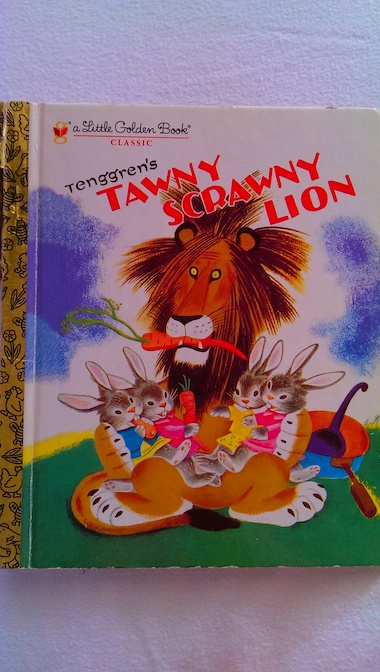
Tawny Scrawny Lion

TawnyScrawnyLion

Tawny Scrawny Lion by Kathryn Jackson, illustrated by Gustaf Tenggren, 1952.

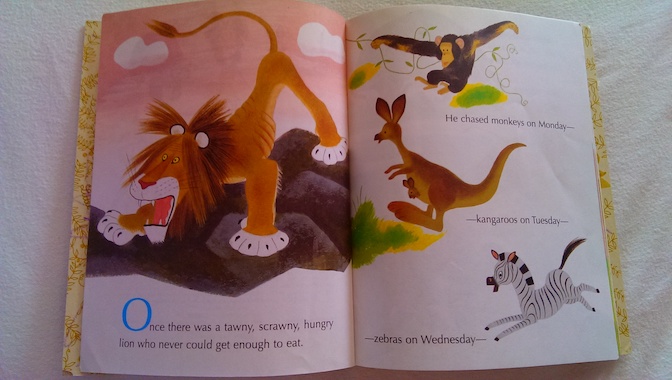
The tawny, scrawny lion can never get enough to eat! No matter how much he hunts and eats, he’s always hungry, and his ribs are showing. He thinks that it’s because hunting is so much work that he wears off anything he eats right away. If only the other animals didn’t run so much, trying to get away from him! (Gee, I wonder why.) He tries to tell the other animals that if they would just not run so much, he would have to eat less of them. Needless to say, that argument doesn’t impress them much.

TawnyLionHungry

Trying to get the lion to stop chasing the rest of them, the other animals convince the fat rabbit to go “talk things over” with the lion, thinking that if the lion eats the fat rabbit, he’d get fat for awhile and leave the rest of them alone.

Seeing how scrawny the lion is, the rabbit decides to invite the lion to join him and his siblings at his house for dinner. The lion likes the idea of going to the rabbits’ house, thinking of the nice dinner he could have on all the fat little rabbits, but things don’t turn out the way that the lion thinks they will.

TawnyLionRabbitTalk

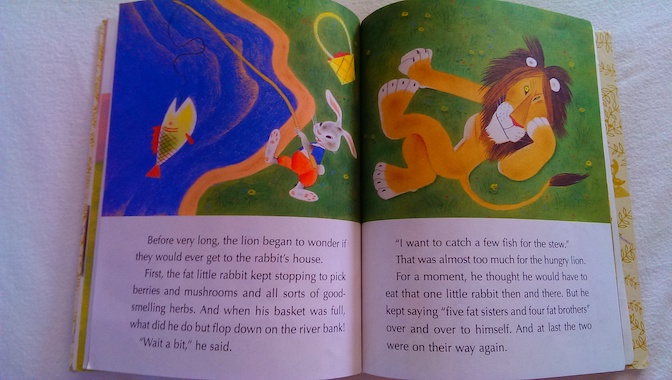
The rabbit tells the lion that they are making carrot stew tonight, but before they can eat, they need just a few more things for the stew. The lion follows the rabbit around as he gathers berries, mushrooms, and herbs and catches a few fish to add to the stew. By the time they’re done with all of that, the lion is too hungry and exhausted to chase the rabbits, so he accepts some of their stew instead.

TawnyLionFishing

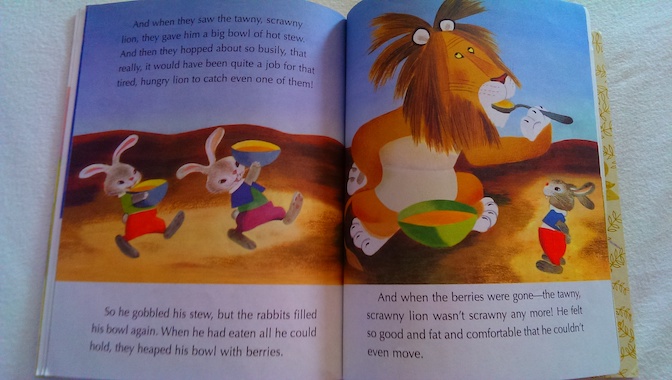
To the lion’s surprise, the stew is actually very filling, and when he has eaten it, he isn’t hungry anymore. For the first time, he feels fat and satisfied. Because of that, the lion ends up not chasing the other animals anymore but helping the rabbits catch fish and gather berries for more of their amazing, wonderful stew!

TawnyLionStew

This is a popular Little Golden book that kids have loved for generations! The stakes are high for the rabbits, who could be eaten by the lion, but I think kids know that the rabbits are going to find a clever way to satisfy the lion without getting eaten. I think it’s also not bad to have a story that points out that, if you aren’t healthy eating the things you’re eating, it’s okay to change.

It is currently available online through Internet Archive (multiple copies).

The Pizza Monster

Olivia Sharp, Agent for Secrets

OSPizzaMonster

The Pizza Monster by Marjorie Weinman Sharmat and Mitchell Sharmat, 1989.

Olivia lives in a penthouse in San Francisco with her chauffer, Willie, and her housekeeper, Mrs. Fridgeflake. Her wealthy parents live there, too, but they are often traveling and are rarely home. When her best friend, Taffy, moves away, Olivia is lonely. She buys herself a pet owl named Hoot, but that still doesn’t completely help.  She needs something to help keep herself busy. Olivia realizes that she is good at keeping secrets and at helping people with their problems, so she decides to busy herself running a service to help people with their secret problems. She has a bunch of flyers made and hangs them up around town saying that she is an agent for secrets and will help people.

A boy named Duncan, who Olivia knows from school, asks her to help him with his friend, Desiree. He says that they were together at the pizza parlor when she suddenly got angry and walked out.  He doesn’t know what made her angry, but he asks Olivia to help him find out and fix their relationship.

Olivia’s attempts to help are a matter of trial and error. At first, Olivia thinks that Desiree was merely offended that Duncan gave her the smallest slice of pizza. She suggests that Duncan buy her another whole pizza, but that doesn’t work. Even Olivia’s idea to buy her a lot of different kinds of pizza doesn’t work. Eventually, Olivia talks to Desiree herself and learns that there is another reason why she is angry with Duncan.

It turns out that the problem doesn’t have anything to do with pizza but with Duncan himself.  He’s always full of doom and gloom and criticism for everything.  What Duncan needs is an attitude adjustment.  He doesn’t realize that his pessimism and negativity makes it difficult for others to be around him.  Olivia encourages him to be more positive and to develop his sense of humor.  Once his attitude improves, so does his relationship with Desiree.

Mystery Behind Dark Windows

MysteryDarkWindowsMystery Behind Dark Windows by Mary C. Jane, 1962.
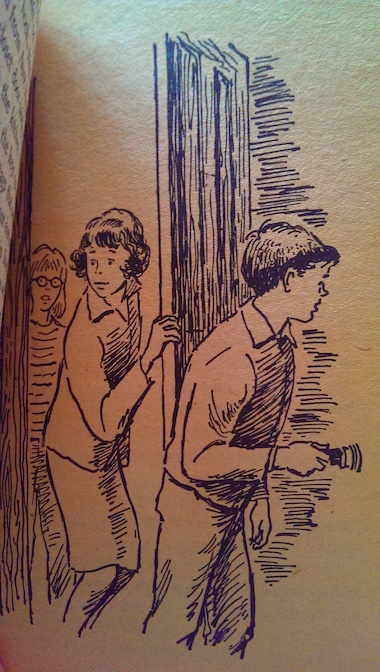
Recent years have brought misfortune to the formerly wealthy Pride family.  First, Tony and Ellie’s father was killed while on a business trip on behalf of the family’s mill.  Then, the workers in the mill went on strike, and the children’s grandfather died.  Their Aunt Rachel blames the strikers for putting stress on her father while he was still grieving for his son, thereby causing his death.  Because of that and because she doesn’t believe that she can handle the running of the mill herself, she has closed down the mill, putting all of the workers out of a job.

The townspeople of Darkwater Falls struggle to get by without the mill and are angry with the remaining members of the Pride family for the lay-offs, but Aunt Rachel thinks that their suffering is earned and so does nothing to help.  If Aunt Rachel would be willing to sell the mill to someone who would put it back into good use and employ people, the community’s problems would be solved, but Aunt Rachel can’t bring herself to do that, in spite of the offers she’s received and the urging of the family lawyer, Mr. Ralph Joslin.  She has high hopes that Tony might revive the mill one day when he’s grown up, and in the meantime, she wants to punish the strikers with unemployment and underemployment.  However, Aunt Rachel, absorbed in her personal pride and bad feelings, is ignoring some serious issues.  The taxes on the disused mill are costing the family dearly, the equipment is rusting, and Tony isn’t even sure that he wants to go into the family business.  Tony and Ellie are unhappy with their family’s situation, their aunt’s bitterness, and the way many of the townspeople now look at them, but they’re not sure what to do about it.

MysteryDarkWindowsMillSearchThen, one night, Ellie goes out to look for her aunt’s missing cat and hears someone in the old, supposedly empty mill.  When she tries to tell Tony, he doesn’t take her seriously, but Ellie knows what she heard.  Ellie later goes back to the mill to take another look at the place, and she sees Jeff, a boy from Tony’s high school, hanging around.  Later, she confides what she’s heard and seen in Hank, an old friend who lives on the other side of the river, and Violet, another girl from her class whose family has suffered since the closure of the mill.  The two of them start helping Ellie to investigate.

Some people in town have become concerned about children in the area getting into trouble, and they think that maybe some of the local youths have formed a gang.  Ellie worries about Tony, who has started sneaking out of the house at night to hang out with friends.  Is he now part of a gang?  Are he and his friends the ones who were sneaking around the old mill? Or could it be some of the disgruntled townsfolk, bitter about the mill remaining empty and not providing much-needed jobs?

While the kids have a look inside the mill, they discover that someone has been using the place as a hideout.  A fire at the mill reveals a number of secrets and sheds light on a town and a family caught in a cycle of bitter feelings and revenge.  Aunt Rachel is stunned when some of the townspeople accuse her of setting the fire herself in order to get insurance money for the mill.  The fire was clearly arson, and since Aunt Rachel has gone out of her way to make life difficult for people in town, many of them would be ready to believe just about anything of her.  It’s up to the young people to put the pieces together and reveal the true arsonist before the mill, the town, and the Pride family are completely destroyed.

Many of Aunt Rachel’s decisions are guided by a mixture of grief and anger, but she is also stubborn and prideful.  The Pride family was aptly named.  Although they have suffered misfortune, their privileged position as the (former) main employer of the community has given Aunt Rachel the sense that she and others in her family could do no wrong.  Aunt Rachel is absorbed in herself, her own feelings (which she places above others), and the past to the point where she feels justified in deliberately causing harm to her community and the people in it, failing to see the consequences of her actions, even the effects that her attitude has on the orphaned young niece and nephew in her charge.  Ellie feels like they don’t have a real family because her aunt’s bitter feelings prevent her and her brother from getting close to their aunt.  Her aunt’s actions have also made it difficult for her and Tony to get along well with other members of the community, further isolating them from comfort in their own grief.

In a way, the fire brings Aunt Rachel back to reality, forcing her to see the consequences of her actions (and inaction).  It comes as something of a shock to her that, while she felt fully justified in her bad feelings for the town, they are also fully justified in feeling badly about her.  Somehow, it never occurred to her how someone, doing the things she’s been doing and saying the things she’s been saying, would look to the people she deliberately set out to hurt.  For most of the story, the only feelings that were real to Aunt Rachel were her own.  Even when she thought about how people hated her, she didn’t think that what they thought would matter until she began to see how it was affecting Ellie and Tony as well as the other children in town.  Ellie can see that many things would have been resolved sooner if both her aunt and her brother could open up and discuss things honestly, both within the family and with other people.  Although neither of them set the fire, their secretiveness and self-absorption at first create the impression that they did.  Ellie’s eventual outburst at her aunt and the real guilty person force both of them to acknowledge the reality of their actions and motives.

I was somewhat fascinated by the motives of the arsonist, who understands the effects that Aunt Rachel’s bitterness and revenge have been having on the young people in town, even her own nephew, better than she does.  This person was wrong in the path he tried to take to fix the situation, but he does correctly see that unemployed men not only lack the money they need to properly take care of their families but may also set a bad example for boys and young men, either through the habits and attitudes that they let themselves fall into or by becoming too absorbed in their difficulties to see what’s happening to their own children.  I also agree with his assertion that those responsible for putting people out of their jobs bear some responsibility for the results of their actions, something which resonates in today’s economy, where many people are still unemployed or underemployed.  The Pride family’s previous high standing in the community was directly because of their ability to employ people and improve the lives of others.  When they began making life hard for others and refused to use their ability to help people, they lost that standing.  Aunt Rachel was just the last to realize it, which was part of the reason why she was surprised to discover just how badly the town thought of her.  She didn’t have a good reputation because she had done nothing to earn one, no matter what her family used to do.  She was no longer using their powers for good, so she turned herself into a villain.  However, it’s important to point out that the arsonist isn’t really in the right himself because, as Ellie points out, the spirit behind his actions isn’t much different from her aunt’s.

Ellie is correct in pointing out that both her aunt and the arsonist were wrong, not just because of what they did, but because of the feelings and motives behind it.  In their own way, each of them set out to deliberately hurt others because they had each been hurt.  Which of them was hurt first or hurt worse ultimately doesn’t matter.  Their mutual desire for vengeance against each other not only hurt the people around them but kept each of them from doing what they needed to do in order to heal their own wounds.  That is also a message that resonates today, in these times of political division, with two large parts of society trying to one-up each other and even actively harm one another, largely because they can’t stand the idea of someone wanting something or believing something that they don’t.  Whatever the circumstances, when people focus on winning on their own terms, no matter what the cost, everyone loses in the end.

Toward the end of the story, as Aunt Rachel and the arsonist begin making grudging apologies to one another and reluctant steps to fix things, Ellie decides that grudging and reluctant aren’t good enough and finally gets up the nerve to tell them what she really thinks, what they most need to hear:

“Just selling the mill won’t make things better . . . It’s the way [they] feel about it that’s wrong. That’s what made them act the way they did in the first place. They just wanted to get even with people, and hurt people, because they’d been hurt themselves. And they feel the same way still. You can see they do.”

How much can people help what they feel? It partly depends on what people choose to do about their feelings.  Actions guide feelings, and feelings guide actions.  Aunt Rachel and the arsonist indulged their bad feelings, nursing them, amplifying them, and making them their first priorities, the guiding force of their actions.  As long as they keep doing that, Ellie knows that the problems aren’t really over, and everyone will remain trapped in this bad cycle.  Ellie’s honest outburst finally breaks through to both of them, showing them what they really look like to others and making them reconsider their feelings and priorities.

One of my favorite characters in this story was Mr. Joslin, the lawyer.  Although he looks a little suspicious himself for a time, he is actually a good man, who looks after the family’s interests and genuinely cares about them as well as about the town.  He is the one who convinces Tony to be honest with his aunt about the friends he hangs out with and helps persuade Aunt Rachel to see things from others’ point of view.  He loves Aunt Rachel, in spite of her faults, and is honest with her about those faults, telling her what she needs to hear.  Of all the characters, with the exception of Ellie, he seems to have the most insight into other people’s feelings and situations.  He supports what Ellie says, quoting Lord Bacon, “A man who studieth revenge keeps his own wounds green, which otherwise would heal and do well.”

Mystery on Nine-Mile Marsh

Nine Mile MarshMystery on Nine-Mile Marsh by Mary C. Jane, 1967.

Lucille Pierce has been feeling lonely because her other friends joined a club with some other girls that meets over the weekend, and Lucille hasn’t been invited to join. The only people who are available to hang out with now are her brother Brent and his friend Kevin, and they don’t always want a girl hanging out with them.

When Brent and Kevin have an argument because Kevin laughed at Brent’s horrible spelling during a spelling bee (Brent is horrible at spelling because he never stops to think about what he’s doing, and he gets into fights fast because he also has a quick temper), Kevin invites Lucille to join him as he goes out to have a look at the old house on Moody Island before the new owners take over. The old farmhouse stands on an island in the marsh. Sometimes, people hear odd sounds coming from the house, and some people believe that it’s haunted by the ghost of John Moody, who was lost at sea years ago. Old Mrs. Moody, John’s widow, was a hermit in her final years, and now, the only living member of the Moody family is Clyde Moody, John’s nephew. Everyone had expected that Clyde would inherit the old Moody house, but instead, Mrs. Moody left it to a man named Arnold Lindsay, an apparent stranger. Miss Rand, who owns the diner not far from the Moody house thinks that Mrs. Moody should have left it to Clyde. Clyde has had problems with alcohol and hasn’t been able to hold any job for very long, and Miss Rand thinks that having the house to care for might have been good for him, providing him with some stability. No one even has a clue who Arnold Lindsay is.

Nine Mile Marsh HouseLucille and Brent take a bike ride out to the island, but a noise in the barn frightens them away. It isn’t that they really think there’s a ghost, but they’re concerned that someone may be trespassing on the property. They decide to keep an eye on the house to see if they can see anyone sneaking around, but they don’t.

A short time later, Lucille, Brent, and Kevin meet Arnold Lindsay, who turns out to be a nice man. Like the children, he becomes concerned about the condition of Pedro, the donkey that the Turner family owns and leaves neglected in one of their fields. To give the donkey a better life, Mr. Lindsay buys Pedro, telling the kids that they can come out to the Moody house and visit him.

Mr. Lindsay doesn’t have any idea why Mrs. Moody left him the house, either. He’s a writer, but not a famous one. He just writes newspaper columns. All he or the children can think of is that Mrs. Moody must have been a fan of his columns. She didn’t get out, but she did read newspapers.

Nine Mile Marsh PedroMr. Linsday has also heard strange noises around the Moody house, and he asks the children what they know about it. They tell him the ghost stories about the Moody place, but they say that they don’t really believe that there’s a ghost. Mr. Lindsay is fascinated by the stories. He says that his impression was that the noises he heard came from the cellar, but he didn’t see anything when he investigated. He invites the children to help him investigate further sometime.

Meanwhile, Lucille tries to make friends with a new girl at school, Barbara Rosen. At first, Barbara doesn’t want to be friends because she thinks that Lucille is part of the Saturday Club with the other stuck-up girls, but she becomes friendlier when Lucille tells her that she’s not with them. Barbara had worried that the snobby girls didn’t like her because they thought something was wrong with her, but she really likes Lucille and thought for sure that she would have been asked to join the club, too, having been involved in a lot of other activities at school. Both girls find it reassuring that the fact that they weren’t asked to join the club doesn’t mean that that there’s anything wrong with them, but maybe with the girls running the club and their priorities in choosing friends. Having each other for friends makes them both feel less lonely, so they can stop worrying about the club and its members so much.

Nine Mile Marsh MeetingBarbara’s father owns a clothing store in town, and she says that some of his customers have been saying bad things about Mr. Lindsay. Some of them have even said that he might be a spy. Lucille thinks that’s ridiculous and that they’re only saying things because they wanted to buy the property or see it go to Clyde. Lucille has to admit that she doesn’t know much about Mr. Lindsay, so she can’t swear that the rumors aren’t true, but she still thinks that he’s probably just a nice guy, and she wants to see him keep the house so that Pedro will have a safe place to live.
With Clyde Moody and others sneaking around the property, seeming to look for something, and Clyde’s new accusations that Mrs. Moody was never legally married to his uncle and therefore had no right to will the property to anyone, Lucille, her brother, and their friends try to help prove that Mrs. Moody was really Mrs. Moody and that the house does rightfully belong to Mr. Lindsay.

Part of the theme of this story is about loyalty.  Lucille feels hurt that the girls she had previously thought were her friends abandoned her to join the Saturday Club.  She thinks that people who are real friends should stand by each other, no matter what other friends come into their lives.  However, looking back on her friendship with these other girls, she comes to realize that she was mostly friends with them because they were the girls who lived nearby, and neither of them really had other options.  In the end, they didn’t really have much in common, and she realizes that she doesn’t think very highly of them, so she is as free to move on and make new friends as they are.

Similarly, that is how some of the people in town feel about Clyde Moody.  It isn’t so much that they like him as he’s always been there.  He’s familiar to them, and it would have made sense for Mrs. Moody to will the Moody house to him.  It doesn’t make sense to them that she would leave her house to someone she’s never met, so they get upset about it and assume that there must be something wrong with the situation or with Mr. Lindsay himself.  However, nothing is wrong with Mr. Lindsay, and Clyde isn’t really worth their loyalty.  He’s a known troublemaker who associates with other troublemakers, like the Turners. Mr. Lindsay really is a better person.

In part of the story, the children catch Miss Rand sneaking around the property.  At first, they think that she was there to help Clyde or get Mr. Lindsay in trouble, but she tells Mr. Lindsay that she was actually there for very different reasons.  There was something on the property that she wanted to protect.  She wasn’t sure that she could trust Mr. Lindsay, and she knew that she couldn’t trust Clyde, so she was taking it on herself to look after it.

Cranberry Easter

CranberryEaster

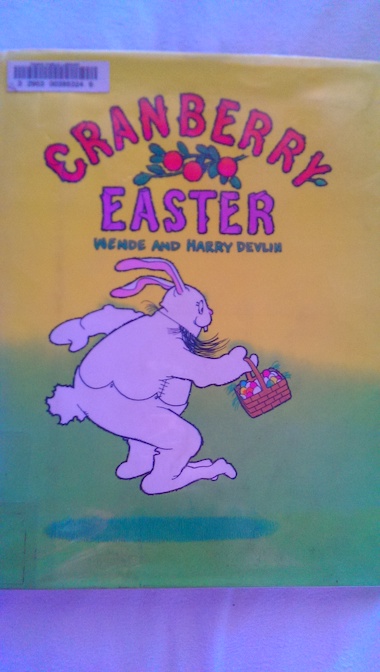
Cranberry Easter by Wende and Harry Devlin, 1990.

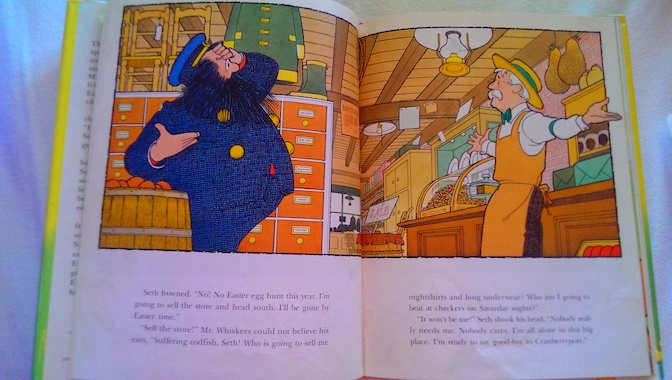
Mr. Whiskers is eager to talk to Seth, the owner of the General Store, about this year’s Easter egg hunt.  Seth hosts one every year, and Mr. Whiskers is full of plans.  However, Seth tells him that he’s thinking of closing the store and moving.  He’s been lonely in Cranberryport since his wife died, and he’s thinking that he might want to retire and move to a warmer climate.

CranberryEasterSethMoving

When Mr. Whiskers tells Maggie’s Grandmother what Seth said, she says that he’s not the only one thinking of moving.  A couple of her friends say that they can’t handle living alone on their farms in the winter anymore, and because they haven’t been able to find rooms to rent in town, they are thinking of moving to a warmer climate, too.

CranberryEasterMaggieSuggestion

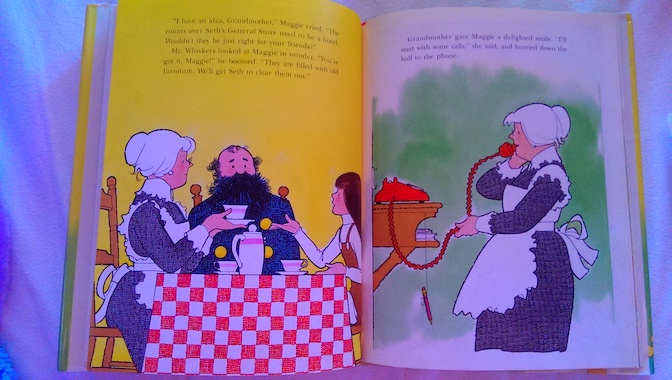
Then, Maggie comes up with a possible solution. She reminds them that the building that the General Store occupies was once a hotel.  There are rooms above the store that Seth hasn’t been using.  If he cleaned up those old rooms, he could rent them out to Grandmother’s friends.  Seth is reluctant at first because the rooms need a lot of work to clean up, but with a little urging and help from his friends, they soon manage to turn the old hotel rooms into nice-looking apartments.

CranberryEasterRenovations

Grandmother’s friends love the apartments because, with rooms right over the store, they won’t even have to go out for groceries when the weather is bad.  The arrangement works well for Seth, too.  When members of the community help to clean up the old rooms, it reminds him that he has friends in town, and with some of them living right above his shop, there will be no need for him to feel lonely anymore.

CranberryEasterApartments

Of course, when Seth decides to stay in town and hold the Easter egg hunt after all, Mr. Whiskers has to follow through on his promise to dress up as the Easter Bunny.

CranberryEasterBunny

Like other books in the series, this book includes a recipe in the back, for Cranberry Cobbler.

CranberryEasterCobblerRecipe

Jennie’s Hat

JenniesHat

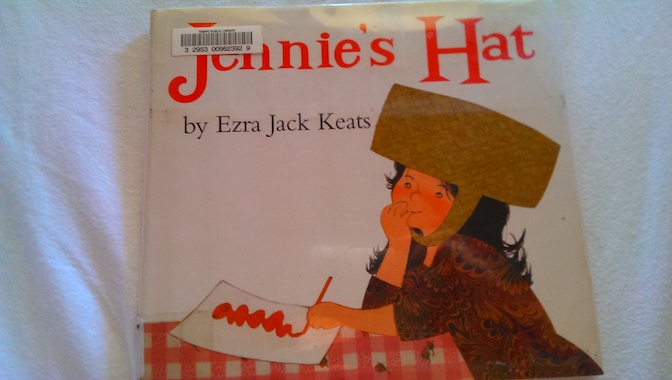
Jennie’s Hat by Ezra Jack Keats, 1966.

When Jennie’s aunt tells her that she’s going to send her a new hat as a present, Jennie is excited.  She imagines that her new hat is going to be big and fancy and covered with flowers.  However, when the hat arrives, it’s just a very plain, ordinary hat with a single ribbon.

JenniesHatGift

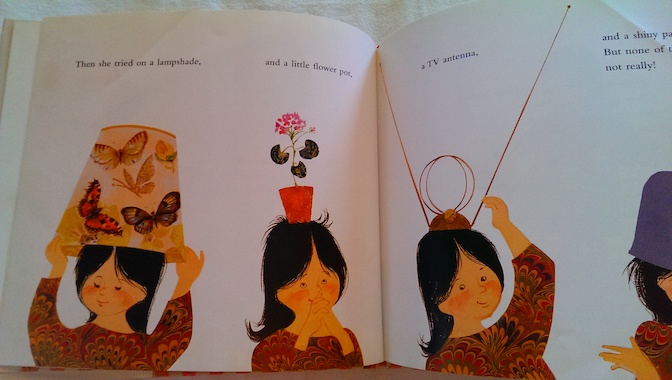
Even though her mother thinks the new hat is nice, Jennie wishes for something fancier, more unusual.  She tries on various other things, like a basket, a lampshade, and a pot to see how they would be as hats.  Of course, none of them really work.

JenniesHatExperiments

Jennie has a habit of feeding the birds, and while she’s coming home after feeding them one day, she wishes out loud that her hat could be fancier.

JenniesHatFeedingBirds

Her bird friends, hearing her wish, decide to help her.  The next day, as she is leaving church, they bring her the things she’s been wishing for so that she can have the hat of her dreams!

JenniesHatChurch

The best part of the story is Jennie’s friendship with the birds and how they repay her for feeding them.  The pictures of all the amazing things they give her for her hat are fun, too!

JenniesHatDecoration

I also liked the unusual artwork style.  Jennie’s clothes are often a cutout of a patterned piece of paper, while the rest of her body is drawn in.

Addy Learns a Lesson

American Girls

AddyLesson

Addy Learns a Lesson by Connie Porter, 1993.

AddyLessonArrivalAfter escaping from slavery, Addy and her mother finally arrive in Philadelphia, Pennsylvania, where they will start a new life.  Philadelphia is a big city, and at first, Addy feels lost, not knowing where to go and what to do.  They have no family or friends to turn to, and neither she or her mother can even read the street signs, never having been taught to read.  They are dependent on help from other free black people, former slaves who have already established themselves in the community.

The first people they meet in Philadelphia are Mrs. Moore and her daughter, Sarah.  They are part of the Freedom Society of Trinity A.M.E. Church, which helps new arrivals escaping from slavery, like Addy and her mother.  The Moores take them to the church, where they attend a church supper, along with some other new arrivals.  Mrs. Moore asks Addy’s mother what work skills she has, and when she says that she can sew, Mrs. Moore says that she might be able to get a job in a dress shop.  Mrs. Ford, the white woman who owns the shop, is strict and fussy, but she hires Addy’s mother and gives them a room to live in.

Life in freedom isn’t as glamorous as Addy thought it would be at first.  Her mother works hard for little pay, and the attic room where they live is small and uncomfortable. She misses the rest of their family and still doesn’t know where her father and brother are.  There are also things that black people in Philadelphia can’t do, even though they aren’t slaves, like riding on the streetcar.

However, there is one thing that Addy is looking forward to: going to school for the first time.  Sarah Moore is Addy’s age, and she tells Addy about her family escaped from slavery in Virginia.  Like Addy, she couldn’t read when she first arrived, but now, Sarah attends school.  Addy is excited about attending the same school as Sarah and happy that she has made a new friend.  Addy’s new teacher, Miss Dunn, was also a former slave from North Carolina, and she reassures Addy that, although she hasn’t been to school before or learned to read yet, it won’t be long before she learns.


All of the other children at school are black, many of them former slaves.  However, Addy can’t help but notice that some of their families are more prosperous than others.  In particular, a girl named Harriet wears beautiful dresses, the kind that Addy has dreamed of having herself.  Sarah and Harriet don’t get along because Harriet is snobbish, but Addy is fascinated by her, wishing that she could have things like Harriet has.  Harriet says that her family were never slaves, and as bossy as Harriet is, Addy can’t help but admire her.  Harriet is nice to Addy at first, bragging about how smart she is and how much she can help Addy, but she isn’t as patient or as helpful to Addy as Sarah is.

When there is a spelling match at school, Addy accepts Harriet’s invitation to go to her house to study.  Harriet always seems to do well in class, and Addy is curious to see what her house is like.  However, Harriet and her friends force Addy to be their “flunky,” carrying all of their books, and they say insulting things about Sarah.  Then, Harriet retracts the invitation to study.

As Addy sees the way Harriet takes advantage of her, she comes to realize some important things about the way people act and about herself and the type of friends she really wants in her new life.  Unlike Harriet, Sarah is Addy’s real friend.  Addy realizes that she doesn’t need to admire people like Harriet because she is smart and works hard and can do just fine without Harriet’s false friendship.


In the back of the book, there is a section of historical information about education during the American Civil War, especially for black children.  It was actually against the law to teach slaves to read during Addy’s time, although some were able to learn in secret.  Even for free blacks in the North, there were few educational opportunities.  Black children couldn’t go to school with white children, and the schools for black children were poor, unable to afford many supplies.  Over time, more and more black people were able to get an education, in spite of the difficulties involved, and education helped to improve their lives.  However, segregated schools remained the norm until the 20th century.

I liked the way they showed the medal that Addy wins in the spelling bee.  Students who particularly excelled at a subject in class were sometimes given a small medal on a pin to wear as a badge of honor, something that people don’t do in modern times.


A Hug for a New Friend

HGHugFriend

A Hug for a New Friend by Janet Anderson, illustrated by Ron C. Lipking, 1985.

Sarah is worried because her usual babysitter, Kim, is sick, and her mother says that she will have to have a new one until Kim is better.  Her temporary new babysitter is named Laura, and Sarah will meet her the next morning. Sarah really likes Kim, and she worries that her new babysitter will be mean or not like her.

When Sarah wakes up the next morning, before she goes to meet Laura, she sees an odd little person in her bedroom mirror. This odd little person is Tickles, one of the Hugga Bunch. She says that she likes making new friends, but Sarah isn’t sure that she feels the same way.

HugFriendMirror

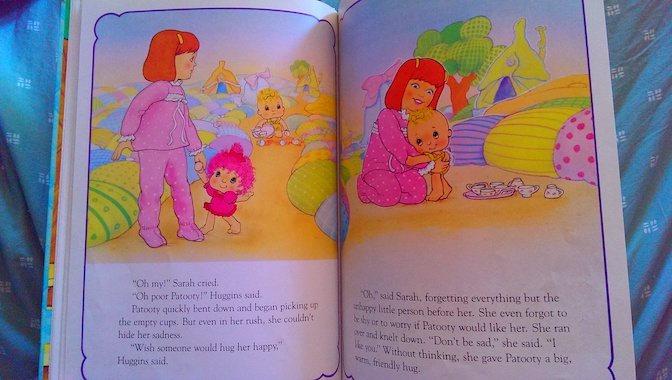
Tickles says that she came to see Sarah because she saw her looking sad and invites her to come to Huggaland with her to meet the other Hugga Bunch. Sarah worries at first about what the other Hugga Bunch will be like and whether they’ll like her, but she is amazed at what she sees. Huggaland is soft and colorful, and everyone is very friendly.

HugFriendHuggaland

She asks Tickles how they can all like her when they don’t know her, and they explain that being friendly to other people encourages them to be friendly in return. That’s really how friends are made. When Sarah comforts one of the Hugga Bunch after she drops a tray of lemonade, she sees what they mean. Her kind gesture has earned her a new friend.

HugFriendSpill

When Sarah returns home and goes to meet her new babysitter, she discovers that Laura is actually rather sweet and shy, not mean, as Sarah feared. Sarah greets Laura with a friendly hug, and the two of them become friends.

HugFriendLaura

The Hugga Bunch’s advice to immediately start a new friendship with a hug may be somewhat awkward in real life, but the idea that kindness and friendly gestures inspire others to respond with kindness and friendship is a good one.

A Hugga Bunch Hello

HuggaBunchHello

A Hugga Bunch Hello by Phyllis Fair Cowell, illustrated by Ron C Lipking, 1985.

Bridget likes having her grandmother living with her and the rest of her family. Her grandmother always has time for her and is willing to give her a hug. Her parents are often too busy, her brother thinks hugs are just for girls, and her Aunt Ruth is too fussy.

Then, Aunt Ruth tries to persuade everyone that Bridget’s grandmother should go live in a nursing home. Bridget doesn’t want her grandmother to leave, but she doesn’t know what to do about it.

While she worries, a strange little person steps out of her bedroom mirror. This little person is Huggins, one of the Hugga Bunch. She says that she knows about Bridget’s problem and thinks that she can help. She invites Bridget to come with her to Huggaland.

HuggaBunchHelloMirror

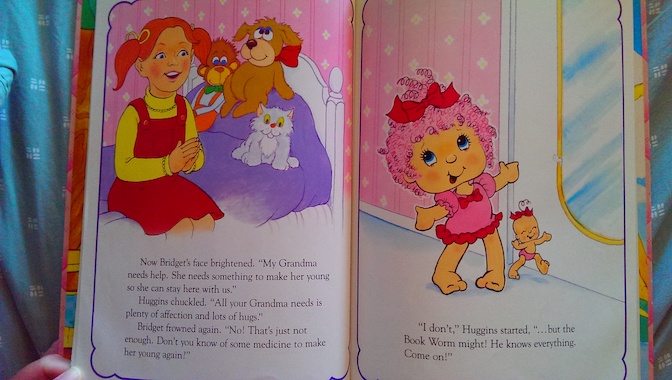
In Huggaland, the Hugga Bunch take Bridget to see the Book Worm, who may have the solution that Bridget seeks. Both the Hugga Bunch and the Book Worm say that aging can be slowed by affection and “the knowledge that they are needed,” but Bridget thinks that the only solution is to find a way to actually make her grandmother young again.

The Book Worm says that if that’s what Bridget wants, then her grandmother must eat fruit from the Youngberry Tree. Unfortunately, the tree is in the territory of the Mad Queen of Quartz. Although the Hugga Bunch are afraid of her, Bridget is willing to face her for her grandmother’s sake.

Getting there involves going through a few obstacles, including walking sideways on a sideways sidewalk and facing a frightening beast who turns out to be a baby elephant who was under a spell. When they reach the tree, the mad queen takes them prisoner and turns Bridget into a statue. Fortunately, the others manage to break free and save her.

HuggaBunchHelloTree

Bridget is happy at being able to bring the Youngberries to her grandmother, but as she passes through the mirror into her room, she accidentally drops them, and they disappear.

Not knowing what else to do, Bridget runs to give her grandmother a hug before she leaves, encouraging her brother to do the same. Bridget’s father wasn’t happy about her grandmother leaving, either, and seeing how much the children will miss her, he declares that she should stay.

This book was made into a made-for-tv movie.  It is currently available on YouTube.  It follows the plot of the book pretty closely.