The Mystery of Sara Beth

SaraBeth

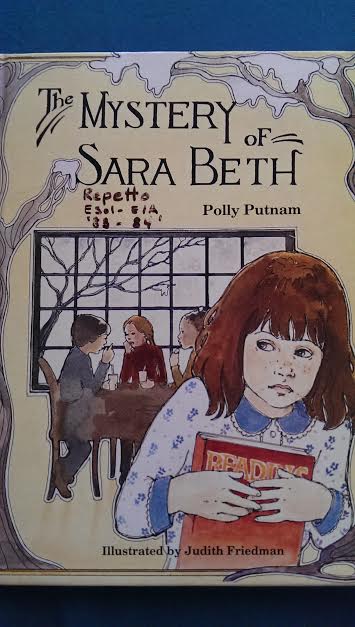
The Mystery of Sara Beth by Polly Putnam, illustrated by Judith Friedman, 1981.

This was one of my favorite books when I was young. It’s a nice mystery story for children in early elementary school.

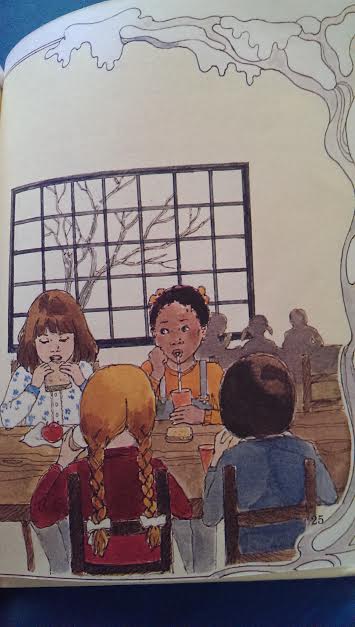
When a new girl named Sara Beth joins their class, Becky and her friends go out of their way to make her feel welcome. However, Sara Beth barely acknowledges their attempts to make friends with her.

SaraBethPic2

Becky becomes concerned about Sara Beth and her lack of interest in making friends at school. Becky also notices some other odd things about Sara Beth’s behavior, which tends to change unexpectedly.  Sometimes, Sara Beth likes the class’s pet guinea pig, and sometimes she seems afraid of it.  One day, Becky catches Sara Beth taking a reading book home that was supposed to stay in the classroom.  Later, she sees Sara Beth hiding a cupcake from a class party to take home. Could these things help explain what Sara Beth is trying to hide?

The book is currently available online through Internet Archive.

My Reaction and Spoilers:

The solution to Sara Beth’s problem is quite simple, but it may seem bigger to younger children. The story presents a good example of the use of observation and logical thinking when approaching a problem. As Becky tries to determine why Sara Beth acts the way she does, Becky watches her closely and makes a list of her observations before coming to her final conclusion.  Becky is not only compassionate toward Sara Beth in trying to help her solve her problem and make friends at her new school, but she is also a very logical thinker.  I really enjoyed her as a character!

The artwork in the book is nice, and I thought it was clever how the borders of all of the images kind of give a hint to Sara Beth’s problem.  Even when the characters are indoors, the pictures are surrounded by snow-covered trees because it’s important to the story that it takes place in winter.  The snow is the root of Sara Beth’s problem.  The girls live in a cold climate and “Sara Beth” comes from a poor family.

(Spoiler: Becky correctly realizes that “Sara Beth” is actually a set of twins, Sara and Beth, which is why they behave differently each time they switch places.  Their family moved to the area from a warmer climate because the twins’ father is looking for work, but they only had enough money for one warm coat for the girls, so one of them has to stay home while the other goes to school.  They take turns going to school, and the one who goes to school brings the other one books, school assignment, and class treats so she can follow the lessons and not miss out.  When Becky confronts one of the twins, Beth, she admits that they were afraid of making friends at school because they knew that someone would find out the truth.  Becky persuades Beth to talk to their teacher, and the teacher arranges for the twins to receive an extra coat that was unclaimed from the school’s lost and found so that they can both come to school.)

In the back of the book, there’s a list of vocabulary words that appear in the story. It does not provide definitions for these words, though. I think that the most unusual words in the book were guinea pig and tetanus shot.

One more thing I thought that I would mention is that Becky, the main character, is African American. This is not mentioned at all in the text of the book and is not important to the story, but it is shown in the pictures.  I didn’t think about it much when I first read the book as a kid, but looking back on it, I found it interesting because it reminded me of the character of Adam in the Third Grade Ghosthunters series.  It fascinates me that there is something about these characters that people wouldn’t know without looking at the pictures, and I also like it that the characters themselves are not defined by race.  It’s just an interesting detail, not central to their characters.

The Root Cellar

RootCellarThe Root Cellar by Janet Lunn, 1981.

Rose Larkin is an orphan, living with her grandmother, a stern businesswoman.  Her grandmother travels frequently on business, so from the time Rose came to her when she was three years old, she just took Rose with her wherever she traveled, tutoring her in school subjects in the evening after work.  Rose’s early life is largely one of travel to strange places and isolation.  When her grandmother is working, Rose is pretty much left to her own devices, often either reading alone in their hotel rooms or exploring strange cities by herself.  Not going to school, she has no friends her own age and doesn’t really know how to behave around other children or live as part of a normal family.

When her grandmother dies suddenly of a heart attack in Paris when Rose is twelve years old, her remaining relatives have to decide what to do with her.  She temporarily stays with aunts who are into fashion and high living before goes to live with another aunt and uncle and their boys on an old farm.  Aunt Nan (Rose’s father’s sister) and her husband are better suited to caring for Rose and can give her a more settled family life, but Rose’s other relatives don’t seem to think much of Aunt Nan, who is an author of children’s books.  Rose has heard that Aunt Nan has no sense and that the family has just moved to a shabby little farm house in Canada.  Rose is prepared not to be happy there, on a dumpy little farm, miles from anywhere, with a bunch of strange people.

Her new life gets off to a bad start when there is no one to meet her at the house when she arrives.  As she waits for her aunt and uncle to return, a strange old woman appears who seems to know her.  She calls herself Mrs. Morrisay and acts like she belongs to the house.  But, when Rose’s relatives arrive home, Mrs. Morrisay suddenly disappears, and none of them seem to know anything about her.  Later, Rose sees a girl making a bed upstairs, but her relatives just laugh when Rose asks them about the maid, which is who Rose thought the girl was.  There is no maid in this house, and Rose is the only girl.  To Rose’s annoyance, her relatives think she imagined the whole thing.

Actually, life in her aunt and uncle’s house in the country isn’t as bad as her other aunt has lead her to believe, but becoming part of their household isn’t easy because Rose is used to a very different kind of life.  The house is definitely old and in bad need of repair, and her relatives are noisy and disorganized, at least more so than Rose is accustomed to.  Rose isn’t used to the chaotic life of a family with a lot of children, and Aunt Nan has another on the way.  Also, tourists who are fans of Aunt Nan’s books sometimes stop by the house, and Rose doesn’t like dealing with their scrutiny and questions.  Sam, one of the older boys in the family, seems to resent Rose’s presence in the house, and Rose overhears him saying a lot of bad things about her to her aunt, calling her snobby and criticizing her appearance.  Rose takes his attitude as further evidence that she doesn’t really belong in their house and that she’ll never fit in.  If they think badly of her, why should she think any better of them?

Rose also becomes increasingly aware that there is something not quite normal about her relatives’ house, especially the old root cellar, and the people she saw on her first day in the house are part of it.  Sam thought that he might have seen a ghost in the house one day, an old woman, and Rose recognizes his description as that of the Mrs. Morrisay she saw on her first day there.  She sees Mrs. Morrisay in her bedroom later, suddenly walking through a wall.  Rose thinks Mrs. Morrisay is a ghost, but Mrs. Morrisay tells her that she’s not dead, just “shifting” through time and that she wants Rose to stay in the house and help restore it to its former glory.  Rose doesn’t know why or how she can possibly help Mrs. Morrisay.

Rose learns that her aunt’s house was once an old farm house that belonged to the Morrisay family, and there is still an old root cellar on the property, a relic from the time when people had to store certain kinds of food underground to keep them cool and prevent them from spoiling.  One day, Rose goes down into the root cellar and meets a mysterious girl dressed in old-fashioned clothes, the same girl she saw earlier, making beds.  Although Rose and the other girl don’t realize it immediately, Rose has gone back in time.  The girl was someone who lived on the farm in the past, during the 1800s.

Rose and the girl in the past, Susan Anderson, become friends, and Rose is grateful for another girl to talk to.  Susan is an orphan herself, living with the Morrisay family as a servant girl.  She and Will Morrisay, old Mrs. Morrisay’s son, are friends, and both of them are sympathetic to Rose when she tells them about her new life with her relatives and the problems she has. Rose finds herself wishing that she could stay in the past with them forever.  However, once they realize that Rose is traveling through time when she goes in the root cellar, they also discover that it isn’t reliable about exactly when Rose will reappear in the past.  Although at first there are only days between Rose’s visits from her perspective, months or years pass in her friends’ lives between her visits.  They eventually manage to solve this problem through a friendship pact where they exchange favorite objects.  It’s at a good time, too, because soon Rose’s friends need her help as much as Rose needs them.

After a terrible fight with her relatives in which her aunt slips and falls and Rose worries that her aunt and the baby might die, Rose runs away to the root cellar and goes to see her friends, discovering that in their time, Will has gone away to fight in the American Civil War alongside his favorite cousin and has not returned.  It’s been awhile since Susan has heard from him, and she fears the worst.  Rose suggests that they go to look for Will at his last known location, but it’s a difficult, perilous journey. At first, they’re not sure whether they’ll find Will alive or not.

When they finally find Will, he is a changed man from the war, and Rose and Susan have to help him to remember who he really is and where he really belongs.  In helping Will to remember where he comes from, his life before the war, and how much Susan needs him, Rose comes to realize some important things about herself and where she really belongs.

The book is available to borrow and read for free online through Internet Archive.

My Reaction and Spoilers

As difficult as the choice is, Rose realizes that she must return to her own time, face the consequences of her earlier actions, and do what she can to become a real member of her new family.  After she returns home and the root cellar is destroyed in a storm, it seems as though she might never see her friends from the past again, but friendship can transcend many boundaries, including time.

I didn’t realize this the first time I read the book, but it’s actually part of a loose trilogy.  I say loose because none of the main characters from each story appear in the others (except, perhaps, for one who is in both the second and third books), which also take place in different time periods.  What binds the stories together is the location where the stories take place and also some distant family relations, particularly focusing on the Anderson and Morrisay families.

It is something of a spoiler, but it seems that the time travel in this story may not be so much a matter of the house being special or magical, but because Susan is special.  It is revealed in one of the other books, Shadow in Hawthorn Bay, that her grandmother was psychic.  Will and Susan briefly refer to Susan’s grandmother and her stories about ghosts when talking to Rose.  Susan seems to have little control, especially later in life, over her ability to shift through time, but it may be her special attachment to the Morrisay house and her need for Rose’s friendship and help that makes Rose’s time travel possible.  It’s never explicitly stated that Susan inherited her abilities from her grandmother, but I think that it is implied during the course of the books.

The Egypt Game

EgyptGame

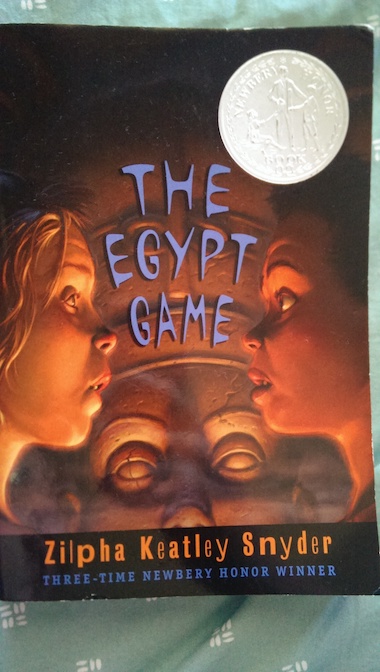
The Egypt Game by Zilpha Keatley Snyder, 1967.

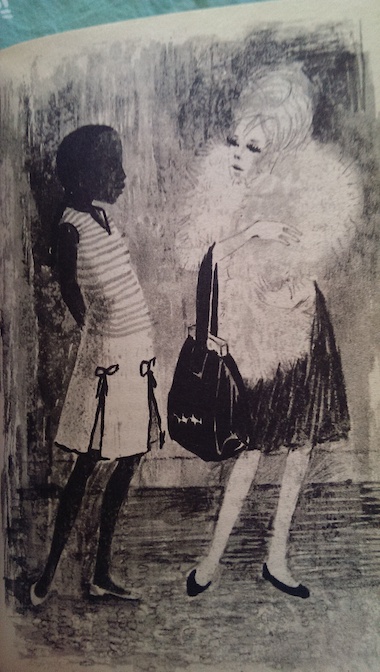
EgyptGameGirlsApril Hall has come to live with her grandmother (the mother of her deceased father) because her actress mother is touring with a band as a singer.  April’s mother isn’t a big star, although April likes to brag about her and their Hollywood life.  Really, her mother is mostly a vocalist who occasionally gets parts as an extra, hoping for that big break.  April is sure that when her mother gets back from her tour, she will send for her, and they will live together in Hollywood again. Although, from the way her grandmother behaves, it seems as though April may have to prepare herself for living with her for the long term.  April resents her grandmother’s apparent belief that her mother has dumped her because she is unwilling or unable to take care of her.

April is homesick and misses her mother.  To hide her feelings, she tries to act grown-up and ultra-sophisticated, which makes most people regard her as a little weird.  In spite of that, she makes friends with a girl named Melanie, who lives in a nearby apartment and sees through April’s act to her insecurity and creative side.  April has never had many friends (partly because of her mother’s chaotic lifestyle), but Melanie appreciates April’s imagination.  The two girls realize that they both like playing games of pretend and they both have a fascination with Ancient Egypt.  They go to the library and read everything they can find about Egypt, and it sparks the best game from pretend they’ve ever played.  Along with a few other friends, they start pretending to be Ancient Egyptians, building their own Egyptian “temple” and holding rituals in the old junk yard behind a nearby antique shop.

On Halloween night, the adults try to keep the children together in groups for safety, but the “Egyptians” sneak off alone to conduct one of their “rituals.”  It’s a dangerous thing to do because a child has been murdered in their area.  A young girl who was apparently abducted was later found dead, and people are frightened that other children could be in danger.  Fortunately, the only thing that happens on Halloween is that the Egyptians recruit a couple of new members when some boys from school find out what they’re doing.

However, the game starts taking on a life of its own when it seems that some other, unknown person has also joined in.  As part of their game, the children make up a new ritual and write messages to their “oracle,” asking questions that they want answered. To their surprise, someone starts writing replies.  Whoever is playing oracle and answering their questions, it doesn’t seem to be a child.

EgyptGameRitual

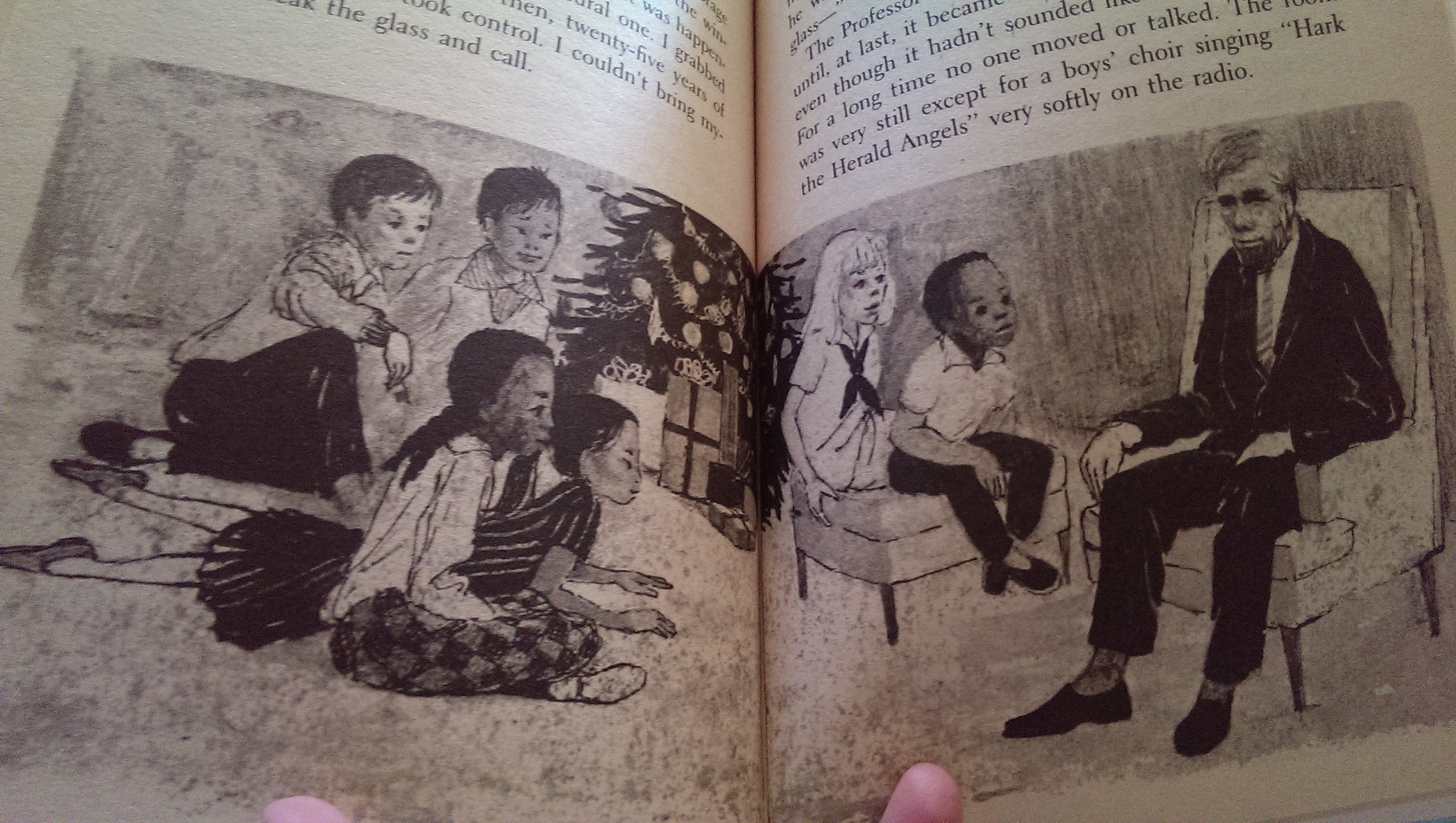
EgyptGameCostumesThe children are uneasy about this unexpected game player because frightening things are happening in their neighborhood.  The kids wonder if the mysterious messages could be from the crazed killer who murdered the young girl. People have been looking suspiciously at the loner who owns the antique store, an older man who everyone calls the Professor.  However, the kids have become too enmeshed in the Egypt game to give it up in spite of their fears.

When April slips out one night to retrieve a text book she left in “Egypt,” she comes frighteningly close to being the killer’s next victim.

This is a Newbery Honor Book.  It is currently available online through Internet Archive (multiple copies).  There is a sequel called The Gypsy Game.

My Reaction

Although there are mysteries in the story (who killed the girl and who the unknown player of the Egypt game is), the development of the characters, especially April, is really at the heart of the story.  All through the story, what April wants most is for her mother to come for her and take her home again.  April fears that her mother doesn’t love her or want her, and at first, that keeps her from even trying to love the grandmother who took her in and really wants her.  However, she finds comfort when she realizes that she is creating a new life with her grandmother and friends, who really care about her.  Her mother does write to her later about coming to stay for a brief visit with her and her new husband (her acting manager, who she married on short notice without even telling April or inviting her to come to their wedding), but by then, April has started to feel at home in her new home and wants to share Christmas with the people who have been sharing in her life and adventures more than her mother has.  She never even tells her mother about her brush with death.

EgyptGameChristmas

The characters in the book are diverse, representing different racial backgrounds, ages, and family situations.  Melanie and her younger brother are African American.  Melanie understands more about human nature and how the world works than April does, partly because her mother talks to her about people and explains things.  Melanie realizes from the way that April behaves and how she doesn’t understand certain things, like the fact that there disturbed, dangerous people in the world, that her mother never really talked to her much or explained things when they were living together.  Melanie helps to ground April’s more flighty, insecure personality.  She joins in her imagination games eagerly, but she also helps to bring April more into sync with reality and other people.

The first new player they add to the game, Elizabeth, is Asian and lives with her widowed mother and other siblings.  Like April, she is a little lonely and looking for new friends in her new home.  Each of the kids, like April, have their own inner lives and personalities.  The Egypt game binds them together and provides them with friendship and insights into their lives.

Felicity Learns a Lesson

American Girls

FelicityLesson

Felicity Learns a Lesson by Valerie Tripp, 1991.

FelicityLessonGirlsThis is the second book in the Felicity, An American Girl series.

So far, Felicity has mainly been taught at home, learning to read and write and take care of basic household tasks, like cooking and sewing, from her mother.  However, Felicity’s parents have decided that it’s time for her to begin furthering her education.  Felicity fantasizes about studying Greek, Latin, and geography, like boys do in college, but girls of her time do not receive that kind of education.  Some girls take on apprenticeships, learning professions such as seamstress, which Felicity thinks might be exciting, but her father is a wealthy merchant, which means that Felicity will be educated as a gentlewoman, not as a girl preparing herself for a trade.  A gentlewoman’s education involves lessons in penmanship, fine stitchery, dancing, manners, and hostess skills.  Felicity doesn’t find that prospect as exciting.

Felicity starts taking lessons from Miss Manderly, a respected gentlewoman, in manners and the practical arts that girls from well-off families of her era were expected to know. Two other girls, a pair of sisters who have recently arrived from England, are also taking lessons from Miss Manderly, and at first, Felicity worries that they will know more than she does.  However, they are also young and have lessons of their own to learn.  The younger of the sisters, Elizabeth, becomes Felicity’s best friend.  However, Annabelle, the older girl, is disapproving.  She misses her old life in England and doesn’t think that anything in the colonies is good.

FelicityLessonAnnabelleThen, Felicity’s father declares that because of the tax on tea, he will no longer carry it in his shop. It leaves Felicity feeling conflicted about Miss Manderly’s lessons, which include the proper way to serve tea. She has started enjoying the lessons and doesn’t want to lose Elizabeth’s friendship, but she wants to support her father, too. Then, Annabelle criticizes Felicity for what her father said at one of the lessons, prompting Felicity to storm out angrily. She is doubly angry and hurt that Elizabeth didn’t try to defend her, making her doubt Elizabeth’s friendship.

At first, Felicity thinks that there is no way she can return to the lessons, but her mother convinces her that if there’s something that she really cares about (the lessons, Elizabeth’s friendship, supporting her father, etc.) she will find a way to work through the conflict rather than give up on it.  She also points out that some people aren’t as brave as others and find it more difficult to speak their minds and that Felicity should give Elizabeth another chance at friendship.  In the end, Felicity works out a compromise for her lessons using what Miss Manderly has already taught her, and Elizabeth finally finds the courage to tell Annabelle how she really feels about her behavior and the way she treats both herself and Felicity.

Each of the girls in the American Girls stories has her own personality, including strengths and weaknesses. Felicity is a spirited girl, but at first, she has a tendency to be too impatient and impulsive. Part of what she learns is the need take responsibility for her choices and to think things through before she acts.  Elizabeth, who is shy and easily intimidated by her older sister, learns that nothing will improve until she makes her true feelings known and that she has as much right as anyone else to be treated with respect.  Annabelle is a rather self-centered individual and is genuinely surprised when Elizabeth finally stands up to her.  In some ways, Annabelle is unfortunate because she does not find a friend at Miss Manderly’s like her sister does, but readers will recognize that Annabelle’s lack of friends is partly her own fault because she is deliberately antagonistic and does not try to earn Felicity’s friendship.

In the back of the book, there is a section that explains more about how children were educated in the American colonies around the time of the Revolutionary War.  Other good books on this topic are Going to School in 1776 and Colonial Crafts.

This book is currently available online through Internet Archive.

The Candy Corn Contest

The Kids of the Polk Street School

CandyCornContest#3 The Candy Corn Contest by Patricia Reilly Giff, 1984.

As Ms. Rooney’s class prepares for the upcoming Thanksgiving holiday, she gives them a contest: students can win the jar of candy corn on her desk if they can guess how many pieces of candy corn are in it (or get the closest to the right answer).  Richard “Beast” Best wants to win very badly because he loves candy corn and his mother never lets him eat many sweets at home.

The only problem is that students can only earn the ability to make guesses by reading books.  They get one guess for each page they read.  Richard has always been a slow reader, so he knows that this contest is going to be hard for him.  One day, while studying the jar of candy corn, trying to plan out his guess to make the best use of it he can, Richard gives in to temptation and eats three pieces.  Now, he doesn’t know what to do.  Ms. Rooney knows exactly how many pieces of candy there were in the jar, and if three are missing, she’ll find out.

CandyCornContestPic2While Richard is worrying over his mistake, he’s also worrying about the sleep-over party his parents are letting him have over the Thanksgiving break.  At first, he was looking forward to it, but some of the other boys in class can’t come and some of those who said they could are concerned because Matthew is coming.  Matthew and Richard are friends, and people in class generally like Matthew, but everyone knows that Matthew still wets the bed.  Some of the other boys are worried that they’ll have to sleep next to Matthew at the sleep-over.  As much as Richard likes Matthew, it feels like his problem is going to ruin the party, and when Matthew is nice to him, it only makes Richard feel worse.
For awhile, Richard is short-tempered with Matthew and says some things that he later regrets.  His mean comments make Matthew decide not to go to his party, but Richard feels terrible because he realizes what Matthew’s friendship really means to him. Richard’s apologies later help to fix the situation.  It also helps that Richard admits to Matthew that he ate three pieces of the candy corn.  Richard’s confession that he did something wrong (more than one thing, actually) and that he wants to fix it helps Matthew to forgive him.  Matthew helps Richard to decide how to solve his candy corn problem honorably, and Matthew’s mother gives Matthew a suggestion that will help him to avoid problems at the sleep-over.

The book is currently available online through Internet Archive.

Harvey’s Hideout

HarveysHideout

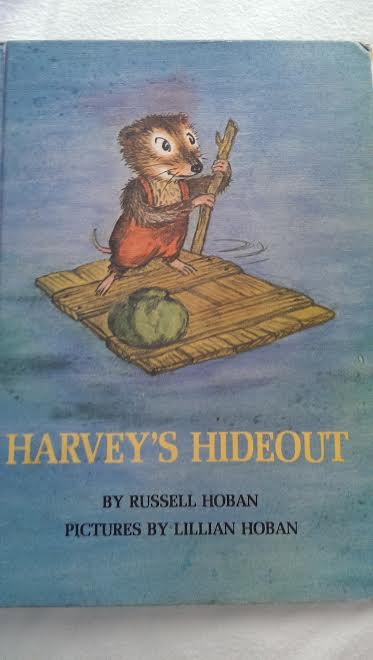
Harvey’s Hideout by Russell Hoban, illustrated by Lillian Hoban, 1969.

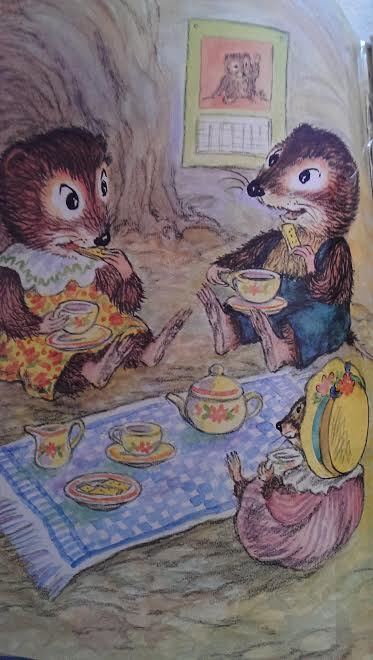
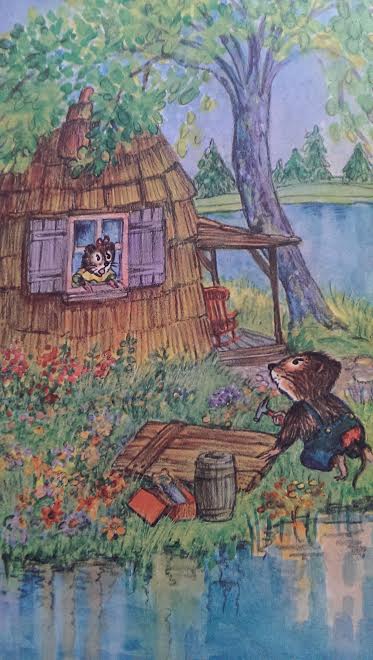
HarveysHideoutHouseSummer is difficult for the Muskrat kids this year.  Their friends are away for the summer, and Harvey and his older sister Mildred are getting on each other’s nerves.  But, there’s nothing that says they have to spend the whole summer with each other.

Harvey builds himself a raft and tells Mildred that he’s going off to meet with members of his secret club for a cookout where annoying big sisters aren’t welcome.  Mildred says that’s fine with her because she’s been invited to a party where there will be no annoying little brothers.  Harvey says that’s fine with him . . . except that it really isn’t.

The secret hideout where Harvey has been spending his time is empty except for him and the comic books he brought with him, and his cookout is for only one person.  He just made up the story about the secret club to make Mildred jealous and to have an excuse to spend time away from the house and her.  Harvey appreciates the freedom, but he’s also bored and lonely and envies Mildred, wondering who she knows who is still in town, inviting her to parties every day.

Then, when Harvey tries to make some improvements to his secret hideout, he discovers that he’s not the only one to dig a secret hideout for himself in the area.  Harvey’s unexpected discovery leads to a change in his relationship with his sister.

HarveyHideoutSecret


The book is available to borrow and read for free online through Internet Archive, and new copies are also available to buy through Plough.  If you try it and like it, consider buying a copy to own!

HarveysHideoutFriends

My Reaction

This is a nice story about sibling rivalry and cooperation.  One of the parts I like best is early on in the story when Harvey and Mildred’s father lectures them for fighting and insulting each other. I hated that part when I was a kid, but I kind of like it now because I realize what the father is actually trying to say.  He points out that there is some truth in their insults, but they’re wrong about each other at the same time.  Part of the reason they fight is because they each have their faults (Harvey can be selfish and Mildred can be bossy), but they each unfairly assume that the other is a lost cause and that they can never be friends.  It’s only when they come to realize that they’re equally lonely (Mildred has been having tea parties with just her doll) and Harvey makes the first move in offering to share what he has with Mildred that they realize that they can each be the friends they both need this summer.

When I was a kid, I wished I had a hideout like theirs!  I also love the colorful illustrations in the story.

Susan’s Magic

SusansMagicSusan’s Magic by Nan Hayden Agle, 1973.

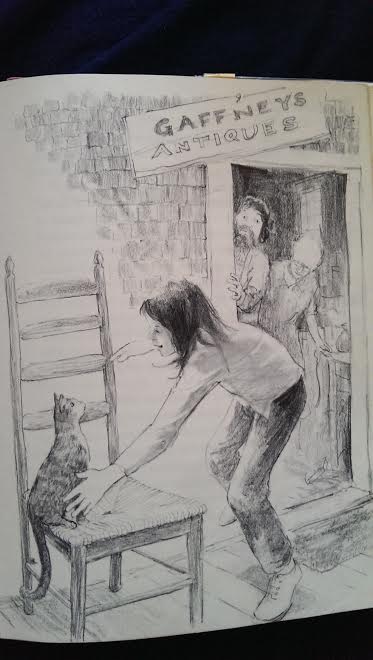
Susan Prescott believes in magic, although her mother tries to tell her that it’s all imagination.  Susan gets feelings about things and sometimes seems to have the ability to make things work the way she wants them to.  That’s part of the reason why she can believe that old Mrs. Gaffney is really a witch.  People say that Mrs. Gaffney used to be a fortune teller but had to stop when one of her predictions became frightening true and people got scared of her.  Now, Mrs. Gaffney runs an antique shop, living in a small apartment above it.  But, whether Mrs. Gaffney is really a witch or not, Susan’s life soon becomes entangled with hers through a series of unforeseen events.

Susan lives with her mother, who is a practical, down-to-earth woman, and her older brother Mike, who likes to play football.  Her parents are divorced, and her father lives in another state, only visiting occasionally, often at unpredictable times.  Susan’s father is known for not being very dependable, and he apparently left the family to be with another woman, although the story doesn’t provide many details.  Susan misses her father and is hurt by his absence, lack of dependability, and that he is more interested in being with someone else, somewhere else, instead of with her, her mother, and her brother.

The story begins when Susan sets out one day to buy a present for her mother’s birthday, and another girl she knows from school tells her to have a look at the flea market being held that day at a church.  Susan doesn’t have much money, and even most of the used items at the flea market are beyond her small savings.  Then, she foolishly spends what little money she has on cupcakes and lemonade.  Susan is angry with herself for her  foolishness, but her mistake leads her to greater adventures.

SusansMagicPic1One of the things at the sale which especially captures Susan’s attention is a small stuffed toy elephant.  The elephant is very worn, and Susan feels sorry for him, wanting to take him home and take care of him.  However, her money is gone, and she still has no present for her mother.  Then Mrs. Gaffney spots her looking sad and offers to lend her the 25 cents she would need to buy the elephant.  Although Susan has reservations about accepting such a loan, she does anyway, telling Mrs. Gaffney that she’ll pay her back.
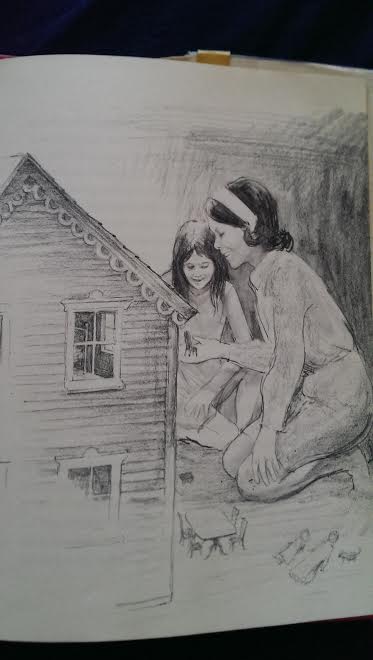
Susan brings the elephant, which she names Trunko, home, and when her mother thinks that Susan meant to give it to her for her birthday, she doesn’t correct her although she has become very attached to him herself.  Her mother, sensing Susan’s attachment to the toy, says that they can share it and that Susan can sleep with it.  Susan thinks this is a good arrangement until someone calls the house to say that the toy elephant was donated by mistake and that the original owner is sad and wants it back.

At first, Susan can’t bear the thought of giving up Trunko. But when she learns that the real owner is Hugo, a member of her brother’s football team, that he has had the toy ever since he was small, and that he really misses it, she realizes that she has to let him have it back.  To thank Susan for giving him back Trunko (originally named Stanley), Hugo gives Susan a stray cat that had been living under his porch.  Susan loves the cat immediately and names her Sereena.

However, Susan’s mother says that they can’t keep the cat because the hill nearby is a bird sanctuary.  Susan tries to persuade her mother otherwise, but she says that they’ll just have to find another home for Sereena.  Susan tries to get an older girl from school to look after the cat for awhile while she tries to persuade her mother to let her keep her, but the other girl refuses.  Then, unexpectedly, the cat runs into Mrs. Gaffney’s shop as Susan is walking past it.

In Mrs. Gaffney’s shop, Susan accidentally breaks a teapot, increasing her debt to Mrs. Gaffney.  However, Mrs. Gaffney turns out to be a cat lover and agrees to look after Sereena for Susan.  This is the beginning of a new relationship between Susan and Mrs. Gaffney as Susan offers to work for her in order to pay off her debt.  Mrs. Gaffney could use some help in her shop because sales haven’t been good, and she’s worried about losing it.

Sereena herself turns out to be good for Mrs. Gaffney’s shop, attracting customers’ attention to the items for sale.  Susan feels jealous about how much Sereena likes Mrs. Gaffney and her shop, as if Sereena has abandoned her like her father and Trunko have.  But, when a beautiful dollhouse in Mrs. Gaffney’s shop catches her eye and it turns out to be even more valuable than Mrs. Gaffney believed it was at first, Susan has to decide whether she is willing to give it up to help Mrs. Gaffney earn enough money to fix up her shop or if she will hold Mrs. Gaffney to her earlier promise to sell it to her for much less.

SusansMagicPic2In spite of the talk about magic and witches, this is not a fantasy story at all.  Susan’s concept of magic has more to do with a way of living, dealing with change, and solving life’s problems.  For the first part of the book, Susan’s “magic” focuses on getting what she wants for herself and getting things to work out the way she wants them to.  But, as the book goes on, Susan matures in the way she deals with the complications in her life.

Toward the end of the book, Susan thinks about reality and fantasy: “The magic part of living was how you fit yourself around real things, she guessed.  A magician was extra good at fitting. That’s why being one was important.”  What Susan really wants and the kind of person she wants to be change.  She comes to realize that, while she can’t get and keep everything she wants in life in the sense that it’s always with her all the time, caring about people and things is also a kind of ownership.  Giving up the toy elephant and sharing the cat with Mrs. Gaffney do not mean losing them completely because she still cares about them and the people connected with them.

Susan also realizes that, even if she doesn’t get exactly what she wants in the beginning, as long as things work out for the people she cares about, she can still be happy.  Although she has to make sacrifices at times for the people she cares about, she earns the love and respect of the people who mean the most to her.  Susan says, “Anyway, magicians don’t lose. They win. Dad, Trunko, and Sereena are mine still in a way.”  She will always be close to her mother and brother, even without her father’s presence, and Hugo, Mrs. Gaffney, and Sereena are all her friends.  Susan is a winner not because she gets what she wants for herself but because she knows how to make things work out in the best possible way for everyone she cares about, and that’s a kind of magic.

The book is currently available online through Internet Archive.

In some ways, this story reminds me a little of the Miyazki movie Whisper of the Heart, which also features a young girl who likes making up stories and who is led to an antique store by a friendly cat and meets an older person who helps her to learn about the person she wants to be and the kind of life she wants to live.  The two stories are not the same, though, and Whisper of the Heart was based on Japanese manga, not this book.  In some ways, however, both this book and Whisper of the Heart are the kind of stories that take on a new life when you read them as an adult because, at that point, you understand some of the feelings behind them better.

Soup

soupSoup by Robert Newton Peck, 1974.

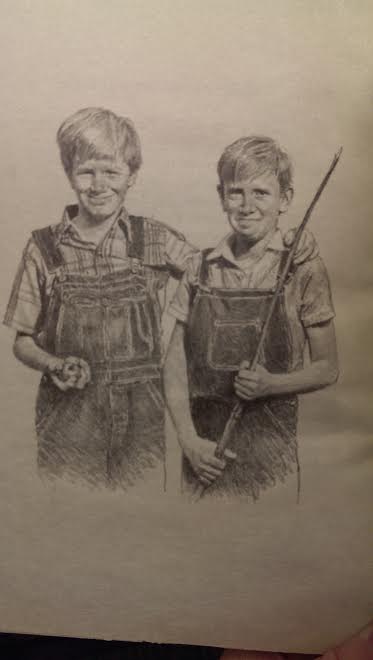
This is the first book in a series about the author’s childhood best friend.  His friend’s real name was Luther Wesley Vison, but he always hated that name.  Because Luther refused to come home whenever his mother called his name for dinner, his mother took to just yelling, “Soup’s on!” when she wanted him to come home to eat.  After that, everyone else just started calling him “Soup”, which he liked a lot better than “Luther.”

Together, Soup and Robert had a reputation for getting into scrapes in their small town in Vermont.  The book is a series of short stories about the funny things they did as kids, like how they got revenge on the school nurse for asking embarrassing questions, how Soup got punished for breaking a window other than the one he’d actually broken, how Soup talked Rob into rolling down a hill in a barrel, and how Robert’s aunt let him tie her to a tree right before a lightning storm.

souppicSome of the stories are laugh-out-loud funny, and some of them have kind of a moral lesson to them, like the time when Rob realized that he didn’t have the heart to lie to his mother even if it would allow him to escape punishment for talking back to the school nurse, the time when Soup and Rob tried to cheat Mr. Diskin out of some money so they would have enough to go to the movies but ended up feeling guilty, and how the boys made themselves sick by attempting to smoke cornsilk.  Others are just stories of childhood events and friendship, like the story of how Rob and Soup played football and how Soup loaned Rob his new shoes when his were ruined.  Even though Soup often got Rob into trouble, he really was a good friend and went out of his way to make Rob feel better when he needed it the most.
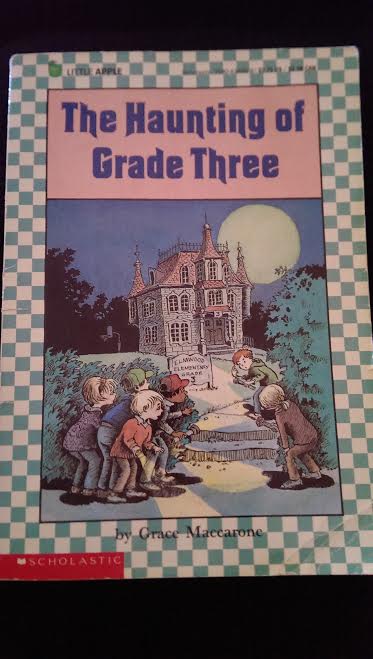
Although it is a short chapter book that is easy to read, a couple of the stories might require some further explanations for young children reading them, like the one where the boys smoke cornsilk using homemade pipes and the one where Soup says that someone told him it was all right to cheat Mr. Diskin because he’s a Jew (a belief that they come to rethink when they feel guilty for cheating someone who was always fair with them and was kind to them even when he discovered the deception).  They deal with older practices and prejudices and can be the start of discussions about the lessons people learn by making mistakes. Other than that, these stories present a fascinating look at what it was like to grow up in the country during the 1920s.

The book is available to borrow and read for free online through Internet Archive.

The Haunting of Grade Three

HauntingG3The Haunting of Grade Three by Grace Maccarone, 1984.
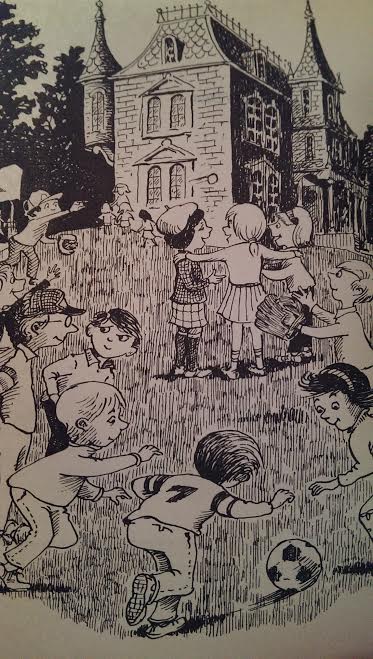
Elwood Elementary has become overcrowded, so the third-graders have been moved to an old mansion, Blackwell House, which has been empty for years. The house looks kind of spooky, and there are a lot of local ghost stories about it. Fortunately, Adam Johnson likes scary stories, so he thinks that it’s wonderful to go to school there.

Soon after the students move into the house, strange things begin happening. Objects fall off desks and shelves, and door slam for no reason.  Some of the kids discover a grave marker on the property for a boy about their age who died during the Civil War.  The kids start getting nervous, and so does their teacher, Mr. Jenkins. Then, Mr. Jenkins decides to give the kids group assignments. Each committee gets to go to a different place in town and learn about it. Adam’s committee is assigned to study Blackwell House and decide if it’s really haunted. The kids think their assignment is pretty strange, but Adam is excited.  He wants to be a ghost hunter like on Ghostbusters!

HauntingGradeThreeMost of the group members are misfits in one way or another. Norma Hamburger is a shy girl, frequently teased about her last name. Debbie Clark is a talkative girl who’s really into science. Chuck Webber, Adam’s best friend, is the class clown, always telling stupid jokes (and one of the main people who teases Norma about her name). Danny Biddicker is strong and good at sports, but he worries that he’s not as smart as the others. Joey Baker feels overshadowed by his large family, so he tells tall tales to get attention. The other kids don’t understand and get annoyed with his lies. By working together, they not only learn the secret of Blackwell House, but they learn more about each other and become a real team and friends.
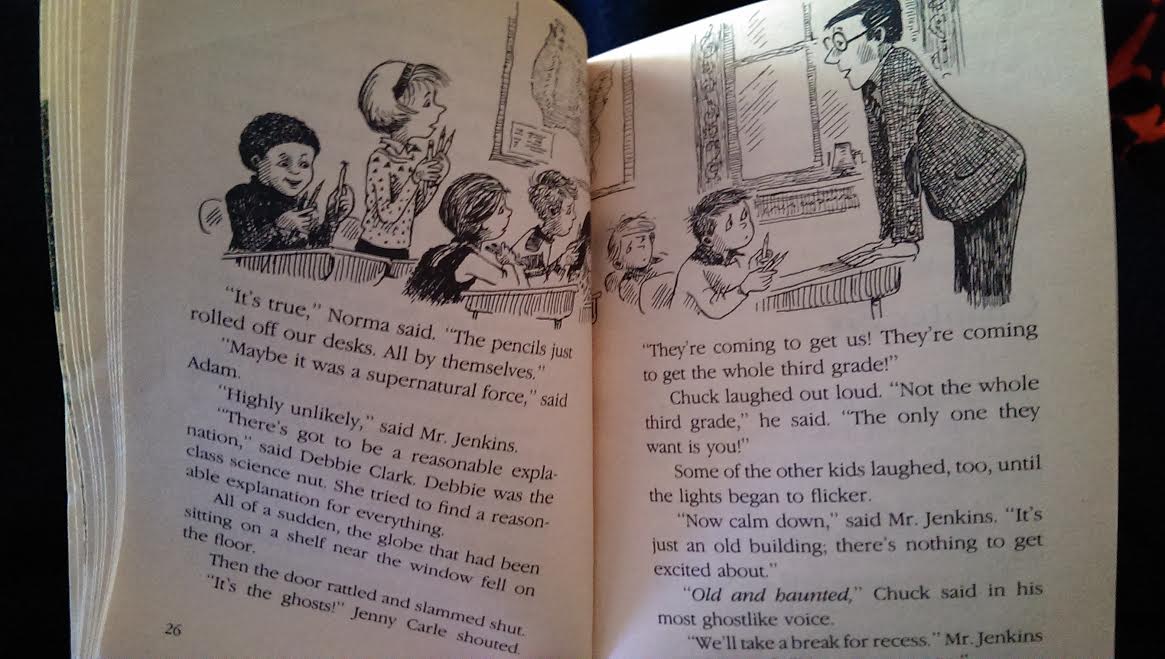
In the end, there is a reasonable explanation for the haunting of Blackwell House.  The kids take a methodical approach to the mystery, gathering their facts and ruling out various possibilities along the way.  Joey gets a chance to be a real hero, Danny proves to himself and everyone else that he’s smart and has good ideas, and Adam gets a new life ambition.

HauntingG3Pic

One other thing that I thought was interesting is that Adam, the main character in the story, is African American, but it’s never mentioned in the text of the story.  You only know because it’s shown in the pictures.  It’s just a little detail and not important to the story, but I thought it was interesting in a story that encourages kids to notice details.  I also liked it that Adam isn’t defined by race or appearance as so many characters in kids’ books are.  He stands by himself as an interesting character with his own ideas, courage, and leadership abilities.

This is the first book in the Third Grade Ghosthunters series.  It is currently available online through Internet Archive.

The Plain Princess

The Plain Princess by Phyllis McGinley, 1945.

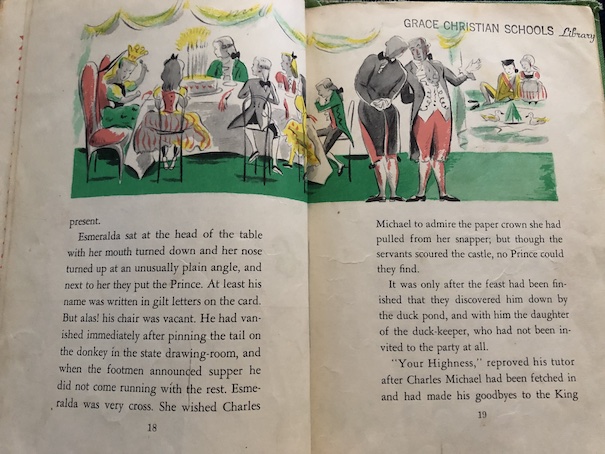
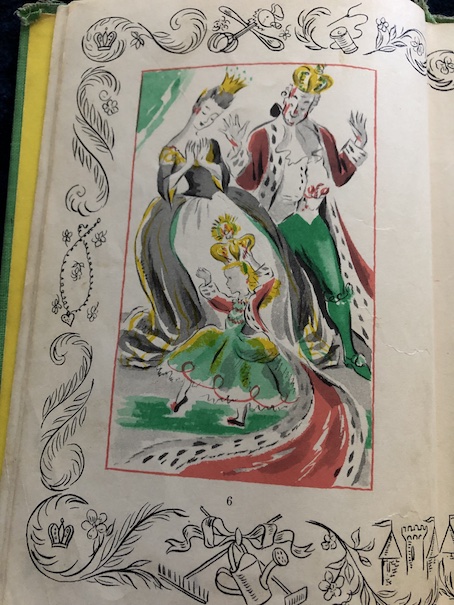
I would dearly love to see this book in print again!  It’s a charming modern fairy tale about a young princess who learns what beauty and happiness really mean.

Esmeralda is the only child of the king and queen, and she has just about everything that a girl could want. The author paints a pretty picture of Esmeralda’s charmed life at the castle and all of the beautiful things she has.

However, Esmeralda has one serious problem: she is plain. In her kingdom, in order for a girl to be considered beautiful, her nose must turn down, her mouth must turn up, and her eyes must have a twinkle in them. Esmeralda’s appearance is exactly the opposite. It is a serious problem because her plainness causes people to lose respect for her, and the prince that she is betrothed to refuses to take much of an interest in her.

Although her parents consult the finest physicians and wizards available, none of them can provide any solutions for Esmeralda’s condition. It is only after the king places an advertisement in the newspaper that a widow, Dame Goodwit, with five daughters of her own comes to the castle and offers a solution. However, she insists that Esmeralda must come and live with her family for nine months. At first, Esmeralda is distressed at leaving her home and living in much simpler circumstances that she is accustomed to, but the reasons soon become as plain as the princess herself.

As Esmeralda interacts with and becomes friends with Dame Goodwit’s daughters, Annabelle, Christabelle, Dulcibelle, Floribelle, and Echo, she comes to see herself and her old life at the castle differently.  At Dame Goodwit’s, she is expected to take care of herself and her belongings by herself, for the first time in her life.  She is given chores to do and becomes responsible for herself in ways that she never was before.  She also comes to see that, even though Dame Goodwit’s daughters are not princesses, in many ways, they are more knowledgeable and accomplished than she is, able to do many things that Esmeralda has never even tried before.  Little by little, Esmeralda learns and tries new things, even coming to enjoy her time with the family and becoming especially fond of little Echo, the youngest girl.  Her new experiences change her, her behavior, her attitudes, and eventually, even the way she looks.

The book is available to borrow and read for free online through Internet Archive.

My Reaction

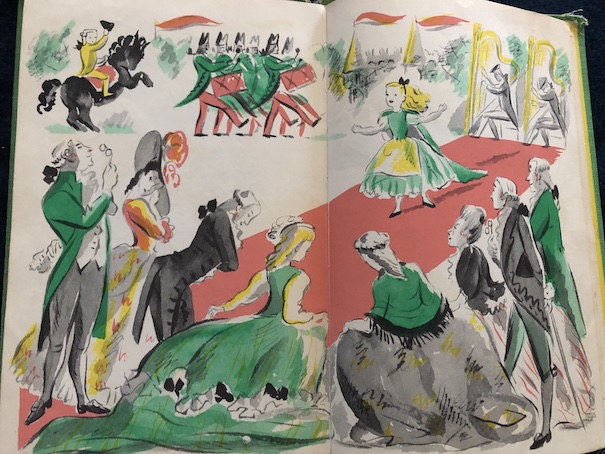
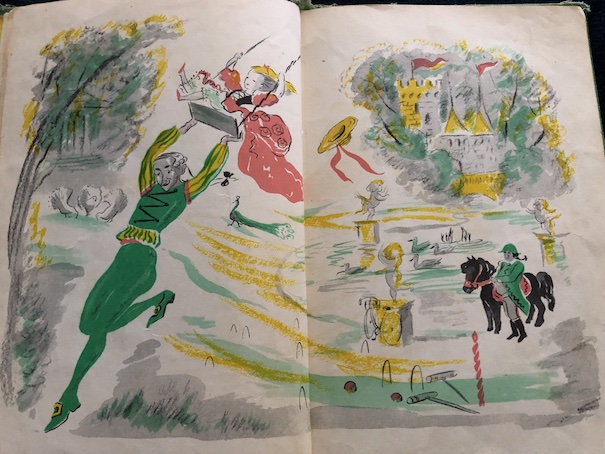
In spite of the fairy tale atmosphere, there isn’t really any magic in the story, as the widow herself points out. The real magic of the story is in the lessons that Esmeralda learns: that beauty and change come from within and that the way we see ourselves and those around us is important. For those who might be concerned at the emphasis on “beauty” and “plainness”, it soon becomes apparent that the outward signs of beauty really stand for positive character traits: humility, pride in one’s own talents and accomplishments, and unselfish caring for other people. The book also has some very pretty illustrations, some of which are wide scenes taking up two pages. It’s a beautiful book and a beautiful story for any young girl.

I don’t think that the book was ever made into a movie, but there are multiple versions that are stage plays (the link is to a video clip from a stage version of the story), including some that are musical.  I have seen a script for one of them that has added religious themes that weren’t in the original book, but the site has since been removed.  I’m sure that the script still exists, I’m just not sure where to find it now.  Some of the narrator’s and characters’ dialog was taken directly from the original book, but the religious parts were added.  As I recall, it implied that the princess’s personality changes came through the grace of God or developed as her religious side also developed, but I can’t remember now exactly how they said it.  I think it may have included some Biblical quotes related to the personality traits the princess acquires.  At one point, it was the only script that I could find available for free online.  There are other play versions that are available for purchase elsewhere, such as Dramatic Publishing and Steele Spring Stage Rights.