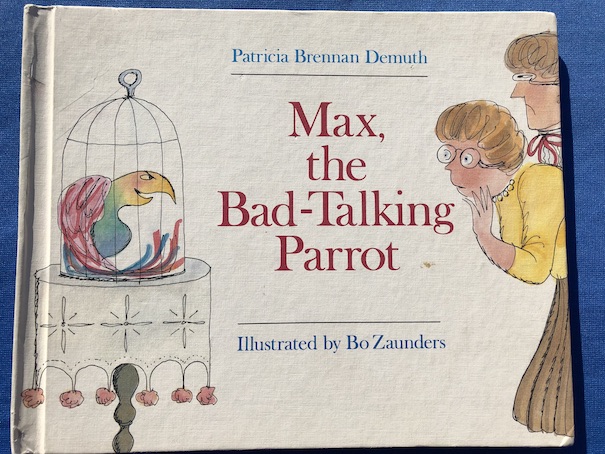
Max, the Bad-Talking Parrot by Patricia Brennan Demuth, illustrated by Bo Zaunders, 1986.
Don’t worry, Max’s “bad” talk isn’t really that bad.
Max is a parrot who belongs to a woman named Tillie. They live in a house that has been made into two apartments. The woman who lives in the apartment above them is Mrs. Goosebump. Mrs. Goosebump is Tillie’s friend, and Max likes her, too.
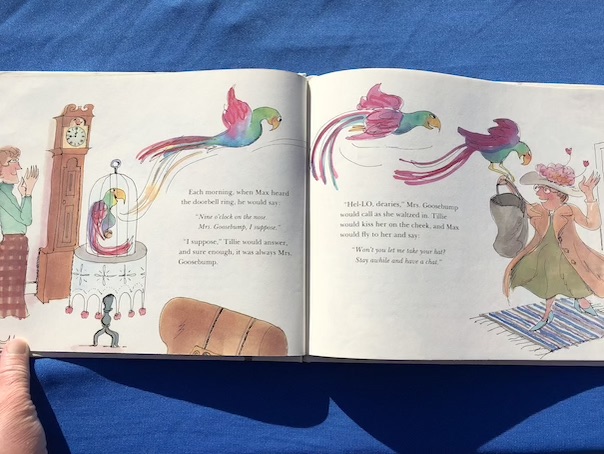
Because Mrs. Goosebump works the night shift in a toll booth, she always comes to see Tillie and Max in the morning, when her shift is over. Max always greets her with one of his rhymes. Everything Max says is a rhyme.

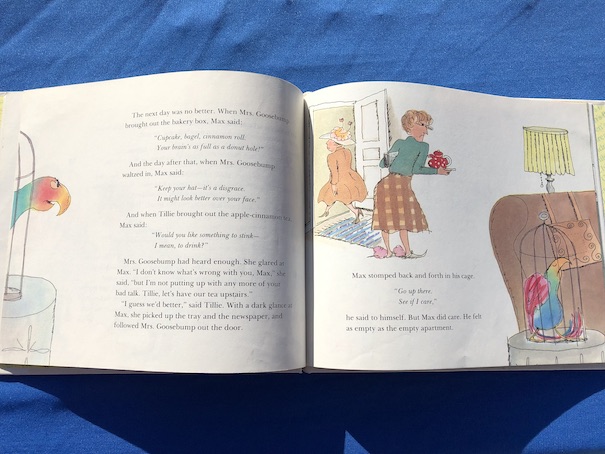
However, one day, as Max is dozing on Mrs. Goosebump’s shoulder during one of her visits, he thinks that he hears her calling him an ugly bird. Max gets upset and returns to his cage, not ever saying goodbye to Mrs. Goosebump when she leaves. He feels badly about the insult, and when Mrs. Goosebump visits later, he only gives her insulting rhymes, like, “Cupcake, bagel, cinnamon roll, Your brain’s as full as a donut hole!”
Mrs. Goosebump and Tillie have no idea why he’s so angry. The only thing that they can think to do is ignore him.
Later that night, a burglar breaks into Tillie’s apartment and starts stealing some of her things, including Max! Max is scared, but by coincidence, the burglar stops to pay at Mrs. Goosebump’s tollbooth. When Max recites some of his rhymes for her, she recognizes one of his usual rhymes and calls the police.

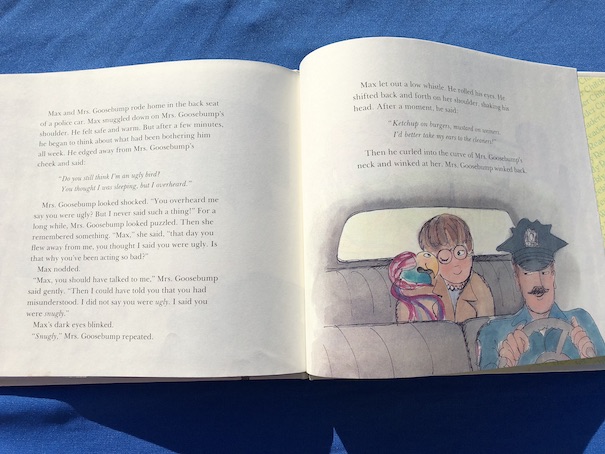
After Max is rescued, he finally tells Mrs. Goosebump why he was so angry, and Mrs. Goosebump explains that she actually said that he was “snugly”, not ugly. With the misunderstanding cleared up, the two of them become friends again. Max is also considered a hero for alerting Mrs. Goosebump about the robber.
When I was a kid, I thought that Max’s rhymes were funny, and the scene with the robber at the tollbooth is funny because Max tricks Mrs. Goosebump into believing that the burglar is insulting her before he says the rhyme that Mrs. Goosebump recognizes. The book is also a good lesson about the importance of talking to people about what you’re feeling in order to clear up misunderstandings.






 The Best Christmas Pageant Ever by Barbara Robinson, 1972.
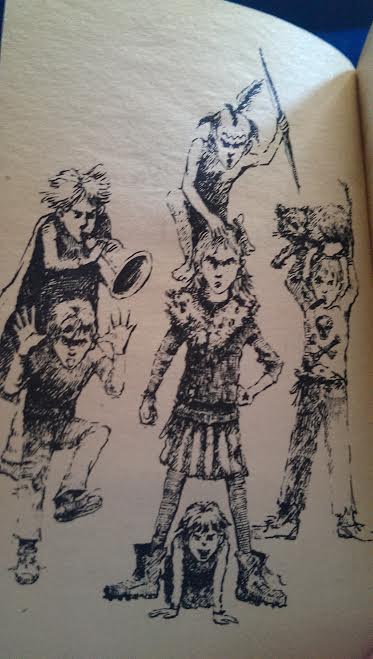 Although the Herdmans don’t get the cake Charlie mentioned and have little interest in Jesus, they begin to be fascinated by the description of the pageant and decide to stick around. The Herdmans love movies, and the idea of being in any kind of play strikes them as fun. Although the Christmas pageant basically goes the same way every year, typically using the same kids for the same parts, once the Herdmans make up their minds that they want the starring roles, they manage to push and bully their way right into the center of everything.
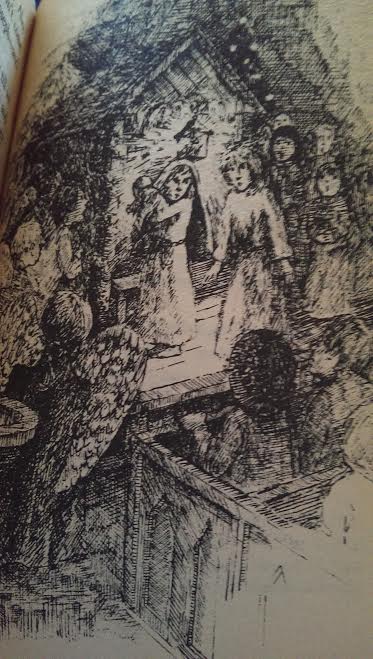 At first, the more conservative adults in the church are horrified at the prospect of what the wild Herdmans might do on Christmas itself, but the minister and the lady overseeing the pageant decide to give the Herdmans a chance. As the title says, it ends up being The Best Christmas Pageant Ever as the Herdmans unexpectedly bring out parts of the Christmas story that the other people who had taken the story for granted hadn’t really thought about much: the simple human reactions of a poor young couple who were strangers in a new town, the fear and expectation that accompany doing something great but unfamiliar and confusing, and the sense of wonder and surprise that are at the heart of the Christmas season.
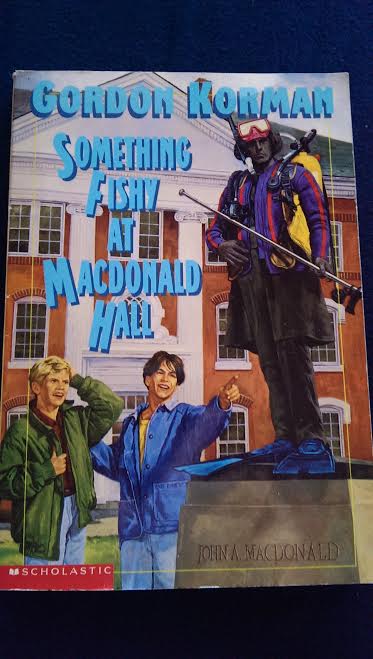 Something Fishy at MacDonald Hall by Gordon Korman, 1995.
 MacDonald Hall Goes Hollywood by Gordon Korman, 1991.
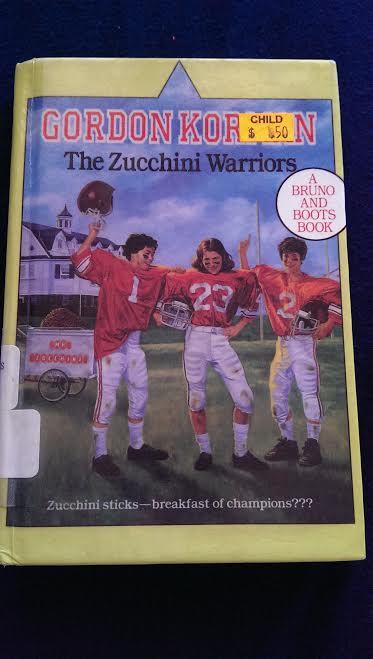 The Zucchini Warriors by Gordon Korman, 1988.
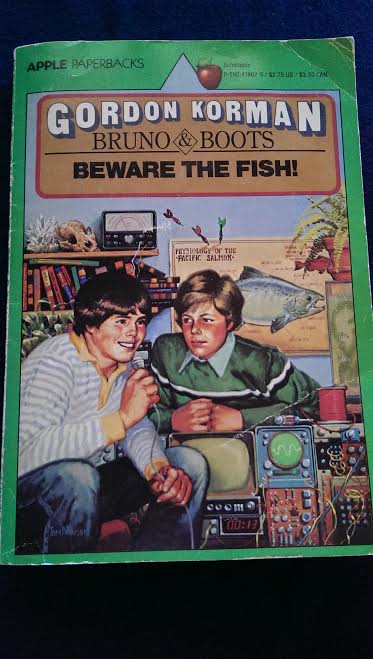 Beware the Fish! by Gordon Korman, 1980.
 The D- Poems of Jeremy Bloom by Gordon Korman and Bernice Korman, 1992.
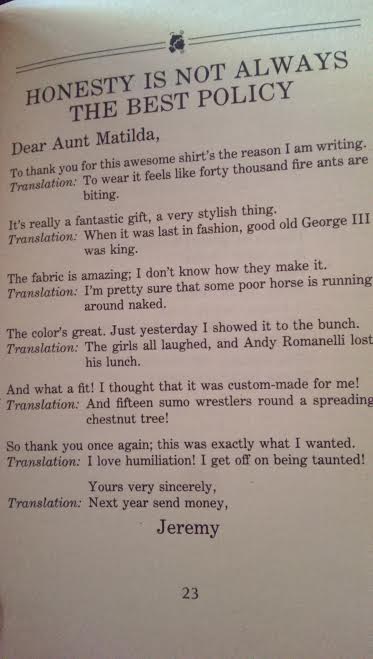 Jeremy tries to make the best of things, but somehow (partly through his own fault and partly by accident), he continually manages to do things to annoy his poetry teacher, Ms. Terranova (or, as the kids call her, Ms. Pterodactyl, thanks to a mistake Jeremy made when he said her name on the first day of class). Every single poem Jeremy writes during the year receives the same grade: D-. The book is divided into different periods of Jeremy’s work, along with an explanation about what Jeremy did during each period to tick off his teacher. At the end, the reader can be the judge: Are Jeremy’s D- grades because he’s a terrible poet or because his teacher is mad at Jeremy for everything else he does during the year? (The answer is pretty obvious.)
 Jestress's Forgotten Books and Stories