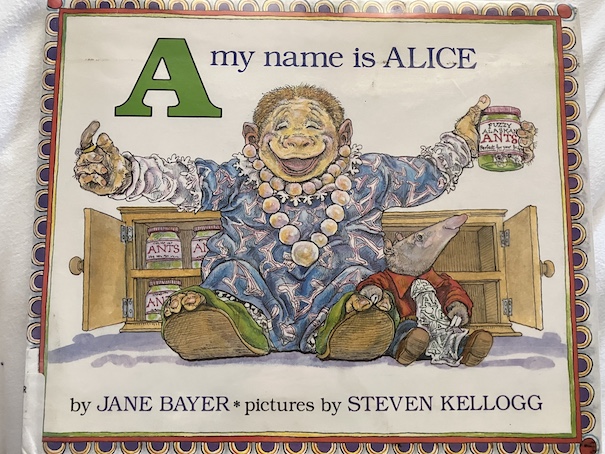
A My Name is Alice by Jane Bayer, pictures by Steven Kellogg, 1984.
I remember this book from when I was a kid! I always liked the pictures in the book, which are by Steven Kellogg, who also did the pictures for The Day Jimmy’s Boa Ate the Wash.
This book isn’t a story. It’s based on a talking game that’s often played on car rides called A My Name is Alice or Alphabet Chant. Like many casual folk games or childhood playground/car games, it goes by different names and has variable rules. In the back of the book, the author, Jane Bayer, says that she learned the game on a playground when she was a child in the 1950s. When she played it, they would bounce a ball while playing. This book was a favorite of mine when I was little because it was the first place I learned about this game.
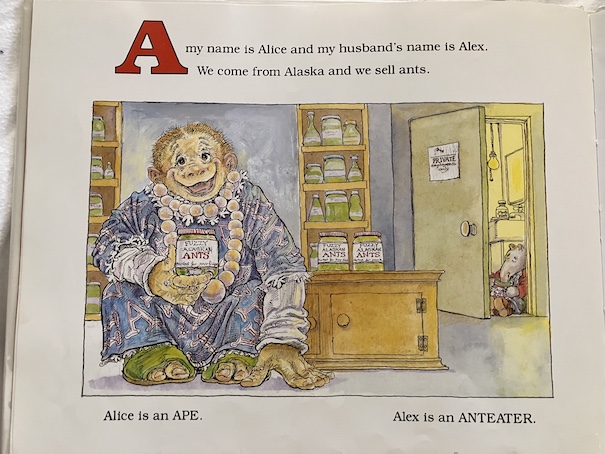
This game is an alphabet game where players have to follow the alphabet, giving the names of people, objects, and places all according to which letter of the alphabet they were currently on, using the following format: “(Letter) my name is (female name) and my husband’s name is (male name). We come from (place name), and we sell (object name).” (Because the rules vary, some people who have played this game with a slightly different format, possibly using the male name first.) First, you give all A names and words in this format, then you do the same for the letter B, then C, and so on to the end of the alphabet. (Or until you reach your destination, get stuck, get bored, etc.)
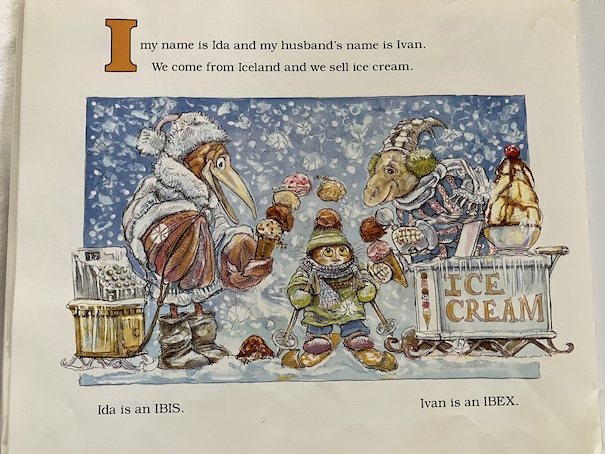
The fun of the game is that you can be as silly as you want with the names, places, and things to sell. The challenge is that it’s harder to think of names, places, and objects for certain letters than it is for others. Many kids playing this name will use the most common words they can think of first, took keep the game going quickly. However, the author deliberately goes for silly and unusual, which makes the book and the pictures fun and interesting.
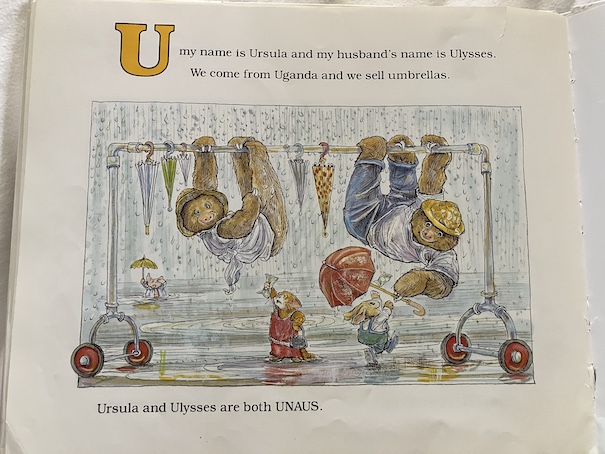
She also adds the element that all of the “people” she’s talking about are animals, and the types of animals they are also fits the alphabet theme. It can be difficult to think of animals for certain letters of the alphabet, but again, she goes for the unusual ones. The husband/wife pairs being named aren’t always the same animal, either. When they match, it’s usually because it was too difficult to come up with two different animal names for particular letters. The types of animals are given under each picture.
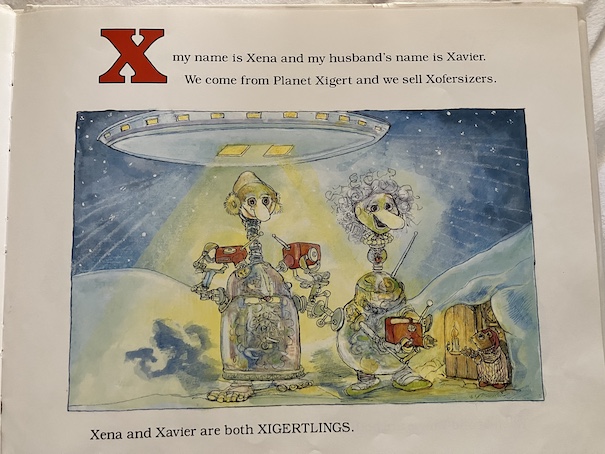
X is always the most difficult letter in an alphabet game because there aren’t many words or names that start with X. However, I liked the way the author dealt with it, just using aliens!
The book is available to borrow and read for free online through Internet Archive.




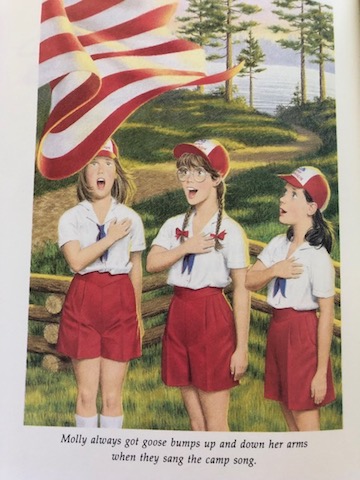 Molly and her friends, Linda and Susan, are attending Camp Gowonagin over the summer. They love summer camp because there are so many fun things to do, like nature hikes, archery, arts and crafts, and campfire sing alongs. The only thing Molly doesn’t like is swimming underwater, although she’s embarrassed to admit it. Susan has trouble with canoeing because she doesn’t know how to keep her canoe moving straight. Other than that, all three girls have fun at camp and as their time at camp is coming to an end, they think about how much they’ll miss it.
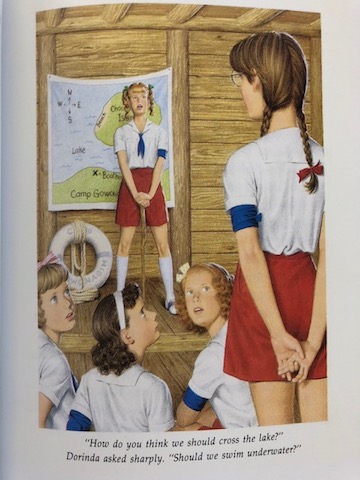 Molly and Susan end up on the Blue Team, while Linda is assigned to the Red Team. Molly and Susan aren’t really looking forward to the Color War because their team captain will be Dorinda, a bossy, competitive girl who likes to act like she’s the general of an army and this camp game is a real war. Molly is uneasy about what Dorinda will order them to do, afraid that it might involve the thing she dreads most, swimming underwater. The only comfort Molly takes is what her father told her before he went away to war, that being scared is okay because it gives a person a chance to be brave.
 Of course, Dorinda’s plan doesn’t work out as she thought. The Red Team’s scout spots them right away and takes most of the Blue Team prisoner. Only Molly and Susan are left free because Susan accidentally overturned their canoe on the way to the island. After they manage to get back into their canoe and bail it out, they try to approach the beach, but Linda spots them and signals to the rest of the Red Team. Molly and Susan have no choice but to return to camp to avoid capture.
 Molly and Susan (and the rest of the Blue Team, once they’re free) manage to snatch victory from the jaws of defeat, but they worry that perhaps their friendship with Linda is ruined because of the trick they play on her. Fortunately, Linda decides to take it in the spirit of the game and shows sympathy for the girls when it turns out that their victory plan ends with the entire Blue Team getting poison ivy.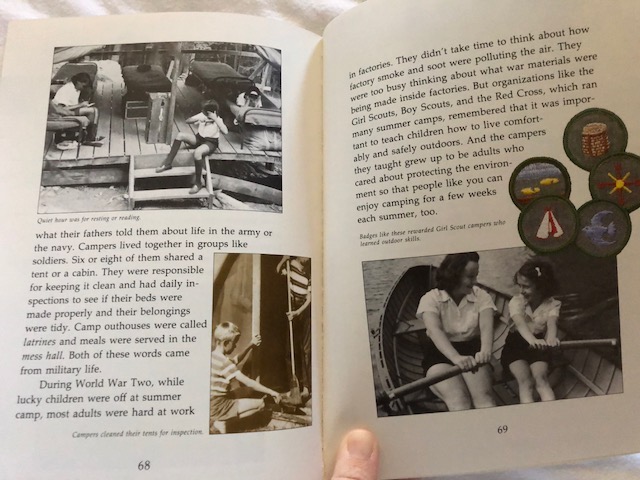
 Jestress's Forgotten Books and Stories