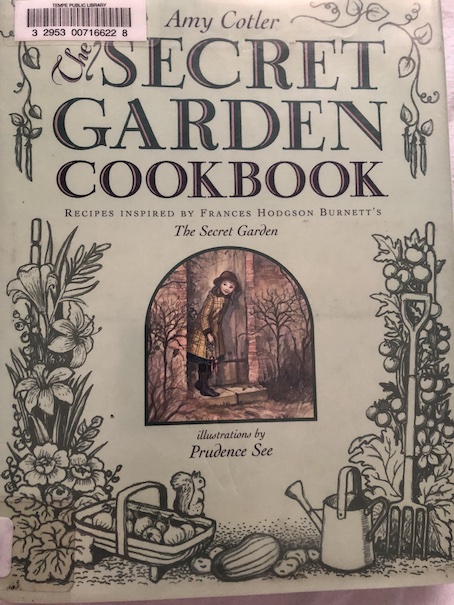
The Secret Garden Cookbook: Recipes Inspired by Frances Hodgson Burnett’s The Secret Garden by Amy Cotler, illustrations by Prudence See, 1999.
This book is a cookbook with recipes based on the types of foods eaten by characters in The Secret Garden by Frances Hodgson Burnett. Food is important in the story because Mary and Collin didn’t have any appetites when they were unhappy and unhealthy, but their appetites improve when they begin working in the garden and getting more fresh air and exercise. Most of the recipes are types of foods that are specifically named during the course of the story, but others are ones that the characters would have been likely to eat for the time and places where they lived. Because the original story focused on gardening, there is also an emphasis on using foods that would be grown in kitchen gardens
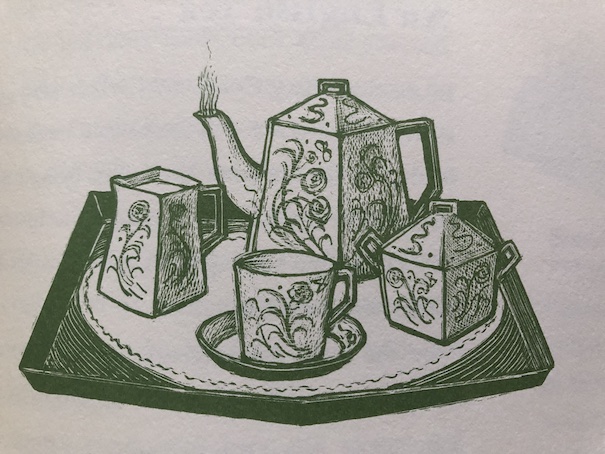
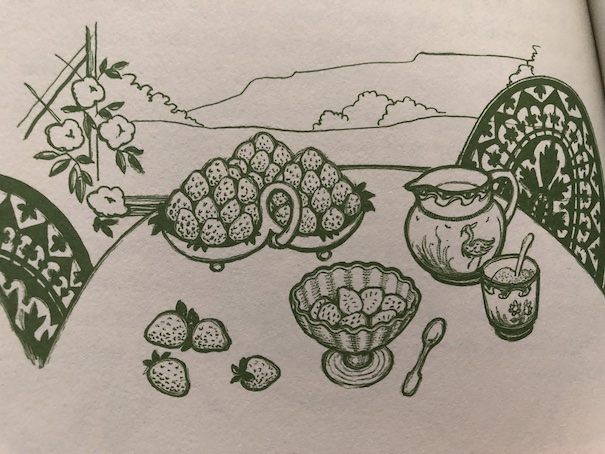
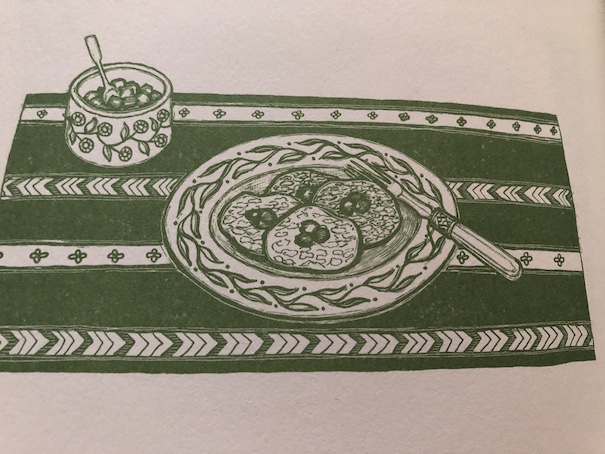
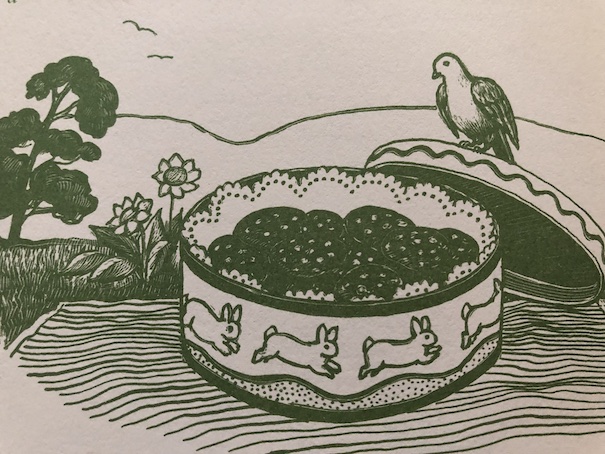
Most of the illustrations in the book are simple green and white drawings of different types of foods that accompany the recipes.
The recipes in the book are sorted into different categories, and each section has historical information about different meals and types of food. Individual recipes also have historical information, trivia, and quotes from The Secret Garden related to the dishes. Some traditional English foods need to be explained to Americans. For example, the word “pudding” refers to a specific type of dairy dessert in the US, but in England, it’s a more general word that can refer to any type of dessert.
I liked the selection of recipes, and I really liked the historical information provided with them!
The sections of the cookbook are:
Yorkshire Breakfasts
These are breakfast foods that the characters in the story ate or might have eaten during the Victorian era.
- Porridge
- Coddled eggs – Eggs cooked in a cup
- Cheese muffins
- Little sausage cakes
- Cocoa

A Manor Lunch
This section explain the types of things that people of different classes ate as their mid-day meal in the Victorian era.
- Yorkshire pudding – These are popovers with meat drippings.
- Roasted fowl with bread sauce
- Potato snow
- Welsh rabbit – This is melted cheese on toast.
- Cabinet pudding – This is a molded custard dessert with fruit.
- Jam roly poly

An English Tea
This section explains things that Victorian people ate at afternoon tea.
- A proper pot of tea
- Cucumber tea sandwiches
- Scones
- Fruit tea loaf
- Lemon curd tartlettes
- Brandy snap baskets with whipped cream
The Kitchen Garden
This section is about things people would make from fruits and vegetables that they would grow in their kitchen gardens.
- Fresh spring peas with mint
- Glazed carrots
- Summer pudding – This is a molded dessert made with bread and different kinds of berries.
- Two fools – “Fools” are old-fashioned fruit-based desserts.
- Raspberry jam
- Raspberry vinegar
- Molded spiced pears
- Strawberries and cream
Dickon’s Cottage Food
Poor people, like Dickon’s family, would have eaten different things from the wealthier people in Victorian society.
- Tattie broth – A potato soup.
- Pease pudding
- Yorkshire oatcakes
- Cottage loaf – This is a basic bread recipe.
- Dough-cakes with brown sugar – A basic dessert made with bread dough.
- Parkin – A kind of oatmeal gingerbread.

A Taste of India
These are the types of foods that Mary might have eaten during the time she lived in India.
- Fruit lassi – This is a kind of fruit shake made with yogurt.
- Sooji – A hot breakfast cereal similar to cream of wheat.
- Little bacon and coriander pancakes
- Fresh mango chutney
- Mulligatawny soup – This soup was invented in India for the British colonists. It’s curry coconut soup whose name means “pepper water.”
- Florence Nightingale’s kedgeree – Florence Nightingale has nothing to do with the dish, but the Victorians named it after her because she was famous. It’s a rice and fish dish that was often made from leftovers and served for breakfast or lunch.
Garden Picnics
These are foods that can be prepared outside or are easy to pack for a picnic.
- Roasted potatoes and eggs
- Currant buns
- Crumpets
- Cornish pasties – These are savory pies or turnovers with meat and veggies, meant to be eaten with the hands. They’re sort of like larger, better-tasting Hot Pockets.
- Chocolate picnic biscuits
The book is available to borrow and read for free online through Internet Archive.
 The Lottery Rose by Irene Hunt, 1976.
 Jestress's Forgotten Books and Stories