Boxcar Children
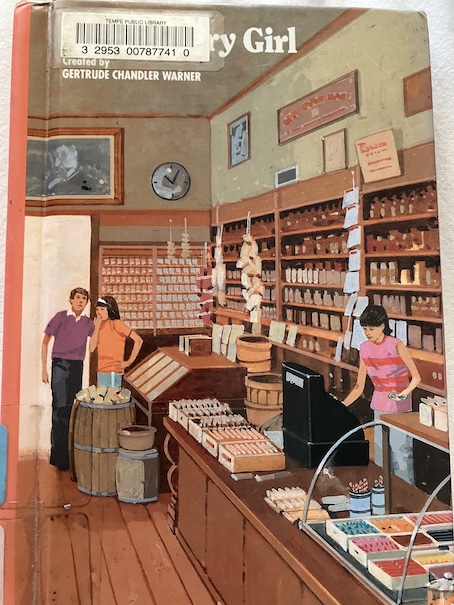
#28 The Mystery Girl by Gertrude Chandler Warner, 1992.
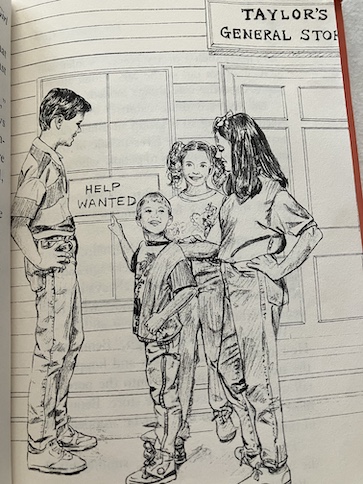
The Alden children are visiting their Aunt Jane, and Aunt Jane takes them to her local general store. The general store, like all old-fashioned general stores, carries a wide variety of goods, and the kids like the shop. However, the owner has been having some trouble. He’s lost his usual employees, and he has some new competition from a modern shopping center that’s been built. The store is still great as a local store for people who live nearby, but customer service is suffering without the usual employees. At the moment, the store owner only has one employee, a 19-year-old girl named Nancy.
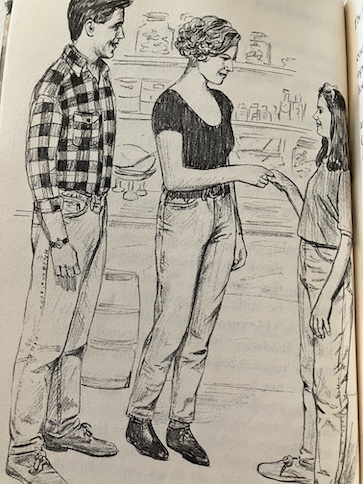
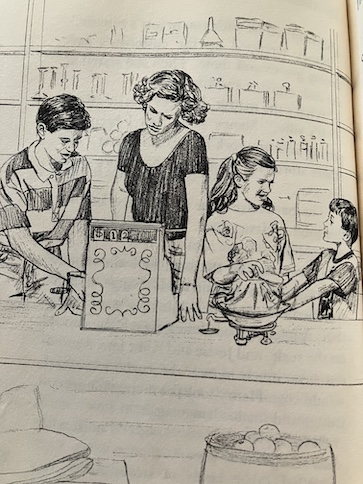
Nancy is pleasant and eager to work, but the Aldens can tell that she’s not very experienced. When Nancy is overwhelmed, trying to deal with multiple customers at once, Henry steps in and helps her because he used to work in a hardware store. He knows how to help a customer pick out hardware, and he can operate the store’s old-fashioned cash register. Both Nancy and the store owner are grateful for the extra help, and the Aldens offer to help out more until the store owner can hire someone else as a permanent employee. Aunt Jane approves of the kids working at the store, and because her house is some distance from the store, the store owner agrees to let the Aldens stay in one of the nearby cabins he owns, like Nancy.
The Aldens enjoy their time working in the old-fashioned store, and they like Nancy, but they soon begin to worry about her. Nancy claims that she’s worked in stores before, but they can tell that she really doesn’t know much about how to work in a store. She’s oddly evasive about her past and her family, and sometimes, she seems to forget what she told them about her past and family before when they try to ask her for more details. Then, they catch Nancy putting some money in the register when there are no customers in the shop and taking some things from the store for herself. Is Nancy stealing?
A woman shows up and tries to ask the Aldens a few questions about Nancy, but they don’t know much to tell her and don’t know why she’s asking. Then, a young man shows up and wants to speak to Nancy. They later hear Nancy arguing with this young man, and the young man says that they will continue look for Nancy and will find her, wherever she goes. Is Nancy in some kind of trouble?
My Reaction and Spoilers
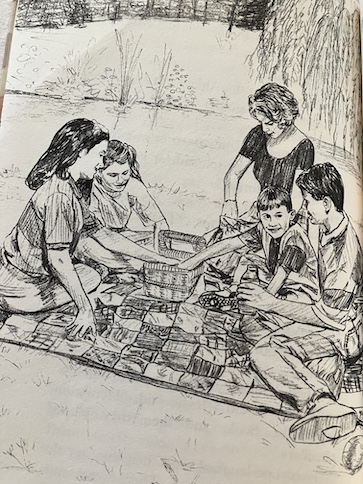
I enjoyed the mystery. It doesn’t feel very high stakes, and I thought the answer was pretty obvious, but child readers might find it more mysterious. Unlike some other early Boxcar Children, this book is definitely a mystery with clues that readers can consider along with the Aldens to figure out what’s been going on and the identities of some of the people involved.
I figured out from the first that Nancy is a runaway, and that’s why people are looking for her and why she’s evasive about her past. Technically, at her age, nobody can compel her to return home, but I figured that her family was pressuring her to come back. I was a little concerned that there might be a darker reason for her to run away, like an abusive relationship or her having been involved with a crime, but there isn’t. She’s just a young woman who had a falling out with her family. She isn’t accustomed to working yet or being on her own, which is why she struggles at the store. This is her first job outside of school, and she lied about having previous experience to get it. She’s also been lying and dodging questions about her past so nobody will connect her with her family.

The Aldens realize, when they see the inside of Nancy’s cabin, that she doesn’t have many belongings. Nancy later admits that she took some things from the store because she needed a few essentials, but she also says that she put money in the cash register to pay for it. She just did it secretly because she didn’t want anybody to question her about why she needed some basic things that most people would expect her to have already. Although Nancy claimed that she was from a poor family and has been on her own for a while, the Aldens know that isn’t true because of her inexperience and because she wears a ring that looks pretty expensive. A person with a ring like that probably came from a family with money, and Nancy couldn’t have been too desperate for money, at least not for too long, or she would probably have sold the ring. Another clue for the Aldens is a photograph that Nancy has in her cabin, which helps to explain who the young man is.
Nancy eventually explains why she ran away from home, and she manages to work things out with her family. The story ends on a good note, with things improving for the general store, too. Nancy agrees to stay working at the store until the owner can get more permanent help, and she’s grateful that she now knows how to do her job better, thanks to the Aldens. One of the owner’s former employees also returns, and the general store proves to have a loyal customer base.
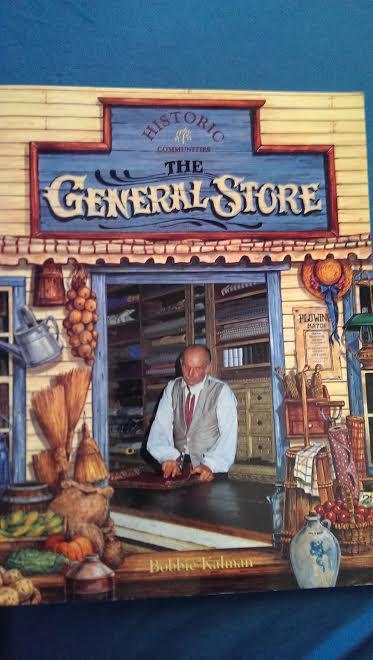 The General Store by Bobbie Kalman, 1997.
 Store owners also had to decide how much they should charge for each item or how much they would be willing to take in trade. Farmers often bartered for goods with the produce from their farms, and it was common for store owners to use a form of credit to keep track of what their customers owed and what they owed to their customers. Farmers would typically sell their goods at harvest time, and the store owners would give them a certain amount of credit at their store, based on what they thought the farmers’ produce was worth. Then, the farmers could use the credit on their account at the store until the next harvest and selling time. If a farmer ran out of credit before the next harvest, the store owner would usually extend credit at the store to the farmer to allow him and his family to buy some necessities, knowing that the farmer could make up for it when he came to sell his next batch of produce.
 Another odd kind of code that the book mentions was the kind that people would use on mailed letters. Instead of the sender paying the postage, as they do now, people receiving letters were supposed to pay for them when they picked them up from the general store. If a receiver returned a letter unopened, they wouldn’t need to pay anything, so some people would try to cheat the system by writing a message in code on the outside of the envelope so the receiver would know the most important part of what the writer wanted to tell them for free.

