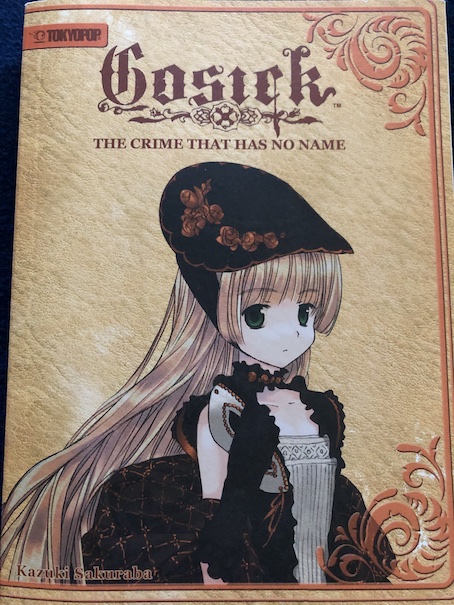
The Crime That Has No Name

This is the second book in the Gosick series. Only two of these Japanese light novels were printed in English, but there is also an anime based on the series that has been dubbed in English.

It’s 1924, and mysterious things happen around the fictional European country of Sauville. The students at the elite boarding school called St. Marguerite Academy are obsessed with ghost stories and spooky legends, as are many of the people of Sauville. Kazuya Kujou, a Japanese student attending the school, is among the few who doesn’t enjoy these stories, but he can’t help but become involved. One of his closest friends is the mysterious and enigmatic Victorique, who is the subject of some spooky legends herself. Victorique is both a student and prisoner at the school. She is a child genius, and rather than attend classes with the other students, she prefers to spend all of her time reading and studying by herself in the conservatory at the top of the library. Kazuya is one of the few people who ever sees or speaks to Victorique because he brings her assignments from class.

The reasons why Victorique is allowed to skip class, have special library privileges, and housing away from the other students but is still a prisoner, forbidden to leave the school, are partially, but not completely, explained in this book. Victorique is not a normal girl or a normal student, and there are some dark secrets in her past that even she doesn’t fully understand.

When the story begins, Kazuya has just received his allowance from home, and another friend at school, Avril, convinces him to come shopping with her. Avril is one of the students who really loves ghost stories, and she insists on telling them to Kazuya, even though he doesn’t want to hear them. Avril knows about Victorique, and she tells Kazuya that the rumor is that Victorique isn’t really a human but a legendary creature call a “gray wolf.” Kazuya doesn’t think Victorique is anything other than an extremely smart but also extremely temperamental girl.

While they are shopping, Avril is a little offended that Kazuya has her help pick out a present for Victorique. Kazuya wants to give Victorique something because she’s normally not allowed to leave the school. Avril and Kazuya study some items being offered for sale by a nun, and Avril suggests that Kazuya give Victorique a fancy turban. As they look over the other items, a music box that is apparently some kind of magic trick bursts open and releases a pigeon. Then, the nun cries out that the most expensive item for sale, a fancy plate with historical value, has been stolen! Kazuya thinks that Victorique will enjoy hearing about the theft even more that getting a present.

When Kazuya tells Victorique about the theft, she says that it’s not that interesting because it’s a very simple matter. Before she can explain why it’s simple, her half-brother, Inspector Grevil de Blois, comes to the library to once again indirectly consult with his sister about the case. When he walks in and sees Victorique sitting there, wearing the fancy turban that Kazuya bought for her, he panicks, mistaking her for someone called Cordelia Gallo. Kazuya has no idea who he’s talking about, but neither of them seems to want to explain. Once Grevil realizes that he was mistaken, he pretends like nothing happened and starts talking about the case. Victorique simply explains that the thief was the nun, and that she was the one who set up the distraction with the music box and the pigeon.

The next day, Kazuya looks at the newspaper, and he sees that Grevil was unable to catch the nun before she got away. Then, something else in the newspaper catches his attention, a notice that says, “Descendants of the Gray Wolves. Midsummer Feast is near. We welcome you all with open arms.” The people of Sauville, and the school in particular, are obsessed with legends and ghost stories. The story of the Gray Wolves is a popular legend about a mythical race of people who are smarter than normal humans. The basis of the legend is that people who were unnaturally smart were said to be human-wolf hybrids. Kazuya remembers that people at the school call Victorique a “reincarnation of a Gray Wolf”, like they’ve been calling him “the Reaper” based on their stories and legends. He decides to show the notice to Victorique.

When Kazuya shows the notice to Victorique, she is shocked. After she accidentally trips and falls and throws a childish fit about it, she shows Kazuya a centuries-old account of a village of gray wolves who spoke human language. Kazuya doesn’t know what to think about the stories. To be honest, he’s never been very interested in the legends and ghost stories of Sauville, even though everyone else is obsessed with them. Instead, he finds himself wondering if Victorique is unnaturally sensitive to pain because it seemed like she really overreacted from her trip and fall. As an experiment, he gives her forehead a slight flick. When he does that, Victorique reacts as if he had just slapped her and tells him that she’ll never speak to him again. He tries to apologize, but Victorique ignores him, so Kazuya just storms out of the library.

Later that night, while Kazuya is studying, he looks up and sees what looks like a large suitcase moving on its own outside the window. It turns out to be Victorique, trying to sneak out of the school with way too much luggage. She’s still not speaking to Kazuya, but Kazuya is concerned about her because even normal students aren’t allowed to leave the school grounds after hours, and Victorique isn’t supposed to leave the school at all. Kazuya doesn’t know exactly why Victorique is sneaking out of the school, but he knows that, while she is extremely intelligent, she has very little knowledge of or experience with the outside world. He worries that she won’t be able to cope on her own. Even though Victorique still isn’t speaking to him, he leaves the school with her and finds out that she’s taking a train to the village that is hosting the Midsummer Feast and inviting the descendants of the Gray Wolves.

Victorique and Kazuya find themselves on a train with the thieving nun from before. She’s heading to the same town they are because she says that she grew up there. She introduces herself as Mildred Arbogast. When they get to town, the innkeeper says that they had better get inside because there’s a storm coming and the Gray Wolves come out on nights like that. He says that the Gray Wolves live in a village in the mountains and that they’re werewolves. They look like normal humans, but they hunt people when they come out. When the innkeeper describes them as being short with golden hair, it suddenly occurs to him that Victorique looks just like them.
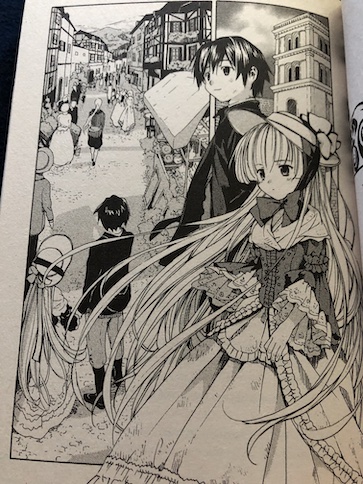
In spite of Victorique looking like a Gray Wolf, the innkeeper allows them to rent rooms for the night. He lets Kazuya know that, since that notice appeared in the newspaper, other people who have been curious about the Gray Wolves have been showing up, but he thinks that they’re asking for trouble because the Gray Wolves won’t tolerate anyone looking into their affairs. When Kazuya says that the nun is from this town, the innkeeper says that isn’t true. It’s a small town, so everyone knows everyone else, and the nun is a total stranger.

When Victorique finally starts talking to Kazuya again, she says that the reason why she wanted to come to this place was to clear her mother’s name. Her mother is Cordelia Gallo, which is why Grevil mistook her for Cordelia. Victorique shows Kazuya a pendant she has made from a gold coin. On the other side of the pendant is a picture of Cordelia Gallo, and she really does look like Victorique. For the first time, Victorique talks to Kazuya about her mother. Cordelia was a dancer, but at some point, she became involved with Victorique’s father, the Marquis de Blois. After she gave birth to Victorique, she mysteriously disappeared, and Victorique was raised in isolation in her father’s mansion. (This is why Victorique is so naive about the outside world and awkward and temperamental around other people. She’s extremely learned in terms of book knowledge but low on experience with the outside world and other people.) Victorique only remembers seeing her mother once, when she sneaked up to her window one night and gave her the pendant, but she knows that her mother still watches over her. Victorique also knows that her mother was originally from the village of the Gray Wolves. Apparently, Cordelia was once a maid there, but she was banished from the village for committing a terrible crime. Her father became involved with Cordelia because he wanted a child with the blood of the Gray Wolves, although he has always been a little afraid of Victorique, which is why he keeps her at a distance, either held prisoner in his mansion or at the school for her entire life. (The Marquis de Blois is a nefarious character with grandiose schemes of power, which are addressed further in other stories in the series and in the anime based on them, and he wanted a child like Victorique as part of those schemes.) Now that an invitation has been extended to the descendants of the Gray Wolves, Victorique is determined to see the village where her mother came from and, if possible, clear her name of the crime she supposedly committed.

The next day, Victorique and Kazuya travel to the village of the Gray Wolves along with the nun and three young men, who say that they’re college students. The village has a Medieval look to it, and the people there wear old-fashioned clothes. People there recognize Victorique as Cordelia’s daughter immediately. It makes them uneasy, but they say that they do not hold her responsible for what Cordelia did and say that she is welcome to stay for the Midsummer Festival, even though her mother is a murderer.

The leader of the Gray Wolves, Sergius, explains that the Gray Wolves aren’t really werewolves. They’re normal people, but they prefer to live in isolation from the outside world. People just assume things about the Gray Wolves because they have odd, old-fashioned lifestyles, don’t mix with other people much, and inhabit a village in a mountainside surrounded by real wolves. The Midsummer Festival is one of the few times that they allow other people in from the outside. The purpose of the festival is to welcome home the spirits of their ancestors and pray for a good harvest.

Sergius invites Victorique and Kazuya to stay with him for the festival. In his manor, a maid called Harminia says that Cordelia murdered the previous village chief, leaving gold coins scattered around his body. Cordelia was an orphan who worked as a maid for the village chief at the manor. She was blamed for the chief’s death because she was the only other person who had access to his study, where he was murdered. Victorique says that they only have until the end of the festival to investigate the murder her mother was accused of committing because the village won’t let them stay any longer. However, there are more crimes afoot in the village, and the original murderer is still there after all these years.

There is an English translation available to read for free online at Internet Archive.

This is not a series for young kids. It’s more for teens and young adults because parts get truly violent and disturbing. I find the series interesting for its references to other detective series, ghost stories, and legends, but I have to admit that the plots of the stories get a little over-the-top. As the series goes on, the stories get weirder.

This particular story fills it parts of Victorique’s back story, which even she doesn’t fully understand at first. As I said, the Marquis de Blois is a nefarious character with an over-the-top, long-term plan to seize power in Sauville, using his young daughter’s mysterious heritage and Sauville’s obsession with legends and stories. His plot is revealed later, but this book focuses on Victorique’s mother backstory. Years ago, Cordelia was framed for a murder she didn’t commit. If she hadn’t been, she would never have left the village, and Victorique wouldn’t have been born. Victorique eventually discovers who committed the original crime and clears her mother’s name, but nobody from the outside will be able to return to the village for a long time because the drawbridge to the village gets destroyed. At the end of the book, Victorique still doesn’t know where her mother currently is, but she learns a few things about her life.

The motive for the original murder concerns prophecies and fortune-telling, like the first story in this series, although in a different way. The Gray Wolves believe in prophecies, just like the rest of Sauville believes in legends. In a similar way, there is at least some truth to these prophecies just like there is always at least some basis for Sauville’s legends. The previous chief of the village was murdered because he gave his murderer a prophecy at a past Midsummer Festival that person couldn’t bear to hear. As Victorique explains it, “It’s just fortune-telling. You didn’t have to take it seriously. But you had strong faith in the laws of the village and the words of the village chief. You could not doubt the divination.” Because this person didn’t doubt what the village chief said, they believed that the only way to change their fate was to kill the person who made the prophecy. Ironically, it is that crime that makes the prophecy come true.

The story raises the questions of whether fate is unavoidable and whether prophecies are self-fulfilling. If the murderer had asked the previous chief a different question at the festival or just refused to believe what he said, would things have turned out differently for everyone? There’s no real answer to that, but the murderer’s belief that the prophecy had power is what set everything in motion. Victorique and Kazuya also receive prophecies about their futures that cause them some worry. Because I know how the rest of the series goes, I know that there is some truth in the prophecies for them, that they will be caught up in events larger than themselves that will separate them, but that’s not the entire story for them. There is a separation coming for them in this series, but it’s only a temporary one. As strange as this series is, it actually does have a happy ending for our heroes. Whether the two of them might be separated again once WWII starts is a matter of speculation because the series doesn’t extend that far. It’s possible, but they will have plenty of time together first, and as Victorique points out, you don’t really have to believe fortune-tellers.
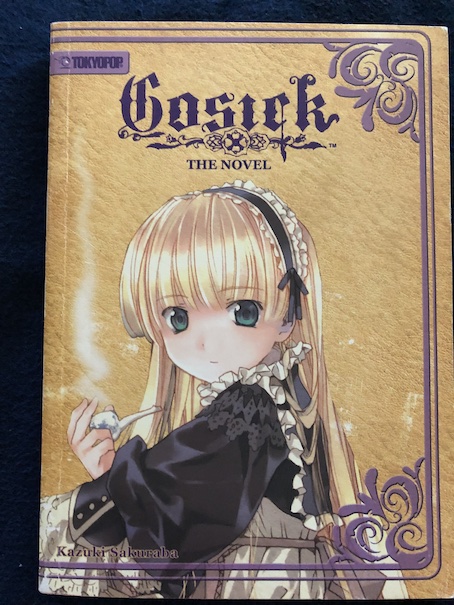
Gosick: the Novel

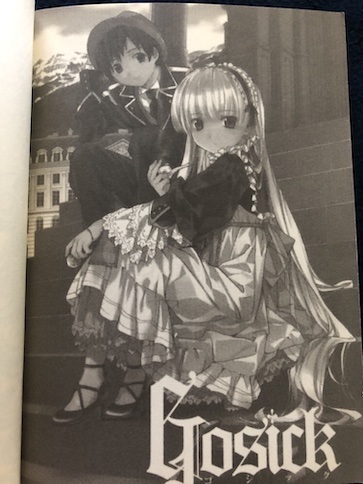
The year is 1924, and a boy from Japan named Kazuya Kujo is attending a prestigious boarding school called Saint Marguerite Academy, in the small European country of Sauville (fictional). The students at this school have an obsession with ghost stories. Kazuya is a very serious boy, and he doesn’t see the appeal of all of these gruesome stories, although his friend, Avril Bradley (an international student from Great Britain) loves them and insists on sharing scary stories with him. Part of the reason why Kazuya doesn’t like all the scary stories is that other students insist on calling him “the Reaper” based on a character from one of the more popular ghost stories. However, he’s not the only student at school who stands out, and some of the school’s ghost stories have more truth behind them than Kazuya would have dreamed.

There is one seat in Kazuya’s class which is always empty. That seat belongs to Victorique, and Kazuya is one of the few people at the school who has ever seen her. Victorique never comes to class, preferring to spend her time reading and studying by herself in the conservatory at the top of the library. One day, when their teacher gives Kazuya some papers to take to Victorique, Avril tries to ask Kazuya what Victorique is like. Kazuya doesn’t want to explain much about Victorique, just saying that she can be blunt and kind of mean, which is true. Victorique is brilliant, a child genius, and she looks like a little china doll, but she’s not easy to get along with. She’s temperamental and not used to dealing with other people in general. She smokes a pipe, like Sherlock Holmes, and makes deductions using her “fountain of knowledge”, even about places she hasn’t been and things she hasn’t witnessed, like Nero Wolfe.

Victorique is not allowed to leave the school grounds (for reasons which are explained as the series continues), and aside from Kazuya, there’s only one other person who visits her: her older half-brother, a local police detective. He never admits that he gets help from Victorique on his cases, and he typically prefers to act like he’s talking to Kazuya rather than speak to Victorique directly. Victorique, who is often bored, enjoys solving puzzles and mysteries, so she does give her brother help, although there is little affection between them.

One day, Victorique’s brother, Grevil de Blois, comes to consult with her, through Kazuya, about the murder of an elderly fortune teller. After hearing a description of the murder, Victorique correctly realizes that the fortune teller was killed by her maid. However, that isn’t the end of it. Kazuya thinks that it’s unfair that de Blois always takes the credit for Victorique’s solutions to mysteries. This time, when he finds out that the grateful family of the fortune teller has given de Blois a yacht as a present and that he’s planning to spend the weekend on it, Kazuya decides that he’s going to make de Blois share this present with Victorique. Victorique is normally forbidden to leave the school grounds, but with Kazuya threatening to reveal the true secret of his success, de Blois agrees to take Kazuya and Victorique with him on the weekend yachting trip. Neither of the two kids really likes de Blois, and the thought of spending an entire weekend with him, even aboard a luxury yacht isn’t great, but it is one of the rare opportunities Victorique has to leave the school.

Victorique has rarely been anywhere other than the mansion where she was born and the school, so everything is new and fascinating to her as they take a train to the seaside to meet de Blois at the yacht. When they get there, de Blois informs them that they’ve been having trouble understanding the maid who murdered the fortune teller because she only speaks Arabic, but apparently her motive was revenge for something she calls “the box.” Then, de Blois suddenly gets word that the maid has escaped. He has to leave the kids aboard the yacht, but he tells them to just stay there and wait for him.

Victorique realizes that the yacht once belonged to the fortune teller and that some of her belongings are still on it. Among them, they find a strange invitation to a dinner party called “Evening at the Bottom of the Box” on a luxury cruise ship anchored nearby. The invitation also mentions that the main dish will be rabbit. This is chilling because it is known that the fortune teller kept rabbits and periodically allowed her dog to hunt them. It was part of her fortune telling – she would predict things based on which rabbits survived the hunt and which did not. (There is a graphic description of this at the beginning of the book that I hated. Although I found the overall mystery intriguing, there are some very gross and violent things in it.) Since they are bored and want to learn what the mystery is about, Victorique and Kazuya decide to use the invitation and attend the dinner in the fortune teller’s place.

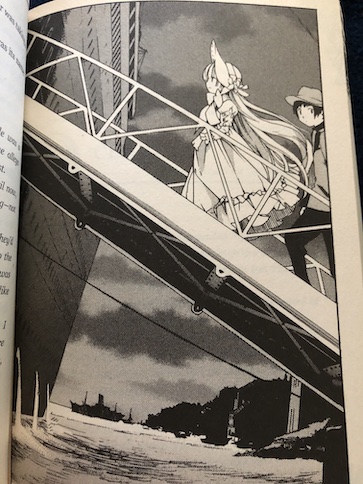
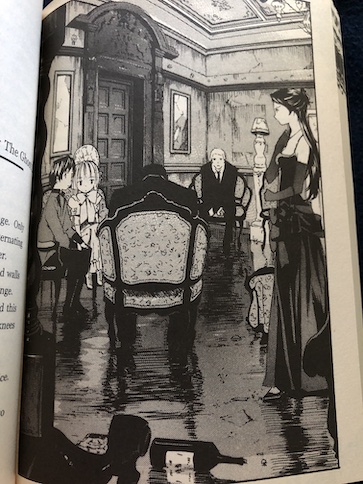
When Victorique and Kazuya join this mysterious dinner party on the luxury ship, Kazuya suddenly recognizes that the name the of ship is the same as the one of a ghost ship in one of the scary stories that Avril told him at school! The ghost stories that have been going around the school have more truth to them than Kazuya or even the students who are obsessed with them have guessed. Some dark things have happened in the history of Sauville which have become part of its local legends. Events that resemble the ones that happened years before and are described in the ghost story are starting to repeat themselves. There is at least one murderer among the dinner party guests, and someone is playing a deadly game. Now, Victorique and Kazuya will have to play along to find the answers and save their own lives!

This is the first book in the Gosick series of Japanese light novels and one of only two that were published in English. There is a full set in Japanese, of course, and I think the German language translation is also a complete set. There is an English translation of this first book available to read for free online at Internet Archive. Because not many copies were published in English, English copies are collectors’ items and can be expensive. As of this writing (September 2023), the cheapest copies on eBay are about $30, and they can go for much higher on Amazon. All of the stories in the series have been made into an anime, and that is available in the US on Amazon Prime. Because of the violence in the story, I would recommend this book and the anime for teens or young adults. It’s not for young kids!

This was the first book in this series that I read, one of only two published in English. The first time I read it, I was surprised at how many tropes of old ghost stories and detective stories that the series references. Victorique uses a pipe, which is an obvious reference to Sherlock Holmes and his famous pipe, but Victorique is also frequently a Nero Wolfe type of detective, relying on an assistant to go places that she can’t go and give her information. She spends most of her time amassing knowledge through reading, and she is able to use that knowledge to make order out of the “chaos” of a mystery.

The basis of this mystery is in fortune telling, and at the beginning of the story, Victorique is reading a book about fortune telling. She explains to Kazuya Kujo how fortune telling actually works. Basically, it’s all about psychology. People think that fortune telling works because they believe it will work, and they make things happen to cause the predicted future to happen. It’s like all prophecies are self-fulfilling prophecies – they may or may not have happened except that people believed that they would, so they made sure they did. People remember and record accurate predictions because those are the most exciting and amazing, and they forget all the inaccurate ones. Fortune tellers are also good at reading people and telling people what they want to hear, which is what they already think will happen or what they’re hoping and working to make happen.

Fortune telling is at the heart of the mystery. Mysteries in this series tend to have over-the-top plots, and this one is no exception. The grudge against the fortune teller and the other guests invited to the dinner goes back to when the fortune teller staged a very large experiment in fate at the request of some very wealthy and influential clients. This past fortune telling experiment was along the lines of the ones that she did with rabbits, only it was with human children. As I said, there are violent and gruesome aspects of this story, and in this case, they were playing with human lives.

As with other books and stories in this series, the ghost stories that the kids pass around at school turn out to have at least some basis in fact. Sauville (remember, it’s a fictional country) and some of its leading citizens have violent histories. There is a long history of conspiracies, power struggles, and general skullduggery in this place. Because of the citizens’ long obsession with stories and legends, much of what has happened there has become legendary, and important people have used the citizens’ superstitions and stories to obscure the truth. Solving the crime means exposing what really happened and the truth behind the legends.

What I found most interesting about this story was its references to some classic characters in detective fiction and ghost stories, and I appreciated Victorique’s thoughts on the nature of fortune telling and human expectations. In the end, it may be more important what people believe and work to make true than what was actually predicted. However, I have to admit that the over-the-top plots of these mysteries are probably a large part of why this series wasn’t printed beyond the second book in the United States. In the beginning of the book, there is also a reference to Kazuya being suspected of a crime. This incident was in the Gosick manga, not the light novels. It is shown in the anime, but I don’t think the manga was printed in English.

More Scary Stories to Tell in the Dark

More Scary Stories to Tell in the Dark collected from folklore and retold by Alvin Schwartz, drawings by Stephen Gammell, 1984.

This is the second book in a series of popular ghost stories and American urban legends. Many of us who were children in the 1980s and 1990s heard these stories on school playgrounds, at summer camps, or at sleepovers, even if we didn’t read them in this book first. I found the stories in the first book in the series to be more familiar to me from my childhood than the ones in the second book, but there are still many popular and familiar ghost stories here. There is a section at the beginning of the book where the author/compiler discusses why stories like these have been popular for generations. In the back of the book, there is another section with more detailed information about the origins of the stories and their variants.

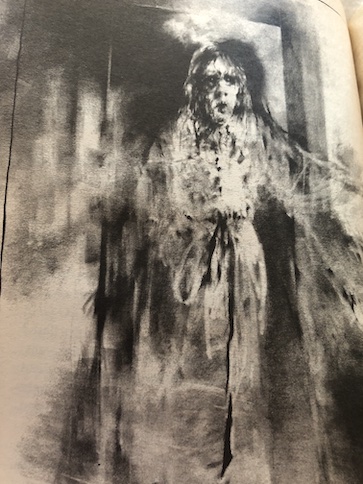
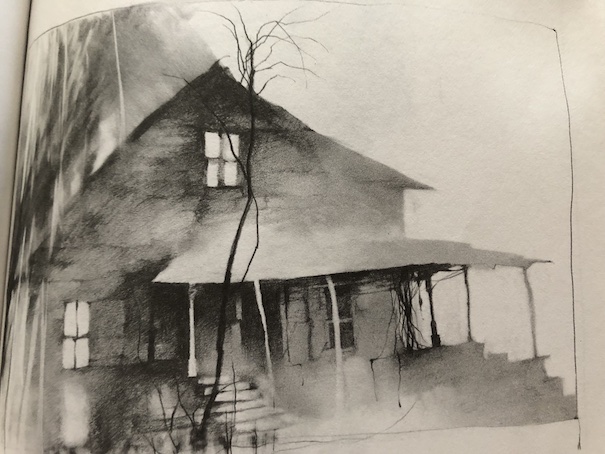
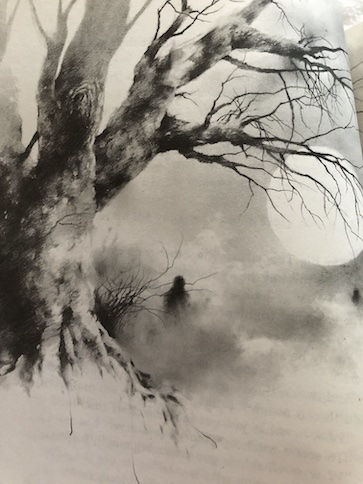
The drawings in the book also complement the stories well. They’re all in black-and-white and have an ethereal look, as those they were composed of spirits or smoke.

The book is available to borrow and read for free online through Internet Archive (multiple copies).

Stories Included in the Book:

The stories are divided into sections by theme or by the effect that the stories are supposed to have.

When She Saw Him, She Screamed and Ran

This section has stories about ghosts.

Something Was Wrong – A man is walking down the street, but for some reason, everybody is afraid of him. What’s wrong?

The Wreck – A guy meets a girl at a dance … only to learn that she was killed before she got there.

One Sunday Morning – A woman goes to church on Sunday but discovers that this isn’t a normal church service.

Sounds – Some fishermen take shelter in an empty house during a storm and hear the sounds of a past murder.

A Weird Blue Light – The crew of a ship during the Civil War witness something very strange, possibly the ghost of a pirate ship.

Somebody Fell From Aloft – The ghost of a murdered sailor gets his revenge.

The Little Black Dog – A murderer is followed by the ghost of a dog.

Clinkity-Clink – A grave digger steals the silver dollars laid on the eyes of a corpse, but the dead woman wants them back. (This story is supposed to end with a jump scare, like ghost stories told aloud around a camp fire.)

She Was Spittin’ and Yowlin’ Just Like a Cat

This is a selection of strange stories about different topics.

The Bride – The famous story about a bride who plays hide-and-seek and accidentally gets locked in a trunk.

Rings on Her Fingers – A thief tries to steal the rings from a dead woman, only she may not be quite as dead as everyone thinks.

The Drum – Two young girls meet a gypsy girl with a special drum that controls dancing figures. The girls want the drum, but the gypsy girl says that she’ll only give it to them if they do bad things.

The Window – One dark night, Margaret sees something with glowing eyes outside her window. What is it?

Wonderful Sausage – A butcher murders his wife and turns her into sausage.

The Cat’s Paw – A woman turns herself into a cat.

The Voice – A girl hears a voice in her room at night, but nobody is there.

When I Wake Up, Everything Will Be All Right

This section has stories about dangerous and scary places.

“Oh, Susannah!” – A university student thinks her roommate is humming at night, but her roommate is already dead.

The Man in the Middle – A girl sees three men on the subway late at night, but something’s wrong with the one in the middle.

The Cat in a Shopping Bag – A woman accidentally runs over a cat, and she puts the body in a bag to dispose of, causing a thief to get a terrible shock.

The Bed by the Window – A room at a nursing home has only one bed by the window. When one man kills another to get the view, he gets a shock.

The Dead Man’s Hand – A group of nursing students resent a fellow student who seems too perfect and decide to play a prank on her.

A Ghost in the Mirror – This story explains the spooky sleepover game Bloody Mary. Kids (typically girls) go into a dark or diml-lit room and look in a mirror to see a scary face appear. (This is actually a psychological trick, sometimes referred to as the “strange-face illusion“. Humans instinctively look for faces and facial emotions, and when someone can’t see their own face in the mirror very well because the room is too dim, their mind will try to reconstruct the missing details and interpret them, creating some strange illusions, like it’s someone else’s face when it’s just their own. The book doesn’t explain that, but that’s basically what “Bloody Mary” really is.) In the game, the identity of “Bloody Mary” and what she’ll supposedly do if you see her varies. This story explains different versions of the ghost story associated with the game.

The Curse – A fraternity initiation results in the deaths of two pledges and a curse on the remaining members.

The Last Laugh

This section has spooky stories with a humorous twist.

The Church – A man takes shelter in an abandoned church during a storm and thinks that he sees ghosts inside, but they aren’t what they appear to be.

The Bad News – Two old friends who love baseball and wonder if there’s baseball in heaven. There’s good news, and bad news.

Cemetery Soup – A woman makes soup with a bone she finds in the cemetery.

The Brown Suit – A woman thinks that her dead husband would look better in a brown suit for his funeral, and the funeral parlor comes up with a bizarre solution.

BA-ROOOM! – A spooky song.

Thumpity-Thump – People move into a spooky house and hear a mysterious thumping noise.

Scary Stories to Tell in the Dark

Scary Stories to Tell in the Dark collected from folklore and retold by Alvin Schwartz, drawings by Stephen Gammell, 1981.

This collection of creepy stories was a popular staple of my childhood! The stories included in the book are not original stories but popular ghost stories and American urban legends that were spread around by word of mouth before being collected and written down. Many of us who were children in the 1980s and 1990s heard these stories on school playgrounds, at summer camps, or at sleepovers, even if we didn’t read them in this book first. The very popularity of these stories was part of the popularity of this particular book and others in its series. The stories were frightening yet familiar, and reading them as an adult brings a sense of creepy nostalgia and Halloweens past. There is a section at the beginning of the book where the author/compiler discusses why stories like these have been popular for generations. In the back of the book, there is another section with more detailed information about the origins of the stories and their variants. The back of the book recommends these stories for ages 9 and up.

The drawings in the book also complement the stories well. They’re all in black-and-white and have an ethereal look, as those they were composed of spirits or smoke.

The book is available to borrow and read for free online through Internet Archive (multiple copies). There is also an audiobook copy.

Stories Included in the Book:

The stories are divided into sections by theme or by the effect that the stories are supposed to have.

Aaaaaaaaaaah!

This section has stories that are meant to make listeners jump at the end, like the kind people like to tell around camp fires, and there are tips for how to deliver the jump scares at the end.

The Big Toe – A boy finds a toe that seems to be growing in his garden, and his family decides to eat it (God only knows why), but that’s just the tip of something bigger …

The Walk – Two men walking down a road are each frightened by each other.

“What Do You Come For?” – A ghostly man comes down the chimney, part by part … and he comes for YOU!

Me Tie Dough-ty Walker! – A boy and his dog wait for a ghostly head that falls down a chimney.

A Man Who Lived in Leeds – A spooky rhyme.

Old Woman All Skin and Bone – A popular spooky song.

He Heard Footsteps Coming Up the Cellar Stairs

These are all stories about ghosts.

The Thing – Two friends see a frightening thing crawl out of a field, and it turns out to be prophetic.

Cold as Clay – A farmer separates his daughter from the man she loves, but when the man dies, his ghost makes sure that she gets safely home.

The White Wolf – When wolves are killing farmers’ livestock, a man becomes wealthy by hunting them. Then, a ghostly wolf takes its revenge.

The Haunted House – A preacher rids a haunted house of its ghost and brings her murderer to justice.

The Guests – A pair of travelers are looking for a room for the night. An elderly couple offers to let them stay in their house, but the travlers get a shock the next morning.

They Eat Your Eyes, They Eat Your Nose

These are an assortment of stories, and some are kind of gross-out stories. I never liked the gross-out scary stories when I was a kid, but I know some kids were really into them.

The Hearse Song – An old, traditional scary song that has several variations. “Don’t you ever laugh as the hearse goes by, For you may be the next to die.”

The Girl Who Stood on a Grave – Some kids at a party say that the graveyard down the street is scary, and one of them claims that if you stand on a grave, the person inside will reach up to grab you. A girl at the party doesn’t believe it and accepts a bet to go stand on a grave with frightening results.

A New Horse – A farmhand tells his friend that a witch turns him into a horse and rides him at night, and his friend finds a way to put a stop to it.

Alligators – A woman claims that her husband turns into an alligator at night and is turning their two sons into alligators as well. People don’t believe her, but there’s more truth to her story than they know.

Room for One More – A man has a prophetic dream that saves his life.

The Wendigo – A man on a hunting trip hears the wind calling to his companion. What does it mean?

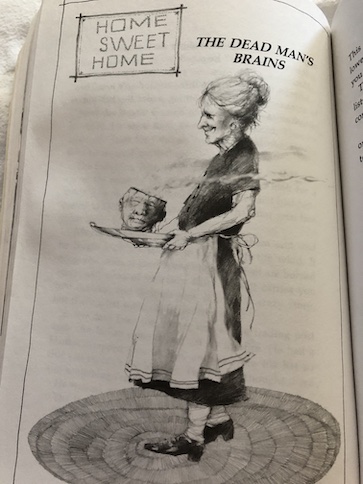
The Dead Man’s Brains – This story is actually played as a game, and it’s especially popular on Halloween. Many of us have played some version of the game, where someone describes the body of a dead person, giving people weird and creepy things to feel that are supposed to be body parts. In reality, the “body parts” are common things, usually food, like peeled grapes to represent eyes, etc.

“May I Carry Your Basket?” – A man walking home late at night helps a strange woman to carry her basket, but what’s inside the basket is truly terrifying!

Other Dangers

These are more modern horror stories and urban legends than the earlier ones in the book, and they focus less on old ghosts and more on the dangers of modern society.

The Hook – This is a popular story at camps and sleepovers! A young couple is listening the radio in their car when they hear about an escaped murderer. The girl gets frightened and wants to go home, and it’s only when they get there that they realize how close they came to being his next victims.

The White Satin Evening Gown – A girl wants to go to a dance but doesn’t have much money for a dress to wear. When she finds a dress that she can rent cheaply, it turns out that there is something very wrong with it.

High Beams – A girl realizes that she’s being followed as she drives home alone at night, but her pursuer isn’t the one she should be afraid of.

The Babysitter – A young babysitter keeps getting strange calls … and they’re coming from inside the house.

Aaaaaaaaaaah!

Even though this section has the same name as the first section, the stories in the final section of the book have humorous twists.

The Viper – One of my old favorites! The characters in The Haunting of Grade Three tell this story to each other. A woman keeps getting calls from a man calling himself “the viper.” Who is he, and what does he want?

The Attic – Rupert is looking for his dog when something happens to him on the way to check the attic that makes him scream.

The Slithery-Dee – A short rhyme.

Aaron Kelly’s Bones – Aaron Kelly is dead, but he doesn’t feel dead enough to stay in his coffin and won’t go back there until he does.

Wait Till Martin Comes – What will the cats do when Martin finally comes?

The Ghost with the Bloody Fingers – When dealing with a ghost, sometimes the practical approach is best.

Ruth Fielding at Briarwood Hall

Ruth Fielding

Ruth Fielding at Briarwood Hall by Alice B. Emerson, 1913.

Since Ruth and her friends have helped her Uncle Jabez to recover his stolen cash box in the previous book, Uncle Jabez has decided to send Ruth to Briarwood Hall, the boarding school that her best friend, Helen Cameron will attend, so the two of them can stay together. Briarwood Hall is an exclusive school, where the primary entrance requirements are academic records and teacher recommendations. Ruth has already graduated from the local school in her uncle’s town although she is a little younger than Helen, and she is ready for the high school level. Helen’s twin brother, Tom, will be attending a military academy close to the girls’ boarding school.

The three of them travel alone to their schools, without adult chaperones. They amuse themselves by seeing if there are other students bound for their schools traveling on the same train and steamboat they take to their boarding schools, but they can’t find any. However, they do see an interesting older lady with a veiled hat who attracts their attention because she looks doll-like and speaks French. For some reason, this lady seems greatly upset by a strange man with a harp who is part of a musical group entertaining passengers on the steamboat.

The mysterious French woman turns out to be the girls’ new French teacher at Briarwood Hall. She seems very nice to the girls when they are introduced to her as they’re riding in a coach to the school after they get off the boat. Mary Cox, a fellow student who is older than Ruth and Helen, rides to the school with the girls and the French teacher. On the way to the school, Ruth notices that Mary seems to oddly ignore the French teacher, speaking only to her and Helen.

Mary is a Junior at the school, and tells the girls about the school clubs. The two main clubs at Briarwood are the “Upedes” and the “Fussy Curls.” I was glad that Ruth and Helen thought that these sounded by strange names for clubs, too. Mary explains that they’re just nicknames for the official club names. The Upedes are members of the Up and Doing Club, a group of girls who like lively activities. There are other groups at school, like the basketball players, but the Upedes and Fussy Curls have a particular rivalry for members. Mary is a member of the Upedes, although, in spite of the groups’ rivalry for gaining new members, Mary strangely doesn’t invite Ruth and Helen to join her group and doesn’t seem to want to explain what the rival group does.

When the girls leave the coach, Mary says that she doesn’t like the French teacher because she’s a poor foreigner, and Mary doesn’t know why she’s at the school. (Mary sounds like she’s rather a snob.) Mary says that she thinks it’s strange that the French teacher never wears any nice clothes and doesn’t seem to have any personal friends or relations. (Yeah, definitely a snob toward someone who just seems a bit unfortunate, like it’s some kind of moral failing, not having nice clothes or personal connections to show off.) Helen says that the French teacher does have personal acquaintances because she seemed to know the harp player on the boat, something that seems to interest Mary. Ruth has the uneasy feeling that they shouldn’t have mentioned it, not knowing exactly what the teacher’s connection to the harp player is. Helen likes Mary, but Ruth has reservations about her friendship.

Mary Cox shows the girls where their dorm room is. Helen and Ruth are sharing a room by themselves. Another girl, a senior named Madge Steel, comes by to talk to the girls and invites them to a meeting of the Forward Club (known as the “Fussy Curls” because of its initials) that evening. Ruth wants to go to that meeting because Madge seems very nice, and the Forward Club includes members of the school faculty. However, Helen says that she’d rather attend the meeting of the Upedes that evening that Mary told her about. Helen thinks that they owe Mary their loyalty because she was the first to meet them and was helpful in finding their room. Besides, the Upedes have no teachers in their club, and Helen thinks that it sounds more exciting and free from supervision than the Forward Club. Ruth thinks that she would prefer to get closer to her new teachers and some well-behaved girls instead, and it’s the first major disagreement that the friends have. Mary talks Ruth into going to the meeting of the Upedes that evening because that was the invitation that they received first, but Ruth says that she won’t join any club officially until she’s had a chance to see the other girls involved and learn what the clubs are really like. Ruth’s stance seems to be the wise one as the school’s headmistress tells the girls that joining clubs on campus are fun but that they should beware of getting involved too much with girls who don’t take their studies seriously and waste their time, and they learn that Mary Cox’s nickname at school is “the Fox”, suggesting that she’s as sly as Ruth has sensed. Although Mary didn’t mention it to the girls before, she’s actually the leader of the Upedes.

That evening, the girls are introduced to other students, and at the meeting of the Upedes, the school’s very own ghost story. Briarwood wasn’t always a school. It used to be a private mansion, and a wealthy man lived there with his beautiful daughter. The wealthy man was the one who commissioned the creation of the fountain with the marble statue that still stands on the school’s grounds. Although people on campus say that nobody really knows what the statue of the woman playing a harp in the fountain is supposed to represent, the ghost story claims that the figure was modeled after the beautiful daughter of the mansion’s former owner. However, according to the story, the girl fell in love with the man who sculpted the statue of her, and the two of them eloped, leaving her father alone and sad. Rumor had it, though, that the girl and her new husband must have died somewhere after they ran away because people started hearing mysterious harp music at night on the grounds of the mansion. Eventually, Briarwood was sold, and the school’s founders, the Tellinghams, bought it, and sometimes, people still hear harp music on the school grounds. Every time something strange or momentous happens at the school, people hear the twang of the harp.

That night, Ruth and Helen become the targets of a frightening hazing stunt by the Upedes that seems to bring the ghost story to life, but when something happens that frightens even the hazers, it brings into question how much of the ghost story is really true.

The book is now public domain and available to read for free online in several formats through Project Gutenberg. There is also an audio book version on Internet Archive.

Spoilers and My Reaction:

I liked this story much better than the first book in the series because it is more directly a mystery story than the first book, and Ruth makes a deliberate effort to untangle some of the puzzling things happening at her new school.

It’s pretty obvious that there is a connection between the ghost story of the girl with the harp and the French teacher’s apparent discomfort at the suspicious harpist. Ruth finds out pretty quickly that the harpist from the boat is lurking around the school. That revelation explains the frightening happenings at the hazing incident, although it still leaves the question of the connection between the harpist and the French teacher. At first, I thought that it was going to turn out that there is some truth to the ghost story the Upedes told, but that actually has nothing to do with the real situation. In some ways, I felt like the real situation was a little to straight-forward and resolved a bit too quickly at the end, considering the build-up they’d had about it. It is interesting that, of the students at the school, only Ruth comes to learn the full truth of the French teacher’s secret. Even Helen doesn’t know what Ruth eventually discovers, partly to save the French teacher’s reputation and partly because Ruth and Helen’s friendship is suffering for part of the book.

Unlike newer series produced by the Stratemeyer Syndicate, characters in the older Stratemeyer series, including the Ruth Fielding series, grow, age, and develop their lives and personalities. In this book, when the girls go away to boarding school, the differences in Helen and Ruth’s backgrounds and personalities become more obvious. It leads them to clash in some ways, and they both worry about endangering their friendship with each other, but by the end of the book, each of the girls develop a greater sense of who they are and what they really stand for.

Helen is more familiar and comfortable than Ruth is with the traditional rituals of boarding school, even taking some glee in the mean hazing ritual of the Upedes, and she badly wants to fit in with the cooler older girls at school, willing to put up with their mean bossing to take part in their schemes for the fun and excitement. However, Ruth, is naturally more serious and shy and less accustomed to having things her way or telling others what to do anywhere she’s lived than the wealthy Helen. Ruth overcomes some of her shyness and learns to be more assertive as she stands up for herself and the other new girls at school, called “Infants” by the older girls. Ruth decides to refuse to join either the Forward Club, which has a reputation of being made up of girls who toady up to the school faculty, or the Upedes (which was initially founded as a protest group to the Forward Club, which is why most of the activities of their club involve breaking various school rules and instigating pranks), after experiencing their mean pranks and bossiness. Instead, she takes a joke of Helen’s seriously and decides to form a secret society of her own. She talks to some of the other new girls at school, and they feel the same way they do, that they don’t want to choose between either the Upedes or the Fussy Curls and would rather have a club of their own, where they won’t be dominated or hazed by the older girls. Helen gets upset at Ruth starting this new group because she thinks that they won’t gain any new friends or have any real fun or really be a part of this school if they don’t join an already-established group. Helen thinks that a group of new girls would look ridiculous because they wouldn’t know what to do with their club and will look like a group of babies. However, Ruth realizes that this is nonsense. There are enough interested girls among the newcomers to give them a good group of friends and they can think of their own things to do where they can be the leaders. Ruth turns out to be more of a leader and Helen more of a follower, and Ruth is also more creative, thinking of new possibilities in life instead of stuck with someone else’s creation. I wish that the book had gone into more details about what Ruth’s club actually does. She and some of the other girls periodically go to meetings of their club, but they don’t say much about what they do at the meetings.

Helen and Ruth temporarily go separate ways at school. Helen joins the Upedes, and Ruth and some of the other new girls carry out the plan to form a new club that they call The Sweetbriars. The other girls who help form The Sweetbriars are as independently-minded and creative as Ruth and like the idea of forming their own school traditions. Helen criticizes Ruth for being a stickler from the rules because she doesn’t want to take part in school stunts that might get her in trouble, but although Helen is more inclined to break rules in the name of fun, she is still less independent in her mind than Ruth because her rule-breaking is done following the dictates of the Upedes and the traditional school stunts of having midnight feasts with other girls in their dorm rooms. They are not stunts of her own creation or particularly imaginative, and while she is brave about school demerits, she is not very brave about what other people think about her. After the Upedes have treated Ruth very badly and spread rumors about her, Ruth finds the courage to tell Helen how hurt she is that she continues to be friends with people who have treated her so badly when she wouldn’t have put up with people mistreating a friend of hers. She doesn’t ask for an apology and says that she’s not sure that one is even warranted, but she wants Helen to know how she feels. Helen has felt like hanging around Mary Cox has made her act like a meaner person, and she feels like she can’t help herself in Mary’s company. Understanding how Ruth really feels reminds Helen that she risks damaging her relationship with her best friend if she doesn’t do something about her behavior, and when Mary is ungrateful and lies to Helen after Ruth and Helen’s brother help save her life during a skating accident, Helen begins to see Mary for what she really is.

In the second half of the book, the Mercy Curtis from the first book in the series reappears. In the first book, she spent most of the time being bitter because she had a physical disability that prevented her from walking, and she was overly sensitive about how people looked her. However, at the end of the first book, Mercy received some treatment from a surgical specialist that has enabled her to regain her ability to walk. She still walks with crutches, but her spirits have improved now that she is able to move more easily on her own, without relying on her wheelchair. Because she had previously spent much of her time alone, studying, she qualifies for admittance to Briarwood and decides that she would like to join her friends, Ruth and Helen. When Mercy comes to the school, she is still sharp-tongued, although less bitter about herself. She rooms with Ruth and Helen and joins the Sweetbriars. She adds a nice balance to Ruth and Helen’s friendship. Ruth gets to spend some time with Mercy and the other Sweetbriars when Helen is with the Upedes, and Mercy is very serious about her studies, so she insists that her friends not neglect theirs, keeping then on task in the middle of their social dramas.

As a historical note, there is a place in the story in, Ch. 22, where the book describes Ruth as wearing a sweater, defining it as if readers might not know exactly what a sweater was, calling it “one of those stretching, clinging coats.” The reason for that is that sweaters were actually a relatively new fashion development for women in 1910s, although men had worn sweaters before. Women often wore shawls in cold weather before sweaters became popular, but sweaters left a woman’s arms more able to move freely than a shawl would allow, as this video about women’s clothing during World War I from CrowsEyeProductions explains.

In a Dark, Dark Room

In a Dark, Dark Room and Other Scary Stories retold by Alvin Schwartz, 1984.

This is a collection of classic scary stories based on folktales from around the world.  A special section in the back of the book explains more about where the stories came from.

This book was a favorite scary book of mine when I was a kid, and the stories are the type that kids commonly like to tell at camp or at sleepovers to spook each other.  Stories like these stay with you for years!

Sometimes, you can find individual stories from this book read aloud on YouTube. The book is currently available online through Internet Archive.

Stories in the Book:

The Teeth – A boy meets a series of strange people with increasingly long teeth.  Based on a story from Suriname. (Here is a video of someone reading this story as an example.)

In the Graveyard – A woman sees bodies carried into a graveyard. Based on the song “Old Woman All Skin and Bone.”

The Green Ribbon – A girl wears a green ribbon around her neck for her entire life, refusing to explain to even her husband why she wears it, until she is old and about to die.  Based on a European folk tale.  Originally, it was a red thread.

In a Dark, Dark Room – Classic slumber party story!  “In a dark, dark wood, there was a dark, dark house.”  What will it all lead to?  It is known in Europe and America.

The Night It Rained – A man gives a boy a ride home on a rainy night.  When he returns the next day to pick up the sweater he loaned the boy, he gets an eerie surprise.  Based on a class of ghost story known as “The Ghostly Hitchhiker,” which has many variants.

The Pirate – When Ruth visits her cousin’s house, her cousin tells her that her room is haunted by the ghost of a pirate.  Based on a British folktale.

The Ghost of John – A short poem. The author of this book first heard this from a young girl in California in 1979.

Aunt Morbelia and the Screaming Skulls

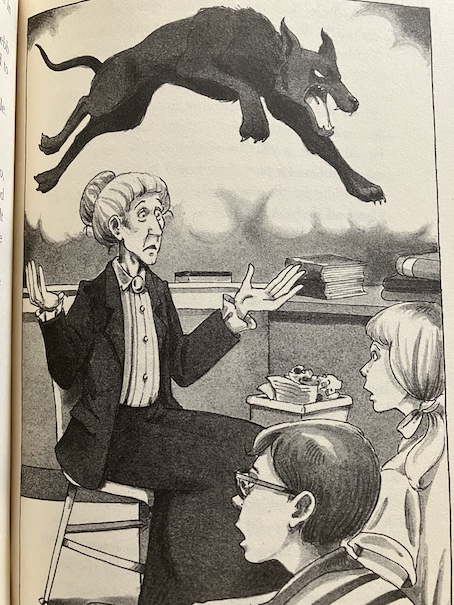
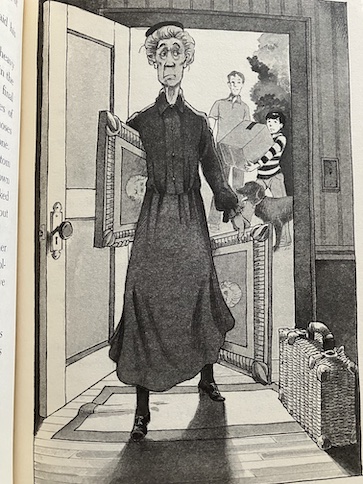
Todd Fearing is worried because his Great-Aunt Morbelia is coming to live with his family.  He has never met her before, but he has heard that she is rather strange, and he knows that his life will never be the same again.  Aunt Morbelia is very superstitious, and she sees bad omens everywhere.  When she first arrives at Todd’s house and sees that the family owns both a black dog and a black cat, she takes it as a sign that she should leave right away.  It takes a lot persuading to get her to stay on a trial basis.  By Joan Carris.

Having Aunt Morbelia at his house is sort of a mixed blessing.  On one hand, Aunt Morbelia likes baking good things for him to eat and helps him with his homework.  Todd is dyslexic and has extra assignments to help him improve his reading.  Aunt Morbelia used to be a teacher, and Todd really appreciates the help she gives him. On the other hand, Todd doesn’t like scary stories, and Aunt Morbelia’s talk of ghosts and bad omens gives him nightmares.  His friends like to hear her stories, particularly Rocky, a girl who typically doesn’t like feminine things.  Rocky, whose real name is RosaLynn, constantly pesters him about when Aunt Morbelia will tell more stories. 

Eventually, Todd gets tired of Rocky’s obsession with ghost stories and the way she encourages Aunt Morbelia to keep telling them, and he and his best friend, Jeff, decide to play a trick on her to cure her appetite for scary stuff.  However, their trick backfires, and in their attempt to make it up to everyone, especially Aunt Morbelia, they end up making things worse. 

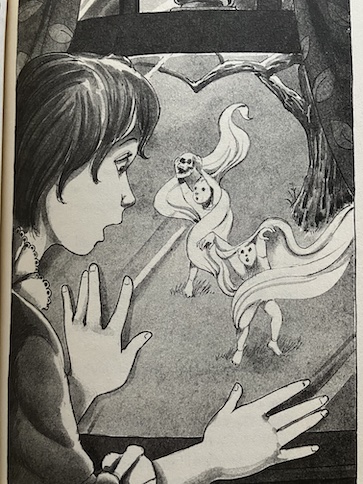
Todd and Jeff succeed in scaring Rocky by dressing up as ghosts and showing up at her house in the middle of the night. They have so much fun with their trick that they decide to go to their friend Alan’s house to try it on him. Alan lives in the house right behind Todd’s, and that’s where they run into trouble. When they start their ghost act, they can’t get Alan to wake up and come to the window to see them. Jeff decides to throw a rock at Alan’s window to wake him up, but the rock breaks the window. To make matters worse, they startle Todd’s black cat, causing the cat to yowl. The boys run back to Jeff’s house, but Jeff’s father catches them. Todd has to go home and apologize to Aunt Morbelia, who was frightened very badly when the cat started howling.

The boys decide to take Aunt Morbelia on a tour of the historic places in town to make up for scaring her. Unfortunately, Jeff includes the funeral home that his father runs on the tour because it is in one of the oldest buildings in town. Although Todd tells her that she doesn’t have to go in if she doesn’t want to, Aunt Morbelia thinks that it would be rude to refuse. Unfortunately, Jeff’s father arrives with a dead body before their tour ends, and Aunt Morbelia faints when she sees it. Aunt Morbelia tells the boys that it isn’t their fault, but she says that she’s not sure she really belongs in their town. Even with all of Aunt Morbelia’s superstition craziness and spooky stories, Todd still doesn’t want her to leave.  Is there still something he can do to convince her to stay?

The book is currently available online through Internet Archive. There is also a sequel to this book, Beware the Ravens, Aunt Morbelia!

When I first read this book, I was expecting a spooky mystery, but it’s really more about a boy adjusting to a relative coming to live with his family and dealing with his dyslexia. Although Todd initially has some reservations about Aunt Morbelia living with him and his parents and her spooky stories scare him, Todd and Aunt Morbelia gradually come to understand each other better, and Todd genuinely wants her to stay. To help Aunt Morbelia change her mind about leaving, Todd has all the people who have met Aunt Morbelia since she arrived come by the house and tell her how much they all want her to stay.  After everyone has visited her, Todd himself tells her that he doesn’t want her to go.  They talk about the scary stories and how Todd feels about them, and Aunt Morbelia tells Todd that if he doesn’t want to hear a scary story, he can be honest with her and tell her so.  Now that the two of them understand each other better, Aunt Morbelia agrees to stay, and she accepts the invitation that one of Todd’s teachers makes to help tutor children at the learning center.

I didn’t like the part where the boys played the trick on Rocky and how awkward things were with her afterward. Jeff’s father says that part of that, with Rocky drifting away from her friendship with the boys, is because the kids are growing up. He says that, as they grow up, girls start changing before boys do and have different interests from boys and different ways of looking at things, including more tomboy girls, like Rocky. Toward the end of the story, Rocky does appear to need more friendships with other girls, and Todd decides that Jeff’s dad is probably right, that Rocky thinks and acts differently from his guy friends because she’s a girl, even if she’s usually not a particularly “girly” girl. Part of that may be true, but the boys’ trick was pretty mean. I think that the real issue is that real friends shouldn’t do that to each other, and Rocky might really be questioning what she’s looking for in a real friend. Although, to hear some of my male friends talk about their youths, boys (at least certain ones) might be more accepting and forgiving of that kind of rough humor from friends than girls would be, so perhaps boys vs. girls issues are partly at the heart of it.

I thought that the parts where Aunt Morbelia was helping Todd with his dyslexia were interesting. I don’t really have any experience with the condition myself, and I’m not quite sure what techniques teachers really use to help dyslexics. One of the tricks that Aunt Morbelia uses is to break down tasks into smaller pieces to make them more manageable. For example, Todd feels badly that he can’t keep the orders of months straight. When he tries to recite the months of the year in order, he mixes them up, which makes him feel bad because most kids his age should be able to do this easily. When I first read this, I wasn’t sure if this is a common issue among dyslexics, although I thought that I remembered reading something about dyslexics having trouble remembering the orders of certain things, like lists of instructions. I looked it up, and apparently, it is a common issue, along with memorizing things like days of the week. There are different techniques for handling it, some of which involve associating the things to be remembered with something else that sticks in the mind more easily, such as a rhyme or song. Aunt Morbelia does some association with Todd but she also breaks the months down into groups of three, representing the four seasons of the year, and giving him small bits of information to memorize. She calls the spring months, “the flower months” and the fall months “the leaf months” and so on. Todd finds that technique helpful, and Aunt Morbelia says that once Todd has mastered the seasons of the year, they will put the season of the year together so that he can recite the entire year. Todd also describes other ways that he is affected by his dyslexia and techniques that his teacher uses to help him.

The Haunted House

Peanut Butter and Jelly

PJHauntedHouse

#3 The Haunted House by Dorothy Haas, 1988.

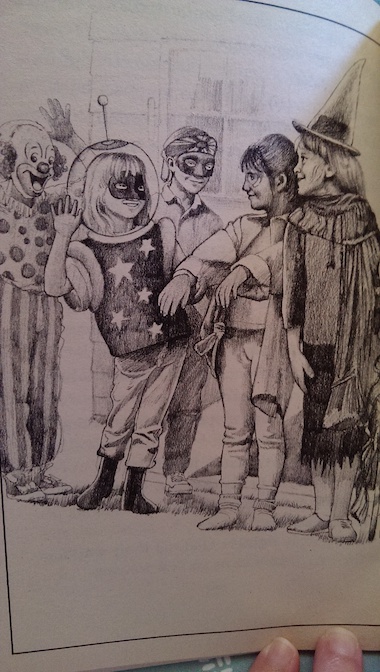
PJHauntedHouseCostumesJilly was sick on her birthday and couldn’t have a party, so she and Peanut decide to hold an haunted house party, just for fun and invite all the kids in their class. The girls’ nemesis, Jennifer, and her friends are in another class and won’t be invited to the party, but when they hear about it, they make it a point to tell Peanut and Jilly how childish it sounds.  However, no one else seems to think so, and the girls’ classmates are eager to come.

Peanut has fun making Halloween-themed food, and the girls decorate the fruit cellar in Jilly’s basement as their haunted house. They tell everyone to come in costume, and promise a prize to the person in the best costume.  Peanut also tells everyone to bring un-birthday presents to surprise Jilly and make up for missing her actual birthday.

Everyone is excited about the party, but when it starts, some strange things happen. First, it looks like more people show up than they expected.  Then, a mysterious, glowing ghost comes and tells them the tragic story of his death. What is going on?

This is just a fun book about a group of friends and a fun haunted house party they had together.  It doesn’t actually take place on Halloween (the girls get a fake skeleton on sale that was left over from Halloween), but it makes a nice Halloween-type story.  When I was a kid, I liked reading about the creative ways the girls set up the various surprises in the haunted house: making people crawl through a tunnel they’d made, having a skeleton pop out of a trunk by attaching elastic to it, and using a rubber glove filled with water and frozen as a ghostly hand reaching out to touch people, etc.  They also describe how Peanut made “frogs’ noses” out of shell pasta that was dyed green and covered with salad dressing as scary food for the party guests.

The book is currently available online through Internet Archive.

Midnight Magic

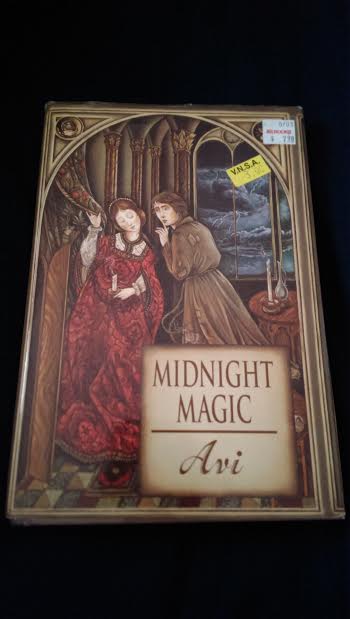
midnightmagicMidnight Magic by Avi, 1999.

The story takes place in Italy, toward the end of the Middle Ages.  Mangus, a formerly wealthy scholar and philosopher, is living under house arrest because the king believes that he has practiced black magic. Mangus was merely performing magic tricks to earn extra money, and in fact, does not believe in real magic.  However, the king is very superstitious and easily influenced by his scheming advisor, Count Scarazoni, who needed a scapegoat to distract everyone from his schemes.  Unfortunately, many people in the kingdom of Pergamontio believe that Mangus is a real magician with frightful powers.  Even Fabrizio, an orphan who is Mangus’s only remaining servant, believes that magic really exists.

When a messenger arrives, summoning Mangus to the castle to see the king, they are afraid that the king has reconsidered his decision to spare Mangus’s life. However, it turns out that the king is in need of Mangus’s help. He believes that his young daughter, Princess Teresina, is being tormented by a ghost, and he wants Mangus to use his magic to get rid of it.

Mangus again protests that he does not do real magic, but both the king and Count Scarazoni promise dire consequences if he fails to help them deal with the problem.  Mangus isn’t sure why Count Scarazoni has asked for his help because he knows that the count doesn’t really believe in magic, except perhaps as a way of appeasing the king.  The king promises that if Mangus can free the princess from the influence of the ghost, he will not only end Mangus’s house arrest but reward him with a generous pension.  Mangus has little choice but to agree to do his best, and the promise of the pension for his master convinces Fabrizio to do everything he can to make sure that Mangus succeeds, not only to save his master’s life but to restore his family’s fortunes.

But, what is the secret of the ghost?  Fabrizio believes in ghosts, even though Mangus doesn’t.  Princess Teresina insists that the ghost is real, appealing directly to Fabrizio to convince Mangus that it is. Adding to the mystery is the disappearance of the princess’s brother, Prince Lorenzo, and the murder of the princess’s tutor. Danger lurks in the castle, and conspiracies are around every corner. Could the troubled spirit really belong to the murdered prince?

The book is available to borrow and read for free online through Internet Archive.

My Reaction

I love historical books and spooky mysteries, and this is both! The Italian kingdom where the story takes place is fictional, but it takes its inspiration from real kingdoms of the later Middle Ages and early Renaissance, with Machiavellian intrigue, power struggles, and arranged marriages, even for children, that could influence the balance of power and successions. (There is talk of a potential arranged marriage in the story, but no child marriages actually take place.  If a child is old enough for ghost stories and murder mysteries and isn’t too frightened by them, there is really nothing more concerning than that to prevent them from reading this book.)

Princess Teresina is one of the most intriguing characters in the book.  Although young, she isn’t a shrinking violet or anyone’s fool, and she’s definitely not a tea party and ball gown kind of princess.  Like real life Medieval princesses, she is the product of a family who came to power by the sword and maintains it by the iron fist in the velvet glove and some clever political maneuvering, although some members of the family are more clever about it than others.  Princess Teresina well knows the family she was born into and what’s expected of her as royalty, and she knows to be careful about who she trusts and what the consequences of trusting the wrong people can be.  Although apparently terrified by the ghost, the princess has a kind of toughness and shrewd determination to do what she thinks is necessary.  She seems to be smarter and knows more than most people give her credit, and Fabrizio often wonders just how much she really knows.

One of the best things about the story is that, as soon as you think you know what’s going on, you learn that there is more to the story. There are conspiracies within conspiracies!

Hint: If you like pseudo-ghost stories, spooky stories of the Scooby-Doo variety, where there are logical explanations for the supernatural phenomena … you won’t be disappointed.