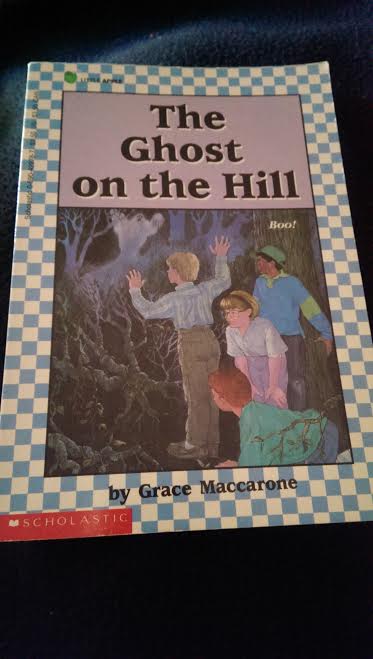
 The Ghost on the Hill by Grace Maccarone, 1990.
This is the last book in the Third Grade Ghosthunters series.
The kids take another field trip, this time to a state park. Native Americans used to live on that land, but most of the tribe died from disease many years ago. There are stories about spirits that live in the hills and the forest. Young boys from the tribe used to perform a ritual where they would dance with the Great Spirit in order to become men.
The third graders have been studying Native American history and customs to prepare for the field trip. Norma wrote a report about Native American names, which tended to describe some significant characteristic of the person. Their teacher tells the students that they should think of names for themselves which describe something significant about themselves. Most of the kids think it sounds like a fun idea, but Joey doesn’t. He’s just one kid in a family with a dozen other kids, and he’s never felt like there was anything particularly special about him. That’s why he makes up tall tales about himself that all the other kids find weird and annoying.
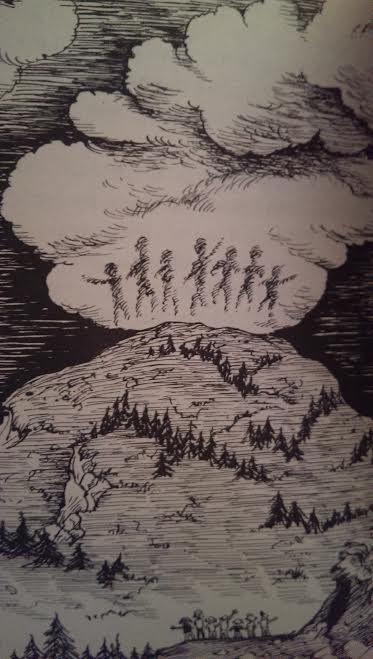 When they reach the state park, Dennis Ten Foot Bridge, who is the last of his tribe, tells the students about his tribe, teaches them wilderness skills, and leads them in group activities. One evening, Joey goes out to practice some rowing on the lake by himself, and he sees what looks like a large ghost at the top of a hill However, everyone knows that Joey lies about a lot of things, so at first, no one believes him. At least, no one except Adam.
Adam agrees to help Joey investigate the mysterious spirit. Eventually, all of the members of the ghosthunting group decide to go up on the hill together to see the ghost for themselves. There, Joey finds the courage to face the spirit directly, and everyone sees the truth. Together, Joey and his friends end up repeating the ancient coming-of-age ritual that the tribe that used to live there would perform.
The solution to the mystery is a little strange, but the book is great for the characters alone. This final book in the Third Grade Ghosthunters series is a coming-of-age story. The other books in the series addressed personal issues and personality quirks in the characters as side-plots, such worrying about not being as smart others, worries about making and keeping friends, and the trouble with teasing. This one focuses on Joey and his sense of identity. He’s always felt that there is nothing special about him compared to his brothers and sisters. In this story, he develops his own character more and gains new confidence. In the process, he ends up becoming more comfortable with his role as a kid in a family with many children as well as appreciating his own uniqueness. He also finds a name for himself that expresses his new sense of identity.
 The Return of the Third-Grade Ghosthunters by Grace Maccarone, 1989.
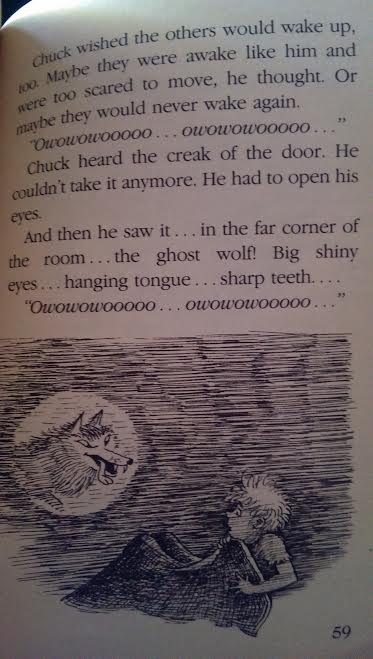 They try to use scientific methods to study the haunting. They measure the placement of the furniture to see if anything moves while they’re out and sprinkle flour on the floor to get footprints. But, even though they watch carefully and don’t see anyone enter the bunk house, when they go inside, everything is a mess, and the flour doesn’t appear disturbed. Everyone else is about ready to admit that this one is a real ghost, but Adam has another theory.
 The Haunting of Grade Three by Grace Maccarone, 1984.
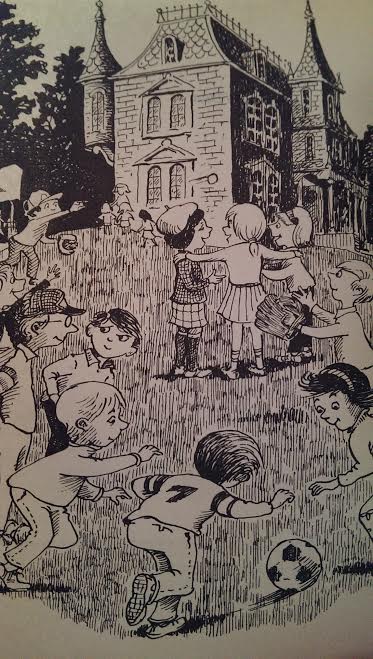 Most of the group members are misfits in one way or another. Norma Hamburger is a shy girl, frequently teased about her last name. Debbie Clark is a talkative girl who’s really into science. Chuck Webber, Adam’s best friend, is the class clown, always telling stupid jokes (and one of the main people who teases Norma about her name). Danny Biddicker is strong and good at sports, but he worries that he’s not as smart as the others. Joey Baker feels overshadowed by his large family, so he tells tall tales to get attention. The other kids don’t understand and get annoyed with his lies. By working together, they not only learn the secret of Blackwell House, but they learn more about each other and become a real team and friends.
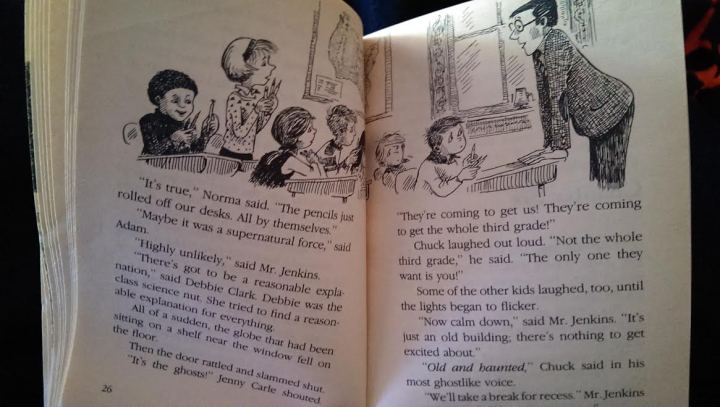
 The Treasure of Kilvarra by Elizabeth Baldwin Hazelton, 1974.
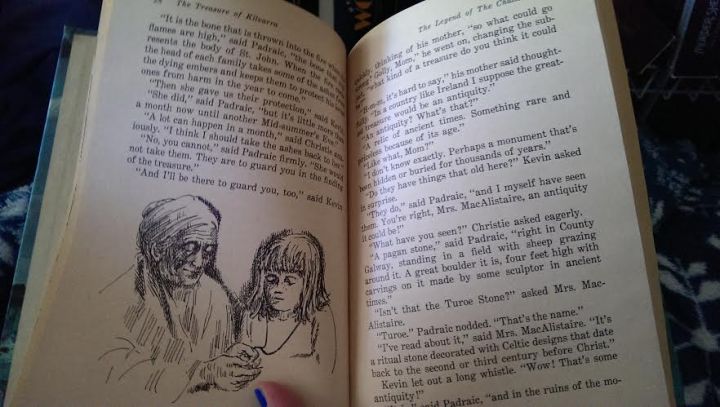 Without the amulet to protect her, Christie continues her search for the treasure. An accidental injury takes her to the place where it is hidden, but it’s a dangerous place. Caught in a terrible storm, the children explore an ancient stone tower. There, Christie sees the ghost of a long-dead monk, gesturing to her, begging her to follow him to the treasure that she seeks. The monk died protecting it, and it’s a very unexpected but wonderful treasure indeed. But, getting out of the place is going to be even more dangerous than getting in.
 The Dastardly Murder of Dirty Pete by Eth Clifford, 1981.
 Harry Onetree and the girls find a ghost town with a hotel, an opera house, and several other buildings. Although Harry only means to look around for a little while, he forgets to set his parking brake (something else Mary Rose warns him about, which he ignores), and their car rolls backward into a ditch. Since it’s getting dark, they’re stranded in the ghost town for the night. But, they’re not alone there.
 The Ghost that Came Alive by Vic Crume, 1975.
 They tell the kids that the house is supposed to be haunted and people can often hear the ghost of Andrea Cliff calling out in the night. The kids soon hear this spooky voice themselves, calling for help. Trapped in the house with the ghost and unfriendly people, the Blairs decide that they have to figure out what’s really going on, but the danger is worse than they know, and Jenny’s premonition of doom is getting stronger all the time . .
 The Case of the Haunted Health Club by Carol Farley, 1991.
 Flee Jay thinks this is spooky, but Clarice doesn’t believe in spirits. In order to investigate further, the two girls accept part time jobs helping the fortune teller and her nephew to clean up the building so they can move in new exercise equipment. “The spirits” continue sending warnings in the form of red dye in the Jacuzzi and threatening messages. Clever Clarice uses logic to point out how most of these things were accomplished but is surprised when Flee Jay reveals something that she overlooked.

