The Red Room Riddle

The Red Room Riddle by Scott Corbett, 1972.

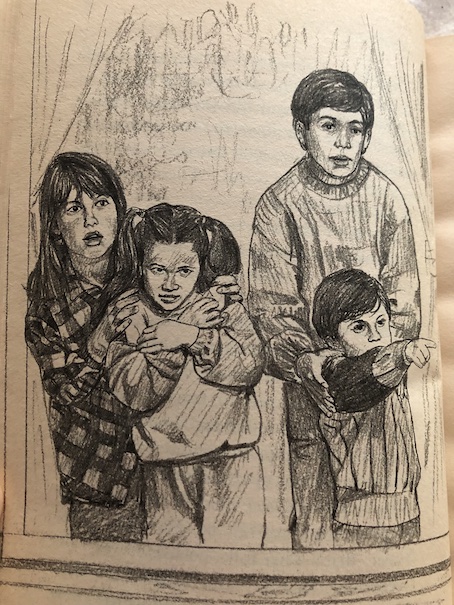
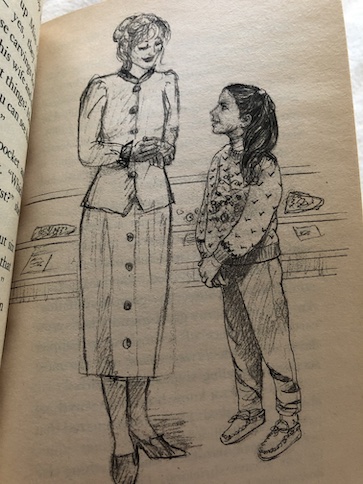
The story takes place during the 1920s. (It doesn’t actually give a date, but it references the early days of radio and silent movies, which helps place it.) Bruce Crowell meets the new kid in the neighborhood, Bill Slocum, shortly before Halloween. Bruce is afraid of Bill at first because he’s big and has a mean look. Bill does turn out to be a bully, picking on him and shoving him into mud puddles as they walk home from school. Then, one day, Bruce fights back and gives Bill a black eye. Bruce expects that Bill will be mad, but when he points out that Bill didn’t have to shove him into a puddle, Bill says that he guesses that they’re even now, and the two of them end up becoming friends.

Bruce and Bill spend a lot of their time playing outside with other neighborhood kids, and they start making plans for Halloween. During the 1920s, kids mainly celebrated Halloween with pranks. Even though Bill isn’t very good in school, he likes to read nonfiction books, and he starts reading folklore about ghosts. Bruce is more into fiction, and he starts reading books of ghost stories. Bill is really into hard facts and doesn’t believe in ghosts. His reading about ghosts is because he wants to figure out why people would believe in something so silly. He reads about how people have faked ghosts before, and he comments that he wishes that there was a haunted house nearby so he could do some research.

Bruce tells Bill about a house in a richer neighborhood that’s supposedly haunted. Bruce has seen the house before with another boy named Virgil. Virgil’s father says that there was a story about a dead baby being chopped up and buried in the garden of the house or something. Bruce isn’t completely clear about the details, but he says that the house has been boarded up for years because there’s some kind of long-standing dispute about who owns the property. Bill asks Bruce what he saw when he and Virgil went to the house, but Bruce says that they didn’t see much because the house is surrounded by a high wall, and they couldn’t get past the gates. It’s impossible to climb over the wall because there’s broken glass on top that’s cemented in place to stop people from getting in.

When it looks like it’s going to rain on Halloween, Bill suggests that they go check out the haunted house instead of running around the neighborhood, playing pranks. Bruce is reluctant, but Bill talks him into it. They have trouble finding the house at first, and they stop to ask a mailman where it is. The mailman gives them directions, amused that the boys are looking for a scare on Halloween. Bruce doubts that they’ll be able to get near the house because of the wall around it, but Bill discovers that there’s a door in the wall that’s unlocked.

Inside the wall, they find a messy, overgrown garden. The house itself is three stories tall and badly damaged on one side from a fire. In the garden, the boys meet another boy, Jamie Bly, who says that he also snuck onto the property. Jamie has his dog with him, and he says that he’s not scared of the ghosts in the house, daring the other boys to come inside with him.

Inside, the boys have a frightening encounter with the half-blind caretaker of the house, who menaces them with a broken axe handle. The boys run outside again, and Jamie says that the old caretaker wouldn’t really hurt them. Jamie says that he comes there from time to time to spook him because he thinks it’s funny. The caretaker knows it’s him because he calls him by name when he chases him. Jamie says that the caretaker won’t be there much longer, though, because the house is going to be torn down soon, and if the other boys want to see some real ghosts, they should come to his house later that night.

Jamie claims that he lives in a real haunted house. The other boys don’t believe him, and at first, they don’t want to show up to meet Jamie that night because they think he’s really annoying. However, their curiosity gets the better of them, and they decide to show up and see whatever Jamie has to show them. They think at first that they’re just calling Jamie’s bluff and that they’ll prove that he’s a liar, but they’re about to be in for the scariest Halloween they’ve ever had!

When they meet Jamie that night, he leads them through an unfamiliar neighborhood to a house that seems as big as the other old house. It’s difficult for them to see the outside because it’s raining heavily, but the inside is lit with gaslight and oil lamps instead of electricity, something that immediately strikes the boys as odd. They don’t see anyone else at first, and Jamie says that his parents are out for the evening. Bill expects that there are probably servants somewhere in the house because it’s such a big place, and he actually seems to be enjoying himself, looking forward to the challenge of debunking any “ghosts” that Jamie might show them.

The scares start slowly. Something scratches Bill on the cheek before they enter the house. They don’t know what it is, but they assume that it’s some trick that Jamie set up. There’s a creepy maid who doesn’t seem to see them or acknowledge them. Lights go on and off mysteriously. Jamie makes a peanut butter sandwich. (That wouldn’t be scary except that the boys are seriously starting to be creeped out by Jamie, so everything he does is creepy.) Then, Jamie takes them upstairs to see the Red Room.

The Red Room is a bedroom where everything is red. It has a picture of the Slaughter of the Innocents and a tapestry with the same theme outside. It has a red marble fireplace. Even the ceiling of the room is red … and it looks red and sticky. Then, Jamie locks them inside. The room has no windows, and Jamie says that there’s a secret staircase out … if they can find it.

The book is available to borrow and read for free online through Internet Archive (multiple copies).

My Reaction and Spoilers

Getting locked in what looks like a creepy murder room is scary enough, but there are other scares, and the boys do see what looks like real ghosts. After their experience, Bill thinks that he’s reasoned out a good explanation, but there is one more punchline to the story when the boys go back the next day to confront Jamie about all the creepy things that happened.

This is one of those stories where you never get a full explanation. In the end, we still don’t know what the deal was with the theme of the of Slaughter of the Innocents and the dead baby that was once supposedly found on the property. However, when the boys talk to an impartial person at the end, they do learn that the house is the same one that they visited before and that Jamie probably did live there at some point in the past, back when people used gaslights. The Bly family who once owned the house seems to have had a dark and sinister history, and while it’s still possible that there was some kind of trick being played by a person who knows about it, the boys come to believe that they really did have a supernatural experience.

Because of the scary subject matter, I would say that this book would be best for older elementary school children who really like a good scare.

Personally, the parts I liked the best were the references to things that kids don’t often encounter in modern times. I liked how Bruce gives an estimated time period for the story by talking about silent movies that are accompanied by piano playing and how he and Bill learned the term “yellow” for cowardly from western films. When they first meet Jamie and don’t want to tell him their names, they give the retort of “Pudding Tane. Ask me again and I’ll tell you the same.” I’ve seen/heard that retort used in old books (like Ruth Fielding at Lighthouse Point) and tv shows, but it’s one that went out of style before I was a kid myself. I had to get my parents to explain it to me the first time I heard it on a tv show as a kid.

More Scary Stories to Tell in the Dark

More Scary Stories to Tell in the Dark collected from folklore and retold by Alvin Schwartz, drawings by Stephen Gammell, 1984.

This is the second book in a series of popular ghost stories and American urban legends. Many of us who were children in the 1980s and 1990s heard these stories on school playgrounds, at summer camps, or at sleepovers, even if we didn’t read them in this book first. I found the stories in the first book in the series to be more familiar to me from my childhood than the ones in the second book, but there are still many popular and familiar ghost stories here. There is a section at the beginning of the book where the author/compiler discusses why stories like these have been popular for generations. In the back of the book, there is another section with more detailed information about the origins of the stories and their variants.

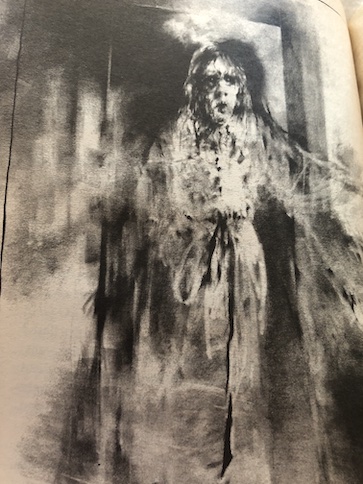
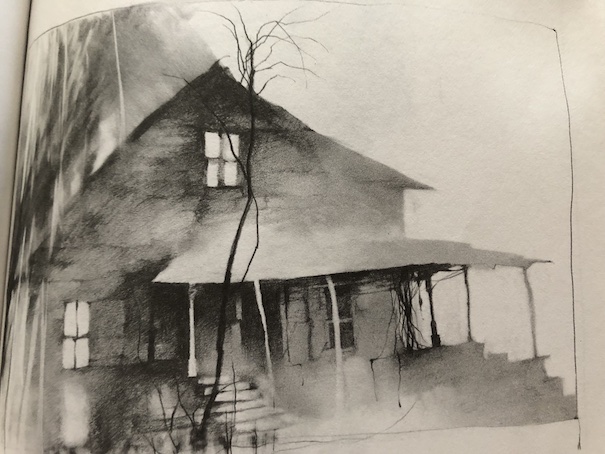
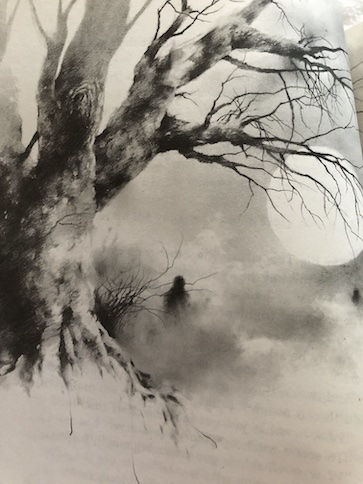
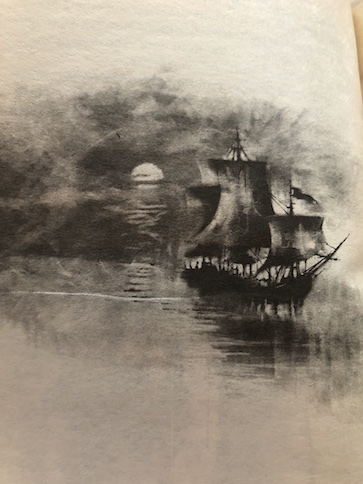
The drawings in the book also complement the stories well. They’re all in black-and-white and have an ethereal look, as those they were composed of spirits or smoke.

The book is available to borrow and read for free online through Internet Archive (multiple copies).

Stories Included in the Book:

The stories are divided into sections by theme or by the effect that the stories are supposed to have.

When She Saw Him, She Screamed and Ran

This section has stories about ghosts.

Something Was Wrong – A man is walking down the street, but for some reason, everybody is afraid of him. What’s wrong?

The Wreck – A guy meets a girl at a dance … only to learn that she was killed before she got there.

One Sunday Morning – A woman goes to church on Sunday but discovers that this isn’t a normal church service.

Sounds – Some fishermen take shelter in an empty house during a storm and hear the sounds of a past murder.

A Weird Blue Light – The crew of a ship during the Civil War witness something very strange, possibly the ghost of a pirate ship.

Somebody Fell From Aloft – The ghost of a murdered sailor gets his revenge.

The Little Black Dog – A murderer is followed by the ghost of a dog.

Clinkity-Clink – A grave digger steals the silver dollars laid on the eyes of a corpse, but the dead woman wants them back. (This story is supposed to end with a jump scare, like ghost stories told aloud around a camp fire.)

She Was Spittin’ and Yowlin’ Just Like a Cat

This is a selection of strange stories about different topics.

The Bride – The famous story about a bride who plays hide-and-seek and accidentally gets locked in a trunk.

Rings on Her Fingers – A thief tries to steal the rings from a dead woman, only she may not be quite as dead as everyone thinks.

The Drum – Two young girls meet a gypsy girl with a special drum that controls dancing figures. The girls want the drum, but the gypsy girl says that she’ll only give it to them if they do bad things.

The Window – One dark night, Margaret sees something with glowing eyes outside her window. What is it?

Wonderful Sausage – A butcher murders his wife and turns her into sausage.

The Cat’s Paw – A woman turns herself into a cat.

The Voice – A girl hears a voice in her room at night, but nobody is there.

When I Wake Up, Everything Will Be All Right

This section has stories about dangerous and scary places.

“Oh, Susannah!” – A university student thinks her roommate is humming at night, but her roommate is already dead.

The Man in the Middle – A girl sees three men on the subway late at night, but something’s wrong with the one in the middle.

The Cat in a Shopping Bag – A woman accidentally runs over a cat, and she puts the body in a bag to dispose of, causing a thief to get a terrible shock.

The Bed by the Window – A room at a nursing home has only one bed by the window. When one man kills another to get the view, he gets a shock.

The Dead Man’s Hand – A group of nursing students resent a fellow student who seems too perfect and decide to play a prank on her.

A Ghost in the Mirror – This story explains the spooky sleepover game Bloody Mary. Kids (typically girls) go into a dark or diml-lit room and look in a mirror to see a scary face appear. (This is actually a psychological trick, sometimes referred to as the “strange-face illusion“. Humans instinctively look for faces and facial emotions, and when someone can’t see their own face in the mirror very well because the room is too dim, their mind will try to reconstruct the missing details and interpret them, creating some strange illusions, like it’s someone else’s face when it’s just their own. The book doesn’t explain that, but that’s basically what “Bloody Mary” really is.) In the game, the identity of “Bloody Mary” and what she’ll supposedly do if you see her varies. This story explains different versions of the ghost story associated with the game.

The Curse – A fraternity initiation results in the deaths of two pledges and a curse on the remaining members.

The Last Laugh

This section has spooky stories with a humorous twist.

The Church – A man takes shelter in an abandoned church during a storm and thinks that he sees ghosts inside, but they aren’t what they appear to be.

The Bad News – Two old friends who love baseball and wonder if there’s baseball in heaven. There’s good news, and bad news.

Cemetery Soup – A woman makes soup with a bone she finds in the cemetery.

The Brown Suit – A woman thinks that her dead husband would look better in a brown suit for his funeral, and the funeral parlor comes up with a bizarre solution.

BA-ROOOM! – A spooky song.

Thumpity-Thump – People move into a spooky house and hear a mysterious thumping noise.

Scary Stories to Tell in the Dark

Scary Stories to Tell in the Dark collected from folklore and retold by Alvin Schwartz, drawings by Stephen Gammell, 1981.

This collection of creepy stories was a popular staple of my childhood! The stories included in the book are not original stories but popular ghost stories and American urban legends that were spread around by word of mouth before being collected and written down. Many of us who were children in the 1980s and 1990s heard these stories on school playgrounds, at summer camps, or at sleepovers, even if we didn’t read them in this book first. The very popularity of these stories was part of the popularity of this particular book and others in its series. The stories were frightening yet familiar, and reading them as an adult brings a sense of creepy nostalgia and Halloweens past. There is a section at the beginning of the book where the author/compiler discusses why stories like these have been popular for generations. In the back of the book, there is another section with more detailed information about the origins of the stories and their variants. The back of the book recommends these stories for ages 9 and up.

The drawings in the book also complement the stories well. They’re all in black-and-white and have an ethereal look, as those they were composed of spirits or smoke.

The book is available to borrow and read for free online through Internet Archive (multiple copies). There is also an audiobook copy.

Stories Included in the Book:

The stories are divided into sections by theme or by the effect that the stories are supposed to have.

Aaaaaaaaaaah!

This section has stories that are meant to make listeners jump at the end, like the kind people like to tell around camp fires, and there are tips for how to deliver the jump scares at the end.

The Big Toe – A boy finds a toe that seems to be growing in his garden, and his family decides to eat it (God only knows why), but that’s just the tip of something bigger …

The Walk – Two men walking down a road are each frightened by each other.

“What Do You Come For?” – A ghostly man comes down the chimney, part by part … and he comes for YOU!

Me Tie Dough-ty Walker! – A boy and his dog wait for a ghostly head that falls down a chimney.

A Man Who Lived in Leeds – A spooky rhyme.

Old Woman All Skin and Bone – A popular spooky song.

He Heard Footsteps Coming Up the Cellar Stairs

These are all stories about ghosts.

The Thing – Two friends see a frightening thing crawl out of a field, and it turns out to be prophetic.

Cold as Clay – A farmer separates his daughter from the man she loves, but when the man dies, his ghost makes sure that she gets safely home.

The White Wolf – When wolves are killing farmers’ livestock, a man becomes wealthy by hunting them. Then, a ghostly wolf takes its revenge.

The Haunted House – A preacher rids a haunted house of its ghost and brings her murderer to justice.

The Guests – A pair of travelers are looking for a room for the night. An elderly couple offers to let them stay in their house, but the travlers get a shock the next morning.

They Eat Your Eyes, They Eat Your Nose

These are an assortment of stories, and some are kind of gross-out stories. I never liked the gross-out scary stories when I was a kid, but I know some kids were really into them.

The Hearse Song – An old, traditional scary song that has several variations. “Don’t you ever laugh as the hearse goes by, For you may be the next to die.”

The Girl Who Stood on a Grave – Some kids at a party say that the graveyard down the street is scary, and one of them claims that if you stand on a grave, the person inside will reach up to grab you. A girl at the party doesn’t believe it and accepts a bet to go stand on a grave with frightening results.

A New Horse – A farmhand tells his friend that a witch turns him into a horse and rides him at night, and his friend finds a way to put a stop to it.

Alligators – A woman claims that her husband turns into an alligator at night and is turning their two sons into alligators as well. People don’t believe her, but there’s more truth to her story than they know.

Room for One More – A man has a prophetic dream that saves his life.

The Wendigo – A man on a hunting trip hears the wind calling to his companion. What does it mean?

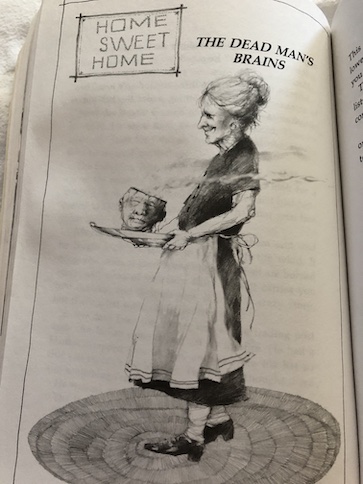
The Dead Man’s Brains – This story is actually played as a game, and it’s especially popular on Halloween. Many of us have played some version of the game, where someone describes the body of a dead person, giving people weird and creepy things to feel that are supposed to be body parts. In reality, the “body parts” are common things, usually food, like peeled grapes to represent eyes, etc.

“May I Carry Your Basket?” – A man walking home late at night helps a strange woman to carry her basket, but what’s inside the basket is truly terrifying!

Other Dangers

These are more modern horror stories and urban legends than the earlier ones in the book, and they focus less on old ghosts and more on the dangers of modern society.

The Hook – This is a popular story at camps and sleepovers! A young couple is listening the radio in their car when they hear about an escaped murderer. The girl gets frightened and wants to go home, and it’s only when they get there that they realize how close they came to being his next victims.

The White Satin Evening Gown – A girl wants to go to a dance but doesn’t have much money for a dress to wear. When she finds a dress that she can rent cheaply, it turns out that there is something very wrong with it.

High Beams – A girl realizes that she’s being followed as she drives home alone at night, but her pursuer isn’t the one she should be afraid of.

The Babysitter – A young babysitter keeps getting strange calls … and they’re coming from inside the house.

Aaaaaaaaaaah!

Even though this section has the same name as the first section, the stories in the final section of the book have humorous twists.

The Viper – One of my old favorites! The characters in The Haunting of Grade Three tell this story to each other. A woman keeps getting calls from a man calling himself “the viper.” Who is he, and what does he want?

The Attic – Rupert is looking for his dog when something happens to him on the way to check the attic that makes him scream.

The Slithery-Dee – A short rhyme.

Aaron Kelly’s Bones – Aaron Kelly is dead, but he doesn’t feel dead enough to stay in his coffin and won’t go back there until he does.

Wait Till Martin Comes – What will the cats do when Martin finally comes?

The Ghost with the Bloody Fingers – When dealing with a ghost, sometimes the practical approach is best.

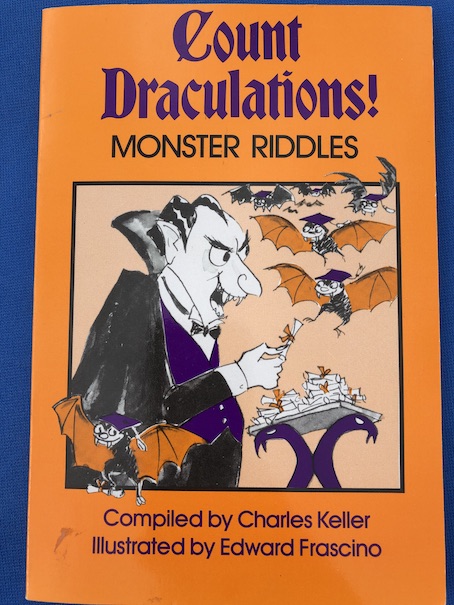
Count Draculations!: Monster Riddles

Count Draculations!: Monster Riddles compiled by Charles Keller, 1986.

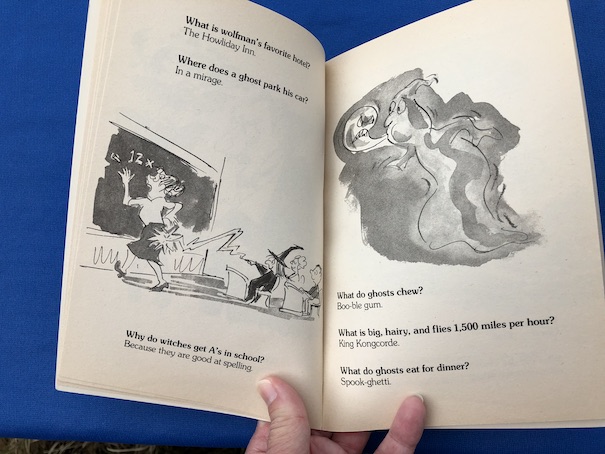
This is one of those themed joke books for kids that has monster and Halloween-themed jokes.  The jokes are the basic kid-friendly question-and-response type with lots of puns.  There are also some cute black-and-white illustrations.

Some of my favorite jokes:

Why do witches get A’s in school?

Because they are good at spelling.

How do you get into a locked cemetery?

With a skeleton key.

Why did Frankenstein’s monster go to the psychiatrist?

He thought he had a screw loose.

Why did the invisible man go crazy?

Out of sight, out of mind.

The House of Dies Drear

DiesDrearThe House of Dies Drear by Virginia Hamilton, 1968.

Thomas Small, a thirteen-year-old African American boy, is moving from North Carolina to Ohio with his family in order to live in an old house with an unusual history.  His father is a history professor and has rented a house for them that was once owned by an abolitionist named Dies Drear.  Dies Drear was part of the Underground Railroad that smuggled escaping slaves out of the South around the time of the Civil War, and his old house still has secret passages from that time.  The local people believe that Dies Drear still haunts the house along with the ghosts of a couple of slaves who never made it to freedom.

The caretaker of this strange old house is a strange old man called Mr. Pluto.  He lives on the property in a cave that he has made into a house.  Mr. Pluto frightens Thomas, and Thomas is sure that he’s hiding something.

The Smalls’ new town is a close-knit community that doesn’t welcome outsiders. The people seem unfriendly and suspicious of the Smalls, especially the Darrow family.  They know something about the secret passages at the house, but Thomas’s parents don’t want him poking around the passages anymore after he is briefly lost in them.  However, that is where the real secret of the house lies.

Thomas comes to believe that someone is sneaking into the house at night, using the old secret passages.  One night, this person leaves three small metal triangles at the bedroom doors.  These mysterious triangles seem to fit together, but there also seems to be a missing piece.  The Smalls have no idea what these pieces mean or who put them there.  Mr. Pluto holds many of the answers, and he is going to need their help to protect the secret that he has kept safe for many years.

The book is currently available on Internet Archive (multiple copies).  The book won the Edgar Award for Best Juvenile Mystery in 1969.  There is also a made-for-tv movie version of the book.  Sometimes, you can find it or clips of it on YouTube.

There is a sequel to this book called The Mystery of Drear House.  There are only two books in this short series.

My Reaction and Spoilers

I love how the Smalls help Mr. Pluto deal with the Darrows in the end, using the ghost stories about the house to their advantage.  There are hints that besting the Darrows, although it hurt their pride, may actually lead to a better relationship with them in the future.

Thomas and Pesty (a nickname for the young adopted daughter of the Darrow family, her real name is Sarah) are also memorable characters.  Pesty is brave for learning the secret that her family has tried to learn but choosing to protect it instead of reveal it.  Thomas is a thoughtful boy who, because of his earlier upbringing, actually feels more comfortable around older adults than around people his own age.

If you’re wondering about why the abolitionist had a strange name like “Dies Drear”, it isn’t exactly explained.  At one point, the story says that he was from New England.  A possible explanation that I found online is that Dies might actually be another form of the Germanic surname Diess, which may be related to the Biblical name Matthias.  Perhaps Dies Drear might have some Germanic ancestry.  Some people use the mother’s maiden name as a first or middle name for a child.  But, that’s just a theory.

Some teachers use this book to introduce students to the concept of the Underground Railroad.  While I was researching the book online, I also found this pdf of classroom worksheets related to the story. (I had a link to a different set of worksheets before, but those were removed, and I found a different set.)  If you’re looking for additional lesson plans, I suggest looking at Teachers Pay Teachers, where teachers can buy lesson plans from other teachers.  (I’m not sponsored by them, I just know about them from a friend who is a teacher and think it’s a useful resource.)

One final point that I would like to make is that there are no white characters in the story.  Dies Drear was a white man, but he doesn’t actually appear in the book, having died over 100 years before.  Every character who does appear in the book is black.  The funny thing is that I can’t remember any point where the book explicitly describes the characters as black.  It might be my memory playing tricks on me, but I seem to remember knowing that they were all black as I read the book, but I can’t think now why I knew it, and I don’t remember a point where the book actually described anyone’s appearance.  I think I probably knew it partly from context, perhaps subtle hints in the story, but it might also be that I knew what the book was about before I read it because someone told me.  I might even have seen the movie version at some point before reading the book, although I’m not sure now because it’s been years since I first read this story, and I can’t remember if I read the book or saw the movie first.  The movie or clips of it sometimes appear on YouTube.  It’s also available on dvd, although I haven’t seen many copies available.

In a Dark, Dark Room

In a Dark, Dark Room and Other Scary Stories retold by Alvin Schwartz, 1984.

This is a collection of classic scary stories based on folktales from around the world.  A special section in the back of the book explains more about where the stories came from.

This book was a favorite scary book of mine when I was a kid, and the stories are the type that kids commonly like to tell at camp or at sleepovers to spook each other.  Stories like these stay with you for years!

Sometimes, you can find individual stories from this book read aloud on YouTube. The book is currently available online through Internet Archive.

Stories in the Book:

The Teeth – A boy meets a series of strange people with increasingly long teeth.  Based on a story from Suriname. (Here is a video of someone reading this story as an example.)

In the Graveyard – A woman sees bodies carried into a graveyard. Based on the song “Old Woman All Skin and Bone.”

The Green Ribbon – A girl wears a green ribbon around her neck for her entire life, refusing to explain to even her husband why she wears it, until she is old and about to die.  Based on a European folk tale.  Originally, it was a red thread.

In a Dark, Dark Room – Classic slumber party story!  “In a dark, dark wood, there was a dark, dark house.”  What will it all lead to?  It is known in Europe and America.

The Night It Rained – A man gives a boy a ride home on a rainy night.  When he returns the next day to pick up the sweater he loaned the boy, he gets an eerie surprise.  Based on a class of ghost story known as “The Ghostly Hitchhiker,” which has many variants.

The Pirate – When Ruth visits her cousin’s house, her cousin tells her that her room is haunted by the ghost of a pirate.  Based on a British folktale.

The Ghost of John – A short poem. The author of this book first heard this from a young girl in California in 1979.

Who Knew There’d Be Ghosts?

Who Knew There’d Be Ghosts? By Bill Britain, 1985.

Tommy Donahue and his friends, Wendy “Books” Scofield (the smartest kid in their class as well as being pretty tough) and Harry “the Blimp” Troy (known for being the tallest and biggest kid in their class), prefer playing around the abandoned Parnell house instead of at the park because they like to play games of pretend, based on adventure stories that Tommy has read.  It’s hard to play games of pretend in such a public place as the park because other people either laugh or think that they’re just getting in the way.  Almost nobody goes near the old Parnell house because people think that it’s haunted.  They’re right; it is haunted.

Some people in their town have been trying to arrange for the Parnell house to be turned into a museum because the Parnells were the founding family of their town, but the movement hasn’t been able to raise the money needed to renovate the place.  Now, Tommy’s father, a lawyer, has been recruited to arrange for the house to be purchased by a private citizen who says that he wants to renovate the house and use it as his own residence.  However, Tommy and his friends overhear the buyer, Avery Katkus, and a confederate talking as they look over the house.  Mr. Katkus isn’t interested in the house at all; he wants something valuable that is hidden inside.  When they hear the two men plotting to sneak into the house at night to do some searching for this mysterious something, the kids decide that they will come back at night and watch for them to find out what they’re looking for.  The kids don’t want anything bad to happen to the house because they’ll lose their private playground.

Tommy is the first to go and check out the Parnell house at night, and that’s when he meets the ghosts, Horace and Essie Parnell.  At first, Horace tries to scare Tommy away, but when Tommy explains that he only came to keep watch, Horace asks him what he means by that.  Tommy explains to him about Mr. Katkus, and Horace says that he could use Tommy’s help.  Years ago, Horace’s father made a dying wish that all members of their family should be buried in the family cemetery on the property of the house.  Most of the members of the family are buried there, but Horace, who was killed during the Revolutionary War, and Essie, who accidentally fell overboard from a riverboat and was permanently lost in the Mississippi River, were only two Parnells who were not buried on the property, so their spirits are now bound to the house.  Naturally, Horace and Essie are concerned with the future of the house.

Tommy tries to tell his friends about the ghosts, but they don’t believe him until they see the ghosts for themselves.  When the three kids return to the house the next night, Horace saves them from being attacked by Mr. Katkus’s hired confederate.  Now convinced of the ghosts’ existence, Harry and Books are eager to help save the house, and the key in doing so is discovering what kind of hidden treasure the house holds.

The book is available to borrow for free online through Internet Archive.

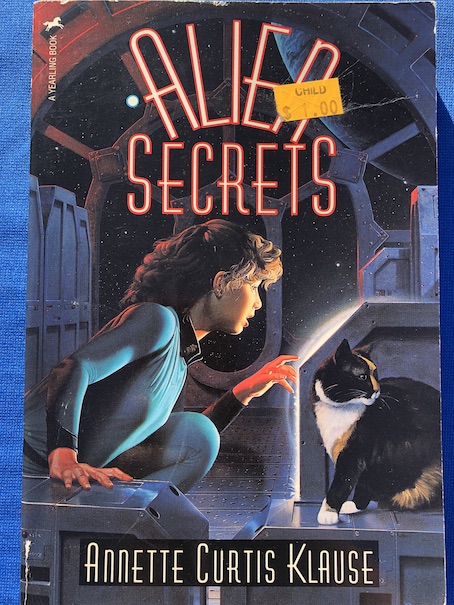
Alien Secrets

Alien Secrets by Annette Klause, 1993.

Robin Goodfellow, nicknamed Puck (her parents were fond of Shakespeare), is a human girl from Earth in the future.  When the story begins, she has been kicked out of boarding school on Earth and is traveling by space ship to join her parents, who are scientists who have been working on another planet.  They left Robin with her grandmother on Earth, who enrolled her in an English boarding school in order to give her some discipline and some friends her own age, but she was expelled for failing her classes (not to mention throwing a fit and burning her books when she discovered that she had failed).  Puck dreads what her parents will say when she arrives on the planet where they are now living because they had always hoped that Puck would also become a scientist and work with them, but this journey will change Puck’s life.

Before the ship she will be traveling on leaves Earth, Robin witnesses a man attacking someone else, possibly killing him.  Robin does not report the attack because she doesn’t know whether or not the other person was killed, and she doesn’t think that anyone will believe her anyway.  She witnessed this attack while sneaking around a place where she wasn’t supposed to be, and she is being sent to her parents in disgrace after being expelled, so she doesn’t sound like a very credible witness.  However, the man in the fight, Mizzer Cubuk (“Mizzer” is how they say “Mister” in the book), turns out to be traveling on the same ship as Puck.  All Puck can think of to do is to try to avoid him on the ship and hope that he didn’t get a very good look at her after she ran away from his fight.

To Puck’s surprise, the captain of the ship she is traveling on, Captain Cat Biko, asks her if she could make friends with an alien who is also traveling on the ship.  The alien is one of the Shoowa, who were enslaved by another group of aliens called the Grakk.  Now, he is free and finally traveling home to Aurora, the same planet where Puck is going.  The captain feels sorry for him and thinks that he might appreciate a friend and that he might find a human child less intimidating than an adult.

Later, Puck and other passengers are woken out of their sleep by the sounds of wailing and moaning.  One of the women on board, Leesa, says that she saw something that looked like a ghost that walked straight through her. Other people, who didn’t see or hear it, assume that it was nightmares or imagination, but Puck knows that it wasn’t.  One of the crew members, Michael, tells Puck that there have been rumors that the ship is haunted and that other people have seen and heard strange things.

Strange things are happening on the ship, and some of the passengers seem to be hiding something. Who can Puck trust, and who isn’t who they seem to be?

The alien who is traveling on board the ship understands Puck’s feeling of failure.  The alien, called Hush, says that he carries shame because he lost something important, something that his people were counting on him to take home to their planet.  Puck and Hush discuss how people from Earth had fought the Grakk and sought to learn about Grakk technology from Shoowa slaves who were freed after the war.  Even the ship they are now traveling on was once a Grakk ship.  The Earth people kept delaying sending the slaves home because they wanted to pump them for more information and because they were trying to decide if they could really trust them more than the Grakk.  After negotiating with the Earth people about returning home, the Earth people agreed, with some provisions.  They arranged for some of the Shoowa to stay on the Grakk home planet, still working with humans.  Some of them would travel on ships with Earth people, and some others could go home to their own planet.  Hush is the first one to head home, and he was entrusted carrying home an important symbol of his people that his family had protected for generations: a statue that represents a child because children are the future and a source of freedom, according to an ancient Shoowa prophecy. Unfortunately, the statue was stolen from Hush before he could return it to its rightful home. He reported the theft to the Earth security personnel at the station, but they didn’t take him seriously. They thought that he probably just lost it by accident.

The haunting is real in this book.  On a tour of the ship, Puck learns that the ship’s navigator has also seen the ghost aliens.  One of the characteristics of a ship’s navigator is the ability to see hyperspace, something that not everyone has the ability to do, although even scientists in Puck’s future time don’t seem to know why some people can do that and others can’t.  Slowly, it becomes evident that people who are able to see hyperspace are also able to see the ghosts.

On the journey to Aurora, Puck also learns that she is one of the rare people who are able to see hyperspace, giving her a possible future in navigating a space ship, something that she would really enjoy learning.  When she arrives at Aurora and is greeted by her parents, who have missed her while they were apart, Puck also comes to realize that her parents will always love her, even in spite of failing her classes. Even Hush’s people tell him that, although they are happy to have the statue back, his safe arrival was always the most important thing, and they wanted him to come home, whether he successfully brought the statue or not. Both Hush and Puck come to realize that their families will always love and value them even with their imperfections and failings.  With parents who love her and a new vision of the future ahead of her, Puck is ready to make a new life on Aurora.

The book is available to borrow and read for free online through Internet Archive.

The Secret of the Floating Phantom

SecretFloatingPhantom

The Secret of the Floating Phantom by Norma Lehr, 1994.

Kathy Wicklow is going to be staying with her grandmother in Monterey for a while, helping her while she recovers from a twisted knee.  Kathy is disappointed about it because she only just got home from visiting her Aunt Sharon, and she was looking forward to some time at home with her dog, Snuggles.  Snuggles can’t even come with her to her grandmother’s house because of her grandmother’s allergies.

Kathy’s grandmother is a dance instructor, but someone else has to teach her classes until she’s better.  Her friend, Loretta, owns a Spanish restaurant and sometimes visits and brings dinner with her.  (The grandmother describes it as a “Spanish” restaurant, but they serve things like tacos and burritos with salsa, which is what people where I live think of as Mexican food.)  Kathy’s grandmother is sure that Kathy will like Loretta’s granddaughter and grandnephew.  However, she is strangely secretive about what she and Loretta have been doing during her visits, saying that their meetings, which they hold with a mysterious man called Mason, are financial discussions and are “not for children.”

Kathy learns that her grandmother and her friend are really holding séances. Loretta’s husband is dead, and Loretta fears that she might lose her property unless she can produce the original deed to it. She thinks her husband knew where the deed was, and she hopes to contact him so that he can tell her.  When Kathy spies on them during a séance, she sees a mysterious fog that seems to be trying to tell them something. No one else can see it but her. It appears to Kathy several more times, and it seems to be leading her not only toward the deed but toward a lost treasure from the early days of California.

Kathy is suspicious of Mason’s motives and the fact that he doesn’t seem to like her. It turns out that he is not really trying to help Loretta and her family but trying to find a treasure that was hidden by an ancestor of Loretta’s over a hundred years ago. At that time, the area where they now live in California was attacked by pirates. Loretta’s ancestor, Ambrose, was given the task of hiding the treasures from the local mission. He buried them under a tree and marked the tree with a cross. However, during the attack, he was badly injured and blinded. He was unable to find the spot where he buried the treasure himself, and the others who went to find it couldn’t locate the tree.

The fog-like spirit that Kathy sees is Ambrose. Lisa, Loretta’s granddaughter and Kathy’s friend, is spooked by Kathy’s visions, but she helps Kathy to follow the clues that the ghost provides to the treasure. In a hole in the trunk of the tree, Kathy also finds the deed that Loretta has been searching for. Mason tries to take the treasure himself, but he can’t move the heavy bricks on top of it by himself. Mason leaves before anyone can confront him. Digger, Lisa’s cousin, feels especially betrayed because Mason had seemed like such a good friend to him. Kathy notices that Mason seems to share some characteristics with one of the pirates from the attack in Ambrose’s time, which might be a hint that Mason is a descendant of the pirates, but it’s never fully explained.

The book is currently available online through Internet Archive.