The Princess and the Goblin by George MacDonald, illustrated by Jessie Willcox Smith, 1872, 1920, 1986.
“But, Mr. Author, why do you always write about princesses?” “Because every little girl is a princess.” “You will make them vain if you tell them that.” “Not if they understand what I mean.”
The Princess and the Goblin, Chapter 1: Why the Princess Has a Story About Her
This is an enchanting fairy tale-type story about a princess. One of the best parts comes at the beginning of the book, when the reader supposedly interrupts the author as he starts to tell the story, asking him why he likes to tell stories about princesses. The author explains that princess stories remind every little girl that she is a princess, that they are all the daughters of kings (apparently in the sense that any man can be the king of his family with all the dignity and wisdom that implies, and it reflects well on them when their daughters behave well, as if they were raised with the manners of royalty), even if they sometimes forget that and behave in very un-princesslike ways. He wants to remind them that they are all princesses and can behave with the grace and dignity of princesses, and he can also pamper them a little because, in the course of the story, he can give them every beautiful thing he wants all the little princesses of the world to have. There’s kind of a behavioral caution in that explanation, but also a sweet sentiment. Even if you’re just an ordinary girl, you can still act with royal dignity and grace, and through the story, you can vicariously enjoy all the riches and adventure that a fairy tale princess can have.
The princess in the story, Princess Irene, is about eight years old, being brought up in a castle or manor house in the countryside because her mother was not physically strong when she was born and is now dead. She is largely raised by her nurse and only sees her father, the king, occasionally. Her father spends his time traveling between his castles and manors, visiting various parts of his country to make sure that everything is in order. Princess Irene cannot go with him because she is still too young to travel that much.
There are caverns under and around the castle-like manor house where Princess Irene lives. There are mines in the area, and the caverns are inhabited by creatures like kobolds or goblins. The story says that there are legends that these creatures once lived above ground, but having some quarrel with requirements imposed on them by the king or human society, they retreated underground to live there in secret. From generations of living underground, they have become physically altered into deformed creatures, but they have also acquired arcane knowledge and delight in playing mischievous tricks. Because of fears of the goblins coming out at night, Princess Irene is kept safely indoors before the sun goes down and has never seen the night sky by the age of eight.
One rainy day, Princess Irene is sitting in her nursery, bored. She has many fabulous toys (so amazing that the author of the book declines to describe them and cautions the illustrator against attempting to draw them, so readers can imagine any fabulous toys they like), but Irene in not in any mood to be amused by anything. Princess Irene is restless and doesn’t even quite know what she wants. When her nurse leaves the room, Irene takes the opportunity to run off and explore parts of the castle she has never before explored. She runs up some stairs into a passageway full of doors. She continues running through the passageways with doors leading to rooms with nobody in them until she becomes lost and confused. The corridors are empty, and there is no sound but the rain. One of my favorite quotes from this book says, “It doesn’t follow that she was lost, because she had lost herself though.” Just because Princess Irene doesn’t know where she is or where she’s going doesn’t mean that she isn’t heading in the right direction, where she needs to be.
Frightened, Princess Irene tries to find her way back to the nursery. Eventually, she finds her way to a room where she hears a humming sound. When Irene enters the room, she finds a beautiful old lady with silver hair sitting at the spinning wheel. Irene isn’t sure how old the lady is because she seems almost ageless. The lady notices that she’s been crying and asks her why, and Irene explains that she is lost. The lady is kind to her, washing her face and hands, and she introduces herself as Irene, too. She says that she is the princess’s great-great-grandmother and that Princess Irene was named after her. Princess Irene wonders why she’s never seen her before, and the elderly Queen Irene says that no one else knows that she is here. She shows Princess Irene the pigeons she keeps and promises that Princess Irene will see her again. Then, she guides the little girl to the stairs back to the nursery.
When Princess Irene is back in her nursery, her nurse is relieved because she’s been looking for her. The princess explains that she was with her great-great grandmother, but her nurse doesn’t believe her. Princess Irene is offended that her nurse thinks she made up the whole story. The next day, Princess Irene tries to find the old lady’s room again, but she can’t. She almost starts to wonder if she did just dream about her.
After the rain is over, the princess and her nurse spend some time outside. They wander farther than they should, and the nurse realizes in a panic that they cannot get back to the castle before the sun sets. The nurse grabs the princess’s hand and begins running for home. She becomes even more panicked when the princess thinks she sees little men and hears a sound like laughing. In their haste and panic, they get lost. The princess doesn’t understand why her nurse is so panicked because no one is supposed to scare her by telling her about the goblins.
Fortunately, they meet up with Curdie, a young miner boy. It scares the nurse that Curdie is singing about goblins, but Curdie says that goblins can’t stand singing. Goblins don’t bother Curdie because he’s used to them and doesn’t let them frighten him. This is the first time Princess Irene learns about the goblins. When the nurse tells him who the princess is, Curdie says that they wouldn’t have gotten lost if they weren’t frightened and that it was a bad idea to say the princess’s name because the goblins might have heard and will recognize her if they see her again. Curdie guides them back to the castle before anyone realizes that they are missing. Irene likes Curdie and wants to give him a kiss for helping them, but the nurse stops her. Curdie tells her that there will be another time, and she can keep her promise of a kiss later.
Curdie can tell that the goblins are angry with him for interfering with their pursuit of the princess by their behavior toward him the next day. It doesn’t bother him much because he knows exactly how to deal with them. Goblins are intimidated by songs and rhymes, probably because they can’t make any themselves. Miners who are good at remembering songs and rhymes or making new ones for themselves don’t need to worry about the goblins, and Curdie has a talent for this sort of thing.
While Curdie is in the mine after the other miners have left, he overhears a goblin family talking, and he learns some useful things. First, he finds out that goblins’ feet are a vulnerable point on their body. Their heads are very hard, but their feet are very soft, and they have no toes. The only one who wears shoes is the goblin queen, and the goblins say that’s because the goblin king’s first wife wore shoes, and the second queen doesn’t want to seem inferior to the first. The goblin king’s first wife was a human woman, who died giving birth to their son. Second, the goblins are building new homes further away from where the miners have been mining. Third, the goblins are planning some kind of disaster against the miners. Curdie secretly follows the goblins to find out where the goblin palace is and learn more of their plans. At the goblin palace, he hears them discussing their plans. They don’t offer many new details, but it is clear that they are planning some sort of revenge against humans.
Princess Irene finds her way to her great-great-grandmother’s room again one night. This time, the old Queen Irene shows Princess Irene what she is spinning. She is spinning spiderwebs to make something for Princess Irene. She heals a wound on the princess’s hand and invites her to spend the night with her. When Princess Irene wakes up, she is back in the nursery, but she now believes that it wasn’t just a dream.
Later, the princess is frightened by a horrible goblin creature that enters her nursery through a window that the nurse left open when it was getting dark. Terrified, Princess Irene runs out of the castle into the darkness (somehow missing the extra guards that her father left at the castle for her protection). Fortunately, her great-great-grandmother sends her a magical lamp that guides her back to the castle. There, she gives the princess the present that she has finished making: a ball of finely-spun spider silk. She also gives Princess Irene a ring with a fire opal. She tells the princess that these things will guide her to safety any time that she is frightened.
The magical spider silk thread helps Princess Irene to find Curdie when he is captured by the goblins. Curdie has been trying to learn more about the goblins’ plans. Curdie discovers that the goblins are planning to kidnap Princess Irene as both a hostage and a bride for their half-human, half-goblin prince. Worse still, if their plot to abduct the princess doesn’t work, they plan to flood the mines and drown the miners!
This book is in the public domain. It’s available to read online through Project Gutenberg (multiple formats) and Internet Archive (multiple copies). You can also hear a LibriVox audio reading of this book online through YouTube and other audio recordings at Internet Archive. The story was made into an animated movie in 1991, and you can see it online through Internet Archive. There is only one sequel to this book, The Princess and Curdie. Personally, I think the original is better than the sequel.
My Reaction
This is a classic children’s fantasy story! The princess is sweet, the villains pose a real threat, and the story doesn’t shy away from the goblins’ evil. When they’re describing what to do with the princess when they get her, they talk about how they’re going to make her toes grow together so she’ll be like them. As princess stories go, this one isn’t as sparkly and pink as many modern princess books. Still, as the author notes in the beginning, this story allows all little girls to think of themselves as princesses and imagine themselves going through the adventure with Princess Irene.
As with many other Victorian era children’s stories, there are moral lessons in this one. The author periodically reminds readers about how princesses should behave with bravery and should keep their promises. There are also various other morals in the story, like the value of hard work and duty to others, learning to understand other people and give them the benefit of the doubt, and having the courage to admit mistakes and make them right. All of these values are described as being noble, and it’s implied that Curdie might have princely blood for exhibiting these values. The book uses royalty or the behavior of princesses and princes as a sort of metaphor for moral behavior.
Princess Irene’s great-great-grandmother is never fully explained. At one point, Princess Irene brings Curdie to see her, but he can’t see her, even when the princess is sitting on her lap. However, the king himself goes to see her without the princess. The princess knows that’s where he’s going because he’s heading in that direction. He is aware that the old Queen Irene is there, but he doesn’t share that knowledge with anyone else. When Curdie tells his mother that the princess tried to show him her great-great-grandmother but nobody was there and he thought that she just made it all up, his mother tells him that there is something very odd about the royal family. She says that they’re not sinister, but there are rumors and implications that there is something magical about them or that they are not quite normal humans. At the end of the story, we never get a firm answer about what Queen Irene really is. When I first read this book, I thought that she might be a ghost because, as an ordinary human, she shouldn’t be alive anymore, and I figured that she only shows herself to members of her own family. However, that doesn’t fully explain her magic, and from what Curdie’s mother says, maybe she’s some kind of fairy or elf or maybe a powerful sorceress, who can either live forever or for a long period beyond the normal human lifespan.
One of the parts that I always liked best about this book is the illustrations. They’re charming and magical! These particular illustrations were made by Jessie Willcox Smith, a famous illustrator of children’s books in the early 20th century, in 1920.
Miracles On Maple Hill by Virginia Sorensen, 1956.
Ten-year-old Marly and her family are moving from Pittsburgh to the countryside, to Marly’s mother’s grandmother’s old house on Maple Hill. They’re making the move for Marly’s father’s sake. Marly’s father was a soldier and prisoner of war, and everyone says he was lucky to return home from the war. (The book doesn’t specify which war, and no date is given for the story, but the book was written during the 1950s. If it was set slightly earlier than the time of writing, it could be WWII, and if it’s in the 1950s, it would be the Korean War. Not giving the story a date gives it a timeless feel.) Since then, he has suffered from the stress of his experiences. He is frequently tired and irritable. He is easily startled by loud noises, even a door slamming, and he finds arguments between Marly and her older brother Joe too much to handle. On Christmas, he can’t even bring himself to get out of bed to celebrate with his family. (He is suffering from shell shock or PTSD, although the characters in the book don’t use those terms. Mostly, they just describe the symptoms they see in him without giving it a name. Much of our modern understanding of what PTSD is and how to treat itcame out of the World Wars and following conflicts, like the Korean War and the Vietnam War. During the 1950s, they had a general sense of what it was, and they called it different names, like “battle fatigue” or “combat stress reaction” or “gross stress reaction,” but not everyone fully understood it or how to treat it. They didn’t have as many resources for dealing with it, so this family is trying to find their own solution by giving the father a quiet place to rest and process his feelings.) Marly’s mother thinks that the peace of the countryside will do him good.
It’s March when the family makes their first trip to Maple Hill, and there is still snow on the ground. Their car gets stuck in the snow before they reach the house. Joe and Marly both get out of the car to find help. Twelve-year-old Joe initially didn’t want Marly to come with him because he’s in a phase where he likes to show off and make a big deal about how much better he is at doing things than his younger sister, but Marly sets off by herself and meets their friendly neighbor, Mr. Chris. Joe is a little offended that Marly saved the day instead of him, but Mr. Chris and his wife are very friendly and helpful. They remember the children’s mother from when she used to visit her grandmother as a child, and they welcome the family like they’re relatives themselves. Marly likes Mr. and Mrs. Chris, but her father finds their friendliness a little overwhelming. He feels like what he really needs is time alone, and he doesn’t feel much like chatting with people.
The old house at Maple Hill is a little run down because no one has lived there for years. The family has a lot of fixing-up to do, but Marly’s mother thinks that the work will be good for the children’s father. Marly and Joe aren’t used to living in the countryside, and they find some parts of it fascinating. They use a pump for water for the first time and take baths in an old tub. The house contains a Franklin stove (and Marly references the story Ben and Me by Robert Lawson).
Marly is upset when her family kills a nest of baby mice, although they tell her that mice are pests, and they have to get rid of them or be overrun by them. Marly loves animals, and she would have loved to keep the cute little mice as pets. Marly talks about her feelings with Mr. Chris when he shows them how he processes maple syrup. Mr. Chris says that he understands how Marly feels. He also has a soft spot for small animals. Although he doesn’t tell his wife about it, he has a little mouse friend who visits him every day. Marly’s family is there for the conversation, and they say that Marly makes too big a deal out of getting rid of pests, but Mr. Chris says that there’s nothing wrong with Marly for caring and gives her an extra taste of the maple sap. To Marly’s surprise, her father takes her on his lap and says that the only thing wrong with Marly caring too much is that she’ll have to spent her life crying more than she would otherwise have to. Feeling an emotional attachment to people or animals can mean having your feelings hurt when you lose them, and what Marly’s father has been through is about the most extreme version of having hurt feelings that human beings experience.
Marly’s father stays at Maple Hill alone for a couple of months while his wife and children return to the city so the children can finish the school year. In spite of her father’s reluctance to be around people, he does become friends with Mr. and Mrs. Chris in their absence. He sometimes calls his family from the phone at their house. Mr. and Mrs. Chris help him adjust to living in the countryside. He discovers how much life in the countryside is influence by changes in the weather, much more so than life in the city, where people spend more of their time indoors, and Mr. Chris gives him an almanac to use. Mr. Chris tells Marly that, when she and her brother return to the countryside in the summer, he’ll take her around and show her everything, and he’ll show her all the “miracles” at Maple Hill, meaning the wonders of the natural world.
However, even people in the peaceful countryside have their troubles. Marly overhears her mother talking to Mrs. Chris, and Mrs. Chris says that she’s worried about Mr. Chris’s health. Jolly Mr. Chris has suffered a heart attack before, and he hasn’t been taking it easy. He’s always been a hard worker, and Mrs. Chris worries that he pushes himself too hard.
Over the summer, when Marly and her brother and mother return to Maple Hill, Marly has to get used to life in the countryside, as her father has. One morning, when she tries to make pancakes for her family by herself, she accidentally fills the kitchen with smoke because she doesn’t really know how to use the old-fashioned stove. Her father comes in and helps her, and at first, Marly is worried that he’s going to get really angry, the way he often has when things go wrong because of his stress from the war. However, this time, he reacts much more calmly because he knows how to handle the situation, and he admits that he did the same thing himself when he first used that stove. It’s one of the first signs that Marly’s father has been improving in the peaceful countryside.
As Mr. Chris promised, he shows Marly the wonders of the countryside and introduces her to different types of plants and animals. Joe likes to show off what he knows about plants and animals and their scientific names from his books, but Marly enjoys learning the colloquial names for plants from Mr. Chris and observing them directly. However, she realizes that she and her brother Joe have to be careful not to overtax Mr. Chris. When Mr. Chris gets really enthusiastic about something, he pushes himself harder than he should.
As the summer comes to an end, Marly’s parents discuss whether the mother should return to the city with the children for school or if they should stay at Maple Hill year-round now. Marly’s father loves life in the country. He has been growing crops on the farm, and he feels better in the peaceful countryside. He wants to stay there for at least for one year before trying city life again. Marly is eager to stay, although Joe is reluctant because he really likes his old school and the museums and theaters of the city. However, even Joe finds some parts of country life fun and fulfilling, so he is persuaded to give it a try. It helps that boys Joe’s age take the bus to the bigger school in the next town, and that school has a marching band, because Joe had wanted to join the band at his old school.
Staying in the country year-round gives the children the opportunity to experience the changes in nature and farm life through the seasons. However, as it reaches a year since they first came to Maple Hill, Mr. Chris suffers another heart attack. While he is in the hospital, Marly’s family steps in to help harvest and process the maple sap crop, turning it into maple syrup. It’s hard work because the family also has their own crop to tend to, but helping Mr. Chris helps Marly’s family as well. Through hard work for the sake of helping someone else and the relationships they build with their new community, Marly’s father’s old tiredness and harshness turns to gentleness, further healing his spirit.
This book is a gentle story that would appeal to people who enjoy Cottagecore Style Books. It’s full of the wonders of nature and life in the countryside, and the family’s little farmhouse is cozy and charmingly old-fashioned. The “miracles” in the book refer to changes in the natural world that take place over time and with the changing of the seasons. Even Marly’s father’s recovery is natural and gradually takes place over time during the course of the story.
The book doesn’t go into detail about what Marly’s father experienced as a soldier, but it does a good job of showing how the war has affected him. He is tense, nervous, and angry because of his experiences, but not in a way that would be too frightening for children. Getting away from the chaos of the city and working outside in nature does help him. The physical activity of working outdoors gives him an outlet for his stress, and the slower pace of life and limited number of people he sees in the country give the chance he needs to rest.
Cottagecore as a genre and aesthetic became very popular during the Coronavirus Pandemic of the early 2020s. I explained when I wrote my list of books that fit the genre how the pandemic forced many people to change the way they were living. During the height of the pandemic, when there were lockdowns and quarantines, people didn’t get out as much. Many people worked from home, if they could, and limited the number of people they would see. This caused some people to feel stressed and cooped up, but one of the ways they were able to alleviate that feeling was to spend time outside, whether it was in their own gardens or in public parks or in the open countryside. When people were outside, there was less risk of contagion because they either wouldn’t encounter other people or could encounter them from a safe distance. Being out in nature, as much as they could manage, helped people feel a little more free. It gave them a welcome break from being inside their own homes all the time, and seeing beauty in the natural world can be soothing for all kinds of stress.
I mention this because that’s similar to the way Marly’s father and the rest of their family felt when they decided to go to the country. Marly’s father’s condition was hard on his family as well as himself because they were worried about him and because he would become moody and irritable at small things they would do which ordinarily wouldn’t have bothered him much. For a long time since he came back from the war, everyone had to be extremely careful about what they did around him because they didn’t want to upset him. In the countryside, without other distractions and causes of stress, everyone in the family was able to relax more. That’s why books of this kind became so popular during the pandemic; people saw in them feelings that they were experiencing themselves because of the stressful situation everyone was going through. I noticed that the people who handled the social distancing of the pandemic the best were the ones who used it as an opportunity to enjoy a slower pace of life and simple pleasures and to strengthen their connections with a small number of important people, like the people in this story do. Of course, individual circumstances varied, and some people had a greater ability to do this than others, but I think it’s interesting and helpful to note these common ways that people have of dealing with trauma and stress, even when the trauma and stress come from different sources.
Life and Death of Animals and War
There is a subplot that continues all the way through the book about how Marly feels about animals and how her feelings clash with both the way her family feels and the realities of life in the country. She gets very upset when her family destroys the nest with baby mice, and she bonds with Mr. Chris about their caring for small animals. However, Mr. Chris shocks her when he talks about hunting a family of foxes. Marly cares about the foxes because they have five babies, and she can’t imagine how a caring man like Mr. Chris would hunt baby animals. What is the difference between cute little baby mice and baby foxes? Mr. Chris explains that the foxes have been hunting his chickens, and they also eat mice. By eliminating the foxes, he can save the lives of other animals. The area has too many foxes already, and there is a bounty on their pelts. What Mr. Chris and the rest of Marly’s family understand, and which Marly struggles to come to terms with, is that sometimes animals pose a risk to other animals and even to humans. The mice would carry disease if they were allowed to live in the house with humans, and the foxes are killing the chickens. In a perfect world, everything would be able to live peacefully side-by-side without hurting each other, but the world isn’t perfect, and circumstances mean that something that poses a risk to something else sometimes has to be killed. It’s a good metaphor for war.
Marly’s father didn’t go to war because he wanted to. He was sent to war because the government decided it was necessary to prevent something even worse from happening. People don’t normally want to hurt and kill each other, but when faced with someone who poses a real threat, they will. Part of the reason why Marly’s father has suffered is that he had to endure things that went against his natural instincts. Ordinarily, he wouldn’t want to hurt or kill other people, but he had to as a soldier, and he had to survive other people’s attempts to hurt or kill him. To survive those circumstances, he had to change his way of thinking, and now that it’s over, he’s struggling to get back into the mindset of peace, where not every loud sound is a threat, conflicts are minor, and it’s okay to care about people and be sentimental about things. During their time at Maple Hill, the family also meets a hermit who came to the countryside while he was recovering from shell shock from a previous war. The book doesn’t say what war that was, but he’s been in the area for years. If Marly’s father was in either WWII or the Korean War, this man could have been a soldier during WWI, given the time period. The hermit’s experiences show the family and readers that the trauma of war affects people in similar ways across generations and between conflicts, and that what Marly’s father experienced is an inherently human reaction. It also points to the similar ways people have of responding to that type of trauma. Both Marly’s father and the hermit found solace in nature and the peaceful countryside.
Fortunately, Marly and her brother figure out a way to save the foxes from being hunted by scaring them away from their den. If you can get past the early point in the book where they destroy the nest of mice, no further animals were harmed during the course of the story. There is a point where Marly gets some chickens of her own to care for, and I was worried that the foxes would come and eat them, to prove her family’s point that some animals have to be hunted, but I was glad that didn’t happen. Marly does reflect more on how animals eat each other later in the book without needing to have anything else killed. She thinks about how she and her brother saw small animal bones and fur around the foxes’ den and how her own family eats meat and eggs. Mr. Chris says that everything needs to eat something to survive, and that helps Marly to understand the cycles of life and death in the animal kingdom and in farming. The lessons in the book are pretty gentle even though they touch on serious topics.
Boys vs Girls
One of the criticisms that I’ve sometimes seen about this book is the stereotypical gender roles in the story, but I think that’s a little unfair because Marly in particular questions the ways boys act and how other people view boys and girls. It starts very early in the story when the family’s car gets stuck and Joe doesn’t want Marly to go with him to get help. When Marly goes on her own and finds help first because she’s put a little more thought into where to go for help, Joe feels a little bad that his younger sister did better than he did. There’s a kind of competition between them that mostly seems to come from Joe, and Marly gets a little offended sometimes when he tries to leave her out of things so he can be first to do something.
I thought that it was perceptive of her to realize that boys try to prove that they’re better at things than girls because they “seemed afraid they’d stop being boys altogether if they couldn’t be first at everything.” Marly knows that boys aren’t treated the same as girls, and I think her comment comes pretty close to the reason why. The boys have a stronger idea of what they’re supposed to be, relative to girls, and in a way, they’re more threatened when either they’re not as good at something as a girl is or a girl does something that they think is supposed to be a boys’ activity. I’ve noticed men and boys with this sort of attitude even in the 21st century, and it’s ironic that they don’t seem to realize that very attitude puts them at a disadvantage by making their sense of self more fragile and dependent on someone else’s relative skills and interests.
Marly realizes this sense of fragility later in the story when she thinks about how she really likes being a girl better than she would like being a boy. Although some people might tell girls that they can’t do certain things or think of girls as being silly compared to boys, Marly realizes that there is a greater amount of freedom for girls in her time and society to simply be human beings than the boys experience. In some ways, the boys of her time seem like they’re being raised to be like little soldiers, possibly to prepare them for the day when they might be drafted, like their fathers. Boys are urged to be tough, competitive, and unsentimental. Marly knows that her brother cries sometimes, but he doesn’t want to be seen crying. Joe is not expected to care about animals or feel anything about killing them. By contrast, Marly can feel emotions and show them freely about anything she wants because she’s a girl. She realizes that people sometimes laugh when a girl does something silly or makes a mistake or asks what seems like a dumb question or is overly emotional about something, but girls are still allowed to do these things without people thinking much of it. They can do all of these things without anyone questioning their identities as girls or human beings in general. Really, everyone does these things once in a while, but Marly realizes that a boy doing one of these very human things is likely to get more criticism and might even be called “girly.” People of this time would question a boy’s identity as a boy in ways that they wouldn’t question a girl’s identity as a girl, and that’s why Joe acts the way he does sometimes, like he has something to prove to everybody. Boys of her time may have more opportunities in some ways, but in some ways, girls are more free to simply be human. Joe acts like he’s competing with his sister sometimes and trying to show her up, but in reality, he’s competing with society’s expectations for him and his own expectations for himself because of what he’s been told that boys are or have to be.
Toward the end of the story, Marly and Joe are so busy trying to help their family and the Chrises with their maple syrup processing that they miss some time in school. The local truant officer comes to check up on them and find out if they’ve been ill, and she is fascinated when she finds out that they’ve been helping to make maple syrup. She admits that, even though she’s lived in the area her whole life, she’s never actually helped to make maple syrup herself or eve watched it being done. She spends some time with the family, watching them work and asking them questions about the process. Based on what she’s seen, she decides that the children are engaging in a practical and educational experience because they are learning something that is culturally and historically relevant to the area that is not taught in classrooms. In fact, she thinks that this is such a great educational opportunity that she not only makes sure that the children are excused from classes until the work is done but also arranges for field trips of other children from the area to come to the farms and help, giving the two families the extra help they really need and the children’s classmates a unique experience. I thought that was a great example of how a disruption to the usual routine can be an exciting and valuable learning experience, something that I think is also relevant to the changes people had to make to their routines and education during the pandemic, but it also brings up the topic of boys’ work vs girls’ work again.
Throughout the book, there are certain types of work that are considered for men or women, and Marly is happy when her mother counts her among the “women” doing work in the kitchen because it makes her feel grown-up. However, there are times when she boldly speaks up about how girls should be allowed to do other things that boys also do. The truant officer is a woman, but when she arranges the field trips of students visiting the farm to help out, she specifically invites only boys at first. Marly asks her why she didn’t invite the girls because she’d like some other girls on the farm. The truant officer admits that she didn’t think of it as something the girls would want to do, but finding the process interesting herself, she decides that she’ll ask the girls to see if they’re interested. Joe dismisses the idea that girls would help out with the maple syrup because farm work is men’s work. Marly points out that she’s been doing this work the entire time herself, and Joe says that she’s different because she’s kind of a “tomboy” (meaning a girl with boyish qualities or who enjoys activities that boys typically enjoy). Marly insists that she’s not a tomboy because she’s very comfortable with her identity as a girl, and she just thinks that other people are wrong about the range of things that girls can do or be expected to enjoy. It turns out that she’s right that other girls are interested in the farm work and making maple syrup and do want to come on the field trips. They just didn’t before because nobody asked them.
I haven’t actually heard anybody say the word “tomboy” in a long time. When I was a kid in the 1980s and 1990s, it referred to a girl who acted like a boy and liked things boys liked, and it was a term far older than my childhood. In the 21st century, I more often hear about girls who are described, or more often, describe themselves as being “not like other girls.” There is still a concept that “typical” boys and “typical” girls like or do certain kinds of things and that people who don’t like or do the typical things are different somehow, although I think that concept isn’t as strict as it once was. I think that 21st century society has a more expansive notion of the types of things people of different genders like and do and a greater recognition of the varying interests people can have. Some people still leap to the conclusion that, just because someone doesn’t do or like what’s “typical”, they might be homosexual or trans (which I think might be part of that fear that Marly described about boys worrying that they’d “stop being boys altogether” if they couldn’t be first and best at everything compared to girls), but that’s not always the case. Humans come in many variations, and in the grand scheme of life, figuring out what’s “typical” for boys or girls doesn’t really tell you much about any particular individual person’s interests or feelings. (If you’ve ever tried to buy Christmas or birthday presents for a kid based on general recommendations for boys or girls their age and guessed wrong for that person, you know what I’m talking about.) There are some things that can really only be decided on an individual level. Marly is not a “tomboy.” She knows who and what she is, and she’s a girl who also likes to do outdoor activities and farm work. That’s really all there is to it, and there are more girls like her who find that appealing, when people bother to ask them how they feel.
History and Language
There aren’t many issues with language in the story, but there is one incident that I thought I would mention. There are a couple of points in the story where the characters discuss the history of making maple syrup. Mr. Chris says that one of his ancestors learned how to do it from some “Indians” in the area, meaning Native Americans, and his family has continued using the same process ever since. The truant officer is intrigued when Marly’s family tells her that, and she wonders how the Native Americans first realized that they could process tree sap into a food product. She does a little research and later tells the family a story about how a Native American woman used tree sap in making a kind of mush for her husband, and he liked the flavor, so they continued cooking with it.
Using the term “Indians” instead of “Native Americans” is very common in older children’s books, especially those from the 1950s or 1960s and earlier. This book isn’t unusual for doing that because it was written in the 1950s, although “Native American” is the preferred term of the late 20th and early 21st centuries when referring to “American Indians.” I think it’s generally better to use the most specific term possible in descriptors because it’s both more accurate and less confusing, and most people find it more polite and respectful. When I was a kid, I remember finding the term “Indian” a little confusing sometimes because I was aware that “Indians” are also people from India, although I could usually tell by context which kind of “Indians” authors meant.
(By the way, if anybody out there know which kind of “Indian” is meant when someone is sitting “Indian style”, meaning cross-legged or what some teachers now call “criss-cross applesauce”, do let me know. I asked one of my teachers when they first taught us to do it when I was a little kid, and I never got an answer. She rudely ignored the question, probably because she didn’t know the answer, either. I thought at the time it was probably based on Native Americans because of where we were living, but I was curious which tribe it was. The more I thought about it, I also realized that I couldn’t rule out India as the source because people sit crossed-legged for yoga, and yoga comes from India. Personally, I prefer to just call that kind of sitting as “sitting cross-legged” because that describes exactly what you’re supposed to do, and both of those other terms require more explanation of what they mean than I think should be necessary for just telling someone how to sit.)
The use of “Indian” instead of “Native American” sounds outdated and can be a little irritating to some people, but there is one instance where the truant officer uses the word “squaw” to refer to the Native American woman who discovered how to cook with sap from the maple tree. “Squaw” is a controversial word because, apparently, it can mean “woman” in a generic sense in some Native American languages, but in other Native American languages, it can mean something more vulgar and offensive. The word is only used briefly in that one part of the story and not in any insulting manner, but if you’re going to read this to children or have them read this story, I think it’s important for them to understand that this is not a word they should use themselves in conversation. If they want to refer to a Native American woman, they should just call her a woman and not use an ambiguous term that may seem insulting to some people. If they can understand that, sometimes, a word can mean different things to different people and that it’s important to consider your audience’s feelings when choosing what to say and how to describe other people, I don’t think this will be a serious issue with this story.
One final note that I thought of adding is about Marly’s name. Nobody in the story ever calls her anything but “Marly”, but I think that’s a nickname. In the early 21st century, there’s been a trend of giving children, especially girls, surnames as first names as a form of “gender neutral” name, but that wasn’t common back in the 1950s, and the surname of “Marley” is usually spelled with an ‘e’, unlike Marly’s name. Marly’s name could just be “Marly” as a variant of “Marley”, but I suspect, although I can’t prove it, that “Marly” is a nickname for Marlene or a similar name. I think her name is probably Marlene because there was a famous actress during the 1930s named Marlene Dietrich, and there was a spike in popularity for the name Marlene during the mid-20th century, probably because of her. Marlene Dietrich was known for defying traditional gender roles, both in her acting career and in her private life. Although she was considered a fashion icon in her time, when she described her sense of fashion in 1960, she said, “I dress for the image. Not for myself, not for the public, not for fashion, not for men. If I dressed for myself I wouldn’t bother at all. Clothes bore me. I’d wear jeans. I adore jeans. I get them in a public store—men’s, of course; I can’t wear women’s trousers. But I dress for the profession.” That sounds like the kind of girl Marly is. She knows that she’s a girl, but she’s her own kind of girl, who knows what she likes and doesn’t like.
Ruth Fielding at Sunrise Farm or What Became of the Baby Orphans by Alice B. Emerson (Stratemeyer Syndicate), 1915.
When the story begins, Ruth and her friends are at boarding school, and they are having a secret night meeting of their club, the Sweetbriars, to initiate some new members. Their initiation ceremony includes the story about the statue with the harp in the fountain that the girls were told during a scary initiation to another club in an earlier book, but the Sweetbriars are against tormenting and hazing new members. Instead of the scary ceremony, their initiation ceremony involves marching around the fountain while chanting a rhyme about the statue. There is supposed to be a mild prank of splashing the new members as if the fountain did it, but that’s as much hazing as the Sweetbriars will allow.
However, their ceremony is interrupted when one of the girls who is already a member of the club starts screaming. When everyone runs to see what happened, the girl who was supposed to do the splashing of the new members is all wet and says that someone pushed her into the fountain. She doesn’t know who did it, but she saw someone run away afterward. Ruth catches this mysterious lurker, and it turns out to be a younger girl who doesn’t belong to their school at all. The girl says that she had just been at the fountain, getting a drink of water. She says her name is Raby and that she ran away from some people called Perkins, who beat her. Ruth isn’t able to get much of Raby’s story that night, but she can tell that the girl is in trouble, so she says that if Raby will meet her the next morning, she can give her some money and help her.
The next day, Ruth’s friend, Madge Steele, invites Ruth and the other girls to spend part of the summer at a farm that her family bought near Darrowtown, where Ruth used to live with her parents before they died. The farm is called Sunrise Farm, and this trip is also meant to be a graduation party for Madge. Madge is older than the other girls, a senior at Briarwood, so these are her last few months at the school.
Ruth slips away from the others to bring some food to Raby, and she learns more about the girl’s plight. Raby explains that she’s an orphan. Raby is her last name, and her first name is Sadie. She was at an orphanage with her two younger brothers, a set of twins called Willie and Dickie. However, kids are only kept at the orphanage until about age 12, when they are put to work. Sadie is about 12 1/2 years old, and she was separated from her brothers when they were taken in by another family and she was sent to work for the Perkins family. The Perkins family acted kind in front of the adults at the orphanage, but they started treating her badly as soon as they got her to their home. Ruth is very much aware that she is also an orphan, and if it hadn’t been for her uncle and her friends, she would never have been able to go to a school like Briarwood and might have ended up in a situation very much like Sadie’s.
Ruth gets to see for herself what Mr. Perkins is like. While the girls are talking, he enters the school grounds to find her. Sadie runs away and hides, and Mr. Perkins grabs hold of Ruth. He has a whip with him, and he whips Ruth across the knees, demanding that she tell him where the runaway girl is. Mr. Perkins is interrupted by a stage driver, Mr. Dolliver, who sees what’s happening and yells at Mr. Perkins to leave Ruth alone and not to bother any of the girls at the school. Mr. Perkins claims that he didn’t know Ruth was a student, and Mr. Dolliver makes Mr. Perkins leave. When he’s gone, Ruth explains the situation with Sadie to Mr. Dolliver. Mr. Dolliver tells her that it’s against the law to help runaways. Ruth asks if that means that Sadie will be sent back to the Perkins family if she’s caught, and Mr. Dolliver says that’s probably the case: “Ye see, Sim Perkins an’ his wife air folks ye can’t really go agin’—not much. Sim owns a good farm, an’ pays his taxes, an’ ain’t a bad neighbor. But they’ve had trouble before naow with orphans. But before, ’twas boys.” Ruth says she hopes that the boy orphans also ran away from the Perkins family, and Mr. Dolliver says, “Wal—they did, by golly!” (Oh, surprise, surprise.)
Ruth begs Mr. Dolliver not to turn Sadie in if he sees her, and Mr. Dolliver says that his plan is to not see her, and he advises Ruth to do the same. Ruth tries leaving some food out for Sadie again, but she doesn’t return to the school. She hasn’t been returned to the Perkins family, either. Ruth is glad that she’s not with the abusive Perkins family, but she’s still worried about where Sadie went and what she’s going to do. As the school year comes to an end, Ruth gets a letter from Aunt Alvirah saying that her Uncle Jabez is willing to let her go to Sunrise Farm with her friends during the summer. Aunt Alvirah has hired a “tramping girl that came by” to help with the work around the Red Mill, so Ruth will be free for a relaxing visit. Ruth later learns that the “tramping girl” was Sadie, but Sadie has moved on to find work elsewhere by the time Ruth gets home from boarding school. Ruth hears stories about her from other people who employed her or helped her, and her best friend’s brother, Tom, says that he paid for her to get a ride on a train to a town called Campton.
Soon, it’s time for Ruth and her friends to go to Darrowtown and meet at Sunrise Farm. It’s an emotional journey for Ruth because she has bittersweet memories of Darrowtown from when she lived there with her parents, when they died, and the period when she was an orphan there, before she went to live with her great uncle. While she’s there, she stops to visit with Miss Pettis, a seamstress who looked after her before she went to live with Uncle Jabez. Miss Pettis is happy to see her, and the two of them spend some time catching up on what’s been happening to everyone since Ruth left Darrowtown.
When they all get to Sunrise Farm, Madge’s father is annoyed because he’s discovered that their neighbors, the Caslons, are having a bunch of “fresh air children” coming in the summer. (“Fresh air children” are children who come from the city, usually from unfortunate backgrounds, to experience the fresh air and wholesome activities of the countryside. There are still programs that do this, including the Fresh Air Fund in New York. In fact, I think that might be the program that the Caslons are supposed to be participating in as a volunteer host family during the story because it existed in this time period, and the series is generally set somewhere on the East Coast.) Mr. Steele thinks that the Caslons are bringing in a bunch of children to make noise and annoy him personally, but Madge says that she’s heard that they take in children like this every summer. Madge’s parents see this as a personal inconvenience to them. Ruth knows that Mr. Steele is a wealthy businessman who has always lived in the city. He doesn’t know much about the countryside, doesn’t understand the people who live there, and has little patience for any of it. When he bought Sunrise Farm, he did it with the idea of being kind of a gentleman farmer, but it’s starting to become obvious that he has little idea of what that means.
It turns out that Sadie’s little brothers are among the group of orphans who are visiting the Caslons this summer, and Sadie soon shows up, looking for them. At first, Mr. Steele thinks he should call the orphanage when Sadie shows up at Sunrise Farm, but after she rescues his young son from a runaway horse, Mr. Steele is grateful and decides not to. Instead, he plays host to Sadie and her brothers at Sunrise Farm. Then, they learn that a lawyer has been looking for the Raby family because they have inherited some property in Canada. When the Raby twins and some of the other “fresh air” boys run away and get lost on a prank, Mr. Steele and Mr. Caslon join together to find them and get a new respect for each other.
This book is now in the public domain and available to borrow and read for free online through Project Gutenberg.
My Reaction and Spoilers
This is one of the books in the series that is really more adventure than mystery. There are some moments of slight mystery, when Ruth wonders where Sadie is or where her brothers are, but those are cleared up pretty quickly, just by chance, without Ruth having to go out of her way to investigate. The Raby children’s unexpected inheritance is quite a convenient coincidence, but it still leaves the children’s custody to be decided. At first, I thought that they might stay with the childless Caslons, but Mr. Steele, having been won over by the children, agrees to look after them and manage their inheritance until they’re old enough to manage it themselves. It feels a little classist that rich Mr. Steele gets the children and manages their inheritance, but by the end of the book, the Steeles are getting along better with the Caslons, so I suppose they’ll be seeing each other on a regular basis. The Caslons will also probably continue to invite “fresh air” kids from the city to visit their farm.
I really appreciated the part in this book where Ruth gets emotional about returning to the town where she used to live with her parents before they died. Orphans are common in children’s literature, partly because their orphaned status can be a reason for leaving home and finding adventure. However, I’ve noticed that many children’s series don’t dwell on the loss of the parents for long after it occurs and the adventure starts. Even when a child grieves for the loss of a parent, that grieving doesn’t show up much in sequels in a series as the story focuses more on the orphan’s adventures and new friends, like they kind of got over it. The Boxcar Children, for example, rarely mention their parents at all, and their cause of death isn’t even described in the main series (except for the oldest edition of the first book, which has a really dark first chapter). Ruth Fielding, as a character, was kind of a precursor to Nancy Drew in the Stratemeyer Syndicate, and Nancy Drew also lost her mother, but she never really talks about it. Ruth is usually a pretty happy person, even in difficult circumstances, but I like this acknowledgement that she still feels something from the loss of her parents. Even though she tries to keep cheerful and busy, there are times when she can still get sad about their loss. It’s like that in real life. Even when someone has had a long time to get accustomed to a loss, they can still have moments when they think about it and feel sad. This is the type of character development that I like in the Ruth Fielding series that doesn’t appear much in other vintage children’s series.
This book also addresses the fact that, as orphans go, Ruth has been more fortunate than some. Ruth’s uncle isn’t rich, and he’s kind of a miser, but he still takes care of her, gives her a place to live, and makes sure that she gets an education. Uncle Jabez sometimes says that he doesn’t know what good a fancy education will do for Ruth and that other girls like her stay home to help with chores or go out and get jobs. However, Ruth’s friends are getting an education, so Uncle Jabez decided in earlier books that Ruth should go to the same school and not be left out. Ruth comes to see how other people look at orphans. People accept Ruth because she lives with her uncle and goes to school with girls from better-off families, but would they all look at her the same way if she’d been forced to grow up like Sadie?
Mr. Steele is rather self-centered, thinking only of his convenience in everything. He sees the presence of the young orphans next door as some kind of personal affront to him because he thinks they’re just there to cause noise and mess and make trouble for him. Madge and her mother don’t like that kind of talk, but Madge’s brother echoes everything his father says. Even some of the other guests at Sunrise Farm express similar sentiments about how troublesome the young orphans are or must be, even for the Caslons: “Just think of troubling one’s self with a parcel of ill-bred children like those orphanage kids.” However, when the young people talk to the Caslons, they learn that the Caslons love having the orphans visit them every year. While Mr. Steele tells himself (and anyone who will listen) that the Caslons have only decided to do this out of spite for him, they’ve actually been hosting orphans for years, long before they ever met the Steeles, and it has nothing to do with the Steeles. Their own two children died very young, and they find joy and fulfillment in helping to take care of other children. They know that kids cause a certain amount of noise, mess, and chaos, but they feel like the inconveniences are worth it because they truly enjoy the children and have fun with them.
There is also a theme in the story about neighbors, what makes somebody a good neighbor or a bad neighbor. Mr. Steele thinks that the Caslons are bad neighbors from the beginning, both because they invite the orphans to join them for the summer, which Mr. Steele thinks is going to cause him some kind of personal inconvenience, and because the Caslons refuse to sell their farm to him when he decides that he wants to buy them out, like he’s entitled to their farm and they’re somehow “bad” for not letting him have it when he wants it. From my perspective, Mr. Steele is the bad neighbor because he’s the one who comes in without knowing the things that people in this area do, and he expects everyone to change their plans even sell out to him just on his say-so. Mr. Steele wants everything to be about him, even when it takes place on someone else’s property, and it bothers him that other people’s property belong to them and not to him. It seems to me that various characters in the story rate their neighbors not on how their neighbors behave or what they actually do but on how they happen to feel themselves at that particular moment. Mr. Steele seems to be in a mindset where I would expect that anything a neighbor did on his own property would be some kind affront to him because what he really wants is the neighbor’s property itself. It feels to him like his neighbor is doing things to him because, in his mind, the neighbor’s property is already his, even though it’s not, so the neighbor is already committing a trespass just because they are on their own land and doing what they’ve always done there, which Mr. Steele doesn’t own outside of his own mind. Fortunately, Mr. Steele’s experiences with the Raby children and his acknowledgement that Mr. Caslon is more experienced with this area and better able to find the lost children than he is humble him a little and get him to take a different view of both the Caslons and the “fresh air” children.
Some of the characters seem to have poor priorities when it comes to figuring out who makes the best neighbors, and I think maybe they should take some of their neighbors’ actions under realistic consideration. I don’t know what Mr. Dolliver means when he says that Mr. Perkins “ain’t a bad neighbor.” That’s definitely not the impression I’m getting. When someone storms onto someone else’s property in a full rage and starts randomly grabbing and whipping a girl he’s never seen before, it’s not just a red flag anymore. A red flag would be a warning of potential danger, and this is full-on, uncontrolled physical violence in action in front of a witness! Ruth’s skin is described as having red welts from the whip! If this is part of Mr. Dolliver’s definition of a neighbor who “ain’t bad”, just how does he define a bad one? Honestly, where are the limits? It seems like the only thing Mr. Perkins has going for him is money from his “good farm” and “taxes”, which makes me think maybe the locals are easily bought off. As long as this neighbor seems to be contributing money (through direct or indirect means, through taxes) and there is the option to ignore his behavior, the local people seem content to ignore the behavior and accept the money.
From what Mr. Dolliver says about Mr. Perkins’s problems with other orphans before, his physical violence is repeated behavior. By Mr. Dolliver’s admission, the Perkins family has never had a different result with any orphan they’ve had in their custody. Each time, they mistreat the orphan and the orphan runs away in desperation, unable to return to the orphanage that’s supposed to be caring for them because the adults there seem to think that it’s more important to not say “no” to the Perkins family than to ensure the physical safety of children. I’m pretty sure they’re getting money for this, because otherwise, why in the name of all that is truly good, holy, and sane, would anybody ever let him have access to any other orphans after he’s already gone through multiple orphans in this fashion already? To very loosely quote Oscar Wilde, to lose one might be considered unfortunate, to lose two begins to look like careless, and to lose three or more brings everyone involved in the process into question. Insanity is doing the same thing over and over and expecting a different result each time. How many minors is the orphanage prepared to sacrifice to the Perkins family before they decide it’s enough, and at what point will it dawn on them that the Perkins family is the common element to the disappearance of all of the previous orphans?
I’m just going to say it: Mr. Perkins is a dangerous weirdo. He’s unsafe with vulnerable children or really anyone who gets in the way when he’s angry and is not in a position of authority or able to fight back. I’m sure his neighbors are either being bribed or they’re all in deep denial about it and that’s why they end up being complicit in the continuance and repetition of orphan abuse. I know that, as a character, Mr. Perkins is deliberately set up as a villain and an obstacle in the story to be escaped or overcome, but he’s such an over-the-top violent character, running around with a whip that he uses on total strangers, it just brings the orphanage, the neighbors, and everybody in the community who still calls this wacko a basically decent neighbor into question.
Ruth Fielding on Cliff Island, or The Old Hunter’s Treasure Box by Alice B. Emerson (the Stratemeyer Syndicate), 1915.
Ruth Fielding and her friend, Helen, are waiting for their friend Jane Ann to arrive by train from her uncle’s ranch so they can all go off to boarding school together. Then, Helen’s brother, Tom, arrives with the news that the train has had an accident. They all get in Tom’s car and rush off to see if they can help Jane Ann.
When they reach the site of the train wreck, they discover that Jane Ann was rescued from the train by a young man named Jerry. Jane Ann is fine, but Jerry was hurt in the rescue. After a harrowing escape from a panther that was released during the train crash (Stratemeyer Syndicate books are like this. There has to be suspense and cliff hangers in every chapter.), they take Jerry to the Red Mill, where Ruth lives with her Uncle Jabez and have the local doctor come to treat him.
Jerry explains to the others that he wasn’t actually riding the train when it crashed. He had just been following the train tracks on foot while on his way to look for a job. Jerry used to live on Cliff Island with his Uncle Pete. Jerry is sure that his uncle actually owns the island because they always lived there, and he always said it was his. His uncle used to keep money and important papers in a lockbox hidden on the island because he didn’t trust banks, but there was a landslide that buried the box in its hiding place. After that, his uncle became distraught because the papers that proved he owned the island were in that box. Then, someone else, a man called Rufus Blent, claimed ownership of the land, and his uncle had trouble proving that the claim was false. Jerry’s uncle got into a physical fight with this man, and because he seemed so violent and unreasonable, the local authorities locked him up in an asylum, which is why Jerry is on his own now. Jerry is sure that Blent is on the island now, trying to find his uncle’s buried treasure box.
Jane Ann is touched by this story of injustice, and she immediately wants to write to her own uncle and get help for Jerry and his uncle, but Uncle Jabez urges caution, telling Jane Ann that they should verify Jerry’s story first before committing themselves to his cause. Uncle Jabez gives Jerry a job at his mill and a place to stay. Ruth and Jane Ann have plans to make for returning to boarding school and for preparing for Jane Ann’s first term there. Jane Ann doesn’t like her name, so they decide that when she starts classes, she’ll go by the name Ann.
Ann has a difficult time at school. She has never had formal education before, and she is behind the other girls her age. Some of the other girls at school tease her mercilessly about it, and after a particularly mean prank, Ann hits some of them until her friends finally restrain her. Ann is so upset that she thinks she can’t handle life at the school and doesn’t belong there. She thinks about running away, but she did that once before in a previous book, and after the last experience, she doesn’t want to do it again.
Ann later has a couple of opportunities to use some of the skills she learned from life on the ranch to save some of the other girls and an injured boy, and some of the girls who were mean to her apologize for the earlier prank. They say that they see her in a different light now and feel guilty about what they did earlier. The mean girls do start treating Ann better (their respect now having been bought), but the damage has already been done. Their belated improvement to the level of minimally-acceptable behavior isn’t enough to make Ann feel better before the school goes on winter break.
Mercy, who has been accustomed to being picked on by people because she uses crutches, understands Ann’s feelings and tells her that she should be mean back to people who are mean to her. Ruth thinks that sounds awful, but Mercy tells her that she doesn’t understand what it’s like. Mercy does use her disability to explain that she should have some allowances for her temperament and behavior, especially when people pick on her, although Ruth doesn’t think that’s quite right.
The conversation leads some of the girls to talk about their life goals. Mercy is glad that she’s able to go to school now because her disability made it difficult when she was younger. She’s determined to be the top of the class to show others that she’s as smart or smarter than they are, even if her legs don’t work as well. Mercy’s self-esteem suffered badly when she wasn’t able to walk, even with crutches, and people looked down on her (or at least, she felt like they did). Now that she can walk with crutches and go to school, she finds a new self-esteem in her ability to excel in her studies. That her ambitions are partly rooted in spite toward people who teased her in the past isn’t healthy, but she is determined to take her education as far as she can go and wants to get a scholarship to college. Other girls also start talking about their own ambitions and what they want from their education.
Rather than feeling better, Ann feels worse because she’s still not doing great at her studies, and she’s not sure about her own ambitions and what she really wants from her education. It makes her wonder what her real purpose is at the school and if she should really be there. The school friends are planning to spend the Christmas holidays together. Ann isn’t sure if she really wants to go with them after all, but they persuade her that she really does belong with them, and they want her.
Ruth hasn’t forgotten about Jerry and his situation. The family of a friend of hers at school, the Tingleys, has purchased some land on Cliff Island, where Jerry used to live, and they’re building a lodge there. The Tingleys have invited some of their children’s school friends, including Ruth, to the island over the Christmas holidays, and Ruth persuades them to hire Jerry to work at their lodge. Jerry is happy to be able to return to the island, and Ruth says that this will give him the opportunity to look for his uncle’s hidden box again. Jerry doesn’t have much hope of finding the box because it’s been buried, but Ruth thinks it could still be possible. Blent also seems to think it’s possible because he does everything he can to get Jerry fired and drive him away from the island.
The book is available to borrow and read for free online through Internet Archive (multiple copies) and Project Gutenberg (multiple formats).
My Reaction
Although books by the Stratemeyer Syndicate, especially the early ones, were criticized for being shallow and formulaic, I will say that they do have a way of making you care about the characters. In fact, I think that I found some of the characters in this book more personable than characters in the Nancy Drew books because there is more reflection on what people are feeling and why.
In particular, I really felt for Ann when she was being bullied, and I don’t blame her for hitting the ones responsible when she lost her temper. The other girls were deliberately mean and picked a fight. Learning that they get a fight when they pick one is a valuable life lesson. Actions have consequences, and these “girls” are too old to be doing this with any degree of innocence. I really wished that someone had made it clear to them that the situation was entirely their fault, not Ann’s, and that they failed in their obligations to behave respectfully to a classmate. A thoughtless prank that hurt someone unintentionally would be forgivable, but in this instance, it’s deliberate, calculated, and repeated cruelty. The book says that the mean girls pick on Ann even harder when they realize that they can hurt her and have hurt her, and deliberately hurting people who are obviously hurting for pleasure is really a very sick thing to do. I don’t like it that the book treats this behavior like it’s a normal thing for them to do. Even though I know this is something people do in real life, this type of behavior shouldn’t be normalized because causing pain for pleasure really is a disturbing thing to do when. The prank that broke Ann’s patience was dumb, but when you look at everything that led up to it and the emotions behind it, it says disturbing things about the nature of the people who did it. I always hate it when people give that sort of thing a pass without pointing out the full reality of their motivations to the people doing it.
I never really felt better about the mean girls during the course of the book, even after they started acting better because I didn’t like their motivations for fixing their behavior. The didn’t repent because they felt badly about hurting someone unfairly. Oh, no, they didn’t care that they had caused someone distress and hurt their feelings. No, they do it because Ann used her ranch skills to rescue people in danger. Not only that, but it took two such rescues, not just one, to get them shut their mean mouths. Yeah, it’s like in Rudolph the Red-Nosed Reindeer, if Rudolph had to do two missions to save Christmas instead of one. I now that the moral of Rudolph is supposed to be that people should be nice to other people because you never know if someone you don’t like might have something good to offer you later, but it leaves a bad taste in my mouth that they think that they’re entitled to be offered something in exchange for their good behavior instead of seeing good behavior and kindness as the minimal level of their own obligations. These mean girls (as all mean girls do) see themselves as being so self-important and such a high level of authority that other people have some obligation to prove themselves to them personally in order to be treated with even basic human respect, even though the reality from an objective observer is that the mean girls are nothing but a bunch of bratty, badly-behaved, immature children who should have their eyes opened to that reality. Their level of morality is that people have to buy their good behavior with some amazing deed or service. Otherwise, they’re fair game as bully prey. I’m not buying this, and I’m not buying their supposed reformation.
If relationships are really as transactional as the mean girls make them, someone should point out to them that they’re the most undeserving people of all because they have not offered Ann any sort of service to merit the payment she gives them. In fact, they are burdens to have around. If behavior is transactional, they’re actually in debt, and they’re not very good debtors. The whole thing about relationships being repaired when a victim becomes a hero to an abuser is a bad cliche. I think it sets terrible examples and warped views of human worth, but it’s admittedly a behavior I’ve seen in real life. When it comes to behavior, I prefer a line from an old Murder She Wrote episode, where a snobby man apologizes to being rude to Jessica Fletcher when they first met because he didn’t realize that she was “somebody” as a famous writer. She tells him that it’s perfectly acceptable to be polite to nobodies. Someone should really tell the mean girls that and make it stick. Fortunately, the mean girls do change their behavior for the long term. After they start treating her better, Ann has an easier time at school and can concentrate on her studies better.
There is a kind of parallel in the book between the way the mean girls at school treat Ann because they don’t think she’s good enough for “their” school (as if they owned it themselves instead of just being clients who have to pay money to go there) and how the local people, who are easily swayed by Blent, treat Jerry and his uncle. Mr. Tingley, who bought his property on the island from Blent, is appalled when Blent tries to not only drive Jerry away from the island but even gets together a posse to try to hunt him down with guns like an animal. The local authorities side with Blent because, first, they seem to be corrupt, and second, Jerry’s uncle was always a little strange, so they’re more than willing to believe that he was really crazy. Blent and his cronies even go so far as to kidnap Jerry and bribe the staff on a train to take him to another town, miles away. Tingley is horrified at the locals and what they’re doing. He recognizes that it’s difficult to fight them because they are presenting a united front in their wrongness and are laughing about his inability to stop them, so he has to call in some outside legal help. It’s not unlike the united school bullies, who think that their ability to get away with what they’re doing makes them superior and gives them the right to continue.
When Jerry’s uncle’s box is finally found, the papers inside establish the reality of the situation. Uncle Pete was in the process of buying the island from Blent, so Blent did originally own it. At the time of the box’s loss, Uncle Pete had paid most of the installments he owed to Blent, so although he hadn’t fully completed the transaction, it wasn’t true that he had no claim to the land, either. Blent covered up that he had already taken Uncle Pete’s money for the land or that they had been involved in a transaction at all, seeing it as his opportunity to not only keep Uncle Pete’s money but to make more by selling that same land to someone else. When his land fraud is uncovered, Mr. Tingley and Uncle Pete drag a humiliated Blent through the law courts. Since Mr. Tingley paid for the land he bought in good faith and with the entire amount, his sale stands, but Blent is forced to pay Uncle Pete back with interest. Mr. Tingley and Uncle Pete work out an arrangement where Uncle Pete will live on the island and work for Mr. Tingley, so Uncle Pete will be able to stay on the land he loves. Mr. Tingley also convinces Uncle Pete that banks are more trustworthy than hiding his money and important papers in a cave.
The story begins with a young Navajo girl, Bright Morning, admiring the beginning of spring, but she is caught in a storm and hurries home without the sheep she was supposed to be tending. When the girl’s mother realizes that she abandoned the sheep, she takes the girl back to the sheep, and they watch them all night. The sheep are very important to the family, and the girl’s mother refuses to allow her to take the sheep out by herself again for the rest of that spring.
When Bright Morning finally proves that she can be responsible and not leave the sheep to tend themselves, she is allowed to take them out again. Bright Morning likes to talk to the other girls, Running Bird and White Deer, as they watch all of their sheep together. The girls like to talk about their futures, who they will marry and what kind of children they have. They like to tease each other. Bright Morning’s friends know that she is likely to marry a young man called Tall Boy. The rumor is that Tall Boy’s parents want him to marry her because her mother owns so many fine sheep. Bright Morning knows that her friends tease because they are curious about Tall Boy and want her to talk about him, but she refuses. The girls know that he is supposed to be riding out with the warriors soon, and they tease that maybe he will bring back some other girl from the Ute tribe, but Bright Morning ignores them.
After the warriors have left for their raid on the Utes, the girls see some white men on horses approaching the village. The girls recognize them as oldiers and are worried that their village could be vulnerable to attack without the warriors. Later, the girls encounter more white men, but these men are not dressed as soldiers. They stop to talk to Bright Morning and Running Bird, asking them for directions, but the girls realize that they are slavers. They kidnap both girls and ride away with them!
They take the girls to a town of Spanish people and separate them from each other. They sell Bright Morning to a woman who uses her as a servant. The woman has other Native American girls as slaves, including a younger girl called Rosita. Rosita doesn’t mind her captivity or her life as a servant much. She came from a tribe that was very poor, and since she was brought to this woman’s household to work for her, she has had better food and clothing than she did at home. Rosita tells Bright Morning that the family they work for isn’t bad, and Bright Morning is allowed to keep her dog, who followed her when she was abducted. However, Bright Morning can’t stand her captivity. The woman who owns the house gives her new clothes, but Bright Morning doesn’t care. All she wants to do is find a way to go home.
Bright Morning is reunited with Running Bird when another captive girl comes up with a plan for the three of them to escape. They manage to steal horses and ride away from the town. Along the way, they meet up with Tall Boy and one of his friends, and the boys help fight off the Spaniards who are pursuing the girls. Unfortunately, Tall Boy is badly injured in the fight. He loses the use of one of his arms, and the other Navajos know that he can no longer be a warrior. Bright Morning still cares about Tall Boy, but her mother and sister tell her that she should no longer consider marrying him.
However, the Navajos’ troubles are just beginning. They haven’t heard the last of the soldiers. The American soldiers return and drive the Navajos off their land. They destroy all of their homes and eventually round them up and start them on a long march with little food, where many of them die. The Navajos fear that all of them will die. How will Bright Morning and her family survive, and will they ever see their homeland again?
The book is a Newbery Honor book. It’s available to borrow and read for free online through Internet Archive (multiple copies).
My Reaction
I remember reading this book when I was about 13 years old, in middle school! It takes place in my home state, the northern part, where the Navajo reservation is now, in the Four Corners region. I’ve been to Canyon de Chelly (“Chelly” is pronounced like “shay”, like in French) before, although I hadn’t been there at the time when I first read this book. Since I read this book as a kid, I’ve been to places and seen things that helped me understand the setting of the story better. As an adult, I appreciate the historical aspects of the story even more because I know more about the background. The book doesn’t give a date for the story until the postscript at the very end of the book, but the death march described in the story is Long Walk of 1863 to 1865.
The second half of the book is very depressing because there are horrible conditions and many deaths, including the deaths of children. I wasn’t sure that I really wanted to revisit this book at first because I remembered that it was depressing, but the book is well-written. The narrator describes events in an exciting, compelling way.
I had forgotten many details of the story, but there were some things that jumped out at me as an adult that I hadn’t noticed the first time. The postscript at the end of the story explains how life and Navajo culture changed after this traumatic event. If you see photographs of Navajo in “traditional” costumes now, they often include velveteen clothing, but that’s actually a relatively new tradition. The velveteen was adopted from white people during their captivity because they didn’t have access to wool to make their older style of traditional clothing. When Bright Morning was held captive in the Spanish town, she was given velveteen clothing there.
Another odd topic that is touched on only very briefly but that I know more about from other sources concerns the subject of flour. The book mentions that the Navajo were unused to eating wheat flour until it was their only form of rations during the Long Walk. Until then, their staple grain was corn, and when they started eating wheat flour, it made them feel sick. Their bodies just weren’t used to it. The book doesn’t explicitly explain this, but I know from other sources that the Long Walk and those flour rations were the origins of Navajo fry bread. Fry bread was not part of Navajo diet until that point. I grew up eating it on special occasions as a treat because it is greasy but good with powdered sugar, and it’s often served at carnivals and fairs here. However, as an adult, I came to realize that its origins as a food come from a very dark source. It was starvation food. It can keep you alive if there’s nothing else, but it’s not going to keep you healthy if you eat nothing else. It’s greasy and fatty, and it has little nutritional quality. Even now, I don’t have as much tolerance for it as I did when I was a kid. I can’t stomach it well these days if it’s too greasy or I eat too much.
That’s actually not a bad metaphor for the events described in this book. They’re heavy, and the more of it you understand and absorb, the sicker you feel. I absorb much more now than when I was a kid and only half understood the full significance of the events, and it makes me feel much worse than I did the first time.
So, do I recommend this book for kids? Actually, yes. I’m not a fan of depressing books with a lot of death, and I struggled through some depressing books when I was in school. If you had asked my 13-year-old self whether books with this much death and suffering were worth it, she might have had trouble answering that question, but time and further understanding have changed the way my adult self feels. There are some depressing topics that are worth the struggle to absorb them, but if I were the one teaching the lessons, I think I would do it a little differently than my teachers did for me back then.
I think this book is still a good introduction to topics that can be difficult to discuss. It’s worth reading once to understand the historical background of these events and what they really meant to the people who experienced them directly. It’s painful to read the bad parts, but it’s the kind of pain that leads to something better: real understanding. I recommend the book for kids in their early teens because I think that’s the best level for understanding it and accepting the bad parts. I think it should also be accompanied by nonfiction history lessons about the time period and events and discussion about their feelings about the story and historical events. I remember being told some of the history the first time I read this book, but I think that maybe there should have been more discussion about feelings.
I think it’s important to discuss feelings because they’re the hardest part of this book and they’re also the reason why it’s difficult to study some of the darker parts of history. I had a hard time with this when I was younger, and I still do in some respects, but I think understanding what causes those feelings is key to handling them. Reading books like this while discussing tools to handle difficult feelings could help students to better handle their emotions in other areas of life as well.
One of the first points that I think is important to understand and which my teachers didn’t really explain to me is that it’s natural to feel bad when you hear about bad things happening to other people, even when the bad things happened generations before you were born or even when those individual characters are fictional. (Bright Morning and her friends and family are fictional characters even though the events around them are historical. Real Navajos did experience what they experienced.) Empathy is a natural human emotion, and it’s an important tool for living with other people. Humans are social creatures. We live as part of larger groups, and we need at least some empathy to understand other people’s emotions and circumstances, how our actions affect them, and how to treat other people as we ourselves would truly like to be treated. The ability to experience empathy is a sign that you are mentally and emotionally healthy. It’s really only worrying when someone can’t feel it.
One of the most disturbing feelings about this story comes from realizing that the soldiers who are inflicting all of this death and pain either don’t feel empathy for the people they are harming or have actively chosen to ignore it to further their own purposes. That’s not a sign of being mentally or emotionally healthy or behaving in a moral way. When the readers feel repulsed by the soldiers and what they’re doing, it’s because they recognize that these people are a serious danger to others, and they are not functioning in a normal way. Your brain is warning you of a threat. It’s a past threat rather than an immediate one, but if you find the soldiers and their actions upsetting, it’s a sign that your brain has accurately assessed the risk associated with these people and the harm they do. You have accurately connected the suffering of other people for whom you feel empathy with the people who are the direct cause. I’m not saying that the soldiers were necessarily psychopaths, but lack of empathy and remorse and calculated manipulation are all symptoms of psychopathy and should raise alarms for anyone confronted with those signs. So, feeling bad about this situation and the people causing it is a sign that you yourself are mentally and emotionally healthy and have correctly recognized the seriousness of the situation and the harm being done to other people. What I’m saying is that, even when you’re feeling bad, it’s for good reasons, and that deserves recognition.
When I was young, I felt angry and frustrated by stories where people were doing terrible things to others. I still do because that’s part of empathy, but I also came to realize that part of my frustration when it came to historical situations came from my inability to change the situation. When harm has been done, it’s impossible to undo it. What was done was done. I can’t help the people who died, and I can’t even punish the wrong-doers because they’re dead now, too. It’s frustrating to find yourself confronted by a situation where nothing can change. But, I think it’s important to realize that change has happened and is currently happening. History is being written all the time, not even just through writing but through the ways that people live their lives every day. Even when a particular event is over, events and people keep moving. Bad events can cast long shadows, causing harm long after the initial event. That’s part of what makes them so bad. However, as time moves on, new people enter the scene, and new things happen, including things that people in the past would never have foreseen. It eventually reaches a point where the things that continue to happen rely on what we, the living, continue to do or allow to be done. History takes the long view, and I think people need to be reminded of that.
Do you suppose that the people in this story who act as villains thought of themselves like that? Further point, how much does it matter how they thought of themselves? Maybe they thought of themselves as winners at the time because they were getting their way and the people they were hurting were unable to stop them from hurting and killing them, but is that really “winning”? Lazy historians frequently brush things off by saying that “history is written by the victors“, but if that were really true, would we even be hearing or reading stories like this? Would we ever hear about slaves or care about the victims of war and atrocity? Would we ever consider the perspectives of people who died at all? Or does it change your mind about what “winning” really is and who’s really a “winner”? Maybe, in life and history, there aren’t any “winners” because neither of those was ever really a contest to begin with. (Or, as some put it, life is a collection of contests that people can simultaneously be both winning and losing. Personally, I think life is just for living, not for winning against someone else who is also trying to just live and probably couldn’t care less about you “winning” or not.) Apparent victories aren’t always real accomplishments, and people who see that reality are the ones who write the most accurate histories. Individual human lives only last so long, so any apparent “win” by an individual or group is never more than temporary. Our sense of what history includes and what people in the past were really like changes as we increase our knowledge of it and reconsider the context, not unlike the way my 40-year-old self has a deeper understanding of this book than my 13-year-old self did.
Remember that, at the beginning of this particular story, the Navajo warriors were going to raid the Utes. We never really find out in the book why they were going to do this, but does it matter anymore when the Navajos themselves get raided and subjected to something that might be even worse than what they were originally planning to do to their enemies? The story drops this subplot when the march begins. Life is like that, constantly moving, ever changing. History goes on and on. Sometimes, a young warrior who was praised for his prowess gets shot in the arm and can’t pull a bow anymore. Sometimes, a 40-year-old woman from the 21st century looks back on 19th century soldiers who may have thought of themselves as heroes and wants to tell them, to their faces, that they couldn’t be more wrong about that. If they’re not evil psychopaths, they’re doing a dang good job of pretending, and I never once thought of them as being “heroes” in my entire life. That’s life for you. Each of the people who have read this book or ever will read it are among the new people entering the story and its sequels, and we all have the ability to decide what role we want to play in the on-going story of history.
What happens after the book ends, is important, too. If I were teaching this, I would follow up this particular chapter of Native American and Navajo history by talking about some of the developments that continued to happen in their history, including some of the better moments, like the development of the written form of the Navajo language (for much of it’s history, Navajo was only a written language – that’s why the soldiers in the story couldn’t leave a written message in Navajo) and how code talkers used the Navajo language during WWII. The people who realized that these things were possible and something worth working toward were creative individuals. Rather than seeking to destroy something or repress it, they found creative ways to make use of what was there and put people’s talents to good use, helping others. The worst moments of history have been when people without empathy use others or seek to destroy them for personal gain, but the triumphant moments are when people take what they have and find a way to make it better. Noting these positive moments doesn’t make the bad parts of history any better than they actually were, but what we want is more of these positive moments of creativity and development and the type of people who are willing to work to make them happen.
It helps to balance out the explanations of what went wrong and people who did wrong with examples of what was better. Some teachers stress how we teach the bad moments so people learn from the past and don’t repeat it, and that’s true. However, I think we also need to add on what has worked and what we want people to do instead. A “don’t do this” needs to be followed up by “do this instead” to be an effective instruction. As a society, we don’t want more destroyers and takers. We want innovators and makers. We want creative people who find new uses for resources, including human resources and talents, and who are dedicated to truly helping others and human society as a whole instead of merely helping themselves to what others have that they want. This book demonstrates the dark side of humanity, but as I said, history is still being written every day with new players.
On the lighter side of this story, I enjoyed the descriptions of the coming-of-age ceremony for young women that Bright Morning has and the marriage ceremony later. During her time in captivity in the Spanish town, Bright Morning also attends Easter celebrations. She doesn’t understand Christianity and has never heard of Jesus before, and she doesn’t understand what the holiday is about or what’s going on. Rosita tries to explain to her who Jesus is in terms of Navajo religion. I found the explanation fascinating, but Bright Morning is still confused.
Twelve-year-old Laura Hoffman feels out of place in her family. Her other three siblings are over-achievers. They all have particular talents and interests and earn awards for them or just have the ability to impress people. Laura gets good grades in school, but apart from that, she doesn’t seem to have any unique talents or interests. She doesn’t think there’s anything about her that would earn an award or impress anybody. Laura feels depressingly average next to the other members of her family.
It isn’t that her family is pressuring her to achieve anything in particular or to be like them or do what they’re doing. It’s just that Laura wishes that she had something more interesting and distinctive about herself. Other people who know Laura’s siblings keep comparing her to other members of her family. When she joins the drama club at school, one of her teachers seems a little disappointed that she’s not quite as good at acting as her older sister is. Laura’s friend, Beth, tells her that she’s good, but Laura feels like she’s never good enough, never as distinctive as she should be.
By contrast, Beth’s family is much more conventional. She only has one younger sibling, not three siblings, like Laura. Her mother is a lawyer, and their house is always neat and stylish. Laura’s house is noisy and chaotic, and she describes their household clutter as looking like a rummage sale. Laura thinks of herself as being a more ordinary, conventional person, and it occurs to her that she feels more at home in a conventional house. When Beth comes to visit Laura’s house, Laura worries at first that Beth will think her family is too weird. However, Beth is charmed by their eccentricity. In fact, Laura feels a little hurt at how interesting Beth finds the rest of her family. Laura worries that she’ll always be boring and ordinary compared to everyone else. However, Laura has a special talent that even she doesn’t realize that she has.
While Beth is having dinner with Laura and her family, Laura’s mind wanders from the chaotic conversation at the dinner table. She suddenly finds herself having a vision of her scientist father in his laboratory. She sees him meeting a man in a white shirt and then acting excited, like he’s just had an important discovery. The vision feels strange to Laura different from a daydream. When it’s over, she hears her father saying that he has a lot on his mind, and Laura absent-mindedly tell him that he’ll figure it all out tomorrow, after the man with the white shirt comes. Suddenly, everyone stops eating and stares at her, wondering what she meant, but even Laura herself isn’t sure. She’s aware that she knew her father was working on some difficult problem because he was juggling hard-boiled eggs earlier (something her eccentric father does whenever he needs to think), but she’s never had visions like that before and doesn’t know who the man in the white shirt is or what her vision really means. She just thinks it’s nice that everyone seemed to notice her.
There must be something to Laura’s visions because her father later tells her that he figured out his problem just like she said she would. Beth is intrigued by Laura’s apparent ability to predict things and tries to help her have another vision. Laura sees Beth on a stage with flowers at her feet and takes that to mean that she’ll be the star of the drama club play. However, Laura isn’t sure that her visions are always true because, when Beth tries out for the lead, she only gets the second best part in the play.
Another odd thing about Laura’s ability is that the girls realize that it doesn’t work well in a quiet environment, like Beth’s house. Laura gets visions when she’s surrounded by noisy chaos and starts to feel like she’s either outside of the situation or wants to be outside of it.
At first, Laura likes feeling special and noticed because of this unusual ability she seems to have, but it soon starts to worry her. She’s not sure that she can always trust her visions to be right or her ability to interpret them. She also begins to realize that it’s not so much that people are starting to notice her as a person but to pay attention to her ability, which is different. It starts to make her feel even more out of it than before.
Then, Laura has a terrifying vision where her younger brother, Dennis, is missing and her mother is frantic with worry. Is that vision real? Is something really going to happen to Dennis, or is there another explanation? The vision wasn’t clear on what would happen to Dennis, and if it is a real vision, can Laura do anything to protect her little brother?
The book is available to borrow and read for free online through Internet Archive.
My Reaction and Spoilers
This story starts off like many other kids’ books I’ve read, where a character feels out of place in their family or wishes that they had some talent that would make them stand out from their siblings. Then, it takes a turn for the mysterious when Laura begins to have visions that make it seem like she can predict the future. At first, Laura enjoys the feeling of being special and noticed, but then, her visions start to frighten her.
Another girl at school, Jamie, hears her talking about it with Beth, and she tells Laura that she’s fascinated by people with psychic abilities. She’s read about it before, and she points out to Laura that not being right all the time or not knowing what a vision means at first doesn’t mean that she isn’t gifted. When she explains to Laura how alarming visions can have perfectly innocent explanations because visions can be metaphorical, Laura feels better.
Jamie persuades Laura to give psychic readings to classmates for money, but the idea of turning her newfound ability into a business doesn’t feel right to her. Sometimes, she sees things that she doesn’t like, things that frighten her. It’s bad enough to predict that a classmate will fail a class, but another vision suggests that a classmate will die. He doesn’t die, but he does get into a car accident, and that’s bad enough. Laura realizes that it’s horrible to see that bad things will happen without having a way to do anything about it. Also, instead of being pleased and proud of her, her family finds the whole business unnerving and all of the kids who come to see her for psychic readings too chaotic, even for them.
There are also the disturbing visions that Laura keeps seeing about Dennis. She takes her friends and her old sister, Jill, into her confidence. Jill says that she will keep a close eye on Dennis to make sure nothing happens to him. Dennis does disappear during the story, and people worry about him, but nothing bad happens to him. Nobody in this story dies, and Laura uses her visions to figure out where Dennis is.
Toward the end of the book Laura talks to her parents about whether or not they’re proud of her because of her psychic abilities. They have a family talk about what it means to be proud of someone. The parents say that they’re not proud of their children for being talented because they don’t see themselves as being directly responsible for their talents. They love all of their children simply because they’re their children, and they’re good people, who do what they think is right and care about others. As far as talents and accomplishments go, the parents see their role as parents as making resources available to their children so they can develop whatever talents they have to the fullest, whether that means letting them have music lessons or encouraging them to try out for the school play. Whatever talents the children have are simply what they were born with, and their achievements are signs that they’re making use of what they have. The children accomplish what they work for themselves, and they’re doing it because they love doing it, not because the parents require it. What makes the parents proud of their children is when they find out what they’re good at and what they love doing. It doesn’t matter to them what their children’s talents are or how their talents compare to each other’s; they just want all of their children to find fulfillment in what they do.
In fact, her mother says that she thinks part of Laura’s trouble is that she’s good at too many things. She’s always gotten good grades in every class, so none of her subjects seems to stand out. If she only got mediocre grades in most subjects and good grades in just one, she would feel like she had a particular talent for that one subject. When she gets equally good grades for everything, nothing stands out to her as her special talent. Rather than being “boring” and “ordinary”, as Laura thinks of herself, she’s actually well-rounded and multi-talented.
Her parents have always been confident that Laura would find her own interests and talents in life. She just feels unaccomplished next to her siblings because, except for Dennis, her siblings are older than she is and have had more time to figure out what their interests are and build up accomplishments. Laura is also a good, caring person, who has been using her talent to help other people to the best of her ability. She looked into everyone else’s future but her own. Her parents say that having a lovable and loving daughter means more to them than any number of impressive accomplishments would be. Whatever anyone else in the world thinks about Laura and her abilities, her family loves her for who she is, not her abilities.
I like the parents’ attitudes, and it seems that the rest of Laura’s family feels the same way, especially her older sister, Jill. I enjoyed how supportive Jill was about both Laura’s psychic abilities and about her acting. When Laura tells Jill that she’s thinking about quitting the drama club because her teacher seems disappointed that her acting isn’t as good as Jill’s, Jill persuades her not to quit. Jill tells Laura that she would understand if she wanted to quit the drama club because she discovered that she really didn’t like drama after all, but she doesn’t want her to quit because she thinks she isn’t good enough. Jill says that Laura is good but that she just needs a little more coaching. She wants her sister to see that she is more talented and capable than she thinks and to make the best use she can of her talents, all of them.
There were a few instances of mild swearing in the book and one semi-dirty joke. When Laura thinks that she’s hopeless at acting because her teacher is disappointed that she’s not like her sister and says that she’s going to give up the drama club, Jill insists that Laura read the role for her so she can see what her performance is really like. Laura doesn’t really want to, but Jill insists that she stand up and read it properly because “You can’t act lying down.” Laura quips that “You can if you’re in an x-rated movie”, and Jill wryly tells her that she’s too young for that. The joke only works if the reader knows what an x-rated movie is, so it would probably go right over the heads of anyone too young to understand it.
One part of this book that I thought was amusing was when Laura explains about her mother’s writing career. When her mother was younger, she played bit parts in movies, and now, she writes gothic romance novels and westerns. Laura doesn’t like the westerns, but she’s read a couple of the gothic romances, and she has noticed that her mother’s gothic romances are very formulaic – “heroines who go to live in crumbling old castles where dark family secrets are buried and everyone acts strangely and the heroine finds herself in Terrible Danger.” That is a concise and accurate description of that entire genre of books. Her mother says that’s part of the challenge of writing gothic romance – writing the same story over and over in different ways so readers can hardly recognize that it’s the same story at all.
The reason why that’s funny to me is that, years ago, my brother and I were sorting through some old books, and we found our mother’s old collection of gothic romance books. I was immediately struck that all the covers on the books looked alike. They weren’t completely identical, but they all had young women in dresses running away from crumbling old manor houses or castles while looking scared. Sometimes, the heroine had a blue dress and sometimes a red one. (More often than not, the dress was blue, but sometimes, there would be a girl in red, pink, or white. Other colors were rare.) There were a few where it looked like it was even the same girl or the same castle viewed from a different angle. I thought it was so funny, I picked up a couple more with very similar covers from a thrift store and made a couple of digital collages with them that I turned into backgrounds for my computer screen. The same story, told over and over in different ways. You can’t judge a book by its cover, but these covers do explain a genre. I’m not saying it’s not a fun genre, only that I find it funny. Whoever did the covers for these books was undertaking the same sort of challenge that writers like Laura’s mother did in writing them.
The Magic Nation Thing by Zilpha Keatley Snyder, 2005.
Abigail O’Malley’s life was turned upside down when her parents divorced when she was in kindergarten. They sold the family home, and her father went to live in Los Angeles and pursue his law career while her mother opened a detective agency. Abby isn’t fond of her mother’s detective agency and has no such ambitions herself. In fact, she would be satisfied if she just has a nice, normal family someday. She misses the nice house where her family used to live and doesn’t like the shabby Victorian house where she and her mother now live and use as the office of the detective agency. Abby envies her friend, Paige Borden, whose family has plenty of money and who life a much more “normal” life. Abby’s mother, Dorcas, isn’t too enamored of the Bordens, thinking that the family is boring. She wishes that Abby would become interested in joining her detective agency someday because the truth is that Abby isn’t quite normal herself, although she doesn’t like to think about it much.
Abby’s mother, Dorcas, says that Abby has an ability to notice information that other people miss, but that’s not quite it. Dorcas says that people in her family have had a “gift” for doing unusual things, like reading people’s minds or finding missing objects. Dorcas is convinced that Abby has inherited this “gift.” However, Abby denies having any such “gift.” As far as she’s concerned, she just occasionally gets hunches about things, and once or twice, they’ve turned out to be right. Abby resents the idea of a special gift partly because she thinks that her mother’s crazy desire to be a detective has something to do with her belief that she also has this special gift, and Abby doesn’t think she does. Abby doesn’t like to think about any of her relatives having been that strange. She just wants a normal family, like Paige’s.
However, Abby’s gift is re-awoken when her mother accepts a case involving a missing girl, who is believed to have been kidnapped by her own father because her parents are divorced. When Abby holds a locket belonging to the little girl, she begins to have visions, not unlike visions that she’s had at other times in the past. Mrs. Watson, who owned the day care that Abby used to attend said these vision episodes were just her imagination, which Abby used to think of as her “Magic Nation.” Abby has spent years trying to ignore it, but this is one of those times when it’s impossible to ignore. Abby has a vision of the little girl at Disneyland with her father. At first, Abby doesn’t want to admit the existence of this vision, but thinking about how worried the girl’s mother is, Abby casually suggests to her mother that, if the girl was taken in a custody dispute, her father might have decided to take her somewhere fun, like Disneyland, to try to win the girl’s favor so she’d want to stay with him. Her mother follows up on the hint, and with the help of the police, the girl is found and reunited with her mother.
That’s the end of the kidnapping case, but it’s only the beginning of Abby’s acknowledgement of her “gift.” Dorcas’s success in the kidnapping case brings more business to her detective agency. As Dorcas gets busier, Abby feels neglected, but Paige’s mother offers to look after her after school to help out, helping Dorcas to feel better about Abby’s friendship with the Bordens. Abby enjoys spending more time with Paige after school, and the girls even start getting along better with Paige’s annoying younger brothers, Sky and Woody. The youngest boy, Sky, particularly comes to like Abby when Abby intervenes after he makes the family’s intimidating cook angry by spilling juice in the kitchen. Abby sensed the boy’s fear and went to the kitchen to find out what happened. Although Abby still wonders how much of her “hunches” are really due to some kind of “gift” because they don’t work all the time, she increasingly realizes that what she still thinks of as her “Magic Nation thing” is not something that she can simply ignore.
Paige is fascinated by Abby’s mother’s work, and she particularly idolizes her pretty assistant, nicknamed Tree. When Abby tells her that her mother and Tree are investigating a case of arson, Paige talks her into coming with her on a little stakeout of their own, which messes up Tree’s actual stakeout and Dorcas’s plans. Dorcas is angry with the girls, and Abby finds herself using her “Magic Nation thing” to try to learn something about the arsonist and make up for ruining the stakeout. Abby does discover who the arsonist is, although she still doubts the reality of her “hunches.” When she shares that information with Tree, Tree also becomes aware of what Abby can do. Tree has known that Abby sometimes gets “hunches” about things, and although Abby still isn’t sure what to think about them, Tree says she’s noticed that Abby’s hunches pay off more than her mother’s do. Then, after the arsonist is caught and Paige goes overboard in her idolizing of Tree for catching the arsonist, Abby lets it slip that she was the one who figured out who the arsonist was.
Abby had been trying to keep this weird and questionable “gift” a secret, but once she tells Paige that she was the one who found the arsonist, she has to explain how she did it. To Abby’s surprise, Paige believes her about the “Magic Nation thing” and thinks it’s really cool. She’s noticed before that there are times when Abby seems to know things that other people don’t or learns things more quickly that most, and Paige thinks that’s a product of her “Magic Nation.” Paige is so enthusiastic about Abby’s “gift” that she thinks the two of them should start their own detective agency, and she starts trying to find cases for them to solve. Paige’s efforts to find an exciting mystery for Abby to solve don’t lead to much, and Abby finds herself doubting her “gift” and its usefulness again.
Then, Abby goes on a ski trip with Paige and her family, and young Sky disappears. Abby realizes that, whether or not her “gift” is real or reliable, she has to try again for Sky’s sake.
The book is available to borrow and read for free online through Internet Archive (multiple copies).
My Reaction
I like Zilpha Keatley Snyder books. She’s also the author of The Headless Cupid. This story is well-written and fun to read, and I enjoyed seeing how Abby comes to understand and accept her “gift” and make it work for her. I particularly liked the way that Abby comes to understand her “gift” and accept its limitations. There are points when Paige is disappointed or angry that Abby can’t use it to come up with all of the answers that she wants on demand, but Abby can’t make the “gift” do what her friend wants, and she makes it clear that Paige is going to have to accept that. Sometimes, Abby isn’t even interested in trying to use her gift in the way Paige wants, just like she isn’t really interested in using her gift to follow her mother’s profession. Abby comes to realize that an important part of learning to live with her gift is making it clear that this “Magic Nation thing” belongs to her – it’s her gift, to use or not use, as well as she can, in whatever way she sees fit. It’s her right to create her own boundaries, even refusing to talk about her “gift” when she doesn’t want to. The “Magic Nation thing” can’t be forced, and Abby herself won’t be pushed or bullied, either. This personal development is actually a bigger part of the plot than any of the mysteries that Abby solves or attempts to solve.
We don’t know what will happen with Abby and her “gift” after the story ends. There are hints that Abby might be willing to use her powers again, if the situation is important enough and she’s still able to do it. It seems that her mother no longer gets the visions that she used to get when she was Abby’s age, which is why her “hunches” don’t work out as well as Abby’s do now. Dorcas isn’t going to be able to rely on her “powers” to make her a great detective, but Abby comes to appreciate that her mother still enjoys her work and is pretty good at it, not because she’s relying on psychic powers, but because she works hard and is attentive to details. It’s possible that Abby’s powers will also fade as she grows up, but even if they do, it will be okay because Abby can also have a fulfilling life doing the things she loves and is good at. Dorcas is still more enamored of the idea of their shared “gift” than Abby is, but the reality is that neither of them really needs to rely on it. It might be there in the future, if they need it, but it’s not their only strength.
There are some contemporary cultural references in this story that help set the time of the story. Paige is a Harry Potter fan, Abby says that she has some Lemony Snicket books, and they refer to Jennifer Lopez, the Olsen Twins, Leonardo di Caprio, and Britney Spears.
The Shimmering Ghost of Riversend by Norma Lehr, 1991.
Kathy Wicklow is going to visit her Aunt Sharon at their old family home over the summer. The old family home, Wicklow Manor, is in Riversend, California, which is in an area where gold was found years ago. Kathy isn’t happy about the trip. She has to leave her dog behind because her aunt owns a cat. She doesn’t even really know her aunt very well. Aunt Sharon is her father’s sister, and her mother has said that she’s weird (which was not a good thing for her to say, both because it’s insulting and because that’s not something to make her daughter glad about spending time with her). Kathy blames her mother for going back to work. Because her mother is working and won’t be home with her, Kathy has to leave her home, her friends, and her dog for a month!
Although Kathy loves to draw, she doesn’t think that she’ll want to do that in a place she is sure she’s going to hate. She also thinks maybe her parents don’t trust her at home because of the weird dreams she’s been having. Kathy has dreams about things that later happen, although she doesn’t know why.
Her father has nostalgic memories of the old family home where he and Sharon grew up. Sharon has only recently returned there after living on the East Coast. Kathy’s father says that Sharon is looking forward to seeing Kathy again and getting to know her because she hasn’t seen Kathy since she was a baby.
Right from the first, Wicklow Manor gives Kathy the creeps. There’s even a small graveyard nearby where Kathy’s father says their ancestors are buried because people used to be buried close to their homes. When she can actually see the house, Kathy is also shocked to realize that she has drawn that house before! She thought that she had invented the house she drew from her imagination, but somehow, she had a vision of the real house. Her father thinks that she must have seen a picture of it somewhere or maybe was inspired by his descriptions of the place. However, Kathy has also done a drawing of Aunt Sharon’s pet cat, without knowing what it looked like before. When they meet Aunt Sharon, she mentions that she’s glad Kathy is there because the house has been lonely, especially at night. Kathy’s dad starts to ask her if something is still happening, but Aunt Sharon quickly denies it before he can finish the thought. Kathy can tell there’s some kind of secret between them.
Aunt Sharon has turned the family’s manor into an inn, and she’s expecting guests soon. It also turns out that part of the reason why Kathy’s mother says that Sharon is weird is that she’s into health food, and Sharon is aware that Kathy’s mother thinks that she’s a weird health nut. Kathy’s father volunteers her to help in the kitchen, although Kathy is a little worried that she won’t like the health food, although the lemonade that she makes with maple syrup instead of sugar is pretty good.
Still, Aunt Sharon gives Kathy a beautiful room with a balcony. Kathy also meets a boy named Todd who lives nearby with his great-grandfather, who is called Upstream Mike. Todd and his great-grandfather pan for gold in the nearby river, and Mike also takes his burro called Nugget into town so tourists can pay for rides on him and pictures with him. Todd is just a little older than Kathy, and he tells Kathy that he likes to write down stories that his grandfather tells him, especially scary stories about the old Wicklow Manor. Kathy asks if there are ghosts there, and Todd tells her to ask his great-grandfather about it. Kathy asks her aunt about ghosts, and Aunt Sharon tells her that Mike has told scary stories about the place for years that were apparently passed down in his family. Mike’s family lived in the area when the first Wicklows arrived.
Aunt Sharon shows Kathy some of the things in the house that belonged to their ancestors, including a portrait of a pretty young woman, who Aunt Sharon says was Jenny Wicklow, who died young by drowning in the river and was buried in the old family graveyard. One of their ancestors, James Wicklow, made his fortune as a banker during the Gold Rush days, and Jenny was his daughter. There is one room in the house where Kathy isn’t allowed to go, which is the old room in the tower. Aunt Sharon says that the staircase is broken, and she can’t have it fixed yet.
On her first night at the manor, Kathy sees a woman in a cloak with a lantern. When she asks Mike about it, he says that it’s a ghost or spirit of some kind that usually appears to young ladies at the manor, possibly a banshee or similar spirit that is a harbinger of death. Kathy worries about that, and Mike tells her the story about Jenny Wicklow. Jenny was one of three children of James Wicklow. She also had a sister named Lora and a brother named Daniel, and Kathy is a descendant of Daniel. After their parents died, Daniel went to work in the city and left the running of the manor and family farm to his sisters. The two young women hired a handsome young drifter to help them, but he started flirting with both of the sisters. The sisters seemed to develop a rivalry for him and argued with each other about it. Rumor had it that Lora was the one who pushed Jenny into the river so she could have not only her own inheritance but her sister’s as well and get the man they both wanted. After Jenny was dead, it seemed like all of their gold disappeared, and so did Lora. People assumed that Lora ran off with her lover and took the money. Mike thinks that the ghost is dangerous, and that Sharon is the one who’s in danger!
Kathy soon begins to learn that Mike is both right and wrong about the ghost. The ghost is Lora, but she’s not trying to hurt Sharon or anyone else. Something tragic happened at Wicklow Manor years ago, and Lora is trying to tell someone about it, if she can find anyone brave enough to listen … and to discovered what actually happened to Lora herself.
The book is available to borrow and read for free online through Internet Archive.
My Reaction and Spoilers
For a good part of the story, I wasn’t sure exactly what Lora’s ghost was attempting to accomplish, keeping me in suspense. I did have the sense that Lora wasn’t the one who had murdered Jenny and that she had probably been murdered herself, which was why nobody saw her after Jenny’s body was found.
Mike is correct that Lora is the ghost, but she was not Jenny’s murderer. Like Kathy, Lora was psychic. She has been trying to communicate with different girls in the family over the years to clear her name, but the other girls have all been frightened of her. Sharon claims not to believe Kathy at first about how Lora is trying to communicate with her, but she later admits that it was because she was frightened. She also saw Lora when she was young, and that’s part of the reason why she was afraid to return to the old family home for so long. She was afraid to admit that the house was really haunted and that she was afraid of the ghost. It was a long time before she could even tell her own mother and brother about seeing Lora because she was afraid of being different from everyone else in the family. Sharon is also psychic, and like Kathy was initially, she was afraid of her gift.
Kathy and Todd use the messages that Lora communicates through Kathy’s drawings and Lora’s old diary to learn the truth. Jenny was murdered by the man she loved. Lora didn’t actually love him at all. She saw that he was a violent person and tried to warn Jenny about him, but Jenny wouldn’t listen because she thought Lora wanted him for herself. Lora saw the murder that was going to happen in a dream, and she wanted to stop it by using her own inheritance to pay the man to leave her sister alone. However, Lora was unable to save her sister. After he killed Jenny, the man came after Lora and murdered her, too. Then, he stole both of their inheritances. He hid Lora’s body, which was why everyone thought she must have run away with him.
After Lora’s ghost leads Kathy to where her body is buried in the cellar and she is given a proper burial in the family graveyard, the haunting ends. However, Kathy learns to appreciate her psychic gift because of this experience. She finds it reassuring that she shares her abilities with other people in her family. When she reads in Lora’s diary that Lora thought of her own psychic abilities as a gift, Kathy also comes to think of being psychic as a gift rather than a weird defect or something to fear.
The mystery in the story was good, and I also liked the information about panning for gold that Mike gives to Kathy when he gives her a gold panning lesson. There is also a tie-in with real children’s literature because Kathy mentions that she is reading Down a Dark Hall by Lois Duncan. I’ve reviewed Down a Dark Hall on my site, and it is about girls with psychic abilities at a haunted boarding school who channel the spirits of famous people to complete their unfinished works. The channeling and spiritual possession in that book are dangerous and harmful to the girls doing it, but in this book, Kathy becomes reconciled to her psychic abilities and Lora’s gentle spirit, who needs her help.
Mystery of the Haunted Pool by Phyllis A. Whitney, 1960.
At the beginning of the story, Susan Price is traveling alone to visit her Aunt Edith. Her father is in the hospital, and her mother and brothers are tending to things at home. Her family wants her to make a good impression on Captain Daniel Teague, who lives in Aunt Edith’s town. Her father’s doctor has advised him to move to the country, where there is less air pollution, and the family would like to move to the small town along the Hudson River where Aunt Edith owns an antique store. However, the only available house that would be big enough for the family would be the Teague house, and Captain Dan hasn’t decided whether to rent or sell his house to them or not. Before Susan arrives, she isn’t sure what’s going on with Captain Dan and the arrangements regarding his house, but it turns out to be a complicated situation involving her aunt’s antique business, the Teague family history, and Captain Dan’s grandson, Gene.
When Susan’s bus reaches the bus stop, Aunt Edith isn’t there to meet her, so she walks to her aunt’s store. Aunt Edith apologizes for not meeting her. The reason why she didn’t is that a woman named Altoona was hanging around her shop, and she didn’t want to leave Altoona there alone. Lately, Altoona has been acting suspiciously, snooping around the shop as though she’s looking for something but doesn’t want anyone to know. Aunt Edith doesn’t know what Altoona is looking for, but it’s making her nervous. In particular, Altoona seems interested in a barrel of old books that Aunt Edith is selling on commission for Captain Dan, but Aunt Edith doesn’t want her looking through them until she’s had a chance to examine them herself.
Aunt Edith says that she’s known Altoona since they were children. Altoona was raised by her father and an older sister, both of whom were strict and unloving. Altoona led a very restricted life until her father and sister both drowned in a boating accident. Since then, Altoona has been indulging herself by spending her inheritance on antiques. However, rather than being a good customer of Aunt Edith’s, Altoona has turned into competition. She seems to delight in trying to beat Aunt Edith to some fascinating antique. Altoona seems to be on the trail of some new discovery, but Aunt Edith doesn’t want to give her the chance to poach something that might be right under her nose in her own shop.
Since Aunt Edith’s husband died years before, she’s been living in a back room of her shop. With her brother and his family wanting to move to the country, she’s planning on helping them get a house and living there with them. Aunt Edith has her eye on a particular house owned by Captain Daniel Teague, but he’s been reluctant to sell, which is why it would help if Susan made a good impression on him. Captain Dan has been living in a big old house with his grandson, Gene, but it’s an expensive house to maintain for just the two of them. He’s been considering renting it to Susan’s family with an option for them to purchase it later. However, he’s been dragging his feet on making a final decision because he wants to make sure that he approves of the Price family and that Aunt Edith won’t sell any of the antique furnishings from the house in her shop without permission. Also, Gene is upset at the idea of moving, and Captain Dan is concerned about Gene.
Aunt Edith explains that Gene is just a little older than Susan and that he was injured in an accident a couple of years before. He was hit by a car, and he’s been in and out of the hospital for treatment. Even now, his leg is stiff, and he has to wear a brace. Susan witnesses his frustration when she watches him trying to play basketball alone the first time she meets him. She can tell that he’s been trying really hard to overcome his disability, but things are still very hard for him. Susan is touched by Gene’s struggles and his stubborn efforts to succeed. She also discovers that he has strength and coordination in his arms, even though his left leg is very weak. When she asks Gene to teach her how to shoot baskets so she can impress one of her older brothers, she begins to realize that sometimes Gene tries too hard, and it makes his situation harder on him. When he gets tense, he has more trouble than when he’s relaxed.
Gene confesses to Susan that he feels guilty about being hit by the car, not only because he got hurt but because of what it’s done to his family. He admits that it was his fault for not looking more carefully before crossing a nearby highway. He feels terrible because his grandfather has spent most of his savings to pay for the hospital and doctors’ bills, and his mother had to get a job in New York City to pay the rest. Gene’s reluctance to move out of the family’s old home is that he knows how much his grandfather loves it, and he would feel even more terrible if his family lost the house because of his careless accident. The two of them seem to be getting along until Susan tries to climb a nearby rock, and Gene angrily tells her not to.
Captain Dan turns out to be a nice man. He’s called Captain because he used to be a river boat captain. He comes from a long line of sailors. When Susan tells him about meeting Gene and how Gene got angry at her for trying to climb a rock, Captain Dan tells her not to try too hard to accommodate Gene and his moods. He says that Gene’s biggest improvements have only come recently, when he started pushing Gene to work harder to improve. He thinks that Gene was a bit coddled up to that point and that he was too discouraged by the doctors’ predictions about what he wouldn’t be able to do anymore without really trying to test his limits and see what he could do for himself. In a way, Captain Dan is actually in favor of the Prices moving into their big family home because he knows that Susan has brothers. He thinks that having other boys around will be good for Gene, getting him to participate in more activities and push himself a little more.
One thing that’s making Captain Dan hesitate is the idea of having Aunt Edith in his house. He admits that he finds it difficult to say no to her when she wants something, and she’s been urging him to let her sell some of his old things in her shop. He’s concerned about what she might talk him into parting with next if she were living in his house. When Gene finds out that Aunt Edith talked his grandfather into parting with that barrel of old books, he gets angry again and talks back to his grandfather.
Susan is surprised at Gene’s rudeness and disrespect, but his grandfather says that part of that comes from Gene not liking himself much right now. Because Gene is unhappy with and disparaging of himself, he’s unhappy and disparaging with everyone. That’s part of why Captain Dan has been pushing Gene to improve himself, to give him more confidence and self-respect because he will see that he still has the ability to improve. Captain Dan also realizes that Gene has an intense attachment to their family home and family heirlooms because he takes more pride in their family’s history than in himself, thinking that he’ll never be able to be proud of himself now. Aunt Edith says that Gene’s father, a pilot who died in a crash, was also a decorated pilot during WWII. When Gene was younger, before he was injured, he was a much more active boy, and his father was proud of him for it. Aunt Edith thinks that Gene worries that his father would be ashamed if he saw his current condition.
Susan likes Captain Dan for his kindness and understanding of Gene. She’s not sure how much help her brothers would be with Gene, though. Her brother Adam, the closest in age to Gene, probably wouldn’t have much patience with a boy like him. That’s probably why Susan’s family decided that Susan would be the best person to break the ice with Captain Dan and Gene.
Susan tells Captain Dan that she saw Altoona watching the house when she came up to see him, and he says that he knows about Altoona’s obsession with antiques. He’s not sure what Altoona is looking for, but he thinks it must be some kind of antique. Mrs. Bancroft, Captain Dan’s housekeeper, says that the family has a secret. Aunt Edith says that rumor has been around their small town for years, but she doesn’t know what sort of secret it’s supposed to be, and with a town full of people who all know each other and each other’s family history, she can’t imagine what could still be secret about the Teague family.
Then, Susan finds an old ship’s log book in the bottom of the barrel of books that Aunt Edith got from Captain Dan. It’s the log book for the Flying Sarah, the ship that one of the Teague ancestors sailed. Aunt Edith returns the log book to Gene because she knows it must be a family heirloom, more valuable to the Teague family than anyone else. However, Gene is still sore about Aunt Edith having the barrel of books, and Susan catches him sneaking into the shop one night while Aunt Edith is out. He says that he wants one of the books, but he refuses to say which one he wants or why. Susan thinks that Gene knows more about his family’s secret than he’s telling and that his concern about the books has something to do with it. It seems like Gene may be on the trail of the same thing Altoona is searching for, but what is it? Captain Dan also seems to know, but he tells Gene in Susan’s presence that it doesn’t matter.
Susan gets a hint from Altoona when Altoona tells her that the old Teague house is haunted by the ghost of Sarah Teague, the wife of the captain who sailed the Flying Sarah, which was named for her. Altoona says that Sarah’s husband was murdered on the Flying Sarah and that Sarah took over the family’s shipping business after his death. Then, Sarah drowned in the little pool in the woods near their house. Altoona says that Sarah promised to come back and haunt the house if things didn’t go her way, but what does that mean?
Susan does some research in an old book about ships and discovers that the captain of the Flying Sarah had been carrying a valuable shipment of jewels for a friend when the ship was attacked by pirates. He died from the wounds he received from the pirates, and the pirates apparently took the jewels along with other valuable objects from the ship. After her husband’s death, Sarah Teague insisted on taking responsibility for the lost jewels and repaying the owner for their loss, which was financially crippling for the family. The book also repeats the story about Sarah Teague haunting the old family home. Soon after Susan and Aunt Edith move into the Teague house, someone break in during the night, apparently looking for something. Susan goes to look at the pool where Sarah drowned and thinks that she sees a strange face looking back at her from the water. What message from the past does Sarah Teague have for them, and what secret has the Teague family been hiding for generations?
The book is available to borrow and read for free online through Internet Archive.
My Reaction and Spoilers
For much of the book, the exact nature of the Teague family secret is a mystery to Susan, although readers can probably make a pretty good guess at what Susan eventually finds. Part of the difficulty is that the Teagues themselves don’t seem to quite understand what they really have. They know part of the secret, but only part of it. When Susan discovers the rest, it changes things for Captain Dan and Gene. Susan’s brother, Adam, helps Susan with the mystery for part of the book, but Susan is the one who makes the final discovery.
Altoona is kind of a rival/antagonist for solving the mystery, but not an evil one. She appears to be going through a kind of finding herself phase since the deaths of her father and sister. Her family was repressive, so for the first time in her life, she is taking advantage of opportunities to get involved with community activities and indulge her own whims. She dresses in strange ways because she’s trying out all of the things her father and sister would have never allowed her to wear when she was younger. She volunteers at the local library, but she has trouble deciding which books to recommend to the children who visit the library because she’s never read many of them herself. When Susan suggests to her that she should read some of the children’s books herself so she’ll know what they’re like and what they’re about, Altoona balks at the idea of an adult reading children’s books at first. However, she decides that maybe Susan is right, and when she tries some of the children’s books that Susan recommends, she says that she likes them.
Altoona’s pursuit of the Teague family secrets isn’t malicious. It seems to come from her newfound sense of independence and adventure. Figuring out the old mysteries of the Teague family is a sort of personal challenge for her and something that has fascinated her for her entire life, a fascination that she is now free to indulge. She almost messes things up by taking something that doesn’t belong to her, but it turns out to be an innocent mistake because of something Gene did, and she makes things right in the end. Altoona also comes up with a solution to the Price family’s housing problem. She says that she’s always wanted to travel, and at Adam’s encouragement, she’s decided to take an extended international trip for a year or so. While she’s away, she rents her house to the Price family so the Teague family can have their house to themselves again.
The book mainly focuses on self-discovery for Gene as a side plot to the story. At the end of the book, Gene’s problems aren’t completely solved, but he has become more reconciled to his condition and has a better understanding of things he can and can’t do because of the children’s adventures. By learning to get along with Susan and Adam, Gene becomes more ready to face other people and their reactions to his disability. When things improve for him and his family, he also seems less inclined to keep beating himself up over his accident. Things aren’t perfect for him at the end, and he’s probably never going to have completely normal use of his bad leg again. Still, there are signs that he’s mending, both physically and emotionally, and that things will get easier for him.
I like books that mention other books. In this book, the barrel of books that Aunt Edith gets from Captain Dan includes classics, like Little Women and Treasure Island. There are also books by Washington Irving, Gene Stratton Porter (known for A Girl of the Limberlost), and Harold Bell Wright and some “novels about an imaginary kingdom called Graustark.” These are all real authors and books. Aunt Edith says that some of them aren’t old enough to be considered real antiques, but this book was written more than 60 years, so modern standards would be different. Part of the story also includes books that have hidden pictures drawn on the fore-edges of the pages, which can only be seen when the pages are held at an angle. This type of fore-edge drawing or painting is something that can be found in real antique books.
Molly Moves to Sesame Street by Judy Freudberg, illustrated by Jean Chandler, 1980.
The characters from Sesame Street greet a new neighbor who is getting used to a new home and needs some new friends.
Molly and her parents are moving into a new apartment on Sesame Street, but Molly feels uncomfortable because nothing in this new neighborhood feels familiar. Her new room is still bare and doesn’t look or feel like home. Molly’s parents reassure her that it will feel more like home once all of her belongings are unpacked.
After Molly helps to unpack for awhile, her parents encourage her to go out, explore the neighborhood, and make some new friends. They say that, by the time Molly comes back, they’ll have things unpacked, and her new room will look much better.
When Molly first meets the characters from Sesame Street, they’re playing a game of hide-and-seek, but they all come out when she calls to them. They all introduce themselves to Molly and invite her to join their game.
After they play, they all go to Mr. Hooper’s store for ice cream and sodas. Molly is happy that she’s having fun and starting to make friends, and she’s starting to like her new neighborhood.
When Molly returns to the apartment, her parents have finished unpacking and arranging her new room. Molly is happy because it looks and feels more like home, and she invites her new friends to come over and see it.
This is a fun and reassuring picture book for young children that shows how making a new home look familiar and making new friends can help them to feel more at home when they move to a new place.
The book is available to borrow and read for free online through Internet Archive (multiple copies, some in different languages), but some later printings of the book have different illustrations and include Elmo, who wasn’t in the first edition of the book.

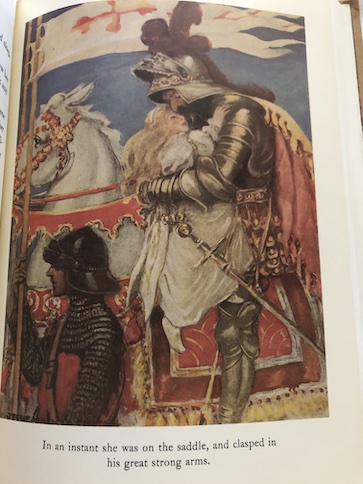
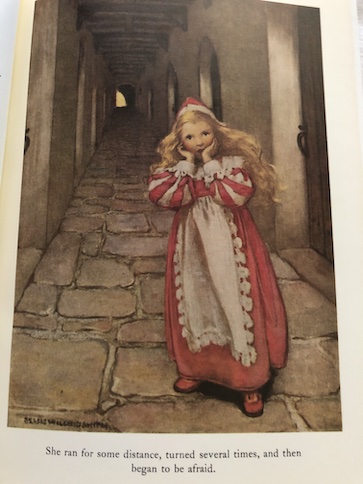
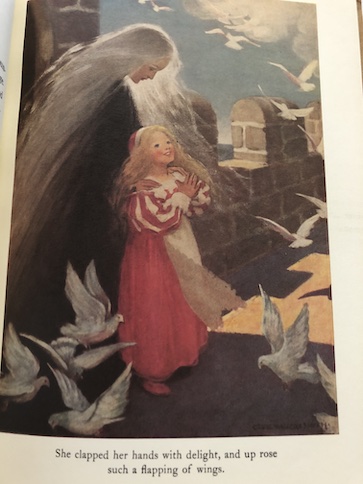
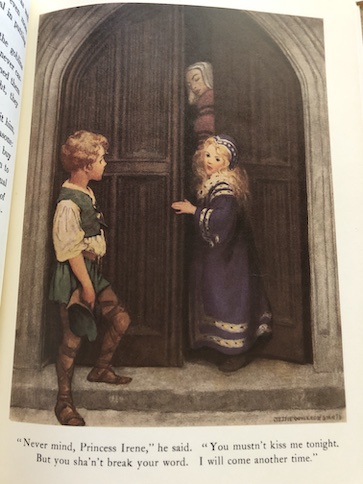
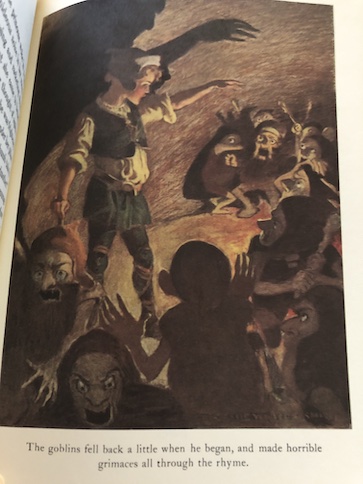


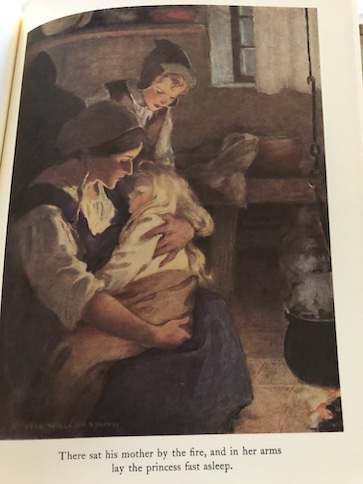
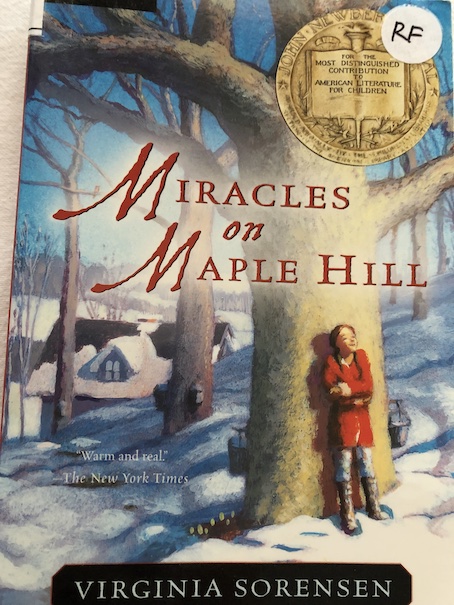
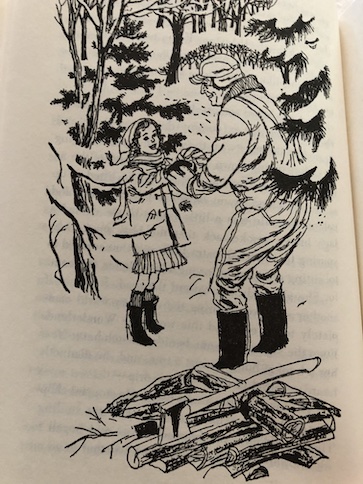
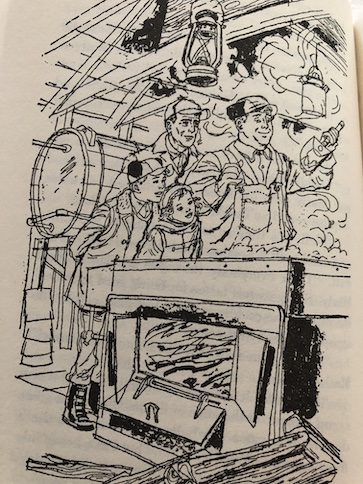


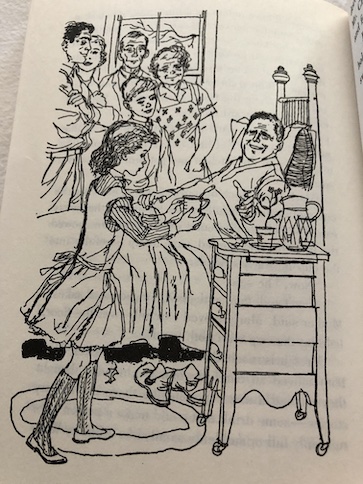
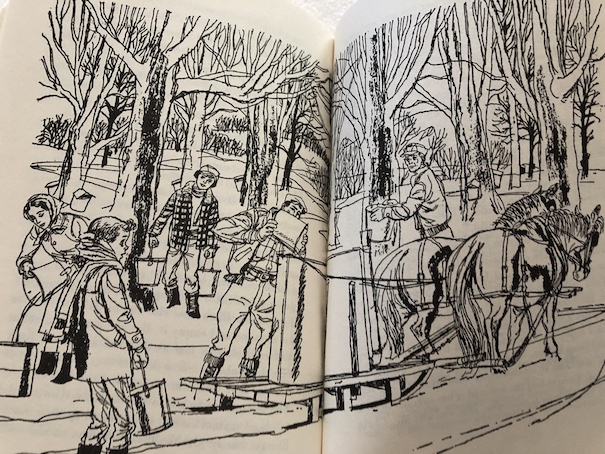
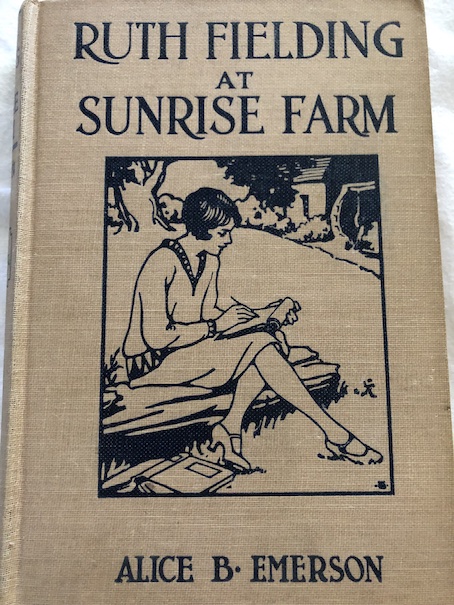
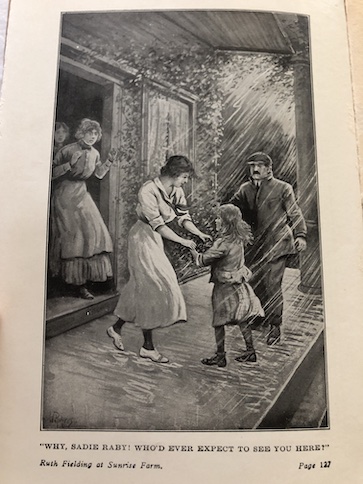


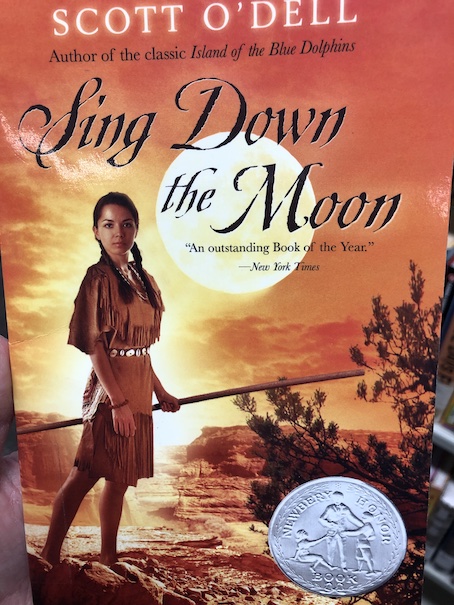

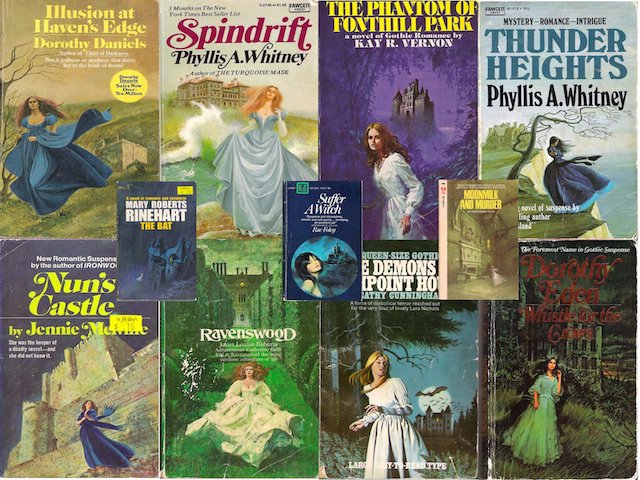


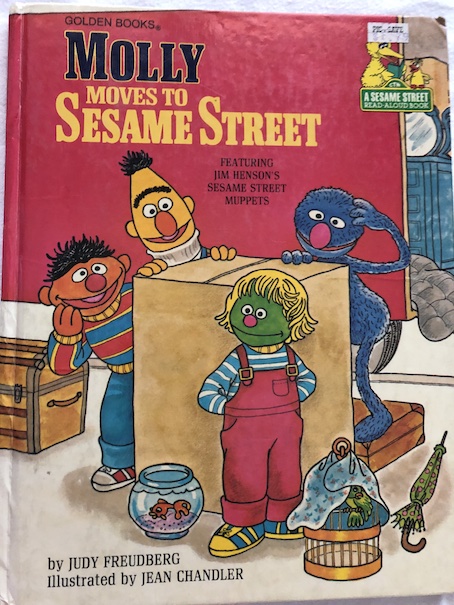


 Jestress's Forgotten Books and Stories