Secrets in the Attic

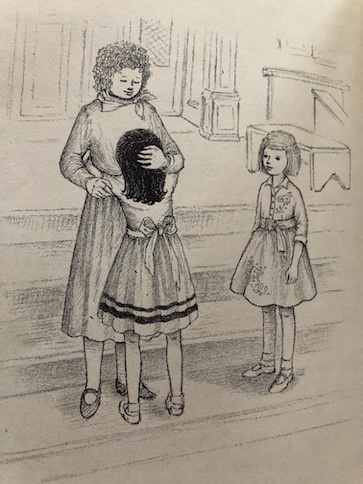
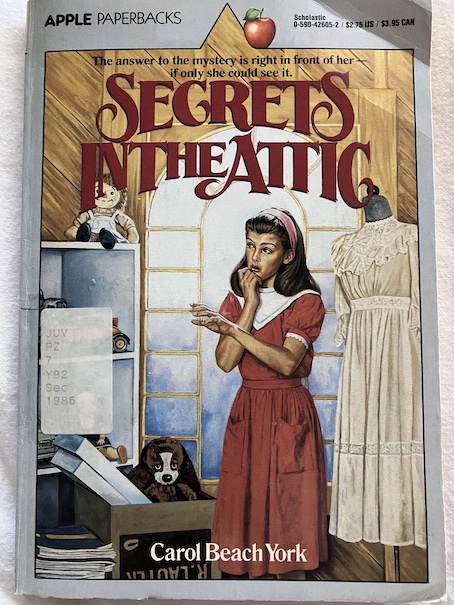
Following the death of Jodie and Peter’s father in a car accident, Jodie’s mother decides that she want to move to a new town and have a fresh start. For some reason, people have been gossiping about the family, particularly Jodie’s Aunt Claire. Jodie doesn’t really want to leave her old home, but she does make a new best friend in her new school. However, they don’t return to their home town of East Hill until Great Aunt Winifred invites them to visit for Christmas.

Jodie loves Aunt Winifred and her big, old-fashioned house with the old toys in the attic. She has fond memories of her whole family getting together for Christmas there, and she thinks that if they visit for Christmas, things will be like they used to be. Jodie’s mother knows differently. Things are not like they used to be with Jodie’s father gone and the gossip still hanging over the family, although Jodie doesn’t understand why. Her mother refuses to return to East Hill, but she says that Jodie can visit Aunt Winifred if she wants. Jodie doesn’t want to be away from her mother and little brother on Christmas itself, so they decide that Jodie can visit Aunt Winifred the week after Christmas, between Christmas and New Year’s.

Jodie still can’t understand why her mother doesn’t want to see Aunt Winifred, but it’s really Aunt Claire that she doesn’t want to see. Jodie’s mother explains that, around the time that Jodie’s father died in the car accident, some money was stolen from Mr. Carrington. Jodie’s father was a lawyer, and Mr. Carrington was once of his clients, and the theft was discovered after Mr. Carrington himself died of a heart attack. Aunt Claire accused of Jodie’s father of stealing the money, but since he was killed in the accident, he never had a chance to defend himself against the accusation. Uncle Phillip, Claire’s husband and vice-president of the bank where Mr. Carrington kept his safe deposit box, never believed that Jodie’s father took the money, but it was bad publicity for the bank when it was stolen. He was trying to get to the bottom of the situation, but he had been in the car with Jodie’s father during the car accident and was also killed. That may have been why Aunt Claire started making public accusations against Jodie’s father – to deflect any blame or suspicion of Phillip because of his role in the bank and maybe also because she blamed Jodie’s father for getting him killed in the car accident when they skidded on a snowy road.

In spite of everything that’s happened, and even because of it, Jodie feels like she has to return to East Hill to see Aunt Winifred and face Aunt Claire. She’s not sure how, but she thinks that if she goes back to East Hill, she might find something that will clear up the situation. There had been another suspect in the theft, a nephew of Mr. Carrington, who was known to be in debt, but nobody could figure out how he could have stolen the money. When it comes down to it, Aunt Claire herself spends more money than she should.

When she gets to East Hill, she realizes that her mother was correct that East Hill doesn’t feel like it used to. Jodie no longer feels like East Hill is her home. She likes her new town and misses her best friend. Her older cousin, Lisa, who is Aunt Claire’s daughter, used to get on her nerves sometimes because she was always the “perfect” child. She is very pretty and talented on the piano, always seems to look great and do everything right, and is also kind of a snob. When Lisa is at the train station with Aunt Winifred to meet Jodie on her arrival, Jodie realizes that Lisa bothers her even more than she used did before.

Lisa is still fussy and snobby and impatient with Aunt Winifred, who sleeps more because she’s getting old. One thing that interests Lisa about Aunt Winifred is that she’s heard that Aunt Winifred is making a new will, and she openly speculates about who is going to get the most out of it. Jodie is disgusted by this talk and asks her why anybody has to get more than anyone else, and Lisa matter-of-factly tells her that there is always a favorite and that the favorite always gets the most. (I can guess that her mother probably told her this.) From the way Lisa talks, Jodie can tell that she thinks of herself as the “perfect” favorite and, therefore, already entitled to receive the most. It disturbs Jodie that Lisa doesn’t seem to care that Aunt Winifred would have to die for her to get anything at all. One day, she overhears Aunt Claire lecturing Lisa that she needs to practice her piano music more while visiting Aunt Winifred because she wants Aunt Winifred to pay for Lisa to study music in Europe. Aunt Winifred seems to want it even more than Lisa does.

While Lisa busies herself with practicing at the piano and calling her friends on the phone, Jodie goes up to the attic to see the old toys they used to play with. When she looks in the attic, she is surprised that her feelings about the attic have also changed. There is something about the attic that now bothers her, but she can’t quite think what it is. She feels like something in the attic has changed or that she wants to change something there, but she’s not sure why. When she looks for a log cabin toy with little pioneer and Indian (Native American) figurines that her father always loved, she is surprised that it is missing. Aunt Claire doesn’t think much of it, suggesting that Aunt Winifred might have just thrown it away, not knowing that it was Jodie’s father’s old favorite toy. However, Jodie knows that can’t be it. Aunt Winifred never had any children of her own, and she loved her two nephews as if they were her sons. She was very sentimental about the toys that they loved, and Jodie doubts that she would just suddenly decide to get rid of one of them.

When Jodie finally figures out what happened to the log cabin toy, the whole truth about the theft comes out.

The book is available to borrow and read for free online through Internet Archive.

I liked the setting of the story. Big old houses like Aunt Winifred’s aren’t very common anymore, and I always wanted to live in a house with an attic that had a solid floor to it, like the one in the story. Jodie’s memories of playing with the old toys and dress-up clothes there sound fun. Although Jodie doesn’t spend Christmas itself at the house, she is still there during the Christmas season, so the Christmas tree with its unique, old ornaments is still there, and the family enjoys Christmas treats, like chocolates and mince pies.

I had theories about the mystery right from the start. I hoped that Mr. Carrington’s nephew, who we never met, wouldn’t be the thief because that felt too much like bringing in an outsider as the culprit. When Jodie meets a boy named Kenny and becomes friends with him, I thought his family might have something to do with the theft, but they don’t. He’s just a boy who likes Jodie and has fun with her, doing things that Lisa thinks she’s too grown-up to do anymore, like throwing snowballs and making a snowman.

I really suspected Aunt Claire as the thief from the beginning. She definitely has expensive tastes, and when she appears in the story, her clothes and hairstyle sound much more expensive than I would expect from a widow raising a daughter in a fairly small town. The way she and her daughter talk about getting their hands on Aunt Winifred’s money emphasizes how callous and money-grubbing she is. Even Lisa admits that she doesn’t really want to go to Europe to study music. Her mother is the one who wants to go to Europe, and she’s using Lisa as the excuse to get money so both of them can go there. Lisa doesn’t like her mother’s plans because she wants to stay at her school with her friends. It occurred to me that Claire’s accusations about Jodie’s father taking Mr. Carrington’s money could have been to cover up for herself doing it. Since her husband worked at the bank, she could have used his position to get access to the money herself. That’s not exactly what happened, though.

Claire is not the thief. In a way, she was the motive for the crime, so when the truth comes out, it’s still going to hurt. When Jodie discovers what really happened, she even feels sorry for her aunt because she knows that the truth will be hard for her to hear and will affect her reputation in this town in the same way that the suspicions about her father affected her mother. Jodie also feels sorry for Lisa, which I felt was more justified than sympathy for Claire. However, the story ends with Jodie finding out the truth for herself, and we aren’t shown the moment when she reveals it to everyone. We don’t get to see everyone’s reactions, and if it changes any of Aunt Winifred’s thoughts about her will, we don’t see that happen. We don’t know what arrangements Aunt Winifred made originally, so that doesn’t matter too much. The talk about the will is really to establish the moral characters of Aunt Claire and Lisa.

I suspected that Aunt Claire was set up as being so awful and unlikable that readers wouldn’t be sorry if she turned out to be the thief, kind of like how the people who get murdered in old episodes of Murder She Wrote are usually the people who are the most nasty to everyone during the first ten minutes of the show, so viewers are not too sad about them dying and can get on with the puzzle of figuring out who did it. Aunt Claire makes a great villain because I disliked her so much that I wouldn’t have cared no matter what she was guilty of or what happened to her. She’s the snotty kind of woman who says awful things about other people, both behind their backs and to their faces. She criticizes people she sees for being fat and offers unsolicited critiques of their clothes, like she’s the fashion police. She’s extremely manipulative of other people and their emotions for the sake of getting what she wants and making herself feel good, and this even extends to her own daughter. Basically, she’s one of those middle school mean girls who never grew up beyond that point. That she’s good at being awful to other people and getting things she wants is enough justification to her that she sees nothing wrong with being the way she is. I’ve known so many other horrible adults exactly like that in real life that I knew I would cheer to see her shoved under the proverbial bus.

I was expecting that her greediness and high maintenance lifestyle were her motives and that her nastiness was a set-up so readers could focus on the puzzle of how she gets caught. I even thought that the story might take a dark twist with her tampering with Aunt Winifred’s medicine to slowly poison her for the inheritance she expected, since Aunt Winifred said that her medicine was making her unusually sleepy. However, Aunt Claire isn’t an attempted murderer any more than she’s a thief. She’s just an awful person who uses people, and her high maintenance lifestyle was the motive for the real thief, who was probably also manipulated by Claire and her expensive tastes.

Lisa’s character softens a little during the course of the story. She’s still fussy and a little spoiled because of the way her mother is, but Jodie realizes that Lisa isn’t very happy with the way her mother is. Lisa likes music, but her mother is manipulating her as much as anyone else to further her lifestyle. Lisa knows what she wants for herself, and hopefully, even though the truth about the theft is going to hurt her, it might actually change things for Lisa’s benefit in the long term.

I also wondered whether the car accident had anything to do with the theft, but apparently, it doesn’t. It doesn’t seem to have been caused deliberately or by anything directly related to the theft. It was just an accident that took place at an unfortunate time.
Mirror of Danger

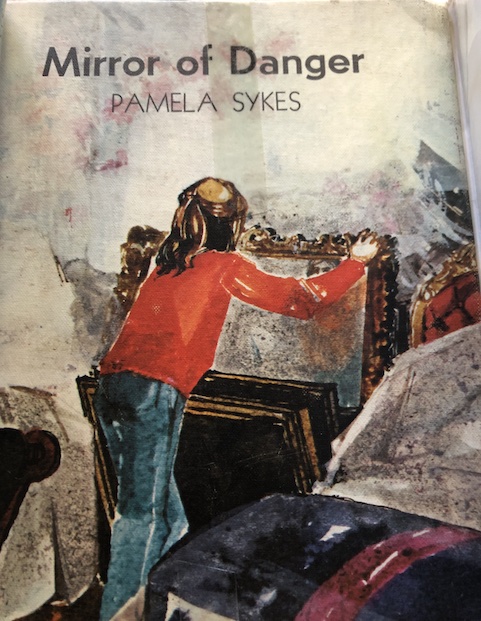
Mirror of Danger by Pamela Sykes, 1973, 1974.

In the beginning, Lucy is an orphan who lives in the countryside with her elderly Aunt Olive. The two of them are very fond of each other. Then, Aunt Olive dies, and Lucy has to go live in London with her distant cousins. Even though Lucy inherited her aunt’s house, there were bills to settle, and the trustees in charge of Lucy’s legacy had to sell the house to pay them and provide money to help support Lucy. Lucy’s cousins have agreed to take her for Christmas, but Lucy isn’t sure whether or not she will be living with them permanently. It depends on how well Lucy gets along with the children of the family. People keep telling her “we’ll see” and reminding her to be brave and sensible and that changes are natural after someone dies. Her trustees and her aunt’s old friends want to do what’s best for Lucy, although they’re secretly a little concerned about whether their plans are what’s best for her. If she doesn’t get along with her relatives, they might have to send her to a boarding school, although they know that type of environment isn’t really suited to Lucy’s personality.

Since Lucy was raised and home-schooled by an elderly and old-fashioned woman, she is not accustomed to living in a big family or with other children and not even accustomed to any type of school environment. The adults who know her understand that Lucy is a quiet, reserved child who acts older than her age. Before she goes to stay with her relatives for Christmas, one of her trustees, Mr. Thomas, talks to Lucy about her life with her aunt and the need to give her other relatives a chance to be friendly. He says that Aunt Olive was an old woman who had a tendency to look back to the past, but Lucy is young and still has her future ahead of her. Mr. Thomas advises her to look forward. However, Lucy can only think of how much she already misses her life with her aunt and how she can’t imagine being happy with these relatives she’s never even met. She escapes thinking about these things by imagining herself other places, immersing herself in past memories.

Lucy feels out of place in her new home and worries if these relatives really want her. The father of the family, called Uncle Peter, is an architect, and the mother, called Aunt Gwen, is an artist who used to design theatrical costumes. Their three children are pretty close in age to Lucy. Patrick is the oldest, Rachel is closest to Lucy’s age, and Bill is the youngest. Their house is an old Victorian house, which pleases Lucy, but she doesn’t like it when she finds out that Uncle Peter is modernizing it. Home renovations are part of what he does as an architect, but Lucy prefers old-fashioned styles to the modern ones, which feel too stark and have garish colors. The children of the family are noisy, and Lucy has to share a room with Rachel, when she’s used to having a room of her own in a quiet, old-fashioned house. Rachel points out that they haven’t been in this house very long themselves, and there are rooms in this house that haven’t been renovated yet. When the renovations are done, Lucy could have one of those rooms for herself, but again, Lucy feels like the renovations are destroying the old-fashioned charm of the place. She doesn’t see why everything has to be new and modern. While she has no idea where else she could go, Lucy just can’t imagine herself living in this house with these people.

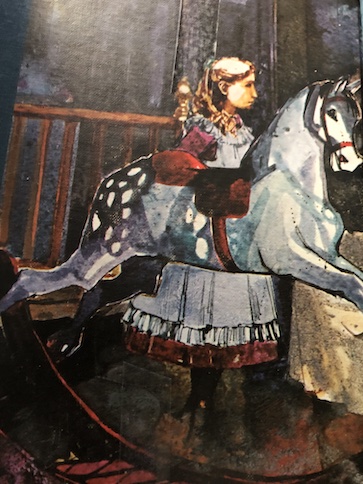
Then, Lucy makes an unusual new friend. Alice is a girl about Lucy’s age, and she used to live in the aunt and uncle’s house 100 years before. Now, she haunts it as a ghost. Lucy first sees Alice in a mirror in the attic, where there are many antiques that have been stored away from Alice’s time. Alice brings Lucy back in time to visit her in the Victorian era because Alice is lonely in the past. She has six older siblings, but four of them have already left home to marry or start careers, and two are at boarding school. Her parents are away much of the time, so most of the time, she is alone with her tutor, whom she calls Mademoiselle. Alice says that she really wants someone to play with.

Alice shows Lucy her toys and games, which are all familiar to Lucy, looking like the ones she always played with at Aunt Olive’s house. However, Alice is spoiled and cheats at games to win. The two of them argue about it, and then Alice sends Lucy to the attic because her tutor is coming, and Alice doesn’t want her to see Lucy. Lucy finds herself in the attic in her aunt and uncle’s house in modern times, unsure of what just happened.

Over the next few days, Lucy spends part of her time with her relatives, preparing for Christmas, and part of her time in the Victorian era with Alice, which is also around Christmastime. Things are still awkward between Lucy and her cousins. On the one hand, she has some fun with them, doing things that Aunt Olive would never have allowed her to do, like going to the movies without adults and eating take-out fish and chips. On the other hand, Lucy is still overwhelmed when her cousins get boisterous, and she is repulsed by their ultra-modern Christmas decorations. Although Alice intimidates and even frightens Lucy, whenever things get overwhelming for her in modern life, Lucy retreats into the past with Alice … only for Alice to get intimidating and frightening again as she tries to keep Lucy in the past with her.

In some ways, Lucy feels more comfortable in the past than she does in her aunt and uncle’s modern home. She likes the homey feel of the house as it was in the Victorian era. The old-fashioned Christmas decorations and Alice’s party are far more charming to her than the modern ones, and she likes the old-fashioned party games better than dancing to modern music. However, Lucy becomes increasingly afraid of Alice. Alice tries to trap Lucy in the past and make her forget all about the present. When Lucy resists and tries to remember things about her family or modern times, Alice gets angry and threatens her. She says that she’ll make something bad happen if Lucy tells anybody about her. Alice has sinister intentions for Lucy. Alice is a lonely and selfish child who isn’t above lies, cheating, and manipulation to get what she wants. She exists only in the Victorian era, and what she wants more than anything is a playmate to join her for all eternity. She says that she always gets what she wants. She wants Lucy.

The book is available to borrow and read for free online through Internet Archive (multiple copies). The original British title of this book was Come Back, Lucy, which was also the title of the tv mini-series from 1978 based on the book. You can sometimes see trailers, clips, or episodes from this series online on YouTube. This fan page has more information about the tv mini-series and the book and its author.

My Reaction and Spoilers

The heart of the story is about looking back and living in the past instead of looking forward and living in the present. Aunt Olive, as an elderly woman, had a tendency to live in the past, bringing up Lucy as if she were a Victorian girl instead of a modern one. Because that was the only life Lucy knew from a young age, she clung to it after Aunt Olive’s death. It was what was familiar and comfortable to her when her life was changing, and she needed comfort. Her London relatives know that this is the case, but they’re not sure how to connect with her at first and to help her see that modern times and a new home can also become comfortable.

There’s a difference between just liking old-fashioned, vintage things and styles and the type of living in the past that Lucy does at first. There are people in modern times who still like the Cottagecore aesthetic and who try to live a slower pace of life and enjoy old-fashioned things and simple pleasures, something that came out of the coronavirus pandemic. But, just having a few vintage things and learning to slow down and appreciate the small things in life isn’t quite what Lucy does. It is the sort of thing she misses from the old-fashioned house in the country, where she used to live, but the problem is that she uses her memories of that time, Aunt Olive, and the stories that Aunt Olive used to tell her about life in the past to take her mind off the things and people in the present too much. Whenever things get stressful or upsetting to her, she retreats into past memories, so she doesn’t have to think about how her life has changed or learn to appreciate the things around her or get along with other people. Her relatives can tell that she’s shutting them out, and while they’re sympathetic to her struggling through her grief, it’s also hurtful that she’s rejecting them. She’s not just using her past memories or love of old-fashioned things for comfort but to avoid dealing with things in the present and forming new relationships.

At the same time, Lucy feels like her relatives don’t really care about her or the life she had before she came to them because they never express sympathy about Aunt Olive’s death or ask her any questions about what she was like. However, that’s due to a misunderstanding and miscommunication rather than her relatives trying to ignore Lucy or Aunt Olive’s death. If Lucy had bothered to read Aunt Gwen’s letter to her all the way through before she arrived at their house, she would have known that Aunt Gwen had told her children not to bring up the subject of Aunt Olive until Lucy did because she didn’t want them upsetting Lucy by forcing her to talk about her death if she wasn’t ready. Her relatives planned to wait for Lucy to feel ready to talk to them and for her to raise the subject herself. Because she was too upset to read the letter, Lucy didn’t understand that and has been waiting for them to talk to her first. At the end of the story, Lucy does read the letter, and she and her relatives have an honest talk about everything, including Alice. This is exactly what Lucy needs to free herself from Alice.

Alice is a similar sort of malevolent child ghost to Helen in Wait Till Helen Comes or Emily in Jane-Emily. She is selfish, and she has no concern for Lucy and Lucy’s life and future. Alice is dead, and she lives only in the past because that’s the only place where she can live. She has no future left. The one thing that past Alice is waiting for is a message from her parents, who are looking for a house in the country to buy. When the message finally arrives for her on December 21, 1873, Lucy has her final encounter with Alice on the 100th anniversary of the event. Alice is happy because she wants to move to the new house and live there with her parents, but she’s also decided that she’s going to bring Lucy with her by drowning her in an icy pond. In a frightening scene, she tricks Lucy into walking out on thin ice, but fortunately, Lucy is saved by her cousin Patrick.

After this incident and her brush with death, Lucy is finally able to release all of her bottled-up feelings about Aunt Olive and the changes in her life and explain everything to her relatives about Alice and how Alice has been influencing her to do and say things that upset them. Aunt Gwen had suspected that Lucy had seen a ghost or at least thought that she had, but she had thought that maybe Lucy had seen someone who made her think that she was seeing Aunt Olive’s ghost. Then, Aunt Gwen saw a door in the house open and close by itself, making her think that maybe the ghost was real. Rachel knew that Lucy was upset about someone named Alice because Lucy was talking in her sleep, but she didn’t know who Alice was. By the time Lucy reveals everything, all of her relatives have had encounters with Alice or things Alice caused to happen. Lucy isn’t sure when she explains things whether or not they all believe her that Alice is a real ghost. Aunt Gwen is convinced, and so is Bill because he met Alice face-to-face at one point and can describe her. Uncle Peter does consider the idea that Alice is a ghost in Lucy’s mind, inspired by all of Aunt Olive’s stories about her Victorian youth and the old house they now live in, but then, he looks through more of the things in the attic and finds Alice’s old scrapbook with her final note about moving to the countryside and starting a new life on December 21st. In the context of the story, Alice is a real ghost who posed a real threat to Lucy, and not just the imagining of a distraught child.

There are a couple of factors that end Alice’s threat to Lucy. The first one is getting past the 100th anniversary of Alice leaving the house, which seems to hold great significance to the ghost, like it was her last opportunity to connect with the house in the present. We never find out Alice’s full history or why she haunts the house as a child in the time shortly before she was supposed to move to the country. She simply disappears after her attempt to kill Lucy so she can remain in the past forever and go to her new home with her. Alice is a ghost who is conscious that she is a ghost, and she knows that Lucy lives in a different time period with people who inhabit her house in the future or present time. Because Alice is a child and seems forever stuck as a lonely child, it seems that she died young somehow and is aware of it, but we never find out exactly how that happened. I have a theory that she was killed in an accident on the way to her new home, but we are never told that. It feels like a let-down that we don’t get the rest of the story about Alice, especially because Lucy says that she would like to learn more about the historical Alice so she can think of her more as a person and less as a ghost.

There is a sequel to this book called Lucy Beware, so perhaps more of that information is revealed in the sequel. The sequel is much more rare than the original, book, though. It only rarely comes up for sale, even online. I’ve checked Amazon, eBay, Etsy, Alibris, and Abe Books, and currently, none of them have a copy. It’s not even on Internet Archive. (At least, not yet, as of this writing.) You can try to get the sequel through an interlibrary loan, but not all libraries will loan out books that are considered “rare.”

The most important factor that breaks Alice’s connection to Lucy is Lucy’s changing feelings. Lucy has some control over when she goes back in time and when she returns to the present, although it takes her a while to see it. There are times when she deliberately seeks out Alice in the past, even when Alice disturbs her, because she just finds the present time and her relatives so overwhelming. While she doesn’t really want to stay with Alice in the past forever, especially at the expense of her own life, Alice gives her someone to talk to about things that she can’t bring herself to talk about with her relatives and a place to retreat to so she doesn’t have to think about the present or her future. At one point, Lucy and Rachel are talking about the importance of making plans for the future. Rachel says that everyone needs to think of the future, and she is exhilarated by all of the possibilities that modern life has to offer for young women. However, because of her life with Aunt Olive, who lived mainly in the past, Lucy is unaccustomed to thinking about the future and finds the prospect frightening. To a woman like Aunt Olive, girls should simply receive a basic education and then get married. Beyond that, Lucy doesn’t know what she wants out of life. She has never considered having a career or learning to support herself because Aunt Olive never discussed things like that with her and never prepared her to make decisions like that. At the beginning of the story, Lucy finds it difficult to look much beyond the immediate future anyway because it seems uncertain where she will live since Aunt Olive is gone. However, once she and her relatives open up to each other and it becomes clear that they do want her to stay with them, her doubts and fears about her immediate future are resolved. She has people who love her, care about her feelings, and want her to talk to them about things, so she no longer feels so overwhelmed about her situation and in need of a retreat. Aunt Gwen says that Alice no longer has influence over her because, whether or not Alice still wants Lucy, Lucy no longer wants or needs Alice. Lucy can now face her present and future without feeling the need or temptation to escape into Alice’s past.

It’s true for people who are victims of living narcissists, too. Abusive people count on their victims being unable to leave them, and they even try to gaslight victims into thinking that they really need them in their lives, for some reason. As soon as their victims realize that they can escape and manage without them, their abusers lose their hold on them. Lucy has no more desire to return to her abuser/attempted murderer because she has dealt with the insecurities that made her vulnerable to Alice and kept her tied to the past, and she has forged new bonds with other people.

One other thing that I really liked about this story was the description of the antique games and game pieces that Lucy kept from Aunt Olive’s house. If you’ve never heard the term before, Spillikins is an old name for Pick-up Sticks. One of the more unique gaming pieces was the set of fish-shaped game counters. There were real fish-shaped game counters (link repaired 12-11-23) like that that were used in the 1800s for playing card games.

Jingle Dancer

Jingle Dancer by Cynthia Leitich Smith, illustrated by Cornelius Van Wright and Ying-Hwa Hu, 2000.

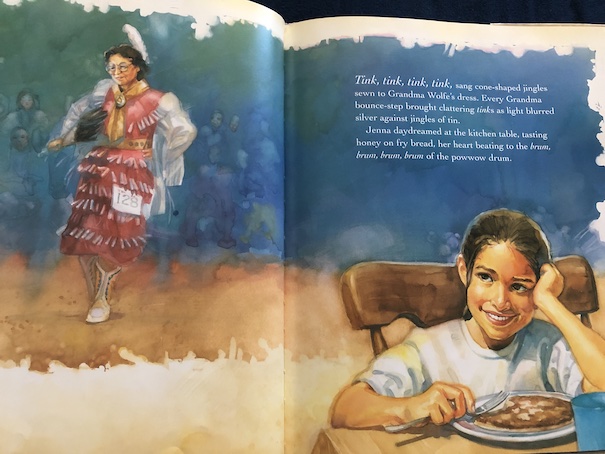
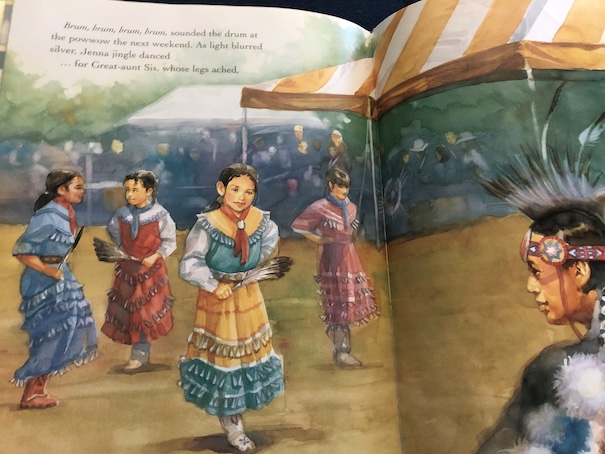
Jenna is inspired to become one of the jingle dancers at the powwow because her grandmother has been a jingle dancer. She loves the way the little cone-shaped bells on the dancers’ costumes sing!

Her grandmother tells her that there won’t be enough time to get the tin for making the jingles for her costume this time, but next time, she can dance with the Girls group.

Jenna knows how to do the dance because she has watched old videos of her grandmother dancing and has practiced. However, she can’t really do a proper jingle dance without the jingles for her dancing costume.

However, her grandmother isn’t the only person Jenna knows who has been a jingle dancer. Other women in Jenna’s family and among her family’s friends have also been jingle dancers, and not all of them dance anymore. Perhaps, with their help, Jenna can get the jingles she needs in time for this powwow!

The book is available to borrow and read for free online through Internet Archive.

My Reaction

I liked the way the book showed how Jenna’s family and friend supported her and helped her to take part in a tradition that they have all shared. They can’t all be there to see Jenna when she dances, but Jenna dances for all them, her dress covered in borrowed jingles!

A section in the back of the book explains more about Jenna’s tribe and the traditional dance shown in the story. The story is set in Oklahoma, and Jenna is part of the Muscogee (Creek) Nation and has Ojibway (Chippewa/Anishinabe) ancestry. Elements of both tribal cultures appear in the story. The tradition of jingle dancing originated with the Ojibway people, and the book describes details of the costume (called “regalia” in the book) that women and girls wear to perform the dance. The book also contains a glossary of words that appear in the story with some additional details about their significance.

I think this story is a fun way to introduce readers to Native American traditions that may not be familiar to them. I also enjoyed the pictures, which have a lovely, dream-like quality to them.

Down a Dark Hall

Down a Dark Hall cover

Fourteen-year-old Kathryn Gordy, called Kit, is going to boarding school for the first time. She doesn’t really want to attend the Blackwood School for Girls, but her widowed mother has remarried, and she and Kit’s new stepfather, Dan, will be going on an extended honeymoon in Europe. Kit tried to persuade her mother to take her with them on the trip to Europe, but Dan is firm that she can’t come on their honeymoon trip. The Blackwood School has a good reputation, and graduation from the school would guarantee Kit entrance to a good college. At first, Kit thought it might not be so bad if her best friend, Tracy, could attend the school, too, but although Tracy applied to Blackwood, she wasn’t accepted there. Kit hates the idea of going there alone. Worse still, when her mother and Dan take her to the school, it’s an imposing, castle-like mansion that gives Kit the creeps. Her mother and Dan think it looks impressive, but just the sight of the building gives Kit a terrible sense of evil. Even though she doesn’t want to stay, her mother and Dan insist.

Because her mother and Dan have to leave on their trip, Kit has arrived at the school a day early, before classes will start. Madame Duret, the headmistress of the school, welcomes them and explains a little about the school’s history. The school is fairly new. Before it was a school, the mansion was the private home of a man called Brewer, who died about ten years ago. Because few people would want a house that size outside of town, the building was vacant for some time before the Blackwood School moved in, and there are some ghost stories and urban legends about it in the area. Kit’s mother and Dan laugh it off.

Madame Duret gives them a tour of the school and mentions her art collection. She says that she enjoys collecting lesser-known works by famous artists. The dorm rooms are incredibly luxurious. Each student will have a room to herself with a private bath and a canopied bed with velvet draperies. Art is important to Madame Duret, and she says that she wants the surroundings to inspire her students. When it comes time for Kit’s mother to say goodbye to her, her mother asks her if she thinks she could be happy at the school. If Kit really feels like there’s something wrong with the place, her mother is willing to delay her trip and make other arrangements. Shrugging off her earlier misgivings, Kit tells her mother that she will be fine, and her mother and Dan leave.

The school still bothers Kit, but she feels like she has to try to do well there for her mother’s sake. She knows that things have been hard for her since her father died several years before. Although nobody believes her, Kit remembers seeing her father’s ghost in her room the night he died in a car accident while he was on a business trip. Her mother has managed since then, but she wasn’t really happy until she met Dan, and Kit appreciates that her mother needs adult companionship. Still, Kit senses that this school is very strange, and there are things wrong it it. She can’t figure out why her friend, Tracy, was rejected by the school. The canopied bed is luxurious but kind of creepy because it reminds her of a scary story. Then, she notices that the bedroom doors have locks on the outside of the doors but not the inside.

At dinner that evening, Kit meets Professor Farley, who is a teacher at the school, and Madame Duret’s son, Jules. Professor Farley teaches math and science, and Jules, who has only recently gotten his degree, will teach music, giving the students piano lesssons. Madame Duret herself teaches languages and literature, and apart from these three, there are no other teachers at the school. Professor Farley says that he is the one who convinced Madame Duret to open a school in the United States, having seen her success at her school in England. A young cook named Natalie also works at the school, but strangely, Natalie says that Madame Duret doesn’t want her to speak to the students much.

When the other students begin arriving, Kit realizes that there aren’t going to be many students at this school, either. In fact, there are only three other students besides Kit: Sandy, Lynda, and Ruth. All of the girls also seem to be somewhat removed from their families. Sandy is an orphan who lives with her grandparents, who don’t drive, so they didn’t even drop her off at the school. Lynda and Ruth have both been to boarding schools before, and they were dropped off by a chauffeur. They say that Blackwood isn’t like their old school. Kit still wonders why Tracy wasn’t accepted to the school when there are so few students. Kit realizes that she herself isn’t a top student, and the other three students at this school are quite different from each other. However, Professor Farley says that there are other qualifications besides grades, and all of the girls at this school have the qualities they were looking for. Madame Duret refuses to discuss test results at all.

Kit does her best to settle into the school. Everyone acts nice to each other, and the classes are like having private tutors because there are so few students. However, Kit is still nervous and having strange dreams. She never remembers what she’s been dreaming about, but she dreads these strange dreams, so she has trouble getting to sleep. The only way she can get to sleep is to exhaust herself by reading and writing letters late at night until she is exhausted.

One night, while Kit is writing a letter to Tracy late at night, she hears a scream that is choked off suddenly. Although Kit is afraid, she feels like she has to investigate and find out if there is someone in trouble. She thinks the scream came from Sandy’s room. When Kit tries to check on Sandy, Sandy doesn’t answer, and she has trouble getting into Sandy’s room. Kit feels like there is someone in Sandy’s room, and the room is weirdly cold. When Kit finally gets the light on, Sandy is a little disoriented. She doesn’t remember screaming, but she remembers a strange dream about a young woman in old-fashioned clothing, who was watching her. Sandy tells Kit that she’s had strange dreams like this before, although not about this particular woman. When her parents were killed in a plane accident, Sandy sensed the accident when it happened, and she saw her parents in a dream, not unlike the apparent dream that Kit had about her father when he died. The next day, Kit talks to Lynda and Ruth and learns that they have also been having strange dreams that they have trouble remembering.

These dreams seem to be the one thing that all four of the Blackwood girls have in common, and all of them find them disturbing. When Kit has morning piano lessons, she feels strangely tired and her fingers are sore, as if she’s been playing the piano for hours already. Kit tries to talk to Jules about the strange things that have been happening and her own sense of unease. He tries to give her reasonable explanations, but from the way he speaks, Kit has the uneasy feeling like he knows something that he’s not telling. Jules tells Kit that he’s had some strange dreams himself, but he thinks it’s just the atmosphere of the strange old house. Kit asks him if he’s still having the dreams, and he says he is, but he also likes the house and thinks that it’s just a matter of getting used to the place.

Strange things continue to happen at the school. Lynda wakes up from a nap and suddenly draws an incredibly realistic portrait of Kit when she’s never even taken art classes or done any drawing before. Then, someone steals the portrait out of Kit’s room. Letters and post cards from Kit’s mother and Tracy reveal that they haven’t received any of the letters that she’s been writing to them. Sandy tells Kit that she has a sense that Blackwood School is evil, just like Kit felt when she first arrived.

Ruth is the one who realizes that all of the girls have ESP. Sandy and Kit both experienced ESP when they saw visions of their dead parents. Ruth admits that her excellent grades are only partly due to her naturally high IQ. She can also sense the contents of books without reading them and read the minds of people giving her tests, so she can give them exactly the answers they’re looking for. Lynda isn’t as bright as the other girls, but Ruth has been friends with her for a long time and has discovered that Lynda has memories of herself in a past life, when she lived in Victorian England. Ruth realizes that the girls’ psychic abilities are the reason why the four of them, and only the four of them, were chosen to be students at Blackwood School. The school has a dark purpose beyond providing an education, and these four isolated girls are there to fulfill that purpose.

The book is available to borrow and read for free online through Internet Archive. It was also made into a movie in 2018.

I read this book because it was mentioned as a book a character was reading in another children’s book, The Shimmering Ghost of Riversend, and because it occurred to me that it would fit the Dark Academia genre that’s been popular in the last few years. The reason why this book was mentioned in the other story is that both books involve ghosts who have the ability to act through other people and help them to do things that the living people couldn’t do by themselves. I have a tolerance limit on scary stories, but I felt like I had to read this one because it was mentioned in the other book, and I was curious about it. I’m not sure that I want to see the movie because trailers of the movie make it look even darker than the book, but the book didn’t go beyond my tolerance limits.

In Down a Dark Hall, Madame Duret has psychic abilities of her own and is using girls with psychic abilities to channel the spirits of famous dead people so they can complete works that they were unable to complete in life. Lynda draws and paints pictures that she shouldn’t be able to produce because she has no natural talent for art or training in it. She also begins signing her pictures with the initials TC because she is actually channeling the spirit and abilities of Thomas Cole. Sandy begins writing sonnets without having any prior interest and ability in poetry before because she is channeling Emily Bronte. Ruth finds herself making mathematical notes that are really too advanced for her and barely within her understanding. She’s not sure who she’s been channeling because the scientific and mathematical principles she’s been receiving have little personality attached to them. The reason why Kit’s fingers are always sore and she’s so tired every morning is that she’s been channeling Schubert and other musicians, playing piano music at night. There is one night when multiple musicians fight to control her and get their music out.

The girls are not channeling these spirits through any will or conscious effort of their own. Each of these episodes occurs either while the girls are asleep or just after they wake up from having been asleep. Madame Duret isn’t just facilitating this possession for the sake of art, literature, and scholarship, but also out of greed. She is known for having an impressive collection of works of little-known works of art from famous artists, but what no one else knows is that those works were not produced within the artists’ lifetimes. She has performed this same trick of using the psychic abilities of students to channel the spirits of dead artists to produce new works before, and she artificially ages these works so no one knows that they are new instead of previously-undiscovered works.

Being possessed by the spirits of the dead is disturbing enough, but the girls of Blackwood School also come to realize that the psychic bonds between them and these famous spirits are getting stronger over time. If they don’t find a way to escape Blackwood School soon, they will become permanent. Records in Madame Duret’s office reveal that some of her previous students died from their experiences, and others lost their minds and ended up in mental institutions. No one could stand this type of channeling over the long term and keep their sanity intact, and the spirits themselves don’t seem to have much or any concern for the well-being of the girls channeling them. They seem to have so many ideas that they want to get out that they push the girls harder and harder to produce them. Some of the spirits are gentler and more personable than others, but some regard the girls simply as tools to be used. They can even get violent when the girls resist them or when different spirits interrupt each other’s work. This is a very creepy book, and the girls have some close calls, but fortunately, it has a good ending. I like atmospheric books, but I don’t like books that are overly dark, and I was relieved that all the girls survived. I would have found it hard to take if children died during the course of the story.

Although I knew before reading the book that the story involved ghosts and possession, I initially thought that the isolation each girl has from family and friends was part of the reason why these particular girls were chosen for the school. Before I found out that each girl has psychic abilities, I noticed that none of them are in a position where they are very closely watched by their relatives. Kit’s mother and stepfather are going to be traveling through Europe, so they won’t be trying to visit the school anytime soon, and it would make sense if they didn’t hear from Kit for a while. Sandy is an orphan whose grandparents can’t travel easily, so they won’t be coming to check on her every weekend. Lynda’s mother is an actress who now lives in Italy, so again, there is a separation by great physical distance. Ruth’s parents are busy professionals with doctorates. None of the girls is likely to have any visitors while she’s at school or anybody who would be overly concerned about not hearing from them for a while. At first, I thought that could have been part of the reason why Tracy was rejected as a student, because she has both parents living, and those parents would be in more of a position to check on her and more likely to go to the school themselves if they didn’t hear from her. However, it turns out that her rejection is really because she isn’t psychic, like Kit. The chosen students’ relative isolation from family is just icing on the cake to their psychic abilities and plays into the plot as a reason why nobody outside the school realizes all the weird things that are going on.

I thought that the build-up of the sinister atmosphere at the school was great! Kit has a blatant sense of evil when she first arrives, which feels at first like we’re just being told that the place is evil, but there are also a lot of little details that support it. First, the place is overly luxurious for a boarding school, especially one with so few students to support it. Kit is quick to spot that the girls’ doors can only lock from the outside, which is chilling, although Jules says that’s just to keep people from going into their rooms when they’re not there themselves. However, someone does enter Kit’s locked room to take the portrait of her that Lynda drew, indicating that the girls’ rooms are not safe from anyone and that it’s possible for them to be locked in and unable to get out.

There are also hints from the beginning of the book that Madame Duret and Professor Farley are sinister. Blackwood is actually Madame Duret’s third school that we know about. She had one in France, one in England, and now, one in the US. For some reason, she tends to move countries, which seems odd for someone building a reputation as an elite educator. Boarding schools often have an air of tradition, and their reputations rest on long-term success, which is built over time. Moving around is actually a warning sign, at least to me, that Madame Duret doesn’t want to stay places long enough for people to figure out what she’s really been doing at her schools. Even Jules admits that he doesn’t know things about his mother because he has spent most of his life at other boarding schools himself, not at her schools, so the two of them have mostly been living apart. However, he does know about the possessions of the girls because he has the recordings of the music Kit plays at night. It’s just that he doesn’t fully realize the harm being done to the girls until the end of the book or the harm his mother has already done to previous students.

The old mansion the school is in has a sinister history. The former owner, Mr. Brewer, lost his wife and children, including a baby, in a fire at the house, mostly due to smoke inhalation because the fire didn’t damage the building too badly. After that, he lived as a recluse, and he would act like his family was still alive, buying things for them in town. He could have just lost his mind from grief, but there are indications that his family still haunted the house as ghosts. Locals started telling ghost stories about the place after a plumber heard a baby crying in the house.

Recent reprintings of this book have been updated to include the concepts of laptops, cell phones, and emails, which were not in use when the book was first written. The explanation for why the girls can’t use their laptops to email anybody or get outside help is that there is no Wi-Fi or Internet access at the school. They can write reports on their laptops, but they can’t do much else. Their cell phones don’t get signals, so they can’t call or text anyone.

The version of the book that I used for the cover image is one of the new, revised books with modern technology, and it also has an interview with the author, Lois Duncan, in the back, in which she talks about the inspiration behind the story, her own beliefs about ghosts and psychic abilities, and how she was impacted by the murder of her own daughter, which she earlier documented in a book called Who Killed My Daughter?, in which she consulted psychics for insight into her daughter’s death because the police seemed unable to make progress in the case. Her daughter’s murder happened in 1989, years after Down a Dark Hall was written. Lois Duncan wrote many suspense books for children and young adults, but after her daughter’s death, she gave up writing suspense because it was too upsetting for her to write about girls in danger. She started writing picture books instead. Duncan had already passed away by the time one of the suspects in the case confessed more than 30 years after the murder.

Behind the Attic Wall

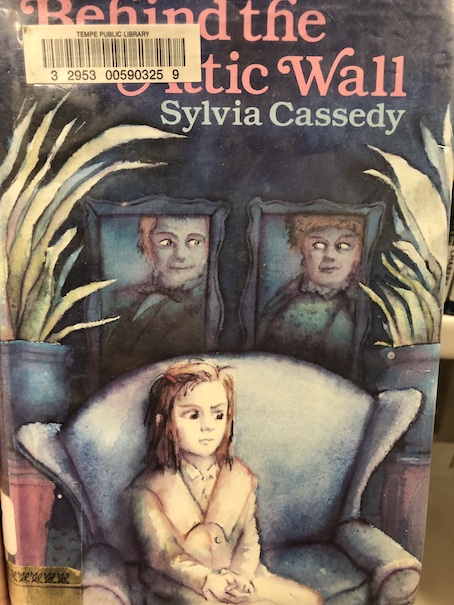
This story is told as a flashback, so we know that things get better for the main character, but she is still haunted by her past experiences.

Twelve-year-old Maggie is an orphan who has been bounced around between foster homes and boarding schools because of her bad behavior. Her bad behavior is because she feels neglected and unloved. She eventually comes to live with her great aunts and an uncle in an old house that used to be a boarding school. Maggie has memories of the house where she once lived with her parents before they died, but no place she’s been since has seemed home-like.

When she first arrives, her eccentric Uncle Morris picks her up at the station. Uncle Morris has a sense of humor, which is both charming and also gets on Maggie’s nerves. When she gets a look at the institutional-looking old house where her great aunts and uncle live, she is physically ill. She has lived in various boarding schools and is horrified at the idea of living in another. Her last boarding school expelled her, and the headmistress called her a “disgrace.” Maggie had hoped that, for once, living with relatives might mean living in a real home.

Her two aunts, Harriet and Lillian, remind her of the headmistresses at boarding schools, although their rules are different from most headmistresses. They lecture her about health and nutrition and worry about her being undernourished. They give her old-fashioned, hand-me-down clothes to wear that Maggie assumes are the uniforms of this old school. One of her aunts gives her a baby doll, but Maggie tells her that she doesn’t like dolls and doesn’t play with them. She doesn’t have any dolls, and if she ever had any before in her life, she doesn’t remember. Her aunt thinks her rejection of this gift is horrible. Her aunts don’t seem to understand much about children, and they are both horrified when Maggie dumps out her glass of milk because they gave her warm milk instead of cold. However, her Uncle Morris is amused and tells her that she might be the “right one” after all. Maggie isn’t sure what he means by that.

After her aunt leaves her alone in her new room, Maggie plays with the doll a little, imagining that she’s explaining it to a group of girls who have never seen a doll. A game that Maggie often plays with herself is to mentally explain common things to a group of imaginary girls who don’t know what any of them are. Then, she goes exploring the rest of the old house. Because this building is so obviously an old school, she keeps expecting that she will eventually encounter other students, but there are no students. Maggie is the only child in the old house.

Maggie finds her aunts’ rooms and tries on their curlers, a necklace, and a fancy pair of shoes. She gets in trouble with her aunts for doing that, and that’s the moment when Maggie understands that there really are no other children around to see her get in trouble. At first, her aunts think that maybe agreeing to accept Maggie was a mistake and that they can’t handle her. However, they decide to keep her, at least for the present.

They explain to Maggie that the building where they live did use to be a boarding school for girls. It was founded by some ancestors of their, whose portraits hang in the parlor. Maggie is amazed at the idea of ancestors because she barely even remembers having parents and has little concept of her extended family. The old school closed after some kind of disaster, and it reopened in a new location down the road. Now, the new school is a private day school for both boys and girls, catering mostly to wealthy families, who can afford the fees. Maggie is horrified when she finds out that she will be attending this school because she knows that a poor orphan like her in her shabby, hand-me-down clothes is going to be an oddity among the wealthy private school students.

On her first day at the school, Maggie has a panic attack while imagining going through the routine of her teacher telling the whole class about her unfortunate history and the tragic deaths of her parents in a car accident when she was little and asking the other students to be patient and charitable to her. She’s experienced this before, and she knows that, while the other students start off treating her charitably, they soon get tired of being charitable and start picking on her. Maggie tries to run away from the class, and that earns her a reputation as a weirdo right off the bat. The other kids immediately start treating her like a weirdo and calling her the usual nasty names, and Maggie’s only relief is that, this time, they didn’t go through the false kindness phase first.

Uncle Morris doesn’t live at the old school with the aunts, but he lives nearby and sometimes comes to visit. He continues to spout his witty nonsense and plays weird practical jokes that make no sense. Maggie starts to understand that her uncle’s form of teasing isn’t meant to be mean, unlike the kids at school, but none of it really makes any sense to her. His jokes are pointless, and he doesn’t respond to anything, even Maggie’s emotions, in a normal way, turning everything into some kind of bizarre joke.

Then, Maggie starts to hear voices in the house. She can’t tell where the voices are coming from, but she knows they’re not her aunts, and her aunts never seem to hear them. They talk about random things, like tea, roses, a lost umbrella, and a dog. Maggie asks her aunts who’s talking, but her aunts say no one is. They think that it’s just Maggie’s imagination because she’s highly strung, but Maggie knows that she’s not imagining it. Her Uncle Morris also seems to hear the voices because he reacts to them at one point, but when Maggie tries to ask him about it, he dodges the question and makes another of his nonsense jokes.

One day, while her aunts are out of the house, the voices call to Maggie and ask her to join them. Maggie searches for the source of the voices, and behind the wall in the attic, she discovers a small room with a pair of mysterious dolls who are alive. They walk and talk. At first, Maggie thinks this must be some kind of trick, but it isn’t. She tries to ask the dolls what they are, but they speak in nonsense jokes in response to serious questions, like Uncle Morris.

Maggie is unnerved by the dolls at first, and she throws a fit about how stupid their pretend tea party is, kicking the dolls aside in fear because she can’t understand them and is afraid of what they might do to her. The dolls simply conclude that they must have been wrong and that Maggie isn’t the right one and stop talking to her. Maggie tells them that she doesn’t care and doesn’t want to be the right one, but actually, she can’t stop thinking about the dolls. She wonders what they mean about the “right one” and what kind of person would be the right one. She also feels guilty about damaging the dolls when she kicked them, so she returns to the attic to fix them. When she starts to fix them, the dolls begin speaking to her again.

The dolls become Maggie’s friends, giving her the love she so desperately needs. Maggie also feels needed by someone else for the first time in her life, enjoying the feeling of taking care of the dolls, sort of the way she took care of the girls in her imagination. However, the dolls have a spooky origin, and when Maggie realizes the truth about the dolls, it changes her life forever.

The book is available to borrow and read for free online through Internet Archive (multiple copies).

I wasn’t sure if I was going to like this one or not because, while I like sort of atmospheric spooky themes, I have limits on how many scary and sad themes I can take. It did help that the book is divided into sections, each with a prologue about Maggie in the present day as she looks back on this strange period in her life. The prologues explain how Maggie is now in a happier home with people she has come to think of as her parents and younger children that she has also come to love as little sisters. The other kids are fascinated by the stories that she tells about her time with her aunts at the old boarding school, and Maggie enjoys explaining things to them, like she used to do to the imaginary girls, only she speaks more politely to the real girls. Since her time with her aunts, she has learned to get along better with people, and this ghost story is about how she learned how to build connections with people.

The book makes it clear that Maggie’s bad behavior is because she has been lonely, neglected, and mistreated since her parents’ deaths. She has been in various foster homes and boarding schools, but the people who were her caretakers didn’t really love her or have any patience with her. The other children in her boarding schools used her as a target for teasing and bullying, causing Maggie to look at everyone new she meets with suspicion, waiting for them to turn on her, even if they acted nice at first. The adults don’t really build a relationship with Maggie and just expect Maggie to be perfectly behaved, regardless of her provocation. Maggie remembers having spoken to psychologists before, who had her draw pictures of her feelings and family, but they never really solve anything for Maggie. Maggie still feels neglected and unloved, and when the adults at each place she’s been get tired of her, they just ship her off to somewhere else, where the process continues. Maggie’s bad behavior is like shooting herself in the foot, sabotaging possible friendships and relationships, but it becomes more understanding when you realize that this is the only pattern of relationships she knows. Children and adults have both mistreated her, so she doesn’t have any knowledge of healthy and loving relationships to draw on to know how people are supposed to treat each other.

That’s been Maggie’s life for as long as she remembers. The only clothes she has are old, worn pieces of various school uniforms from the various boarding schools where she’s been, and she has no toys or personal possessions except for a pack of cards that she uses to play solitaire, a game that one of her former boarding school roommates taught her. It’s the only game Maggie knows how to play other than imaginary games.

Maggie’s aunts and even her Uncle Morris aren’t particularly good for her. Her aunts have no patience or understanding for her. The aunts do care about Maggie. Maggie does become better fed and healthier because the aunts are concerned about her health, but they don’t understand how to take care of her emotional health. They also have some selfish motives in their care of Maggie, wanting to show off her improvement to their health society because they want to prove their health theories. Uncle Morris is quietly supportive of Maggie, but I found him rather trying because, when Maggie tries to speak to him seriously and sincerely, he just makes jokes and never really addresses her feelings or the realities of her situation. Admittedly, it’s partly because he knows the truth about the dolls but can’t admit it. Still, constant jokes aren’t what Maggie really needs, and his jokes and nonsense wear on her. The dolls also speak nonsense, but they give Maggie the opportunity to learn valuable lessons about how to get long with others and build relationships with them.

One of the first lessons that Maggie learns is that, while other people have done things to hurt her, she also does things that hurt other people’s feelings. Before she can begin to develop relationships, she has to learn to control herself, to not treat other people in hurtful ways, and to apologize and do things to repair damage she’s done. She can’t begin to build a relationship with the dolls until she repairs the damage she did the first time she met them. Maggie is actually amazed that she was able to do it because she has never fixed anything in her life. She is unaccustomed to the idea that she can make things better when things have gone wrong or when she’s done something wrong. Most of her past problems have just ended in failure and with her being sent away.

Maggie also learns that building relationships with other people means caring about their needs, and Maggie likes the feeling of being needed by someone. Acting out the tea parties with an empty tea pot and wooden pieces of bread and watering the fake roses on the wallpaper is still ridiculous, but she does it all anyway because the dolls need her to do it. She gives them presents, too, the first presents that she’s ever given anybody. One of the girls at Maggie’s school, Barbara, sees Maggie making a present for one of the dolls and gives Maggie a little paper umbrella for a doll. Maggie learns that it’s possible for people to bond over shared interests.

However, there is a dark side to this story. There are hints all along about what the dolls really are. The man doll, Timothy John, is always reading a torn scrap of a newspaper about a fire, but he can never finish the story because most of it is missing. Every day is Wednesday for them, and they say that is the day they arrived in that room. When they show Maggie their best Sunday clothes, which they never wear because every day is Wednesday to them, Maggie is surprise to see that the clothes are burned. The dolls also speak of a third person who is supposed to join their doll household at some point, but they say that it can’t be Maggie because she’s supposed to be their visitor.

The truth is that the dolls are the ghosts of her ancestors, the ones who founded the school. They were killed in a fire in the 1800s, along with their dog, who is now a little china dog in their attic room. The story in the little newspaper scrap is about them, and the fire is the reason why the school had to be moved to another building. Maggie doesn’t realize the truth until she runs away after an argument with her aunts because she didn’t come to the party of their society and finds their grave stones. It’s the anniversary of their deaths, and she meets Uncle Morris at their graves. The only time Uncle Morris doesn’t make jokes is when he explains to Maggie how they died.

After the aunts catch her in the attic with the dolls and Maggie finds out who and what they are, the dolls stop moving and talking to her. Maggie tries moving them herself, acting out their tea party, and talking for them. Maggie is afraid that the dolls have now died forever, but there is the third person the doll spoke of to consider. The third person is Uncle Morris. It occurred to me that the story leaves it a little ambiguous about whether the dolls were really the ghosts of the ancestors or if Maggie’s own lonely imagination, inspired by Uncle Morris’s nonsense and bits of family history made her feel like they did. However, the ending of the story indicates that Maggie didn’t imagine any of it because her Uncle Morris dies of a heart attack and becomes a doll in the attic with the other dolls. When Uncle Morris joins the other dolls, the other dolls come to life again. However, it could still be the imaginings of a lonely and grieving child.

Maggie’s aunts decide that they simply can’t handle Maggie, so they are the ones who arrange for her to go to her new family. It was the best thing that they could have done for Maggie. The new family is the family that Maggie really needs, and they want to keep her permanently. She never tells her new sisters the truth about the dolls. Maggie misses being with the dolls, who are also her family, but the idea that they are still alive and that Uncle Morris is keeping the other two in the attic company so they won’t be lonely without her makes her feel better. It’s a bittersweet story.

One of the things that bothers me about ghost stories is that it’s sad to think about how the people got killed. I like stories that are kind of mysterious, but behind the ghost story, there is real tragedy. I feel really bad for Maggie’s ancestors and their poor dog, although they don’t seem to mind their condition too much. On the other hand, maybe some of their nonsense talk is to cover up the sad parts, so they can forget the tragedy and pretend like they’re still living their normal lives and make it so they don’t have to answer Maggie’s uncomfortable questions. Maybe that’s even where Uncle Morris learned that trick.

There are times when the dolls seem to have some memory of the past and what happened to them, but they’re kind of caught in a sense of timeless, so it’s hard to tell how much they really remember. If they really are ghost dolls and not just dolls who are alive in Maggie’s imagination, there’s no explanation about why they are dolls. Did they have dolls made of themselves while they were alive that they came to inhabit after death? Is it because they’re now playing at a life they’re no longer living? The story doesn’t say. Uncle Morris seems to know more than he tells, and he may have known somehow that he would also become a doll after his death. If he met the dolls himself when he was young, he may have made a conscious decision that he would join them one day. However, we don’t know for sure how much he knows or how or why the other dolls know to expect him after his death. Poor Maggie’s life has been about loss since the death of her parents. She lost them and her first home and every home she’s had since then. The idea that people she loves stay alive in the dolls could still be her imagination. The story indicates it’s all really happening, but readers can still decide for themselves.

Gone Away

I haven’t found a copy with its dust jacket intact.

Gone Away by Ruth Tomalin, 1979.

Time flies?
Ah no.
Time stays.
We go.

Sundial motto from the beginning of Gone Away

Francie is an only child living on a farm called Goneaway Farm in Sussex in the 1930s. It’s a very old farm, and there’s a story about it that, hundreds of years before, another family once lived there, another couple with only one child. One day, this family went to a fair in another town, Alchester, and for reasons nobody understands, they never returned to this farm. The farm stood empty for a long time before it had a new owner. Because this old family went away with no explanation, the farm came to be called Goneaway. In spite of this strange story and the age of the farm, Francie has never felt that the farm was haunted or that there was anything sinister about it. Then, Francie finds herself staying in a real haunted house.

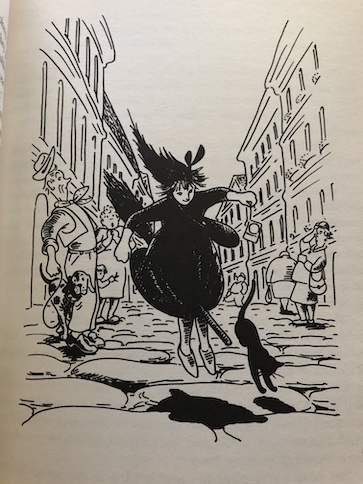
There are no illustrations in the book. It starts with this quote.

Because the farm where Francie lives with her parents is far away from local schools, Francie studies her lessons at home with her parents’ help, but she often gets distracted by the animals on the farm and doesn’t focus on her lessons. Francie’s great-aunts, Aunt Berta and Aunt Fanny, live in Scotland, but when they come to visit the farm, they see how Francie isn’t getting her schoolwork done. The aunts are also concerned at how isolated Francie’s life is. There are no other children living nearby to be friends with Francie, and they think that her life must be lonely. They talk to Francie’s parents about sending her to boarding school, but they say that they can’t afford it. They can’t even afford a car, which is why they can’t drive Francie to school in town. The aunts remind Francie’s mother that she used to board in a private house with a nice family so she could attend school when she was young. Boarding with a family wouldn’t cost as much as a fancy boarding school, and she could come home on weekends. Still, Francie’s parents are reluctant to send her away because they think she’s too young, and they’re not ready to part with her.

When the aunts leave after their visit and her parents don’t bring up the subject of school again for a while, Francie is relieved. She loves her life on the farm, and she doesn’t want to leave. Yet, she also finds herself oddly disappointed, too. She’s read stories about children at schools, and their adventures do sound exciting. She thinks it would be ideal if she could go to school during the day and come home afterward, like other children do, but that just won’t work with her family’s circumstances. Her parents’ attempts to find friends for her just aren’t working, either. Her parents start inviting other farm families to visit on Sundays, but Francie doesn’t get along with their children. The reasons why she doesn’t get along with them are largely because the other children don’t behave well, but these incidents convince Francie’s parents that maybe the aunts were right and that Francie could benefit from going to school and meeting a wider range of other children.

Her parents write to the high school in Alchester and inquire about registering Francie. They arrange for Francie to take entrance exams, but Francie has mixed feelings about it. On the one hand, the idea of boarding and going to school, with the knowledge that she will come home on the weekends, seems exciting, but on the other hand, she worries that the children at the school won’t be any more friendly than the children of the nearby farm families. Her mixed feelings continue through the day when she and her mother visit the school. At first, Francie thinks that maybe she’ll flunk the entrance exams on purpose so she won’t have to leave her farm. Then, after the initial tour of the school, Francie thinks that going there may be exciting after all, so maybe she’ll try to pass the exams. The exams are difficult, and she expects she’ll fail them after all because she really can’t do the work. Her parents tell her not to worry because, if she fails this year, she can always study more and try again next year. However, it turns out that she did pass. The arithmetic portion of the exam really was too difficult for her because the person giving her the exam accidentally gave her a higher level test instead of the basic entrance exam, but Francie did an excellent job on the writing portion of the test.

Since Francie will be attending the school in Alchester after all, she and her mother begin shopping for her school uniforms and other supplies. Francie is still worried about the prospect of boarding with strangers in town, and her mother isn’t sure how to find a house or family willing to take her. A boarding prospect turns up because Francie is too small and skinny for even the smallest available size of the school uniform, and she and her mother have to visit a professional tailor. The tailor, Mrs. Majendie, also has a few rooms that she rents out to boarders. Francie isn’t sure that she’ll like boarding with Mrs. Majendie at first because she and her house seem a bit grand, her dog seems oddly bored and unresponsive to Francie’s friendliness, and her other boarder is the headmistress of another school in town, the Chantry School. However, the available room is beautiful, with a four-poster bed and tapestries, and the room has a view of the nearby churchyard, where the children from the Chantry School are playing among tombstones in the old graveyard. Mrs. Majendie says that the Chantry School was once a chapel, and her own house was once an old inn. She also says that a new housekeeper will be moving in soon with her daughter, who will attend the Chantry School. It all seems like a fairy tale kind of place to Francie, and she is reassured that there will be another girl living in the house with her, so she tells her mother that she would like to board there.

When she actually starts school, it goes pretty well. The classes aren’t too hard, the subjects are interesting, and she gets along well with the other girls. There is an older girl called Trixie who likes to play pranks on the younger students, and some of the girls tease Francie about her height, but the older girl who is assigned to look after her, Verity, tells Francie not to take any notice of those girls. At first, Francie is able to use her bicycle to get from school to the train station, so she is able to go home every night, but then, as the days grow shorter, and it gets dark sooner, she can’t do that anymore, so she starts to board in town with Mrs. Majendie.

Her boarding experience turns out to be different from what she first thought, though. It turns out that the new housekeeper isn’t very friendly, and her daughter decided to stay with her grandmother instead of coming to town with her mother, so the house is lonelier than Francie had expected. The atmosphere is also different in the winter than in the summer, when Francie first saw her room. The room seems colder, darker, and a little more sinister in the winter, and in the evening, there aren’t any children playing in the churchyard outside. At night, she hears strange sounds, like a tapping and a wailing. When Trixie learns that the place where Francie is boarding is Falcon House, she implies that there’s something really wrong with the place, but Francie assumes it’s just another of Trixie’s tricks. Then, when other students try to get Trixie to shut up and remind her that they all promised not to talk about it in front of Francie, Francie realizes that there really is something weird about the house. She tries to get Verity to explain it to her, but Verity refuses, which just makes Francie angry and more scared. Now, she knows there is a real secret about the house, but she doesn’t know exactly what it is.

A strange man comes to visit Falcon House, and Francie sees that his card says he is Dr. D. Bone Fane from the Circle for Psychical Research. Francie doesn’t know what it means, so she asks some of the other girls at school if they know. One of them, Bryony, says that she’s met this man before. He’s a ghost-hunter from the United States, investigating supposedly haunted places. Bryony’s father teaches in the Abbey choir school, and this man has been pestering him about stories of a haunting there, although Bryony’s father thinks it’s all boring nonsense. From this information, Francie realizes that Dr. D. Bone Fane is interested in Falcon House because he thinks it’s haunted. She confronts Verity about it, and Verity admits that there are stories of hauntings at Falcon house. Nobody’s ever actually seen the ghost that haunts the house, only heard things, and the only people who have heard the ghost are children. According to the stories, Mrs. Majendie’s own children were the last children to be haunted by the ghost, and they were so scared of the house that they begged their mother to send them to boarding school so they could get away from it. Francie is the first child to live in the house since the Majendie children grew up. Francie realizes that this is why the housekeeper didn’t bring her own daughter to the house and why she seems uneasy about Francie’s presence in the house. Mrs. Majendie even gave her nightlights as a gift because she was expecting Francie to be frightened. The headmistress at Francie’s school told everyone not to talk about the ghost stories, not because she believes in them, but because she was afraid that Francie would believe them and get scared. Everyone but Francie has known about the ghost stories from the beginning, and they’ve all been waiting to see what she will experience in the house, if anything.

The more Francie thinks about it, the more she realizes that she sensed the presence of the ghost on her first visit to the house. Besides the noises she’s been hearing at night, the dog in the house reacted to something at the top of the stairs, as if an invisible hand was petting him. When Francie returns to Falcon House after visiting Verity, it’s a stormy night, and she’s terrified about what might be waiting for her at the top of the stairs. However, when she gets there, and she realizes that it’s just her, the dog, and the ghost, she suddenly realizes that the ghost isn’t a menacing presence. The dog likes it, and it seems a little teasing, but it doesn’t mean Francie any harm. Strangely, its presence begins to feel reassuring to Francie because she’s no longer alone in the house, the only child among adults. The ghost is a child, too. In fact, it’s the ghost of the child from Goneaway, the one who disappeared hundreds of years ago, along with its parents.

The more that Francie investigates, the more she comes to realize that the ghost needs her help. Helping the ghost means learning the truth about the family who once lived on the farm that Francie calls home.

This book was originally published in the UK. The book is available to borrow and read for free online through Internet Archive. There is a sequel to this book called Another Day.

My Reaction and Spoilers

This book fits well with the Dark Academia aesthetic, and it could also be considered Dark Cottagecore because of the farm and countryside themes. When Francie is on the farm, she describes the animals and plants in the countryside. Francie’s school isn’t a boarding school, but she does have to board in a spooky place to go there. There are many literary references throughout the story, and there’s a note in the beginning of the book about the poetry references. Francie reads The Story of the Amulet by E. Nesbit for fun, and her class at school reads Treasure Island. She uses stories she’s read to help her understand what is happening around her. When she makes friends with a girl named Geraldine at school, Geraldine also uses story references to explain what she thinks is happening with the ghost.

When Francie first begins to interact with the ghost, she is only able to sense its presence but not really see it. As the ghost begins to interact with her, it gradually begins becoming more visible. At first, Francie can’t even tell whether the ghost is a boy or a girl, only that it’s a child about her size. She wonders why the stories she’s heard about this child and its parents never mention whether the child is a boy or a girl or what its name and age were. She thinks it’s sad that so many little piece of history get lost.

What she eventually realizes is that the child and its parents were probably plague victims because they disappeared around the time that the plague came through this area in the Middle Ages. She thinks that they probably caught the plague when they came to town for the fair and were buried in one of the unmarked mass graves she’s heard about, and that’s why they were never able to return home. When she talks it over with Geraldine, Geraldine realizes that the children who have been able to see the ghost were all suffering from homesickness when they first arrived at Falcon House. The ghost is awakened by feelings of homesickness in other children because that’s what the ghost has been feeling the entire time. What it wants is to go home to the farm, and Francie has to find a way to help bring it home with her. There is a twist in the ghost story later that leaves Francie wondering how much of what she’s perceived about the ghost is her imagination and another girl, the housekeeper’s daughter, sneaking around the house. However, there really is a ghost, and Francie does figure out how how to help it. It comes home for Christmas with Francie.

During the story, Francie struggles with the difficulties of being away from home and going to school for the first time, and she also starts to consider what it’s going to mean for her future. She still thinks of herself as living at Goneaway Farm, but then, the wife of a farm hand refers to her as becoming a “visitor.” Francie feels uneasy about that because she knows that the woman’s son also went away for school and decided that he would rather do something other than farming, so he now lives somewhere else. Francie still thinks of the farm as her home, and it upsets her to think of the farm without her or her life without the farm in her future. But, is that really what she wants? Before her great-aunts raised the issues of school and friends, Francie was content with her life and didn’t realize that either of those things was something she was missing or might want. Now that she’s going to school in town, meeting new friends, and experiencing some independence to explore the town on her own, what else might she discover that she wants and never knew she could experience before? Will the new things she learns and wants to experience mean giving up her old life, which she still loves? These are all questions that people have as they’re growing up and pursuing an education.

Nobody really knows where life will lead them when they’re just starting out, and that can be scary, but at the same time, growing up does mean change. The changes that Francie experiences are ones that she would have experienced anyway, eventually. Her mother understands some of how Francie feels because she also boarded as a child so she could go to school, but at the same time, Francie realizes that her mother doesn’t understand everything that she’s going through because she isn’t there with her every day. Her mother doesn’t fully know what her classes or teachers are like or what the other people she meets and lives with at Falcon House are like. For the first time in Francie’s life, she and her mother are starting to live different lives, and there are some things that Francie must experience and make decisions about on her own.

The practice of children from rural areas boarding at a private house to attend a day school in town is a real part of history, both in the UK and in the US. I covered that earlier when I reviewed Sixteen and Away From Home, a book set in the 19th century Midwestern US, and The Secret School, when a teenage girl named Ida wants to go to high school in the 1920s. Anne Shirley did the same in Anne of Green Gables, which is set in 19th century Canada. This is what children from rural areas in different countries have had to do if they wanted more schooling than they could get in their area.

There is a scene in the story with some gyspies. The book calls them both “gypsies” and “travellers.” One of them tells Francie’s fortune, which gives her hints about what to do. There is also a scene where girls from Francie’s school put on a performance, and there is a dancing dragon and a student who is dressed as a “Chinese boy” for part of it. The “Chinese boy” costume is only mentioned briefly and not described in detail. It’s the sort of thing that is discouraged now in school, people dressing up as people from other races.

Kiki’s Delivery Service

More Americans would probably recognize the title as the title of a Studio Ghibli animated film for children than as a book title, but the book came before the movie, and it is actually the first in a series, which continues the story about Kiki’s life and adventures, although I don’t think the later books in the series have been translated into English (at least, I haven’t found them in English). The original Japanese version of this book was written in 1985, and I read the English translation from 2003.

Kiki is a young witch, and in keeping with the traditions of young witches, she is expected to leave home at age 13 and live for a year in a city with no other witches.  It will be a test of her developing skills and a coming-of-age experience, helping her to recognize her talents and find her place in the world.

When Kiki sets out for her journey with her cat, Jiji, she doesn’t know exactly where she is going to go or what she will find when she gets there. Some young witches know early on what their talents are and how they plan to support themselves during their year away from home, but Kiki is less sure (like so many of us who “don’t know what we want to be when we grow up”).  The term “witch” just refers to a person’s ability to do magic.  It’s not a job title by itself, and witches are expected to develop a specialization, such as brewing potions or telling the future. Kiki’s mother has tried to teach Kiki her trade, growing herbs and making medicines from them, but Kiki hasn’t had much patience with it.  The only major ability Kiki has is flying, which is something that witches are expected to do anyway.  Still, she has an adventurous spirit and is eager to set out and see what life has to offer.

Once Kiki locates a city with no other witches, she has to find a place to stay and a job to earn money. She finds a city by the sea, which seems exciting to her.  As she explores the city, she meets Osono, a woman who owns a bakery with her husband. When she helps deliver a baby’s pacifier to a bakery customer who left it behind, flying to the customer’s house on her on her broom, Osono offers to let her stay in a small apartment attached to the bakery. Kiki feels a little overwhelmed by the big city at first, but she realizes that, in a large city like this, there are probably a lot of people who have small delivery errands that wouldn’t be covered by ordinary parcel delivery services.

Kiki opens a delivery service, delivering small packages and running errands for people around the city.  At first, business is slow, and some people are afraid of her as a witch. During a trip to the beach, a curious boy borrows her broom and breaks it. Kiki is distressed, and the boy apologizes. The boy’s name is Tombo, and he is part of a club of other kids who are interested in flying. He has made a study of flight and had hoped to learn more about how witches fly by trying Kiki’s broom, but Kiki expains that only witches can fly with brooms and that the ability is inherited. Kiki has to make a new broom, and it takes her a while to break it in, but it actually works to her benefit. People who were initially afraid of her for being a witch become less afraid of her and more concerned about her when they see that she is just a young girl, clumsily trying to master a new broom. Kiki gets some additional support and business from people who feel moved to help a struggling young witch. Tombo also makes it up to her and becomes a friend when he helps Kiki to figure out a way to carry a difficult object on her broom.

During her very first delivery assignment, Kiki was supposed to carry a toy cat to a boy who was having a birthday, but she accidentally dropped it. When she searched for it, she met a young artist, who was enchanted by Kiki as a young witch and painted a portrait of Kiki with Jiji. When the artist asks Kiki to take the painting to the place where it will be on exhibit, Kiki isn’t sure how to carry it at first. It’s kind of a bulky object to carry on her broom. Remembering that Tombo has made a study of flying, she asks him for help. Tombo ties balloons onto the painting to make it float and tells Kiki that she can now pull the painting along on a leash, as if it were a dog. The idea works, and when people see Kiki pulling a painting of herself along through the sky with balloons tied to it, it acts as advertising, bringing her more business.

Some of Kiki’s new jobs are difficult or awkward, and some customers are more difficult to deal with than others. There are times when Kiki finds herself missing home or trying to remember how her mother did certain things, wishing that she had been better at watching and remembering what her mother did. Still, Kiki learns many new things from her experiences and acquires new skills.

Kiki’s experiences also help her to realize a few things about herself and life in general. Like other girls, Kiki worries about how boys see her. When Tombo makes a comment that he can talk to her when he can’t talk to other girls, Kiki worries that he doesn’t see her as a girl at all. A job delivering a surprise present to a boy from another girl her age helps Kiki to realize that everyone is a little shy and uncertain about romance and even people who act confident feel a little awkward about first relationships.

As her first year away from home comes to an end, Kiki wonders how much she’s really changed over the year. Although she has successfully started a new business and done well living away from her parents, she still experiences a sense of imposter syndrome, where she doesn’t quite feel like she’s really done all of the things she’s done. Her first visit home to her parents reminds her that her new town has really become her new home. She has become a part of the place, and she feels her new business and friends calling her to return.

In 2018, the author, Eiko Kadono, was awarded the Hans Christian Anderson for her contributions to children’s literature.

My Reaction

I think of this story as one of those stories that takes on more meaning the older you get.  Young adults can recognize Kiki’s struggles to make her own way in the world and establish herself in life as ones that we all go through when we start our working lives and gain our first independence.  It can be a scary, uncertain time, when we often wonder if we really know what we’re doing. (Life Spoiler: No, we don’t, but no one else completely does, either, so it’s normal and manageable. Some things just have to be lived to be really understood, and that’s kind of the point of Kiki spending a year on her own, to see something of life and how she can fit into it.) However, it’s also a time of fun and adventure as we try new things, build new confidence, make new friends, and learn new things about ourselves. Like so many of us, Kiki doesn’t always do everything right, but she learns a lot and endears herself to the people of her new town.

The Miyazaki movie captures the feel of the story well, although the plot isn’t completely the same. There are incidents and characters that are different between the book and the movie. Tombo appears in both the book and the movie, but there are other characters who appear in the book who weren’t in the movie. In the book, Kiki makes friends with a girl named Mimi, who is her age, and the two of them discuss crushes on boys and how each of them was a little envious of the other because, while each of them is struggling with their own uncertainties in life, they each thought that the other acted more confident. The movie version developed the character of the young artist more. Kiki also didn’t lose her powers during the book, although that might be a part of one of the other books in the series, since I haven’t had the chance to read the others yet.

The Secret Language

The Secret Language by Ursula Nordstrom, 1960.

“Sooner or later everyone has to go away from home for the first time. Sometimes it happens when a person is young. Sometimes it happens when a person is old. But sooner or later it does happen to everyone. It happened to Victoria North when she was eight.”
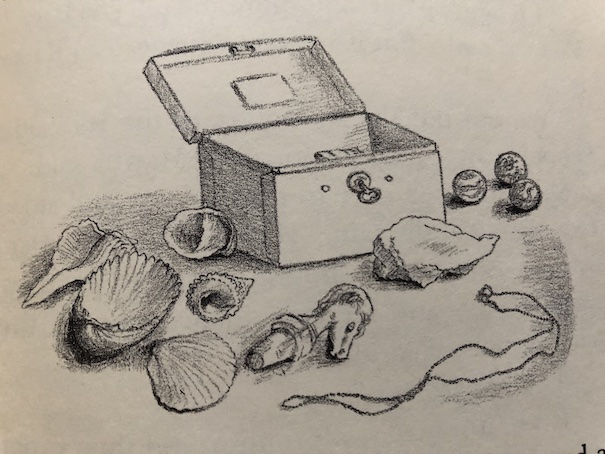
Victoria North is attending boarding school for the first time at the Coburn Home School. Victoria is only eight years old, and this is her first time being away from home at all, so she is very nervous and shy. When she arrives at the school, she is met by an older girl named Ann, who shows her where her room is in the dormitory. Ann shares a room with Victoria and is supposed to show her around and tell her the rules, but she doesn’t really explain much. Victoria still feels lost and has trouble even finding the table where she is supposed to sit at dinner.

At dinner, one of the other girls, Martha Sherman, starts uses funny words, and she tells the other girls that they are part of a secret language that she made up. However, she refuses to tell anybody what they mean. Martha is moody and rude to the other girls at dinner, so the housemother sends her to her room before the meal is over.

Overcome with homesickness, Victoria cries at dinner and during the songs they have to sing afterward. No one has any patience with poor Victoria. Ann tells her that she’s being a crybaby. Other girls laugh at her when they see that she’s been crying. Victoria doesn’t know how she’ll be able to handle boarding school if every day is going to be like this!

The other girls in the dormitory say that Miss Mossman, the housemother, is strict. She blows her whistle at them and makes them line up for inspection every morning. Miss Blanchard, another teacher, is nicer, and she tries to reassure Victoria that things will get better when she gets to know the other students and makes some friends. However, nobody seems to want to be friends with Victoria. Nobody except Martha.

Martha is the only girl who seems interested in talking to Victoria. Martha doesn’t like Coburn Home School, either. More than anything, Martha wants to live at home and just go to an ordinary day school instead of being boarder. Victoria knows just how Martha feels! The other girls are surprised at how well Martha seems to get along with Victoria because Martha doesn’t usually want to be friendly with anyone.

The two of them start to talk about their homes and families. Martha’s father is an importer. She keeps saying that her parents are going to let her come home from boarding school and just go to day school, but it quickly becomes apparent that it isn’t likely. Victoria only has her mother, who works and sometimes needs to travel for work. She doesn’t even remember much about her father. Martha likes math, a subject which Victoria finds hard, but Martha says that she doesn’t reading, which is Victoria’s favorite subject. The two complement each other well.

Although Martha misses home, like Victoria does, and doesn’t really want to be a boarder, she is more experienced about boarding school life, and she helps Victoria to adjust to the school. Martha starts teaching Victoria about pieces of boarding school lore, like school rhymes and the traditions made up and passed down by students, and she also begins teaching her the secret language that she made up. There are only three words in Martha’s secret language, but Martha explains to Victoria what they mean, and the girls decide that they’ll make up more together. Martha becomes Victoria’s best friend all through the rest of her first year at boarding school.

Being friends with Martha makes boarding school feel better to Victoria. Martha still constantly talks about hating boarding school and how she definitely won’t come back next year, although Victoria realizes that’s just a wish of hers. Victoria also comes to realize that many other kids at the boarding school feel the same way. Even the ones who like the school admit that they’d really rather be at home with their parents. They daydream about just going to school during the day and coming straight home afterward, where they can just relax at home and eat what they want and not have to answer to whistles or line up for inspections. When Ann’s family decides to bring her home, Martha and Victoria ask Miss Mossman if they can share a room, and she agrees as long as the girls behave themselves.

Victoria is fascinated at the things that Martha knows about life at boarding school. Martha teaches her about “pie beds.” (I always heard it called “short-sheeting” when I was a kid, although I was never good at making beds the normal way in the first place, so I never fully grasped how to pull off the trick, and I didn’t go to summer camp or boarding school, where people typically did this anyway.) The girls argue about what costumes to wear to the school’s Halloween party, but the school’s handy man helps them make ice cream cone costumes that win a prize for the most original costume. The costumes are uncomfortable to wear, but Victoria is pleased and thinks that Martha should get the credit because the costume concept was her idea. Martha says that, next year, they’ll start planning their costumes earlier and come up with an even better idea. That’s the moment when Victoria realizes that Martha is no longer talking about how she’s definitely not coming back next year.

After the girls come back from Christmas vacation, Victoria is homesick again, but it turns out that their old, strict housemother has left to take care of her father, who is ill. Instead, they get a new housemother, Miss Denton, who is much nicer. She doesn’t blow whistles at the girls to wake them up. Victoria likes Miss Denton right away, and even the other girls in the house start calling her “Mother Carrie” as Miss Denton requests, even though the name strikes them all as silly at first. Martha finds Miss Denton to be overly sweet (“ick-en-spick” in the secret language), although she admits that she’s better than Miss Mossman.

Martha also finds herself liking Miss Blanchard, who teaches math. Miss Blanchard was nice to Victoria in the beginning, but Victoria can’t bring herself to like her much because she has so much trouble in math. Victoria has a fanciful imagination and likes to imagine that certain numbers are boys and others are girls, and Martha finds it frustrating because the idea doesn’t make sense to her, and Victoria doesn’t even follow an exact pattern, like odds vs. evens in her designation. Meanwhile, Victoria is confused by the math tricks that Miss Blanchard teaches Martha. Martha thinks they’re fun, but Victoria isn’t as good at math and has trouble following them.

The two girls find themselves arguing sometimes because of their different preferences, but they remain friends. It’s more that, now that they’re getting comfortable with each other and their school, more of their individual personalities are coming out. Victoria is also surprised to realize that, while she still frequently misses her mother, she no longer agrees with her mother about certain things. When her mother comes to visit the school, she worries about Victoria sleeping in the top bunk of their bunk bed, but Victoria herself loves it and has to assure her mother that she likes the top bunk. One thing that boarding school has done for Victoria is to give her a sense of independence and room to develop her own identity and preferences. She no longer has to get her mother’s permission for everything she does, as long as her housemother approves.

Victoria and Martha are both imaginative, and they begin enjoy their shared adventures at school. They try to hold a midnight feast in their room and search for hidden passages or secret compartments in the dormitory because Martha has heard or read that these things happen in boarding schools. Neither of those adventures goes as planned, but Miss Denton allows the girls to build a little play hut of their own with help from the school’s handy man. Miss Denton also gives the girls a little lockbox to keep some of their treasures in, and they hide it so they can have a buried treasure.

As the year comes to an end, Victoria knows that she’ll be coming back to boarding school next year, and the prospect doesn’t seem so bad as it did before. Martha isn’t sure whether she will or not, talking sometimes about what they’ll do next year but still hoping to live at home with her parents. But, if Martha doesn’t come back to school, it just wouldn’t be the same for Victoria!

The book is available to borrow and read for free online through Internet Archive.

My Reaction and Spoilers

One of the things I found interesting about this book is that it is set in the US. The iconic boarding school stories for children tend to be British stories, but the Coburn Home School is in New York state. The girls’ parents live in New York City.

Most of the story focuses on the girls’ relationship with each other and their growing sense of self-identity and confidence at their boarding school. They talk about classes they take and how they each feel about the other’s favorite subject, but they aren’t shown in classes themselves. The school is also a co-ed school, with both boys and girls, but the boys don’t enter into the story much because most of the action takes place around the girls’ dorm. The boys live in a different dorm. There is only one instance where a boy is shown talking to Victoria, with a hint that he might have a crush on Victoria, another new development in Victoria’s life at school. The little developments in the girls’ lives and attitudes through the school year and each little experience and adventure they have are the main focus of the story. These are the things that are helping the girls understand and develop their identities, self-confidence, and sense of independence.

Toward the end of the book, Miss Denton encourages the girls to think about all of the things they’ve learned this year, and not just the ones they’ve learned in class. The girls don’t fully understand and appreciate that Miss Denton is talking about personal growth and development, but they do consider things they’ve learned, like how to make beds, that midnight feasts aren’t as fun as they sound, and how Victoria learned not to be homesick. These are some of the little things that are part of their school experience and that are slowly making them more grown up and independent than they used to be.

Although Martha is a little older than Victoria and sometimes chides her for being babyish about some things (like putting a lose tooth under her pillow) or still homesick, the truth is that Martha has been just as homesick the entire time. Martha doesn’t appear to be as upset about boarding school as Victoria because she is not a new student in this book, like Victoria. She already went through her first year at boarding school before Victoria got there, so she no longer openly cries about being away from home. Still, the reason why she keeps talking about going home and living with her parents all the time is that she misses them. While the girls’ adventures during the school year and Victoria’s realizations about how boarding school gives her the opportunity to do things and be with people she wouldn’t at home make her feel better about coming back next year, Martha still feels uncertain about it. Martha has also come to love being friends with Victoria and even loves Miss Denton, but her feelings of homesickness leave her feeling torn about what she really wants.
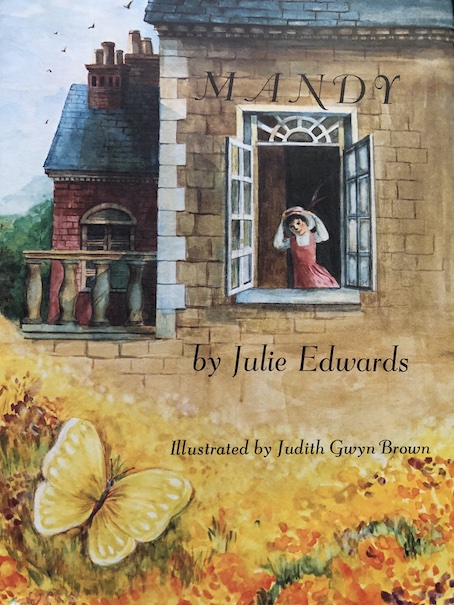
There are hints that Martha will probably return to boarding school anyway, but Miss Denton reassures Victoria that she will be fine at boarding school even if Martha decides not to come next fall, reminding Victoria that she is now one of the “old girls” instead of a scared new one, like she used to be. Victoria also starts to feel that way herself. Martha will probably be back the next year to be with Victoria, Miss Denton, and Miss Blanchard, but readers can be reassured that, even if she doesn’t return, Victoria will be all right with her new sense of identity and independence. This first year at boarding school with Martha may be the beginning of a lifelong friendship or just one step to Victoria finding herself and building other friendships. Maybe it’s both. Victoria’s future life will be fine in general as she continues growing up and finding her way, learning to manage her life one step at a time.
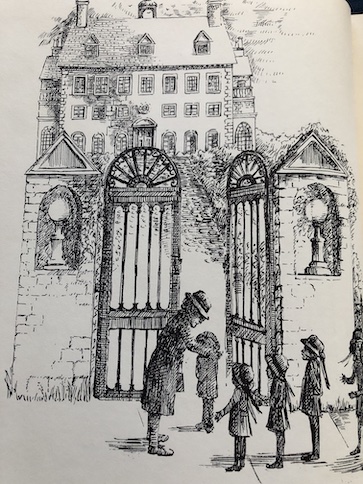
There is a modern 21st century documentary about young children going to boarding school for the first time at 8 years old, What’s Life Like in a Private British Boarding School? | Leaving Home at 8 Years Old, on YouTube. The school in that documentary is British, but I was struck by the common feelings in the documentary and the book, even though they take place decades apart in different countries. There are just some parts of the human experience that last through the generations. The documentary also shows the parents’ side of the boarding school experience, the reasons why they choose to send their children to boarding school, and how they cope with their feelings about sending their children away and being separated from them.

Boarding school isn’t always easy for parents in terms of emotions, and there are hints of that in The Secret Language. We never see Martha’s parents in the book, so we don’t know what’s going on with them, but Victoria’s mother fusses over Victoria when she gets the chance, and she talks about how great it would be if she could arrange things so that Victoria can be home with her all the time again, too. If Victoria’s mother wasn’t a working single mother who has to travel for work, she probably wouldn’t have sent her away to boarding school at all. Miss Denton is very in tune with people’s feelings, and I think that she’s aware of all the complexities in the lives of the girls and their parents. She does her best to look after the girls emotionally, and that’s part of her urging the girls to consider other people’s feelings, to be thoughtful about each other, and to think about the ways they’ve been changing inside as well as outside. I think that the universal nature of the girls’ and adults’ feelings in the book are a sign of the author’s emotional awareness, understanding of how different types of people feel.

Ursula Nordstrom, the author of the book, was actually a famous children’s book editor. She is credited with helping to transform mid-20th century children’s literature to have more of a focus on children’s feelings, experiences, and imagination instead of being morality tales, focused on what adults want children to know or understand. The Secret Language was the only children’s book that she wrote herself. This YouTube video explains about her life and career.

Mandy

Mandy by Julie Andrews Edwards, 1971.

At St. Martin’s Orphanage, there are usually about 30 children at a time, and the matron does her best to nurture her parentless charges. Mandy is a ten-year-old girl who has lived in the orphanage her entire life. She is intelligent, and she loves reading and daydreaming. She is allowed to work part time at a grocery store, and she spends most of her money buying books. She also loves nature and taking walks by herself. She enjoys spending time alone because she likes to daydream and admire flowers and other beauties of the natural world.

However, Mandy isn’t really happy, either. Even though the orphanage is kind to her, she gets along well with the other orphans, and she has her books and other things to keep herself busy, she is lonely and still misses having parents and the family life she’s never known. Because she has no memory of these things, it’s difficult to say whether she truly understands what she’s missing, but she definitely feels the lack of them in her life. As she gets older, she begins to feel more and more melancholy about it. She knows only that something is missing from her life, and she becomes more desperate about it. She craves a place that she can call her own, a place where she really belongs.

There is a wall behind the orphanage, and Mandy, with her vivid imagination, becomes increasingly curious about what’s on the other side of the wall. She asks Ellie, the maid at the orphanage about it, but as far as Ellie knows, it’s just more of the countryside. She’s never actually explored it herself. Mandy likes to imagine that there might be a castle and a unicorn beyond the wall.

One day, Mandy decides to try climbing over the wall to see for herself. What she sees is an apple orchard and a path through it. When she climbs down from the wall and follows the path, she finds an old, disused cottage with the remains of a garden. The cottage is empty of furniture. Mandy lets herself into the cottage and finds it dusty and in need of repair, and there’s no sign than anyone has been there for years. However, there is a marvelous room in the small house that is decorated with real seashells! Mandy is fascinated, and she wonders who used to live there.

The idea comes to Mandy that she could “adopt” the house and care for it as if it was her own. Obviously, nobody has been there for a long time, and nobody would know or care if she cleaned it up, but she would feel good, having a place of her own and something to care for. When she returns to the orphanage, Ellie tells her that she asked the matron what was on the other side of the wall, and she says that it’s a large, old estate, where nobody lives anymore. Mandy is pleased with that because, if no one lives on the estate where the cottage is, there will be no one to notice when she goes to visit the cottage.

She asks for gardening advice from the gardener at the orphanage without telling him exactly why she wants to know, and he even lets her borrow some tools. Mandy loves tending to her very own garden, and she uses some of her pocket money from the grocery store to buy seeds for the garden and some things for the house. Mandy loves seeing how the cottage and garden improve under her care, but her roommate, Sue, begins to wonder where she keeps disappearing to, and the adults begin to wonder what she is doing with the things she buys and borrows.

The matron tells Mandy that she’s worried about what Mandy is doing because it could be dangerous for her to go off alone where nobody knows where she’s going. Mandy lies to her, saying that she had a project of making a garden for herself but that she gave it up because it was too much work. The matron says that she understands why she would want to have a place to call her own and offers her a spot in the orphanage garden to tend as her own. Mandy feels terrible about lying to the matron, but the thought that the matron might make her give up the special place she’s found because it doesn’t really belong to her or because it’s too dangerous for her to go there alone is just too much.

As the seasons change, Mandy enjoys slipping away to her cottage whenever she can, working in her garden and watching the animals that live nearby. However, the matron has become increasingly suspicious of Mandy’s odd behavior, Sue is angry with her for keeping secrets from her, and there are signs that someone has been at the cottage while she wasn’t there. There are footprints outside the cottage and the hoofprints of a horse, and there are signs that someone has been fixing things. Fortunately, this mysterious person doesn’t seem to mind her being at the cottage. Her mysterious friend leaves little presents and notes for her. More and more, Mandy fears that her secrets will be discovered, but when she becomes ill and needs help at the cottage, she becomes grateful for the help of a friend who knows where she is. Having a place to call your own is good, but having friends and a family who care make a place a real home.

The book is available to borrow and read for free online through Internet Archive (multiple copies).

Update: A site reader pointed out that I should have explained that Julie Andrews Edwards is the same Julie Andrews who played Maria Von Trapp in The Sound of Music, Mary Poppins in the Disney musical, and the queen in The Princess Diaries movies. When I was younger, I didn’t realize that she also wrote children’s books. She is also known for writing The Last of the Really Great Whangdoodles, which I haven’t covered yet. Julie Andrews’s early life was difficult because her parents divorced and each married other people during WWII. At various times, Julie Andrews lived with each of her parents and stepparents and traveled around as she began performing with her family as a child. Her family was poor, and she later described her stepfather as being a violent alcoholic. Her chaotic early life may have been a factor in this story about a lonely girl looking for a place to belong and a real sense of family.

My Reaction and Spoilers

This is a sweet story about having a place to call home and a real family. Mandy craves for these things, even before she truly understands what it means to experience them. Parts of the story are sad and sentimental, but others are just enchanting. This book fits well with the Cottagecore aesthetic. The cottage in the orchard is charming, and Mandy’s care for it reminds me of other children’s books, like Dandelion Cottage, where children have their own secret places to fix up and care for.

Mandy gets wrapped up in her special secret place, tending the garden and watching the animals there, but it gets her into trouble with her friend and roommate, Sue, and with the matron of the orphanage because of the secrets she’s keeping and the way she keeps helping herself to things she really shouldn’t take and slipping away to spend time at the cottage without telling anyone where she’s going. Mandy loves the cottage because she can imagine it as her own home, a place that belongs to her and where she belongs, but Mandy needs people, too. Sue’s friendship for her helps her when she gets into trouble, the matron turns out to be more understanding than Mandy feared, and Mandy’s adventures with her cottage bring her into contact with people who become the family Mandy really needs. Once Mandy has the family she needs, she no longer feels compelled to keep the cottage all to herself, and she decides to share it with the other girls at the orphanage. Mandy’s new home with her new family is every bit as charming and magical as her cottage. It’s a big, old house with secret passages that she explores with her new brother.
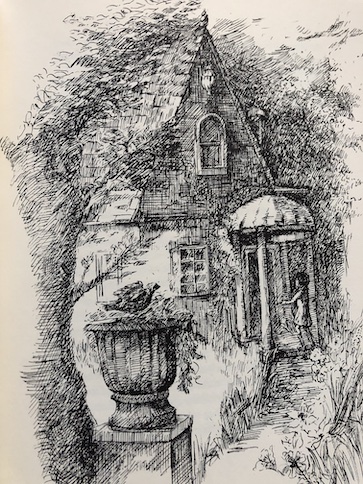
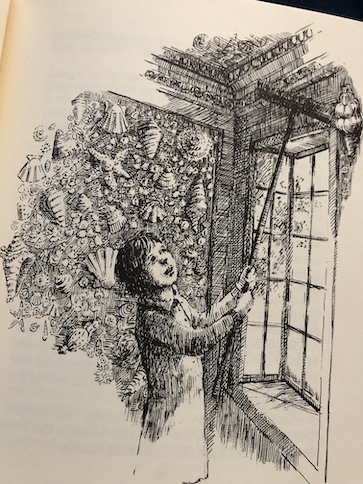
However, I think that it’s important to note that not everything in the story is easy and happy for Mandy. All through the story, she struggles with her emotions, experiencing sadness and loneliness and trying to understand what they mean. Her new family doesn’t fully accept her immediately, either. They are never mean or rejecting of her. They are friendly and helpful people from the first time they meet Mandy, but it takes some time of them getting to know her before they decide that they want her to be a permanent part of their family. There isn’t a lot of high drama, and her new brother is never jealous of her or mean to her. However, the family does take some time to make their decision after Mandy spends Christmas with them, and that adds to Mandy’s inner distress.

There are points in the story when Mandy’s fate seems uncertain, and she considers running away from the orphanage. The headmistress becomes concerned about Mandy because of her melancholy and tells the family considering her that Mandy has begun asking her questions again about her parents and how they died, something that she hasn’t done for years, showing that she has become preoccupied with the concept of family life and her lack of it. The family is concerned for Mandy and understanding of her feelings, but I thought that having the family take time to get to know Mandy and to consider what having her join their family would mean was realistic. I think the drama was softened a little to keep the gentle feel of the story, but there’s enough emotion and inner turmoil that it doesn’t feel like Mandy’s problems resolve too easily.

Sue and Mandy bring up the question about whether Mandy’s discovery of the cottage and her new family was a matter of luck. Sue is envious because it seems like everything happens to Mandy. Mandy asks her new father if that’s a matter of luck, but he says that Mandy is special and that things happen to her because she is brave and goes looking for them. She is a quiet person, but she takes her life into her own hands and pursues what she wants, where other people might be too timid to do it. Technically, Mandy broke rules and took some risks to care for her secret cottage, but she did it because it was important to her, and it worked out in the end. Her new father seems to appreciate Mandy’s spirit and determination.

Mystery by Moonlight

One moonlit evening, as Gail Foster walks home from the movies with her brothers, a pair of twins named Ted and Tim, and their friend, they pass the old house called Morgan’s Green. The old house was ruined by fire years before. The house hasn’t been repaired since the fire, but the owner, Miss Morgan, pays someone to maintain the grounds and to keep trespassers away. The old ruin bothers people in the neighborhood because Miss Morgan seems to have no intention of ever repairing it so anybody can live there again. For some reason, she seems to want it to just stand there, a ruined and empty eyesore.

As the children pass the house, Gail suddenly hears a knocking or rapping sound. She stops the boys and gets them to listen, but by the time they do, the sound has stopped. The children debate about what the sound could have been. One of her brothers worries that maybe someone has wandered into the old house and gotten hurt, but the other one thinks that maybe Gail just imagined the sound because she likes to write stories and recently wrote a scary one about a ghost. The brothers’ friend, a boy named Conan, has a job helping the groundskeeper at Morgan’s Green, and he says that he’ll check everything over when he goes to work there the next morning.

Gail feels uneasy about the idea of some unknown person being at the old house because the truth is that she has been secretly trespassing on the grounds herself. She went there one day when she was chasing her brothers’ dog, and she found an old, disused tool shed with a workbench inside. This forgotten shed struck her as a good place to go and write in secret. Her brothers have been teasing her about the stories she writes, so she could use a little privacy. Actually, she could use any privacy. Her brothers routinely sneak into her room, read her stories and her private diary, and even deface the diary and tell their friends what she wrote. Their father always tells Gail that the boys’ teasing and bullying is her fault because she makes it too easy and fun for them by showing her emotions, and her parents refuse for punish the boys for any of it or allow Gail to have a lock on her bedroom door to keep them out. It’s no wonder Gail feels the need to escape. Now, Gail worries that maybe someone (or some thing?) knows about her trespassing and that the knocking sound was some kind of warning for her to stop.

The next day, she reconsiders that idea, remembering that she has heard about thefts in the area lately. Maybe what she heard was actually thieves! Miss Morgan still has some furniture stored in part of the old house that might tempt a thief. Conan’s father is the local sheriff, and he hasn’t had leads on the robberies yet.

The next time that Gail goes to write in the old shed, Conan comes to talk to her. At first, she is worried that her secret hiding place has been discovered, but Conan tells her that he’s known about it for a while because he’s seen her going there before. Gail tells him how badly she needs a place with some privacy. He hasn’t told Gail’s brothers about it, and he says that he doesn’t care if Gail wants to continue using the shed.

Conan is also the only one who’s really taken the rapping that Gail heard seriously. Conan tells Gail that he’s looked around Morgan’s Green, but he hasn’t found any sign of whatever made the noise. However, he has some worse news. The groundskeeper at Morgan’s Green, Mr. Hopkins, has fired Conan, and he won’t even give Conan a reason. They’ve always gotten along well enough before, and Mr. Hopkins has never had any complaint about Conan’s work. Conan feels badly about getting fired, but all he can think of that’s changed lately is the rapping sound and the way he looked over the old house to see if he could find a source. It makes Conan wonder if Mr. Hopkins knows something about what caused the noise and wanted to keep him from finding out about it.

Gail wonders if Miss Morgan could be involved with the local thieves and told Mr. Hopkins to get rid of Conan to keep him from finding their secret hideout or something. The kids pause to consider what they really know about Miss Morgan. She does seem to have odd feelings about the old, burned house. It used to belong to her aunt and uncle, who didn’t used to socialize with the people in town much. After they died, Miss Morgan only lived in the house for a few years before it burned. Now, she doesn’t seem to want to either fix it up or sell it, and no one knows why or what she plans to do with it. However, the kids conclude that she has too much money of her own to get involved with thieves. Still, Conan wants to investigate the situation more because he’s sure something strange is going on at Morgan’s Green, and he wants to find out what it is and if it has something to do with him getting fired.

Gail volunteers to help him investigate, and Conan says that he wants to investigate with just her and not the twins. The twins don’t take things seriously and would be less likely to keep quiet about the whole operation. Conan and Gail do involve Gail’s friend, Lianne, because visiting her gives Gail a reason to walk past Morgan’s Green, both on her way to Lianne’s house and on her way back.

The kids see a strange young man hanging around Morgan’s Green with a sketch pad, and Gail learns that his name is Steve Craig. He’s an art student who makes custom Christmas cards to fund his education at design school. Even Gail’s parents have hired him to make a set of Christmas cards for them with a drawing of their own house on them. When Steve comes to talk to Gail’s parents about the sketches he’s made of their house, Gail mentions that she saw him at Morgan’s Green earlier and asks him why he was there. He says that he was fascinated by the house, but he doesn’t think it will do for his paintings. Gail asks Steve if he has a studio, and he says yes, that he has a room in the attic at his house where he had do his work and that it’s important to have a private place to work. Tim and Ted take this opportunity to jump in and publicly tease their sister about her writing again, the reason why she wants and needs some privacy (from them, specifically). Fortunately, Steve isn’t having any of that, and he makes it clear. The dinner guest speaks to the boys more severely than their father ever did, telling them the plain truth, for once, “You two boys don’t sound very understanding. I can see why your sister would need a place of her own for her writing. But then, you’re rather young. Gail will have to be patient with you.” (Oh, thank God! I hope those useless, idiot parents listened, too. I hated them by this point in the story.) The twins are stunned and embarrassed by this response because no one has ever said anything like this to them in their entire lives. (They would have if the parents weren’t useless twits with obvious favorites among their children. I enjoyed seeing someone tell the twins what they’re really like.) The parents say absolutely nothing. (Again, useless.)

Later that evening, Conan walks Gail home from Lianne’s house, and as they pass Morgan’s Green, they hear voices. They can’t catch everything the voices say, but they do hear one talking about “a few more days.” Who was it, and what’s happening for “a few more days”? When Gail tells Lianne what they heard, Lianne is afraid that maybe the place is haunted.

From Lianne’s parents, they learn that Mr. Hopkins has been moving furniture at the old house. Lianne’s parents think that Miss Morgan might have decided to sell the place after all. However, when Conan mentions that to his father, he talks to Miss Morgan, and Miss Morgan says that she didn’t know Mr. Hopkins was moving anything around at Morgan’s Green. She also doesn’t know anything about Conan being fired.

Mr. Hopkins looks kind of sinister when they hear this, but there are still other suspects and an interesting twist that reveals a secret that Miss Morgan herself has been trying to keep for years. There is a reason why she hasn’t wanted to sell Morgan’s Green, and the revelation of one mystery also reveals the other.

The book is available to borrow and read for free online through Internet Archive (multiple copies). This book is also still in print and available on Kindle through Amazon.

I liked the layers of mystery in the story and range of possible suspects. First, there is the mystery of why Miss Morgan doesn’t want to fix up and sell the house, why she’s left it empty and ruined for years. There is a reason that is revealed toward the end of the book. I liked the reason, which opens up some intriguing elements in the story and a device that the kids themselves use, although I felt like there could have been a little more priming for the reason if people had talked a little more about the aunt and uncle’s history. They were involved in something that Miss Morgan didn’t want to reveal, but surely at least some people in the area should have known about their interests in spiritualism and seances. A good book along some similar lines is The Talking Table Mystery.

Then, there is the question of who, aside from Gail, has been sneaking around Morgan’s Green and why. There are some thieves active in the area, which provide logical suspects, and there are some valuable pieces of art in the possession of the Morgan family that could make targets for thieves. However, Mr. Hopkins has also been acting strangely, and Steve Craig, as an art student, would have a special interest in art. Even though Mr. Hopkins and Steve are usually nice, they behave suspiciously enough to give readers more suspects to consider, and each of them turns out to know more about the Morgan family than they initially let on. Overall, I really liked the setting and mysteries in the story.

I have very strong feelings on the subject of teasing, and I was appalled at the way Gail’s parents allowed her brothers to treat her and her personal belongings. It wasn’t just that the boys were ribbing her a little about liking to write stories. They kept going into her room and not only reading her stories and making fun of what she says in them, but they also read her diary, actively deface her diary, and tell all of their friends about things in her private diary to invite public teasing. This is a serious privacy violation, and when she asks if she can have a lock on her door to keep them out, not only do the parents not punish the boys for any of this, her father says, “They only do it because you get so excited about it. You’re just too teasable, Gail.”

Oh, I see. It’s all Gail’s fault for having emotions and caring about her privacy and the fact that her parents are refusing either to help her or punish the boys for what they’ve done. Her parents always promise her that they’ll punish the boys “next time”, but each time “next time” arrives, they don’t! They’ve repeatedly broken promises, refused to actively parent their children, and enabled the twins’ bad behavior and abuse of their sister. They’re also gaslighting Gail, trying to make her think she is in the wrong for being a human. The father’s basically saying that it’s right for people to victimize others in any way they want as long as it’s easy and fun to do, and that the way bullies act is 100% the fault of the victim and 0% the responsibility of the bullies themselves. That’s the level of personal responsibility he teaches his sons. It’s the level of parental responsibility he shows for teaching his sons how to act and treat other people.

As I was reading, I couldn’t help but think that the father would probably be the first to holler if someone just walked into his room and started going through his drawers and finding those embarrassing things that adults often have hidden away from kids, and I can just imagine his response if that person told him they did it because he made it “too easy”, so it was all his own fault. I don’t know what things he might have hidden away specifically, although as an adult, I think I could make some decent guesses. (Just for starters, a search of the parents’ room would probably reveal what kind of birth control they use, if any, and whether or not they have any private reading material that would be unfit for kids and not safe for work. Should we also count the number of pairs of underwear the father has that have stains or holes?) I just know that everyone has something that they wouldn’t want the general public to see, whether it’s a private diary or clothes that we just can’t get rid of even if they might be embarrassing to wear or something that indicates much more personal habits that might change the way other people might see us if they were made public. The parents are either unable or unwilling to see how they would feel in Gail’s place and take an active role in teaching their sons how to act, imposing consequences for bad behavior.

Gail’s parents say that they worry that she spends too much time alone writing as it is to let her have privacy or a lock on her door, but privacy is also about trust. The fact is that Gail can’t really trust either her brothers or her parents, not with her private belonging and not even with her personal feelings. They repeatedly and deliberately disrespect and violate both and try to gaslight her like it’s her fault, and that’s deeply damaging to personal relationships. They say that they’re worried about her, but how can they be if they’re not in tune with her feelings and continually allow and support the boys in making her feel uncomfortable, embarrassed, disrespected, violated, and abused? The fact that they can’t figure that out or maybe do know it and just don’t care just makes me angry with them.

I don’t think the twins are bad for doing this kind of thing to their sister once, but I do think that they’re bad for doing it repeatedly, knowing that it causes her distress, because they enjoy her distress. Kids do act up and tease siblings, but it’s the parents’ job to lay down the house rules and enforce them and teach the children standards of behavior that they will carry out into the rest of the world with them. These parents are very deliberately not doing that and dodging every opportunity to do it, giving the twins the impression that what they’re doing it fine and fun and there’s no reason to ever stop. This father makes me sick because I can tell that he’s not stopping the boys from teasing their sister and violating her privacy because he identifies with them and is secretly enjoying his daughter’s distress himself.

Pain-in-the-butt people raise pain-in-the-butt kids, and if those boys don’t somehow get some personal awareness or get someone else to make them shape up, they’d be hashtag material in their later years and deeply offended that anyone sees a problem with their behavior because they’ve never had anybody give them consequences for their behavior in their entire spoiled lives. At every single misbehavior, they’ve experienced only excuses, justifications, and free passes from their parents. I’ve always hated this kind of attitude from people and every single person who does this because it does not get better with age alone. Without something to make them realize that there are reasons to restrain themselves, it just escalates until someone finally hits them with a consequence, and then, they’re stunned because it’s never happened to them before, just like the twins are stunned when Steve points out at dinner that they’re behaving badly and that they should think of their sister’s feelings. You can tell that nobody, certainly not the parents, has ever mentioned it to them before, ever. Just imagine them at age 50, explaining to a police officer, a set of angry parents, and a distraught teenager, that the 14-year-old girl they up-skirted made it “too easy”, they were “just having fun”, it was all her fault for being pretty and wearing the wrong clothes, and phones wouldn’t be equipped with cameras if there were any restrictions on how they could use them, no clue why everyone’s mad at them, because that’s the level of morality and personal responsibility, they were raised with. It’s good for people to get feedback on their behavior when they’re young and learning how to be around other human beings. If they don’t get any rules for behavioral standards or an emphasis on considering other people’s feelings during their formative years, they won’t have any basis for understanding behavioral standards, consequences, or human empathy later in life. The older they are when someone finally gives them a consequence for inappropriate behavior of any type, the angrier they typically get because they think they know what they’re entitled to as adults, and they just want the free passes and apparent tacit approval they always get.

The key is confrontation, facing behavior and the consequences of misbehavior directly and honestly. Maybe Gail’s parents are afraid to punish the boys because they think that punishing them would be a reaction to them and the volatile boys will just act up more, but that’s not really the case. The boys take their nonreaction as approval for what they’re doing and, in the father’s case, I think that might really be it. He strikes me as one of those awful people who thinks that nothing should matter when the boys are having fun, and it’s everyone else’s responsibility to deal with the situation because the people having fun shouldn’t be bothered. The mother at least says once that they shouldn’t be messing with Gail’s things, even though she does absolutely nothing at all about it, but I noticed that the father never says that even once and didn’t say anything to agree with his wife that the boys were doing something they shouldn’t.

The twins are shocked and embarrassed whenever anybody says something negative about the way they’ve behaved or even just calls it into question. They don’t know what to do when that happens because, apparently, nobody has ever said anything negative to them about their behavior or questioned them about it … certainly not their own parents. Even when Lianne is careful not to react much to one of the boys repeatedly taking her hat and throwing it in the gutter and in the street, the boy keeps on doing it three times in a row. The nonreaction doesn’t stop him. What finally stops him is Lianne asking him calmly what he’s trying to do. The boy is again shocked and embarrassed. It’s like he’s never had to think about his own actions before in his life. He probably hasn’t because his parents have never taught the twins that they should think about their actions, the consequences, and other people’s feelings before. It’s not just when people don’t react to them (like “Don’t feed the trolls”), it’s when someone actually says something to them that makes them take a hard look at what they’re doing that makes them realize that they’re just being mean and stupid and how that looks to everyone who sees them, and then, they get embarrassed. These are things that they need to hear from somebody, and they’re sure as heck not going to hear them from the people who are supposed to be raising them and teaching them how to function in life. The twins’ parents never say anything about how they should behave, never make them stop and think, and never talk to the twins about thinking of other people or thinking before they act. They let near strangers and other kids do that important piece of parenting for them, and at no point do they present any follow-up to these comments from other people to support the idea.

I found the twins and their parents to be the most stressful parts of the book. It’s partly by design because they represent obstacles for Gail to overcome and reasons for Gail to look for privacy and support outside of the family home. Her need to get away from them helps to move the action forward, but I still found them stressful because of how awful mean people and irresponsible parents are in real life. Like I said, they’re the kind of people who end up getting called out in hashtagged social media messages later and getting angry about it, like people haven’t been trying to deal with them for years, even decades, leading up to it.

The twins never become really great people by the end of the book, either. People are giving them direct messages and hints about their behavior, and there are brief moments when they show some effort to understand why peoples’ reactions to their bad behavior are embarrassing to them, but they never fully get the message, probably because the parents are still enabling them. They’re still kind of mean little twits at the end of the book. They also almost poison their dog by feeding her 21 pieces of chocolate, and they don’t seem very concerned about that, either. Apparently, that’s another thing that their parents never talked to them about. Gail is the one who is concerned about the dog and looks after it, not the boys or the parents. I get the feeling that even the twins’ friends are getting fed up with their babyish meanness, partly because Conan starts preferring to hang out with their more serious sister instead.

Fortunately, at least some of the other adults in the story are starting to get the idea that maybe Gail needs a little privacy, even though the parents aren’t caring enough and are deliberately ignoring Gail’s direct requests and other adults’ comments. Gail’s grandparents give her a diary with a lock on it, so they seem to know how much she likes to write and how much she needs a little privacy and protection from her brothers. She also finds a way to get a desk with a lock, so she can at least lock her work in her desk so the twins can’t get in the desk, even though they can still get in her room.