The All-I’ll-Ever-Want Christmas Doll

The All-I’ll-Ever-Want Christmas Doll By Patricia C. McKissack, illustrated by Jerry Pinkney, 2007.

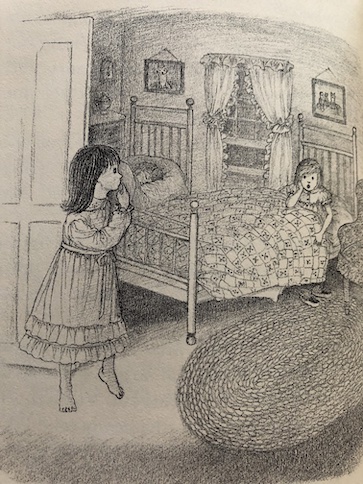
Nella lives with her parents and her two sisters, Eddy Bernice and Dessa, during the Great Depression. The three sisters usually get along well and share everything with each other. Shortly before Christmas, Nella tells her sisters how badly she wants a Baby Betty doll as a present, but they tell her it’s useless to wish for that because they’ll never be able to get one during the Depression.

Nella decides to write a letter to Santy Claus anyway, asking for Baby Betty. On Christmas morning, the girls’ mother gives each of them a little bag of treats with peppermint sticks, nuts, oranges, and raisins. Then, their father gives them one special present: a Baby Betty doll.

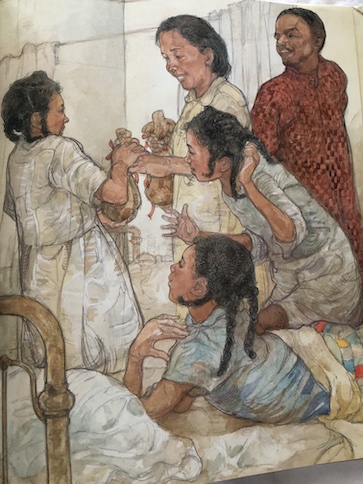
The girls are overjoyed by this special present of a doll because store-bought presents are rare in this time when so many people struggle with money and families like theirs can’t afford much. The girls are all so eager to play with the doll that they start to fight over who gets to have her first until their father breaks up the fight and their mother confiscates the doll until the girls resolve the argument

Nella persuades her sisters that the only reason they got the doll was because she wrote the letter asking for one, while they didn’t think it would even work. Nella was the one who wanted the doll the most from the beginning. Because of that, her sisters agree that the doll belongs to her and leave her to play with the doll all by herself.

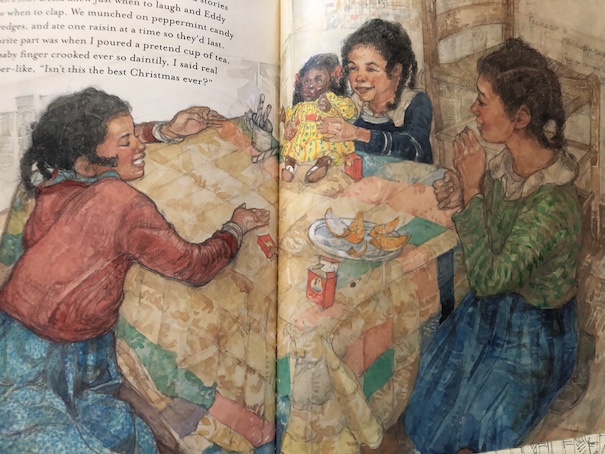
At first, Nella enjoys having her dream doll all to herself, but dolls can’t sing along with songs or clap or laugh at stories, like sisters can. Nella thought that Baby Betty was all that she wanted for Christmas, but she comes to realize that, even better than having the best doll in the world, is having someone to share in the fun.

My Reaction

This is a sweet Christmas story about how people are more important than presents. At first, Nella thinks that all she wants is that special doll, but having the doll all to herself isn’t as much fun as sharing her with her sisters. The doll is pretty, but she can’t do much more than sit there and blink her eyes. Nella needs her sisters to talk to and laugh with.

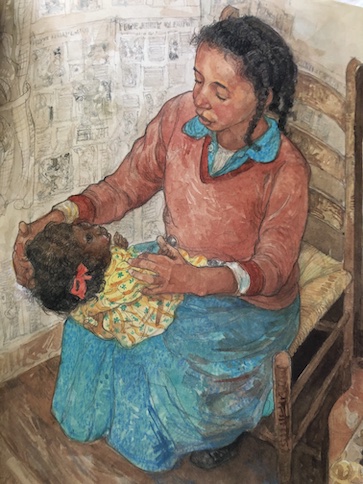
I like how the author set this story during the Great Depression. A story about siblings learning that it’s more fun to share rather than keep toys to themselves could take place at any time, but the fact that this is set during the Great Depression and the girls know that presents this nice are rare. This family is poor during a time when many people are out of work and money is tight for almost everyone. At the beginning of the story, the girls help their mother to line the walls of their house with newspapers to keep out the drafts, so the readers know they are very poor. The newspaper wallpapers are seen in the backgrounds of the pictures throughout the book, reminding readers how poor the family is. They consider themselves lucky just for betting the simple treats to eat, which we’re told are better than they’ve had other years. The girls know that they are incredibly lucky to get even the one doll for Christmas, and there was no way they could expect their parents to buy one for each of them. The girls fight over the doll because they are all so thrilled to get their hands on her, and they all can’t wait to play with her. We are told that the girls are usually pretty good about sharing with each other, but this sudden appearance of an unusually good present during a time of deprivation is just overwhelming for them.

Nella seems a little selfish at first for wanting the doll for herself, but her sisters agree that it was her particular wish. It was her idea from the beginning to ask for the doll, and it seems unfair to her that her sisters each try to claim it. Fortunately, it doesn’t take Nella long to realize that it’s more fun to have other people to play with and decides to share the doll with her sisters. The girls work out their differences, and they have a much better time when they all join the pretend tea party with the doll.

The book shows the family as being very close-knit. The parents were paying attention to the girls’ wishes when they chose their special Christmas surprise. The father is involved with the girls’ lives, telling them bedtime stories and dealing with their fights, and the mother helps the girls to realize what’s important and work out their differences. Their family doesn’t have much, but I liked the way the parents helped the girls learn how to think of each other, appreciate each other, and share with each other.

The Scandalous Sisterhood of Prickwillow Place

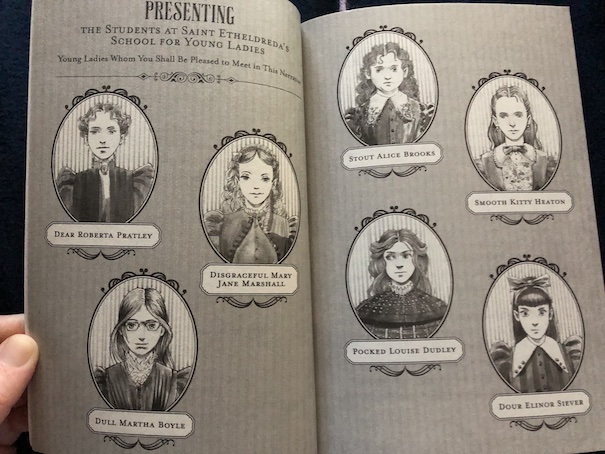
The story is set in England in 1890. There are seven girls at the proper Victorian boarding school known as Saint Ethelreda’s School for Young Ladies on Prickwillow Road in Ely. As the beginning sections of the book explain when they introduce the girls and members of their families and acquaintances, they were all sent to Saint Ethelreda’s because their families want them to become proper Victorian young ladies, ready to make suitable and socially-acceptably marriages. Some of the girls have defects in their characters or personal interests that are considered entirely unsuitable, and their families are hoping that the school’s discipline and propriety will cure them.

“Dear” Roberta Pratley – Her mother died while she was still young, and her father remarried. It was her stepmother’s idea to send her to boarding school, thinking her too soft, clumsy, awkward, and overindulged by her late mother. Her stepmother hopes that boarding school will strengthen her and turn her into a more graceful young lady. Roberta is known for being gentle and kind. She’s good at sewing.

“Disgraceful” Mary Jane Marshall – She was sent to boarding school by her mother, who has noticed that Mary Jane, while still rather young, is very pretty and precociously flirtatious, with a tendency to attract disreputable and penniless young men. Worse still, Mary Jane enjoys the company of these disreputable young men and regularly slips away from her mother to see them on the sly. Fearful that Mary Jane’s recklessness with young men will lead her into a disastrous marriage too early in life, her mother enrolled her in an all-female boarding school to keep her away from boys and, hopefully, give her a chance to mature and improve herself. So far, it’s not working. The only non-disreputable young man who interests her is the young local police constable.

“Dull” Martha Boyle – Martha has four brothers at home who make her life miserable with their pranks and teasing. Boarding school gives her an escape from them. She isn’t considered very bright, but she has a talent for music. She has a crush on a nearby farmer’s son.

“Stout” Alice Brooks – Poor Alice has a tendency to put on weight and is often compared unfavorably to her cousin Isabelle, who seems to be able to eat anything she wants without putting on an ounce. Alice doesn’t really hate Isabelle for this, but she’s tired of her grandmother’s criticism over it. She has a crush on a young law clerk.

“Smooth” Kitty Heaton – Kitty’s mother died when she was only four years old, and Kitty has no other siblings, which is a disappointment to her father, who hoped for a son to take over his business enterprises one day. Kitty’s father largely ignores her, and he has not yet noticed that Kitty is developing some shrewd business skills herself.

“Pocked” Louise Dudley – Louise’s face is scarred because she contracted smallpox at a young age. She survived this potentially-deadly illness because her devoted uncle, a talented doctor, nursed her through it. Ever since, she has revered her uncle and looks up to him as a mentor. Her uncle enjoys sharing his scientific and medical knowledge with her, he encourages her studies, and he thinks that she has the potential to a be doctor herself. Unfortunately, Louise’s parents don’t think that this is a proper profession for a young lady, so they sent her to boarding school to learn the kind of skills young ladies need to know to be wives and mothers. However, Louise has not given up her scientific interests.

“Dour” Elinor Siever – Elinor has a macabre side to her personality. Actually, her macabre side is most of her personality. When she was younger, she started sneaking out at night to explore, and she watched with fascination as the old grave digger in her town exhumed bodies to rob them or sell them for medical experiments. When the old grave digger spotted her watching him, she gave him a fright, and when her parents found out what she’d been doing, they packed her off to boarding school to put an end to this morbid interest and encourage her to be a sweeter, more cheerful, and more normal girl. None of that is working, but her morbid interests are about to come in handy when death comes to the little school.

One evening, while the headmistress of the girls’ school is dining with her visiting brother, both the headmistress and her brother are poisoned. The girls are saved because they were not eating the same food. Realizing that the headmistress and her brother are dead and quickly concluding that they were murdered, the girls debate about what to do. They consider calling a doctor, but it’s obviously too late for that. They could get the police, but before they do, the girls stop to consider what this will mean for themselves.

They have no idea who poisoned the headmistress and her brother. The girls prepared the food they were eating, so the poisoner could have even been one of them, or at least, they could be potential suspects. At the very least, the death of the headmistress means the end of the school, and the girls will all be sent home to their families. The truth is that the girls don’t want to go home. Each of them has some sort of tension at home or a reason why they were sent away, and they’ve all become like sisters to each other. More than anything, they want to be able to stay together and have some freedom from their tensions at home.

With their headmistress gone and no adults around to tell them what to do, what not to do, or how to be, the girls realize that they have unprecedented freedom to do as they like and be themselves, but that’s not going to last if they’re suspected of murder. Kitty is the first to suggest that they not tell anyone that the headmistress and her brother are dead, but she’s also the first to realize that, if they don’t find out who killed them, there will be a scandal, and each of the girls will be under suspicion for the rest of their lives. While Kitty relishes the idea of taking charge of the other girls and having them organize their own lessons and self-study from now on, according to the subjects that interest each of them the most, they also need to investigate and solve the murders. There is little hope for any of their future prospects if they have to go through life as murder suspects.

Their first problem arises when some friends of the headmistress and her brother show up unexpectedly as part of a surprise party for the brother’s birthday. Acting quickly, the girls hide the bodies and convince the guests that the brother has gone to India suddenly to tend to a sick relative and their headmistress has gone to bed because she was feeling unwell. However, one of the girls accidentally injures the ankle of the choir teacher, who has to spend the night at the school, causing them further complications. Desperately, the girls try to cover up the fact that their headmistress is dead and buy themselves time to investigate.

Although none of the girls is what their families consider a proper Victorian young lady, they each have skills that are useful to their deception and investigation. Kitty is good at organizing and managing people, and Mary Jane knows how to charm them. Elinor isn’t afraid of handling the dead, and Louise has scientific knowledge. Alice is the right size to pose for their headmistress in her clothes, and she has some acting ability.

Can the girls find the real murderer before someone figures out that two murders have taken place and blame the girls for them? What will the girls do if it turns out that the murderer is one of them? And, if it’s not one of them, what’s to stop the murderer from trying to kill again if he believes the girls’ ruse that their headmistress is still alive?

The book is available to borrow and read for free online through Internet Archive (multiple copies).

This is a humorous mystery with delightful characters! Although none of the girls is quite what their families or society wishes they were, readers will see that some of their supposed defects are actually strengths and skills. The humor in the story is dark, and the girls are unsentimental about the deaths of their annoying headmistress and her odious brother. They explain the reasons for their lack of sentimentality through their explanations of the victims’ characters. Neither of them was ever very nice to the girls, and they both had dark sides to their personalities.

Because some of the girls have morbid tendencies or possibly scandalous sides to their personalities that they need to cover up, it is plausible from the beginning that one of them could have had a reason to kill the headmistress, leaving readers more in suspense about the identity of the murderer. Although the girls love each other like sisters, there are moments when even they question whether they can really trust each other. However, the introduction of the headmistress’s friends and associates add other possible suspects to consider.

The first half of the book is largely about the girls getting themselves organized and covering up the deaths of the headmistress and her brother. They get more into solving the murders about halfway through the book, although they begin developing suspicions before that. I was pretty sure from the beginning that none of the girls did it, although the book does a good job of making it plausible that they could have. However, the girls soon learn that there were sides to their headmistress and her brother that they didn’t know about.

Early on, I had a theory that there could be more than one murderer involved. The headmistress and her brother didn’t seem to have exactly the same symptoms when they died, so I thought that it was possible that they were poisoned by different people coincidentally at the same meal. That’s not quite the right answer, although the parts of the story that made me think so are actual clues to what really happened. There are multiple villains in the story, some working together and some not. Some of what I suspected turned out to be true, but not all of it, and I didn’t figure out the whole situation before the characters explained it.

During the course of their adventures, the girls remain friends, and they also come to realize some things about themselves. Some of the girls develop budding romantic interests. Whether or not those fully develop, we don’t know, but it appears that there’s someone out there for everyone. Even Elinor finds someone to bond with over her morbid fascination for death. Some of the girls also come to realize talents they didn’t fully consider before and begin developing ambitions for their future. Kitty comes to reckon with her father’s lack of interest and emotional connection with her, and she also comes to realize that she shares some traits with him, even some of the less desirable ones. She realizes that she doesn’t want to be like her father, cold and commanding. While she felt little for her old headmistress, she was primarily motivated by her warm feelings for her best friends and fellow students, whom she regards as sisters. Because of her father’s detachment, she desperately guards the only warm connections she has in her life. Fortunately, the book has a happy ending. Circumstances allow the girls to continue with their education together in a way that supports all of their interests and under the guidance of someone who truly cares for them and understands them.

Madeline in London

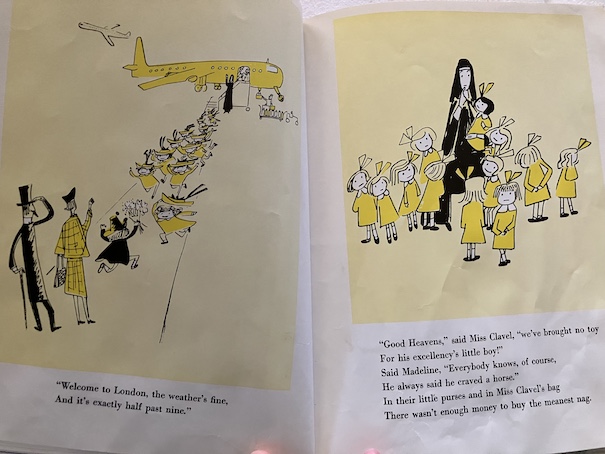
This book is part of the Madeline series about a little girl at a small boarding school in Paris. The son of a Spanish Ambassador, Pepito, lives next door to the girls. He’s a menace to them at first, but the girls make friends with him. However, in this book, Pepito moves to London because his father has been relocated for his job.

When Pepito and his parents go to London, Pepito is unhappy there because he’s lonely for Madeline and the other girls from the boarding school. With Pepito growing thin and depressed from his unhappiness, Pepito’s father arranges for the girls from the boarding school to visit for Pepito’s birthday to cheer him up.

When Miss Clavel and the girls arrive in London, there’s a happy reunion, but then, they remember that they didn’t bring Pepito a present for his birthday. Madeline remembers that Pepito has always wanted a horse, and they find an old, retired army horse who is still healthy and gentle.

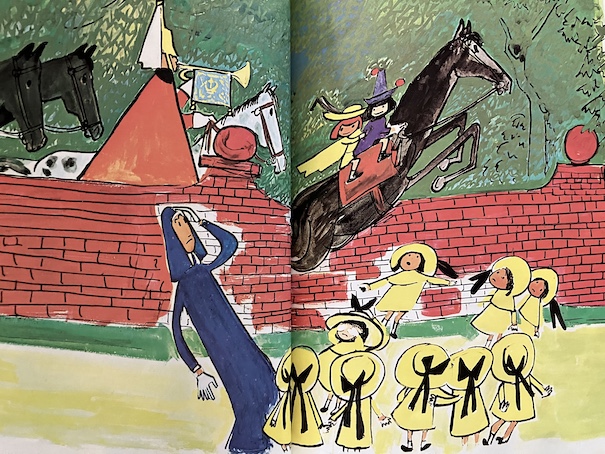
However, when they give the horse to Pepito, they quickly discover that there are complications to owning a horse as a pet. The horse hears a trumpet, and reacting to his army training, he runs off with Pepito and Madeline on his back to join a parade.

Then, they forget to feed him, so he eats everything in the garden, making himself sick. It seems like the embassy in London is no place for a horse, but Madeline and her friends may have room for one at their school!

The book is available to borrow and read for free online through Internet Archive (multiple copies).

Giving someone a horse for a present without checking with their parents or making sure that they have what they need to take care of a horse isn’t something that people realistically do, but the Madeline books rarely worry about the practicalities of a situation. It’s all fun and adventure!

I was seriously worried about the horse after they forget to feed him and he helps himself to random plants in the garden, especially when they find him with his feet up in the air. Fortunately, everything works out okay, which is characteristic of Madeline books, too. How the trustees of Madeline’s school will react when they find out that the girls now have a pet horse, since they raised a fuss earlier about the girls having a dog, is anyone’s guess, but the story doesn’t worry about that, either.

Like other books in this series, the pictures in the book alternate between limited color images, mostly in black and yellow, and full color images.

Aunt Flossie’s Hats (and Crab Cakes Later)

On Sunday afternoons, a pair of sisters, Susan and Sarah, go to visit their Great-Great-Aunt Flossie. They love her house because it is full of interesting things, especially Aunt Flossie’s hat collection.

When their aunt welcomes them in, she offers them tea and cookies and promises that they will get some crab cakes later. After they have their tea and cookies, Aunt Flossie lets the girls try on her hats and tells them stories about them.

The girls are fascinated by the different colors and styles of the hats, but to Aunt Flossie, they represent memories. As the girls pick hats to try, Aunt Flossie tells them what the hats remind her of.

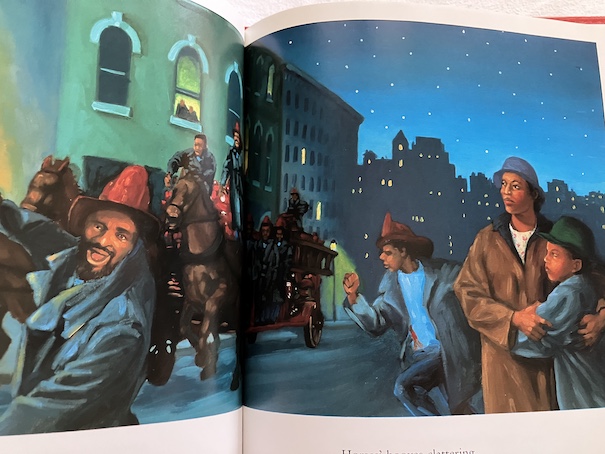
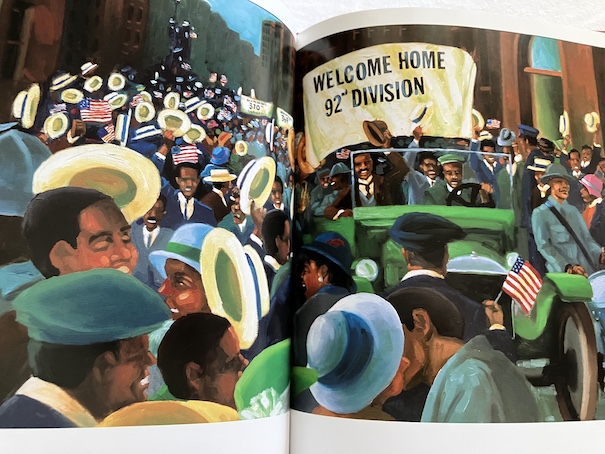
One hat that still has a slight smokey smell reminds Aunt Flossie of a big fire she witnessed in Baltimore. Another hat, one with a red feather, reminds Aunt Flossie of the parade she saw at the end of the Great War (what WWI was called before WWII).

Aunt Flossie’s favorite hat has pink and yellow flowers, and it reminds her of the time when she almost lost it, but it was rescued by a friendly dog. The girls love Aunt Flossie’s stories about her hats, and they love the crab cakes they get later with their family!

The book is available to borrow and read for free online through Internet Archive (multiple copies).

This is a sweet, slice-of-life story about an elderly aunt sharing her memories with her young nieces. The girls enjoy their time with their aunt, trying on the hats in her collection and getting glimpses of the past through her stories. By spending time together, getting together for tea (and crab cakes later) and trying on the hats, the girls are also building new memories. Years later, they will be able to tell stories about the afternoons they spent with Aunt Flossie and the stories she would tell them about her hats. A note in the book’s dedication indicates that the story is based on memories of the author’s own elderly Aunt Flossie.

The pictures in the book are colorful, like the colors of the aunt’s hats, and they’re also a little soft. I think the soft quality of the images is a good match for the memories the aunt shares with the girls and the new memories they’re creating by sharing stories and spending time together as a family.

Happy Birthday, Kirsten

Kirsten, An American Girl

It’s spring, and Kirsten’s family is planning to build a new barn on the farm that they share with Uncle Olav and his family, and her mother is expecting a new baby.

One day, while they are outside, working, dark clouds come, the wind picks up, and Aunt Inger thinks it might be a tornado. She urges everyone to get into the root cellar for safety. Miss Winston, the school teacher who is staying with Uncle Olav and Aunt Inger, joins them in the cellar. She brings her quilt with her for comfort and because it reminds her of home, so she wouldn’t want to lose it to a tornado.

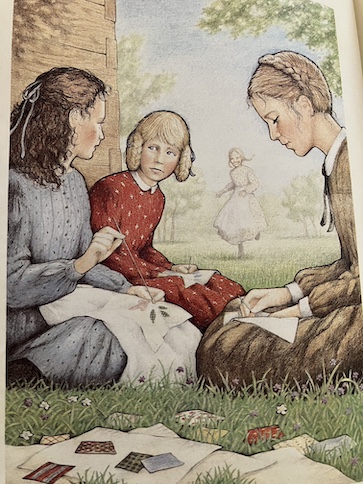
She tells Kirsten and her cousins that her mother and other women and girls in her family made the quilt for her as a present when she left Maine. The scraps of cloth in the quilt came from clothes members of her family used to wear and things she used to wear when she was younger. Everyone who worked on the quilt signed it, making it a “friendship quilt.” Kirsten and her cousins ask Miss Winston if she could teach them to make a quilt like this one, and she agrees. She says that she will give them some muslin for the backing, but they’ll have to supply the scraps of cloth for the designs themselves. Because it takes a lot of work to make a big quilt, she suggests that they each make a square. Quilts are an unusual concept to the Swedish family because people in Sweden during their time usually use woven blankets. Kirsten’s mother also reminds her that she will need her help to sew more clothes for the new baby. Kirsten’s cousins, Anna and Lisbeth, suggest that they do their quilt sewing during recess at school, and Miss Winston agrees.

At school, the girls trade cloth scraps with each other and invite other girls to join them in quilting. One of the other girls, Mary Stewart, has done quilting before, so she helps the others. While the girls sew, they talk, and Kirsten talks about the baby that her mother is expecting. Mary says that the little girl her family calls her little sister is actually her cousin. She was born as one of a set of twins to Mary’s aunt, but the other twin died at birth, and their mother died shortly after, so Mary’s mother took the baby to raise with her family. Stories like that worry Kirsten because she worries that something might happen to her mother or the new baby.

Mary also brings up the topic of whether or not Miss Winston will move on. She’s been going to Powderkeg School for four years, and every year, the previous teacher moves on, and they get a new one. Although Kirsten initially had trouble with Miss Winston, she has become fond of her, and she wouldn’t like to see her go. With all the other changes happening in Kirsten’s life, she doesn’t want any other major changes now. Kirsten suggests to the other girls that they turn their quilting project into another friendship quilt for Miss Winston, signing it like her family members signed their quilt. The other girls debate about whether they could manage to finish a quilt like that by the end of the summer term. Lisbeth thinks they could, but Mary doesn’t want to rush the project because the best part of making a quilt is sewing it with your friends.

The talk then turns to Kirsten’s birthday. She will be turning ten years old soon. She didn’t celebrate her last birthday because that was during their voyage to America. Mary says that ten is a more important birthday anyway, although Kirsten isn’t sure if her family will do anything for her birthday this year, either. Everyone’s attention is taken up with preparations for the new baby.

When Kirsten’s mother tells her that the new baby is about to be born, she also tells her that she remembers the day Kirsten was born, too. She says that she will never forget that day because she had been hoping for a daughter, and she knows that Kirsten’s birthday is coming in two more weeks. Kirsten is happy that her mother remembers, and she hurries to get her aunt to help with the birth of the baby.

Fortunately, Kirsten’s new sister is born safely, although Kirsten has to take some time away from school to help her mother with the new baby and household chores. However, her mother tells her that her friends from school will be coming to the raising of the new barn, which is the day before Kirsten’s birthday, and she will allow Kirsten to have her birthday free to have fun with her friends.

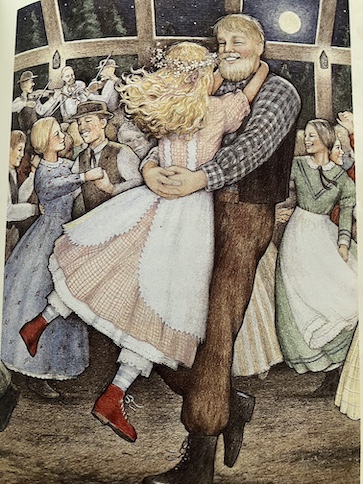
At the barn raising, Kirsten and her friends have a chance to work on their quilt again. Kirsten is behind on making her quilt square, but her friends have arranged a special surprise for Kirsten’s birthday.

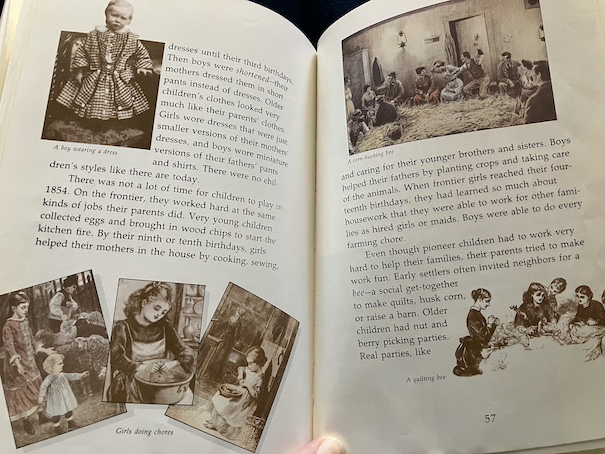
There is a section in the back of the book about babies and young children on the frontier during the mid-1800s. Children were born at home then, with the help of family members and midwives because there were few doctors and hospitals on the frontier. With limited access to medicine and without some of the modern medicines we have today, childbirth and early childhood were often risky. It was sadly common for families to lose a child or two before they were five years old. Because accidents as well as illness posed a threat to young children, parents were often strict with discipline so their children would listen to them and follow their instructions to avoid disaster.

This part of the book also talks about the phases of a child’s life on the frontier. Older children wore clothes that looked like smaller versions of their parents clothes, and they would often do the same kinds of chores that their parents did on their farms. Most children expected to become farmers or farm wives, like their parents. They were raised doing farm work, and they didn’t expect to do anything else when they were older.

Although their lives were filled with chores, there were still some opportunities for fun. Sometimes, neighbors would turn chores into social occasions, called “bees.” These work parties could center around any kind of chore that the community needed to do and could do together, like raising a barn or making quilts, like the characters in the story. Along with accomplishing their task, it was a chance for friends and neighbors to get together and talk and have a little fun.

The book is available to borrow and read for free online through Internet Archive (multiple copies).

I don’t think I read this particular book in the Kirsten series when I was young. I wasn’t as fond of the Kirsten books as I was other series in the American Girls franchise because there are some really sad parts in the series. However, I really enjoyed this particular book. Kirsten is worried at first about the welfare of her mother and her family’s new baby because she knows that life on the frontier can be dangerous, and sometimes mothers die in childbirth, and babies don’t always survive. Fortunately, everything turns out well for Kirsten’s mother and new little sister.

This is a happy spring story with a focus on new life and friendship. Even the smallest kitten in the new litter seems like it’s going to be fine. I liked it because, while life on the frontier could be very hard, it’s nice to see that not everything turned out as a tragedy. The book ends with the barn raising and birthday celebration for Kirsten.

The Summer Birds

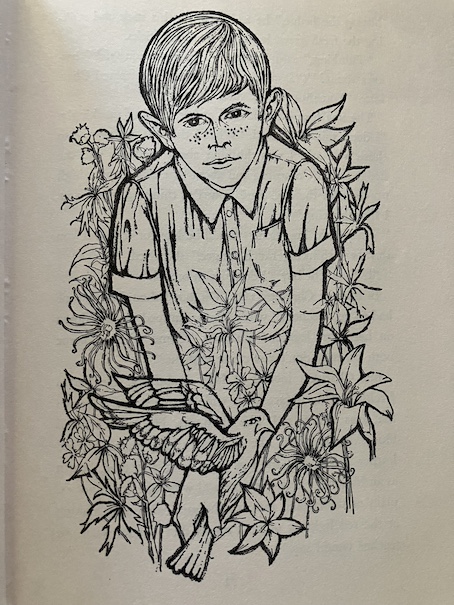
The Summer Birds by Penelope Farmer, 1962.

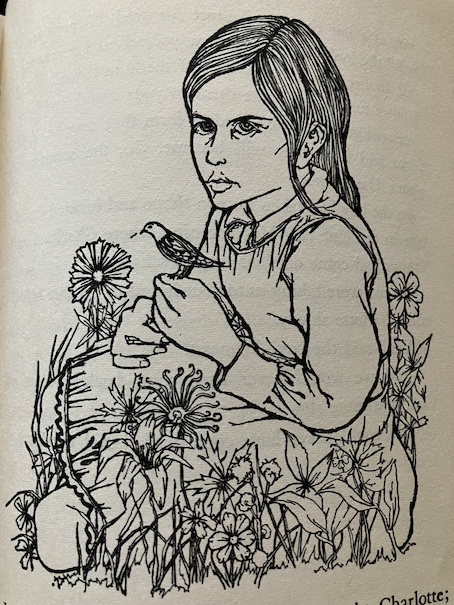
Aviary Hall is an old, Victorian-era house in a small village in England. It doesn’t really have an aviary, although there are hummingbirds on display in a glass case in the drawing room. Like other houses of its type, it has greenhouses and a walled kitchen garden. Twelve-year-old Charlotte Makepeace and her younger sister, ten-year-old Emma, live there with their grandfather. Every morning, they walk to school, and they admire the birds in the area, wishing that they could fly like that themselves. One morning, they meet a strange boy on their way to school. Charlotte is cautious about meeting strangers, but Emma talks to the boy. Charlotte says that they should hurry, or they’ll be late for school. The boy says that he doesn’t go to school, so Emma invites him to come with them to their school. Charlotte isn’t sure what their teacher would think of the strange boy showing up, but they have to go or they will be late.

However, when they arrive at school, Charlotte gradually begins to realize that nobody seems to notice the new boy except for her and Emma. Other people just look past him, and nobody asks who he is. It’s like they can’t even see him. As the lessons at school continue, Charlotte’s attention wanders, and she finds the heat of the room uncomfortable. Then, the boy invites Charlotte to come away with him, promising that he will teach her more than she will learn in class.

At first, she thinks that people will notice if she leaves, but they don’t. She and the boy run away from the school, and Charlotte feels wonderfully free, like a bird. The boy asks Charlotte if she would like to fly like a bird. Charlotte doesn’t see how that’s possible, but they says that it is and shows her that he can fly. The boy teaches her some exercises to make sure she’s strong enough. Charlotte can’t fly at first, just falling to the ground when she tries, but when the boy urges her to continue trying, she gradually realizes that she is staying in the air longer and longer. They have a wonderful time on this adventure.

The boy is very mysterious about who he is although he asks many questions about Charlotte and her home and family. Charlotte asks the boy if the other kids from school can also learn to fly. The boy says that they have to learn one-by-one, but he will teach them individually, and it has to be a secret.

Then, suddenly, Charlotte finds herself back at school. No one has noticed that she was gone, not even Emma. At first, Charlotte wonders if it was all just a dream, but she discovers that she still has the ability to fly and has to be careful not to let other people see her feet leave the ground when she kicks her feet. Emma can tell that Charlotte has a secret, and she’s irritated when Charlotte refuses to tell her what it is. However, Charlotte knows that Emma will learn soon enough.

Emma learns to fly the next day, and gradually, other children at school also start to be able to see the boy and get their own flying lessons. Charlotte’s best friend, Maggot (a nickname, not her real name), seems particularly accepting of the strange boy and his strange powers of invisibility and flying. She seems to understand things about him, maybe even more than Charlotte does, saying that her uncle has told her about such things.

Their teacher discovers what they’re doing when she catches one of the children flying, and she questions them about it. The children don’t want to admit anything to her because they call swore an oath to keep it a secret, but the mysterious boy says that their teacher is all right and reveals himself to her. He explains that he taught the children to fly, and their teacher is surprisingly accepting of that. She asks if she can also learn, but the boy explains that he can only teach children. The teacher regretfully says that she suspected that might be the case, and the children begin to consider that their ability to fly might also fade with age. The teacher invites the boy to join their class for the rest of the term and seems to quietly support their flying adventures.

When school lets out for the summer, the children continue their flying adventures, still a secret from their parents. The boy, who has still not told anyone his name, is very strange, and not just because he can fly. Charlotte sees him eating insects, which he says he loves, and he doesn’t seem to understand things about school and ordinary houses. During an argument among the boys in the group, who don’t want to be bossed by the mysterious boy without reason, one of the boys, Totty, challenges the mysterious boy about who he really is, where he really comes from, and how he came by his flying magic. The other children are afraid to challenge the mysterious boy because they know that he is strange, they worry that there may be something evil about his magic (although they doubt it), and they fear losing the ability to fly.

The children decide to settle the conflict with a special challenge. If the mysterious boy wins the challenge, he wants to stay with them for the rest of the summer, being their leader and not explaining anything about himself. If Totty wins, the mysterious boy says he will explain who he really is and then leave, although he will let the children keep their ability to fly until the summer is over. The mysterious boy wins the challenge, but at the end of the summer, he makes them all an offer that could change their lives forever.

The book is the first book of the Aviary Hall Trilogy, although it isn’t as well-known as Charlotte Sometimes, which is the third book. It is available to borrow and read for free online through Internet Archive (multiple copies).

My Reaction and Spoilers

Although Charlotte and Emma are sisters, this is the only book in this short series in which they both appear together. Each of the other books focuses on each of the girls separately. Charlotte Sometimes, the best-known book in the series, is set when Charlotte goes away to boarding school, and the second book in the series, Emma in Winter, takes place while Charlotte is away at school, focusing on Emma, who is left at home. All three books focus on growing up and issues of personal identity, although they do it in somewhat metaphysical terms and with fantasy elements.

Charlotte Sometimes focuses on personal identity as Charlotte finds herself traveling back and forth through time, trading places with another girl who attended her school in the past. At times, Charlotte feels like she’s losing her identity as Charlotte and becoming more like the other girl. One of the things I liked about The Summer Birds was getting a glimpse of Charlotte just being in her own identity all the way through the book. The beginning of the book makes it clear that the other children at school think that Charlotte is a prig (someone who is rigidly well-behaved to the point of being obnoxious), but it also clarifies that it’s because she feels compelled to look after Emma and set a good example for her.

The two girls live with their grandfather Elijah, who is obsessed with astrology, and an elderly, lazy housekeeper. The book never really explains what happened to their parents, but it seems that Charlotte and Emma are orphans. It is established in Charlotte Sometimes that their mother is dead, and this book mentions that their father was a sailor. Their grandfather likes girls to be well-behaved, and Emma is anything but, so Charlotte keeps trying to teach Emma how to act to keep their grandfather happy and trying to smooth things over with their grandfather when Emma misbehaves. In Emma in Winter, Emma has to face up to the realities of her personal behavior and other people’s reactions to her behavior without Charlotte running interference or taking responsibility on her behalf. That’s her coming-of-age moment, and it leads her to become more mature, personally responsible, and better-behaved herself and to appreciate what Charlotte was trying to do for her.

Although each of the books in this short series can be read independently of each other, I think reading all of them adds some depth and understanding to the characters. Charlotte was always a very responsible and cautious person in Charlotte Sometimes, showing that there is continuity to her character, but knowing the history of why is that way makes her more understandable. Although the other children sometimes consider Charlotte a drag for pointing out things that they shouldn’t be doing, it’s Charlotte’s serious nature that causes the other children to question the offer that the mysterious boy makes them at the end of the summer.

We also get to meet Charlotte’s best friend in her home town in this book, a girl called Maggot, who never appears and is never even mentioned in Charlotte Sometimes. The reason why she doesn’t appear in later book is that she is the only one who decides to accept the mysterious boy’s offer at the end of the book, leaving with him to be forever young as a bird. Charlotte is tempted by the offer, but she realizes that accepting it would mean giving up everything else and everyone else in their lives. The children would be happy for a while in their freedom as birds, but they would eventually miss their parents, and their parents would grieve for them because they would never be able to return. Although the other children don’t always listen to her, she is able to persuade them that this is really a serious matter that is about their very lives, forever, not just a brief summer lark. In the end, Maggot is the only one who can accept the offer because she is the only one who has no one left in the village to miss. She is an orphan and lives with an uncle who pays little attention to her. It is implied that he would hardly notice if she left, whereas Charlotte and Emma’s grandfather really would miss them, even if he sometimes doesn’t like their behavior. Maggot was also always the most birdlike, and she probably knew that the boy was really a bird before the others did because her uncle is a gamekeeper.

There are still some questions left unanswered at the end of book, but that is typical of this series. Readers might have guessed that the boy was really a bird all along, but we still don’t really understand his magic or see what happens in the village after Maggot leaves with him. We don’t know for sure that Maggot’s uncle doesn’t miss her or try to look for her, what the other villagers decide happened to Maggot, or if the teacher ever tells anyone what she knows about the children flying or if she understands what happened to Maggot herself.

Overall, it’s a pretty slow-paced book. Most of the story feels like pretty low stakes until the part at the very end, where the boy offers to let the other children come with him to be young birds forever. Then, it becomes a serious question of whether they are willing to continue with their normal lives, growing up and losing their flying magic, or if they’re willing to give up everything and everyone they know and love forever to keep it. Even though most of the story is peaceful, I had the feeling from the beginning that there might be a sinister turn somewhere because the boy’s behavior didn’t always seem straight-forward and friendly, and he was definitely keeping secrets. I had the feeling that the mysterious bird boy wanted something from them or was going to try to get them to do something they shouldn’t eventually. It’s an interesting premise, although I still think that Charlotte Sometimes is the best in the series. Events in this book are also mentioned in Emma in Winter, when characters in the story discuss them with each other, showing that all of the local children still remember their flying adventures together and that the events in this book didn’t just happen in their imagination.

Down a Dark Hall

Down a Dark Hall cover

Fourteen-year-old Kathryn Gordy, called Kit, is going to boarding school for the first time. She doesn’t really want to attend the Blackwood School for Girls, but her widowed mother has remarried, and she and Kit’s new stepfather, Dan, will be going on an extended honeymoon in Europe. Kit tried to persuade her mother to take her with them on the trip to Europe, but Dan is firm that she can’t come on their honeymoon trip. The Blackwood School has a good reputation, and graduation from the school would guarantee Kit entrance to a good college. At first, Kit thought it might not be so bad if her best friend, Tracy, could attend the school, too, but although Tracy applied to Blackwood, she wasn’t accepted there. Kit hates the idea of going there alone. Worse still, when her mother and Dan take her to the school, it’s an imposing, castle-like mansion that gives Kit the creeps. Her mother and Dan think it looks impressive, but just the sight of the building gives Kit a terrible sense of evil. Even though she doesn’t want to stay, her mother and Dan insist.

Because her mother and Dan have to leave on their trip, Kit has arrived at the school a day early, before classes will start. Madame Duret, the headmistress of the school, welcomes them and explains a little about the school’s history. The school is fairly new. Before it was a school, the mansion was the private home of a man called Brewer, who died about ten years ago. Because few people would want a house that size outside of town, the building was vacant for some time before the Blackwood School moved in, and there are some ghost stories and urban legends about it in the area. Kit’s mother and Dan laugh it off.

Madame Duret gives them a tour of the school and mentions her art collection. She says that she enjoys collecting lesser-known works by famous artists. The dorm rooms are incredibly luxurious. Each student will have a room to herself with a private bath and a canopied bed with velvet draperies. Art is important to Madame Duret, and she says that she wants the surroundings to inspire her students. When it comes time for Kit’s mother to say goodbye to her, her mother asks her if she thinks she could be happy at the school. If Kit really feels like there’s something wrong with the place, her mother is willing to delay her trip and make other arrangements. Shrugging off her earlier misgivings, Kit tells her mother that she will be fine, and her mother and Dan leave.

The school still bothers Kit, but she feels like she has to try to do well there for her mother’s sake. She knows that things have been hard for her since her father died several years before. Although nobody believes her, Kit remembers seeing her father’s ghost in her room the night he died in a car accident while he was on a business trip. Her mother has managed since then, but she wasn’t really happy until she met Dan, and Kit appreciates that her mother needs adult companionship. Still, Kit senses that this school is very strange, and there are things wrong it it. She can’t figure out why her friend, Tracy, was rejected by the school. The canopied bed is luxurious but kind of creepy because it reminds her of a scary story. Then, she notices that the bedroom doors have locks on the outside of the doors but not the inside.

At dinner that evening, Kit meets Professor Farley, who is a teacher at the school, and Madame Duret’s son, Jules. Professor Farley teaches math and science, and Jules, who has only recently gotten his degree, will teach music, giving the students piano lesssons. Madame Duret herself teaches languages and literature, and apart from these three, there are no other teachers at the school. Professor Farley says that he is the one who convinced Madame Duret to open a school in the United States, having seen her success at her school in England. A young cook named Natalie also works at the school, but strangely, Natalie says that Madame Duret doesn’t want her to speak to the students much.

When the other students begin arriving, Kit realizes that there aren’t going to be many students at this school, either. In fact, there are only three other students besides Kit: Sandy, Lynda, and Ruth. All of the girls also seem to be somewhat removed from their families. Sandy is an orphan who lives with her grandparents, who don’t drive, so they didn’t even drop her off at the school. Lynda and Ruth have both been to boarding schools before, and they were dropped off by a chauffeur. They say that Blackwood isn’t like their old school. Kit still wonders why Tracy wasn’t accepted to the school when there are so few students. Kit realizes that she herself isn’t a top student, and the other three students at this school are quite different from each other. However, Professor Farley says that there are other qualifications besides grades, and all of the girls at this school have the qualities they were looking for. Madame Duret refuses to discuss test results at all.

Kit does her best to settle into the school. Everyone acts nice to each other, and the classes are like having private tutors because there are so few students. However, Kit is still nervous and having strange dreams. She never remembers what she’s been dreaming about, but she dreads these strange dreams, so she has trouble getting to sleep. The only way she can get to sleep is to exhaust herself by reading and writing letters late at night until she is exhausted.

One night, while Kit is writing a letter to Tracy late at night, she hears a scream that is choked off suddenly. Although Kit is afraid, she feels like she has to investigate and find out if there is someone in trouble. She thinks the scream came from Sandy’s room. When Kit tries to check on Sandy, Sandy doesn’t answer, and she has trouble getting into Sandy’s room. Kit feels like there is someone in Sandy’s room, and the room is weirdly cold. When Kit finally gets the light on, Sandy is a little disoriented. She doesn’t remember screaming, but she remembers a strange dream about a young woman in old-fashioned clothing, who was watching her. Sandy tells Kit that she’s had strange dreams like this before, although not about this particular woman. When her parents were killed in a plane accident, Sandy sensed the accident when it happened, and she saw her parents in a dream, not unlike the apparent dream that Kit had about her father when he died. The next day, Kit talks to Lynda and Ruth and learns that they have also been having strange dreams that they have trouble remembering.

These dreams seem to be the one thing that all four of the Blackwood girls have in common, and all of them find them disturbing. When Kit has morning piano lessons, she feels strangely tired and her fingers are sore, as if she’s been playing the piano for hours already. Kit tries to talk to Jules about the strange things that have been happening and her own sense of unease. He tries to give her reasonable explanations, but from the way he speaks, Kit has the uneasy feeling like he knows something that he’s not telling. Jules tells Kit that he’s had some strange dreams himself, but he thinks it’s just the atmosphere of the strange old house. Kit asks him if he’s still having the dreams, and he says he is, but he also likes the house and thinks that it’s just a matter of getting used to the place.

Strange things continue to happen at the school. Lynda wakes up from a nap and suddenly draws an incredibly realistic portrait of Kit when she’s never even taken art classes or done any drawing before. Then, someone steals the portrait out of Kit’s room. Letters and post cards from Kit’s mother and Tracy reveal that they haven’t received any of the letters that she’s been writing to them. Sandy tells Kit that she has a sense that Blackwood School is evil, just like Kit felt when she first arrived.

Ruth is the one who realizes that all of the girls have ESP. Sandy and Kit both experienced ESP when they saw visions of their dead parents. Ruth admits that her excellent grades are only partly due to her naturally high IQ. She can also sense the contents of books without reading them and read the minds of people giving her tests, so she can give them exactly the answers they’re looking for. Lynda isn’t as bright as the other girls, but Ruth has been friends with her for a long time and has discovered that Lynda has memories of herself in a past life, when she lived in Victorian England. Ruth realizes that the girls’ psychic abilities are the reason why the four of them, and only the four of them, were chosen to be students at Blackwood School. The school has a dark purpose beyond providing an education, and these four isolated girls are there to fulfill that purpose.

The book is available to borrow and read for free online through Internet Archive. It was also made into a movie in 2018.

I read this book because it was mentioned as a book a character was reading in another children’s book, The Shimmering Ghost of Riversend, and because it occurred to me that it would fit the Dark Academia genre that’s been popular in the last few years. The reason why this book was mentioned in the other story is that both books involve ghosts who have the ability to act through other people and help them to do things that the living people couldn’t do by themselves. I have a tolerance limit on scary stories, but I felt like I had to read this one because it was mentioned in the other book, and I was curious about it. I’m not sure that I want to see the movie because trailers of the movie make it look even darker than the book, but the book didn’t go beyond my tolerance limits.

In Down a Dark Hall, Madame Duret has psychic abilities of her own and is using girls with psychic abilities to channel the spirits of famous dead people so they can complete works that they were unable to complete in life. Lynda draws and paints pictures that she shouldn’t be able to produce because she has no natural talent for art or training in it. She also begins signing her pictures with the initials TC because she is actually channeling the spirit and abilities of Thomas Cole. Sandy begins writing sonnets without having any prior interest and ability in poetry before because she is channeling Emily Bronte. Ruth finds herself making mathematical notes that are really too advanced for her and barely within her understanding. She’s not sure who she’s been channeling because the scientific and mathematical principles she’s been receiving have little personality attached to them. The reason why Kit’s fingers are always sore and she’s so tired every morning is that she’s been channeling Schubert and other musicians, playing piano music at night. There is one night when multiple musicians fight to control her and get their music out.

The girls are not channeling these spirits through any will or conscious effort of their own. Each of these episodes occurs either while the girls are asleep or just after they wake up from having been asleep. Madame Duret isn’t just facilitating this possession for the sake of art, literature, and scholarship, but also out of greed. She is known for having an impressive collection of works of little-known works of art from famous artists, but what no one else knows is that those works were not produced within the artists’ lifetimes. She has performed this same trick of using the psychic abilities of students to channel the spirits of dead artists to produce new works before, and she artificially ages these works so no one knows that they are new instead of previously-undiscovered works.

Being possessed by the spirits of the dead is disturbing enough, but the girls of Blackwood School also come to realize that the psychic bonds between them and these famous spirits are getting stronger over time. If they don’t find a way to escape Blackwood School soon, they will become permanent. Records in Madame Duret’s office reveal that some of her previous students died from their experiences, and others lost their minds and ended up in mental institutions. No one could stand this type of channeling over the long term and keep their sanity intact, and the spirits themselves don’t seem to have much or any concern for the well-being of the girls channeling them. They seem to have so many ideas that they want to get out that they push the girls harder and harder to produce them. Some of the spirits are gentler and more personable than others, but some regard the girls simply as tools to be used. They can even get violent when the girls resist them or when different spirits interrupt each other’s work. This is a very creepy book, and the girls have some close calls, but fortunately, it has a good ending. I like atmospheric books, but I don’t like books that are overly dark, and I was relieved that all the girls survived. I would have found it hard to take if children died during the course of the story.

Although I knew before reading the book that the story involved ghosts and possession, I initially thought that the isolation each girl has from family and friends was part of the reason why these particular girls were chosen for the school. Before I found out that each girl has psychic abilities, I noticed that none of them are in a position where they are very closely watched by their relatives. Kit’s mother and stepfather are going to be traveling through Europe, so they won’t be trying to visit the school anytime soon, and it would make sense if they didn’t hear from Kit for a while. Sandy is an orphan whose grandparents can’t travel easily, so they won’t be coming to check on her every weekend. Lynda’s mother is an actress who now lives in Italy, so again, there is a separation by great physical distance. Ruth’s parents are busy professionals with doctorates. None of the girls is likely to have any visitors while she’s at school or anybody who would be overly concerned about not hearing from them for a while. At first, I thought that could have been part of the reason why Tracy was rejected as a student, because she has both parents living, and those parents would be in more of a position to check on her and more likely to go to the school themselves if they didn’t hear from her. However, it turns out that her rejection is really because she isn’t psychic, like Kit. The chosen students’ relative isolation from family is just icing on the cake to their psychic abilities and plays into the plot as a reason why nobody outside the school realizes all the weird things that are going on.

I thought that the build-up of the sinister atmosphere at the school was great! Kit has a blatant sense of evil when she first arrives, which feels at first like we’re just being told that the place is evil, but there are also a lot of little details that support it. First, the place is overly luxurious for a boarding school, especially one with so few students to support it. Kit is quick to spot that the girls’ doors can only lock from the outside, which is chilling, although Jules says that’s just to keep people from going into their rooms when they’re not there themselves. However, someone does enter Kit’s locked room to take the portrait of her that Lynda drew, indicating that the girls’ rooms are not safe from anyone and that it’s possible for them to be locked in and unable to get out.

There are also hints from the beginning of the book that Madame Duret and Professor Farley are sinister. Blackwood is actually Madame Duret’s third school that we know about. She had one in France, one in England, and now, one in the US. For some reason, she tends to move countries, which seems odd for someone building a reputation as an elite educator. Boarding schools often have an air of tradition, and their reputations rest on long-term success, which is built over time. Moving around is actually a warning sign, at least to me, that Madame Duret doesn’t want to stay places long enough for people to figure out what she’s really been doing at her schools. Even Jules admits that he doesn’t know things about his mother because he has spent most of his life at other boarding schools himself, not at her schools, so the two of them have mostly been living apart. However, he does know about the possessions of the girls because he has the recordings of the music Kit plays at night. It’s just that he doesn’t fully realize the harm being done to the girls until the end of the book or the harm his mother has already done to previous students.

The old mansion the school is in has a sinister history. The former owner, Mr. Brewer, lost his wife and children, including a baby, in a fire at the house, mostly due to smoke inhalation because the fire didn’t damage the building too badly. After that, he lived as a recluse, and he would act like his family was still alive, buying things for them in town. He could have just lost his mind from grief, but there are indications that his family still haunted the house as ghosts. Locals started telling ghost stories about the place after a plumber heard a baby crying in the house.

Recent reprintings of this book have been updated to include the concepts of laptops, cell phones, and emails, which were not in use when the book was first written. The explanation for why the girls can’t use their laptops to email anybody or get outside help is that there is no Wi-Fi or Internet access at the school. They can write reports on their laptops, but they can’t do much else. Their cell phones don’t get signals, so they can’t call or text anyone.

The version of the book that I used for the cover image is one of the new, revised books with modern technology, and it also has an interview with the author, Lois Duncan, in the back, in which she talks about the inspiration behind the story, her own beliefs about ghosts and psychic abilities, and how she was impacted by the murder of her own daughter, which she earlier documented in a book called Who Killed My Daughter?, in which she consulted psychics for insight into her daughter’s death because the police seemed unable to make progress in the case. Her daughter’s murder happened in 1989, years after Down a Dark Hall was written. Lois Duncan wrote many suspense books for children and young adults, but after her daughter’s death, she gave up writing suspense because it was too upsetting for her to write about girls in danger. She started writing picture books instead. Duncan had already passed away by the time one of the suspects in the case confessed more than 30 years after the murder.

The Secret Language

The Secret Language by Ursula Nordstrom, 1960.

“Sooner or later everyone has to go away from home for the first time. Sometimes it happens when a person is young. Sometimes it happens when a person is old. But sooner or later it does happen to everyone. It happened to Victoria North when she was eight.”

Victoria North is attending boarding school for the first time at the Coburn Home School. Victoria is only eight years old, and this is her first time being away from home at all, so she is very nervous and shy. When she arrives at the school, she is met by an older girl named Ann, who shows her where her room is in the dormitory. Ann shares a room with Victoria and is supposed to show her around and tell her the rules, but she doesn’t really explain much. Victoria still feels lost and has trouble even finding the table where she is supposed to sit at dinner.

At dinner, one of the other girls, Martha Sherman, starts uses funny words, and she tells the other girls that they are part of a secret language that she made up. However, she refuses to tell anybody what they mean. Martha is moody and rude to the other girls at dinner, so the housemother sends her to her room before the meal is over.

Overcome with homesickness, Victoria cries at dinner and during the songs they have to sing afterward. No one has any patience with poor Victoria. Ann tells her that she’s being a crybaby. Other girls laugh at her when they see that she’s been crying. Victoria doesn’t know how she’ll be able to handle boarding school if every day is going to be like this!

The other girls in the dormitory say that Miss Mossman, the housemother, is strict. She blows her whistle at them and makes them line up for inspection every morning. Miss Blanchard, another teacher, is nicer, and she tries to reassure Victoria that things will get better when she gets to know the other students and makes some friends. However, nobody seems to want to be friends with Victoria. Nobody except Martha.

Martha is the only girl who seems interested in talking to Victoria. Martha doesn’t like Coburn Home School, either. More than anything, Martha wants to live at home and just go to an ordinary day school instead of being boarder. Victoria knows just how Martha feels! The other girls are surprised at how well Martha seems to get along with Victoria because Martha doesn’t usually want to be friendly with anyone.

The two of them start to talk about their homes and families. Martha’s father is an importer. She keeps saying that her parents are going to let her come home from boarding school and just go to day school, but it quickly becomes apparent that it isn’t likely. Victoria only has her mother, who works and sometimes needs to travel for work. She doesn’t even remember much about her father. Martha likes math, a subject which Victoria finds hard, but Martha says that she doesn’t reading, which is Victoria’s favorite subject. The two complement each other well.

Although Martha misses home, like Victoria does, and doesn’t really want to be a boarder, she is more experienced about boarding school life, and she helps Victoria to adjust to the school. Martha starts teaching Victoria about pieces of boarding school lore, like school rhymes and the traditions made up and passed down by students, and she also begins teaching her the secret language that she made up. There are only three words in Martha’s secret language, but Martha explains to Victoria what they mean, and the girls decide that they’ll make up more together. Martha becomes Victoria’s best friend all through the rest of her first year at boarding school.

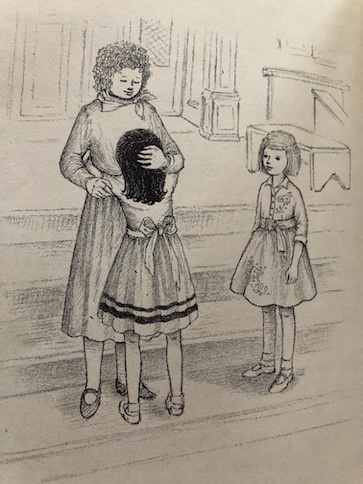
Being friends with Martha makes boarding school feel better to Victoria. Martha still constantly talks about hating boarding school and how she definitely won’t come back next year, although Victoria realizes that’s just a wish of hers. Victoria also comes to realize that many other kids at the boarding school feel the same way. Even the ones who like the school admit that they’d really rather be at home with their parents. They daydream about just going to school during the day and coming straight home afterward, where they can just relax at home and eat what they want and not have to answer to whistles or line up for inspections. When Ann’s family decides to bring her home, Martha and Victoria ask Miss Mossman if they can share a room, and she agrees as long as the girls behave themselves.

Victoria is fascinated at the things that Martha knows about life at boarding school. Martha teaches her about “pie beds.” (I always heard it called “short-sheeting” when I was a kid, although I was never good at making beds the normal way in the first place, so I never fully grasped how to pull off the trick, and I didn’t go to summer camp or boarding school, where people typically did this anyway.) The girls argue about what costumes to wear to the school’s Halloween party, but the school’s handy man helps them make ice cream cone costumes that win a prize for the most original costume. The costumes are uncomfortable to wear, but Victoria is pleased and thinks that Martha should get the credit because the costume concept was her idea. Martha says that, next year, they’ll start planning their costumes earlier and come up with an even better idea. That’s the moment when Victoria realizes that Martha is no longer talking about how she’s definitely not coming back next year.

After the girls come back from Christmas vacation, Victoria is homesick again, but it turns out that their old, strict housemother has left to take care of her father, who is ill. Instead, they get a new housemother, Miss Denton, who is much nicer. She doesn’t blow whistles at the girls to wake them up. Victoria likes Miss Denton right away, and even the other girls in the house start calling her “Mother Carrie” as Miss Denton requests, even though the name strikes them all as silly at first. Martha finds Miss Denton to be overly sweet (“ick-en-spick” in the secret language), although she admits that she’s better than Miss Mossman.

Martha also finds herself liking Miss Blanchard, who teaches math. Miss Blanchard was nice to Victoria in the beginning, but Victoria can’t bring herself to like her much because she has so much trouble in math. Victoria has a fanciful imagination and likes to imagine that certain numbers are boys and others are girls, and Martha finds it frustrating because the idea doesn’t make sense to her, and Victoria doesn’t even follow an exact pattern, like odds vs. evens in her designation. Meanwhile, Victoria is confused by the math tricks that Miss Blanchard teaches Martha. Martha thinks they’re fun, but Victoria isn’t as good at math and has trouble following them.

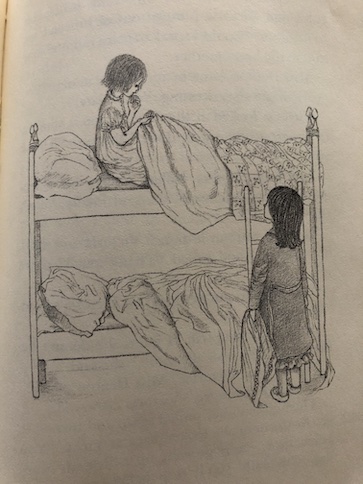
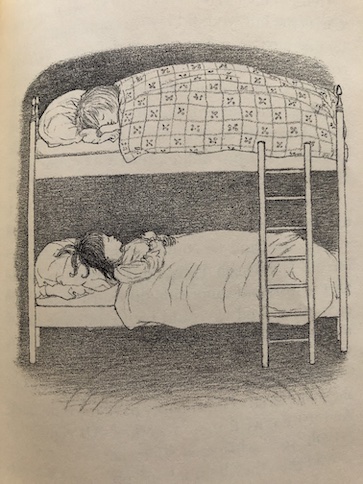
The two girls find themselves arguing sometimes because of their different preferences, but they remain friends. It’s more that, now that they’re getting comfortable with each other and their school, more of their individual personalities are coming out. Victoria is also surprised to realize that, while she still frequently misses her mother, she no longer agrees with her mother about certain things. When her mother comes to visit the school, she worries about Victoria sleeping in the top bunk of their bunk bed, but Victoria herself loves it and has to assure her mother that she likes the top bunk. One thing that boarding school has done for Victoria is to give her a sense of independence and room to develop her own identity and preferences. She no longer has to get her mother’s permission for everything she does, as long as her housemother approves.

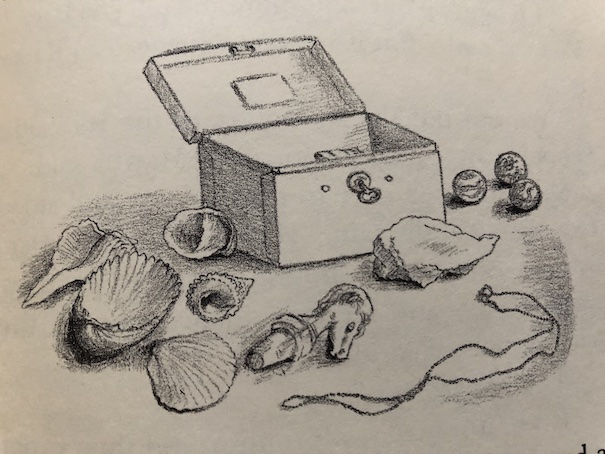
Victoria and Martha are both imaginative, and they begin enjoy their shared adventures at school. They try to hold a midnight feast in their room and search for hidden passages or secret compartments in the dormitory because Martha has heard or read that these things happen in boarding schools. Neither of those adventures goes as planned, but Miss Denton allows the girls to build a little play hut of their own with help from the school’s handy man. Miss Denton also gives the girls a little lockbox to keep some of their treasures in, and they hide it so they can have a buried treasure.

As the year comes to an end, Victoria knows that she’ll be coming back to boarding school next year, and the prospect doesn’t seem so bad as it did before. Martha isn’t sure whether she will or not, talking sometimes about what they’ll do next year but still hoping to live at home with her parents. But, if Martha doesn’t come back to school, it just wouldn’t be the same for Victoria!

The book is available to borrow and read for free online through Internet Archive.

My Reaction and Spoilers

One of the things I found interesting about this book is that it is set in the US. The iconic boarding school stories for children tend to be British stories, but the Coburn Home School is in New York state. The girls’ parents live in New York City.

Most of the story focuses on the girls’ relationship with each other and their growing sense of self-identity and confidence at their boarding school. They talk about classes they take and how they each feel about the other’s favorite subject, but they aren’t shown in classes themselves. The school is also a co-ed school, with both boys and girls, but the boys don’t enter into the story much because most of the action takes place around the girls’ dorm. The boys live in a different dorm. There is only one instance where a boy is shown talking to Victoria, with a hint that he might have a crush on Victoria, another new development in Victoria’s life at school. The little developments in the girls’ lives and attitudes through the school year and each little experience and adventure they have are the main focus of the story. These are the things that are helping the girls understand and develop their identities, self-confidence, and sense of independence.

Toward the end of the book, Miss Denton encourages the girls to think about all of the things they’ve learned this year, and not just the ones they’ve learned in class. The girls don’t fully understand and appreciate that Miss Denton is talking about personal growth and development, but they do consider things they’ve learned, like how to make beds, that midnight feasts aren’t as fun as they sound, and how Victoria learned not to be homesick. These are some of the little things that are part of their school experience and that are slowly making them more grown up and independent than they used to be.

Although Martha is a little older than Victoria and sometimes chides her for being babyish about some things (like putting a lose tooth under her pillow) or still homesick, the truth is that Martha has been just as homesick the entire time. Martha doesn’t appear to be as upset about boarding school as Victoria because she is not a new student in this book, like Victoria. She already went through her first year at boarding school before Victoria got there, so she no longer openly cries about being away from home. Still, the reason why she keeps talking about going home and living with her parents all the time is that she misses them. While the girls’ adventures during the school year and Victoria’s realizations about how boarding school gives her the opportunity to do things and be with people she wouldn’t at home make her feel better about coming back next year, Martha still feels uncertain about it. Martha has also come to love being friends with Victoria and even loves Miss Denton, but her feelings of homesickness leave her feeling torn about what she really wants.

There are hints that Martha will probably return to boarding school anyway, but Miss Denton reassures Victoria that she will be fine at boarding school even if Martha decides not to come next fall, reminding Victoria that she is now one of the “old girls” instead of a scared new one, like she used to be. Victoria also starts to feel that way herself. Martha will probably be back the next year to be with Victoria, Miss Denton, and Miss Blanchard, but readers can be reassured that, even if she doesn’t return, Victoria will be all right with her new sense of identity and independence. This first year at boarding school with Martha may be the beginning of a lifelong friendship or just one step to Victoria finding herself and building other friendships. Maybe it’s both. Victoria’s future life will be fine in general as she continues growing up and finding her way, learning to manage her life one step at a time.

There is a modern 21st century documentary about young children going to boarding school for the first time at 8 years old, What’s Life Like in a Private British Boarding School? | Leaving Home at 8 Years Old, on YouTube. The school in that documentary is British, but I was struck by the common feelings in the documentary and the book, even though they take place decades apart in different countries. There are just some parts of the human experience that last through the generations. The documentary also shows the parents’ side of the boarding school experience, the reasons why they choose to send their children to boarding school, and how they cope with their feelings about sending their children away and being separated from them.

Boarding school isn’t always easy for parents in terms of emotions, and there are hints of that in The Secret Language. We never see Martha’s parents in the book, so we don’t know what’s going on with them, but Victoria’s mother fusses over Victoria when she gets the chance, and she talks about how great it would be if she could arrange things so that Victoria can be home with her all the time again, too. If Victoria’s mother wasn’t a working single mother who has to travel for work, she probably wouldn’t have sent her away to boarding school at all. Miss Denton is very in tune with people’s feelings, and I think that she’s aware of all the complexities in the lives of the girls and their parents. She does her best to look after the girls emotionally, and that’s part of her urging the girls to consider other people’s feelings, to be thoughtful about each other, and to think about the ways they’ve been changing inside as well as outside. I think that the universal nature of the girls’ and adults’ feelings in the book are a sign of the author’s emotional awareness, understanding of how different types of people feel.

Ursula Nordstrom, the author of the book, was actually a famous children’s book editor. She is credited with helping to transform mid-20th century children’s literature to have more of a focus on children’s feelings, experiences, and imagination instead of being morality tales, focused on what adults want children to know or understand. The Secret Language was the only children’s book that she wrote herself. This YouTube video explains about her life and career.

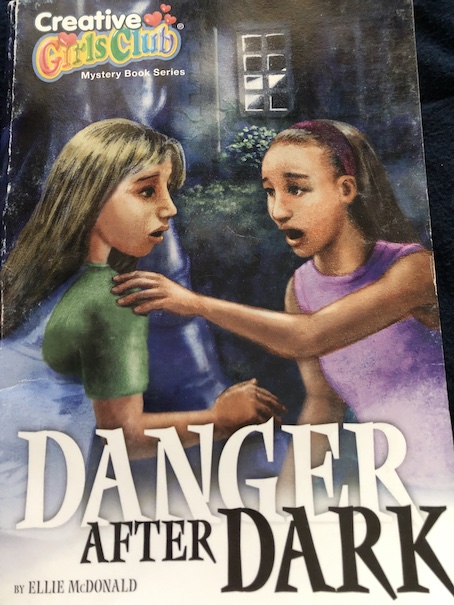
Danger After Dark

Danger After Dark Creative Girls Club cover

Danger After Dark by Ellie McDonald, 2005.

A group of friends in Summary, Indiana has had a club together for years, and they’ve always thought that their club would last forever. They call themselves the Silly Stuff Club because they collect all kinds of weird and silly things that they find at sales. However, when one of the girls, Sarah, finds out that her family is planning to move to another state, it looks like their club might come to an end. The club meets in the old carriage house on Sarah’s family’s property. If their family moves, where will the club go, and where will they store their collection of silly stuff? The other girls in the club aren’t just losing a friend but also losing their club’s home and maybe even the club itself.

Then, Lily gets an idea. Down the road, there is an old mansion that’s been abandoned for years. The Winston estate is the property of Melva Winston, who is something of a legend in their town. According to the story, the Winston heiress rode out of town on her motorcycle about 50 years earlier, and she hasn’t been seen since. Lily reasons that the Winston estate is huge and has outbuildings, and somewhere on the estate property, there is probably a place that they can claim for the club. Since nobody lives there or goes there anymore, who is to know or care if they move in?

Some of the other girls in the club don’t like that idea because they’ve been warned to stay away from the old Winston estate. An empty old house can be dangerous, and they might get in trouble for trespassing. Still, nobody has any better ideas, so they decide to sneak onto the property and have a look around.

When they do, they discover that the house isn’t quite as empty as they thought. After all these years, Melva Winston has returned to town. She now calls herself Annie, after one of her middle names, Anastasia. The girls’ sudden arrival startles her, but when she overhears them talking about needing space for their club, she becomes sympathetic. She also realizes that she could use their help. There’s plenty of space in her big house, and she agrees to give them some space in the attic for their club, and in exchange, she asks them to look after her cat while she goes out of town for a few days. She’s hired a local woman, Ms. O’Leary, to do some cleaning for her, but the woman is allergic to cats. The girls are eager to accept because the old mansion would be a fantastic place to have their club, and it would solve their problems … except missing Sarah when her family moves.

Then, one night, a couple of the girls see someone sneaking around the old mansion when no one is supposed to be there. Ms. O’Leary tells them that there were rumors that one of Annie’s ancestors, who made the family fortune in veterinary pharmaceuticals, became an eccentric toward the end of his life, and rumor has it that he hid a great deal of money somewhere on the property. Are the rumors true, and is someone looking for the hidden money?

My Reaction

This book is something of a mystery to me, even after reading it. It is clearly intended to be park of a series because it’s marked as being part of the Creative Girls Club Mystery Book Series, but when I looked up this series, there was only one other book in it. From the descriptions I’ve seen online, it might not even really be that there are two books in the series so much as one book with two different titles because the plots given for the two books sound alike. I’ve only ever seen one of the books, so I can’t be sure.

The book is clearly set up to introduce the set of six girls in the club and establish a basis for the rest of the series. Each of the girls in the club has her own section at the beginning of the book, providing her backstory. So, what happened?

The series had a web page that was given on the inside cover, so I looked it up. It still exists, after a fashion, but the Creative Girls Club is now a subscription box service with craft kits for girls ages 7 to 12. I think what probably happened is that the book series was meant to be a vehicle for marketing the craft kits, but they changed their minds and decided to just move forward with the craft kits in a subscription service without the associated books and characters. There are no actual crafts included in this book for readers to do, although that might have been planned for later books.

The craft kits are by Annie’s Attic, and Annie’s Attic published this book. The book incorporates Annie’s Attic by having the girls move their club to the attic of Annie’s mansion. Ha, ha. At the end of the book, Annie decides to open a craft store and studio in the old mansion, and the girls decide to reinvent their club as a crafting club in Annie’s attic, calling it the Creative Girls Club, and thus setting up the premise for the subscription box service.

Overall, I thought that it was a pretty nice mystery for kids. It kind of worked its way around to Annie’s Attic and the Creative Girls Club in a somewhat contrived way, but still, there are plenty of things in the stories for kids to like, from the club in the attic of an old mansion to a secret room and hidden treasure.

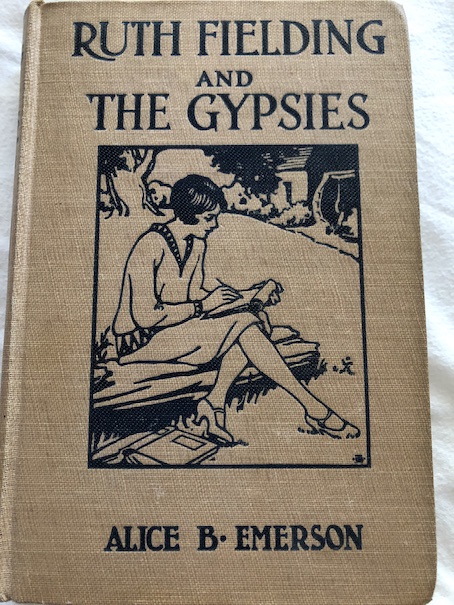
Ruth Fielding and the Gypsies

Ruth Fielding

Ruth Fielding and the Gypsies; Or, The Missing Pearl Necklace by Alice B. Emerson (Stratemeyer Syndicate), 1915.

Just as a quick note before I begin to describe the plot of this book, this book is part of the Ruth Fielding series, an early Stratemeyer Syndicate, before they started writing some of their more popular and best-known series, like the Hardy Boys and Nancy Drew. Some books in early Stratemeyer Syndicate series are awkward because they use racial terms that polite people would not use now. During the mid-20th century, around the time of the Civil Rights Movement, the Stratemeyer Syndicate revised the books it had in print, updating the technology and slang terms in the stories to be more modern and removing or altering some questionable racial terms and attitudes. Unfortunately, the Ruth Fielding series had already ended by that time, and these books were not among those that were revised and updated. I’ve explained this before on the pages for some the Stratemeyer Syndicate book series and individual book reviews, but I have to explain it again here because some people might object to the word “gypsy.” I know that’s not really the correct or polite way to refer to the Romany or “Travelers”, as they’re sometimes called, but it can’t be helped here because the Stratemeyer Syndicate put it right in the title. This is one of those books where I just can’t avoid it, and it’s all through the book. Some of the attitudes and stereotypes around the characters are also likely to be objectionable, but I’ll address that further in my reaction section.

The Ruth Fielding series is interesting because it was kind of a precursor to Nancy Drew, with a similar type of heroine, but one that, unlike Nancy Drew, grew up, went through school, and had a career during the course of the series. There are some aspects of this series and the development of the characters that I think were better done in this series than in the Nancy Drew series. There are also times when the books are surprisingly thoughtful about the conditions of life and society in the early 20th century, when they were written, and this book and the next one begin to mark a turning point in the main character’s life. Ruth is a poor girl, and before her education is over, she will have to seriously consider her career options, which is something you don’t see much in the Stratemeyer Syndicate series that are still in print because those characters never age. The characters in the earlier series did, which is why those series ended. There are some things in the series that I don’t like, like the racial terms and attitudes and when the stories are more adventure than mystery because I really prefer mystery, but this is what the books are like. In these reviews, I’m just explaining what the books and characters are like. On the bright side, if you don’t like what the books are like, you can consider that I read and reviewed them, so you don’t have to. You can find out what they’re like from my reviews and save yourself some time.

The Plot

Ruth Fielding is with her Uncle Jabez in a boat on the river near the Red Mill where they live when the boat overturns. Uncle Jabez falls out and hits his head. He almost drowns, but Ruth holds his head above water. She can’t pull him out of the river by herself, but she calls for help and attracts the attention of a passing gypsy boy. The gypsy boy, called Roberto, pulls Uncle Jabez out of the water.

Uncle Jabez is grateful, but the incident brings back an earlier argument about whether boys are more useful than girls. Uncle Jabez argues that boys are more useful than girls because they are stronger and can do heavier work, and he thinks that his near-drowning proves that. Of course, Ruth, Aunt Alvira, and Ruth’s friend Mercy are all offended by that assessment. Aunt Alvira points out that the boy who helped Uncle Jabez wouldn’t have been able to do that if Ruth hadn’t already been holding his head above water and calling for help. Ruth says that not all work is heavy work. Uncle Jabez says that girls are costly because they need money for education, and they’re not likely to have careers afterward, like men do. Ruth says that the reason why she wants an education is so that she can have a career and support herself.

Ruth knows that a poor orphan like her is lucky that she can attend boarding school with her friends. Her friend, Helen, is from a wealthy family, who is willing to fund her education in anything she wants to study, whether it eventually produces money or not, but Ruth doesn’t have that luxury. Eventually, she will have to get a job of some kind. Aunt Alvira says that, when she was young, most girls got a basic education and then got married, which is probably what Uncle Jabez is expecting Ruth to do. However, Aunt Alvira knows that modern girls have more ambitions. (Keep in mind that this story is set around 1915, contemporary to the time when it was written.) Ruth’s music teacher at school thinks that Ruth has a promising voice, and she wonders if she can train as a singer, although that’s not the kind of thing that her uncle would think of as something useful.

Before returning to boarding school with her friends, Ruth goes on a car trip with Helen and Helen’s twin brother, Tom. It turns out to be an unexpectedly eventful trip. Not long after setting out on the trip, they meet up with Roberto again and begin talking with him. The others ask Roberto about being a gypsy and if he wouldn’t prefer a more settled life with a regular job. Roberto says that, while he could work as a farmhand easily enough, few people would hire him for other jobs because he’s a gypsy, and people don’t trust gypsies. Besides, he sees little use in such a life. Tom says that he could afford better food and better clothes if he had a better job. Roberto says that he does well enough traveling around with his family, taking odd jobs, and helping his uncle at horse trades. He tells the others a little about his family and his life with them. After he leaves, Tom makes jokes about the rumors of gypsies kidnapping people.

Further down the road, Tom accidentally hits a lamb in the road with his car. The lamb is still alive, but its leg is broken. The farmer is angry, says that the lamb is useless now, and demands that Tom pay for the lamb. The price he demands is about twice as high as it should have been, but Tom pays it anyway to avoid further trouble. Then, they learn that the farmer, who doesn’t want to be bothered nursing the lamb until it heals, plans to simply kill it and feed it to his dogs. The girls are upset about the poor little lamb, and they plead for its life. Ruth is sure that the lamb can be healed. The farmer says that the lamb is his to do with as he pleases, but Helen points out that the lamb isn’t his anymore because Tom just paid for it. The farmer protests, but they take the lamb anyway. At first, Tom says that he doesn’t know what else to do with the lamb except take it to a butcher, but the girls persuade him to let them keep the lamb and try to help it.

Later, there is a storm, and the group seeks shelter in an old, empty house. The girls go inside while Tom parks their car in an old shed. The girls find the house spooky and wonder if it could be haunted. In some books, investigating a haunting in an old, abandoned house like this would be the main mystery, but in this one, it’s just one episode that gives them a clue to something else. While the girls are exploring the upstairs rooms and Tom is still outside, two strange men enter the house. The girls don’t let the men know they’re there. They’re not sure of who the men are or what their intentions are, so they listen to their conversation. They can’t understand everything the men say because half of their conversation is in an unfamiliar language, but from what the girls understand, they have either committed a theft or are going to be involved in one. The girls don’t want the men to find them or Tom, so they scare them out of the house by spooking some bats, which take flight and frighten the men away.

All of this would be exciting enough, but as they all travel further, Tom’s car breaks down. Tom leaves the girls and sets out on foot to get some help. The girls wait at the car for him, but it starts getting dark, and they start to get worried. A group of gypsies passes by with their wagons, and although Ruth isn’t sure it’s a good idea, Helen asks the gypsies if they can give her and Ruth a ride to her parents’ house. The gypsies ask the girls some questions, and then, they agree that the girls can come with them. Helen leaves a note for her brother that they’ve gone with the gypsies, but when she isn’t looking, one of the gypsies takes the note and destroys it.

It turns out that Ruth’s concerns about the gypsies were justified. The leader of this gypsy band is an elderly woman, who the girls recognize from Roberto’s stories as his grandmother, although Roberto is not currently among the group. The grandmother is a greedy woman, and she has realized from the girls’ car that at least one of them is from a wealthy family. To her, that means that they have relatives who would be able to pay a ransom for the girls. The girls become captives of the gypsies. The old woman also has an ability to hypnotize people with her eyes, and Helen seems particularly susceptible to it. During the night, while spying on the old woman, Ruth also learns that she is involved with the thieves they saw in the empty house.

The girls try to escape from the gypsies, and Helen gets away, but Ruth is caught. The old woman makes Ruth disguise herself as one of the gypsies so no one will notice her among the others. Can Ruth find a way to escape, or will Tom, Helen, or Roberto manage to help her?

This book is now in the public domain and available to borrow and read for free online through Project Gutenberg.

My Reaction and Spoilers

The Mystery/Adventure

The story covers not only Ruth’s adventures but the adventures of Ruth’s friends while she is captive, including Tom’s encounter with a suspicious farm couple and Helen’s frightening experience on a whitewater river. In the end, Roberto does help Ruth to escape. By the time Ruth returns to her friends and is able to tell her story to the authorities, the gypsies are well out of the area.

However, there is still something that bothers Ruth. She knows that Roberto’s grandmother had a valuable pearl necklace in her possession, apparently the spoils of the theft that the men in the empty house were talking about. Ruth wonders who they robbed and where the necklace came from. At first, it seemed like this plot line was going to be left hanging, but when Ruth returns to boarding school with her friends, she gets the answer. A new student is joining the school, Nettie Parsons, and she is the daughter of a multi-millionaire who made his money in sugar. She is the one who was robbed of the pearl necklace, which really belongs to her aunt, and there is a $5,000 reward for its return. $5,000 would be a pretty decent reward even in the 2020s, but it went much further in the 1910s. Ruth realizes that she knows who has that pearl necklace, and if she can get it back for Nettie, she would not only be doing a good turn for a classmate but getting the much-needed reward for herself. $5,000 would be enough to give Ruth some monetary independence and could fund her continued education.

Like other early Stratemeyer Syndicate books, the story is more adventure than mystery, although there are some mystery elements. Ruth gets some of the clues to the theft that the gypsies committed, but it’s more by coincidence than investigation that she discovers who the pearl necklace belongs to. Ruth does get the reward in the end, which allows her to finish at Briarwood Hall and go on to college in later books. However, while the old woman was apprehended with the necklace on Ruth’s information, I think it’s important to note that Ruth does not chase her down and apprehend her herself. Ruth is still at boarding school when others do that on her behalf, and she is then summoned to identify the apprehended suspect. On the one hand, this would never happen that way in a modern, 21st century book. In modern books, the girl heroines are much more active and would insist on catching the bad guys themselves. On the other hand, I have to admit that the way the book did it would actually be the more likely way this situation would play out in the real world, with the boarding school kid just providing information and being kept at boarding school while others apprehend the criminals. I think if the book was rewritten in the 21st century, Ruth would be more active in catching the criminals and retrieving the necklace, but there is some realism in the way the book actually ends.

Ruth’s career ambitions are not resolved in this story but are addressed more directly in the next book in the series.

Stereotypes and Racial Attitudes

I was curious about the notion that gypsies kidnap people because I’ve read about that in other books, and I wondered where that idea came from. According to an article that I found, it seems to come partly from traveling gypsies being used as scapegoats for missing or murdered children (like in old movies, where the small-town sheriff is anxious to blame a “drifter” for a crime) or as “bogeymen” in stories parents told to scare their children into not wandering away from home and also partly from people noticing children among traveling Romany groups who did not seem to resemble the people raising them, particularly if the children seemed to be lighter-skinned or have lighter hair or eyes than the adults. The reasons for the children not looking like the adults have been proven in modern times to be because the children were either adopted or were simply biological children who didn’t look like their parents through quirks of genetics, which sometimes happens. Light-colored eyes and light-colored hair are recessive traits, while dark eyes and dark hair tend to be more dominant traits, but even a dark-eyed, dark-haired person can carry the recessive genes for light hair and eyes, and those recessive traits can come out in the next generation. Basically, the children resemble previous generations in the same family, such as grandparents or great-grandparents, and if observers could see all the generations of the family together, it would be more clear how the traits were handed down to the children. (People also used to think that it was impossible for two blue-eyed parents to have a brown-eyed child, but that also happens sometimes because genetics can be complicated, eye color can be influenced by combinations of multiple genes together, and genetic mutations sometimes take place.) Basically, some people overreact when they see a child who doesn’t match the adults they’re with and start imagining kidnapping, but often, there are other, logical explanations, and being too quick to scream “kidnap!” causes problems. Some people do this to families who have had interracial adoptions. Personally, my brain would be more likely to consider possible divorces or previous relationships or possible affairs or maybe that the adult was actually a hired caretaker rather than a parent to be the next most-likely explanations after adoption for children who don’t look like parents, and I wouldn’t be eager to publicly ask questions about the sexual or reproductive history of total strangers. Unless the child appeared to be in immediate physical danger or was screaming, “Help!” or “This isn’t my daddy!” or something similar, I would be unlikely to interfere. “If you see something, say something” can be helpful, but it also helps if what you see is the big picture.

I also noticed that the gypsies in the story are described as being non-white people because they have darker skin, and even Ruth seems to dislike them and be suspicious of them for that alone. Granted, these particular people are actually criminals in the story who kidnap Ruth and Helen, but Ruth was thinking that just from looking at them. While I would have understood Ruth being reluctant to trust them because they’re strangers and because they know from the men in the empty house that there are thieves in the area, it’s their darker skin that bothers Ruth first. When Ruth first meets Roberto’s grandmother, Ruth thinks that the gypsy woman is too dark and strange/foreign to be trustworthy, and she later hates that her gypsy disguise involves bare feet and her skin dyed darker. She is ashamed of the way she looks in that disguise and thinks that she would be embarrassed for Tom to see her looking like one of the gypsies. Ruth’s prejudices bothered me more than if another character had done it because, while the older Stratemeyer Syndicate books do have inappropriate racial language and attitudes, the characters who are outright racists are typically the ones the stories show to be unfriendly antagonists or outright villains. From what I’ve seen so far, it’s rare for a friendly main character to be outright disparaging of racial appearances even if they have stereotypical notions about other people.

It’s really an irony that Ruth has prejudices against non-white people because the beginning of the story involves an argument with her uncle about his prejudices about girls. If this book had been written, or at least revised, during the 21st century, the rest of the story would have involved overturning both sets of prejudices. In the book as it is, nobody’s prejudices seem to be proven wrong.

Uncle Jabez’s assertions about girls’ usefulness go largely unchallenged. The girls are kidnapped when they’re by themselves, after Tom leaves them alone. Ruth copes decently with her captivity by helping Helen escape, but she needs help to escape herself, and men apprehend the criminals in the end, not Ruth herself. If Ruth’s uncle has any rethinks about the relative usefulness of boys and girls, he doesn’t mention it, and he isn’t presented with any strong evidence in favor of girls. Ruth is just content that she got the reward money for the return of the necklace, so she isn’t solely dependent on miserly Uncle Jabez’s grudgingly-given support.

There are no prejudices about gypsies proven wrong in the story. While I’m sure that most real-world Romany are not kidnappers, the gypsies in the books are criminals and kidnappers. Roberto is fond of his family and their traveling lifestyle, but at the end of the book, he accepts a new job as a gardener at Ruth’s school. He cuts his hair more like mainstream American styles of the time, and he starts wearing more mainstream American clothes. Ruth notes that his skin is still darker, but she is happy about these other changes. It is revealed that Roberto’s family came from Bohemia (a region now part of the Czech Republic) about ten years before, and his grandmother will now be deported back there, but Roberto wants to stay in the United States. He Americanizes his name and starts having people call him Robert. That’s quite a conversion from his attitudes much earlier in the book. Granted, having relatives arrested for theft and kidnapping can have an effect on a person, but from his earlier descriptions of his grandmother, I’m pretty sure that these sort of situations are not new to Roberto’s grandmother and the rest of their group. Maybe getting caught is new, but there is an implication that his greedy grandmother has done shady things before for the sake of money. But, part of the happy ending of this story is that Roberto gets assimilated into mainstream American society and becomes less ethnic, which is bound to leave a bad taste in the mouths of modern Americans.

So, Did I Like the Book?

I liked parts of it. As I pointed out, there are things in this book that are highly problematic for modern people, and I think the book as it is would be more suitable to adults who are interested in nostalgic children’s literature or the evolution of children’s literature. However, there are parts of the book I did find interesting, and I can see ways in which the book could be rewritten to make it both more exciting and more acceptable to modern people. For example, I really liked the part with the empty house where they overheard the thieves talking and the way the girls scared the thieves with the bats. If I were rewriting the story, I would extend that scene and leave out the part with the lamb, which didn’t contribute much to the rest of the story.

Of course, I would just have the criminals be part of a random criminal gang, not Romany. (How common were traveling caravans in the early 20th century anyway? I’ve never seen even one in real life. Was that really a common thing at one point so that it ended up in so many children’s books? From what I’ve read about Romany populations and migrations in the United States, some of the stereotypes about them had some basis in fact, like that some of them occasionally resorted to stealing to survive, but were exaggerated in the press for the sake of sensationalism, so I’m thinking that the prevalence of gypsy caravans and fortune tellers were probably also greatly exaggerated in literature.) I picture the criminal gang organized with the two guys who hide out in the old house being the thieves, and the others being a seemingly-ordinary and pleasant-looking couple who act as the fences of their stolen goods. Then, the girls could hitch a ride from this nice-looking couple after their car breaks down. At first, they wouldn’t know there was a connection between the “nice” couple and the thieves, but they would later accidentally see the couple talking with the thieves and the thieves handing over their goods. The girls would get caught spying on them, so the criminals would kidnap them because the girls now know too much.

Later, after the girls get away from the criminals, Ruth could find out that the necklace they saw being handed over wasn’t among the thieves’ belongings when the police caught up with them. Thinking about the place where the thieves were caught and something she may have heard them say, she could then realize that the thieves doubled back on their trail after the girls escaped from them, returning to their hideout in the abandoned house to hide the necklace because they still don’t know that the girls were in the house when they were talking there before. Then, Ruth could sneak away from her boarding school for a day to go back to the house and look for the necklace, finding it in a clever secret hiding place. I think that arrangement of events would make Ruth more active in solving the mystery, better justifying her acceptance of the reward at the end.