Happy Birthday, Samantha

American Girls

Happy Birthday, Samantha by Valerie Tripp, 1987.

This is part of the Samantha, An American Girl series.

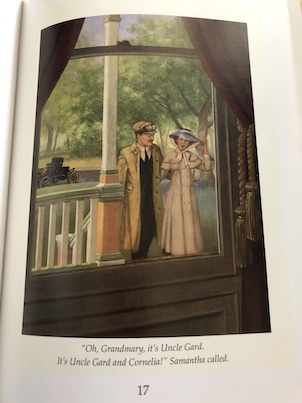
Samantha is turning ten years old! She is having a birthday party with some other girls, and Aunt Cornelia’s younger sisters, the twins Agnes and Agatha, are coming to visit. Samantha’s grandmother is very strict, with very precise ideas about the way that things should be done. The twins are accustomed to being raised more permissively. When Samantha complains that her grandmother makes her wear long underwear for most of the year, even when it’s really too hot to wear it. Her grandmother thinks that it will help ward off illness. The twins encourage Samantha to think for herself. Few people wear long underwear anymore or believe that they will get sick by not wearing it, the twins say, and if Samantha doesn’t want to wear it, she should be allowed to make up her own mind about it. Samantha agrees that ten years old should be old enough to decide about simple things, like what kind of underwear to wear.

The twins have a lot of interesting ideas about how to do things differently, and they encourage Samantha to be a little more daring and try new things. When the cook talks about Samantha’s birthday cake and how it will have ten candles on it, the twins suggest that she could make ten smaller cakes, called petite fours, and put one candle on each of them. Samantha thinks that sounds so elegant that she wants to try it, although the cook thinks that it sounds a little strange for birthday cakes. They’re also going to have ice cream at the party, homemade. Samantha and the twins help to make it, although they are annoyed by Eddie, the nosy and bossy boy from next door, who shows up and tries to tell them what to do, hoping for a taste of ice cream himself.

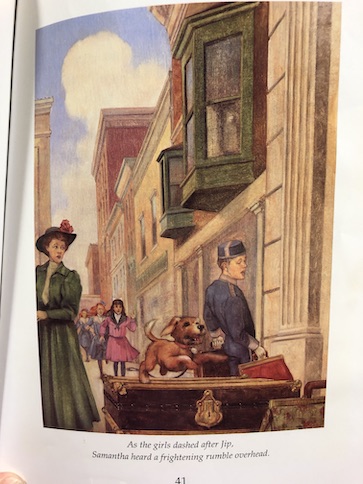
At first, girls the party act a bit self-conscious, trying to be polite and grown-up in their party clothes. After Samantha opens her presents, her Uncle Gard and Aunt Cornelia show up with a special surprise: a puppy named Jip. Jip is a little wild and doesn’t know how to obey commands. He runs off with Samantha’s new teddy bear (a recent invention in Samantha’s time), and the girls have to chase him and get him to drop the toy. Samantha distracts the dog by offering him her shoe, and Eddie, who was watching, picks up the bear. At first, he says that he’ll give it back if they give him some ice cream and let him play with the dog, but Samantha refuses because he was not invited to the party, and she doesn’t like him nosing in. Agatha wrestles the teddy bear away from Eddie before Samantha’s grandmother arrives and tells them that young ladies shouldn’t fight or make spectacles of themselves. Most of the rest of the party is elegant, and the girls are a little more relaxed, now that they look a little less elegant from chasing the dog. However, Eddie gets revenge on the girls by adding salt to the ice cream they made. Even though everything else is fine, including the petite fours, Samantha is still angry at Eddie for ruining the ice cream.

Since Samantha didn’t get to eat the ice cream at her birthday party, the twins and Aunt Cornelia suggest that Samantha return to New York City with them for a visit, and they can all go to a fancy ice cream parlor there. Grandmary agrees and says that she would like to go to New York City herself. On the way to Uncle Gard and Aunt Cornelia’s new house, Grandmary says to Samantha that she hopes that she thinks that the twins get too carried away with some of their ideas. She thinks that they’re too impulsive and don’t think before they act, and while they’ve been raised to be very modern children, she still thinks that some of the old ways are best.
When Grandmary and Samantha see a protest held by women’s suffragists, Grandmary is annoyed at the women, making public spectacles of themselves and inconveniencing passing traffic. She thinks that it’s just another “newfangled notion” that’s a lot of fuss and bother over nothing. She’s never had to vote in her entire life, and she doesn’t see why any other woman would need to. Samantha can tell that this opinion bothers Aunt Cornelia and the twins when Grandmary says it in front of them, but they don’t seem to want to discuss it further.

The twins and Samantha ask to take Jip to the park, and Aunt Cornelia says that’s fine. She has a meeting to attend, but she wants them back home in time to go to the ice cream parlor after her meeting. However, Jip gets away from the girls when they try to put him in Samantha’s doll carriage, and they chase him to the place where the suffragists are meeting. Although Samantha knows that her grandmother doesn’t approve of the suffragists, they have to go after the dog. There, the twins tell Samantha that Cornelia is also a suffragist, and she is speaking at the meeting.

Jip charges right up to the stage where Cornelia is giving her speech, and Cornelia lectures the girls about not thinking about the consequences of their actions and not following her instructions for taking proper care of Jip. Sometimes, they are too impulsive and don’t think ahead. Cornelia explains to the girls about the need to follow agreed-upon rules for safety and how that is different from the changes that her group is advocating. While Grandmary has been saying that the suffragists are also too radical and impulsive and making a fuss about nothing, Cornelia says that much thought, planning, and hard work has gone into their movement to ensure that the changes they’re advocating will be for the better. Grandmary doesn’t appreciate how much thought and preparation the group has done and how long it has taken them to get this far because she hasn’t really thought about the issues at all herself and she has not been to any of previous meetings, where the planning has taken place.

Note: The women’s suffrage movement was already decades old by 1904, when this story takes place, so it’s not really as “newfangled” as Grandmary describes it. It had been building for a long time. However, Grandmary may not have been aware of that because she never needed to be aware. Consider what her life has been like. Remember that Grandmary is a wealthy lady and that marriage and social connections have been the basis of her life. Her husband was wealthy, and she was likely born into a wealthy family. Her life has always been comfortable without her needing to have a job or vote or do anything other than be a wife and mother. Growing up, becoming a well-behaved young lady, and getting married set her for life, and up to this point, she hasn’t had any major problems with money or her lifestyle and hasn’t really needed to think much further than that. She’s used to letting the men in her life handle business and politics and provide her with money, and she now lives on the money that her husband left to her, which is more than ample. Mostly, what Grandmary has needed to manage in her life are the social graces necessary for entertaining her husband’s business associates and their wives and for helping to facilitate her children’s marriages and careers. Grandmary’s daughter was also married to a well-off man before their early deaths. Her son is also a wealthy man, who can provide for his wife, and Cornelia is also from a wealthy family in New York City, a natural extension of their social circle. Grandmary assumes that Samantha, raised in this wealthy social atmosphere, will also naturally meet and marry a wealthy man through the connections of her friends and family, one who will support her and their children in a comfortable fashion. She thinks that, besides caring for her future children, Samantha will likely occupy her time with good works for the less fortunate and that she will give elegant parties for the fashionably-dressed ladies of their social level to solidify their social connections. The elegant affair that her tenth birthday was supposed to be was also practice for her future, as Grandmary envisions it. Grandmary thinks that life will continue to follow this same general course in their family and that there will never be a need for anything different because her own life has been fairly smooth, comfortable, and predictable, largely unshaken, even by the deaths of her husband and Samantha’s parents. But, she’s about to change her mind.

The girls are a little disheveled when they go to meet Grandmary at the ice cream parlor because there is no time to go home and change. As they explain to Grandmary about why the girls look a little disheveled, she tells them that she already knows because she was there, watching the speech. When she saw that Cornelia was the one speaking, she decided to stop and listen, and she was impressed by what she heard. She liked the part where Cornelia talked about the importance of standing up for what is right, and that’s something that Grandmary believes in, too. She is now more open to the suffrage movement than she was before.

The story is partly about growing up and how Samantha realizes that she needs to learn to make her own decisions. She can’t always go by what her grandmother tells her, and sometimes, listening to the twins isn’t always the wisest choice, either. Samantha also begins to see that she has choices to make about the kind of young lady that she will grow up to be. She can be the elegant lady at the party or the public crusader for the causes she believes in or maybe something that combines aspects of both. In the end, Grandmary also begins to see the possibilities of change.

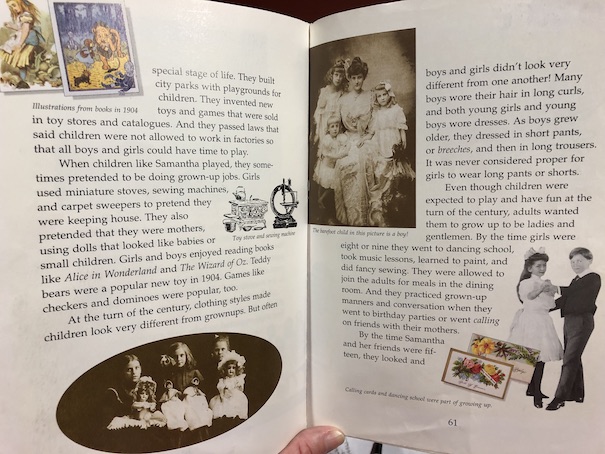
In the back of the book, there is a section about babies and children during the early 1900s. It discusses what children liked to do for fun and how adults would begin training children to be young adults early in life, emphasizing social skills, like dancing, how to behave at the dinner table, and how to engage in polite adult conversation. A girl from a wealthy family, like Samantha, might go to a finishing school instead of college after completing her basic education. At finishing school, she would learn how to manage a household, including how to manage servants (how to hire them, how to tell if they were doing a good job, etc.) and how to throw elegant dinner parties. She might have a coming out or debutante party to introduce her to society as an adult, which meant that she would be ready for introductions and dates with young gentlemen and would probably soon be considering marriage. (This is likely the path that Samantha’s grandmother took in life and the one that she is considering for Samantha.) However, some young ladies did go to college, had careers, or become suffragists, and some did some combination of the above. Samantha’s life is full of possibilities, and her future hasn’t been decided yet. Because Samantha was ten years old in 1904, she would have been eighteen in 1912. For an example of what college life would have been like for an eighteen-year-old girl at a college in the eastern United States in 1912, see the novel Daddy-Long-Legs.
The book is currently available to borrow for free online through Internet Archive.

Samantha Saves the Day

American Girls

Samantha Saves the Day by Valerie Tripp, 1988.

This is part of the Samantha, An American Girl series.

Samantha and her family are spending the summer at their summer home at Piney Point. Besides Grandmary, Uncle Gard and Aunt Cornelia will be there. Cornelia has also brought her younger sisters, a set of twins named Agnes and Agatha. They are close in age to Samantha. Grandmary’s friend, Admiral Archibald Beemis, is also visiting from England.

The family’s summer home isn’t just a single house. They have a lodge in the style of a log cabin and separate guest cottages. This summer, Samantha and the twins will get a cottage to themselves with no adults. The girls have fun exploring the area around the lake together. However, there is one place that Samantha is afraid to go, the island in the lake called Teardrop Island. The only way to get to the island is by boat, and there are sharp, treacherous rocks in that part of the lake. That was where Samantha’s parents had their boating accident and drowned during a storm. To Samantha, Teardrop Island is a place of sadness and danger.

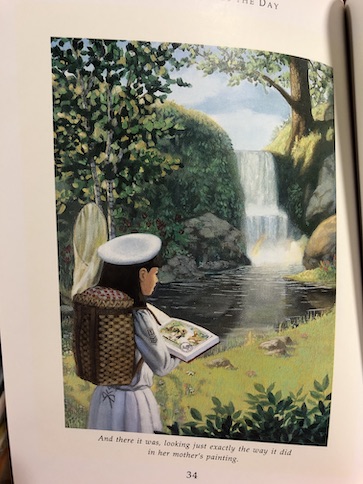
One rainy day, the three girls go up to the attic of the lodge to look for more paintbrushes so they can paint pictures. In the attic, they find old clothes and pictures of Samantha’s family. They also find Samantha’s mother’s old sketch book, labeled “Happy Memories of Teardrop Island.” In the sketch book, she drew pictures of Samantha and her father as they had picnics and played by a waterfall. Samantha was a very young child at the time, and she has no memories of having been on the island with her parents. From the pictures, it looks like it used to be her family’s favorite place.

Seeing the pictures makes Samantha want to visit the island once more, hoping to bring back memories of her earlier visits and her parents. The next day, the three girls go out to the island and try to find the places that Samantha’s mother drew in her book. Teardrop Island turns out to be a beautiful place, and Samantha loves it. The more time she spends there, the more she feels like she has been there before, although her memories are vague and dream-like.

However, the girls forgot to tie up their boat, and they find themselves stranded on the island! A storm comes, and the girls are afraid. When the Admiral tries to come out to the island to help them, he is injured, and the girls realize that they are going to have to find a way to save him! Can they make it home through the storm, or will they meet the same fate as Samantha’s parents?

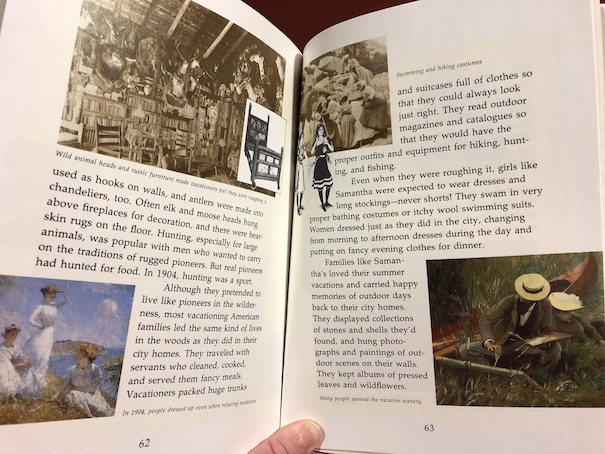
In the back of the book, there is a section with historical information about how people would spend their summers during the early 1900s. Wealthy families like Samantha’s would go to summer homes in the countryside to escape the heat of the cities.

The book is currently available to borrow for free online through Internet Archive.

Samantha Learns a Lesson

American Girls

Samantha Learns a Lesson by Susan S. Adler, 1986.

This is part of the Samantha, An American Girl series.

Samantha attends Miss Crampton’s Academy for Girls in Mount Bedford. She is doing well and has some friends at school, but she misses her friend Nellie. She knows how poor Nellie’s family is and worries about how they are doing.

One day, Samantha comes home from school to a surprise: Nellie has returned to town with her family. Samantha’s grandmother recommended Nellie’s family to a friend, Mrs. Van Sicklen, who has hired Nellie’s father as a driver and Nellie’s mother as a maid. Nellie and her sisters will also be helping with household chores. They will also get the chance to go to school, although they will be attending public school and not the private school that Samantha attends.

When they begin attending school, Nellie’s younger sisters do fine in the first grade, where they are expected to be beginners, but Nellie herself has trouble in the second grade. Nellie is a little old for second grade, so the other children make fun of her for being there, and she is so nervous that she makes embarrassing mistakes in front of her teacher and the other students. Nellie thinks that perhaps she’s too old to start going to school, but Samantha realizes that what she needs is a little extra help.

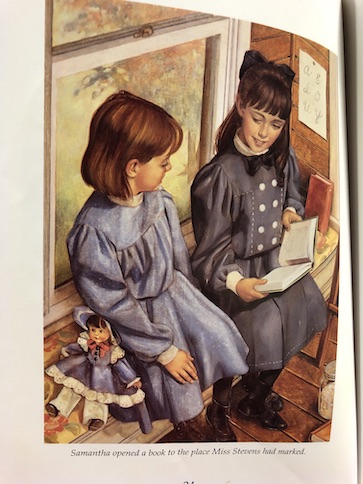
Samantha talks to her own teacher and explains the situation. She says that she would like to help teach Nellie what she needs to know, but she is not sure what Nellie needs to know in order to pass the second grade. Samantha’s teacher, Miss Stevens, thinks that it is nice that Samantha wants to help Nellie and gives her a set of second grade readers to study with pages marked for assignments. Samantha tells her grandmother what she is planning to do, and she says that it is fine, as long as the extra tutoring doesn’t interfere with Nellie’s house work too much.

Nellie accepts Samantha’s help at their secret, private “school” that Samantha calls “Mount Better School.” During their lessons, Samantha discovers that Nellie is very good at math because she used to have to help her mother with shopping and had to keep track of her money. Nellie cannot always come for lessons because of her work, but Samantha’s tutoring helps her to improve.

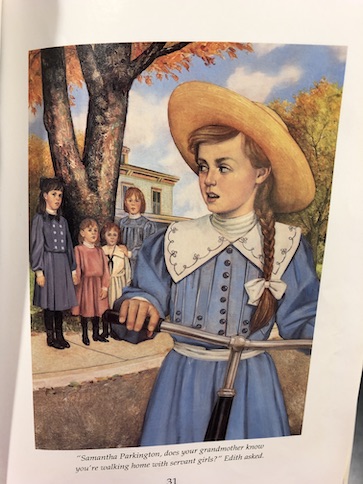
One day, when Samantha is walking home from school with Nellie and her sisters, a mean girl from Samantha’s school, Edith, sees them and criticizes Samantha for spending time with servants. She says that her mother would never allow her to play with servants. Samantha asks her grandmother what Edith means, and her grandmother says that Edith is a young lady. When Samantha asks why she is allowed to play with Nellie, her grandmother says that they are not really playing, that Samantha is helping Nellie, which makes it different. That explanation doesn’t entirely satisfy Samantha.

However, her grandmother is both understanding of the help that Samantha has been giving to Nellie and serious about the need to help others. When Edith’s mother and other ladies of the neighborhood come to visit and complain about Nellie’s family and how Samantha is spending time with them, Samantha’s grandmother defends them and says that Samantha is doing good.

Meanwhile, Samantha’s school is preparing for a public speaking contest with the theme “Progress in America.” To prepare for her speech, Samantha asks her grandmother, her Uncle Gard, and other people what they think about progress and what the best inventions are. They mention inventions like the telephone, electric lights, automobiles, and factories. Samantha is fascinated by the idea of factories and the variety of products that they can make. However, when Samantha reads her speech to Nellie, Nellie is not nearly so enthusiastic about factories as a sign of progress. Nellie used to work in a factory herself, and she knows that they are not pleasant places. She tells Samantha how factories are noisy and how dangerous the machines are for the workers. The factory workers are also very poorly paid, which is why the products they make are so cheap.

Nellie’s stories about factories bother Samantha. When it is time for the public speaking contest, Samantha delivers a changed version of her speech in which she discusses the dangers of child labor and how some form of progress, particularly ones that endanger children, are not good forms of progress. Samantha’s thoughtful speech wins the contest, and her grandmother understands that Samantha has been learning things from Nellie even while teaching her.

In the back of the book, there is a section with historical information about education and child labor during the early 1900s.

The book is currently available to borrow for free online through Internet Archive.
Meet Samantha

American Girls

Meet Samantha by Susan S. Adler, 1986.

This is the first book in the Samantha, An American Girl series.

Samantha Parkington is a nine-year-old orphan. She belongs to a wealthy family and lives with her grandmother, called Grandmary, in the Hudson Valley in New York. Grandmary is often strict with Samantha, trying to teach her to be a proper young lady, but Samantha finds it difficult. Samantha’s grandmother loves her, but she has very old-fashioned ideas about how girls should behave. When Samantha wants to try making and selling boomerangs in order to earn money to buy a doll, using instructions from The Boys’ Handy Book, her grandmother stops her, saying that young ladies do not earn money. She would rather that Samantha earn the doll as a reward for doing what she is told and practicing her piano lessons. Samantha also has an uncle, Uncle Gard, who has a girlfriend named Cornelia. Cornelia is a more modern woman, who would see nothing wrong with Samantha wanting to earn some money.

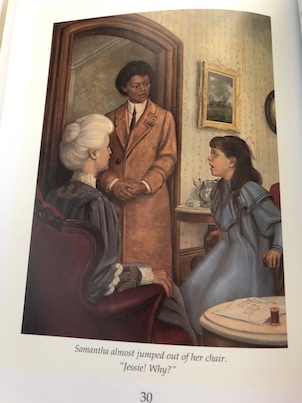
One of her grandmother’s servants, a black woman named Jessie, is kind and motherly to Samantha. Jessie often patches Samantha up after her various escapades and mishaps. Jessie’s husband, Lincoln, is a train porter, and Jessie tells Samantha exciting stories about the places that Lincoln has seen in his work, like New Orleans. Sometimes, Lincoln brings Samantha post cards from these places.

Samantha soon learns that a new girl her age is coming to a neighbor’s house. She has been wanting a playmate, so she goes over to the neighbor’s house to introduce herself. The new girl’s name is Nellie, but she has come to be a servant for the neighbors, the Rylands. Nellie’s family is poor, so Nellie needs to work as a maid help her parents earn money and support her younger sisters. Samantha is surprised when Nellie describes her family’s circumstances in New York City. Samantha has never been poor, and she doesn’t know what it’s like to be cold and hungry. Nellie says that the air in the countryside is better for her, and she gets better food working for the Rylands. Nellie tells Samantha that she has never been to school, and Samantha offers to teach her.

Then, Jessie suddenly announces that she is leaving her job at Grandmary’s house. Grandmary doesn’t seem surprised, but Samantha is. Jessie offers no explanation for leaving, and when Samantha tries to ask, Grandmary and the other servants do not want to talk about it. Samantha tells Nellie about Jessie leaving, coming up with fanciful reasons why she might leave her job, but Nellie offers the practical explanation that Jessie might be having a baby. Nellie knows more about it than Samantha because she has younger sisters, but she acknowledges that adults of this time period do not like to talk about people having babies, particularly in front of children. Neither Nellie nor Samantha entirely knows why.

However, Samantha is still concerned about Jessie. Samantha doesn’t know where Jessie lives, but Nellie does. The two girls sneak out one evening to visit Jessie and learn for themselves what the matter is. This is the first time that Samantha has been to the part of her town where black people live, further opening her eyes to the lives of people from lower classes of society. Nellie is a little surprised at how Samantha, who is more educated, sometimes knows so little about the ways that other people live.

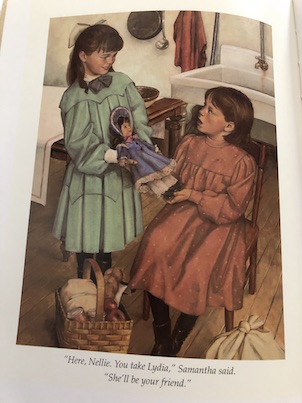
It turns out that Jessie does have a new baby. Jessie reassures Samantha that she and the baby are fine, but since her husband needs to travel because of his job as a train porter, she needs to stay at home with her baby now. Samantha thinks of a way to help Jessie keep her job and care for her baby at the same time, persuading her grandmother to let Jessie come back. Unfortunately, Nellie soon has to leave because Mrs. Ryland doesn’t think that she’s strong enough to work as a maid and decides to send her back to her family in New York City. Samantha gives Nellie her new doll as a going-away present, and she is very concerned about how Nellie and her family will manage.

In the back of the book, there is a section with historical information about how wealthy people and their servants lived during the early 1900s.

Something that occurred to me later is that Jessie is about the right age to be Addy‘s daughter, from another American Girls series. I don’t think that there’s a real connection between Jessie and Addy because the Samantha books were written before the Addy series. However, when I stopped to think about their relative ages (Addy would be about 49 years old in 1904, and Jessie is probably in her 20s), it occurred to me that if Addy had a daughter, she would probably be an adult at this time, and she might be doing something very similar to what Jessie is doing, working as a seamstress.

The book is currently available to borrow for free online through Internet Archive.
The Quilt Story

The Quilt Story by Tony Johnston and Tomie dePaola, 1985.

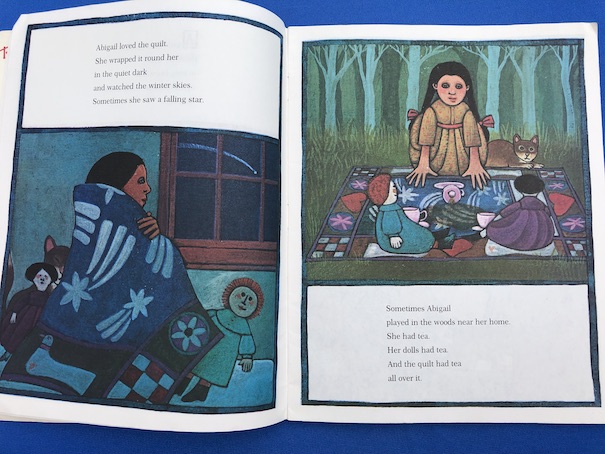
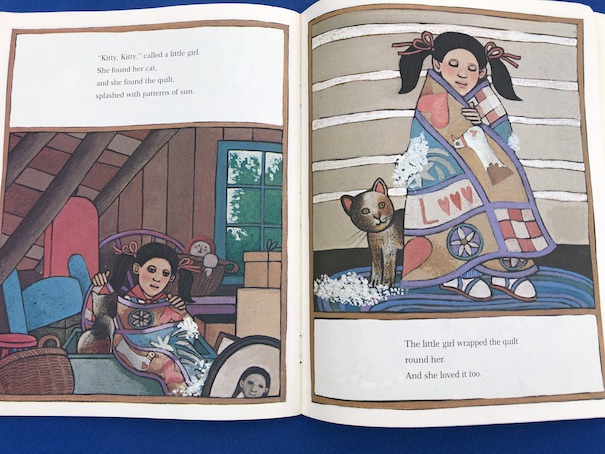
A woman (at some point in the 1800s, from the pictures) makes a special quilt for her young daughter, Abigail.  It has Abigail’s name on it and a pattern of falling stars.  Abigail loves it!

Abigail uses the quilt all the time, not just in bed.  She has tea parties with her dolls on the quilt, hides under it when playing hide-and-seek, generally taking it everywhere and playing all kinds of games with it.  The quilt gets worn and torn in the playing, but her mother mends it when necessary.

Eventually, Abigail and her family move to a new home, traveling in a covered wagon.  Everything in their new home seems strange to Abigail, but her old quilt comforts her.

Eventually, when Abigail is older, she puts the quilt away in the attic, and people forget about it.  Still, animals use the quilt.  A mouse makes a nest it in.  A raccoon hides food in it, and a cat naps on it. Then, one day, another girl finds the quilt in the attic.  She loves it and brings it to her mother to be repaired. 

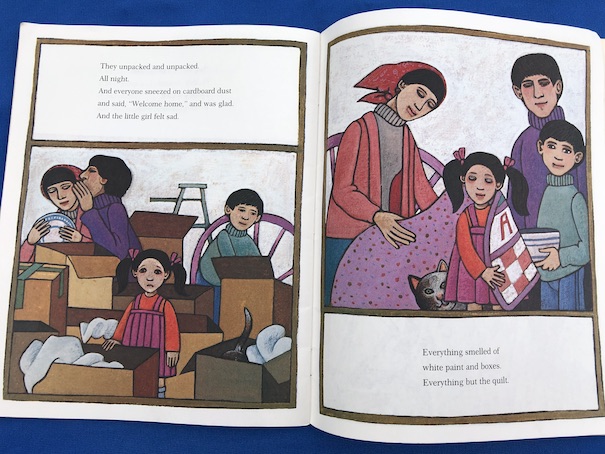
Like Abigail, though, the modern girl’s family soon moves to a new home, where everything seems new and strange.  However, the old, familiar quilt comforts the girl once again.

This is a gentle, comforting story that would make nice bedtime reading or a story that could be read to a young child who is moving or has recently moved, reminding them that, even in a new place, you can bring a sense of home and the familiar with you.

The book is currently available online through Internet Archive.

Lauren’s Treasure

Sleepover Friends

#8 Lauren’s Treasure by Susan Saunders, 1988.

The Sleepover Friends have volunteered to take part in an archaeological dig on the site of an old mansion, which is also on land where a Native American tribe once lived.  Other students from their school and a school in a nearby town will also be taking part.  Stephanie isn’t sure that she’s going to like being part of the dig because she doesn’t really like getting her hands dirty and she thinks it would be gross if they uncovered the bones of dead people during the dig.  The others are more excited about the dig, but at first, it doesn’t turn out as well as expected for Lauren.

First, Lauren’s hair is weird on the day of the dig because the other girls tried to give her a perm at a sleepover and it didn’t go well.  Then, she attracts some unexpected attention from Walter, a new neighbor of Stephanie’s.  Walter is in the fourth grade, but only because he skipped a couple of grades to get there.  He’s only eight years old, but he’s something of a child genius.  He’s not really a bad kid, but when he starts following Lauren around and acts like he’s got a crush on her, Lauren is embarrassed because he’s so much younger than she is.

Then Lauren makes an exciting discovery on the dig: a carved rabbit charm.  The archaeologist in charge of the dig is excited because its presence, along with some yellow paint, means that they’ve found a Native American burial spot.  She takes the younger children off the dig and has her grad students continue searching for the grave itself.  Lauren is pleased at being the one to make an exciting find, but the charm mysteriously disappears at the dig.

The archaeologist thinks that, most likely, the charm fell out of the tray Lauren was using to collect things on the dig when everyone started pushing to get a look at the spot where it was found.  She says that she and the grad students will keep an eye out for it as they continue the dig.  For Lauren, it just seems like another piece of bad luck in her bad luck streak.

Walter continues paying too much attention to Lauren at school, and later, writes an anonymous note, asking her to meet him at a local pizza place.  At first, Lauren thinks that the note was writing by Jenny Carlin, a rival at school, because of a series of pranks they were playing on each other earlier.  When Jenny denies being responsible for the note, Lauren goes to the pizza place and sees Walter.  Unfortunately, Jenny and her friend Angela show up there, too, curious to see who was meeting Lauren, and they tease her and Walter.  Lauren is embarrassed at having a kid so much younger than she is (genius or not) chasing after her, and she hates the teasing that she gets at school about it, but she’s not quite sure what to do about it, other than ignoring Walter as best she can.  However, Walter is actually the key to solving the mystery of what happened to the rabbit charm.

You might guess at this point that Walter was the one who took the charm in the first place.  I thought it was pretty obvious myself.  Walter wasn’t trying to cause trouble.  He explains to Lauren that he was trying to get her attention, and his first plan was to pretend that he found the missing charm after a search so that he could look like a hero to her.  He just never got the chance to give it back because he got interrupted, and then Lauren started avoiding him because of the teasing.  It all works out for the best because Lauren gives the charm back to the archaeologist, who doesn’t press her too closely about where she found it, and Walter gets a crush on a different girl who is a little closer to his age. 

Getting a crush on someone who either doesn’t feel the same way or just isn’t available is a normal part of life (if it wasn’t, it wouldn’t appear so often in tv shows, movies, and books – people find this type of situation relatable), and so is being the subject of a crush from someone you don’t love or find unsuitable (again, that’s why this situation comes up often in fiction – it happens often enough in real life that people understand the feeling).  When it comes to getting boyfriends or girlfriends, one of the people involved has to be the first to stick their neck out and say that they’re interested, and there’s no guarantee that the feelings will be returned.  It’s not easy, but this is a part of how relationships start.  When the feelings aren’t returned, which is bound to happen from time to time, there’s always some awkwardness.  The first person is usually disappointed, and there might be a struggle for the other person as they try to find a way to turn the other person down without hurting their feelings.  The situation in this book is especially awkward because precocious young Walter is so young, and it’s likely a first crush for him.  Lauren has also never had to deal with a situation like this before and isn’t quite sure how do handle it. 

In a way, having Walter simply lose interest in Lauren feels a little like a cop-out for the situation so neither of them really has to confront the situation directly, but there are a couple of things that Walter has come to realize by the end of the story that may be useful.  One good point is that there are limits on the things people should be allowed to do to get someone’s attention and start a relationship with him.  When Walter was just trying to strike up a conversation with Lauren or be helpful to her at the dig, it wasn’t bad.  It didn’t get Lauren’s approval for him, but it wasn’t because his behavior was bad (more about this later because it’s important).  The bad part came when he stole the charm to get her attention.  When Walter’s mother later finds out about his theft of the charm, she grounds him and makes him give the charm back and confess to Lauren what he did.  Learning that life has limits and that some behaviors don’t get you the kind of attention you’re really looking for is a good life lesson.  Some people do come on too strongly when they’re seeking attention, and I’m not just talking about kids who aren’t experienced enough to know how to behave; even adults don’t always know the best way to approach romantic relationships or understand others’ limits and boundaries regarding them.  I’m no relationship expert, but I think that the solution is partly developing a kind of situational awareness and an ability to empathize with other people and read their reactions.

Before the story is over, Walter learns more about reading other people’s reactions and understanding how his actions fit into the larger situation from someone else’s viewpoint.  At first, Walter doesn’t seem to sense Lauren’s discomfort, and her friends criticize him for not taking a hint.  Lauren felt a little awkward about his helpfulness at the dig not because it was a bad thing (he was really trying to be nice and there was nothing objectionable about what he said or did until he took the charm – I want you to understand that she wasn’t rejecting him for being a nice guy or anything like that) but because she had reservations about getting too involved with someone so much younger than herself, and she felt like his attention put her in an awkward position.  Walter is a genius, but he is still physically and socially about three years behind the other kids in the story, and at first, he can’t see why that would create awkwardness in a romantic relationship, especially for kids who are only just starting to get old enough to be interested in romance.  The difficulty for Lauren and the reason why she was so irritable with the situation was that she found it difficult to tell a younger kid who was being so nice to her that she didn’t welcome his attentions when he wasn’t doing anything really wrong and didn’t want to hurt his feelings.  As I said, an awkward situation.  Sometimes, even a person who is trying to be nice can unintentionally create awkwardness if they don’t understand the other person’s circumstances, and that’s something that adults do as well as children.  This is basically what’s at the heart of a situation where “nice guys” get rejected or “friend-zoned.” It’s not about the “nice guy” doing anything wrong so much as a case of the wrong relationship at the wrong time with someone who isn’t quite as compatible with them as they thought.  

In a romantic relationship, both of the people involved have to agree to it equally, one isn’t enough.  When Jenny and her friend start teasing Lauren and Walter after the incident at the pizza place, Walter comes to see why a relationship with him would make things awkward for Lauren because of their age difference and the reactions of the other kids.  If they were in their 20s or 30s, an age difference of two or three years wouldn’t mean anything, but for where they are in their lives now, as kids in elementary school, it means a lot.  At the end of the story, Walter’s new love interest is a little closer to his age, making less of a problem, and he has developed enough social awareness to use his age difference to get a little revenge on Jenny for her teasing by publicly asking her about meeting him at the pizza place later, as if she were interested in dating him.  Walter could have been hurt and insulted about being rejected and teased because of his age (and it would have been understandable), but he has realized that, under the circumstances, it would be better to move on and find someone who is more suitable for him and who might be more open to a relationship with him.  In the end, he feels good enough about the situation to use his age for the joke on Jenny, and his other classmates approve of his humor and the well-deserved jab at Jenny’s teasing.

The one thing that I really wish they had added to the story would be for Lauren to learn how to gracefully turn down an offer of a relationship when she isn’t interested because I think that would be an important life lesson for her and for young readers. Socially awkward situations occur in life, but there are ways of handling them to minimize the embarrassment for everyone involved. In the story, Lauren’s main tactic is trying to ignore Walter and hope that he’ll take it as a hint until he finds someone else, and in real life, that’s not good enough. I’m not sure what she would have said if Jenny and her friend hadn’t interrupted her and Walter at the pizza place, but I would hope that it would have been something like, “I appreciate the help you gave me at the dig, Walter, and you seem pretty nice, but I just don’t think that we have enough in common. I think that there is too much of an age difference between us, and I’m not interested in that kind of relationship.” The rejection still might sting, but some simple honesty would at least be more respectful than ignoring him and hoping that he’ll take that as a hint.

I read this book years ago when I was a kid, although there was only one part that really stayed with me, and for a long time, I thought that I was remembering the incident from one of the Baby-Sitters’ Club books.  The scene that stuck in my memory was from the sleepover at the beginning of the book.  The girls were angry at Jenny for some mean comments that she made, so they requested a song on the radio called “You’re a Jerk” by the Lurkers and dedicated it to her.  When they made the request, they told the radio station that they were “well-meaning friends” instead of giving their names, and the radio DJ made a joke about it when he played the song.  It was this incident that started off the series of pranks that Jenny and the girls play on each other throughout the book.  I think part of the reason this scene stuck with me was the “well-meaning friends” phrase and part of it was because I had always wondered if the song they requested was a real song.  I don’t think it is because I can’t find it on the Internet. The Lurkers are a real band, but I can’t find anything about that song. If that song actually exists and someone can find a video of it, let me know, and I’ll link to it!

The book is currently available online through Internet Archive.

Kate’s Camp-Out

Sleepover Friends

#6 Kate’s Camp-Out by Susan Saunders, 1988.

Kate’s family is spending the weekend at a cabin at Spirit Lake, and Kate is allowed to bring her Sleepover Friends with her.  However, what promised to be a fun and exciting weekend soon comes with complications.  First, Kate discovers that the Norwood family will be in a cabin nearby.  Dr. Norwood is a colleague of her father’s, but his two sons, Sam and Dave, are pests who like to play practical jokes.  When they arrive at the cabin, there is also no electricity (a problem that they fix the next day), and they learn that the reason the lake is called Spirit Lake is because there are some scary stories about the place.  Kate’s father tells the girls a story before bed about an old fur trapper who murdered another fur trapper for his money.  The ghost story is interrupted by Dr. Norwood, who comes over to see if everything is all right because there have been some break-ins in the area recently.

The girls are spooked by the ghost story, but the next day, they also encounter the Norwood boys and realize that they’re every bit as awful as Kate remembers them.  First, Sam and Dave trick a couple of the girls into wading out into a deeper area of the lake so that they’ll fall in and get wet.  Then, when the families meet for a barbecue, the boys give a couple of the girls worms in a bun instead of sausages.

Because of their bad experiences with the boys, the girls are allowed to go back to their cabin while the others finish the barbecue.  While the girls are at the cabin, they accidentally find a secret hiding place in the fireplace with a pouch of old coins inside!  The girls wonder if that could be the stolen money from the ghost story, but Stephanie, who has been reading a book about ghost stories from the area, says that the dates on the old coins are later than the story took place.  According to the book, a ghost child was once seen around their cabin, but the girls can’t figure out why a child would have hidden so much money.

While the girls wait for the adults to return from the barbecue, they fix dinner for themselves and decide to hold a séance to contact the spirits.  They don’t really believe that the séance will work when they try it, but without any tv or radio, they don’t have anything else to do, and they can’t get their minds off the ghost stories. 

To the girls’ surprise, they actually hear strange knocks in reply to the questions that they ask the spirits.  Then, a child’s giggle convinces them that it’s just the Norwood boys, spying on them and trying to scare them again.  It’s the last straw, and the girl plot how to get even with the Norwood boys!

The book is currently available online through Internet Archive.
My Reaction and Spoilers

This is one of those stories that has a somewhat ambiguous ending. When the girls try to catch the Norwood boys playing ghost, they instead discover the identities of the people behind the recent break-ins at the cabins. Later, they learn that Sam and Dave actually have alibis for the time that they heard the ghost noises, leaving them wondering if the knocking and giggling could have actually been a ghost. The girls do manage to play a prank on the boys before the end of the story, but they never learn the story behind the old coins.

I liked the part where they never firmly establish whether or not there was a ghost because it’s fun to leave people wondering. People who like ghost stories can imagine that the girls did hear a ghost, but if you don’t like the scary explanation, you can imagine that there’s another explanation for the noises. However, I found the lack of resolution behind the presence of the coins a little disappointing. The owner of the cabin they were using lets each of the girls keep a single coin as a souvenir (and the coins really are valuable collectors’ items) and gives the others to a local museum. I think I would have liked the story better if the girls found an explanation for the presence of the coins at the museum, so at least part of the story would be resolved.

There are two main theories that I have behind the events in the story. One is that the thieves in the area hid some stolen coins in the cabin for some reason and they were the ones trying to scare the girls during their seance. The other is that the mystery of the coins ties in with the child ghost in some way, hinting at dark unknown deeds from the past. Alas, there is no confirmation about which of these theories, if any, is true.

Steal Away

StealAwaySteal Away by Jennifer Armstrong, 1992.

Most of this story is framed as a flashback, actually two of them.  In the beginning, during the late 1800s, a girl named Mary is taken by her grandmother, Susannah, to visit an old friend of hers who is dying.  The friend, Bethlehem, is a black woman who is a teacher in Canada and has a student living with her, a young black girl named Free, who is about the same age as Mary.  At first, Mary doesn’t completely understand who Bethlehem is and why they are there to see her, and Free is somewhat aloof and suspicious of these white people, but together, Bethlehem and Susannah explain to both the girls about their unusual friendship and a shared history that changed both of their lives forever.  As they explain, Mary writes down their story.

Years ago, before the American Civil War, Susannah was a young teenage orphan.  She traveled from her home in Vermont to the home of her aunt and uncle in Virginia, her new guardians.  Homesick, missing not only her deceased parents but the friends she left behind, especially a boy who is her best friend (and who eventually becomes her husband, Mary’s grandfather), Susannah finds life in Virginia strange and unpleasant.  Her aunt and uncle own slaves, which is something that makes Susannah uneasy.  She was raised not to believe in slavery, but her aunt and uncle give her a slave of her own to take care of her, a girl about her age named Bethlehem.  Susannah is extremely uncomfortable with the situation, not really being the kind of person to get others to do things for her or order anyone around, and Bethlehem isn’t happy about being saddled with this sad, somewhat weak and clueless, white girl.

Bethlehem already has serious problems.  Susannah’s older, male cousin has taken a liking to Bethlehem and pursues her, trying to force his attentions on her.  Bethlehem resists but knows that one day she might not be able to stop him because she’s in his family’s power.  They own her and have authority over her.  Susannah is unaware of this situation at first, being a rather naive girl.  However, Susannah’s unhappiness at her new home increases, and more and more, she longs to return to her real home in Vermont, and her desire to escape also becomes Bethlehem’s ticket to freedom.

Both of the girls long for freedom, although each craves a different kind of freedom and has in mind a different kind of life they long to live elsewhere.  Together, they team up to run away in disguise as boys, although Bethlehem does not trust Susannah at first because she resents white people and the slavery that has been forced on her for her entire life. However, with their common interest in escape, they learn to rely on each other.  They come to trust and understand one another much better during the course of their journey.  It is an eye-opening and life-changing experience for both of them.  Then, when it comes time for them to say goodbye and go their separate ways, it is one of the hardest things that either of them have had to do.

It is a story about lives with separate directions but which crossed in unexpected ways to the benefit of both of them.  Because Susannah and Bethlehem have different destinies and different things that they want in life, they cannot live their lives together and do not see each other again for many years after their adventures, but because of their shared experiences, they still share a bond that lasts across time.

After Bethlehem’s death, Mary becomes concerned about the young student of Bethlehem’s, Free, who was living with her as a part of her family, but Free doesn’t want their help.  Susannah tells Mary that they have to let her live her life and establish her own independence in the way she wants, just as Susannah had to let Bethlehem go her own way years before as a strong, independent young woman who only wanted the freedom to choose her own course in life.

In the end, Mary, as an adult looking back on the one and only time she met her grandmother’s old friend, just before her death, realizes that she has also learned much from the experience, not just about her grandmother’s history, but about herself, other people, racial differences and attitudes, and some of the realities of the world, absorbing vicariously some of the lessons her grandmother learned years ago through her story and Bethlehem’s.

This isn’t really a happy story.  The ending kind of leaves readers with an unsettled feeling because there are many things left unanswered and unresolved.  The book does explain a little about what happens to the characters at the end, but for the most part, they all kind of go their separate ways.  Although they’ve had an effect on each other, nothing is clear-cut, and they share moments together more than lives.  I have to admit that I felt like some of the story dragged in places and others were downright depressing, making this a difficult book to get through.  However, it is interesting for showing a part of history, a life-changing event from different points of view, and some poignant thoughts about caring but letting go.

The book is available to borrow and read for free online through Internet Archive.
Mufaro’s Beautiful Daughters

Mufaro

Mufaro’s Beautiful Daughters by John Steptoe, 1987.

This story, based on an African folktale, is somewhat similar to other folktales and fairy tales from other parts of the world such as Cinderella, Mother Holle, and Vasilisa the Beautiful, where a girl with a kind, hard-working nature triumphs over a mean sibling because someone in authority recognizes her good nature and rewards it.

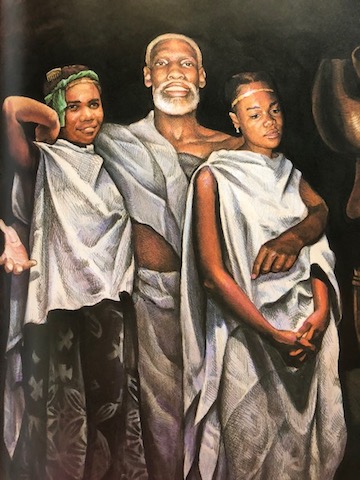
In a small village in Africa, a man named Mufaro has two daughters, Manyara and Nyasha.  Both girls are beautiful, strong, and clever, but they have very different natures.  Nyasha is kind, gentle, and patient.  Manyara is bad-tempered, jealous, and self-centered.  She frequently taunts Nyasha about how, one day, she will be the queen and her sister will be her servant.  When Nyasha asks her why she is so mean, Manyara says that she hates the way people praise Nyasha for her kindness.  She thinks that Nyasha is their father’s favorite child, and she wants to prove that Nyasha’s “silly kindness is only weakness.”

MufaroSisters

Since there is nothing that Nyasha can do to change her sister’s mind or attitude, she just continues doing her usual chores and being kind to people and animals.  In particular, she makes friends with a small garden snake, knowing that his presence in her garden will keep away pests.

Manyara is sneaky and always behaves herself when their father is present, so Mufaro doesn’t know about the troubles between his daughters.  When a messenger arrives, saying that the Great King is seeking a wife and that beautiful, worthy girls are summoned to his city so that he can choose from among them, Mufaro is proud and eager to present both of his beautiful daughters.  Manyara tries to persuade her father to send only her, but Mufaro is firm that both girls must present themselves for the king’s decision.

Manyara decides that the only way to get the better of her sister is to be the first to arrive and present herself to the king, so she slips out in the middle of the night and begins the journey alone.  However, both the journey and the king are not what Manyara thinks they are.  Along the way, Manyara encounters various strange characters who ask for help or offer advice, but thinking that a queen doesn’t need to pay attention to others or do anything she doesn’t want to, Manyara ignores them all.

Nyasha, on the other hand, gets ready to leave at the appointed time in the morning.  Everyone worries about Manyara but decides that the best thing to do is to follow her to the city, since she seems to have gone on ahead.  As Nyasha travels with the rest of their friends and family, she listens to the people Manyara ignored and shows them kindness.

MufaroCity

When they finally reach the city, Nyasha encounters a terrified Manyara, who hysterically insists that when she went to meet the king, she found a horrible monster instead.  However, like everything else, it’s just another part of the test, and Nyasha is the one who passes because she, like her sister, has actually met the king before, but unlike her sister, she actually paid attention to him.

MufaroSnakeKing

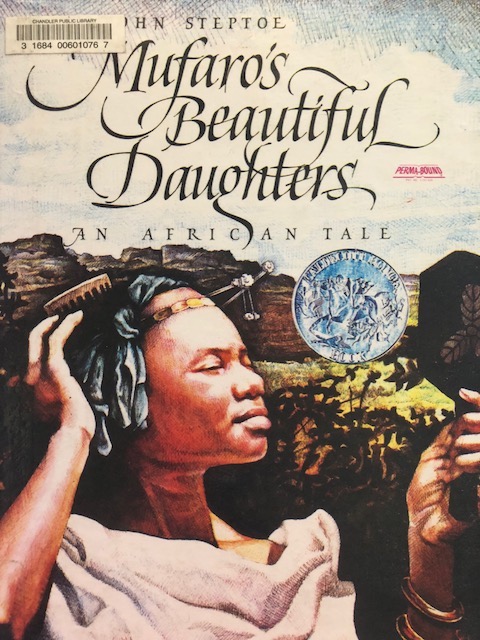
The pictures in the book are beautiful and colorful.  A note in the front of the book says that the buildings in the illustrations were based on an ancient city in Zimbabwe that is now ruins.  The note in the book also explains that the names of the characters in the story come from the Shona language.  The meanings of the names are clues to the characters’ natures.  Manyara means “ashamed”, and Nyasha means “mercy.”

The book is a Caldecott Honor Book.  It is currently available online through Internet Archive.

MufaroWedding

Four Dolls

FourDolls

Four Dolls by Rumer Godden, 1983.

This is a collection of four stories about different, special dolls.  Each of the stories is from the perspective of the dolls themselves, talking about their owners and their adventures.  A common thread through all four stories is the bond between the dolls and their owners and how they make a difference in each other’s lives.

Even though the collection of stories is from 1983, each of the individual stories in the book was written separately, in different years.  You can find each of these stories as their own individual books as well as part of other collections.  I give the original years of each story next to their titles.

The pictures in the book are wonderful, some of them in black and white and some in full color.

The book is currently available online through Internet Archive.

The four dolls and stories are:

Impunity Jane (1955)

FourDollsJane

The word “impunity” basically means freedom from harm, and it’s an apt nickname for the doll Jane.  She’s a very sturdy little doll, the kind that can stand up to the rough play of children and last for a long time.  From the time when she is first bought, she stays with her original owner’s family, passed down through the generations and enjoyed by various girls in the family.  However, they mostly keep her in the family doll house and play with her in different ways.  One girl likes to sew clothes for her and another, who wants to be a teacher, gives her lessons.

There is just one problem: Jane is frequently bored.  More than anything, she wants to be a pocket doll, carried around in her owner’s pocket, seeing the world and experiencing everything.  She doesn’t get much excitement in the doll house where the girls keep her, and her latest owner doesn’t seem interested in playing with her at all.  But, unexpectedly, a boy in the family comes to her rescue, the younger cousin of her current owner.  Although most boys aren’t interested in playing with dolls, Gideon likes to use Jane as his “model”, taking her outside, carrying her around in his pocket, and giving her rides in his toys, giving Jane the adventurous life she’s always dreamed of!

At first, Gideon borrows the doll without his cousin’s permission, and Jane dreads the day that he will give her back, even though she hates to see Gideon feel guilty.  Fortunately, when Gideon does take her back, it turns out that his older cousin is getting rid of a lot of her old toys because she’ll soon be heading off to boarding school. She tells Gideon that he can have anything he wants, so he keeps Jane, who continues being Gideon’s model and good luck charm.

The Fairy Doll (1956)

FourDollsFairy

Elizabeth is the youngest of her siblings and feels like she can’t do anything right.  She’s always making mistakes and can’t even ride a bicycle.  Everyone is used to telling her what to do, and she receives a lot of criticism from teachers and parents and teasing from other children, giving her poor self-confidence.  She is clumsy and break things, she forgets things, and she is frequently punished for every little thing she does.  The more they all scold her, the more mistakes she makes, and they can’t seem to figure out why.

(It’s painfully obvious while reading it – Elizabeth’s family makes her live in a constant state of nervousness, and she’s afraid of really trying many things because they keep telling her that she can’t do anything.  Her siblings seem more outright abusive rather than simply teasing, and her parents seem clueless, not punishing the older siblings for their terrible, bullying behavior.  I think that the family is meant to seem merely impatient with Elizabeth because they forgot how much younger she is than the other children and perhaps thoughtless to the effect that they’re having on her, but it seriously looks like they’re actually gaslighting the poor kid, purposely and systematically undermining her self-confidence for their own sick amusement, even the girl’s father.  Seriously, I hated all of them (except Elizabeth, whose only real problem is being a little kid) before I was very far into the story.)

However, the Fairy Doll that has been passed down in their family seems to have a kind of magic effect on Elizabeth.  No one knows quite where the doll came from because it’s been around for so long, although they use her as a Christmas decoration every year, at the top of the tree.  Only Elizabeth’s mother and great-grandmother seem concerned about Elizabeth at all, and it is at the great-grandmother’s insistence that Elizabeth be given the Fairy Doll to play with all year, after Elizabeth accidentally breaks a crystal bowl. (Which she only did because her bratty sister Josie shoved her from behind while she was holding it. Why did the parents never notice and properly punish the little brat Josie like they should?  I’m telling you, they’re clueless and useless, and possibly gaslighting her.  It really looks like that.  The father even makes a big deal about what use it is to give Elizabeth Christmas presents like the other children when she doesn’t ride the bike he gave her. Look, she’s just a little kid, and it takes some kids longer to learn to balance than others.  What a weird, oddly vindictive father.)

The Fairy Doll seems to suggest things to Elizabeth.  When Elizabeth doesn’t quite know how to do something, the Fairy Doll gives her hints.  When Elizabeth is in danger of forgetting something, the Fairy Doll reminds her.  In other words, the Fairy Doll does what a family is supposed to do and what her family could do if they weren’t so busy bullying her. The Fairy Doll offers Elizabeth help, support, and guidance.  Elizabeth is only seven years old at the oldest in the story, and Elizabeth’s family is too busy yelling at her for doing little things wrong or not knowing things to properly teach her anything.  They say that they tried to teach her to ride a bike, but I wonder how much “teaching” actually happened and how much it was really just yelling and mocking her for not already being able to do it.  I think they also get kind of a kick out of seeing Elizabeth look bad because they think it makes themselves look better. 

(The father in the story seriously disturbed me.  What kind of father is that hateful just because a very young child has some trouble riding a bike? Also, what’s the hurry in her riding it right away? Bikes don’t come with an expiration date, so it’s still going to be there when she grows a little more and learns to balance better.  Taking a little while to learn to ride a bike is hardly a sin, but Elizabeth’s father makes it clear that he does not care about Elizabeth’s feelings at all.  She has to buy his affection by . . . learning to ride a bike?  Because only bike riders are truly worthy of love?  Elizabeth’s family is really useless and weirdly vindictive.  I still hate them.  They are that horrible, just hearing about them.)

Little by little, Elizabeth’s small successes add up, and Elizabeth slowly crawls out of her shell, becoming more confident while her nasty, bratty, horrible siblings (yeah, I’m still angry, and I wonder if the father’s favorite little darling is the little psycho Josie) marvel at how she changes.

Little by little, Elizabeth comes to realize that she can do more than she thinks she can.

The Story of Holly and Ivy (1959)

FourDollsHollyIvy

Holly the doll doesn’t like being in the toy shop.  Abracadabra the owl frightens her, and she wishes that someone would buy her and give her to some girl as a Christmas present.

Meanwhile, Ivy is a troubled orphan who dreams of a new home with a grandmother who could take care of her.  When other children from the orphanage are taken to spend Christmas with families and Ivy is left behind, she tries to take matters into her own hands and find a family for herself.  Is there someone who could make wishes come true for both Holly and Ivy?

I worried about Ivy during this story, even though I knew that she and Holly would eventually end up together and okay.  She is lucky that she didn’t freeze to death.  Abracadabra the owl is also kind of a disturbing character, but they also get rid of him by the end of the story.  Apparently, the assistant in the toy stop doesn’t like him, either.

Candy Floss (1960)

FourDollsCandyFloss

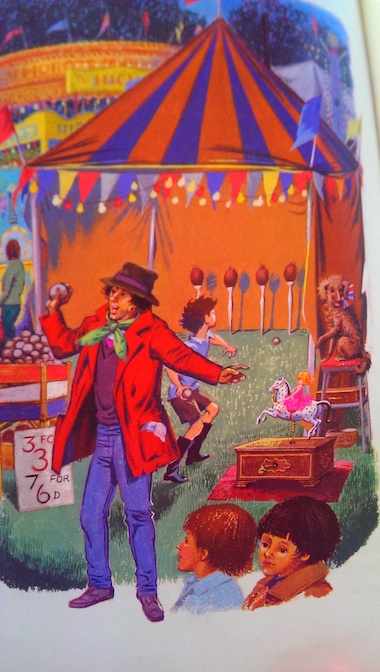
Candy Floss the doll belongs to Jack, who runs a carnival game, a “coconut shy,” where people try to throw balls at coconuts to knock them down and win a prize.  She enjoys living with Jack and his dog.  Jack has a special music box with a little horse on top, and Candy Floss sits on the horse while the music box plays and Jack’s dog begs nearby.  In this way, Candy Floss and the dog earn a little extra money.  When Jack is done working, he takes his dog, Cocoa, and Candy Floss the doll with him to see the rest of the carnival, and both of them enjoy it.

One day, a spoiled girl named Clementina attends their carnival.  Although Clementina is from a wealthy family, and her parents give her all sorts of things, she finds that she is frequently bored and unhappy.  When Clementina sees Candy Floss, she wants her, too, and is angry when Jack says that she can’t have her.  It’s the first time in her life that anyone has said “no” to Clementina about anything.  Clementina steals Candy Floss just to prove the point that when she wants something, she gets it.

However, Candy Floss wants to return to Jack.  She refuses to accept Clementina as her new “owner,” resists Clementina’s efforts to play with her (much to Clementina’s surprise), and finds a way to teach Clementina a lesson about greed.

In the end, Clementina not only returns Candy Floss but helps Jack to run his carnival game for awhile.  Part of Clementina’s unhappiness is caused by the fact that, even though she has many toys to play with, she doesn’t have much to do that is really meaningful to her.  She is surprised when she discovers how good it can feel to really earn something, like the coins that Jack gives her for helping him.

One of the cute things about this story is that it includes the music and words for the tune in the music box.

The book, which contains all four of these stories, is currently available online through Internet Archive.