The Mystery of the Silly Goose

Three Cousins Detective Club

As soon as they arrive home from their trip to the powwow in the previous book, the cousins are approached by Timothy’s neighbor, the snobby 13-year-old Lyddie, with another mystery. While they were out of town, someone went around the neighborhood, stealing lawn ornaments. Lyddie is concerned because her grandmother has come to live with her and her parents, and her lawn geese were stolen. One of the geese was the mother goose with a silly-looking bonnet on her head, and the others were her goslings. Lyddie’s grandmother is rather attached to the geese because they were a present from someone.

The three cousins don’t really like Lyddie because she and her friends are usually unfriendly and too concerned with being “cool” all the time. However, they feel sorry for her grandmother and agree to take the case. To their surprise, most of the lawn ornaments are actually pretty easy to find. They were hidden in some obvious places around the neighborhood. The only ones that are difficult to find are the geese. Who hid the lawn ornaments and why?

The theme of this story is Proverbs 24:3-4, “It takes wisdom to have a good family. It takes understanding to make it strong. It takes knowledge to fill a home with rare and beautiful treasures.”

The book is available to borrow and read for free online through Internet Archive (multiple copies).

Part of the mystery has to do with image, but it also has to do with sentimental attachment. Lyddie is very obsessed with image because she and her friends try so hard to maintain their cool image. Although she calls in the cousins to find the missing lawn ornaments, she only does it because her grandmother takes the loss of the mother goose so hard. Lyddie doesn’t see why the goose is so important, although she knows that her grandmother is attached to it because it was a present from someone.

The situation changes when Lyddie’s grandmother reveals the full story behind the lawn geese and her own understanding of the situation. Lyddie cares for her grandmother, and she comes to see the geese in a new light once she understands why they matter to her grandmother. It’s not the value of the geese, and it’s not about how the geese look. It’s all about the person her grandmother associates with them. Fortunately, Lyddie’s grandmother is a very understanding woman, and when the lawn ornament thief explains the issue, they work things out to everyone’s satisfaction.

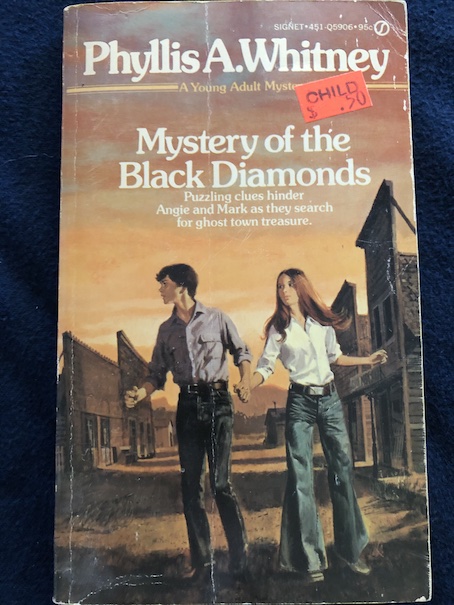
Mystery of the Black Diamonds

Mystery of the Black Diamonds by Phyllis A. Whitney, 1954, 1974.

Twelve-year-old Angie (Angela) Wetheral and her eleven-year-old brother Mark are visiting the foothills of the Rocky Mountains in Colorado. They’re from New York, but their father is a mystery novelist, and he’s doing some research over the summer for a book that will take place in Colorado. As the kids explore the area and speculate about the murder that’s going to happen in their father’s new book, they meet Benjamin Ellington, an old timer who talks to them about the days when the gold and silver mines in the area were active. He tells the kids to call him Uncle Ben, and they talk about whether or not there’s any treasure still to be found in the area. They also meet Sam Springer, the park ranger, who worries about Uncle Ben exploring and digging in the hills by himself because he could get hurt and people wouldn’t know where to find him and help him. Uncle Ben says that Sam worries too much and that he knows the area well because he’s been digging out there for years.

Sam later tells the kids that Uncle Ben came to the area in 1889, when he was 15 years old. That means that Uncle Ben was born in 1874, and Angie says that means that he’s almost 70 years old now, which puts the date of this story in the early 1940s, during WWII, but they don’t talk about the war. Sam says that Uncle Ben actually struck it rich while he was in his teens and owned three or four mines. Apparently, Ben blew through most of his money pretty quickly, so he’s not that rich anymore. However, the kids are fascinated by the idea of finding gold or silver and striking it rich.

The reason why the family lives in New York is that it’s helpful for their father’s work. Besides writing mystery novels, he also writes shorter stories for magazines and does book reviews for various publishers, so it’s important for him to live close to the New York book publishers. Angie misses their old home in New Hampshire, where they had a view of the mountains. Colorado reminds her of her old home, and she wishes that they could stay there, so she could enjoy the beauties of nature and the outdoor life. Their father says that someday, when he’s saved enough money, they’ll be able to live anywhere they want, and he’ll take time away from his regular projects to work on a serious novel that he’s been thinking about writing for some time. Mark suggests to Angie that if they could strike it rich in the mountains, the family would have all the money they needed, they could live where they want, and their dad would have the time to write anything he wants.

The kids ask Uncle Ben about searching for treasure, and he gives them a piece of paper with a strange coded message that is supposed to be the map to the treasure. He tells the kids that if they want the treasure, they’ll have to work for it by figuring out how to read the message. Mark wonders why Uncle Ben would give them the key to a treasure when he could just go after it himself, but Uncle Ben says, “I’ve got all I need. I’ve had enough of treasure and the way it can ruin men’s lives.” Uncle Ben says that maybe the kids would do better with a treasure than most people, but he insists that the kids will have to work for whatever they find and refuses to give them any hints about what the message means.

Uncle Ben continues helping the children’s father with background for his mystery story. He suggests that Mr. Wetheral have a look at a nearby ghost town. Unfortunately, Uncle Ben is killed in a fall soon after. The children are nearby when he falls and call for help, but there is little that anyone can to for him. Just before he dies, he whispers to the children, “Black diamonds. Right where Abednego used to be.” It’s a reference to the coded message that he gave the children, one final hint at the treasure. His death leaves it entirely up to the children whether or not to go after it.

To the Wetherals’ surprise, they soon learn that Uncle Ben recently added Mark and Angie to his will, leaving them a house and some land in Colorado. The catch is that the house is in the old ghost town. Angie is hopeful that if they own a house in Colorado they might be able to stay there instead of going back to New York, but the question is whether or not they’d be willing to live in a ghost town.

The Wetheral family decides to go to the ghost town and camp out in their new house and see what it’s like. Mr. Wetheral thinks the ghost town would make a good setting for his book, and staying there will give him a chance to do some research and soak up the atmosphere. Plus, the family is going to have to decide exactly what they’re going to do with the house the kids have inherited.

Most of the ghost town is crumbling, but the house they’ve inherited appears to be in better condition than most. They even find some furniture they can use in a back room. As they explore the town, the kids have their mind on the treasure that Uncle Ben talked about. Most people think that was just a story he made up because he gave copies of the same treasure map message to other friends of his, and nobody has ever figured out what it’s supposed to mean. Mark and Angie think that there is more to the message than most people believe, and they’re determined to find the answers.

It turns out that the ghost town isn’t completely uninhabited, though. The Koblers and their granddaughter Juanita, who is nicknamed Jinx, also live there with their pet skunk. Grandpa Kobler is an old friend Uncle Ben’s, and he talks to the children about him and the old says of the ghost town, Blossom. He used to own the general store there, and his wife was once the schoolteacher, and they didn’t move away from Blossom when the others did. He’s aware of Uncle Ben’s “maps” and hints of treasure, but has no interest in treasure-hunting himself because he likes the life that he and his family are living and doesn’t want it to change. However, Angie can tell that Juanita/Jinx is unhappy and can’t understand why she doesn’t want to talk about her parents and where they are. Then, someone else shows up in Blossom, looking for the clues to Uncle Ben’s treasure. If there really is a treasure to find, can Mark and Angie find it first?

The book is available to borrow and read for free online through Internet Archive.

Themes, Spoilers, and My Reaction

It isn’t easy for the kids to get to know Juanita/Jinx because she has a prickly and defensive personality and doesn’t like to talk about her past. However, she gradually starts to bond with Mark and Angie because of their shared love of the town of Blossom. Eventually, she tells Angie that her parents died when she was very young. Her father was killed in a mining accident. He thought that there was still treasure worth finding in the old mine outside of town and tried to get at it even though Grandpa Kobler told him that it was dangerous and that there was probably nothing worth finding anyway. Juanita’s mother died of pneumonia soon after her husband’s death, leaving little Juanita to be raised by her grandparents. Juanita has a warm relationship with her grandfather, the only person who calls her by her real name. However, Juanita is convinced that her grandmother doesn’t love her and is only raising her out of a sense of duty. Juanita’s grandmother never approved of her mother, partly because her son’s early marriage is what stopped him from going to college. Juanita also thinks that her grandmother didn’t like her mother because she was Mexican, which is why Juanita has a Hispanic name. Her grandmother was the one who gave her the nickname “Jinx” because that’s what she would call her when she was chiding her for something, which seems to have happened all too often. Jinx often calls herself Jinx instead of Juanita because she’s trying to get away from her Mexican-sounding name and seem more American.

For part of the book, Jinx actively tries to sabotage the Mark and Angie in their treasure-hunting activities because she’s afraid that if they find treasure, everything in Blossom will change. She worries that other people will come to Blossom seeking treasure. If that happens, the town will be built up again, but that means destroying what’s already there. Also, Jinx fears the way other people will treat her. She doesn’t want other people to come into Blossom or to be sent away to school if her grandparents suddenly have the money to do it because she thinks that outsiders will always treat her badly and look down on her. Her grandmother has repeatedly told her that people look down on Mexicans, and Jinx thinks it’s true because some kids she met in Boulder were also mean to her and called her names. Angie tells her that it isn’t true that everyone hates Mexicans. The Wetheral family lived in Mexico one summer while her father was researching another book, and they liked it, and Angie still has a friend there. Angie realizes that the reason why Jinx’s behavior and attitude are so poisonous is that her grandmother has poisoned her mind because of her own twisted feelings. Angie declares that she’s going to have a word with Jinx’s grandmother about it, but Jinx stops her because she says that will just make her grandmother mad. She says that sometimes, when she’s especially well-behaved, her grandmother forgets that she’s half Mexican, and if anyone reminds her, she’ll just get angry all over again. It’s a pretty sick way to raise a vulnerable child who is isolated from other people who could give her a more balanced view of life and people’s feelings. Grandpa Kobler seems to realize this, which is why he wants Angie to be friends with Juanita and show her that there are different people in the world, including people who are willing to be friends. As Angie points out to Juanita, her grandparents are getting older, and someday, she will be an adult and they’ll be gone. Juanita is going to have to learn to get along in the wider world without them, and actually, dealing with strangers in the outside world might not be as bad as living full-time with her grandmother’s nasty attitude.

Some of Juanita’s feelings are resolved when Angie’s mother has a heart-to-heart talk with her about the things her grandmother has been telling her and her own opinions about herself. I agreed with Angie that some of the things her mother said to Juanita while challenging her attitudes were rather harsh, and I wouldn’t have said things like that, but Juanita does take what Mrs. Wetheral says to heart and realizes that she has as much reason to take some pride in herself and her background as anyone else. I didn’t like the part where Angie’s mother says that Juanita’s grandmother can’t help her opinions about Mexicans because that’s just the way she was raised and there’s nothing that can be done about it now. It seems to me that they’re discounting the idea of personal accountability. If Juanita’s grandmother can’t be responsible for her own mind and behavior, what can she be responsible for?

I know people can cling pretty hard to some weird ideas. One night, we took my grandmother out to dinner at a nice restaurant for a family celebration. My grandmother was actually really upset that the restaurant had given her so much food that she couldn’t eat it all, and she said that she was worried because her parents would never have approved of her not clearing her plate. She was genuinely upset about it, not just making an idle comment. It really bothered her. Now, I know that part of my grandmother’s youth took place during the Great Depression, when wasting anything was a sin, but at the time this incident took place, she was a widow who was over 80 years old. The Great Depression had been over for more than 60 years. I was her youngest grandchild, and I was an adult at this time. Her parents had been dead for longer than I had been alive. She was not only a parent herself, but she was also a grandparent and a great-grandparent. She was literally the oldest living member of our family, and nobody would have said a word about what she wanted to eat or not eat for dinner, but my grandmother just couldn’t get past the idea of what her parents told her years ago about always clearing her plate. It’s an odd thing to cling to, but admittedly, there are far more harmful ideas that people can’t bring themselves to give up because of stuff their parents said back in the day.

Mrs. Kobler has had years of living her own life and ample opportunity to work out her feelings, but I think that part of the reason she hasn’t is because there’s something else that’s preventing her. This theory is conjecture on my part because there’s never a point when Mrs. Kobler explicitly explains her thought processes, but although the book doesn’t really explain it, I think that her son’s death is probably the reason why Mrs. Kobler has been harboring so many negative attitudes and taking them out on Jinx. Although nobody actually says it, I suspect that Mrs. Kobler assigned blame to Jinx’s mother for her son’s death. If he hadn’t gotten married at a young age and went looking for a fabulous discovery to raise a fortune for his young family, he might have gone to college, gotten a good career, and still been alive. Even though the characters don’t explicitly say it, I think it’s logical. I further suspect that the really problematic part for Mrs. Kobler is that she needs to blame Jinx’s mother for what happened because, if she can’t, some part of her might blame herself for not stopping her son from doing what he did, and she can’t handle that. As long as she can tell herself (and Jinx) that her daughter-in-law was awful because she was Mexican and caused the downfall of her son, she won’t have to question why she wasn’t able to stop her son from dying. In her mind, I think Mrs. Kobler thinks that her son’s marriage was a terrible mistake that led to his early death, and by extension, her granddaughter really was a “jinx” because she came from that unlucky marriage. Some of Mrs. Kobler’s feelings get resolved later, when they discover that her son was right about the type of treasure he was seeking, even though he got killed pursuing it. A sudden disaster also makes Mrs. Kobler realize that there are many things that a person can’t control in life and that God’s will is taking her family in a direction she never anticipated. This book doesn’t really lecture about the subject of God and religion, but there are some Christian themes in the story.

All through the story, there is the theme of treasure – what is treasure, what do people do with treasure when they get it, and what are they willing to risk to get it? Early in the story, Uncle Ben talks about having lost his taste for treasure-hunting because he’s seen the way it ruins lives. It isn’t until the Wetheral family gets to Blossom and the children talk to Grandpa Kobler that they get the rest of the story about why Uncle Ben felt like that. After Uncle Ben dies, he is buried in the old cemetery in Blossom because that’s where his wife and young daughter are buried. They both died of diphtheria, and he blamed himself for them contracting the disease because they went to live in the big city after he got rich. Grandpa Kobler, who knew Uncle Ben back then tried to console him by saying that they could have caught that disease anywhere, not just in the city, but Uncle Ben still felt responsible. (Diphtheria is now a very rare disease in the US, thanks to the development of a vaccine to prevent it. It’s often given in a combination vaccine that also protects against tetanus and whooping cough, which is how I’ve received it. I was first given the vaccine when I was very young, and I still get my booster shots. I’d recommend it to anyone capable of receiving vaccines. I have never actually seen a person with any of those illnesses in my entire life, and I’m in my late 30s now.) The point is that money doesn’t buy love and happiness, and Uncle Ben came to the conclusion that the lifestyle his family lived when they were rich was unhealthy. He would rather have had his family back than the money from his mines.

Grandpa Kobler understands how Uncle Ben felt because, when Uncle Ben once asked him if he wanted a treasure, he said no. He was happy with the life he was living in Blossom, and he had enough money for his family to live comfortably. If he suddenly got rich, people would expect him to move to a bigger house in the city and start living a completely different life, and he realized that he wouldn’t be as happy doing that. In his youth, he saw the lives that other people lived after they got rich, and he didn’t like what he saw. Later, his son got killed while chasing a dream of treasure, which further emphasizes that there is a price for treasure-hunting, and sometimes, that price is too high. In the Wetheral family, Mark is the one who thinks that their lives would be better if they could find a fortune, but Angie points out that they don’t really need a fortune; they just need enough for their dad to feel comfortable taking the time to write the book that he wants to write and for them to have a home away from the big city, which is what they really want. There is the idea that having enough money is good, but having too much or trying too hard to acquire more can cause problems and complicate a person’s life.

Spoilers

Things are about to change in Blossom, in spite of what the people there want, and as Grandma Kobler concludes, it might be the will of God that they do. In the most dramatic part of the book, much of the town of Blossom is destroyed in a flash flood. Fortunately, all of the people and animals in the town survive, although the Koblers have a close brush with death. Juanita is in less danger because she’s on a picnic with Angie and her mother when the flood startes, and she is the first to realize the danger. At first, everyone is afraid that the Koblers drowned, but they eventually find Mrs. Kobler, just barely keeping her own head and her husband’s out of the water. During this time when they were almost killed, Mrs. Kobler admits that she had some revelations about many things, especially when she realized that she could depend on Juanita to come and help them. In spite of all of her nagging at Juanita, Juanita is bright and dependable and cares about her grandparents, even the grandmother who’s been making her life miserable. Mrs. Kobler never completely changes her mind about Mexicans, but she does change her mind about Juanita, giving her more respect than she did before. The book explains that she comes to realize that, while Mrs. Kobler disparaged Juanita as her mother’s daughter, she came to remember that she was her son’s daughter, too. It’s not as much as could be hoped for, but it’s a start. Mrs. Kobler also realizes that everything that’s happened is the will of God, there is nothing anyone could have done that would have changed the outcome, and God is leading her family in the direction He wants them to go, so she is just going to have to go with the flow (not exactly her words, but I think you catch my drift – ha, ha).

The secret of Uncle Ben’s treasure is also revealed. What he found wasn’t really “black diamonds” but something else that’s very valuable, the same mineral that Juanita’s father was looking for at the time he died. However, Juanita’s father was looking in the wrong part of the mine, which was why he got killed instead of finding what he was looking for. (Maybe he should have gone for his geology degree before going for the “treasure.” Just saying.) Uncle Ben was more experienced with mining and figured out the right place to look himself. It wasn’t until after Juanita’s father died that he came to realize the full value of what he had found, though. (It’s important that this story is set after WWII.) Uncle Ben’s lawyer reveals that, since samples of this mineral were sent to be analyzed, it has activated a part of Uncle Ben’s will that leaves the mine to Juanita Kobler, making her an heiress. Since the town of Blossom was destroyed in the flood, there’s nothing left to preserve that would prevent mining. Now that Juanita is an heiress, she’s going to have a much higher standing in the community, which might take care of some of the bullying she received at school in Boulder. The Wetherals also benefit from the discovery, as the mysterious stranger who came to town informs them that there’s a government finder’s fee for locating valuable mineral deposits.

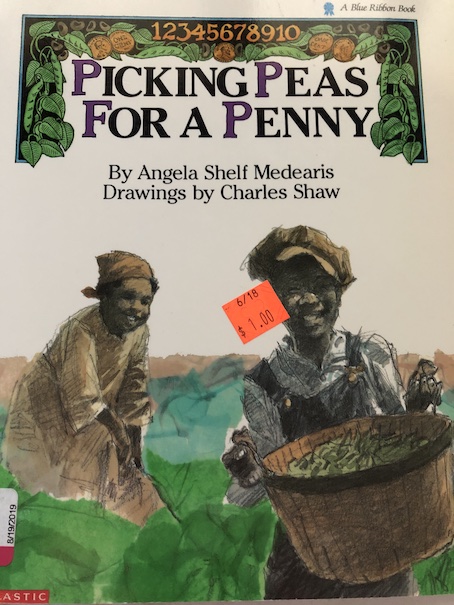
Picking Peas for a Penny

Picking Peas for a Penny by Angela Shelf Medearis, drawings by Charles Shaw, 1990.

This picture book is based on stories from the author’s family and is told from the point of view of her mother, when she was a child in Oklahoma in the 1930s. The story is told in rhyme with a kind of sing-song counting from one to ten as they pick peas and put them in their baskets.

The 1930s was the time of the Great Depression. Many people were out of work, but this African American family has a farm and makes money by growing and harvesting crops. It doesn’t pay much, and everyone needs to help, but because times are hard, they are glad that they are able to do the work and earn the money.

It’s hard work that takes all day in the hot sun, but the girl telling the story says that she and her brother have a little fun while they’re doing it, too. Their grandmother tells them not to goof off because they work to finish. The grandfather of the family offers the children a penny for every pound of peas they pick and says that he’ll take them into town to spend it, so the children start a pea-picking race with each other.

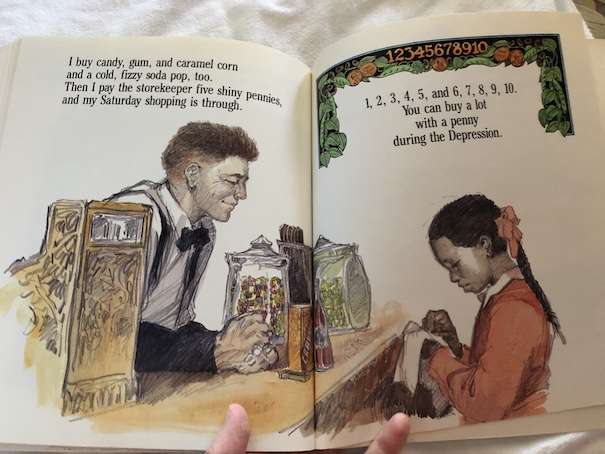
After the work is done, they visit the general store in town, and the children have the opportunity to buy treats for themselves. They only have pennies, but it’s enough to buy some penny candy and soda pop. After the hard work they’ve done, it feels like a rich reward.

In the back of the book, there’s a picture of the author’s family. Although the story itself doesn’t mention it, the name of the girl in the story is Angeline.

The book is available to borrow and read for free online through Internet Archive.

Trouble at School

The Berenstain Bears

Trouble at School by Stan and Jan Berenstain, 1986.

“When a problem at school
Is kept secret too long,
It can grow ’til a cub
Thinks that everything’s wrong!”

Brother Bear runs into problems at school after he catches a bad cold. While he’s recovering from his cold, he is allowed to watch tv and read comic books. His teacher sends home a packet of schoolwork for him to do, but he ignores it and forgets about it.

He doesn’t remember the packet of work until he’s better and going back to school. However, he soon becomes preoccupied with the news that Cousin Freddie has taken over his position on the soccer team during his absence.

When his teacher gives a quiz on the new lesson in division, Brother fails it. Brother is supposed to show the quiz to his parents and have them sign it, but his parents become preoccupied with Sister, who is now sick, and Brother doesn’t show them the quiz.

The next day, Brother is so upset about his bad grade and what’s happening on the soccer team that he doesn’t go to school. He makes his quiz into a paper airplane and throws it away.

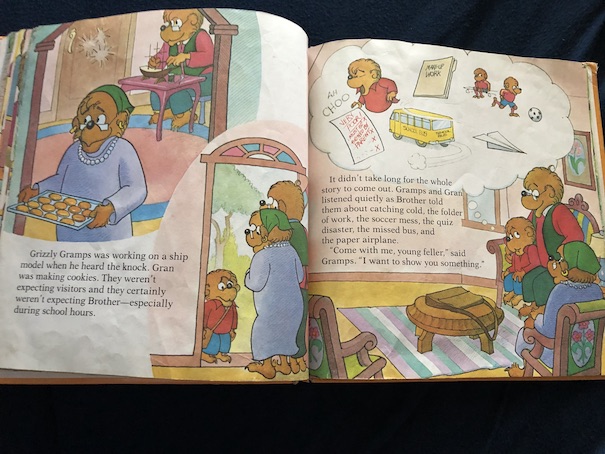
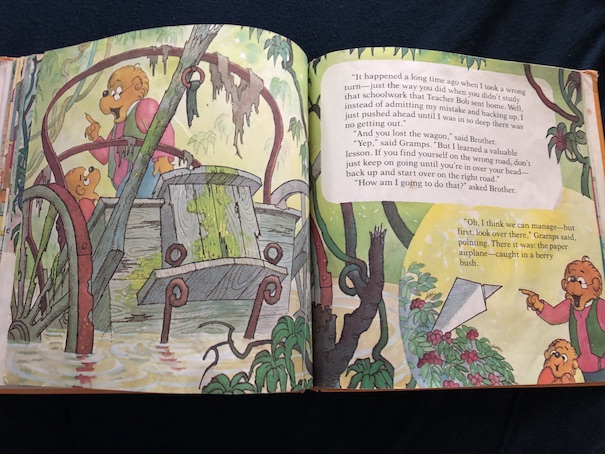
Then, Brother gets the idea of going to see his grandparents for help. He explains the entire situation to them. His grandfather tells him a story that helps put the situation in perspective.

There was a time when Gramps did something wrong, and instead of admitting his mistake, he just kept going and made the problem worse, like Brother did by ignoring his schoolwork and not telling his parents about his problems at school. Gramps says that it’s best to admit when you’ve made a mistake so you can do what you need to do in order to turn the situation around.

They find the quiz that Brother threw away and go home to tell Brother’s parents about his school problems. They’re not happy about the situation, but they tell Brother that “It’s never too late to correct a mistake,” and Gramps proves to Brother that he can do division by having him divide a bag of cookies among the family members.

When Mama takes Brother back to school, he learns that nobody else in class did very well on the quiz, so the teacher is letting them do a retake. Now that Brother realizes what division is really about, he does much better. At the soccer game that afternoon, Brother also gets a chance to retake his old position on the team. If he hadn’t gone to school that day, he would have missed these chances to make things right, but because he did go and took the second chances that he was offered, things were much better by the end of the day.

Adults reading the story will recognize that the reason why Brother’s parents are supposed to sign his failed quiz is because that is how the teacher draws parents’ attention to problem areas that their children have so they can make sure that they can pay extra attention to the child’s homework and help him with his problem areas. It’s not about shaming or punishing the child but getting the child the help he needs to understand the subject. By hiding the bad quiz from his parents, Brother was avoiding the help that his parents were supposed to provide and making the situation worse. Parents can be disappointed when their children bring home bad grades, but this is a situation where parents would rather know than not know if their children are struggling with something because they generally want to help their children when they need it.

The lesson of the story is a good one. Anyone can occasionally make mistakes, have problems, or just plain fail at something, but the people who succeed in the end are the ones who face up to their problems and do what’s necessary to make them right. Some people feel overwhelmed when confronted by problems, but the best thing they can do is admit that there is a problem and that they’re feeling overwhelmed and get help from someone else. Brother could have just told his parents and gotten help with division immediately, as soon as he realized that neglecting his make-up work had left him behind in class. At first, he was too embarrassed and worried to do that, but he did manage to turn things around by talking to his grandfather about his problems and taking the help and advice that he offered. Making mistakes or even failing something doesn’t have to be scary or overwhelming because there are always things you can do to make the situation better and people who are able to help.

The book is available to borrow and read for free online through Internet Archive.

When I Was Young in the Mountains

When I Was Young in the Mountains by Cynthia Rylant, illustrated by Diane Goode, 1982.

This nostalgic picture book is based on the author’s experiences living with her grandparents in West Viriginia when she was young.  It paints a vivid picture of Appalachian life in the past. The story doesn’t give any particular years to describe when it takes place, but the author apparently lived with her grandparents during the 1960s, although from the pictures, it would be easy to believe that the story takes place in a much earlier time. Partly, the style of the clothes and stoves give that impression, but for me, it was really the cloth cover over the camera that made me think it was during the first half of the 20th century. You can still get these covers, but they’re not as common in modern times.

In the story, the author describes various aspects of Appalachian life, starting each section with “When I was young in the Mountains . . .”  She remembers her grandfather coming home after working in a coal mine and how they would all have cornbread, fried okra, and pinto beans for supper.

For fun, the kids would go swimming in the swimming hole.  They would also use the swimming hole for baptisms. They would also use the schoolhouse as their church.

She describes the general store where her family would go for groceries and how they would have to heat water on the stove for baths.

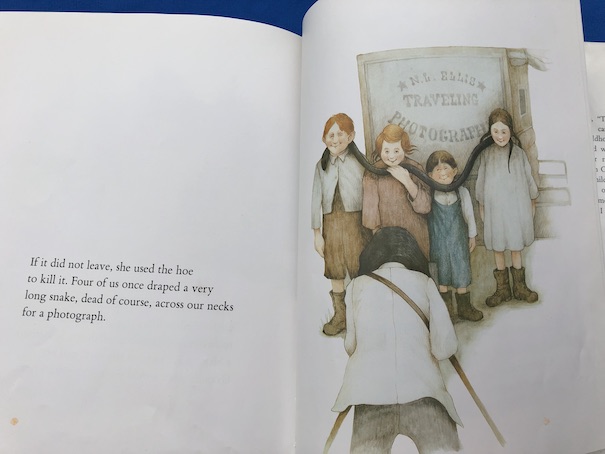
Sometimes, they had to deal with snakes, and once, when their grandmother killed a particularly big one with a hoe, they took a picture of the children with it.

Overall, the story is about enjoying the simple pleasures in life in a place you love, surrounded by people you care about.

This is a Caldecott Honor Book. It is currently available online through Internet Archive. Sometimes, you can also find people reading this book aloud on YouTube. I particularly like this reading because I think the reader has a good accent for reading this story, and she comments on her own experiences growing up in the country.

Linda Craig and the Clue on the Desert Trail

Linda Craig

Linda Craig and the Clue on the Desert Trail by Ann Sheldon, 1962.

Linda and her friend, Kathy, are exploring Olvera Street in Los Angeles before a horse show when Kathy notices a strange man watching them.  While the girls were shopping, Linda bought a small horse statue that reminded her of her own horse.  As the girls finish lunch, Linda notices an odd symbol on the statue that looks like an arrowhead, but before she can study it more, the man grabs the horse and runs off.  Linda tries to chase him down to get the horse back, but the man drops it and breaks it.  Linda picks up the horse’s head and decides to go back to the shop where she bought it to see if she can get another one.

The shop doesn’t have another horse like the one Linda bought.  It was unglazed, and the others are glazed.  Disappointed, Linda goes on to the horse show, where she is taking part, along with her brother Bob and his friend Larry.  At the show, they see the mysterious man again, and he apparently steals the broken head of the horse statue that Linda had kept.  Bob thinks that maybe the man is some kind of smuggler and that there was something hidden in the head that Linda hadn’t noticed.

Linda goes back to the shop to talk to the owner again, and he tells her that the horse was a special order from Mexico for a man named Rico.  Rico said that he was a traveling salesman and that he would collect the horse at the shop, but when he didn’t turn up to get it, the shop owner decided to sell it. Linda asks the shop owner to send her another horse statue like the broken one if one comes into his shop and reports all of this information to the police.  Then, when she returns to the horse show, she finds a threatening message, warning her to “Beware. Stay away from C. Sello.”  The note is signed with the symbol of an arrowhead, similar to the one on the horse statue.  Linda also reports this note to the police, but she can’t resist trying to figure out who C. Sello is and how this person fits into the mystery of the possible smugglers.

Soon after, the shop owner calls Linda to say that another horse statue did come into the shop and that he has sent it to her but now someone has broken into his shop and smashed every horse statue he has. Realizing that what they wanted was not in the shop, the bad guys are soon on Linda’s trail, even kidnapping one of her friends by mistake, thinking that it’s her. They even try to poison Linda’s horse!

At the end of a desert trail, the Mojave Trail, there is a ghost town with sinister characters and old cliff dwellings with Native American petroglyphs that may hold part of the secret to the mystery.

The story contains some anecdotes about California history, which is interesting. I have to admit, though, that I thought that the warning note for Linda was pretty silly. C. Sello turns out to not be a person but a clue about what the smugglers are smuggling, and they didn’t have to tell Linda what it was because she hadn’t heard about it at that point and wouldn’t have any reason to know what they were talking about. If they really wanted to get her to leave them alone, they could have left a more vague warning that didn’t include any clues like “Go home!” or “Go away!”

Jane-Emily

JaneEmily

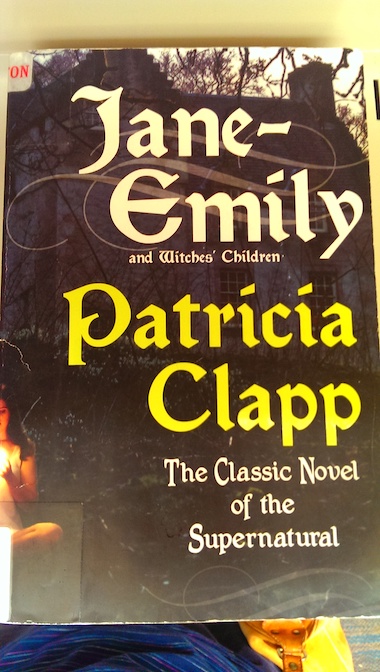
Jane-Emily by Patricia Clapp, 1969.

Louisa is a young woman around the turn of the century.  She is only 18 years old and unmarried, but she is in love with a young man named Martin.  However, her parents think that she is becoming too serious about Martin too soon, so they insist that she spend the summer taking her young niece, Jane, to visit her other grandmother.  Jane has lived with her maternal grandparents, Louisa’s parents, since the death of her parents.  Louisa loves her niece, but she resents her parents changing her summer plans in order to keep her away from her boyfriend.

However, this is not just a love story but a ghost story.  Jane’s parents were killed in a strange buggy accident, which is why she lives with her grandparents and young aunt.  Her other grandmother has lived alone since the death of her son (Jane’s father) and her husband, some years earlier.  She had another child, a daughter named Emily, but Emily died young many years ago of a sudden illness.

As Louisa soon learns, Emily was a pretty and clever but seriously disturbed child.  Her father idolized her, coming to love her even more than he loved his wife.  He thought she was absolutely the most perfect child in the world and could never forbid her anything.  He gave her everything she ever asked for and refused to allow his wife to discipline her for any reason, even when she needed it.  It would be enough to spoil any child, but Emily was extremely callous, cold, and manipulating by nature.  Her father’s catering to her only fed her selfishness and ruthlessness.

Emily was known to resort to extreme measures to get her way, and in the end, it led to her death.  She fell in love with the son of the local doctor, deciding (without his consent) that they would get married one day.  However, he didn’t really care for her at all, seeing her extreme selfishness.  In a bid to get his attention and sympathy, Emily decided to make herself ill.  One cold night, she soaked her nightgown in water and deliberately sat by an open window.  Unfortunately, it worked too well, and she became so ill that she died.

However, Emily’s selfishness and determination to get her way seem to have lasted beyond the grave, and young Jane’s presence in her old house, in the very room that used to be Emily’s, seems to have awakened Emily’s wrathful spirit.  Jane becomes fascinated with the reflecting globe in the garden, which Emily declared was hers alone and that no one else could ever look into it.  Jane claims that she can see Emily’s face in the globe, but people don’t believe her at first. Jane bears a close resemblance to Emily, although the two of them are very different in character.  Jane seems to develop an unhealthy obsession with her dead aunt, and she seems to know things that only Emily could have told her.  Emily seems to be slowly taking over Jane.

Jane’s grandmother confides that she has believed that Emily caused the sudden deaths of her husband and son because they both died under unexplained circumstances and Emily could never let go of anything or anyone she thought belonged to her.  Now that Emily seems to be showing an interest in Jane, her grandmother begins to fear for her.

Meanwhile, Louisa is falling in love with Adam, the young man Emily had planned to marry and who is now a doctor himself.  Adam also loves her, wanting her to marry him.  However, Louisa has become convinced of Emily’s evil presence and the threat that she poses to young Jane.  When Emily forces Jane to go out in a freezing rain, making her become ill in the way she did before she died, Louisa must help Jane to fight for her life.

Emily’s presence centers around the gazing globe in the garden, and the only person who can end her evil influence and save Jane is her grandmother, who finally finds the courage to stand up to her daughter and tell her that there are some things that she can’t have.

The book is currently available online through Internet Archive.

My Reaction

Parts of the story feel a bit preachy on the subject of parents who spoil their children, but Emily and her family are presented as an extreme case of that.  At times, characters wonder what Emily would have been like if her father hadn’t constantly catered to her every whim and had given her the discipline she needed.  They all agree that she would have lived a longer life, as would other members of her family.  However, Emily was already a naturally selfish person and apparently incapable of empathy.  Her father’s worship of her was seriously unhealthy and, in a way, a reflection of his own selfishness; Emily represented all the qualities that he loved in her mother but she was a creation of his (well, you know, 50%, genetically speaking), making her infinitely more perfect and more worthy of his love than his own wife.  One of the other characters comments that his wife was the real victim in the end because her husband blamed her for their daughter’s early death (which was definitely Emily’s fault alone) and subjected her to years of guilt over it, rejecting all the love they had once had for each other.

The story ends happily but on a somewhat ambiguous note because Louisa realizes that there are many things that she doesn’t understand, and although Emily seems like she’s finally gone, the memory of her will haunt them all.

A Hugga Bunch Hello

HuggaBunchHello

A Hugga Bunch Hello by Phyllis Fair Cowell, illustrated by Ron C Lipking, 1985.

Bridget likes having her grandmother living with her and the rest of her family. Her grandmother always has time for her and is willing to give her a hug. Her parents are often too busy, her brother thinks hugs are just for girls, and her Aunt Ruth is too fussy.

Then, Aunt Ruth tries to persuade everyone that Bridget’s grandmother should go live in a nursing home. Bridget doesn’t want her grandmother to leave, but she doesn’t know what to do about it.

While she worries, a strange little person steps out of her bedroom mirror. This little person is Huggins, one of the Hugga Bunch. She says that she knows about Bridget’s problem and thinks that she can help. She invites Bridget to come with her to Huggaland.

HuggaBunchHelloMirror

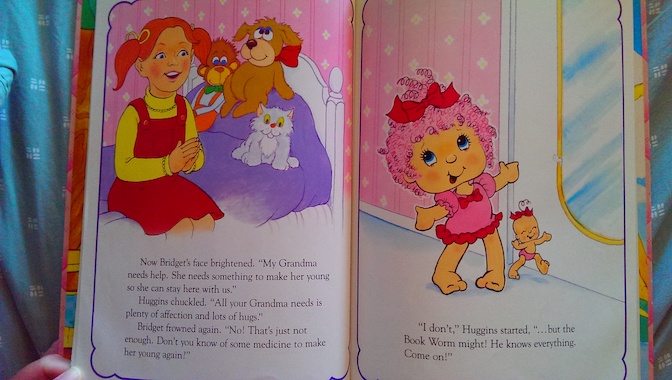
In Huggaland, the Hugga Bunch take Bridget to see the Book Worm, who may have the solution that Bridget seeks. Both the Hugga Bunch and the Book Worm say that aging can be slowed by affection and “the knowledge that they are needed,” but Bridget thinks that the only solution is to find a way to actually make her grandmother young again.

The Book Worm says that if that’s what Bridget wants, then her grandmother must eat fruit from the Youngberry Tree. Unfortunately, the tree is in the territory of the Mad Queen of Quartz. Although the Hugga Bunch are afraid of her, Bridget is willing to face her for her grandmother’s sake.

Getting there involves going through a few obstacles, including walking sideways on a sideways sidewalk and facing a frightening beast who turns out to be a baby elephant who was under a spell. When they reach the tree, the mad queen takes them prisoner and turns Bridget into a statue. Fortunately, the others manage to break free and save her.

HuggaBunchHelloTree

Bridget is happy at being able to bring the Youngberries to her grandmother, but as she passes through the mirror into her room, she accidentally drops them, and they disappear.

Not knowing what else to do, Bridget runs to give her grandmother a hug before she leaves, encouraging her brother to do the same. Bridget’s father wasn’t happy about her grandmother leaving, either, and seeing how much the children will miss her, he declares that she should stay.

This book was made into a made-for-tv movie.  It is currently available on YouTube.  It follows the plot of the book pretty closely.

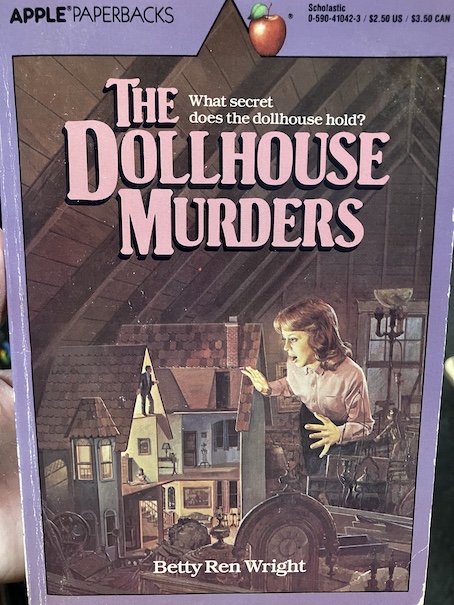
The Dollhouse Murders

dollhousemurdersThe Dollhouse Murders by Betty Ren Wright, 1983.

Amy is upset because she constantly has to look after her sister Louann, who has developmental problems. Louann is only a year younger than Amy, but her condition makes her think and act like a small child all the time. Amy loves Louann, but having her around all the time makes it difficult for her do things on her own and to make friends.  It’s frustrating because the girls’ mother doesn’t seem to understand the pressure Amy feels.

One day, she has an argument with her mother about it and runs away to her aunt’s house. Aunt Clare normally lives in Chicago, but she has returned to her home town to sort out the things in her grandparents’ old house. Sympathizing with Amy, Aunt Clare offers Amy the chance to stay with her for a couple of weeks, without Louann.

Aunt Clare and her brother, Amy’s father, used to live with their grandparents when they were young, and Aunt Clare says that she has unhappy memories of that time.  While helping her aunt go through some of the old things in the house, Amy discovers that there is a dollhouse in the attic made to look exactly like the grandparents’ house and dolls which look like the grandparents, Clare, and her brother. Amy thinks the dollhouse is wonderful, but Aunt Clare seems to find it disturbing.

When Aunt Clare refuses to talk about her deceased grandparents, Amy looks at some old newspapers at the library to learn more about them. To her shock, she learns that they were murdered in the house and that the killer was never found. Soon, strange things begin happening with the dollhouse. The dolls move around on their own, and mysterious lights and crying noises can be heard. The dolls seem to be acting out the events of the night of the murder. After all this time, the dolls seem to be trying to tell them something, if they have the courage to listen.

The book is currently available online through Internet Archive (multiple copies).

My Reaction and Spoilers

Aside from revealing the murderer’s true identity, the dolls settle other troubling matters in Amy’s family.  For years, Aunt Clare has blamed herself for the way she behaved around the time her grandparents were killed.  She was afraid that something she did might have even led to their deaths.  But, none of it was really her fault, and her grandparents want her to know that she needn’t blame herself anymore.  When Aunt Clare realizes the truth, she feels like a great weight has been lifted from her.  She begins coming to terms with her past and appears to be headed for a better future.  Amy also comes to terms with her sister’s condition and values her even more highly when Louann’s lack of fear of the dollhouse gives Amy the courage to see the dolls’ final message.  Amy’s family also makes changes to help Louann become a little more independent and to allow Amy a little more independence of her own.

There was a movie version of this book made in 1992 (Sometimes called Secrets in the Attic), but it’s difficult to find copies of it now.  Sometimes, the movie or clips of it appear on YouTube.  Apart from that, it’s very difficult to see it.

Fudge-A-Mania

FudgeAManiaFudge-A-Mania by Judy Blume, 1990.

Peter is horrified when he finds out that his family is going to spend their vacation in the same place as bossy know-it-all Sheila Tubman and her family.  Even worse, the two families are going to be staying to be staying right next to each other.  Really right next to each other.  They’re staying in the same house, which has been split into two halves.  As far as Peter is concerned, the only thing that might save his summer is that his friend Jimmy will be coming up to stay with them part of the time.

The arrangement turns out to be a little better than Peter thought it would be at first.  Sheila finds a way to make some extra money by baby-sitting Peter’s five-year-old brother Fudge.  Fudge says at first that he wants to marry Sheila, although it turns out to be mostly because he’s afraid of monsters in his room at night, and he thinks that if he gets married and shares a room with Sheila, it will keep the monsters away.  Then, he decides that marriage may be unnecessary when he makes friends with a little girl named Mitzi, who is staying with her grandparents nearby.  Mitzi’s grandmother makes a special monster spray for her to keep monsters away, so Fudge decides that he might not have to marry Sheila after all.

Peter is happy when he discovers that Mitzi’s grandfather is Big Apfel, his baseball hero, and that he holds baseball games that are open to the public, so he and Jimmy can also play with him.  He also gets a crush on Isobel (“Izzy”), a girl who works at the local library, although Isobel is a few years older than he is.  The baseball game goes well enough, but the crush, not so much.

Then, comes the most shocking news of the summer: Peter’s grandmother and Sheila’s grandfather decide to get married!  If that happens, Peter and Sheila realize that they’ll be related by marriage!

Big Apfel and his granddaughter Mitzi are fictional characters, but the book that Mitzi claims is about her, Tell Me a Mitzi, is a real book.

This book is part of the Fudge Series.  It is available to borrow and read for free online through Internet Archive.