The Tattooed Potato and Other Clues by Ellen Raskin, 1975.
Dickory Dock (yes, that’s her name) is a 17-year-old art student in New York. She takes a part time job as an assistant to a mysterious artist who only calls himself Garson. She really needs the job because she’s very poor and often only has markers to use in making drawings for her art classes. She lives with her brother and his wife because their parents are dead, but her brother and his wife struggle financially and sometimes can’t even pay their bills. However, Garson is a strange person who seems determined to keep the details of his past secret.
Garson requires Dickory to be quiet, well-organized, and observant as his assistant, and she tries her best to be these things. He periodically tests her powers of observation and perception, pointing out that these are valuable skills for artists to have to see beyond the outward appearances of things and into their very essence. Garson lives in a house with a deaf-mute man called Isaac. Isaac frightens Dickory at first because he is a large man who appears scarred and is brain-damaged. Garson says this is just his outward appearance and tells her that Isaac is a gentle soul. On the other hand, Manny Mallomar, the fat, greasy man who rents the lower apartment in the house, is rough and rude. Because he dresses all in white, Dickory describes him as looking “like the ghost of a greasy hamburger.” Manny Mallowmar’s associate, Shrimps Marinara comes to visit him, and Garson praises Dickory for guessing his name because he’s a shrimpy little man. (This pair sounds like the criminals in The Maltese Falcon.) Garson stresses the importance of seeing behind the outward appearance of people and objects to their inner natures, what they hide behind the disguises they wear. Garson himself, however, remains a mystery, purposely covering himself up with bland manners.
Garson is good at reading people, and he accurately realizes that Dickory is a haunted person. Dickory admits that the reason why she lives with her brother is that their parents were murdered. Their parents ran a pawn shop, and they were killed in a robbery. Dickory’s brother (his name is Donald Dock, and he’ll hit anybody who makes quacking sounds at him) is terrible at managing money, which is why they can’t always pay their bills, and they no longer own their parents’ pawn shop as a source of income because he lost it to a bookie.
Strangely, Dickory realizes that, even though Garson is perceptive to people’s hidden deaths, this isn’t always reflected in his work, which does focus on showing people the way they want to be seen, not how they actually are. It’s just the sort of thing Garson tells her not to do, so why does he do it himself?
Then, the Chief of Detectives Quinn comes to see Garson. Garson was talking about the need to see behind people’s disguises with an artist’s eye at a party, and Quinn has come to take him up on the offer. Quinn has been struggling with a case of fraud where widows have been duped out of their savings by a mysterious hair dresser who got them to invest in a new kind of hair treatment. At first, the hair treatment made them look really good … and then, their hair fell out, and the hair dresser was gone with their money. Garson interviews the three fraud victims, and they all describe the hair dresser, who called himself Francis, slightly differently, although there are certain details of their accounts which are the same. In the end, Garson’s conclusion is that “Francis” is actually a woman named Frances, and that she probably had the extremely short hair they described because she was the first victim of her own hair tonic that doesn’t work, and her own hair has only just started to grow back. Garson tells Quinn that she has probably used these ladies’ money to set herself up with her own hair salon.
Garson’s theory of the case turns out to be accurate, so Quinn asks his opinion on another case. This next case involves a counterfeiter whose bills are almost perfect, except he puts his own self-portrait on them where the presidents’ picture is supposed to be. Garson seems to like playing detective in these cases, but Dickory realizes that he is still a mystery himself. He seems to love using disguises, and he tries to trick Dickory with them. Dickory can tell that these disguises aren’t just tests of her observation skills but also seem to be ways for Garson to try out different disguises for his own sake. She also begins to realize that Manny Mallomar isn’t just a disagreeable character but actually a criminal. He’s blackmailing the people who come to visit him, and also Garson, which is the reason why he’s allowed to live in Garson’s house. What is there in Garson’s past that Manny knows and Garson doesn’t want to reveal?
The book is available to borrow and read for free online through Internet Archive (multiple copies).
My Reaction
Ellen Raskin is also the author of The Westing Game. The Westing Game is better-known than this book, and I read The Westing Game first as a kid, which is what led me to this one when I was in middle school. It’s interesting to note that The Tattooed Potato and Other Clues was actually written and published a few years before The Westing Game, and it has some similar themes in the story. Both books involve people with mysterious, hidden pasts, and they delve into the psychology of a cast of characters whose pasts are linked, even though the characters themselves don’t know all the connections between them initially.
Dickory knows from the beginning that Garson is being secretive about his past, but everyone involved in the situation has secrets. Manny Mallowmar and Shrimps are blackmailers, but they also have guilty secrets from their other crimes. Quinn is also not just consulting Garson for help on cases but using those cases as excuses to investigate Garson and the other people in his house. Quinn is aware of Mallowmar’s shady history, and he thinks that he knows what Garson’s guilty secret is. Dickory inadvertently learns the truth behind the murder of her own parents, and she becomes the only person to figure out the full story behind Garson’s past crime.
Garson teaches Dickory how to see behind people’s facades, which is how she is able to learn his true identity and the secrets of his past. Garson didn’t intentionally do anything evil, but he recognizes that, while he is considered a gifted artist for being able to see the truth about people, he has caused great harm to someone he really cared about by revealing painful truths in a heartless way. Garson harbors guilt for the harm he has caused, and in a way, he actually seems to fear his gift for the harm it can do. However, not every kind of truth is hurtful. Dickory shows Garson that some truths can heal, and that he can expose the good and lovable sides of people as well as their dark sides.
Princess Furball retold by Charlotte Huck, illustrated by Anita Lobel, 1989.
There was a princess whose mother died when she was only a baby and whose father never paid much attention to her. In spite of this misfortune, she had a happy childhood because her nurse loved her and let her play with other children. She arranged lessons appropriate to a princess with skilled tutors and let the princess learn how to cook in the royal kitchen.
However, when the princess was grown, the old nurse died, and the princess was very lonely. Her father only cared about the money he could get from the princess’s marriage, and to the princess’s horror, he arranged a marriage to an ogre who promised him fifty wagons of silver in exchange for the princess.
Unable to face the prospect of such a horrible marriage, the princess requests a special gift from her father for her wedding. She asks for three dresses: one golden like the sun, one silver like the moon, and one as sparkling as a the stars. She also asks for a special fur coat made of a thousand different types of fur. At first, the princess doesn’t think the king will be able to meet her demands, but to shock, he sets his people to accomplishing the task and presents her with everything she asked for.
Deciding that there is no other option but to run away, she takes the three dresses with her along with three small golden treasures that belonged to her mother: a ring, a thimble, and a tiny spinning wheel. She also takes along her favorite soup seasonings, which she got from the castle’s cook. Then, she puts on the bulky fur coat and flees into the woods.
In the woods, she is found by the hunting party of a neighboring king. At first, they mistake her for some kind of strange animal. When they find out that she’s a person, they take her back to their castle and put her to work in the kitchen. There, they make her do all the messy cleaning jobs. Nobody knows her real name, so everyone just calls her Furball after her strange, bulky coat made of a thousand patches of fur.
The princess always wears the fur coat as a disguise, but one day, she finds out that the young king of this kingdom is having a ball. She slips away from her kitchen duties and dresses in her dress like the sun. When she is unrecognizable as the kitchen servant, she is able to meet and dance with the king. Being herself is essentially a disguise!
When she slips away from the king and returns to the kitchen, the cook has her make soup for the king, and she uses her special blend of seasonings. When no one is looking, she she also puts her golden ring into the king’s bowl. When the king finds the ring, he asks the cook about it. The cook admits that Furball made the soup, so the king questions her about the ring, but she doesn’t explain.
At the king’s next ball, the princess repeats the same performance, this time wearing the dress like the moon. This time, she slips the golden thimble into the king’s soup when she returns to the kitchen. Again, she doesn’t explain when the king questions her about the thimble.
As in many fairy tales, it’s the third time that’s the charm. When the princess shows up to a ball dressed her her dress like the stars and doesn’t have time to completely change when she gets back to the kitchen that all is revealed, and there’s a happy ending!
The book is available to borrow and read for free online through Internet Archive (multiple copies).
My Reaction
I remember reading this book when I was a kid in elementary school! I think I read it when I was about 7 years old, when the book was pretty new. I always liked fairy tales. There is a brief explanation at the beginning of the book that the story is a Cinderella variant. This version is very similar to the English folktale Catskin and to the tale of Many Furs or Thousand Furs by the Brothers Grimm.
Like so many little girls, I was fascinated as a kid with the concept of the dresses that resemble the sun, the moon, and the stars. The fur coat made of many animals is a little alarming to me now, but it makes a good disguise in the story. I love the illustrations that show the princess in all of her different dresses and the Furball disguise!
The story doesn’t explain why the princess put her treasures into the soup, but my guess was that she wanted an excuse to see the king again and a way to keep him intrigued about her identity and her relationship to the mysterious princess who keeps showing up to his balls. It’s only after the king decides that he really loves the mysterious princess that it’s safe to reveal her identity.
The story begins in 1377 in England. It begins with the death of the boy’s mother, Asta. The boy is only known as “Asta’s son” at this point. Nobody has ever called him anything else for as long as he can remember. Even his mother only called him “Son.” He is 13 years old and has no knowledge of who his father was, although his mother told him that he died of the Plague before he was born. As a fatherless child, he was often taunted by others in their little village, and he noticed that no one really seemed to like his mother, although he never really understood why. The only real friend they’ve had is the village priest. With his mother gone and John Aycliffe, the steward of the manor of Lord Furnival that controls the area where they live, demanding his only ox as the death tax for his mother, the boy fears starvation.
As a bleak future lies before the boy, something happens which makes his situation even more dire. He witnesses a secret meeting between John Aycliffe and a mysterious stranger. The boy doesn’t understand the significance of the meeting, but Aycliffe catches him watching and tries to kill him. The boy escapes, but it soon becomes clear that he can’t go home again. Aycliffe has people hunting for him, and he overhears a couple of them talking, saying that the steward has accuse him of stealing from him. No one actually likes Aycliffe and they don’t really believe that the boy is a thief, but they have no choice but to follow the steward’s orders because he’s a relative of Lord Furnival’s wife, and that’s how he gained his position.
Not knowing why Aycliffe has framed him for theft and not having anywhere else to go, the boy turns to the village priest for help. He discusses the meeting he witnessed between Aycliffe and the mysterious stranger, and the priest reveals that Lord Furnival, who has been away, fighting, has returned home but is now dying. The stranger, Sir Richard du Brey, brought the news of Lord Furnival’s impending death, but the boy knows that Aycliffe and du Brey seemed concerned about another matter, something they said posed a threat to them.
The priest tells the boy that Aycliffe means to have him killed and that his only choice is to run away. The boy doesn’t see how he can do that or where he’s supposed to go because he has lived all of his life as a serf, bound to the land. The priest tells him that he needs to go to a big town and stay there for a year and a day to gain his freedom from serfdom (this was a true historical way for people to escape serfdom in the Middle Ages). The priest also tells the boy that his real name is Crispin, but his mother didn’t want anyone else to know, for reasons that he doesn’t explain. He asks Crispin if his mother ever told him anything about his father, but the boy just says that all he knows is that his father is dead. Crispin asks the priest if there’s something that he’s not telling him about his mother, but the priest doesn’t explain. Instead, he tells Crispin that the most important thing is for him to get away. He tells Crispin to hide in the woods while he gathers some things to help him on his journey, and he promises to tell him more about his father when they see each other again. He says that it would be safer for Crispin to know more right before he leaves. (You just know that when someone has something important to say but would prefer to say it later, that person is probably doomed.)
When Crispin waits for the priest to come for him later, a boy from the village shows up instead, saying that the priest sent him. The boy, Cerdic, guides him to Goodwife Peregrine’s house, and she advises him to go to the south because the steward’s men are searching the road to the north. She gives him some food and a cross made of lead in a leather pouch. Before Crispin leaves the village, however, Cerdic says that maybe he should head north after all because the steward might have been lying about searching the north, just to make Crispin think that he should go south. Cerdic says that the priest told him that the best way for Crispin to go would be west because that’s what everyone would least expect. It would be the last thing anyone would expect because the Lord Furnival’s manor house lies in that direction. However, Crispin soon discovers that he has been led into a trap and that the steward is waiting for him. He manages to escape, but he discovers that the priest has been murdered, preventing him from telling him whatever he knew.
Crispin wanders by himself until he finds an empty village where everyone was apparently killed by the Plague. However, there is one other person in the village, a traveling entertainer. The entertainer gives Crispin some food, but he also forces him to tell him his story. Realizing that the boy is a runaway, he forces Crispin to become his servant on the principle that a runaway serf can be taken by anyone. Crispin doesn’t want him for a master, but he has no choice because, if he refuses, the entertainer could easily turn him over to the steward at his former manor, where he would be killed.
The entertainer explains that his name is Orson Hrothgar, but his nickname is Bear because he is a large man. He shows Crispin his juggling and explains that’s how he makes his living. He asks Crispin what he can do, but all Crispin knows is the farming he did as a serf. Bear says that there is no way he could make a living on those skills in any city he went to and he’s going to have to acquire some new ones. Bear is a strange master, giving orders like a tyrant but at the same time claiming to hate tyranny and keeping Crispin firmly in his service while refusing to be called “sir” because he thinks that it makes Crispin sound too servile. As Bear and Crispin get to know each other, it starts becoming obvious that Bear is actually trying to help Crispin when he’s hard on him and even forcing him to serve him is actually in Crispin’s favor because Crispin doesn’t know how to survive by himself in the wider world and hesitates to make decisions for himself without guidance or orders from someone. The threat against Crispin’s life is real, and he’s gong to need help and guidance to survive.
Bear teaches Crispin how to sing and juggle so he can perform with him, but he also teaches the boy how to have some respect for himself and how to take charge of his own life. He can tell that Crispin has been badly neglected in his early life, taught only to obey orders and not ask questions. Because, for a long time, Crispin didn’t even know he own name, he thinks of himself as basically a nobody who doesn’t have a place in the world and isn’t worth anything to anyone. Bear takes Crispin in hand and shows him that his life and his own self are what he decides to make of them.
Bear’s own history is a strange story, and he tells Crispin how his father originally enrolled him in a Benedictine abbey at a young age to be a monk. While he was there, he learned to read and actually became a scholar, but before he took his final vows, he happened to meet a group of mummers, and he was charmed by the life of a traveling entertainer. He abandoned the abbey and traveled with the mummers for a time. He has also been a soldier, and during his time as a soldier, he met Lord Furnival. Crispin asks him what Lord Furnival is like because, even though he has always served on his land, he’s never actually met him. Bear describes Lord Furnival as a cruel man who used other men for his own gain and killed them when he had no use for them.
When they arrive at a new town, Bear assumes that Crispin will be safe to perform in public, having left his enemies behind because few people would pursue a poor boy of no important family or position over the theft that he was accused of doing back in his village. However, Crispin is alarmed to see Aycliffe as they enter the town. Bear realizes that there must be more to Crispin and his situation than even he knows. The murder of the priest back in the village is a shocking crime and must have been intended to silence him from telling whatever he knew. If Aycliffe poses a threat to Crispin, it seems that Crispin must also somehow pose a threat to him, a threat that he thinks must be eliminated. Discovering the reason for targeting Crispin also means unraveling the secrets of Crispin’s past and parentage, and along the way, Crispin also comes to a new vision of the future that he may build for himself.
There is a section in the back of the book which explains the history of this time period and some of the wider events that are a part of this story. The copy I read also had the text of an interview with the author.
This book is a Newbery Medal winner. It is available to borrow and read for free online through Internet Archive (multiple copies). There is also a sequel to this book called Crispin at the Edge of the World.
My Reaction and Spoilers
I read this book partly because I liked Midnight Magic by the same author, and I was pleased to see another mystery story by Avi set in Medieval times. However, the two books have a very different tone from each other. Midnight Magic featured palace intrigue and possible murder, but it was a spooky mystery adventure. Although there were dark themes, it had a sense of whimsy and fun adventure to it, playing with superstitions and a kind of spooky prank, even though it had high stakes. Crispin begins immediately with a mystery orphan who has people who are actively trying to kill him for reasons he doesn’t understand and who is forced to flee for his life. It’s much darker and more serious in tone, and there are parts where dead bodies are actually described in detail. This is definitely not a book for young kids!
The mystery in the story centers around the boy’s true identity and parentage. I thought it was obvious even from the beginning that the boy’s father would turn out to be someone important, whose identity might become known through the deaths of his mother and Lord Furnival and who might pose a threat to the villains in the story through whatever position and inheritance he might have.
It isn’t that much of a surprise that Lord Furnival is Crispin’s father. When he was alive (he dies during the story), he used women for his purposes as well as men. Crispin is not the only child he had by women other than his wife, who apparently, was unable to bear children. The story doesn’t explain who Crispin’s other half-siblings might be or where they are, but the other characters quickly realize that the reason why Lady Furnival and her kinsman, Aycliffe, want Crispin dead is that he might make a claim on his estate, or worse yet, other people might use Crispin to undermine their power. This is a dangerous time, and many people are competing for power and influence. Crispin’s mother was also no ordinary peasant girl. She has kin who are still alive and may be in a position to use Crispin and whatever inheritance or title he could claim to solidify their own positions. Even Crispin’s grandfather, if he became aware of the boy’s existence, might look at Crispin less as a beloved but previously unknown grandson, but more as an unexpected windfall that he could control and use to his advantage. Bear is really the only person who cares about Crispin’s welfare for his own sake, not for what he might be able to gain or achieve through him.
The plot is further complicated because it turns out that Bear is no ordinary entertainer. He turns out to be involved with a real historical character, John Ball, the priest who helped lead the Peasants’ Revolt of 1381. The pieces of philosophy that Bear discusses with Crispin throughout the story are not just academic, and for all of Bear’s apparent lightness as an entertainer, he is actually a deeply serious man who is participating in a clandestine organization that plans to put his principles into action in the form of a rebellion. In his travels, Bear acts as a kind of spy, carrying information to different leaders of his group. There are indications in the story of social unrest and the coming violence. Sadly, in real life, most of the leaders of this revolt were caught and put to death, including John Ball. This endeavor isn’t going to work out well for Bear’s associates and maybe not even for Bear himself, and that probably figures into the sequel to this book.
I particularly liked this book for the inclusion of many small historical details. Throughout the story, Bear and Crispin discuss aspects of Medieval law, social structure, and religion in England, and there are also some details about daily life and the Plague. The only Christian religion in the book is Catholic because the story takes place prior to the Reformation, so all of the religious talk in the book is from that perspective, although Bear and Crispin debate with each other about the role of God in determining a person’s position in life and human decisions (like when a person should wait to act on divine guidance vs making decisions for themselves) and the use of religious objects (like whether Crispin’s lead cross serves a purpose in prayer or if prayer should simply be private and mental, with no outside sign), which leaves room for readers to consider what they believe and their own views of the situation.
A small detail that I liked was Bear’s explanation of what the different colors of the robes of different types of monks mean. The different orders of monks and priests – Dominican (white robes), Franciscan (brown), and Benedictine (black) – still exist in modern times and still have a somewhat different focus from each other in their activities. As a Catholic, I know that Dominicans are usually (but not always) the priests who celebrate public masses in local churches (Bear describes them saying, “They preach well” because that’s a major focus of what that order of clergy does), and Jesuits (who don’t exist yet at the time of this story) are typically (but not exclusively) the ones who teach in Catholic schools (which I’ve never attended – I came up exclusively through public schools) and universities (Loyola Marymount University is an example). These are the two groups I’ve seen the most in my life in the modern southwestern US, but they are not the only orders of Catholic clergy. For example, the book didn’t mention the Cistercians, who also existed at the time of this story and are basically more strict, austere versions of the Benedictines. I like this particular detail because it shows how there is depth to every subject. A non-Catholic might not know that these different orders of clergy exist, and it matters because each of these groups does have a different focus in their views, methods, and lifestyles while still falling within the sphere of being Catholic. In Medieval England, because each of these groups would have performed somewhat different functions in society because of their different focus and people of the time would have been aware of the differences between them. If you’re a fan of Dungeons and Dragons, the concept of different subclasses of clerics have real-life parallels, not just in historical polytheistic religions but even in modern monotheistic religions.
It was common for Medieval monastic orders to support themselves through agriculture (when society was largely based on agriculture, abbeys kept their own lands and animals for support), but monks, priests, and nuns could also fulfill a variety of professions and services in society, some as charity and others as paid roles to support themselves and their orders. Aside from their basic religious functions, they could act as scribes, copying, writing, and illustrating religious and historical books and manuscripts on commission (essentially, the book publishers of their day, before printing presses were available). When Bear was young, his father enrolled him in a Benedictine abbey. He explains that he learned to read in different languages there, so this was probably the work they were preparing him to do if he had continued with his training there, rather than the public preaching he would have been taught to do if he had joined the Dominican order. It was one of the functions that Benedictines were known for, and it would have been a good order for someone to join if they wanted to lead an intellectual or academic life in the Middle Ages. Bear gets much of his philosophical attitude and reflection from his early Benedictine education, although he values the independent form of free thought that he developed through his years of travel to the more strict form of traditional scholarship the abbey would provide. Religious orders that emphasized reading, writing, and learning could also provide tutors to wealthy families to teach their children these skills and clerks (derived from the word “clergyman” or “cleric”), who would keep important financial, legal, and political records for influential people in society. Abbeys and monasteries might also provide lodging for travelers in places where there were no inns, hospitals for the sick and injured, and various forms of charity for those who needed it (the social services of their time). Although joining one of these orders involved strict rules and vows of chastity and poverty (any wealth they acquired was supposed to be used to support the group and their functions rather than mere personal gain), there were opportunities for intellectual as well as spiritual development and a chance to lead a more varied life than other parts of society might provide at the time.
In their travels, Bear and Crispin see many different types of people who would all have been part of Medieval English society. Not all of their jobs and positions are described in detail, but if someone was using this book with students working on a Medieval lesson unit, they could make notes about all of the different types of people Bear and Crispin meet and look up the details of their roles in society to get a more detailed picture of the world these characters are moving through.
When I first read this book, I didn’t have a copy of it because copies are collector’s items, and many of them are too expensive for me to afford, but after I read this book online, I managed to find a physical copy at an affordable price! I didn’t read this book as a child, but it’s exactly the kind of book I would have loved with atmospherically magical places (although no real magic), mysterious memories, and an orphan with a hidden past. This book was my introduction to the the Ian and Sovra series, although it’s the third book in that series. It’s available to borrow and read for free online through Internet Archive.
Thirteen-year-old Cathie lives at St. Ursula’s Home for Female Orphans in Birmingham, England. She has lived there ever since she was a young child and was found wandering the streets of London after a bombing raid during World War II. When she was found, she was wearing only a nightgown and clutching a locket that held a picture of a dark-haired woman and some dried flowers. She was unable to tell anyone her full name, only calling herself something that sounded like “Cathie.” (Hint: It “sounded like” Cathie. It wasn’t actually “Cathie.”) There was a label attached to her clothes, but it was torn. It only had the first part of her name (“Cat”) and the words “Passenger to” followed by what looked like the beginning of a place name that started with the letter “K” followed by “via” and what looked like the beginning of King’s Cross. If the label had been intact, there would have been no trouble identifying the child at all. The authorities made inquiries for her family or anyone who could identify her, but no one came forward. The conclusion was that her parents must have been killed in the bombing raid and that she had no other living relatives. Her family, whoever they were, was probably not from London because she was found near some railway station hotels, which had been destroyed. Most of the people staying there were killed, and the hotel records were also destroyed, leaving no further clues to Cathie’s identity. Cathie was sent to the orphanage and given the full name of Catherine Harris, but she knows that isn’t her real name. She has no recollection of the traumatic night of the bombing, but she has a vague sense that she has a real home and family somewhere else and a desperate need to discover her real identity.
One day, while reading a poem by Wordsworth aloud, a description of the seaside awakens a memory in Cathie of her early childhood. She’s had dreams of the seaside before, but she’s never been to the seaside since coming to the orphanage. Her memory of it is so clear that she’s sure that it’s not a dream but a place she’s actually been in the past, perhaps even the place where she used to live. She clearly remembers playing in the white sand on the beach, but she just can’t remember where the beach is.
When Miss Abbott, the headmistress of the orphanage, chides her for stopping her reading of the poem aloud, Cathie is upset that she disrupted her vision and her attempts to remember and screams, throwing the book across the room. Later, when she is called to the headmistress’s office to explain her fit of temper, she explains about the memory. The headmistress once again tells her the story of the night when she was found and shows her the locket and label that were found with her. The authorities honestly tried everything to locate her family and learn her original name, but since all attempts failed, the headmistress tells Cathie that she’s going to have to reconcile herself to not knowing. They’re not even completely sure whether the locket is Cathie’s or not because she was carrying it instead of wearing it, so it might have been something that she just found in the rubble after the bombing and picked up.
The headmistress says that she’s known other girls before whose birth names and parents were unknown, and it’s common for them to imagine some grand past or wealthy relations, pretending that they’re the long-lost daughters of a duke or something, but she wants Cathie to be more practical than that. Her parents are almost certainly dead, and if Cathie had any living relatives, Miss Abbott thinks they would have claimed her before. Miss Abbott thinks it’s unlikely that Cathie will ever get the full story of her past, no matter what she may or may not remember from a seaside holiday. Even if she somehow managed to locate the beach she’s thinking about, Cathie’s parents are dead, and there would be no one waiting for her there. Miss Abbott wants Cathie to focus on the here and now, applying herself to making a future for herself and making friends with other girls. Miss Abbott says that family isn’t everything because even blood family members aren’t always supportive to each other, but learning how to make and keep supportive friends will ensure that Cathie won’t be lonely. She says that Cathie will have a much easier time making and keeping friends if she improves her attitude and learns to keep her temper. It’s actually not bad advice if it’s really impossible for Cathie to learn about her past or if she genuinely has no relatives, but Cathie has a strong sense that isn’t the case for her.
Cathie can’t stop wondering about her memory of the sea and her mysterious past. She’s sure that the locket really did belong to her, but she can tell that the picture in it is much too old to have been her mother because of the woman’s hairstyle, which looks like styles from about 100 years earlier. The woman is standing in front of some mountains, and Cathie wonders if those mountains are a real place as well. She keeps thinking that, if she can get away from the orphanage and see other places, maybe she could find the place she remembers and learn who she really is.
As punishment for her temper tantrum, Cathie is sent to do some mending work for Miss Langham, who owns a big house nearby, instead of going to the pictures with the other girls. Cathie doesn’t mind too much because they were going to see a movie that she didn’t really want to see, and she also likes sewing and Miss Langham. While the two of them have tea in Miss Langham’s garden, Cathie brings up the topic of mountains, and Miss Langham mentions that she likes mountains, too. When she was younger, she used to go for mountain hikes. Cathie shows Miss Langham some embroidery work that she’s been doing with a floral design based on the little flowers in her locket, which look like silver buttercups. Miss Langham recognizes the flowers as Grass of Parnassus, which grows in marshy places, but not in Birmingham. She says that she used to see those flowers when she was younger and went hiking in the mountains in Scotland.
For the first time, Cathie realizes that she might not be English at all. If she had come from somewhere else, that might explain why no one in England knew who she was. The place that she’s remembering might be somewhere in Scotland. If she had really been a passenger from King’s Cross station in London, the train that brought her there might have been the Flying Scotsman, which Cathie knows comes to that station. Cathie tries to think of a place in Scotland that starts with ‘K’, which might have been where she was originally from. Feeling increasingly stifled by the strict rules of the orphanage, the lack of privacy at the orphanage, the bleak city, and Miss Abbott’s attempts to get her to stop dreaming about her past, Cathie begins plotting how she can run away to Scotland and start looking for the secrets of her past.
The next time she sees Miss Langham, she shows her the locket with the flowers, and Miss Langham confirms that the flowers are Grass of Parnassus. She also notices something that no one else who has looked at the locket has noticed – the little ribbon that’s holding the flowers together has a tartan pattern (a special kind of plaid pattern). When Cathie looks closer, she sees that the woman in the picture in the locket is wearing the same tartan. Cathie is excited because she realizes that this is confirmation that she was originally from Scotland. Even better, Miss Langham tells her that there are tartans that are specific to certain families or clans. Miss Langham doesn’t know enough about tartans to recognize which clan’s tartan is in the locket, but Cathie realizes that if she can find someone who can identify tartans, she has the key to learning who her family is! (Yes, the tartan pattern in the story is a real tartan, and it is one of the tartans shown on the tartan site page I linked. I checked after I knew what family to look for. But, it’s tricky to figure it out based only on the description in the book because some clan tartans share color combinations. To really identify which is which, you’d have to actually see and recognize the patterns of the colored lines and squares in the tartan. There are no pictures in the book.)
Miss Langham begins to like Cathie and sends an invitation to the orphanage to invite her to spend a few days with her in her home. Since Cathie has been pretty well-behaved lately, Miss Abbott decides to let her visit Miss Langham for a few days, although she has some misgivings because she can tell that Cathie has been acting oddly, as if she were keeping a secret. This visit to Miss Langham is critical because it gives Cathie the means to go to Scotland and try to find her home and family.
When Cathie goes to Miss Langham’s house, she isn’t there. Instead, Mrs. Riddle meets her and apologizes to her on Miss Langham’s behalf. The visit is canceled because Miss Langham’s brother is ill, and Miss Langham has gone to see him. There was no time to inform the orphanage of the change in plans before Cathie left because they don’t have a telephone. Cathie is bitterly disappointed because she had been looking forward to the visit, but Mrs. Riddle gives her some tea and cake and a note that Miss Langham left for Cathie. The note tells Cathie where to find some money that Miss Langham left for her to pay for purchasing the embroidered place mats that Cathie had been making with the Grass of Parnassus design. Suddenly, Cathie realizes that she now has money that no one else knows about. Her clothes already packed in her luggage for a few days away, including some holiday clothes that are different from the orphanage uniform, and no one is expecting her back at the orphanage for days because they all think that she’s with Miss Langham. Her opportunity to escape has come!
Feeling obligated to let everyone know that she isn’t dead when they discover that she’s missing, she adds a note of her own onto Miss Langham’s note that asks her to tell Miss Abbott that she has gone back to the place where she came from. Cathie thinks that, when the message reaches Miss Abbott, Miss Abbott will assume that Cathie has gone to London, the place where she was found as a young child. But, she has a few critical days to reach Scotland before her disappearance will even be discovered. She changes into her plain holiday clothes and goes to the train station in Birmingham. After she gets on the train, she uses her sewing things to remove the distinctive red trim on her coat so it won’t look like it’s part of an orphan uniform anymore.
The first place she goes is Derby, and she decides to hitchhike further north from there to save some money. She gets a ride from a truck driver (lorry driver, this is a British book), but he gets concerned that she might be a runaway or in some kind of trouble. He notices that the name she gives him isn’t the same as the one written on her luggage, a detail that Cathie had forgotten. At least, the driver has no bad intentions toward her and is kind enough to be genuinely concerned for her welfare. He tries to take her to a police station in Sheffield, but Cathie slips away from him and hides in the back of his truck, so he’s tricked into taking her further. When she gets the chance, she gets out and hides in the back of another truck that takes her almost to the border of Scotland. When this driver discovers her, she makes up a story about hitching rides to Scotland because she’s going there for a job in Edinburgh. She decides to take a train the rest of the way to Edinburgh, but by this time, Miss Abbott has already discovered that Cathie is not with Miss Langham. At first, Miss Abbott does think that Cathie might be going to London because of her note, but the police report of a possible runaway in Sheffield gives Miss Abbott the idea that Scotland might be Cathie’s intended destination. Cathie narrowly avoids being picked up by the police as she falls asleep in the waiting room of the train station because they think that she’s already left on an earlier train.
Once Cathie successfully reaches Edinburgh, she isn’t quite sure what to do next, but she enjoys being in the city, feeling like Scotland is the right place for her to be. Then, she spots a boy and a girl who are about her age, noticing that the boy is wearing a tartan kilt (but not the tartan in Cathie’s locket). When the boy, Ian, trips and drops the parcels he’s carrying, Cathie helps him. She makes friends with Ian and Sovra (the girl), and they invite her to come with them to see Edinburgh Castle. They notice that she speaks with an English accent and ask her about where she’s from. She confides in them about running away to find where she’s from, hoping that the answers lie in Scotland. Ian and Sovra are thrilled by Cathie’s story.
Ian and Sovra Kennedy don’t actually live in Edinburgh but on the west coast of Scotland. They’re only in Edinburgh temporarily to help their Aunt Effie. The name of their town is Melvick, and they live in a house called “Camas Ban”, which they tell Cathie means “White Bay” because of the white sand on the beach there. More than ever, Cathie is sure that she’s headed in the right direction!
Ian and Sovra catch the train home while Cathie returns to the cafe where she ate breakfast, searching for her locket, which she lost earlier. By the time she finds it and returns to the station, they are already gone, but Cathie asks about other trains to Melvick. There is going to be another train to Melvick early in the morning, and Cathie is told that it goes straight through to Melvick via Kinlochmore, with no changes necessary. Kinlochmore is the first Scottish place name Cathie has heard that starts with a ‘K’, and from the description of the area that Ian and Sovra gave her, which include a beach with white sand and mountains, Cathie is convinced that is where the secrets of her past can be found!
Cathie is on the right trail for finding the answers that she seeks, but getting caught is still a concern. The police and Miss Abbott are still looking for her, and she’s running out of money. Ian and Sovra help her and hide her in their secret hidden cottage (from the first book in the series), but unbeknownst to all of them, they’ve actually met Cathie before. Cathie really is remembering the beach near their home, and while she doesn’t remember the two of them, there was a time when they were all there, back before Cathie’s parents were killed in the Blitz and Cathie was known by her real name … Catriona, or as her parents used to call her, Catri.
My Reaction and Spoilers
One thing that I appreciated about this story is that there are no evil characters in it. None of the strangers Cathie meets wish her harm, and they even try to help her, although she dodges some of their help because it would take her back to the orphanage instead of allowing her to move forward on her mission. The orphanage where Cathie lives isn’t terrible. It’s kind of like a boarding school, so she is being educated, and she is not starved or beaten there. The worst Cathie can say about it is that the discipline is somewhat strict and she never has real privacy from the other girls.
Miss Abbott is the closest that Cathie comes to having an antagonist, and she does give Cathie punishments early in the story for the emotional and discipline problems she has while trying to revive her memories and reconnect with her past. In modern times, I think most caregivers would recognize the emotional turmoil Cathie is experiencing and be more patient and supportive to help her work through her feelings and memories, but Cathie’s orphanage doesn’t seem to offer professional counseling. Miss Abbott isn’t trying to harm Cathie. She does repeat the story of Cathie’s past when she asks her to, and when she lectures her on her behavior or gives her punishments, it’s not blind, unfeeling discipline; she explains her reasons to Cathie and tells her not just what she doesn’t want her to do but how she wants her to act and why. Miss Abbott is strict, but she actually does care what happens to Cathie and is trying to do what she thinks is best for her. The only reason why she doesn’t want Cathie to pursue the past in the beginning is that she thinks that it’s hopeless, and she’s pretty clear about that. She’s seen other girls pine for families they just don’t have or who are never going to reclaim them, for whatever reason. She thinks that there just isn’t enough information for Cathie to reconnect with her past and that she has no living relatives to find. Thinking about what she’s lost and will never find could just lead to more frustration, anger, and depression for Cathie. Even if she could find the beach she once visited as a young child, what would she do if there’s no one there waiting for her? Miss Abbott wants Cathie to reconcile herself to her loss and focus on the present and the future, building skills and relationships with the people around her, because she thinks that is what will lead Cathie to a better life. Cathie admits that Miss Abbott is nice, but she likes to plan other people’s lives, and she didn’t like the life that Miss Abbott had planned for her. In some books, that might actually be the moral of the story, learning to reconcile with the past and move forward without getting all of the answers, but this is is a sort of mystery/adventure story, so Cathie is on the path to finding the answers she seeks. It is a pretty calm, relaxing sort of adventure story, though, because no one is trying to harm Cathie, and the only threat is that they will put an end to her inquiries and take her back to Birmingham.
I liked the part of the story where Ian and Sovra are talking about which of the adults in their family and community would be most likely to give Cathie away to the authorities if they found out about her, and Ian says that even the two of them might turn Cathie in if they were a lot older. Cathie demands to know what he means by that, and Ian explains that it has to do with priorities. Kids and adults have different priorities. The biggest concern for the adults would be that Cathie is running around unsupervised and might get into all kinds of dangerous situations on her own, with no adult to supervise and take care of her. They would feel like they have to reign her in for her own good, and they’re also probably angry with her for causing them worry about her. However, Ian says, explaining the priorities that he and Sovra share with her as children, “You see, we know what’s more important. It doesn’t matter a bit if people are worried about you and rushing around looking for you. It does matter a lot for you to find out who you are.” Maybe he and Sovra would feel differently about it if they were older than Cathie and directly responsible for her safety, but as friends and equals in age, they put their concentration on helping her to accomplish her mission instead. It’s not that the kids and adults have different understandings of the situation. Both understand what Cathie is trying to do and both know know that there are risks involved in what Cathie is doing, but the main difference between them is that the children think that it’s still possible for Cathie to accomplish her mission to find out about her past, and the adults in Cathie’s life have already given up on that possibility and are just concerned with keeping her safe.
One of my early thoughts about the book was that Cathie’s parents might not necessarily be dead, since we don’t know in the beginning why Cathie was in London during WWII or how she got there. However, they really were killed in the bombing attack the night that Cathie was found, and they really are dead. For a long time, Cathie’s other relatives have assumed that Cathie/Catri died with them because the place where she was found wasn’t the place where they expected her to be and where they had been making inquiries for her and her parents. When they never heard from any of them again and they found out that there also had been a bombing in the area where they were supposed to be around the time when they disappeared, they had assumed that the whole family had been killed. Not everyone who died in bombing raids was able to be identified, so there were times when families weren’t notified of deaths and had to assume them from the circumstances and lack of contact from their relatives.
Stories about mysterious orphans with unknown pasts are staples of children’s literature and make great topics for mystery stories, but one of the fascinating things about this particular story is that it’s the kind of thing that could and did happen around the time of WWII. The time period really makes this story because it’s not only plausible that an orphan could go unidentified for a long period of time, but this is just the time and place where that would actually make sense. England was a war zone in World War II. It wasn’t actually invaded, but it was bombed frequently. People were killed, and children were separated from their parents in the chaos. In this era of chaos and sudden death, children were sometimes born out of wedlock to parents having a wartime fling and grew up without knowing who their parents were, or at least not knowing who their fathers were. That could account for some of the other children at the orphanage with unknown parents, but not Cathie. Some children were abandoned by desperate parents or were accidentally left when arrangements for unofficial adoptions suddenly fell through. Those are all things that really happened around that time, but that isn’t Cathie’s story, either.
In modern times, DNA evidence can help solve mysteries of this type, and it has helped to solve some past mysteries for people who were adopted as children, but back in the 1940s and 1950s, that wasn’t an option. Also, in modern times, Internet news stories and televised communication methods would also have helped the story of the found girl travel further, making it more likely that it would reach her relatives or someone who knew them. During this time, they would have been relying solely on newspapers and radio, and there might not have even been a picture to accompany a news story about the found child that would help someone recognize her. Modern methods don’t always solve every mystery, but they can help a great deal. That’s why this story really only works for this time period – a time when chaotic events happened that separated families and orphaned children and when modern investigative tools were unavailable.
Early in the story, I had thought that Cathie might have been about to head on her way out of London to somewhere else at the time of the bombing as a child evacuee because many children were sent away from London for safety from the bombings around that time. That wasn’t the case with Cathie, but it would have been a plausible explanation for the tag on her clothes. Child evacuees were known for having tags with their names attached to their clothes, and some children never returned home to their families when the war ended because their parents had died or had abandoned them. However, that’s not the case in this story, either. At the time her parents were killed, young Catri was actually traveling with her parents en route to another destination. The stop in London was unplanned, and they never made it to the place where they were supposed to be because of the bombing. It was just a case of bad luck and being caught up in the larger chaos of the war happening around them. The story does provided details of exactly how that happened, but since the book is available online, I decided not to include some of that information to preserve some suspense for people who want to read the story.
The special magic of this book isn’t just that Cathie discovers her identity, but how she does it. Readers know that when Cathie sets out on her journey, she’s likely to find some answers or at least a new home that will be better for her than the orphanage because the title of the book is “Run Away Home.” But, in the beginning of the story, readers are not quite sure how Cathie will do it and exactly what waits for her at the end of her journey. It’s the journey toward the truth and her special connection to the other children who help her that make the story satisfying. Little by little, Cathie uncovers pieces of the past. There are some lucky coincidences where she connects with people who were already connected to her and who can explain the past to her. When she comes to Melvick, Ian and Sovra hide her in a shieling or hut that they found hidden behind a waterfall in the first book of this series, which is a magical place to stay. For the first time in her life, Cathie has time alone where she can explore the beach and nearby mountains, and she enjoys the peace and serenity of the countryside more than the big city where she had been living. The characters in the book mention that, during WWII, parts of the west coast of Scotland were blocked off to visitors, except people who lived there or had relatives in the area, due to military exercises. The fact that Cathie definitely remembers being there during that time tells her and others that she either lived there or had family there, and it wasn’t just a one-time beach holiday.
At one point, Alastair Gunn and Dr. Kennedy figure out that Cathie is some sort of runaway, and Ian is physically punished for hiding her. I thought at that point in the book, Alastair handled the situation clumsily, saying too soon that Cathie can’t stay hiding there without first questioning her more closely about what she’s doing there and where she came from. I habitually ask a lot of questions, and it seemed to me that the adults in the book act too soon without finding out what they need to know about the situation. In their place, I would have wanted to get the situation straight before declaring anything or punishing anyone. At that point, the adults hardly know what the kids have been up to. By the time Miss Abbott arrives in Melvick, there is no need for her to return to the orphanage. Just when Cathie is thinking that she’ll have to reconcile herself to not knowing about her past and build a new future in the new home she’s been offered, the final pieces of the puzzle of her life fall into place, and Cathie gets the answers she’s been looking for. Even Miss Abbott is satisfied that Cathie has finally found the home she’s been looking for. After this book, Cathie becomes one of the major characters in this series.
I also liked this book for explaining the meanings of some Gaelic terms and place names. The Scottish characters do use some words that American readers might not be familiar with, like “dreich” and “havering,” but their dialogue is still easy to understand. The book doesn’t go overboard with trying to write to show the characters’ accents, which can get confusing and annoying in some books. The Scottish characters use “och” as an expression sometimes, but they don’t overdo it.
The Mystery of the Other Girl by Wylly Folk St. John, 1971.
It’s a rainy Saturday in Florida for the Barron family when Stevie (short for Stephanie) gets a strange phone call from Mobile, Alabama that’s meant for her ex-boyfriend, John Henderson. Stevie just broke up with John, who likes to call himself “Ian” because he thinks it sounds classy, the day before, and she has no idea who the strange girl on the phone is or why she’s trying to reach John/Ian at her number. Stevie asks the girl for her name, and she says that she’s Morna Ross, but suddenly, the girl screams and is cut off, like someone put a hand over her mouth, and then someone hangs up the phone at her end. Stevie is disturbed by the call, fearing that something bad happened to the other girl, but she doesn’t know what to do about it because she doesn’t know Morna Ross and doesn’t know exactly where she was calling from or why she wanted to talk to Ian.
Since Stevie already has a date to go dancing with friends at a place where Ian and his band are performing that night, she tells her friends about the weird phone call and asks them what she should do. They say that they’ve never heard of Morna Ross and tell her that she should talk to Ian about it. However, Stevie feels too awkward about the breakup to talk to Ian and asks a couple of her friends to do it for her.
That evening, Stevie and her friends run into Stevie’s old friend, Hope. She and Hope haven’t seen too much of each other lately because she’s not interested in dancing and dating and other things that Stevie wants to do. This evening, though, Hope is out with a visiting cousin from Mobile, Alabama named Phil Walters. Stevie is glad that Phil is getting Hope to come out of her shell a bit. Stevie and Phil say that the style of dancing popular with teenagers today is better than older styles of dancing because they don’t have to take any lessons to learn it – it’s just moving to the music, like everyone else. On impulse, she asks Phil if he’s heard of Morna Ross, but he says he hasn’t. Stevie’s friends say that when they asked Ian, he claimed not to know Morna Ross at first, but then he said something about her being a girl who’s “crazy about him.” Apparently, he dated her before he dated Stevie, and since he and Stevie broke up, he decided to invite her to the Old Seville Festival that’s happening next week, a local celebration of the history of their town. Stevie thinks it’s strange that Ian didn’t mention that Morna lives in Mobile, since that’s the place she was calling from. Stevie’s friends think maybe Ian was lying about Morna being crazy about him and that he probably doesn’t really know her because Ian is always bragging about things, like how great his family is. Hope thinks Ian makes up things to brag about because he wishes they were true even though he knows they really aren’t. After she thinks it over, Stevie thinks that’s true, that Ian likes to keep up appearances and a superior attitude because, underneath it all, he’s actually a very insecure person. But if he made up his relationship with Morna, and he doesn’t really know her, why was Morna trying to call him?
Before the evening is over, Ian confronts Stevie and reminds her that their first date was almost a year ago, at the last Old Seville Festival and that he’s planning to see her there again this year because they promised each other that they would see each other during the festival every year. In return, Stevie confronts Ian about Morna. Ian says that she’s just another of the girls who have come to see his band perform and likes him. When Stevie asks why nobody’s met Morna at any of the teenage hangouts in town, he says that they like to hang out at the more adult spots. He begins spinning a story that Stevie is sure is at least half fiction about how he and Morna order non-alcoholic drinks at adult nightclubs but they sneak in some gin to mix in with it and how they’ve tried marijuana. (Keep in mind that marijuana was illegal everywhere in the US at this time.) Ian says that he and Morna don’t really want to become potheads, but they see trying these things as part of growing up, “to experience everything and then make a choice.” Stevie pauses to wonder about the word “everything.” (That is always a good thing to wonder about when someone talks about wanting to try “everything.” Define “everything.”) Stevie asks him where Morna lives, and he says that she lives across town, but her family has moved around a lot because her father deals in real estate and sometimes even sells their own house and moves his family to a different one. (Ian sounds like he thinks that’s clever. I thought it sounded really suspicious, like maybe Morna’s family is actually involved with the mafia or something and has to keep on the move.) Stevie doesn’t really believe any of this, but she pries a few more details out of Ian about what Morna looks like. Although she thinks that Ian made up most of the things he said about Morna, there is still the girl who called her earlier and screamed like she was in trouble. She was a real person, even if what Ian said about her wasn’t all true.
When Stevie gets home, she tells her mother what Ian said about Morna and how Ian likes to make up things. Stevie is still concerned about the girl who called and wants to find out who and where she is and if she’s okay. Her mother says that her father will be coming home from a business trip the next day, and they can ask him what to do about it. Stevie’s father is a fingerprint expert at the police department, so he knows about police procedures and can make inquiries. Stevie wishes that she had Morna’s fingerprints so her father can analyze them himself, and in another weird development, she gets that opportunity.
The next day, Stevie gets a letter from Morna. The letter is addressed to her and not Ian. Morna didn’t know her home address, so she addressed it to the high school she attends, and the letter was forwarded to her from there. Stevie handles it carefully so she won’t disturb any fingerprints. The letter even has Morna’s return address, so she knows where she lives in Mobile. The contents of the letter are strange. Morna talks about her school band and how they’re always short of instruments. She says that she’s liked Stevie since she saw her playing with her school band in a competition (Stevie really is in her school’s band) and wonders if her school would be willing to sell spare instruments. The letter is oddly worded, the word “see” is underlined twice, and there are doodles all over page. Also, the specific instrument Morna says that she wants is written in French and doesn’t sound at all familiar to Stevie. Stevie looks up the term Morna uses, and it turns out to be a French horn. But, if Morna meant “French horn”, why didn’t she just say that? Also, the price she mentions for the French horn is far less than what an actual French horn would cost. It seems like Morna is either crazy or trying to say something else in her letter.
Stevie has a younger brother named Lyle who is really smart, and he suggests that the letter might be in some kind of code. As they talk it over, Stevie realizes that the French horn refers to Ian because he plays the French horn in her school band. Lyle wants to study the letter more to see if he can figure out other parts of the code, and Stevie decides to invite her friends over to see it, too, because most of them are also in the band and might notice something else in the message that’s music-related. Little by little, the kids begin working out the real meaning of Morna’s message. First, the amount of money that didn’t make sense is meant as a clue the reader that there’s more to this message than just an inquiry about musical instruments. Second, Morna phrases sentences oddly in order to work certain words into the message and put them in the right order for her hidden message. Third, the doodles around the message are the beginnings of pieces of music. Stevie and her friends providing their musical knowledge and Lyle coaches them through code-breaking techniques. After awhile, Lyle goes to his room to work on the code alone because he finds it easier to think by himself and likes surprising people with his discoveries. When he returns, she has the final solution.
Morna’s message says that she has to get in touch with Ian. She says that she is being watched and her mail is being read, which is why she has to communicate in this way. Morna asks Stevie to write to her in the same way, promising to explain the situation later. Stevie remembers that Ian wanted to see her at the Old Seville Festival, so she decides to tell Morna when and where to come if she wants to see Ian. Shortly after Stevie mails the letter, Morna calls again, saying that she needs to warn Ian because someone might try to kill him. Then, she screams and someone hangs up the phone again.
At first, Stevie’s father thinks that Morna is some kind of prankster or maybe having some kind of paranoid fantasy because she’s into drugs or something, but Stevie is sure that Morna really is scared. The danger is real, and Stevie’s family realizes it when Lyle is kidnapped at the Old Seville Festival.
The book is available to borrow and read for free online through Internet Archive.
My Reaction
I was pretty sure, for much of the early part of the book, that the whole thing with Morna’s mysterious phone calls and messages was just an act that Ian dreamed up and got someone to do for him as one of his dramatic bids for attention. It seemed weird to me that Morna second phone call ended exactly the same way as her first, like it was part of a rehearsed routine. Also, someone who wanted to interrupt Morna’s phone calls and keep her from talking could do it in easier ways that wouldn’t involve dramatic screams that would get attention. They could have just unplugged the phone or held down the hang up button. (Remember, this is the early 1970s. Morna’s using an older style of telephone that has to plug into the wall, and there are buttons where the handset rests that hang up the phone. That was the first type of phone I ever used as a kid, and I know that you can push those buttons down with your hand to end a call even if someone is still holding the handset.) I would think that if a sinister person was watching Morna, they would cut her off that way rather than try to put a hand over her mouth while she screams. Also, if they really didn’t want her to communicate with anyone, I don’t think they’d let her write any kind of letter, not even one that just seems to be about band instruments. Even if they couldn’t figure out the code, I doubt that they’d want to take the chance that she might communicate something to the wrong person. It all just seemed too theatrical and not realistic. So, I couldn’t really blame Stevie’s father for initially thinking that the whole thing might just be some kind of prank. However, I did wonder why he didn’t just phone the Mobile police department and ask a colleague to do a welfare check on the girl at the address on the envelope to find out if it was a prank or not. Better safe than sorry, and if it turned out to be just a prank, knowing that the police knew about it would probably be enough to get the girl to stop.
As it turns out, it’s not just a prank. There is something genuinely sinister going on, although I wasn’t sure what it was for quite awhile. I thought it might have something to do with drugs because there were repeated references to drugs in the story, but that’s not what’s going on. It turns out that Ian/John has been having trouble with his self-image and even self-identity because he’s adopted. He’s aware that he’s adopted, which is why he secretly worries that he doesn’t really fit in with his family or friends and makes up fantasies about himself to impress people while being inwardly insecure. However, there’s quite a lot that Ian/John doesn’t know about his past, not even his birth name, and the truth of Ian’s past is even stranger than anything that he’s ever imagined. His blood relatives love him and didn’t forget about him, even though they couldn’t take care of him when he was a baby, and now, they’re trying to protect him from a very real threat. Finding out the truth comes as a shock to Ian, but it’s an important step in making peace with himself and realizing just how important he is just for being himself, not only to his adoptive family but to the family who gave him up for adoption and to the friends who cared about him even when he was a bit of poser and who took great risks to protect him and help him find the truth.
Lyle is fun as an eccentric genius character who has a pet walking catfish. I hadn’t actually heard of a walking catfish before reading this book, but that’s part of the fun. I enjoy stories that bring up interesting facts that I didn’t know before. Walking catfish can actually survive out of water for long periods of time and move across land. The walking catfish ends up playing a role in catching the bad guys in a way that actually makes sense, which is nice. I also like that, although Lyle is pivotal in solving the mystery, he didn’t get all the answers too easily, like some geniuses in stories, and he needed some specialized knowledge from other people. That makes him a more realistic character.
I would like to discuss the costumes that the characters wear to the Old Seville Festival, though. They explain that it’s common for people attending the festival to dress in historical costumes from different time periods in the town’s history to get into the spirit of the event. Ordinarily, I would think that’s fun and be completely supportive, but there’s one exception that I think crosses the line a little. Some people, including Lyle, dress in Native American costumes. I’m not Native American myself, but I know that real Native Americans are usually not too happy to see traditional forms of dress being used as costumes. I would cut the characters more slack for it if they confined themselves only to wearing clothes like traditional Native Americans, but what pushes it over the line for me is that Lyle is described as darkening his hair and his skin as part of his costume. He also does some kind of warpaint on his face, but it’s the skin coloring that he does that I think is unacceptable. I think that’s going too far, and that’s what pushes this costume into the realm of the tasteless and offensive. A little more restraint, just sticking to the clothes might have been okay, but looking like one of those white actors trying too hard with makeup to pass for a minority in an old black-and-white movie is just too much. It’s one of the things that really dates this book because fewer people today would be willing to take it that far, at least not without some embarrassment or criticism from other people. It was published in the early 1970s, and may possible take place a little earlier, in the 1960s, because no exact year is given. I’ve heard some people claim that it was normal for them to wear racial face makeup as part of costumes when they were kids, and never having seen that even once when I was a kid in Arizona during the 1980s and 1990s, I’ve wondered just when and where kids did that of their own free will when they were given the opportunity to wear literally anything else, and I think I have at least a partial answer here. Lyle carries a tomahawk as an accessory to his costume and gives war cries. He also comments about how hippies are bringing Native American style headbands back into style, which further dates the story.
I should also explain that Lyle is not just dressing as any random Native American; he is trying to be a real historical figure. He is specifically trying to be William Weatherford, a mixed-race plantation owner known for his involvement in the Creek War in the 1810s. I like the part where Stevie wonders about the authenticity of Lyle’s costume. Apparently, Lyle got some help from someone at the local museum, but Stevie realizes that nobody else at the festival is going to know (or care) whether Lyle’s war paint designs are accurate or not, and even if he’s dressed accurately as a Native American of the area, the real William Weatherford probably typically dressed in the British style favored by other plantation owners of the era because he was living in the same manner as fully white plantation owners and going by his English name rather than his Native American name. I’m not actually sure how the real William Weatherford dressed because this isn’t a part of history that I know much about, but Stevie’s logic makes sense. My guess is that he probably wore a variety of different clothes in his life, depending on his circumstances at the time. (After all, various other historical figures did. Emperor Hirohito was photographed at various times wearing traditional Japanese ceremonial clothing, Western-style suits, and military uniforms, depending on the event.) One thing I could state with confidence is that William Weatherford probably didn’t have a pet walking catfish on a leash, which Lyle does because he insists on bringing his pet to the festival with him.
It’s part of the plot that Lyle is wearing an outlandish costume and has his walking catfish with him when he’s kidnapped, but I still think that there are equally outlandish historical costumes that he could have chosen that could have chosen that would have worked. It’s important that Lyle dyed his hair for the costume, so he had the same hair color as Ian on the day he was kidnapped when his ordinary hair color is much lighter, but I think there could be other ways around that or maybe he could have worn a hat so his hair wasn’t visible at first. I wouldn’t mind if he just dyed his hair, but the skin coloring is just too much.
Personally, I prefer the costumes that Stevie and her friends wear to the festival. They decide to dress as Gibson girls from the late 1800s and early 1900s. They basically wear old-fashioned-looking skirts and blouses and put their hair in the typical Gibson Girl hairstyles. Historical costumes that are based on wearing different clothes and hairstyles are the type of costumes I favor.
Aside from the costume issue, I really liked the story. I honestly wasn’t sure what the real problem was until the very end of the book. I had several theories, but Morna really surprised me when she explained who she really was and why Ian was in danger. I thought that she might turn out to be a relative, but the situation wasn’t what I expected.
Father’s Arcane Daughter by E.L. Konigsburg, 1976.
Winston Carmichael lives a very sheltered life during the 1950s. His family is wealthy. They live in Pittsburgh, and he attends a good school, but much of his free time is also taken up trying to entertain his sister, Hilary, called Heidi. He particularly has to look after Heidi every week on Thursday, while his mother leaves to get her hair done. Heidi has some developmental disabilities and is hard of hearing, so Winston’s overprotective family is especially overprotective of her. Because of that and because of her frustrations with her own limitations, Heidi is spoiled and frequently acts out when she doesn’t get her way, making her a pain for Winston to help care for. Even servants have often quit over Heidi’s behavior. However, Heidi’s disabilities are only part of the reason why the children’s parents are overprotective. The other reason is the mysterious disappearance of Caroline, Winston and Heidi’s much-older half sister, from their father’s first marriage. Winston is aware that Caroline was kidnapped years before he was born and is now presumed dead, a traumatic incident in their family. Then, one day, a woman claiming to be Caroline comes to the house to see their father.
The story is actually told in the form of flashbacks as Winston recounts it to a woman, who is at first unnamed. Winston explains how he knew about Caroline’s disappearance and how he wanted to know more about this mysterious woman claiming to be Caroline, partly in the hopes of reducing the shadow that Caroline’s disappearance has cast on all of their lives. The children’s father tells them the story of how Caroline was kidnapped 17 years earlier on her way home from the exclusive college that she was attending in Philadelphia. The kidnappers demanded a large ransom in cash, and it took longer than they thought for Mr. Carmichael to assemble that amount of cash because rich people don’t have all of their money in cash and getting large amounts of cash attracts attention from the authorities. Then, the ransom drop went badly and turned into a shootout between the police and the kidnappers at the house where the kidnappers were hiding. At some point, the house caught fire (no one is quite sure what started the fire), and everyone inside the house was killed. At the time, they assumed that Caroline was one of the people who was killed in the fire, but Mr. Carmichael was never sure because the kidnappers had said something earlier about moving Caroline. He always hoped that maybe Caroline wasn’t in the house and somehow survived, but having heard nothing from her for years, it has seemed likely that she died. After Caroline’s presumed death, her despondent mother died of alcohol-related causes. Mr. Carmichael remarried, and he and his new wife had Winston and Heidi. Still, Mr. Carmichael always hoped that maybe Caroline was alive and he would find her one day.
Caroline’s sudden reappearance, although happy for her father, is strange, and Mrs. Carmichael is suspicious that this woman’s real purpose is to claim the inheritance that Caroline was supposed to inherit from her mother’s family. The deadline for claiming the inheritance is approaching, so the woman claiming to be Caroline could be an imposter who is just after the money. Winston studies his mother’s scrapbook, containing all the known details of Caroline’s life, and he comes to understand his father and his family a little better. Caroline becomes more of a real person in his mind, not just a shadowy figure from the past, but he’s still not sure if the woman claiming to be Caroline is the real Caroline.
“Caroline’s” story is that she was rescued from her kidnapping situation by one of the kidnappers, who apparently had a change of heart, but that she had a kind of identity crisis and a sudden realization that she didn’t know who she wanted to be or what she really wanted out of life. She changed her name to Martha Sedgewick, using information given to her about a dead woman by the kidnapper who released her, and went to Ethiopia. There, she taught English for a time and then worked as a nurse. She says that she found it a very liberating experience. Winston, who feels trapped in his stifling, sheltered life understands that feeling. Caroline said that she fell in love for a time but never married the man she loved because there was a war and he died.
Caroline says that when she finally returned to the United States, she found a job as a nurse at the nursing home where her Grandmother Adkins was living. Caroline says that, at first, she wanted to see her grandmother again and get her opinion about whether or not to reveal herself to the rest of the family. However, Grandmother Adkins was senile when she finally saw her, and Caroline merely acted at her caregiver. Mrs. Carmichael thinks this is suspicious and continually quizzes “Caroline” about old acquaintances, trying to catch her slipping up and revealing herself as an imposter. Surprisingly, “Caroline” never seems to slip, and Winston finds himself becoming fond of her. Caroline has had a wide experience of life and is very well read, and she is a very interesting person to talk to. Winston blossoms intellectually under her influence.
I particularly liked the part where Winston realizes that many of his relatives have given him books to read as presents that they have never read themselves. They like to give him books that have a reputation for being “good” books, and it seems like the proper thing to do and something that will enhance their own reputations, but they never actually read the books themselves and can’t talk about them. Caroline hasn’t read all the books that have been deemed “good”, the kind that people read in order to become educated or have a reputation for being educated. However, Winston can tell by talking to Caroline that she has done a great deal of general reading just because she has a curiosity and a desire to know things. She has become a much more knowledgeable person than the people who collect all the “right” sort of books just to have them and never even open them. Many people in the Carmichael family are largely about appearance, but Caroline has substance.
However, Caroline’s presence in the house makes things uncomfortable for the family, not only because of their doubts about her true identity, but because she challenges the life the family is living and the habits they take for granted. Even though some of those habits have been making life uncomfortable for them, the changes that Caroline subtly begins to make also make them uncomfortable by bringing them out of their shells and forcing them to confront things that they have been trying not to confront. For example, Heidi is never scolded for bad habits like snatching things from others’ plates at dinner because she is young and has disabilities. Caroline doesn’t make those allowances, freely telling the family that she doesn’t like it.
Eventually, Caroline’s father is satisfied that she is his daughter and grants her the Adkins’ inheritance, although at his wife’s insistence, there is a proviso that the fortune will revert to the Carmichaels if any evidence surfaces in the future that Caroline isn’t the real Caroline. Caroline accepts those terms, but a battle of of personalities and wills still continues between her and Mrs. Carmichael over the children. Caroline insists that Winston be allowed more freedom, pointing out that Mrs. Carmichael has been using him as an unpaid babysitter while she goes to get her hair done every week. Caroline recognizes that Winston is young and needs to have some freedom and fun, and Mrs. Carmichael is pained that Caroline has caught on to the fact that her hair appointments are also a convenient excuse to get some freedom for herself.
At Christmas, Winston feels sorry for Heidi, watching other people at the family’s Christmas party, but not being able to understand what is being said around her, and knowing that she can’t understand them. On impulse, he gives her the book of poetry that he had intended to give Caroline. To his surprise, she really likes it. He knows that she can read, but he never thought of her as having the mental capacity to understand anything really complex because of her babyish behavior and fits when she doesn’t get her way on something. However, Heidi really does understand the poems and is able to read them to Caroline and tell her what they mean. At first, Winston refuses to believe it, jealous of the attention and coddling that Heidi has always received and not wanting to share Caroline and the intellectual discussions they have with Heidi.
Heidi continues to listen to their discussions and follow them as best she can. Gradually, in their company, Winston notices that her behavior begins to normalize and more of her true intelligence shows, although she reverts to her old habits around their mother. Hilary/Heidi has always been underestimated by her family because of her disabilities as well as being overprotected. Under Caroline’s influence, she learns that she is capable of more than anyone, including herself, believed possible.
Unfortunately, Mrs. Carmichael still distrusts Caroline, and in her determination to protect Heidi from her influence, will not allow her to spend time with her anymore. Caroline tells Winston that she is tired of all the Carmichaels’ pretenses, the way they try to ignore the real issues with Heidi, and she gives him an envelope, which she says will provide Winston with all the evidence he needs to decide whether she’s the real Caroline or not. Winston has to decide which is more important to him, learning whether the Caroline he knows (or thinks he does) is a pretense or accepting the realities of his family’s problems and the help Caroline can offer in learning to deal with them.
There is also a movie version of the book called Caroline? I saw the movie before I read the book, but I’ll explain the difference between the two below because it involves some spoilers.
The book is available to borrow and read for free online through Internet Archive.
Themes, Spoilers, and My Opinions
The everyone in the story, even the children, speak in a very educated and deep-thinking way, which I found interesting. At first, I thought that the children, especially Winston, should speak a little more colloquially, but then, I decided that it’s really right for him to speak in a more erudite way because of the school he attends and because much of the story emphasizes that he has been very sheltered and largely cut off from forming the sort of childhood friendships that children his age have, so he would probably use much less slang than most kids his age.
During the story, Winston is in the habit of thinking of Heidi by insulting terms, like “troglodyte”, because she is strange and awkward and her weird habits and temperamental fits cause problems for him, like preventing him from bringing friends to the house. At a couple of points, he thinks of her as a “golliwog”, which is an insulting racial term, based on a style of old dolls that look like black-faced minstrels, and later, even Heidi describes herself that way. (The term was actually coined in an old children’s book, where one of these dolls comes to life with some other toys. The doll character was actually a nice character, but since the dolls are considered ugly, its meaning has become an insult.) Winston doesn’t mean that in the racial sense here. He’s trying to convey that Heidi has an awkward, abnormal appearance.
As Winston opens up to Caroline, he finally admits to her that he knows that Heidi is “damaged”, not “special.” In other words, he understands that Heidi has disabilities and that she has been deliberately spoiled by their mother who wants to protect her from having to deal with them. Their mother herself has trouble facing the realities of Heidi’s disabilities and is actually ashamed of her daughter for not being normal, so she tries to ignore them, covering them up with cuteness, pretty dresses, presents, and indulgence. Heidi’s babyish behavior early in the story is not because her mind is infantile, but because of the coddling and overprotection she has received and poor socialization, and also because her family is afraid to face the difficulties that lie ahead for her because of her condition and underrates her capacity to do what other children can do and learn what they learn. It’s true that Heidi has some physical disabilities from birth, and she needs a hearing aid to help her hear (she reads lips up until the point that Caroline insists on her getting a hearing aid) and braces to help correct the way she walks, but her mind is excellent. Through Caroline’s attempts to help her, Heidi herself comes to realize how limited her life has been and the potential she has to expand it if she gets the help she really needs to learn how, and she eventually stands up to insist on what she wants for herself, asking her brother to kidnap her and take her to Caroline to get the help she needs and wants. Caroline acknowledges to Heidi, without being ashamed of her or trying to hide the truth, that she is not “normal” and never will be completely normal, but tells her that if she’s willing to work at it, she can realize her true potential in life, and ultimately, that’s what Heidi wants.
The movie followed the themes of the book very well, showing the effect that Caroline has on the lives of the Carmichaels, helping Hilary/Heidi to realize her true potential, helping her parents to realize what she is capable of and what she needs to make the best use of her real talents, and helping Winston to find his own sense of independence. There are some differences. In the movie, for example, Caroline wasn’t kidnapped. Supposedly, she was killed in a plane crash, although her body was never positively identified, and there was some doubt in her family about whether or not she got on the plane. In the movie, Caroline gives a similar story about feeling the need to go out and find herself, but I think she says that she became a nurse in India, not Ethiopia. (It’s been a while since I’ve seen the movie.)
One thing I am grateful for is that both the book and the movie do give a definite answer to the question of whether “Caroline” is the real Caroline or not. I’m often frustrated with movies and stories that leave loose ends like that, like Disney’s Candleshoe, where they never completely establish whether Casey/Margaret is really Margaret.
When Hilary/Heidi decides that she wants the help of Caroline and a friend of hers, who is a doctor, she asks Winston not to open the envelope. Winston keeps it sealed for years, but Hilary (who long since dropped her childhood nickname) is the women he’s talking to when he’s telling the story from his perspective, and at the end, they decide to open the envelope together and find out the truth.
Do you want to know the truth about Caroline?
The Real Spoilers
So, is Caroline actually Caroline, the same Caroline who was kidnapped and evidently killed years before? No, actually she’s not. She really is Martha Sedgewick, the identity that she supposedly took when she said that she was going off to find herself in Ethiopia. However, she is not posing as Caroline for the sake of the inheritance; she’s doing it for the sake of the family and the children. Grandmother Adkins put her up to it.
Martha really was a nurse in the nursing home where Grandmother Adkins lived before her death. She had lived in Ethiopia with her parents, who had died, and so had the man she loved, as she had said before. She had returned to the United States, alone, lonely, and depressed, before getting a job at the nursing home. Grandmother Adkins noticed her striking resemblance to Caroline, and in her confused stated of mind, sometimes thought that she was Caroline. She talked to Martha about the family all the time, which is how she knew all the right details for playing the part of Caroline. Grandmother Adkins knew that if Caroline never returned to claim her inheritance from her mother, that money would pass to Mr. Carmichael, and by extension to his new wife, whom Grandmother Adkins detested. Toward the end of her life, Grandmother Adkins urges Martha to go claim the Adkins inheritance as Caroline – revealing that, in spite of her supposed senility, she has been deliberately coaching Martha to be Caroline for that purpose. Martha decides to go through with the pretense, not because it was Grandmother Adkins’ dying wish or because she really wanted the money, but because she saw Mr. Carmichael at the funeral and was touched by how sad and lonely he looked. Martha didn’t have a family, so she decided to give Mr. Carmichael his daughter back.
In the end, she actually developed romantic feelings for Mr. Carmichael, but she could never admit to them because of their established relationship as father and daughter. Mr. Carmichael might have felt the same way, but he also couldn’t admit to those feelings without destroying the pretense that Martha was his daughter and admitting that Caroline was really dead. Martha came to love the children, and since she realized that they would never be her stepchildren, she did her best to be their big sister.
Miss Trollope, Caroline’s old headmistress, figures out the truth, and “Caroline” openly discusses the situation with her, including her desire to return to college and learn to educate children with disabilities, like Hilary. The real Caroline’s grades were never good enough to attend a university, but Miss Trollope approves of what “Caroline” wants to do and the good she is doing for the Carmichael children, so she does nothing to reveal the pretense or hinder Caroline’s education. However, Miss Trollope later admitted the truth to Hilary when she pressed her for answers.
The reason why Hilary and Winston are discussing this situation and telling the story in the book is that “Caroline” has just died. Hilary is now a business executive, and Winston is a writer. Hilary is a decisive person as well as intelligent, and she decides to put the papers proving Martha/Caroline’s true identity in her coffin, under her head, to be buried with her. Winston says that Hilary is mysterious and arcane, providing the title of the book. Caroline’s life was hidden and arcane, but Hilary’s true depths are also hidden and arcane because of the person she is.
Seventeen-year-old Jerusha Abbott has spent her entire life at the John Greer Home for orphans. She has no memory of her parents and no experience of life outside the orphanage. Usually, when an orphan has not been adopted and has finished his or her education at the basic level provided by the orphanage, which does not always include high school, the orphanage and its trustees arrange for the child to be placed in a job so he or she can begin earning a living. Jerusha Abbott has stayed longer than most. She is bright and finished her studies early, so she was allowed to attend the local high school, helping out with some of the younger children at the orphanage to help earn her keep. However, now that she is about to graduate from high school, the orphanage and trustees have been trying to decide what to do with her. After the most recent meeting of the trustees, the matron of the orphanage calls Jerusha into her office to tell her what they have decided.
Jerusha has done well in high school, and her teachers have given her excellent reports. In particular, Jerusha has excelled in English class. One of her essays for English class, entitled “Blue Wednesday,” is a humorous piece about the difficulties Jerusha has preparing the young orphans in her charge for the monthly visits of the trustees: getting them nicely dressed, combing their hair, wiping runny noses, and trying to make sure that they all behave nicely and politely to the trustees. Jerusha hadn’t expected the matron or the trustees to ever read it. The matron thought that the essay was too flippant and showed ingratitude toward the orphanage that raised her, but one of the trustees in particular appreciated the quality of writing and the humor of the piece. This particular trustee is one of the wealthiest, although he usually prefers to remain anonymous about his donations and uses the alias “John Smith.” “John Smith” has helped some of the boys leaving the orphanage by funding their college educations, but so far, he has not done the same for any of the girls, not apparently thinking much of girls or their continued education. Jerusha Abbott and her essay cause him to change his mind. He thinks that Jerusha Abbott could make a great writer, and he is willing to fund her college education. Although the matron thinks that he’s being overly generous with Jerusha, this benefactor has arranged to pay for her college tuition and boarding at an all-girls college and will even provide her with a regular allowance like the other students at college will have from their parents. In return, he still wants to remain anonymous and doesn’t want to be embarrassed with too much thanks, but he does insist that Jerusha write monthly letters to him, updating him about her progress in school and what is happening in her daily life. Not only is he interested in her progress, but he also thinks that the letters will provide her with good writing experience.
Most of the book, aside from the early part that explains about Jerusha’s past and how she is able to attend college, is in the form of Jerusha’s letters to her mysterious benefactor. (This is called epistolary style.) They cover her entire college education, from her arrival at the campus to her graduation and what happens after. The letters in the book are only Jerusha’s, with no replies from her benefactor shown because her benefactor does not write to her until almost the end, only sending money and an occasional present (like flowers, when she was sick).
In spite of the matron’s instructions to keep her letters basic and to show proper respect and gratitude, Jerusha’s lively personality comes through and is often a bit irreverent, just the style that her benefactor prefers. In her first letter, she describes her very first train ride to the college and how big and bewildering the college campus is to her. She also confides the matron’s final instructions to her about how she should behave for the whole rest of her life, including the part about being “Very Respectful.” She says that she finds it difficult to be Very Respectful to someone who goes by the alias of “John Smith.” It bothers her that it’s so impersonal. She’s been thinking a lot about who “John Smith” really is and what he’s really like. She has never had a family, and no one has ever taken any particular interest in her before, and now she feels like her benefactor is her family. She tells him that all she knows about him is that he is rich, that he is tall (from a brief glimpse she had of him as he was leaving the orphanage), and that he doesn’t like girls (from what the matron told her). Based on these qualities, she chooses the one that yields the best nickname, that he is tall and has long legs, and gives him the more personal nickname of “Daddy-Long-Legs.” All of her letters to him from this point forward are addressed with this nickname. At one point, she says that she hopes that the comments she makes about her previous life at the orphanage don’t offend him, but she knows that he has the advantage of being able to stop paying her tuition and allowance if he decides that she’s too impertinent. That knowledge doesn’t stop her from making occasional jokes or flippant comments about life at the orphanage.
Jerusha loves college and begins making new friends, particularly a girl who lives in the same dorm, Sallie McBride. Sallie is very friendly, and but her roommate, Julia Rutledge Pendleton, is more stuffy and standoffish. Julia comes from a very wealthy family, one of the oldest in New York. Julia doesn’t notice Jerusha right away. She is too wrapped up in her family’s prestige, and she seems to be bored by everything going on around her. By contrast, Jerusha is excited by everything because everything is a new experience to her. Sallie gets homesick, but Jerusha doesn’t because she doesn’t have a regular home to miss. For the first time, she gets new clothes, not hand-me-downs or not the standard gingham that the orphans wear. Jerusha also gets a room to herself, for the first time in her life. Jerusha realizes that she can be completely alone whenever she wants to and spend time getting to know herself without other people.
One of Jerusha’s first moves to get to know herself and establish her personal identity is to change her name to Judy. Jerusha was a foundling who came to the orphanage without a name and was named by the matron. Jerusha knows that the matron chooses children’s last names from the phone book, and she picked Abbott for her right off the first page. The first names that the matron gives are random, and she happened to notice the name “Jerusha” on a tombstone once. Jerusha has never liked her name, and she thinks that “Judy” sounds like a girl “without any cares,” which is the kind of girl she would like to be and wishes she was. She is also pleased and amazed when her teachers praise her creativity and originality because, at the orphanage, the 97 children who lived there were dressed and trained to behave as if they were 97 identical twins instead of 97 individuals. Creativity and nonconformity were not generally encouraged.
One of the most difficult and embarrassing parts of college for Jerusha/Judy is that the other girls there know many things that she does not because the orphanage never thought it was important to teach her those things. Most of them are cultural references, like who Michelangelo was or that Henry VIII was married multiple times. (That part actually surprises me. Jerusha did attend a public high school, and my high school covered these subjects. We also read some of the books that Jerusha says that she never read, and we are told that she did well in English class. It makes me wonder if, by “English,” they mean that the class focused only on writing the English language and did not study literature at all.) At the orphanage, Jerusha was never introduced to the childhood classics that the other girls know, like Mother Goose rhymes, fairy tales like Cinderella, or stories like Alice in Wonderland or Little Women. She has not read any of the popular novels or classics like those by Charles Dickens, Robert Louis Stevenson, or Rudyard Kipling. Before she came to college, she didn’t even know who Sherlock Holmes was. Sometimes, when the girls make jokes about certain things in popular culture, Judy doesn’t understand, and she can tell that people notice when she misses the point of the discussion or doesn’t get the joke. Sometimes, she feels like she’s visiting a foreign country where people speak a language she doesn’t understand. Some people may say that studying things like art, history, and literature are not important, but there are benefits to understanding history and a shared culture, and Jerusha feels the lack of that in her life.
Jerusha/Judy is afraid to tell the others that she grew up in an orphanage because she doesn’t want to seem too strange to them. Instead, she just says that her parents are dead and that a kind gentleman is helping her with her education. Later, when Julia begins to take an interest in her and to press her for details about her family, Judy makes up a name for her mother’s maiden name because she doesn’t want to have to explain her past to Julia while Julia brags about her own pedigree. One of the reasons why Judy doesn’t show much gratitude toward the people who raised her at the orphanage and its trustees is because she has been raised differently from other children. The orphanage fed, clothed, and educated her in a basic way, but their care for her was minimal. She wasn’t really loved there, and in some ways, they have not adequately prepared her for the outside world. Outside of the orphanage, she feels like something of an oddity and just wants to be like the other girls.
At one point, a local bishop visits the college and gives a speech, saying that the poor will always be with us and the reason that there will always be poor people is to encourage people to be charitable. Although Judy can’t say anything, she gets angry at the speech because it implies that poor girls like her are basically like “useful domestic animals,” that they exist for no other reason than to be of use to other people to improve their character by enabling them to be charitable to someone lesser than themselves. Judy wants to be thought of as her own person, someone who is deserving of the good things in life because she is a person, not just someone who serves a purpose for someone else to show off their largesse. The fact that she feels comfortable enough to let even her benefactor, who is giving her largesse, know how she feels about these things shows how deeply Judy feels these issues and how much she needs someone to understand her feelings. Since no one else knows about Judy’s background, she feels compelled to tell her benefactor what she can’t tell others. Judy is grateful for her benefactor’s help and generosity, enabling her to attend college, but her gratitude has limits. At no point does the money she receives change her personality, her personal feelings about poverty, or her feelings about her benefactor himself. Judy knows that the benefactor’s generosity will end with her graduation, and she is mindful that, from that point on, she will be expected to be her own person, make her own way, and manage her own life.
At various points in the book, Judy becomes philosophical and discusses serious issues and the way that she sees life, offering her views and remarks on topics like socialism, the vanity and burden of fashion (yet the need women have to consider it and how it can make a difference in a woman’s life and attitude), the concept of wealth and the narrower topic of personal finances and debts, family lineage and what it can mean for individuals, self-determination and personal freedom, education and culture, and toward the end of the story, romance and marriage. When Judy meets her benefactor (without knowing at first that he is her benefactor) and gets to know him, she finds that they have similar attitudes about many of these topics, although there are times when he tries to tell her what to do and she rejects his orders, acting on her own initiative. As I said before, Judy is aware, increasingly so throughout the book, that she is her own person, and while she is grateful for her benefactor’s help, she has limits on that gratitude, feeling that there are some things that her benefactor has no right to insist on. Her independence grows particularly toward the end of the book, when Judy must seriously consider her life after graduation, when she expects that her benefactor’s generosity will end. One of the purposes of a college education is to expose students to new ideas and experiences, opening new channels of thought and giving them the chance to establish their identities and views on particular subjects. For Judy, everything is a new experience, but she learns quickly and establishes definite views and her own strong personality.
Judy’s letters are full of humor and are often accompanied by little sketches of her activities. She discusses her classes and her joy at being accepted on the girls’ basketball team. (There were women’s and girls’ basketball teams back in the early 1900s and 1910s, when this book was written. These pictures show what their uniforms looked like.) She catches up on all the books that she has missed reading before, and she loves reading them. The more she reads, the more she understands what the other girls are talking about when they mention their childhood favorites or make jokes about the things they’ve read. When Judy reports what she’s studying in her classes, she often does so in a creative way, like when she describes Hannibal’s battle against the army of Ancient Rome as though she were a war correspondent. She does very well in English and gym classes, but fails her Latin and mathematics courses and needs tutoring.
Over Christmas, Judy stays at the school with a fellow student named Leonora. They treat themselves to a lobster dinner at a restaurant, Judy buys herself a few presents with the Christmas money sent by her benefactor, and they have a molasses candy pull (people used to make that kind of taffy candy at parties with other people) with some other students.
Gradually, Judy begins being more friendly with Julia, even though she still thinks that Julia is a snob, and she becomes friendly with Julia’s uncle, Jervis Pendleton, who comes to visit the college. Jervis is Julia’s father’s youngest brother, a handsome, wealthy, and good-natured man. He is very kind to Judy when they meet, and he later sends Julia, Sallie, and Judy some candy. His age is never given, but Judy comments in one of her letters that she imagines that he is much like her benefactor would have been 20 years earlier, believing her benefactor to be a much older man, although she has not been told his age.
When it’s time for her first summer holidays, Judy actually tells her benefactor that she cannot face going back to the John Grier Home and would rather die than go back for the summer, even though the matron has written to say that she will take her if she has nowhere else to go. Judy loves being free from the orphanage and can’t stand the idea of going back and being pressed into service to take care of the younger children again. Instead, her benefactor arranges for her to spend the summer at a farm owned by Mr. and Mrs. Semple in Connecticut. The Semples tell her that the farm used to belong to Jervis Pendleton and that Mrs. Semple was his nurse when he was a child. He gave the farm to her out of fondness for her. If you haven’t guessed already, this is an important clue to the identity of Judy’s mysterious benefactor.
Recounting all of Judy’s adventures during the rest of her college education would take too long, but she does become roommates with both Julia and Sallie during her sophomore year. This gives Judy more opportunities to see Julia’s Uncle Jervis. She visits Sallie’s family at Christmas, getting a taste of happy family life, and she meets her brother, Jimmie. Jimmie seems fond of Judy, but Judy’s mysterious benefactor doesn’t allow her to spend the summer with the McBride family, where she would be going to dances with him and his college friend. Instead, he insists that she go to the farm in Connecticut again, so she is there when Jervis Pendleton drops in for a visit. (Another important clue.) Judy does disobey her benefactor’s orders and gets a job and goes to see Jimmie the following summer instead of going on a trip to Europe that he had originally arranged for her.
Judy also furthers her writing ambitions, winning a writing contest and sending stories and poems that she writes to magazines, eventually selling some and writing a novel that will be published in volumes. She is a published author by the time she graduates from college.
At the end of the book, Judy’s benefactor reveals his true identity, which Judy had not guessed, only after Judy reveals her feelings regarding him in her letters. Initially, before she knows the identity of her benefactor, she turns down the offer of marriage he makes to her in person, but as she reveals in her letters to Daddy-Long-Legs, the reason is that she thinks that he knows nothing about her past, and she doubts that a wealthy man like him would marry a poor orphan if he knew. The book ends with Judy’s letter to her benefactor/fiance after she goes to meet him at his home and he tells her the truth. When she realizes that he does know all about her past and has loved her all along for the person she really is through her letters and his periodic visits, she agrees to marry him.
This book is available to borrow and read for free online through Internet Archive. The book has been adapted for stage and screen many times over and in different countries around the world. There is also a sequel called Dear Enemy, which focuses on Sallie McBride and what she does after graduating from college.
My Reaction and Spoilers:
I realized that I couldn’t give my full opinion about the book without revealing the identity of Judy’s benefactor, although probably most people would have guessed it already. Judy’s benefactor throughout the book is Jervis Pendleton, Julia’s uncle. I’ve read other reviews of the book where people find the romance between Judy and Jervis to be somewhat creepy, both because of the difference in their ages and because of the benefactor relationship between them. It is a relationships of two people who are not equals, and that can create some awkwardness, but I don’t think that it’s quite as bad as some reviewers suggest for several reasons.
As I said, Jervis’s age is never given in the book. Judy is in her late teens in the beginning of the story, and by the end of her college education, she is in her early 20s. Judy is old enough to get engaged and married by the end of the book, so it’s not a case of an adult taking advantage of a minor. From the descriptions of Jervis, the fact that he is older and more mature than Jimmie, and Judy’s estimate on meeting him for the first time that he is like how she imagines her benefactor might have been 20 years before (because she imagines her benefactor as a middle-aged or older man), my guess is that he is probably somewhere in his 30s. He could be as young as late 20s, a few years out of college, but I’m inclined to think that he’s older because he is very well-established in life and has apparently been making donations to the orphanage for at least several years. He could be as old as his 40s, but I’m thinking that he’s probably younger than that because he is supposed to be much younger than Julia’s father, and I think that Julia’s father is probably in his 40s, based on her age. It makes sense to me if Jervis is in his 30s, perhaps 10 to 15 years older than Judy. It’s a significant age gap, but not as creepy as a 50-year-old man being interested in a 20-year-old girl. From the descriptions given, Jervis is definitely older than Judy but not old enough to be her father.
Some people in other reviews wondered if Jervis was specifically grooming her to be his wife from the very beginning by funding her education, which would be creepy, but I don’t think that’s the case. Jervis is supposed to be something of an eccentric, which is why he doesn’t seem particularly close to the rest of his family, like Julia. He is given to acting on whims, and since the matron at the orphanage said that he’s never shown any particular interest in the female orphans before, I don’t think he’s the kind of man who is attracted to young girls in a creepy way. I think all that the story was trying to portray was that Jervis, as an eccentric, just really enjoyed Jerusha’s essay in the beginning, that it appealed to his odd sense of humor, and since he was there to bestow a donation on the orphanage anyway, decided to make Jerusha the beneficiary of his donation because the oddity of the situation appealed to him. People don’t usually fall in love on first acquaintance, so I doubt that he started thinking about that just by reading a funny school essay. More likely, that idea evolved later. My guess is that he thought that the whole thing was funny at first, paying her way through college while occasionally showing up as Julia’s uncle, maintaining his secret identity as “Daddy-Long-Legs.” It probably started out as a kind of game for a rich eccentric, but it turned into something more serious along the way, as he really got to know Judy. Judy’s letters are humorous, but they also have their serious side, and they discuss some very serious subjects. As I said, Judy and Jervis discover that they actually have some similar attitudes about a number of serious things in life, and that is one of the factors in a good, long-term relationship.
Because their relationship is one of unequals, particularly early in the story, there could be the concern that Judy might feel obligated to agree with Jervis and even love him out of gratitude, but Judy’s irreverent attitude and belief that gratitude has limits make that less of a concern. Jervis is older than Judy and definitely richer, but he doesn’t always call the shots in her life, even though he sometimes tries. Judy resents when he tries to keep her from associating with Jimmie (presumably, Jervis had started developing some romantic feelings toward her at that point and was trying to separate her from a rival), and she actively defies his orders when she refuses to go on a trip to Europe her benefactor had arranged and gets a job instead. Remember that Judy was not expecting her benefactor to support her after college. Getting a job and establishing friendships and romantic relationships in her life were perfectly natural steps for a person preparing herself for an independent life. Judy sees these things as being more practical to her future than a trip to Europe, which is actually reasonable. Jervis was disappointed, but I think that he probably had to acknowledge, partly through Judy’s explanations in her letters and some internal reflection that we don’t get to see because we never hear his thoughts in the story, that Judy is being reasonable, especially because at that point, she doesn’t know his real identity or how he is beginning to feel about her. I think Judy’s acts of defiance also help to make her more of an equal to Jervis by the end of the book, although not completely because he is still older and richer. What puts Judy on a better footing with Jervis is that she has come to realize the benefits of her education and that she is now her own person. She doesn’t have to marry Jervis because of his money because she is starting to establish her own life. She has become a published writer and has had independent employment experience, and there are young men who find her interesting. She could have chosen to pursue Jimmie instead, but at that point, she really didn’t want to. Choosing Jervis was a real choice for her because she did have other options, and when she made that choice, she was unaware of his status as her benefactor, making that not a factor in her choice.
One other thing that I’d like to mention is that, at no point in the story, does Judy ever discover her parents’ true identities. When I read a book that features an orphan with an unknown past, I often find myself wondering who her parents are and if that backstory will be revealed in the course of the story. In this book, it is not revealed, and Judy never expects that it will be. She has always lived at the orphanage, and at her age, she has no expectations that her parents will suddenly come looking for her. She feels the absence of family and relatives in her life because it makes her different from other people, and she wants someone close to her to confide in, but she has no expectations of meeting any blood relatives. She makes no attempt to find them and doesn’t spend much time speculating about who they are. Jervis has no more idea who Judy’s parents are than Judy does, and it doesn’t matter to him. In the end, the story isn’t about what Judy came from or who her family was but about the person that Judy becomes.
Poor Mouse works as a scullery maid in a castle in Medieval England. She has lived there all her life, since someone abandoned her at the castle as a baby. She has no idea who her parents are, when her real birthday is, or exactly how old she is (the cook once said she was about eleven, but he wasn’t sure). She doesn’t even have a real name; Mouse was simply the name given to her by the cook, who makes her work hard and beats her if she makes a mistake. Mouse’s life is hard, but then one day, she makes a big mistake, and the cook gets in a rage and attacks her with a meat hook. Mouse escapes from him and flees the castle. She knows that she cannot go back, but she doesn’t know where to go.
For the first time in her life, Mouse’s fate is in her own inexperienced hands. For a time, she joins up with a group of travelers, who take her to the city of York. However, none of them can adopt Mouse, and she must struggle to make a life for herself. In York, Mouse sees a puppeteer performing, and she is inspired to learn to be a puppeteer herself. Through a mixture of trickery and pleading, Mouse convinces the puppeteer to take her on as an apprentice.
Although Mouse makes many mistakes at first, and the puppeteer gets angry and threatens to leave her behind, the two eventually learn to get along with each other. Mouse gains skill at making and manipulating the puppets, and her confidence grows. However, danger still lurks in the future, for the puppeteer also has a dark past and dark secrets which pursue the two of them in their travels.
The book is currently available online through Internet Archive.
My Reaction and Spoilers
Stories with abused and neglected children are always sad. Mouse is failed by various adults who are mainly focused on their own lives and securing their own positions in life before she finally becomes independent. We don’t know why Mouse was abandoned as a baby, although it was probably because her parents were poor and maybe unmarried, which would have been a stigma at the time. We can be pretty sure that, whatever happened, Mouse’s parents’ position in life was too precarious to take care of her themselves. The castle cook she lives with is mainly worried about his own job and is more of an unwilling employer to Mouse than a parent. In fact, employment is more of a theme in Mouse’s precarious life than family. Even the puppeteer is more of an employer to Mouse than a parent. Mouse learns from the puppeteer, but it’s as an employee, and Mouse is well aware that she can be abandoned at any time if she fails to please her employer. In the end, Mouse gains an independence that pleases her, but I still found it a little sad because it seems like the one and only person who can’t abandon Mouse is Mouse herself and that there is little or no security in trusting or relying on others. The eventual goal turns out to be employing herself so she doesn’t haven’t to rely on someone who can dump her. I suppose that can be true in real life, too, but it’s one of hard, dark sides of life.
Although, the adult characters’ focus on securing their own lives and positions first is also a testament to the nature of the time when the story is set. Opportunities are limited by social level, and there are few sources of support for those who suffer unfortunate circumstances. Although it seems like the adults in the story are cruel and neglectful, there’s also a desperation to their own situations. The one person in the story who is willing and able to offer more generosity to Mouse than other characters is able to do so because of his privileged position in life. Even the puppeteer, while seeming more free than other characters, is living under danger and threat, and there is genuine risk to sharing in her life that Mouse doesn’t come to understand until later.
The puppeteer always dresses in loose-fitting clothes to cover up the fact that she is a woman. Although there is no reason why women cannot be puppeteers, she finds it necessary to disguise herself because she is pursued by an enemy from years ago. Once, her father, who was a master puppeteer, saved the life of a young Duke who was attacked by a man named Ordin. Ordin was trying to steal some of the duke’s lands. The old puppeteer and his daughter stood witness against him, and he was thrown into prison. Later, when he got out of prison, he attacked the party on the road, killing the old puppeteer and his companions. Only the daughter escaped alive, and she became a puppeteer to support herself. Ordin escaped, and she was forced to disguise herself to protect herself. She even refuses to tell Mouse or anyone else what her real name is through most of the book.
However, Ordin recognizes her one day while she and Mouse are giving a performance. He and another highwayman follow them on the road and attack them. The puppeteer kills the other highwayman but is gravely wounded herself. Mouse fights back against Ordin, knocking him into the fire, and he burns to death. They are not far from the duke’s castle, so the puppeteer sends Mouse there to get help. Mouse tells the duke what happened to the puppeteer, and he has her brought to his castle. The puppeteer, realizing that she will not recover from her wounds, finally tells Mouse her story and offers her name if Mouse wants it for herself. The duke offers to let Mouse stay at his castle. Mouse stays the winter, but in the spring, she decides to leave. She has come to love life on the road, and she promised the puppeteer that she would take care of the puppets. Mouse decides to take the puppeteer’s name, Sabine, as her own and sets off on a journey to find a place to perform her new puppet play, one telling the puppeteer’s story.
Heather has lived her entire life (as far as she can remember) in Scotland with her grandmother and her uncle, Donald. Donald has raised her since she was small. He’s been like a father to her, and she loves him like a daughter. However, he recently decided to move the two of them to the United States, taking them to a small town in Wisconsin. Heather can’t understand the reason for the move, and for the first time in her life, it seems like Donald is keeping secrets from her.
Donald seems oddly concerned that Heather shouldn’t tell people that she is adopted, something that he’s never seemed concerned about before. Heather has asked him about her parents before, but all he can tell her is that his wayward brother Ewen brought her to the family farm in Scotland, saying that she was his daughter and that her mother was dead. Ewen simply left her with Donald, never trying to see her or talk to her again and never sending her any money. Heather also knows that, although says that he’s going out to search for a new job, he’s been hanging out in other places, spending time with the mysterious Mr. Worley.
Heather makes friends with a boy named Gus who lives nearby. Gus lets her ride one of the horses that his family owns, Cloud, and invites her to go riding with him sometimes and participate in local riding events called “shodeos.” Heather loves horses and enjoys their rides together.
On one of these rides, the two of them go near a large, old, stone mansion that gives Heather a strange feeling. Gus’s family tells her the tragic story of the family who used to live there, the Selkirks. They were wealthy, but young John Selkirk was killed in an accident the day that his beautiful young wife, Molly, gave birth to their only child, a little girl named Hebron. John’s parents never recovered from the loss of their son and passed away soon after, leaving just Molly and the baby. However, when Hebron was only three years old, she was apparently abducted for ransom and later murdered, and her mother died soon after. The story makes Heather uneasy, and the house gives her a strange feeling, like she’s drawn to it.
However, other sinister things start happening. Someone in a car that looks disturbingly like Donald’s tries to run her and Cloud off a bridge. When Donald spends the night away from home “on business”, someone sneaks into the house. Heather begins to realize that someone is out to get her, some mysterious person means her harm. Memories, dangerous ones, are beginning to surface in Heather’s mind, and someone is determined to try to keep her from remembering.
Part of the mystery is pretty obvious (at least, I thought it was, and you might guess it from my plot description), but the part that I didn’t guess was who was behind it all.
Miss Nelson Has a Field Day by Harry Allard and James Marshall, 1985.
Everyone at school is disappointed in the school’s football team. Even the team itself thinks that they’ll never have a chance at winning, so they don’t bother to practice. They refuse to listen to their coach and spend all of their time goofing off. Finally, the coach starts to crack mentally from the strain, and Miss Nelson decides that something needs to be done.
Some of the kids mention that if Viola Swamp, the meanest substitute teacher ever, were there, she’d know how to deal with the team. Not knowing how to contact The Swamp, the principal tries to turn himself into Viola Swamp, but his outfit is just goofy . . . then the “real” Viola Swamp shows up to coach the team. As usual, she takes no nonsense from anyone.
The Swamp undeniably gets results, however, the principal has started to wonder who Miss Swamp is and how she always knows when to show up. Unlike in previous books in the series, Miss Nelson is teaching her class as usual while Coach Swamp is out on the field with the team. Since the previous books pretty well established that Miss Nelson and Miss Swamp are the same person, how is this possible?
The book is currently available online through Internet Archive.
My Reaction and Spoilers
The story doesn’t contradict the other books, and Miss Nelson is still Viola Swamp, but there is one more surprising thing about Miss Nelson that nobody knows which can allow her to appear to be in two places at once . . . she has a twin!
Stories with a secret twin can sometimes feel like a bit of a cop-out, but this one is funny because this is the first and only time Miss Nelson has called on her twin to help her with her double act as Viola Swamp. Miss Nelson’s twin sister is actually the one who’s teaching the class as the nice teacher while Miss Nelson is out on the field coaching as Viola Swamp. There is a moment at the end of the book where the twins are together and Miss Nelson explains to her sister why Viola Swamp is necessary. Sometimes, students need a little tough love and discipline, but by using her alter ego to dish it out when necessary, Miss Nelson gets to keep her reputation as the nice, sweet teacher she really is.
Even though readers know what’s going on with Miss Nelson and Viola Swamp from the previous books, Miss Nelson’s twin adds a nice twist to the plot. The fun of the Miss Nelson books is watching how Miss Nelson carries out her identity swaps. In this book, I also loved the principal’s hilarious attempt to play the part of Viola Swamp in a Halloween witch costume!
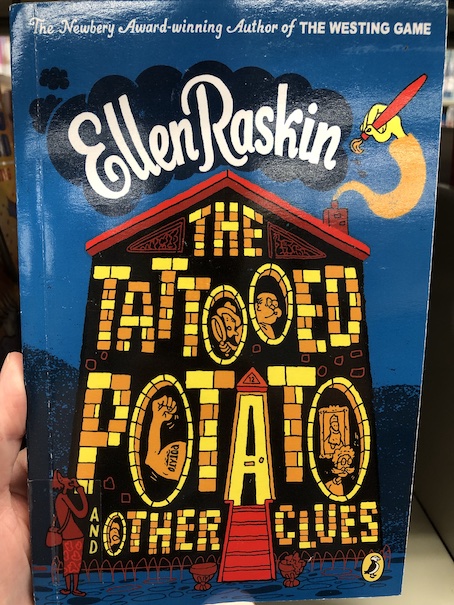
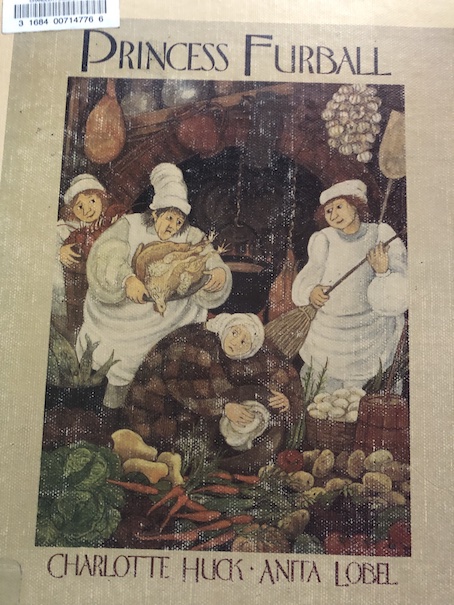
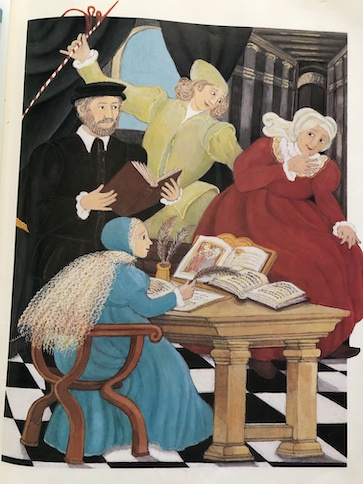


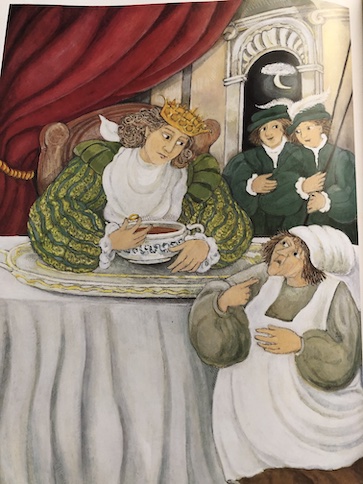
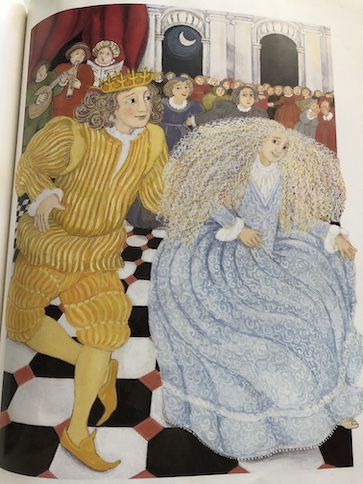


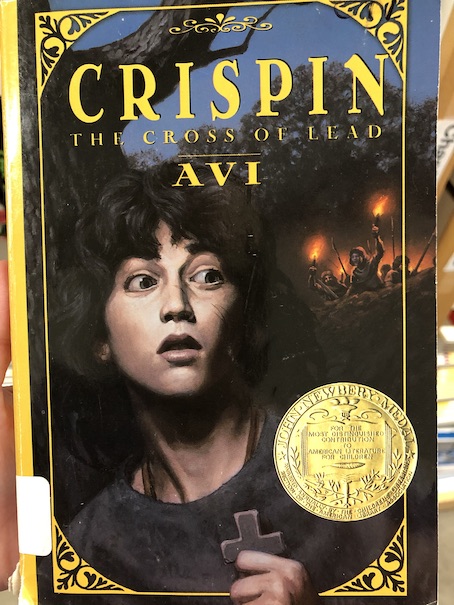


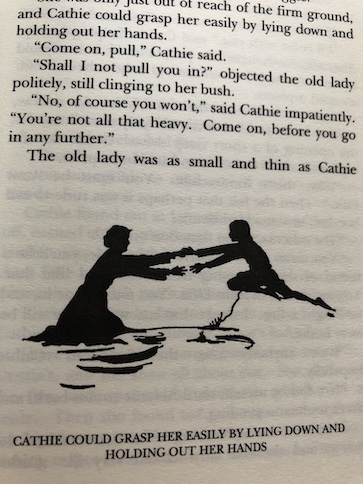

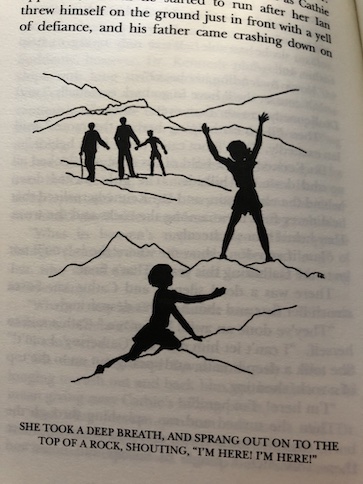



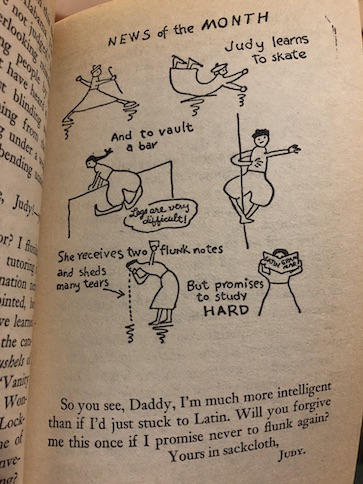

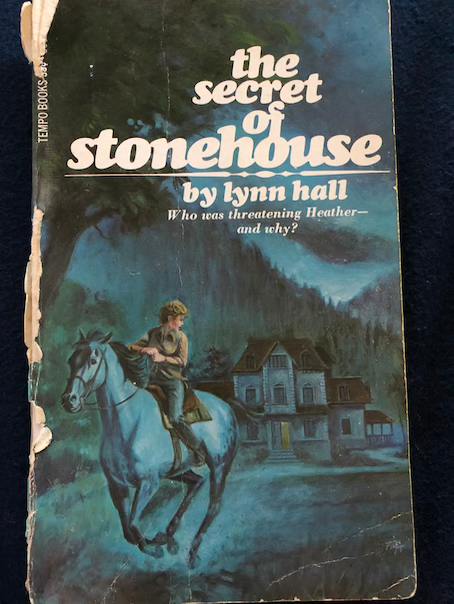


 Jestress's Forgotten Books and Stories