The Callender Papers

For as far back as Jean can remember, she was raised by her Aunt Constance Wainwright at her school for girls. Jean knows that she’s an orphan, and technically, Aunt Constance isn’t a blood relative, but the two of them are very close. Aunt Constance has always been like a mother to Jean, and Jean has no memory of her birth mother. Jean’s ambition is to become a teacher like Aunt Constance and continue working and living at Aunt Constance’s school. It’s the summer of 1894, when Jean is almost 13 years old, when events begin happening that change Jean’s life forever and give her a new perspective on her past.

Jean is young, but she receives an unexpected job offer for the summer from Daniel Thiel, one of the trustees of the school. He is a regular visitor at school dinners, where he and Aunt Constance tend to debate each other. He has asked for Jean to come and help him to sort through and process the Callender papers, which were left to him, along with the large house in the countryside, where he lives, after the death of his wife. The reason why he wants Jean’s help is that she’s had enough education and some knowledge of other languages to read through and process the papers, and she’s too young for the people in the small town nearby to gossip about her having a romantic relationship with him. Jean is tempted by the job because it’s the first real job offer she’s ever had, and she knows that she will need money to continue her education.

Before she accepts, however, her Aunt Constance talks to her about Daniel Thiel’s history and the history of the Callender family. Daniel Thiel is now an artist, but when he was a young man, he refused to fight in the American Civil War. (The book refers to it as “the War Between the States”, an old name for it.) He was one of the “Hiders”, young men who ran away and went into hiding rather than be pressured to fight. Jean isn’t sure that she approves of this, and she knows that Aunt Cynthia’s brothers died in the war. However, even though Daniel Thiel was considered a disgrace for running away and hiding, he later returned to the area where he had grown up and married Irene Callender, the daughter of the wealthy Callender family. Irene was somewhat unfortunate because her mother died when she was young, and she largely raised her younger brother, Enoch. She had not originally expected to marry, but she married Daniel Thiel later in life, after Enoch was grown and married himself. Together, she and Daniel Thiel had a child of their own, but Irene died under mysterious circumstances while the child was very young. Since then, Daniel Thiel has been a recluse, and nobody knows what happened to his child.

Aunt Constance has no objection to Jean taking a job from Daniel Thiel because she thinks he’s a good man, in spite of some of their personal differences. What worries her about this job is the other people in the area. She’s not sure that she approves of them. However, she agrees to let Jean accept the job.

Jean is excited at first about this job, which will allow her to earn money to further her education. However, when she actually leaves her aunt’s school, she becomes nervous. It’s her first time being away from her aunt and the school she’s called home for as long as she can remember, and Daniel Thiel seems like a strange, temperamental man, who mostly prefers to be left alone. He has a housekeeper who has her own sad history, having once been sent to prison for stealing something from Enoch Callender to help her sick brother when her family was desperate for money. Jean realizes that Daniel Thiel does support good causes and likes to help people, but he doesn’t like to get much attention for it.

When Jean begins working with the Callender papers, sorting through them, organizing them, and deciding what’s important, she’s a little nervous at first about her ability to discern what’s important. Daniel Thiel talks to her a little about it and assures her that she can understand what’s important. The more Jean reads through the documents, the more real the Callender family seems to Jean, and the more she is drawn to the details of their lives, wanting to know more about them.

Daniel Thiel’s brother-in-law, Enoch Callender, still lives nearby with his wife and children. Soon after Jean’s arrival, Enoch meets up with her, seemingly by accident and plays a game with her at guessing her name. Jean is amazed when he guesses correctly. Enoch asks Jean questions about her life and where she came from, and Jean finds herself telling him more about her background than she expected. Enoch also tells Jean a little about his own family. The Callender family used to live in New York, and Enoch really prefers life in the city. He has ambitions for his children and feels bored and stifled in the countryside. He has no real profession himself. He admits that he was spoiled by his sister, Irene, who raised him, and he explains that Irene died ten years before, under odd circumstances. His father died around the same time. Then, he shows Jean something that he says was a secret between himself and Irene – a board that acts as a bridge over a river. Jean thinks it looks dangerous, but Enoch crosses it himself and bounces on it to prove that it’s safe. He tells Jean that she can also use this crossing.

Jean finds Enoch Callender charming but at the same time disturbing, and she can’t forget that he is the one who sent Daniel Thiel’s housekeeper to prison for a minor crime that she committed out of desperation. Jean asks Daniel Thiel more about the history of Enoch Callender and the housekeeper. She learns that the Enoch’s father and sister had both tried to persuade Enoch to not press charges, and when he insisted on pressing charges anyway, Enoch’s father paid for the housekeeper’s defense in court. Jean realizes that the Callenders were caring people, but Enoch was the exception. Enoch was technically in the right legally but at the same time, he was needlessly cruel.

Jean befriends a local boy named Oliver, who prefers to be called Mack, and begins tutoring him in Latin. Mack witnessed the meeting between Jean and Enoch, and he comments that, what seemed like an accidental encounter to Jean was actually done on purpose by Enoch. Mack doesn’t trust Enoch, and although locals somewhat keep their distance from the housekeeper since she was in prison, they also blame Enoch for what happened. Jean is annoyed at Mack’s description of the charming Enoch as being untrustworthy, and they quarrel about it, but there is also some truth to what Mack says.

Jean is beginning to see what Aunt Constance meant about not being sure about the people living in this area. People here aren’t quite what they seem. The locals are suspicious of people like Daniel Thiel and his housekeeper, whose pasts are strange and tragic, but yet, Daniel Thiel and his housekeeper seem like good people to Jean. Charming people like Enoch also have dark sides, and past incidents seem to haunt everyone there. Mack explains more to Jean about the mysterious death of Daniel Thiel’s wife, who died from injuries from a fall. Local people think maybe she was actually murdered, and they look suspiciously at Daniel Thiel. They also wonder what happened to Daniel Thiel’s small child, who also mysteriously disappeared after his wife died. He brought in a nurse to take care of the child, and one day, the nurse and child both disappeared, nobody ever saw them again, and Daniel Thiel refuses to talk about them, as if they never existed.

When Enoch talks about the past, he thinks it’s unfair that his bringing charges of theft against the housekeeper has earned him disapproval from other people because, after all, she did steal from him, and he was only doing the right thing under the law. He also chatters and laments to Jean about his family’s prospects. His eldest son, Joseph, is charmer, like his father, and his family hopes that he will marry well. They think that will be the best solution to securing the family’s future. Joseph doesn’t have any particular profession in mind for his future other than that. Enoch’s daughter is also expected/hopeful that she will marry well. The younger son, Benjamin, is more ambitious but seems to have little idea how to go about his ambitions. Enoch thinks that their futures will be better elsewhere, but money is always an issue, and he is tied to this location because the old Callender fortune is here, and the family’s old will, which controls the family’s fortunes is complicated. Jean can tell that Enoch’s wife and children aren’t happy, and Enoch’s wife tearfully confides to Jean that she thinks that she and their children are disappointing to Enoch. Enoch admits that he spends more time ruminating on old wounds than trying to do anything useful with his life. Enoch says that he wonders and worries about what happened to his daughter’s missing child, and Jean feels for him. When she talks to Enoch, he charms her, and Jean finds it difficult to believe too badly of him, in spite of indications that he has done wrong.

As Jean continues to sort through the Callender papers and learns more about the Callenders, Daniel Thiel, and the past events that still haunt this community, she finds herself trying to sort through the good and evil people who surround her and trying to decide which is which. She finds herself questioning what she really knows about people and whether she can really tell what their true natures are. What really happened to Irene Callender Thiel ten years ago, and where is her child? Could Daniel Thiel have murdered them, or has he been wrongly suspected all this time? Could the answers to all of these questions and more be contained in the Callender papers that Jean has been hired to sort through? Jean must come to understand the truth about the Callenders because her life is now also in danger! There are things about the Callenders that someone doesn’t want anyone to know. Jean is getting too close to the answers and is a bigger threat to someone than she ever suspected.

The book won the Edgar Allan Poe Award in 1984. It’s recommended for ages 9 to 13. It is available to borrow and read for free online through Internet Archive.

I don’t want to spoil the mystery too much because that’s what makes the story exciting. The mystery is based on an understanding of past events in this family and community. The incident with the housekeeper was just part of a chain of quarrels, disappointments, and misdeeds that lead up to the tragedy of Irene’s death. Readers might also guess that orphaned Jean’s past is more intertwined with the Callenders than she knows, which is why Daniel Thiel asked for her to come and work with the Callender papers and why Aunt Constance allowed her to take the job. Both Aunt Constance and Daniel Thiel know more about Jean’s past than she does and the answers to questions that Jean hasn’t even thought to ask yet.

Much of the mystery is also a character study. Jean is correct that she’s unaccustomed to thinking of people in terms of good and evil. In Aunt Constance’s school, she realizes that she was surrounded by basically good people, and the worst that she ever had to complain about there was that some teachers were a little more strict than they needed to be and some of the other girls had petty quarrels with each other. In this small town and within the Callender family, Jean has to confront some of the harsh realities of life, the dark sides of human nature, people who have committed truly wicked deeds, people who have genuinely suffered wrongs, and how misdeeds of the past can haunt the present.

As Jean struggles to understand the members of the Callender family and their motivations, she finds herself questioning where the lines between “good” and “evil” are drawn. For various reasons, she finds herself being sympathetic toward people who have done wrong things. For example, she can readily understand why the housekeeper was driven to steal because of her desperation to help her sick brother, but at the same time, she knows that stealing isn’t right and that her decision ultimately put her in an even worse position.

Jean finds Enoch Callender both disquieting and fascinating at the same time. While she thinks that he should have been more forgiving to the housekeeper, she also comes to understand that much of his behavior comes from frustration and old quarrels with his own father, who put him in the position of living in a place and lifestyle that ultimately doesn’t suit him. He has lived a varied life and knows more about high society and low society than Jean has ever experienced. The stories he tells opens up the world to Jean, which is part of why she finds him so compelling. When it comes to concepts of right and wrong, Enoch has knowledge of the dark undersides of society, and in spite of his prosecution of the housekeeper, he says that he finds the desperate deeds of the lower parts of society far more compelling than the unethical but legal dealings of the upper classes. He is a thrill seeker, and he is fascinated by people willing to risk everything for what they want.

Jean finds a letter that Irene wrote to her father about her brother and their inheritance. Their father found Enoch’s ethics and way of living objectionable, and Irene argued with him that Enoch should still receive most of the estate because she felt that they were responsible for spoiling him as a child and, as an adult, she thinks that he needs more money than she does, whether for good or bad. Enoch is undeniably charming, which makes people, including Jean and his late sister Irene, inclined to make excuses for him rather than holding him to account. However, does his charm really excuse some of the things he’s done or just give him license to do worse? How much responsibility did his father and sister have for the man he has become, or was that always Enoch’s responsibility?

Jean discusses issues of right and wrong and good and evil with Daniel Thiel, and they debate about the various points that may make one person’s actions less wrong or more forgivable than others. Daniel Thiel holds more blame for Enoch than for his housekeeper because, while the housekeeper did something she shouldn’t, she faced up to what she did and took the consequences for it, even though they were harsher than she really deserved. Enoch is not in such a desperate situation and has been keeping his past misdeeds secret and doing nothing to atone for them. Jean’s discussions with Daniel Thiel also open her eyes to other aspects of the world, philosophy, charity, and human suffering. However, while Enoch’s discussions often leave her feeling more witty and sophisticated and taking herself and her own thoughts less seriously, Daniel Thiel’s discussions make her feel respected and help her solidify her own views and arguments.

This is a good book for starting a philosophical debate about the different degrees of wrong-doing that exist and how an individual’s circumstances, character/personality, and sense of accountability can play a part in how much leniency they are or should be allowed. Showing sympathy for one person may be warranted and more humane than thoughtlessly administering the harshest punishment, but on the other hand, too much leniency emboldens a wrong-doer with a different nature, especially a person who lacks sympathy and empathy himself. Daniel Thiel’s point of view is that there should be limits on what someone is willing to excuse. If we, as humans, automatically forgive any and every person who does wrong because they’re just too likable or have somehow suffered a misfortune or disappointment in life, we would never be able to hold anyone to account for anything, no matter how many innocent people that person hurts. Sympathy for one person shouldn’t grant them the license to continue harming or abusing other people.

The difficulty for Jean at first is that she has little information about who in this situation has actually done what. She is only just beginning to learn about the Callenders and the other people in this community, and she has to uncover the truth of what happened in the past, piece by piece. Even then, she finds herself questioning the truthfulness of her sources of information. Whose accounts of the past are more trustworthy, Daniel Thiel’s or Enoch Callender’s? Can she really believe either of them when one or both may have had something to do with the death of Irene and the disappearance of her child? The secret is in the terms of the Callender will and depends on whether or not the child is still alive.

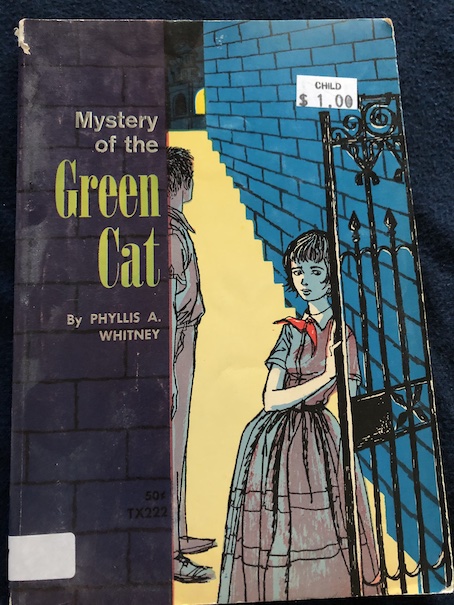
Mystery of the Strange Traveler

This book was originally published under the title The Island of Dark Woods.

Laurie Kane and her older sister, Celia, are traveling by train without their parents to visit their Aunt Serena in New York. Aunt Serena has invited the girls to come stay with her while their parents are traveling in Asia for one of their father’s newspaper assignments. In her letter to the family, Aunt Serena hints at exciting things that are happening. She used to be a schoolteacher, but she says that she’s starting a new business, and the girls can help her with it, although she won’t say what it is until they arrive. Also, Aunt Serena has recently moved to a new house. When their father sees where she’s living now, he’s intrigued because it’s the location of their “ancestral mystery.” He would tell the girls the story himself, but Aunt Serena says in her letter that she would like to be the one to tell them about it. There father says that Aunt Serena loves being tantalizing and mysterious. Laurie, who loves mystery stories, wonders about it all the way to New York.

Aunt Serena lives in a wooded area on Staten Island, near Clove Lakes Park. She has a small red brick house with another outbuilding on her property that she says used to be an old cobbler’s shop. Her new business idea is to turn it into a small bookshop. Laurie loves it immediately because she loves books. She wants to be an author herself, and Aunt Serena says that she might even get a chance to meet her favorite author, Katherine Parsons, because she lives in the area. Celia is the practical one, and she asks Aunt Serena all the practical questions about how she plans to get people to come to her little shop when there are no other stores around them to draw customers in. Aunt Serena says that she’s not expecting her shop to turn into a big business. It’s more of a small hobby business to bring in a little extra money and also be a fun activity.

Laurie and Celia begin unpacking some of the books that Aunt Serena will sell in her small shop, and Laurie is pleased to see a collection of books by Katherine Parsons. On the back of one of the books, there’s a picture of the author and a short biography. Laurie is pleased to note that Katherine Parsons is left-handed, like herself. There are times when Laurie has difficult with things because she’s left-handed, and she feels a kinship toward the author because she shares that trait.

Meanwhile, Celia has noticed that there is a boy next door, moving the lawn. Laurie is more interested in books than boys, so she doesn’t find this exciting news. Celia tries to get the boy’s attention, but he seems to be ignoring her. When he does seem to notice the girls, he turns away quickly, like he wants to avoid them. Celia points out to Laurie how the house where the boy is looks very different from the rest of the houses around it – big, old-fashioned, dark, and creepy. Laurie comments that it looks haunted, and their Aunt Serena surprises them by saying it is.

The boy, Norman, lives with his grandfather, Mr. Bennett, in the old house. Mr. Bennett is a difficult man, and Aunt Serena admits that she got on his bad side when she first moved to the area by asking him if she could buy his house. Aunt Serena admits that she didn’t actually want to buy Mr. Bennett’s house; she was only using her inquiry as an excuse to talk to him and maybe get a look inside the house. However, Mr. Bennett took offense at the inquiry.

There is another boy in the neighborhood called Russ Sperry, and he’s friendlier. His mother sends him to bring a cake to Aunt Serena, and Aunt Serena says that she hopes he will be friends with the girls and show them around. Russ stays awhile to have some cake and chat, and he mentions that Norman Bennett’s father is in South America because he has a job there, which is why he’s staying with his grandfather. Aunt Serena says that Norman’s mother is dead and that his father rarely comes home. She doesn’t approve of the lonely way Norman’s grandfather seems to be raising him because it seems like Norman doesn’t have any friends. Laurie thinks that Norman’s loneliness is at least partly his own fault because he seems to avoid contact with people when she and Celia try to approach him. Celia decides that Russ is cute, but Laurie finds herself intrigued by Norman, not because she wants to flirt with him but because there’s an element of mystery about him.

The girls try to ask Aunt Serena more about what she means when she says that the Bennett house is haunted, but she says that she would rather talk about that later. She gets the girls busy unpacking their belongings, arranging things in her shop, and talking to Russ about the area. Russ helps to explain the geography of Staten Island, and Aunt Serena tells the girls more about the history of the area. Aunt Serena mentions that there are dances in the park on Wednesday nights, which sounds exciting to Celia. When Laurie spots Norman passing by, wearing riding clothes, Russ explains that there are a couple of stables in the area, where people can rent horses. There are plenty of things for the girls to do in the area, and Aunt Serena begins planning an opening party for her bookshop, with Katherine Parsons there as a special guest to sign her books.

Laurie is excited about the party and the opportunity to meet Katherine Parsons, but she continues to think about the mystery of why Norman seems so unfriendly. Soon, other strange things start happening. One night, she sees a light in Aunt Serena’s bookshop, as if someone were sneaking around in there. However, when Laurie goes to wake Aunt Serena to show her, the light is gone, and the next day, there aren’t any obvious signs that anything in the shop was disturbed.

When Laurie has a chance encounter with Mr. Bennett, where she asks him if he’s ever seen the ghost that haunts his house, he says, no he hasn’t seen it. The ghost is supposedly a phantom stagecoach, but Mr. Bennett doesn’t believe it exists. Once Laurie knows that there’s supposed to be a phantom stagecoach, she tries to press Aunt Serena for more details, but Aunt Serena refuses to tell them the rest of the story until she can tell them on a gray, stormy day, when the atmosphere is right.

When a stormy day comes and Aunt Serena agrees to tell the story, she allows Celia and Laurie to invite Russ and Norman over to hear it, too. Norman comes to hear the story without his grandfather’s permission because he’s always known there was some story about the house, but his grandfather hasn’t wanted to talk to him about it. When Aunt Serena tells the ghost story, the connections between the Kane family and the Bennett family become clear.

About 100 years before, there was a stagecoach route that ran through this area. One stormy day, a stagecoach was passing through the area, and one of the passengers, a woman with an infant daughter, was seriously ill and had become delirious. The stagecoach driver sought help at the Bennett house. The Bennetts brought the sick woman inside the house, along with the infant daughter. The stagecoach driver sent a doctor to tend to the woman, but she died in the Bennett house. They had no idea who the woman was and were unable to trace her origins or family. If the woman had a husband or the infant girl had a living father, the man never showed up to inquire after his wife or to claim the baby. All the Bennetts had do go on were the meager possessions the woman was carrying with her, and the little girl herself, whose last name was unknown but the mother had called “Serena.”

At this point, Serena explains that this Serena was the ancestor of the Kane family, the great-grandmother of Celia and Laurie. Since nobody was able to discover where she and her mother came from or locate any relative, the Bennetts adopted the first Serena and raised her until she grew up, got married, and moved away from the island. However, local people still tell stories about the terrible day when the first Serena and her ill mother were brought to the area, claiming to have seen a ghostly stagecoach pull up to the Bennett house and a ghostly woman get out.

Laurie is intrigued by the mystery surrounding her family’s origins. Aunt Serena shows them some of the belongings that the first Serena’s mother had when she died, which have been passed down as heirlooms. There was a doll with doll clothes, a woman’s dress with bonnet and gloves, a sewing kit, a fan, an old novel the woman must have been reading at the time, and a purse containing a very old coin. The old coin is another oddity about this strange situation because it dates from before the Revolutionary War and would have been long obsolete by the time the woman died during the 19th century. Is it still possible to solve a mystery that’s about 100 years old? Will Laurie and her family ever learn who their ancestors really were? Why does Mr. Bennett not want them to visit his house or talk about the old mystery or the ghost story? Does he know more about them than he wants to admit?

The book is available to borrow and read for free online through Internet Archive.

The mystery in the story unfolds slowly, which might make people who are used to faster-paced modern stories a little impatient. Aunt Serena takes quite a while from the time when she first mentions that the house next door is haunted until she actually explains what the ghost is supposed to be and what the mystery surrounding their family is. However, Aunt Serena values atmosphere, so the story could appeal to people who don’t mind a slower-paced mystery as long as it has a good atmosphere.

When the mystery does begin, some parts are resolved quickly and others are more of a puzzle. The idea of an orphan with an unknown identity and a hidden past is always intriguing. The light in the bookshop at night, on the other hand, turns out to be less of a mystery, and Mr. Bennett’s reluctance to discuss the ghost story and the old mystery turns out to be nothing sinister. Mr. Bennett doesn’t really have any hidden knowledge about the orphaned child or her dead mother. It’s just that he’s a very reclusive person who craves peace and quiet so he can work on his private projects. He also has some resentment toward the Kane family because, while they used to be very close, Laurie’s grandfather was the one who inspired Mr. Bennett’s son to take a job in another country, which is why Mr. Bennett and Norman rarely see him. By the end of the story, though, things get patched up between them.

Every time the matter of the mysterious orphan and the question of whether or not the house is haunted by her mother is raised, Mr. Bennett has had to deal with a bunch of people and reporters stopping by his house, harassing him with questions and asking for tours of the place, and he’s sick of it. He doesn’t want Aunt Serena or the kids raising the issue again because he doesn’t want to deal with everybody’s questions anymore, and he has no more information to give anyone. As far as he’s concerned, the mystery is unsolvable because he thinks whatever trail there might have been has long since grown cold, and if it were ever possible to learn the dead woman’s identity or the real origins of the child, someone else would have figured it out a long time ago. However, Laurie tells Mr. Bennett that she thinks that there’s still a chance to figure it out, and that plays into one of the major themes of the story.

The atmosphere of the story is pleasant, with Aunt Serena’s cheery little house decorated with bowls of wildflowers and her little bookshop. Aunt Serena greatly believes in establishing atmosphere, creating scene, and setting a mood. On the stormy day when Aunt Serena finally tells the girls the local ghost story, she makes it a point to set the atmosphere for the story by making popcorn and lighting candles.

Like other books by Phyllis Whitney, this story is set in a real location and uses some of the history of that location. The original title of this book came from the original Native American name for Staten Island, Monocknong, which the fictional author in the story, Katherine Parsons says means “The Island of Dark Woods.” Mr. Bennett disagrees, though, saying that it actually might mean, “The Place of the Bad Woods,” and they debate about different possible translations and meanings of the phrase. The history of the Staten Island plays directly into the story because it turns out that Laurie’s ancestors were involved with the historical events of the area, particularly Santa Ana’s stay on Staten Island after the Battle of the Alamo in Texas that was part of the Texas Revolution against Mexico.

A couple of other points I’d like to make regarding history are about race in the story. Toward the end of the book, Mr. Bennett hires “a young colored woman” as a housekeeper. “Colored” is a dated term in the 21st century, but this book was written in the 1950s, when that was considered one of the more polite ways to refer to black people. The popular terms we use now (“black” as the informal generic term and “African American” as the formal term specific to black people of African descent who live in the United States) came into use after the Civil Rights Movement as people tried to distance themselves from older terms as a way to shed the emotional baggage associated with them. The housekeeper, Anna, becomes friendly with Laurie, and she offers her a new perspective and some helpful advice about a different approach to tracing her family’s roots. Anna enters the story late, so she doesn’t appear much, but she is helpful, and I didn’t notice anything particularly stereotypical about her, although I suppose the idea of a black person in domestic service might be kind of cliche.

The other thing I wanted to mention is that American Indians are referred to multiple times in the story when the characters discuss the island’s history. The characters always refer to them as just “Indians” instead of “American Indians” or “Native Americans”, which is typical of the 1950s. At one point, Celia and Laurie are discussing their role in the island’s history. Celia talks about how she was glad that she wasn’t around then because there were massacres and “the Dutch kept buying the island from the Indians and the Indians kept taking it back.” However, Laurie says that was “because the white men cheated them.” I appreciated that Laurie acknowledged that, and I think that this exchange not only highlights some of the stereotypical views people had in the 1950s about Native Americans and history, but also differences between the ways Celia and Laurie look at other people. I have more to say about that below, but Celia tends to cling toward accepted views and the general social rules of society while Laurie has a talent for empathy and looking at situations from another person’s perspective. I’ve noticed that the author, Phyllis Whitney, has used this technique in other books of hers to subtly challenge stereotypes, pointing out that different groups of people have their own perspective and their own side of the story.

This book is fun for book lovers. Laurie’s favorite author, Katherine Parsons, is fictional, but the story captures the spirit of book lovers. It turns out that Norman is a book lover, too, and Laurie is able to draw him out and bond with him over their shared love of books. Aunt Serena also praises Laurie for her ability feel empathy for other people, a quality that she believes comes partly from Laurie being a book lover. After all, readers are accustomed to the idea of seeing circumstances through the eyes of someone else and experiencing their thought processes when they read a story. Aunt Serena believes that one of the benefits of reading it that it helps to cultivate a person’s skills in using empathy to understand other people and that readers carry that technique over into the real world.

I will say, though, that Laurie’s story took an unexpected turn. Laurie is a book lover, but through her association with Katherine Parsons, she unexpectedly realizes that, while she’s always dreamed of writing stories and being published, she doesn’t actually like the writing process. She enjoys the stories other people have written, and she has a knack for understanding characters, whether real or on the page, but she’s surprised to realize that the routine of writing doesn’t appeal to her. She feels a little sad at the realization because it means giving up an old dream but also a little relief because her life is now open to more possibilities that she might like better.

I also enjoyed the relationship between the two sisters in the story. They get on each other’s nerves and fight with each other sometimes, but they also care about each other and make up with each other after fighting. Celia, as the older sister, is more interested in boys than Laurie is, and she has all kinds of social rules about how to talk to boys and how to get their attention. Laurie knows that Celia and her friends talk about these things a lot, but Laurie doesn’t really understand all of their little rules and thinks a lot of them sound silly, like the idea that girls can’t invite boys to things but have to wait for the boys to ask them or that they should pretend like they’re not too interested in a boy so the boy will approach them first. This book was written in the 1950s, so a lot of Celia’s social expectations about how girls and boys should act around each other sound dated, but I enjoyed Laurie questioning Celia’s rules.

Laurie thinks it more important to know about what specific people like and how to appeal to them as individuals than to adhere to more general social rules. This is especially apparent when the girls try to get Mr. Bennett to let them in his house and talk to him. When the sisters compete to ingratiate themselves to Mr. Bennett so they can get access to the house and talk to him about the mystery, their different approaches play on their concepts of social rules and human empathy. Celia tries a very conventional approach, trying to appeal to Mr. Bennett in a general way, but Laurie decides that “Mr. Bennett was too much of an individual to be governed by rules that worked for most people” and tailors her approach to him as an eccentric individual.

Celia’s idea is to make some homemade cupcakes and take them to Mr. Bennett as a gift because she believes in the old axiom that the way to a man’s heart is through his stomach. As Laurie suspects, though, this approach falls flat because Mr. Bennett isn’t interested in baked goods. Laurie has a better idea of what Mr. Bennett really likes because she has talked to Norman about him, and she decides that the way to get his attention is to demonstrate a shared interest in something he likes. Knowing that he likes nature more than anything else, she starts putting together a collection of interesting leaves and asks Mr. Bennett if he can help identify them. Mr. Bennett isn’t really impressed by her collection because she didn’t mount the collection properly, most of her collection is very common leaves that he thinks she should be able to identify if she knew anything about trees, and she also included a sample of poison ivy, which she should have known better than to touch. However, he is sufficiently amused by her efforts and her mistake to talk to her for a few minutes.

One of the major themes of the story is that “No man is an island”, meaning that people do need other people. Aunt Serena is concerned that Mr. Bennett’s obsession with solitude is hurting his grandson because he’s making it difficult for Norman to make friends. Mr. Bennett has forbidden Norman to bring any other kids to the house because he doesn’t want to deal with the noise and disturbance. Because she’s been a teacher, Aunt Serena knows that Norman needs more opportunities to socialize with his peers. Mr. Bennett doesn’t even seem to pay much attention to Norman himself because he’s too absorbed in his own work.

What Laurie points out to Mr. Bennett when Mr. Bennett tries to tell the kids that the old mystery is unsolvable is that a group of people working together can accomplish more than any one person, working alone. They don’t have many clues to the past, but just because they don’t all make sense to any one of them doesn’t mean that parts of them wouldn’t make sense to different people. By pooling their knowledge and consulting other people, they could still put together the pieces of the past.

Along the way, Laurie also makes Mr. Bennett realize that there are many things he doesn’t know about Norman. Even though he and Norman have been living alone together for a long time, Mr. Bennett hasn’t paid much attention to Norman or things Norman has been doing. Norman has felt lonely and neglected, although he hasn’t wanted to admit how much. When Mr. Bennett realizes that Norman is an artist and has been developing his skills to an impressive degree without him even seeing any of Norman’s projects, he realizes that he has been too absorbed in his own concerns and starts to make an effort to learn more about what’s happening in the lives of the people around him. This is a similar situation to a grandmother in another of the author’s books, Mystery of the Angry Idol.

Megan’s Island

School will be out soon, and eleven-year-old Megan and her best friend, Annie, are making plans for the summer. Megan’s family doesn’t have much money because her father died when she and her brother, Sandy, were very young, and her mother struggles to find a job that will pay enough to support the three of them. They’ve moved around multiple times in the last several years while her mother looks for better work, and they get by with some help from Megan’s grandfather. This summer, Megan’s family is planning to visit her grandfather at his cottage by the lake. Her grandfather is already staying there, recovering from an injured foot, and Megan’s mother agreed that Annie can come with them on the trip.

However, before school lets out for the summer, something happens that suddenly changes their plans. One evening, while their mother is in the kitchen, clearing up from dinner, she suddenly drops her favorite salad bowl, cutting herself on the glass. Megan and Sandy help her clean up the mess and bandage her cut, but they can tell that it wasn’t just clumsiness that made their mother drop the bowl. She really seems to be upset and even afraid of something. Since they didn’t have any phone calls or mail that could have given her upsetting news, they can only think that it must have been something she heard on the tv news. Their mother had been listening to the news on the small tv in the kitchen before she dropped the bowl, and she quickly turned it off when the children came to see what was wrong.

Their mother refuses to explain what upset her, and she tries to pretend that nothing is wrong, but she quickly tells the children to pack their things because she’s taking them to their grandfather at the lake early. Megan protests that school isn’t out yet, but their mother says that they’ve already finished their tests, so they won’t be missing anything important. Megan also worries that they’re leaving without Annie or even telling Annie that they’re going early, but their mother says it can’t be helped. Then, Sandy overhears their mother asking a friend of hers on the phone, asking her to put their things in storage for her while they’re gone, making the kids worry that they’re leaving for good and not just for vacation. Refusing to answer any more questions from the children, their mother hurries them through their packing and out of the house that very night. She drives them all through the night to get to the lake.

When they get to their grandfather’s cottage at the lake, he is surprised to see them, showing that their early arrival wasn’t something he had arranged with their mother. Later, Megan overhears them talking. Her grandfather urges their mother to tell them the truth about what’s happening because kids are more resilient than they seem, and whatever they’re imagining might be worse than the truth. However, their mother says that the truth really is upsetting, and while she knows that she has always insisted that her children tell the truth, telling them the truth now would mean admitting that she has already lied to them.

Megan is shaken by what she hears. What has their mother lied to them about? Is it something to do with her father? Megan barely remembers him, and their mother gets upset when she asks questions about him. Her mother seems to be hoping that this whole matter will just blow over, but her grandfather comments about how what happened eight years ago didn’t just blow over. He implies that whatever secret their mother is hiding is the real reason why the family has moved around so much, that it wasn’t just because she needed to find new jobs. Megan worries about what her mother could be hiding and what terrible thing could have happened eight years ago that would affect her family today. Then, Megan remembers that eight years ago is about when her father died.

Megan tells Sandy what she overheard and that their mother is hiding a secret, something that might have to do with their father’s death. Before either of the children can talk to their mother and ask her what’s going on, she tells them that she’s leaving them with their grandfather at the lake for a few days because there’s something she has to do. She won’t say where she’s going or what she needs to do, but she says that they’ll be safe there with their grandfather. Megan finds it disturbing that her mother made it a point to say that they’ll be safe because it implies that the reason why they left home so suddenly was that, for some reason, they weren’t safe at home. Megan also begins to wonder whether whatever danger there was at home might find them at the lake.

Sandy seems to find it easier than Megan to put aside whatever worries and secrets are following the family and just enjoy being at the lake, going fishing with their grandfather and exploring the area with Megan, although he later admits that he tried to ask their grandfather some questions while they were fishing that he refused to answer. Megan can’t stop wondering and worrying, though. She and Sandy agree that coming to the lake wasn’t just a vacation. Their mother brought them there to hide from something … or someone.

Megan remembers that, every time they’ve moved before, their mother refused to let them even write letters to friends they were leaving behind. Sandy says that she didn’t tell them not to write any letters this time, and with no phone at the cottage, there’s no other way for Megan to tell Annie what happened and to apologize for their ruined summer plans. Megan decides to go ahead and write to Annie. That letter to Annie changes everything for Megan and her brother.

Megan and Sandy go rowing out on the lake and find an island with a beautiful hiding place beneath an overhanging rock that’s almost like a cave. It becomes a special place for Megan, and she goes there to think. Then, one day, they meet a boy named Ben who’s also staying at the lake for the summer with his divorced father and has been exploring the island that Megan has started to think of as hers. Megan doesn’t like Ben at first because he’s bossy, but he proves to be someone she and Sandy can confide in when the adults won’t give them answers, and he become a useful ally in their troubles.

Ben tells the Megan and Sandy that his father said that someone in the nearby town is looking for a couple of kids with red hair, matching Megan and Sandy’s description. This man claims to be their uncle, but Megan and Sandy don’t have an uncle. Then, Megan spots a strange man prowling around the outside of their grandfather’s cottage. A letter that Megan receives from Annie says that people have been asking about them since they left town, and Ben correctly realizes that someone has traced them through Megan’s letter to Annie. Whatever trouble their mother has been hiding them from has found them. With their mother still away and their grandfather having gone to town for some x-rays on his injured foot, Megan and Sandy hide out with Ben in a tree house they’ve built on the island. The island seems to be their last safe place to hide while they wait for their mother and grandfather to return. But, when they do, will they finally get the answers they need? What terrible secret has their mother been hiding from them all these years?

The book is a winner of the Edgar Allan Poe Award.

I didn’t read this book when I was a kid, but I did read others by the same author, The View From the Cherry Tree and Baby-Sitting is a Dangerous Job. I really liked this book. I think one of the author’s strengths is her ability to create suspense. This story is very compelling. Right from the beginning, readers as well as Megan know that her mother is behaving oddly and that what she is doing has sinister or troubling implications. There isn’t a wholesome or happy reason why anybody decides to skip town suddenly in the middle of the night. I could hardly put the book down, wanting to get into the details of the situation. It was hard for me not to skip to the end to see what happened and what it was all about, but I made myself slow down a little to appreciate the journey.

I guessed, at the beginning, that this was going to turn out to be a case of a non-custodial parent kidnapping their own children after a messy divorce. We are told that Megan’s father died when she was very little and that she barely remembers him, and then, we are told that the family moves frequently because the mother has trouble getting work as a single parent. That, by itself, isn’t necessarily sinister, but after we see the mother rush her children away in the middle of the night and we learn that she has never allowed them to keep in touch with old friends after any of their other moves, it starts to look like a suspicious pattern. I had guessed that what upset her mother while she was watching the news was that there was an announcement about the father looking for his missing children. My other thought was that maybe they were in the Witness Protection Program, possibly because their father was murdered and the mother needed protection from the people who killed him, and that what alarmed the mother on the news was that his killer was being released from prison. That second theory of mine was way off. The first one was closer, but that’s still not quite the situation, although elements of that are close to what happens in the story.

Because the suspense in this was so good, I don’t want to spoil the ending entirely. The custody of the children is the reason for the mother’s panic, but there’s a twist on it that I wasn’t quite expecting, and as the story goes on, it becomes apparent that there are two sets of people hunting for the children instead of one. One set of searchers is who the mother was expecting, but the other set is someone else who has different motives and is an even bigger threat.

I thought it was interesting that the story brought up the question of a person’s right to disappear and whether that disappearance can sometimes be justified. The fact is that it’s not a crime if an adult decides to go voluntarily missing. It’s only a crime if the adult has committed a crime prior to disappearing or in the process of their disappearance or if the person is missing because they’re the victim of a crime. Otherwise, any adult has the right to walk away from their old life, cut off old relationships, change their name, and reestablish their identity somewhere else. People can do this for a variety of reasons, but it usually has something to do with overwhelming problems in the person’s life, mental health issues, and/or abusive relationships. It occurred to me that the mother in the story might be afraid of her ex-husband because he was abusive, and she was afraid of what he might do to the kids if she had to either give him custody of them or share custody with them. Again, that’s not quite the case here, although I was thinking about it through a good part of the story because it would explain the mother’s behavior.

If the mother was a non-custodial parent or had violated custody arrangements with the children’s father, then she would have committed a crime by taking the children. However, that doesn’t turn out to be the case here. The mother hasn’t committed any crime, but the fact that she has the children with her is the reason why someone is looking for them. Missing children is a matter of legal concern and can be a matter of humanitarian concern, although even then, the issue can be complicated. Not all runaway children are “saved” by being found or returned to legal guardians, and some of them have had very good reasons for leaving toxic or abusive home environments. The sad fact of real life is that, sometimes, the people who are searching for missing children can be the very threats those children are escaping. People who disappear have reasons for doing so, but giving them the type of help they need means discovering what those reasons are.

To be honest, I’m not completely sure of the legality of the person looking for the particular children in the story or publicizing their search for them, but it is telling that this individual is using a private investigator to look for them, not the official police. The official police are not looking for the family because the mother hasn’t committed a crime. She is their real mother and has legal custody of the children. The person who is searching for the children does not. When their mother reveals the truth to the children, Megan is forced to consider that a person might have good reasons or at least a compelling motive for wanting to get away from their past and not be found by people who are looking for them.

Part of the issue related to that is that Megan and her brother Sandy were never consulted about whether or not they wanted to separate from their old life or to live the kind of lifestyle they’ve been living. Up to this point, they’ve taken for granted that they’ve had to move and lose contact with friends repeatedly because their mom needed to look for work and had trouble finding jobs as a single parent. When they realize that what’s been happening to their family isn’t normal, that their lives have been disrupted, and that their mother has lied to them about important pieces of their past and even their own identities, the children are understandably shocked and upset. Megan is angry with her mother for the position she’s put them in, and she is right that she needs answers.

Fortunately, things do work out for the best for the kids and their mother in the end. It is a relief that the mother has not actually committed a crime because of what she’s doing. She apologizes to the kids for not explaining things to them sooner, but she explains that, when the whole thing started, they were only little toddlers and couldn’t understand the seriousness of what was happening or what was at stake for them. When Megan learns the full truth, she does come to understand her mother’s motives, and she realizes that it has also changed the way she’s always felt about her father, whose life and death turn out to be very different from what she’s always assumed. Perhaps, if she had found out the truth earlier, when she was much younger, it would have been harder for her to take. Now that she and her brother are old enough to speak up for themselves and the situation they were running from has changed somewhat, things are likely to be much better for them. We’re not entirely sure at the end how things will be for their family or where they will be living, but it seems like their days of hiding and running are over.

The addition of Ben as a character not only gives Megan and Sandy an ally during their worries and evading the people searching for them, but he also provides a different perspective on their situation, in more ways than one. While Megan struggles to come to terms with her family’s secrets and the idea that both she and her family are not quite what she’s always believed they are, she also considers how her situation compares to Ben’s situation with his family.

Ben isn’t a happy kid. He’s been in trouble at different schools and behaves badly because he’s deeply troubled about his parents’ divorce and his mother’s remarriage to a man who isn’t thrilled to be his stepfather. Part of Ben’s troubles with his parents and stepfather are because he’s been acting out, and they don’t know how to deal with him, but deep down, he feels like his parents don’t love him. In fact, he admits that he’s been getting into trouble at school on purpose to get his parents’ attention. He had hoped that things would be better while he was staying with his father over the summer, but his father is a writer and absorbed in his work. He doesn’t seem to care much about what Ben does as long as he doesn’t disturb him while he’s writing. Ben feels like neither of his parents really loves him or wants him.

One thing that Megan has always been sure of is that her mother loves her, and even though her mother hasn’t told her the truth about everything before, Megan can tell that she still cares about her, takes time for her, and does things to ensure her safety. Megan’s family has their problems, but they are still a family. Even though Ben still has two parents and a stepfather, he doesn’t feel like he’s part of a family or that he can really rely on his parents. Megan’s realization that she feels very differently about her mother is part of what convinces her to listen to her mother and understand her side of the story.

Things start working out for Ben by the end of the story, too. He admits that he knows the way his dad acts is because he’s also upset about the divorce. He hadn’t really wanted to divorce his wife, but Ben’s mother wanted to marry someone else. He also hasn’t meant to neglect Ben. He’s just been preoccupied. Before the end of the story, he finishes the book he’s been working on and apologizes to Ben about being so busy. He’s not a bad father, and he and Ben usually get along better with each other. Now that he’s finished with his project and has more time to concentrate on Ben, Ben will get more attention. Ben also reassures Megan and Sandy, who are worried about how other people will look at them when the truth about their family’s past gets out, that he doesn’t see them any differently because of what he knows and that real friends will know and like them for who they are, not judge them for what their family members did.

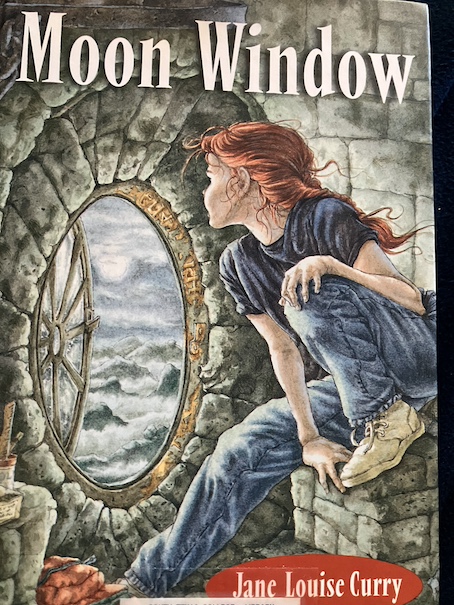
Moon Window

Joanna Ellen Briggs (usually called JoEllen or Jo) lost her father five years ago, when he died in a car accident. Since then, it’s just been her and her mother. Jo has adjusted to the loss, and she and her mother have been happy together. At least, that’s what Jo keeps telling herself. Now, her mother is getting remarried, and Jo feels like her life has been completely turned upside down. Her new stepfather, George, is a nice man, but Jo can’t stand the idea of her life changing. George is a law professor, and Jo’s other relatives like him, but Jo is afraid of what this marriage will mean for her. She and her mother will be moving to George’s house in Boston, and she is afraid that nothing will ever be the same again.

At the heart of her worries is the fear of losing her mother, just as she lost her father. The truth is that Jo has never fully adjusted to her father’s death. She participates in a wide range of classes and activities, but it’s not because she really loves any of these subjects or activities. Her gymnastics, choir practice, piano lessons, and the host of other classes and hobbies that she pursues with so much energy and perfectionism are to keep her mind occupied so she won’t have to think about her father or her worries about what might happen to her if something happens to her mother. Ever since her father died, there has always been the lingering fear of something happening to her mother, and that’s why Jo fears change in her life. She has settled into a routine that makes her feel relatively safe and keeps her from thinking too much about what might happen in the future. George’s entry into their lives has broken the routine, will bring even more changes, and has caused Jo’s tightly-controlled feelings to creep to the surface.

Even during the wedding, Jo privately hopes something will happen that will stop the ceremony and keep all of these frightening changes from happening, but nothing does. However, Jo’s grandmother has noticed how upset Jo is, even though Jo tries to keep a blank face and hide her feelings. Her grandmother realizes that Jo is bottling up her emotions, and she sees the moment when Jo finally lets loose, just as her mother and George leave on their honeymoon. Instead of throwing birdseed after the car, like everyone else, she turns and throws her little bag of birdseed at one of George’s young nephews, hitting him in the eye.

Originally, the plan had been for Jo to stay with George’s brother and his family while her mother and George are on their honeymoon. However, because of her bad behavior toward George’s nephews, the boys’ mother refuses to have her as a guest. Jo’s grandparents hurriedly consider other arrangements for Jo. They would take her themselves, but they will soon be traveling to a conference they are attending. Jo’s grandmother laments about Jo’s behavior and moods, and that reminds her of Witch Ellen, an ancestor in an old painting at Winterbloom, the old house where her frail great-aunt lives. Granty Nell, as they call her, is actually a distant cousin and is over 100 years old, but she loves children. Jo’s grandmother remembers that one of Jo’s cousins recently visited Granty Nell at Winterbloom and had a wonderful time. Winterbloom is a strange old house near Walpole, New Hampshire, but Jo’s grandmother has fond memories of the place, and Granty Nell has live-in help, so she won’t be dealing with Jo alone.

Granty Nell accepts Jo as a visitor, but Jo is stunned that she has so suddenly been dumped with a relative she doesn’t even know, in an old stone house in the middle of the woods. At first, Jo plans to run away and go back to the apartment where she and her mother have been living and stay there until her mother comes to get her so her mother will regret leaving her and think twice about ever leaving her again. However, Winterbloom is no ordinary place, and leaving is much more difficult than Jo realizes.

Granty is unexpectedly sharp in spite of her age, and she can read Jo like a book, noting her thinness and chewed fingernails. She speaks openly to Jo about her feelings about her new stepfather on her first day at Winterbloom. Granty lets her speak and doesn’t criticize her feelings. Instead, she tells Jo a little about the house and their ancestors, and she offers to let her explore the house and choose one of the guest bedrooms for herself. When she decides which room she wants, she can tell the housekeeper, Mrs. Craig. Mrs. Craig’s husband Thomas and son Tom take care of the grounds and garden of Winterbloom. The three of them live in a little cottage nearby, so only Granty and Jo will be living in the big house.

As Jo explores the old house alone, she notices that the furnishings are rich but old and shabby. She wonders why Granty hasn’t replaced them because she is supposedly wealthy. Each of the bedrooms has a fireplace that has an iron Franklin stove fitted inside and wardrobes instead of closets. The furnishings are all old-fashioned and a little shabby, but there is something in every room that catches Jo’s attention, like an interesting painting or an embroidered stool. In spite of herself, Jo finds herself liking things or becoming intrigued by them, although she is still determined to run away. Then, while exploring the attic, she finds an old turret room with a round window, the kind that her mother likes to call a “moon window.” Jo tries to open the window, but she discovers that someone has painted it shut. She manages to pry it open anyway, using a knife that she finds in Granty’s desk drawer. Outside the window, there is a large tree, good for climbing. Jo realizes that, with her gymnastics skills, it would be easy for her to climb down the tree and escape when it’s time for her to run away.

Thinking that she’ll probably only stay for one night before running away, Jo chooses the yellow bedroom, the one with a high bed with yellow brocade curtains that has a step stool for climbing into it. Granty tells her that is the room where her grandmother stayed when she came to visit Winterbloom when she was young. Winterbloom is undeniably charming, in spite of its shabbiness, and Jo can’t help but think that the dining room, with its tapestries and long, candlelit table looks like it’s set for a fairy tale feast.

To Jo’s surprise, Granty tells her a little of her own history at dinner. Like many of the women in their family, Granty’s first name is Ellen, although the younger generations think of her as Granty Nell. Jo had assumed that Granty had grown up at Winterbloom, but actually, she originally lived in New York. Like other young girls in the family, she also came to visit Winterbloom as a child when the woman that she once called Granty lived there. When Granty Nell was 17 years old and having one of her visits to Winterboom, both of her parents died in a flu epidemic. (I thought at first that she was referring to the 1918-1919 Influenza Epidemic, but later events in the story show that the dates don’t line up. Her parents must have died earlier.) As an orphan, she continued living at Winterbloom with her Granty until the following September, when she went away to college. She was a schoolteacher for a time until her Granty died, leaving her Winterbloom and all of her money, on the condition that she change her last name to Macallan, which is the family’s maternal surname. Granty Nell wasn’t originally happy about having to change her name, but she did it anyway because she loved Winterbloom. Jo wishes that someone would give her a house to live in so she wouldn’t have to live with George. George’s house in Boston is very modern and definitely not charming. Granty Nell tells her to be careful about what she wishes for because, since she returned to Winterbloom, she hasn’t traveled very far from it, and there are many interesting places she has never seen. Clinging too much to one particular place can keep a person from moving on to other, more exciting places.

Although someone (possibly Mrs. Craig or Granty) has tried to make the yellow room more cozy for Jo by moving all the things that she admired in the other rooms into that room, Jo is still determined to run away. She almost resents how comfortable Winterbloom is for her, making it difficult for her to leave. Early in the morning, Jo slips out through the moon window in the attic and climbs down the tree from the house. She originally planned to ride her bike the two miles from Winterbloom into town because her grandparents left her bike there for her to use, but she can’t find the bike when she reaches the ground. She assumes that the Craigs must have moved it and that she’ll have to walk to town to catch the bus.

However, during her early morning walk to town, it slowly begins to dawn on her that something isn’t right. She overhears some children talking about a cannon, which is strange. Then, she has an encounter with a man on horseback, who talks like he’s a local doctor who’s been out to see patients. Since when do doctors ride around on horses to see their patients? Jo becomes more uneasy, and when she reaches the town, she realizes why. The town doesn’t look the way it did when she passed through it with her grandparents. Suddenly, there is no Interstate highway, and there is a covered wooden bridge that isn’t there anymore in Jo’s time. Somehow, it looks like going through the window has sent Jo back in time, although she’s not sure when or if that’s really what is happening. Disoriented and terrified, Jo returns to Winterbloom and climbs back up to the moon window, leaving her knapsack hidden in some bushes to retrieve later.

The next day, Jo tries to tell herself that what happened early that morning was only a dream, but there are hints that it wasn’t. Not only is her bike exactly where she left it, like it never moved, but the bush where she left her knapsack isn’t there anymore, and there’s no sign of the knapsack. Jo searches the area to check if she was just mistaken about where she left the knapsack, but it really isn’t there. When Granty suggests that they go into town for lunch, Jo sees that the gate to Winterbloom isn’t the same in the present as it was in the past, and the road to town is paved while the road she walked along in the early morning wasn’t. Yet, there are aspects of the countryside that are eerily familiar, which indicates that what she experienced wasn’t just a dream. She might have been able to dream about the road and town as they were in the past, but she shouldn’t have been able to accurately dream about features of the area that she hadn’t seen before and that have been there for a long time.

Their trip to town is cut short because Granty becomes ill. Young Tom, who is driving them, says that Granty suffers from agoraphobia, which is why she gets ill or panics when she gets too far from Winterbloom. This is part of the reason why she has not traveled very far since she inherited the house. Granty later says that this isn’t entirely the case, but through many years of living at Winterbloom, it has become more and more difficult for her to leave it.

Jo still plans to run away, and she realizes that she left her flashlight in her knapsack, wherever that is now. She decides to search the attic for something she can use instead. In spite of herself, she finds the old clothes in the trunks in the attic charming and decides to try wearing some of them. Then, at the bottom of one of the trunks, she finds her knapsack! The knapsack isn’t the way it was when she last saw it, though. It has clearly aged, and so have the things inside. The flashlight no longer works, the clothes are yellowed with age, and the leather and rubber on her hiking boots has hardened and cracked. It’s like they’ve been stored in the attic for more than 100 years! The boots are wrapped in a newspaper, now deteriorated, but when Jo examines it, she finds the date of July 1809 and references to some of the people and things she encountered during her early morning excursion. Now, Jo is really scared.

Jo races to the turret room and looks out the moon window, but what she sees frightens her more. Although it’s afternoon in Winterbloom, it’s dark outside the moon window. More than that, there’s no tree outside the window, and the countryside that she sees isn’t the woods that surround Winterbloom. Jo recognizes what she sees as the same scene in a painting in her room at Winterbloom. The moon window is no ordinary window. It looks out on different times and places.

Once she gets over her fear, Jo is intrigued at this “window of time” and wants to know more about how it works. She even thinks that, if she can learn to control it, she might be able to go back in time to just the right moment to keep her mother from getting married again, which she thinks will solve all of her problems. However, the next time she tries the window, she finds herself meeting a young Granty Nell in 1897, when she was just a girl about her age called Nell, which is short for Ellen. Nell catches her sneaking around in a dress that looks very much like her dress. (Really, it’s the same dress, just aged about 90 years because Jo found it stored in the attic and tried it on.) Jo attempts to explain to her who she is and how she got there, taking Nell to the turret room in the attic and showing her the moon window. Jo is curious where the moon window will lead if they go through it in the past, wondering if it will take them to the future, but it ends up leading them further into the past. Jo and Nell end up in 1764, when the house was first being built. They are both caught sneaking around by a young Indian (Native American) and the stonemason who is building the house for Ellen Hawke. Ellen is a common name for women in their family, and this Ellen was the one who created Winterbloom and the one for whom all the other Ellens were named, including JoEllen. She is also considered a “wise woman”, and she is the Witch Ellen who appears in a painting at Winterbloom. Jo recognizes the stonemason’s last name as her grandmother’s maiden name, making her wonder if they are also somehow related. She wonders if maybe the stonemason will marry Ellen Hawke, making him her distant ancestor.

As Jo begins to consider people’s complex relationships across time, it occurs to her that, if she and Nell aren’t careful, they might accidentally change something in the past that will endanger their own existence. For the first time, she also begins to wonder what might happen if she successfully changes things so her mother never meets or marries George. Is it possible that she would be preventing the potential birth of a half-sibling, and if so, is that what she really wants to do?

Back in the present day, Granty Nell begins remembering an incident from her youth that she always thought of as a dream with a girl named Joanna and a trip back in time, and she begins connecting it with some strange questions Jo has been asking her. Years ago, Granty Nell had removed the furnishings from the turret room (the ones which Jo had delighted in and are now her the Yellow Bedroom that she is using) and scattered them through the house. She had the moon window painted shut and kept the door to the turret room locked, sensing that the moon window was magical and dangerous. Now, in spite of Nell’s precautions, things are coming full circle, and Jo is doing what Nell realizes she has done before.

Although Granty Nell loves having Jo at Winterbloom, she begins to realize that she must get Jo away from the place as soon as possible, before Jo becomes trapped in the same web that has kept Nell herself tied so tightly to Winterbloom all these years. Solving the mysteries of Winterbloom and the spell it has on the other Ellens in the family means exploring the past of the first Ellen, Witch Ellen.

The book is available to borrow and read for free online through Internet Archive.

I enjoyed this story and its atmosphere! I think fans of Cottagecore would enjoy Winterbloom, with its old-fashioned, comfortable shabbiness and rooms with quaint, magical touches. This is also one of those books that mentions what the characters eat. I’m not much of a foodie, but there were a couple of things that interested me about their meals at Winterbloom. I find it interesting when books mention unusual dishes or foods that they call by unfamiliar names. At one point, they have what Granty calls “Indian cake” for lunch. It’s described as a type of corn bread, so I think it’s named for Native Americans rather than Indians from India. (I ask that question almost every time I see “Indian” in writing, unless it’s specified.) I’d never heard of that before, so I tried looking it up, and from the description, I think it might be similar to this recipe for a corn bread pound cake from 1827. I’m not 100% sure it’s the same thing, but it seems reasonable because it’s described as both a corn bread and a cake. As charming as Winterbloom is, though, it also has a dark side that Jo must confront.

Jo’s immediate problem is obvious from the beginning of the story. There have been many other children’s books about children adjusting to changes in their lives, including the remarriage of a parent. It’s understandable that children who are accustomed to having only one parent might cling to that parent and be afraid of changes that might cause them to lose that parent or experience less of that parent’s attention and affection. Although adults might say that coming to love someone else doesn’t mean loving other people less, but Jo already knows that, when her mother spends more time with George, she spends less time with Jo. Her mother still loves her, but Jo feels neglected and forgotten, fearful of what this will mean for her future and her relationship with the only parent she has left. Even before her mother married George, there were times when her mother was so preoccupied, thinking about George, that she forgot to get breakfast for Jo or buy groceries, as she normally did, making Jo nervous about her mother still providing for her through this relationship with George. I’m sure that her mother doesn’t mean to give Jo this feeling. It’s just part of the awkwardness of making a major change in their lives and adjusting to a new normal. I’ve reviewed others on this theme before, including The Haunting at Cliff House, which also features time travel.

There are a couple of things that make this story different from others that I’ve read. One that surprised me at first is that Granty Nell knows about the magic of the window. In many books for kids that involve magic and time travel, the adults don’t know what’s going on and never learn. The magic or time travel is meant to give the children in the stories perspective on their lives and problems and teach them lessons, not to do anything for the adults. Typically, the adults either don’t know what’s going on, while the children learn about the magic or face their problems on their own, or the adults don’t find out what’s been happening until after the child has resolved the situation, like Rose in The Root Cellar, which is about an orphan adjusting to a new life with her relatives. In this story, Granty Nell has known about the magic of the moon window since she was young, when she first met Jo on one of her time travel excursions. At first, Nell thought that Jo was a dream, but through her years with the house, she came to understand the dangers of the window and the hold that the house can have on people, particularly on young girls named Ellen, who are coping with the loss of a home or a parent.

It isn’t obvious right away, but this is also a story about generational trauma, but with a magical/supernatural twist. Like other Ellens in the family, the first Ellen, Ellen Hawke (maiden name Ellen MacAlpin, also called Ellen MacAllan or Witch Ellen) also suffered the lost of her father and home early in life. The family’s ancestral home, Castle MacAlpin in Scotland, was destroyed by fire, and her father died in the fire. Ellen wanted to save him, but she couldn’t. The MacAlpins were unusual people, who possessed real magic, and Nell thinks that they might actually be descended from elves. After her father died, Ellen married, and later in life, after her husband died, she went to New Hamsphire to start over. People were always nervous about her and her magical abilities, so whenever it looked like people might be about to put her on trail for being a witch, she would move and start over.

Like Granty Nell, Witch Ellen has also lived an unnaturally long life, and (spoiler) she is still living secretly in Winterbloom. At least some of the other Ellens in the family were also her, pretending to be one of her own descendants. When she came to New Hampshire, she built a new version of the home that she had lost, which is Winterbloom. The shabby, old-fashioned belongings in the house are actually a clue to the house’s true problem. Granty can’t change things too much, even when she wants to, because Witch Ellen won’t let her. The house is a monument to her old life, and she can’t let go of it. However, Ellen eventually discovered that Winterbloom was a poor substitute for her lost home. It’s undeniably a charming house, but it’s not the original castle, so it just couldn’t be the same and would never feel the same to Ellen.

When Jo finally speaks to Witch Ellen directly, she admits that, rather than bringing her solace, Winterbloom haunts her because it can’t be what she wants it to be. Witch Ellen tells Jo that, for a long time, she has been waiting for a descendant of hers to undo a terrible mistake that she made years before, which has kept her bound to the house. That is, assuming that Witch Ellen is telling the truth.

For most of the book, readers don’t know what’s behind the magic of the house or if the witch in the family is in control of what’s happening. I expected at first that Witch Ellen would be a sympathetic character who would help Jo to understand the magic and maybe teach her something to help her cope with her situation, but that isn’t the case. Jo must confront the question of whether the mission that Ellen gives her would really break the spell of Winterbloom or if the curse of Winterbloom was always Ellen’s inability to accept life as it came and to try to control the outcomes. Ellen was always a controlling person, and her own children left her and Winterbloom years ago because she frightened them. Witch Ellen was never satisfied with her life, even the parts that were really good, because she couldn’t let go of the old home that she lost. Her new home, the men she married, and even her own children were never good enough for her because she was clinging to her memories of her old life and her plan to get it back. It was an obsession with her, and it has guided everything she has done. When Ellen became Nell’s guardian as her “Granty”, she began controlling her, keeping her bound to Winterbloom all these years to accomplish what she wanted. When Nell wouldn’t do it, Ellen began searching for another descendant who would, which is why she keeps inviting other young descendants to visit Winterbloom.

Jo is capable of doing what Ellen asks, but she has begun to see Ellen’s selfishness for what it really is. Ellen is prepared to sacrifice the lives and futures of her descendants to change the past, without regard for what that would mean for anyone else. Jo is different because she can see the bigger picture, and she does care about other people. She worries about her future, and that’s why she is afraid of the changes brought by her mother’s remarriage, but she has come to see that there are limits to what she’s prepared to do about that because of her concern for the welfare of other people. Jo realizes that she doesn’t want to be trapped at Winterbloom forever or to endanger her very existence and the existence of other people in her family to accomplish Ellen’s mission.

In many books about children coming to accept stepparents, the children come to suddenly love the stepparents at the end of the book, or at least find something about them to appreciate or an ability to see things as the adults around them do. That isn’t the case with this book. Maybe Jo will come to appreciate George once she becomes more accustomed to him and her new life, but for now, she has come to see that trying to control other people’s lives can be truly damaging, not just to them but also to other people around them and even to herself, and that it isn’t healthy to remain stuck in the past. Although accepting change can be difficult and can sometimes mean accepting bad outcomes along the way, Jo comes to see that she would rather keep moving forward in life and letting others move forward.

If something bad hadn’t happened in their family centuries before, maybe none of them would even exist now. Maybe accepting her mother’s marriage to George will one day mean accepting a younger half-sibling and having to share her mother with George and that sibling, but Jo recognizes that this half-sibling has the right to exist as much as she does. The half-sibling is only a potential idea at this point, not a firm reality, but the knowledge that there could potentially be one someday causes Jo to think about the effect that her decisions can have on people, including possible future generations. Letting her mother, George, and the potential half-sibling have their lives will mean having to make some changes to her own life, but Jo sees that it also allow her room to consider new possibilities for her own life in the future and to keep moving forward. The contrast between having the ability to move forward and being stuck in the past is enough to convince Jo to stop fighting her mother’s marriage and to focus on moving forward and seeing what life holds.

This is one of those children’s books that also references other children’s books. Because generations of children have visited Winterbloom, Jo finds old children’s books on the shelves there, like The Five Children and It by E. Nesbit and a Nancy Drew book from the 1930s. When Jo reads The Five Children and It, she reads a part about how people can make themselves wake up at a particular time without an alarm clock by really focusing on the time they want to wake up before they go to bed. I haven’t read this book yet, but I have done that before, made myself wake up at a particular time because I had it in my mind that was when I wanted to get up. It does seem to work at least sometimes, although The Five Children and It says that it only works if you really, really want to wake up at that particular time. If you don’t really want to get up, it won’t work. When Jo reads the Nancy Drew book, she tells Granty that she’s surprised that Nancy Drew is that old, and Granty tells her how the Nancy Drew books are periodically rewritten to update them with the current time and habits, changing language and technology to be current. This is true, and I’ve talked about that on this site before. As this story notes, in the original books, people were driving roadsters and using typewriters, and in the updated versions, they have sports cars and computers.

The Tattooed Potato and Other Clues

The Tattooed Potato and Other Clues by Ellen Raskin, 1975.

Dickory Dock (yes, that’s her name) is a 17-year-old art student in New York. She takes a part time job as an assistant to a mysterious artist who only calls himself Garson. She really needs the job because she’s very poor and often only has markers to use in making drawings for her art classes. She lives with her brother and his wife because their parents are dead, but her brother and his wife struggle financially and sometimes can’t even pay their bills. However, Garson is a strange person who seems determined to keep the details of his past secret.

Garson requires Dickory to be quiet, well-organized, and observant as his assistant, and she tries her best to be these things. He periodically tests her powers of observation and perception, pointing out that these are valuable skills for artists to have to see beyond the outward appearances of things and into their very essence. Garson lives in a house with a deaf-mute man called Isaac. Isaac frightens Dickory at first because he is a large man who appears scarred and is brain-damaged. Garson says this is just his outward appearance and tells her that Isaac is a gentle soul. On the other hand, Manny Mallomar, the fat, greasy man who rents the lower apartment in the house, is rough and rude. Because he dresses all in white, Dickory describes him as looking “like the ghost of a greasy hamburger.” Manny Mallowmar’s associate, Shrimps Marinara comes to visit him, and Garson praises Dickory for guessing his name because he’s a shrimpy little man. (This pair sounds like the criminals in The Maltese Falcon.) Garson stresses the importance of seeing behind the outward appearance of people and objects to their inner natures, what they hide behind the disguises they wear. Garson himself, however, remains a mystery, purposely covering himself up with bland manners.

Garson is good at reading people, and he accurately realizes that Dickory is a haunted person. Dickory admits that the reason why she lives with her brother is that their parents were murdered. Their parents ran a pawn shop, and they were killed in a robbery. Dickory’s brother (his name is Donald Dock, and he’ll hit anybody who makes quacking sounds at him) is terrible at managing money, which is why they can’t always pay their bills, and they no longer own their parents’ pawn shop as a source of income because he lost it to a bookie.

Strangely, Dickory realizes that, even though Garson is perceptive to people’s hidden deaths, this isn’t always reflected in his work, which does focus on showing people the way they want to be seen, not how they actually are. It’s just the sort of thing Garson tells her not to do, so why does he do it himself?

Then, the Chief of Detectives Quinn comes to see Garson. Garson was talking about the need to see behind people’s disguises with an artist’s eye at a party, and Quinn has come to take him up on the offer. Quinn has been struggling with a case of fraud where widows have been duped out of their savings by a mysterious hair dresser who got them to invest in a new kind of hair treatment. At first, the hair treatment made them look really good … and then, their hair fell out, and the hair dresser was gone with their money. Garson interviews the three fraud victims, and they all describe the hair dresser, who called himself Francis, slightly differently, although there are certain details of their accounts which are the same. In the end, Garson’s conclusion is that “Francis” is actually a woman named Frances, and that she probably had the extremely short hair they described because she was the first victim of her own hair tonic that doesn’t work, and her own hair has only just started to grow back. Garson tells Quinn that she has probably used these ladies’ money to set herself up with her own hair salon.

Garson’s theory of the case turns out to be accurate, so Quinn asks his opinion on another case. This next case involves a counterfeiter whose bills are almost perfect, except he puts his own self-portrait on them where the presidents’ picture is supposed to be. Garson seems to like playing detective in these cases, but Dickory realizes that he is still a mystery himself. He seems to love using disguises, and he tries to trick Dickory with them. Dickory can tell that these disguises aren’t just tests of her observation skills but also seem to be ways for Garson to try out different disguises for his own sake. She also begins to realize that Manny Mallomar isn’t just a disagreeable character but actually a criminal. He’s blackmailing the people who come to visit him, and also Garson, which is the reason why he’s allowed to live in Garson’s house. What is there in Garson’s past that Manny knows and Garson doesn’t want to reveal?

The book is available to borrow and read for free online through Internet Archive (multiple copies).

My Reaction

Ellen Raskin is also the author of The Westing Game. The Westing Game is better-known than this book, and I read The Westing Game first as a kid, which is what led me to this one when I was in middle school. It’s interesting to note that The Tattooed Potato and Other Clues was actually written and published a few years before The Westing Game, and it has some similar themes in the story. Both books involve people with mysterious, hidden pasts, and they delve into the psychology of a cast of characters whose pasts are linked, even though the characters themselves don’t know all the connections between them initially.

Dickory knows from the beginning that Garson is being secretive about his past, but everyone involved in the situation has secrets. Manny Mallowmar and Shrimps are blackmailers, but they also have guilty secrets from their other crimes. Quinn is also not just consulting Garson for help on cases but using those cases as excuses to investigate Garson and the other people in his house. Quinn is aware of Mallowmar’s shady history, and he thinks that he knows what Garson’s guilty secret is. Dickory inadvertently learns the truth behind the murder of her own parents, and she becomes the only person to figure out the full story behind Garson’s past crime.

Garson teaches Dickory how to see behind people’s facades, which is how she is able to learn his true identity and the secrets of his past. Garson didn’t intentionally do anything evil, but he recognizes that, while he is considered a gifted artist for being able to see the truth about people, he has caused great harm to someone he really cared about by revealing painful truths in a heartless way. Garson harbors guilt for the harm he has caused, and in a way, he actually seems to fear his gift for the harm it can do. However, not every kind of truth is hurtful. Dickory shows Garson that some truths can heal, and that he can expose the good and lovable sides of people as well as their dark sides.

The Grey King

The Dark is Rising Sequence

The Grey King by Susan Cooper, 1975.

This is the fourth book in The Dark is Rising Sequence, and it picks up not long after the previous book ends.

Will Stanton has been very ill with hepatitis, and the doctor ask advised his parents to send him somewhere to rest for a while and recover his strength. In the previous book, his sister Mary had gone to stay with relatives in Wales after she had the mumps, so his parents agree to send him there. Even after he recovers, Will has a nagging feeling that he’s forgotten something very important. What he’s forgotten are the clues that he and his friends discovered at the end of the previous book, but little by little, they come back to him.

Will calls his relatives Aunt Gem and Uncle David, but really, they’re distant cousins. On his way to stay with them on their farm, Will sees a mountain that locals call “the Grey King”, which begins bringing back Will’s memory of the clues to the next item of power that he and his friends are supposed to find. An encounter with a strange dog with silvery eyes brings back the rest of Will’s memory, reminding him that he is the youngest of the Old Ones and it is his mission to find a magical harp in Wales.

The owner of the dog is an albino boy named Bran, who surprisingly knows the clues that Will had been struggling to remember. Bran reveals that Merriman visited him before Will arrived, told him to keep an eye out for Will and help him, and taught him the first part of the clue rhyme as a show that he can be trusted. The boys talk about what the clues in the rhyme mean. Will is supposed to find the harp on “the Day of the Dead”, which Will thinks means Halloween and which is coming soon, but he’s confused because the rhyme also refers to the end of the year. Bran says that Halloween might have once been regarded as the time of the New Year (which is true, and I discussed it in the History section of my Halloween Ideas site), and the two of them discuss some old traditions and superstitions about Halloween.

On Halloween, Bran and Will go into the mountains, and Will’s knowledge and abilities are tested before they are given the harp. Yet, Will is not the one to play it because he doesn’t know how. Bran is the harper. He also seems to have a strange connection to one of the lords who guarded the harp in the mountains. On the way down, the boys have a frightening encounter with a fox who has been killing sheep in the area, but weirdly, nobody else else can see the fox but the boys. A disagreeable farmer shoots poor Bran’s brave dog because he thinks that the dog is the one killing the sheep, and Bran is inconsolable. (I hate books where the dog dies.)

However, their work is not yet done. Will has to use what he’s learned from Bran about playing the harp to wake the Sleepers, who will aid the Light in the upcoming battle against the Dark. Bran also comes to learn his true identity and that of his mother. Although he is not one of the Old Ones, Bran is special and will play a pivotal role in the battle between Light and Dark.

The book is a Newbery Medal winner. It is available to borrow and read for free online through Internet Archive (multiple copies).

My Reaction and Spoilers

Even though this book is the Newbery Medal winner in the series, I didn’t like it as well as the earlier books. It’s partly because the dog Cafall dies, and I always hate books where the dog dies. I love dogs, and also, I realize that it’s often a cheap way to give readers and emotional wrench, to kill off a beloved animal. Also, I missed the familiar characters from the earlier books. The Drew children are not in this story, and even Merriman doesn’t play much of a role. For most of the story, Will is alone, although he does make an important friend in Bran, whose past is more mysterious than most people know.

Although, Cafall also represents one of the innocent sacrifices in the name of the battle between good and evil. Bran is angry at Cafall’s death and says that neither he nor his dog were part of Will’s battle or quest, and it wasn’t fair for them to be dragged into it or for Cafall to be killed. He’s partly right, although he is actually much closer to the center of this battle than he knows. Another character in the book talks to Will about the apparent callousness of the Light for those who end up being sacrificed in the struggle. Will’s answer is that some things cannot be helped. They might want to protect everyone and make things work out well for everyone, but circumstances don’t always make it possible, and there are times when trying to save someone or make someone happy could cause something else to happen that would be worse for everyone. I’m not completely satisfied with that explanation because, in this particular instance, I don’t see why this sacrifice was necessary and I feel like it could have been avoided, like I felt that another tragedy in The Dark is Rising could have been avoided. I suppose the principle that avoiding one sort of bad thing could lead to something worse could be true, but I just don’t feel it in these stories.

I was more convinced and intrigued by the concept of people who aid the dark without knowing that they’re doing it. In the previous book in the series, the author addressed the idea of neutral parties in the struggle between good and evil, but this book introduces the idea of ignorant or deluded people who do bad things without realizing. In the story, they aren’t regarded as true agents of the Dark because they haven’t consciously joined the Dark side and don’t even know that there’s any Light/Dark struggle happening around them, but they are doing what the Dark wants them to do and hurting people and the cause of the Light either because they are being tricked and manipulated into doing it or because they have some other motive that allows them to do bad things because they don’t care as much about the concept of good and evil as much as accomplishing their own goal.

In this case, the unwitting helper of the dark is the farmer who shot Bran’s dog. He genuinely did think that the dog was killing his sheep, so he thought that he was just protecting his property by killing the dog. That could be seen as a good motive gone astray, but when Bran’s real history is revealed, it is also revealed that the farmer also has darker motives for his bad behavior that he has been trying to keep hidden. It’s not just about protecting his sheep but also his resentment against Bran and Bran’s father, so he enjoyed hurting them by killing their dog. The farmer’s resentment goes back to when Bran’s mother, Guinevere, brought him out of the past to be raised by his adoptive father in the 20th century. Bran’s real father is King Arthur, but by the time Bran was born, Guinevere had already betrayed Arthur and feared that he would reject his son because of what she did. She wanted Bran to grow up in a safe place, away from his parents’ struggles. At her request, Merlin (which is Merriman Lyon’s real identity), brought her forward in time to the 20th century to find a new home for Bran. Bran’s adoptive father is a good man, and Guinevere knew that her son would be safe with him. He loved her in return and wanted her to stay and marry him, but Guinevere knew she couldn’t stay, so she left secretly, leaving Bran behind. Her departure might have been hastened because the farmer was jealous of Bran’s adoptive father for having Guinevere. Although he didn’t know Guinevere’s true identity, she was a beautiful woman, and the farmer wanted her for himself. He apparently tried to attack her or maybe even force himself on her, and he was fought off by Bran’s adoptive father and a friend of his. Although the farmer is a married man, he still harbors possessive feelings about Bran’s absent mother and resentment toward the men who stopped him from taking her. By extension, he also resents Bran. In the end, he is driven mad by his obsessions and his manipulation by the forces of the Dark.

Run Away Home

Run Away Home by Elinor Lyon

Run Away Home by Elinor Lyon, 1953.

When I first read this book, I didn’t have a copy of it because copies are collector’s items, and many of them are too expensive for me to afford, but after I read this book online, I managed to find a physical copy at an affordable price! I didn’t read this book as a child, but it’s exactly the kind of book I would have loved with atmospherically magical places (although no real magic), mysterious memories, and an orphan with a hidden past. This book was my introduction to the the Ian and Sovra series, although it’s the third book in that series. It’s available to borrow and read for free online through Internet Archive.

Thirteen-year-old Cathie lives at St. Ursula’s Home for Female Orphans in Birmingham, England. She has lived there ever since she was a young child and was found wandering the streets of London after a bombing raid during World War II. When she was found, she was wearing only a nightgown and clutching a locket that held a picture of a dark-haired woman and some dried flowers. She was unable to tell anyone her full name, only calling herself something that sounded like “Cathie.” (Hint: It “sounded like” Cathie. It wasn’t actually “Cathie.”) There was a label attached to her clothes, but it was torn. It only had the first part of her name (“Cat”) and the words “Passenger to” followed by what looked like the beginning of a place name that started with the letter “K” followed by “via” and what looked like the beginning of King’s Cross. If the label had been intact, there would have been no trouble identifying the child at all. The authorities made inquiries for her family or anyone who could identify her, but no one came forward. The conclusion was that her parents must have been killed in the bombing raid and that she had no other living relatives. Her family, whoever they were, was probably not from London because she was found near some railway station hotels, which had been destroyed. Most of the people staying there were killed, and the hotel records were also destroyed, leaving no further clues to Cathie’s identity. Cathie was sent to the orphanage and given the full name of Catherine Harris, but she knows that isn’t her real name. She has no recollection of the traumatic night of the bombing, but she has a vague sense that she has a real home and family somewhere else and a desperate need to discover her real identity.

One day, while reading a poem by Wordsworth aloud, a description of the seaside awakens a memory in Cathie of her early childhood. She’s had dreams of the seaside before, but she’s never been to the seaside since coming to the orphanage. Her memory of it is so clear that she’s sure that it’s not a dream but a place she’s actually been in the past, perhaps even the place where she used to live. She clearly remembers playing in the white sand on the beach, but she just can’t remember where the beach is.

When Miss Abbott, the headmistress of the orphanage, chides her for stopping her reading of the poem aloud, Cathie is upset that she disrupted her vision and her attempts to remember and screams, throwing the book across the room. Later, when she is called to the headmistress’s office to explain her fit of temper, she explains about the memory. The headmistress once again tells her the story of the night when she was found and shows her the locket and label that were found with her. The authorities honestly tried everything to locate her family and learn her original name, but since all attempts failed, the headmistress tells Cathie that she’s going to have to reconcile herself to not knowing. They’re not even completely sure whether the locket is Cathie’s or not because she was carrying it instead of wearing it, so it might have been something that she just found in the rubble after the bombing and picked up.

The headmistress says that she’s known other girls before whose birth names and parents were unknown, and it’s common for them to imagine some grand past or wealthy relations, pretending that they’re the long-lost daughters of a duke or something, but she wants Cathie to be more practical than that. Her parents are almost certainly dead, and if Cathie had any living relatives, Miss Abbott thinks they would have claimed her before. Miss Abbott thinks it’s unlikely that Cathie will ever get the full story of her past, no matter what she may or may not remember from a seaside holiday. Even if she somehow managed to locate the beach she’s thinking about, Cathie’s parents are dead, and there would be no one waiting for her there. Miss Abbott wants Cathie to focus on the here and now, applying herself to making a future for herself and making friends with other girls. Miss Abbott says that family isn’t everything because even blood family members aren’t always supportive to each other, but learning how to make and keep supportive friends will ensure that Cathie won’t be lonely. She says that Cathie will have a much easier time making and keeping friends if she improves her attitude and learns to keep her temper. It’s actually not bad advice if it’s really impossible for Cathie to learn about her past or if she genuinely has no relatives, but Cathie has a strong sense that isn’t the case for her.

Cathie can’t stop wondering about her memory of the sea and her mysterious past. She’s sure that the locket really did belong to her, but she can tell that the picture in it is much too old to have been her mother because of the woman’s hairstyle, which looks like styles from about 100 years earlier. The woman is standing in front of some mountains, and Cathie wonders if those mountains are a real place as well. She keeps thinking that, if she can get away from the orphanage and see other places, maybe she could find the place she remembers and learn who she really is.

As punishment for her temper tantrum, Cathie is sent to do some mending work for Miss Langham, who owns a big house nearby, instead of going to the pictures with the other girls. Cathie doesn’t mind too much because they were going to see a movie that she didn’t really want to see, and she also likes sewing and Miss Langham. While the two of them have tea in Miss Langham’s garden, Cathie brings up the topic of mountains, and Miss Langham mentions that she likes mountains, too. When she was younger, she used to go for mountain hikes. Cathie shows Miss Langham some embroidery work that she’s been doing with a floral design based on the little flowers in her locket, which look like silver buttercups. Miss Langham recognizes the flowers as Grass of Parnassus, which grows in marshy places, but not in Birmingham. She says that she used to see those flowers when she was younger and went hiking in the mountains in Scotland.

For the first time, Cathie realizes that she might not be English at all. If she had come from somewhere else, that might explain why no one in England knew who she was. The place that she’s remembering might be somewhere in Scotland. If she had really been a passenger from King’s Cross station in London, the train that brought her there might have been the Flying Scotsman, which Cathie knows comes to that station. Cathie tries to think of a place in Scotland that starts with ‘K’, which might have been where she was originally from. Feeling increasingly stifled by the strict rules of the orphanage, the lack of privacy at the orphanage, the bleak city, and Miss Abbott’s attempts to get her to stop dreaming about her past, Cathie begins plotting how she can run away to Scotland and start looking for the secrets of her past.

The next time she sees Miss Langham, she shows her the locket with the flowers, and Miss Langham confirms that the flowers are Grass of Parnassus. She also notices something that no one else who has looked at the locket has noticed – the little ribbon that’s holding the flowers together has a tartan pattern (a special kind of plaid pattern). When Cathie looks closer, she sees that the woman in the picture in the locket is wearing the same tartan. Cathie is excited because she realizes that this is confirmation that she was originally from Scotland. Even better, Miss Langham tells her that there are tartans that are specific to certain families or clans. Miss Langham doesn’t know enough about tartans to recognize which clan’s tartan is in the locket, but Cathie realizes that if she can find someone who can identify tartans, she has the key to learning who her family is! (Yes, the tartan pattern in the story is a real tartan, and it is one of the tartans shown on the tartan site page I linked. I checked after I knew what family to look for. But, it’s tricky to figure it out based only on the description in the book because some clan tartans share color combinations. To really identify which is which, you’d have to actually see and recognize the patterns of the colored lines and squares in the tartan. There are no pictures in the book.)

Miss Langham begins to like Cathie and sends an invitation to the orphanage to invite her to spend a few days with her in her home. Since Cathie has been pretty well-behaved lately, Miss Abbott decides to let her visit Miss Langham for a few days, although she has some misgivings because she can tell that Cathie has been acting oddly, as if she were keeping a secret. This visit to Miss Langham is critical because it gives Cathie the means to go to Scotland and try to find her home and family.

When Cathie goes to Miss Langham’s house, she isn’t there. Instead, Mrs. Riddle meets her and apologizes to her on Miss Langham’s behalf. The visit is canceled because Miss Langham’s brother is ill, and Miss Langham has gone to see him. There was no time to inform the orphanage of the change in plans before Cathie left because they don’t have a telephone. Cathie is bitterly disappointed because she had been looking forward to the visit, but Mrs. Riddle gives her some tea and cake and a note that Miss Langham left for Cathie. The note tells Cathie where to find some money that Miss Langham left for her to pay for purchasing the embroidered place mats that Cathie had been making with the Grass of Parnassus design. Suddenly, Cathie realizes that she now has money that no one else knows about. Her clothes already packed in her luggage for a few days away, including some holiday clothes that are different from the orphanage uniform, and no one is expecting her back at the orphanage for days because they all think that she’s with Miss Langham. Her opportunity to escape has come!

Feeling obligated to let everyone know that she isn’t dead when they discover that she’s missing, she adds a note of her own onto Miss Langham’s note that asks her to tell Miss Abbott that she has gone back to the place where she came from. Cathie thinks that, when the message reaches Miss Abbott, Miss Abbott will assume that Cathie has gone to London, the place where she was found as a young child. But, she has a few critical days to reach Scotland before her disappearance will even be discovered. She changes into her plain holiday clothes and goes to the train station in Birmingham. After she gets on the train, she uses her sewing things to remove the distinctive red trim on her coat so it won’t look like it’s part of an orphan uniform anymore.

The first place she goes is Derby, and she decides to hitchhike further north from there to save some money. She gets a ride from a truck driver (lorry driver, this is a British book), but he gets concerned that she might be a runaway or in some kind of trouble. He notices that the name she gives him isn’t the same as the one written on her luggage, a detail that Cathie had forgotten. At least, the driver has no bad intentions toward her and is kind enough to be genuinely concerned for her welfare. He tries to take her to a police station in Sheffield, but Cathie slips away from him and hides in the back of his truck, so he’s tricked into taking her further. When she gets the chance, she gets out and hides in the back of another truck that takes her almost to the border of Scotland. When this driver discovers her, she makes up a story about hitching rides to Scotland because she’s going there for a job in Edinburgh. She decides to take a train the rest of the way to Edinburgh, but by this time, Miss Abbott has already discovered that Cathie is not with Miss Langham. At first, Miss Abbott does think that Cathie might be going to London because of her note, but the police report of a possible runaway in Sheffield gives Miss Abbott the idea that Scotland might be Cathie’s intended destination. Cathie narrowly avoids being picked up by the police as she falls asleep in the waiting room of the train station because they think that she’s already left on an earlier train.

Once Cathie successfully reaches Edinburgh, she isn’t quite sure what to do next, but she enjoys being in the city, feeling like Scotland is the right place for her to be. Then, she spots a boy and a girl who are about her age, noticing that the boy is wearing a tartan kilt (but not the tartan in Cathie’s locket). When the boy, Ian, trips and drops the parcels he’s carrying, Cathie helps him. She makes friends with Ian and Sovra (the girl), and they invite her to come with them to see Edinburgh Castle. They notice that she speaks with an English accent and ask her about where she’s from. She confides in them about running away to find where she’s from, hoping that the answers lie in Scotland. Ian and Sovra are thrilled by Cathie’s story.

Ian and Sovra Kennedy don’t actually live in Edinburgh but on the west coast of Scotland. They’re only in Edinburgh temporarily to help their Aunt Effie. The name of their town is Melvick, and they live in a house called “Camas Ban”, which they tell Cathie means “White Bay” because of the white sand on the beach there. More than ever, Cathie is sure that she’s headed in the right direction!

Ian and Sovra catch the train home while Cathie returns to the cafe where she ate breakfast, searching for her locket, which she lost earlier. By the time she finds it and returns to the station, they are already gone, but Cathie asks about other trains to Melvick. There is going to be another train to Melvick early in the morning, and Cathie is told that it goes straight through to Melvick via Kinlochmore, with no changes necessary. Kinlochmore is the first Scottish place name Cathie has heard that starts with a ‘K’, and from the description of the area that Ian and Sovra gave her, which include a beach with white sand and mountains, Cathie is convinced that is where the secrets of her past can be found!

Cathie is on the right trail for finding the answers that she seeks, but getting caught is still a concern. The police and Miss Abbott are still looking for her, and she’s running out of money. Ian and Sovra help her and hide her in their secret hidden cottage (from the first book in the series), but unbeknownst to all of them, they’ve actually met Cathie before. Cathie really is remembering the beach near their home, and while she doesn’t remember the two of them, there was a time when they were all there, back before Cathie’s parents were killed in the Blitz and Cathie was known by her real name … Catriona, or as her parents used to call her, Catri.

My Reaction and Spoilers

One thing that I appreciated about this story is that there are no evil characters in it. None of the strangers Cathie meets wish her harm, and they even try to help her, although she dodges some of their help because it would take her back to the orphanage instead of allowing her to move forward on her mission. The orphanage where Cathie lives isn’t terrible. It’s kind of like a boarding school, so she is being educated, and she is not starved or beaten there. The worst Cathie can say about it is that the discipline is somewhat strict and she never has real privacy from the other girls.

Miss Abbott is the closest that Cathie comes to having an antagonist, and she does give Cathie punishments early in the story for the emotional and discipline problems she has while trying to revive her memories and reconnect with her past. In modern times, I think most caregivers would recognize the emotional turmoil Cathie is experiencing and be more patient and supportive to help her work through her feelings and memories, but Cathie’s orphanage doesn’t seem to offer professional counseling. Miss Abbott isn’t trying to harm Cathie. She does repeat the story of Cathie’s past when she asks her to, and when she lectures her on her behavior or gives her punishments, it’s not blind, unfeeling discipline; she explains her reasons to Cathie and tells her not just what she doesn’t want her to do but how she wants her to act and why. Miss Abbott is strict, but she actually does care what happens to Cathie and is trying to do what she thinks is best for her. The only reason why she doesn’t want Cathie to pursue the past in the beginning is that she thinks that it’s hopeless, and she’s pretty clear about that. She’s seen other girls pine for families they just don’t have or who are never going to reclaim them, for whatever reason. She thinks that there just isn’t enough information for Cathie to reconnect with her past and that she has no living relatives to find. Thinking about what she’s lost and will never find could just lead to more frustration, anger, and depression for Cathie. Even if she could find the beach she once visited as a young child, what would she do if there’s no one there waiting for her? Miss Abbott wants Cathie to reconcile herself to her loss and focus on the present and the future, building skills and relationships with the people around her, because she thinks that is what will lead Cathie to a better life. Cathie admits that Miss Abbott is nice, but she likes to plan other people’s lives, and she didn’t like the life that Miss Abbott had planned for her. In some books, that might actually be the moral of the story, learning to reconcile with the past and move forward without getting all of the answers, but this is is a sort of mystery/adventure story, so Cathie is on the path to finding the answers she seeks. It is a pretty calm, relaxing sort of adventure story, though, because no one is trying to harm Cathie, and the only threat is that they will put an end to her inquiries and take her back to Birmingham.

I liked the part of the story where Ian and Sovra are talking about which of the adults in their family and community would be most likely to give Cathie away to the authorities if they found out about her, and Ian says that even the two of them might turn Cathie in if they were a lot older. Cathie demands to know what he means by that, and Ian explains that it has to do with priorities. Kids and adults have different priorities. The biggest concern for the adults would be that Cathie is running around unsupervised and might get into all kinds of dangerous situations on her own, with no adult to supervise and take care of her. They would feel like they have to reign her in for her own good, and they’re also probably angry with her for causing them worry about her. However, Ian says, explaining the priorities that he and Sovra share with her as children, “You see, we know what’s more important. It doesn’t matter a bit if people are worried about you and rushing around looking for you. It does matter a lot for you to find out who you are.” Maybe he and Sovra would feel differently about it if they were older than Cathie and directly responsible for her safety, but as friends and equals in age, they put their concentration on helping her to accomplish her mission instead. It’s not that the kids and adults have different understandings of the situation. Both understand what Cathie is trying to do and both know know that there are risks involved in what Cathie is doing, but the main difference between them is that the children think that it’s still possible for Cathie to accomplish her mission to find out about her past, and the adults in Cathie’s life have already given up on that possibility and are just concerned with keeping her safe.

One of my early thoughts about the book was that Cathie’s parents might not necessarily be dead, since we don’t know in the beginning why Cathie was in London during WWII or how she got there. However, they really were killed in the bombing attack the night that Cathie was found, and they really are dead. For a long time, Cathie’s other relatives have assumed that Cathie/Catri died with them because the place where she was found wasn’t the place where they expected her to be and where they had been making inquiries for her and her parents. When they never heard from any of them again and they found out that there also had been a bombing in the area where they were supposed to be around the time when they disappeared, they had assumed that the whole family had been killed. Not everyone who died in bombing raids was able to be identified, so there were times when families weren’t notified of deaths and had to assume them from the circumstances and lack of contact from their relatives.

Stories about mysterious orphans with unknown pasts are staples of children’s literature and make great topics for mystery stories, but one of the fascinating things about this particular story is that it’s the kind of thing that could and did happen around the time of WWII. The time period really makes this story because it’s not only plausible that an orphan could go unidentified for a long period of time, but this is just the time and place where that would actually make sense. England was a war zone in World War II. It wasn’t actually invaded, but it was bombed frequently. People were killed, and children were separated from their parents in the chaos. In this era of chaos and sudden death, children were sometimes born out of wedlock to parents having a wartime fling and grew up without knowing who their parents were, or at least not knowing who their fathers were. That could account for some of the other children at the orphanage with unknown parents, but not Cathie. Some children were abandoned by desperate parents or were accidentally left when arrangements for unofficial adoptions suddenly fell through. Those are all things that really happened around that time, but that isn’t Cathie’s story, either.

In modern times, DNA evidence can help solve mysteries of this type, and it has helped to solve some past mysteries for people who were adopted as children, but back in the 1940s and 1950s, that wasn’t an option. Also, in modern times, Internet news stories and televised communication methods would also have helped the story of the found girl travel further, making it more likely that it would reach her relatives or someone who knew them. During this time, they would have been relying solely on newspapers and radio, and there might not have even been a picture to accompany a news story about the found child that would help someone recognize her. Modern methods don’t always solve every mystery, but they can help a great deal. That’s why this story really only works for this time period – a time when chaotic events happened that separated families and orphaned children and when modern investigative tools were unavailable.

Early in the story, I had thought that Cathie might have been about to head on her way out of London to somewhere else at the time of the bombing as a child evacuee because many children were sent away from London for safety from the bombings around that time. That wasn’t the case with Cathie, but it would have been a plausible explanation for the tag on her clothes. Child evacuees were known for having tags with their names attached to their clothes, and some children never returned home to their families when the war ended because their parents had died or had abandoned them. However, that’s not the case in this story, either. At the time her parents were killed, young Catri was actually traveling with her parents en route to another destination. The stop in London was unplanned, and they never made it to the place where they were supposed to be because of the bombing. It was just a case of bad luck and being caught up in the larger chaos of the war happening around them. The story does provided details of exactly how that happened, but since the book is available online, I decided not to include some of that information to preserve some suspense for people who want to read the story.

The special magic of this book isn’t just that Cathie discovers her identity, but how she does it. Readers know that when Cathie sets out on her journey, she’s likely to find some answers or at least a new home that will be better for her than the orphanage because the title of the book is “Run Away Home.” But, in the beginning of the story, readers are not quite sure how Cathie will do it and exactly what waits for her at the end of her journey. It’s the journey toward the truth and her special connection to the other children who help her that make the story satisfying. Little by little, Cathie uncovers pieces of the past. There are some lucky coincidences where she connects with people who were already connected to her and who can explain the past to her. When she comes to Melvick, Ian and Sovra hide her in a shieling or hut that they found hidden behind a waterfall in the first book of this series, which is a magical place to stay. For the first time in her life, Cathie has time alone where she can explore the beach and nearby mountains, and she enjoys the peace and serenity of the countryside more than the big city where she had been living. The characters in the book mention that, during WWII, parts of the west coast of Scotland were blocked off to visitors, except people who lived there or had relatives in the area, due to military exercises. The fact that Cathie definitely remembers being there during that time tells her and others that she either lived there or had family there, and it wasn’t just a one-time beach holiday.

At one point, Alastair Gunn and Dr. Kennedy figure out that Cathie is some sort of runaway, and Ian is physically punished for hiding her. I thought at that point in the book, Alastair handled the situation clumsily, saying too soon that Cathie can’t stay hiding there without first questioning her more closely about what she’s doing there and where she came from. I habitually ask a lot of questions, and it seemed to me that the adults in the book act too soon without finding out what they need to know about the situation. In their place, I would have wanted to get the situation straight before declaring anything or punishing anyone. At that point, the adults hardly know what the kids have been up to. By the time Miss Abbott arrives in Melvick, there is no need for her to return to the orphanage. Just when Cathie is thinking that she’ll have to reconcile herself to not knowing about her past and build a new future in the new home she’s been offered, the final pieces of the puzzle of her life fall into place, and Cathie gets the answers she’s been looking for. Even Miss Abbott is satisfied that Cathie has finally found the home she’s been looking for. After this book, Cathie becomes one of the major characters in this series.

I also liked this book for explaining the meanings of some Gaelic terms and place names. The Scottish characters do use some words that American readers might not be familiar with, like “dreich” and “havering,” but their dialogue is still easy to understand. The book doesn’t go overboard with trying to write to show the characters’ accents, which can get confusing and annoying in some books. The Scottish characters use “och” as an expression sometimes, but they don’t overdo it.

The Mystery of the Other Girl

The Mystery of the Other Girl by Wylly Folk St. John, 1971.

It’s a rainy Saturday in Florida for the Barron family when Stevie (short for Stephanie) gets a strange phone call from Mobile, Alabama that’s meant for her ex-boyfriend, John Henderson. Stevie just broke up with John, who likes to call himself “Ian” because he thinks it sounds classy, the day before, and she has no idea who the strange girl on the phone is or why she’s trying to reach John/Ian at her number. Stevie asks the girl for her name, and she says that she’s Morna Ross, but suddenly, the girl screams and is cut off, like someone put a hand over her mouth, and then someone hangs up the phone at her end. Stevie is disturbed by the call, fearing that something bad happened to the other girl, but she doesn’t know what to do about it because she doesn’t know Morna Ross and doesn’t know exactly where she was calling from or why she wanted to talk to Ian.

Since Stevie already has a date to go dancing with friends at a place where Ian and his band are performing that night, she tells her friends about the weird phone call and asks them what she should do. They say that they’ve never heard of Morna Ross and tell her that she should talk to Ian about it. However, Stevie feels too awkward about the breakup to talk to Ian and asks a couple of her friends to do it for her.

That evening, Stevie and her friends run into Stevie’s old friend, Hope. She and Hope haven’t seen too much of each other lately because she’s not interested in dancing and dating and other things that Stevie wants to do. This evening, though, Hope is out with a visiting cousin from Mobile, Alabama named Phil Walters. Stevie is glad that Phil is getting Hope to come out of her shell a bit. Stevie and Phil say that the style of dancing popular with teenagers today is better than older styles of dancing because they don’t have to take any lessons to learn it – it’s just moving to the music, like everyone else. On impulse, she asks Phil if he’s heard of Morna Ross, but he says he hasn’t. Stevie’s friends say that when they asked Ian, he claimed not to know Morna Ross at first, but then he said something about her being a girl who’s “crazy about him.” Apparently, he dated her before he dated Stevie, and since he and Stevie broke up, he decided to invite her to the Old Seville Festival that’s happening next week, a local celebration of the history of their town. Stevie thinks it’s strange that Ian didn’t mention that Morna lives in Mobile, since that’s the place she was calling from. Stevie’s friends think maybe Ian was lying about Morna being crazy about him and that he probably doesn’t really know her because Ian is always bragging about things, like how great his family is. Hope thinks Ian makes up things to brag about because he wishes they were true even though he knows they really aren’t. After she thinks it over, Stevie thinks that’s true, that Ian likes to keep up appearances and a superior attitude because, underneath it all, he’s actually a very insecure person. But if he made up his relationship with Morna, and he doesn’t really know her, why was Morna trying to call him?

Before the evening is over, Ian confronts Stevie and reminds her that their first date was almost a year ago, at the last Old Seville Festival and that he’s planning to see her there again this year because they promised each other that they would see each other during the festival every year. In return, Stevie confronts Ian about Morna. Ian says that she’s just another of the girls who have come to see his band perform and likes him. When Stevie asks why nobody’s met Morna at any of the teenage hangouts in town, he says that they like to hang out at the more adult spots. He begins spinning a story that Stevie is sure is at least half fiction about how he and Morna order non-alcoholic drinks at adult nightclubs but they sneak in some gin to mix in with it and how they’ve tried marijuana. (Keep in mind that marijuana was illegal everywhere in the US at this time.) Ian says that he and Morna don’t really want to become potheads, but they see trying these things as part of growing up, “to experience everything and then make a choice.” Stevie pauses to wonder about the word “everything.” (That is always a good thing to wonder about when someone talks about wanting to try “everything.” Define “everything.”) Stevie asks him where Morna lives, and he says that she lives across town, but her family has moved around a lot because her father deals in real estate and sometimes even sells their own house and moves his family to a different one. (Ian sounds like he thinks that’s clever. I thought it sounded really suspicious, like maybe Morna’s family is actually involved with the mafia or something and has to keep on the move.) Stevie doesn’t really believe any of this, but she pries a few more details out of Ian about what Morna looks like. Although she thinks that Ian made up most of the things he said about Morna, there is still the girl who called her earlier and screamed like she was in trouble. She was a real person, even if what Ian said about her wasn’t all true.

When Stevie gets home, she tells her mother what Ian said about Morna and how Ian likes to make up things. Stevie is still concerned about the girl who called and wants to find out who and where she is and if she’s okay. Her mother says that her father will be coming home from a business trip the next day, and they can ask him what to do about it. Stevie’s father is a fingerprint expert at the police department, so he knows about police procedures and can make inquiries. Stevie wishes that she had Morna’s fingerprints so her father can analyze them himself, and in another weird development, she gets that opportunity.

The next day, Stevie gets a letter from Morna. The letter is addressed to her and not Ian. Morna didn’t know her home address, so she addressed it to the high school she attends, and the letter was forwarded to her from there. Stevie handles it carefully so she won’t disturb any fingerprints. The letter even has Morna’s return address, so she knows where she lives in Mobile. The contents of the letter are strange. Morna talks about her school band and how they’re always short of instruments. She says that she’s liked Stevie since she saw her playing with her school band in a competition (Stevie really is in her school’s band) and wonders if her school would be willing to sell spare instruments. The letter is oddly worded, the word “see” is underlined twice, and there are doodles all over page. Also, the specific instrument Morna says that she wants is written in French and doesn’t sound at all familiar to Stevie. Stevie looks up the term Morna uses, and it turns out to be a French horn. But, if Morna meant “French horn”, why didn’t she just say that? Also, the price she mentions for the French horn is far less than what an actual French horn would cost. It seems like Morna is either crazy or trying to say something else in her letter.

Stevie has a younger brother named Lyle who is really smart, and he suggests that the letter might be in some kind of code. As they talk it over, Stevie realizes that the French horn refers to Ian because he plays the French horn in her school band. Lyle wants to study the letter more to see if he can figure out other parts of the code, and Stevie decides to invite her friends over to see it, too, because most of them are also in the band and might notice something else in the message that’s music-related. Little by little, the kids begin working out the real meaning of Morna’s message. First, the amount of money that didn’t make sense is meant as a clue the reader that there’s more to this message than just an inquiry about musical instruments. Second, Morna phrases sentences oddly in order to work certain words into the message and put them in the right order for her hidden message. Third, the doodles around the message are the beginnings of pieces of music. Stevie and her friends providing their musical knowledge and Lyle coaches them through code-breaking techniques. After awhile, Lyle goes to his room to work on the code alone because he finds it easier to think by himself and likes surprising people with his discoveries. When he returns, she has the final solution.

Morna’s message says that she has to get in touch with Ian. She says that she is being watched and her mail is being read, which is why she has to communicate in this way. Morna asks Stevie to write to her in the same way, promising to explain the situation later. Stevie remembers that Ian wanted to see her at the Old Seville Festival, so she decides to tell Morna when and where to come if she wants to see Ian. Shortly after Stevie mails the letter, Morna calls again, saying that she needs to warn Ian because someone might try to kill him. Then, she screams and someone hangs up the phone again.

At first, Stevie’s father thinks that Morna is some kind of prankster or maybe having some kind of paranoid fantasy because she’s into drugs or something, but Stevie is sure that Morna really is scared. The danger is real, and Stevie’s family realizes it when Lyle is kidnapped at the Old Seville Festival.

The book is available to borrow and read for free online through Internet Archive.

My Reaction

I was pretty sure, for much of the early part of the book, that the whole thing with Morna’s mysterious phone calls and messages was just an act that Ian dreamed up and got someone to do for him as one of his dramatic bids for attention. It seemed weird to me that Morna second phone call ended exactly the same way as her first, like it was part of a rehearsed routine. Also, someone who wanted to interrupt Morna’s phone calls and keep her from talking could do it in easier ways that wouldn’t involve dramatic screams that would get attention. They could have just unplugged the phone or held down the hang up button. (Remember, this is the early 1970s. Morna’s using an older style of telephone that has to plug into the wall, and there are buttons where the handset rests that hang up the phone. That was the first type of phone I ever used as a kid, and I know that you can push those buttons down with your hand to end a call even if someone is still holding the handset.) I would think that if a sinister person was watching Morna, they would cut her off that way rather than try to put a hand over her mouth while she screams. Also, if they really didn’t want her to communicate with anyone, I don’t think they’d let her write any kind of letter, not even one that just seems to be about band instruments. Even if they couldn’t figure out the code, I doubt that they’d want to take the chance that she might communicate something to the wrong person. It all just seemed too theatrical and not realistic. So, I couldn’t really blame Stevie’s father for initially thinking that the whole thing might just be some kind of prank. However, I did wonder why he didn’t just phone the Mobile police department and ask a colleague to do a welfare check on the girl at the address on the envelope to find out if it was a prank or not. Better safe than sorry, and if it turned out to be just a prank, knowing that the police knew about it would probably be enough to get the girl to stop.

As it turns out, it’s not just a prank. There is something genuinely sinister going on, although I wasn’t sure what it was for quite awhile. I thought it might have something to do with drugs because there were repeated references to drugs in the story, but that’s not what’s going on. It turns out that Ian/John has been having trouble with his self-image and even self-identity because he’s adopted. He’s aware that he’s adopted, which is why he secretly worries that he doesn’t really fit in with his family or friends and makes up fantasies about himself to impress people while being inwardly insecure. However, there’s quite a lot that Ian/John doesn’t know about his past, not even his birth name, and the truth of Ian’s past is even stranger than anything that he’s ever imagined. His blood relatives love him and didn’t forget about him, even though they couldn’t take care of him when he was a baby, and now, they’re trying to protect him from a very real threat. Finding out the truth comes as a shock to Ian, but it’s an important step in making peace with himself and realizing just how important he is just for being himself, not only to his adoptive family but to the family who gave him up for adoption and to the friends who cared about him even when he was a bit of poser and who took great risks to protect him and help him find the truth.

Lyle is fun as an eccentric genius character who has a pet walking catfish. I hadn’t actually heard of a walking catfish before reading this book, but that’s part of the fun. I enjoy stories that bring up interesting facts that I didn’t know before. Walking catfish can actually survive out of water for long periods of time and move across land. The walking catfish ends up playing a role in catching the bad guys in a way that actually makes sense, which is nice. I also like that, although Lyle is pivotal in solving the mystery, he didn’t get all the answers too easily, like some geniuses in stories, and he needed some specialized knowledge from other people. That makes him a more realistic character.

I would like to discuss the costumes that the characters wear to the Old Seville Festival, though. They explain that it’s common for people attending the festival to dress in historical costumes from different time periods in the town’s history to get into the spirit of the event. Ordinarily, I would think that’s fun and be completely supportive, but there’s one exception that I think crosses the line a little. Some people, including Lyle, dress in Native American costumes. I’m not Native American myself, but I know that real Native Americans are usually not too happy to see traditional forms of dress being used as costumes. I would cut the characters more slack for it if they confined themselves only to wearing clothes like traditional Native Americans, but what pushes it over the line for me is that Lyle is described as darkening his hair and his skin as part of his costume. He also does some kind of warpaint on his face, but it’s the skin coloring that he does that I think is unacceptable. I think that’s going too far, and that’s what pushes this costume into the realm of the tasteless and offensive. A little more restraint, just sticking to the clothes might have been okay, but looking like one of those white actors trying too hard with makeup to pass for a minority in an old black-and-white movie is just too much. It’s one of the things that really dates this book because fewer people today would be willing to take it that far, at least not without some embarrassment or criticism from other people. It was published in the early 1970s, and may possible take place a little earlier, in the 1960s, because no exact year is given. I’ve heard some people claim that it was normal for them to wear racial face makeup as part of costumes when they were kids, and never having seen that even once when I was a kid in Arizona during the 1980s and 1990s, I’ve wondered just when and where kids did that of their own free will when they were given the opportunity to wear literally anything else, and I think I have at least a partial answer here. Lyle carries a tomahawk as an accessory to his costume and gives war cries. He also comments about how hippies are bringing Native American style headbands back into style, which further dates the story.

I should also explain that Lyle is not just dressing as any random Native American; he is trying to be a real historical figure. He is specifically trying to be William Weatherford, a mixed-race plantation owner known for his involvement in the Creek War in the 1810s. I like the part where Stevie wonders about the authenticity of Lyle’s costume. Apparently, Lyle got some help from someone at the local museum, but Stevie realizes that nobody else at the festival is going to know (or care) whether Lyle’s war paint designs are accurate or not, and even if he’s dressed accurately as a Native American of the area, the real William Weatherford probably typically dressed in the British style favored by other plantation owners of the era because he was living in the same manner as fully white plantation owners and going by his English name rather than his Native American name. I’m not actually sure how the real William Weatherford dressed because this isn’t a part of history that I know much about, but Stevie’s logic makes sense. My guess is that he probably wore a variety of different clothes in his life, depending on his circumstances at the time. (After all, various other historical figures did. Emperor Hirohito was photographed at various times wearing traditional Japanese ceremonial clothing, Western-style suits, and military uniforms, depending on the event.) One thing I could state with confidence is that William Weatherford probably didn’t have a pet walking catfish on a leash, which Lyle does because he insists on bringing his pet to the festival with him.

It’s part of the plot that Lyle is wearing an outlandish costume and has his walking catfish with him when he’s kidnapped, but I still think that there are equally outlandish historical costumes that he could have chosen that could have chosen that would have worked. It’s important that Lyle dyed his hair for the costume, so he had the same hair color as Ian on the day he was kidnapped when his ordinary hair color is much lighter, but I think there could be other ways around that or maybe he could have worn a hat so his hair wasn’t visible at first. I wouldn’t mind if he just dyed his hair, but the skin coloring is just too much.

Personally, I prefer the costumes that Stevie and her friends wear to the festival. They decide to dress as Gibson girls from the late 1800s and early 1900s. They basically wear old-fashioned-looking skirts and blouses and put their hair in the typical Gibson Girl hairstyles. Historical costumes that are based on wearing different clothes and hairstyles are the type of costumes I favor.

Aside from the costume issue, I really liked the story. I honestly wasn’t sure what the real problem was until the very end of the book. I had several theories, but Morna really surprised me when she explained who she really was and why Ian was in danger. I thought that she might turn out to be a relative, but the situation wasn’t what I expected.

Secret of the Samurai Sword

Secret of the Samurai Sword by Phyllis A. Whitney, 1958.

Before I explain the plot of this book, I’d like to point out some of the aspects of the book that make it interesting. The story takes place in Japan following World War II. The book wasn’t just written in the 1950s but set during that time (no exact year given, but the characters refer to the war as being “more than ten years ago”, putting it contemporary to the time when the book was written and published), and the war and its aftermath are important to the plot of the story. Although the main characters are American tourists, readers also get to hear the thoughts and feelings of people living in Japan after the war. The author, Phyllis A. Whitney actually born in Japan in 1903 because her father worked for an export business in Yokohama, and she spent much of her early life living in and traveling through Asia. Her parents gave her the middle name of Ayame, which means “Iris” in Japanese, although she had no Japanese ancestry. Her parents were originally from the United States, but the family did not return to the United States until Phyllis was 15 years old, following her father’s death in 1918. That means that Phyllis Whitney was very familiar with what Japan was like before both of the World Wars as well as after. She lived a very long life, passing away at age 104 in 2008, and she saw many major world events and changes through her life. I was interested in hearing how she viewed the effect of the World Wars, especially WWII, on Japan and its culture in this book. In the back of this book, there is a section where the author explains some of the background of her life and this story and her inspiration for writing it.

Celia and Stephen Bronson are American teenagers who are spending the summer in Japan with their grandmother, who is a travel writer, not long after the end of World War II. Celia and Stephen are really just getting to know their grandmother, whom they have not seen since they were very young (they don’t explain much about why, except that she travels a great deal) and don’t really remember, and she is getting to know them. Stephen’s passion in life is photography, and Celia likes to draw, although she doesn’t consider herself to be very good. Stephen is the older sibling, and he’s lively and outgoing, often doing the talking for Celia as well as himself because she’s quieter and less confident. Celia often hesitates to voice her opinions in Stephen’s presence because he jumps on her for things she says and shuts her down when she speaks. (Yeah, I’ve been there before, kiddo.) Stephen is often brash and insensitive, bluntly referring to his sister as “beautiful but dumb” right to her face and in public when she accidentally leaves one of their bags with some of his camera equipment behind at the hotel where they were staying in Tokyo. Celia is embarrassed at her mistake because she knows that sometimes her mind wanders and she doesn’t focus properly. Celia is a daydreamer. She feels bad that she does silly things sometimes, but she had hoped that this trip to Japan might help her and Stephen to be closer, more like they used to be when they were younger, before Stephen started getting so impatient and disapproving with her. However, Stephen’s about to get a little disapproval of his own. (And more from me later.) Stephen gets a rebuke from his grandmother for using the word “Japs” in the conversation because they are guests in Japan, and she won’t have him using “discourteous terms” for the people there. The kids’ grandmother says she’ll just write a note to the hotel, telling them where to forward the forgotten bag, and it’s not a big deal.

The kids and their grandmother, whom they call Gran, are not staying in Tokyo but renting a house in Kyoto. Gran knows her way around because she has been to Japan before, multiple times, and she can speak a little Japanese. Everything is new to Celia and Stephen, even the train trip to Kyoto, where their grandmother introduces them to the bento boxed lunches they can buy at the train station, which come beautifully wrapped with included chopsticks, and little clay teapots with green tea. (I love stories that include little pieces of cultural information like this. When they finish with their lunch boxes and pots of tea, they wrap them up and put them under the train seats to be collected by staff later.)

While they’re having lunch on the train, the kids’ grandmother tells them a little about the house she’s rented. It’s a very old house, and a Japanese family used to live there, but after WWII, the Occupation Army used it for a time and updated some parts of the house, so it’s an odd mixture of Japanese and Western style now. (Gran says that the house now includes a “real bathroom.” Here, I think what she’s really talking about are the toilets, not the baths. Americans don’t make a distinction between rooms for baths and rooms for toilets because our houses usually have both in the same room. In Japan, like in Britain, that’s not always the case. What I’m not sure about is whether she’s saying that the house didn’t originally have indoor plumbing because it was really old or if she’s just saying that the army changed the traditional squat toilets for western style ones. Either way, I think she’s trying to say that they can expect western style toilets, similar to what they have at home.) She also tells her grandchildren that the house is supposed to be haunted by a ghost in the garden. She thinks the prospect of a ghost sounds exciting and will make a nice addition to the book she’s writing. However, Stephen says that he doesn’t believe in ghosts. Celia hesitates to voice much of an opinion because she doesn’t want Stephen to jump all over her verbally again. Gran tells Stephen that people in Japan look at things like ghosts and spirits differently from people in the United States hints that he should keep more of an open mind.

The three of them discuss the bombings of Japan during WWII, and Gran explains that Kyoto wasn’t bombed, like Tokyo and Yokohama were. It’s a very historic city because it used to be the capital of Japan, and Gran is happy that the historic shrines and temples of the city survived the war. Celia admires the beautiful countryside and thinks about drawing it later. Although she said earlier that she would be happier if someone else saw the ghost instead of her, Celia thinks that an elegant Japanese lady ghost pining for a lost love in her garden would make a very romantic image. However, the ghost isn’t an elegant lady. It’s the ghost of a samurai, pierced with arrows, and he’s looking for his lost sword.

When they finally reach Kyoto, Celia is surprised by how modern it looks and how many people are wearing American style clothes instead of kimonos. Finding the house is a bit tricky because the houses don’t always have house numbers and not all of the streets have names. (This is true, although there is a system behind the lack of names and irregular numbering.) People stare at the Bronsons because they’re blond and stand out from everyone else as foreigners. At the house, they meet the maid, Tani, and the cook, Setsuko. Gran explains to the kids how they need to change their shoes when they enter the house and how the bedding in the bedrooms is folded and put away during the day. (Again, I really like the little pieces of information about daily life and culture.) Celia admires the garden of the house, but she notices a strange lump of concrete that seems oddly out of place. It turns out to be a bomb shelter, left over from the war. The door to the shelter is locked, so for much of the book, the characters are unable to look inside.

Then, Celia spots a Japanese girl from a nearby house watching her. She tries to say hello, but an elderly man discourages the girl from talking to Celia. However, a boy named Hiro stops by because he’s been studying English in school and would like to practice by talking to them. Hiro isn’t bad, but his pronunciation is off, partly because of the r/l sound that’s practically cliche in fiction. (The r/l confusion in Asians who speak English is based in reality, not just fiction. Many Asian languages, including Japanese have a sound that’s about halfway between ‘r’ and ‘l’, which causes confusion to English speakers, who are accustomed to those sounds being completely separate from each other. This is one of those books that spells things people say how they’re pronounced in order to convey accent, which I tend to find annoying. The way Hiro’s speech is conveyed seems to be pretty accurate for a beginning speaker of English who is accustomed to Japanese, including his mispronunciation of “baseball” as “beso-boru.” I’m not really fond of books that over-emphasize accents in writing because there are a lot of really corny jokes in old movies based on the r/l sound confusion, and they tend to overdo it and try to carry the jokes too far, but I’ll go easier on this particular book because it’s important to the story that Hiro is learning English pronunciation. I also appreciate that there are some Japanese words and phrases and their translations in the book, which is educational.) Stephen, always the rude one, picks on Hiro’s pronunciation while he’s visiting, and when he leaves, he calls him an “oddball.” Gran disapproves of Stephen’s attitude and tells him that Hiro might teach him “a few things.” Stephen does become friends with Hiro and some of Hiro’s friends, and Celia admires Stephen’s ability to make friends easily, but it occurs to me that might not be entirely due to Stephen’s friend-making abilities because his new friends also need the ability to tolerate him. (Mean people can be sociable and attract others because they’re self-confident, but rudeness is also trying, especially when you’re around it for long periods. Also, I’m pretty sure that Hiro doesn’t know what Stephen said about him behind his back.)

Celia tries to ask Tani about the ghost in the garden, but all Tani will tell her is that only her cat sees the ghost. Later that night, Celia wakes up and hears the sound of someone wearing wooden clogs walking around outside and music being played on a stringed instrument. Celia is too comfortable and too tired to get up, so she doesn’t see the ghost that night, but she believes that’s what she heard.

When Celia and Stephen are allowed to do some exploring on their own, Celia meets the Japanese girl she saw before and learns that she’s actually American, too. Sumiko Sato’s parents were born in Japan, but she was born in San Francisco and only arrived in Japan the month before to stay with her grandfather. Sumiko doesn’t think of herself as being Japanese, although she speaks the language. Her grandfather, Gentaro Sato, is a famous artist, but he is also an old-fashioned man who doesn’t like Americans, partly because of the destruction from the war. Sumiko is Hiro’s cousin, and Sumiko is a little angry that her grandfather allowed Hiro to go talk to the Americans the other day to practice his English but wouldn’t allow her to go when she’s really an American who speaks fluent English. She says that it’s part of her grandfather’s old-fashioned attitudes and because Hiro is a boy. Apparently, boys are allowed more freedom than girls in Japan. Since she and her mother came to Japan after her father died, Gentaro has been trying to teach his granddaughter to be a proper Japanese girl, but Sumiko is used to living as an American and hates it that her grandfather wants to mold her into being something else. She also says that the other girls in the area don’t accept her because they know that she’s an American who doesn’t fit in. Sumiko doesn’t even care for her grandfather’s traditional style of art, which only has nature themes and no people. She likes the pictures Celia draws with people in them. She wishes that they’d stayed in San Francisco because she really wants to go to the university in Berkeley, where Celia and her brother live, but her mother missed Japan, and Sumiko is only 14, the same age as Celia, too young to stay in the US by herself. Celia sympathizes with how Sumiko seems caught between two cultures, but she’s grateful that Sumiko is there because she could really use a friend this summer. Really, both of them could use a friend who speaks their language, in more ways than one. Celia asks Sumiko if she knows anything about the ghost that’s supposed to haunt their house. Sumiko says that her grandfather has seen it, but she refuses to believe in it until she sees it herself.

Celia’s first knowledge of the lore of the samurai who is supposed to haunt their garden comes when she and her grandmother are looking at prints of Gentaro Sato’s work in a shop. The shop owner also has a painting by Gentaro Sato that he did in his youth, when he did paint pictures of humans. The picture is of an ancestor of the Sato family, a samurai who died bravely in battle. It’s a frightening image but a powerful one. Later, when they see Sumiko at a shopping center with her younger cousins, and they ask her about the samurai painting. Sumiko says that people in her family talk about the painting, but she’s never actually seen it herself because her grandfather gave it away years ago, although the family wishes that he hadn’t. Gentaro said that he just couldn’t bear to have it in the house anymore. After the war ended badly for Japan and his eldest son (Hiro’s father, not Sumiko’s) died, Gentaro was greatly depressed. It turns out that Hiro’s father didn’t just die but committed suicide along with his commanding officer at the end of the war because they felt like the defeat of Japan was a personal dishonor for them as soldiers. At least, Hiro’s father’s captain felt that way, and Hiro’s father killed himself out of loyalty to him. (Japanese soldiers in real were known to have killed themselves in various ways at the end of the war. Some committed suicide as individuals and some in large groups, and some in last-ditch battles. Even civilians killed themselves and even family members for fear of how they might be treated by an occupying American army. The war’s deaths didn’t end with the war itself.) That means that Hiro’s father’s death was a direct result of the defeat of Japan. The Sato family said that, after that, Gentaro sat and stared at the samurai painting for days until, one day, he couldn’t stand to see it anymore. Now, he doesn’t even like talking about it. During an English language practice session with the Bronson family, Hiro further explains that, while Gentaro hadn’t wanted Japan to enter the war in the first place, he was even more shocked when Japan lost because he always thought that the gods favored Japan and wouldn’t allow the country to be defeated. The defeat shook his confidence in everything he thought he knew and believed in.

Even though it’s been more than ten years since the war ended, the memory of the losses and destruction of the war is still strong, and Gentaro still struggles with his feelings about it. He gave up drawing and painting people and samurai for his nature drawings because he wanted to get as far from the themes of war as possible. All of this ties directly with the house the Bronsons have rented because the Sato family originally owned the house. They were forced to sell it to the Occupation Army because they badly needed money after the war, and they moved to a smaller house nearby, just another loss from the war for Gentaro to mourn. When Celia and Sumiko take doll-making lessons together, their teacher, Mrs. Nomura, who has known the Sato family for a long time, tells them things that even Sumiko hasn’t heard from her family. Apparently, before Hiro’s father killed himself, he hid the sword that his samurai ancestors kept for generations because he didn’t want the occupation forces to find it. (It was a valid concern. Although Sumiko points out that American soldiers wouldn’t take the sword to use against Japan as her grandfather initially feared because most Americans, even soldiers, don’t know how to fight with swords, some US soldiers were known to take weapons and other objects they found as “souvenirs” or war booty.) Gentaro originally told his son to destroy the sword to keep it out of enemy hands, but no one knows whether he did or not. However, metal swords are very difficult to destroy, so people think he might have just hidden it somewhere.

The ghost that haunts the house and garden is the samurai from Gentaro’s painting, even including the arrows piercing his body. Celia does eventually see him, even noting that he doesn’t have his sword with him, like he did in the painting. Strangely, Gentaro actually seems happy whenever he sees the ghost. He thinks the ghost is trying to tell him something, although he worries because he can’t figure out what the ghost wants and thinks that he might not be able to provide it. Why does the ghost appear in the garden at night? Or, perhaps a better question, why would someone want to make it seem like a ghostly samurai is haunting the garden? Is someone really trying to send a message to Gentaro? And, what did Hiro’s father really do with the sword years ago?

My Reaction

The Mystery

I’ve read other books by this same author, so I know that she wrote mysteries, not ghost stories. I knew from the beginning that the ghost wasn’t really a ghost. I was pretty sure, for about half the book that I knew who the “ghost” was going to be because there was one really obvious place for the “ghost” to get his costume, but I wasn’t completely sure, and I also couldn’t figure out the motive. The missing sword is at the center of the mystery, but I wasn’t sure why someone would play ghost to find it. I mean, the ghost act does allow someone to enter the garden without permission without being recognized, but when Celia and Stephen see the ghost, the ghost doesn’t really seem to be actively searching for anything. The “ghost” seemed to be meant to be seen by other people, but I couldn’t figure out why or what that was supposed to accomplish.

As it turns out, I was only partially right with my first theory. I was right about where the costume came from, but not who was wearing it. I had rejected one of the characters as a possibility because this person was accounted for during one of the ghost sightings, but this person had a little help to establish an alibi. The ghost stunt wasn’t meant to upset Gentaro but to help him to let go of the past by staging a conclusion to a family tragedy in order to help Gentaro to regard the situation as resolved. The “ghost” had a final act to the drama in mind when Celia’s investigation interfered, but it all turns out for the best because Celia realizes where the missing sword must be. In the end, they don’t tell Gentaro the whole truth because the “ghost” deception would upset him, but when they return the sword to him, he is able to believe that the spirit of the samurai is now at rest. The sword was not destroyed, but Hiro’s father did manage to break the blade in half in order to render it unusable to anyone who might find it. Gentaro regards the broken blade as a fitting metaphor for the end of the war and, hopefully, the beginning of a more peaceful future.

The mystery is good, and the nighttime sightings of the ghost are fun and creepy, but much of the emphasis in this story is on the characters, their relationships with each other, and the history and culture of Japan.

Japanese Culture

I’m not an expert on Japanese culture, although I know a little about Japanese history. The author of this book actually lived in Japan during her youth, and she later returned to visit, so this is a subject near and dear to her heart. The book is full of explanations of daily life and culture in Japan, more than I even mentioned above. The characters visit some famous landmarks and collect stamps in their stamp books to mark places they’ve been. I also enjoyed the scene where Celia watches Gentaro as he pays his respects to a local shrine. The rituals Gentaro observes at the shrine resemble the ones described in this video for the benefit of tourists visiting Japan. The kids also visit a Japanese movie studio with their friends because Hiro and Sumiko’s uncle is an actor, and Hiro gets a part as an extra in a movie. The book ends around the time of some Japanese festivals that honor the dead, which is fitting.

The books seems pretty accurate on history and culture, but I can’t vouch for everything the author says, both because I haven’t lived in Japan myself and because the book takes place more than 60 years ago, so some things may have changed since then. Sumiko makes some comments about Japanese family life and family dynamics during the course of the story, and I don’t know if all of them still apply or if some of them even really applied to families other than Sumiko’s. There’s probably at least some basis for what she says about how girls are treated differently from boys and how discipline of young children works, but I’m just not sure to what extent Sumiko’s experiences reflect real life because family dynamics can be personal among families. There may be some general trends in these areas, but actual results may vary or change with time.

If you’d like to see some street scenes of Tokyo during the 1910s, when the author lived in Japan as a girl, for an idea of how Japan looked to her at the time, I recommend this video (colorized and with ambient sound added because it was originally silent). There are also videos that show Japan in the 1950s (with added music) and part of a documentary about family life in Japan during the early 1960s (which discusses how Japanese culture and clothing became more Westernized after the war) to give you an idea of what the author might have seen on her return visit to Japan and how Japan might have looked to the characters in the book. Again, these are just brief glimpses, and actual results may vary in real life, but I did like that the 1960s documentary shows what a Japanese house of the era looks like because that’s important to this story. It also shows scenes from a children’s art class, which is also appropriate to the story. This video from 1962 shows scenes in Kyoto and Nara which include a print shop and a temple, which are also places the characters in the story visit. For a look at modern 21st century life in Japan, I recommend the YouTube channels Life Where I’m From and japan-guide.com, which are in English and designed to be educational for visitors to Japan. In particular, the Life Where I’m From channel includes this video, which shows and explains old townhouses in Kyoto, which can help you further understand the types of homes in the story.

The War

Since the book takes place during the 1950s, the focus is on the end of World War II and what happened immediately after. If you want to know more about how the war started (a lot of it had to do with resources as well as the state of international affairs following WWI), how Japan entered the war, what led up to the attack on Pearl Harbor, and how the US became involved, I can suggest the videos I’ve linked in this sentence for some brief explanations with historical footage. I particularly like the ending to the CrashCourse video that briefly explains WWII, where the host talks about the aftermath of the war and the development of nuclear weapons, explaining that, “the opportunity of studying history is the opportunity to experience empathy. Now, of course, we’re never going to know what it’s like to be someone else, to have your life saved or taken by decisions made by the Allied command. Studying history and making genuine attempts at empathy helps us to grapple with the complexity of the world, not as we wish it were, but as we find it.” I think this fictional mystery story captures some of that sentiment. What happened at the end of the war wasn’t happy. It was good that the war was over, but Japan was in a bad state, and its people were in a bad situation. The characters in this story have to acknowledge that and come to terms with it, and empathy is one of the tools they use to do it.

It helps to remember that the original audience for this book was American children about the age of the child characters in the story, who were probably too young to remember the war themselves and were dependent on their elders to tell them what happened. The book was meant to explain some of the Japanese perspective and encourage empathy. The author notes in the back of the book that she consulted with some Japanese friends about the aspects of Japanese culture included in the book. It’s worth pointing out that Americans and Japanese have different memories of the war because, while both countries experienced trauma from it, the parts that caused each country the worst trauma were different. For Americans of the time, the beginning of the war and Pearl Harbor were the most traumatic parts, and for the Japanese, the end of the war, the atomic bombs, and the suffering that came immediately after the end of the war were the most traumatic. All of those events were part of the war, and they were all bad, but some parts were worse for some people than others, and that influenced how they all felt afterward. It’s worth keeping that in mind because it explains how different characters in the story feel and how they approach the subject and also what the author is trying to point out to the American children reading the book.

Because this book was intended for a young audience, probably kids in their tweens (pre-teens) or early teens, it doesn’t go into gory detail about all of the horrors of war, but there’s enough here to give a realistic impression of genuine suffering. For example, we know that Hiro’s father committed suicide with his commanding officer after the war, but the book doesn’t explain the method he used to do that. It’s left to the imagination. (Hiro’s father didn’t use his family’s sword for that or it would have been found with his body, but that’s all we really know.) Readers are invited to empathize with the characters about what they’ve endured as well as what they’re continuing to go through. Celia empathizes with Gentaro when she learns what he and his family suffered because of the war, although she still thinks that it’s a little unreasonable for him to still hate all Americans because he now has a granddaughter who counts as an American by birth and upbringing and Celia’s family wants to be friends. Celia follows her grandmother’s attitude that the war ended more than ten years ago, and it’s time to move on and build a new future. Of course, that’s easier to say when you’re not the one whose life was shattered and completely changed by the war. Gentaro has had some time to work through some of his feelings about what’s happened, but the damage done to his family is serious and lasting, and the truth is that nothing will ever be the same for them again. The characters have to acknowledge and accept some of the grim realities of the past before they can move on.

I was surprised that the book never mentioned Japanese internment camps in the US during WWII because I would have expected that to have an effect on Sumiko and her attitudes about being an American, but I suppose we’re meant to assume that her family wasn’t among those sent to the camps. Of course, this is more than ten years after the war, and since Sumiko is fourteen, she was probably very young during the war and wouldn’t have much of a memory of that time.

I’ve talked somewhat about how Sato’s family was affected by the war and their thoughts about it, but there’s much more detail about that in the book. The book doesn’t shy away from talking about the atomic bombs dropped on Japan. The characters in the story don’t visit Hiroshima in the book, but at one point, the subject comes up when Celia and Hiro have an honest talk about what the missing sword means to the Sato family. Hiro describes the museum and monument at Hiroshima to explain how his family feels about the nature of war. The sword is no longer a symbol of war to them but his family’s connection to the past and their ancestors. Gentaro wants it back because he thinks the ghost is his samurai ancestor, searching for the sword because it’s lost, and he gets upset because he can’t return the sword to this spirit. (That’s not what’s happening, but that’s what Gentaro thinks at first.) Celia is moved to tears at what Hiro tells her about Hiroshima and how both Americans and Japanese go there to mourn and pay their respects and there is “no resentment left against those who had dropped the bomb.” (I’m not sure that there is “no resentment” at all because people like Gentaro are still struggling with their feelings, and that’s completely understandable, but the story is focusing on how people were coming to terms with what happened in a form of sad acceptance.) Hiro quotes the words on the monument, “Sleep undisturbed, for we shall not repeat this error,”, adding “Japan makes error. America makes error. But these words do not mean to apologize for wrong. By ‘we’ monument means mankind. It is man who must never make error again.” It’s a broad statement against war itself, and this is the sort of sentiment the author is encouraging the readers to have, reflecting on what war does to people, even just ordinary families, letting them feel for others, and consider what they really want for the future.

The bright side is that, although there were dark times in the recent past and everything has changed for the Sato family, not every change has to be a bad one. With the help of the young people in the story, Gentaro begins to see that there is new life and hope for the future. Even though they don’t speak the same language and have to communicate through a translator, Gentaro bonds with Celia over their shared love of art and the beauty of nature. Celia is quiet, shy, and observant, very unlike the loud and rough Americans Gentaro has seen before (including her brother). Gentaro begins to realize that not all Americans are alike, and some can be kindred spirits. Similarly, not all Japanese girls are really alike, and Sumiko is just a different kind of Japanese girl. Gentaro realizes that he has to take people as he finds them, even his own complex and seemingly incongruous granddaughter. Sumiko has some soul-searching of her own to do before she and her grandfather finally have a heart-to-heart talk, but their interactions with the American family put their relationship into a new light. Gentaro’s life isn’t what he once thought it would be, but this is the life he has now, and not all of it is bad. Sumiko isn’t the granddaughter he would have expected, but she’s also one he has, and she’s not bad, either. Gentaro also realizes that Celia has some good qualities that she could use to be a good influence on his granddaughter, especially her ability to see the beauty in things around her and communicate it to other people. Celia is very perceptive, and Gentaro recognizes it. Although Sumiko has been resisting traditional Japanese culture because it’s unfamiliar and uncomfortable to her and she thinks that even the people in her own family don’t like her, she begins to appreciate the beauty of traditional Japanese arts through Celia’s appreciation for them. Celia also helps her to see a different side of her family. Because Celia can bond with Gentaro over their shared love of art, Sumiko realizes that she also values her grandfather and admires his art and begins to bond with him by learning how to show her interest and appreciation. When Gentaro draws a picture for Celia, Sumiko tells her that he’s never drawn a picture for her, so Celia tells Sumiko to ask her grandfather for a picture so he’ll know that she wants one and will value what he gives her. Gentaro’s appreciation for Celia also helps her to resolve some problems in her own life.

The story works on a small scale, focusing on one American family and their interactions with a Japanese family and seeing how they can help each other and find some common ground. However, you might be wondering what was going on in the bigger picture at this time. As the author explains in the section in the back where she talks about her own travels in Japan, there were American tourists going to Japan and seeing and doing things very much like what the characters in the book do. Americans could safely visit Japan in the 1950s and receive hospitality, although the war was still in everyone’s mind, and there were lingering feelings about it. The fact that, when the book takes place, more than ten years have passed since the end of the war helps. The children in the story were either very young when it was still happening or weren’t born at all, so they don’t remember the war themselves the way their parents and grandparents do. Also, there are two other factors that are worth addressing here although they aren’t fully addressed in the book.

The first is that, in the face of the devastation of the war and the hardships that came after, many people developed a kind of stoicism, a sense that that situation simply “couldn’t be helped” because it was all just a part of the nature of war and that the best thing to do was to try to go on with life as best they could afterward, rebuilding their cities and their lives. They didn’t like what happened (to put it mildly), but they accepted circumstances for what they were. There was still plenty to justifiably complain about, but the focus shifted to doing something about building the future, which is empowering. This mindset also helped people in Japan to shift the blame for the results of the war away from the soldiers who engaged in it and onto the concept of war itself, a sentiment that is reflected in the story. As Hiro puts it when he’s describing the monument at Hiroshima to Celia, “But no more enemy. Only war is enemy. Enemy of all people.”

The second factor is that the US learned something from the end of WWI. Part of the reason why WWII happened was that Germany was left in a bad state with a crippled economy after the end of WWI and a lot of resentment for those who had left it in that condition, those who blamed Germany for the entire war. As WWII came to an end, the US didn’t want to leave Japan in a similar condition, setting up further suffering and resentment that might erupt in revenge later, and they also hoped to shift the cultural focus of Japan away from some of the imperialistic and nationalistic feelings that helped fuel Japan’s involvement in the war. (Gentaro and his son’s despair at Japan’s loss of the war was partly based on what they had always believed about their government and leadership and what victory and loss would mean, and that’s an example of the sort of thinking that the US wanted to discourage during the rebuilding process, to redirect attention from the war and defeat mindsets. In real life, there were more complicated and controversial factors, of course, relating to political and economic structures, but this is the sort of reference to mindsets that enters this particular story. They’re pointing out that the defeat of Japan in the war doesn’t really mean what Gentaro and his son originally thought it meant for Japan’s future and even the future of the Sato family.) So the US government made it their business to contribute to the rebuilding of Japan, starting almost immediately after the end of the war. Being an occupied country after a war is never a great thing, and there was an admitted element of self-interest in the efforts the US made (fighting Japan once was a horrible nightmare, so they were ready to do things that would make that less likely to occur a second time, plus Japan also proved helpful in providing bases for US troops as the Korean War started) and perhaps a lingering sense of guilt over the use of atomic weapons, but the ability and willingness to take some responsibility and back it up with both work and money is worth something.

The book takes a rather optimistic view of the US occupation of Japan after the war, probably more than it really deserves. For example, Gran and Stephen both discount the possibility that US soldiers would take anything that didn’t belong to them as souvenirs, but they were known to do that in real life. They don’t even touch on some of the darker the subjects, like rape and prostitution, because this is a book for kids, but those were realities as well. In real life, post-war recovery was a long, hard effort with a lot of problems and mistrust along the way, but as time went on, the efforts helped because the people involved were willing to continue putting in the work even though it was difficult, people didn’t do everything right, and things weren’t always working well. So, the US did cause immense destruction to Japan but the fact that they stayed to become rebuilders after the war probably made a big difference in the long term relationship between the two countries. The US couldn’t bring back the dead, but in the end, they did do something to help the living. By the time the American Occupation ended in 1952, just seven years after the end of the war, Japan was on a much better footing, economically sound enough to begin operating independently again, albeit with some continuing military restrictions.

Tourists to Japan helped bring in additional sources of business and revenue, and when tourists were genuinely interested in the history and culture of Japan, as the characters in the story are, they made pleasant visitors. Probably, these positive interactions helped smooth over some of the bad and bitter feelings from the war and dissolve some prejudices on both sides. Real life is complex and messy, but the book emphasizes these types of positive interactions and the feelings of understanding they can produce. The author showed her young readers that not all Japanese are scary soldiers, like the ones who attacked Pearl Harbor; some are artists who create beautiful things and love nature, like Gentaro, and some are kids, like Sumiko and Hiro, who are much like the kids who originally read this book and can be friends. Also, if Americans can go to places like Hiroshima and face the past, showing real feelings like sorrow and remorse, and they can also appreciate the good parts of Japanese culture with respect and genuine interest, maybe they’re not so bad and scary, either. This is the way the author wants her readers to behave and to look at other people.

Gradually, the US and Japan developed a sense of mutual respect, which improved over time. It can’t be said that it’s a completely perfect relationship because nothing on Earth ever is completely perfect, but it’s a very good relationship in modern times, especially considering what it started from. (Actually, way before WWII and the atomic bombs, the first interactions that the US had with Japan in the 19th century were also pretty rocky, such as when Matthew Perry sailed there in 1853 and told isolationist Japan that they had better open up for trade or he would open fire. That’s one way to make a first impression.) The improvement came largely because the people involved cared enough to work for the improvement. The way things happened wasn’t always good, and sometimes, it was about as bad as it could get, but people took what they had and made it better, and that’s what makes a relationship worth something.

Theme of Respect

Speaking of relationships that are based on mutual respect (and even more about those that aren’t), I found the character of Stephen in the story really annoying, and if you’ve read other reviews of mine where I complain about characters like him, you can probably guess why. He is rude and inconsiderate and occasionally downright nasty. One of Stephen’s functions in the story is to be an example of ways not to behave, and that means that readers have to watch him do things that are annoying and cringe-inducing. The other way he functions is to provide a reason for Celia to want to prove her intelligence in spite of his criticism that she’s “dumb.” He’s kind of a negative force, moving the situation forward, not because he does much to help it, but because Celia wants to prove that she’s not as dumb as he thinks she is and earn his respect. I understand the points the author wants to make with Stephen, but putting up with him along the way isn’t fun. What I have to say about Stephen largely about the issue of respect, which is a theme that runs through the book.

To begin with, although Stephen is outgoing, and that helps him to make friends with some of the Japanese boys, including Hiro, but Stephen really isn’t a very respectful visitor in Japan. He starts off the trip using the word “Japs” freely on the train until his grandmother stops him. He laughs at Hiro and calls him an “oddball” behind his back for the way he speaks when Hiro knows more English than Stephen does Japanese. When they visit a temple, Stephen openly laughs at one of the worshipers because he thinks something the man does looks silly. Stephen is the kind of American tourist who gives other tourists a bad name, embarrassing us all. Perhaps I might feel differently if he was ten or twelve or younger, but he’s fifteen years old. That’s one year away from driving and three years away from college and registering for the draft, even back then. The older someone is, the worse it is when they act that way, like they don’t have a clue. When you’re in high school, you’re old enough not to behave like a little kid who doesn’t know that he’s supposed to sit still and not to use potty words in church. When they first start talking about going to the temple, Stephen gives Celia a funny look like he’s thinking, “that if he took her along she’d do something foolish so that he’d be sorry she was there,” but Stephen is the one who does offensive things. He’s worse than Celia’s occasional accidental clumsiness because he’s mean. I partly blame his parents and grandmother for that. He’s got this entitlement attitude, like everyone else has to think of him first and like he can do anything he wants while he jumps all over his sister for every little thing, and I think it’s because his parents issue corrections to Celia that they just don’t with him, no matter what he does. He thinks that he’s great and can do no wrong.

Stephen’s grandmother does correct him sometimes. When he laughs at the man at the temple, she says, “Don’t forget that the things we do seem every bit as funny to the Japanese, but they are at least polite enough not to laugh in our faces.” That’s a large part of Stephen’s problem – his sneering contempt for other people that he thinks is funny and his complete inability to figure out how others feel even when they actively tell him. Basically, Stephen is an arrogant brat. He doesn’t know how to have genuine respect for others and appreciate things they do, or at least, he’s quick to show disrespect because he thinks it’s cool and funny. His behavior forces other people to exercise more self control because he won’t control himself. Worse, while the grandmother has an honest talk with both Celia and Sumiko about their problems, she seems to have a “boys will be boys” attitude about Stephen and doesn’t tell him much. From what Celia says, it sounds like her parents are the same way. Yeah, I’m sure that boys are boys, but that’s only to the point where they’re legally men. While we’re at it, adults are adults, and I’d like to see a bit more adulting going on here from the people who are supposed to raising Stephen. Gran lets the kids roam around town and famous sites by themselves, and I wouldn’t feel comfortable doing that if I didn’t have confidence that they could be trusted to behave themselves unsupervised. If I were in charge of these kids, and I knew that I had a boy like Stephen, I’d prime him for certain situations, telling him ahead of time, in no uncertain terms, what I expect and what’s going to happen if he doesn’t follow through, but if Gran ever has a serious talk with Stephen beyond a mild rebuke a couple of times, we don’t see it. No preemptive talks or warnings like the kind I would have gotten as a kid. I also wish the grandmother had had an honest talk with Stephen about the way he treats his sister.

Celia’s feelings about her brother are a major part of her character and the conflicts she feels in the story. When she was little, she admired her older brother because it seemed like he knew so much and could do everything so well, and she felt like she wasn’t as good. She still admires him, but having respect for Stephen hasn’t caused Stephen to have any respect for her in return. This is the source of the problems between them. As the story continues, Celia still wants his respect, but she gets more and more fed up with her brother’s attitude and disrespect for her, picking at every little thing she does or likes or thinks or says and insisting on calling her “beautiful but dumb,” even when things that happen aren’t her fault and she apologizes anyway to placate him. Her self-esteem is a little low because of the way he picks at her and repeatedly calls her dumb, but at the same she realizes that she isn’t really dumb and that there are things that she actually understands certain things better than he does. He belittles painting as a skill to his sister, knowing that it’s something she likes to do, because photographs are more accurate at capturing what a subject really looks like, not appreciating the talent that it takes to make a painting and convey a feeling through it. Stephen doesn’t have a clue about anyone’s feelings. When Celia gets fed up with him for his rudeness to her when a picture she was trying to take for him is messed up because she was accidentally startled by a car horn, he can’t understand why Celia is irritated with his rudeness because, as far as he’s concerned, he’s the only one who’s entitled to have feelings. “Why should you be mad? You’re the one who spoiled the picture for me.” Yeah, and you’re the one who spoiled the day for her because you’re rude, self-centered, and inconsiderate, Stephen, and you’ve been that way for this whole trip. Maybe look in the mirror once in awhile and listen to yourself talk.

Gran sees Stephen’s arrogance, negativity, and disrespect. At one point, she suggests that the children take a class in something and learn a skill in Japan that they wouldn’t be able to learn at home. Stephen becomes interested in learning judo, and Gran suggests that Celia learn to make a doll after they admire some in a shop. When she sees Stephen shaking his head over the doll-making, Gran tells him, “Never mind. We’ll be polite and not tell you what we girls think of judo.” It’s a reminder that Stephen doesn’t have to like everything, but he should be polite enough to allow others to like what they like and not ruin things for them just to make himself feel bigger and better. Gran characterizes Stephen more as being thoughtless and teasing than intentionally mean toward his sister, but I don’t think that’s quite accurate. Calling someone “dumb” repeatedly, even when you can tell it’s making them mad, isn’t affectionate teasing; that’s just a direct insult. I’m not fond of any kind of teasing in general, but thoughtless but affectionate teasing would be more like someone joking around and giving someone a cutesy but embarrassing nickname, like calling a short person “munchkin” or something. When you’re just nitpicking someone to death and calling them dumb, you’re just nitpicking them to death and calling them dumb. It’s much more straightforward. Actually, I’m personally creeped out by the “beautiful but dumb” comments Stephen keeps making. Referencing his sister’s attractiveness while simultaneously telling her that she isn’t worth anything is a really weird thing for a brother to do. It’s not only really harmful to her self esteem, because Celia semi-believes what Stephen keeps telling her (and Gran openly acknowledges that), but it’s also pretty gross when you begin to think about what he’s really saying, implying that she’s a girl who’s “only good for one thing” and doesn’t need to be respected. I doubt that Stephen really means it that way, but I think he’s such a dang arrogant idiot that he hasn’t got a clue what he really means about anything. He has contempt for other people, so I have contempt for him.

Gran sees all of this as a phase that Stephen will get over someday. She says that he’s not thinking about Celia’s feelings because he’s too busy thinking about other things right now, but deep down, he really realizes that she’s a good sister. I don’t see it that way. I don’t think people just magically grow out of anything and that they need to have things spelled out for them because most people aren’t good at guessing why something they’re doing is bothering someone. I wish that Gran had told Celia that she can turn down things that Stephen asks her to do if he’s not appreciative of her efforts. Trying to help him is a thankless chore that exposes her to ridicule, and I don’t think anyone should be obligated to put up with that. Tell him, “If you want something done right, do it yourself!” Then, stand back and watch Stephen take some responsibility for himself. When someone’s taking you for granted, one of the best ways to stop it is to say “no” to them once in a while, and that’s a life skill that can help Celia in other ways as well. Respect is a taught skill, and Stephen’s not being taught. His grandmother speaks up when he says something culturally offensive but never tries to put a stop to his disrespectful treatment of his sister, even when he does it right in front of his grandmother. Gran is completely and totally aware of the situation, and she does nothing because Stephen is a boy and he’s at that “teasing” age, and that really bothers me. At the end of the story, when Stephen finally tells Celia that she’s smart for figuring out the mystery and Celia is surprised that he gave her any credit for what she did, Gran just says, “What a funny one you are. Don’t you know that he has always thought you were plenty smart? But he’d feel foolish showing it. Boys are like that.” Why no, Celia didn’t realize that Stephen had anything nice to say because he usually doesn’t, and if it’s so embarrassing for him to say that Celia is “smart”, he could just say nothing at all or at least cut out the creepy “beautiful but dumb” stuff. Celia isn’t “funny”; Stephen is weird and inappropriate. That’s not okay, Gran. It’s not okay at all, and I have a song for you. Someone should point out to Stephen how he sounds to other people and enforce some behavior standards. Gran also needs to have a second think or three because I don’t like the lessons she’s teaching Celia. I don’t care if Stephen is happy about getting some discipline or not because, when you’re responsible for a child, you have to do what’s best and teach them what they need to know. You can’t always be the boys’ best friend, and Gran also has a responsibility to Celia and needs to make sure that she knows how to speak up for the respect she deserves and not let someone put her down and push her around. We all teach other people how to treat us, and Stephen needs fewer allowances and more very direct lessons about respect of the sort that Gran gives to Sumiko.

I thought it was interesting that each of the grandparents in the story helps the other’s granddaughter. Gentaro helps Celia by pointing out her strengths – her eye for detail as an artist and perceptiveness of feelings, which she uses in solving the mystery and improving her self-esteem. Gran helps Sumiko by pointing out that some of her problems are rooted in her own behavior. Sumiko explains that she really envies Celia because she’s blonde and pretty and nobody would ever question whether she was a “real” American or not. Sumiko is under a terrible pressure because she is caught between cultures. Stephen refers to her as “neither fish nor fowl“, indicating a person who doesn’t seem to belong anywhere or in any particular category, and Gran tells him that’s not right – Sumiko is both American and Japanese at once, equally part of two groups at the same time, and that’s more difficult. Sumiko says that people might chuckle a little when Celia and the other Americans make a mistake, but it’s a tolerant kind of amusement because they’re obvious foreigners who aren’t expected to know better. It’s different with Sumiko because of her Japanese ancestry and family. She looks Japanese, so people expect her to already know all of the cultural rules in Japan, but she doesn’t because she didn’t live there until recently, and there are things no one has told her yet. People get impatient with Sumiko and expect her to know things that no one has explained to her, like teachers who test on material that wasn’t covered in class. (I told you that preemptive warnings are a good idea. They clear up a lot of misunderstandings.) People can be condescending when Sumiko doesn’t know the answers and does the wrong thing. This attitude isn’t endearing Sumiko to life and people in Japan. From her perspective, it’s like she’s expected to constantly please people who are both impossible to please and who don’t seem to appreciate her efforts or care about her feelings. Sumiko wants to give up trying and just go back to America. It’s a situation that somewhat mirrors Celia’s situation with Stephen, trying to please someone who apparently won’t be pleased, but while the brother and sister issues are based in Stephen’s thoughtlessness and disrespect and Celia’s lack of self-confidence, Sumiko feels more like her troubles are an inherent problem with who she is because of who her family is and where she was born and raised. Gran understands the awkwardness and tells Sumiko that there’s nothing wrong with who she is, but there is something wrong with her behavior – the same thing that I wish she had said to Stephen.

Gran points out to Sumiko that her own attitude is part of the problem. She hasn’t really been trying to bond with her Japanese relatives, and she actually shows them some of the condescension that she says they show her. When Sumiko begins ridiculing her grandfather for being superstitious during the Bon Festival (which seems somewhat like Dia de Los Muertos, where people pay respects to the dead and families believe that deceased loved ones return for a visit), talking to his dead sons as if they had really returned, Gran points out that Americans actually have a similar belief that those who love us never really leave us. Gran herself still speaks to her deceased husband about things that are happening in her life and sometimes feels like he answers her because she knew him so well that she can imagine what he would say to her. What Gentaro is doing isn’t really so different, and Gran can understand that because she is in a similar phase of her life as a grandparent and has similar feelings. Sumiko feels like she can’t talk to or connect with her family because they don’t understand her. Only her father seemed to, and he’s gone. However, Gran tells her that she can still talk to her father, and if she’s honest with herself, she can probably imagine what he would tell her in return.

Gran also tells Sumiko that she has known other Japanese people who were born in the United States (“nisei” as they call them), and being born in American doesn’t mean that she can’t also be Japanese. The difference between her and the other nisei that Gran has known is that Sumiko is fighting against the very things that would lead to her acceptance. From the beginning, Sumiko has thought that everyone is judging her harshly because of where she was born and how American she is, and she says that everyone thinks that she’s really stuck up, but Gran points out to her that it’s partly because she behaves that way. Sumiko was so sure that everyone would reject her that she’s been trying hard to reject every piece of Japanese culture and family heritage that her family has been trying to share with her. She ridicules things they tell her as silly or “superstitious.” When she goes to buy some flowers and accidentally buys the type that people put on graves because she doesn’t know better, her family has her start to take flower arranging lessons so she can learn something about it, but she hates the hates the lessons. Sumiko won’t accept anything from her family, yet she complains that they won’t accept her. Gran says that she has the ability to change that by changing her attitude. If she wants other people to drop their prejudices, she’s going to have to drop some of hers, too. Gran also references the Civil Rights Movement, which had started by the time this story takes place, and how American society is trying to rid itself of some past prejudices, so learning some tolerance and acceptance is a very American thing for Sumiko to do. Sumiko admits that she never thought of the situation like that. Sumiko takes Gran’s advice to heart, and she has a talk with her grandfather about how she really feels. Sumiko is surprised that he listens to her when she talks to him, but Gentaro really does love his granddaughter and cares about how she feels. The two of them come to an understanding, and Sumiko decides that she can do some things to try to meet her grandfather halfway. Although she still prefers Western-style clothes, Sumiko decides that she can wear kimonos now and then to please her grandfather and try to learn what he has to teach her about her family and culture. It’s about respect, and when Sumiko and her grandfather show that they respect each other and each other’s feelings, their relationship improves. So, why is it that Stephen is so special that he can’t be told that because he’s a boy being a boy?
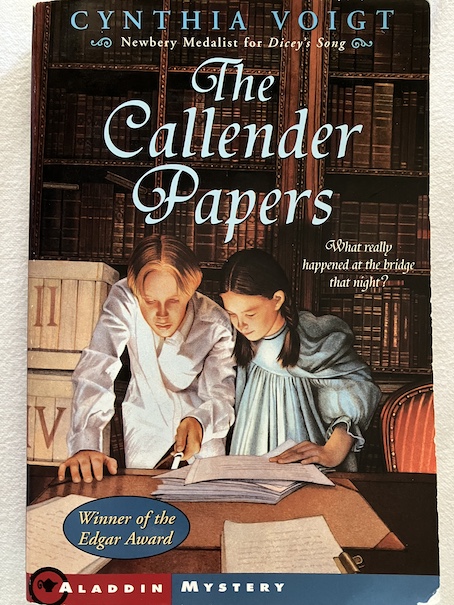
Mystery of the Green Cat

Mystery of the Green Cat by Phyllis Whitney, 1957.

Things just haven’t been the same for twins Andy and Adrian Dallas since their mother died two years ago. Now, their father has remarried to a woman he met through his work, and Adrian has been having an even harder time coping with it than Andy has. The twins have always been different from each other, not identical in appearance or personal interests, but now, Adrian is frequently angry and moody, and he’s getting on Andy’s nerves.

Their new stepmother, Emily, isn’t bad, and Andy can tell that she’s trying hard to be nice to them so that they’ll like her, but it does make the boys uneasy that their father seems to be having an easier time moving on from their mother’s death than they are. Also, Emily has two daughters, Jill and Carol, who have been living with their grandmother. Now that Emily has remarried, Jill and Carol are coming to live with her, her new husband, and the two boys in San Francisco. Emily has been saying that they’ll all be one big family now, but all of the children have misgivings about it. The twin boys have never lived with girls before, and they’re not looking forward to having a bunch of girly stuff around or Carol practicing her dancing in their new house. Meanwhile, the two girls aren’t sure that they’re really looking forward to suddenly having a couple of brothers. Carol is optimistic and thinks it might be fun, but Jill remembers that she hasn’t gotten along with the brothers of some of her friends. This new blended family is a major adjustment for everyone.

Adrian is so angry and upset about the coming of the girls that he refuses to go meet them at the airport with the rest of the family. Andy goes, although he is uneasy about meeting his new stepsisters, and Jill can tell that he’s not really happy to see them. Andy’s father explains Adrian’s absence by saying that he had a summer school art project to work on, although he does warn Jill that Adrian might need some time to get used to being around girls because he doesn’t make friends easily. Jill bluntly asks if that means that Adrian doesn’t want them around, and her stepfather says that it’s more that Adrian is still mourning his mother and having trouble adjusting to his new stepmother. But, he adds that he and his sons have really been lonely since his first wife’s death, and they’ve really needed someone like Emily in their lives, and he’s sure that Adrian will eventually realize that. He asks Jill, as the oldest girl, if she would try to make friends with Adrian. Jill’s not sure how she’s going to do that if Adrian doesn’t want to be friends with her. (This is a recurring theme in other mystery stories by Phyllis Whitney. The solution usually involves shared experiences binding people together, and this is partly the case in this book, too.)

The Dallas family house is situated on Russian Hill, and as they approach it, Jill’s mother points out another house higher on the hill, which she calls a “mystery house,” knowing that Jill loves mystery books. Her stepfather says that there are two women living there, Mrs. Wallenstein and Miss Furness. The two women are somewhat reclusive, and nobody really seems to know much about them. Andy says that Mrs. Wallenstein is a baroness, but his father says he thinks that’s just a rumor. The two elderly ladies also have a Japanese family working for them. The wife is their cook, and the husband is their gardener. Later, Jill spots someone spying on the Dallas house, peeking down from a wall surrounding their property, and Andy says that’s probably the daughter of the cook and gardener. Andy and Adrian have seen her around before, although they haven’t spoken to her much.

While they’re all sitting at the table, eating and talking, someone suddenly throws a rock through one of their windows. The rock came from the baroness’s house, so the father of the family says he’s going to call her and talk to her about it. However, when he calls, Miss Furness answers the phone, denies that anyone at her house would do such a thing, and hangs up. The boys tell Jill that this isn’t the first time someone has thrown rocks, but the last time, the rock just landed on the terrace and didn’t break anything. The boys haven’t wanted to tell the parents about the last time. Jill asks why not, and Andy refers to a “green cat” but doesn’t really explain what that means.

Later, the Japanese girl from the house next door stops by and introduces herself to Jill as Hana Tamura. (Hana’s English is imperfect, and this is one of those books where the author tries to write like the character is speaking to reflect the accent. Hana switches her ‘r’s and ‘l’s when she speaks in that stereotypical way Asians in old movies speak.) Hana admits to breaking the window and says that she did it by accident. She was just climbing the wall to see the new children who moved in next door when she kicked a stone loose from the wall that broke the window. She offers to pay for the damage. Jill’s mother says that won’t be necessary, but Hana insists that she accept some money. Jill’s mother invites her to stay and visit with Jill and Carol, but Hana says she can’t because Miss Furness doesn’t like her visiting with neighbors. Miss Furness doesn’t seem to like people much. Jill is disappointed because she could use a new friend in her new home, and Hana is interesting because she’s the first Japanese person Jill has ever met. (That’s interesting to me because Jill and Carol were originally from New York, and I would think that they’d see all sorts of people there.) Before Hana leaves, Jill asks her if she knows anything about a green cat. Hana refuses to answer, but Jill can tell that she’s a little disturbed at the mention of the cat. Jill’s mother is a little concerned that Hana isn’t being allowed to associate with neighborhood children and says that she’s going to try to talk to Miss Furness about it.

It turns out everyone has completely misunderstood the relationship between Miss Furness and Mrs. Wallenstein (“the baroness”). Rather than Miss Furness being the housekeeper for Mrs. Wallenstein, she’s actually Mrs. Wallenstein’s sister and the head of the household. When Jill spots Mrs. Wallenstein watching her with binoculars, Adrian says that she’s done that before and also finally confides that Mrs. Wallenstein was the one who threw a rock at him and Andy when they were on the terrace, not Hana. The “rock” Mrs. Wallenstein threw was actually just a little pebble, and Andy scooped it up, refusing to even show it to Adrian, although he doesn’t immediately explain why.

After a visit to the house next door to deliver a letter for Mrs. Wallenstein that was accidentally delivered to the Dallas house, Jill comes to realize that Miss Furness doesn’t treat her sister well, reading her mail and keeping people from her, and that Mrs. Wallenstein is in need of help. Andy finally explains to Jill that the rock Mrs. Wallenstein threw had a note tied to it, asking them to help her find her “little green cat.” He didn’t want to tell Adrian before because he didn’t think Adrian would take it seriously. The kids aren’t sure what the “little green cat” is, but both Jill and Andy want to help poor Mrs. Wallenstein.

Miss Furness doesn’t really mean to be mean to her sister, but she is extremely overprotective of her and keeps her isolated from other people because she has been suffering from ill health and memory problems. Mrs. Wallenstein went through hard times in her life after her husband died, and she was badly injured in an earthquake in Japan, which is why she’s now confined to a wheelchair. Sometimes, when Mrs. Wallenstein starts reminiscing about the past, she becomes confused about what’s past and what’s present, and it all begins blending into one. Her sister has been trying to shield her from past traumatic memories, but Mrs. Wallenstein has the feeling that there’s something important that she wants to remember, and she can’t quite figure out what it is. The key to unlocking Mrs. Wallenstein’s memory and learning the truth about the past lies in finding the little green cat.

The book is available to borrow and read for free online through Internet Archive.

Themes and My Reaction

Adjustment to changing family situations is a common theme in Phyllis Whitney’s young adult mystery stories, but this one is a little different from most. Most books by Phyllis Whitney are told only from the point of view of a girl, using third person limited. Even when boys play a major part in stories, the focus is usually on the girl. This book is told mostly from Jill’s perspective, but Andy is the one who begins the story, giving some insight into how he and his brother are feeling before the girls arrive. Although the boys and girls are separate when the book begins, their feelings toward each other are pretty similar. All of the children are trying to adjust to major changes in their lives and having misgivings about suddenly having new siblings of the opposite sex.

I think it’s also important to point out that, although the story focuses on a blended family, there is no divorce in the story. The two parents who are entering into a second marriage were widowed. This book was written in the 1950s, and in the first half of the 20th century, people didn’t talk about parents getting divorced as much. In children’s books of this time period, single parents and remarriages were usually the result of the death of a parent. It’s not that divorce was never mentioned; it’s just that it wasn’t nearly as prevalent in children’s literature, partly due to the social stigma against divorce at the time. I’ve sometimes thought that, in some ways, it was also probably easier for authors to explain the loss that accompanies a parent’s death, which would not have been the parent’s choice and was just a tragedy that couldn’t be helped, than the reasons why parents would willingly choose not to continue living with each other or why one parent would no longer live with the children. This is different from modern children’s books, where it’s usually more common to see divorced parents than dead ones. In fact, quite a lot of modern children’s books include divorced parents. Both death and divorce involve feelings of grief and loss, but if the loss is from a death that just couldn’t be helped, the author can avoid addressing the painful questions of “why” the separation happened. In real life, the reasons for a divorce can involve complex and sensitive issues that many adults would find difficult to discuss with children, including marital infidelity, emotional neglect, financial problems, addiction, and physical or psychological abuse. There’s never a happy reason for a divorce, so saying that the absent parents in the story died allows authors to skip over all of that. Death is sad, but it’s a little more self-explanatory. Andy and Adrian’s mother died from an unspecified long-term illness, and there’s no need for the characters to explain more than that. I could be wrong about some of my theories here, but that’s the impression that I sometimes get from older books. There is less social stigma surrounding divorce in modern times, and the prevalence of divorce in society has made it increasingly important to address children’s feelings about divorce in children’s literature, which is why there are now more books about it. That being said, the loss of a parent because of death is something that children still experience today, and the author of this story makes some important points about the feelings that someone can experience when they lose someone close to them.

As Jill gets to know Adrian, she comes to learn some of the reasons why he’s really unhappy. It’s partly because, when they moved to the new house after his dad remarried, he and Andy had to start sharing a room to make room for the two girls. Adrian and Andy have very different interests, and sharing the space has been particularly hard on Adrian. Adrian is a tidy person, and he’s very serious about art. He needs space to work on his artwork, and Andy is messy and likes to hoard pieces and parts for building things. Jill starts making friends with Adrian when she figures out how to make a better working space for him, but she upsets him again when she accidentally breaks the vase holding his brushes, which reveals the second reason why Adrian is unhappy. When the family moved to the new house, his father got rid of many of the things that used to belong to his first wife. Adrian has been blaming his stepmother for the loss of many of these sentimental reminders. Adrian doesn’t have many reminders of his mother left, and the vase was one of them, so now he blames Jill and her mother for the loss of that. As all the little reminders of his mother seem to be disappearing and Emily and her daughters are moving into the space, Adrian is afraid of losing all of the memories he has of his mother. It’s a situation that’s somewhat similar to Mrs. Wallenstein’s problem, using physical objects as a reminder of the past.

Mrs. Wallenstein has suffered sadness and trauma, which is part of the reason why her memory is so faulty. However she badly wants to remember some of the things she’s forgotten since her injury in the earthquake because they hold the key to the truth about her husband’s death. He died or disappeared under mysterious circumstances, and his business partner was murdered. Some people claimed that her husband might have actually killed his partner, but Mrs. Wallenstein doesn’t believe that. The clues to what really happened are tied up with the mysterious green cat.

However, part of the story also involves selfishness and self-centeredness. Mrs. Wallenstein’s husband’s business partner was a very selfish man, always needing to be the center of attention and taking credit for things that Mrs. Wallenstein’s husband did, and that’s tied in with the story of what happened to the two of them. In his own way, Adrian is selfish, too. It’s true that he’s still grieving for his mother, but the way he shows his grief is selfish, and Jill finally tells him so. Just because his stepmother isn’t his mother is no reason for him to be constantly cold and rude to her. Adrian is also rude and inconsiderate to other people, including Jill, their new friend Hana, and his own brother. Each of them is also dealing with something hard in their lives, but all Adrian cares about are his own feelings. While they all tiptoe around him, trying to make friends with him and be extra careful of his feelings because he’s “sensitive”, he says rude and condescending things to them or suddenly goes into a moody pout if he’s reminded of his mother’s death and/or his father’s remarriage. As Jill says, he’s sensitive, but only about himself; Adrian has no sensitivity for anyone else’s feelings. He’s even careless with Mrs. Wallenstein’s green cat after he learns that it has no monetary value, not considering what it means to her and her past. For someone who’s hyper-aware of belongings that have meaning for him, it’s an incredibly selfish thing to do. He not only doesn’t try to help the others solve the mystery of the cat, but when he finds out some information on his own, he deliberately doesn’t tell them until he can show off how clever he is while taunting the others about how they’re not as clever as they think they are. I honestly thought that he was going to be more help to the others in the story and reconcile his feelings through their shared adventure, but only Andy does that. Adrian resists right up until the very end, when Emily has a very honest talk with him about his feelings and hers.

I was a little annoyed at the way Hana’s speech was shown in the book because it always annoys me a little when authors try to show someone’s accent through spelling. It often seems to detract from what characters are actually saying, and the r/l swapping when Asians speak has a stereotypical feel to it. It’s not that Asians in real life never do the r/l swap, but it’s usually way overdone when it appears in books and movies, so it gets on my nerves. The real life r/l phenomenon is really based on the fact that Asian languages have a tendency to use the same symbol to represent r/l sounds, and the sound those symbols represent is about halfway between the two, depending on the language. In that case, it’s not really so much “swapping” the sounds as making one sound that is more in the middle than English speakers are used to hearing. The speaker may not actually be hearing the difference if they’re not accustomed to thinking of a difference between those two sounds, while listeners who are accustomed to listening for a difference in those sounds are confused about which of the two sounds they’re actually hearing when someone makes a sound that’s kind of in-between.

That being said, the perceptions of Asians, particularly Japanese people, in the book is favorable. This book was published about 12 years after WWII, so I thought it was nice that the characters were looking at the Japanese characters favorably. Jill is genuinely interested in being Hana’s friend, and Jill’s mother wants Jill to be friends with Hana. Later, Hana tells Jill and the boys a little about her own history, how her parents were married before WWII, but because her mother was unsure about coming to the United States, she ended up staying in Japan without her husband for a time. Hana was born shortly before the war started, and her father was unable to come to see her or bring his wife and child to the United States during the war. In fact, Hana and her mother were only reunited with her father a year before the story starts, so she was 13 years old the first time she met her father. Although the other children in the story have had their share of loss and family problems, Hana’s story about her own life helps to highlight that other people have their troubles, too.

The author, Phyllis A. Whitney, spent the first 15 years of her life in Asia because her father worked for an export business. She was actually born in Japan and also lived for a time in China and the Philippines. Because of all of the travel in her early life, Phyllis Whitney’s books often include travel to various countries around the world, people from different cultures, and children getting used to new homes or living among unfamiliar people, for various reasons.

There are some interesting tidbits of information about Asian cultures in the story, particularly about Japanese culture. I thought the part about how Japanese traditionally calculate age was interesting. There are also some interesting pieces of information about San Francisco and its landmarks. I’d heard of Telegraph Hill before, but I didn’t know the origin of the name until the book explained it.

I liked the book, both for the interesting tidbits of information and for the plot itself. This mystery is one of what I think of as the “mysterious circumstances” type of mystery. That’s a name I made up to describe mysteries where no crime (or at least no obvious crime) has been committed but yet there’s evidence of strange happenings and unknown events that must be figured out. I honestly wasn’t sure what direction this story was going to take when it started out, and I changed my mind several times along the way, but it has a very satisfying ending.