The Mystery of the Laughing Shadow

The Three Investigators

The mystery begins when Bob and Pete are bicycling by the old Sandow estate and they hear a call for help. Although it’s dark they can’t see who yelled for help, they can tell that the person threw something small that lands near them. They pick it up and discover that it is a small gold amulet. Then, Bob and Pete have to hide when a dark, shadowy figure comes looking for the amulet. The figure appears humpbacked and has a weird laugh that Bob and Pete have trouble describing.

They tell Jupiter what happened, and he joins them in searching for the person who called for help and figuring out the significance of the amulet. Someone steals the amulet from Jupiter, although Jupiter manages to save a message that was hidden inside the amulet. Then, they consult an expert in Native American languages and antiquities and learn that the amulet may be part of the Chumash treasure hoard, a treasure stolen from the Spanish settlers of the area many years ago by Chumash Indians (Native Americans) who once lived in the area. People have searched for the treasure for many years, but no one has found it. However, the message that was hidden inside the amulet is written in a language that belongs to the Yaquali Indians of Mexico (this is a fictional group, not the Yaqui), a remote tribe mostly living in isolation but known for their climbing skills. The expert is puzzled because he can’t figure out what the connection can be between the Chumash and the Yaqualis. The two group don’t live in the same area, their languages aren’t related, and the Yaqualis had nothing to do with the lost Chumash treasure hoard.

Jupiter says that their next move should be to investigate the Sandow estate. At first, they plan to make an excuse that they’re researching the Sandow estate for a school project, but to their surprise, Ted Sandow, grandnephew of Sarah Sandow, who owns the Sandow estate, shows up at Jupiter’s uncle salvage yard. Ted is just a few years older than the Three Investigators, and he explains that he came from England to visit his Great-Aunt Sarah after his father died. He says that his aunt wants to clean out a bunch of old things that have been in storage on the estate and that someone recommended the salvage yard to him. He invites the boys to the estate so he can show them some antiques that Jupiter’s uncle might want to buy. It seems like quite a coincidence that Ted Sandow would just come looking for them and give them an invitation to the Sandow estate just when they were planning to investigate the place, but the boys can’t pass up the invitation.

At the Sandow estate, the boys are amazed at the antiques that Sarah Sandow is offering to sell, and they’re sure that Jupiter’s uncle will be interested. They spend some time chatting with Ted, Great-Aunt Sarah, and Mr. Harris, a friend of the Sandows who has started a Vegetarian League with the help of Sarah Sandow. Sarah tells the boys that the reason she wants to clean out some of the clutter around the estate is that they recently had a burglary. They all explain to the boys that a small gold statue (the amulet) was stolen from the estate by an unknown boy. It was one of a pair that used to belong to Sarah’s brother, who was Ted’s grandfather. The boys explain that they are investigators and that they would be happy to help them recover the little statue, without telling them that they had it in their possession at one point or about the message they found with it. The Sandows hire boys to find it, promising them a reward if they’re successful, but some things about their offer don’t ring true.
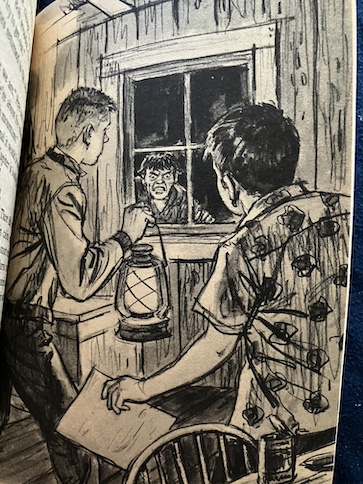
For one thing, Ted Sandow asks the boys about the meaning of the question marks on their business card before he even looks at the card, indicating that he already knew about their investigation business and that he sought them out for that purpose rather than just to sell things to the salvage yard. It’s also strange that he stresses that they will reward the boys for the return of the amulet with “no questions asked” about how they found it. What are the Sandows hiding, and what is the meaning of the message that was with the amulet? Do they know the location of the Chumash hoard, or do they have it themselves? Who was the mysterious shadow with the weird laugh? Lives may hang in the balance as the boys struggle to learn the identity of the laughing shadow.

The book is available to borrow and read for free online through Internet Archive.

I like books that reference history, but this book bothers me a little because of the introduction of the Yaquali. The Chumash are real, but the Yaquali are a fictional group, and it just feels strange to have the book start with a real group of Native Americans and then incorporate a fictional group. It also makes the story feel a little contrived that the villain needs the Yaquali for their excellent climbing skills to reach the treasure when it doesn’t seem like the Yaquali had anything to do with placing the treasure where it’s hidden.

The explanation behind the laughing shadow also feels a little contrived. There’s a logical explanation but at the same time, it depends on the villain having a pet that makes a sound that sounds like a laugh, and this pet’s origins point to the villain’s origins.

The part of the story that I thought was most interesting was that, while the Three Investigators are suspicious of the Sandows, it’s implied that the suspicious is mutual. The Sandows offer the Three Investigators the job of finding the amulet with “no questions asked” about how they found it, and there is an implication that they suspect that the boys stole it. The implication that the “no questions asked” is actually an invitation to the boys to return what they took with a promised reward and no repercussions. However, at the same time as the boys accept the job from the Sandows, they have their own suspicions about what the Sandows are doing and what the meaning of the message in the amulet is. They see the investigation job as a way to learn more about what’s going on. The interesting part is that, while each of them has some reason to suspect each other, the real culprit in this situation isn’t either of them.

Although the boys suspect Ted at first, the real villain is Harris.  Years ago, Sarah Sandow’s brother, Ted’s grandfather, learned that the Chumash hoard was located on their property, but for reasons that no one seems to know, he killed the only person who could tell him where it was and had to leave the country.  Ted was born in England, and he has been visiting his Great-Aunt Sarah.  He met Mr. Harris on the way here, and Harris introduced himself to Sarah on the pretext of getting a donation to help set up a society for vegetarians in the area.  He had already figured out where the hoard was located on her property, and he had convinced some young Yaqualis from Mexico to come to the United States to help him get it. 

The treasure is hidden in a cave which can only be reached by experienced climbers, and the Yaqualis are known for their climbing skills.  One of the Yaqualis realized that what Harris wanted them to do was illegal and that he was planning to do away with them when it was all over.  He managed to get word to his family, and he put the message in the amulet in the hopes that someone would find it later and help him and the others. 

Jupiter figures out that Harris is the villain when he realizes that the mysterious laugh isn’t human; it was caused by a kookaburra, a pet of Harris’s from Australia.  His shadow only looked humpbacked because the bird was sitting on him at the time.  Jupiter gets the police to check with the Australian authorities, and they learn about Harris’s criminal past.  By then Harris has taken Bob and Pete hostage, and they must stage a daring rescue to save them.  For a while, Bob and the young Yaqualis are trapped in the cave with the treasure, but a couple of other Yaqualis who have been searching for them help to rescue them.  At the end of the book, the ownership of the treasure still has to be determined, but many museums are hoping to acquire pieces for their collections.
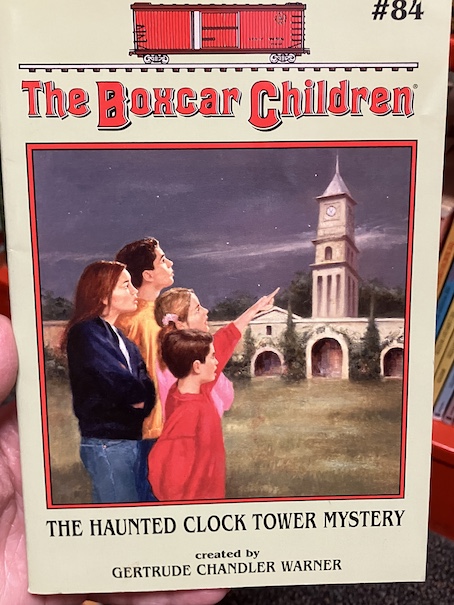
The Haunted Clock Tower Mystery

Boxcar Children

Grandfather Alden is attending a reunion at his old college, Goldwin University, and he brings his grandchildren with him so he can show them where he went to school. The children are fascinated with the beautiful campus, especially with its clock tower. Their grandfather and Ezra Stewart, who works at the college and is responsible for maintaining the clock tower and playing its carillon bells. Ezra demonstrates to the Aldens how the carillon bells work, and he also shows them the smaller training keyboard, where he has trained his assistants. Ezra plays concerts for the campus on the carillon bells, but he gets irritated with his new assistant, Andrea Barton, because she never puts his music back where it belongs.

The Aldens run into Grandfather Alden’s old college roommate, Joel Dixon, who is also there for the reunion. Joel brought his son Don with him because Don has business in the area, and he’s been interested in the college since he started reading a book about it. At dinner, they also meet Grandfather Alden’s old history professor, Julia Meyer, who says that she’s working on a special project, but is mysterious about it.

That night, Benny sees a light in the clock tower. Ezra insists that nobody goes into the clock tower at night, and Benny wonders if it could be a ghost! Then, someone sabotages the carillon. Was it the mysterious night visitor, and if so, who could it be and why?

When the children look at the book Don has been reading, they learn that there may be a secret hidden treasure on the campus that dates from the Civil War. Is their mysterious “ghost”, looking for it, too? Is Don the one searching for the treasure, or is could it be the history professor or maybe Ezra’s new assistant?

The book is available to borrow and read for free online through Internet Archive.

I always like treasure hunt stories, and I enjoyed seeing the Aldens figuring out the clues to find the hidden treasure! They know that someone else is looking for the treasure, too, and I thought at least one person was a really obvious suspect. What I like about this book, though, it’s that it’s one of those stories where each of the potential suspects has something to hide. There isn’t just one person who’s been sneaking around the clock tower at night. Different people have been there for different reasons, not all of which have anything to do with the treasure. Part of the mystery involves figuring out who is doing what in the clock tower and why.

The addition of the carillon to the story is a fascinating and unique feature. I’ve seen carillon bells before, but I enjoyed hearing Ezra describe how they use the training keyboard for practice. I think, for most kids in the target audience for this book, this story be their first introduction to the idea of a carillon.

The Puzzling World of Winston Breen

Twelve-year-old Winston Breen loves puzzles! He looks for puzzles to solve everywhere, and he also loves to make to give puzzles to other people to solve. Usually, on his sister’s birthday, he likes to set up some kind of puzzle or treasure hunt to lead her to her present. However, the year his sister Katie turns ten years old, Winston almost forgot about her upcoming birthday party, so he didn’t have anything planned. In fact, he was lucky to find a nice present in time for the party, buying a pretty box that he saw in a curio shop at the last minute.

When Katie opens his present at the party and sees an empty box, she’s sure that the empty box must be another of his puzzle tricks. Winston tries to explain to her that it’s just a nice box, and there’s no puzzle this time, but to his surprise, Katie finds a puzzle in the box that Winston didn’t make or put there. It turns out that there’s a secret compartment in the box that contains thin strips of wood with letters on them. It looks like the kind of puzzle Winston loves and one he might have made if he had planned better this year, but as Winston explains to everyone, this isn’t his work. So, whose puzzle is it, and what does it mean?

Everyone at the party tries to guess what the puzzle means, and Winston has to reassure everyone multiple times that it’s really not one of his puzzles. In the end, they all decide to let Winston try to solve the puzzle and tell them the answer. However, Winston can’t seem to solve the puzzle! When he’s unable to solve it, his relatives really begin to believe him that he didn’t make it. Winston’s cousin, Henry, questions him about who had access to the box and where he got it in the first place. When Winston says that it got it at the curio shop, Henry points out that the curio shop owner also likes puzzles and has shared puzzles with Winston before. It seems logical that he’s the original source of this particular puzzle.

When Winston talks to the owner of the curio shop, he says that he had no idea that there was a puzzle in the box that Winston bought. The box was part of a larger set of items that came from the estate of a woman who died recently. The lady was one of the daughters of a wealthy inventor who was one of the founding members of their town, Walter Fredericks. One of Winston’s friends is doing a report about Walter Fredericks for school. The owner of the curio shop says that the last living member of the deceased lady’s family is her sister, who is the town’s librarian, and that maybe Winston should ask her about the puzzle. Winston’s friend needs some information about the inventor for his report anyway, so they decide to go to the library and talk to the librarian. However, when the boys try to talk to the librarian, she suddenly becomes upset when she sees Winston holding the pieces of the puzzle. She starts to cry, asks why “you people” can’t leave her alone, and yells at them to leave the library!

The boys have no idea what made the librarian react like that. Later, they are approached by a strange man who introduces himself as David North. He says that he saw what happened in the library, and he thinks that he can help. He calls himself a treasure hunter and explains that the reason why Winston hasn’t been able to solve the puzzle is that he’s missing some of the pieces. David North shows the boys that he has more of the pieces to the puzzle, and he suggests that they become partners, sharing their pieces with each other to solve the puzzle.

Before talking to Mr. North, the boys didn’t even know that the puzzle was the key to a treasure. They don’t know exactly what this treasure is or how Mr. North knew about it, and they’re not sure that they can trust him. Soon after meeting Mr. North, they are also approached by a man who calls himself Mickey Glowacka. This man explains that he’s also looking for the treasure. The boys ask him what treasure that is, and Glowacka says that the inventor hid a large sum of money. Glowacka also has a set of puzzle pieces, and he says that there is also a fourth set, the set that belongs to the local librarian.

Although Glowacka is more forthcoming than North was, Winston isn’t sure that he’s trustworthy, either. Then, the town librarian comes to see Winston to apologize for her fit at the library, and she explains the rest of the situation to Winston and his family. Walter Fredericks had four children. Except for the librarian, Mrs. Lewis, who was the youngest of his children, the others are all deceased. Their father was a fun-loving man who enjoyed games and puzzles, but the siblings never got along with each other. Mrs. Lewis says that her entire childhood was full of petty squabbles that she and her siblings never knew how to resolve with each other, so they just increased over the years. Before their wealthy father even died, she and her siblings argued over their eventual inheritance. There was one item in particular that all four of them wanted: a valuable ring that was given to their father by a prince to thank him for one of his inventions. After their father died, the four siblings went to claim their shares of the estate, but the lawyer informed them that the ring was not included with the rest of the estate. Instead, their father arranged one last puzzle for his four children to solve together. Each of his four children received a set of puzzle pieces, and they were told that they would have to work together to solve the puzzle and claim the ring. Mrs. Lewis realizes that her father was making one last effort to get his children to stop arguing and join forces, but a single puzzle would never be enough to resolve years of arguments and fighting. Instead, the siblings turned their backs on each other and on the puzzle, so it has gone unsolved for more than 20 years, and the ring is still hidden somewhere.

Since her other siblings died, one by one, their shares of the puzzle pieces have been purchased by other people as their estates have been sold off. That is how North and Glowacka acquired their sets of puzzle pieces from the estates of Mrs. Lewis’s brothers, similar to the way Winston accidentally bought the set that once belonged to Mrs. Lewis’s sister, Livia. Since Livia’s death, someone has become desperate to get as many of the remaining puzzle pieces as possible. Someone broke into Livia’s house soon after her death, before items from her estate were auctioned off, but this person was unable to find Livia’s set of puzzle pieces because they were hidden in the secret compartment in her box. Someone has also broken into Mrs. Lewis’s house to find her set of pieces, leaving her a threatening message. She has also received threatening phone calls and demands for her puzzle pieces, which is why she was so upset when she saw Winston approaching her with puzzle pieces. It seems logical that either North or Glowacka could be the one breaking into houses and threatening Mrs. Lewis, or it could even be both of them.

Mrs. Lewis has decided that the most sensible way to resolve this situation is to do what she and her siblings should have done years ago with each other: arrange for all the interested parties to work together to solve the puzzle and find the ring, then sell the ring and split the money. Winston’s father points out that doing this would mean including whoever it was who’s been threatening her for a share in the treasure, and it doesn’t seem right to reward that person. Mrs. Lewis decides that she’s willing to do that just to settle the matter and remove the reason for the person to keep harassing her. To keep everyone in line and ensure that everyone plays fair with each other, she has recruited a friend of hers who is a retired police officer to act as her representative and a referee for this game. North and Glowacka grudgingly agree to abide by the rules of the game.

Winston’s sister, Katie, declares that the puzzle pieces that were in the box are hers since they were part of her birthday present, and Winston reluctantly agrees, even though he’s the main puzzle person in the family and feels a little possessive of the puzzle because he’s driven to solve it. Of course, he is included in the game, both as his younger sister’s chaperon at group meetings and the family puzzle expert. At first, Katie is reluctant to split her share of the treasure with Winston because of his participation, but their father points out that she will be relying on his help in this game. As the owner of the puzzle pieces, she has the right to decide what Winston’s help is worth to her, so she will control how much of her share Winston will receive, but it’s only right that she let him have something in exchange for his help.

The book is available to borrow and read for free online through Internet Archive (multiple copies).

I enjoyed this book both for the mystery story and for the puzzles that appear throughout the book. Because Winston loves puzzles so much, he creates little puzzles and brain teasers for readers to solve throughout the book, and some people also give him puzzles and brain teasers of their own. Readers have the opportunity to solve these puzzles themselves, and the answers are in the back of the book.

The main mystery of this book was good. It has a particular set of suspects, everyone who is participating in the search for the ring and the solution to the puzzles. They must work together at the same time as they look at each other suspiciously. However, there is a twist to this story because there are more people involved with this series of puzzles than the obvious ones. There are people who are on the scene and have access to at least some of the clues who are not immediately obvious suspects, and I admit that I didn’t suspect these people at first.

There is a point where Winston himself becomes a suspect for a break-in at Mrs. Lewis’s house. I think the author meant this accusation against Winston to ramp up the suspense in the story, but it just irritated me because Winston is still a kid. He’s not old enough to have a driver’s license, and he’s still in that age where his movements are still limited and monitored by parents. It would have been more credible if he had been a teenager, with more ability to get around on his own, unsupervised and with less accountability.

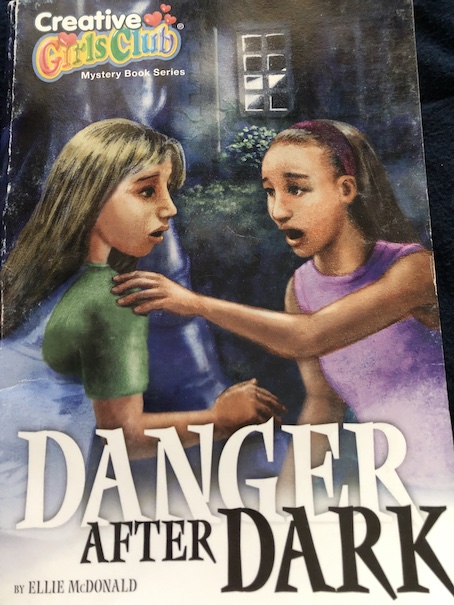
Danger After Dark

Danger After Dark Creative Girls Club cover

Danger After Dark by Ellie McDonald, 2005.

A group of friends in Summary, Indiana has had a club together for years, and they’ve always thought that their club would last forever. They call themselves the Silly Stuff Club because they collect all kinds of weird and silly things that they find at sales. However, when one of the girls, Sarah, finds out that her family is planning to move to another state, it looks like their club might come to an end. The club meets in the old carriage house on Sarah’s family’s property. If their family moves, where will the club go, and where will they store their collection of silly stuff? The other girls in the club aren’t just losing a friend but also losing their club’s home and maybe even the club itself.

Then, Lily gets an idea. Down the road, there is an old mansion that’s been abandoned for years. The Winston estate is the property of Melva Winston, who is something of a legend in their town. According to the story, the Winston heiress rode out of town on her motorcycle about 50 years earlier, and she hasn’t been seen since. Lily reasons that the Winston estate is huge and has outbuildings, and somewhere on the estate property, there is probably a place that they can claim for the club. Since nobody lives there or goes there anymore, who is to know or care if they move in?

Some of the other girls in the club don’t like that idea because they’ve been warned to stay away from the old Winston estate. An empty old house can be dangerous, and they might get in trouble for trespassing. Still, nobody has any better ideas, so they decide to sneak onto the property and have a look around.

When they do, they discover that the house isn’t quite as empty as they thought. After all these years, Melva Winston has returned to town. She now calls herself Annie, after one of her middle names, Anastasia. The girls’ sudden arrival startles her, but when she overhears them talking about needing space for their club, she becomes sympathetic. She also realizes that she could use their help. There’s plenty of space in her big house, and she agrees to give them some space in the attic for their club, and in exchange, she asks them to look after her cat while she goes out of town for a few days. She’s hired a local woman, Ms. O’Leary, to do some cleaning for her, but the woman is allergic to cats. The girls are eager to accept because the old mansion would be a fantastic place to have their club, and it would solve their problems … except missing Sarah when her family moves.

Then, one night, a couple of the girls see someone sneaking around the old mansion when no one is supposed to be there. Ms. O’Leary tells them that there were rumors that one of Annie’s ancestors, who made the family fortune in veterinary pharmaceuticals, became an eccentric toward the end of his life, and rumor has it that he hid a great deal of money somewhere on the property. Are the rumors true, and is someone looking for the hidden money?

My Reaction

This book is something of a mystery to me, even after reading it. It is clearly intended to be park of a series because it’s marked as being part of the Creative Girls Club Mystery Book Series, but when I looked up this series, there was only one other book in it. From the descriptions I’ve seen online, it might not even really be that there are two books in the series so much as one book with two different titles because the plots given for the two books sound alike. I’ve only ever seen one of the books, so I can’t be sure.

The book is clearly set up to introduce the set of six girls in the club and establish a basis for the rest of the series. Each of the girls in the club has her own section at the beginning of the book, providing her backstory. So, what happened?

The series had a web page that was given on the inside cover, so I looked it up. It still exists, after a fashion, but the Creative Girls Club is now a subscription box service with craft kits for girls ages 7 to 12. I think what probably happened is that the book series was meant to be a vehicle for marketing the craft kits, but they changed their minds and decided to just move forward with the craft kits in a subscription service without the associated books and characters. There are no actual crafts included in this book for readers to do, although that might have been planned for later books.

The craft kits are by Annie’s Attic, and Annie’s Attic published this book. The book incorporates Annie’s Attic by having the girls move their club to the attic of Annie’s mansion. Ha, ha. At the end of the book, Annie decides to open a craft store and studio in the old mansion, and the girls decide to reinvent their club as a crafting club in Annie’s attic, calling it the Creative Girls Club, and thus setting up the premise for the subscription box service.

Overall, I thought that it was a pretty nice mystery for kids. It kind of worked its way around to Annie’s Attic and the Creative Girls Club in a somewhat contrived way, but still, there are plenty of things in the stories for kids to like, from the club in the attic of an old mansion to a secret room and hidden treasure.

Mystery Behind the Wall

The Boxcar Children

Mystery Behind the Wall by Gertrude Chandler Warner, 1973.

It’s summer vacation, and Benny doesn’t know what to do with himself because his friends have gone away for the summer. Mrs. MacGregor, the housekeeper, suggests that they invite a guest to the house to cure Benny’s loneliness. Her sister in Canada knows a boy who lives on a farm and is often lonely because they live a long way away from other people. The boy, called Rory (short for Roderick), is very lively and full of ideas, and he could use some company as much as Benny does. The kids are all eager to meet Rory and have him visit, so their grandfather calls Rory’s family and arranges for the visit.

The Alden kids are excited about Rory’s visit and start preparing the spare bedroom. They wonder if Rory will like it or not because the room seems old-fashioned and a little sad to them. The walls are covered with a wallpaper with roses, so the kids think that it must have been a girl’s room at one time. They notice an old photograph on the wall of a girl with her parents in front of the house, but the house looked different and smaller when the photograph was taken. There’s also a poster that says “Coolidge for President” in the window, dating the photograph to the 1920s, meaning that the picture is decades old. (The Aldens refer to that as being about 40 years yearly, dating the story to the 1960s.) Mrs. MacGregor puts a bright red bedspread on the bed to brighten the room up a bit, and the Aldens hope that Rory won’t mind that it still seems a bit old-fashioned.

Rory doesn’t mind the room at all. In fact, he is a bright and curious boy, who is interested in everything and notices little details. He notices the photograph in the room when he arrives, and he asks Grandfather Alden about it. Grandfather Alden explains that the people in the photograph are the Shaw family and that they owned the house before he bought it. The girl is named Stephanie, and she was the Shaws’ daughter. The Shaw family sold the house to Grandfather Alden when they moved to France, and Grandfather Alden built an addition onto the house, which is why it looks different now. The children wonder what happened to the Shaw family and to Stephanie, but Grandfather Alden says that he doesn’t know. They never wrote to him after they moved to France.

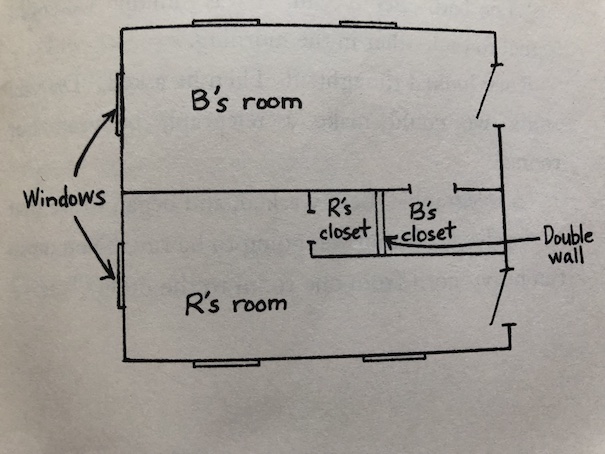
Another thing that Rory notices about the guest room is that it looks like the closet should be bigger than it actually is. Benny has the room next to Rory’s, and he has the idea making a hole in the backs of their closets so they can have a secret communication system between their rooms. Grandfather Alden doesn’t mind the project, so they cut holes in the backs of their closets. That’s when they discover that there is a secret, hidden space between the closets, and there’s something hidden in the space. They pull it out, and it’s a piece of cloth. They wonder what it’s for and why someone would hide it.

Grandfather Alden identifies the cloth as a coin case. He tells the kids a little more about Stephanie Shaw. He knows that Stephanie’s father was a very strict man. Her mother went to France ahead of the rest of the family, and her father was in charge of her in her mother’s absence. He had her tutored at home and didn’t let her play with other children, so she was often lonely. However, he allowed her to indulge in their shared hobby, which was coin collecting. The kids wonder what happened to the coins when Stephanie left for France. There are no coins in the coin case now. Professor Nichols, a coin collector who specialized in rare nickels, also helped Stephanie with her collection. He thought that Stephanie might have left her coin collection behind when she went to France, thinking that she might return one day, but Stephanie never did return. Professor Nichols would have asked Stephanie about it, but he didn’t have their address in France.

When the kids explore the hiding place in the closet further, they find an old notebook that turns out to be Stephanie’s journal from when she was 10 years old. Stephanie explains about her loneliness, and her coin collection. She talks about a puzzle that she created that will fool even her father, but the journal ends, so they don’t know what sort of puzzle Stephanie was talking about.

As the children explore Stephanie’s old room further, they find a clue that shows that Stephanie created a treasure hunt before she left for France, a treasure hunt that nobody has ever solved. The Boxcar Children and their new friend, Rory, begin playing along with Stephanie’s old treasure hunt, hoping that it will eventually lead to her missing coin collection.

The book is available to borrow and read for free online through Internet Archive (multiple copies).

My Reaction

This is one of the early Boxcar Children books, written by the original author. Because the book was written decades ago, a child who was 10 years old in the 1920s would have been about 50 years old at the time the story is set, but the children are sad to learn that Shaw family, including young Stephanie, was killed in a railway accident in Europe, which is why none of them ever returned to solve the treasure hunt and reclaim the coin collection.

The Boxcar Children run into multiple dead-ends in the treasure hunt because things have changed in the decades since Stephanie created her treasure hunt, and clues have been lost. They almost give up, but Benny and Rory realize something that helps them solve the final riddle.

When they finally find the coin collection, they call Professor Nichols to come and look at it, and he tells them about some of the rare coins in the collection, like a 20 cent piece and an Indian head penny. He explains some general principles of coin collecting to the kids, like the fact that the oldest coins aren’t always the most valuable pieces in a collection. There are some very old and even ancient coins that are not quite as rare as some newer coins, and the rarity is what makes them valuable. He helps the children to start their own coin collections. This book could be a fun mystery to help get kids interested in a new hobby!
The Secret of the Sunken Treasure

The Bobbsey Twins

Bobbsey Twins The Secret of the Sunken Treasure cover

The Secret of the Sunken Treasure by Laura Lee Hope (Stratemeyer Syndicate), 1989.

Before I begin, I’d like to acknowledge Sean Hagins, for supplying me with photos of this book! Usually, I take pictures of books myself, but I just couldn’t find a physical copy of this one. Sean is a big fan of the Bobbsey Twins, particularly the New Bobbsey Twins mysteries, and you can see some of his video reviews as well as videos about his photography work on his YouTube channel, SJHFoto. Thanks, Sean!

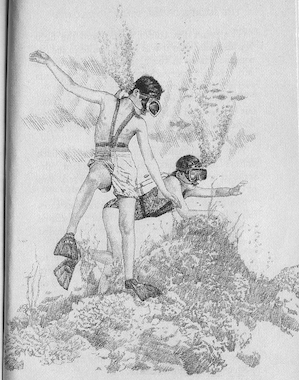
The two sets of Bobbsey Twins and their parents are on vacation in Florida for a week. It’s just a fun family vacation, although Mrs. Bobbsey is hoping to write an article about a sunken treasure ship called the Granada. The Bobbsey Twins are intrigued at the idea of searching for sunken treasure, although nobody has detected a sign of the treasure since the ship sank in 1801. Dan Chester, he brother of a family friend, lives in the town where the Bobbseys are staying along with his 15-year-old daughter, Meg. Dan and Meg are divers, and they have been searching for the wreckage of the Granada, and they think they have a lead. The Bobbsey Twins are excited to think that they might be able to participate in the search for the treasure or be there when the Chesters find it!

However, when Dan and Meg pick them up at the airport, they have bad news. Although they were able to locate the wreckage of the Granada, they were delayed reaching shore to claim their find because their boat propeller broke, and someone else claimed the Granada before they could. Joe Lenox, the man who claimed the wreckage, runs an underwater salvaging company, and he’s tough competition for the Chesters because he can afford all the latest sonar equipment. It’s a heavy blow to Dan and Meg, losing such an important find when they were so close to claiming it. The only consolation is that everyone will be able to watch the old safe from the wreckage being hauled to the surface. The safe is supposed to contain the treasure the ship was carrying.

When Joe Lenox learns that Mrs. Bobbsey is an out-of-town reporter, he invites the entire Bobbsey family to come with him on his boat to see the treasure being recovered. They accept the invitation, although the kids feel a little funny about it because Joe is Dan and Meg’s competitor.

On the boat, Joe shows the Bobbseys his equipment and explains how everything works. (I grew up in Arizona and have never been diving, so I have very little context for understanding diving equipment. This part looks informative, but since this book was published decades ago, there may have been some changes in equipment since then. I wouldn’t know.) Flossie is hoping that, when the treasure is brought up, she will get the chance to try on the famous tiara that is supposed to be in the safe. However, everyone is in for a shock. When the divers go to recover the safe, they discover that someone has already managed to open it and remove the strongbox containing the treasure!

Now, Joe feels cheated out of a treasure he thought he had safely claimed, and he wants to know who’s responsible. The logical suspects would be Dan and Meg, who felt cheated out of their opportunity to claim the treasure first and who have the diving skills needed to reach the safe. A charm belonging to Meg is found in the safe, making Joe and the police believe that the Chesters are guilty. Although, there are also the other members of Joe’s crew to consider. They were the only other people who knew where the wreck was. Could any of them gone out to raid the wreck before the official salvage operation? Can the Bobbsey Twins find the real thieves?

The book is available to borrow and read for free online through Internet Archive.

My Reaction

I had a couple of favorite suspects early on in the story. The book establishes that it would have taken at least two people to deal with the safe, so I was looking for a pair of people. I was only partly right, though, because there’s another suspect who isn’t introduced until later in the book. The first person I suspected is guilty, but there were more people involved than I thought.

The book explains a little about how a person can lay claim to a sunken ship. The characters say that they have to fill out paperwork at the courthouse. There are laws regarding claiming a sunken ship and official procedures to follow. It’s not as simple as finders keepers. It does matter who found it, where they found it, and who the ship belonged to originally. There were also some changes to the laws around the time this book was written and published with the Abandoned Shipwreck Act of 1987. I’m not completely sure whether each Joe or Dan and Meg could have legally claimed the ship. It partly depends on whether or not it was within US territorial waters or outside the official three-mile limit, and it also depends on whether or not the ship was property of a foreign government which could lay claim to it. For the purposes of the story, we have to assume that Joe Lenox was able to successfully lay a claim to the ship and that Dan and Meg could have done so if they had reached the authorities first. What makes me doubt this is how it would have worked in real life is that the treasure on the ship belonged to a Spanish countess, which makes me think that it could be regarded as property of the Spanish government, but it would be difficult to determine that without additional information.

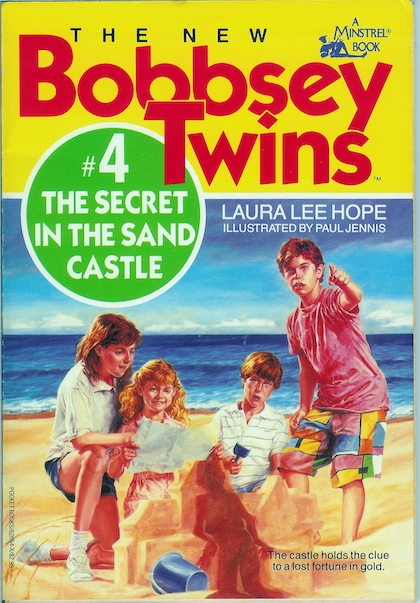
The Secret in the Sand Castle

The Bobbsey Twins

#4 The Secret in the Sand Castle by Laura Lee Hope (Stratemeyer Syndicate), 1988.

Before I begin, I’d like to acknowledge Sean Hagins, for supplying me with photos of this book! Usually, I take pictures of books myself, but I just couldn’t find a physical copy of this one. Sean is a big fan of the Bobbsey Twins, particularly the New Bobbsey Twins mysteries, and you can see some of his video reviews as well as videos about his photography work on his YouTube channel, SJHFoto. Thanks, Sean!

The two sets of Bobbsey Twins and their parents are spending a few weeks in an old house at Beachcliff Bay. It’s sort of a working vacation for their parents. Mr. Bobbsey owns a lumber yard, and he’s helping a local builder, Jim Reade, to either find some antique Victorian wooden gingerbread house trim or make new ones to match a home restoration project. Meanwhile, Mrs. Bobbsey is planning to write a travel article about the area for their local newspaper.

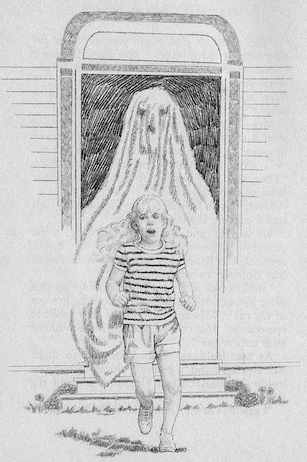
The house where the family will be staying is called the Wilson house, and it’s one of Mr Reade’s recent renovation projects. Flossie is the first in the family to go inside, and she is startled by what she thinks is a ghost. It turns out that it’s only the caretaker, Pete Smedley, taking the old dust sheets off the furniture. It’s not entirely reassuring because Pete says that there are stories about the old Wilson house being haunted by the ghosts of its former owners, who drowned in the nearby bay. He says that he knows when the ghosts have been there because they move things around and leave trails of water, seaweed, and seashells. Mr. Reade thinks that Pete’s stories are nonsense and that the strange things he’s observed are due to windows in the house being left open or something like that.

The inside of the Wilson house is as elaborate as the outside. The Bobbsey twins unpack their things and claim rooms for themselves upstairs. Flossie is quick to claim the biggest room with the best view for herself, and she asks Bert to help her move a mirror she likes into her room. They don’t have anything to hang the mirror, so they set it on Flossie’s bed. Strangely, they later find the mirror still on the bed but broken, and they don’t know how that happened.

Nan is curious about the Wilson family and the history of the house, so she and Freddie take a trip to the local library. There, Nan learns that the last two members of the Wilson family were a brother and sister, called Clay and Jennie. They were both artists, but they never made much money. Badly in need of money, they apparently robbed an armored car and stole gold bars. They tried to escape in a boat, but it was lost in a storm. The Wilsons apparently drowned, although their bodies were never found. The police thought they might have hidden the gold somewhere before getting on the boat, but nobody ever found the gold they stole.

Mr. Reade tells the children that his son, Jimmy, is entering a local sand castle contest, and the Bobbsey twins decide that they would like to enter the contest, too. Nan thinks they should try to build a replica of the Wilson house in sand. Unfortunately, Jimmy turns out to be a troublemaker, and it doesn’t look like he wants to be friends with the Bobbsey twins.

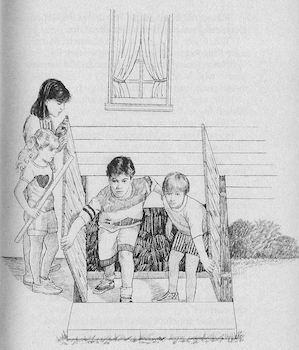
While the girls go to the store, Bert and Freddie decide to check out the old root cellar at the house, and someone traps them inside. The girls let them out when they get back. Then Flossie finds a secret passage and hidden stairs. Mr. Bobbsey says that it was once a servants’ entrance that had been sealed off. Later that night, a ghostly figure tries to enter Nan’s room! Could it have been Jimmy. playing a nasty prank, or is it someone looking for the lost gold? Could it even be a real ghost?

The book is available to borrow and read for free online through Internet Archive.

My Reaction

From the beginning of the book, I had a favorite suspect. However, this is one of those mysteries where there is more than one person involved, and they’re not working together. In the end, I was right about my main suspect, but having a second person doing suspicious things made the mystery more interesting. The title is a little misleading because the story is really about the search for the hidden gold from the robbery, not about the sand castle contest. The sand castle contest is more of a side issue, although studying the design of the house to build the sand castle version leads the kids to the solution of the mystery.

Because this book is from the late 1980s, there are things in the story that were more a part of my childhood than the lives of 21st century children, like renting videotapes. I was about the age of Freddie and Flossie when this book was first published, so it’s a bit of a fun nostalgia trip for me, both because I read books in this series when I was young and because some of the things the kids do in these stories are similar to things I did at their age.

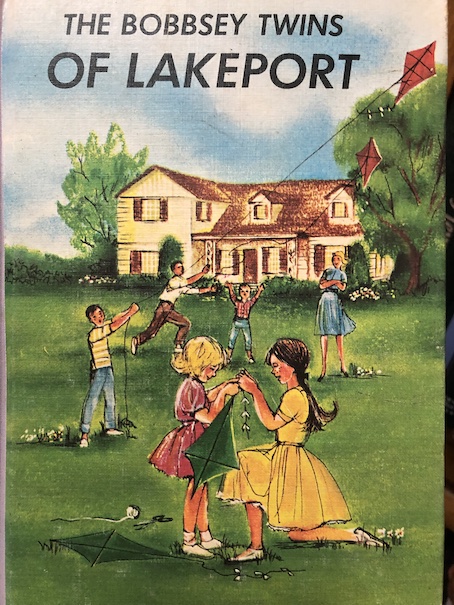
The Bobbsey Twins of Lakeport

Bobbsey Twins

The Bobbsey Twins of Lakeport by Laura Lee Hope (Stratemeyer Syndicate), 1904, 1961.

Before I begin discussing the story, I need to explain that this story, I need to explain that, in the 1950s and 1960s, children’s series books from the Stratemeyer Syndicate that were still in print were rewritten and reprinted to update slang and cultural references and, importantly, to remove inappropriate racial language and stereotypes. This was the time of the Civil Rights Movement, and people were becoming more self-conscious about the language they were using and what they were teaching to children. The Bobbsey Twins was one of the series that was rewritten, and I was surprised by some of the things that appeared in the original printings of the first Bobbsey Twins series. As a kid, I was more familiar with The New Bobbsey Twins series, which was written in the 1980s and 1990s. The Bobbsey Twins was one of those series that has multiple sub-series, sort of like the various incarnations of Scooby-Doo cartoons, each one updated to fit the decades when they were written. The original Bobbsey Twins series was first written in the early 1900s, and the way it originally portrayed the black couple who work for the Bobbsey family was very problematic. I was really surprised. The edition that I’m describing below is the revised 1960s edition, with the problematic elements changed or removed.

The story begins with both sets of Bobbsey Twins – the older set, Nan and Bert, and the younger set, Freddie and Flossie – disassembling their old tree house because they’re planning to build a new one. Six-year-old Flossie mentions that a spooky old house near their school is also going to be torn down, and Freddie says that another kid at school claims that house is haunted. The children’s father says that they must be talking about the old Marden house. It used to a farmhouse, but the town has grown around it. Mr. Marden was a wealthy man who had once been ambassador to Great Britain, and he build the large house when he retired. Since then, the place has become disused and badly run-down, which is why the kids think it’s spooky and why it’s going to be torn down.

The children’s mother explains that she knows Mrs. Marden, who is the widow of the original Mr. Marden’s grandson. Mrs. Marden is now elderly, and she sold the old Marden house to the school when she went to live in a nursing home. Mrs. Bobbsey says that she hasn’t been to visit Mrs. Marden lately, she decides to pay her a visit that afternoon. The kids are still curious about whether the house could be haunted, and they ask their mother to ask Mrs. Marden about it. It doesn’t seem likely that the house is really haunted, even though it is old and spooky-looking. Danny, the kid at school who claims that he’s seen ghosts around the place, is known for playing mean tricks, so he’s not a reliable witness.

Bert suggests to the others that they could go take a look at the house themselves. When they get there, they see men surveying the property. The men say that, after the house is torn down, it will be replaced by an addition to the school. The kids ask the men if they’re worried about the house being haunted. One of the men says that he heard some strange sounds, but he thinks it was just a couple of local boys playing a prank. The men don’t think that there’s a real haunting there. The Bobbsey Twins want to see the inside of the house, but the surveyors tell them that they can’t go inside because the house is locked up to discourage vandals. The kids spend a little more time with the surveyors, helping to hold their equipment and seeing how it works. However, the children are still curious about the house and wish they could investigate it more.

Then, when their mother comes home from visiting Mrs. Marden, she tells them that there really is a mystery about that house. Mrs. Marden’s memory is failing her, but she knows that some valuable souvenirs from old Mr. Marden’s time as an ambassador are missing. One of them is a cameo surrounded by diamonds (the book defines what a cameo is for the benefit of kids who don’t know) and a collection of obsidional coins. (The book also explains what these coins are. The characters had to consult a book because even Mrs. Bobbsey doesn’t know. I hadn’t heard of them before, either, because I don’t know much about coin collecting. They’re basically improvised coins made during times of siege to pay off soldiers. They’re made from whatever materials the makers had at hand and are often irregular in shape. I love stories that explain interesting and unusual historical details!) Mrs. Marden knows that she hid these things somewhere in the old Marden house, but she just can’t remember where. Since the house is going to be torn down, there isn’t much time left to find them!

Mrs. Bobbsey gives the children permission to investigate and tells them that the principal at their school has the keys to the house. She thinks that the principal might let the kids into the house if they explain that they want to retrieve something for Mrs. Marden. The school principal is surprisingly agreeable to the idea of the children poking around the old house and gives them the key, but Danny overhears their conversation and tries to convince them again that the house is haunted.

When the twins and a couple of their friends go inside the house, there isn’t much there. All the furniture has already been cleared out of the house, and it doesn’t seem to leave many possible hiding places to search. The only thing Mrs. Marden seems able to remember about the hiding place is that it has something to do with a hearth, but there are many fireplaces in the old house.

It turns out that the old house is hiding many secrets! There are secret passages and hidden trap doors. The kids also discover that someone is sneaking around the old house, someone who seems to know its secrets. Could it be Danny, playing ghost to scare them, or could it be someone who’s after the same treasure the children are trying to find?

The revised edition of the book is available to borrow and read for free online through Internet Archive (multiple copies).

My Reaction and Spoilers

New vs. Old Editions

I have trouble talking about the original edition of this book because I haven’t been able to find it. I’m not sure if that’s because the racial language was just too objectionable for anyone to want to put a copy online, even though it should be public domain now. Although, it could be that it is online but I just don’t recognize it because it’s called something different. Some of the revised Stratemeyer Syndicate books are so different from their originals that they’re barely recognizable as being the same story. Some original stories were considered so outdated that they were completely rewritten. I know something about the level of racial language and stereotypes in the Bobbsey Twins because I did find an older edition of the next book in the series, and I’ve read articles about some of the other books I haven’t read yet.

Even though this printing doesn’t contain the problematic racial language and stereotypes of the original, there were things some of the characters said that I still didn’t like. Mr. Bobbsey calls Flossie “my little fat fairy” as a term of endearment, but it sounds a little rude to me to call attention to her being “fat.” Flossie doesn’t seem to mind, probably partly because she’s only 6 years old and not at the stage where girls really start worrying about their appearance, but some girls can really be affected by being called “fat”, especially if there’s a lot of teasing at school aimed at “fat” people. The father similarly calls Freddie his “little fat fireman” because Freddie wants to be a fireman. Freddie doesn’t seem to mind it, either, but I still feel like the “fat” part is just unnecessary. If he’s going to give nicknames, why not just say “my fairy princess” or “little fireman”, sticking to words with positive connotations, without adding an extra, unnecessary word that can easily turn negative? I’m not fond of teasing, and I don’t think it’s a good idea to teach kids to tease or set them up for teasing later.

The Mystery

One thing that makes this story a little different from other books in the Stratemeyer Syndicate series is that the children get some adult help with the mystery. Usually, the children in Stratemeyer Syndicate series try to do everything themselves, but when the kids realize that there is a strange adult sneaking around the house and trying to scare them away, they tell their school principal, and he comes to investigate with them. However, even when the adults realize that there’s some strange adult lurking around and trying to scare the kids, nobody stops the kids from continuing to investigate the house.

There are various other little adventures that happen throughout the book, like Freddie getting lost in a department store and adopting a cat he names Snoop and the boys camping out with a friend but ending the trip when it starts to rain too hard. However, these incidents also help the kids to gather some additional clues to the main mystery.

The identity of the adult sneaking around the house would be impossible for readers to guess because we don’t really get to meet him until later. The kids are the ones who find the treasure, although it happens by accident. I would have liked it better if they had reasoned it out, but it’s still a pretty good kids’ mystery story.

A Ghost of a Chance

A Ghost of a Chance by Joan Carris, 1992.

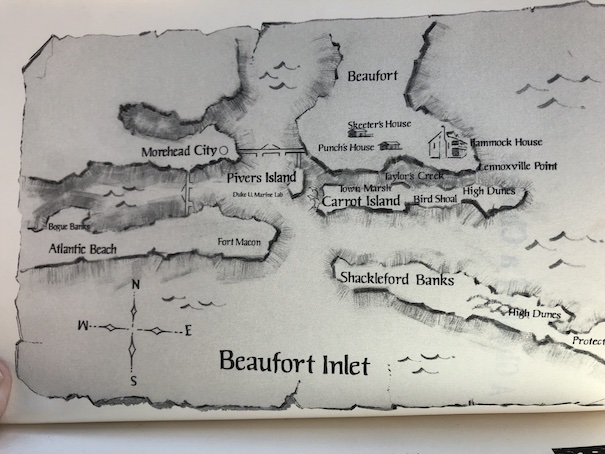
Punch (real name Philip) Wagner and his family are spending the summer by the sea in North Carolina, and his parents have let his friend Tom Ellis come with them. The 12-year-old boys are looking forward to exploring the area by themselves, but Punch’s father has arranged for the son of a friend of his to be their guide. At first, Punch isn’t thrilled about his father arranging for them to be led around by a boy they don’t know. Punch’s father has a very different personality from Punch. His father is a professor, very academic, so Punch doesn’t feel like he can take his father’s word that they’ll get along with this new boy. Punch and Tom particularly wanted their independence and a chance to make some plans of their own.

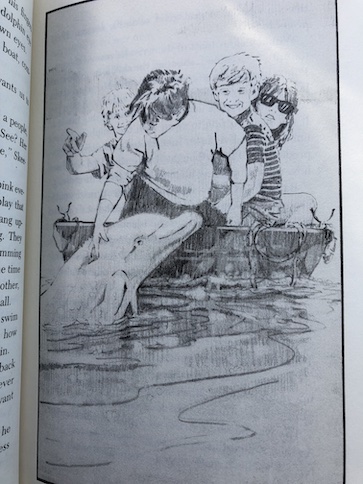
However, Punch is surprised to discover that his father’s old friend is a laid-back, jovial man who calls his father “old crawdad.” His son, Skeeter Grace, is a little younger than Punch and Tom, which makes Punch even less enthusiastic about having him as a guide. Skeeter Grace doesn’t seem to be any more excited about hanging out with Punch and Tom as they are with him, but the adults suggest that Skeeter take the other boys for a boat ride. Punch’s pretty older sister, Lila, says that she’d like to go with them. Punch warms up to Skeeter when he finds out that he participates in dolphin watches run by Duke University because he loves dolphins, although he considers Skeeter a bit of a know-it-all.

When Punch tries to ask Skeeter if he plans to work with the dolphin researchers when he grows up, Skeeter becomes oddly touchy. Punch mentions it to his father, and his father explains that nobody in Skeeter’s family has been to college before. His father is a carpenter, and it isn’t expected that Skeeter will attend college, either. Punch’s father points out that it must be difficult for Skeeter to want something that he doubts he’ll ever be able to get.

Punch is particularly interested in an old house nearby where Blackbeard once lived. He tries to persuade Skeeter to come with him and Tom to check it out, but Skeeter warns them not to go there. For one thing, that house is owned by somebody who wouldn’t like them trespassing, and for another, Skeeter is firmly convinced that the house is haunted by the ghost of Blackbeard. Lila says she doesn’t know why the boys are so interested in Blackbeard because he was a horrible person who killed people and “used women” (no details given, but you get the idea). Punch’s main interest is the stories about Blackbeard’s hidden treasure. He wants to be the one to find it.

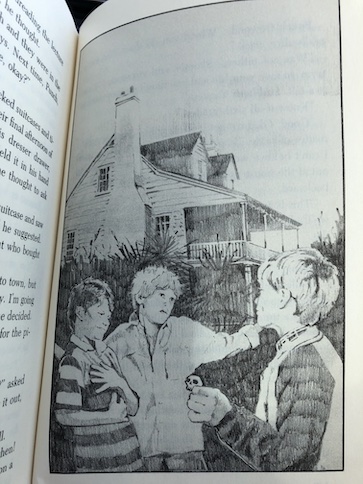
The boys go by Blackbeard’s old house, now called Hammock House, and they’re started by the sound of something hitting the roof and dropping down to the ground. When Punch picks up the small object, he discovers that it’s a small plastic skull with glittering red eyes. It’s startling, but it doesn’t seem likely that a real pirate ghost would toss them a plastic skull. Tom thinks maybe it’s some kind of warning, but Punch thinks that Skeeter probably tossed the little toy skull in the air when they weren’t looking, just to scare them.

Punch eventually persuades Skeeter to help him and Tom search for the treasure by pointing out to him that he would be able to afford college if they found Blackbeard’s treasure. He sees how badly Skeeter wants to go to college when Skeeter jumps on the project, bringing along a metal detector and helping the other boys dig and do research. At first, Punch just thought of the project as a fun summer adventure, but when he realizes what a big difference it would make to Skeeter to really find the treasure, the hunt becomes much more serious. Punch knows that searching for the treasure is a long shot, and it would be disappointing if they never found anything. Since it will be several more years before Skeeter will be old enough for college, they don’t have to succeed this summer, and the boys discuss making it an annual project every summer.

To make the most of this summer, they want to spend some time camping out and searching for treasure. Punch’s mother is reluctant to let the boys do that until Lila says that she’ll go with them. Lila knows that the boys are searching for treasure, and she encourages them to get into the mindset of being pirates as much as possible.

While the boys are using a metal detector, they find an old metal box. The contents don’t look like pirate treasure, but they appear to be someone’s treasure. There’s an old Bible, some jewelry, and a couple of tarnished silver baby spoons. On one hand, the boys are pleased to have found something, but on the other, it’s not as grand as what they had hoped to find. Lila says that the jewelry could be valuable, and the boys think that the local historical society might be interested in the old Bible. Skeeter explains that there used to be an old whaling community in the area they’re searching, but it was often damaged by storms. He says people sometimes buried valuables, knowing that their homes could be damaged or destroyed by storms. He figures that the owner of this particular box could have been killed in one of the storms, which is why he never returned for his box. They find some other boxes that appear to have been lost in a shipwreck, including one with spices and one with bottles of alcohol, but none of them are what they’re really looking for.

More and more, Punch becomes convinced that the only place where they should be looking for Blackbeard’s treasure is around his old house. He finally persuades Tom and Skeeter to come with him and have a look.

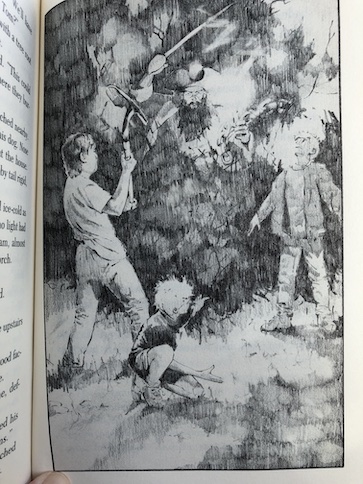
However, the house doesn’t seem as empty as the boys assumed it would be. Punch’s dog seems afraid of the house, and they still don’t know where the little plastic skull came from. Then, the boys hear a frightening scream, like the screams of a girl who was supposedly murdered by Blackbeard years ago. Is the house really haunted?

My Reaction and Spoilers

For most of the book, the boys are doing things like watching the dolphins, camping out, and digging for treasure in various places. The question of whether or not Blackbeard’s old house is haunted is the main mystery of the story, but the story doesn’t really become about that until almost the end of the book. Punch has the little skull to puzzle over before that, but it isn’t until the boys return to Hammock House to look for buried treasure that they become truly concerned with the ghosts that seem to be haunting the place.

There is a logical explanation behind the hauntings, at least some of them, making this the kind of Scooby-Doo Pseudo-Ghost Story that I always liked as a kid. In a way, this story is also a kind of MacGuffin story. It’s not so much what the kids find as the adventures that they have during the search that are important. The boys’ fathers understand because they later confess that they also hunted for Blackbeard’s treasure when they were young. It seems that, even though Punch thinks of his professorial father as being very different from him, when he was young, he was much the same sort of boy that Punch is now. Skeeter’s dreams of studying marine biology also do not depend on finding Blackbeard’s treasure. When his father finds out that’s what Skeeter really wants to do, he’s supportive, and Punch’s father, as a professor, offers some useful advice about scholarships.

There is some alcohol use in the book. There is a part of the story where the boys find a box with old liquor bottles and drink the contents, pretending like they’re pirates drinking rum. The boys get drunk and make themselves sick, and when Lila catches them, she lectures them about how they could have died. My first thought was that only an idiot drinks from random bottles that they just find. Even though they thought they were probably whiskey bottles, “probably” doesn’t seem good enough to just start drinking it. Also, Lila is right that they could have killed themselves from drinking too much. It is possible to die from alcohol poisoning by drinking way too much liquor of any kind all in one sitting, as kids they would be hit much harder than full-sized adults, and not having any prior experience with alcohol, they have no sense of their own limits. I’ve heard of college parties where people have died from alcohol overdose because they were new to drinking, didn’t know when they were going too far, and were in an environment where people were encouraging drinking to excess rather than learning restraint. What I’m saying is that the boys were in real danger because they were too young and inexperienced to understand the danger they were in. Fortunately, the boys learn their lesson without any lasting harm, and making themselves sick means that they’re unlikely to make the same mistake again.

Mystery of the Haunted Pool

Mystery of the Haunted Pool by Phyllis A. Whitney, 1960.

At the beginning of the story, Susan Price is traveling alone to visit her Aunt Edith. Her father is in the hospital, and her mother and brothers are tending to things at home. Her family wants her to make a good impression on Captain Daniel Teague, who lives in Aunt Edith’s town. Her father’s doctor has advised him to move to the country, where there is less air pollution, and the family would like to move to the small town along the Hudson River where Aunt Edith owns an antique store. However, the only available house that would be big enough for the family would be the Teague house, and Captain Dan hasn’t decided whether to rent or sell his house to them or not. Before Susan arrives, she isn’t sure what’s going on with Captain Dan and the arrangements regarding his house, but it turns out to be a complicated situation involving her aunt’s antique business, the Teague family history, and Captain Dan’s grandson, Gene.

When Susan’s bus reaches the bus stop, Aunt Edith isn’t there to meet her, so she walks to her aunt’s store. Aunt Edith apologizes for not meeting her. The reason why she didn’t is that a woman named Altoona was hanging around her shop, and she didn’t want to leave Altoona there alone. Lately, Altoona has been acting suspiciously, snooping around the shop as though she’s looking for something but doesn’t want anyone to know. Aunt Edith doesn’t know what Altoona is looking for, but it’s making her nervous. In particular, Altoona seems interested in a barrel of old books that Aunt Edith is selling on commission for Captain Dan, but Aunt Edith doesn’t want her looking through them until she’s had a chance to examine them herself.

Aunt Edith says that she’s known Altoona since they were children. Altoona was raised by her father and an older sister, both of whom were strict and unloving. Altoona led a very restricted life until her father and sister both drowned in a boating accident. Since then, Altoona has been indulging herself by spending her inheritance on antiques. However, rather than being a good customer of Aunt Edith’s, Altoona has turned into competition. She seems to delight in trying to beat Aunt Edith to some fascinating antique. Altoona seems to be on the trail of some new discovery, but Aunt Edith doesn’t want to give her the chance to poach something that might be right under her nose in her own shop.

Since Aunt Edith’s husband died years before, she’s been living in a back room of her shop. With her brother and his family wanting to move to the country, she’s planning on helping them get a house and living there with them. Aunt Edith has her eye on a particular house owned by Captain Daniel Teague, but he’s been reluctant to sell, which is why it would help if Susan made a good impression on him. Captain Dan has been living in a big old house with his grandson, Gene, but it’s an expensive house to maintain for just the two of them. He’s been considering renting it to Susan’s family with an option for them to purchase it later. However, he’s been dragging his feet on making a final decision because he wants to make sure that he approves of the Price family and that Aunt Edith won’t sell any of the antique furnishings from the house in her shop without permission. Also, Gene is upset at the idea of moving, and Captain Dan is concerned about Gene.

Aunt Edith explains that Gene is just a little older than Susan and that he was injured in an accident a couple of years before. He was hit by a car, and he’s been in and out of the hospital for treatment. Even now, his leg is stiff, and he has to wear a brace. Susan witnesses his frustration when she watches him trying to play basketball alone the first time she meets him. She can tell that he’s been trying really hard to overcome his disability, but things are still very hard for him. Susan is touched by Gene’s struggles and his stubborn efforts to succeed. She also discovers that he has strength and coordination in his arms, even though his left leg is very weak. When she asks Gene to teach her how to shoot baskets so she can impress one of her older brothers, she begins to realize that sometimes Gene tries too hard, and it makes his situation harder on him. When he gets tense, he has more trouble than when he’s relaxed.

Gene confesses to Susan that he feels guilty about being hit by the car, not only because he got hurt but because of what it’s done to his family. He admits that it was his fault for not looking more carefully before crossing a nearby highway. He feels terrible because his grandfather has spent most of his savings to pay for the hospital and doctors’ bills, and his mother had to get a job in New York City to pay the rest. Gene’s reluctance to move out of the family’s old home is that he knows how much his grandfather loves it, and he would feel even more terrible if his family lost the house because of his careless accident. The two of them seem to be getting along until Susan tries to climb a nearby rock, and Gene angrily tells her not to.

Captain Dan turns out to be a nice man. He’s called Captain because he used to be a river boat captain. He comes from a long line of sailors. When Susan tells him about meeting Gene and how Gene got angry at her for trying to climb a rock, Captain Dan tells her not to try too hard to accommodate Gene and his moods. He says that Gene’s biggest improvements have only come recently, when he started pushing Gene to work harder to improve. He thinks that Gene was a bit coddled up to that point and that he was too discouraged by the doctors’ predictions about what he wouldn’t be able to do anymore without really trying to test his limits and see what he could do for himself. In a way, Captain Dan is actually in favor of the Prices moving into their big family home because he knows that Susan has brothers. He thinks that having other boys around will be good for Gene, getting him to participate in more activities and push himself a little more.

One thing that’s making Captain Dan hesitate is the idea of having Aunt Edith in his house. He admits that he finds it difficult to say no to her when she wants something, and she’s been urging him to let her sell some of his old things in her shop. He’s concerned about what she might talk him into parting with next if she were living in his house. When Gene finds out that Aunt Edith talked his grandfather into parting with that barrel of old books, he gets angry again and talks back to his grandfather.

Susan is surprised at Gene’s rudeness and disrespect, but his grandfather says that part of that comes from Gene not liking himself much right now. Because Gene is unhappy with and disparaging of himself, he’s unhappy and disparaging with everyone. That’s part of why Captain Dan has been pushing Gene to improve himself, to give him more confidence and self-respect because he will see that he still has the ability to improve. Captain Dan also realizes that Gene has an intense attachment to their family home and family heirlooms because he takes more pride in their family’s history than in himself, thinking that he’ll never be able to be proud of himself now. Aunt Edith says that Gene’s father, a pilot who died in a crash, was also a decorated pilot during WWII. When Gene was younger, before he was injured, he was a much more active boy, and his father was proud of him for it. Aunt Edith thinks that Gene worries that his father would be ashamed if he saw his current condition.

Susan likes Captain Dan for his kindness and understanding of Gene. She’s not sure how much help her brothers would be with Gene, though. Her brother Adam, the closest in age to Gene, probably wouldn’t have much patience with a boy like him. That’s probably why Susan’s family decided that Susan would be the best person to break the ice with Captain Dan and Gene.

Susan tells Captain Dan that she saw Altoona watching the house when she came up to see him, and he says that he knows about Altoona’s obsession with antiques. He’s not sure what Altoona is looking for, but he thinks it must be some kind of antique. Mrs. Bancroft, Captain Dan’s housekeeper, says that the family has a secret. Aunt Edith says that rumor has been around their small town for years, but she doesn’t know what sort of secret it’s supposed to be, and with a town full of people who all know each other and each other’s family history, she can’t imagine what could still be secret about the Teague family.

Then, Susan finds an old ship’s log book in the bottom of the barrel of books that Aunt Edith got from Captain Dan. It’s the log book for the Flying Sarah, the ship that one of the Teague ancestors sailed. Aunt Edith returns the log book to Gene because she knows it must be a family heirloom, more valuable to the Teague family than anyone else. However, Gene is still sore about Aunt Edith having the barrel of books, and Susan catches him sneaking into the shop one night while Aunt Edith is out. He says that he wants one of the books, but he refuses to say which one he wants or why. Susan thinks that Gene knows more about his family’s secret than he’s telling and that his concern about the books has something to do with it. It seems like Gene may be on the trail of the same thing Altoona is searching for, but what is it? Captain Dan also seems to know, but he tells Gene in Susan’s presence that it doesn’t matter.

Susan gets a hint from Altoona when Altoona tells her that the old Teague house is haunted by the ghost of Sarah Teague, the wife of the captain who sailed the Flying Sarah, which was named for her. Altoona says that Sarah’s husband was murdered on the Flying Sarah and that Sarah took over the family’s shipping business after his death. Then, Sarah drowned in the little pool in the woods near their house. Altoona says that Sarah promised to come back and haunt the house if things didn’t go her way, but what does that mean?

Susan does some research in an old book about ships and discovers that the captain of the Flying Sarah had been carrying a valuable shipment of jewels for a friend when the ship was attacked by pirates. He died from the wounds he received from the pirates, and the pirates apparently took the jewels along with other valuable objects from the ship. After her husband’s death, Sarah Teague insisted on taking responsibility for the lost jewels and repaying the owner for their loss, which was financially crippling for the family. The book also repeats the story about Sarah Teague haunting the old family home. Soon after Susan and Aunt Edith move into the Teague house, someone break in during the night, apparently looking for something. Susan goes to look at the pool where Sarah drowned and thinks that she sees a strange face looking back at her from the water. What message from the past does Sarah Teague have for them, and what secret has the Teague family been hiding for generations?

The book is available to borrow and read for free online through Internet Archive.

My Reaction and Spoilers

For much of the book, the exact nature of the Teague family secret is a mystery to Susan, although readers can probably make a pretty good guess at what Susan eventually finds. Part of the difficulty is that the Teagues themselves don’t seem to quite understand what they really have. They know part of the secret, but only part of it. When Susan discovers the rest, it changes things for Captain Dan and Gene. Susan’s brother, Adam, helps Susan with the mystery for part of the book, but Susan is the one who makes the final discovery.

Altoona is kind of a rival/antagonist for solving the mystery, but not an evil one. She appears to be going through a kind of finding herself phase since the deaths of her father and sister. Her family was repressive, so for the first time in her life, she is taking advantage of opportunities to get involved with community activities and indulge her own whims. She dresses in strange ways because she’s trying out all of the things her father and sister would have never allowed her to wear when she was younger. She volunteers at the local library, but she has trouble deciding which books to recommend to the children who visit the library because she’s never read many of them herself. When Susan suggests to her that she should read some of the children’s books herself so she’ll know what they’re like and what they’re about, Altoona balks at the idea of an adult reading children’s books at first. However, she decides that maybe Susan is right, and when she tries some of the children’s books that Susan recommends, she says that she likes them.

Altoona’s pursuit of the Teague family secrets isn’t malicious. It seems to come from her newfound sense of independence and adventure. Figuring out the old mysteries of the Teague family is a sort of personal challenge for her and something that has fascinated her for her entire life, a fascination that she is now free to indulge. She almost messes things up by taking something that doesn’t belong to her, but it turns out to be an innocent mistake because of something Gene did, and she makes things right in the end. Altoona also comes up with a solution to the Price family’s housing problem. She says that she’s always wanted to travel, and at Adam’s encouragement, she’s decided to take an extended international trip for a year or so. While she’s away, she rents her house to the Price family so the Teague family can have their house to themselves again.

The book mainly focuses on self-discovery for Gene as a side plot to the story. At the end of the book, Gene’s problems aren’t completely solved, but he has become more reconciled to his condition and has a better understanding of things he can and can’t do because of the children’s adventures. By learning to get along with Susan and Adam, Gene becomes more ready to face other people and their reactions to his disability. When things improve for him and his family, he also seems less inclined to keep beating himself up over his accident. Things aren’t perfect for him at the end, and he’s probably never going to have completely normal use of his bad leg again. Still, there are signs that he’s mending, both physically and emotionally, and that things will get easier for him.

I like books that mention other books. In this book, the barrel of books that Aunt Edith gets from Captain Dan includes classics, like Little Women and Treasure Island. There are also books by Washington Irving, Gene Stratton Porter (known for A Girl of the Limberlost), and Harold Bell Wright and some “novels about an imaginary kingdom called Graustark.” These are all real authors and books. Aunt Edith says that some of them aren’t old enough to be considered real antiques, but this book was written more than 60 years, so modern standards would be different. Part of the story also includes books that have hidden pictures drawn on the fore-edges of the pages, which can only be seen when the pages are held at an angle. This type of fore-edge drawing or painting is something that can be found in real antique books.