Abigail

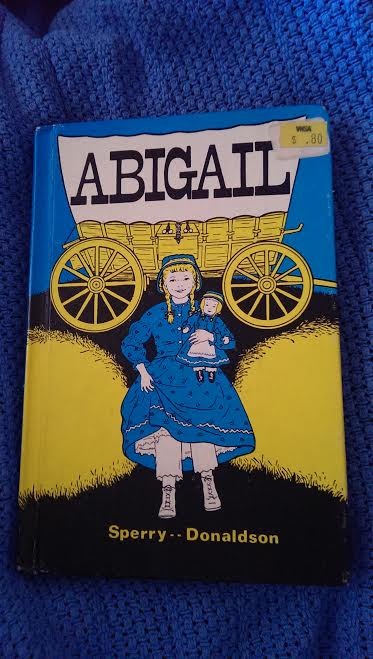
abigailAbigail by Portia Howe Sperry and Lois Donaldson, 1938.

Susan is a little girl living on a farm in Kentucky during the 1800s.  Her family has recently decided to move to Indiana, which is the new frontier of the United States.  Her uncle and his family are already living there, and he has persuaded Susan’s parents of the opportunities that await them.

As the family packs up to leave, Susan’s grandmother gives her a special present that she and Susan’s aunt made for her: a new doll.  Unlike Susan’s old wooden doll, this doll is a soft rag doll that she can sleep with.  They made the doll to look like Susan herself, but Susan names the doll Abigail after her grandmother.

Abigail accompanies Susan on her adventure as the family heads west to Indiana in their covered wagon.  Susan is sad and a little afraid at first, but when she thinks of what Abigail would say to her about her need to be brave and to explain to her all the strange things they will encounter on the journey, Susan regains her courage.

The family does have adventures on their two-week trek to Indiana.  They have to cross rivers, face down a bear, and worry about whether they will encounter unfriendly Indians (Native Americans).  Even after they arrive in Indiana, joining their other relatives, they will still have to get used to life in a new place.

Throughout the book, there are little side-stories, poems, and hymns that the family sings and tells each other.  Through it all, Abigail is Susan’s constant companion, helping her to feel at home in her new home.  I loved this book when I was a child because I always loved dolls.  This book was a bigger part of my youth than the Little House on the Prairie series, but it would probably appeal to Little House on the Prairie fans.

The book is available to borrow and read for free online through Internet Archive.

Sarah Morton’s Day

sarahmortonSarah Morton’s Day: A Day in the Life of a Pilgrim Girl by Kate Waters, 1989.

This book is part of a series of historical picture books. It features a young girl who was an historical interpreter at Plimoth Plantation, a living history museum, playing the part of a real pilgrim girl who lived in 17th century Plymouth.  The pilgrim girl’s name was Sarah Morton, and she was nine years old in 1627, the year that Plimoth Plantation reenacts.

As Sarah Morton, the girl takes readers through a typical day in her life.  She demonstrates the chores that a pilgrim girl would have to perform.  She explains the clothes that a pilgrim girl would wear and what people ate.  There is a recipe for 17th Century Indian Corn Bread, a simple recipe that readers can make at home, but it warns that modern people wouldn’t think that it tastes very good.  It’s basically just water and cornmeal grits.

sarahmortonpic1Although much of Sarah Morton’s day is taken up with chores, she also discusses her relationship with her mother and her new stepfather.  The death of a parent was something that pilgrim children often experienced.  After her father’s death, Sarah’s mother remarried, and Sarah is concerned about whether her new father likes her.

However, her stepfather is a good man who cares about her.  He gives her lessons in reading and writing, something that not every pilgrim girl would have.  He also gives her a special toy: a knicker box, which is a wooden box with arches for rolling marbles through as a game.  She gets to play with her friend, Elizabeth.

The two girls are also excited about a ship that has been sighted out at sea.  Soon, new people will be coming to their colony, and they wonder if the ship is also carrying letters from England or special goods that they would like, like a new bolt of cloth.

In the back of the book, there are sections explaining a little about the Plimoth Plantation living history museum, the real Sarah Morton, and the girl portraying Sarah Morton, Amelia Poole. The Plimoth Plantation site has more information about the real Sarah’s Morton’s life, including what happened to her when she grew up.  If you’re curious about what Amelia Poole is doing today, she is a fiber artist and lives in Maine.

The book is available to borrow and read for free online through Internet Archive.

sarahmortonpic2

The Master Puppeteer

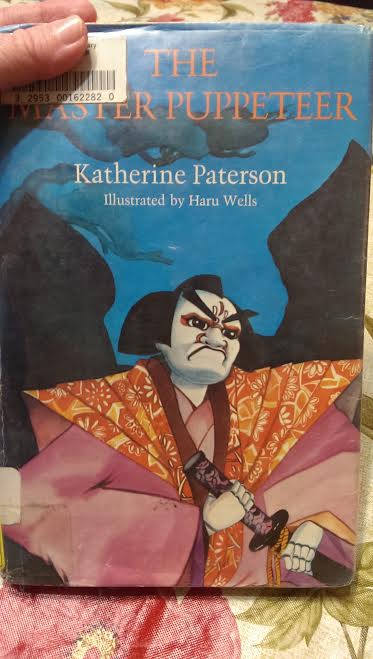
masterpuppeteerThe Master Puppeteer by Katherine Paterson, 1975.

Jiro was born during a terrible time in the history of Osaka, Japan, during the 18th century. Around the time he was born, a plague swept the city, killing his other siblings, making Jiro the only child of Isako and Hanji, the puppet maker. His mother resents him for surviving when her other children didn’t and criticizes him for being clumsy when he tries to help his father make puppets. Now there is famine in Osaka, and Jiro’s family is on the verge of starvation. The only way they can support themselves is by making puppets for Yoshida’s puppet theater, the Hanaza.

The Hanaza has been doing well in spite of everything because the rice merchants are still wealthy enough that they can afford to spend money attending the theater. One day, when Jiro goes with his father to bring a puppet to Yoshida, Yoshida comments that the boy has spirit and offers to take him on as an apprentice at the theater. Hanji does not take the offer seriously, but Jiro does. He knows that he will not be able to help his parents by making puppets, and the people at the theater earn money and have plenty to eat. He joins the theater without telling his parents, introducing himself to the old, blind Okada, who chants the words of the plays.

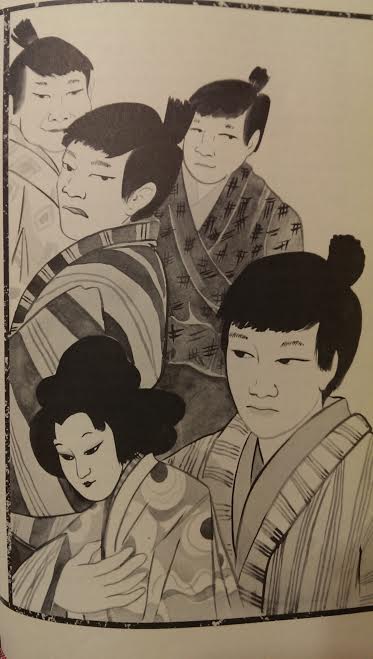
masterpuppeteerpic1Okada was once Yoshida’s teacher, and he accepts Jiro into the theater. Jiro is fascinated with the world of the theater, studying alongside Yoshida’s son, Kinshi, who becomes his closest friend. However, he must first graduate from apprentice to puppeteer before he can begin earning enough money to support his family, and the news from outside the theater is grim. Word has reached him that his father is ill and his mother is starving. The poor people of Osaka, starving and oppressed by the wealthy merchants and tax collectors, begin rioting.

Saburo, the leader of a gang of bandits, has become a hero to the people, taking food and money from rich people in clever and daring raids and using it to feed some of those who are starving. Kinshi in particular admires Saburo and sets off on his own mission to save the poor people of Osaka. Jiro fears for Kinshi’s safety but does not know who to turn to for help until he finds evidence that seems to point to the true identity of Saburo.

One of the fascinating things about this story is the way the puppets are operated.  Unlike either hand puppets or marionettes, where the operators are never seen, the operators of puppets in Japanese theater are on stage with them.  However, the operators are dressed completely in black with hoods, so the audience will disregard their presence.  Because of the violent episodes in this story, I would recommend it for middle school level.

All The Children Were Sent Away

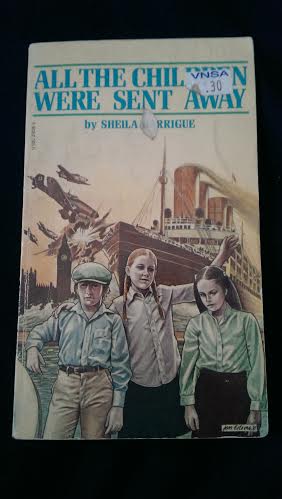
It’s 1940, and Sara Warren’s parents are sending her to stay with her uncle in Canada until the war is over.  With the increasing bombings of England, her parents have decided that it’s just too dangerous for Sara to stay, and her uncle has written, asking them to send her.  Many other British families are sending their children away to escape the bombings, and Sara travels to Canada on a ship with other British child evacuees.  All of them are worried about the families they’ve left behind and what it’s going to be like, living in another country.  They also worry about whether or not they’re ever coming back.

Sara’s escort for the trip is Lady Drume.  She is a bossy, over-bearing woman with very definite ideas about how children should be raised.  She doesn’t like Sara to talk to the sailors on the ship because they can be “impertinent,” and she doesn’t want her to play with the other children because they’re “guttersnipes!”  She even refuses to attend the lifeboat meeting or let Sara go without her!  To Sara’s mind, Lady Drume is as bad as any Nazi.

Sarah still manages to make friends with some Cockney children, Ernie and Maggie, seeing them whenever she can get away from Lady Drume, and an old sailor called Sparky makes sure that she understands safety on board the ship and attends the lifeboat drills.

But, when Lady Drume forces Sara to cut her hair after she’s been waiting so long for it to grow out, Sara decides that’s the last straw!  With the help of her friends, Sara hides from Lady Drume on the ship.  In the process, she learns something about Lady Drume which changes some things for the better, although it takes an outbreak of measles for Lady Drume to really understand and appreciate Sara.

This book is available to borrow and read for free online through Internet Archive.

Part of trouble with Lady Drume and her behavior is that she’s actually very afraid.  She doesn’t like to talk about lifeboats or life jackets because the war and the possibility of sinking frighten her.  She deals with problems by being brusque and trying to ignore frightening things, charging on ahead with whatever seems like a practical course of action to her.  It’s not even just the war but the changing world around her that frightens Lady Drume, a woman who’s used to knowing who’s who and what’s what and getting things done the way she likes them.  But, the rigors of their journey and their mutual vulnerability when they’re sick help lower Lady Drume’s barriers.  Lady Drume isn’t a bad person, and in the end, she arranges a special surprise for Sara to make her exile from England more bearable.

The end of the story is a brief section explaining Sara’s return to England, having been away for a few years, and her feelings at seeing how England and her parents have changed during that time.

There is a sequel to this book that shows what happened during Sara’s time in Canada called The Eternal Spring of Mr. Ito.  It focuses on suspicion of Japanese people following the bombing of Pearl Harbor.  There were Japanese internment camps in Canada as well as the United States during World War II.

Sheila Garrigue’s books about child evacuees from England were partly based on her own experiences as a child evacuee during World War II, as explained in her obituary after her death in 2001.

The Night Crossing

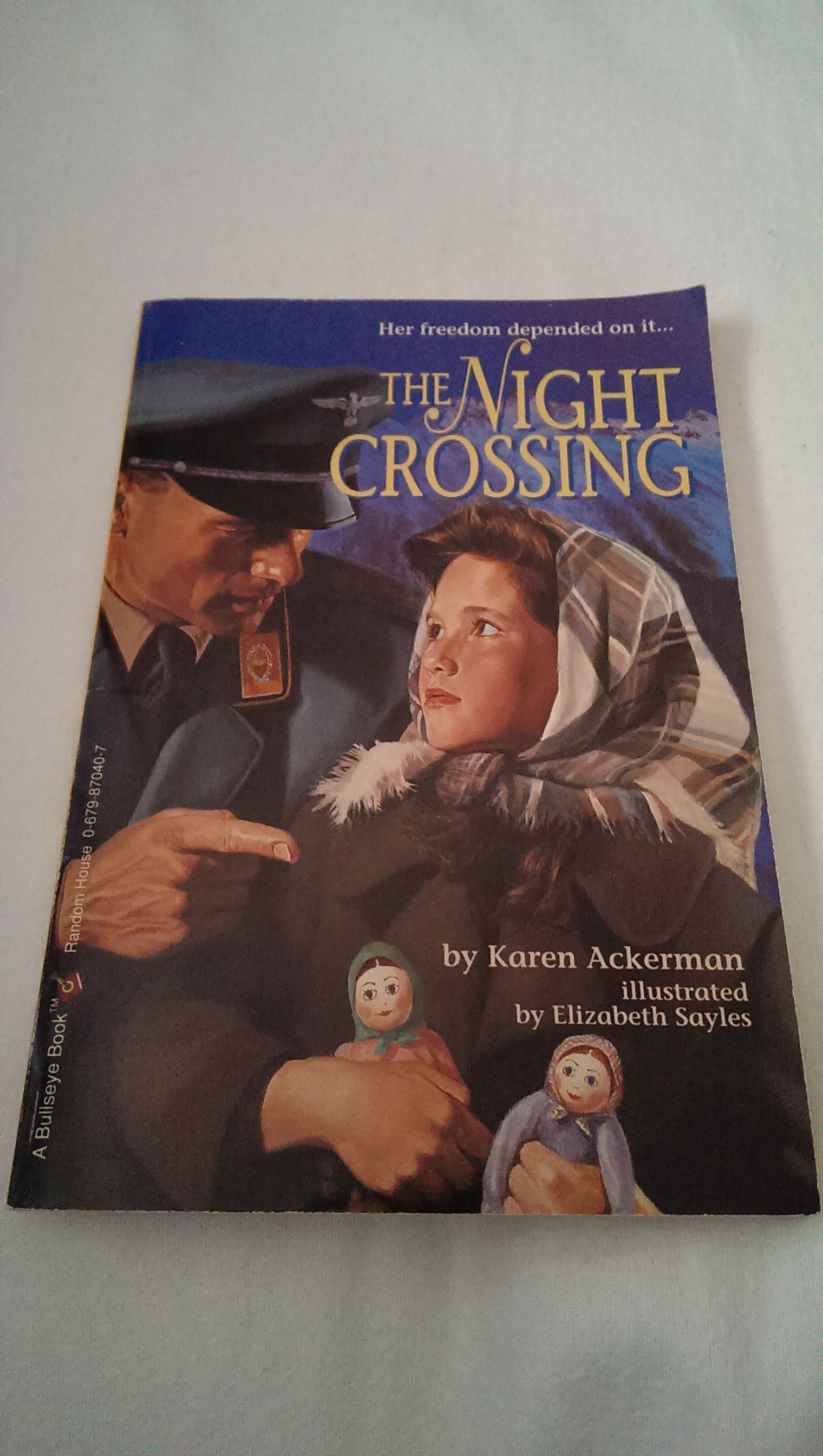
NightCrossingThe Night Crossing by Karen Ackerman, 1994.
It’s 1938 in Austria, and Clara’s parents have decided that their family needs to leave before things get worse.  Already, Jewish families like theirs are being rounded up by the Nazis, and Clara and her sister Marta were chased through the streets by other children, shouting insults.

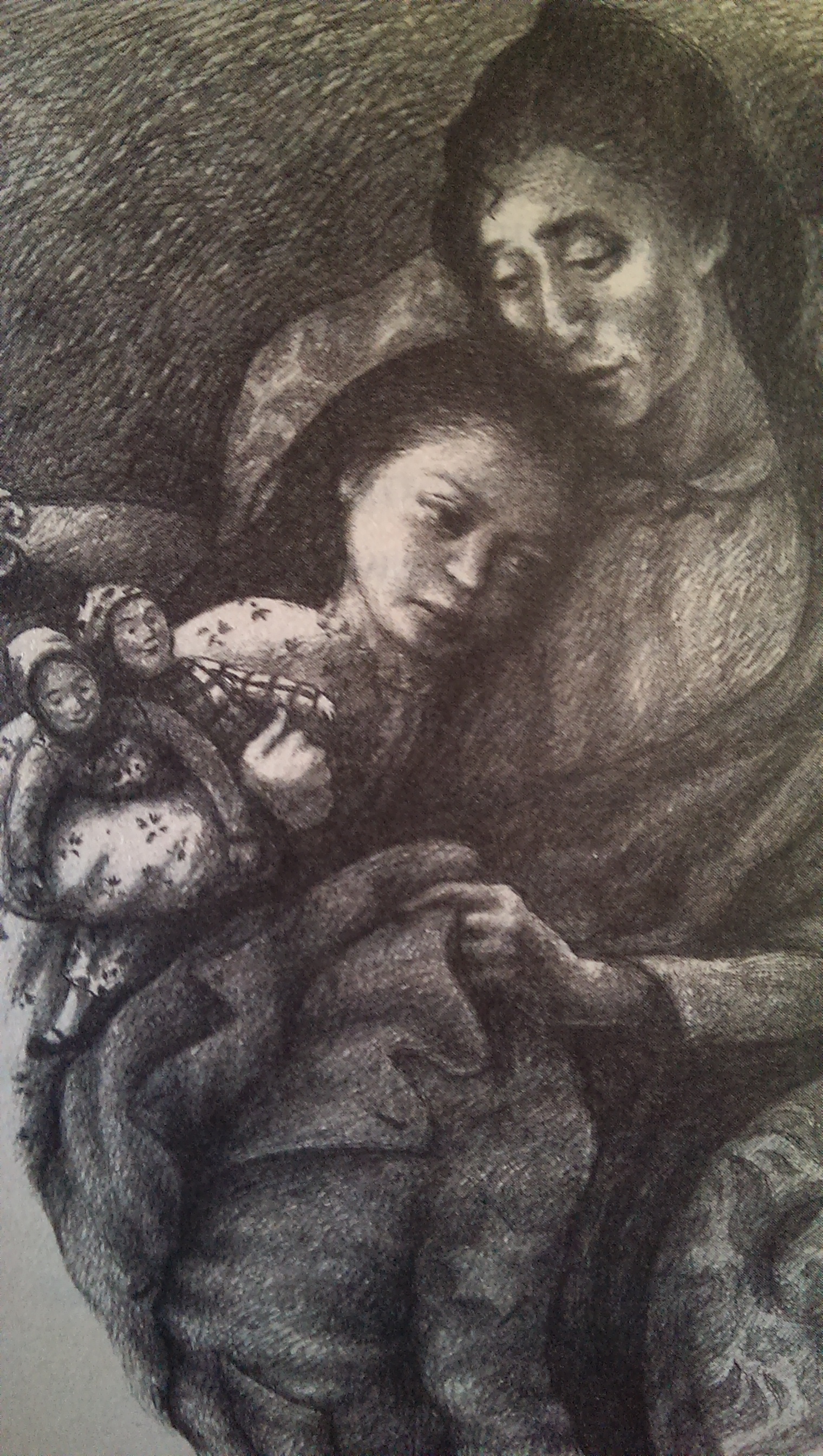
Their family has been through things like this before.  Clara’s grandmother tells her about when she had to flee Russia as a little girl to escape the pogroms.  She brought her dolls Gittel and Lotte with her as her family hiked through the Carpathian Mountains.  Now, Clara will carry them with her as their family leaves Austria for Switzerland.

It’s a hard journey with lots of walking and little food.  The family can carry very little with them, and some of what they have they are forced to trade for food, a place to rest, and for not being turned over to the Nazis.  Finally, at the border crossing, Clara’s parents are afraid that they will have to get rid of the candlesticks that have been in their family for generations because they might be discovered by the border guards.  Then, Clara comes up with a plan to hide them in her dolls.  Will it work?

NightCrossingPicThis is a pretty short chapter book.  Although the subject matter is serious, and parts might be frightening to young children (the part where Clara and Marta are chased and perhaps some of the parts where the family is hiding), there are only vague references to more dark subjects like concentration camps (people who already know what they are and what happened there would understand, but children who haven’t heard about them wouldn’t get the full picture from the brief mentions).  The book would be a good, short introduction to the topic of the Holocaust by putting it in terms of the way it changed the lives of ordinary people who had to flee from it.  Actually, it wouldn’t be a bad way to start a discussion of the Syrian refugees in Europe by putting it into the context of ordinary people fleeing the violence of war.

This book is currently available online through Internet Archive.

Twenty and Ten

TwentyTenTwenty and Ten by Claire Bishop, 1952.

The story takes place in occupied France during World War II.  Children were often sent to the countryside to escape the violence of war, and a group of twenty children, both boys and girls, are staying at a small school taught by a nun, Sister Gabriel.  Most of them are about eleven years old, although four-year-old Louis is allowed stay at the school with his older sister, Denise.

Janet, another student at the school, tells how a strange man comes to the school and begs them to help him hide ten Jewish orphans from the Nazis.  Sharing their school with these newcomers means that they will have to share their already meager rations with them and to keep their presence at the school absolutely secret.  In spite of the danger and difficulty, everyone at the school agrees to help.  They think of it as being like when Mary and Joseph had to take baby Jesus to Egypt to hide him from King Herod, a story they had recently acted out in play form.

TwentyTenPic1The two groups of children soon make friends, and one of the Jewish children, Arthur, shares something special with his new friend, Henry: a small piece of chocolate.  With the rationing, none of them have seen chocolate in a long time.  Henry decides to share a little with Janet because he likes her, and they decide to hide the rest and save it for later.  When Denise spies them with the chocolate and wants to have a little herself, she steals the piece of chocolate from where Henry has hidden it. The others chase after her to get the chocolate back, and they end up accidentally discovering a cave that none of them knew was there.

This becomes a vital discovery when the children spot a pair of Nazis heading toward their school.  Sister Gabriel is away, so the children have to take care of the situation themselves.  Quickly, Arthur leads the other Jewish children to the cave, where they can hide.  The other children remain at the school and try to keep the Nazis from learning anything.  They try not to even talk to the Nazis when they start asking questions.  But, how long can they keep it up?  Something has obviously happened to Sister Gabriel, and the Jewish children can’t hide in the cave forever.

There is a movie version of this book called Miracle at Moreaux.  The movie differs significantly from the book.  In the book, the children at the school are all welcoming to the Jewish children, but in the movie, some of the children at the school are afraid of the Jewish children (there are only three of them in the movie), one of them in particular hating Jewish people because she believes anti-Semitic stories she’s heard.  Also, instead of the cave that appears in the book, the movie uses a Christmas pageant as the device for confusing the Nazis and allowing the Jewish children to escape to Spain (instead of staying at the school until the end of the war, as they did in the book).

This book is available online through Internet Archive.