Camp Ghost-Away by Judy Delton, illustrated by Alan Tiegreen, 1988.
The Pee-Wee Scouts sell powered sugar donuts door-to-door in their neighborhood to raise money for their trip to camp, and there is a special badge for the scout who sells the most. The kids all brag about how much they’re going to sell, each claiming that they can sell the most. Rachel teases Sonny because his over-protective mother will probably go with him while he’s going door-to-door. She calls him a “mama’s boy”, and he calls her “stuck up.” (There is some truth to both of these insults, but they’re still nasty, and no adult comments on it.) Molly and Mary Beth decide to do their selling together because they’re best friends.
In the end, Rachel and Sonny are the biggest sellers, each of them selling more than 100 boxes, in spite of Rachel’s teasing about his mother’s involvement and Rachel’s mother’s objection that donuts aren’t very healthy. However, there are some objections about how fair that is when Rachel and Sonny reveal the secrets of their success. Sonny’s mother sold 80 of his boxes at her workplace, and some kids object that it isn’t fair because Sonny didn’t sell them himself. He gets more teasing about being a “baby” and having his mother do things for him, but Mrs. Peters, the scout leader, says that it’s fair for a mother to sell on their behalf because the most important thing is the money they raise for camp.
Similarly, Rachel explains that her family went to a family wedding, and she sold most of her boxes to her relatives. Her family seems to have money, and her aunt and grandmother each bought 20 boxes. Jealously, Molly says that her relatives will get fat if they eat that many donuts. Rachel says that they won’t because they plan to donate the donuts to hungry people. Again, Mrs. Peters doesn’t say anything about the insults the children trade, just saying that the money they raised is important because they will now be able to afford to go to camp.
The camp is called Camp Hide-Away, and Mrs. Peters gives the children information about the camp and what to pack. They will go to camp next weekend, and Lisa’s mother will come with them on the trip. Rachel brags about how she has two swimsuits to bring, while the other kids only have one each, and she also shows off her new gold bracelet.
When they get to camp and Rachel discovers that they will be sleeping in tents, she isn’t so sure she wants to go camping after all. She doesn’t like bugs, and she worries about bears. The other kids call her “sissy” and “scaredy cat.” Mrs. Peters assures them that it will all be fine, and she has her large dog with them.
That night, they hear a strange sound, which sounds like the moaning of a ghost. The kids debate about whether it’s a ghost or some kind of wild animal. Either prospect is terrifying. When it starts talking, they’re sure it’s a ghost, but Mrs. Peters’s dog saves the day!
My Reaction and Spoilers
I’ve commented before that the kids in this book series do a lot of name-calling. In a way, it’s realistic for young children, but it’s also really annoying. Sonny inevitably gets called “sissy”, “baby”, and/or “mama’s boy” in every book I’ve read. It also bothers me that no adult ever tells the kids not to talk like that. The kids in the story are only six years old, so this kind of name-calling could be considered realistic, but adults telling kids not to talk like that is also realistic. I feel bad for Sonny because he often gets picked on in these books, and I think it’s unfair. Maybe his mother is a little over-protective, compared to the other parents, but at the same time, these kids are only six years old. Things like having a mom who walks to a six-year-old to school and doesn’t want a six-year-old to go door-to-door, selling things to strangers all by himself, are not outrageous. Even Rachel admits that she heard her mother saying that the kids were rather young to be away from home overnight for an entire weekend, and I think that’s true. There is some trouble with homesickness in the story, and I’m not surprised.
Like other books in this series, there are also multiple parts to the story, almost like short stories put together. The first part of this book is about selling the donuts to raise money for camp, and the second part is about their camping trip, although that part also has some smaller episodes. The highlight of the book is the spooky noise that the kids hear at night and think is a ghost. It is pretty quickly revealed that it’s just a couple of the scouts playing a prank on the others. The prank gets foiled by Mrs. Peters’s dog and the pranksters crashing into things because they have sheets over their heads.
There’s also a third part of the story, where Molly has more trouble with camp activities than the other kids. She can’t swim or row as well as they can, and when they look for interesting things, like rocks and wild flowers, on their hike, all she finds is poison ivy. But, she isn’t the only one having problems. Rachel doesn’t like bugs and the camping food, and Sonny gets homesick. Sonny’s mother comes to pick him up because he’s so upset. The other kids tease him again, but the truth is that other kids are also homesick and cry at night. Even Lisa cries, even though her mother is there on the trip. Molly realizes that she is the only one who isn’t homesick. Although she doesn’t get the badges for the standard camp activities, Molly does get one for not being homesick and another for finding Mary Beth’s lost ring. I was surprised that Rachel’s bracelet wasn’t the thing that got lost since she made a big deal of introducing it, but it was Mary Beth’s ring that got lost instead.
Although I often think that the adults don’t explain much to the children in this series, Mrs. Peters does tell the children that homesickness is natural. I think she could have given them a little more advice about it and defended Sonny from the teasing more, though.
I haven’t found a copy with its dust jacket intact.
Gone Away by Ruth Tomalin, 1979.
Time flies? Ah no. Time stays. We go.
Sundial motto from the beginning of Gone Away
Francie is an only child living on a farm called Goneaway Farm in Sussex in the 1930s. It’s a very old farm, and there’s a story about it that, hundreds of years before, another family once lived there, another couple with only one child. One day, this family went to a fair in another town, Alchester, and for reasons nobody understands, they never returned to this farm. The farm stood empty for a long time before it had a new owner. Because this old family went away with no explanation, the farm came to be called Goneaway. In spite of this strange story and the age of the farm, Francie has never felt that the farm was haunted or that there was anything sinister about it. Then, Francie finds herself staying in a real haunted house.
There are no illustrations in the book. It starts with this quote.
Because the farm where Francie lives with her parents is far away from local schools, Francie studies her lessons at home with her parents’ help, but she often gets distracted by the animals on the farm and doesn’t focus on her lessons. Francie’s great-aunts, Aunt Berta and Aunt Fanny, live in Scotland, but when they come to visit the farm, they see how Francie isn’t getting her schoolwork done. The aunts are also concerned at how isolated Francie’s life is. There are no other children living nearby to be friends with Francie, and they think that her life must be lonely. They talk to Francie’s parents about sending her to boarding school, but they say that they can’t afford it. They can’t even afford a car, which is why they can’t drive Francie to school in town. The aunts remind Francie’s mother that she used to board in a private house with a nice family so she could attend school when she was young. Boarding with a family wouldn’t cost as much as a fancy boarding school, and she could come home on weekends. Still, Francie’s parents are reluctant to send her away because they think she’s too young, and they’re not ready to part with her.
When the aunts leave after their visit and her parents don’t bring up the subject of school again for a while, Francie is relieved. She loves her life on the farm, and she doesn’t want to leave. Yet, she also finds herself oddly disappointed, too. She’s read stories about children at schools, and their adventures do sound exciting. She thinks it would be ideal if she could go to school during the day and come home afterward, like other children do, but that just won’t work with her family’s circumstances. Her parents’ attempts to find friends for her just aren’t working, either. Her parents start inviting other farm families to visit on Sundays, but Francie doesn’t get along with their children. The reasons why she doesn’t get along with them are largely because the other children don’t behave well, but these incidents convince Francie’s parents that maybe the aunts were right and that Francie could benefit from going to school and meeting a wider range of other children.
Her parents write to the high school in Alchester and inquire about registering Francie. They arrange for Francie to take entrance exams, but Francie has mixed feelings about it. On the one hand, the idea of boarding and going to school, with the knowledge that she will come home on the weekends, seems exciting, but on the other hand, she worries that the children at the school won’t be any more friendly than the children of the nearby farm families. Her mixed feelings continue through the day when she and her mother visit the school. At first, Francie thinks that maybe she’ll flunk the entrance exams on purpose so she won’t have to leave her farm. Then, after the initial tour of the school, Francie thinks that going there may be exciting after all, so maybe she’ll try to pass the exams. The exams are difficult, and she expects she’ll fail them after all because she really can’t do the work. Her parents tell her not to worry because, if she fails this year, she can always study more and try again next year. However, it turns out that she did pass. The arithmetic portion of the exam really was too difficult for her because the person giving her the exam accidentally gave her a higher level test instead of the basic entrance exam, but Francie did an excellent job on the writing portion of the test.
Since Francie will be attending the school in Alchester after all, she and her mother begin shopping for her school uniforms and other supplies. Francie is still worried about the prospect of boarding with strangers in town, and her mother isn’t sure how to find a house or family willing to take her. A boarding prospect turns up because Francie is too small and skinny for even the smallest available size of the school uniform, and she and her mother have to visit a professional tailor. The tailor, Mrs. Majendie, also has a few rooms that she rents out to boarders. Francie isn’t sure that she’ll like boarding with Mrs. Majendie at first because she and her house seem a bit grand, her dog seems oddly bored and unresponsive to Francie’s friendliness, and her other boarder is the headmistress of another school in town, the Chantry School. However, the available room is beautiful, with a four-poster bed and tapestries, and the room has a view of the nearby churchyard, where the children from the Chantry School are playing among tombstones in the old graveyard. Mrs. Majendie says that the Chantry School was once a chapel, and her own house was once an old inn. She also says that a new housekeeper will be moving in soon with her daughter, who will attend the Chantry School. It all seems like a fairy tale kind of place to Francie, and she is reassured that there will be another girl living in the house with her, so she tells her mother that she would like to board there.
When she actually starts school, it goes pretty well. The classes aren’t too hard, the subjects are interesting, and she gets along well with the other girls. There is an older girl called Trixie who likes to play pranks on the younger students, and some of the girls tease Francie about her height, but the older girl who is assigned to look after her, Verity, tells Francie not to take any notice of those girls. At first, Francie is able to use her bicycle to get from school to the train station, so she is able to go home every night, but then, as the days grow shorter, and it gets dark sooner, she can’t do that anymore, so she starts to board in town with Mrs. Majendie.
Her boarding experience turns out to be different from what she first thought, though. It turns out that the new housekeeper isn’t very friendly, and her daughter decided to stay with her grandmother instead of coming to town with her mother, so the house is lonelier than Francie had expected. The atmosphere is also different in the winter than in the summer, when Francie first saw her room. The room seems colder, darker, and a little more sinister in the winter, and in the evening, there aren’t any children playing in the churchyard outside. At night, she hears strange sounds, like a tapping and a wailing. When Trixie learns that the place where Francie is boarding is Falcon House, she implies that there’s something really wrong with the place, but Francie assumes it’s just another of Trixie’s tricks. Then, when other students try to get Trixie to shut up and remind her that they all promised not to talk about it in front of Francie, Francie realizes that there really is something weird about the house. She tries to get Verity to explain it to her, but Verity refuses, which just makes Francie angry and more scared. Now, she knows there is a real secret about the house, but she doesn’t know exactly what it is.
A strange man comes to visit Falcon House, and Francie sees that his card says he is Dr. D. Bone Fane from the Circle for Psychical Research. Francie doesn’t know what it means, so she asks some of the other girls at school if they know. One of them, Bryony, says that she’s met this man before. He’s a ghost-hunter from the United States, investigating supposedly haunted places. Bryony’s father teaches in the Abbey choir school, and this man has been pestering him about stories of a haunting there, although Bryony’s father thinks it’s all boring nonsense. From this information, Francie realizes that Dr. D. Bone Fane is interested in Falcon House because he thinks it’s haunted. She confronts Verity about it, and Verity admits that there are stories of hauntings at Falcon house. Nobody’s ever actually seen the ghost that haunts the house, only heard things, and the only people who have heard the ghost are children. According to the stories, Mrs. Majendie’s own children were the last children to be haunted by the ghost, and they were so scared of the house that they begged their mother to send them to boarding school so they could get away from it. Francie is the first child to live in the house since the Majendie children grew up. Francie realizes that this is why the housekeeper didn’t bring her own daughter to the house and why she seems uneasy about Francie’s presence in the house. Mrs. Majendie even gave her nightlights as a gift because she was expecting Francie to be frightened. The headmistress at Francie’s school told everyone not to talk about the ghost stories, not because she believes in them, but because she was afraid that Francie would believe them and get scared. Everyone but Francie has known about the ghost stories from the beginning, and they’ve all been waiting to see what she will experience in the house, if anything.
The more Francie thinks about it, the more she realizes that she sensed the presence of the ghost on her first visit to the house. Besides the noises she’s been hearing at night, the dog in the house reacted to something at the top of the stairs, as if an invisible hand was petting him. When Francie returns to Falcon House after visiting Verity, it’s a stormy night, and she’s terrified about what might be waiting for her at the top of the stairs. However, when she gets there, and she realizes that it’s just her, the dog, and the ghost, she suddenly realizes that the ghost isn’t a menacing presence. The dog likes it, and it seems a little teasing, but it doesn’t mean Francie any harm. Strangely, its presence begins to feel reassuring to Francie because she’s no longer alone in the house, the only child among adults. The ghost is a child, too. In fact, it’s the ghost of the child from Goneaway, the one who disappeared hundreds of years ago, along with its parents.
The more that Francie investigates, the more she comes to realize that the ghost needs her help. Helping the ghost means learning the truth about the family who once lived on the farm that Francie calls home.
This book was originally published in the UK. The book is available to borrow and read for free online through Internet Archive. There is a sequel to this book called Another Day.
My Reaction and Spoilers
This book fits well with the Dark Academia aesthetic, and it could also be considered Dark Cottagecore because of the farm and countryside themes. When Francie is on the farm, she describes the animals and plants in the countryside. Francie’s school isn’t a boarding school, but she does have to board in a spooky place to go there. There are many literary references throughout the story, and there’s a note in the beginning of the book about the poetry references. Francie reads The Story of the Amulet by E. Nesbit for fun, and her class at school reads Treasure Island. She uses stories she’s read to help her understand what is happening around her. When she makes friends with a girl named Geraldine at school, Geraldine also uses story references to explain what she thinks is happening with the ghost.
When Francie first begins to interact with the ghost, she is only able to sense its presence but not really see it. As the ghost begins to interact with her, it gradually begins becoming more visible. At first, Francie can’t even tell whether the ghost is a boy or a girl, only that it’s a child about her size. She wonders why the stories she’s heard about this child and its parents never mention whether the child is a boy or a girl or what its name and age were. She thinks it’s sad that so many little piece of history get lost.
What she eventually realizes is that the child and its parents were probably plague victims because they disappeared around the time that the plague came through this area in the Middle Ages. She thinks that they probably caught the plague when they came to town for the fair and were buried in one of the unmarked mass graves she’s heard about, and that’s why they were never able to return home. When she talks it over with Geraldine, Geraldine realizes that the children who have been able to see the ghost were all suffering from homesickness when they first arrived at Falcon House. The ghost is awakened by feelings of homesickness in other children because that’s what the ghost has been feeling the entire time. What it wants is to go home to the farm, and Francie has to find a way to help bring it home with her. There is a twist in the ghost story later that leaves Francie wondering how much of what she’s perceived about the ghost is her imagination and another girl, the housekeeper’s daughter, sneaking around the house. However, there really is a ghost, and Francie does figure out how how to help it. It comes home for Christmas with Francie.
During the story, Francie struggles with the difficulties of being away from home and going to school for the first time, and she also starts to consider what it’s going to mean for her future. She still thinks of herself as living at Goneaway Farm, but then, the wife of a farm hand refers to her as becoming a “visitor.” Francie feels uneasy about that because she knows that the woman’s son also went away for school and decided that he would rather do something other than farming, so he now lives somewhere else. Francie still thinks of the farm as her home, and it upsets her to think of the farm without her or her life without the farm in her future. But, is that really what she wants? Before her great-aunts raised the issues of school and friends, Francie was content with her life and didn’t realize that either of those things was something she was missing or might want. Now that she’s going to school in town, meeting new friends, and experiencing some independence to explore the town on her own, what else might she discover that she wants and never knew she could experience before? Will the new things she learns and wants to experience mean giving up her old life, which she still loves? These are all questions that people have as they’re growing up and pursuing an education.
Nobody really knows where life will lead them when they’re just starting out, and that can be scary, but at the same time, growing up does mean change. The changes that Francie experiences are ones that she would have experienced anyway, eventually. Her mother understands some of how Francie feels because she also boarded as a child so she could go to school, but at the same time, Francie realizes that her mother doesn’t understand everything that she’s going through because she isn’t there with her every day. Her mother doesn’t fully know what her classes or teachers are like or what the other people she meets and lives with at Falcon House are like. For the first time in Francie’s life, she and her mother are starting to live different lives, and there are some things that Francie must experience and make decisions about on her own.
The practice of children from rural areas boarding at a private house to attend a day school in town is a real part of history, both in the UK and in the US. I covered that earlier when I reviewed Sixteen and Away From Home, a book set in the 19th century Midwestern US, and The Secret School, when a teenage girl named Ida wants to go to high school in the 1920s. Anne Shirley did the same in Anne of Green Gables, which is set in 19th century Canada. This is what children from rural areas in different countries have had to do if they wanted more schooling than they could get in their area.
There is a scene in the story with some gyspies. The book calls them both “gypsies” and “travellers.” One of them tells Francie’s fortune, which gives her hints about what to do. There is also a scene where girls from Francie’s school put on a performance, and there is a dancing dragon and a student who is dressed as a “Chinese boy” for part of it. The “Chinese boy” costume is only mentioned briefly and not described in detail. It’s the sort of thing that is discouraged now in school, people dressing up as people from other races.
“Sooner or later everyone has to go away from home for the first time. Sometimes it happens when a person is young. Sometimes it happens when a person is old. But sooner or later it does happen to everyone. It happened to Victoria North when she was eight.”
Victoria North is attending boarding school for the first time at the Coburn Home School. Victoria is only eight years old, and this is her first time being away from home at all, so she is very nervous and shy. When she arrives at the school, she is met by an older girl named Ann, who shows her where her room is in the dormitory. Ann shares a room with Victoria and is supposed to show her around and tell her the rules, but she doesn’t really explain much. Victoria still feels lost and has trouble even finding the table where she is supposed to sit at dinner.
At dinner, one of the other girls, Martha Sherman, starts uses funny words, and she tells the other girls that they are part of a secret language that she made up. However, she refuses to tell anybody what they mean. Martha is moody and rude to the other girls at dinner, so the housemother sends her to her room before the meal is over.
Overcome with homesickness, Victoria cries at dinner and during the songs they have to sing afterward. No one has any patience with poor Victoria. Ann tells her that she’s being a crybaby. Other girls laugh at her when they see that she’s been crying. Victoria doesn’t know how she’ll be able to handle boarding school if every day is going to be like this!
The other girls in the dormitory say that Miss Mossman, the housemother, is strict. She blows her whistle at them and makes them line up for inspection every morning. Miss Blanchard, another teacher, is nicer, and she tries to reassure Victoria that things will get better when she gets to know the other students and makes some friends. However, nobody seems to want to be friends with Victoria. Nobody except Martha.
Martha is the only girl who seems interested in talking to Victoria. Martha doesn’t like Coburn Home School, either. More than anything, Martha wants to live at home and just go to an ordinary day school instead of being boarder. Victoria knows just how Martha feels! The other girls are surprised at how well Martha seems to get along with Victoria because Martha doesn’t usually want to be friendly with anyone.
The two of them start to talk about their homes and families. Martha’s father is an importer. She keeps saying that her parents are going to let her come home from boarding school and just go to day school, but it quickly becomes apparent that it isn’t likely. Victoria only has her mother, who works and sometimes needs to travel for work. She doesn’t even remember much about her father. Martha likes math, a subject which Victoria finds hard, but Martha says that she doesn’t reading, which is Victoria’s favorite subject. The two complement each other well.
Although Martha misses home, like Victoria does, and doesn’t really want to be a boarder, she is more experienced about boarding school life, and she helps Victoria to adjust to the school. Martha starts teaching Victoria about pieces of boarding school lore, like school rhymes and the traditions made up and passed down by students, and she also begins teaching her the secret language that she made up. There are only three words in Martha’s secret language, but Martha explains to Victoria what they mean, and the girls decide that they’ll make up more together. Martha becomes Victoria’s best friend all through the rest of her first year at boarding school.
Being friends with Martha makes boarding school feel better to Victoria. Martha still constantly talks about hating boarding school and how she definitely won’t come back next year, although Victoria realizes that’s just a wish of hers. Victoria also comes to realize that many other kids at the boarding school feel the same way. Even the ones who like the school admit that they’d really rather be at home with their parents. They daydream about just going to school during the day and coming straight home afterward, where they can just relax at home and eat what they want and not have to answer to whistles or line up for inspections. When Ann’s family decides to bring her home, Martha and Victoria ask Miss Mossman if they can share a room, and she agrees as long as the girls behave themselves.
Victoria is fascinated at the things that Martha knows about life at boarding school. Martha teaches her about “pie beds.” (I always heard it called “short-sheeting” when I was a kid, although I was never good at making beds the normal way in the first place, so I never fully grasped how to pull off the trick, and I didn’t go to summer camp or boarding school, where people typically did this anyway.) The girls argue about what costumes to wear to the school’s Halloween party, but the school’s handy man helps them make ice cream cone costumes that win a prize for the most original costume. The costumes are uncomfortable to wear, but Victoria is pleased and thinks that Martha should get the credit because the costume concept was her idea. Martha says that, next year, they’ll start planning their costumes earlier and come up with an even better idea. That’s the moment when Victoria realizes that Martha is no longer talking about how she’s definitely not coming back next year.
After the girls come back from Christmas vacation, Victoria is homesick again, but it turns out that their old, strict housemother has left to take care of her father, who is ill. Instead, they get a new housemother, Miss Denton, who is much nicer. She doesn’t blow whistles at the girls to wake them up. Victoria likes Miss Denton right away, and even the other girls in the house start calling her “Mother Carrie” as Miss Denton requests, even though the name strikes them all as silly at first. Martha finds Miss Denton to be overly sweet (“ick-en-spick” in the secret language), although she admits that she’s better than Miss Mossman.
Martha also finds herself liking Miss Blanchard, who teaches math. Miss Blanchard was nice to Victoria in the beginning, but Victoria can’t bring herself to like her much because she has so much trouble in math. Victoria has a fanciful imagination and likes to imagine that certain numbers are boys and others are girls, and Martha finds it frustrating because the idea doesn’t make sense to her, and Victoria doesn’t even follow an exact pattern, like odds vs. evens in her designation. Meanwhile, Victoria is confused by the math tricks that Miss Blanchard teaches Martha. Martha thinks they’re fun, but Victoria isn’t as good at math and has trouble following them.
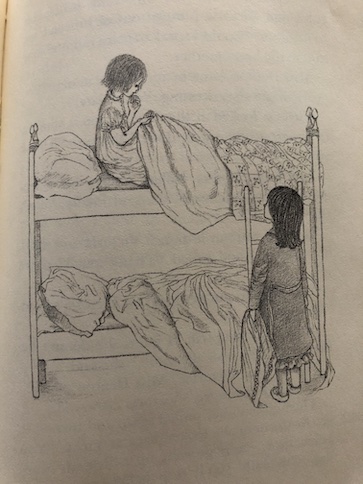
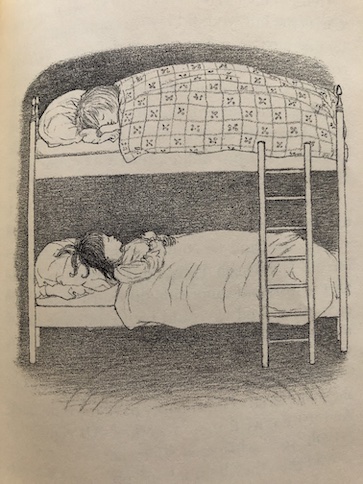
The two girls find themselves arguing sometimes because of their different preferences, but they remain friends. It’s more that, now that they’re getting comfortable with each other and their school, more of their individual personalities are coming out. Victoria is also surprised to realize that, while she still frequently misses her mother, she no longer agrees with her mother about certain things. When her mother comes to visit the school, she worries about Victoria sleeping in the top bunk of their bunk bed, but Victoria herself loves it and has to assure her mother that she likes the top bunk. One thing that boarding school has done for Victoria is to give her a sense of independence and room to develop her own identity and preferences. She no longer has to get her mother’s permission for everything she does, as long as her housemother approves.
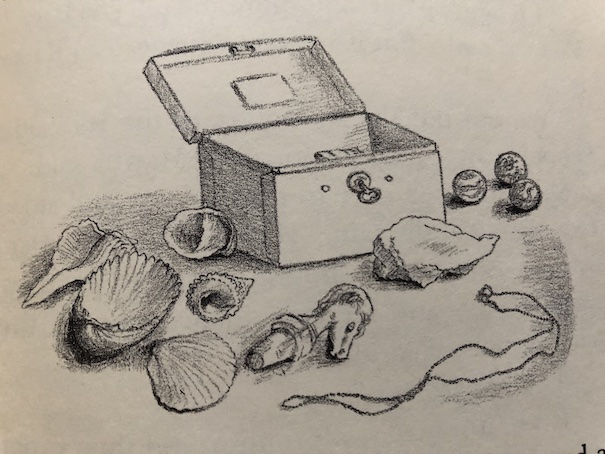
Victoria and Martha are both imaginative, and they begin enjoy their shared adventures at school. They try to hold a midnight feast in their room and search for hidden passages or secret compartments in the dormitory because Martha has heard or read that these things happen in boarding schools. Neither of those adventures goes as planned, but Miss Denton allows the girls to build a little play hut of their own with help from the school’s handy man. Miss Denton also gives the girls a little lockbox to keep some of their treasures in, and they hide it so they can have a buried treasure.
As the year comes to an end, Victoria knows that she’ll be coming back to boarding school next year, and the prospect doesn’t seem so bad as it did before. Martha isn’t sure whether she will or not, talking sometimes about what they’ll do next year but still hoping to live at home with her parents. But, if Martha doesn’t come back to school, it just wouldn’t be the same for Victoria!
The book is available to borrow and read for free online through Internet Archive.
My Reaction and Spoilers
One of the things I found interesting about this book is that it is set in the US. The iconic boarding school stories for children tend to be British stories, but the Coburn Home School is in New York state. The girls’ parents live in New York City.
Most of the story focuses on the girls’ relationship with each other and their growing sense of self-identity and confidence at their boarding school. They talk about classes they take and how they each feel about the other’s favorite subject, but they aren’t shown in classes themselves. The school is also a co-ed school, with both boys and girls, but the boys don’t enter into the story much because most of the action takes place around the girls’ dorm. The boys live in a different dorm. There is only one instance where a boy is shown talking to Victoria, with a hint that he might have a crush on Victoria, another new development in Victoria’s life at school. The little developments in the girls’ lives and attitudes through the school year and each little experience and adventure they have are the main focus of the story. These are the things that are helping the girls understand and develop their identities, self-confidence, and sense of independence.
Toward the end of the book, Miss Denton encourages the girls to think about all of the things they’ve learned this year, and not just the ones they’ve learned in class. The girls don’t fully understand and appreciate that Miss Denton is talking about personal growth and development, but they do consider things they’ve learned, like how to make beds, that midnight feasts aren’t as fun as they sound, and how Victoria learned not to be homesick. These are some of the little things that are part of their school experience and that are slowly making them more grown up and independent than they used to be.
Although Martha is a little older than Victoria and sometimes chides her for being babyish about some things (like putting a lose tooth under her pillow) or still homesick, the truth is that Martha has been just as homesick the entire time. Martha doesn’t appear to be as upset about boarding school as Victoria because she is not a new student in this book, like Victoria. She already went through her first year at boarding school before Victoria got there, so she no longer openly cries about being away from home. Still, the reason why she keeps talking about going home and living with her parents all the time is that she misses them. While the girls’ adventures during the school year and Victoria’s realizations about how boarding school gives her the opportunity to do things and be with people she wouldn’t at home make her feel better about coming back next year, Martha still feels uncertain about it. Martha has also come to love being friends with Victoria and even loves Miss Denton, but her feelings of homesickness leave her feeling torn about what she really wants.
There are hints that Martha will probably return to boarding school anyway, but Miss Denton reassures Victoria that she will be fine at boarding school even if Martha decides not to come next fall, reminding Victoria that she is now one of the “old girls” instead of a scared new one, like she used to be. Victoria also starts to feel that way herself. Martha will probably be back the next year to be with Victoria, Miss Denton, and Miss Blanchard, but readers can be reassured that, even if she doesn’t return, Victoria will be all right with her new sense of identity and independence. This first year at boarding school with Martha may be the beginning of a lifelong friendship or just one step to Victoria finding herself and building other friendships. Maybe it’s both. Victoria’s future life will be fine in general as she continues growing up and finding her way, learning to manage her life one step at a time.
There is a modern 21st century documentary about young children going to boarding school for the first time at 8 years old, What’s Life Like in a Private British Boarding School? | Leaving Home at 8 Years Old, on YouTube. The school in that documentary is British, but I was struck by the common feelings in the documentary and the book, even though they take place decades apart in different countries. There are just some parts of the human experience that last through the generations. The documentary also shows the parents’ side of the boarding school experience, the reasons why they choose to send their children to boarding school, and how they cope with their feelings about sending their children away and being separated from them.
Boarding school isn’t always easy for parents in terms of emotions, and there are hints of that in The Secret Language. We never see Martha’s parents in the book, so we don’t know what’s going on with them, but Victoria’s mother fusses over Victoria when she gets the chance, and she talks about how great it would be if she could arrange things so that Victoria can be home with her all the time again, too. If Victoria’s mother wasn’t a working single mother who has to travel for work, she probably wouldn’t have sent her away to boarding school at all. Miss Denton is very in tune with people’s feelings, and I think that she’s aware of all the complexities in the lives of the girls and their parents. She does her best to look after the girls emotionally, and that’s part of her urging the girls to consider other people’s feelings, to be thoughtful about each other, and to think about the ways they’ve been changing inside as well as outside. I think that the universal nature of the girls’ and adults’ feelings in the book are a sign of the author’s emotional awareness, understanding of how different types of people feel.
Ursula Nordstrom, the author of the book, was actually a famous children’s book editor. She is credited with helping to transform mid-20th century children’s literature to have more of a focus on children’s feelings, experiences, and imagination instead of being morality tales, focused on what adults want children to know or understand. The Secret Language was the only children’s book that she wrote herself. This YouTube video explains about her life and career.
Sarah, Plain and Tall by Patricia MacLachlan, 1985.
This is a popular book to read in schools in the United States, the first in a series. It’s a Newbery Award winner, and it shows aspects of farm life during the early 20th century and the concept of mail-order brides, a practice from American frontier days where men living in the West or Midwest, where there were not many available women in the population, would write to agencies or advertise for a bride from the East. The process for arranging these marriages could vary, but it typically started with written correspondence before the man and woman would meet in person. In this book, the man looking for a bride, Jacob Witting, is a widower with two children who has a farm on the Great Plains. The story is narrated by his older child, Anna. The book isn’t very long, and it’s a pretty quick read, but it’s filled with colorful imagery and emotion.
Anna has had to help take care of her little brother, Caleb, since he was born. Their mother died shortly after giving birth to him, and Caleb frequently asks Anna questions about what their mother was like. Anna’s memories of their mother are fading because she was still very young when she died, but she really misses her.
Then, Jacob
tells the children that he has advertised for a bride from the East, the way a
neighbor of theirs did. The children
like their neighbor’s new wife and wouldn’t mind having a mother like her. The father has received a reply to his
advertisement from a woman in Maine, Sarah Wheaton. Sarah has never been married, and now that
her brother is getting married, she feels the need for a change in her life. She loves living by the sea in Maine, but she
is willing to move to start a new life.
She says that she would like to know more about Jacob and his children.
Jacob
and the children write letters to Sarah, getting to know her better. They come to like each other, but the
children worry about whether Sarah will change her mind about coming to see
them or whether she’ll like them or their farm when or if she comes. When Sarah tells them that she’s coming
during the spring, she says that they will know her because she will be wearing
a yellow bonnet and describes herself as being plain and tall (the title of the
book).
Sarah
will stay with the family for a time while they decide if they can be a family
together and if she will marry Jacob that summer. There are adjustments that they will all have
to make. Life on the prairie is very different
from what Sarah is used to, and the children still worry that she won’t want to
stay. Sarah brings seashells from Maine
to show them, and they teach her about the local wildflowers. One of my favorite scenes was where Sarah
cuts Caleb’s hair, and they put the hair clippings out for birds to use in
their nests. Caleb was particularly
concerned about whether Sarah would sing like their mother used to, and Sarah
does.
Through
it all, the children can tell that Sarah really misses the sea. Sarah does say that the land around the farm
kind of rolls, a little like the sea, and they play in a haystack, like it was
a dune by the sea. When they visit their
neighbors, Sarah talks with Maggie, the mail-order bride who came from Tennessee. Maggie understands Sarah feels, missing her
home in Maine, and it upsets Anna to hear them talk about missing their old
homes. However, Sarah says that things
were changing at home, and Maggie comments that, “There are always things to
miss, no matter where you are.” What the
women realize is that, although they miss their old homes, they have grown to
love the new people in their lives and would miss them if they tried to go back
to where they came from.
At one point, Sarah goes to town alone, and the children worry that she won’t come back, but she does. She just went to town to buy colored pencils in her favorite sea colors. Sarah does stay and marry Jacob, setting up the rest of the series.
There is a movie version of this book, which follows the story pretty well. The book wasn’t specific about the time period, although it seems to take place during the early 1900s. The movie and its sequels are set during the 1910s, which makes sense for the rest of the series. The book also didn’t say exactly where the farm was, but the movie clarifies that it’s in Kansas. The movie also emphasizes how much the whole family, particularly Jacob and Anna, misses the mother who died. In the movie, Jacob forbids the children to use any of his dead wife’s things and doesn’t want to talk about her. However, when Sarah realizes that trying to avoid his wife’s memory is hurting Anna, she brings out some of the dead wife’s belongs to use, helping the family to make peace with the past and prepare for the future.
In the movie, Jacob’s pain over his wife’s death is partly about guilt as well as grief. The book doesn’t really talk about why Anna’s mother died after childbirth, but in the movie, Jacob has a painful discussion with Sarah about how he blames himself for his wife’s death because the doctor had warned them that they shouldn’t have any more children after Anna. Apparently, Anna’s birth had been difficult and caused complications because his wife was so young, and the doctor had said that having another child would be dangerous. However, after a few years went by, they decided to try for a son to help run the farm, thinking that enough time had gone by for it to be safe. When his wife died giving birth to Caleb, Jacob felt terrible, thinking that he should have taken the doctor’s warning more seriously and not tried to have another child. Confessing all of this to Sarah helps Jacob to make his own peace with what happened. However, none of this discussion appears in the book.
In both the book and the movie, Jacob also has to adjust to Sarah’s different personality. Sarah is more stubborn and independent than his first wife, with her own way of doing things. Living with her is different from living the mother of his children. However, Jacob comes to love Sarah for the person that she is.
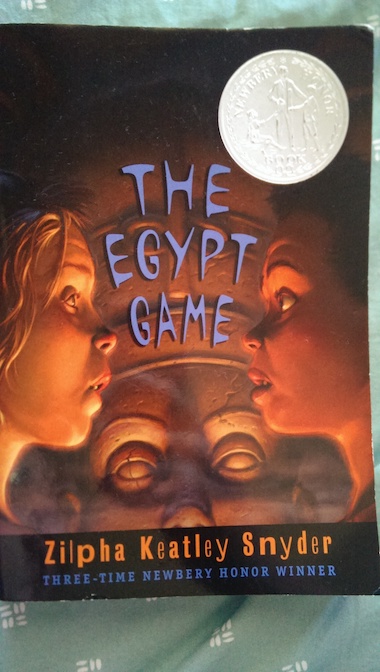
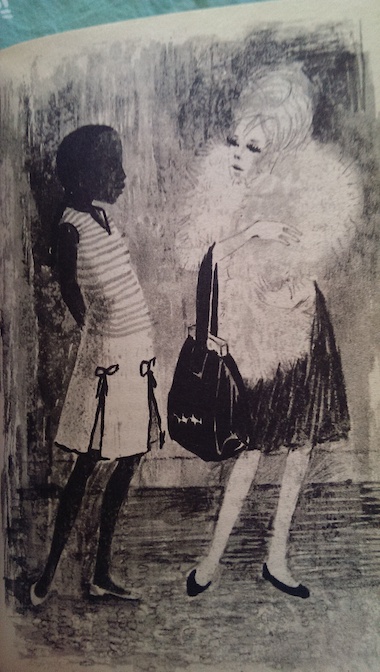
April Hall has come to live with her grandmother (the mother of her deceased father) because her actress mother is touring with a band as a singer. April’s mother isn’t a big star, although April likes to brag about her and their Hollywood life. Really, her mother is mostly a vocalist who occasionally gets parts as an extra, hoping for that big break. April is sure that when her mother gets back from her tour, she will send for her, and they will live together in Hollywood again. Although, from the way her grandmother behaves, it seems as though April may have to prepare herself for living with her for the long term. April resents her grandmother’s apparent belief that her mother has dumped her because she is unwilling or unable to take care of her.
April is homesick and misses her mother. To hide her feelings, she tries to act grown-up and ultra-sophisticated, which makes most people regard her as a little weird. In spite of that, she makes friends with a girl named Melanie, who lives in a nearby apartment and sees through April’s act to her insecurity and creative side. April has never had many friends (partly because of her mother’s chaotic lifestyle), but Melanie appreciates April’s imagination. The two girls realize that they both like playing games of pretend and they both have a fascination with Ancient Egypt. They go to the library and read everything they can find about Egypt, and it sparks the best game from pretend they’ve ever played. Along with a few other friends, they start pretending to be Ancient Egyptians, building their own Egyptian “temple” and holding rituals in the old junk yard behind a nearby antique shop.
On Halloween night, the adults try to keep the children together in groups for safety, but the “Egyptians” sneak off alone to conduct one of their “rituals.” It’s a dangerous thing to do because a child has been murdered in their area. A young girl who was apparently abducted was later found dead, and people are frightened that other children could be in danger. Fortunately, the only thing that happens on Halloween is that the Egyptians recruit a couple of new members when some boys from school find out what they’re doing.
However, the game starts taking on a life of its own when it seems that some other, unknown person has also joined in. As part of their game, the children make up a new ritual and write messages to their “oracle,” asking questions that they want answered. To their surprise, someone starts writing replies. Whoever is playing oracle and answering their questions, it doesn’t seem to be a child.
The children are uneasy about this unexpected game player because frightening things are happening in their neighborhood. The kids wonder if the mysterious messages could be from the crazed killer who murdered the young girl. People have been looking suspiciously at the loner who owns the antique store, an older man who everyone calls the Professor. However, the kids have become too enmeshed in the Egypt game to give it up in spite of their fears.
When April slips out one night to retrieve a text book she left in “Egypt,” she comes frighteningly close to being the killer’s next victim.
This is a Newbery Honor Book. It is currently available online through Internet Archive (multiple copies). There is a sequel called The Gypsy Game.
My Reaction
Although there are mysteries in the story (who killed the girl and who the unknown player of the Egypt game is), the development of the characters, especially April, is really at the heart of the story. All through the story, what April wants most is for her mother to come for her and take her home again. April fears that her mother doesn’t love her or want her, and at first, that keeps her from even trying to love the grandmother who took her in and really wants her. However, she finds comfort when she realizes that she is creating a new life with her grandmother and friends, who really care about her. Her mother does write to her later about coming to stay for a brief visit with her and her new husband (her acting manager, who she married on short notice without even telling April or inviting her to come to their wedding), but by then, April has started to feel at home in her new home and wants to share Christmas with the people who have been sharing in her life and adventures more than her mother has. She never even tells her mother about her brush with death.
The characters in the book are diverse, representing different racial backgrounds, ages, and family situations. Melanie and her younger brother are African American. Melanie understands more about human nature and how the world works than April does, partly because her mother talks to her about people and explains things. Melanie realizes from the way that April behaves and how she doesn’t understand certain things, like the fact that there disturbed, dangerous people in the world, that her mother never really talked to her much or explained things when they were living together. Melanie helps to ground April’s more flighty, insecure personality. She joins in her imagination games eagerly, but she also helps to bring April more into sync with reality and other people.
The first new player they add to the game, Elizabeth, is Asian and lives with her widowed mother and other siblings. Like April, she is a little lonely and looking for new friends in her new home. Each of the kids, like April, have their own inner lives and personalities. The Egypt game binds them together and provides them with friendship and insights into their lives.










 April Hall has come to live with her grandmother (the mother of her deceased father) because her actress mother is touring with a band as a singer. April’s mother isn’t a big star, although April likes to brag about her and their Hollywood life. Really, her mother is mostly a vocalist who occasionally gets parts as an extra, hoping for that big break. April is sure that when her mother gets back from her tour, she will send for her, and they will live together in Hollywood again. Although, from the way her grandmother behaves, it seems as though April may have to prepare herself for living with her for the long term. April resents her grandmother’s apparent belief that her mother has dumped her because she is unwilling or unable to take care of her.
 The children are uneasy about this unexpected game player because frightening things are happening in their neighborhood. The kids wonder if the mysterious messages could be from the crazed killer who murdered the young girl. People have been looking suspiciously at the loner who owns the antique store, an older man who everyone calls the Professor. However, the kids have become too enmeshed in the Egypt game to give it up in spite of their fears.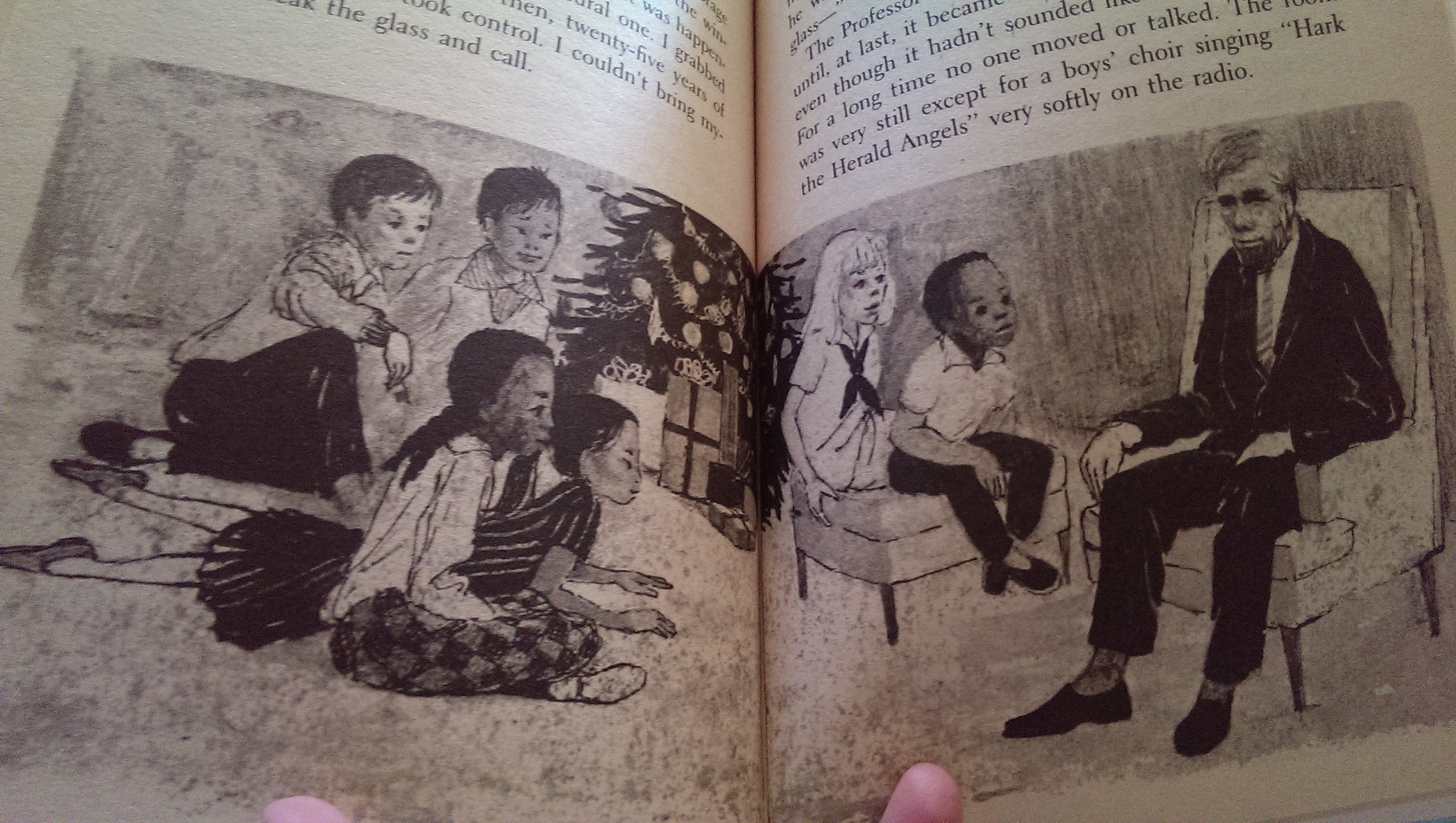
 Jestress's Forgotten Books and Stories