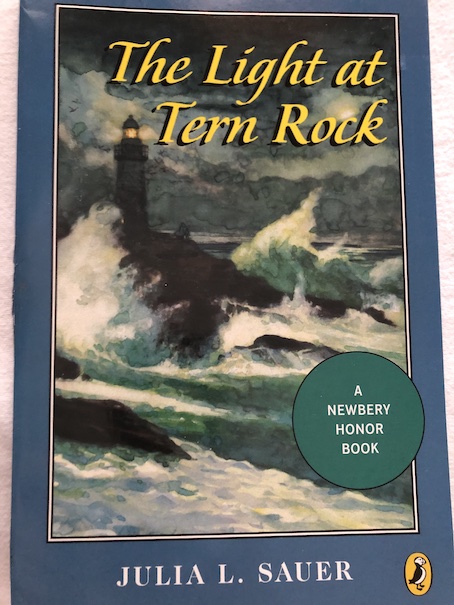
The Light at Tern Rock by Julia L. Sauer, 1951.

Not long before Christmas, the lighthouse keeper at Tern Rock, Byron Flagg, approaches Martha Morse, asking her if she would be willing to temporarily take the job of tending the lighthouse while he takes a vacation. The lighthouse can never be untended because ships rely on that light, and it can be difficult for Mr. Flagg to find someone to take over his duties for an extended period of time, especially so close to Christmas. Mr. Flagg wants to hire a substitute with experience tending the lighthouse. Mrs. Morse lived there for 14 years while her late husband was the lighthouse keeper. Although many people would be daunted by the isolation of the lighthouse, Mrs. Morse actually loved it because she enjoyed the beauty of the sea and nature. She knows that she would enjoy staying there again. However, she hesitates to take the job of temporarily tending the light because she is caring for her young nephew, 11-year-old Ronnie. Ronnie might enjoy the adventure of staying in a lighthouse, but he would have to miss some school.
Mr. Flagg appeals to Mrs. Morse’s sense of nostalgia about the lighthouse and points out that Ronnie could bring along some of his schoolwork to study during their stay. Mr. Flagg says that their stay will only be for two weeks, and that he’ll return and relieve them on December 15th. Mrs. Morse points out that the weather around Tern Rock can be unpredictable and that he might not be able to return when he says he will, but Mr. Flagg says he is confident that he can. They talk to Ronnie about it, and Ronnie says that he would like to see the lighthouse, but he wants to be home for Christmas. Mr. Flagg assures them that won’t be a problem and that they will enjoy their stay at the lighthouse, so they agree to go.

When they arrive at the lighthouse, Ronnie is awed by rugged environment of Tern Rock and daunted by the isolation of the lighthouse. His Aunt Martha says that she understands how he feels, that he wonders if they’re up to the task, but she assures them that they are. The job they will do is a necessary one because, without the light, the rocks in this area are a danger to ships.
As they settle in, Ronnie becomes fascinated with the lighthouse. The interior is comfortable and designed to be compact, almost like the interior of a ship. His Aunt Martha establishes their schedule, teaching Ronnie what they need to do. She turns off the light at sunrise and lets it cool down while they have breakfast. Then, they clean the lamp, polish its lens, and do other chores to keep the light in working order. Ronnie does his schoolwork in the afternoon, and they turn on the light when the sun goes down. They spend their evenings doing quiet activities, like reading and playing games. Although Aunt Martha wasn’t sure that the quietness and monotony would appeal to an active boy like Ronnie, Ronnie finds the newness of the environment and the change in his usual routine fascinating.


Ronnie’s feelings change when December 15th arrives, and Mr. Flagg doesn’t. The weather is good, so there’s no reason why a boat shouldn’t approach Tern Rock, but Aunt Martha says that there may have been some other problem that delayed him. She doesn’t think an extra day or two at the lighthouse will hurt them, but the days go by, and still, Mr. Flagg doesn’t come. They are still comfortable in the lighthouse and there haven’t been any problems with the light, but Ronnie is angry because he realizes that Mr. Flagg lied to them. Christmas is approaching, and it becomes clear that Mr. Flagg never had any intention of being back at the lighthouse in time for Christmas.
Ronnie has trouble understanding and excepting Mr. Flagg’s lies and broken promises. Ronnie and Aunt Martha discuss the importance of honesty and the meaning of broken promises. Ronnie thinks that Mr. Flagg has been wicked. He has certainly been unfair, but Aunt Martha says that there are worse kinds of wickedness, and before they jump to conclusions about what has happened, they need to know the reasons for it.

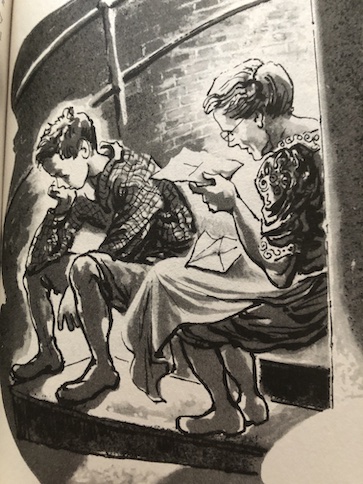
Aunt Martha says that the Christ Child visits every home on Christmas, and no place is too distant for Him to reach, so they should make the lighthouse ready and prepare for Christmas. Ronnie doesn’t see how they can because they didn’t bring any decorations or anything for Christmas. Ronnie considers firing the cannon that would signal an emergency to bring someone out to the lighthouse, but Aunt Martha firmly tells him no. The cannon is only for serious emergencies, when there are lives in danger, not for mere disappointment and self-pity. However, Mr. Flagg has left some special surprises for them.
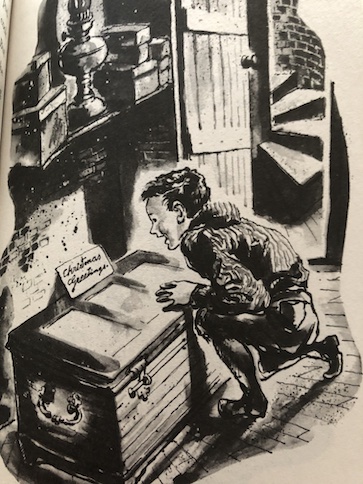
It is true that he intentionally deceived them about being back in time for Christmas. When Ronnie finds a sea chest with a Christmas message, he knows for certain that Mr. Flagg was lying to them the entire time, which makes him angrier. However, a letter that Mr. Flagg left explains his reasons, which earns their sympathy. To soften the blow of his deception, he has also left them some special presents and treats gathered from exotic places. This still isn’t the Christmas that Ronnie and Aunt Martha had originally planned, and being lied to doesn’t feel good. Still, in the end, this Christmas is pretty special and memorable, and they both realize that they are exactly where they need to be.

The book is a Newbery Honor book. It is recommended for ages 8 to 12 years old. It is available to borrow and read for free online through Internet Archive. The author, Julia L. Sauer, also wrote Fog Magic.
My Reaction
I wasn’t familiar with this story when the Coronavirus Pandemic started, which is a pity because this would have been a great book for the type of Christmas we had in 2020. Still, this is a lovely Christmas story, and the pandemic isn’t quite over yet. Things have improved considerably since 2020 because people have been vaccinated, but for those who still need to be cautious and are disappointed that things aren’t completely back to normal or anyone who has hard feelings toward someone or is having a rough Christmas for any other reason, this story is a useful reminder that disappointments are still temporary, and sometimes, the place where you find yourself is exactly where you need to be. Also, disappointments and inconveniences can come with compensations, if you’re open to experiencing them.
Mr. Flagg shouldn’t have lied to Mrs. Morse and Ronnie. He acknowledges in his letter that this was a hurtful thing to do, and he explains his reasons. Basically, he was lonely and desperate. As a lighthouse keeper, he is what we might call an “essential worker”, someone who can’t easily take time off from his work because he does a necessary job that can only be done in a particular place. People’s lives depend on the light from the lighthouse, so Mr. Flagg can’t leave his job for any length of time unless he finds someone qualified who is willing to take his place. This story is set during a time before lighthouses became automated, so there must be a human in this role.
Mr. Flagg is in his 60s, and he explains in his letter that he has spent most of his Christmases either alone or with other adults because of his life as a sailor and lighthouse keeper. He has a niece who has several children and who would be happy to have him for Christmas, but he has never managed to find anyone who was willing to relieve him from his duties during Christmas before. He was desperate to spend at least one Christmas with his family, so he resorted this deception out of desperation, but he left all the presents and special treats for Aunt Martha and Ronnie because he didn’t want them to be miserable.
Aunt Martha is getting older herself, and she understands how Mr. Flagg feels, having lived a similar sort of life. When she lived at the lighthouse, she and her husband were together, but Mr. Flagg has never married, and he was desperately lonely. Ronnie has more trouble understanding the feeling because he is younger and hasn’t experienced this type of loneliness before. Aunt Martha points out that Ronnie will have many more Christmases before him, more than either she or Mr. Flagg have left. One disappointing or just bizarre Christmas won’t mean that much to him in the long term. With maybe 50 or more future Christmases to come as well as the ones he’s already experienced, this strange Christmas in the lighthouse is just one more memory or story to tell other people in Christmases to come.
Part of this story is about forgiveness, but they don’t use that word at all in the story. People have different views about what forgiveness entails, but I think it’s important that Aunt Martha and Ronnie don’t excuse Mr. Flagg’s actions. They come to understand his motives, and they feel pity or sympathy for him for the kind of rough and lonely life he’s lived, but that doesn’t make lies to them good or right. He did something hurtful by betraying their trust, and there will probably be some kind of reckoning between them when Mr. Flagg eventually shows up. Mr. Flagg acknowledges that in his letter, that the knowledge that he betrayed their trust will keep him from fully enjoying Christmas with his family, even when he’s finally getting the kind of Christmas he has wanted, and he can’t blame them for whatever they’re feeling as they read his letter. So, the story never says that what Mr. Flagg did was okay or that it didn’t hurt that he lied to the people who were helping him. Lying was wrong, and it was hurtful, and the characters are honest about that. They don’t try to pretend that they’re not hurt, which I think would have made their feelings worse in the long run. Instead, it’s about looking past that hurt to something better and finding things to be happy about even in a situation where they didn’t want to be.
Aunt Martha sees that what’s really preventing Ronnie from enjoying Christmas as they happen to have it is his anger, disappointment, and bitter feelings and the way he broods about them. Brooding about the angry things he wants to say to Mr. Flagg when he sees him isn’t making his Christmas any better. Aunt Martha compares cleaning out negative emotions to cleaning house before the holiday. You have to clear out all the dust and negativity to let in something better. They will eventually see Mr. Flagg, and there will probably be words between them, but those words can wait while they enjoy themselves as best they can for this Christmas. By then, each of them will probably have a better sense of just how they really feel about the situation and what they want to say about it anyway.
Once Ronnie works through his feelings and is able to put aside his anger, he realizes that this Christmas is something special. He does miss the class Christmas party the rest of his school is having, but in return for that sacrifice, he is experiencing something truly unique that his school friends will probably never experience. He doesn’t fully consider how unique this experience actually is at first, but he senses that there is a unique feel to Christmas in the lighthouse, with its giant light. Ronnie considers the tradition of putting candles in windows at Christmas, to guide the Christ Child or other travelers. (They emphasize candles as welcoming the Christ Child in the story, but when I first heard of the tradition, it was to welcome travelers or absent family members.) He realizes that, by tending the lighthouse, he and his aunt are doing the same thing, but they’ve got the biggest candle of anyone!
Whatever your Christmas happens to be this year, wherever you’re spending it, and whoever you’re spending it with (even if it’s just yourself), don’t forget to do the little things to make it special and enjoy it for whatever it is! Merry Christmas!




 #3 The Candy Corn Contest by Patricia Reilly Giff, 1984.
 While Richard is worrying over his mistake, he’s also worrying about the sleep-over party his parents are letting him have over the Thanksgiving break. At first, he was looking forward to it, but some of the other boys in class can’t come and some of those who said they could are concerned because Matthew is coming. Matthew and Richard are friends, and people in class generally like Matthew, but everyone knows that Matthew still wets the bed. Some of the other boys are worried that they’ll have to sleep next to Matthew at the sleep-over. As much as Richard likes Matthew, it feels like his problem is going to ruin the party, and when Matthew is nice to him, it only makes Richard feel worse.
 Jestress's Forgotten Books and Stories