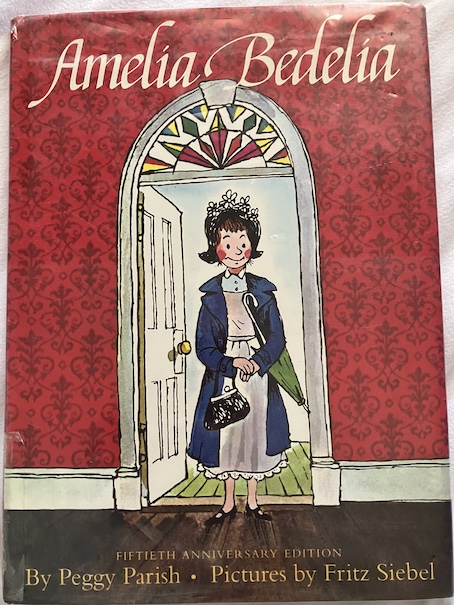
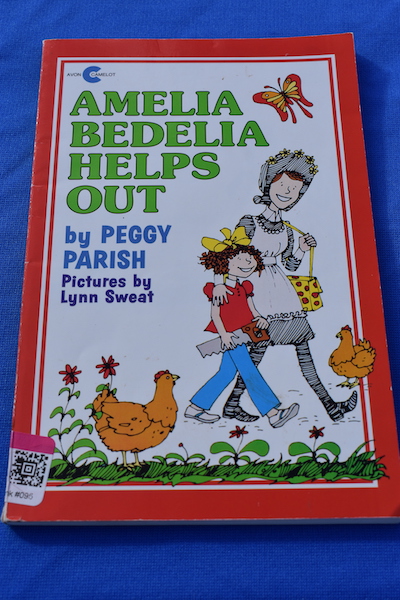
Amelia Bedelia by Peggy Parish, 1963.
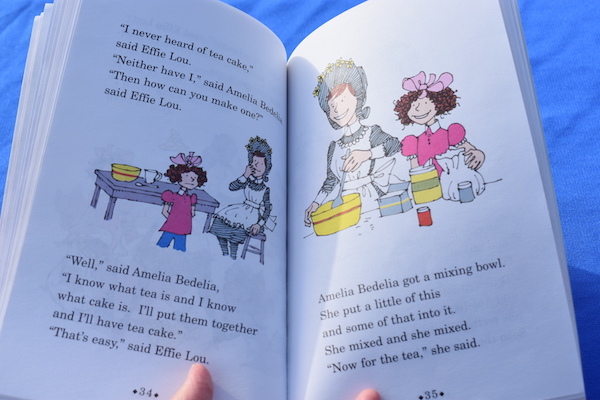
Amelia Bedelia is just starting her new job as a maid with Mr. and Mrs. Rogers! Mr. and Mrs. Rogers can’t be there to supervise her on her first day, but Mrs. Rogers leaves her a list of things to do and tells her to do exactly what the list says. Little does Mrs. Rogers know just how literal Amelia Bedelia can be!

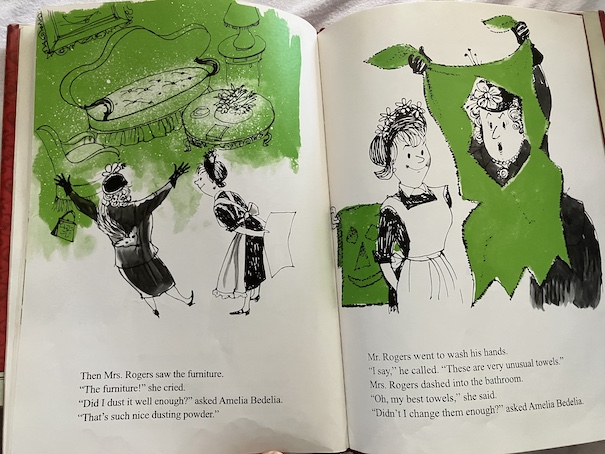
When Amelia Bedelia reads that she’s suppose to “change the towels”, she thinks that she’s supposed to change the way they look instead of replacing them with new ones. To Amelia Bedelia “dust the furniture” means to add dust to the furniture instead of removing it. The instruction to “draw the drapes” sounds like she should draw a picture of them instead of closing them.
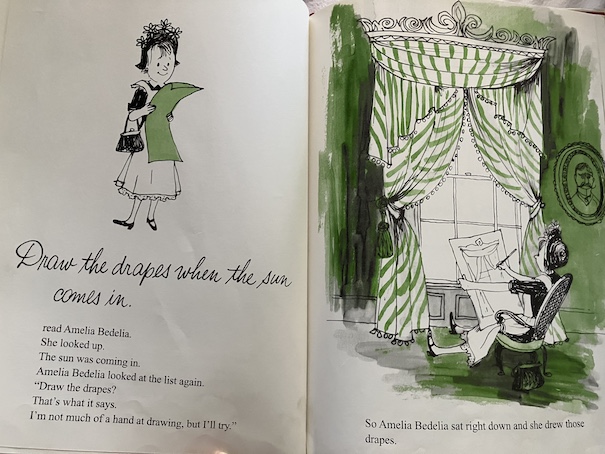
When Mr. and Mrs. Rogers return to see how Amelia Bedelia is doing, they are shocked at what she’s done!
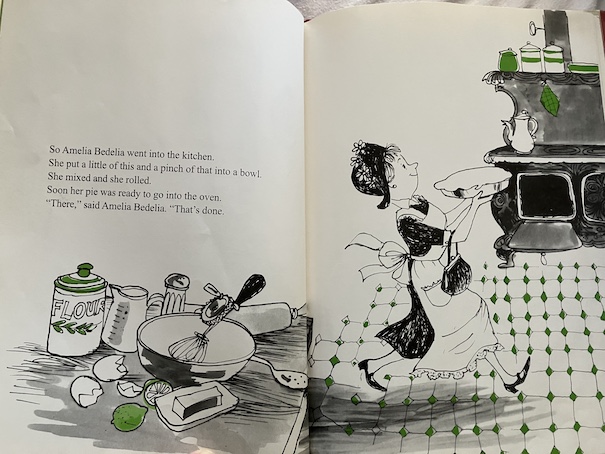
There is only one thing that can save Amelia Bedelia’s job: her ability to make an amazing lemon meringue pie!
The book is available to borrow and read for free online through Internet Archive.
My Reaction
This is the very first book in the Amelia Bedelia series, and I remember reading it when I was a kid. The point of the Amelia Bedelia books is to introduce kids to expressions and words that have multiple meanings. They’re pretty funny to read, although even as a kid, I had trouble believing some of the phrases that Amelia Bedelia takes literally. For example, when she “dusts” the furniture, she thinks that Mrs. Rogers should have told her to “undust” the furniture instead. I see what the author is saying, that it’s funny that we say “dust” the furniture when we’re actually removing dust instead of adding it, but I’ve never heard anybody in real life use the term “undust” the furniture. Amelia Bedelia is funny, but sometimes, it seems like it’s reaching a little to find terms she can credibly misinterpret.
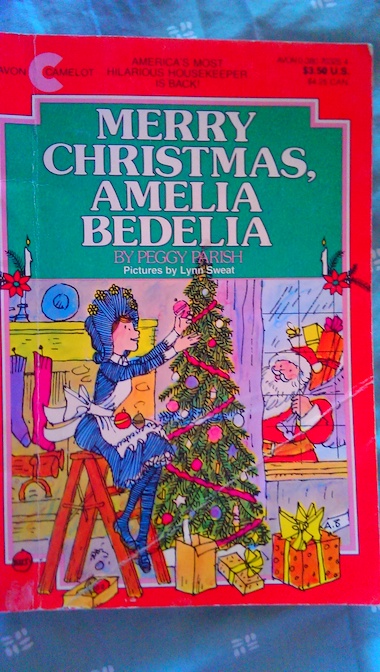
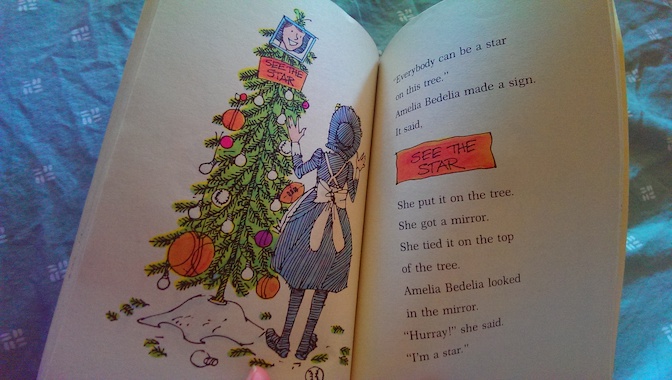
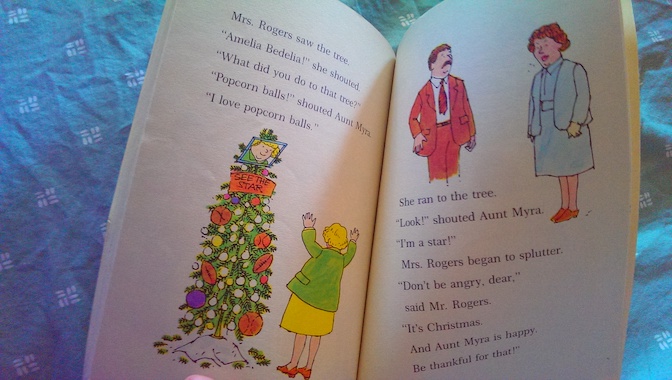
I also don’t think I fully understood the parts about trimming the fat on the steak and dressing the chicken as a kid because I wasn’t used to cooking. I think I got the concept that she was supposed to cut the fat off the steak rather than decorate it as one might trim a Christmas tree (a concept that Amelia Bedelia interprets the opposite way in her Christmas story). What she was supposed to do with the chicken she ended up “dressing” in clothes was a little more confusing. When I was a kid, I knew that people make stuffing or dressing to put in poultry, like chicken or turkey, when they cook it, or they can rub herbs and spices under the skin for flavoring, and I think that’s what Amelia Bedelia was supposed to do here. Even so, there are different types of stuffing or dressing to make and different mixtures of herbs and spices to use, and Mrs. Rogers doesn’t say what kind she wants. Of course, if she was more specific, Amelia Bedelia couldn’t have gotten so confused, and that’s really the point of the story.
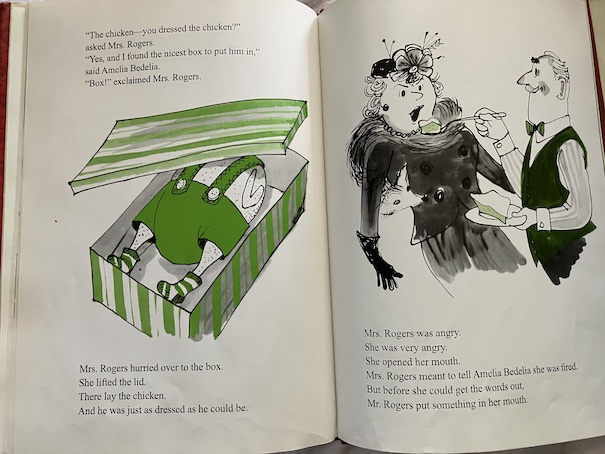
I don’t know whether any teachers still use Amelia Bedelia books as examples of words and phrases with multiple meanings, but they are fun in that fashion. A good accompanying activity for these books is a project that I had when I was in school and that I’ve heard students still do – explain how to make a peanut butter sandwich (or any other kind of sandwich) to someone from another planet, who has no idea what a sandwich is or how to make one. Students doing this activity need to be as careful and detailed as they can because some phrases are easy to misinterpret if you assume that the person you’re talking to has no idea how anything works. I remember my old teacher would act out our instructions literally, almost like Amelia Bedelia. For example, if you said, “Put peanut butter on bread” without saying that you need to open the jar first and remove the peanut butter from the jar with a knife, the teacher would set the whole jar of peanut butter on top of the bread and just stare at it. If you explain the peanut butter sandwich instructions well enough that there’s no room for misinterpretation, you may have a future in technical writing!
The pattern established in this first book continues through other books in the series. In many other Amelia Bedelia stories, Amelia Bedelia misinterprets instructions she’s given by taking things too literally or misunderstanding words with multiple meanings, but she always manages to keep her job because she’s really good at baking and makes cakes, pies, and other treats that Mr. and Mrs. Rogers love.
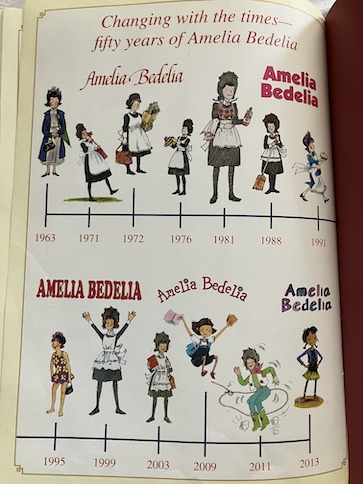
If you read the 50th Anniversary edition of the book, there’s a section in the back about the Amelia Bedelia series and how it’s changed over the years!







 General Butterfingers by John Reynolds Gardiner, 1986.
 Mrs. Wilson and Walter talk to a lawyer, but he says that, since the General apparently didn’t leave a will, the estate has to go to his nearest relative, which is Ralph. As far as he’s concerned, there’s nothing they can do about, even though the General made a verbal promise to the men that they could stay in his house for the rest of their lives.
 In some ways, you could feel sorry for Ralph, who is a very unhappy person. Because of his meanness and selfishness, his father spent years giving him pretty much anything that he wanted on the condition that he not come around to see him. Ralph is hurt at his family’s avoidance and disdain for him, which is why Walter, at one point, invites him to come for dinner and be their friend. However, Ralph’s motives are always selfish, and that causes him to suspect that the same is true of everyone, so he refuses their kindness. It gives the impression that he’s probably done the same for many others over the years, for the same reasons.






 Jestress's Forgotten Books and Stories