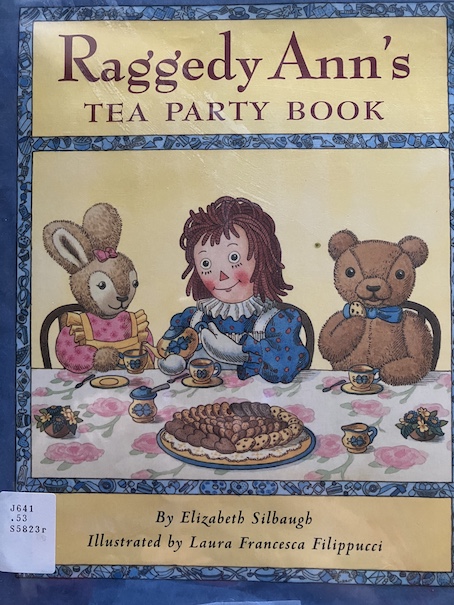
Raggedy Ann’s Tea Party Book

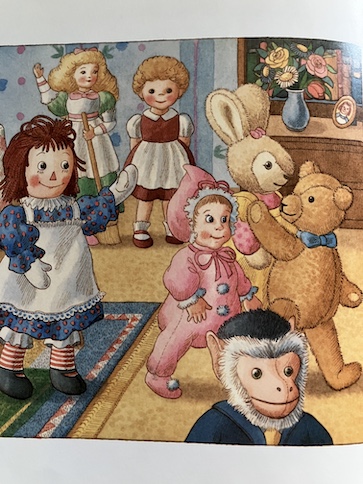
This book is a children’s guide to planning a tea party with Raggedy Ann. As in the original books, Raggedy Ann is a doll who lives with a girl named Marcella, and she likes to have tea parties with Marcella’s other dolls and stuffed animals.

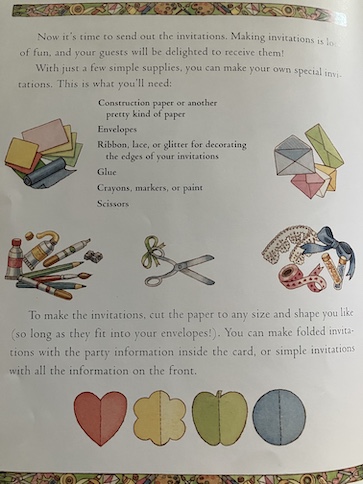
The book explains how to plan and prepare for a tea party, from figuring out how many guests there will be and making sure there are enough seats for everyone to choosing a menu and games to play. There are tips for making party invitations and a section of recipes in the back of the book.

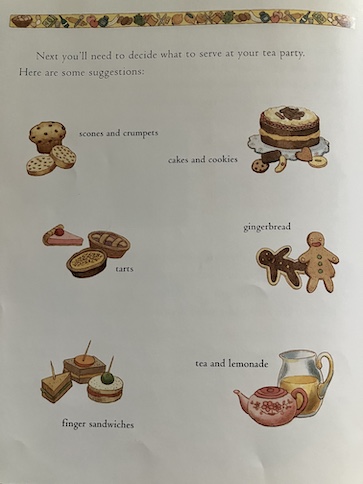
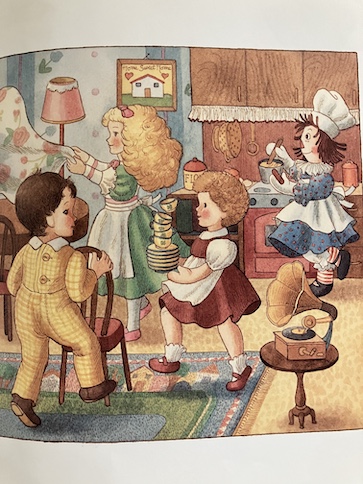
The food ideas aren’t too complicated. The book recommends keeping preparations simple because a party is about having fun. Setting the table is an activity by itself. Raggedy Ann gets her guests to help her, and they put on music while they do it. They want to make the table setting pretty, and they make sure that everyone knows each other and is included in the conversation. Tea parties are a time to practice good manners and make sure everyone is enjoying the party. At the end of the party, guests can also help clean up while they play music.

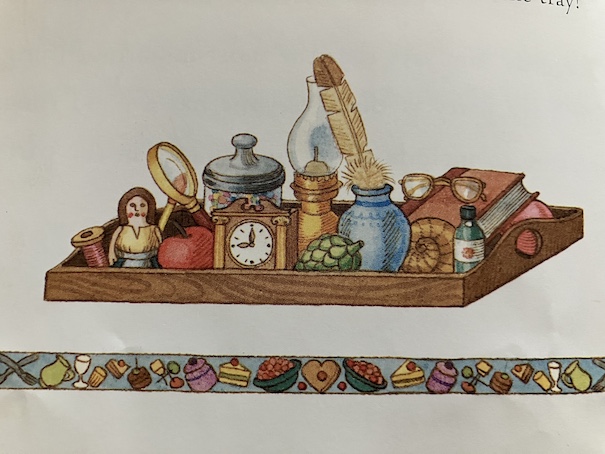
For games to play, they recommend the classic game of Telephone, Fiddly Diddly (a guessing game), and Memory Tray, where guests look at a tray of objects for a limited amount of time and then try to remember everything they’ve seen.

The recipes included in the book are:

  • Easy Chocolate Cakes
  • Creamy Pink and White Icing
  • Tiny Sandwiches – They suggest a variety of possible fillings, including tuna, ham, tomato, hard-boiled egg, cucumbers, cheese, fruit, or jam.
  • Raggedy Ann’s Candy-Heart Cookies – These are heart-shaped cutout cookies because Raggedy Ann has a candy heart.
  • Uncle Clem’s Super-Simple Scotch Shortbread
  • Marcella’s Lemonade

The book is available to borrow and read for free online through Internet Archive (multiple copies). There is another book by the same author called Raggedy Ann’s Birthday Party Book, about planning a birthday party.

I found it charming and nostalgic, and I loved the colorful pictures! I didn’t read this book as a child, but it is the kind of book I would have liked. The party-planning tips are useful, taking child readers step-by-step through planning the party, inviting the guests, and preparing food and entertainment. I liked the advice to keep things simple, so even the host/hostess can enjoy the party instead of getting stressed over complicating preparations. The recipes in the book fit the tea party theme, and they are simple enough for children to make or at least help in their preparation without being overly simplistic.

Klutz Kids Travel

Kids Travel: A Backseat Survival Kit from Klutz Press, 1994.

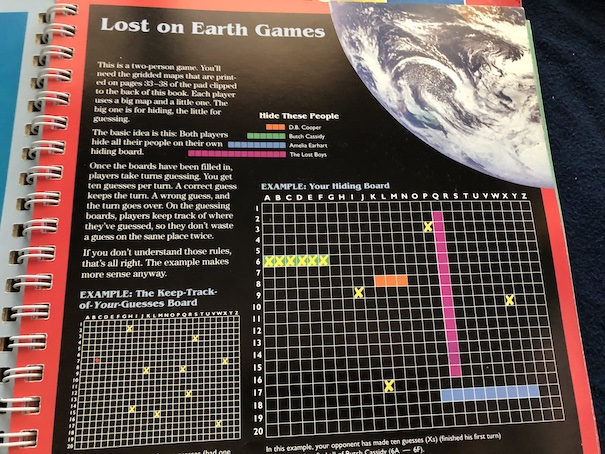
This was one of the Klutz Press activity books that I had as a kid! I used to take it on the long road trips we would take across the country during the summer. The reason why this book is called a “kit” is that it came with a pouch with some extra equipment that could be used for the activities in the book and a special activity pad on a clipboard in the back. I don’t have my activity pad anymore, but it had pencil and paper games and puzzles, like mazes, connect-the-dots pictures, and grids for a Battleship style game that they called Lost on Earth, where you would attempt to find famous missing people or things instead of finding your opponent’s battleships.

The Lost on Earth games are especially funny when you know the references for who the missing people or what the missing things are, like who Amelia Earhart or D.B. Cooper is/was. When I was a kid, I didn’t know about D.B. Cooper (this YouTube video from Buzzfeed Unsolved explains), but I think one of the missing people on the activity pad grids was Jimmy Hoffa, and I knew that name (Buzzfeed Unsolved also covered that). The great thing about these references is that, if you’re playing this game with a kid who hasn’t heard of some of these people or things, just explaining who or what they are is activity by itself.

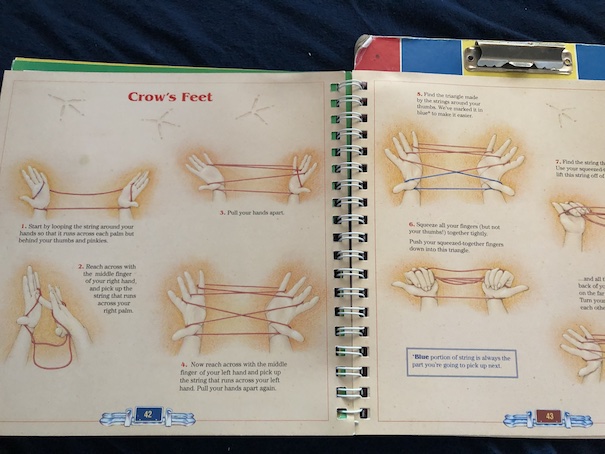
The pouch contained a set of markers for drawing and doing the activities on the activity pad, embroidery thread in different colors for making friendship bracelets and hair wraps, a loop of colorful string for making string figures, a small sheet for the Grown Up Pop Quiz, and some gummy playing pieces and dice for playing Parchesi (a board was included on one of the pages in the book). The gummy pieces would stick to the page, but not so tight that you couldn’t get them off. I think I saw a later edition of this book that used a different style of playing pieces, but I’m not sure now. The gummy pieces do gradually lose their ability to stick over time.

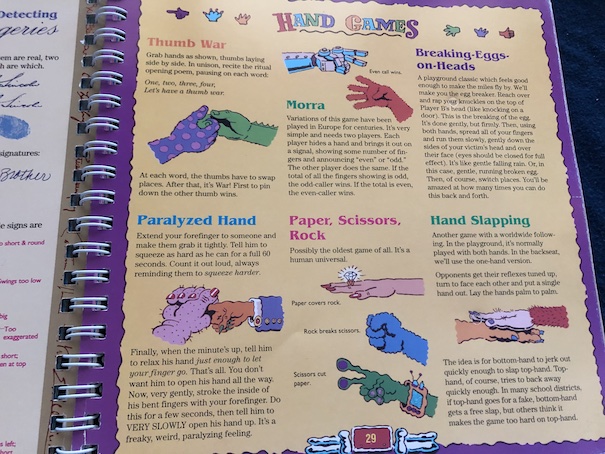
The activities in the book are meant to be done in a car. In the front of the book, there’s a section where you can record which license plates you’ve seen from different states in the US. (A common car activity on US road trips because there are 50 states, and they all have different styles of license plates. In theory, you could see examples of plates from all 50 states in a single, long car trip, but I never did. I’ve seen most of the states during a single trip, but I’ve never been table to check off all of them during a single trip.) There are also rules for playing many classic car games, mostly games that involve talking or hand motions or can be played on paper, like Twenty Questions, Paper, Rock, Scissors, and Hangman. It also describes popular car trip rituals, like holding your breath while passing a graveyard, lifting your feet while going over a bridge, or ducking your head while going under a bridge.

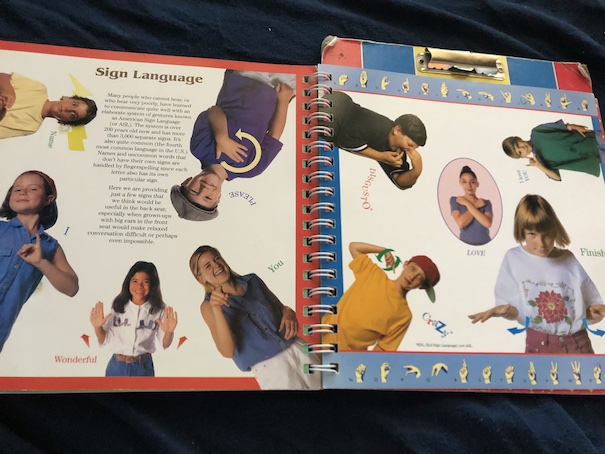
However, even though most of the activities are meant for car trips, many of them would be good for airplane trips as well. When I was a kid, airplanes were quieter, and it was much easier to talk to the person in the seat next to yours than it is now, so the talking games are still better for car trips. However, making friendship bracelets are ok for planes and trains as well as in a car. There are also activities for folding a dollar bill and making a paper fortune teller, making string figures, drawing superheroes, writing things in secret codes, reading palms, and learning some basic sign language.

What I’ve always liked best about this book is the variety of activities. There’s something for everyone in this book, and I’m still amused by some of the games and activities. If there’s an activity that the reader doesn’t like or that won’t work for the current location, there are plenty of others to move on to. Many of the activities in the book are either mentioned in other Klutz books or have entire Klutz books dedicated to them. Also, every part of this book is meant to be used for something. There is a finger maze around the title and copyright page, and when you remove the activity pad in the back, there is a board behind it to use for a game called Penny Hoops, which involves flicking pennies onto target areas on the board to earn points.

Sadly, I don’t think this book and activity kit are being sold new anymore, although there are some copies being sold used (I think most of the used books don’t come with the extra items in the original kit), and the book is available to borrow and read for free online through Internet Archive.

The Cartoon Book

The Cartoon Book by James Kemsley, 1990.

I remember buying this book at a Scholastic book fair back in the early 1990s. I didn’t draw a lot of cartoons, but I found the tips in this book to be helpful for drawing in general. The book begins with the useful advice:

“I believe that anyone can draw cartoons. All they need are a few hints to set them on the right track, self-confidence and heaps of PRACTICE, PRACTICE, PRACTICE!”

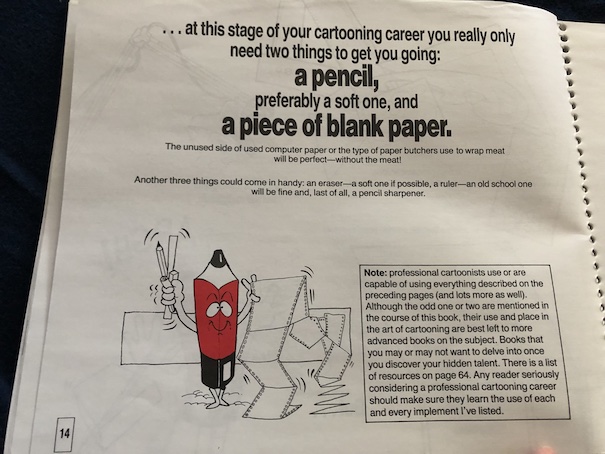
The book aims to make cartooning accessible and unintimidating to even the most basic beginners. There is a section where the author explains about the types of pens, pencils, markers, and other materials that a budding cartoonist can use, which seems overwhelming, but it ends by saying that all you really need is a pencil and a blank piece of paper. Our host is shown as a friendly cartoon pencil throughout the book.

The drawing tips begin with advice for creating character expressions, starting by focusing on the lines and shapes of the eyes. Then, it shows how to add those expressive eyes to heads. What I always liked about this book is that it says the heads can be any size or shape you want them to be. It doesn’t matter if they’re misshapen and lumpy because it’s a cartoon. It’s supposed to be fun and expressive, not perfect, which is very liberating. Even bodies can be different shapes, and they don’t have to be perfect!

Just draw a roundish shape on top of a body, give it expressive eyes, and add an expressive mouth that works with the eyes to show the character’s mood, and there you go!

From there, the book gives brief tips about adding clothes to the body and drawing hands, arms, and legs to show motion. It also briefly shows how to draw animals and animals that are like humans and how to add expressions to inanimate objects and make them characters.

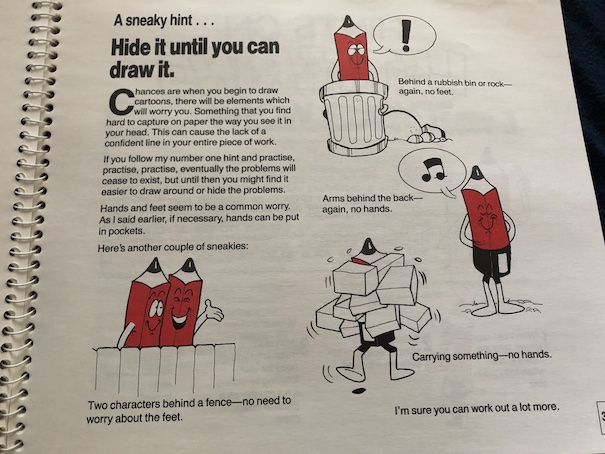
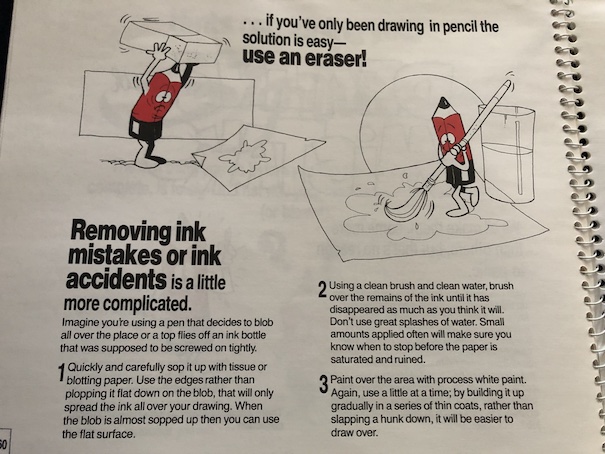
One of the tips that I’ve appreciated is the advice that it’s okay to hide things that you can’t draw well until you’ve learned to draw them better. For example, if you don’t draw hands well, you can just have characters hold their hands behind their backs. There are also tips for fixing mistakes along the way.

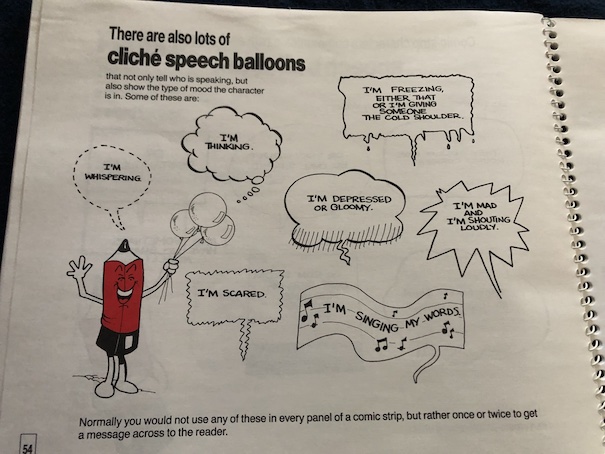
The book also explains how to plan and plot a comic strip. It discusses considering your audience, choosing the types of characters you want to use and giving them personalities, and developing your presentation style with different types of panel borders and speech balloons. It also explains the cliches that cartoonists use, certain common visual signals that cartoonists use to express certain types of speech or events or show movement. The light bulbs over a character’s head when they have an idea is an example of a cartoonist cliche.

The author of this book, James Kemsley, was an Australian cartoonist particularly known for his work on the long-running Ginger Meggs comic strip. I wasn’t familiar with Ginger Meggs when I was a kid because it didn’t appear in newspapers in my area, but I found it interesting to read about when I was looking into the background of this book’s author.

The FunCraft Book of Spycraft

The FunCraft Book of Spycraft by Falcon Travis and Judy Hindley, 1975, 1976.

This book is a part of a series of craft and hobby books that was first printed in Britain. It’s meant for kids who like to play at being spies, and it teaches kids how to use secret codes make disguises, and other tips and tricks for being a spy.

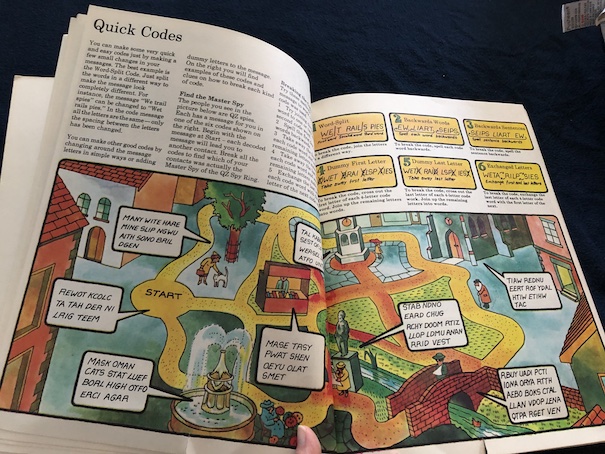
Much of the book focuses on different types of secret codes and techniques for sending secret messages. In fact, I would say that there is more about secret codes and messages than there is about anything else, but what they have to say is interesting. Most of the codes in the book are fairly easy, which is good for kids who are just beginning. The book explains popular codes like the pig-pen code and gives instructions for making simple code machines, like the popular code wheels for alphabet shifts. However, I enjoyed the variety and creativity of other codes and methods of sending secret messages, like the code based on music notes and the suggestion of using clocks or watches to represent semaphore figures.

The book not only explains some well-known and standard codes and signals, like semaphore and Morse code, but also explains how to adapt these codes in new ways. Morse code messages could be shown in a sequence of knots on a rope or in the placement of objects in a picture.

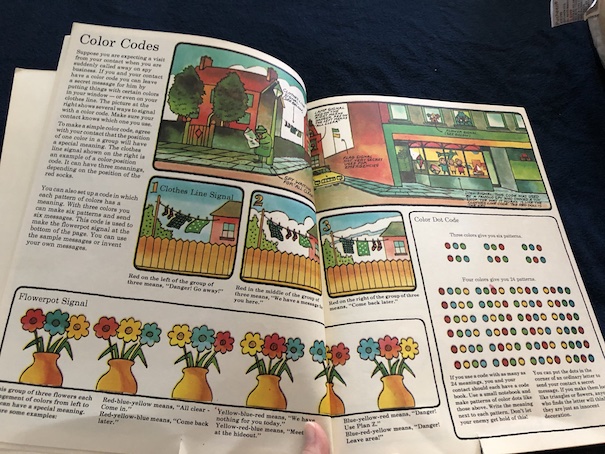
Some methods of sending secret messages don’t rely on codes so much as pre-arranged signals, like the placements of certain objects or arrangements of certain colors. These objects or color patterns might look completely ordinary to most people, but they can have special meanings to those who understand what each signal stands for.

The book also covers other topics related to spies, like how spy rings are organized, where messages can be concealed, types of equipment spies use, how to make maps, how to spot and interpret clues, and how to set traps.

There are also disguise tips. The book points out various ways that people can make themselves look different, like changing the way they comb their hair, changing their hair color, or trying to make themselves look older or fatter. One piece of advice about changing your skin tone by rubbing talcum powder on it to make it look lighter or cocoa powder on it to look darker sounds messy, and I’m not sure I’d recommend it, but the other parts seem okay. There are instructions for making a false beard, nose, and glasses and a bald-headed wig. None of these would really be convincing disguises, but they could be entertaining for kids to try to make and might be useful for Halloween costumes.

There is also a spy-themed board game in the book where one player controls a pair of spies and the other controls a pair of spycatchers. The player controlling the spies has to evade the spycatchers in order to win.

Overall, I think that the book is pretty entertaining, and kids who are really into spies and spy games would find it fun. With all of the different codes, disguise ideas, and the board game, there are plenty of fun activities to try!

The book is available to borrow and read for free online through Internet Archive (under an alternate title – The Knowhow Book of Spycraft).

Great Ancient Egypt Projects

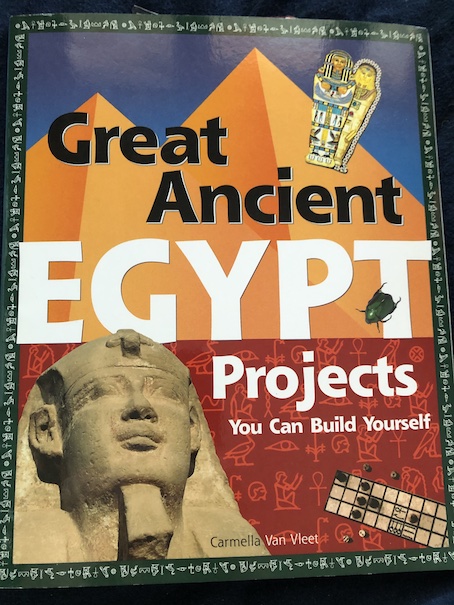
Great Ancient Egypt Projects You Can Build Yourself by Carmella Van Vleet, 2006.

I love this book because it combines lessons about history with hands-on projects and craft activities!

The book starts with a general timeline of Egyptian history, a brief introduction, and then a chapter about The Foundations of Ancient Egypt, which explains about the climate of Egypt, the role of the Nile in Egyptian civilization and farming, jewelry and other products produced by Egyptian artisans, pyramids and mummies, and forms of entertainment that the Ancient Egyptians enjoyed, like games and music. After this first chapter provides a general overview of Egyptian civilization, the other chapters go into more detail on different subjects related to Egyptian civilization with accompanying activities and projects. Each of the activities or projects comes with a list of materials needed and an estimate of the amount of time needed to finish.

Below is a list of the chapters in this book and descriptions of the types of projects that you will find in each section:

Boats

Boats were an important form of transportation of people and goods up and down the Nile. This chapter explains how the Ancient Egyptians made boats and has instructions for making your own miniature boat out of drinking straws in a similar manner as the Egyptians made papyrus boats.

Farming

This chapter describes the Egyptian flooding, growing, and harvesting seasons and the types of crops the Ancient Egyptians planted. The project for this chapter is how to build a shaduf, which is a device the Ancient Egyptians used for irrigating their crops.

Papyrus

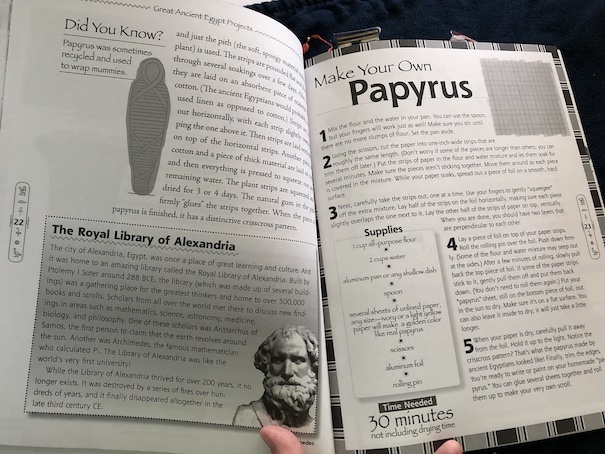
The Ancient Egyptians found many different uses for papyrus plants, including boats, baskets, mats, ropes, sandals, food, medicine, perfume, and paper. This chapter discusses how the Ancient Egyptians made papyrus paper and formed it into scrolls. The activity is to make your own papyrus-style paper using strips of regular paper instead of papyrus. It also has a recipe for a berry-based ink. It mentions that the Egyptians would have used different colored minerals, but the berry ink is easy for a beginner.

Homes

I always like books that discuss the lives of ordinary people and their homes. This chapter explains how Ancient Egyptian homes were made, how the homes of common people and wealthy people differed from each other, how homes were decorated, and the arrangement of rooms for sleeping, storing goods, and cooking. There are three activities for this chapter: making your own mud bricks, making a cat statue, and making a “soul house” – a miniature house or layout of rooms out of plaster of Paris.

Bread

This chapter is about what people ate in Ancient Egypt, and it particularly describes how the Ancient Egyptians made bread. An interesting fact in this chapter is that people in Ancient Egypt typically bartered for food instead of using money. This chapter includes two recipes, one for bread and one for date (fruit) candy.

Games

This is one of my favorite chapters! It’s about toys and games played by children in Ancient Egypt. It also describes board games that could be played by people of all ages, like Mancala, Hounds and Jackals, and Senet. The book provides instructions for making your own Senet board game and rules for playing.

Tunics and Fashion

This chapter is about what people wore in Ancient Egypt. Clothes at the time weren’t as much about modesty as in modern society. Clothing in Ancient Egypt could be pretty minimal, and it was common for Egyptian children to simply go naked. This chapter also discusses clothing accessories and wigs. The activities for this chapter are to make your own simple tunic, sandals (basically decorating a pair of flip-flops), and nemes (head covering).

Jewelry

This chapter explains the decorative and religious aspects of jewelry and the types of gems and minerals included in Egyptian jewelry. The projects are making paper beads and a wesekh collar (type of necklace).

Amulets

This chapter is about how Ancient Egyptians used amulets that they believed had the power to protect them from illness and other dangers. It describes different types of amulets and what they were supposed to do for people who had them. Part of this chapter covers The Book of the Dead, which was a collection of texts that provided a guide to funeral rituals and the afterlife. (You can actually get copies of this book today, translated into English.) The activity for the chapter is to make your own amulet out of a dough made from water, flour, and sawdust.

Kohl and Perfume

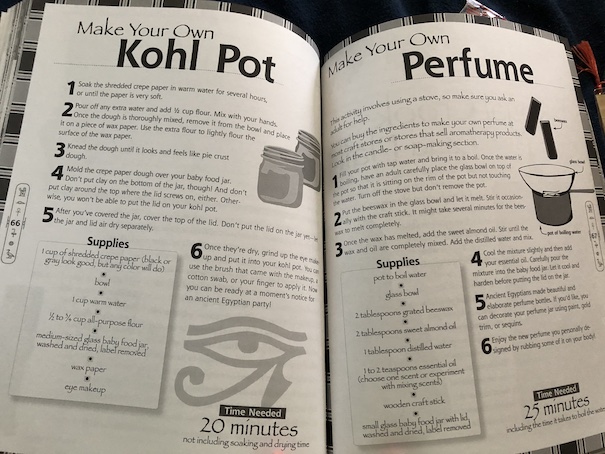
This chapter is about the makeup that people used in Ancient Egypt. Kohl is the substance that Egyptians used around their eyes. It was made from the mineral galena, and it may have helped the Ancient Egyptians protect their eyes from eye infections or provided some shielding from the sun’s glare. This chapter includes instructions for making a simplified version of kohl using black crepe paper, water, and flour and for making perfume out of beeswax, almond oil, and different essential oils. (The perfume activity looks the best of the two. Health food stores that also carry cosmetics, like Sprouts, probably have all or most of the ingredients, and if they don’t, you could probably get whatever’s missing from Amazon.)

Royal Crook and Flail

Pharaohs are often depicted holding a symbolic crook and flail. This chapter explains the meaning behind these symbols (the crook resembles a shepherd’s staff and was meant to represent the ruler of the king because he was supposed to look after his people like a shepherd looks after his sheep, and the flail is the same design as one that was used in harvesting and may have represented the pharaoh overseeing the fertility and prosperity of the land) and also discusses the duties of an Egyptian king or queen and what their subjects expected of them. The chapter also gives information about famous kings and queens and the crowns they wore. The activities for the chapter are making your own crook and flail and your own throne (by decorating an old chair, like one you might find at a garage sale).

Pyramids

This chapter covers Ancient Egyptian tombs and pyramids, how they were built, and how they were decorated. The activities for the chapter are building your own pyramid out of poster board and building a sledge of the type that the Ancient Egyptians used to transport stone blocks.

Temples

This chapter discusses Ancient Egyptian gods and their temples. It explains how the Ancient Egyptians would worship their gods. The activities are making your own foam obelisk and a miniature temple sanctuary scene in a box.

Mummies

This chapter explains how Ancient Egyptians made mummies and what they believed about the afterlife. The activities are making your own shabti (little figurines that were supposed to perform tasks on behalf of the deceased) out of a bar of soap and making your own funeral mask (like Tutankhamen’s famous mask).

Hieroglyphs

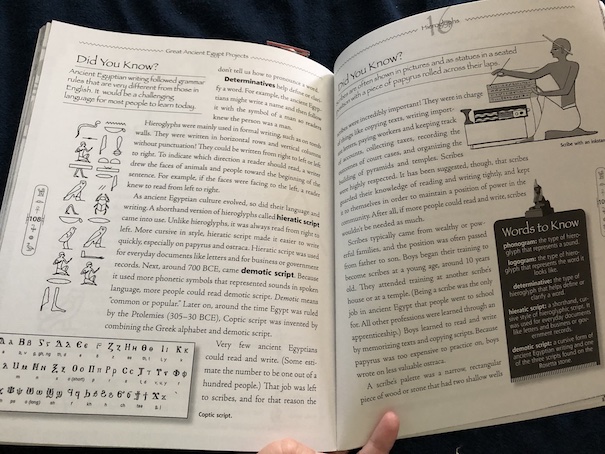
This chapter explains how the Ancient Egyptian systems of writing worked and how modern people learned to read hieroglyphs by studying the Rosetta Stone. Th activities are making your own ostraca (piece of pottery used as a writing surface), mural, and cartouche.

I haven’t seen this particular book available to read online, but there’s a very similar by the same author on Internet Archive.
The FunCraft Book of Print and Paint

The FunCraft Book of Print & Paint by Heather Amery and Anne Civardi, 1976.

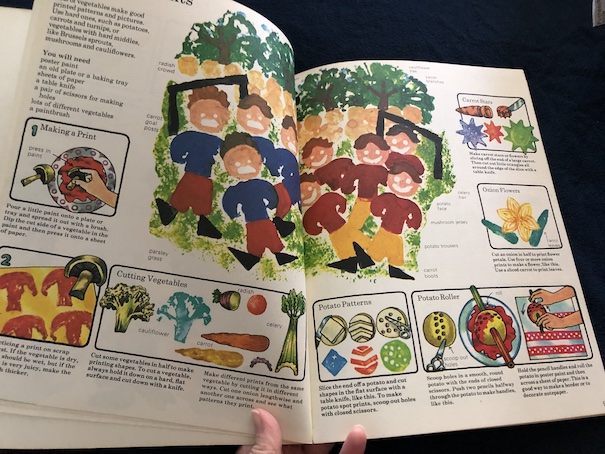
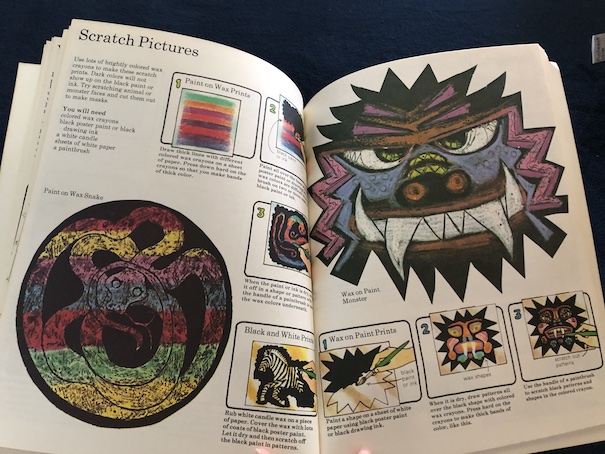
This is the American edition of a British book, and it’s part of a series of craft and activity books. When I was a kid, I was really into crafts, but I didn’t do even half of the crafts in the craft books we had. This particular book is interesting because I first thought that it was going to be about painting pictures, and it is, but it’s specifically about making “prints” with paint. Basically, the crafts involve using various objects, from leaves and veggies to your own hands and fingers as stamps to make pictures and designs.

I remember once taking part in an activity at our local library that involved making pictures with stamps make from cut potatoes, like the book shows in the section about vegetable prints. Our potato stamps weren’t as elaborate as the ones shown here, and it’s interesting that they thought of using other veggies to get some different shapes as well.

The range of objects and techniques that the book uses in making prints is also interesting. It points out that you can make some interesting patterns by painting on a page and folding it over or using string coated in paint to make swirls. There are tips for making using tools like stencils and rollers to make designs.

The book also includes some painting techniques, like how to mix colors, and some tips for how to enhance pictures you’ve made, like painting over parts of a picture with glue and then shaking on some powdered colors. It gives suggestions for different powdered colors, like colored sand, salt, or sugar or using powdered spices or cocoa from your kitchen (more expensive, but it will give your artwork a scent).

One of my favorite suggestions was a technique that I did like a lot when I was a kid, making scratch pictures with a simple form of sgraffito. You can buy kits and specially prepared paper for doing this today, which didn’t exist when I was a kid (at least, not anywhere where I could buy it). Instead, I had to do it the old-fashioned way, using the technique in this book – drawing a rainbow of colors on paper, covering of it with black, and then scratching the black off to make rainbow pictures and patterns.

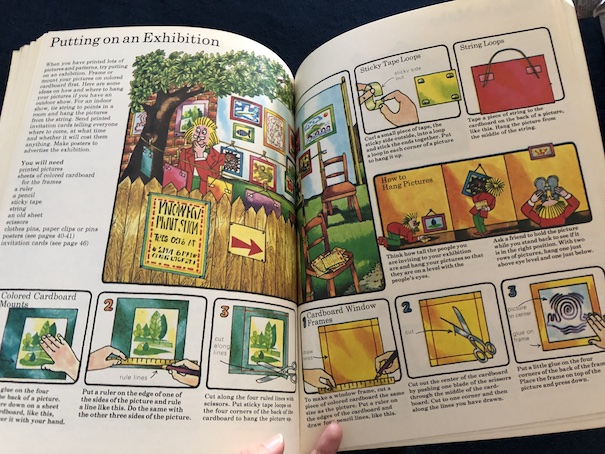
There are too many tips and techniques for me to cover everything in detail. The last few pages cover uses of the techniques for specific projects, how to make prints on cloth, and how to have an exhibition of the pictures you’ve made.

The book is available to borrow and read for free online through Internet Archive.

Hand Shadows

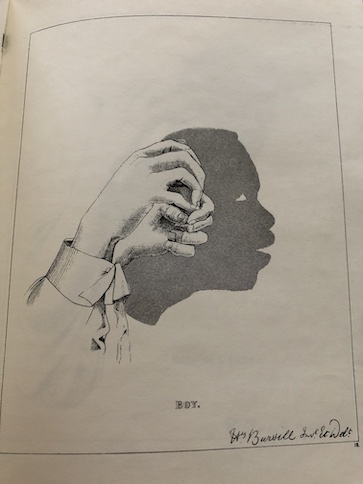
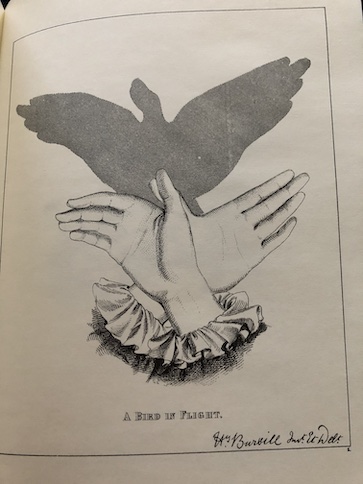
When I first read and started playing with this book as a kid, I didn’t stop to read the preface in the book or look at the publishing date, so I completely missed the fact that this is a reprint of a book from the late 1850s. The author, Henry Bursill (link repaired 9-11-24), was a professional artist

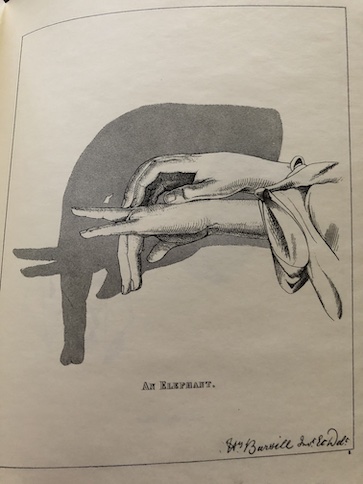
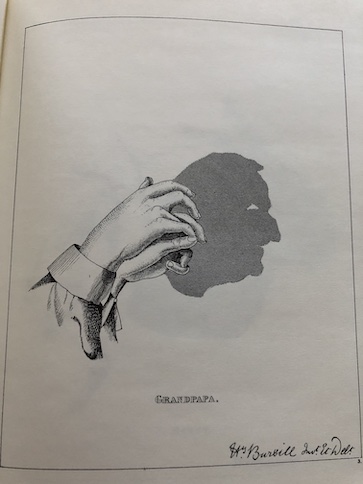
In the preface, Bursill refers to a well-known print from the early 19th century called The Rabbit on the Wall, which shows a father making shadow figures on the wall with his hands to amuse his children. Bursill says that there have been other books about hand shadows before his, but he emphasizes that his book is not the same as theirs because he has worked out his own hand shadows through experimentation. He says that it will take some practice for people making hand shadows to get them perfectly, but he encourages people to practice and not be afraid to work out new hand shadows of their own through experimentation. Bursill did the illustrations for the book himself, and he says that he began sketching some of the designs during his time as an art student and that he would amuse some fellow students by making hand shadows on the wall of his studio.

Other than the preface, the only words in the book are the captions on each of the pictures. I’ve tried some of the hand shadows in the book, and I had a more difficult time than the preface makes it sound. The only ones I’ve really been able to do well were the bird and the greyhound. I haven’t given up on mastering some of the more difficult ones someday, though!

The book is available to read for free online through Project Gutenberg and Internet Archive (multiple copies).

Children’s Quick and Easy Cook Book

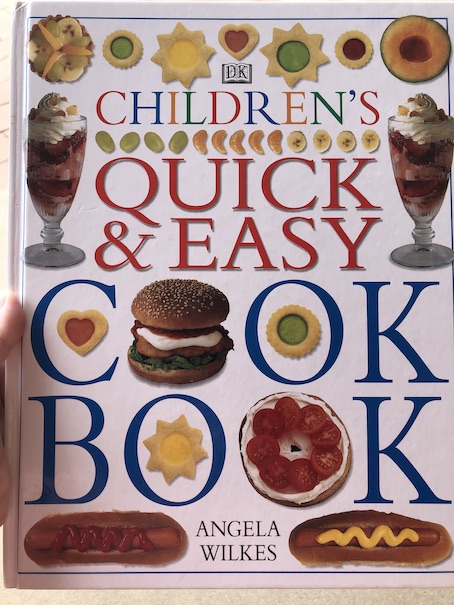
Children’s Quick and Easy Cook Book by Angela Wilkes, 1997.

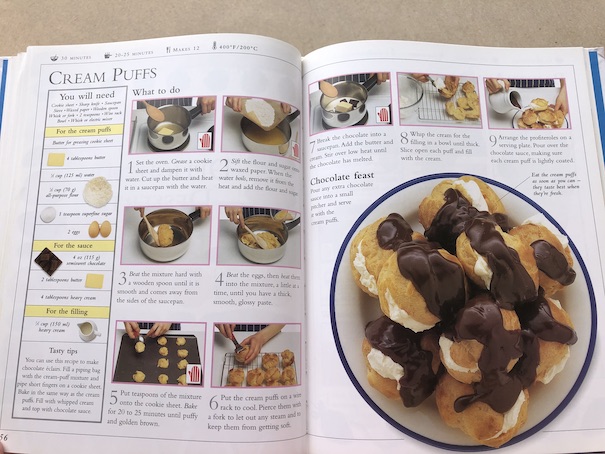
When I was expanding my cooking skills as an adult, I started doing it using children’s cookbooks instead of cookbooks for adults because of the simplified instructions. When I bought this one, I hadn’t realized that it was originally a British book. I have the American edition, but the reason why I discovered that it was a British book is that the types of recipes the book offers includes some that are more common in the UK than in the US. A friend of my family, who was originally from England, spotted it and was happy to hear that I’d be learning to make some of these recipes. The recipes provide both metric and imperial measurements for the ingredients (another clue that this is an international book). There is a section in the beginning of the book that explains how to use the book and some general cooking safety tips. In the back of the book, there is a helpful Picture Glossary that demonstrates various cooking techniques and concepts used in the book, like how to use a marinade, how to core an apple, how to separate eggs, and how to roll out pastry. It’s all useful information for beginning-level cooks.

The recipes are divided into helpful sections, including snacks, meals, desserts, and sweets. The book is heavy on desserts, candy, and sweets, but many of the recipes under the snacks section are what Americans (and possibly British people, too, although I’m less sure there) might consider as breakfasts, lunches, and general light meals. In particular, the snack section includes sandwiches of various kinds. Some of the ingredients for the sandwiches sound uncommon for the US, although that might also vary by region. I can’t recall seeing salami and cream cheese together before, but I wouldn’t mind trying it sometime. Some sandwiches also call for ingredients like cherry compote and mango chutney. I think that serving grated chocolate on croissants or other bread items is also a European thing. I’ve seen it packaged just for that purpose at international grocery stores and import stores. Some of the snacks are more like snack items in American cook books, like flavored popcorn and smoothies.

The section of Speedy Meals include omelets, two kinds of soup, tacos, and pasta. Some recipes are common ones in the US, too, like chicken nuggets, chicken burgers, and fish sticks. The Turkish Meatballs with lamb, Falafel, Tabbouleh, and Chicken Curry and Rice are less common, but are still eaten here, especially if you live in areas with international restaurants and grocery stores.

Of course, the desserts and sweets are particularly fun recipes. I particularly enjoyed making the cream puffs! There are different types of cookies included and candies like chocolate truffles and peppermint creams.

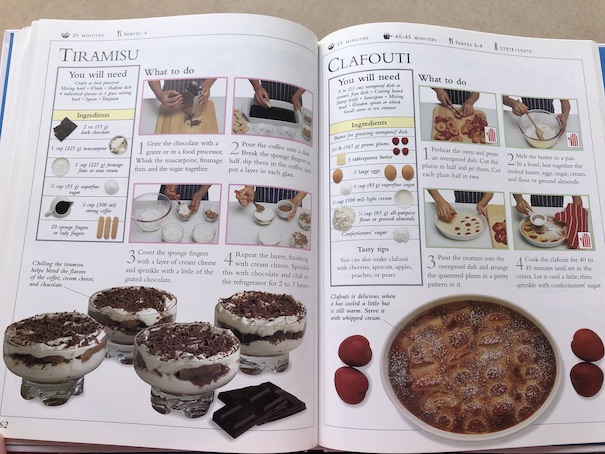
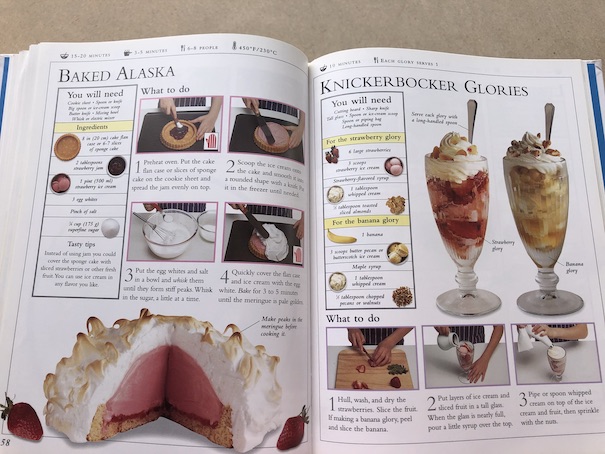
Many of the desserts would be familiar to Americans, like the chocolate cake, carrot cake, lemon cheesecake, and Baked Alaska. However, there were also a few desserts that were new to me. I had never heard of Clafouti before, and this was the first place I had heard of Knickerbocker Glories, a kind of parfait or sundae with layers of ice cream and fruit. (If you remember Harry Potter referring to a Knickerbocker Glory in one of the books, here is what it is!)

The book is available to borrow and read for free online through Internet Archive.

The Sleepover Cookbook

The Sleepover Cookbook by Hallie Warshaw, 2000.

This cookbook has easy recipes that kids can make with their friends at sleepovers, parties, or anytime they want to eat together and include cooking as an activity. Some of the recipes are made from scratch, and some include shortcuts, like using pre-packaged pie dough and crescent roll dough.

The recipes are divided into sections with two sections devoted to snacks, Starter Snacks and Sacktime Snacks (bedtime snacks). There are other sections for meals – dinners, breakfasts, and brunch or lunch. There is also one extra section for birthday treats. The introduction to the book says that it isn’t really important when readers use the recipes – if you want to use a starter snack as a bedtime snack or eat a dinner recipe for breakfast, it’s all up to you. The sections are just to make it easier to find certain types of recipes.

As expected in a book of sleepover recipes, there are plenty of sugary treats, but there is one specifically “healthy” recipe for each section in the book, marked by a heart in the table of contents. The snacks include traditional kid favorites like cookies, popcorn balls, and s’mores. However, even some of the recipes that aren’t specifically labeled “healthy” are still non-sugary, like guacamole and hot taco dip.

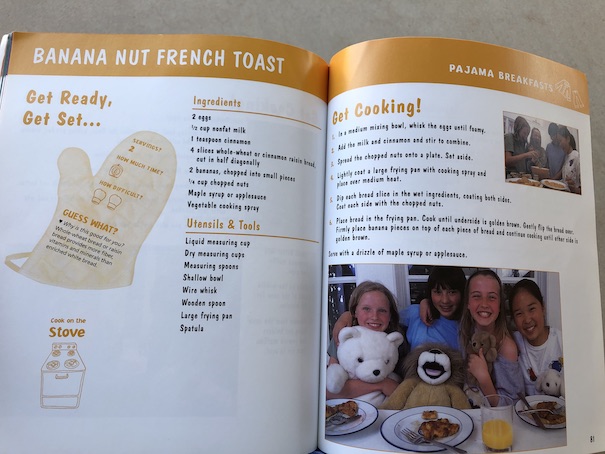
The meal recipes also include many popular favorites. Dinner recipes include chicken pot pie, taco salad, spaghetti and meatballs, and homemade pizza. Breakfast recipes include cream cheese and ham omelettes, chocolate chip muffins, and banana nut French toast. Lunch recipes include tuna melts (called Tuna Meltdowns), bow-tie pasta salad, chicken veggie sticks (kebabs), and turkey burgers.

The section of birthday treats has recipes for different types of cakes and a few non-cake treats like brownie sundaes and Fundue (chocolate dessert fondue).

Each of the recipes in the book comes with ratings, indicating the difficulty of the recipes, although none of them were are really very difficult in general, and the amount of time it takes to make them. One of the things that I liked about this book, besides the ease of the recipes is that the book, is that the pictures show boys cooking as well as girls. I think it’s good that the book portrays cooking as something that both boys and girls can do because it’s a useful life skill for everyone and something that anybody can do for fun.

The book is available to borrow and read for free online through Internet Archive (multiple copies).

The Spookster’s Handbook

The Spookster’s Handbook by Peter Eldin, 1989.

This is a fun book of jokes and tricks for Halloween or just having some spooky fun with friends, possibly at a sleepover. The book is divided into the following sections:

Making Monsters – How to make costume pieces and turn yourself into a bug-eyed monster, a warty witch, and more! There are also tricks, like making a ghost image appear on a wall, casting a glowing face on someone else’s shadow, and making Bigfoot footprints.

Screamingly Funny – A chapter of ghost jokes.

Ghostly Tricks – Magic tricks that look somewhat ghostly, like making a friend “float” in the air and making magical symbols appear on blank cardboard.

Monster Pranks & Practical Jokes – Tricks that produce ghostly illusions, like how to take ghostly pictures, produce taps with no obvious source, and cause ghostly flashes of light in a dark room.

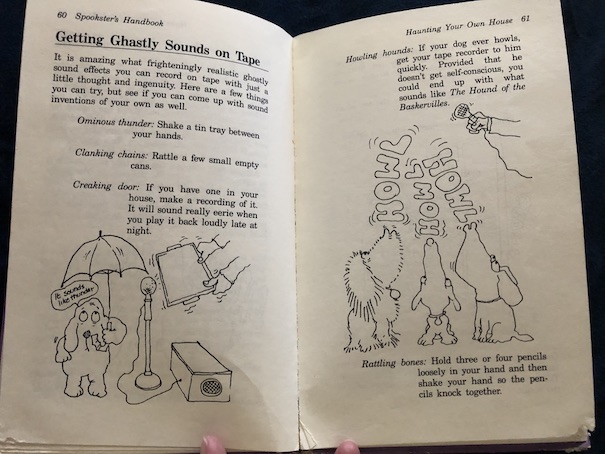
Haunting Your Own House – Describes typical do-it-yourself haunted house tricks for producing scary noises.

Monster Laughs – A chapter of monster jokes.

Scare Your Friends – Tricks and pranks for spooking your friends with a finger in a box, strange noises, or a glowing skull.

Terrible Trivia – Fun facts about superstitions and telling the future.

Fang-Tastic! – A chapter of jokes about vampires.

My favorite parts of the book are the superstitions and the ways to make scary haunted house noises. I haven’t actually tried the noise tricks yet, but at some point, I’m planning to try a few!

The book is available to borrow and read for free online through Internet Archive.