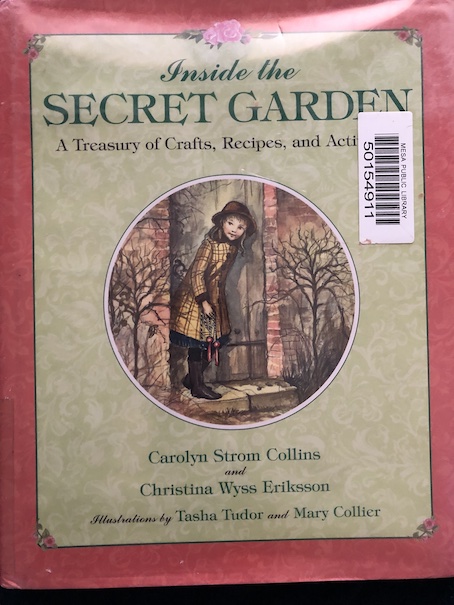
Inside the Secret Garden by Carolyn Strom Collins and Christina Wyss Eriksson with illustrations by Tasha Tudor and Mary Collier, 2001.
This is a how-to book with activities, crafts, and recipes that fit the themes in the classic children’s book The Secret Garden by Frances Hodgson Burnett. The book has some of the classic illustrations from The Secret Garden by Tasha Tudor, and there are also illustrations by Mary Collier.
The book begins with an explanation of the story of The Secret Garden and the life of Frances Hodgson Burnett. In the description of the author’s life, the book discusses some of the places where she lived and people she knew who provided inspiration for aspects of the story of The Secret Garden. There is also a timeline of world events during the author’s lifetime.
The second chapter describes the setting of the story with descriptions of Misselthwaite Manor and its gardens. It explains how a large manor house like Misselthwaite would function and the types of staff and servants it would have. It also explains the types of gardens and plants that would have been grown in the kitchen gardens of English manors and cottages.
The third chapter in the book has recipes and menus based on the foods the characters eat during the story. Food is important in The Secret Garden because Mary and Colin didn’t have appetites when they were unhealthy, but after their time working in the garden and getting fresh air and exercise, their appetites improved. The recipes in the book are based on things the characters eat during the story.
The recipes in the book include:
A pot of tea
Porridge (oatmeal)
Treacle (They use molasses with corn syrup and honey to make it.)
Orange marmalade
Homemade bread
Snow-white eggs (soft boiled)
Raspberry jam
Clotted cream
Muffins
Ham
Oatcakes
Doughcakes
Apple Crumble
Crumpets
Robin cake
Roasted eggs (The instructions call for cooking them in an outdoor stone oven, like they did in the book, but it also discusses how to make an indoor version.)
Roasted potatoes (The instructions call for cooking them in an outdoor stone oven, but it also discusses how to make an indoor version in a standard oven.)
Currant buns
A book of activities based on The Secret Garden wouldn’t be complete without gardening activities! The fourth chapter has suggestions for creating your own garden. The gardening tips and suggestions are based on the plants the characters used in The Secret Garden. I’m not sure all of them would grow well in every climate, and planting seasons can vary by region.
The gardening activities include:
Planting a spring bulb garden
Planting a rose in a flowerpot
Making an indoor “secret garden” with potted plants in a tray or pa
The fifth chapter has a selection of crafts and activities related gardening. They include things you can make to use in your garden and things you can make our of plants from the garden, including:
A twig tool holder
Plant labels (little signs for labeling plants in your garden)
Moss-covered flower urns
Key wind chimes
A planter in a watering can
A twig trellis
Pressed flowers and a pressed flower scrapbook
A bouquet of roses
A topiary flower arrangement
A miniature arrangement
A bird feeder
A bird bath
Nest-building station
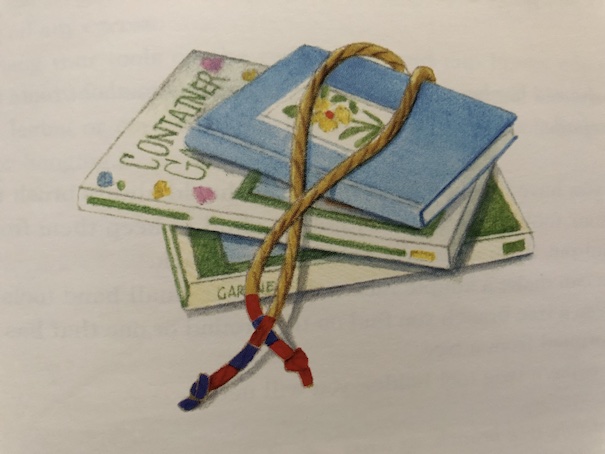
It also explains how to make your own skipping rope, like the one Mary had in the book, and there is a section of traditional jump rope rhymes.
The book is available to borrow and read for free online through Internet Archive.
My Reaction
I liked the chapters about the history of The Secret Garden and the life of Frances Hodgson Burnett. I thought it was interesting to see some of what inspired her to write the story. I particularly like the chapter that describes how a manor like Misselthwaite would be run because I like seeing the historical background to stories.
I don’t think that the gardening tips are really universal. I grew up in Arizona, and I know from personal experience that plants and gardening techniques that would work well in cooler and wetter climates don’t work as well in a hot, dry desert climate. However, some of the garden-related crafts looked intriguing. I particularly like the idea of the wind chime that uses old keys as the chimes. I’ve seen antique stores and places that sell crafting supplies that also sell old keys, so know it’s possible to get them.
I like the selection of recipes the book provides, and I think most of them would be pretty easy to make. The most difficult ones are probably roasted eggs and roasted potatoes because they require an outdoor oven, like the kind the characters in The Secret Garden used. The book briefly describes how to make the kind of outdoor stone oven they mean, but I don’t think that kind of oven can be built just anywhere. It’s more for camping and the countryside, where you can safely have fire pits away from buildings. Fortunately, the book also includes instructions for making those dishes inside, in a standard kitchen.
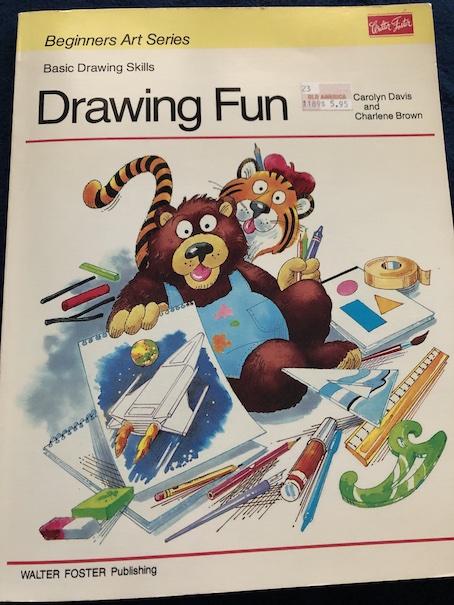
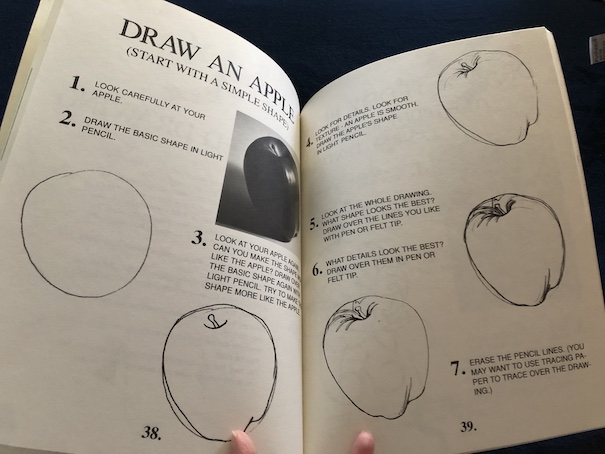
Drawing Fun by Carolyn Davis and Charlene Brown, 1988.
This book is part of the Beginners Art Series, and it teaches children basic drawing skills. The book is designed for readers to try out drawing techniques on their own as they read along and starts with a page that explains the materials they will need.
Because this is a beginning guide, the book begins by explaining that all objects and, therefore, all drawings, are made up of basic shapes. One of the keys to learning how to draw is studying the basic shapes and how they can be combined to create more complex shapes and drawings.
When beginning to draw, the reader should begin by sketching out the general shapes that make up what they’re drawing and then fill in the details.
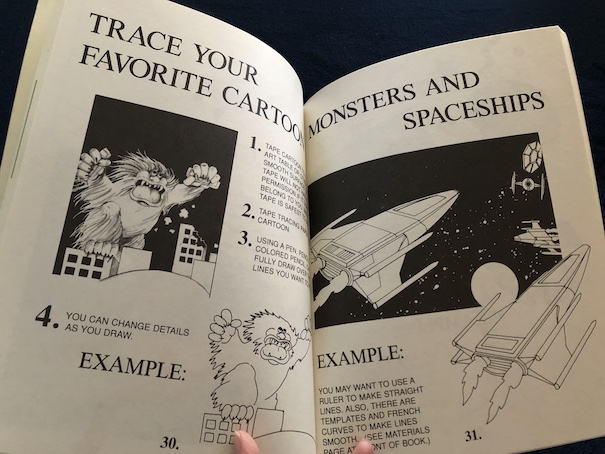
Many of the drawing activities in the book focus on tracing shapes, drawings, and photos to learn how they are formed and practice drawing skills.
As the book continues, the techniques become more advanced and the drawings become more detailed. It gradually teaches readers how to use shadows and shading to make their drawings appear more realistic and three-dimensional. The subject matter of the drawing exercises ranges from basic apples to more interesting subjects, like teddy bears and people.
The book also explains how to use perspective in drawing to further add a three-dimensional quality.
I like this book because I think it’s a good introduction to a fun, artistic hobby, giving readers good beginning techniques.
The book is available to borrow and read for free online through Internet Archive.
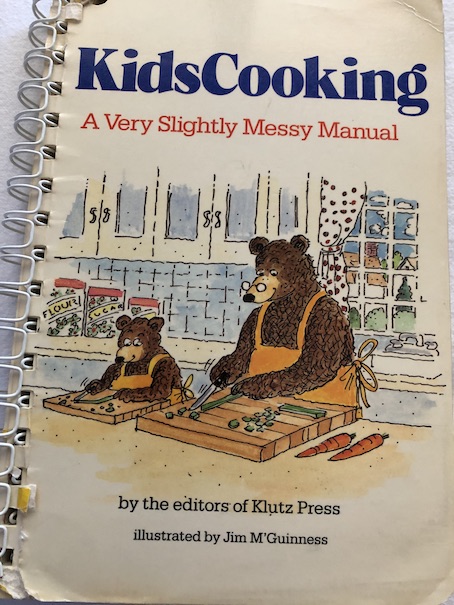
Kids Cooking: A Very Slightly Messy Manual by the editors of Klutz Press, 1987.
This book is part of the classic children’s hobby and activity series from Klutz Press. Originally, this book came with a set of plastic measuring spoons, which was attached to the book at the hole in the upper left corner.
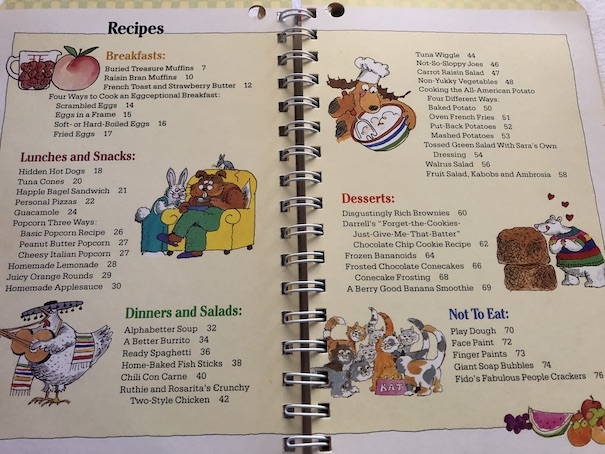
The recipes in the cookbook are listed in categories by the type of meal: breakfasts, lunches and snacks, dinners and salads, and desserts. There is also a section of recipes for non-edible things, like play dough and finger paint.
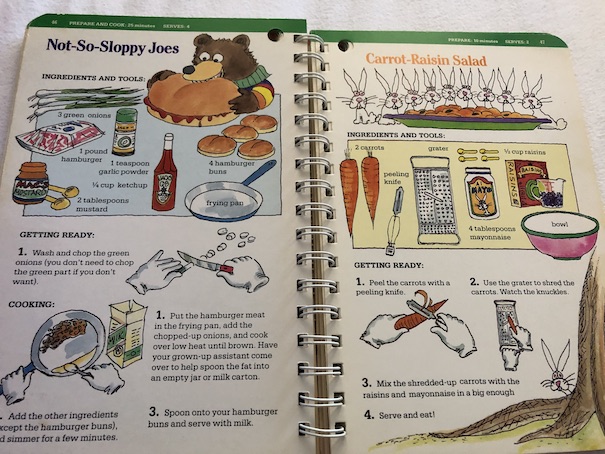
The food recipes are fairly simple, but not the overly-simple, boring recipes that I’ve seen in some children’s books, like how to make a peanut butter sandwich.
Kids can make these recipes, but they’re not for little kids who are still at the level of learning to make their own basic sandwiches. They do involve things like using stoves and ovens and chopping ingredients with a sharp knife. It’s common in the book to include “grown-up assistant with knife” under the list of ingredients and tools needed for recipes.
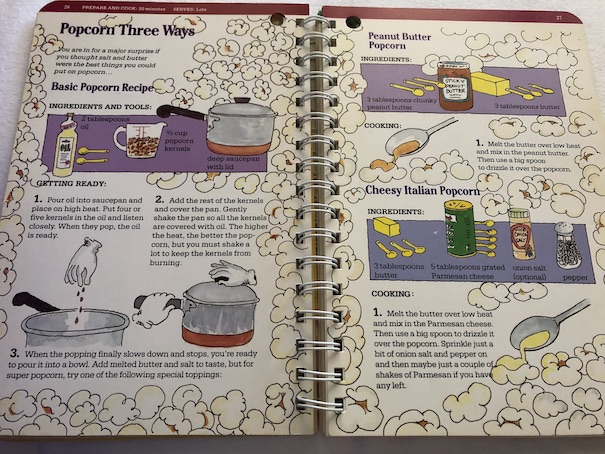
Some of the recipes in the book include multiple ways to cook something, variations on popular foods or different ways of seasoning a dish. For example, the breakfast section explains different ways to cook eggs, including scrambled eggs, fried eggs, soft or hard boiled eggs, and eggs in a frame.
There are different ways of cooking potatoes in the dinner section, and I also like the popcorn variations in the snack section, which include different ways to flavor popcorn with cheese or peanut butter.
The dessert section includes brownies (“Disgustingly Rich”), chocolate chip cookies, and some more unusual desserts, like frozen bananoids, which are pieces of banana covered in chocolate and frozen.
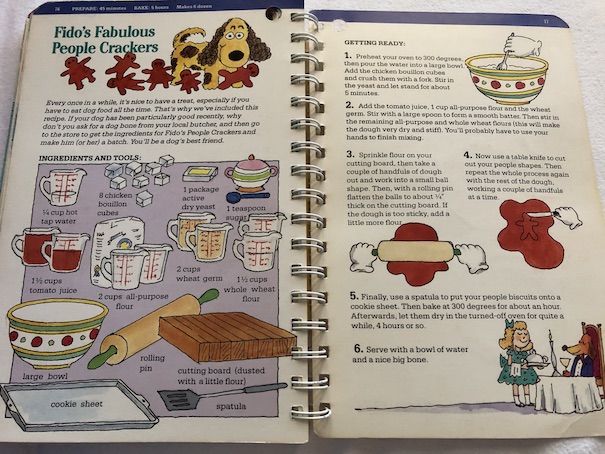
The section of non-edible recipes also includes a recipe for dog biscuits, Fido’s Fabulous People Crackers. They’re edible for dogs, just not something people would enjoy.
The book is available to borrow and read for free online through Internet Archive.
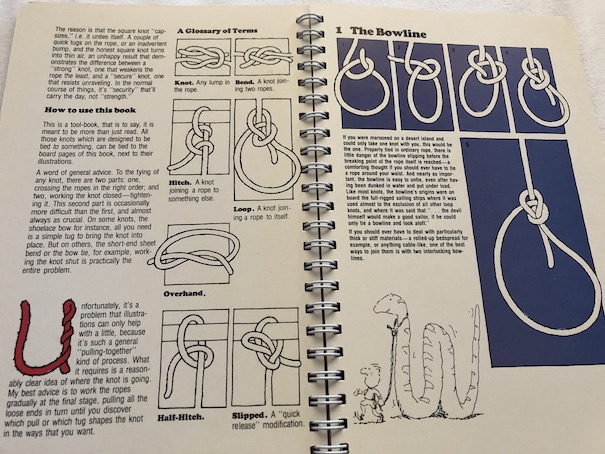
This book is part of the classic children’s hobby and activity series from Klutz Press, and it explains how to tie various useful knots. Originally, this book came with a two cords that could be used to practice the knots, one red and one blue, which were attached to the book through the holes in the front cover. The book begins with an introduction, explaining different categories of knots and how to use them: loops (knots for tying a rope to itself), bends (knots for tying one rope to another), and hitches (knots for tying a rope to something else).
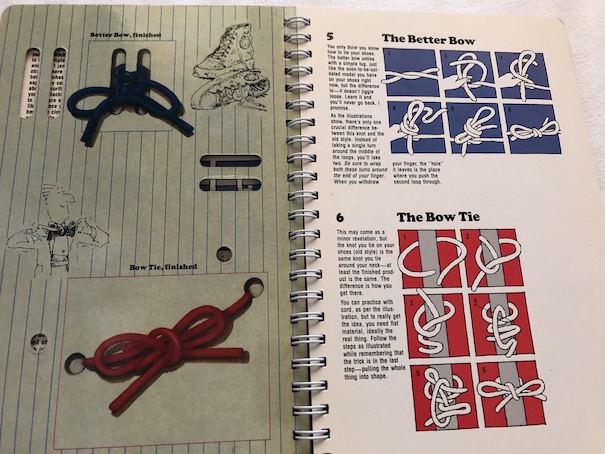
One of the best features of this book is that there are holes, slits, and notches in the thick board pages of the book, so the knots can be practiced directly in the book.
The knots have a variety of uses, and the book even explains how to tie better, longer-holding bows in shoelaces and how to tie the type of bow used for a bow tie.
The book ends with instructions for a magic rope trick.
The book is available to borrow and read online through Internet Archive.
Tricky Pix: Do-It-Yourself Trick Photography by Paula Weed and Carla Jimison, 2001.
This book is part of the classic children’s hobby and activity series from Klutz Press and explains how to perform trick photography. Originally, this book came with a real camera that could be used to take trick pictures. The camera was a film camera instead of a digital camera, using 35mm film, but the film was not provided.
Now, digital cameras have almost entirely replaced film camera for popular photography, and film is actually much harder to come by, and not as many places offer film development services. In the very early 2000s, when this book was first published, digital photography was just starting to take hold, and digital cameras were more expensive, so a kid’s first camera was still likely to be a film camera. In just a few more years, that shifted abruptly with the increasing popularity of cell phone cameras and further developments that made digital cameras increasingly affordable for general use. The beginning of the book explains how the camera works and how to load the film.
The fact that this book was designed to be used with a film camera is important because this style of trick photography relies on physical illusions, not images that are digitally altered with Photoshop or similar software. In a way, this makes the pictures more interesting because they are largely unaltered from their original form. That is, you’re seeing what the camera saw at the moment that the picture was taken. The tricks involve using different perspectives and camera angles to achieve the illusions.
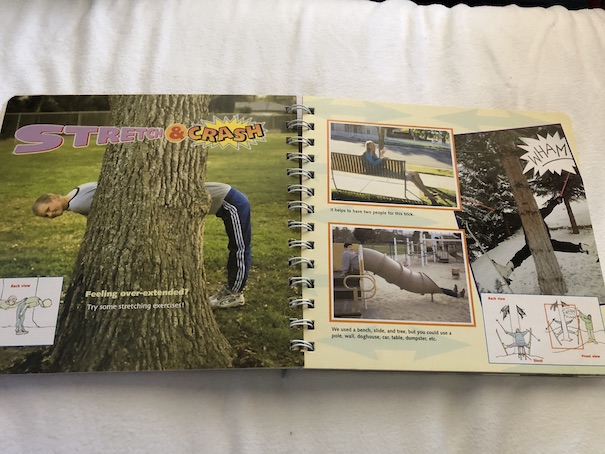
Strategic poses and the use of physical objects to block part of the scene can be used to create illusions like disembodied heads, people with extra limbs, or people with really long legs or bodies.
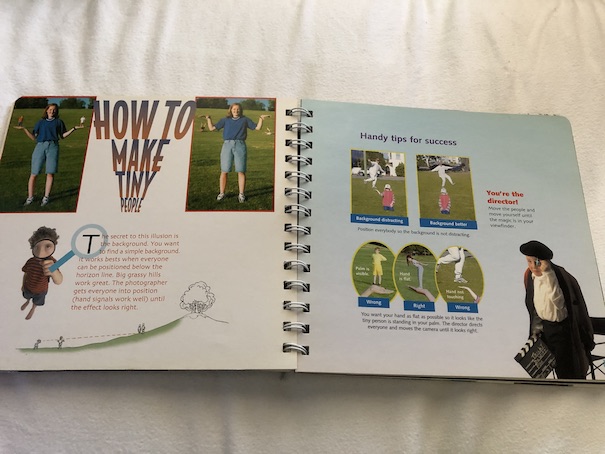
An often-used trick for making people look tiny enough to be picked up or stepped on by another person involves forced perspective – strategic positioning the subjects so that there is physical distance between them but no visual cues to indicate just how much distance there is between them so relative sizes are difficult to gauge.
When images in this book are altered, it’s with the old-fashioned method of literally cutting and pasting them onto each other, something that is now done digitally.
Personally, I enjoyed the fact that there was less of a reliance on software and digital technology in the production of these photographs. I think that learning how to do things without relying on technology to do most of the work can encourage creativity, and in particular, the use of physical illusions like forced perspective is also educational. Artists need to understand the use of physical space, perspective, and lighting, and these photographic tricks demonstrate these concepts well. Even though this book doesn’t make use of digital photography, any of the tricks in this book could also be performed when taking pictures with a digital camera.
The book is available to borrow and read online through Internet Archive.
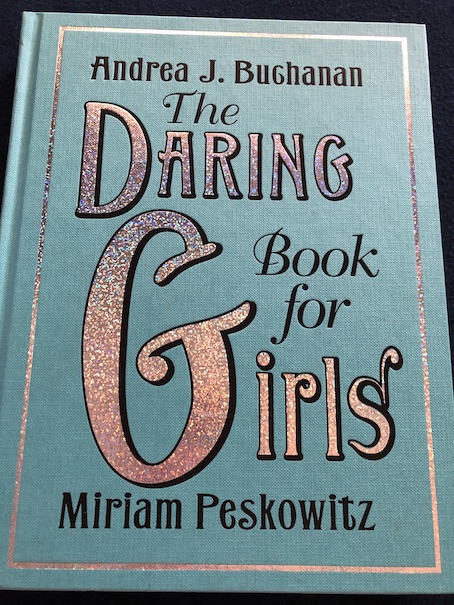
The Daring Book forGirls by Andrea J. Buchanan and Miriam Peskowitz, 2007.
This is an activity/hobby book for children, especially for girls, but really, full of activities that boys could enjoy, too. It’s often sold in sets with a companion book, The Dangerous Book for Boys. These books follow in the tradition of earlier activity/hobby books like The American Boy’s Handy Book and The American Girl’s Handy Book by the Beard siblings. Some of the activities in these modern books are similar to ones included in historical children’s activity/hobby books, but there are some notable differences. Although The Daring Book for Girls includes sports and outdoor activities, it has more scientific and academic information than The American Girl’s Handy Book.
The differences between these books show changes that have taken place in society, the activities that adults want to promote for children, and the types of activities that children can actually use in the 120 years between the times when the two books were published. For example, 19th century how-to books for girls tended to include instructions for making several different types of decorative embroidery stitches. In this book, there is just one paragraph dedicated to sewing stitches, tacked into the end of the section about different types of knots, and the stitches they show are very simple stitches that can be used for basic repairs to ripped clothing. The authors of the 19th century activity books for girls seemed to be trying to introduce girls to genteel and practical pastimes and healthy physical activities. The authors of The Daring Book for Girls explain in their introduction that they wanted to introduce 21st century girls to more nostalgic pastimes that don’t involve today’s technology, like cell phones, video games, and the Internet because they feel like modern childhoods are too high-pressure and push kids to grow up too fast.
I like to explain the contents of books so that people will know whether they would like to read them in more detail. It’s difficult to describe the contents of The Daring Book for Girls succinctly because the contents are extensive, and they are not grouped into convenient categories. Like in The Dangerous Book for Boys, it’s more like reading a very long magazine with isolated articles, although some of the articles are related to each other. It did strike me that more of an effort was made in this book to put some related topics next to each other. For example, Building a Campfire is immediately followed by Campfire Songs, and Reading Tide Charts is immediately followed by Making a Seine Net for fishing.
Because it would be difficult for me to explain everything in this book without basically copying the entire table of contents, which would take quite a lot of space to do, I’ll just hit some of the highlights by describing them in sections that the book doesn’t have but which explain the types of activities and information covered in this book. All of the types of activities that I describe below are included in the book, but there is also more in the book than I could take the time and space to describe in detail.
Useful Skills and Knowledge
There are instructions for different types of knots and stitches, tips for assembling a useful toolbox that can be used to building things or making repairs, how to change a tire, how to write a letter, and basic first aid.
There are two sections with phrases, idioms, and terms of endearment in French and Spanish. These sections are more for fun and getting girls interested in learning languages than a functional guide to speaking a language. However, there are other sections with information that will be useful in school, like the sections of Math Tricks, Greek and Latin Root Words, and Books That Will Change Your Life.
As expected in a book for girls, there are tips and information related to clothes and hair styles, like How to Tie a Sari and Chiton, Putting Your Hair Up With a Pencil, Tying a Bandana, and Japanese T-Shirt Folding. However, I disagree with the advice in the section called The Daring Girls Guide to Danger about high heels. Most of that section is about doing things that are a little scary but can lead to greater confidence, like standing up for yourself or someone else, riding a roller coaster, or seeing a scary movie, but I don’t like the advice to wear high heels. Their logic is that it gets easier with practice, which may be true for most people, but I have to say that I’m in my 30s, and the only type of heels I’ve ever been able to wear without turning an ankle are low and thick. Otherwise, I have to wear flats, and I’m not the only woman who says that. Wearing high heels for extended periods is hard on the feet and can lead to foot problems later in life, so I favor being practical. In my opinion, some things just aren’t worth getting used to, and girls would be better off in the future for not starting that now.
In spite of the authors’ assertion that they don’t want girls to grow up too fast, there are some tips and information that are focused on gaining grown-up skills and preparing for a career, like public speaking, learning Roberts Rules of Order to conduct meetings, learning how to negotiate a salary, and understanding financial information like stocks, bonds, and interest. The section about how to have a lemonade stand not only contains recipes for the lemonade and other treats to sell but how to calculate profits.
There is also advice for girls about how to talk to boys. Some of it is the kind of advice that I wish that boys would be given about talking to girl. For example, the book says, “Some girls are told that boys are different” and that girls need to be into things that boys like in order for boys to like them. I think that, sometimes, boys and girls are taught too much to think of each other as homogeneous groups, that all boys like certain things like sports and all girls like certain things like dolls and romantic movies, and that they each need to do certain things, talk about certain things, or not talk about certain things in order to get people to like them. I think kids should be taught to think of each other more as individuals with individual personalities and interests, whether they’re boys or girls, and not to try to do things that they think are pleasing to all boys or all girls. Nobody really needs to please everyone anyway. No girl needs to get all boys to like her, and no boy needs to get all girls to like him. It’s enough to learn how to bond with people you like. If you want someone to like you, ask them about the things they personally like and tell them about the things you personally like. That’s how you find people who are compatible with you. As the book says:
“Many things are said of boys: Boys like sports, boys are messy, boys don’t have any feelings, boys like trucks, boys don’t like girly things, boys like to run around and eat gross food. Whatever the specific generalization, the point of these notions about boys is to set them apart from girls as being entirely different.
Similar statements are made about girls: Girls like pink, girls like flowers, girls are neat and clean, girls are frivolous, girls are emotional. Are any of these things true about all girls? Of course not. But, it’s easier to think about boys and girls as being entirely different than it is to think about boys and girls as having lots of common ground.”
The book says that, depending on how a girl feels about boys, she could ignore them, be friends with them, or even consider romance with them, but “Wherever you are on the spectrum of how you feel about boys, do treat all of your friends, boys and girls, with kindness. This has gone out of fashion, and that’s a sad mistake. Overall, the truth is that there’s no great mystery about boys. Boys are people, and like all people, they are complicated. And that’s what makes being friends with other people interesting: you get to learn about how other people think and act, and, in the process, learn a little bit more about yourself.”
One of the stereotypes about boys is that they aren’t as good with relationships as girls are, but I think that this is partly due to the advice that they’re given about relationships. After comparing the advice about girls given in The Dangerous Book for Boys and the advice about boys in The Daring Book for Girls, I think that both boys and girls should take the advice in The Daring Book for Girls.
Games
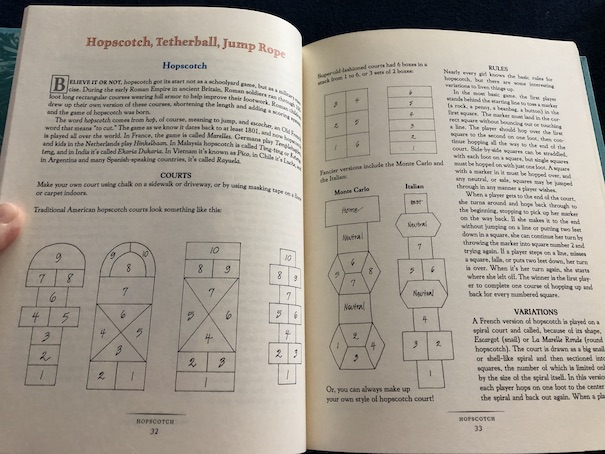
The book provides rules and tips for outdoor games, including Four Square, fourteen variations of Tag, Hopscotch, Tetherball, and Jump Rope (which includes jump rope rhymes, and there are separate sections for Double Dutch and Chinese Jump Rope). There are card games, like Hearts and Gin. There are also rules for playing Jacks, Darts, and Hand Clap Games.
There is a special section about slumber party games, which includes the classic Truth or Dare and a couple of games of the spooky variety, Bloody Mary and Light as a Feather, Stiff as a Board. Young girls often like to do spooky things to scare each other when they’re staying up late at night. Boys don’t usually do this stuff, but girls often do when they’re unsupervised at sleepovers or summer camp. The spooky types of “games” are really psychological tricks, and they seem much less mysterious and scary when you know how they work (Bloody Mary makes use of the “Strange Face Illusion“, which is admittedly still an eerie sensation when you’re an adult who knows what to expect and that it’s all a trick of the mind), so they tend to be at their maximum popularity when girls are in their tween and early teen years, old enough to get a little thrill from doing something a bit scary but not yet old enough to have learned why they work and have the mystery taken out of them. The book explains a little about the concept of levitation and the superstitions surrounding it for Light as a Feather, Stiff as a Board, and it ends by calling the effect a “magic trick, a phenomenon based in real-world explanations and techniques”, but it doesn’t go into details about the real-world explanation behind it, so it doesn’t ruin the sense of mystery for the girls who want to try it. There is also a section of advice for telling ghost stories that is separate from the slumber party section, but good for sleep-overs and camp-outs.
Sports and Exercise
The book provides rules for basketball, netball, softball, and bowling.
It also explains five basic karate moves, some basic yoga, and how to do cartwheels and back walk-overs.
Outdoor Activities
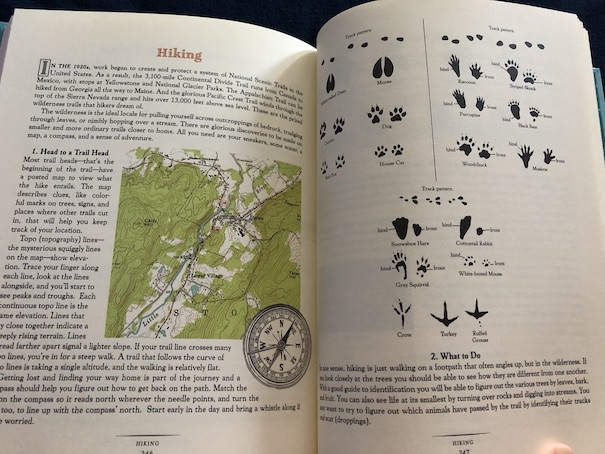
There are sections with activities related to camping out, like Sleep Outs, how to build a campfire, campfire songs, two ways to make a sit-upon, how to paddle a canoe, and how to go hiking, climbing, and bird watching. As I mentioned above, the book also explains how to read a tide chart and how to make and fish with a seine net.
There are also instructions for making clubhouses and forts, setting up a tree swing, rollerskating, and how to make traditional daisy chains and ivy crowns.
Science and Technology
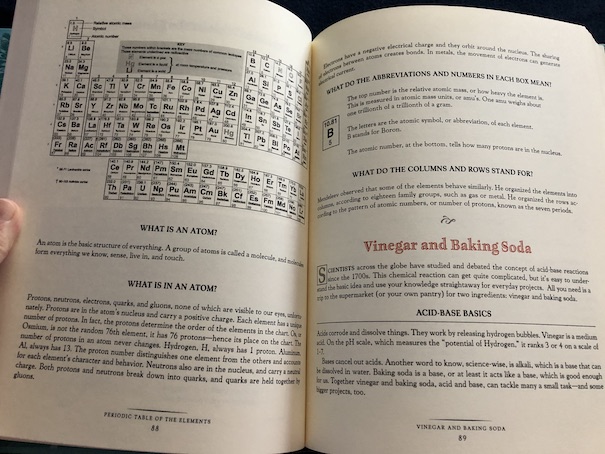
The book explains some natural and scientific concepts, such as weather and the Periodic Table of Elements.
There are instructions for creating projects of the type that would be good for a science fair, like a Lemon-Powered Clock, things to do with Vinegar and Baking Soda, how to demonstrate capillary action with paper flowers, and how to make a lamp, lantern, or flashlight with batteries.
History and Geography
The book covers the Bill of Rights and the 50 states of the United States and also has some information about Canada. There are also sections about the countries of Africa and the South Sea Islands.
All of the historical people or interesting people from around the world described in the book are women. The section about pirates describes famous female pirates from history. There is a section about female scientists and inventors and one about famous female Olympic athletes, and there are several sections about famous Queens of the Ancient World. There is a section about Modern Women Leaders from around the world and one section about what modern princesses are like and what they do, giving girls a more realistic reference for what princesses are beyond the usual fairy tale images. There are also stories and mini biographies about interesting and inspirational historical women, like Joan of Arc, and others that are related to other topics that the book covers. For instance, the section about first aid is followed by short biographies about Clara Barton and Florence Nightingale.
Spies and Secret Codes
The book discusses female spies from history, and there is some information about secret codes, but much of the sections about spies discusses assembling a spy team, the types of roles required for a team, and the skills that the members should have. There is also a section about “Spy Lingo”, terms and code words that spies use.
Arts and Crafts
The book has information and instructions for writing in italics, making a quill pen, painting with watercolors (even doing it “on the go”), pressing flowers, making friendship bracelets, making a cloth-covered book, making your own paper, making paper airplanes, making cootie-catchers (origami fortune tellers), and making God’s-Eyes.
There are some projects that involve wood working, like making a peg game, a willow whistle, and a scooter.
Stunts and Random Skills
The book explains how to read palms (this could go with slumber party ideas, although they’re not grouped together in the book, because young girls often like to speculate about the future, especially their future love lives, or do spooky things to scare each other when they’re staying up late at night) and how to pull Three Silly Pranks of the kind that are common at summer camps (like short-sheeting a bed).
Dangerous Book for Girls Badges
This is the final part of the book. Since many of the activities in the book are the kind done at summer camps or in scout troops, the book offers suggested “badges” you can award yourself and your friends for doing the activities. Even though the activities in the book are not sorted into specific categories, there are six categories of badges offered: Sports and Games, Girl Lore, Adventure, World Knowledge, Life Skills, and Arts and Literature. The book doesn’t specify what activities you should master to award yourself these badges, leaving that up to the reader. My copy says that if you go to their website, you can print out these badges, but that website no longer exists. I don’t know if later printings say something different. Fortunately, a site reader found an online pdf of the badges that still works, so you can print off copies for yourself or for a group of kids. Thanks, Mike!
If you’re looking for something to do with the kids during coronavirus lock-downs (I first published this post in May 2020) and/or over summer vacation, this book has plenty of ideas, and you can even make up your own “badges”, using their ideas, my category suggestions, or anything else you would like to do yourself.
If you would like some suggestions to get you started or give you some goals to aim for, I think I would award badges like this (of course, these are just my suggestions):
Sports and Games – Learn the rules to at least two games and/or sports from the ones in the book. They can be any two games you like, indoor or outdoor or one of each. I don’t think winning at the games is necessary. It’s more important that kids know how to play games and how to teach other people to play so they can use the games with their friends.
Girl Lore – This is a good category for the sleepover-related activities. To earn this badge, someone could either try each of the sleepover games or activities or practice story-telling skills with a camp-out or sleepover type story or by telling a story about one of the famous women described in the book.
Adventure – This badge has a lot of possibilities, but I would suggest either using it for practicing outdoor or camping skills or for doing activities that are new and challenging. If you don’t want to go on a hiking, bird-watching, or camping trip, you can challenge yourself or your group to do three things you’ve never done before, in the spirit of adventure. They can be activities in this book (like the spy activities), suggestions from the section called The Daring Girls Guide to Danger (like watching a scary movie or riding a roller coaster or trying a new food), or going to a place you’ve never been before, etc.
World Knowledge – Study one of the sections in the book about countries of the world or historical events or people and tell someone else what you’ve learned.
Life Skills – Pick a skill to study and demonstrate to someone else, like knots and stitches or the clothing and hair tips, or assemble a first aid kit or tool kit and discuss the purpose of each of the items included. Alternatively, study and discuss the sections about job skills and how you can use them in your life.
Arts and Literature – Try at least one of the arts and crafts activities from the book and/or read at least one of the books from the list of Books That Will Change Your Life. Show off what you create and talk about the book you read.
As a bonus suggestion, if you’re doing these activities with a group or over an extended period of time, like the entire summer, you can award badges multiple times for different levels of achievement. Completing one of the activities related to a badge theme could be Level 1, and doing another would be Level 2, etc. That way, if someone doesn’t like a particular activity category, like the outdoor or camping activities, they can put their focus into achieving more in a category they like better. At the end of the summer, you could offer recognition to members of the group who achieved the highest levels for each category and/or people who found particularly creative ways to use their skills. You could even include an extra Overachiever award for people who tried everything!
The purpose of badges and awards like this is really to encourage kids to try new things, to set personal goals, and to persevere, so whatever you do with the badges should keep these purposes in mind. If you use the badges, keep the badges fun and celebratory of achievements or at least attempts at trying new things! As long as it’s fun, like a game, kids will want to continue.
The book is available to borrow and read for free online through Internet Archive. There is also a sequel to this book called The Double-Daring Book for Girls which contains similar types of activities and is also available through Internet Archive. There are no badges with the sequel book, but if you like that format for marking achievements, you can either reuse the badges from this book or make up some of your own.
The Dangerous Book for Boys by Conn Iggulden and Hal Iggulden, 2006, 2007.
This is an activity/hobby book for children, especially for boys, but really, full of activities that girls could enjoy, too. It’s often sold in sets with a companion book, The Daring Book for Girls. These books follow in the tradition of earlier activity/hobby books like The American Boy’s Handy Book and The American Girl’s Handy Book by the Beard siblings. Some of the activities in these modern books are similar to ones included in historical children’s activity/hobby books, but there are some notable differences. Although The Dangerous Book for Boys includes sports and outdoor activities, it has more scientific and academic information than The American Boy’s Handy Book.
The differences between these books show changes that have taken place in society, the activities that adults want to promote for children, and the types of activities that children can actually use in the 125 years between the times when the two books were published. The motives of the authors of these books were similar, all of them wanting to produce the type of activity/hobby book that they would have liked to have when they were young and didn’t have, not because other hobby books didn’t exist exist when they were young but because they were looking for something that they hadn’t found in the hobby books of their youth. In the 1880s, Daniel Beard set out to write a hobby book for American boys because many of the hobby books of his youth were poorly written and/or came from England, using words that were not used in American English or recommendations for London shops where boys could buy equipment, which were of no use to an American boy. His book, The American Boy’s Handy Book, promoted do-it-yourself hobbies, particularly ones related to outdoor activities and suitable for children who lived near woods and lakes or rivers where they could do things like go fishing, sail boats that they made themselves, or build log cabin playhouses. However, 21st century society is much more urban/suburban, and it can be difficult or impossible for modern children to do something the things that Daniel Beard recommended. The Dangerous Book for Boys was written for 21st century children, who might need a bit of nudging to get off their computers and video game systems now and then and maybe a little academic help or something to ignite an interest in history or science, but are no less interested in learning something new and interesting or something fun to do with their friends. One thing that I hope readers come to understand from these books is that the world is full of things to do. There is more to do in life than anyone will have time to do in a single lifetime, and far, far more than can be contained in any one book. The Dangerous Book for Boys (published first in the UK and later in the US) contains things that 19th century Daniel Beard might have found very interesting but didn’t exist during his time, so they never even occurred to him as possibilities, and there are bound to be more things coming in the future that people either haven’t thought of yet or are quietly working on right now, planning the books and activities of the future. There’s always something to do. People just need time to do things and the willingness to get started.
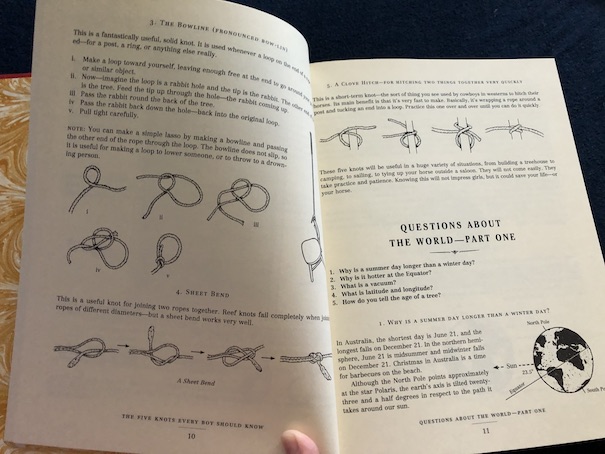
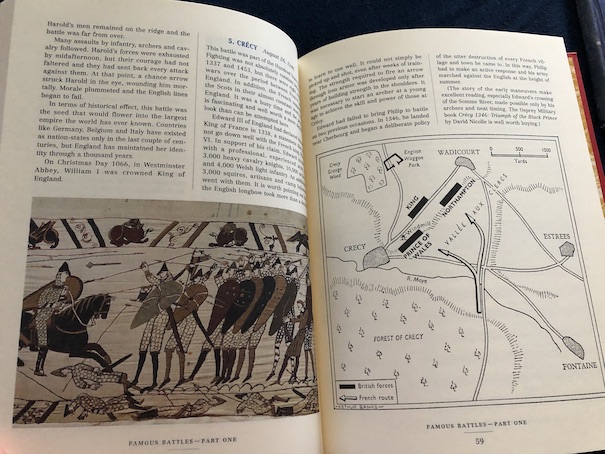
I like to explain the contents of books so that people will know whether they would like to read them in more detail. It’s difficult to describe the contents of The Dangerous Book for Boys succinctly because the contents are extensive and they are not grouped into convenient categories. It’s more like reading a very long magazine with isolated articles, although some of the articles are related to each other. It’s just that related topics are not put next to each other. For example, the information about reading star maps comes much later in the book than the introduction to astronomy, and information about the solar system comes even later, with many other sections in between. There are also some sections of trivia/interesting information, history, or academic topics which were purposely split into different numbered sections and distributed throughout the book, like Questions About the World (explaining natural phenomena like the seasons, the tides, and why the sky is blue), Famous Battles (divided into sections starting with ancient battles and then more modern ones), Extraordinary Stories (about the lives and accomplishments of famous men, including the Wright Brothers and Robert the Bruce), and Understanding Grammar (a more academic section).
Because it would be difficult for me to explain everything in this book without basically copying the entire table of contents, which would take quite a lot of space to do, I’ll just hit some of the highlights by describing them in sections that the book doesn’t have but which explain the types of activities covered in this book. All of the types of activities that I describe below are included in the book, but there is also more in the book than I could take the time and space to describe in detail.
Useful Skills and Knowledge
The book has sections explaining how to do first aid, how to tie different types of knots, how to wrap a package with brown paper and string, and how to make cloth fireproof.
I was somewhat amused by the section about how to talk to girls. Most of it is good advice, like maintaining a clean appearance and not being vulgar or overdoing it with jokes. Lesson #1 is “It is important to listen.”, which is always true. The part that I thought was funny was in the introduction: “You may already have noticed that girls are quite different from you. By this, we do not mean the physical differences, more the fact that they remain unimpressed by your mastery of a game involving wizards, or your understanding of Morse Code.” To that, I say, “Are you kidding?!” I used to have Morse Code memorized from playing the Nancy Drew computer games by Her Interactive, and I know from my fascination with activity books like this that the reason why Morse Code looks the way it does is that Morse wisely decided to make the letters of the alphabet used the most often the shortest to form. I used to play World of Warcraft, and I played every one of the available factions, but then I got more interested in physical board games and board game history. My female friends continued much longer, although they ended up switching to Final Fantasy. I’ve played both D&D and Call of Cthulu and liked them both. The more wizards, the better, as far as I’m concerned!
I always think that advice about what girls like often fails to take into account that girls are individuals with different interests and hobbies, no matter what their age. Not all woman like to wear high heels (which are stupid, annoying shoes that are bad for your feet, especially those with the dumb, skinny heels that always make me turn my ankle), and some either never wear makeup or consider it an annoying hassle that they feel obligated to do to because other people expect it. Some girls wear their hair long because they like the feminine look or like to experiment with different types of artistic braids and hairstyles, and some girls chop their hair short because they’d rather just quickly run a comb through it and forget about it. Some women, like me and my friends are geeks, who love books, play video games and role-playing games, know various types of computer programming or maker hobbies, study history, and would gladly do most of the activities in books like this. Some girls are into sports and working out. There are even some girls who are into things like hunting and even taxidermy and wished that they could have joined the Boy Scouts instead of learning to sew and bake cupcakes in Brownies. People in general can have many and varied interests. Even though this book was written for boys of the 21st century, I don’t think that the authors are really in touch with women and girls of the 21st century and understand the range of topics that many of them find interesting. Although, I think that the authors’ attitudes about girls’ interests aren’t just due to them growing up in the 20th century themselves. Guys have often tried to figure out what women like and what women want, and they frequently get it wrong because they approach the question from the wrong angle. Chaucer tackled the problem of what women want way back in the Middle Ages, and he figured it out. What women like most is often what men like most: having things their own way. What that means varies from person to person because of our different interests, but in some form or other, that’s what we all want. So, don’t try to figure out what “girls” like; just ask a particular girl what she likes. Guys don’t need to try to please all the girls in the world at once, just the one they’re with. Most people will tell you who they are and what they’re interested in, given the chance (or maybe a Facebook or Instagram page), and when a boy finds a girl who likes things that he also likes or is willing to do things that he likes to do, he’s found a good one.
Aside from random, useful life skills, there is also academic information in the book that would be useful to school, like standard and metric measurements, the sections about how grammar works, the origins of words, Latin phrases, quotes from Shakespeare, the Ten Commandments, and poems that boys should know and books that boys should read.
Games
I count games differently from sports because sports tend to be outdoor activities and require a certain level of physical skill, and games tend to be more general, require less physical skill, and can be played indoors. This book includes some pen-and-paper games, marbles, chess, role-playing games, poker, and table football.
Sports
The book has the rules for soccer and stickball. It also discusses famous baseball players and rugby.
Outdoor Activities
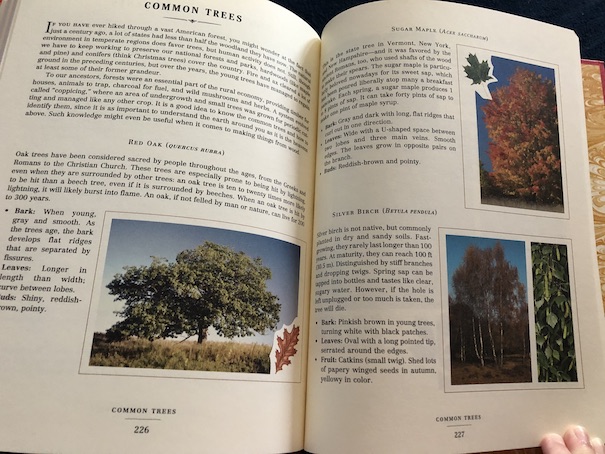
These are activities to do that are related to the outdoors and nature and things to make related that are related to outdoor activities, including fishing, building a treehouse, making a bow and arrow, how to hunt and cook a rabbit, how to tan an animal skin, making a go-cart, and learning various methods of navigation and different types of trees.
Science and Technology
The book describes various topics related to science, like astronomy, insects and spiders, cloud formations, and fossils and dinosaurs. There are also instructions for making projects that would probably make good science fair projects, like a battery, an electromagnet, a periscope, a pinhole projector, and crystals.
History and Geography
There are sections about US geography (I don’t know if the original UK version had this or if it focused on the geography of the UK), Early American History, the Declaration of Independence, the Golden Age of Piracy, descriptions of the Seven Wonders of the World (both ancient and modern), the sections about Famous Battles from history, and a Brief History of Artillery.
Spies and Secret Codes
There are sections about the codes and ciphers that spies use, the Navajo Code Talkers’ Dictionary from World War II, the US Naval Flag Codes, and how to make secret inks.
Crafts
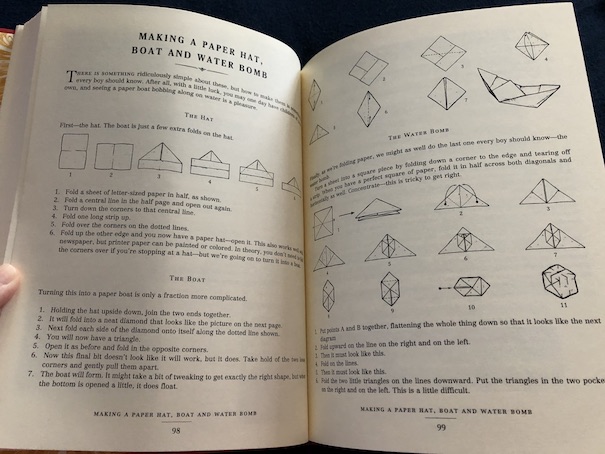
The book explains how to build a workbench, how to grind an italic nib for italic writing, and how to make marbled paper, making paper airplanes and paper hats, boats, and water bombs (these are little origami boxes that you fill with water and splat when you throw them at something – I’ve made them before).
Stunts and Random Skills
These are just random things that are fun to know how to do, like juggling, skipping stones, coin tricks. There is also a section about teaching tricks to dogs.
Dangerous Book for Boys Badges
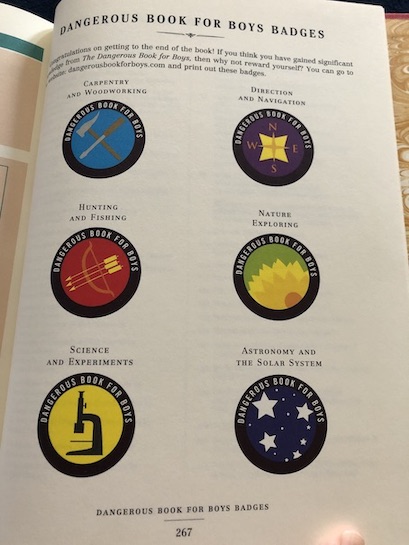
This is the final part of the book. Since many of the activities in the book are the kind done at summer camps or in scout troops, the book overs suggested “badges” you can award yourself and your friends for doing the activities. Even though the activities in the book are not sorted into specific categories, there are six categories of badges offered: Carpentry and Woodworking, Direction and Navigation, Hunting and Fishing, Nature Exploring, Science and Experiments, and Astronomy and the Solar System. The book doesn’t specify what activities you should master to award yourself these badges, leaving that up to the reader. My copy says that if you go to their website, you can print out these badges, but that website no longer exists. I don’t know if later printings say something different.
If you’re looking for something to do with the kids during coronavirus lock-downs and/or over summer vacation, this book has plenty of ideas, and you can even make up your own “badges”, using their ideas, my category suggestions, or anything else you would like to do yourself.
The book is available to borrow and read for free online through Internet Archive. I’ve also learned that the book has inspired a tv series, which is available through Amazon Prime. You can see the trailer on YouTube.



























 Jestress's Forgotten Books and Stories