
Twin Spell by Janet Lunn, 1968, 2003.
This book was originally called Twin Spell but was renamed Double Spell in reprintings.
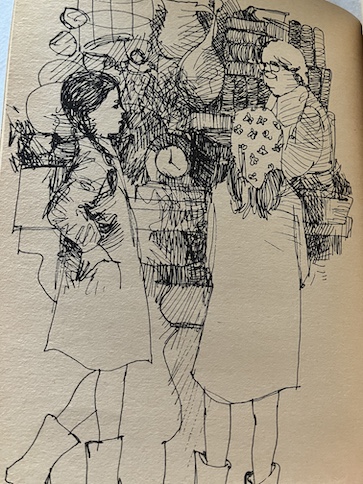
Elizabeth and Jane Hubbard, a set of twelve-year-old twins, can’t really explain what made them stop to look at the little wooden doll in the window of the antiques shop. Ordinarily, they probably wouldn’t have noticed it at all, but something seemed to draw them to it while they were supposed to be going home to look after their little brother. The woman in the shop wasn’t going to sell the doll to them, either, but for some reason, she said that she felt that she ought to do it because it seemed like the doll belonged with them.

Buying the old doll starts off a chain of mysterious events in the twins’ lives. On impulse, still forgetting that they’re supposed to go home and baby-sit, the girls decide to visit their Aunt Alice and show her the doll. Aunt Alice had been living in England, but she had recently moved back to Toronto to live in the girls’ grandmother’s old house. Aunt Alice doesn’t know what to think of the doll, except that it might be worth something as an antique. She shows the girls around their grandmother’s old house, but Elizabeth has a sudden fall down the stairs, breaking her leg. Strangely, a week later, Aunt Alice suffers a similar accident, breaking her hip.
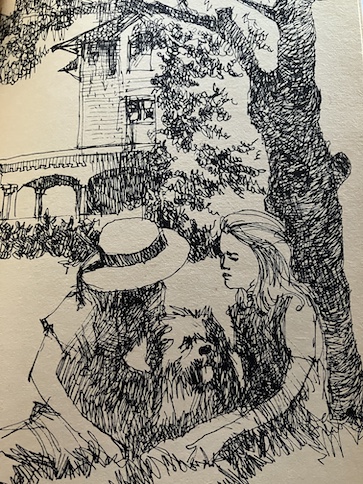
Because of her accident, Aunt Alice decides that the big old house is a bit much for her to handle, and she tells the twins’ parents that they can have it to live in instead. With five children in the family, including the twins, they could really use the larger house, and the children are excited about going to live there.
The twins find themselves thinking of odd things, as if they were old memories. They suggest taking a “sick basket” of goodies to their aunt, thinking that maybe their mother had done something like that for someone before or maybe they had dreamed something like it. Their brothers can’t remember any such thing happening, and it would be pretty weird for both of the girls to have the same dream.
However, the children think that a basket of goodies for their aunt would be a good idea. They put together some stuff from their kitchen and what they can buy with their money, and they decide to include a book that she can read while she’s recovering. Unfortunately, the book they choose from their shelves turns out to be a rare copy of a book about the history of Toronto that their father was using for a research project, so they have to get it back. They do, and Aunt Alice tells them that she enjoyed it and that she had forgotten that an uncle had written it.
As the family moves into Aunt Alice’s old house, the twins keep thinking that there is something strange about their doll, that it seems to be influencing them, giving them visions of the past. Besides the “sick basket” dream they both had, they have visions of a house and a blonde girl in old-fashioned clothes. They start to think that the doll, which they both have the impulse to call “Amelia,” might be magic or something. Jane is the more sensible of the two, and she insists that there must be some other explanation, like imagination or coincidence. Elizabeth, the dreamier twin, insists that it’s the influence of Amelia, that they’re somehow seeing Amelia’s memories of the past.
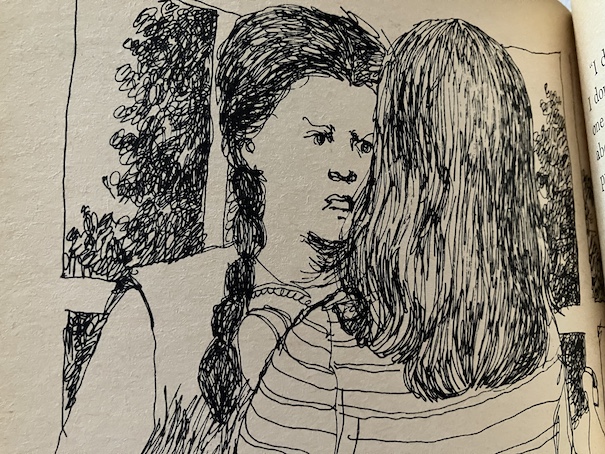
After the girls argue about the doll and the source of their odd visions, Jane starts ignoring Elizabeth. Elizabeth continues thinking about what they’ve seen, and the blonde girl, who she is sure is called Hester and was the former owner of Amelia. Eventually, Jane starts agreeing with Elizabeth about Hester being the doll’s former owner, but she is dubious when Elizabeth says that Amelia wants to find the house where she once lived with Hester. Jane doesn’t know how the two of them can do that.

They ask their father for his advice, and he suggests that they start at the museum. There, they learn by studying the styles of old clothes that Amelia is from the 1840s. They find an area of town with houses similar to the one they’ve seen in their minds, where Amelia once lived, but they have trouble finding the exact house they’re looking for.
Jane becomes increasingly afraid, though. More and more, she begins to feel like something is trying to take the doll away from them. Something that is mean and doesn’t like her is in their attic. Something like a ghost. Jane has an awful feeling that something horrible is about to happen.
When the Jane looks at the history book her father has been reading, the one written by her great-great-uncle, Jane suddenly has a startling revelation. The house they have been seeking in actually their house, changed over the years by new additions. Amelia came from their house, and that is where she really belongs. Through the visions, they see an old tragedy in their family reenacted, a tragedy that puts Jane’s life in danger.
The book is available to read for free online through Internet Archive. There is no need to borrow this copy and no time limit; you can just read it in your browser.
Themes and Spoilers

The girls had made a mistake when they first started receiving their visions. They had assumed that Hester was Amelia’s original owner, but she wasn’t. The glimpses they got of Hester weren’t through the doll’s eyes, but those of the doll’s real former owner. The doll was one of a set of two that originally belonged to another set of twins in the girls’ family, Anne and Melissa. Hester was their cousin, and she was not a nice girl. Both Jane and Elizabeth sensed it pretty early. During an argument with Anne years before, Hester accidentally lit Anne’s dress on fire with a candle she was holding, causing Anne to die. Hester hadn’t actually meant to harm Anne. The whole thing was just an accident, but Hester’s guilt and Melissa’s anger and grief at her twin’s death had caused Hester’s spirit to linger in the house. By learning the circumstances of Anne’s death and assuring Hester that they understand that she had not meant to kill her cousin, that it was all an accident, and that she couldn’t save Anne because she was just too frightened and didn’t know what to do, they help Hester’s spirit to finally rest and to reunite Amelia with her doll twin, which Hester had hidden years before.
The scene where the girls see Anne’s death is a little scary, but mostly sad. Hester lived on after the incident, but it was not a happy life. She ended up having to live in Anne and Melissa’s old room, where Anne died, because she never married and had to live with family. Aunt Alice remembers knowing her as a young child, when Hester was a bitter old woman. Perhaps if Hester hadn’t been carrying that guilt around for so many years, her life would have been much happier, although being a nice person had never particularly been her nature. However, the twins’ acceptance of Hester’s tragedy and assurance that they understand and forgive her for what happened set her spirit at peace.
The genealogy in the story is a little confusing, partly because certain family names repeat through the generations, but there is a chart in the back of the book to help. There are some other loose ends in the story which are also never completely clarified. The girls admit that they will probably never know how the doll Amelia came to be in the antiques store, but it doesn’t particularly matter because Hester, Anne, Melissa, and Amelia all seem to be at peace now.


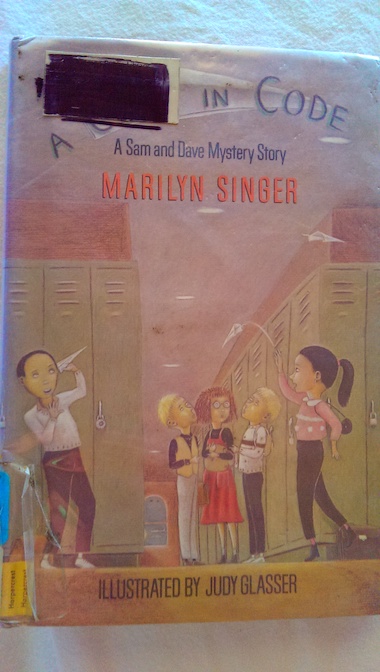 A Clue in Code by Marilyn Singer, 1985.
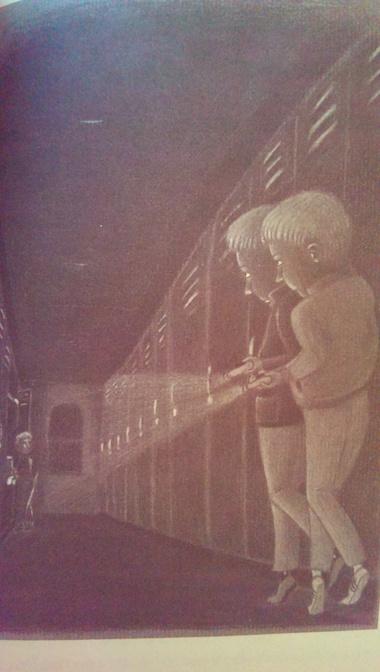 Sam and Dave decide to begin their investigation with Willie. His father is the school’s custodian, and Willie has been using a copy of his father’s key to the school to sneak around after hours. To the twins’ surprise, when they confront Willie, not only does Willie deny stealing the money, but it turns out that he’s actually been scared and upset himself. After being caught stealing the last time, his parents have been especially strict with him, sending him to bed early, limiting his time with friends, and not allowing him to watch tv or read comic books. In fact, his father tried to get rid of his entire collection of comic books by throwing them in the trash, but Willie rescued them and has been hiding them in the school, sneaking away to read them when he can. However, someone has discovered them and stolen them. Willie wants his comic books back, but he can’t report them stolen because his father thinks that they’re already gone. Worse still, his parents will be even harder on him if he ends up taking the blame for stealing the class’s trip money.
 In spite of Willie’s reputation, which he deserves, Sam and Dave think that he’s telling the truth about the thefts. Then, they happen to find a strange message that appears to be written in code after some of their classmates were throwing paper airplanes. With the help of Rita, a friend who is very good with codes, they decode the message and uncover a valuable clue that explains why the comic books were taken and leads them to the thief’s identity.






 Lisa and Lottie by Erich Kastner, 1969.
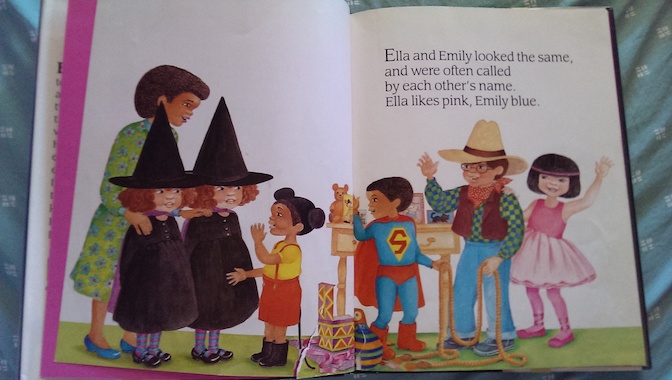
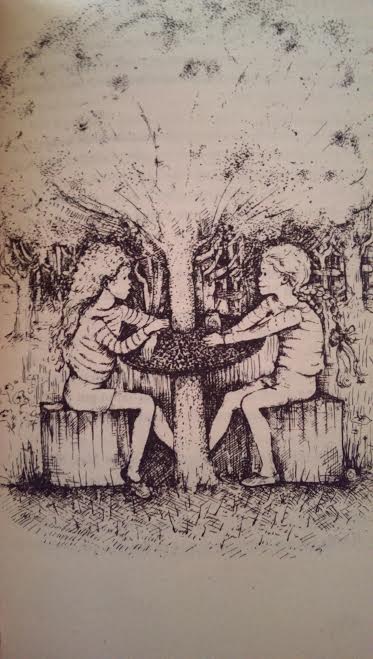 Through the rest of the summer, the girls discuss their lives and parents in great detail and continue speculating about the reasons for their parents’ separation and why they were never told about each other’s existence. They are somewhat angry at their parents for not telling them the truth, but they each also want to know more about the parent that they have never really known and perhaps to learn the truth behind their parents’ separation. They begin hatching a plot to switch places so that Lottie can go to Vienna to meet their father and Lisa can go to Munich to be with their mother. They get little notebooks and fill them with as many details of their lives as they can think of so that each girl can seem to behave like the other, although they know it won’t be easy because they’ve lived very different lives. They don’t like the same foods, and Lottie knows how to cook, but Lisa doesn’t.
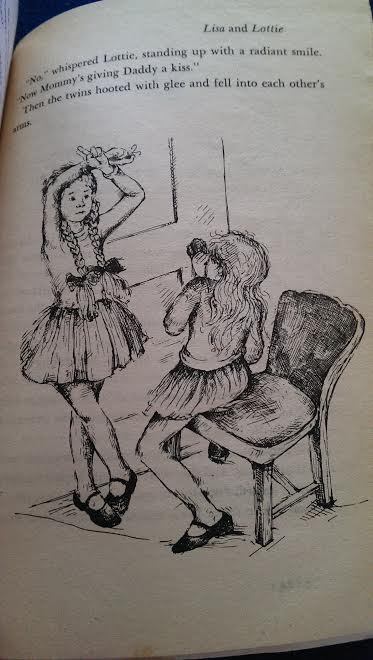 Lisa is overjoyed to finally meet her mother in Munich. But, her mother has to work very hard as a photographic editor for a newspaper, and they don’t have much money. Lisa isn’t as good at cooking or taking care of household chores as Lottie is, so she finds it difficult to help, although she learns quickly.
 The book is much less of a comedy than either of the two Disney movies, although there are some funny parts, like when Lottie (as Lisa) takes over the household accounts to stop Rosa’s stealing and ends up turning her into a much better housekeeper with her practicality. Surprisingly, Rosa actually starts respecting her more and even liking her better because of it.
 Jestress's Forgotten Books and Stories